
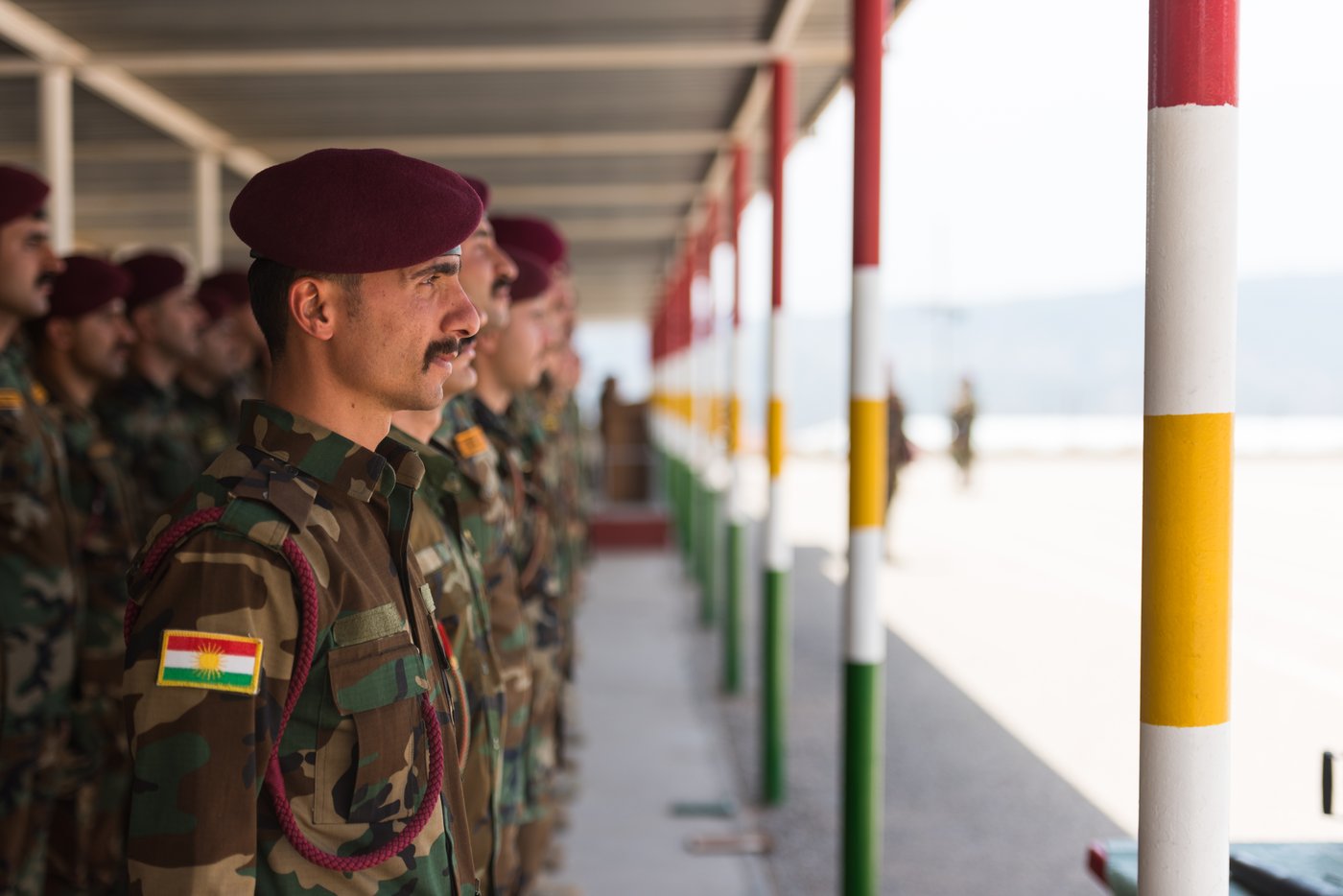
ERBIL — A French soldier was killed and six others wounded on Thursday when an Iranian-made Shahed drone struck a coalition base in Iraqi Kurdistan, marking the first European military death in the two-week-old Iran war and signalling a dangerous expansion of the conflict into a theatre that directly borders Saudi Arabia. Chief Warrant Officer Arnaud Frion, 42, died at the Mala Qara base near Makhmour in the Erbil region, where French troops have been training Kurdish Peshmerga forces under Operation Chammal since 2014.
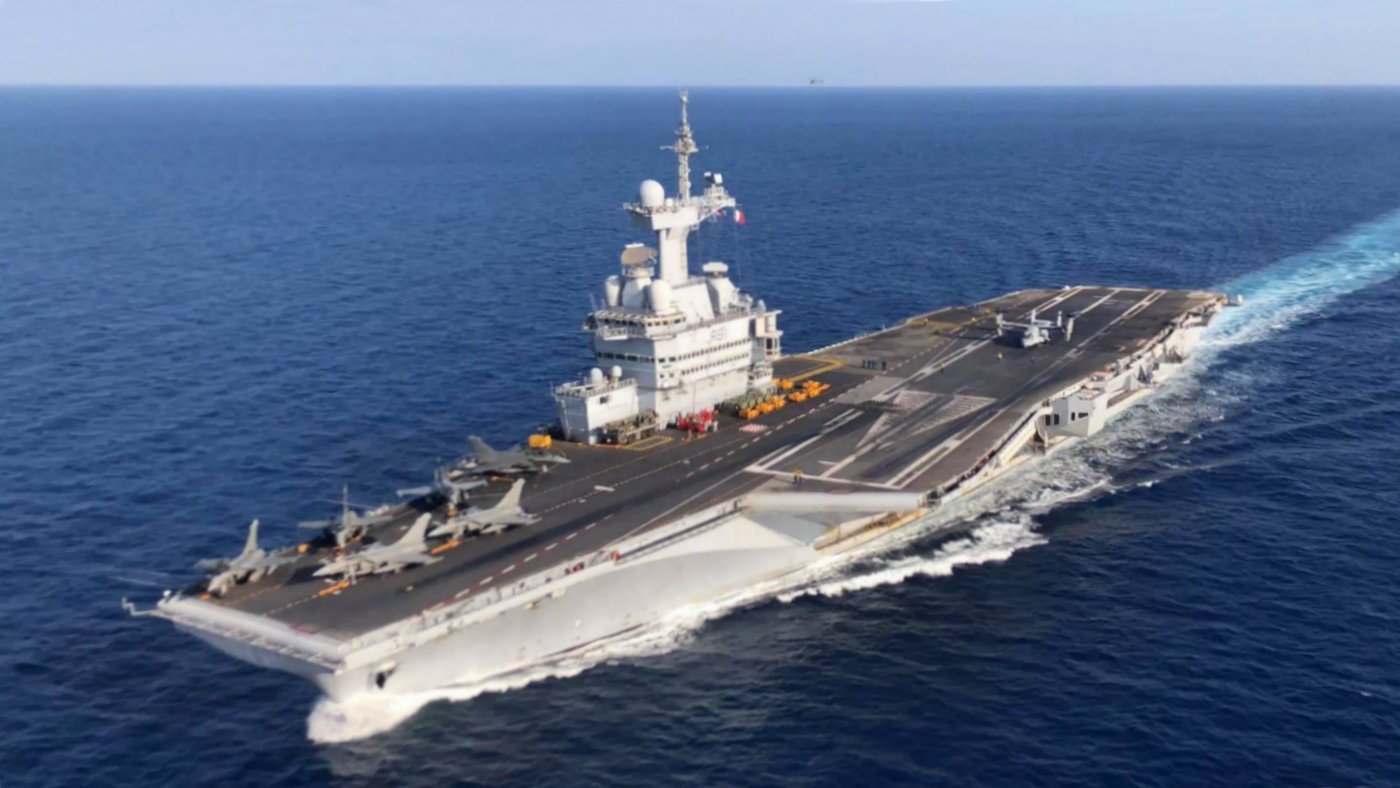
President Emmanuel Macron called the attack “unacceptable” and reaffirmed France’s military commitment to the region, even as the pro-Iranian Iraqi militia Ashab Al-Kahf claimed responsibility and warned that all French interests across Iraq and the wider Middle East were now “under targeting fire.” The threat came in direct response to France’s deployment of the nuclear-powered aircraft carrier Charles de Gaulle and a 10-warship flotilla to the eastern Mediterranean, a move that has made Paris the only European power with significant military assets in the theatre of operations around the Gulf.
For Saudi Arabia, the killing carries immediate strategic implications. France is the Kingdom’s third-largest arms supplier, a key diplomatic partner, and the only European nation with both the capability and the stated willingness to escort merchant shipping through the Strait of Hormuz once conditions allow. A French military withdrawal from Iraq or the region would weaken the coalition architecture that Saudi Arabia depends upon for its own defence.
Table of Contents
- What Happened at Mala Qara Base?
- Who Is Ashab Al-Kahf and Why Did They Attack France?
- France Deploys Its Largest Naval Force Since the Gulf War
- How Does the French Soldier’s Death Affect Saudi Arabia?
- The War’s Growing Casualty Count Beyond the Gulf
- Iraq Becomes a Secondary Front in the Iran War
- What Comes Next for France in the Middle East?
- Frequently Asked Questions
What Happened at Mala Qara Base?
Chief Warrant Officer Arnaud Frion was killed by a Shahed-136 drone strike at approximately 03:00 local time on Thursday at the Mala Qara base in the Makhmour district of Iraq’s Kurdistan Region, according to the French Ministry of Defence. The attack wounded six other French soldiers who had been training Iraqi Kurdish Peshmerga forces as part of Operation Chammal, France’s contribution to the international anti-ISIS coalition.
Colonel François-Xavier de la Chesnay, Frion’s commanding officer, confirmed that the soldier was “killed by a Shahed drone strike” and described him as an experienced non-commissioned officer who had served multiple deployments in Africa and the Middle East. The French military currently maintains approximately 950 personnel in Iraq under Operation Chammal, providing training, intelligence, and air support to local forces fighting remnants of the Islamic State.
The strike on Mala Qara was part of a broader pattern of Iranian and pro-Iranian attacks on coalition facilities in Iraqi Kurdistan that have intensified since the United States and Israel launched military operations against Iran on 28 February. Multiple drone and missile attacks have targeted bases in the Erbil region where American, French, and other coalition troops are stationed, according to the Combined Joint Task Force — Operation Inherent Resolve. The escalation reached a new peak on 17 March when five drones and rockets struck the US Embassy in Baghdad’s Green Zone, the most intense militia assault since the war began.
The Middle East briefing 3,000+ readers start their day with.
One email. Every weekday morning. Free.
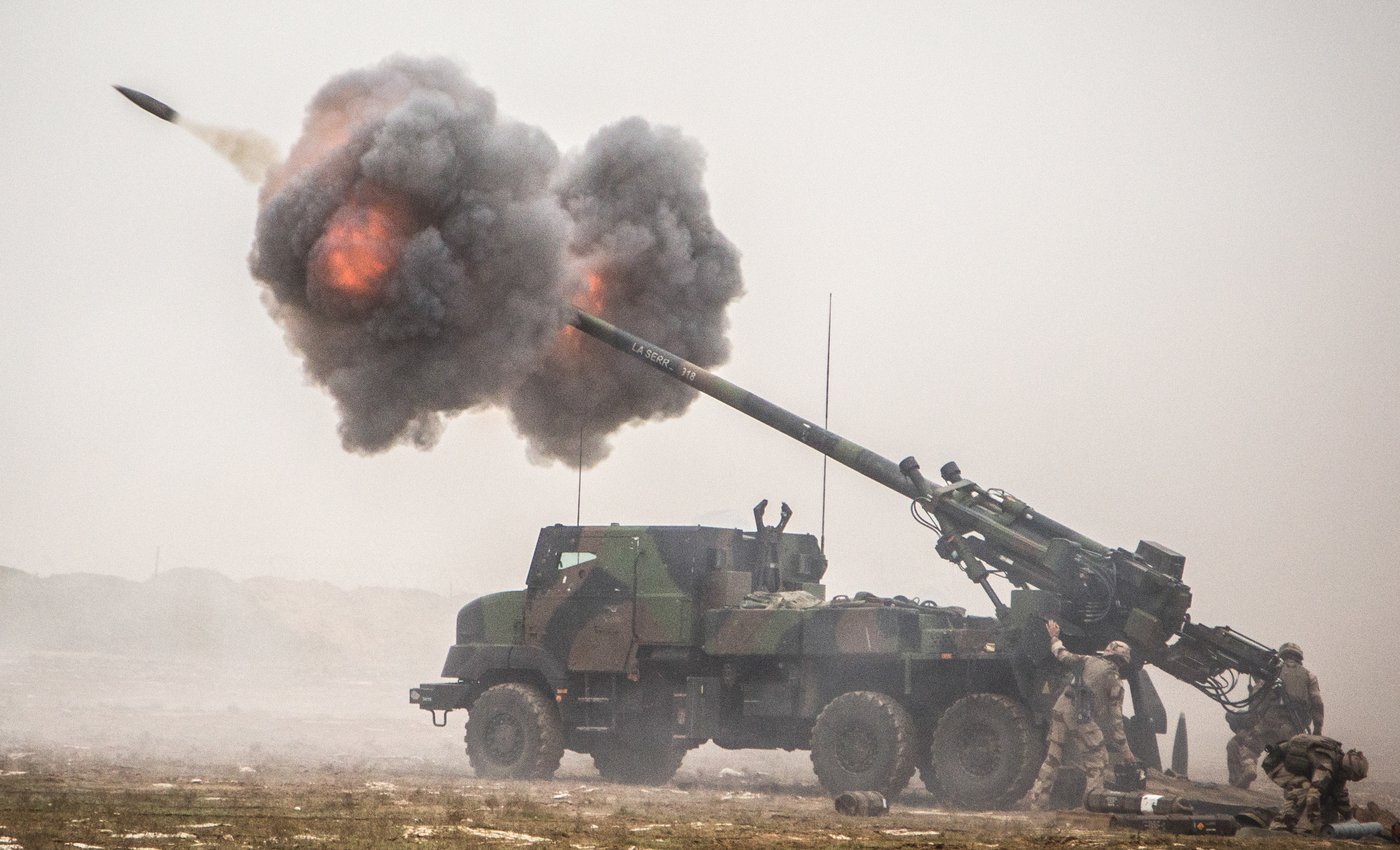
The Mala Qara base sits roughly 60 kilometres southwest of Erbil, close to the frontline areas where French advisors have worked alongside Peshmerga units for over a decade. Its exposed position in the Makhmour plain, far from the urban air defences concentrated around Erbil’s international airport, made it vulnerable to the type of low-altitude drone attack that Iranian forces and their proxies have perfected over years of operations in Yemen, Syria, and Iraq.
Who Is Ashab Al-Kahf and Why Did They Attack France?
Ashab Al-Kahf is an Iraqi Shia militia that emerged in 2019 as a front organisation for one of the more established pro-Iranian armed factions operating within Iraq’s Popular Mobilisation Forces, according to analysts at the Soufan Center and the Washington Institute for Near East Policy. The group maintains close ties to Iran’s Islamic Revolutionary Guard Corps and has previously claimed attacks on American military convoys and bases in Iraq.
The militia issued a statement on its Telegram channel claiming responsibility for the Mala Qara strike and warning that all French interests in Iraq and the wider region were now legitimate targets. The statement specifically cited the arrival of the French aircraft carrier Charles de Gaulle to the US Central Command area of operations as the reason for the escalation. Ashab Al-Kahf urged Iraqi security forces to maintain a distance of at least 500 metres from all coalition facilities, a warning that analysts interpreted as a signal of further planned attacks.
The targeting of French forces represents a calculated expansion of Iran’s proxy war strategy. Until the Mala Qara attack, Iranian-backed militias in Iraq had focused their fire almost exclusively on American positions. By striking French troops, Ashab Al-Kahf — and by extension the IRGC leadership directing the broader campaign — appears to be attempting to impose costs on every nation that contributes military assets to the coalition operating around the Gulf.
France’s decision to deploy the Charles de Gaulle carrier strike group and pledge 10 additional warships to the eastern Mediterranean and Red Sea on 9 March made Paris a visible participant in the military operations surrounding the Iran war, even though Macron has insisted that France’s role is “purely defensive.” That distinction holds little weight in Tehran or among its proxy networks, which view any Western naval presence as part of the broader campaign against Iran.
France Deploys Its Largest Naval Force Since the Gulf War
France’s military response to the Iran war has been the most substantial European contribution by a significant margin. On 3 March, Macron announced the redeployment of the Charles de Gaulle carrier strike group from North Atlantic NATO exercises to the eastern Mediterranean, a journey of approximately 10 days. The carrier, France’s only nuclear-powered warship, embarks 20 Rafale M fighter jets and two E-2C Hawkeye airborne early warning aircraft.
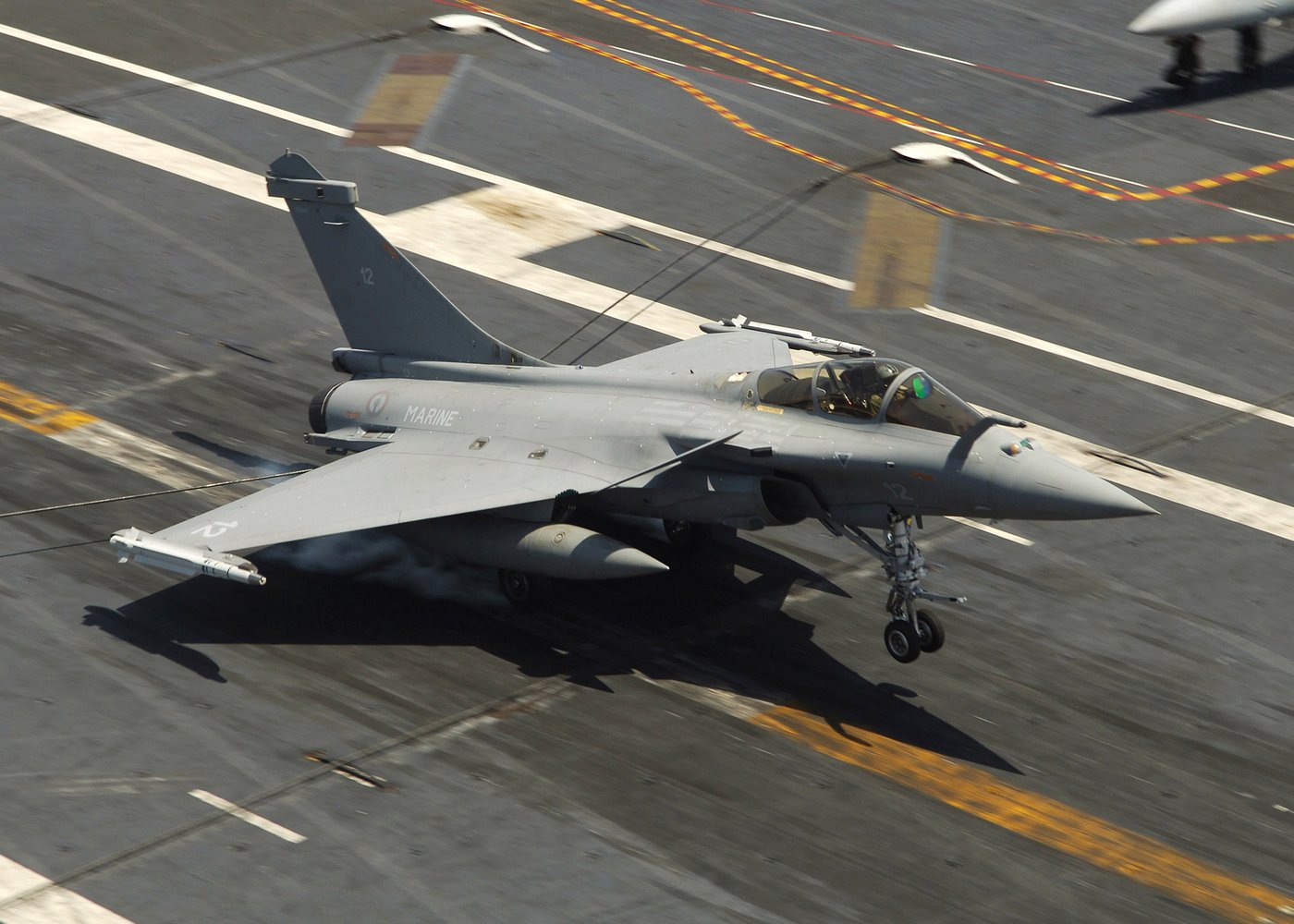
On 9 March, the French Navy pledged an additional eight frigates and two amphibious assault ships to the eastern Mediterranean and Red Sea, according to the US Naval Institute. The deployment followed an Iranian drone attack on a Cyprus-based joint operating installation that damaged allied infrastructure and prompted NATO to activate additional air and missile defence assets in the region.
Macron has described France’s mission as establishing a “purely defensive, purely support” operation to escort merchant vessels through the Strait of Hormuz once the security situation permits. That language carefully avoids any suggestion that French forces would participate in offensive strikes against Iran. Yet the distinction between defensive and offensive operations blurs rapidly in a war zone where Iranian drones and missiles do not discriminate between combatants and escorts.
| Asset | Type | Location | Capability |
|---|---|---|---|
| FS Charles de Gaulle (R91) | Nuclear carrier | Eastern Mediterranean | 20 Rafale jets, 2 E-2C Hawkeyes |
| 8 frigates | Surface escorts | Mediterranean / Red Sea | Anti-air, anti-submarine warfare |
| 2 amphibious assault ships | Landing platform | Eastern Mediterranean | Troop transport, helicopter ops |
| Operation Chammal | Ground force | Iraqi Kurdistan | ~950 personnel, training, air support |
The scale of the deployment is notable. France has not maintained this many warships in the Middle East simultaneously since the 1991 Gulf War. The French Navy’s commitment represents roughly one-third of its total surface combat fleet, a proportion that defence analysts at the Institut français des relations internationales (IFRI) have described as “the maximum sustainable commitment without degrading NATO readiness in the North Atlantic.”
How Does the French Soldier’s Death Affect Saudi Arabia?
The killing at Mala Qara matters to Riyadh for three immediate reasons: France is a critical defence partner, a potential Hormuz escort provider, and the only European power with enough deployed military assets to contribute meaningfully to Gulf security. Any development that increases domestic pressure on Macron to limit France’s regional exposure directly weakens the coalition structure that Saudi Arabia has relied upon throughout the war.
France is Saudi Arabia’s third-largest arms supplier after the United States and the United Kingdom. In 2023, the defence departments of Saudi Arabia and France signed an executive plan for cooperation on capabilities, military industries, and research and development, according to Arab News. The Saudi Arabian Military Industries company (SAMI) has worked with France’s Naval Group on warship construction since 2019, and Riyadh has purchased Airbus H145 helicopters worth $500 million from French manufacturers.
The Strait of Hormuz dimension may be the most consequential. France is the only European nation that has publicly committed to establishing escort missions for commercial shipping through the strait, with Macron stating on 9 March that preparations were underway. Operation Maritime Shield, the US-led convoy effort, has struggled to restore traffic through the waterway. A French withdrawal or scaling back would eliminate the most credible European contribution to reopening the strait, through which Saudi Arabia’s East-West pipeline now serves as the Kingdom’s primary export route.
Crown Prince Mohammed bin Salman has spoken with Macron at least twice since the war began on 28 February, according to Al Arabiya, with both calls described as focusing on regional security coordination and solidarity. MBS has pursued a strategy of building the widest possible international coalition of diplomatic and military support without directly engaging in offensive operations against Iran, a posture that makes the French military presence particularly valuable as a signal of European commitment.
The War’s Growing Casualty Count Beyond the Gulf
Chief Warrant Officer Frion is the first European military fatality of the Iran war, but not the first Western death. The United States has lost at least 11 service members since operations began on 28 February, including four crew members aboard an Air Force KC-135 tanker aircraft that crashed in western Iraq on Thursday, according to CNN and CBS News. The crash brought the total American death toll to 11, with the cause still under investigation.
The expansion of casualties beyond the immediate Gulf theatre — into Iraq, Turkey, Oman, and now among European forces — underscores how the Iran war has metastasised beyond the original US-Israeli strikes on Iranian military and nuclear infrastructure. Saudi Arabia intercepted 31 drones and missiles on Thursday alone, including projectiles aimed at the Diplomatic Quarter in Riyadh, while two civilians were killed in Oman when a drone was downed over Sohar province.
| Country | Deaths | Circumstances | Date |
|---|---|---|---|
| United States | 11 | Combat, aircraft crash, base attacks | 1–13 March |
| France | 1 | Shahed drone strike, Mala Qara base | 13 March |
| Saudi Arabia (civilian) | 2 | Projectile strike on residential building, Al-Kharj | 8 March |
| Oman (civilian) | 2 | Drone debris, Sohar province | 13 March |
The pattern of widening casualties creates compounding political pressure on every government with forces in the region. In France, the opposition quickly demanded a parliamentary debate on the military deployment. Marine Le Pen’s National Rally called for an immediate reassessment of France’s role, while the left-wing La France Insoumise demanded that Macron withdraw all troops from Iraq. Similar debates have played out in the United Kingdom, where the government has deployed additional naval assets but suffered no casualties.
Iraq Becomes a Secondary Front in the Iran War
The drone strike on Mala Qara is part of a broader pattern of escalation across Iraq that has transformed the country into a secondary front in the Iran war. Since the conflict began, pro-Iranian militias within Iraq’s Popular Mobilisation Forces have launched dozens of drone and rocket attacks on coalition positions in the Kurdistan Region and western Iraq, according to Rudaw and Al-Monitor. The attacks have targeted facilities in Erbil, Ain al-Assad air base in Anbar province, and logistics convoys moving supplies to the Gulf.
Iraq’s government in Baghdad has found itself in an impossible position. Prime Minister Mohammed Shia al-Sudani has condemned attacks on coalition forces while simultaneously maintaining ties with the pro-Iranian factions that form part of his governing coalition. On 12 March, Iraq suspended all oil exports after Iranian drone strikes damaged infrastructure near Basra, a decision that eliminated the country’s primary source of revenue and deepened the economic crisis caused by the war.
For Saudi Arabia, the instability in Iraq poses a direct security concern. The two countries share an 814-kilometre border, and Riyadh has invested heavily in restoring diplomatic relations with Baghdad since reopening the Arar border crossing in 2020. The presence of pro-Iranian militias capable of striking targets across northern Iraq — and potentially launching attacks southward toward the Saudi border — represents exactly the kind of proxy threat that MBS’s strategic restraint policy was designed to avoid provoking.
Pakistan’s Prime Minister Shehbaz Sharif arrived in Jeddah on Thursday for an emergency meeting with MBS that focused specifically on regional security coordination, with Pakistan’s Chief of Defence Forces Field Marshal Asim Munir present at the discussions. The meeting underscored Riyadh’s effort to shore up its alliance network at a moment when the war’s geographic expansion threatens to overwhelm the defensive architecture that has kept Saudi Arabia out of direct combat.
What Comes Next for France in the Middle East?
Macron’s response to the Mala Qara attack will be closely watched in Riyadh, Washington, and Tehran alike. The French president condemned the killing and reaffirmed France’s mission in the region, but stopped short of announcing any retaliatory action or change in rules of engagement. The distinction is significant: France’s stated mission in Iraq is counter-terrorism against ISIS, not participation in the Iran war, and Macron has been careful to maintain that separation.
Defence analysts at IFRI and the Royal United Services Institute (RUSI) have noted that France faces a narrowing set of options. Withdrawing from Iraq would signal to Tehran and its proxies that attacking European forces produces strategic results, encouraging further escalation. But maintaining the deployment without enhanced force protection or retaliatory capability exposes French troops to continued attacks with no deterrent effect.
The French Navy’s commitment of 10 additional warships to the Mediterranean and Red Sea, announced on 9 March by the US Naval Institute, suggests that Paris intends to deepen rather than reduce its regional presence. France’s stated objective of establishing Hormuz escort operations would require sustained naval commitment for months or years, a timeline that assumes continued political support at home — support that a mounting casualty count could erode.
Macron addressed the nation on the Mala Qara attack, stating that “the war in Iran cannot justify such attacks” and describing France’s counter-terrorism mission as separate from the broader conflict. The statement reflected the delicate positioning that Paris has maintained throughout the crisis: visible military presence and solidarity with Gulf allies, while insisting that French forces are not combatants in the Iran war.
The pattern of drawing nominally non-combatant states into the conflict extends beyond Iraq. Jordan has intercepted more than 100 Iranian missiles and drones while maintaining the official position that it is not at war — a diplomatic fiction that grows more difficult to sustain with each incoming Shahed drone.
That distinction may become increasingly difficult to sustain. The Ashab Al-Kahf threat against all French interests, combined with Iran’s demonstrated willingness to use proxy forces across multiple countries simultaneously, means that every French military installation and diplomatic facility in the Middle East now faces an elevated threat level. The French embassy in Baghdad has reportedly increased security measures, and coalition bases in Kurdistan are implementing additional drone defence protocols.
The attack on French forces occurred alongside a broader escalation across the Gulf on day 14, with Saudi Arabia intercepting 56 drones and two ballistic missiles in the largest aerial assault since the war began.
Frequently Asked Questions
Who was the French soldier killed in Iraq?
Chief Warrant Officer Arnaud Frion, 42, was killed by a Shahed-136 drone strike at the Mala Qara base near Makhmour in Iraqi Kurdistan on 13 March 2026. He was an experienced soldier who had served multiple deployments in Africa and the Middle East as part of France’s overseas operations. Six other French soldiers were wounded in the same attack, according to the French Ministry of Defence.
What is Ashab Al-Kahf?
Ashab Al-Kahf is an Iraqi Shia militia that emerged in 2019 as a front organisation linked to Iran’s Islamic Revolutionary Guard Corps. The group operates within Iraq’s Popular Mobilisation Forces framework and has previously claimed attacks on American military convoys and facilities. After the Mala Qara strike, Ashab Al-Kahf warned that all French interests in Iraq and the region were legitimate targets, citing France’s deployment of the carrier Charles de Gaulle.
How many French troops are deployed in the Middle East?
France maintains approximately 950 military personnel in Iraq under Operation Chammal, the country’s contribution to the anti-ISIS coalition since 2014. Additionally, the French Navy has deployed the carrier Charles de Gaulle with 20 Rafale jets, eight frigates, and two amphibious assault ships to the eastern Mediterranean and Red Sea. The combined deployment represents roughly one-third of France’s surface combat fleet and is the largest French naval commitment to the Middle East since the 1991 Gulf War.
Why does France’s military presence matter for Saudi Arabia?
France is Saudi Arabia’s third-largest arms supplier and the only European power that has committed to escorting merchant shipping through the Strait of Hormuz. The two countries have signed defence cooperation agreements covering military industries, warship construction, and helicopter procurement. Any French withdrawal from the region would weaken the international coalition that Saudi Arabia relies upon for air defence support, naval security, and diplomatic leverage in ceasefire negotiations.
Is France participating in the war against Iran?
President Macron has described France’s role as “purely defensive, purely support,” focused on counter-terrorism operations against ISIS in Iraq and future escort missions for commercial shipping. France has not participated in offensive strikes against Iran. However, Iranian-backed militias view any Western military presence as part of the broader campaign, and the Charles de Gaulle deployment placed French forces within the operational theatre of the US-Israeli war on Iran.