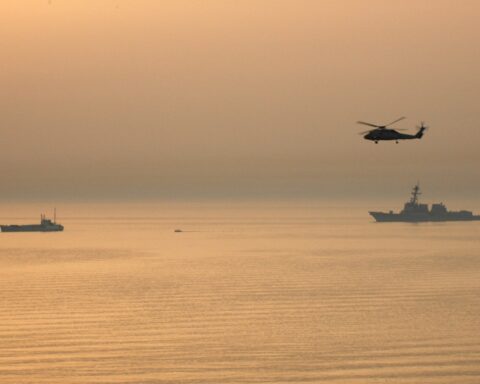
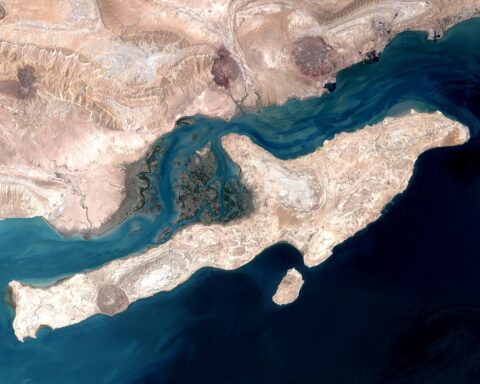
NEW DELHI — India is staring down its worst energy crisis since the 1973 oil embargo, and unlike that distant shock, this one threatens to empty the cooking gas cylinders of 330 million households before it empties the country’s strategic petroleum reserves. The closure of the Strait of Hormuz following the outbreak of the Iran war on 28 February 2026 has severed roughly half of India’s crude oil supply and as much as ninety per cent of its liquefied petroleum gas imports, exposing a dependency that decades of diversification promises have failed to meaningfully reduce. With Brent crude trading above $90 a barrel, the Indian rupee weakening against the dollar, and ten thousand restaurants in Tamil Nadu alone shutting their doors over gas shortages, the world’s most populous nation is discovering that its economic miracle runs on fuel it cannot produce and cannot, for the moment, reliably import.
The arithmetic is brutal. India imports approximately 85 per cent of its crude oil, equivalent to roughly 4.2 million barrels per day, and half of those imports transit the Strait of Hormuz. The country’s strategic petroleum reserves cover just 9.5 days of crude demand at best. Nine million Indian nationals live and work across the Gulf states, and the government has managed to evacuate only 67,000 of them in the war’s first two weeks. Prime Minister Narendra Modi, who stood before the Israeli Knesset on 25 February affirming that “India stands with Israel, firmly, with full conviction,” now finds himself telling Iran’s president that India is a “friend of Iran” — a diplomatic contortion that satisfies nobody and protects nothing. Tehran has since designated India a “friend” and approved passage for Indian-flagged vessels through the strait, though the volumes permitted remain a fraction of normal daily requirements.
Table of Contents
- How Dependent Is India on Gulf Oil?
- What Does the Hormuz Closure Mean for Indian Energy Supply?
- The LPG Crisis Hitting 330 Million Indian Households
- Why Can’t India Simply Reroute Its Oil Imports?
- How Large Are India’s Strategic Petroleum Reserves?
- Nine Million Indians Trapped in the Gulf
- Modi’s Impossible Diplomatic Position
- The India Energy Vulnerability Matrix
- Can India Diversify Away From Gulf Oil Fast Enough?
- What Does India’s Crisis Mean for the Saudi-Indian Relationship?
- India Holds the BRICS Chair and Cannot Use It
- Frequently Asked Questions
How Dependent Is India on Gulf Oil?
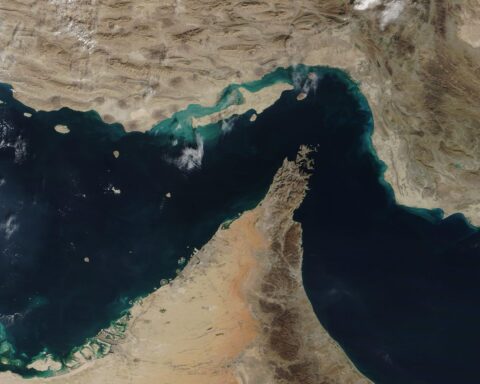
India is the world’s third-largest oil consumer and its second-largest destination for crude oil transiting the Strait of Hormuz, absorbing 14.7 per cent of all Hormuz oil flows according to the U.S. Energy Information Administration. Only China, at 29.3 per cent, receives more. Together, the two Asian giants account for 44 per cent of all oil that passes through the narrow waterway separating Iran from the Arabian Peninsula.
The dependency runs deeper than the headline number suggests. India imported approximately 2.6 million barrels per day from Gulf countries in the weeks preceding the outbreak of hostilities, according to India’s Petroleum Planning and Analysis Cell. Saudi Arabia alone supplied between 1.0 and 1.1 million barrels per day in February 2026, the highest volume since November 2019 according to DiscoveryAlert market analysis. Iraq contributed roughly 1.0 million barrels per day, the United Arab Emirates approximately 400,000, and Kuwait and Qatar made up the remainder.
The total bilateral trade between India and Saudi Arabia reached $41.87 billion in FY25, according to the Indian Embassy in Riyadh, with mineral fuels, oils, and waxes accounting for $78.3 billion of Saudi Arabia’s total exports to India in 2024. Saudi Aramco has renewed its engagement with Indian energy markets beyond crude supply, pursuing downstream investment opportunities and potential joint ventures in petrochemicals and refining. In April 2025, Prime Minister Modi and Crown Prince Mohammed bin Salman co-chaired the second meeting of the India-Saudi Arabia Strategic Partnership Council, where both sides agreed to collaborate on establishing two oil refineries in India.
That partnership, forged during peacetime, is now being tested by a war neither side anticipated.
The Middle East briefing 3,000+ readers start their day with.
One email. Every weekday morning. Free.
What Does the Hormuz Closure Mean for Indian Energy Supply?
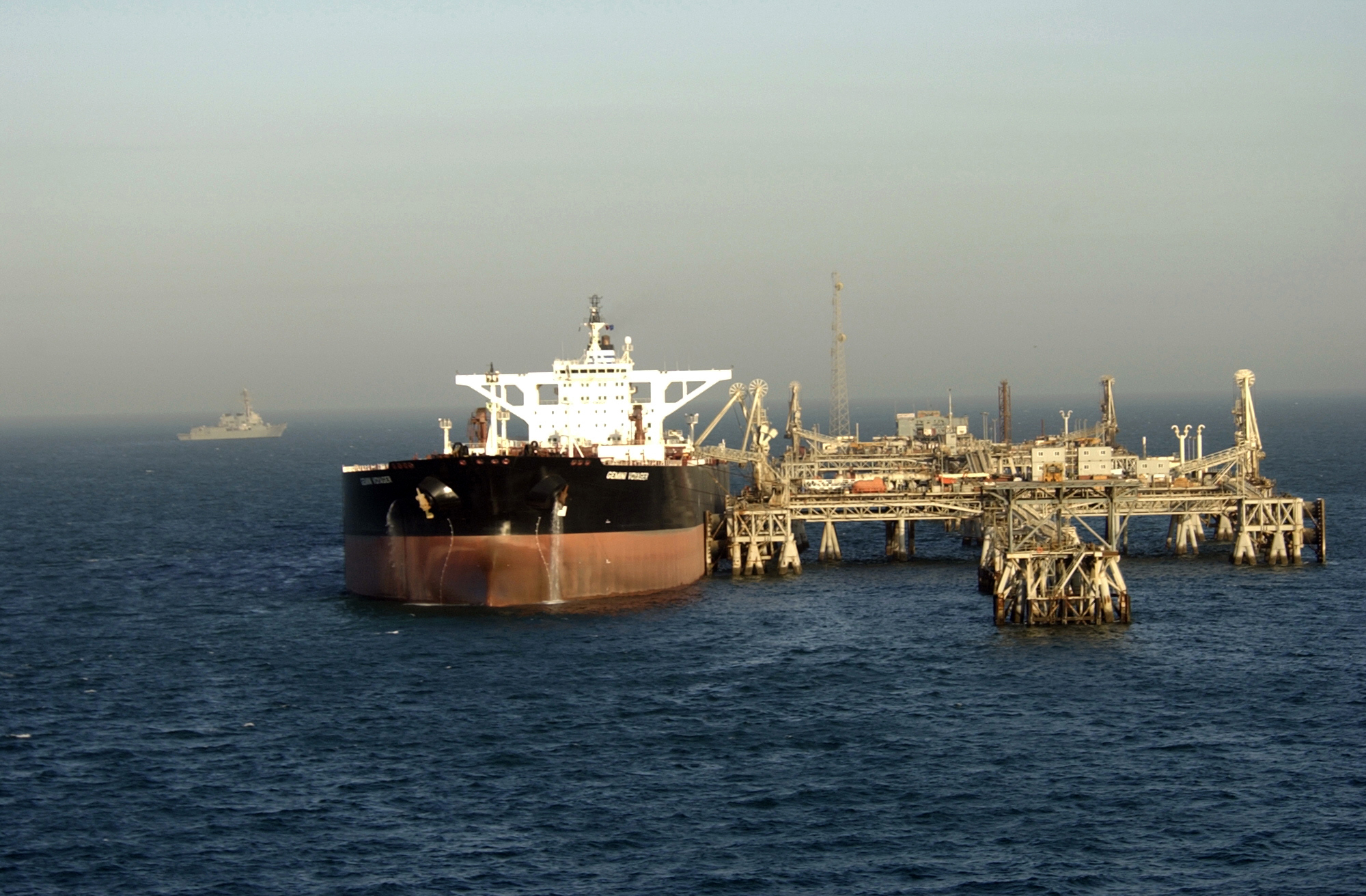
The effective closure of the Strait of Hormuz has removed roughly 2.1 million barrels per day of crude supply from India’s import pipeline — a shortfall equivalent to half the country’s total consumption. Tanker traffic through the strait has collapsed by approximately 91 per cent according to Lloyd’s List, with dry bulk transits falling to near zero and an estimated 280 bulk carriers stranded or trapped inside the Persian Gulf.
The disruption is not theoretical. On 5 March, the Islamic Revolutionary Guard Corps announced that Iran would keep the strait closed to ships from the United States, Israel, and their Western allies. On 11 March, according to the Washington Post, Iranian forces struck three commercial vessels near the Strait of Hormuz in a single morning. Insurance premiums for war-risk coverage have surged by more than 1,000 per cent, according to Reuters, prompting many insurers to cancel cover for vessels operating in the Gulf entirely.
For India, the immediate impact manifests in three ways. First, crude oil prices have risen sharply — Brent settled at $94 per barrel on 9 March, up roughly 50 per cent from the beginning of the year, and has remained above $90 since. Second, Saudi crude shipments through the Strait of Hormuz have fallen to 4.06 million barrels per day from a pre-crisis baseline of approximately 6.64 million barrels per day, representing a 39 per cent reduction in Gulf-bound export flows. Third, the Operation Maritime Shield naval escort convoys have not restored commercial confidence — most shipping companies are refusing to transit regardless of military protection. The Energy Secretary has since admitted the Navy is weeks away from beginning tanker escorts, leaving approximately 500 tankers stranded in the Gulf.
| Source | Pre-Crisis Volume (bpd) | Current Status | Impact on India |
|---|---|---|---|
| Saudi Arabia | 1.0–1.1 million | Partially rerouted via Red Sea (Yanbu) | ~40% reduction |
| Iraq | ~1.0 million | Exports suspended (Basra strikes) | ~100% loss |
| UAE | ~400,000 | Minimal transit through Hormuz | ~80% reduction |
| Kuwait | ~200,000 | Airspace closed, exports halted | ~100% loss |
| Qatar (LNG) | Major LNG supplier | LNG exports suspended | ~100% loss |
The one partial relief valve has been Saudi Arabia’s Red Sea port at Yanbu, where crude exports surged to approximately 2.47 million barrels per day during the first week of March — a 330 per cent increase compared with pre-crisis levels, according to CNBC shipping data. India has been a primary beneficiary of this Saudi Red Sea corridor, but the Yanbu pipeline’s total capacity of approximately 5 million barrels per day cannot compensate for the loss of Saudi Arabia’s eastern terminals, let alone the combined Gulf shortfall.
The LPG Crisis Hitting 330 Million Indian Households
The most immediate human impact of the Hormuz closure is not at petrol stations or power plants. It is in Indian kitchens. India imports roughly 67 per cent of its liquefied petroleum gas requirements, and approximately 90 per cent of those imports transit the Strait of Hormuz, according to Business Standard. The Gulf states — the United Arab Emirates, Qatar, Saudi Arabia, Kuwait, Oman, Bahrain, and Iraq — supply the overwhelming majority of India’s LPG.
The consequences are already visible across the country. India’s Ministry of Petroleum and Natural Gas has extended the minimum waiting period between LPG cylinder bookings from 21 days to 25 days, rationing supply to stretch diminished stocks. In Tamil Nadu alone, nearly 10,000 restaurants and food establishments were reported to have shut down by the second week of March according to CNBC reporting on the crisis. Gulf News reported that familiar kitchen routines across India are changing as cooking gas supplies tighten, with hot tea, fried snacks, and elaborate meals disappearing from menus in homes, hostels, and roadside eateries.

The government has responded by directing oil refineries to prioritise supplying LPG to the 330 million households that use it as a primary cooking fuel over the more than 3 million businesses that use commercial LPG cylinders. Domestic LPG production has increased by approximately 25 per cent, according to the Sunday Guardian, but this surge cannot compensate for the loss of Gulf imports. Rerouting LPG shipments through non-Hormuz channels adds weeks to delivery times, according to Business Standard analysis, and alternative suppliers in the United States and West Africa lack the tanker capacity and existing contracts to fill the gap quickly.
The LPG crisis exposes a vulnerability that crude oil statistics alone do not capture. India’s energy diversification efforts over the past decade focused primarily on crude oil source diversification, not on the downstream products — LPG, naphtha, and petrochemical feedstocks — that remain almost entirely Gulf-dependent. A country that built its rural development programme around the Ujjwala scheme, which distributed free LPG connections to over 100 million below-poverty-line households, now finds that programme’s achievements held hostage by a conflict 3,000 kilometres away.
Why Can’t India Simply Reroute Its Oil Imports?
India has made progress on diversification, and the numbers before the crisis looked encouraging. As of early March 2026, approximately 70 per cent of India’s crude imports were routed through channels outside the Strait of Hormuz, according to Organiser, compared with roughly 55 per cent before the government’s diversification push accelerated. India now imports crude from around 40 countries. Russian oil, which surged into Indian refineries following Western sanctions in 2022, reached between 800,000 and 1.2 million barrels per day in early 2026.
These numbers, however, mask three structural problems that prevent a clean pivot away from Gulf oil.
First, Indian refineries were built to process specific grades of crude. The country’s refining complex — with a capacity of approximately 5.0 million barrels per day across 23 refineries — was designed around Arabian medium and heavy crudes. Switching to alternative grades from West Africa, Latin America, or even additional Russian Urals requires blending adjustments that reduce throughput and yield. India cannot simply substitute barrels from Angola or Brazil for barrels from Saudi Arabia without accepting lower refinery efficiency and higher per-barrel processing costs.
Second, the logistics are punishing. A very large crude carrier (VLCC) sailing from Saudi Arabia’s Ras Tanura terminal to India’s Jamnagar refinery takes approximately five days. The same cargo originating from the U.S. Gulf Coast takes 35 to 40 days. From West Africa, roughly 20 days. Every additional day at sea multiplies freight costs, ties up tanker capacity, and increases the working capital locked in floating inventory. In a market where war-risk insurance premiums have surged over 1,000 per cent, the cost differential between a Gulf barrel and a non-Gulf barrel has widened to several dollars per barrel — a margin that Indian refiners, already operating on thin spreads, cannot easily absorb.
Third, the volume gap is simply too large to close quickly. India needs to replace approximately 2.1 million barrels per day of Gulf crude. Russia’s spare export capacity is limited, its pipeline and port infrastructure is near maximum utilisation, and Moscow is prioritising its own relationships with China. The global tanker fleet is already stretched by the rerouting of trade away from the Red Sea (Houthi attacks) and now the Persian Gulf. According to analysis of the broader gas war unfolding alongside the oil crisis, tanker day rates have reached record levels, with supertanker rates hitting all-time highs as CNBC reported.
How Large Are India’s Strategic Petroleum Reserves?
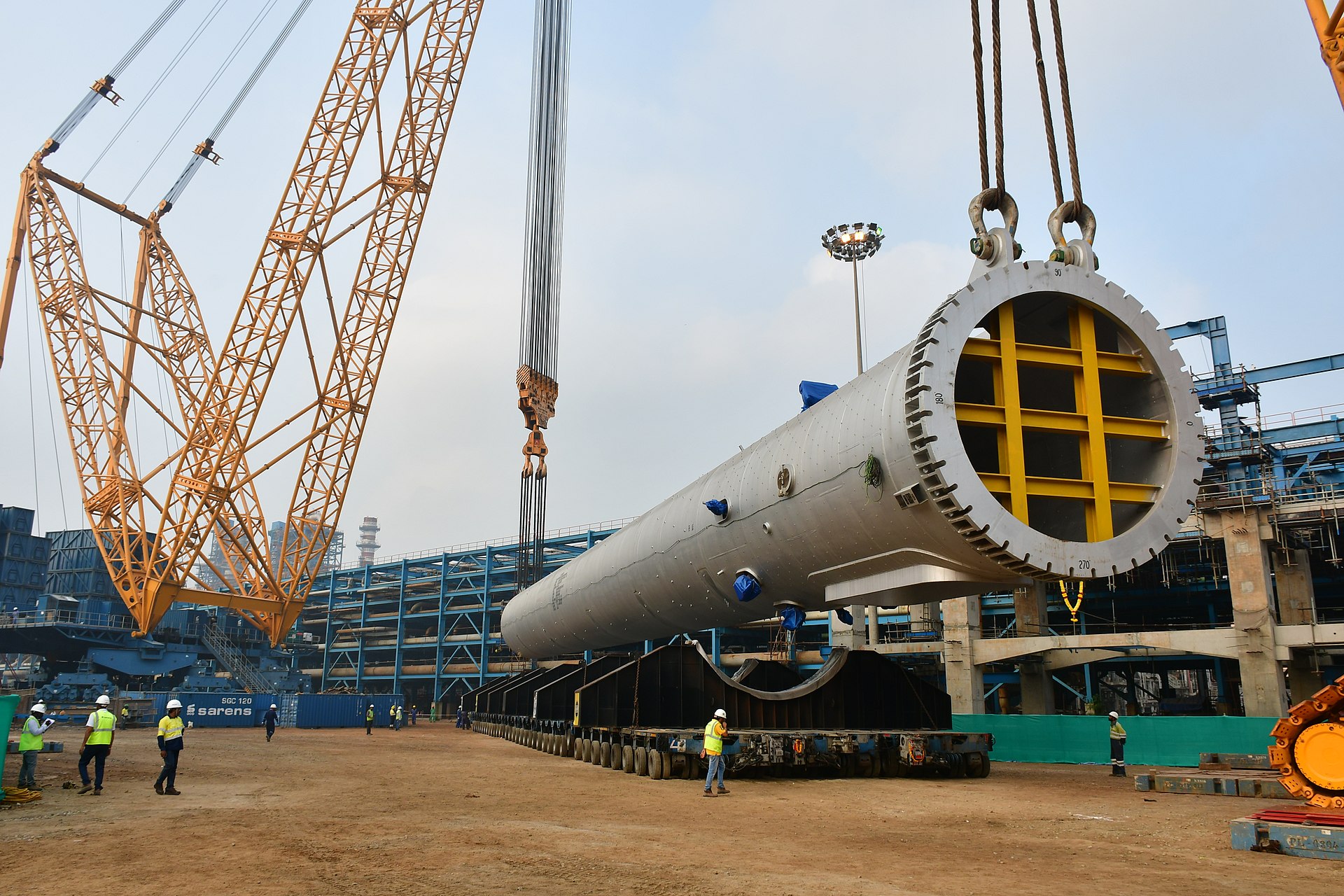
India’s total petroleum reserve capacity covers approximately 74 days of supply, according to the government’s Petroleum Ministry as reported in March 2026. That headline number, however, obscures a critical distinction. Only 9.5 days of that total consists of government-controlled strategic petroleum reserves — the emergency stocks that can be drawn upon during a supply disruption. The remaining 64.5 days sit in commercial storage operated by Oil Marketing Companies, which cannot be commandeered without severely disrupting the domestic distribution network.
By comparison, the United States maintains strategic reserves covering approximately 36 days of net imports. Japan holds roughly 140 days of consumption. South Korea maintains about 91 days. India’s 9.5-day strategic reserve is, by any measure, dangerously thin for a country that imports 85 per cent of its crude.
| Country | SPR (Days of Import Cover) | Total Reserves (Days) | Oil Import Dependence |
|---|---|---|---|
| Japan | ~140 | ~200 | ~98% |
| South Korea | ~91 | ~120 | ~97% |
| China | ~80 | ~90 | ~72% |
| India | ~9.5 | ~74 | ~85% |
The Indian government approved the establishment of two additional strategic petroleum reserve facilities in July 2021 — a 4-million-metric-tonne facility at Chandikhol in Odisha and a 2.5-million-metric-tonne facility at Padur in Karnataka, to be built on a public-private partnership basis. Neither is operational. SM Vaidya, former chairman of Indian Oil Corporation, told Business Today on 13 March that India should “go aggressive in ramping petroleum reserve capacity,” noting that the current crisis validated years of warnings about inadequate strategic stockpiles.
The existing strategic reserves are stored at three underground rock cavern facilities: Visakhapatnam in Andhra Pradesh (1.33 million metric tonnes), Mangalore in Karnataka (1.5 million metric tonnes), and Padur in Karnataka (2.5 million metric tonnes), for a total capacity of 5.33 million metric tonnes. At India’s current consumption rate, these reserves would be exhausted in under two weeks if drawn upon as the sole supply source — a scenario that, while unlikely, illustrates the margin of safety India operates within.
Nine Million Indians Trapped in the Gulf
India’s energy crisis has a human dimension that transcends barrels and basis points. Approximately nine million Indian nationals live and work across the Gulf Cooperation Council states, making the Indian diaspora the largest expatriate community in the region. They work on construction sites in Riyadh and Doha, in hospitals in Dubai and Muscat, in IT centres in Bahrain, and in retail and hospitality across every Gulf capital. Their remittances — approximately $52 billion from the Gulf in FY25 according to the Reserve Bank of India — constitute a critical pillar of India’s current account.
Since the outbreak of hostilities on 28 February, India has evacuated approximately 67,000 nationals from West Asia, according to Kashmir Life reporting. The Indian Embassy in Qatar coordinated the return of approximately 1,000 nationals via Qatar Airways flights and facilitated travel through the Salwa land border to Saudi Arabia using temporary 96-hour transit visas for stranded citizens. Large IT and construction firms have dispatched company buses from project sites in Qatar and Bahrain to the Saudi-Qatari border at Salwa, routing staff through Riyadh for evacuation flights.
The scale of the challenge dwarfs the response. As Enterprise AM analysis pointed out, a mass evacuation of nine million Indians from the Gulf is “practically impossible.” Even evacuating 25 per cent — 2.25 million people — would require logistics beyond anything India has attempted since the Kuwait evacuation of 1990, which moved 170,000 people and was then the largest civilian airlift in history. The Tribune reported that ten million Indians are effectively stuck in West Asia with no exit plan ready.
The government’s approach has shifted from mass evacuation to shelter-in-place guidance. Most Indian workers in the Gulf remain at their posts, reassured by their employers and by the relative distance of most Gulf cities from the front lines of the conflict. The risk is not that all nine million will need evacuation. The risk is that a single escalatory event — a missile hitting a labour camp, an Iranian strike on civilian infrastructure in the UAE or Qatar — could trigger a panic that overwhelms every airport and border crossing in the region simultaneously. The economic calculations being weighed in Abu Dhabi and Dubai will determine whether millions of Indian workers can continue to shelter in place or face an exodus that neither India nor the Gulf states are prepared to manage.
Modi’s Impossible Diplomatic Position
India’s diplomatic response to the Iran war reveals a leader executing a geopolitical split that has never been this wide. On 25–26 February, just days before the US-Israeli strikes on Iran, Modi addressed the Israeli Knesset and affirmed that “India stands with Israel, firmly, with full conviction, in this moment and beyond.” Within a week, as Iranian missiles and drones rained on Gulf states housing millions of Indian workers, New Delhi condemned Iran’s strikes on GCC countries including the UAE — while conspicuously declining to criticise the initial US-Israeli strikes on Iran that provoked the retaliation.
Then came the pivot. According to The Wire, Iranian President Masoud Pezeshkian spoke with Modi and reported that the Indian prime minister described India as a “friend of Iran” and pledged to make “maximum effort” to advance diplomacy. The Diplomat labelled India’s response a “diplomatic failure,” arguing that New Delhi had managed to alienate both sides without protecting either its energy security or its diaspora.
The contradiction is structural, not personal. India needs American defence technology and security cooperation in the Indo-Pacific. It needs Israeli intelligence and military hardware. It needs Iranian oil (historically) and the Chabahar port access that gives India a land route to Afghanistan and Central Asia. It needs Saudi crude, Emirati investment, and Qatari LNG. And it needs Russian oil at discounted prices to keep its refineries running at current throughput. Every one of these relationships pulls in a different direction on the Iran war.
That tension crystallised on 16 March when US air strikes hit IRGC positions just kilometres from India’s Chabahar port, forcing New Delhi to confront the possibility that its closest military ally is actively destroying its largest strategic infrastructure investment in Iran.
India is the only founding BRICS member that has not condemned the attack on Iran. Under India’s BRICS chairmanship, the bloc has not issued any joint statement on the current conflict.
Al Jazeera, 6 March 2026
Modi’s strategic ambiguity was sustainable when the conflict was limited to Israeli operations in Gaza and Lebanon. It is not sustainable when Iranian missiles are striking Gulf states that house nine million Indian citizens and supply half the country’s energy. As Scroll observed, India has “picked a side but could wind up as a big loser” — siding with the US-Israeli coalition diplomatically while suffering the economic consequences of Iran’s retaliation without any of the strategic benefits of formal alliance membership.
The contrast with Pakistan’s response is instructive. Islamabad activated its Strategic Mutual Defence Agreement with Saudi Arabia, deployed F-16 fighter jets and air defence assets, and positioned itself as Riyadh’s most committed military partner. India, despite a far larger economy and deeper trade relationship with Saudi Arabia, has offered nothing comparable — and risks watching Pakistan deepen a security relationship with the Kingdom that could redefine Gulf defence architecture for a generation.
The India Energy Vulnerability Matrix
India’s energy exposure to the Hormuz crisis can be assessed across five dimensions: volume dependency, substitution difficulty, reserve adequacy, economic transmission, and diplomatic leverage. Evaluated together, these factors reveal a vulnerability profile that is in some respects more acute than that of Japan or South Korea — countries that import a higher percentage of their oil but have built far larger strategic reserves and operate within formal alliance structures that guarantee supply priority.
| Dimension | Indicator | Score (1–10) | Assessment |
|---|---|---|---|
| Volume Dependency | 50% of crude, 90% of LPG via Hormuz | 8 | Critical — among highest globally for major economy |
| Substitution Difficulty | Refinery grade mismatch, tanker shortage, 35-day voyage from US Gulf | 7 | Severe — cannot replace Gulf barrels quickly |
| Reserve Adequacy | 9.5 days SPR, 74 days total (vs. Japan 140 days SPR) | 9 | Critical — lowest SPR among major Asian importers |
| Economic Transmission | $3.5 billion monthly import bill increase, 30bps inflation impact per 10% oil rise | 7 | Severe — rupee depreciation, fiscal deficit widening |
| Diplomatic Leverage | No formal alliance, BRICS chair but paralysed, no military contribution to Gulf security | 8 | Critical — no institutional mechanism to guarantee supply |
The composite vulnerability score of 7.8 out of 10 places India in a category of acute energy exposure that few analysts had modelled before the crisis. Japan and South Korea, despite higher import dependency ratios, score lower on reserve adequacy (both maintain reserves exceeding 90 days) and diplomatic leverage (both operate within formal US alliance frameworks that include energy supply coordination). China, while more dependent on Hormuz in absolute volume terms, has built strategic reserves covering approximately 80 days and maintains the diplomatic flexibility to negotiate directly with Iran as a major customer.
India occupies a uniquely precarious position: too dependent on Gulf oil to be insulated from the crisis, too strategically ambiguous to command priority allocation from producers, and too thinly reserved to withstand a prolonged disruption without severe economic consequences.
Can India Diversify Away From Gulf Oil Fast Enough?
The conventional narrative holds that India was already well along the path of energy diversification before the Iran war erupted, and that the crisis will accelerate a trend that was already underway. The data supports a more uncomfortable conclusion: India’s diversification was largely a rebranding of dependency rather than a genuine structural shift, and the crisis has revealed that the country’s energy security framework was built on assumptions that no longer hold.
The 70 per cent figure — the share of India’s crude imports now routed outside the Strait of Hormuz — is frequently cited as evidence of successful diversification. It deserves scrutiny. A significant portion of this non-Hormuz oil is Russian crude, which surged into Indian markets after 2022 at steep discounts. Russia now supplies between 800,000 and 1.2 million barrels per day to India, but Moscow’s ability and willingness to increase those volumes during the current crisis is constrained by its own production limitations, pipeline capacity to Pacific ports, and a competing commitment to China under long-term supply agreements.
India’s renewable energy programme — 175 gigawatts of installed renewable capacity as of 2025, with a target of 500 gigawatts by 2030 — addresses electricity generation but does nothing for transport fuel, petrochemicals, or cooking gas. Electric vehicle adoption remains below 5 per cent of new car sales. The country’s refining complex is expanding (Ratnagiri mega-refinery, Barmer refinery) but these projects add processing capacity for oil that India cannot produce domestically. Without a corresponding increase in domestic crude production — currently stagnant at approximately 600,000 barrels per day — new refineries simply entrench import dependency.
The contrarian reading of India’s energy position is this: diversification of source countries without diversification of fuel types is not energy security. It is portfolio management of a structural vulnerability. India has diversified its suppliers without reducing its total consumption of imported hydrocarbons, which means that any disruption large enough to tighten the global oil market — and the Hormuz closure certainly qualifies — hits India regardless of where its specific cargoes originate. When every barrel on the global market becomes more expensive, it does not matter whether that barrel was loaded in Ras Tanura or in Primorsk.
What Does India’s Crisis Mean for the Saudi-Indian Relationship?
The Iran war is testing the Saudi-Indian relationship at a moment when both sides had been building toward a deeper strategic partnership. The April 2025 Modi-MBS summit in Riyadh produced agreements on two joint oil refineries, expanded defence cooperation, and a framework for Indian participation in Vision 2030 infrastructure projects. Saudi Arabia is India’s fourth-largest trading partner and its second-largest source of crude oil. India is Saudi Arabia’s second-largest customer after China.
The crisis has introduced friction on several fronts. Saudi Arabia has shifted from its initial position of neutrality to an explicitly anti-Iran stance, reserving the right to respond with military force after Iranian drones and missiles struck its territory. Saudi Arabia’s defence partnership with Pakistan — formalised through the Strategic Mutual Defence Agreement signed in September 2025 — has been activated, with Pakistani F-16s deployed to Saudi air bases and troops arriving in the Kingdom. India, despite a far larger economy and a strategic partnership with Saudi Arabia, has offered no military support.
From Riyadh’s perspective, the calculus is increasingly clear. Pakistan activated the SMDA. India sent expressions of concern. When the next round of bilateral energy agreements comes up for negotiation, and when Aramco decides where to direct its downstream investment — toward Indian refineries or toward other Asian markets — Riyadh will remember who stood with the Kingdom when missiles were falling and who issued carefully worded press releases from a safe distance.
The Saudi leadership’s view of India was already conditioned by New Delhi’s refusal to formally condemn Iran and its continued purchase of Russian oil (which competes directly with Saudi market share in India). The crisis amplifies these tensions. India’s CNBC reporting noted that the Saudi-Pakistan defence pact was “unlikely to disrupt oil flows to India” — but that assessment was made before the war, in a market where India was a buyer’s market. In the current environment, where Saudi crude is scarce and demand is competing for every available barrel, the commercial relationship is inseparable from the geopolitical one.
There is a deeper structural issue. India’s relationship with the Gulf producers has historically been transactional — oil for cash, with some labour migration and remittance flows layered on top. It has not evolved into the kind of integrated security partnership that the US-Gulf or UK-Gulf relationships represent, where energy access is embedded within a broader framework of military cooperation, intelligence sharing, and mutual defence commitments. The crisis exposes the vulnerability of a relationship that is commercially deep but strategically shallow.
The Macroeconomic Shock India Cannot Absorb
The energy crisis is cascading through India’s economy with a speed that has caught policymakers off guard. According to Bloomberg opinion analysis published on 12 March, the Iran war has exposed India’s vulnerability to energy disruptions in ways that decades of rapid GDP growth had obscured. The country’s current account deficit is widening as the oil import bill surges. The rupee has weakened against the dollar as foreign portfolio investors withdraw capital from emerging markets exposed to Gulf risk. And inflationary pressures are building in a country where food and fuel prices are politically explosive.
The transmission mechanism is straightforward. India’s oil import bill runs approximately $15 billion per month at pre-crisis prices. With Brent above $90 — and having briefly touched $94 — the monthly bill has increased by roughly $3.5 billion. Over a full quarter, that represents an additional $10.5 billion drain on foreign exchange reserves. The Reserve Bank of India entered the crisis with approximately $630 billion in reserves, a comfortable buffer by most standards, but one that can erode quickly if the rupee comes under sustained selling pressure from a combination of capital flight and a widening trade deficit.
Down to Earth analysis found that a 10 per cent rise in crude oil prices above baseline assumptions could increase inflation by approximately 30 basis points. Since Brent has risen roughly 50 per cent from its January 2026 levels, the implied inflationary impact is approximately 150 basis points — a shock that would push headline inflation well above the Reserve Bank of India’s 6 per cent upper tolerance band and complicate any plans for interest rate cuts to support growth. The World Economic Forum estimated that the Iran war’s impact on energy markets could add 0.8 per cent to global inflation if disruptions persist beyond the first quarter.
For India’s 1.4 billion people, the macroeconomic numbers translate into immediate hardship. Higher diesel prices push up transport costs, which push up food prices. Higher LPG prices force households to spend a larger share of income on cooking fuel, crowding out other consumption. Higher kerosene prices hit the rural poor who have not yet transitioned to LPG. The government faces a choice between absorbing the price increase through expanded subsidies — widening the fiscal deficit — or passing it through to consumers, triggering political backlash. Neither option is attractive in a country where the ruling party faces state elections in 2027 and where the war shows no sign of ending soon.
India Holds the BRICS Chair and Cannot Use It
India assumed the rotating BRICS chairmanship in 2026, inheriting leadership of a bloc that now includes Iran as a member — the very country at the centre of the conflict consuming India’s energy security. The diplomatic paralysis this creates is without precedent in BRICS history.
As Al Jazeera reported, India is the only founding BRICS member that has not condemned the US-Israeli strikes on Iran. Under India’s chairmanship, the bloc has not issued any joint statement on the conflict — a silence that contrasts with June 2025, when BRICS issued a joint statement calling earlier strikes “a violation of international law and the Charter of the United Nations.” The Daily Maverick described BRICS as “a house divided,” with members at odds over a war against one of their own.
India’s position as BRICS chair is the diplomatic equivalent of chairing a board meeting where one director is being assaulted by the business partners of another director. China has pushed for a collective BRICS condemnation. Russia, while maintaining ties with Iran, has explored ceasefire diplomacy with Washington through the Trump-Putin channel. Brazil and South Africa have criticised the strikes. India has said nothing of substance — a posture that Middle East Eye characterised as BRICS being “missing in action.”
News24 Online explored whether Modi could serve as a mediator in the Iran war, arguing that India’s relationships with all parties positioned it uniquely. The argument has theoretical appeal and practical impossibility. A mediator must be perceived as neutral by all sides. India has been perceived as pro-Israel by Iran, pro-India by its own domestic audience, and strategically irrelevant by Washington, which is not seeking mediation. Modi’s diplomatic capital would be better spent securing emergency energy supply agreements with Saudi Arabia and Russia than attempting to broker a peace that neither the US nor Iran’s new leadership currently wants.
Frequently Asked Questions
How much of India’s oil comes through the Strait of Hormuz?
Approximately 50 per cent of India’s crude oil imports transit the Strait of Hormuz, making India the second-largest destination for Hormuz oil flows after China at 14.7 per cent of total strait traffic. India also depends on the strait for roughly 90 per cent of its LPG imports and 53 per cent of its LNG imports from Qatar and the UAE, creating a multi-fuel dependency that extends well beyond crude oil.
How many days can India’s strategic petroleum reserves last?
India’s government-controlled strategic petroleum reserves can cover approximately 9.5 days of the country’s crude oil requirements. When combined with commercial storage held by Oil Marketing Companies, total reserves extend to approximately 74 days. Japan, by comparison, maintains strategic reserves covering approximately 140 days of imports, and South Korea maintains roughly 91 days.
How many Indian nationals live in Gulf countries?
Approximately nine million Indian nationals live and work across the six Gulf Cooperation Council states, making the Indian diaspora the largest expatriate community in the region. Since the Iran war began on 28 February 2026, India has evacuated approximately 67,000 nationals. Mass evacuation of the full diaspora population is considered practically impossible by analysts, though the government has prepared contingency plans for phased withdrawals.
What is India’s diplomatic position on the Iran war?
India has adopted a position of strategic ambiguity, condemning Iran’s strikes on GCC countries while declining to criticise the initial US-Israeli strikes on Iran. Prime Minister Modi affirmed solidarity with Israel during a Knesset address on 25 February but subsequently told Iran’s president that India is a “friend of Iran.” India holds the 2026 BRICS chairmanship but has not issued any joint BRICS statement on the conflict.
How is the LPG shortage affecting Indian households?
India imports approximately 67 per cent of its LPG, with 90 per cent of those imports transiting the Strait of Hormuz. The government has extended the minimum waiting period between LPG cylinder bookings from 21 to 25 days. Nearly 10,000 restaurants shut down in Tamil Nadu alone. The Ministry of Petroleum has directed refineries to prioritise household supply over commercial customers, affecting over 3 million businesses that rely on commercial LPG cylinders.
What is India’s relationship with Saudi Arabia worth in trade terms?
Bilateral trade between India and Saudi Arabia reached $41.87 billion in FY25, with energy products dominating Saudi exports to India. Saudi Arabia supplied between 1.0 and 1.1 million barrels of crude oil per day to India in February 2026, the highest level since November 2019. The April 2025 Modi-MBS summit produced agreements on two joint oil refineries and expanded defence cooperation under the India-Saudi Arabia Strategic Partnership Council.