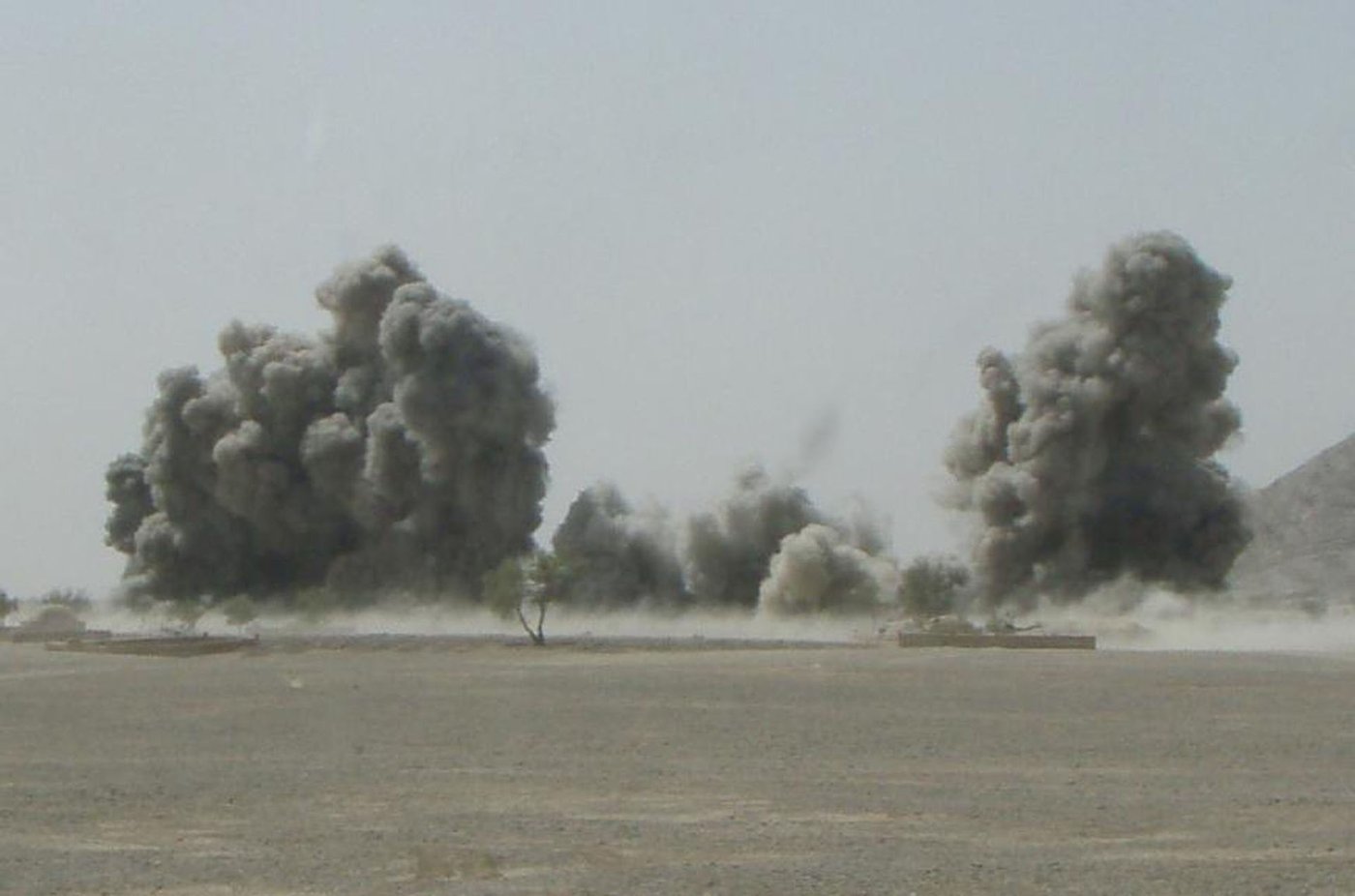

RIYADH — An explosion struck Tehran’s Ferdowsi Square on Friday during the annual Al-Quds Day rally, killing at least one person and injuring several others, according to Iranian state television, just hours after Israel issued a warning on a Farsi-language social media account telling demonstrators to evacuate the area. The blast occurred as thousands of Iranians gathered for the Ramadan-season march, with senior officials including Iran’s judiciary chief Gholamhossein Mohseni Ejei and President Masoud Pezeshkian present at the demonstration, in what diplomats and regional analysts described as the most provocative Israeli strike of the two-week-old war.
The strike’s timing — on the last Friday of Ramadan, at a rally established by Ayatollah Ruhollah Khomeini in 1979 to express solidarity with Palestinians — has sent shockwaves across the Muslim world and placed Saudi Arabia in an increasingly difficult diplomatic position. Crown Prince Mohammed bin Salman’s government has refused to join the military campaign against Iran while simultaneously maintaining its alliance with Washington, a strategy that analysts have called Riyadh’s most consequential gamble since the war began. The Quds Day strike threatens to collapse the back-channel negotiations Riyadh has quietly maintained with Tehran since early March.
Table of Contents
- What Happened at Tehran’s Ferdowsi Square?
- Why Does Al-Quds Day Matter to Iran and the Muslim World?
- Saudi Arabia Intercepts 56 Drones as Iran Escalates Gulf Attacks
- How Does the Strike Affect Saudi Arabia’s Ceasefire Diplomacy?
- Trump Warns of Military Consequences Iran Has Never Seen
- Gulf States Brace for Iranian Retaliation
- Regional and International Reaction
- What Comes Next for Saudi Arabia and the Gulf?
- Frequently Asked Questions
What Happened at Tehran’s Ferdowsi Square?
A large explosion rocked the Ferdowsi Square area in central Tehran at approximately midday local time on Friday, March 13, 2026, according to multiple Iranian state media reports and footage broadcast live on Iranian television. At least one person was killed and several others injured, Iranian state television reported, though the full casualty count remained uncertain as of Friday evening.
The blast struck during one of the Islamic Republic’s most symbolically important annual gatherings. Thousands of demonstrators had assembled for the Al-Quds Day march, chanting “death to Israel” and “death to America” — slogans that have defined the event since its inception in 1979. Iran’s judiciary chief Gholamhossein Mohseni Ejei had been giving a live interview to state television at the rally when the explosion occurred, footage reviewed by Al Jazeera showed.
Israel had issued a warning on its Farsi-language X (formerly Twitter) account telling people to clear the area shortly before the blast, according to the Associated Press. The Israel Defense Forces did not immediately claim responsibility for the strike, but the warning followed a pattern established throughout the two-week campaign in which Israeli military accounts have broadcast evacuation notices in Farsi before targeting locations in Iran.
Iran’s near-total internet shutdown, imposed since the war’s outbreak on February 28, meant few Iranians would have seen the warning, the AP reported. The country’s telecommunications infrastructure has been severely degraded by US and Israeli cyberattacks and physical strikes on communications nodes, according to the Cooperative Institute for Research in the Atmosphere (CIRA), which has tracked infrastructure damage using satellite imagery.
The Middle East briefing 3,000+ readers start their day with.
One email. Every weekday morning. Free.
President Masoud Pezeshkian was also present at the rally in Tehran, according to Iranian state media, though he was not reported injured. The strike on an event attended by two of Iran’s most senior officials represents a significant escalation in Israel’s targeting strategy, which until now has focused primarily on military installations, nuclear facilities, and oil infrastructure.
Why Does Al-Quds Day Matter to Iran and the Muslim World?
Al-Quds Day — “quds” is Arabic for “the Holy,” referring to Jerusalem — was established by Ayatollah Ruhollah Khomeini on August 7, 1979, shortly after the Iranian Revolution. Khomeini designated the last Friday of every Ramadan as a day of protest in solidarity with Palestinians and against Israeli control of Jerusalem, calling the “liberation” of the city a religious duty for all Muslims worldwide.
The annual observance has since become one of the Islamic Republic’s most important ideological events, serving as both a mass demonstration of regime support and a symbol of Iran’s self-appointed role as defender of the Palestinian cause. Millions have historically participated across Iran, with parallel marches held in Lebanon, Iraq, Pakistan, India, the United Kingdom, and dozens of other countries.
The 2026 observance carried heightened significance for multiple reasons. Ramadan began on February 18, and the US-Israeli military campaign against Iran — codenamed Operation Epic Fury — launched on February 28, just ten days into the holy month. For the Iranian government, the Quds Day rally represented an act of defiance: a demonstration that despite sustained aerial bombardment, the regime could still mobilize its population in the capital’s most prominent public spaces.
For Saudi Arabia, the custodian of Islam’s two holiest mosques in Mecca and Medina, the Al-Quds Day symbolism creates a particular tension. Riyadh has historically rejected Iran’s framing of itself as the primary defender of Palestinian and Islamic causes, viewing it as a power projection tool by Tehran. But an Israeli military strike on a rally invoking Jerusalem’s name during Ramadan touches a nerve across the Sunni Muslim world that Riyadh cannot ignore, according to analysts at the Brookings Institution’s Doha Center.
“The optics are devastating,” a Gulf-based diplomat told Reuters on condition of anonymity on Friday. “Israel just bombed a Ramadan gathering dedicated to Jerusalem. Every government in the Muslim world will face domestic pressure to respond.”
Saudi Arabia Intercepts 56 Drones as Iran Escalates Gulf Attacks
On the same day as the Quds Day strike, Saudi Arabia’s air defenses intercepted and destroyed 56 hostile drones targeting multiple regions across the Kingdom, the Saudi Gazette reported, citing the Saudi Defense Ministry. The drone waves struck in three separate barrages, targeting Saudi Arabia’s Eastern Province, Riyadh’s high-security Diplomatic Quarter, and the Empty Quarter region near the Shaybah oil field.
In addition to the drones, Saudi air defenses intercepted and destroyed three ballistic missiles launched toward Prince Sultan Air Base in Al-Kharj, approximately 100 kilometers south of Riyadh, the Defense Ministry said. The base hosts US military personnel and serves as a key node in the joint air defense architecture protecting the Kingdom.
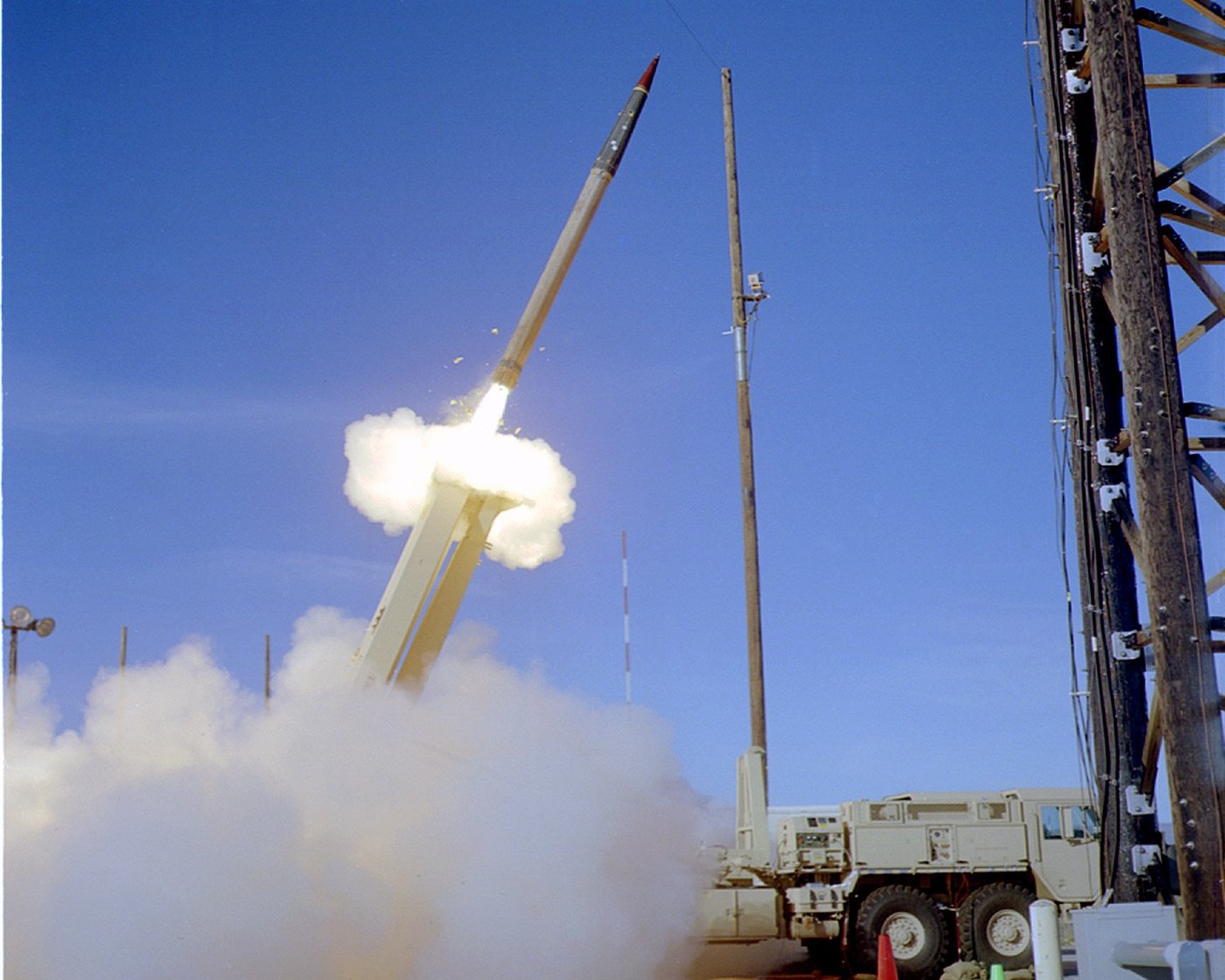
Friday’s 56 interceptions brought the total number of Iranian drones and missiles neutralized by Saudi defenses to more than 400 since the war began on February 28, according to a running tally maintained by the Saudi Press Agency. The Kingdom’s defense minister, Prince Khalid bin Salman, spoke with his Emirati and Kuwaiti counterparts on Friday to coordinate regional air defense postures, the Saudi Defense Ministry confirmed.
| Date | Target Area | Drones | Missiles | Outcome |
|---|---|---|---|---|
| March 1-5 | Eastern Province, Riyadh | ~120 | 6 | All intercepted; 2 civilians killed in Al-Kharj debris |
| March 6-8 | Shaybah, Ras Tanura, Dhahran | ~95 | 4 | All intercepted; Ras Tanura refinery offline briefly |
| March 9-12 | Riyadh, Eastern Province, Empty Quarter | ~140 | 8 | All intercepted; Diplomatic Quarter targeted |
| March 13 | Eastern Province, Riyadh, Al-Kharj | 56 | 3 | All intercepted |
Beyond Saudi Arabia, the broader Gulf region absorbed significant Iranian fire on Friday. Two foreign citizens were killed and several injured when Iranian drones crashed in Sohar, Oman, marking the first fatalities in a country that has maintained strict neutrality and served as a diplomatic intermediary between Washington and Tehran. Dubai and Abu Dhabi issued shelter-in-place advisories after interceptor debris fell in residential areas, though no injuries were reported in either emirate.
How Does the Strike Affect Saudi Arabia’s Ceasefire Diplomacy?
Saudi Arabia has maintained a direct diplomatic back channel to Tehran since the war’s earliest days, Bloomberg reported on March 6, with Saudi officials deploying the channel with “greater urgency” to de-escalate the conflict. The Kingdom’s approach — refusing to participate in the US-Israeli military campaign while keeping communication lines open with both sides — has positioned Riyadh as the most credible potential mediator in a war with few diplomatic off-ramps.
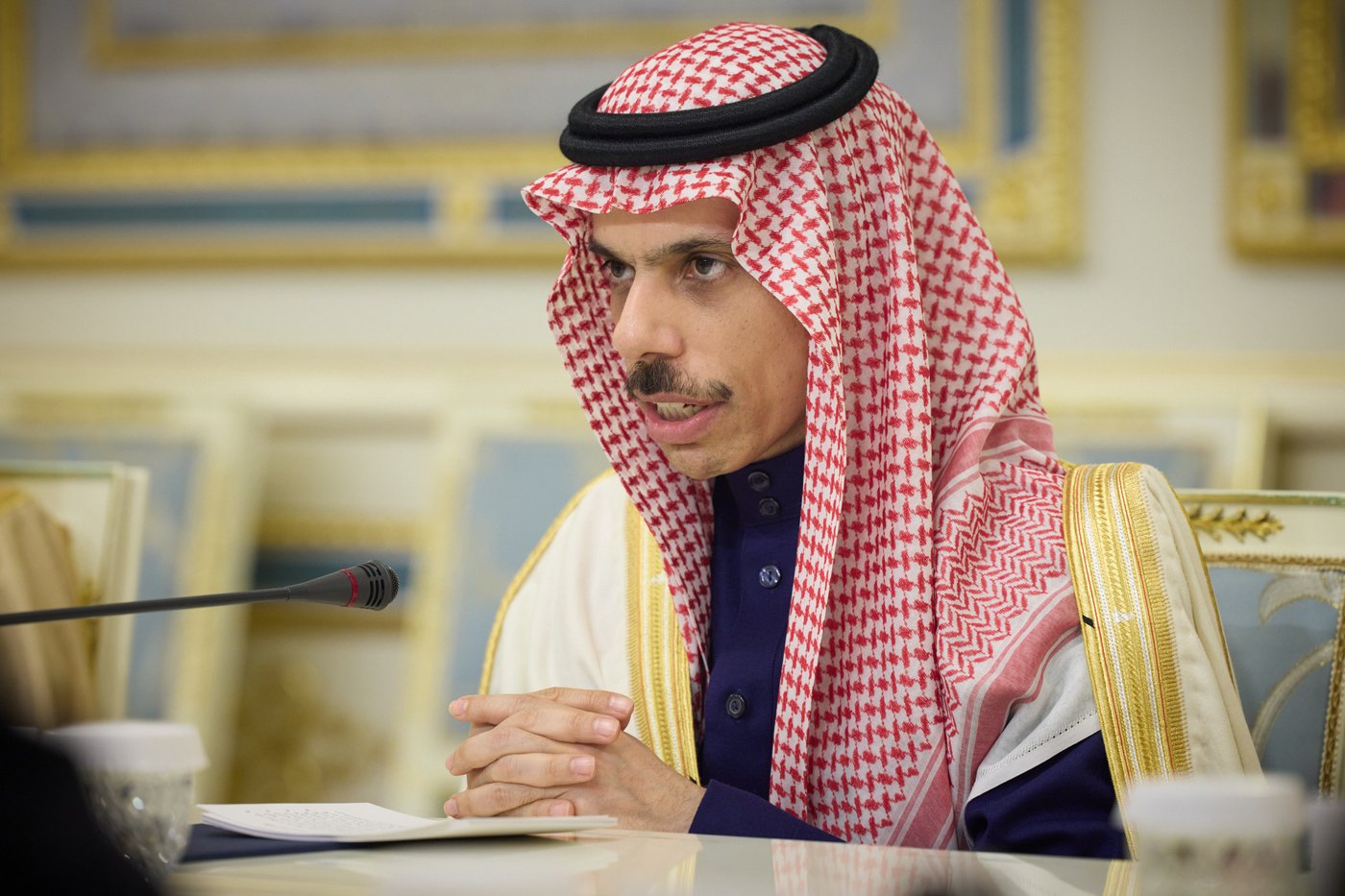
The Ferdowsi Square strike threatens to undermine that position on multiple fronts. Iran’s new supreme leader, Mojtaba Khamenei, who assumed power after his father Ali Khamenei was killed in the initial US-Israeli strikes on February 28, had already rejected an immediate ceasefire, according to Al Jazeera. The bombing of a religious rally during Ramadan provides the hardliners around Mojtaba Khamenei with powerful ammunition to argue that negotiations with any party aligned with the United States or Israel are futile.
“Riyadh’s diplomatic channel to Tehran was already under strain,” said a senior Saudi official familiar with the negotiations, speaking to Bloomberg on background. “This makes every conversation harder. The IRGC commanders who want to escalate can now point to Ferdowsi Square as proof that de-escalation is surrender.”
Pakistan’s Prime Minister Shehbaz Sharif flew to Jeddah on Wednesday, March 12, to meet Crown Prince Mohammed bin Salman, hours after calling Iranian President Pezeshkian by phone — making Islamabad the only country with active senior-level diplomatic contacts on both sides of the conflict at prime-ministerial level. Sharif expressed “full solidarity and support for the Kingdom,” according to a joint statement, while emphasizing Pakistan’s commitment to regional peace.
The timing of the Sharif visit underscored the intensifying diplomatic traffic through Riyadh. French President Emmanuel Macron called MBS on Friday to discuss regional escalation, Al Arabiya reported. Kuwait’s Crown Prince contacted MBS separately the same week, and multiple GCC leaders have maintained near-daily contact as the coalition of states subjected to Iranian fire has expanded to include all six Gulf Cooperation Council members plus Jordan, Iraq, and Oman.
Trump Warns of Military Consequences Iran Has Never Seen
President Donald Trump responded to Friday’s escalation by warning Iran of “military consequences at a level never seen before” if Tehran continued to mine the Strait of Hormuz, according to Euronews and the Washington Times. The threat came as shipping through the strait — through which approximately 20 percent of the world’s oil passes — had dropped by 95 percent since the war began, according to S&P Global Market Intelligence.
“We will take out easily destroyable targets that will make it virtually impossible for Iran to ever be built back as a nation again,” Trump posted on Truth Social on Friday, adding that “death, fire, and fury will reign upon them.” The language represented an escalation from Trump’s previous statements, which had focused on specific retaliatory measures rather than existential threats.
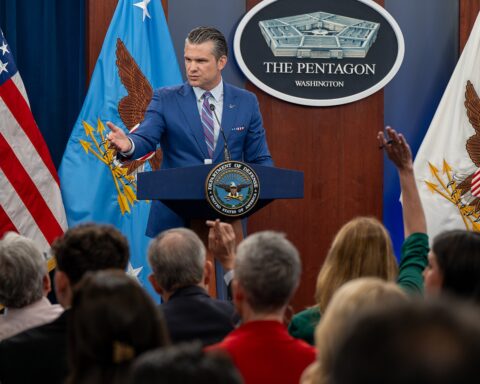
Defense Secretary Pete Hegseth described Friday as “the most intense day” of US strikes on Iran since the campaign began, NBC News reported. The intensification came despite Iran’s Supreme National Security Council issuing a statement saying it would “block all oil” until attacks ceased — a direct threat to the global economy that has pushed Brent crude above $120 per barrel, approximately 40 percent higher than when the war began on February 28, according to Bloomberg commodity data.
The US Navy has announced plans to escort commercial tankers through the Strait of Hormuz, but the deployment of sufficient surface vessels and minesweepers is weeks away, leaving a critical gap in the global oil supply chain. Saudi Arabia, which holds virtually all of OPEC’s remaining spare production capacity, has announced plans to increase output by 206,000 barrels per day starting in April through an OPEC+ agreement, Fortune reported, but the additional supply means little if it cannot reach international markets.
Gulf States Brace for Iranian Retaliation
Regional security officials warned that the Quds Day strike would likely trigger an intensified wave of Iranian attacks on Gulf states in the coming 48 to 72 hours. Iran’s Islamic Revolutionary Guard Corps has consistently escalated its targeting of Gulf civilian and energy infrastructure after each major Israeli strike inside Iran, a pattern documented by the ACLED conflict data project in its March 2026 Middle East Special Issue.
Since the war began, Iran has struck all six GCC member states — Saudi Arabia, the United Arab Emirates, Bahrain, Kuwait, Qatar, and Oman — along with Iraq and Jordan. The breadth of targeting has shattered decades of Iranian restraint toward the Gulf monarchies and forced several states that had cultivated careful neutrality to confront the reality that geography, not diplomatic posture, determines vulnerability.
| Country | Targets Hit | Confirmed Casualties | Status |
|---|---|---|---|
| Saudi Arabia | Eastern Province oil infrastructure, Riyadh, Prince Sultan Air Base, Diplomatic Quarter | 2 killed, multiple injured | Active defense; refusing offensive action |
| UAE | Abu Dhabi, Dubai; interceptor debris in residential areas | 0 confirmed | Shelter advisories issued |
| Bahrain | Fuel depot near airport | Multiple injured | US Fifth Fleet base on alert |
| Kuwait | Airport damaged; airspace closed | 0 confirmed | Oil exports suspended |
| Oman | Sohar port; Salalah port | 2 killed (foreign nationals) | Neutrality maintained; mediation role |
| Qatar | Al Udeid Air Base vicinity | 0 confirmed | US CENTCOM forward HQ on high alert |
| Iraq | US bases; Basra oil infrastructure | 7 US personnel killed (total) | Oil exports suspended |
| Jordan | Muwaffaq al-Salti Air Base | 1 French soldier killed | Active coalition participant |
Saudi Arabia’s decision to absorb Iranian strikes without retaliating offensively has drawn both praise and criticism. Senator Lindsey Graham threatened to withhold support for a US-Saudi defense pact unless Riyadh agreed to strike Iran directly, Reuters reported on March 10. But MBS has calculated that restraint preserves Saudi Arabia’s diplomatic leverage and avoids a direct Saudi-Iranian war that could last years, according to analysts who have characterized the approach as Riyadh’s most consequential strategic decision of the conflict.
Regional and International Reaction
Reaction to the Quds Day strike was swift and sharply divided along the fault lines that have defined the two-week conflict. Iran’s Foreign Ministry denounced the attack as “an act of terrorism against civilians during the holiest month of Islam,” calling for an emergency session of the United Nations Security Council, according to the Iranian Students’ News Agency (ISNA).
Turkey’s Foreign Ministry condemned the strike “in the strongest terms,” calling it “a flagrant violation of international law and an affront to the Muslim world during Ramadan.” Ankara’s response was notably stronger than its previous statements on the war, reflecting the domestic pressure President Recep Tayyip Erdogan faces from a population overwhelmingly sympathetic to the Palestinian cause that Al-Quds Day symbolizes.
The United Kingdom, which had banned the annual Al-Quds Day march in London this year citing intelligence assessments of “a serious risk of public disorder,” issued a measured statement calling for “restraint from all parties.” The cancellation of the London march — traditionally one of the largest outside Iran — reflected the broader security concerns the war has generated in Western capitals.
China, which has maintained diplomatic contact with both sides and dispatched a peace envoy to Riyadh earlier in the week, expressed “deep concern” and reiterated its call for “an immediate cessation of hostilities,” according to a statement from the Ministry of Foreign Affairs in Beijing.
Saudi Arabia’s official response was conspicuously absent as of Friday evening. The Kingdom’s Foreign Ministry had not issued a statement on the Ferdowsi Square strike specifically, though it had reiterated its call for “an end to the escalation cycle” in a broader statement on the day’s events. The silence reflected the impossible balancing act Riyadh faces: condemning the strike risks alienating Washington and Tel Aviv, while ignoring it risks alienating the wider Muslim world at a moment when Saudi Arabia’s custodianship of Islam’s holiest sites is under scrutiny.
What Comes Next for Saudi Arabia and the Gulf?
The convergence of the Quds Day strike, the 56-drone barrage on Saudi Arabia, and the continued closure of the Strait of Hormuz creates what one Saudi official described to Bloomberg as “the most dangerous 72 hours since the war began.” Several scenarios are now in play that could reshape the conflict’s trajectory and Saudi Arabia’s role in it.
Iran’s IRGC has publicly threatened to “burn every oil facility in the Gulf” if strikes on Iranian territory continue, and the Quds Day attack provides the political cover for an escalation in that direction. Saudi Arabia’s Ras Tanura refinery — the world’s largest oil-processing facility — was briefly taken offline earlier in the conflict after an Iranian drone strike, and energy security analysts at Rapidan Energy Group have warned that a sustained assault on Gulf oil infrastructure could remove up to 8 million barrels per day from global markets, a scenario that would push crude prices well above $150 per barrel.
Diplomatically, the Oman channel remains the conflict’s most viable pathway to de-escalation. The deaths of two foreign nationals in Sohar have complicated Muscat’s mediating role but have not ended it, according to Omani officials cited by the Financial Times. Sultan Haitham bin Tariq has maintained communication with both Mojtaba Khamenei and the Trump administration, a diplomatic feat that depends on Oman’s continued ability to avoid being drawn into the conflict as a combatant.
For Crown Prince Mohammed bin Salman, the calculus remains unchanged but the risks have multiplied. Eid al-Fitr, marking the end of Ramadan, falls on approximately March 30 — offering a potential face-saving off-ramp for all parties if ceasefire talks can gain traction in the next two weeks. Whether the Quds Day strike has killed that possibility or created the conditions for exhaustion-driven negotiations is the question that every capital in the region is now trying to answer.
Frequently Asked Questions
What is Al-Quds Day and why was the rally significant?
Al-Quds Day is an annual observance established by Ayatollah Khomeini in 1979, held on the last Friday of Ramadan to express solidarity with Palestinians and opposition to Israel. The 2026 rally at Tehran’s Ferdowsi Square was the first held during an active war between Iran and the US-Israeli coalition, and senior officials including Iran’s judiciary chief and president were present when the explosion struck.
How many drones did Saudi Arabia intercept on March 13?
Saudi Arabia’s air defenses intercepted and destroyed 56 drones and three ballistic missiles on March 13, 2026, according to the Saudi Defense Ministry. The drones targeted the Eastern Province, Riyadh’s Diplomatic Quarter, and the Empty Quarter region. This brought the total intercepted since the war began to more than 400 Iranian projectiles across Saudi airspace.
Has Saudi Arabia attacked Iran in retaliation?
Saudi Arabia has not launched any offensive military strikes against Iran since the war began. Crown Prince Mohammed bin Salman has maintained a policy of strategic restraint, defending Saudi airspace while refusing to join the US-Israeli offensive campaign. Riyadh has instead focused on back-channel diplomacy with Tehran and regional coalition-building with fellow Gulf states.
What is the current price of oil?
Brent crude oil prices have spiked to approximately $120 per barrel as of March 13, 2026, roughly 40 percent higher than when the war began on February 28. The surge reflects the near-total shutdown of shipping through the Strait of Hormuz, through which approximately 20 percent of the world’s oil supply transits. OPEC+ has announced a 206,000 barrel-per-day output increase for April, but export routes remain constrained.
When could a ceasefire happen?
Diplomatic sources cited by Bloomberg and the Financial Times have pointed to Eid al-Fitr, expected around March 30, as a potential window for a ceasefire or at least a temporary humanitarian pause. Oman, Pakistan, and Saudi Arabia have all maintained active diplomatic channels to Tehran, but Iran’s new supreme leader Mojtaba Khamenei has publicly rejected an immediate ceasefire while US-Israeli strikes continue, and the Quds Day attack is expected to harden that position further.