
WASHINGTON — The Trump administration on Thursday night temporarily lifted sanctions on Russian oil shipments in an effort to cool surging energy prices as the Iran war enters its third week with no end in sight, but crude oil closed above $100 for a second consecutive day on Friday as markets dismissed the move as insufficient to offset the largest supply disruption in the history of the global oil market.
The license, issued by the Treasury Department, authorizes the purchase of Russian crude and petroleum products loaded on vessels as of March 12 and permits those shipments through April 11. Approximately 124 million barrels of Russian oil are currently stranded at sea globally, according to tanker-tracking data, and the administration is betting that releasing them onto world markets will ease a price spike that has pushed Brent crude above $103 per barrel. The decision drew immediate backlash from European allies, who warned it would undermine the sanctions regime designed to punish Moscow for its invasion of Ukraine.
For Saudi Arabia, the move creates a strategic paradox. Russia is simultaneously Riyadh’s most important partner inside OPEC+ and the primary arms supplier to Iran, whose drones and missiles have struck Saudi territory on 14 consecutive days. Releasing Russian barrels into a market already struggling with oversupply fears could depress the very prices that Riyadh needs to fund its wartime economy and keep the riyal’s dollar peg intact.
Table of Contents
- What Did the Trump Administration Announce on Russian Oil Sanctions?
- How Much Russian Oil Is Affected by the Sanctions Relief?
- Europe Condemns the Move as Ukraine Pays the Price
- Why Did Oil Prices Stay Above $100 Despite the Sanctions Relief?
- What Does the Russian Oil Waiver Mean for Saudi Arabia and OPEC+?
- The Hormuz Factor and Why 124 Million Barrels Will Not Be Enough
- India Gets a Second Russian Oil Lifeline as Asia Scrambles
- What Happens When the License Expires on April 11?
- Frequently Asked Questions
What Did the Trump Administration Announce on Russian Oil Sanctions?
The Treasury Department issued a temporary general license late on Thursday permitting the purchase and delivery of Russian crude oil and refined petroleum products that were already loaded on vessels as of March 12, 2026. The license runs through April 11, giving buyers a 30-day window to take delivery of Russian cargoes that had been stranded at sea since earlier rounds of sanctions restricted their sale.
Treasury Secretary Scott Bessent said the measure would “apply only to oil already in transit and will not provide significant financial benefit to the Russian government, which derives the majority of its energy revenue from taxes assessed at the point of extraction.” The administration framed the action as a targeted response to the energy crisis created by Iran’s effective blockade of the Strait of Hormuz rather than a broader rollback of the Russia sanctions architecture.
The sanctions lift reflects a broader structural reality: the global oil market cannot function without both Russian and Saudi supply simultaneously. Analysis of Moscow and Riyadh’s wartime energy alignment reveals why this interdependence will outlast the current crisis.
The Middle East briefing 3,000+ readers start their day with.
One email. Every weekday morning. Free.

The decision follows an earlier, narrower step taken almost a week ago when Washington lifted restrictions specifically allowing India to buy Russian oil for 30 days. That initial waiver signaled the administration’s willingness to trade sanctions enforcement against Moscow for relief on energy costs. Thursday’s license significantly expands the scope, opening the cargoes to any buyer.
According to the Washington Post, senior administration officials debated the move for several days as Brent crude breached $100 per barrel and gasoline prices in the United States climbed to their highest level since 2022. The decision was ultimately driven by domestic political concerns about pump prices heading into the spring driving season, officials told the newspaper.
How Much Russian Oil Is Affected by the Sanctions Relief?
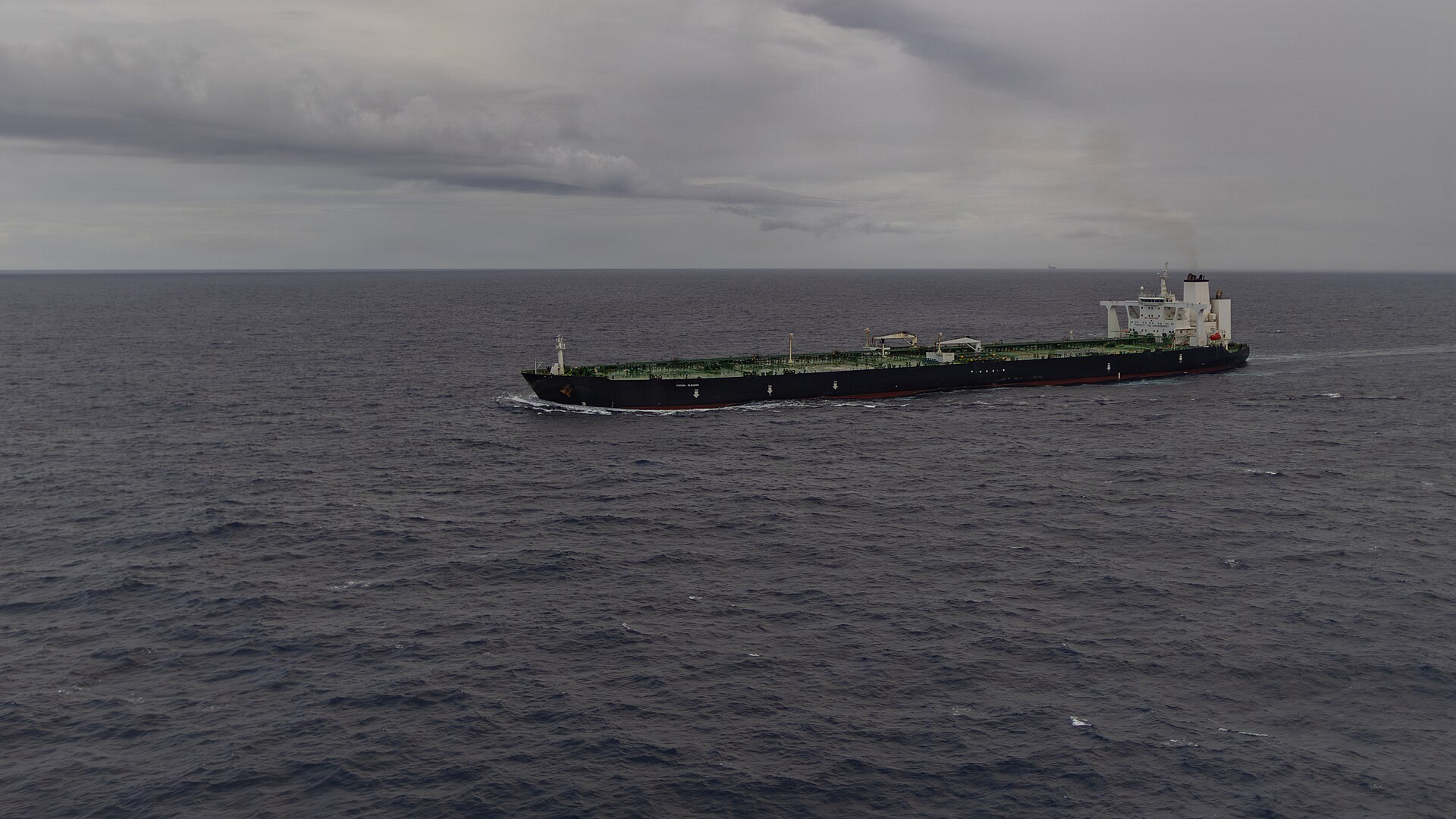
Approximately 124 million barrels of Russian crude and petroleum products are currently loaded on tankers at sea, according to tanker-tracking data compiled by Kpler and Vortexa. That volume represents one of the largest floating storage positions in the history of the oil market, accumulated as sanctions progressively tightened the market for Russian cargoes over the past three years.
The 124 million barrels, if delivered over the 30-day license window, would add roughly 4.1 million barrels per day to global supply. In normal market conditions, that injection would be significant. But the Iran war has removed far more oil from the market. The International Energy Agency estimated this week that Gulf production cuts forced by the Hormuz blockade have taken at least 8 million barrels per day offline, making the Russian release less than half the daily shortfall.
| Metric | Volume | Source |
|---|---|---|
| Russian oil at sea (eligible for release) | 124 million barrels | Kpler / Vortexa |
| Daily equivalent (over 30 days) | ~4.1 million b/d | Calculation |
| Gulf production lost to Hormuz blockade | ~8 million b/d | IEA, March 2026 |
| IEA strategic reserve release | 400 million barrels | IEA |
| OPEC+ agreed output increase (April) | 206,000 b/d | OPEC+ |
| Daily global oil demand | ~103 million b/d | IEA |
CBS News reported that some of the Russian cargoes have been at sea for months, circling in holding patterns off the coasts of West Africa, Southeast Asia, and the Mediterranean as their operators struggled to find buyers willing to risk secondary sanctions. The license effectively removes that risk for 30 days, creating a window for refiners in India, China, Turkey, and potentially Europe to take delivery.
Analysts at Goldman Sachs cautioned that even if all 124 million barrels reach buyers, the relief would be temporary. “This is a one-time inventory drawdown, not a sustained increase in supply,” the bank wrote in a note to clients on Friday. Goldman expects Brent crude to average above $100 per barrel through March and potentially reach $120 if the Hormuz blockade extends beyond April.
Europe Condemns the Move as Ukraine Pays the Price
The decision drew sharp and immediate criticism from European capitals, where leaders warned that easing pressure on Russian oil revenues would fund Moscow’s war machine in Ukraine at the worst possible moment.
German Chancellor Friedrich Merz said “easing sanctions now, for whatever reason, would be wrong” and called on Washington to consult with allies before making unilateral changes to the sanctions regime. European Council President António Costa issued a statement calling the move “very concerning, as it impacts European security,” adding that “any step enabling Russia to increase revenues from oil sales would be problematic for crippling Russia’s war capabilities against Ukraine.”
French President Emmanuel Macron was more direct. Speaking at a press conference in Paris, Macron said the paralysis of the Strait of Hormuz “in no way” justifies lifting sanctions on Russia. The statement came on the same day France confirmed the death of a French soldier in an Iranian drone strike in Iraqi Kurdistan, raising tensions across the Atlantic.
Ukrainian President Volodymyr Zelenskyy provided the sharpest critique, telling reporters that the US waiver could provide Russia with approximately $10 billion in additional revenue “for the war against Ukraine.” Zelenskyy called the decision “a gift to Putin at the expense of Ukrainian lives.” A broader analysis of how Moscow has profited from seven distinct dimensions of the Iran war suggests Zelenskyy’s estimate may undercount the full strategic windfall.
Easing sanctions now, for whatever reason, would be wrong. The paralysis of the Strait of Hormuz in no way justifies lifting sanctions on Russia.
European leaders’ statements, compiled from Reuters, AFP, and Bloomberg, March 13, 2026
The only dissenting voice among EU leaders was Hungarian Prime Minister Viktor Orbán, who called for sanctions to be lifted entirely, aligning himself with the US position. Orbán has consistently opposed EU sanctions on Russian energy since 2022, arguing they harm European economies more than they damage Moscow. The EU pushed back formally on Friday, with the European Commission issuing a statement that member states remain bound by existing EU sanctions regardless of US waivers, according to Euronews.
The transatlantic rift over Russian sanctions adds a new dimension to the diplomatic fallout from the Iran war, which has already strained the US-European relationship. The Council on Foreign Relations described Europe’s response to the conflict as “disjointed,” with member states unable to agree on whether to support, oppose, or simply endure the US-Israeli campaign against Iran.
Why Did Oil Prices Stay Above $100 Despite the Sanctions Relief?
Brent crude futures rose 2.67 percent to close at $103.14 per barrel on Friday, while US West Texas Intermediate gained 3.11 percent to settle at $98.71. It was the second consecutive session above the $100 threshold for Brent, and the market showed no sign that the Russian oil waiver had eased supply anxiety.

The reason is arithmetic. The Iran war has created the largest supply disruption in the history of the global oil market, according to the IEA’s March 2026 Oil Market Report published this week. With crude and refined product flows through the Strait of Hormuz plunging from approximately 20 million barrels per day before the war to what the IEA described as “a trickle,” the 124 million barrels of Russian oil represents barely two weeks of the shortfall, even under the most optimistic delivery scenario.
CNBC reported that traders are particularly concerned about the duration of the disruption. Iran’s new Supreme Leader, Mojtaba Khamenei, pledged this week to maintain the effective closure of the strait, and commercial shipping traffic through the waterway remains at a near-total standstill. Tanker insurers have pulled coverage for Gulf-bound vessels, and the cost of war-risk premiums has made transit commercially unviable for most operators.
Goldman Sachs raised its Brent crude forecast to average above $100 for March, with scenarios running as high as $140 if the blockade persists into the second quarter. The bank noted that the combined effect of the IEA’s 400 million barrel strategic reserve release, the OPEC+ output increase of 206,000 barrels per day, and the Russian sanctions waiver still falls short of replacing the lost Gulf production.
| Date | Event | Brent ($/bbl) | WTI ($/bbl) |
|---|---|---|---|
| Feb 28 | US-Israeli strikes begin | ~$78 | ~$73 |
| Mar 3 | Iran blocks Hormuz | $110+ | $105+ |
| Mar 9 | Oil peaks intraday | ~$120 | ~$115 |
| Mar 10 | Diplomatic hopes crash | ~$92 | ~$88 |
| Mar 12 | Brent reclaims $100 | $100.51 | $95.70 |
| Mar 13 | Russian waiver; oil rises | $103.14 | $98.71 |
The pattern reveals a market that briefly responded to diplomatic signals but quickly reverted to pricing in a prolonged disruption. The March 10 crash, when Brent plunged from near $120 to $92 on reports of a ceasefire “off-ramp,” proved to be a false dawn. Oil has now climbed steadily for three consecutive sessions as the diplomatic breakthrough failed to materialize. Traders told CNBC that every policy measure announced by Washington — strategic reserves, OPEC+ increases, Russian waivers — has been dismissed as “a band-aid on a hemorrhage.”
What Does the Russian Oil Waiver Mean for Saudi Arabia and OPEC+?
The decision places Saudi Arabia in a deeply uncomfortable position. Russia is the most important non-OPEC member of the OPEC+ alliance, and the production-cut agreements that have underpinned Saudi fiscal planning since 2016 depend on Moscow’s cooperation. At the same time, Russia continues to supply weapons and components to Iran, the country whose missiles and drones have struck Saudi cities, oil fields, and military installations for two consecutive weeks.
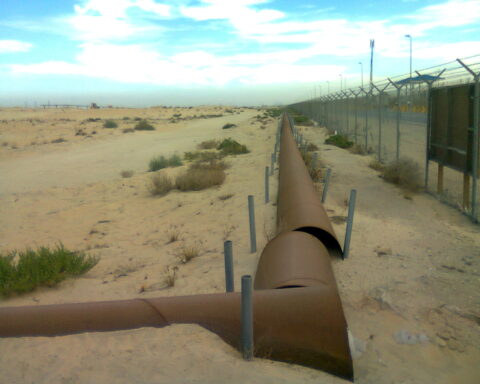
Releasing 124 million barrels of Russian crude onto a market where Saudi Arabia is already struggling to export through its limited non-Hormuz capacity could undercut Riyadh’s pricing power. Saudi Aramco has been routing exports through the East-West Pipeline to the Red Sea port of Yanbu, but that pipeline has a maximum throughput of approximately 5 million barrels per day — far below Saudi Arabia’s pre-war export capacity of 7-8 million barrels per day.
If Russian cargoes flood the spot market while Saudi Arabia is capacity-constrained, Asian refiners may simply buy cheaper Russian barrels instead of paying the premium for Saudi crude shipped the long way around Africa. Analysts at Columbia University’s Center on Global Energy Policy warned that “if there are backdoor deals with Moscow, Saudi Arabia could end up alienating Russia without gaining the expected Asian market share.”
The OPEC+ alliance itself faces fresh strain. The group agreed on March 1 to increase output by 206,000 barrels per day for April, a modest boost designed to show willingness to stabilize markets without flooding them. But Reuters reported that Russia, Algeria, and Oman had pushed for a pause in the increases, reflecting disagreement among key members about the appropriate pace of production growth during a war that has simultaneously removed millions of barrels from the market and pushed prices above $100.
For Crown Prince Mohammed bin Salman, who has built Saudi Arabia’s entire economic transformation strategy around predictable oil revenue, the Russian sanctions waiver introduces a new variable at the worst possible moment. The Kingdom is simultaneously funding a wartime economy, maintaining critical megaproject spending, and subsidizing domestic fuel prices that are now significantly below the cost of replacement crude.
The Hormuz Factor and Why 124 Million Barrels Will Not Be Enough
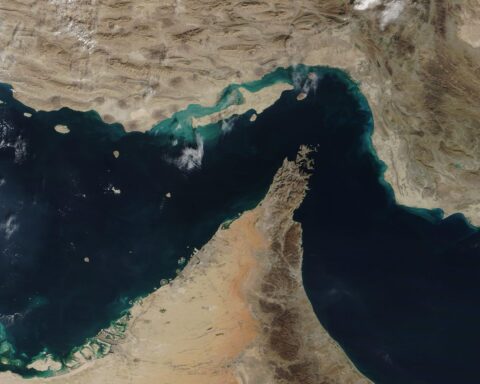
The fundamental problem confronting global oil markets is not the volume of Russian crude at sea. It is the continued closure of the Strait of Hormuz, through which approximately 20 percent of the world’s daily oil supply normally flows. Until the strait reopens, no amount of alternative supply can fully compensate for the loss. Yet Africa’s oil producers are capturing market share that may prove difficult for Gulf exporters to reclaim even after hostilities cease.
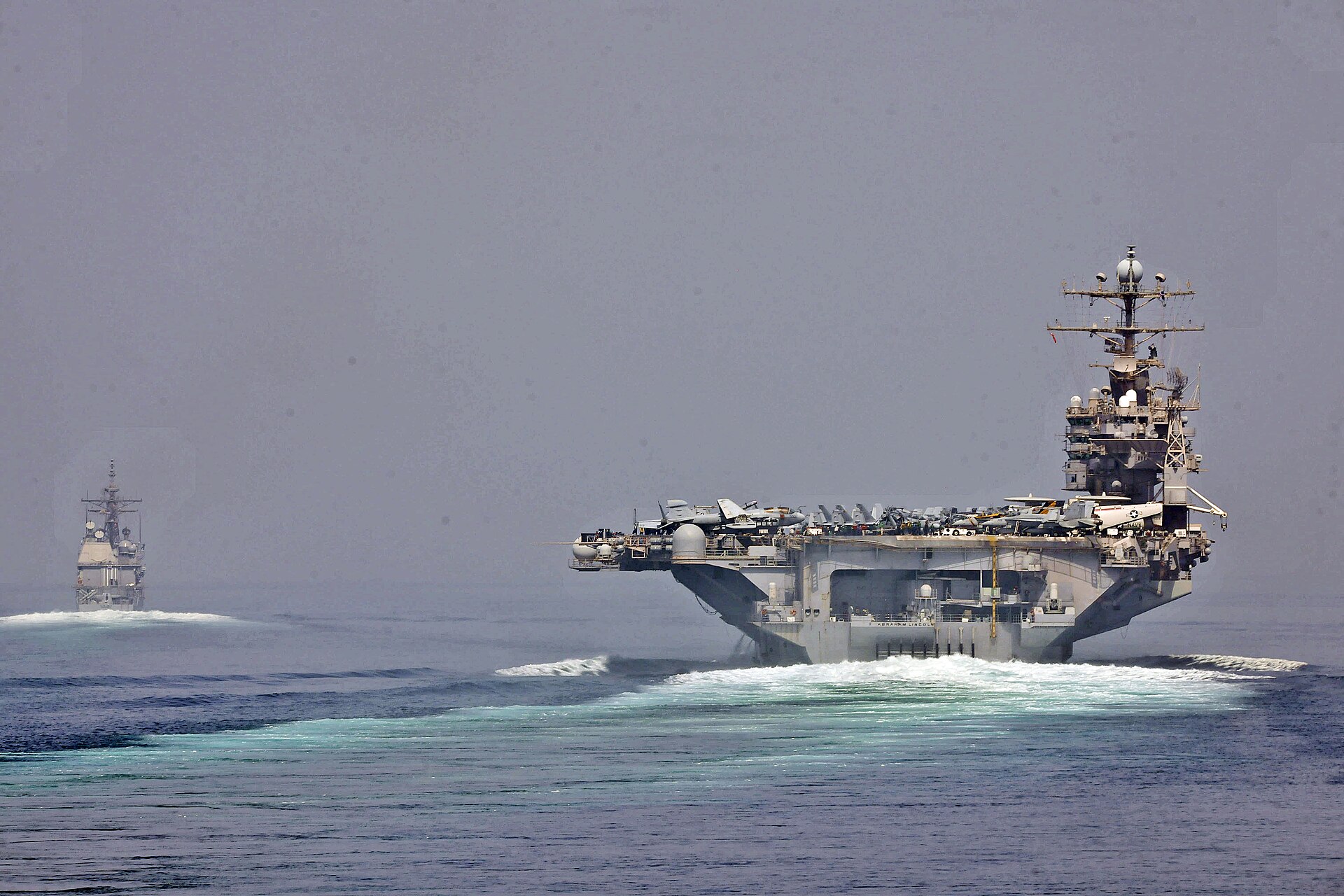
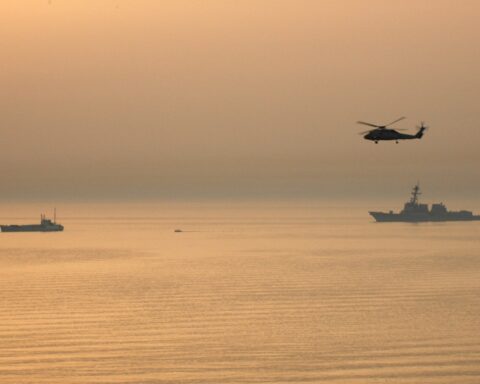
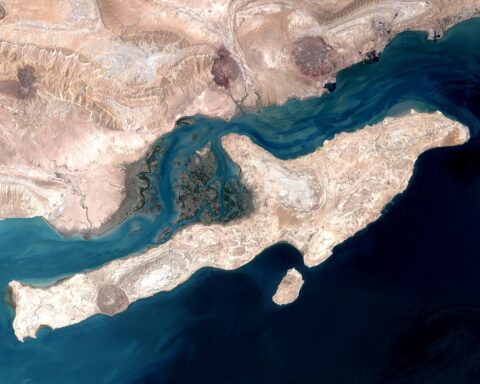
Iran’s IRGC Navy has threatened to attack any commercial vessel attempting to transit without permission, and the mining of the strait has made passage hazardous even for military escorts. The US-led Operation Maritime Shield has yet to establish a reliable convoy system, and tanker insurance markets have effectively priced commercial transit as impossible. Meanwhile, the US decision to strike Iran’s Kharg Island oil terminal while deliberately sparing petroleum infrastructure has reinforced Saudi Arabia’s position as the indispensable supplier — a dynamic explored in detail in our analysis of the Kharg Island strike that made Saudi oil untouchable.
The IEA’s March 2026 Oil Market Report, released this week, used the phrase “largest supply disruption in history” to describe the situation — surpassing the 1973 Arab oil embargo, the 1979 Iranian Revolution, and the 1990 Gulf War in terms of daily barrels removed from the market. The agency noted that with Gulf storage facilities filling rapidly and limited bypass capacity available, Saudi Arabia, Kuwait, and the UAE have collectively cut total oil production by at least 10 million barrels per day.
Against that backdrop, the 4.1 million barrels per day that the Russian waiver could theoretically deliver represents a meaningful but temporary cushion. Once the 124 million barrels are absorbed — a process that could take two to four weeks depending on refinery demand — markets will face the same structural deficit unless the Hormuz crisis is resolved.
India Gets a Second Russian Oil Lifeline as Asia Scrambles
The broader sanctions waiver comes on top of the targeted relief Washington granted to India a week earlier, allowing New Delhi to purchase Russian crude for 30 days. India, the world’s third-largest oil importer, has been among the hardest hit by the Hormuz closure, which severed its primary supply route from the Gulf.
India imported approximately 4.5 million barrels per day before the war, with roughly 60 percent flowing through the Strait of Hormuz. With that supply cut, Indian refiners have scrambled to secure alternative cargoes from West Africa, Latin America, and the United States. Russian oil, priced at a significant discount to Brent, offers the most economically attractive replacement.
China, the world’s largest oil importer, has continued to purchase Russian crude throughout the sanctions regime through a network of intermediaries and shadow-fleet tankers. The new waiver may not significantly change Chinese purchasing patterns, but it removes the sanctions risk that had kept some Chinese state-owned refiners on the sidelines.
Japan and South Korea, which together import approximately 6 million barrels per day, face an acute energy crisis. Both countries relied almost entirely on Gulf crude shipped through Hormuz, and neither has significant refining capacity configured for the heavier Russian Urals-grade crude that the waiver makes available. Bloomberg reported that Japanese refiners are evaluating whether to accept Russian cargoes on a spot basis, a decision that would mark a significant departure from Tokyo’s post-2022 policy of avoiding Russian energy.
What Happens When the License Expires on April 11?
The 30-day window creates a hard deadline that markets are already pricing in. If the Hormuz blockade persists beyond April 11 — a scenario that analysts at Rystad Energy, Goldman Sachs, and the IEA all consider probable — the administration will face a choice between extending the Russian waiver, allowing prices to spike again, or finding yet another source of emergency supply.
Extending the waiver would deepen the rift with Europe and effectively reward Moscow with sustained revenue during the Ukraine war. Allowing it to expire would remove 4 million barrels per day of supply from a market that is already short by 8 million barrels per day. Neither option is attractive, and both carry significant geopolitical costs.
For Saudi Arabia, the critical question is whether the Kingdom can restore its export capacity independently of the Hormuz crisis. Aramco’s East-West Pipeline provides an alternative export route through the Red Sea, but its capacity is limited to approximately 5 million barrels per day. Bloomberg reported this week that Aramco is evaluating emergency expansion options, including reverse-flowing pipelines and activating mothballed storage terminals on the Red Sea coast, but any significant capacity additions would take months rather than weeks.
The OPEC+ group is scheduled to meet again in early April, where the question of further production increases will dominate the agenda. If Russian barrels are flowing freely under the waiver while Saudi Arabia remains capacity-constrained, Moscow may push for a larger OPEC+ increase to capture market share — a move that would echo the 2020 price war that briefly sent oil below zero.
Putin himself hinted at this dynamic during a press conference on March 9, telling reporters that Russia “can supply oil and gas to Europe” as energy prices soar. The statement was widely interpreted as an attempt to leverage the Iran war to reverse the energy isolation imposed after the 2022 invasion of Ukraine.
Frequently Asked Questions
What exactly did the Trump administration authorize regarding Russian oil?
The Treasury Department issued a temporary general license on March 12 permitting the purchase and delivery of Russian crude oil and refined petroleum products that were already loaded on vessels as of that date. The authorization runs through April 11, covering approximately 124 million barrels of Russian oil currently at sea. It does not authorize new Russian oil exports or production.
Why did oil prices keep rising despite the sanctions relief?
The Russian waiver could theoretically add approximately 4.1 million barrels per day to global supply over 30 days. But the Iran war has removed approximately 8 million barrels per day through the Hormuz blockade, creating a deficit far larger than the Russian release can fill. Markets are pricing in a prolonged disruption that the waiver addresses only temporarily. Brent crude closed at $103.14 on March 13.
How does this affect Saudi Arabia and OPEC+?
The waiver complicates Saudi Arabia’s position within OPEC+, where Russia is the most important non-OPEC partner. Russian crude flooding the spot market could undercut Saudi pricing power while Riyadh’s own exports are constrained by the Hormuz closure. Saudi Arabia is routing oil through its East-West Pipeline to the Red Sea, but at reduced capacity. The move also highlights the awkward reality that Russia arms Iran while partnering with Saudi Arabia inside OPEC+.
Why is Europe so opposed to the decision?
European leaders argue that easing sanctions on Russian oil provides Moscow with additional revenue to fund its war in Ukraine. Ukrainian President Zelenskyy estimated the waiver could provide Russia with approximately $10 billion. EU leaders, including German Chancellor Merz and French President Macron, called the decision “wrong” and “in no way” justified by the Hormuz crisis. Only Hungary’s Orbán supported the move within the EU.
What happens after April 11 when the license expires?
If the Hormuz blockade persists, the administration will face a choice between extending the waiver, which would deepen the rift with Europe, or allowing it to expire, which would remove the Russian supply cushion from a market already short by millions of barrels per day. Analysts at Goldman Sachs, Rystad Energy, and the IEA all consider a prolonged blockade the most likely scenario, suggesting oil prices could rise further toward $120-140 per barrel.