
DHAHRAN — Aramco is about to report its strongest quarter in a year — a $29 billion profit that looks like vindication and reads like a receipt for war-premium pricing the oil market has already called. The Q1 2026 consensus, due Saturday, was built almost entirely on official selling prices that peaked at a record +$19.50 per barrel above benchmark for May loadings and have since been cut by $4.00, which means the best result Saudi Arabia’s national oil company has posted since early 2025 is also the last one that will carry this kind of pricing tailwind.
Beneath the headline sits a set of facts the earnings number cannot obscure. Saudi production crashed from 10.4 million barrels per day to 7.25 million bpd in March — a 30% collapse confirmed by IEA data — that would normally destroy a quarter but didn’t, because Aramco pushed its term-contract pricing to levels never achieved in the company’s history while captive Asian buyers had nowhere else to go. Brent was trading near $109 when those prices were set; it sits at $91-94 now. The Q1 numbers are a photograph of a pricing environment that no longer exists, and on Saturday, IFRS reporting standards — indifferent to sovereign communication strategy — will force that photograph, alongside disclosures about damaged assets and production capacity the Saudi government would rather defer, into the audited public record.
Table of Contents
- What Do the Q1 2026 Numbers Show?
- The Pricing Trick Behind the Profit Surge
- How Did Saudi Arabia Lose 3 Million Barrels a Day?
- Why Does a Record Quarter Coincide with a Record Deficit?
- What Happens When the Performance Dividend Disappears?
- The Khurais Disclosure Aramco Cannot Avoid
- How Have Markets Already Priced the Damage?
- Frequently Asked Questions
What Do the Q1 2026 Numbers Show?
AlJazira Capital’s consensus forecast projects Aramco’s Q1 2026 net profit at SAR 108.8 billion ($29.01 billion), up 13.8% year-on-year from Q1 2025’s SAR 97.5 billion ($26 billion) and up 56.7% quarter-on-quarter from Q4 2025’s approximately $25.1 billion, according to the firm’s April 23 report published via Zawya. Revenue is expected at SAR 455.3 billion, a 6% year-on-year and 9.4% quarter-on-quarter increase that conceals, rather than reveals, the underlying operating conditions.
The year-on-year gain flatters because the baseline was already soft — Q1 2025 itself represented a 4.6% decline from the prior-year quarter, making the +13.8% rebound a recovery to slightly above trend rather than evidence of operational momentum. The quarter-on-quarter number is the one that exposes the mechanics: AlJazira Capital attributed the 56.7% jump almost entirely to crude oil prices rising approximately 24.8% in Q1 relative to Q4 2025, partially offset by the roughly 600,000 bpd of upstream capacity destruction confirmed by Bloomberg on April 9 following IRGC strikes on Saudi infrastructure.
| Period | Net Income (USD) | Context |
|---|---|---|
| FY 2022 | $161.1 billion | Record — Russia-Ukraine supply shock |
| FY 2023 | $121.3 billion | Price normalization |
| FY 2025 | $104.7 billion | Pre-war annual baseline |
| Q1 2025 | $26.0 billion | Year-ago quarterly baseline |
| Q1 2026 (consensus) | $29.01 billion | Iran war premium — AlJazira Capital forecast |
A 6% year-on-year revenue increase alongside a production crash of roughly 30% means pricing alone absorbed the entire volume shock and generated additional gains on top. That is not operational resilience — it is extreme pricing power deployed at the precise moment term-contract buyers had no spot alternatives, and pricing power of that kind has a shelf life measured in quarters. AlJazira Capital published its consensus before the June OSP cut was announced and before Brent’s slide from its Q1 highs, meaning the forecast reflects a pricing environment that was already aging when the ink dried.
Q1 cargoes were priced and loaded before the correction began in earnest, so the headline number will likely match or slightly exceed consensus. Q2 is another matter entirely: the June OSP has already been cut by $4.00, Brent trades $15-18 below the level at which the May record was calibrated, and there is no production recovery in sight that would allow restored volume to compensate for declining per-barrel revenue. That is the point at which the war-premium quarter stops looking like a floor and starts looking like a peak.
The Middle East briefing 3,000+ readers start their day with.
One email. Every weekday morning. Free.

The Pricing Trick Behind the Profit Surge
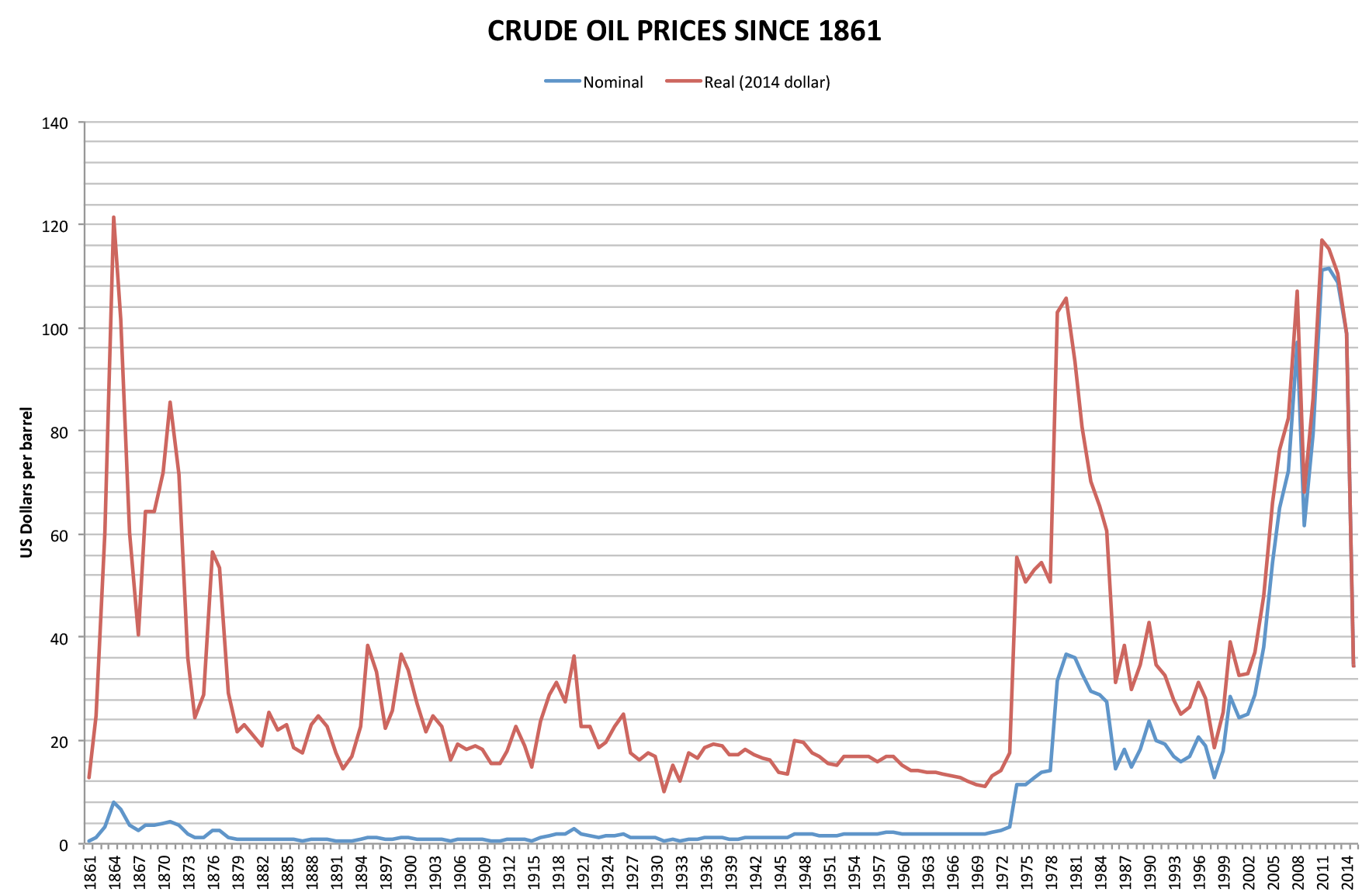
Aramco’s official selling price for Arab Light crude to Asia reached +$19.50 per barrel above the Oman/Dubai benchmark for May 2026 loadings — the highest differential in the company’s history, more than double the previous wartime record of +$9.35 set during the Russia-Ukraine supply shock in May 2022, according to Argaam data. That OSP was calibrated against an oil market trading near $109 Brent, and term-contract buyers who loaded May cargoes paid effective realized prices of $111-113 per barrel against a spot market that has since fallen to $91-94 — a gap of $17-22 per barrel between what Aramco charged its customers and what the market now considers the barrel to be worth.
The Russia-Ukraine comparison is instructive for what it reveals about duration and reversion. The +$9.35 May 2022 differential lasted one month before reverting, as supply alternatives materialized and Russian crude found Asian buyers at steep discounts through shadow-fleet arrangements that took months to organize but, once operational, permanently changed the supply picture. The current premium has persisted longer and reached higher, but the underlying dynamic — captive buyers paying war prices until alternative barrels appear — follows the same arc. June’s $4.00 cut to +$15.50 is the first data point on that reversion curve.
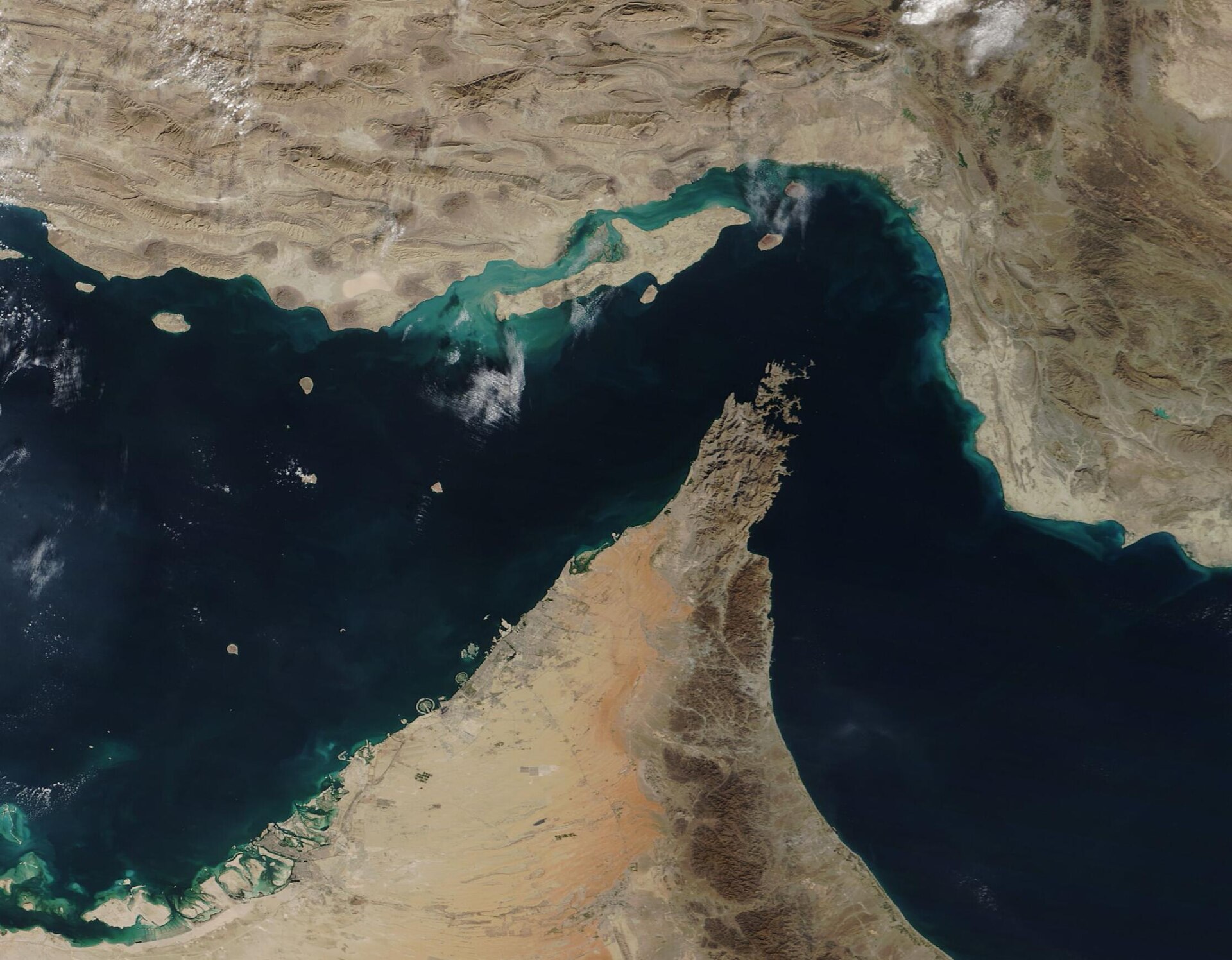
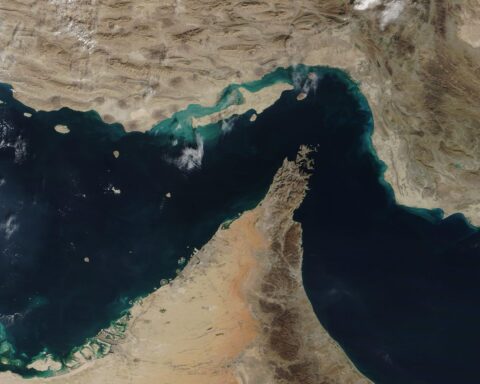
The captive-buyer mechanism works like this: the double blockade on the Hormuz corridor — the US controlling Arabian Sea entry from April 13, the IRGC controlling Gulf of Oman exit since early March — removed roughly 13 million barrels per day from accessible supply, a figure IEA Director Fatih Birol called the “biggest energy security threat in history.” Asian refiners who depend on Middle Eastern term contracts had no spot alternatives, so they paid the premium because the only other option was shutting down refinery capacity. That is not a pricing dynamic that survives contact with normalized supply, and Saudi Arabia’s own activation of the East-West Pipeline bypass to Yanbu is one of several factors now putting a ceiling on how long it holds.
Vitol CEO Russell Hardy estimated in late April that the oil market stands to lose approximately one billion barrels of production from the war, with 600-700 million already gone — a scale of disruption that created the conditions for Aramco’s pricing power but also generated the fiscal, diplomatic, and logistical pressures now actively eroding it. Each step toward normalization — alternative routes, ceasefire negotiations, non-Saudi term contracts being renegotiated by Asian importers — compresses the differential that built Q1’s results, and the June OSP cut is Aramco’s own acknowledgment that the compression has already started.
How Did Saudi Arabia Lose 3 Million Barrels a Day?
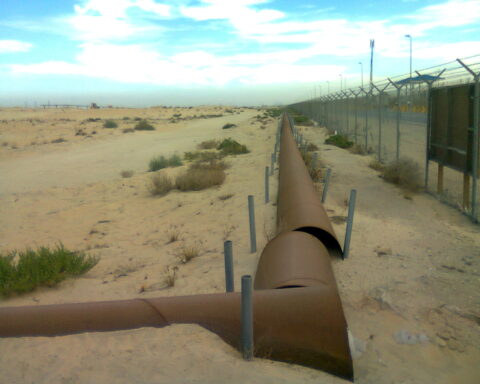
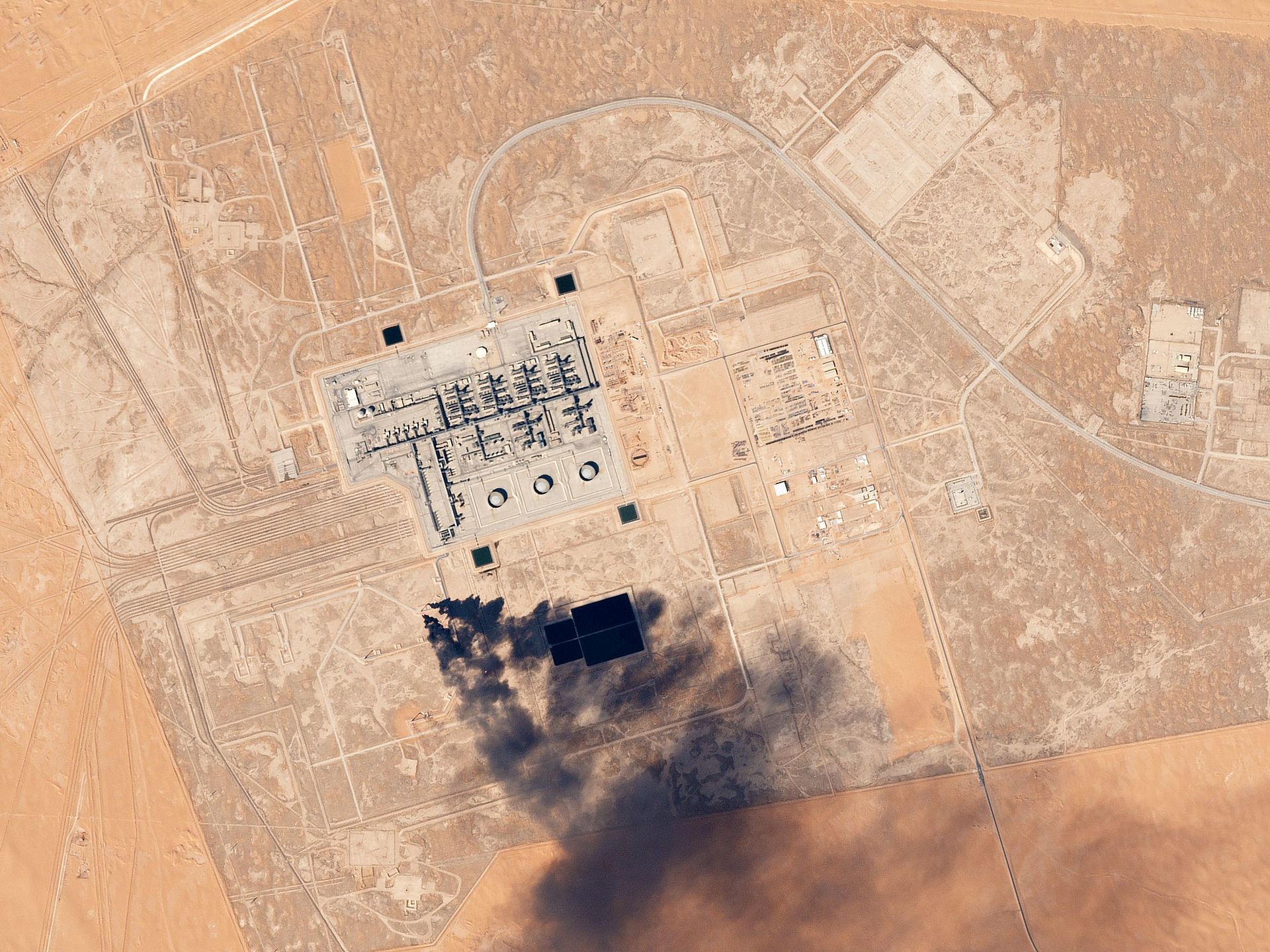
Saudi oil production fell from 10.4 million bpd in February 2026 to 7.25 million bpd in March, according to IEA data — the sharpest single-month production decline in the kingdom’s history. IRGC strikes destroyed 600,000 bpd of upstream capacity, split between the Khurais onshore field and the Manifa offshore complex at 300,000 bpd each, while five downstream facilities — SATORP Jubail, Ras Tanura refinery, SAMREF Yanbu, Riyadh refinery, and Ju’aymah NGL processing — suffered operational disruptions that cascaded through the refining and export chain.
The Saudi Press Agency disclosed 1.3 million bpd in combined war damage on April 9, routing the announcement through the Energy Ministry rather than through Aramco’s investor relations department — a choice of channel that tells a story of its own. Aramco, as a Tadawul-listed public company, would normally communicate material production losses directly to shareholders through its own disclosure mechanisms. The decision to treat this as a national-security announcement via a government press wire rather than a securities-material event via IR suggests a deliberate effort to keep the framing within sovereign communication channels rather than the capital-markets framework where analysts and auditors, not editors and spokespeople, control the questions that get asked.
Rystad Energy estimated $34-58 billion in total regional energy infrastructure damage from the war, with Saudi Arabia bearing a substantial share, according to a CNBC report on April 15. The gap between the 600,000 bpd of confirmed upstream destruction and the full 3.15 million bpd production decline encompasses downstream facility disruptions, export volumes stranded behind the IRGC’s effective closure of the Hormuz corridor that began in early March, and the practical irrelevance of OPEC+ quota allocations Saudi Arabia could no longer fill regardless of what the cartel agreed. The UAE’s unilateral OPEC exit on May 1 has since fractured the cartel’s ability to coordinate any response.
No restoration timeline has been announced for either Khurais or Manifa, and the silence itself has become a data point. When Aramco CEO Amin Nasser told Fortune in March that the war’s economic effects would be “catastrophic,” he was not speaking from behind a company that expected quick recovery — he was warning, in the most direct language available to a CEO under disclosure constraints, that the damage to Saudi production infrastructure is structural rather than temporary, a characterization that fits awkwardly alongside the profit surge those same damaged operations produced and one that analysts will press on during the May 11 earnings call.
Why Does a Record Quarter Coincide with a Record Deficit?
Saudi Arabia’s Q1 2026 government budget deficit reached SAR 125.7 billion ($33.5 billion), according to Saudi Gazette and Al Jazeera reporting on May 6 — the largest quarterly deficit on record, nearly double the SAR 65 billion ($17 billion) the government projected for the full year of 2026. Q1 oil revenues fell 3% year-on-year to SAR 144.7 billion despite war-premium pricing, because the production crash consumed the pricing gains at the sovereign-revenue level while total government spending ballooned to SAR 386.7 billion against revenues of just SAR 261 billion.
The paradox dissolves once corporate and sovereign revenue mechanics are separated. Aramco’s earnings reflect realized prices on term-contract barrels priced at elevated OSPs and loaded before the market corrected — a calculation that rewards high per-barrel revenue on whatever volume gets exported. The government’s oil revenue depends on production taxes, royalties, and Aramco dividend flows calculated against total output volume as well as price, and when volume crashes by a third, per-barrel premiums cannot fill the gap. The war premium saved Aramco’s income statement; it did not save the Treasury.
The GDP data released the same day contextualizes the divergence at the national level: Saudi Arabia’s Q1 GDP grew 2.8% while military spending rose 26% — a macro-level echo of the Aramco paradox, in which strong headline numbers coexist with a fiscal position deteriorating at the sovereign layer.
Goldman Sachs projected a war-adjusted Saudi fiscal deficit of 6.6% of GDP for 2026 in its March 20 research note, roughly double the official 3.3% projection — a gap implying approximately $88 billion in real deficit versus the $44 billion official figure. SAMA foreign reserves stood at approximately $434 billion in February, already down $17 billion from January’s $451 billion in a drawdown that predated the worst of the war’s infrastructure damage. At Goldman’s projected deficit rate, reserves could approach $360 billion by year-end, a trajectory that puts the kingdom’s fiscal buffer at levels not seen since the post-2014 oil-price crash that forced the original Vision 2030 diversification push.
Bloomberg Economics places Saudi Arabia’s PIF-inclusive fiscal breakeven at $108-111 per barrel, against current Brent levels of $91-94 — a $14-20 per-barrel gap between the kingdom’s actual spending requirements and what its damaged production base can generate at current prices. That gap is not a temporary shortfall that a good quarter’s earnings can bridge; it is a structural condition that persists until production is restored, prices rise substantially, or spending is cut. Saturday’s filing will not contain evidence that any of those adjustments is imminent.
What Happens When the Performance Dividend Disappears?
Fitch Ratings assumes no performance-linked dividends from Aramco for the entire 2026-2028 period, a projection that strips the Saudi government and PIF — together holding approximately 98% of Aramco shares — of the supplemental cash flow that funded the kingdom’s most ambitious spending programs. The base dividend, which reached $21.89 billion in Q4 2025 and grows at a fixed 3.5% annually, becomes the sole reliable income from Saudi Arabia’s most valuable corporate asset at a moment when the state’s spending requirements are at wartime highs.
Performance-linked dividends were the mechanism Aramco used to return excess cash above its base commitment, and in the high-price years they were substantial enough to underwrite PIF’s international acquisition program — stakes in gaming, sports, and entertainment — as well as the infrastructure spending behind the wartime Hajj security architecture and Vision 2030 megaprojects. FY 2025’s net income of $104.7 billion and free cash flow of $85.4 billion were already at the lower end of post-IPO performance before the war started. Fitch’s decision to zero out the supplemental payments through 2028 reflects a judgment that reconstruction capex, upstream repairs to Khurais and Manifa, and the commitment to sustain the base dividend will consume available cash for years before any surplus emerges.
PIF received approximately $14 billion from Aramco dividends in 2025, and if performance-linked payments vanish as Fitch expects, PIF’s budget narrows to whatever its share of the base dividend provides — a fixed formula growing at 3.5% regardless of oil prices or production levels, applied against a wartime economy whose costs are rising faster than the formula allows. Saudi Arabia’s most expensive fiscal period in a generation — active-war defense procurement, pipeline and refinery reconstruction, a Hajj season requiring unprecedented air-defense coverage, continued Vision 2030 capital deployment — will be funded by the narrowest Aramco dividend stream since the 2019 IPO.
The Q1 profit surge, if annualized naively at $29 billion per quarter, projects to roughly $116 billion for 2026 — but that annualization assumes war-premium pricing persists at Q1 levels throughout the year, an assumption Aramco itself contradicted by cutting the June OSP. Every analyst on the May 11 call will probe forward guidance and capex plans against that projection, because the gap between what naive annualization suggests and what Fitch considers realistic enough to zero out performance dividends for three years is where the market’s pricing of Aramco equity will be settled.
The Khurais Disclosure Aramco Cannot Avoid
Aramco files under International Financial Reporting Standards as issued by the IASB, and the Q1 2026 report is an interim filing governed by IAS 34 — the standard requiring disclosure of events “significant to an understanding of the changes in financial position and performance” since the last annual report. Khurais, a major onshore field producing 300,000 bpd before IRGC strikes took it offline in early April with no announced restoration timeline, meets the textbook criteria for an impairment trigger under IAS 36, the standard governing recognition and measurement of asset impairment in the financial statements.
Aramco can avoid recording an impairment loss if it demonstrates that Khurais’s recoverable value exceeds its carrying amount — a determination that rests on assumptions about future oil prices, restoration costs, and the timeline for returning the field to production, all of which are genuinely unknowable during an active conflict. But IAS 36 requires disclosure that an impairment assessment was performed and an explanation of the key assumptions underlying the conclusion, regardless of whether a loss is recorded. The complete absence of impairment language in Saturday’s filing — no mention of Khurais in the notes, no discussion of valuation assumptions, no war-damage disclosures — would itself be an auditable decision, one that both Aramco’s external auditors and the Capital Market Authority would have professional obligation to examine.
The underlying tension is jurisdictional. When the government routed its April 9 production-damage disclosure through the Energy Ministry and SPA rather than through Aramco IR, it operated under sovereign communication logic — controlling the narrative, framing damage as manageable, treating production data as a matter of national security. That approach works for press releases and government communications, channels the state controls and where the audience is selected by the sender. Aramco’s Q1 filing operates under a different jurisdiction: international accounting standards, Tadawul listing rules, auditor sign-off requirements, and the expectations of institutional shareholders who include sovereign wealth funds, global index trackers, and international asset managers whose compliance teams read footnotes rather than headlines.
The Q1 report is the first document in this war written under accounting rules rather than sovereign messaging discipline, and accounting rules are indifferent to narrative preferences. Sovereign press releases are calibrated for audiences the government selects; IFRS filings are read by audiences the government cannot control — and the distance between those two readerships, between what the SPA disclosed on April 9 and what IAS 34 requires on May 10, is where the most informative content in Saturday’s filing will be found, whether that content takes the form of disclosures or of their conspicuous absence.
How Have Markets Already Priced the Damage?
The Tadawul All Share Index has fallen 5.91% over the past four weeks and 11.58% over the past twelve months, while Aramco shares closed at SAR 27.65 — the lowest since December 2025 — with SAR 1.08 billion in cumulative foreign capital outflows from Saudi equities over the past three-plus weeks, according to Argaam and Middle East Insider data. That outflow figure matters more than the index headline: SAR 1.08 billion leaving over three weeks is not a stampede, it is a steady repricing — international institutional investors trimming Saudi exposure in a way that reflects revised sovereign-risk assessments without yet constituting a loss of confidence in the underlying market.
The TASI decline, while material in absolute terms, is modest relative to the scale of the underlying disruption — a 30% production crash, a quarterly budget deficit nearly double the full-year projection, an active war with no firm resolution timeline, and a national oil company whose pricing power is visibly reverting. Markets are pricing in damage, but they are also pricing in assumptions about conflict duration, reconstruction pace, and the probability that oil prices remain elevated long enough to fund recovery without a sovereign debt crisis. Whether Saturday’s filing and Sunday’s call confirm or revise those assumptions will determine whether the foreign outflows continue at their current pace or accelerate into something that looks less like trimming and more like repositioning.
Aramco’s quarterly earnings have historically been a non-event for the share price because the inputs are visible weeks before the output: published production data plus known OSP schedules make the result predictable, and markets do not wait for confirmation of what they already know. This quarter breaks that pattern, not because the headline profit figure will surprise — it will land near consensus — but because the forward-looking disclosures, the Khurais impairment language, the capex priority signals, and any commentary on dividend sustainability will contain information the production data alone cannot provide. The East-West Pipeline strike that cut throughput on April 8 and the production crash that followed have been covered through state media for weeks; Sunday’s earnings call is the first time those events will be discussed in a format where analysts, rather than government communications offices, set the agenda.
CEO Amin Nasser fielding unscripted questions from Goldman Sachs and JPMorgan analysts — on Khurais restoration timelines, force majeure declarations, insurance recovery, and the sustainability of the base dividend — is a different category of disclosure from anything the market has received during ten weeks of SPA press releases and OPEC+ communiqués. SAR 1.08 billion in foreign outflows over three weeks suggests the market already knows that what comes on Sunday will matter more than what lands on Saturday.
When Nasser told Fortune in March that the war’s effects would be “catastrophic,” he chose the strongest word available to a CEO under disclosure constraints — and he said it from behind a quarter that will show profits up 57%, pricing at levels the company has never achieved, and a revenue line that masks a production collapse no Saudi Aramco executive has managed in the modern era. The $29 billion Q1 result publishes Saturday morning, the earnings call follows Sunday, and the distance between the number Aramco will report and what it cost to produce — the damaged fields, the captive buyers who had nowhere else to go, the OSP already cut by $4.00, the Khurais footnote that IFRS demands but the government would rather defer — is where the audited reality of Saudi Arabia’s war economy finally enters the public record.
Frequently Asked Questions
How does Aramco’s Q1 2026 production compare to Saudi Arabia’s OPEC+ quota?
Saudi Arabia’s OPEC+ quota for April 2026 stood at approximately 10.2 million bpd, against actual March production of 7.25 million bpd — a gap of nearly 3 million bpd between permitted and actual output. The involuntary under-production eliminates any voluntary restraint leverage Riyadh would normally exercise in cartel negotiations, because Saudi Arabia cannot offer production cuts it has already suffered and cannot credibly threaten production increases it lacks the operational capacity to deliver.
How have Saudi crude exports to Asia changed since the war began?
Saudi crude exports to Asian buyers declined approximately 38.6% from pre-war levels, according to Kpler vessel-tracking data. The decline reflects both upstream capacity destruction at Khurais and Manifa and the Hormuz export-route closure, which reduced available seaborne volumes below what the East-West Pipeline bypass through Yanbu — with an effective ceiling of approximately 5.9 million bpd — can compensate for, leaving a structural export gap that term-contract pricing alone cannot fill. The broader strategic consequence — how the war has permanently reoriented Saudi Arabia’s economic geography toward its Red Sea coast, reshaping everything from port investment to the 00 billion in US deals MBS brings to next week’s Riyadh forum — is the subject of War Made the Red Sea Saudi Arabia’s Front Door.
What does Goldman Sachs estimate Brent crude would trade at without the war?
Goldman Sachs estimated in its March 20 research note that fair-value Brent crude would sit at approximately $65 per barrel absent sustained supply disruptions, based on pre-war demand trajectories and non-OPEC supply growth. The $26-29 per-barrel gap between that estimate and current Brent levels represents war premium still embedded in the benchmark — a premium that benefits Aramco’s realized prices in Q1 but also signals the magnitude of the pricing correction that awaits when supply normalizes.
How much total oil production has the war removed from global supply?
Goldman Sachs estimated approximately 14.5 million bpd of Persian Gulf crude taken offline by mid-March 2026, with global inventory drawdowns running at 11-12 million bpd through April. Vitol CEO Russell Hardy separately estimated cumulative production losses at 600-700 million barrels by late April, projecting a total of approximately one billion barrels by the conflict’s conclusion — equivalent to roughly twelve days of total global consumption at pre-war demand levels of approximately 83 million bpd.
What accounting obligations does Aramco face regarding war damage to its oil fields?
Under IAS 36, the IFRS standard governing asset impairment, Aramco must disclose whether an impairment assessment was conducted for damaged assets such as Khurais and Manifa, and must explain the key assumptions underlying any conclusion that no loss requires recognition. The standard applies regardless of whether a loss is ultimately recorded — meaning the absence of impairment language in Saturday’s filing would itself be an auditable decision requiring auditor sign-off, not simply an omission. The downstream consequences of Kharg’s operational stress materialised further when a Copernicus-confirmed 71 sq km oil slick appeared off the terminal on May 6, compounding the revenue disruption already reflected in Aramco’s war-quarter figures.