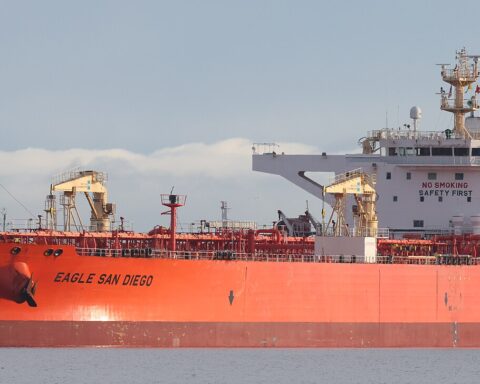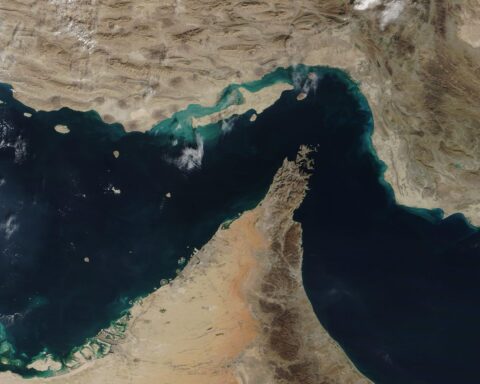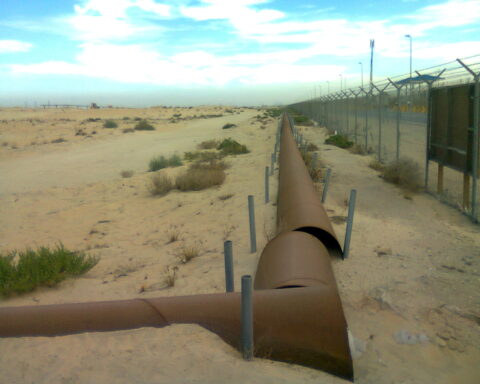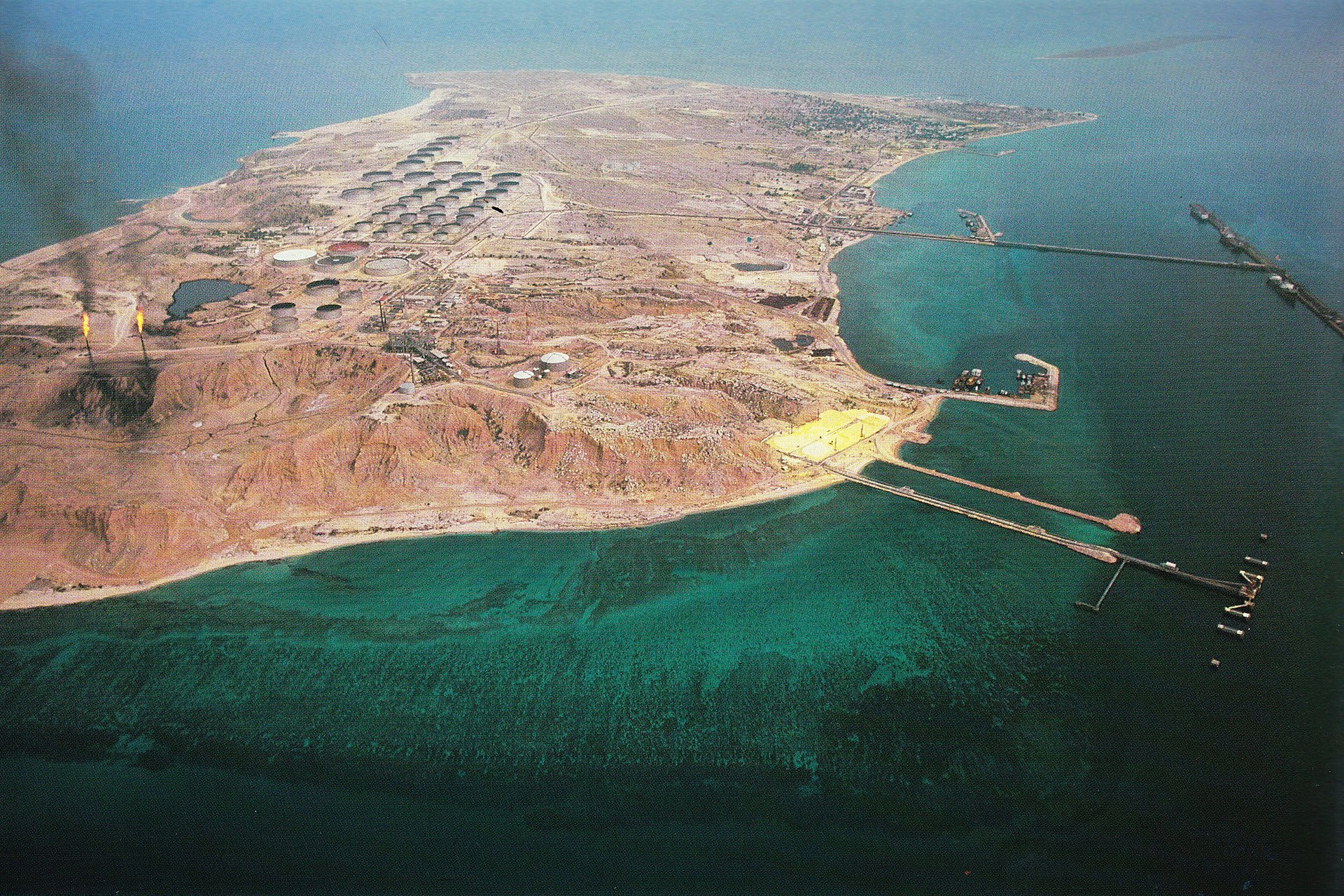

DHAHRAN — President Donald Trump announced on March 13 that the United States had “totally obliterated every MILITARY target” on Iran’s Kharg Island — the coral outcrop in the Persian Gulf through which 90 percent of Iranian crude exports pass — but deliberately spared the oil infrastructure that makes the island the beating heart of Tehran’s war economy. The decision not to destroy Kharg’s loading terminals, storage tanks, and pipeline connections was not an act of mercy. It was, according to energy strategists from Goldman Sachs to the International Energy Agency, something far more consequential: the most potent threat the United States has ever issued over oil, and one that has already reshaped global energy markets in Saudi Arabia’s favour.
Brent crude settled above $103 per barrel on the day of the strike, up more than 40 percent since the war began on February 28. The premium reflects not the barrels already lost — Iran’s 1.6 million barrels per day of exports are a fraction of the 20 million barrels that normally transit the Strait of Hormuz — but the barrels that might disappear if Trump follows through on his warning to “immediately reconsider” sparing the oil. In this new calculus, Saudi Arabia holds the decisive hand. The Kingdom controls 3.1 million barrels per day of OPEC’s 5.3 million barrels of spare production capacity, operates the only proven alternative to the Strait through its East-West pipeline to the Red Sea port of Yanbu, and sits at the centre of every scenario in which global oil supply holds together or falls apart.
Table of Contents
- What Happened on Kharg Island?
- Why Did Trump Spare the Oil?
- How Does Kharg Island Fit Into Iran’s Oil Empire?
- The Oil Weapon Escalation Ladder
- What Does the Kharg Strike Mean for Saudi Arabia?
- Saudi Arabia’s Pipeline Advantage in the Hormuz Crisis
- Can Iran Survive Without Kharg?
- The Uncertainty Premium Is Worth More Than Destruction
- What Comes Next for Global Oil Markets?
- The Three Players Who Win When Kharg Burns
- Saudi Arabia’s Path to Permanent Oil Dominance
- Frequently Asked Questions
What Happened on Kharg Island?
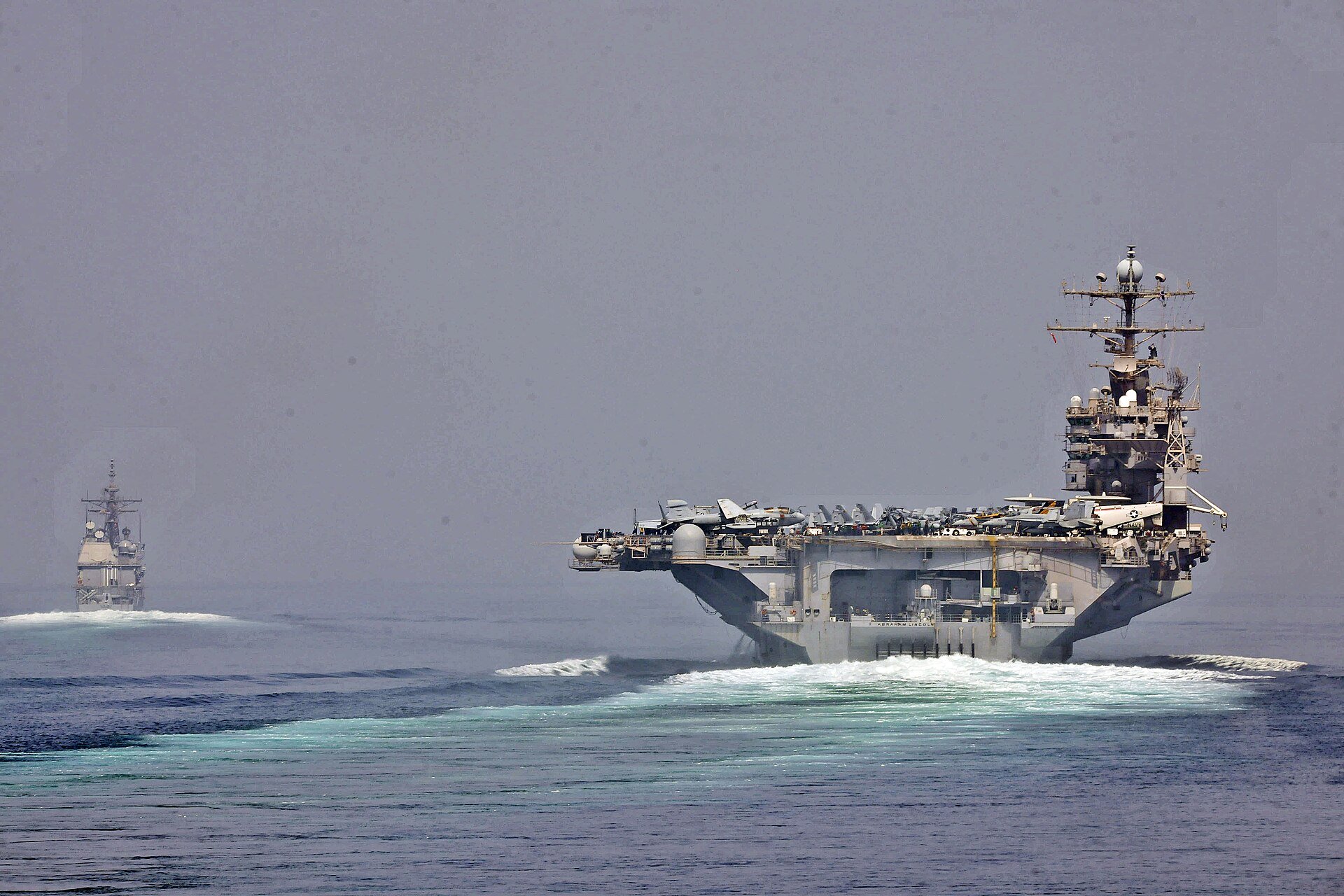
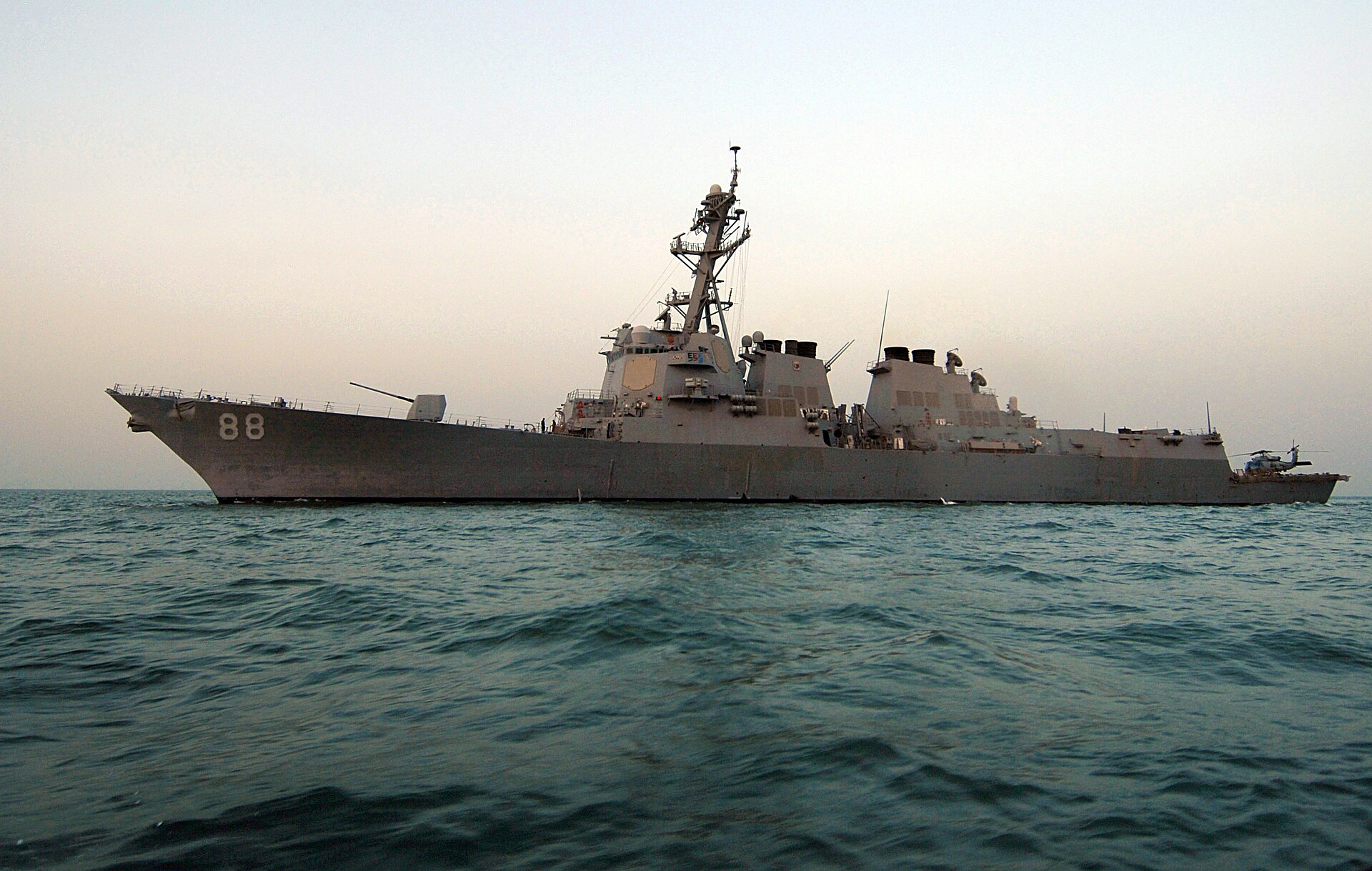
On the afternoon of March 13, 2026, the United States Central Command executed what Trump described as “one of the most powerful bombing raids in the history of the Middle East” against military installations on Kharg Island. The strikes destroyed anti-ship missile batteries, radar installations, IRGC naval fast-attack boat pens, and command-and-control facilities that Iran had used to coordinate attacks on commercial shipping in the Strait of Hormuz. The Pentagon deployed approximately 2,500 Marines aboard the amphibious assault ship USS Tripoli, supported by carrier-based strike aircraft and Tomahawk cruise missiles launched from guided-missile destroyers operating in the Gulf of Oman.
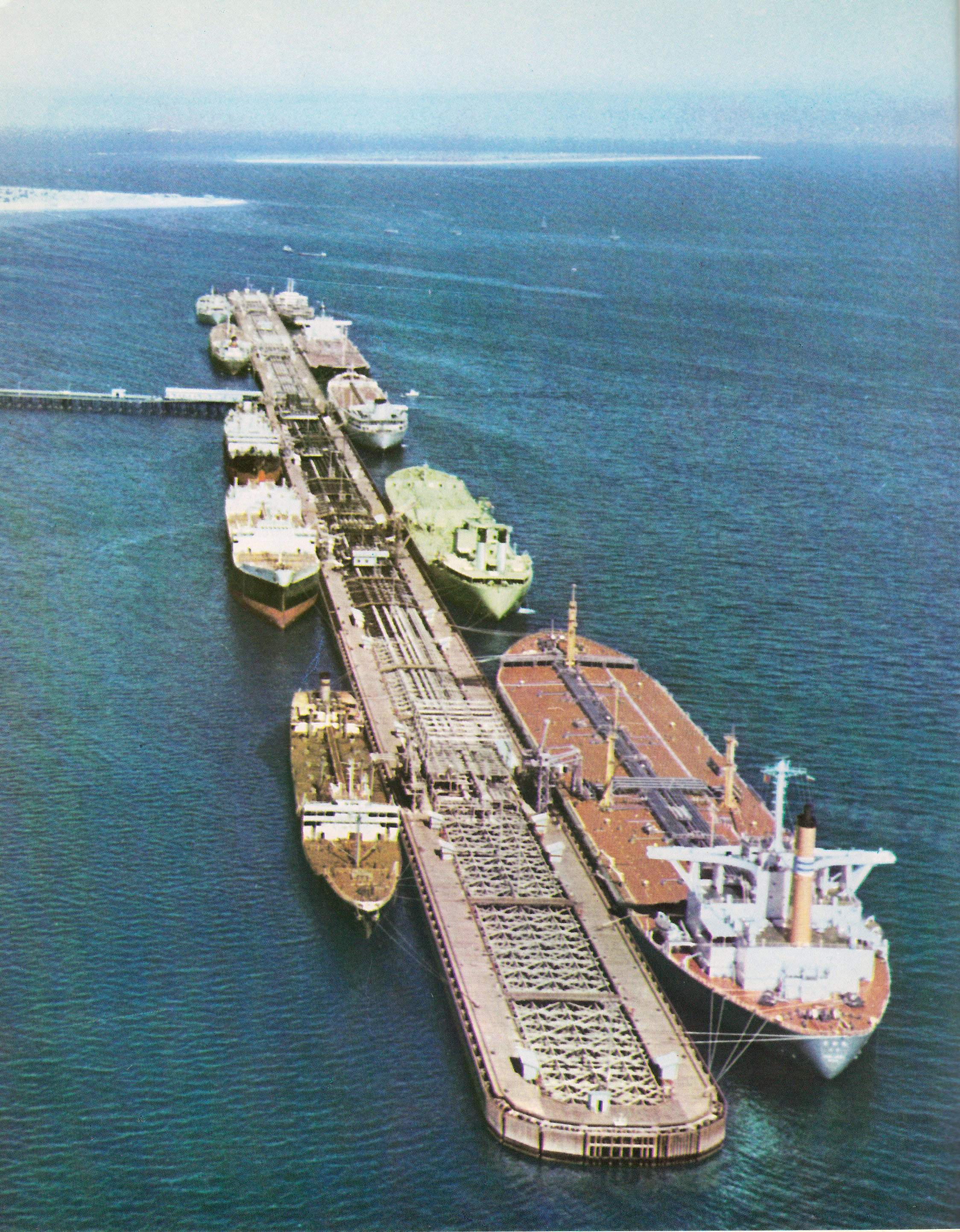
The military targets were selected, according to two senior Pentagon officials speaking to Reuters, specifically to degrade Iran’s ability to threaten tanker traffic while leaving the oil infrastructure intact. Satellite imagery analysed by Maxar Technologies within hours of the strike showed the destruction of at least four IRGC coastal defence sites on the island’s southern perimeter, while the 50-plus oil storage tanks, the T-shaped loading pier, and the pipeline connections to the mainland remained visibly undamaged.
Trump’s post-strike statement, published on Truth Social, was calculated in its ambiguity. “We totally obliterated every MILITARY target in Iran’s crown jewel, Kharg Island,” he wrote. “We chose NOT to wipe out the Oil Infrastructure on the Island, for reasons of decency. Should Iran interfere with ship passage through the Strait of Hormuz, I will immediately reconsider this decision.”
That conditional warning — the threat hanging over $950 million worth of annual Iranian oil exports — sent a tremor through every trading floor from Singapore to London. Gregory Brew, an Iran analyst at Eurasia Group, noted that while seizing Kharg would theoretically impede Iran’s exports and weaken the regime, the logistical challenges of sustaining a military presence so close to Iran’s coastline make outright occupation impractical. The threat, however, requires no occupation. It simply requires the capability to return — and the strikes proved that capability beyond doubt.
The Middle East briefing 3,000+ readers start their day with.
One email. Every weekday morning. Free.
Why Did Trump Spare the Oil?
Trump’s decision to hit the military infrastructure on Kharg while leaving the oil standing was not, as some analysts initially suggested, a restraint born of concern for global energy prices. Destroying Kharg’s oil facilities would have removed approximately 1.6 million barrels per day from global markets at a moment when Brent was already trading above $100. The resulting price spike — Goldman Sachs estimated it could push Brent past $150 within days — would have devastated American consumers ahead of the 2026 midterm elections, erased the economic goodwill Trump has cultivated with his domestic energy agenda, and handed China a propaganda victory by portraying the United States as willing to weaponise the global food and fuel supply.
The political calculation was reinforced by a strategic one. Earlier in the conflict, Trump and Saudi Crown Prince Mohammed bin Salman had explicitly agreed to avoid targeting oil infrastructure — a position that put Washington at odds with Israeli Prime Minister Benjamin Netanyahu, whose forces had already struck Iranian oil depots in Tehran. The Kharg strike threaded the needle: it demonstrated American reach without triggering the economic catastrophe that would follow from destroying the oil.
The decision also reflected a deeper strategic logic. A Kharg with intact oil facilities but no military defences is more useful to American interests than a Kharg reduced to rubble. The intact oil keeps flowing to China — Iran’s primary buyer, which has received at least 11.7 million barrels since the war began — maintaining a channel of economic dependency that gives Beijing its own reasons to pressure Tehran toward a ceasefire. Destroying the oil would eliminate that leverage and leave Iran with nothing left to lose.
“Should Iran interfere with ship passage through the Strait of Hormuz, I will immediately reconsider this decision.”
President Donald Trump, Truth Social, March 13, 2026
How Does Kharg Island Fit Into Iran’s Oil Empire?
Kharg Island is a 22-square-kilometre coral outcrop located 55 kilometres northwest of the port city of Bushehr and 15 nautical miles from Iran’s mainland coast. The island sits in waters deep enough to accommodate the largest supertankers afloat, a geographic advantage that transformed it from a Pearl-era fishing settlement into the epicentre of Iran’s petroleum economy following the construction of its deep-water loading terminal in 1960.
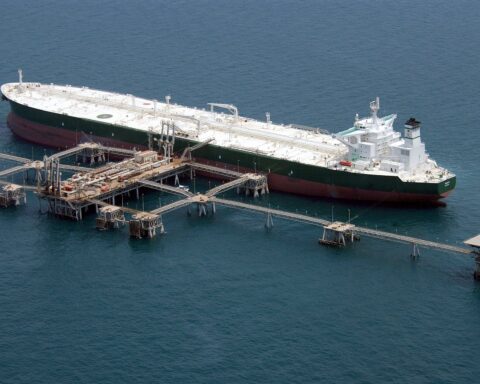
The numbers tell the story of Kharg’s centrality to Iranian power. The terminal processes roughly 950 million barrels of crude annually, handles 90 percent of the country’s total oil exports, and has a historical maximum loading capacity of 7 million barrels per day — though Iran’s current national export rate has settled at approximately 1.6 million barrels daily, according to OPEC secondary source data. The island’s infrastructure includes more than 50 storage tanks, a T-shaped loading pier with berths for up to 10 supertankers, and subsea pipeline connections to three major offshore fields: Aboozar, Forouzan, and Dorood.
| Parameter | Value |
|---|---|
| Island area | 22 sq km |
| Distance from Iranian mainland | 15 nautical miles |
| Storage tanks | 50+ |
| Tanker berths | Up to 10 |
| Historical max loading capacity | 7 million bpd |
| Current daily exports | ~1.6 million bpd |
| Annual throughput | ~950 million barrels |
| Share of Iran’s total oil exports | 90% |
| Primary buyers | China (dominant), India, Turkey |
| Controlling force | IRGC Navy |
In May 2025, Iran expanded Kharg’s storage capacity by rehabilitating two million-barrel tanks — tanks 25 and 26 — that had been damaged during earlier rounds of sanctions-era neglect. The rehabilitation signalled Tehran’s intention to maintain Kharg as its primary export artery even as the Jask terminal on the Gulf of Oman offered a theoretical alternative. The island also carries historical weight: it endured relentless bombardment during the Iran-Iraq war of the 1980s, when Iraqi jets struck the terminal repeatedly in an attempt to cripple Iranian oil revenue. Kharg was rebuilt each time, and the scars of that conflict — visible in reinforced bunkers and blast walls — made the island’s military installations a legitimate target in the current war.
The Oil Weapon Escalation Ladder
The Kharg Island strike represents a specific rung on a five-stage escalation ladder that has defined the oil dimension of the 2026 Iran war. Each stage carries distinct market consequences, different implications for Saudi Arabia’s position, and varying probabilities of escalation to the next level. Understanding where the war currently sits on this ladder — and what the remaining rungs would mean for global energy — is essential to grasping why Riyadh views the Kharg strike as both a threat and an opportunity.
| Stage | Description | Market Impact | Saudi Position | Current Status |
|---|---|---|---|---|
| Stage 1: Sanctions Tightening | Enhanced sanctions enforcement on Iranian exports, secondary sanctions on buyers | Brent +$5-10/bbl | Neutral (Saudi can fill gap) | Passed (pre-war) |
| Stage 2: Hormuz Disruption | Iran mines strait, attacks commercial shipping, partial closure | Brent +$20-30/bbl | Advantaged (East-West pipeline bypass) | Active |
| Stage 3: Military Degradation of Oil Defences | Strikes on military assets protecting oil infrastructure (Kharg, coastal sites) | Brent +$30-45/bbl (uncertainty premium) | Strongly advantaged (spare capacity + bypass) | Current (March 13) |
| Stage 4: Targeted Oil Strikes | Precision strikes on loading terminals, pipelines, select storage tanks | Brent +$50-70/bbl (supply shock) | Dominant (sole swing producer) | Threatened |
| Stage 5: Full Oil Infrastructure Destruction | Comprehensive destruction of Kharg, Jask, and inland refineries | Brent $150+ (systemic crisis) | Complicated (global recession risk offsets windfall) | Not threatened |
The Kharg strike moved the conflict from Stage 2 (Hormuz disruption) to Stage 3 (military degradation of oil defences). The market premium at this stage reflects not the 1.6 million barrels per day of Iranian exports that are still flowing, but the probability — priced by options traders at roughly 35 percent, according to CME Group data — that the war escalates to Stage 4, where those barrels would disappear. Saudi Arabia’s strategic advantage grows at every stage: at Stage 3, the Kingdom already holds the wartime economy’s most valuable asset, the ability to replace lost barrels while bypassing the chokepoint that has paralysed its competitors.
The critical distinction between stages is reversibility. Stages 1 through 3 are reversible: sanctions can be lifted, mines can be cleared, military installations can be rebuilt. Stages 4 and 5 cross a threshold of permanent damage that would take years to repair and fundamentally alter the structure of global oil supply. Trump’s decision to stay at Stage 3 keeps the escalation reversible while maximising the deterrent value of the threat to advance further.
The calculus shifted further in mid-March as Washington began actively weighing whether to move beyond Stage 3. Reports indicate that the Trump administration is now considering a ground seizure of Kharg Island while simultaneously assembling the multinational Hormuz Coalition that could provide the naval architecture for such an operation.
What Does the Kharg Strike Mean for Saudi Arabia?
The Kharg Island strike transforms Saudi Arabia’s position in the global oil market from that of a major producer into something closer to an indispensable utility. With Iran’s oil infrastructure now defenceless — its military protection destroyed, its continued operation dependent on American forbearance — every barrel of Saudi crude carries a strategic premium that did not exist two weeks ago. Four specific dynamics have shifted in Riyadh’s favour.
The first is the spare capacity premium. Saudi Arabia holds 3.1 million barrels per day of OPEC’s total 5.3 million barrels of spare production capacity, according to the International Energy Agency’s March 2026 Oil Market Report. No other producer comes close: the UAE holds approximately 1 million barrels per day, and Iraq, Kuwait, and the remaining OPEC members hold the rest in slivers that would take months to activate. If Iran’s exports are knocked offline — whether by escalation to Stage 4, by damage to the Strait, or by tightened sanctions enforcement — Saudi Arabia is the only country that can replace those barrels at scale within weeks.
The second is the pricing mechanism. Aramco raised its February output to 10.882 million barrels per day, up 8 percent from January’s 10.1 million barrels per day, according to Bloomberg reporting of OPEC survey data. Saudi crude shipments jumped to 7.3 million barrels per day in the first 24 days of February — the highest volume since April 2023. The Kingdom began increasing output before the war started, positioning itself as what one unnamed Saudi energy official described to Bloomberg as “the reliable supplier the world needs when the shooting starts.”
The third shift concerns the diplomatic leverage that accompanies energy dominance. Every consumer nation — from China to Japan to Germany — now depends more heavily on Saudi goodwill for its energy security than at any point since the 1973 Arab oil embargo. This leverage is not theoretical: Trump’s decision to lift sanctions on Russian oil exports on the same day as the Kharg strike, a move designed to add supply to the market and restrain prices, was coordinated with Riyadh to prevent a price collapse that would have eroded Saudi revenue.
The fourth dynamic is temporal. The longer the Hormuz closure persists, the more deeply Saudi Arabia’s alternative export routes — principally the East-West pipeline to Yanbu — become embedded in the logistical infrastructure of global oil trade. Shipping contracts, insurance policies, refinery calibrations, and tanker routing patterns are all adjusting to a world in which Saudi Red Sea crude is the baseline supply, not the emergency backup. Reversing that entrenchment, even after a ceasefire, would take years.
Saudi Arabia’s Pipeline Advantage in the Hormuz Crisis
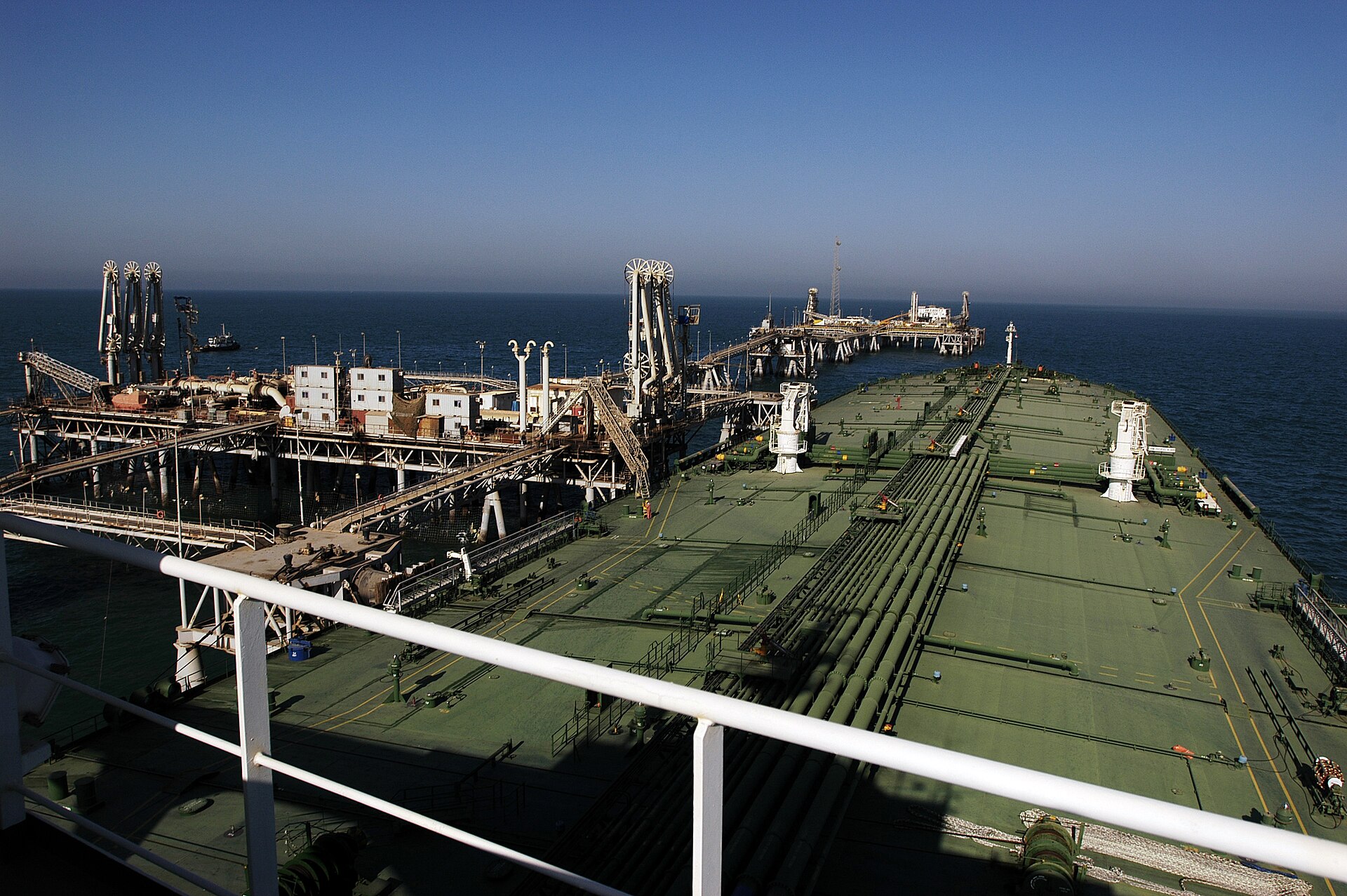
The East-West Crude Oil Pipeline, a 1,200-kilometre artery running from the Abqaiq processing facility on Saudi Arabia’s eastern Gulf coast to the Red Sea port of Yanbu, has become the most strategically important piece of oil infrastructure on earth. Aramco CEO Amin Nasser announced on March 10 that the pipeline would reach full operational capacity “in the next couple of days” — a milestone that, once achieved, gives Saudi Arabia the ability to export up to 7 million barrels per day without transiting a single metre of the Strait of Hormuz.
The Yanbu terminal complex comprises two facilities: Yanbu North, with a loading capacity of 1.5 million barrels per day, and Yanbu South, with a capacity of 3 million barrels per day. Market sources at S&P Global Platts put the effective combined capacity closer to 4 million barrels per day under sustained operations, though this has never been tested at scale for more than a few days. The gap between the pipeline’s 7 million barrels per day design capacity and the terminal’s 4 to 4.5 million barrels per day loading capacity represents a bottleneck that Aramco is addressing with emergency dredging and the deployment of floating storage units offshore.
| Pipeline | Operator | Route | Design Capacity (bpd) | Effective Capacity (bpd) | Status (March 2026) |
|---|---|---|---|---|---|
| East-West Pipeline | Aramco | Abqaiq → Yanbu (Red Sea) | 7 million | ~4-4.5 million | At or near full capacity |
| ADCOP (Habshan-Fujairah) | ADNOC | Abu Dhabi → Fujairah (Gulf of Oman) | 1.5 million | ~1.5 million | Operational, fully utilised |
| Goreh-Jask Pipeline (Iran) | NIOC | Goreh → Jask (Gulf of Oman) | 1 million (design) | ~300,000 | Partially operational |
The comparison with Iran’s bypass option is stark. Tehran’s Goreh-Jask pipeline, which runs from the southwestern province of Bushehr to the port of Jask on the Gulf of Oman, was designed to carry 1 million barrels per day and hold 20 million barrels in storage. In practice, only one of three planned loading buoys has been installed, and the pipeline’s effective throughput reached barely 300,000 barrels per day during peak operations in 2024. Loading a single Very Large Crude Carrier at Jask takes up to 10 days, compared to one or two days at Kharg. Iran effectively stopped loading cargoes from Jask after September 2024.
The asymmetry is decisive. Saudi Arabia can bypass the Strait with 4 million or more barrels per day through a proven, expanded system. Iran’s bypass carries barely 300,000 barrels per day through a system that has never been tested under wartime conditions. When Trump’s warning over Kharg is considered alongside this infrastructure gap, the strategic picture becomes clear: Saudi Arabia has the plumbing to survive the Hormuz crisis, and Iran does not.
Can Iran Survive Without Kharg?
If the war escalates to Stage 4 and American strikes destroy Kharg’s oil-loading infrastructure, Iran would face the loss of approximately 90 percent of its crude export capacity. The Jask terminal on the Gulf of Oman — Iran’s only alternative crude export outlet that bypasses the Strait of Hormuz — could absorb a fraction of the displaced volume, but its operational limitations are severe. The terminal’s single loading buoy can handle roughly 300,000 barrels per day under optimal conditions, and the 10-day loading time per VLCC would create a queuing bottleneck that reduces effective throughput further.
Iran’s remaining export options include the Bandar Abbas refinery complex, which processes crude for domestic consumption and limited product exports, and a network of smaller terminals along the Gulf of Oman coast that have historically handled refined products rather than crude. The CNBC investigation into Iran’s continued exports during the war found that Tehran has shipped at least 11.7 million barrels of crude through the Strait of Hormuz since February 28 — all of it headed to China aboard vessels in Iran’s shadow fleet that operates outside Western insurance and flagging systems.
The loss of Kharg would not immediately starve the Iranian state of revenue. Tehran holds foreign exchange reserves estimated by the IMF at $29 billion, supplemented by undisclosed holdings in Chinese yuan from prepaid oil contracts. The IRGC operates a parallel economy of smuggling networks, front companies, and cryptocurrency operations that has sustained Iranian military spending through decades of sanctions. Nevertheless, the elimination of Kharg’s export capacity would reduce Iran’s hard-currency inflows by an estimated $30 billion to $40 billion annually — a financial blow that would compound over months and eventually constrain Tehran’s ability to fund the proxy networks and missile programmes that sustain its regional war effort.
The Uncertainty Premium Is Worth More Than Destruction
The conventional wisdom holds that sparing Kharg’s oil was an act of restraint — a decision to limit the economic fallout of the war by keeping Iranian barrels flowing. This reading misses the deeper strategic reality. The threat to destroy Kharg is more valuable than the destruction itself, because the uncertainty it creates generates a permanent risk premium in oil markets that benefits both the United States and Saudi Arabia while constraining every other player in the system.
Consider the arithmetic. Brent crude traded at approximately $73 per barrel before the war began on February 28. The Hormuz disruption and Iranian retaliatory attacks pushed it past $100 by March 8. The Kharg strike on March 13, despite explicitly sparing the oil, pushed settlement prices to $103.14. The additional premium — roughly $3 per barrel — came entirely from the THREAT of future oil strikes, not from any actual loss of supply. CME Group options data shows that the implied probability of Brent reaching $130 within 60 days rose from 12 percent before the Kharg strike to 28 percent afterward.
For Saudi Arabia, this uncertainty premium is worth approximately $9 million per day in additional revenue on every million barrels exported at the current premium above pre-war prices. With shipments running at 7.3 million barrels per day, the Kingdom’s daily oil revenue has increased by roughly $220 million compared to pre-war levels — an annualised windfall of more than $80 billion that flows directly into a Treasury already strained by the cost of maintaining megaproject spending during wartime.
The uncertainty premium also serves American interests. Higher oil prices incentivise domestic US shale production, which Trump’s energy policy has aggressively promoted. Every dollar added to the price of Brent makes marginal shale wells in the Permian Basin more profitable and encourages the capital investment that sustains American energy independence. The United States is now a net exporter of petroleum products; higher global prices benefit American producers even as they raise costs for American consumers — a trade-off that Trump has managed, politically, by framing the war as a national security imperative.
The entity most damaged by the uncertainty premium is, paradoxically, Iran itself. Tehran’s remaining exports — the 1.6 million barrels per day flowing through Kharg to Chinese buyers — now carry a discount that has widened since the strike. Chinese refiners, aware that Kharg could be destroyed at any moment, are demanding price cuts of $8 to $12 per barrel below market rates, according to trade sources cited by Reuters. The threat of destruction is eroding Iran’s revenue from the very oil the United States chose to spare.
What Comes Next for Global Oil Markets?
The Kharg strike inaugurated a new phase of the oil war in which supply uncertainty, rather than supply disruption, drives pricing. Three scenarios define the range of outcomes for the next 30 to 90 days, each with distinct implications for Saudi Arabia and the broader OPEC+ alliance.
In the first scenario — ceasefire and de-escalation — the United States and Iran reach a framework agreement that halts military operations, begins the process of reopening the Strait of Hormuz, and allows Iranian exports to resume at pre-war levels. Oil prices would retreat to the $80 to $85 range within weeks, eliminating the uncertainty premium. Saudi Arabia would lose the windfall revenue but retain the strategic relationships forged during the crisis, particularly with European buyers who have redirected purchases from Gulf terminals to Yanbu during the Hormuz closure.
In the second scenario — prolonged stalemate — the war continues at its current intensity without escalation to Stage 4. The Strait remains partially closed, Iranian exports continue via the shadow fleet at reduced volumes, and global oil markets settle into a “new normal” with Brent trading in a $95 to $110 band. This is the scenario that most benefits Saudi Arabia: revenue remains elevated, the East-West pipeline becomes permanently integrated into global supply chains, and the Kingdom’s diplomatic leverage over consuming nations intensifies with each passing week.
In the third scenario — escalation to Stage 4 — the United States strikes Kharg’s oil infrastructure in response to a provocation, such as Iran sinking a major tanker or launching a direct attack on Saudi oil facilities that penetrates the Kingdom’s air defences. Oil prices would spike above $130 within days and could reach $150 if the destruction is comprehensive. The IEA’s March 2026 Oil Market Report described this scenario as “the largest potential supply disruption in the history of the global oil market,” noting that the combined loss of Iranian exports and Hormuz-transiting Gulf exports would exceed 8 million barrels per day — dwarfing the supply shocks of 1973, 1979, and 1990.
| Scenario | Probability | Brent Price Range | Saudi Revenue Impact | Key Trigger |
|---|---|---|---|---|
| Ceasefire and de-escalation | 20% | $80-85 | Windfall ends, strategic gains retained | Iran-US framework agreement |
| Prolonged stalemate | 55% | $95-110 | $80B+ annualised windfall continues | No ceasefire, no further escalation |
| Escalation to Stage 4 (oil strikes) | 25% | $130-150+ | Massive windfall, offset by global recession risk | Major provocation (tanker sinking, Saudi facility hit) |
The Three Players Who Win When Kharg Burns
If the war does escalate to Stage 4, the destruction of Kharg would produce three clear winners — none of whom would publicly welcome the development, but all of whom would benefit structurally from the elimination of Iranian export capacity.
Saudi Arabia would gain the most immediately. The removal of 1.6 million barrels per day of Iranian exports from the market would create a supply gap that only the Kingdom has the spare capacity to fill. At 3.1 million barrels per day of spare capacity, Saudi Arabia could replace every lost Iranian barrel and still have 1.5 million barrels per day in reserve. The price premium generated by the destruction would push Brent past $130, boosting Saudi revenue by an estimated $150 billion annually above pre-war levels. Aramco’s 2025 profit of $350 billion would be eclipsed within the first quarter of 2026.
Russia, the second winner, has already positioned itself to capture a share of the disrupted market. Trump’s decision to lift sanctions on Russian oil exports on the same day as the Kharg strike was no coincidence: it was a coordinated move to add supply and moderate prices while maintaining the uncertainty premium that benefits both Washington and Moscow. Russian Urals crude, trading at a $12 discount to Brent, has become the default fallback for European refiners unable to source Gulf crude through the Hormuz closure. The longer the crisis continues, the more deeply Russian oil embeds itself in European supply chains — undoing years of post-Ukraine sanctions policy in a matter of weeks.
The third winner is the United States itself, now the world’s largest oil producer at 13.2 million barrels per day. American shale operators, whose break-even costs have fallen below $45 per barrel in the Permian Basin, are generating extraordinary returns at $100-plus Brent prices. Rig counts in the Permian rose 8 percent in the first two weeks of March, according to Baker Hughes data, as operators scrambled to bring new wells online to capture the war premium. The US Strategic Petroleum Reserve, which the Biden administration drew down to 372 million barrels in 2023, represents an additional buffer that Trump has so far declined to tap — preserving it as a political tool for the midterm election cycle.
Saudi Arabia’s Path to Permanent Oil Dominance
The Kharg Island strike did not create Saudi Arabia’s oil dominance. It revealed the extent to which that dominance was already structurally embedded in the global energy system and merely required a crisis to activate. Three pre-war investments — in spare capacity, in pipeline infrastructure, and in diplomatic relationships with consuming nations — now function as the pillars of a Saudi oil position that will outlast the war regardless of how it ends.
The spare capacity pillar required decades of deliberate underproduction. While other OPEC members pumped at or near maximum capacity to fund budgets, Saudi Arabia maintained a production ceiling that kept 2 to 3 million barrels per day in reserve. This strategy, which cost the Kingdom an estimated $150 billion in forgone revenue between 2016 and 2025, was derided by analysts who argued that spare capacity was an expensive luxury with no strategic return. The war proved them wrong. Saudi spare capacity is now the single most important variable in global energy security — more important than the size of strategic reserves, the pace of renewable deployment, or the output of any individual shale basin.
The pipeline pillar transformed Saudi Arabia from a producer trapped behind the Hormuz chokepoint into one with independent access to open ocean. The East-West pipeline’s expansion to 7 million barrels per day of design capacity, completed quietly in 2024, received little attention outside the energy trade press. The Hormuz closure made it the most consequential infrastructure investment of the decade. China’s energy dependency on Gulf imports through the Strait has been shattered by the realisation that only Saudi Arabia among major producers has a proven bypass — a fact that is already reshaping Beijing’s energy procurement strategy toward longer-term contracts with Aramco at the expense of Iranian, Iraqi, and Kuwaiti suppliers.
The diplomatic pillar is the subtlest and potentially the most durable. Mohammed bin Salman’s decision to refuse direct military engagement against Iran — despite the IRGC’s drone attacks on Saudi cities, oil infrastructure, and the Diplomatic Quarter in Riyadh — has preserved the Kingdom’s reputation as a responsible actor in a conflict it did not start. This restraint, which frustrated hawks in Washington and Tel Aviv, is now paying dividends in relationships with European governments, Asian importers, and African consumer nations that see Saudi Arabia as the only Gulf producer capable of protecting their energy supply without contributing to the escalation of the war.
The convergence of these three pillars — spare capacity, bypass infrastructure, and diplomatic credibility — gives Saudi Arabia a structural advantage in the post-Kharg oil market that no competitor can replicate. Iran’s export capacity is now hostage to American military decisions. Russia’s export volumes are constrained by the loss of European refinery infrastructure calibrated for Urals crude. Iraq, Kuwait, and the UAE remain trapped behind the Hormuz chokepoint with limited bypass options. Only Saudi Arabia possesses all three capabilities simultaneously: the barrels, the pipeline, and the relationships.
Frequently Asked Questions
What military targets were hit on Kharg Island?
The United States struck anti-ship missile batteries, radar installations, IRGC naval fast-attack boat pens, and command-and-control facilities on the island’s southern perimeter. Satellite imagery confirmed the destruction of at least four coastal defence sites while the oil infrastructure — storage tanks, loading piers, and pipeline connections — remained intact. Trump described it as “one of the most powerful bombing raids in the history of the Middle East.”
Why is Kharg Island important to global oil markets?
Kharg Island handles approximately 90 percent of Iran’s crude oil exports, processing roughly 950 million barrels annually through its deep-water terminal. The island’s loading capacity of up to 7 million barrels per day and its proximity to Iran’s major offshore oil fields make it irreplaceable in Tehran’s petroleum export chain. Its destruction would remove approximately 1.6 million barrels per day from global supply, triggering a price spike that analysts estimate could push Brent crude above $130 per barrel.
How does the Kharg strike benefit Saudi Arabia?
The strike benefits Saudi Arabia in four ways: it reinforces the Kingdom’s position as the world’s indispensable swing producer with 3.1 million barrels per day of spare capacity; it increases the strategic value of Saudi Arabia’s East-West pipeline to Yanbu as the only proven Hormuz bypass; it elevates the uncertainty premium on oil prices, adding approximately $80 billion to annualised Saudi revenue; and it strengthens Riyadh’s diplomatic leverage over consuming nations dependent on Saudi crude for energy security.
Can Iran export oil without Kharg Island?
Iran has a limited alternative in the Jask terminal on the Gulf of Oman, which bypasses the Strait of Hormuz. However, Jask’s effective capacity is only about 300,000 barrels per day — less than one-fifth of Iran’s current export volume — and its single loading buoy takes up to 10 days to fill a supertanker compared to one or two days at Kharg. The loss of Kharg would reduce Iran’s hard-currency oil revenue by an estimated $30 billion to $40 billion annually.
What would happen to oil prices if Kharg’s oil facilities are destroyed?
Goldman Sachs estimated that the destruction of Kharg’s oil infrastructure could push Brent crude past $150 per barrel within days, creating what the IEA described as potentially “the largest supply disruption in the history of the global oil market.” The combined loss of Iranian exports and further Hormuz disruption could remove over 8 million barrels per day from the market — exceeding the supply shocks of the 1973 Arab oil embargo, the 1979 Iranian revolution, and the 1990 Iraqi invasion of Kuwait.
Will Trump follow through on the threat to strike Kharg’s oil?
Trump’s conditional statement — that he would “immediately reconsider” sparing the oil if Iran interferes with Strait of Hormuz shipping — creates deliberate ambiguity. The threat is calibrated to maximise deterrence without committing to action. Analysts at Eurasia Group note that the political cost of a $150 oil spike ahead of the 2026 midterm elections makes full oil strikes unlikely unless Iran commits a major provocation, such as sinking a US-flagged vessel or successfully striking Saudi oil infrastructure.