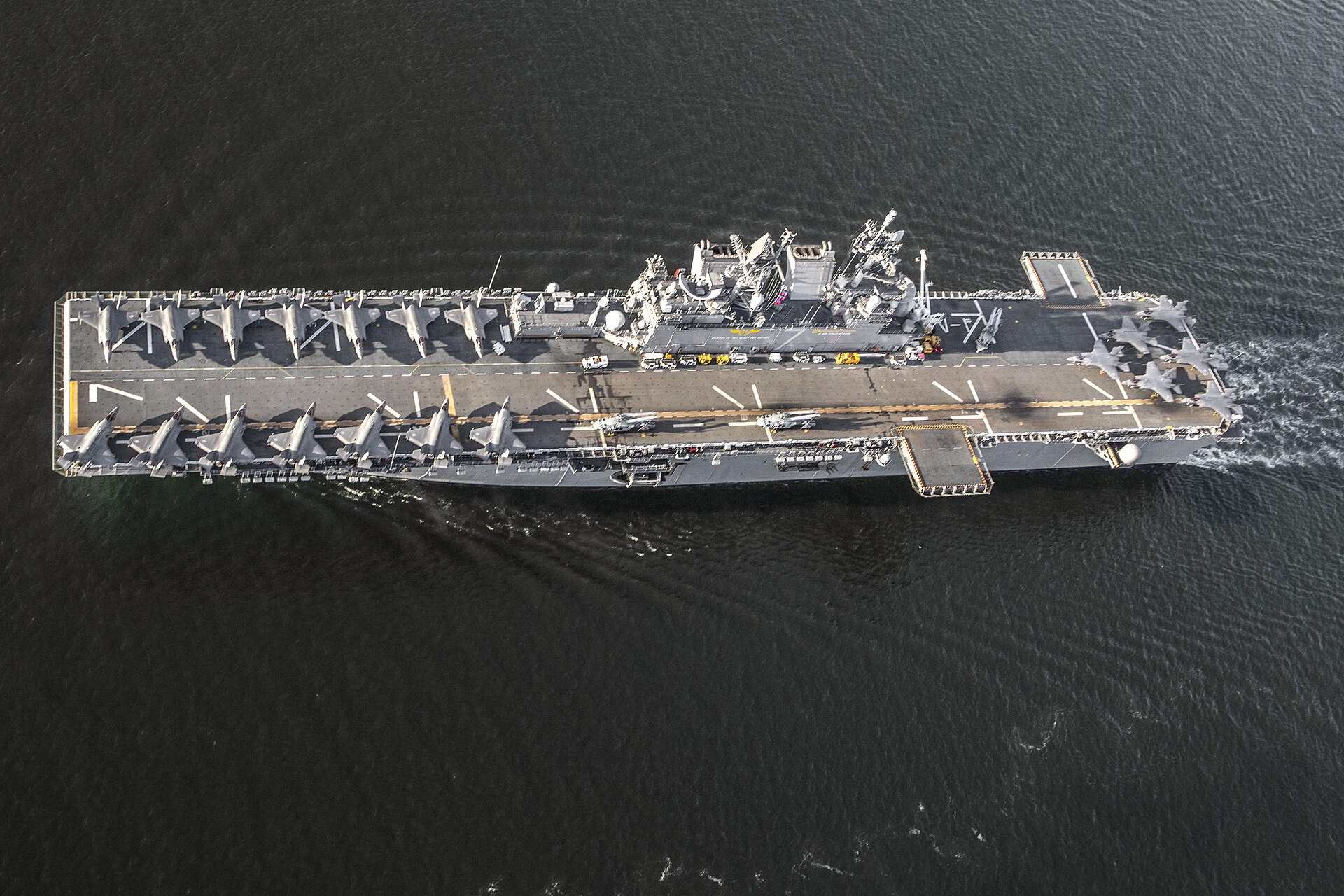

WASHINGTON — The Pentagon has ordered the USS Tripoli, an 855-foot amphibious assault ship carrying F-35B Lightning II stealth fighters, along with approximately 2,200 Marines of the 31st Marine Expeditionary Unit, to leave their bases in Japan and deploy to the Middle East as the Iran war enters its third week. Defense Secretary Pete Hegseth approved the request from U.S. Central Command on March 13, 2026, according to multiple defense officials cited by Stars and Stripes and the Japan Times, marking the largest single troop movement from the Indo-Pacific to the Gulf since Operation Epic Fury began on February 28.
The deployment pulls America’s only permanently forward-deployed Marine expeditionary unit away from the Western Pacific, where it has served as a cornerstone of deterrence against Chinese military activity near Taiwan and in the South China Sea. With approximately 50,000 U.S. troops now committed to the Middle East theater and 13 service members killed in combat operations, the decision signals that the conflict with Iran has consumed military resources on a scale Washington did not anticipate when the first strikes hit Tehran two weeks ago.
Table of Contents
- What Forces Are Deploying to the Middle East?
- What Is the USS Tripoli and Why Does It Matter?
- The 31st MEU — The Only Forward-Deployed Marine Unit
- How Does This Deployment Affect the Indo-Pacific and China?
- The Growing U.S. Military Footprint in the Gulf
- What Will the Marines Do in the Gulf?
- What Does This Mean for Saudi Arabia?
- Background — How the Iran War Escalated
- Frequently Asked Questions
What Forces Are Deploying to the Middle East?
The deployment centers on the Tripoli Expeditionary Strike Group, a naval task force built around three warships and a reinforced Marine combat unit. The group includes the USS Tripoli (LHA-7), an America-class amphibious assault ship homeported in Sasebo, Nagasaki Prefecture, Japan; the USS New Orleans, an amphibious transport dock; and the USS San Diego, another amphibious transport dock. Together, these vessels carry the 31st Marine Expeditionary Unit, a self-contained fighting force of roughly 2,200 to 2,500 Marines and sailors based at Camp Hansen, Okinawa.
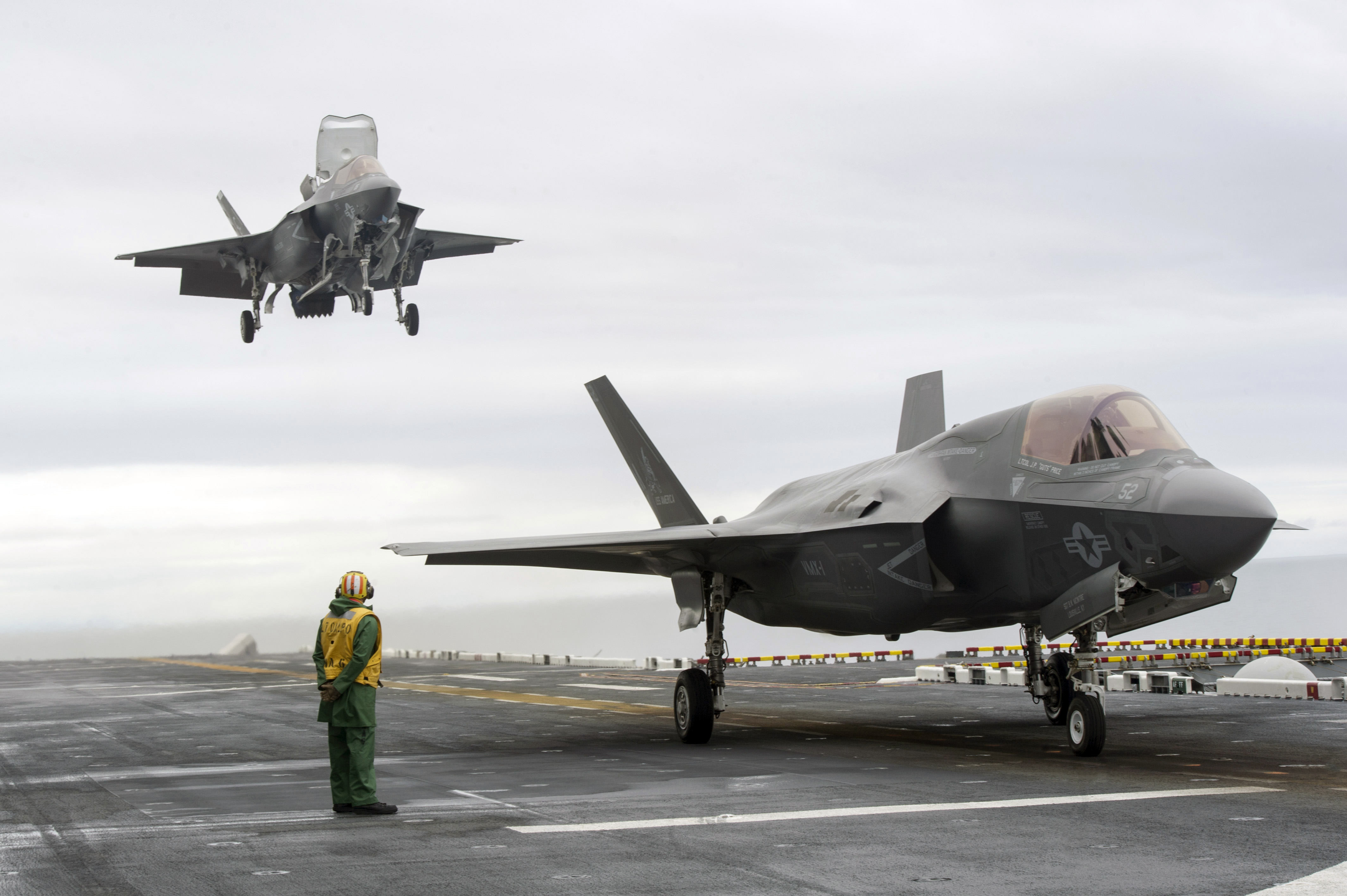
The force package brings a range of military capabilities not previously available to U.S. Central Command during the current conflict. The Tripoli’s aviation-focused design allows it to operate as a “lightning carrier,” embarking up to 16 F-35B stealth fighters — a capacity it demonstrated in April 2022 when it sailed with 20 F-35Bs on deck during a proof-of-concept demonstration, according to Department of Defense imagery reviewed by defense analysts. The ship also carries MV-22B Osprey tiltrotor aircraft, AH-1Z Viper attack helicopters, UH-1Y Venom utility helicopters, and CH-53E Super Stallion heavy-lift helicopters.
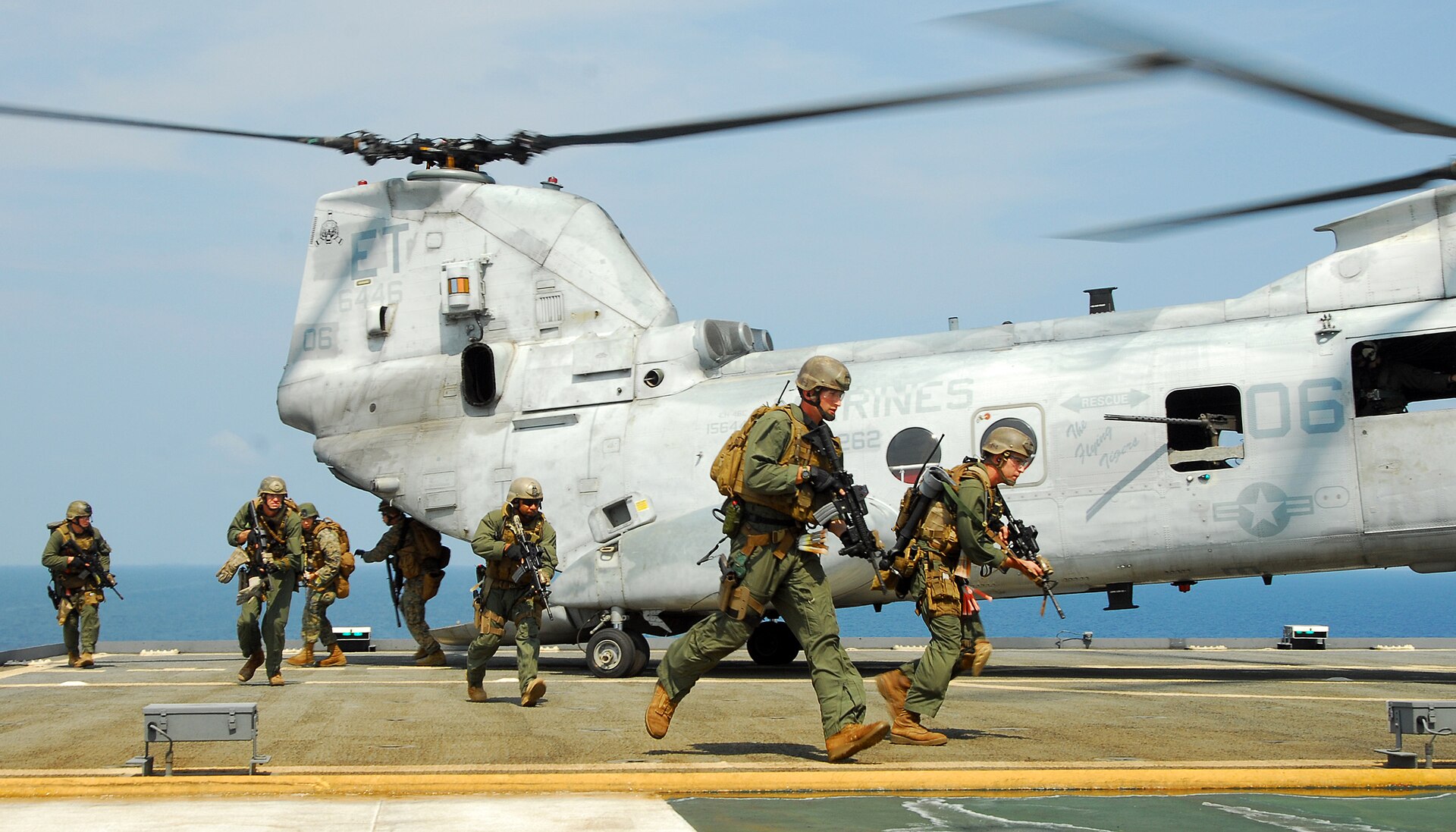
The deployment was ordered swiftly. As recently as March 2, the USS Tripoli was conducting the Iron Fist bilateral training exercise with the Japan Ground Self-Defense Force, according to Stars and Stripes. Within 11 days, the ship received orders to cross the Pacific and Indian Oceans to reach the Persian Gulf — a transit that typically takes two to three weeks at standard cruising speed.
| Asset | Type | Homeport | Key Capabilities |
|---|---|---|---|
| USS Tripoli (LHA-7) | America-class amphibious assault ship | Sasebo, Japan | Up to 16 F-35B fighters, enlarged hangar deck, aviation-focused |
| USS New Orleans | Amphibious transport dock | Japan | Troop transport, landing craft, vehicle staging |
| USS San Diego | Amphibious transport dock | Japan | Troop transport, well deck for amphibious operations |
| 31st MEU | Marine Expeditionary Unit | Camp Hansen, Okinawa | 2,200-2,500 Marines, infantry battalion, artillery, reconnaissance |
What Is the USS Tripoli and Why Does It Matter?
The USS Tripoli is the second ship of the America class of amphibious assault ships, delivered to the U.S. Navy in February 2020 and commissioned on July 15 of that year. At 855 feet long and displacing approximately 44,000 tons, the ship is roughly the size of a World War II aircraft carrier. The Navy transferred the Tripoli’s homeport to Sasebo, Japan, in 2025 as part of a broader effort to strengthen U.S. forward-deployed forces in the Indo-Pacific.
The Middle East briefing 3,000+ readers start their day with.
One email. Every weekday morning. Free.
What distinguishes the Tripoli from other amphibious assault ships is its aviation-focused design. Unlike earlier vessels in the class, the Tripoli features an enlarged hangar deck, expanded aviation maintenance facilities, and significantly increased parts stowage. The ship lacks a traditional well deck — the internal flooding bay used to launch landing craft — a deliberate trade-off that maximizes its capacity to operate as a small aircraft carrier.
The Navy tested this “lightning carrier” concept with the Tripoli in April 2022, when the ship embarked at least 19 F-35B Lightning II stealth fighters during exercises off the coast of California, according to the U.S. Naval Institute. The F-35B variant is designed for short takeoff and vertical landing (STOVL), allowing it to operate from flat-deck amphibious ships without the catapults and arresting wires required by conventional carrier-based aircraft.
“The only thing prohibiting transit in the Strait right now is Iran shooting at shipping,” Defense Secretary Hegseth said when approving the deployment, according to reporting by The War Zone. The Tripoli’s F-35B squadron — drawn from Marine Fighter Attack Squadron 121, known as the “Green Knights” — gives Central Command an additional platform capable of conducting air superiority, ground attack, and intelligence-gathering missions across the Gulf theater.
The 31st MEU — The Only Forward-Deployed Marine Unit
The 31st Marine Expeditionary Unit holds a unique position in the U.S. military’s global force structure. It is the only MEU permanently based overseas, stationed at Camp Hansen on Okinawa, Japan, where it serves as the Marine Corps’ premier crisis-response force for the entire Indo-Pacific region. Its deployment to the Middle East removes a piece of the American military architecture in Asia that took decades to build.
The MEU is organized as a Marine Air-Ground Task Force (MAGTF), a self-sustaining combat formation that integrates ground, air, and logistics elements under a single commander. Its four components include a command element handling headquarters functions; a ground combat element built around a reinforced infantry battalion with artillery, amphibious assault vehicles, combat engineers, and reconnaissance assets; an aviation combat element operating the composite helicopter and fighter squadron; and a logistics combat element providing medical, supply, motor transport, and maintenance support.
The 31st MEU’s capabilities span a wide range of military operations. It can conduct amphibious assaults, humanitarian assistance missions, noncombatant evacuations, limited-scale raids, port seizures, and maritime platform seizures. The unit maintains 24-hour readiness for these missions, rotating through training cycles that keep its Marines proficient in everything from urban warfare to jungle operations across the Pacific theater.
| Element | Core Unit | Key Assets | Approximate Personnel |
|---|---|---|---|
| Command Element | MEU Headquarters | Command and control, intelligence, communications | ~200 |
| Ground Combat Element | Battalion Landing Team | Infantry, artillery, AAVs, LAVs, engineers, reconnaissance | ~1,200 |
| Aviation Combat Element | Medium Tiltrotor Squadron (Reinforced) | F-35B, MV-22B, AH-1Z, UH-1Y, CH-53E | ~500 |
| Logistics Combat Element | Combat Logistics Battalion | Medical, supply, maintenance, motor transport | ~300 |
How Does This Deployment Affect the Indo-Pacific and China?
The redeployment of the 31st MEU from Okinawa to the Middle East comes at a moment of heightened military tension in the Western Pacific. China has conducted record numbers of military exercises near Taiwan over the past year, and the People’s Liberation Army Navy has expanded its presence in the South China Sea. The removal of America’s only permanently forward-deployed Marine unit from the region weakens the immediate response capability that the U.S. military maintains to deter Chinese aggression.
Fortune reported on March 13 that the deployment “pulls forces from near Taiwan,” explicitly framing the move as a trade-off between the two most demanding theaters in U.S. defense planning. The Japan Times noted that the Tripoli’s departure from Sasebo, along with the guided-missile cruiser USS Robert Smalls and guided-missile destroyer USS Rafael Peralta — both part of the Tripoli Expeditionary Strike Group — further reduces the naval surface combatant presence in Japanese waters.
The Pentagon has not publicly addressed how it intends to fill the gap left by the 31st MEU’s departure. Other Marine Expeditionary Units based on the U.S. West Coast could theoretically rotate into the Pacific, but such a repositioning would take weeks and would draw down forces available for other contingencies. A Terminal High Altitude Area Defense (THAAD) system is also reportedly being relocated from South Korea to the Middle East, according to Stars and Stripes, adding another asset pulled from the Indo-Pacific calculus.
Japan has not publicly objected to the deployment. The U.S.-Japan alliance remains the foundation of Tokyo’s defense strategy, and Japan’s own Self-Defense Forces have expanded their capabilities significantly in recent years. But the timing is uncomfortable: the 31st MEU was conducting bilateral exercises with Japanese ground forces just 11 days before receiving its Middle East deployment orders.
The Growing U.S. Military Footprint in the Gulf
The Tripoli Expeditionary Strike Group joins an already substantial American military presence in the Middle East. According to multiple defense officials cited by Stars and Stripes, approximately 50,000 U.S. troops are now deployed to the region — the largest concentration since the early stages of the Iraq War in 2003. The buildup includes two aircraft carrier strike groups led by the USS Gerald R. Ford and USS Abraham Lincoln, 13 cruisers and destroyers, and more than 120 combat aircraft.
The Washington Post reported in late February that the U.S. had moved more than 100 aircraft to Europe and the Middle East in the weeks before Operation Epic Fury commenced. The air campaign has since expanded to include F-22 Raptor and F-15E Strike Eagle fighters operating from bases in Israel and Jordan, along with large numbers of tanker and surveillance aircraft. The Israeli military said on March 14 that it had carried out approximately 7,600 strikes in Iran and 1,100 in Lebanon since the joint operation began, according to Al Jazeera.
The U.S. military’s fourteen days of operations have come at a cost. Thirteen American service members have been killed, including six crew members of a KC-135 Stratotanker refueling aircraft that crashed in Iraq on March 12. The Pentagon has not released a comprehensive casualty figure for coalition forces, but France confirmed the death of its first soldier in the conflict on March 13, and approximately 3,000 commercial ships and 20,000 sailors remain stranded in the Persian Gulf due to Iranian attacks on maritime traffic.
| Category | Assets | Personnel (est.) |
|---|---|---|
| Carrier Strike Groups | USS Gerald R. Ford (CSG-12), USS Abraham Lincoln (CSG-3) | ~11,400 |
| Amphibious Ready Group | USS Tripoli ESG (31st MEU) — en route | ~4,500 |
| Cruisers and Destroyers | 13 surface combatants | ~4,000 |
| Combat Aircraft | 120+ (F-22, F-15E, F-35C, F/A-18E/F, F-35B) | Included above |
| Ground Forces (various bases) | Army, Air Force, Marine units across Gulf states | ~30,000+ |
| Total Estimated | ~50,000 |
What Will the Marines Do in the Gulf?
The Pentagon has not publicly detailed the specific missions the 31st MEU will conduct upon arrival in the Gulf, but defense officials cited by multiple outlets indicated that the forces were requested by U.S. Central Command to expand operational options against Iran. The deployment aligns with several urgent requirements that have emerged since the war began.
The most immediate need is maritime security in and around the Strait of Hormuz. Iran has attacked commercial shipping, deployed naval mines, and used drone boats against merchant vessels transiting the waterway, which carries approximately 20 percent of the world’s oil supply. The Marines’ amphibious capability — including their ability to conduct visit, board, search, and seizure (VBSS) operations — makes them well-suited for maritime escort and convoy protection missions similar to those the Navy conducted during the 1987-1988 Tanker War.
The 31st MEU also provides a noncombatant evacuation capability. The U.S. State Department ordered the departure of non-emergency embassy staff from Saudi Arabia on March 8, and Americans across the Gulf have been advised to leave. The Marines maintain standing procedures for evacuating civilians from hostile environments, and the Tripoli’s flight deck can support helicopter shuttle operations at scale.
A third potential mission involves limited offensive operations. The MEU’s ground combat element can conduct raids, port seizures, and platform seizures — operations that could be directed at Iranian naval infrastructure or island bases in the Persian Gulf. The F-35B squadron adds a stealth strike capability that supplements the carrier air wings already operating in the theater.
What Does This Mean for Saudi Arabia?
The additional American combat power heading to the Gulf directly benefits Saudi Arabia’s security position. The Kingdom has faced sustained Iranian drone and missile attacks since the war began, with Saudi air defenses intercepting 31 drones and missiles targeting Riyadh’s Diplomatic Quarter on March 13, and an additional 50 drones fired at the country within hours on March 13-14, according to The National. The Saudi Ministry of Defence intercepted six more drones on March 14.
The Tripoli’s F-35B fighters could contribute to the air defense of Saudi airspace by providing additional combat air patrols or by striking Iranian drone launch sites. The Kingdom’s own air defense network has performed effectively — the strike on Kharg Island disrupted Iran’s ability to project force — but the sheer volume of incoming threats has tested the system’s capacity. The UAE alone has intercepted 285 ballistic missiles, 15 cruise missiles, and 1,567 drones since February 28, according to Gulf News, and Saudi Arabia has faced comparable attack volumes.
The Marine deployment also strengthens the American commitment to Saudi Arabia at a moment when the bilateral relationship faces scrutiny in Washington. Senator Lindsey Graham has publicly threatened to block the U.S.-Saudi defense cooperation agreement over Riyadh’s refusal to participate directly in offensive strikes against Iran. The 31st MEU’s arrival demonstrates that the Pentagon continues to prioritize Gulf security regardless of the political debate, reinforcing the Saudi royal family’s calculation that American military protection remains reliable.
Pakistan has separately deployed air defenses and troops to Saudi Arabia under the two countries’ Strategic Mutual Defence Agreement, signed in September 2025. Pakistani Prime Minister Shehbaz Sharif flew to Jeddah on March 12 for an emergency meeting with Crown Prince Mohammed bin Salman, where he expressed “full solidarity and support” for the Kingdom, according to Al Arabiya. The combined effect of American, Pakistani, and the Kingdom’s own defensive deployments creates a layered security architecture around Saudi Arabia’s critical infrastructure.
Background — How the Iran War Escalated
The current conflict began on February 28, 2026, when the United States and Israel launched Operation Epic Fury — a coordinated series of strikes against Iranian nuclear facilities, military infrastructure, and leadership targets. The opening salvos killed Supreme Leader Ali Khamenei and numerous senior officials in what Israeli officials described as a decapitation strike, according to CNN and Al Jazeera reporting from the first hours of the conflict.
Iran’s response was immediate and broad. Tehran launched missiles and drones at targets across eight countries — Saudi Arabia, the UAE, Bahrain, Kuwait, Qatar, Oman, Jordan, and Iraq — striking military bases, energy infrastructure, airports, diplomatic facilities, and residential areas. The attacks marked the first time since the 1991 Gulf War that multiple Arab states simultaneously came under sustained missile fire.
The conflict has since escalated through several phases. Iran closed the Strait of Hormuz to commercial shipping, deployed naval mines, and used drone boats against merchant vessels. The IRGC Navy demanded that all ships seek Iranian permission to transit the waterway. Oil prices surged to nearly $120 per barrel before settling around $100 as of March 13, according to Fortune. The International Energy Agency released a record 400 million barrels from strategic petroleum reserves to stabilize markets.
Mojtaba Khamenei, the late Supreme Leader’s son, was named as Iran’s new supreme leader in a wartime succession that consolidated IRGC control over the government. He issued his first public statement warning that attacks on Israel and U.S. assets would continue unless American bases in the region were closed. The Pentagon responded by characterizing the war as a sustained campaign, with Trump declaring that U.S. forces had “totally obliterated every military target” on Kharg Island on March 14.
Two weeks into the conflict, approximately 2,000 people have been killed across all theaters, according to Al Jazeera. The war has disrupted global energy markets, trapped thousands of ships in the Persian Gulf, forced the evacuation of diplomatic staff from multiple countries, and drawn additional military forces from as far away as Okinawa — a trajectory that shows no sign of reversing as both sides escalate.
Frequently Asked Questions
How many Marines are deploying to the Middle East from Japan?
Approximately 2,200 to 2,500 Marines and sailors from the 31st Marine Expeditionary Unit, based at Camp Hansen, Okinawa, are deploying aboard the USS Tripoli and two amphibious transport docks. The force includes infantry, artillery, reconnaissance, aviation assets including F-35B stealth fighters, and a logistics battalion capable of sustaining independent operations.
When will the USS Tripoli arrive in the Gulf?
The Pentagon has not announced a specific arrival date. A standard transit from Japan to the Persian Gulf covers approximately 6,000 nautical miles and takes two to three weeks at normal cruising speed. The deployment was ordered on March 13, 2026, meaning the earliest arrival would likely be late March or early April, though the Navy may accelerate the transit given the urgency of the situation.
Does this deployment weaken U.S. deterrence against China?
The 31st MEU is the only permanently forward-deployed Marine expeditionary unit, and its removal from the Western Pacific reduces immediate crisis-response capability in the Indo-Pacific. A THAAD missile defense system is also reportedly being relocated from South Korea. The Pentagon has not publicly addressed how it plans to fill the gap, though other Marine units on the U.S. West Coast could theoretically rotate into the region.
How many U.S. troops are now in the Middle East?
Approximately 50,000 U.S. service members are deployed to the Middle East as of mid-March 2026, according to defense officials. This includes two carrier strike groups, 13 cruisers and destroyers, more than 120 combat aircraft, and ground forces stationed across multiple Gulf states. The total represents the largest American military concentration in the region since the 2003 Iraq invasion.
What missions will the Marines conduct in the Gulf?
The Pentagon has not specified exact missions, but likely tasks include maritime escort and convoy protection in and around the Strait of Hormuz, noncombatant evacuation operations for American citizens across the Gulf, air defense support through F-35B combat air patrols, and potential limited offensive operations against Iranian naval assets or infrastructure.