
RIYADH — The Iran war has torn a hole in the global oil supply chain so large that an entire continent is rushing to fill it. Africa’s oil producers — from Nigeria’s Niger Delta to Angola’s deepwater Atlantic blocks — are experiencing the sharpest surge in demand and strategic relevance in a generation, driven by the near-total closure of the Strait of Hormuz and the destruction of Iranian export capacity. With roughly 20 million barrels per day of Gulf crude trapped behind Iranian mines and missile batteries, buyers from Beijing to Berlin are scrambling for alternative supply, and the shortest routes lead to Lagos, Luanda, and Algiers.
The implications for Saudi Arabia are profound and underappreciated. Riyadh has spent decades building a global oil empire premised on one assumption: when the world needs more crude, it calls Aramco. The Iran war has fractured that assumption. African producers now sit on $50 billion in new upstream investment commitments, hold the world’s busiest exploration acreage, and face buyer demand they cannot physically satisfy — conditions that will outlast whatever ceasefire eventually ends the fighting.
Table of Contents
- How Did the Iran War Create Africa’s Oil Opportunity?
- Which African Producers Stand to Gain the Most?
- Nigeria’s Production Surge Has a Problem Nobody Mentions
- Angola’s Deepwater Gambit
- The Saharan Pipeline — Algeria and Libya’s Mediterranean Advantage
- Can Africa Actually Replace Gulf Oil?
- What Does Africa’s Rise Mean for Saudi Arabia’s OPEC Dominance?
- The Investment Stampede Nobody Expected
- The New Producers — Senegal, Uganda, and the Frontier Rush
- Why the Conventional Wisdom About African Oil Is Wrong
- What Happens When the War Ends?
- The Supply Map That Outlasts the Missiles
- Frequently Asked Questions
How Did the Iran War Create Africa’s Oil Opportunity?
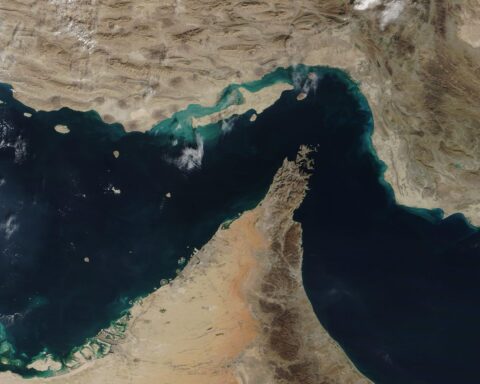
The war that began on 28 February 2026 with US-Israeli strikes against Iran produced the largest oil supply disruption in history within its first week. The Islamic Revolutionary Guard Corps responded by effectively closing the Strait of Hormuz to all non-Iranian vessel traffic, cutting off the chokepoint through which roughly 21 million barrels per day of crude and refined products had flowed. By 9 March, commercial shipping through the strait had collapsed to near zero, with ship-tracking data showing only one outbound transit — an Iranian-flagged vessel — in 24 hours.
The disruption removed approximately 20 per cent of the world’s daily oil supply from accessible markets in a single stroke. Brent crude spiked from $70 per barrel before the conflict to nearly $120 within days, according to commodity trading data compiled by Bloomberg. The International Energy Agency authorised the release of a record 400 million barrels from strategic petroleum reserves — the largest coordinated drawdown since the reserve system was created in 1974.
Saudi Arabia responded by diverting what crude it could through the East-West Pipeline to the Red Sea port of Yanbu, while the UAE pushed barrels through the Abu Dhabi Crude Oil Pipeline to Fujairah. But these bypass routes carry a combined capacity of roughly 8 million barrels per day at maximum throughput — leaving a deficit of at least 12 million barrels daily, according to the IEA’s March 2026 Oil Market Report.
That deficit created a vacuum. And Africa’s producers — sitting on the opposite side of the Atlantic from the conflict, connected to European and Asian buyers by tanker routes that never pass within a thousand miles of an Iranian missile — stepped directly into it.
The Middle East briefing 3,000+ readers start their day with.
One email. Every weekday morning. Free.
The shift has been dramatic. West and North African exports are largely insulated from the conflict, meaning barrels from Nigeria, Angola, Gabon, Algeria, and Libya are now viewed by traders and refiners as lower-risk alternatives to Gulf crude, according to Energy Capital Power. Tanker charter rates from West African loading ports to European and Asian discharge terminals have surged as buyers redirect procurement away from the Persian Gulf. Ship-tracking data shows a measurable increase in vessel movements along the Atlantic Africa-Europe and Africa-Asia corridors since the first week of March.
The pattern mirrors what happened to Russian gas after 2022 — except in reverse. When Europe cut its dependence on Russian pipeline gas after the Ukraine invasion, alternative suppliers (Norwegian, Qatari, and American LNG) captured market share permanently. Now, with Gulf oil supply disrupted by the Iran conflict, African and American producers are capturing market share from Gulf exporters — and the commercial contracts being signed during the crisis will outlast the fighting that created them.
Which African Producers Stand to Gain the Most?
Six African nations hold the overwhelming majority of the continent’s oil production and export capacity. Their combined output of roughly 5.5 million barrels per day represents the single largest pool of crude oil accessible to Western and Asian buyers without transiting any conflict zone.
| Country | OPEC Member | 2026 Output (bpd) | Capacity (bpd) | Spare (bpd) | Primary Buyers |
|---|---|---|---|---|---|
| Nigeria | Yes | 1,420,000 | 1,800,000 | ~380,000 | Europe, India, US |
| Angola | No (left 2024) | 1,070,000 | 1,140,000 | ~70,000 | China (51%), Europe |
| Algeria | Yes | 1,010,000 | 1,050,000 | ~40,000 | Europe (Mediterranean) |
| Libya | Yes | 1,200,000 | 1,400,000 | ~200,000 | Italy, Spain, Germany |
| Republic of Congo | Yes | 270,000 | 300,000 | ~30,000 | China, Europe |
| Equatorial Guinea | Yes | 90,000 | 100,000 | ~10,000 | US, Spain |
The combined spare capacity of these six producers totals roughly 730,000 barrels per day — a fraction of the 12-million-barrel Hormuz deficit. That arithmetic has led most analysts to dismiss African oil as too small to matter. The conclusion is premature. What the spare capacity figures miss is the speed at which production is ramping: Wood Mackenzie projects Nigerian output will exceed 2 million barrels per day by mid-2026, while Angola’s deepwater projects are forecast to add another 70,000 barrels daily through the year.
More critically, the value proposition has shifted. African crude no longer competes with Gulf oil on price alone. It competes on availability — and in a market where 3,000 ships and 20,000 sailors remain stranded in the Persian Gulf, availability commands any premium the seller wants to charge.
Nigeria’s Production Surge Has a Problem Nobody Mentions
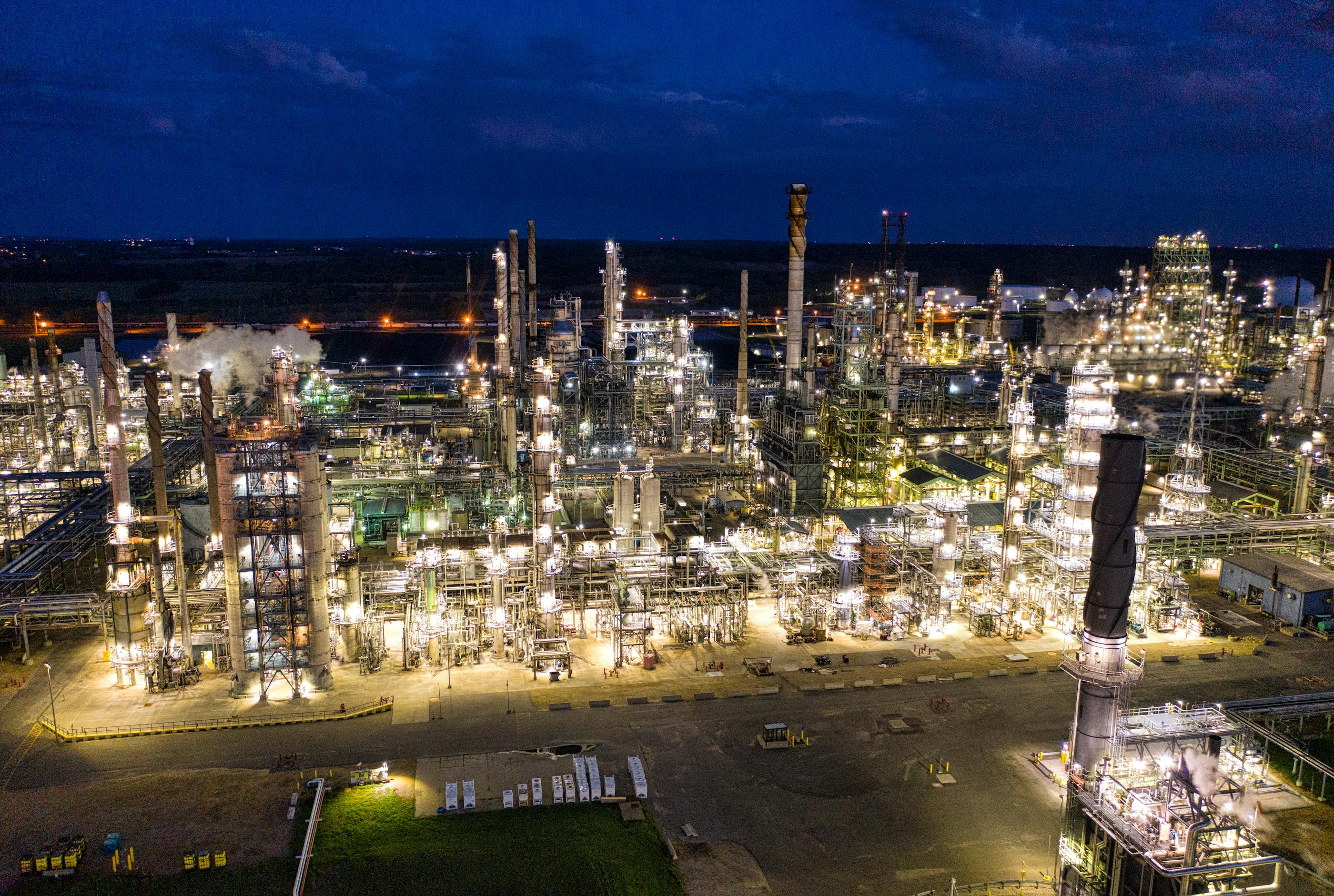
Nigeria is Africa’s largest oil producer and its most complicated success story. The country’s flagship Bonny Light crude — a sweet, light grade prized by European refiners — has become one of the most sought-after barrels on the global market since the Hormuz closure. Before the war, Nigeria was producing roughly 1.42 million barrels per day, according to the IEA. That figure is now accelerating toward 1.8 million barrels per day, with Wood Mackenzie forecasting a push above 2 million barrels per day by the second quarter of 2026.
The surge is real, driven by indigenous Nigerian operators executing aggressive drilling programmes under the 2021 Petroleum Industry Act, which restructured the fiscal regime to attract investment. New deepwater and marginal field developments are coming online faster than anyone expected three years ago.
The problem nobody mentions is the denominator. Nigeria missed its 2025 OPEC production target by 500,000 barrels per day — a staggering gap that reflected years of underinvestment, pipeline theft, and operational failures. The IEA assessed Nigeria’s sustainable production capacity at just 1.42 million barrels per day with zero spare capacity, meaning the current production push is running at the absolute ceiling of existing infrastructure. Every barrel above 1.42 million requires new wells, new pipelines, and new processing capacity that takes months to bring online.
The security dimension compounds the challenge. The Niger Delta remains one of the world’s most dangerous operating environments for oil companies. Pipeline sabotage cost Nigeria an estimated $1.31 billion in lost revenue in 2025 alone, calculated against the Bonny Light average price of $72.08 per barrel. Bunkering — the theft of crude directly from pipelines — diverts an estimated 200,000 barrels per day from the legitimate supply chain.
Yet the same war that created Nigeria’s opportunity also created its buffer. At $100-plus per barrel, Nigerian crude generates enough revenue to fund the security operations, infrastructure upgrades, and drilling programmes needed to sustain higher output. The question is whether the production ramp can outlast the price spike that finances it.
Angola’s Deepwater Gambit
Angola presents the mirror image of Nigeria’s story: technically sophisticated, geologically rich, and strategically positioned — but carrying the weight of declining legacy fields and a political economy still recovering from its exit from OPEC in January 2024.
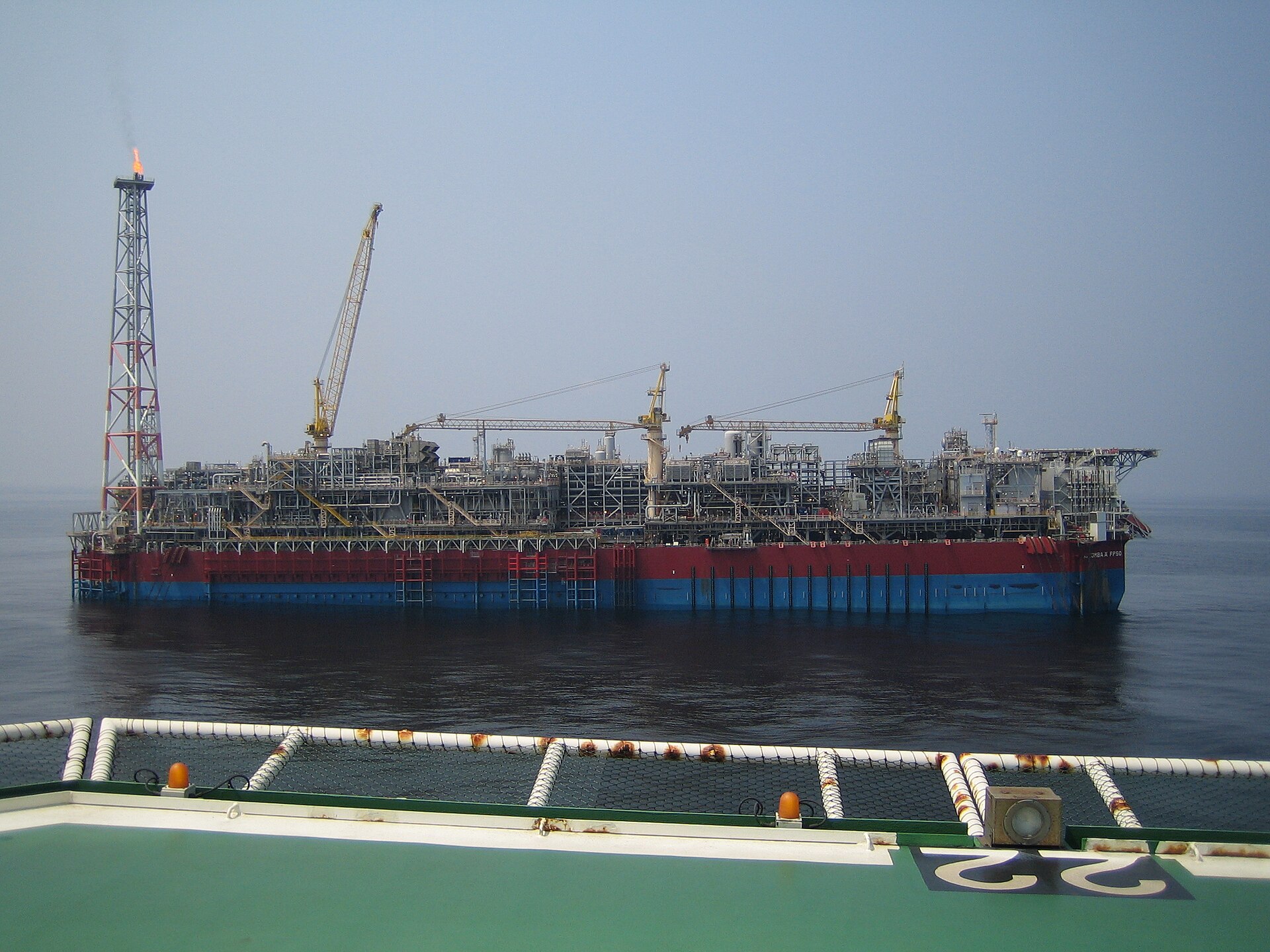
Oil production is forecast to grow 6.5 per cent to 1.14 million barrels per day in 2026, supported by new deepwater projects that began producing in the third quarter of 2025, according to consultants cited by Platforma Media. The Agogo Phase 3 development and other ultra-deepwater blocks off the Angolan coast represent some of the most technically advanced oil extraction operations in the world — floating production, storage, and offloading vessels operating in water depths exceeding 1,500 metres.
China remains Angola’s dominant buyer, absorbing roughly 52 per cent of all crude exports in 2024, with total trade reaching $16.24 billion, according to OEC trade data. The Iran war has intensified Beijing’s interest. With Chinese refiners cut off from their Gulf suppliers — Saudi Arabia, Iraq, and the UAE collectively provided roughly 30 per cent of China’s 2024 crude imports — Angolan barrels represent secure supply that avoids every contested waterway in the conflict zone.
Angola’s OPEC departure is relevant here. Luanda left the cartel after Riyadh pushed for lower production quotas that Angola’s ageing fields could not meet anyway. Free from OPEC constraints, Angola can now produce and sell every barrel its infrastructure allows without deference to Saudi-led quota discipline. In a market where every available barrel carries strategic value, Angola’s independence from OPEC is an asset, not a liability.
The China factor amplifies Angola’s strategic position. Before the war, China sourced roughly 14 per cent of its crude imports from Saudi Arabia and 11 per cent from Iran, according to Visual Capitalist trade data. Both supply routes now transit contested waters. Beijing’s response has been predictable and swift: redirect procurement toward suppliers whose export routes do not cross any war zone. Angola, with its established deepwater infrastructure and direct Atlantic shipping lanes to Chinese ports, is the natural recipient of diverted Chinese demand. Every cargo that shifts from a Saudi VLCC to an Angolan FPSO loading buoy represents a commercial relationship that will be difficult for Riyadh to reclaim when normalcy returns.
The Saharan Pipeline — Algeria and Libya’s Mediterranean Advantage
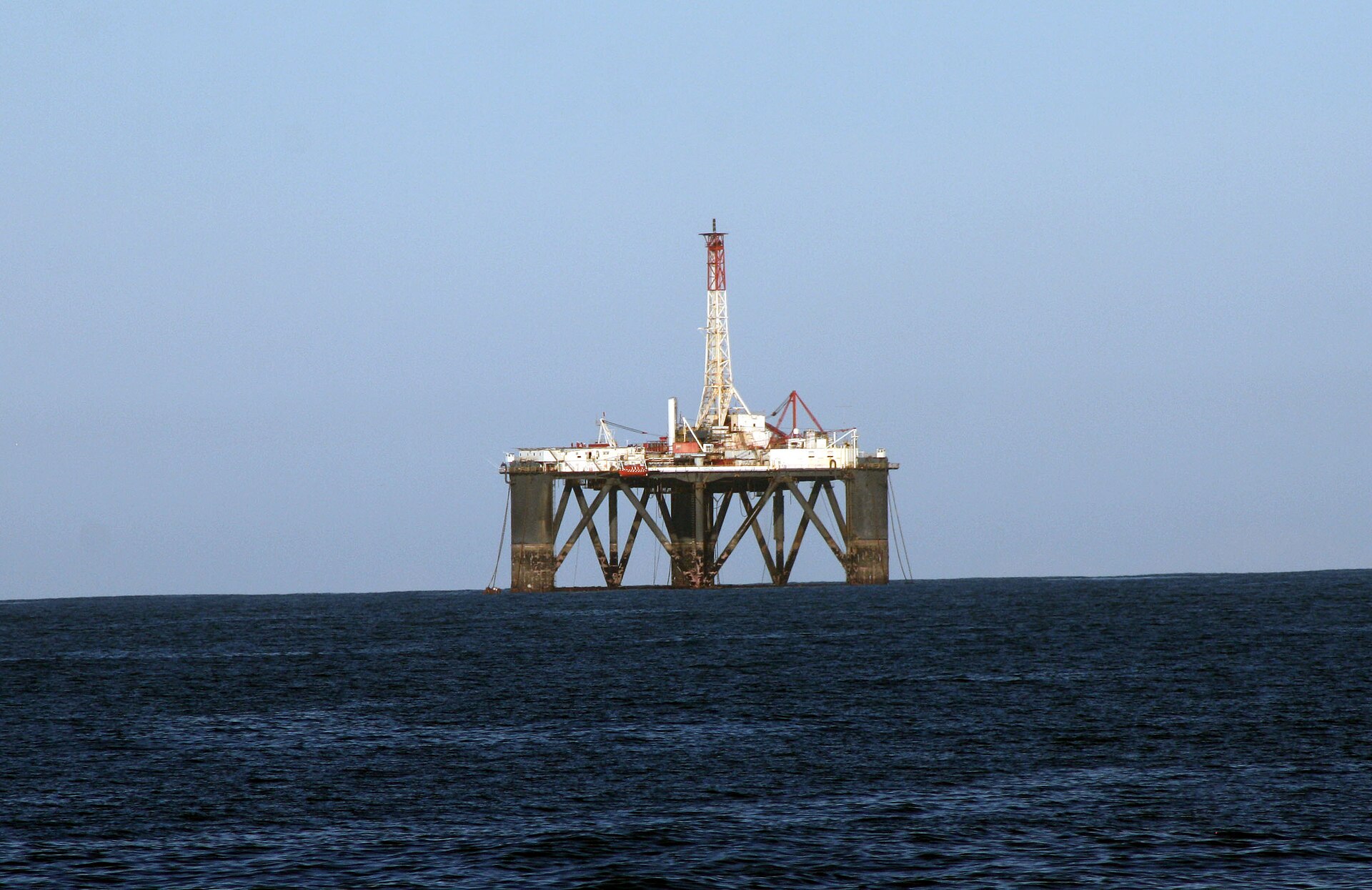
North Africa holds the ace card that no West African producer can match: geography. Algerian and Libyan crude reaches European refineries via short Mediterranean tanker routes that bypass every contested chokepoint on the planet. An Algerian Saharan Blend cargo loaded at the port of Arzew reaches Marseille in roughly 36 hours. The same journey from Saudi Arabia’s Yanbu terminal — the only export port still operating outside the Hormuz blockade — takes seven to ten days.
Algeria’s state oil company Sonatrach has been ramping production since the war began, joining OPEC+ members in boosting output in response to the crisis. Algeria sits on proven reserves of 12.2 billion barrels and produces roughly 1.01 million barrels per day, with limited spare capacity of approximately 40,000 barrels daily, according to OPEC production data.
The more significant Algerian contribution may be in natural gas. European demand for Algerian gas has been climbing since the 2022 Russia-Ukraine crisis first exposed the continent’s dependence on Russian pipeline supply. Algeria ships gas to Spain and Italy via the Transmed and Medgaz pipelines, and the Iran war has intensified European interest in Algerian LNG cargoes as an alternative to Qatari LNG previously transiting Hormuz. According to Bruegel, the European energy think tank, Algerian gas exports to Europe represent one of the most secure alternative energy supply chains available to the continent.
Libya is both the largest prize and the greatest risk. The country holds Africa’s largest proven oil reserves at 48.4 billion barrels and produced roughly 1.2 million barrels per day before the war — output that has been climbing since the relative stabilisation of the country’s fractured political landscape. Libya’s 2026 licensing round for new exploration blocks has attracted significant international interest, driven by the combination of vast untapped reserves and Mediterranean proximity.
The constraint is politics. Libya remains a divided state, with the Government of National Accord in Tripoli and rival authorities in the east frequently blocking oil exports for leverage in domestic power struggles. Any sustained Libyan production increase depends on political stability that the country has not demonstrated in over a decade. Counting on Libya to reliably fill the Hormuz gap is, as one European energy security analyst told the Financial Times, “building your house on sand.”
Can Africa Actually Replace Gulf Oil?
The honest answer is no — not barrel for barrel, not soon, and probably not ever. Africa’s total crude production of roughly 11.4 million barrels per day in 2026 cannot physically replace the 20 million barrels per day that flowed through Hormuz before the war. The arithmetic is unforgiving.
But the question itself reveals a misunderstanding of how oil markets actually work. No single producer or region needs to replace Gulf supply in its entirety. Markets rebalance through a combination of alternative supply, demand destruction, strategic reserve drawdowns, and price adjustment. Africa’s role in that rebalancing is not to replace the Gulf — it is to provide the marginal barrels that prevent a total market collapse.
The African Oil Readiness Assessment — a framework that scores each major producer across five critical dimensions — reveals which nations are positioned to deliver those marginal barrels and which are not.
| Producer | Spare Capacity (1-5) | Infrastructure (1-5) | Political Stability (1-5) | Buyer Diversity (1-5) | Investment Pipeline (1-5) | Total (25) |
|---|---|---|---|---|---|---|
| Nigeria | 4 | 2 | 2 | 4 | 4 | 16 |
| Libya | 4 | 3 | 1 | 3 | 3 | 14 |
| Angola | 2 | 4 | 3 | 2 | 4 | 15 |
| Algeria | 1 | 3 | 3 | 3 | 3 | 13 |
| Senegal | 2 | 3 | 4 | 2 | 5 | 16 |
| Congo (Brazzaville) | 1 | 2 | 2 | 2 | 3 | 10 |
Nigeria and Senegal lead the readiness assessment, though for different reasons. Nigeria scores highest on spare capacity and buyer diversification — its Bonny Light grade is purchased by refiners on four continents. Senegal, a newcomer that began producing oil only in June 2024, scores highest on investment pipeline and political stability, reflecting the Sangomar field’s above-target performance and the country’s relative governance strength.
The critical insight from the assessment is that no single African producer scores above 16 out of 25. Every major producer carries at least one significant weakness — whether infrastructure decay in Nigeria, political fragility in Libya, buyer concentration in Angola, or capacity constraints in Algeria. The continent’s supply contribution is powerful in aggregate but fragile in any individual component.
What Does Africa’s Rise Mean for Saudi Arabia’s OPEC Dominance?
The Iran war has accelerated a fracture within OPEC that Prince Abdulaziz bin Salman, the Saudi oil minister, has spent years trying to prevent. The cartel’s African members have long chafed under Saudi-led production quotas that forced them to curtail output from already underperforming fields. Angola’s departure from OPEC in January 2024 — driven explicitly by a quota dispute with Riyadh — was the most visible rupture, but the resentment runs deeper.
Nigeria, Africa’s largest OPEC member, has consistently produced below its quota for years, losing an estimated $1.31 billion in potential revenue in 2025 alone. The quota system, designed to stabilise prices by restraining supply, effectively punished African producers whose declining legacy fields could not hit their targets regardless. Meanwhile, Saudi Arabia — holding the overwhelming majority of OPEC’s spare capacity — used the quota system to assert market control.
The Iran war inverts this dynamic. With Gulf supply locked behind Hormuz, African OPEC members are producing at maximum capacity with Saudi encouragement rather than restraint. The political permission to pump everything is new and intoxicating. The question is whether African producers will accept a return to Saudi-imposed discipline when the war ends.
Saudi Arabia’s leadership of OPEC will continue to colour its engagements on the West African coast, as oil exporters weigh the benefits of Saudi-led quotas against lost barrels.
Control Risks, 2026 analysis of Saudi-Africa relations
The structural challenge for Riyadh is that the war has created alternative pricing benchmarks and buyer relationships that did not exist two weeks ago. European refiners that historically sourced from Saudi Arabia via Hormuz are now locked into spot contracts with Nigerian and Algerian suppliers. Chinese buyers redirecting from Gulf crude to Angolan deepwater barrels are signing term deals that will extend well beyond any ceasefire. Once these commercial relationships harden into long-term supply agreements, the market share lost by Gulf producers becomes structurally difficult to recapture.
The Investment Stampede Nobody Expected
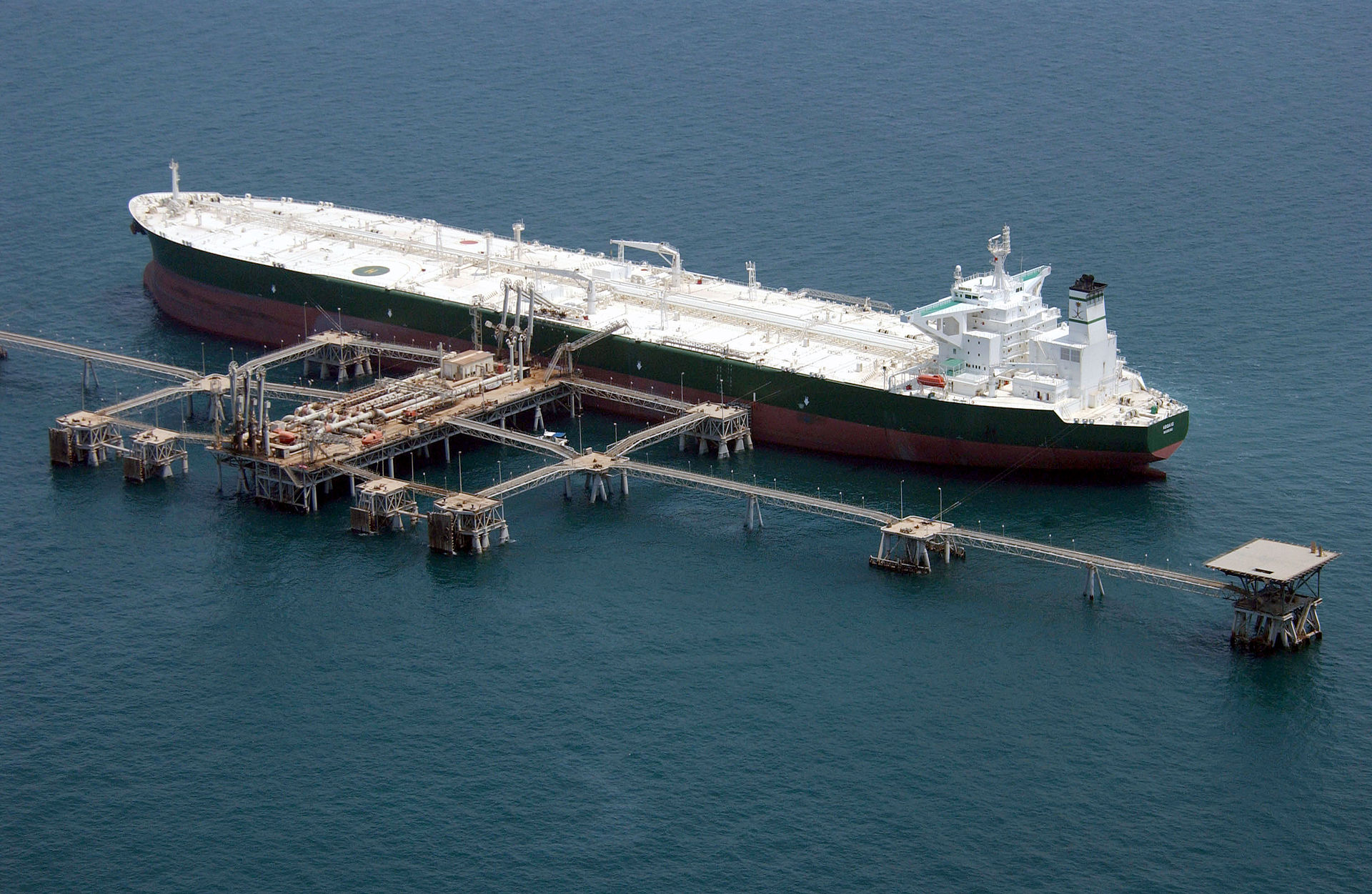
Africa’s upstream oil and gas sector was already experiencing a capital resurgence before the first Iranian missile struck a Gulf oil facility. Investment in African exploration and production reached $41 billion in 2026, according to the African Energy Chamber, with the broader oil and gas value chain — including downstream refining and midstream transportation — attracting between $48 billion and $50 billion in total commitments.
The Iran war has turbocharged this trend. Africa is now expected to lead the world in high-impact exploration drilling for 2026, with activity concentrated along the Atlantic margin — particularly the Orange Basin offshore southern Africa and across the Gulf of Guinea in West Africa, according to World Oil. Major upstream projects representing more than $30 billion in capital expenditure are advancing simultaneously across the continent, including developments in Congo, Libya, Ivory Coast, Nigeria, Angola, Uganda, and Mauritania.
The investment flow tells a story that production statistics alone cannot capture. Capital commits years ahead of the barrels it eventually produces. The $50 billion flowing into African oil and gas in 2026 will not produce meaningful new supply until 2028 or 2029 — but it signals a structural bet by the world’s largest energy companies that African supply will matter for decades, not months.
| Project | Country | Estimated Capex | Operator | Expected Peak (bpd) | Timeline |
|---|---|---|---|---|---|
| Sangomar Phase 2 | Senegal | $3.5B+ | Woodside Energy | 100,000+ | Under evaluation |
| Agogo Phase 3 | Angola | $2.8B | Eni/Azule | 50,000 | 2026-2027 |
| Baleine Phase 3 | Ivory Coast | $2.5B | Eni | 150,000 | 2027 |
| NC98 Block | Libya | $1.8B | NOC Libya | 80,000 | 2026-2028 |
| Tilenga Phase 1 | Uganda | $4.0B | TotalEnergies | 230,000 | 2026-2027 |
| Greater Tortue Ahmeyim Ph 2 | Mauritania/Senegal | $4.8B | BP | 5 MTPA LNG | 2027-2028 |
| ANOH Gas Development | Nigeria | $3.6B | Seplat/NNPC | 300 MMscf/d gas | 2026 |
Saudi Arabia has noticed. The Kingdom announced in February 2026 plans to increase its investments in Africa to more than $25 billion by 2030, with $10 billion in export financing and an additional $5 billion in development funding for African countries by the end of the decade, according to Asharq Al-Awsat. The Kingdom intends to expand its network of embassies across the continent to more than 40 — a diplomatic offensive that mirrors its economic interests.
The competition with the UAE is instructive. The Emirates invested over $110 billion in new African projects between 2019 and 2023, with trade reaching approximately $107 billion in 2024, according to analysis by The Exchange Africa. Saudi national champion ACWA Power has been central to the Kingdom’s counter-strategy, becoming the largest private renewable energy investor in Africa with more than $7 billion deployed. But the Iran war may redirect Gulf capital away from Africa entirely: one analysis by the Radical Leap Group warned that Africa stands to lose billions in UAE, Saudi, and Qatari investment as the war drains Gulf sovereign wealth reserves.
The New Producers — Senegal, Uganda, and the Frontier Rush
The war’s most consequential impact may be on countries that had barely begun producing oil when the first missiles flew. Senegal, which produced its first barrel from the Sangomar field in June 2024, has emerged as one of Africa’s most closely watched new entrants.
Sangomar Phase 1 has production capacity of 100,000 barrels per day and has been operating at or near full capacity for several months. In its first year, the offshore field exceeded expectations dramatically, producing 16.9 million barrels against an initial target of 11.7 million barrels — a 44 per cent overperformance, according to data from Woodside Energy, the Australian operator. Senegal’s Energy Ministry raised its 2025 forecast for Sangomar output, and the country is now evaluating Phase 2 expansion to push production above the current ceiling.
Uganda represents a different model — landlocked production requiring a pipeline to reach export markets. The $4 billion Tilenga Phase 1 project, operated by TotalEnergies, is expected to produce up to 230,000 barrels per day by 2027, with crude transported via the proposed East African Crude Oil Pipeline (EACOP) to the Tanzanian port of Tanga. The pipeline project has attracted controversy over environmental concerns, but the Iran war has silenced most commercial objections. At $100-plus per barrel, the economics of a landlocked East African oil operation work convincingly.
The frontier exploration belt extending from Namibia’s Orange Basin to Mozambique’s Rovuma Basin contains some of the largest untested hydrocarbon prospects on the planet. Exploration activity in these ultra-deepwater zones is expected to dominate global high-impact drilling in 2026, driven by the strategic imperative to develop supply sources beyond the reach of Middle Eastern conflict.
Cameroon has entered the race as well, offering nine exploration blocks in its 2025-2026 licensing round across two proven basins, according to World Oil. The Ivory Coast’s Baleine field, operated by Eni, is advancing through its third development phase with expected peak production of 150,000 barrels per day — a figure that would make the country a significant regional producer for the first time. Even Mauritania, traditionally a gas-focused frontier, is seeing renewed interest in its petroleum potential through the Greater Tortue Ahmeyim Phase 2 LNG project, a joint BP-operated development straddling the maritime border with Senegal.
The common thread across all these frontier plays is timing. Projects that were marginal at $70 per barrel are highly profitable at $100-plus. The Iran war has not merely raised prices — it has compressed investment decision timelines, accelerated final investment decisions, and created a political consensus among host governments to remove regulatory barriers to development. Speed is the new competitive advantage, and African governments are responding accordingly.
Why the Conventional Wisdom About African Oil Is Wrong
The dominant narrative among Western energy analysts runs approximately as follows: African oil producers lack the spare capacity, infrastructure, and political stability to meaningfully replace Gulf supply. The argument leans on Nigeria’s history of production shortfalls, Libya’s political fragility, and the technical challenges of deepwater development timelines.
The narrative is not wrong on the facts. It is wrong on the conclusion.
The mistake is measuring Africa against the Gulf and declaring the continent insufficient because it cannot match Saudi Arabia’s 12-million-barrel-per-day capacity or the UAE’s state-of-the-art export infrastructure. That comparison misses the point. Africa does not need to replace the Gulf. It needs to provide the 2-3 million incremental barrels that prevent global oil markets from tipping into outright crisis — and it is already doing precisely that.
Three data points demolish the “Africa can’t scale” argument:
- Nigeria’s oil output grew from 1.42 million barrels per day in December 2025 to a projected 1.8 million barrels per day by mid-2026 — a 27 per cent increase in six months, according to Wood Mackenzie and The Guardian Nigeria.
- Africa’s total upstream investment of $41 billion in 2026 exceeds the combined upstream spend of every OPEC member outside the Gulf, according to the African Energy Chamber.
- Africa leads the world in high-impact exploration drilling for 2026, with more frontier wells being drilled on the continent than in any other region, according to World Oil.
The contrarian position is not that Africa will replace the Gulf. It is that Africa will emerge from this war as a permanent third pillar of global oil supply — alongside the Gulf and the Americas — rather than the marginal, unreliable contributor that conventional analysis assumes. The investment flows, production trajectories, and commercial relationships being forged during the crisis will persist regardless of how the Gulf states emerge from the conflict.
What Happens When the War Ends?
Every war-driven commodity boom eventually faces the same question: what happens when the fighting stops? The 1973 oil embargo, the 1990 Gulf War, and the 2003 Iraq invasion all produced temporary supply disruptions followed by price collapses that punished producers who had invested at the peak.
Africa’s current position is structurally different from those historical analogues for three reasons.
First, the Hormuz blockade has revealed a vulnerability in global energy architecture that no ceasefire can repair. The concentration of 20 per cent of global oil supply through a single chokepoint controlled by a hostile power is a risk that buyers, insurers, and governments will refuse to accept again. European and Asian energy security strategies will permanently diversify toward non-Gulf supply regardless of what happens in Tehran. African producers are the primary beneficiaries of that strategic recalculation.
Second, the investment commitments of 2026 cannot be unwound. The $50 billion flowing into African upstream projects is locked into multi-year development cycles. Wells being drilled today will produce for 15-25 years. FPSO vessels being commissioned will operate for decades. These are not speculative bets on a temporary price spike — they are infrastructure investments in long-lived assets.
Third, the commercial relationships being formed during the crisis carry contractual momentum. Term supply agreements between African producers and Asian or European refiners typically run three to five years. Chinese buyers locking in Angolan deepwater supply, European refiners securing Algerian Saharan Blend, and Indian purchasers contracting Nigerian Bonny Light are creating demand channels that persist well beyond the conflict’s resolution.
The historical analogue that matters is not the 1973 embargo — it is the 2022 Russia-Ukraine crisis. European buyers permanently reduced their dependence on Russian pipeline gas after 2022, and Russian gas’s market share in Europe never recovered to pre-war levels. The same structural decoupling is now occurring between Asian and European buyers and their Gulf suppliers.
The insurance market reinforces this structural shift. War risk premiums for vessels transiting the Persian Gulf have made Gulf crude significantly more expensive to ship than African alternatives, even after the shooting stops. Lloyd’s of London and its syndicate members will carry the memory of the Hormuz blockade in their actuarial models for years. Higher insurance costs translate directly into higher delivered prices for Gulf crude, narrowing the cost advantage that Saudi and Emirati producers traditionally held over African competitors. The premium for “safe barrels” — crude loaded at ports with no conceivable exposure to Middle Eastern conflict — is a new and persistent feature of the global oil market.
The insurance premium is only one dimension of the structural shift. Evidence is mounting that the war is killing long-term oil demand faster than any climate policy ever could, as governments and corporations accelerate their pivot to renewables in direct response to the Hormuz crisis. If the energy transition that the conflict has catalysed proves durable, African producers may find themselves competing not just for market share against the Gulf, but against a shrinking global appetite for crude altogether.
The Supply Map That Outlasts the Missiles
The Iran war will end. The Strait of Hormuz will eventually reopen. Saudi Aramco will resume full exports from its Red Sea and Persian Gulf terminals. When that happens, the Kingdom will discover that the global oil map it returns to is not the one it left.
Africa’s share of global crude supply is rising from roughly 7 per cent before the war toward 8-9 per cent as new projects come online. That sounds incremental until you convert it to barrels: an additional 1-2 million barrels per day of African supply entering a market that will simultaneously see the return of Gulf crude creates a structural oversupply problem that OPEC’s current quota architecture cannot absorb.
Saudi Arabia will face a choice it has not confronted since the mid-1980s oil price collapse: defend market share by cutting prices, or defend prices by cutting production. In the 1980s, Riyadh chose to cut production, collapsing from over 10 million barrels per day to under 4 million — a decision that cost the Kingdom hundreds of billions in revenue and took two decades to reverse.
The 2026 version of that dilemma is more complex because Mohammed bin Salman’s Vision 2030 requires sustained oil revenue to finance the Kingdom’s economic transformation. Cutting production to support prices starves the sovereign wealth fund. Cutting prices to defend market share starves the budget. Either path leads to fiscal pain.
Africa’s oil renaissance is not a threat to Saudi Arabia in the conventional competitive sense. Riyadh holds advantages — scale, infrastructure, grade quality, and strategic reserves — that no African producer can match individually. The threat is structural: the diversification of global supply away from Gulf dependence, driven by a war that exposed the fragility of a system Saudi Arabia built and controlled for half a century.
The missiles will stop. The pipelines will reopen. The tankers will return to Hormuz. But the buyers who learned — painfully, expensively, in real time — that their energy security depended on a 34-mile-wide chokepoint next to an Iranian missile battery will not forget the lesson. And the African producers who filled the gap will not quietly return to the margins.
Frequently Asked Questions
How much oil does Africa produce compared to the Persian Gulf?
Africa produces approximately 11.4 million barrels of oil equivalent per day in 2026, according to the African Energy Chamber. The Persian Gulf states — including Saudi Arabia, UAE, Kuwait, Iraq, and Qatar — collectively produce roughly 28-30 million barrels per day when operating at capacity. However, the Hormuz blockade has rendered most Gulf exports inaccessible, making Africa’s smaller output strategically disproportionate in value.
Why did Angola leave OPEC in 2024?
Angola withdrew from OPEC in January 2024 following a dispute with Saudi Arabia over production quotas. Riyadh pushed for lower quotas reflecting Angola’s declining output from ageing fields, which Luanda viewed as an unfair constraint on its production sovereignty. Free from OPEC discipline, Angola can now produce and sell at maximum capacity without quota restrictions — a position that has proved advantageous during the Iran war crisis.
Can Nigerian oil production really reach 2 million barrels per day?
Wood Mackenzie and other analysts project Nigerian production could exceed 2 million barrels per day in 2026, driven by aggressive drilling by indigenous operators under the Petroleum Industry Act. However, the IEA assessed Nigeria’s sustainable capacity at only 1.42 million barrels per day with zero spare capacity. The gap between forecasts and assessed capacity reflects uncertainty about infrastructure reliability, security in the Niger Delta, and the pace of new field development.
How is the Iran war affecting African economies that import oil?
While oil-exporting African nations benefit from prices above $100 per barrel, the majority of African economies are net oil importers facing severe price shocks. Surging fuel costs are driving inflation, weakening currencies, and threatening household welfare across the continent, according to ABC News and Financial Afrik analysis. The war’s impact on Africa is sharply divided between the handful of producing states and the dozens of importing nations.
Will African oil remain competitive when the Strait of Hormuz reopens?
African crude will face renewed price competition from Gulf oil when Hormuz reopens, but several structural advantages will persist. Term supply contracts signed during the crisis lock in African supply for years. Investment in new production capacity continues regardless of the war’s outcome. Most critically, the strategic lesson of Hormuz vulnerability will permanently increase demand for non-Gulf supply diversification, sustaining African oil’s relevance well beyond the current conflict.
What is the Sangomar oil field and why does it matter?
The Sangomar field, operated by Woodside Energy off the coast of Senegal, began producing oil in June 2024 and has capacity of 100,000 barrels per day. In its first year, it produced 16.9 million barrels — 44 per cent above its initial target. Sangomar represents a new generation of African oil development: technically sophisticated deepwater operations in politically stable countries with strong governance frameworks, challenging the perception that African oil production is inherently unreliable.