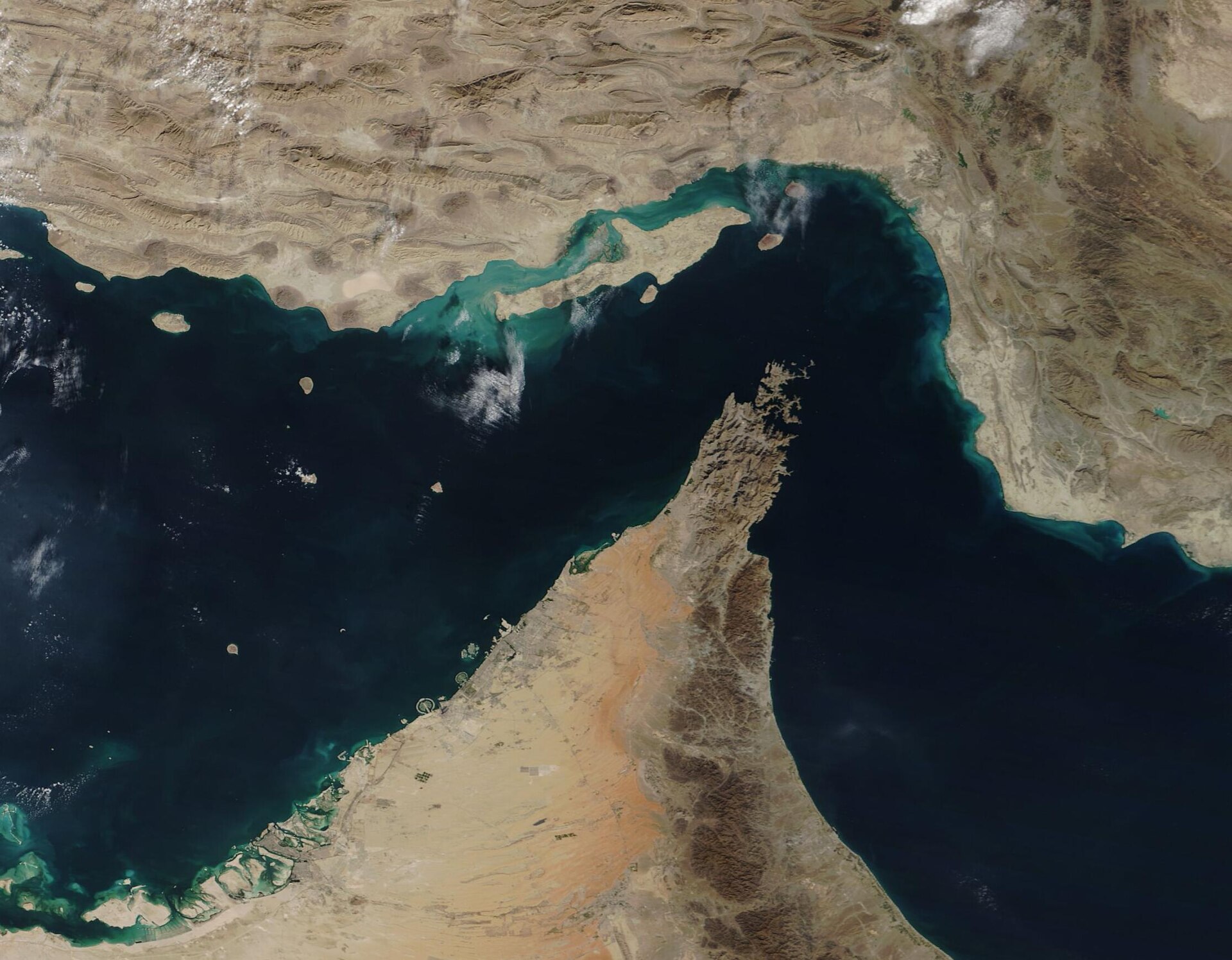

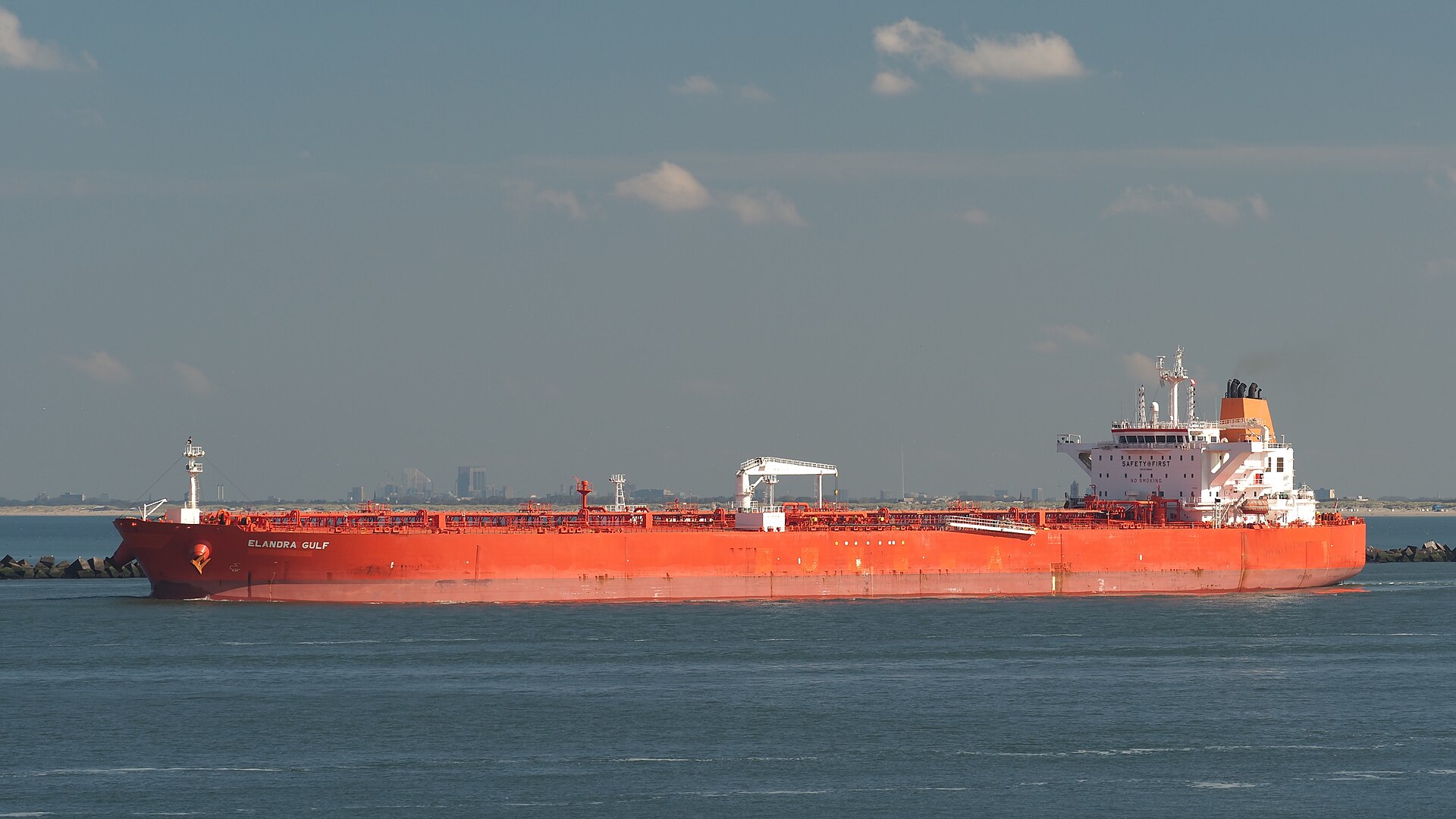
BEIJING/DUBAI — A Chinese-owned supertanker carrying nearly two million barrels of Iraqi crude oil passed through the Strait of Hormuz on May 13 without paying Iran’s standard $2 million transit toll, without being intercepted by the US Navy, and without triggering a single shot from either side. The Yuan Hua Hu’s unmolested exit — timed to the opening day of the Trump-Xi summit in Beijing — delivered the most consequential piece of evidence about the US double-blockade since it was imposed on April 13: the enforcement architecture was never designed to stop vessels like this one, and everyone involved knew it.
The 308,603-deadweight-ton VLCC, owned by COSCO Shipping Energy Transportation and chartered by Sinopec’s trading arm Unipec, had been stranded inside the Gulf for more than two months after loading Basrah Medium crude at Iraq’s Basra Oil Terminal in early March. A COSCO Shipping official told Bloomberg the toll-free passage was “a gesture from Tehran timed to Trump’s summit with Xi Jinping.” What that gesture exposed is not that the blockade failed, but that its enforcement perimeter was always built with a gap large enough to sail a 333-metre supertanker through.
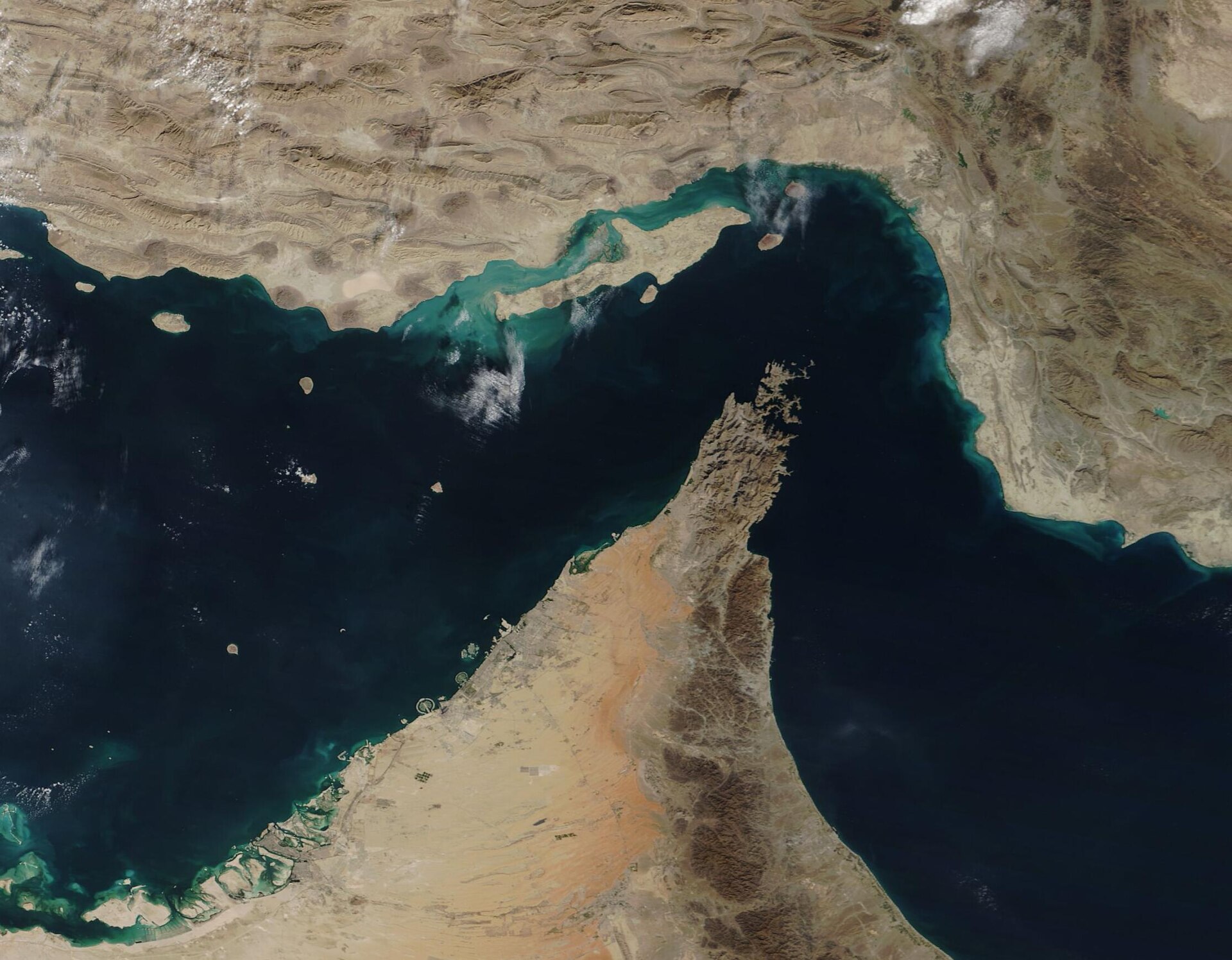
Table of Contents
- What the Yuan Hua Hu Actually Did
- Why Couldn’t CENTCOM Stop a 308,000-Ton Supertanker?
- The PGSA Bypass
- What Does a Toll-Free Crossing Mean for Maritime Insurance?
- The Beijing Choreography
- How Many Ships Are Still Trapped Inside the Gulf?
- The Yanbu Ceiling and Saudi Bypass Arithmetic
- What Happens When a Non-Chinese Vessel Tries Next?
- FAQ
What the Yuan Hua Hu Actually Did
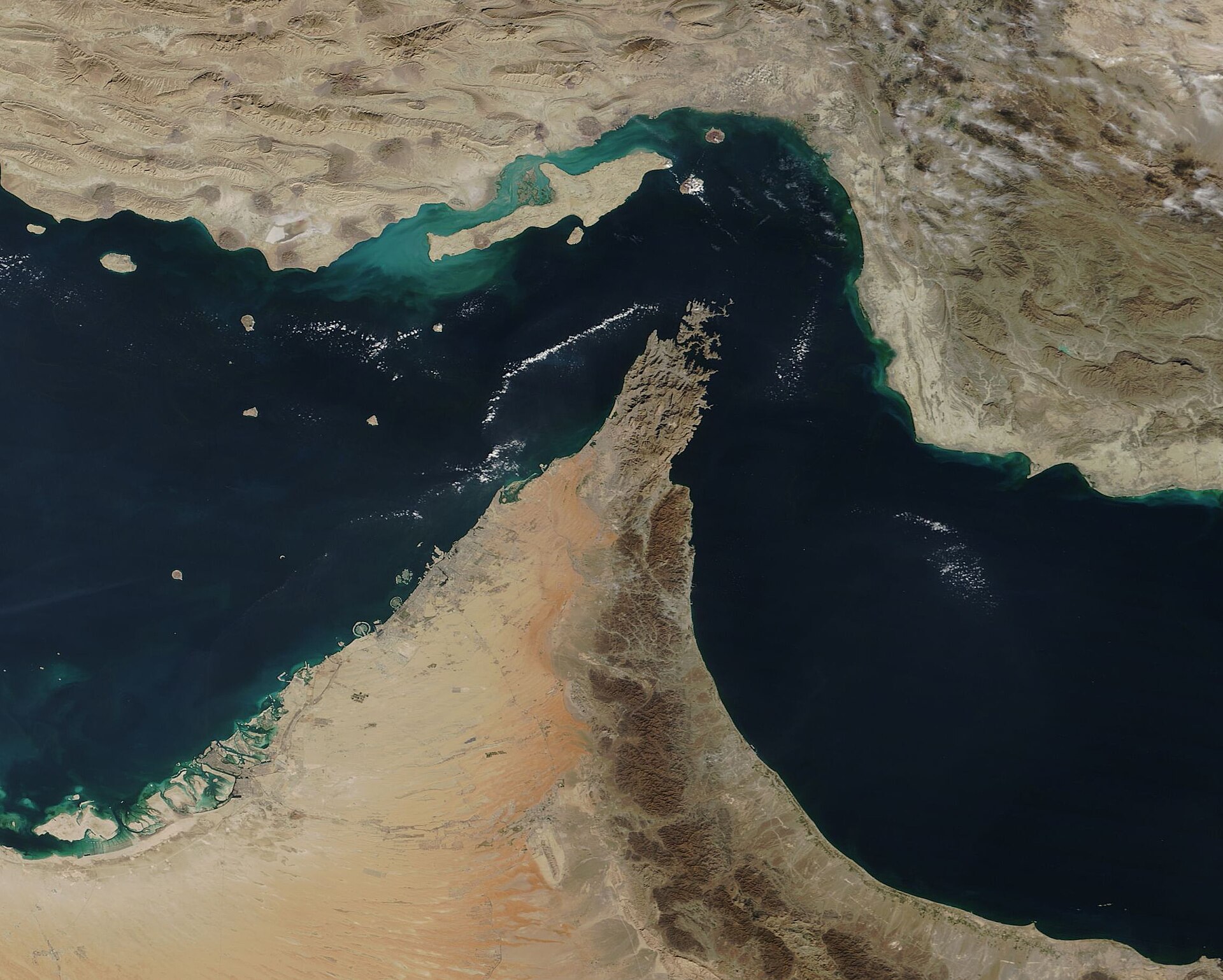
The Yuan Hua Hu (IMO 9723588) is not a dark-fleet tanker running sanctioned crude through shell companies — it is a state-owned VLCC operated by a subsidiary of China’s largest shipping conglomerate, carrying cargo loaded at an allied port, with its AIS transponder broadcasting “CHINESE VESSEL AND CREW” for every radar operator between Fujairah and the Fifth Fleet to read. Lloyd’s List Intelligence tracked the vessel departing a Dubai anchorage and transiting the IRGC-designated Larak Island corridor — the narrow five-nautical-mile channel between Qeshm and Larak inside Iranian territorial waters that has replaced the standard Traffic Separation Scheme since Iran declared the old shipping lanes a “danger zone” in its assertion of full authority over the strait.
The tanker was not alone. A vehicle carrier called the Xiang Jiang Kou, operated by a Singapore-registered entity but Chinese-linked, transited within the same 24-hour window and broadcast the identical “CHINESE VESSEL AND CREW” identification on its AIS — a coordinated signalling strategy that amounted to a sovereignty assertion, daring both the IRGC and US Navy to interfere with Chinese-flagged vessels during the summit window. Neither did. The Yuan Hua Hu anchored off the Gulf of Oman, within sight of the US blockade force, and remained there — its two million barrels of Iraqi crude intact, its hull untouched, and its passage through the most contested waterway on Earth completed without so much as a radio challenge from CENTCOM.
This was the third known Chinese VLCC to exit Hormuz since the war began on February 28, following the Cospearl Lake and He Rong Hai on April 11. But those earlier transits occurred before the US blockade took effect on April 13, before Iran’s Persian Gulf Strait Authority began processing toll applications on May 5, and before the double-blockade framework — in which the US controls the Arabian Sea entry while the IRGC controls the Gulf of Oman exit — was fully operational. The Yuan Hua Hu is the first confirmed VLCC to pass through both layers and pay neither.
Why Couldn’t CENTCOM Stop a 308,000-Ton Supertanker?
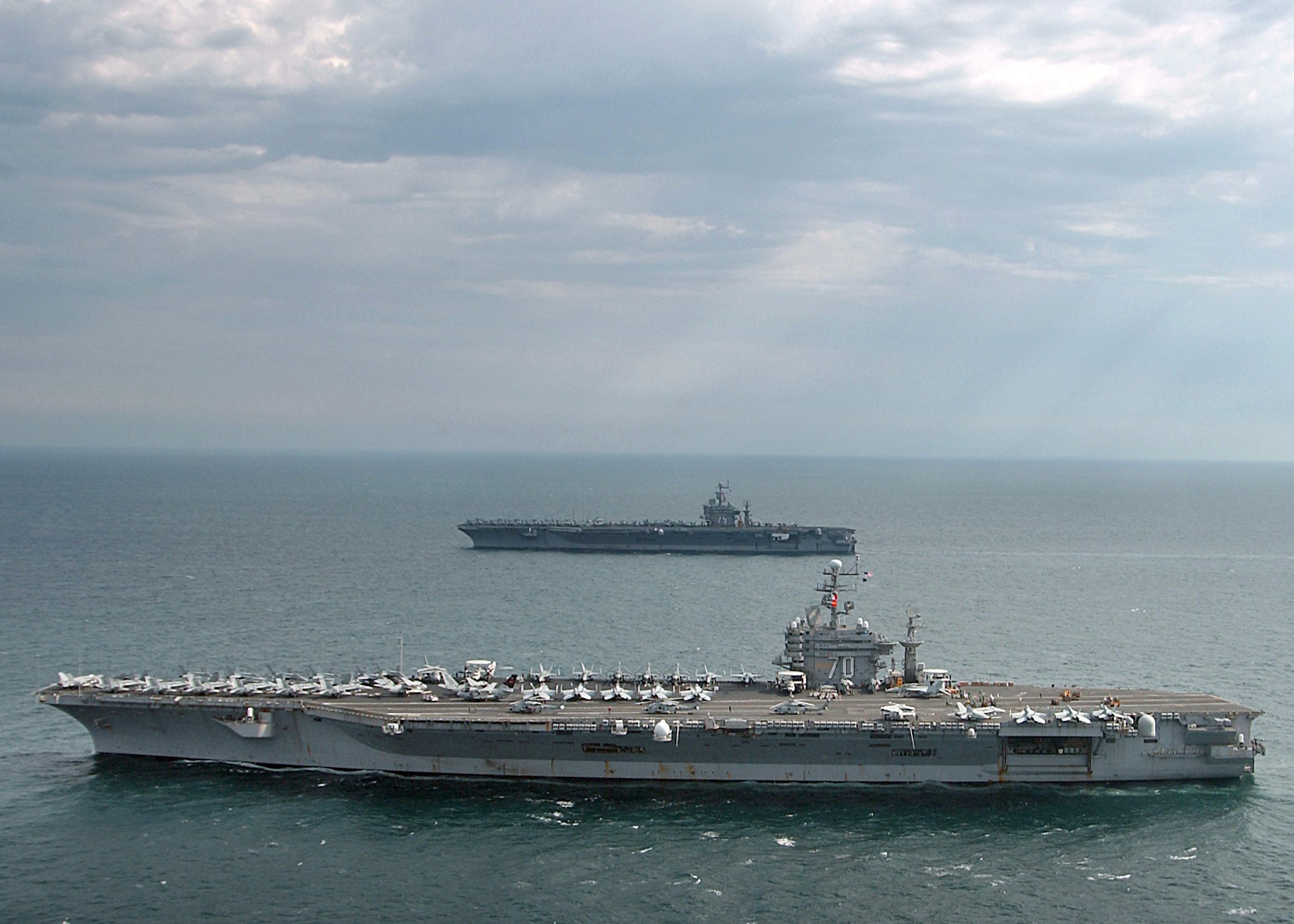
CENTCOM’s blockade, announced on April 13, was drafted with a specific and deliberate exclusion that the Yuan Hua Hu exploited by simply existing. The blockade applies to “vessels of all nations entering or departing Iranian ports and coastal areas” and is, by CENTCOM’s own press statement, “enforced impartially.” But the same announcement included a second clause that functioned as an architectural carve-out: “CENTCOM forces will not impede freedom of navigation for vessels transiting the Strait of Hormuz to and from non-Iranian ports.” The Yuan Hua Hu loaded its cargo at Iraq’s Basra Oil Terminal — emphatically not an Iranian port — which placed it squarely inside the exemption. CENTCOM had no legal basis under its own stated rules to interdict the vessel, and it did not try.
The Middle East briefing 3,000+ readers start their day with.
One email. Every weekday morning. Free.
The exemption was not an oversight, and it was not a drafting error made under time pressure. When the US coercive blockade architecture was announced, it was calibrated to the same logic John F. Kennedy applied during the Cuban Missile Crisis of 1962: restrict enough to inflict economic pain on the target state, but leave a gap wide enough to prevent direct confrontation with a nuclear-armed rival’s commercial fleet. Kennedy explicitly exempted Soviet vessels carrying non-weapons cargo, giving Khrushchev a face-saving off-ramp; CENTCOM explicitly exempted non-Iranian-port traffic, giving Beijing the same. The difference is that China did not merely accept the off-ramp — it turned the off-ramp into a lane.
A direct US interdiction of a Chinese state-owned VLCC would have constituted an act that no existing agreement governs. The United States and the Soviet Union signed the Incidents at Sea Agreement (INCSEA) in 1972, establishing protocols for naval encounters and de-escalation mechanisms that prevented Cold War confrontations from spiralling into shooting wars. No equivalent agreement exists between the United States and China — a gap the Lowy Institute flagged in its analysis of the Hormuz crisis. Boarding or disabling the Yuan Hua Hu would have created a bilateral naval incident on the opening day of a presidential summit, with no agreed rules for what happens next, over a vessel carrying Iraqi crude that CENTCOM’s own rules permitted to transit.
The PGSA Bypass
If CENTCOM’s blockade was the first layer of the double-blockade, Iran’s Persian Gulf Strait Authority — formally constituted on May 5 — was supposed to be the second, and it failed on the Yuan Hua Hu in an even more revealing way. The PGSA was designed to bureaucratise what the IRGC had been doing ad hoc since March: requiring all vessels to submit ownership data, crew nationalities, cargo manifests, insurance details, and AIS information before receiving transit authorisation and paying a toll assessed in Chinese yuan or cryptocurrency. The 40-question “Vessel Information Declaration” form, emailed from [email protected], transformed Hormuz passage from a right under UNCLOS into a permit granted at Iranian discretion — and that transformation was the point.
But when Lloyd’s List Intelligence checked the PGSA’s operational record two days after launch, it found zero transits processed through the authority. The PGSA existed as a legal framework, not an operational chokepoint, and Iran had not yet built the institutional capacity to enforce it at scale. The Yuan Hua Hu bypassed it entirely — not by evading detection or running dark, but because Iran chose to waive the requirement as a diplomatic instrument, proving that the PGSA functions less as a regulatory body than as a valve Tehran can open or close depending on who is asking and what they are offering. Iranian Deputy Speaker Hamidreza Hajibabaei had confirmed earlier in May that Tehran had received its “first revenue from the tolls,” establishing that the system does extract payment from some vessels, which makes the Yuan Hua Hu’s exemption a decision rather than an incapacity.
Iran’s Foreign Minister Araghchi announced on March 26 that five “friendly nations” — China, Russia, India, Iraq, and Pakistan — would receive preferential transit terms, and the toll-free VLCC passage appears to sit a tier above even that framework: a summit-specific diplomatic gift rather than a standing exemption. This is consistent with the pattern of IRGC reversals of Araghchi’s Hormuz statements, in which Tehran’s declared policy and its operational practice diverge depending on which institution — the Foreign Ministry or the IRGC — is making the decision at any given hour. The PGSA was meant to resolve that ambiguity by creating a single administrative interface. The Yuan Hua Hu’s toll-free transit proved the ambiguity is the system.
What Does a Toll-Free Crossing Mean for Maritime Insurance?
For the tanker operators watching from anchorage — and there are more than 600 vessels stranded inside the Gulf and another 240 waiting outside, according to Aramco CEO Amin Nasser — the Yuan Hua Hu’s crossing answers one question and raises a worse one. The answered question is whether a laden VLCC can physically transit Hormuz in the current environment without being attacked, seized, or sunk; the answer, for a Chinese state-owned vessel carrying non-Iranian crude during a presidential summit window, is yes. The worse question is whether any of the commercial operators watching from Fujairah anchorage can replicate the conditions that made it possible, and the answer to that is almost certainly no.
War-risk insurance premiums for Hormuz transit have climbed from a pre-war baseline of 0.10–0.25% of hull-and-machinery value to between 3% and 8% as of mid-May, translating to $3 million to $8 million per transit for a large tanker — a cost that exceeds the $2 million IRGC toll and in some cases exceeds the profit margin on the cargo itself. Oscar Seikaly, CEO of NSI Insurance Group, told industry media that “the market can insure volatility, but it struggles to insure uncertainty,” and the Yuan Hua Hu’s crossing does not reduce uncertainty for anyone who is not Chinese, state-owned, and transiting during a bilateral summit. Munro Anderson of Vessel Protect identified the prerequisites for premium normalisation as mine clearance (estimated at six months post-deal), a sustained no-incident period, and predictable navigation rules — none of which the Yuan Hua Hu established.
The precedent cuts both ways within the insurance market. On one hand, the transit demonstrated that the Larak corridor is physically navigable and that both CENTCOM and the IRGC will allow certain vessels through without hostile action. On the other, the ADNOC-operated 300,000-ton VLCC struck by two Iranian drones on May 4 — just nine days before the Yuan Hua Hu’s crossing — demonstrated that the same corridor is lethally dangerous for vessels Iran does not choose to protect. A Chinese supertanker sailing unmolested through waters where an Emirati supertanker was attacked a week earlier does not signal that the strait is reopening; it signals that access is being rationed by flag and by politics, which is precisely the condition that makes commercial insurance hardest to underwrite.
| Period | Premium (% of H&M value) | Approx. Cost per VLCC Transit | Multiple vs Pre-War |
|---|---|---|---|
| Pre-war (before Feb 28) | 0.10–0.25% | $100K–$250K | 1× |
| Early March 2026 | 2.0–2.5% | $2M–$2.5M | ~16× |
| Late March (peak) | 2.5–3.0% | $2.5M–$3M | ~20× |
| Late April (easing) | ~1.0% | ~$1M | ~8× |
| May 6–14 2026 | 3.0–8.0% | $3M–$8M | 24–64× |
The May spike reflects two developments: the ADNOC VLCC drone strike on May 4 repriced the risk of non-Chinese-flagged transits, and the collapse of Project Freedom — which had promised US Navy escorts for commercial shipping — removed the only mechanism that might have provided an insurable transit corridor for non-Chinese vessels. The S
The May spike reflects two developments: the ADNOC VLCC drone strike on May 4 repriced the risk of non-Chinese-flagged transits, and the collapse of Project Freedom — which had promised US Navy escorts for commercial shipping — removed the only mechanism that might have provided an insurable transit corridor for non-Chinese vessels. The S&P Global benchmark of ~2.5% per seven-day transit period, which applied in early March, is now a historical relic; insurers are pricing per-voyage risk individually, vessel by vessel, based on flag state, cargo origin, and whether the operator has received PGSA approval.
amp;P Global benchmark of ~2.5% per seven-day transit period, which applied in early March, is now a historical relic; insurers are pricing per-voyage risk individually, vessel by vessel, based on flag state, cargo origin, and whether the operator has received PGSA approval. The insurance calculus hardened further on May 14 when, as Trump and Xi issued their Hormuz joint statement in Beijing, the IRGC seized a non-Chinese vessel 38 nautical miles from Fujairah — the third confirmed hijacking since February 28 and the first enforcement action inside the extended crescent boundary.
The Beijing Choreography
The timing of the Yuan Hua Hu’s crossing was diplomatic stagecraft executed across three capitals over eight days, and the sequence matters more than any individual event within it. On May 6, Iranian Foreign Minister Araghchi met Chinese Foreign Minister Wang Yi in Beijing, where Wang pressed Iran to pursue diplomacy and refrain from resuming hostilities — a meeting that took place exactly one week before both the summit’s opening and the confirmed crossing. That pre-summit Hormuz deal between Beijing and Tehran produced the conditions under which a COSCO vessel could transit toll-free: China delivered diplomatic pressure on Iran in exchange for a visible concession that Beijing could present to Washington as evidence of Chinese influence over Tehran.
The choreography extended to the summit itself. On May 14 — the day after the Yuan Hua Hu’s crossing and the first full day of the Trump-Xi bilateral — Xi Jinping told Trump he was interested in buying more American oil to reduce China’s dependence on the Strait of Hormuz, according to CNBC’s live summit coverage. That offer reframed the crossing’s meaning: China was not breaking the blockade, China was demonstrating that it could bypass it, and then offering to make the bypass unnecessary by purchasing US crude instead — if the price, in both dollars and geopolitical concessions, was right. Trump, for his part, told reporters before departing for Beijing that “I don’t think we need any help with Iran. We’ll win it one way or the other, peacefully or otherwise” — a statement that the Yuan Hua Hu’s unmolested crossing had already empirically contradicted.
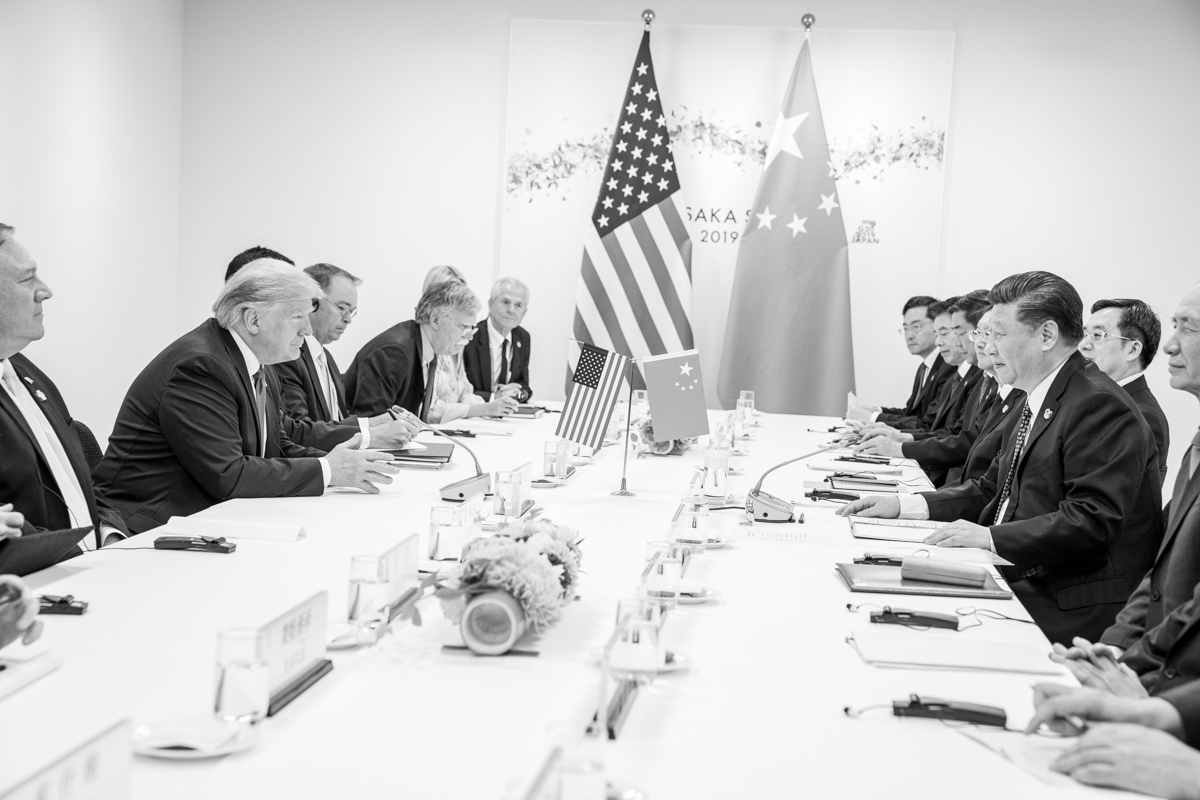
The United States and China had already agreed publicly — via a State Department statement following a Rubio-Wang Yi phone call in April — that no country should charge tolls in the Strait of Hormuz. Iran then granted China, specifically, a toll-free transit while continuing to charge everyone else, turning the joint US-China anti-toll position into a Chinese-only benefit that the US helped negotiate. The irony is structural: Washington and Beijing agreed that tolls are illegitimate, and Tehran responded by giving Beijing the only toll exemption, which means the US anti-toll position functionally served Chinese commercial interests rather than the freedom-of-navigation principle it was supposed to defend.
How Many Ships Are Still Trapped Inside the Gulf?
The Yuan Hua Hu’s successful crossing extracted approximately two million barrels of crude from a waterway through which, before February 28, roughly 21 million barrels transited daily. The scale of the gap between one successful VLCC transit and the pre-war baseline is the measure of what the crossing did not change. Aramco CEO Amin Nasser disclosed in May that more than 600 tankers remain stranded inside the Gulf, with another 240 waiting outside, and the International Maritime Organisation reported in late April that approximately 20,000 civilian mariners are aboard those vessels — a floating population larger than most naval bases, trapped in waters where an ADNOC supertanker was struck by Iranian drones on May 4.
Lloyd’s List data quantifies the collapse. Only 40 ships crossed the strait during the week ending May 3, against a pre-war average of approximately 840 per week — a 95% reduction in commercial traffic that the Yuan Hua Hu’s transit did nothing to reverse. On May 12, the day before the crossing, satellite analysis counted 12 vessels transiting (six inbound, six outbound), of which four — a third — were running “dark” with AIS transponders switched off, a practice that signals either PGSA non-compliance, sanctions evasion, or both. IEA Director Fatih Birol described the 13 million barrels per day now offline as “the biggest energy security threat in history” — one VLCC’s cargo against a disruption running at nearly seven times that volume every day.
| Metric | Pre-War Baseline | May 2026 | Change |
|---|---|---|---|
| Daily vessel transits | ~138 | 5–12 | −91% to −96% |
| Weekly crossings | ~840 | ~40 | −95% |
| Daily oil flow (bpd) | ~21M | ~1–2M | −90%+ |
| Tankers stranded (inside Gulf) | 0 | 600+ | — |
| Tankers waiting (outside Gulf) | 0 | 240+ | — |
| Mariners stranded | 0 | ~20,000 | — |
At least five COSCO-linked vessels remain inside the Gulf after the Yuan Hua Hu’s departure, based on the original eight COSCO ships reported stranded by March 21 minus the three confirmed exits. The broader Chinese-flagged fleet is larger: CSIS counted 55 Chinese-flagged ships stranded in March, and the vast majority have not moved. For the 600-plus non-Chinese tankers, the Yuan Hua Hu’s crossing offers no operational template — they cannot broadcast “CHINESE VESSEL AND CREW,” they cannot claim Beijing’s diplomatic cover, and they cannot expect a summit-timed toll exemption from the PGSA.
The Yanbu Ceiling and Saudi Bypass Arithmetic
Every barrel that cannot exit through Hormuz must either stay in the ground or find an alternative route, and for Saudi Arabia the only alternative is the East-West Pipeline to Yanbu on the Red Sea coast — a bypass whose theoretical capacity of 7 million barrels per day has been the most frequently cited number in the crisis and the most misleading. Argus Media assessed Yanbu’s port loading capacity at 4.5 million bpd nominal; Vortexa’s operational data showed approximately 3 million bpd actually moving through the facility under wartime conditions. Against pre-war Saudi Hormuz exports of 7 to 7.5 million bpd, that leaves a structural gap of 2.5 to 4.5 million bpd that Yanbu cannot close regardless of pipeline capacity, because the bottleneck is loading berths and tanker availability at the Red Sea terminal, not pumping stations in the desert.
The IEA reported in its May assessment that Saudi production crashed from 10.4 million bpd in February to 7.25 million bpd in March — a 3.15 million bpd drop representing 30% of output — with the Khurais field’s 300,000 bpd still offline and no restoration timeline announced. Saudi crude exports to China are set for what Bloomberg described on May 11 as a “deep plunge” in June, a trajectory that the Yuan Hua Hu’s crossing of Iraqi crude does nothing to reverse, since the vessel was lifting Basrah Medium (Iraqi) rather than Arab Light (Saudi). The pipeline that was supposed to insulate Saudi exports from Hormuz disruption is running at 40–65% of its theoretical throughput, and the IRGC struck an East-West Pipeline pumping station on April 8 — demonstrating that the bypass itself is targetable. The structural threat to Saudi Arabia’s Chinese oil market — including why Trump’s claim that China agreed to buy US crude arrives precisely when Aramco has least capacity to respond — is examined in the companion analysis.
“The market can insure volatility, but it struggles to insure uncertainty.”
— Oscar Seikaly, CEO, NSI Insurance Group
The financial arithmetic compounds the physical constraints. Brent crude sat at $105.99 on May 14, down from a crisis peak of $126 in early March but still 58% above the $67 level of May 2025. Saudi Arabia’s fiscal breakeven — the oil price needed to balance the national budget including PIF commitments — sits between $108 and $111 per barrel according to Bloomberg’s PIF-inclusive estimate, which means the Kingdom is operating below breakeven on reduced volumes, a combination that Goldman Sachs projected would produce a war-adjusted deficit of 6.6% of GDP against the official forecast of 3.3%. VLCC day rates, which peaked at $423,736 in early March, have not normalised because the vessels that would normally carry Gulf crude are sitting empty inside a semi-closed waterway, and an Indian petrochemical charter reached $770,000 per day in mid-March — a rate that reflects not demand for transport but desperation to move cargo through a corridor where movement itself has become the scarce commodity.
What Happens When a Non-Chinese Vessel Tries Next?
The operational question the Yuan Hua Hu’s crossing creates is whether its precedent is transferable or unique, and the evidence available on May 14 points overwhelmingly toward unique. The vessel benefited from a convergence of conditions that no Greek, Norwegian, Japanese, or Emirati tanker operator can reproduce: Chinese state ownership providing implicit sovereign protection, a bilateral diplomatic relationship with Iran that includes a “friendly nation” transit exemption, a summit window in which both CENTCOM and the IRGC had independent reasons not to create an incident, and cargo loaded at a non-Iranian port that fell within CENTCOM’s stated exemption. Remove any one of those conditions and the crossing becomes a different calculation with a different risk profile.
The evidence from non-Chinese transits is cautionary. The ADNOC-operated VLCC struck by two Iranian drones on May 4 — part of Iran’s broader campaign to isolate the UAE — was carrying Gulf crude through the same waterway and it was attacked; the UAE condemned the strike as “piracy.” The Liberia-flagged VLCC Serifos, which transited on April 10 carrying Saudi and Emirati crude, made it through before the US blockade took effect but represented the kind of non-aligned vessel that would face a harder path under the current dual-authority regime. Iran has allowed selective non-Chinese transits — Turkish-operated LPG tankers, Indian-flagged gas carriers, a Saudi oil tanker bound for India, seven Malaysian-linked vessels — but each required individual negotiation with the IRGC or, since May 5, the PGSA, and each was granted on terms that Iran set unilaterally.
Project Freedom, the US Navy operation launched on May 4 to escort commercial vessels through Hormuz, lasted 48 hours before Trump paused it on May 5, citing “great progress” toward an Iran deal. NBC News reported that the real cause was Saudi Arabia’s refusal to allow the US military to use Prince Sultan Airbase or Saudi airspace to support the operation — a logistical veto that rendered the escort mission unworkable regardless of political will. Project Freedom remains suspended as of May 14, and Trump’s only public comment was a threat to resume it as “Project Freedom Plus” if negotiations fail, which means the one mechanism that might have created an insurable transit corridor for non-Chinese commercial shipping does not exist and has no announced timeline for resumption.
The absence of a US-China maritime guardrail makes even the limited Chinese precedent fragile. The 1972 INCSEA agreement — which gave Washington and Moscow de-escalation protocols for exactly this kind of close-proximity naval encounter — has no equivalent governing US and Chinese forces at Hormuz. If a future Chinese transit goes wrong — a miscommunication, a navigation error in the Larak corridor, an IRGC unit that did not receive the exemption order — there is no agreed mechanism for preventing escalation. The Yuan Hua Hu’s smooth passage was not a guardrail; it was the absence of a guardrail that happened not to matter this time.
Frequently Asked Questions
Is the Yuan Hua Hu sanctioned by the United States?
Lloyd’s List described the vessel as a “sanctioned Chinese tanker” in its headline, and the ship has appeared on US sanctions lists related to Iranian oil transport networks. COSCO Shipping Energy Transportation, the vessel’s owner, was previously sanctioned by the US Treasury in 2019 for transporting Iranian crude and was delisted in early 2020 after compliance commitments. The current sanctions status of this specific COSCO subsidiary and the Yuan Hua Hu’s individual listing remain subject to the evolving US sanctions framework applied since February 28, 2026 — but the vessel’s Iraqi cargo origin and non-Iranian port of loading placed it outside the scope of sanctions targeting Iranian oil exports specifically.
How does the IRGC Larak corridor differ from the standard Hormuz shipping lanes?
The standard Traffic Separation Scheme through Hormuz runs through the centre of the strait with inbound and outbound lanes separated by a median. Since the IRGC published a chart on February 28 declaring these standard lanes a “danger zone,” all approved transits have been redirected through a five-nautical-mile channel between Qeshm and Larak islands that runs entirely within Iranian territorial waters — giving Iran physical jurisdiction over every vessel that transits, regardless of UNCLOS provisions guaranteeing unsuspendable transit passage through international straits. The corridor is navigable for VLCCs but considerably narrower than the standard lanes, creating a physical bottleneck that limits simultaneous transits and forces vessels into single-file approaches.
Could the US legally have stopped the Yuan Hua Hu under international law?
UNCLOS Article 44 establishes that transit passage through international straits cannot be suspended, which means both the IRGC toll system and the US blockade exist in tension with the treaty framework. The US blockade cites self-defence authorities and UN Security Council resolutions rather than UNCLOS, but CENTCOM’s own stated rules explicitly exempt non-Iranian-port traffic — and the Yuan Hua Hu was carrying Iraqi crude from Basra. A US interdiction would have required either redefining the blockade’s scope in real time or invoking an authority that contradicts CENTCOM’s published rules of engagement, either of which would have created a legal and diplomatic crisis with Beijing on the opening day of a presidential summit.
What is China’s share of Iranian crude exports?
China purchased more than 80% of Iran’s shipped crude exports before the war, according to multiple tracking services, making Beijing the only customer whose purchasing decisions materially affect Tehran’s revenue. This dependency runs both ways: Iran cannot sustain its war economy without Chinese crude purchases, and China cannot replace Iranian supply easily given the Hormuz closure’s impact on alternative Gulf suppliers. China imported approximately 1.5 million bpd of Iranian crude in 2025, much of it routed through Malaysian and Emirati transshipment points to obscure its origin — a “dark fleet” infrastructure that the war and the US blockade have disrupted but not eliminated.
What is the current status of the Iran-US ceasefire negotiations?
The April ceasefire framework — brokered through Pakistan’s ISI chief Munir and structured as a 45-day Phase 1 followed by a final deal in Phase 2 — expired on April 22 without extension. No replacement framework has been announced. The Trump-Xi summit is being treated by both sides as a potential pathway to renewed negotiations, with Beijing positioned as the intermediary that can deliver Iranian compliance in exchange for US concessions on other bilateral issues — a framing that China’s toll-free VLCC transit was designed to reinforce by demonstrating Beijing’s operational grip on Tehran’s Hormuz policy in real time. Hours after the Yuan Hua Hu’s passage, the IRGC sank an Indian-flagged livestock carrier off Oman in the same operational window — demonstrating that Beijing’s intercession exempts Chinese-flagged shipping but leaves all others exposed.