
TEHRAN — Iran’s Persian Gulf Strait Authority is not a negotiating position. It is a functioning customs bureaucracy — with a domain name, a 40-question vetting form, a toll schedule denominated in rials, and a staff processing applications through the IRGC’s Hormozgan Provincial Command — that opened for business on May 5, nine days into what diplomats in Muscat were calling “the final stretch” of fourth-round talks. By the time negotiators in Oman sat down on May 11, the PGSA had already begun issuing transit clearance codes. The question on the table was no longer whether Iran would control Hormuz passage. The question was what dismantling an operational agency would cost.
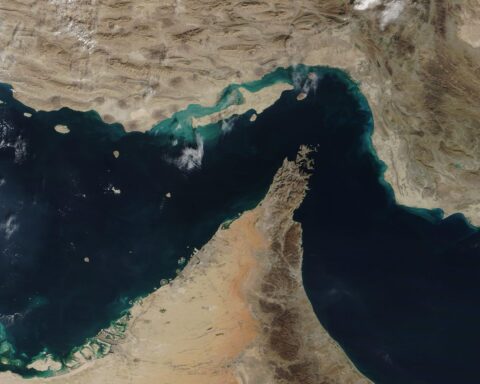
That distinction — between refusing to build something and tearing down something already running — is the one most coverage of the PGSA has missed. CNN framed it as a wartime power grab. PBS NewsHour called it a simultaneous diplomatic and coercive move. Both descriptions are accurate and both are incomplete. The PGSA is the third institutional layer in a progression that began with informal IRGC toll extraction in mid-March, advanced to a formal “Strait of Hormuz Management Plan” ratified by late March, and culminated in a statutory authority with its own logo, email address ([email protected]), and operational footprint stretching across Iran’s 500-kilometre crescent from Jask to Siri Island. Each step raised the cost of reversal. That was the design.
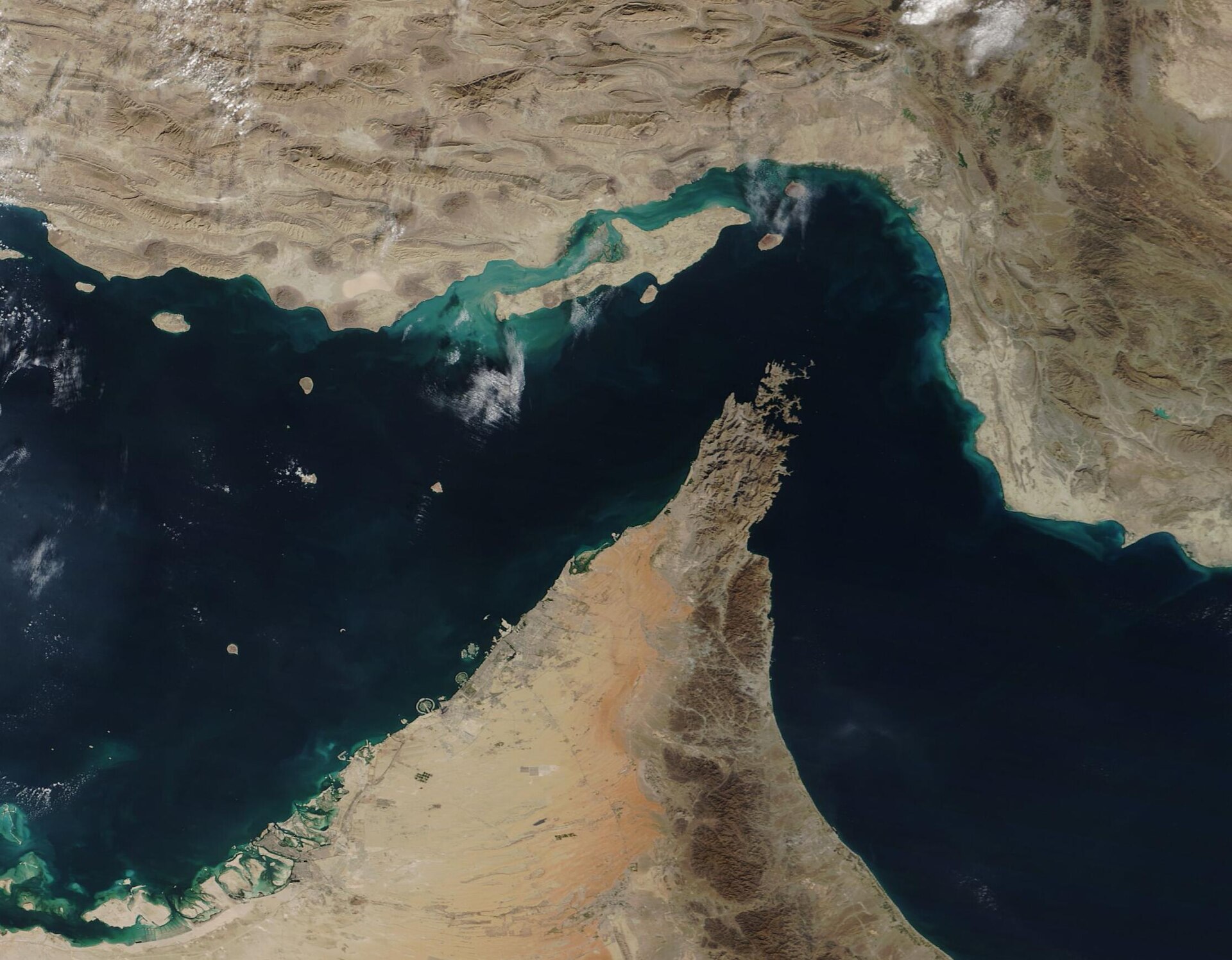
Table of Contents
- The Bureaucracy That Arrived Before the Deal
- What Does the PGSA’s 40-Question Form Actually Require?
- The Toll Came First, the Authority Came Second
- The Larak Corridor and the Legal Regime It Rewrites
- Who Pays a Toll to a Designated Terrorist Organisation?
- Twelve Articles Designed to Survive Any Deal
- The Inventory Arithmetic That Makes Dismantlement Harder
- Can 112 Nations Force a Vote That China Already Vetoed Once?
- The Copenhagen Precedent No One Wants to Invoke
- Frequently Asked Questions
The Bureaucracy That Arrived Before the Deal
The PGSA was founded on May 5, 2026. It has a registered domain (PGSA.ir), an official email, a logo, and a permit-issuance process that routes applications through the IRGC Navy’s Hormozgan Provincial Command for what Iran calls “sanctions screening” and “geopolitical vetting.” It launched six days before the fourth round of US-Iran negotiations opened in Oman — a timeline that gave Tehran institutional scaffolding to point to after any agreement, and something concrete to refuse to dismantle during it.
PressTV described the PGSA as “a sovereign governance system” providing “a verifiable single window” — language drawn from customs administration, not military coercion. Iran is not claiming the right to blockade Hormuz. It is claiming the right to administer it. The distinction is legally significant: blockades invite naval response under the law of armed conflict; administrative regimes invite bureaucratic contestation under UNCLOS, which is slower, less dramatic, and far harder to reverse.
Three legal regimes are now operating simultaneously in the strait: UNCLOS transit passage, the law of naval warfare under the Hague conventions, and self-defence. The PGSA occupies the gap between all three. It is administrative rather than military, which makes it difficult to challenge as an act of war. It is domestic rather than treaty-based, which insulates it from negotiations to which Iran has not consented. And it is revenue-generating, which gives it a constituency inside the Iranian state that will resist its dissolution regardless of what diplomats agree to in Muscat or Islamabad.
What Does the PGSA’s 40-Question Form Actually Require?
The Vessel Information Declaration form that the PGSA requires before any transit authorisation contains more than 40 questions. According to CNN and The Week’s reporting from May 7-11, the form demands: vessel name and IMO number, any previous names the vessel has carried, country of origin and intended destination, the nationalities of registered owners, operators, and all crew members, and full cargo manifests including type, volume, and consignee details. Completed forms are submitted by email and routed to the IRGC Navy’s Hormozgan Provincial Command.
The Middle East briefing 3,000+ readers start their day with.
One email. Every weekday morning. Free.
The routing is the mechanism. What Iran calls “sanctions screening” is a process by which the IRGC — not the Iranian foreign ministry, not a civilian maritime authority — determines whether a vessel’s ownership structure, crew composition, or cargo destination disqualifies it from passage. An Iranian army official told IRNA in May that “countries that comply with the United States by imposing sanctions on the Islamic Republic of Iran will certainly face difficulties crossing the strait.” The 40-question form is how those difficulties are administered.
The form also serves an intelligence function that no one in Tehran has bothered to deny. Every vessel submitting a declaration provides Iran with ownership chains, crewing patterns, and trade routes for the world’s crude and LNG fleet. Even if the PGSA were dismantled tomorrow, the database it has already begun building would take years to replicate through conventional intelligence collection.
The Toll Came First, the Authority Came Second
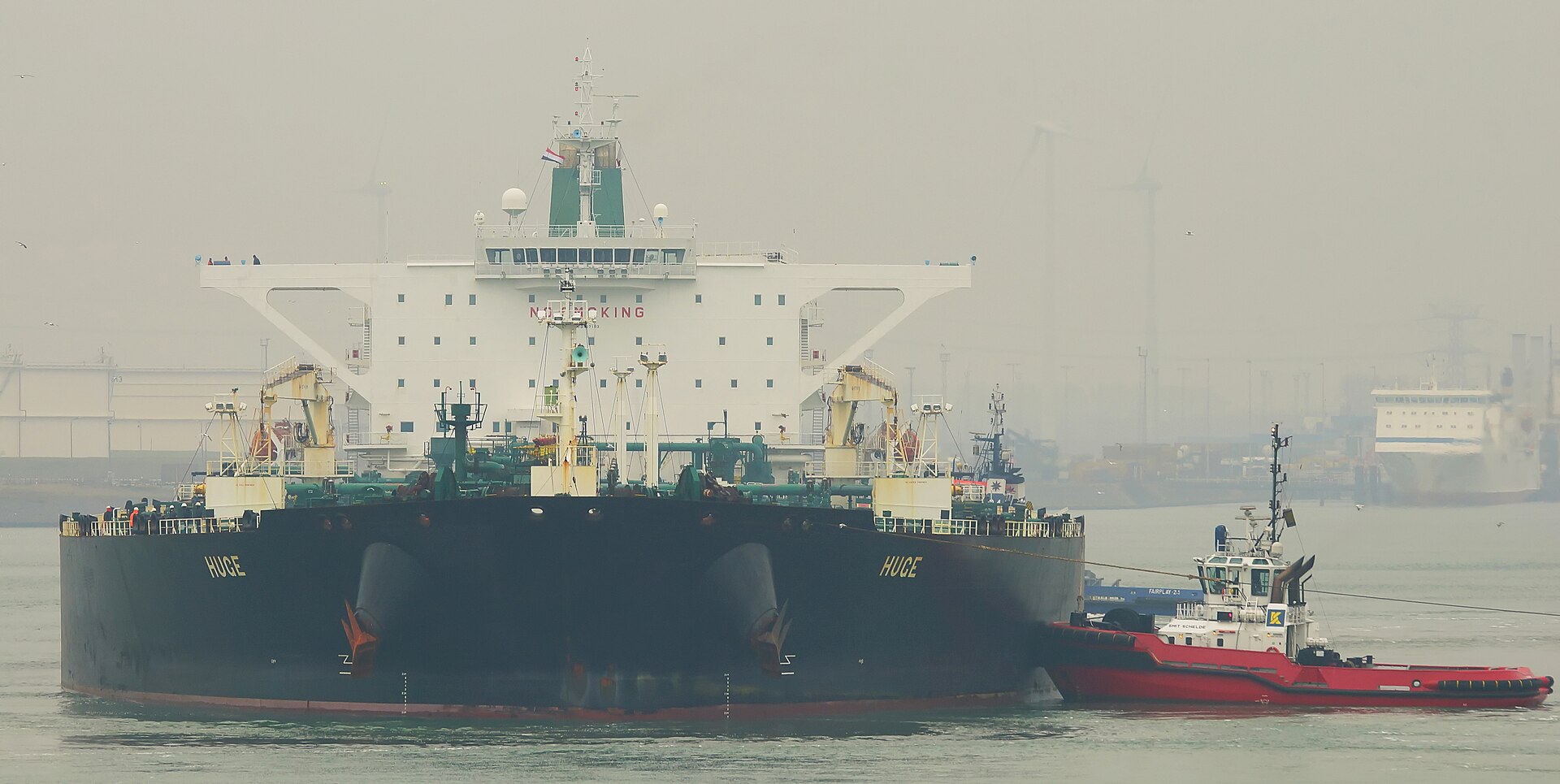
Bloomberg reported on April 1, 2026, that the IRGC had been extracting transit tolls since mid-March — roughly $1 per barrel of oil, or up to $2 million flat per laden VLCC. Payment was accepted in Chinese yuan routed through Kunlun Bank and CIPS, or in Bitcoin and stablecoins. No rials. No SWIFT. The revenue stream was operational weeks before the PGSA existed as an institution.
China was not paying these tolls universally. Beijing’s operational Hormuz deal, concluded eight days before the Trump-Xi summit, secured toll-free transit for Chinese state-owned vessels — a bilateral carve-out that confirms the PGSA’s fee structure was always discriminatory by design, rewarding diplomatic alignment rather than enforcing a neutral tariff.
This sequencing is the detail that most analysis has overlooked. The PGSA did not create Hormuz tolling. It formalised it. The distinction matters because formalisation is harder to undo than imposition. An informal toll extracted at gunpoint by IRGC fast boats can be stopped by removing the fast boats. A formal toll collected by a statutory authority with a domestic legal mandate, a parliamentary enabling law, and a staff processing applications requires a legislative act, a bureaucratic dissolution, and — if Iran’s 12-article law passes full chamber vote — a constitutional challenge.
The progression followed a three-stage institutional logic: informal IRGC practice (mid-March), formal management plan ratified by the Supreme National Security Council (late March), and statutory authority with its own domain, branding, and permit process (May 5). Each stage layered political constituencies on top of the previous one. The IRGC fast-boat commanders who collected tolls in March now report to a formal chain of command. The SNSC members who ratified the management plan now have a policy to defend. The parliamentarians who voted the 12-article law out of committee now have a legislative legacy at stake.
The Larak Corridor and the Legal Regime It Rewrites
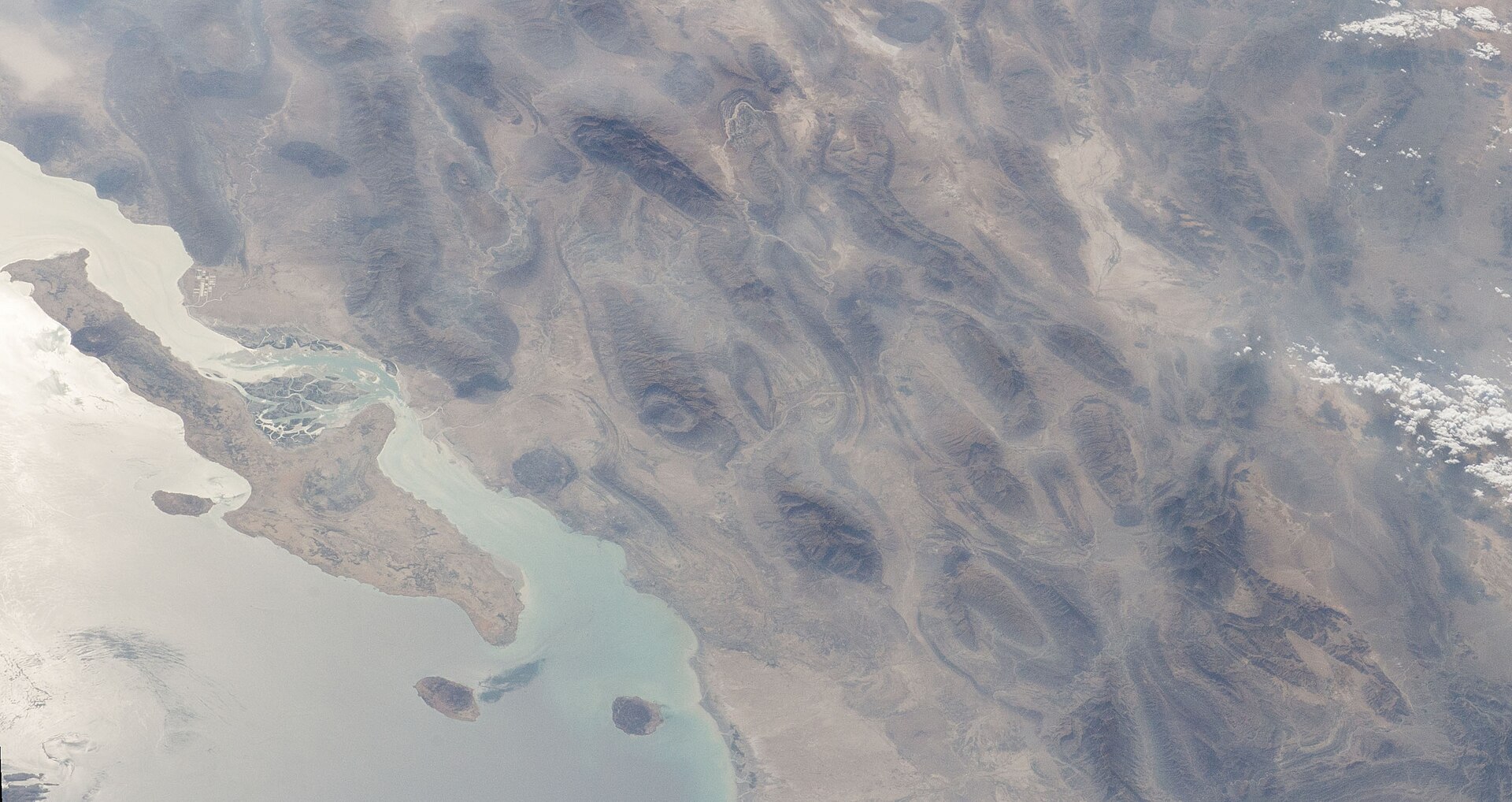
Since approximately March 15, 2026, zero vessels have transited Hormuz via the standard international shipping lane. All authorised traffic — approximately 45 transits over 50-plus days since the April 8 ceasefire, a throughput of roughly 3.6 per cent of the pre-war baseline — has been routed through the Larak Island corridor, a five-nautical-mile channel running between Qeshm and Larak islands along Iran’s northern Hormuz shore, entirely inside Iran’s 12-nautical-mile territorial sea.
The legal consequences of that routing are substantial. Under UNCLOS Article 38, vessels transiting an international strait enjoy “transit passage” — a right that the coastal state cannot suspend and over which its jurisdiction is limited to safety, pollution, and fishing regulations. Transit passage applies in the standard Hormuz shipping lanes, which run through waters where Iranian and Omani territorial seas overlap. The Larak corridor is different. It runs through waters that are unambiguously Iranian territorial sea, where the applicable regime is “innocent passage” under UNCLOS Article 17 — a weaker right that the coastal state may suspend “if essential for the protection of its security.”
The PGSA’s 40-question vetting form, its IRGC routing, and its clearance-code system are all structured around an innocent-passage framework. Iran is not denying transit passage exists as a legal concept. It is physically redirecting traffic to waters where transit passage does not apply, and then administering the weaker regime that does. The legal scholars who have analysed the distinction — Mark Nevitt of Emory University in Just Security, Alexander Lott in EJIL: Talk!, and Chatham House’s April 2026 analysis — have reached different conclusions about its defensibility, but all agree on its operational effect: Iran has converted the question from “does transit passage prohibit tolling?” to “does innocent passage permit administrative screening?”
“The transit passage regime reflects and incorporates the pre-existing customary prohibition on tolling. International law provides robust protections for transit passage rights, but it provides no reliable mechanism for enforcing them when a State actor is willing to violate them at scale.”
— Mark Nevitt, Emory University School of Law, writing in Just Security, April 8, 2026
Nevitt’s observation identifies the structural problem. The legal prohibition on tolling is clear. The enforcement mechanism is not. Iran laid mines in the strait that the US Navy lacks the minesweeping capacity to clear — four Avenger-class mine countermeasure ships were decommissioned from Bahrain in September 2025 — and the PGSA now sits on top of a waterway that is both legally contested and operationally controlled.
Who Pays a Toll to a Designated Terrorist Organisation?
The IRGC has been designated a Foreign Terrorist Organisation by the United States since April 2019. Under US law, material support to a designated FTO — including financial transactions — carries criminal liability regardless of the payer’s intent or the commercial duress under which payment is made. The duress defence that ship owners might invoke in civil litigation does not apply to material support statutes.
Holman Fenwick Willan, one of the world’s largest maritime law firms, published an analysis through Lexology in May 2026 that laid out the compliance trap in explicit terms. A vessel owner who pays the PGSA toll to transit Hormuz faces potential prosecution under US material support laws. A vessel owner who refuses to pay cannot transit. A vessel owner who reroutes around the Cape of Good Hope adds 10-15 days and $500,000-plus per voyage in fuel and insurance costs — assuming war-risk underwriters will cover the extended route at all.
The insurance market has responded to the PGSA in a way that compounds the trap. Lloyd’s of London war-risk underwriters are increasingly requiring evidence of compliant PGSA routing before issuing cover, according to Lexology and Splash247 reporting from May 2026. P&I clubs and hull insurers now effectively acknowledge the PGSA’s authority as a condition of coverage — not because they recognise its legal legitimacy, but because underwriting a vessel that transits without PGSA clearance means underwriting the risk of IRGC seizure.
| Compliance path | Legal risk | Operational risk | Cost |
|---|---|---|---|
| Pay PGSA toll, transit Larak corridor | US material support liability (IRGC-FTO) | Low (IRGC clearance granted) | ~$2M per laden VLCC |
| Refuse toll, attempt standard lane | None under US law | Seizure (MSC Francesca, Epaminodas precedent) | Total loss of vessel and cargo |
| Reroute via Cape of Good Hope | None | Moderate (extended exposure, piracy) | $500K+ per voyage in fuel/insurance |
| Remain anchored, wait for resolution | None | Crew welfare, cargo deterioration | $25K-75K/day demurrage |
The result is a market structure in which every path carries a cost and at least one path carries criminal liability. The 1,550 vessels currently stranded — with an estimated 22,500 mariners aboard, according to ITF figures — represent the visible evidence of an industry that cannot find a compliant route through the problem. The PGSA did not create this trap. It institutionalised it.
Twelve Articles Designed to Survive Any Deal
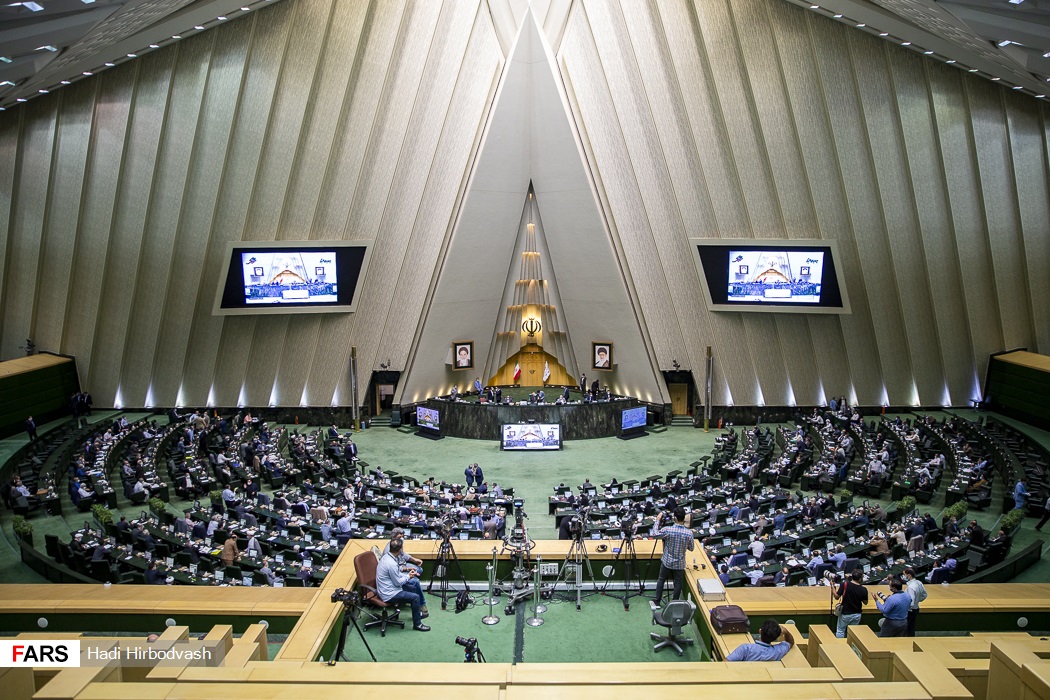
The domestic legislative foundation for the PGSA is a 12-article “Law on Establishing Iran’s Sovereignty over the Strait of Hormuz,” ratified by Iran’s National Security and Foreign Policy Committee on April 21, 2026, and awaiting a full chamber vote in the Majles. The law’s provisions, as reported by MSN and AGBI, are not structured as temporary wartime measures. They are structured as permanent features of Iranian sovereignty.
Five provisions define the architecture. Article-level provisions ban Israeli-flagged vessels unconditionally — no waiver, no exception, no expiry date. Vessels from nations requiring Supreme National Security Council approval face a case-by-case review process with no published criteria and no appeal mechanism. Nations deemed to have “damaged Iran” are denied passage until compensation is paid — a condition that, applied to the United States, would require reparations for sanctions dating to 1979. All transit fees must be paid in Iranian rials, a requirement that forces foreign shipping companies to acquire a sanctioned currency. And the IRGC retains seizure authority for non-compliance, which means the enforcement mechanism for an ostensibly civilian administrative regime remains a military force designated as a terrorist organisation.
The law’s design logic is evident in what it does not include: sunset clauses, review mechanisms, or provisions for modification by executive agreement. A ceasefire deal negotiated in Oman or Islamabad cannot override an act of the Iranian parliament. Dismantling the PGSA’s legal foundation would require either a new act of the Majles — which the IRGC-aligned majority has no incentive to pass — or a ruling from the Guardian Council that the law contradicts the constitution, which would require the Guardian Council to rule against IRGC institutional interests.
The provisions addressing Israel, reparations, and SNSC approval for “hostile” nations cannot be resolved in a ceasefire framework. They require bilateral treaties, full diplomatic normalisation, or multilateral conferences — processes that operate on timescales of years or decades, not the weeks remaining before global oil inventories reach critical levels.
The Inventory Arithmetic That Makes Dismantlement Harder
The IEA’s May 2026 Oil Market Report quantified the damage. Global oil inventories are drawing at an average of 8.5 million barrels per day in the second quarter of 2026. On-land stocks fell 170 million barrels in April alone — a drawdown rate of 5.7 million barrels per day — following a 129-million-barrel draw in March. Cumulative supply losses from Gulf producers have exceeded one billion barrels since the conflict began.
The 400-million-barrel emergency reserve release agreed by 32 IEA member states on March 11 — the largest coordinated release in history — represents 33 per cent of total member-state strategic stockpiles of 1.2 billion barrels. The US contribution of 172 million barrels equals 41 per cent of the current Strategic Petroleum Reserve. At the Q2 drawdown rate of 8.5 million barrels per day, the 400-million-barrel release is arithmetically exhausted in approximately 47 days from activation. IEA Director General Fatih Birol called 13 million barrels per day offline globally “the biggest energy security threat in history.”
| Metric | Figure | Source |
|---|---|---|
| Q2 2026 average inventory drawdown | 8.5 mb/d | IEA May 2026 OMR |
| April on-land stock decline | 170 mb (5.7 mb/d) | IEA May 2026 OMR |
| March on-land stock decline | 129 mb | IEA May 2026 OMR |
| Cumulative Gulf supply losses | >1 billion barrels | IEA May 2026 OMR |
| IEA emergency reserve release | 400 mb (33% of total) | IEA/CNBC, March 2026 |
| US SPR contribution | 172 mb (41% of US SPR) | IEA/CNBC, March 2026 |
| Days until release exhaustion (at 8.5 mb/d) | ~47 days | Arithmetic extrapolation |
| Brent crude (May 14, 2026) | ~$107.86/bbl | Market data |
| Brent peak (April 7) | ~$138/bbl | Market data |
| Total transits since April 8 ceasefire | ~45 (3.6% of pre-war baseline) | Maritime Executive/Lloyd’s List |
These numbers define the negotiating environment in which the PGSA operates. At 8.5 million barrels per day, each week of continued disruption burns through roughly 60 million barrels of strategic reserves that took decades to accumulate. The PGSA does not need to survive permanently to achieve Iran’s objectives — it needs to survive long enough for the inventory mathematics to become politically unbearable in Washington, Tokyo, Seoul, and New Delhi. At current drawdown rates, that threshold is measured in weeks, not months.
Saudi Arabia’s own production has cratered — from 10.4 million barrels per day in February to 7.25 million in March, a 30 per cent collapse that the Yanbu bypass pipeline cannot fully compensate for. The structural gap between Yanbu’s effective loading ceiling of 4-5.9 million barrels per day and the 7-7.5 million barrels per day that transited Hormuz before the war means that even if the PGSA were dissolved tomorrow, Saudi output would remain constrained until Hormuz throughput is physically restored — a process that the US Navy’s own mine-clearance estimates put at six months post-deal, with only two Avenger-class minesweepers currently in theater.
Can 112 Nations Force a Vote That China Already Vetoed Once?
The first UN Security Council resolution on Hormuz — Bahrain-led, tabled April 7, 2026 — was vetoed by China and Russia in an 11-2 vote, with Colombia and Pakistan abstaining. China’s Ambassador Fu Cong told the Council that the resolution “failed to capture the root causes and the full picture,” and that “the US and Israel are the initiators of this conflict. The fundamental reason for the disruption of navigation in the Strait of Hormuz is the illegal military actions taken by the US and Israel against Iran.” Russia’s Ambassador Vassily Nebenzya called the text “unbalanced, inaccurate and confrontational” for “framing Iran as the sole source of the region’s destabilization and threats to maritime security.”
A second resolution — co-tabled by Bahrain and the United States — now has 112 co-sponsors, including Saudi Arabia, Qatar, Kuwait, India, Japan, South Korea, Argentina, and most EU member states. As of May 14, China has not publicly committed to a second veto. Al Jazeera reported the co-sponsorship figure on May 13.
The co-sponsorship number is diplomatically imposing and operationally irrelevant. Security Council resolutions are decided by the five permanent members’ veto power, not by co-sponsorship tallies. What matters is whether Beijing’s calculation has changed since April 7 — and there are reasons to think it has not. China’s framing of Hormuz disruption as a consequence of US-Israeli aggression establishes a legal narrative in which the PGSA is a defensive response, not an offensive provocation. That narrative also shields China from PGSA complicity liability as it continues to route crude through the strait via the yuan-denominated payment channel that the PGSA’s toll structure is designed to accommodate.
The Al Daayen precedent — the Qatari LNG tanker that transited Hormuz in early April with Chinese intermediation, paying the IRGC toll in yuan through Kunlun Bank — demonstrated that China has built a functional workaround to the PGSA regime rather than a challenge to it. Beijing’s CNPC and Sinopec hold contracted offtake of 8 million tonnes per annum from Qatar’s North Field expansion, plus 5 per cent equity in North Field East. The PGSA’s yuan payment option is not an afterthought. It is the structural accommodation that makes a second Chinese veto costless.
The Copenhagen Precedent No One Wants to Invoke
The closest historical analogy to what Iran is building at Hormuz is the Sound Dues — the toll Denmark collected from every vessel transiting the Danish straits between the Baltic and North seas, from the fifteenth century until 1857. The dues were abolished not by bilateral negotiation or military action but by a 14-nation conference in Copenhagen, at which the United States — despite never having ratified any treaty recognising Denmark’s right to collect the dues — paid a lump sum of $393,011 (approximately $14 million in current value) as its share of the buyout.
The Sound Dues precedent is instructive for three reasons. First, abolition required a multilateral framework, not a bilateral deal. Denmark refused to negotiate with individual states and used the dues’ revenue as leverage to extract collective payment. Iran’s 12-article law, which conditions passage on reparations from nations that have “damaged Iran,” creates a similar multilateral liability structure. Second, the abolition took decades of diplomatic pressure — the first serious US challenge came in the 1840s, the conference convened in 1857. The timeline mattered because every year the dues remained in force strengthened Denmark’s claim of customary practice. Third, even the United States — which contested the dues’ legality throughout — ultimately paid rather than fought.
Iran’s legal advisers are aware of this history. The PGSA’s structure mirrors the Sound Dues model in ways that appear deliberate: a coastal state claiming administrative jurisdiction over a strait, collecting revenue under domestic law, and daring the international community to convene the multilateral conference required to buy it out. The difference is that Denmark collected the Sound Dues in peacetime, over centuries, without concurrent military operations across the Gulf. Iran is attempting to establish the same precedent in weeks, under wartime conditions, with global inventories draining at 8.5 million barrels per day.
Alexander Lott, writing in EJIL: Talk! in March 2026, acknowledged “genuine uncertainty about whether UNCLOS transit passage has fully crystallized as customary international law binding on non-parties,” and noted that “the persistent objector doctrine may be available to states that objected consistently to that regime from its formation.” Iran declined to ratify UNCLOS in 1982 and issued a specific declaration regarding straits. Chatham House’s April 2026 analysis countered that “the US correctly argues that transit passage has become accepted as a firm right of all states in international custom, also binding on non-parties.” The legal debate is genuine. What is not debatable is that the PGSA is operating while the scholars argue.
“Neither the US nor Iran is a party to UNCLOS, but the US correctly argues that transit passage has become accepted as a firm right of all states in international custom, also binding on non-parties.”
— Chatham House analysis, April 2026
The United States, which also declined to ratify UNCLOS, is now arguing that UNCLOS transit passage rights are customary international law binding on Iran. The legal position is likely correct. It is also the position of a nation that refused to submit to the treaty’s dispute-resolution mechanisms, invoking the same sovereignty concerns that Iran now cites in the opposite direction. Neither government has addressed the parallel publicly. The PGSA’s administrative template has since been extended beyond tankers: Iran’s parliament formally asserted cable transit fees over the seventeen undersea fiber systems running beneath Hormuz in May 2026, turning the same registration-desk model into a $15 billion annual revenue claim over global internet infrastructure — an extension analysed in detail in Iran’s Cable Fee Gambit and the OFAC Trap Beneath Hormuz.

Frequently Asked Questions
What happens to vessels that submit the PGSA form but are denied clearance?
Denied vessels receive no clearance code and are instructed to leave Iranian-claimed waters. The IRGC seized the MSC Francesca (11,660 TEU) and the Epaminodas (6,690 TEU) on April 22 after both attempted transit without PGSA authorisation — establishing that denial is enforced by seizure rather than administrative penalty. Vessels currently anchored in the Arabian Sea or Indian Ocean awaiting resolution include crude tankers, LNG carriers, container ships, and bulk carriers representing at least 15 flag states. No formal appeals process exists within the PGSA framework, and Iran has not indicated whether denied vessels may reapply or under what conditions denials might be reversed.
Could the PGSA survive a comprehensive ceasefire agreement?
The 12-article enabling law is structured specifically to survive any negotiated settlement. Its provisions — unconditional Israeli vessel bans, SNSC approval requirements for hostile-nation ships, reparations conditions, rial-denominated fee requirements, and IRGC seizure authority — address permanent sovereignty claims rather than wartime contingencies. A ceasefire agreement negotiated by the executive branch cannot override an act of parliament under Iranian constitutional law; only a new Majles vote, a Guardian Council ruling, or a Supreme Leader decree could dissolve the legal framework. The IRGC-aligned parliamentary majority that ratified the committee-stage vote has no institutional incentive to reverse it, and Speaker Ghalibaf — who publicly linked Hormuz reopening to US blockade removal on April 22 — has treated the law as a personal legislative priority.
Why is the PGSA toll denominated in rials when previous tolls were collected in yuan?
The 12-article law mandates rial denomination as a sovereignty assertion, but the PGSA accepts yuan through Kunlun Bank/CIPS and cryptocurrency as operational alternatives — a dual structure that serves two constituencies. The rial requirement signals domestic sovereignty to the Majles and creates a mechanism for generating demand for Iran’s sanctioned currency. The yuan and crypto channels maintain the payment infrastructure that has been operational since mid-March and that Chinese-intermediated transits (including the Al Daayen LNG crossing) have validated. The practical effect is that the PGSA can claim rial sovereignty in Iranian courts while processing the vast majority of payments in yuan outside SWIFT — a structure that mirrors Iran’s broader sanctions-evasion architecture through CIPS and Kunlun Bank, which handles an estimated $15-20 billion annually in Iran-China bilateral trade.
What is the scam problem the PGSA was designed to address?
When the IRGC announced informal transit fees in March 2026, fraudulent operators immediately began offering fake transit documents and clearance codes for cryptocurrency payment, targeting vessel operators desperate to move stranded cargo. Iran’s own framing of the PGSA launch cited the need to “crowd out” these scam operations by establishing a single verified authority — effectively a consumer-protection justification for a customs regime. The scam problem was real: multiple shipping brokers reported paying for fraudulent clearances that were not honoured by IRGC patrols, resulting in vessel seizures. Whether the PGSA has eliminated the fraud is unclear, but the framing gave Tehran a non-coercive rationale for institutionalising a regime that every other state characterises as illegal tolling.
How does the PGSA interact with the US naval blockade declared April 13?
The two regimes create what Bloomberg termed a “double blockade” on April 26: the US controls Arabian Sea entry (since April 13), while the IRGC controls Gulf of Oman exit (since approximately March 4). A vessel seeking to transit Hormuz now requires authorisation from both — US clearance to enter the approaches and PGSA clearance to pass through the strait. The 45 total transits since the April 8 ceasefire (3.6 per cent of pre-war baseline) reflect vessels that obtained both approvals, typically Chinese-intermediated crude shipments or vessels operating within the IRGC’s 500-kilometre operational crescent. Iran’s FM Araghchi declared Hormuz “completely open” on April 24, but the IRGC’s seizure of two vessels two days earlier demonstrated that the PGSA’s operational authority — not the foreign ministry’s diplomatic declarations — determines who passes.
That same day, Iran’s judiciary formally announced the judiciary’s constitutional claim over Hormuz — issuing court rulings that declare the PGSA’s enforcement backed not only by IRGC operations but by binding domestic legal authority that no MOU can reach.