
RIYADH — Russia is earning an estimated $150 million per day in additional oil revenue from a war that is simultaneously bombing Saudi cities, destroying Gulf energy infrastructure, and trapping thousands of ships in the Persian Gulf. In the first two weeks of the Iran conflict alone, Moscow pocketed an additional $6.9 billion in fossil fuel revenue, according to analysis by the Centre for Research on Energy and Clean Air published on March 12. The paradox could not be starker: the country supplying Iran with satellite intelligence and drone targeting data is also the country Saudi Arabia depends on most to keep global oil markets from total collapse.
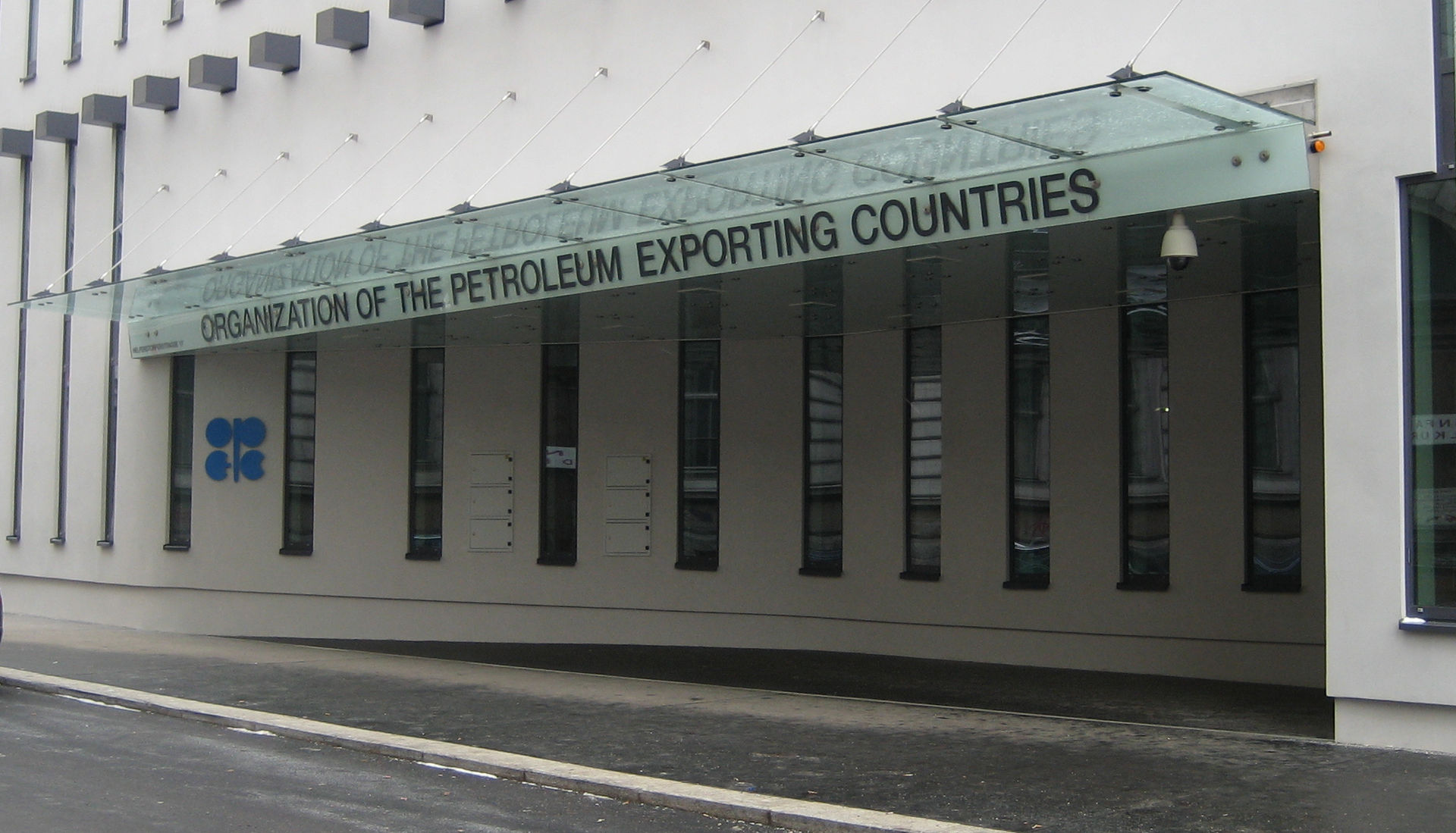
This is not an oversight. It is the defining contradiction of the 2026 energy order. Crown Prince Mohammed bin Salman and President Vladimir Putin spoke by phone on February 3 — less than four weeks before the first bombs fell on Tehran — and pledged to deepen cooperation within the OPEC+ framework. That framework now underpins the only coordinated mechanism preventing the global oil market from spiralling into a supply crisis that would dwarf the 1973 embargo. The uncomfortable truth that Russia arms the country bombing Saudi Arabia while sitting across the OPEC+ negotiating table from Riyadh is not a bug in the system. It is the system.
Table of Contents
- What Is Russia’s Oil Windfall From the Iran War?
- How Did Trump’s Sanctions Relief Change the Game?
- The OPEC+ Partnership That War Could Not Break
- Why Is Russia Arming Iran While Partnering With Saudi Arabia?
- Where Is Russian Oil Going While the Gulf Burns?
- The Wartime Energy Alignment Matrix
- Can Saudi Arabia Punish Russia Without Punishing Itself?
- Why the IEA’s 400 Million Barrels Will Not Be Enough
- How the Iran War Is Reshaping Global Oil Trade Routes
- What Does the Post-War Oil Order Look Like?
- Three Oil Crises and What They Teach About This One
- Frequently Asked Questions
What Is Russia’s Oil Windfall From the Iran War?
Russia’s financial gains from the Iran conflict are staggering in both scale and speed. In the two weeks between February 28 and March 12, Moscow earned an additional 6 billion euros — approximately $6.9 billion — in fossil fuel revenue above what it would have collected had the war not occurred, according to CREA’s tracking of Russian export receipts.
The mechanics are straightforward. Before the war, Russia’s Urals crude benchmark averaged approximately $52 per barrel. Since the Strait of Hormuz effectively closed to commercial traffic, Urals crude has surged to between $70 and $80 per barrel, a gain of roughly 40 percent. The Financial Times reported that Russia has been earning up to $150 million per day in additional budget revenue from oil sales alone, making Moscow, in the words of the Kyiv Post, “the biggest beneficiary of the conflict in the Middle East.”
The timing could not have been more fortunate for the Kremlin. Russian energy revenues had fallen nearly 50 percent year-on-year in the first two months of 2026, according to analysis by the Moscow Times, sharply widening Russia’s budget deficit. The Iran war reversed that trajectory overnight. Bloomberg reported on March 10 that Russia was set for an oil-revenue surge in the coming weeks, with projections estimating a total windfall of between $3.3 billion and $4.9 billion in additional revenue by the end of March alone.
| Metric | Value | Source |
|---|---|---|
| Additional daily oil revenue | ~$150 million | Financial Times, March 2026 |
| Total windfall (first 2 weeks) | $6.9 billion | CREA, March 12 |
| Projected March windfall | $3.3–$4.9 billion | Bloomberg, March 10 |
| Urals crude pre-war average | ~$52/barrel | Kyiv School of Economics |
| Urals crude wartime average | $70–$80/barrel | Bloomberg, March 2026 |
| Price increase | ~40% | Calculated |
| Pre-war revenue decline (YoY) | -50% | Moscow Times, February 2026 |
These figures represent only oil revenue. Russian natural gas exports have also benefited from the broader energy disruption, as European and Asian buyers scramble to secure supply amid fears of a prolonged Gulf crisis. The war has, in effect, provided Moscow with a financial lifeline at the precise moment its budget was under maximum strain from the Ukraine conflict.
The Middle East briefing 3,000+ readers start their day with.
One email. Every weekday morning. Free.
How Did Trump’s Sanctions Relief Change the Game?
On the evening of March 12, the Trump administration took a step that crystallized the paradox at the heart of the global oil crisis: it temporarily lifted sanctions on Russian oil shipments to calm energy markets panicked by the Iran war. The Treasury Department issued a general license permitting the sale of approximately 128 million barrels of Russian crude oil already loaded onto tankers that had been sanctioned by the United States.
The exemptions, valid until April 11, represented a dramatic reversal of four years of Western sanctions policy. Treasury Secretary Scott Bessent framed the decision as pragmatic necessity: the authorization was designed to “permit countries to purchase Russian oil currently stranded at sea,” he said, adding that President Trump was “taking decisive steps to promote stability in global energy markets.”
The backlash was immediate. European allies accused Washington of undermining the sanctions regime that had constrained Russian oil revenues since the invasion of Ukraine. Ukrainian President Volodymyr Zelenskyy called the move “not the right decision,” warning that it would “lead to a strengthening of Russia’s position.” The European rebuke was sharp enough that Time magazine ran a story on March 13 headlined “Trump Faces European Rebuke Over Easing Russian Oil Sanctions.”
For Saudi Arabia, the implications were more complicated than either the White House or its European critics acknowledged. The 128 million barrels freed from sanctioned tankers represented additional supply flowing into a market that was short by an estimated 8 million barrels per day due to the effective closure of the Strait of Hormuz. That supply, however modest relative to the total shortfall, helped prevent oil prices from spiking even further above the $100 per barrel threshold that crude had already breached.
The deeper implication was strategic. By lifting Russian oil sanctions to compensate for Gulf supply losses, Washington effectively acknowledged what energy analysts had been arguing for weeks: the global oil market cannot function without both Russian and Saudi supply simultaneously. Removing one while the other is disrupted by war creates a shortfall that no combination of strategic reserves, African production, or American shale can fill.
The OPEC+ Partnership That War Could Not Break
The OPEC+ alliance between Russia and Saudi Arabia, formalized in late 2016, was never a natural partnership. It was born of necessity — both countries needed higher oil prices after the 2014-2016 price crash — and sustained by a series of pragmatic compromises that papered over fundamental disagreements about production quotas, market share, and geopolitical alignment.
The partnership survived the March 2020 price war, when Mohammed bin Salman briefly flooded the market with discounted crude after Russia refused to cut production during the COVID-19 demand collapse. It survived mutual recriminations over Ukraine sanctions. And now, remarkably, it appears to be surviving a conflict in which Russia provides material support to the country attacking Saudi territory.
On March 1 — just two days after the first American and Israeli bombs fell on Tehran — OPEC+ members agreed to increase production by 206,000 barrels per day for April. Bloomberg confirmed that key members led by Saudi Arabia and Russia, which had paused a series of planned hikes during the first quarter, would begin adding supply even as Iranian missiles and drones struck Gulf infrastructure. The decision reflected a shared calculation: with Brent crude surging past $100, both Moscow and Riyadh had an interest in preventing prices from reaching levels that would destroy demand and accelerate the energy transition.
The February 3 phone call between MBS and Putin — reported by Al Arabiya and confirmed by the Kremlin — set the framework for this wartime cooperation. The two leaders discussed “stability in global energy markets” and pledged to deepen economic, trade, and humanitarian cooperation, according to the Kremlin readout. Anadolu Agency noted the call took place ahead of the centenary of diplomatic ties between Russia and Saudi Arabia, a symbolic milestone that both sides chose to emphasize even as geopolitical tensions mounted.
The Wilson Center’s analysis of OPEC+ dynamics provides the clearest explanation for why the partnership endures: Russian-Saudi cooperation “starts and stops with oil prices.” When prices are high enough to satisfy both treasuries, the structural disagreements become manageable. With Urals crude at $70-80 and Brent above $100, both Moscow and Riyadh are collecting revenues that exceed their pre-war budgets. The incentive to cooperate has never been stronger.
Why Is Russia Arming Iran While Partnering With Saudi Arabia?
The question that Saudi Arabia’s oil establishment refuses to answer publicly — and that Western intelligence agencies have documented extensively — is how Moscow can simultaneously arm Iran and partner with Riyadh. The answer lies in the distinction between Russia’s energy interests, which align with Saudi Arabia, and Russia’s geopolitical interests, which align with Iran.
Western intelligence reports published in the first two weeks of March reveal a pattern of Russian assistance to Tehran that extends far beyond historical arms sales. According to assessments cited by multiple outlets, Russia has provided Iran with satellite intelligence, drone targeting data, and tactical guidance used in attacks on Saudi cities and energy infrastructure. The U.S. Energy Information Administration projects that the war-driven price spike will add an estimated $15 to $25 billion to Russia’s 2026 oil revenue — money that flows directly to the same government providing targeting intelligence to Iran.
Russia’s calculus is coldly rational. Moscow benefits from the Iran war in three distinct ways — seven, by one detailed accounting of the dividends of nonbelligerence. First, the disruption of Gulf oil supply drives up prices for Russian crude, generating billions in additional revenue. Second, the diversion of American military resources to the Gulf reduces pressure on Russia in Ukraine. Third, the weakening of the U.S.-Gulf alliance creates diplomatic space for Moscow to position itself as a potential mediator — a role that carries both prestige and leverage.
For Saudi Arabia, acknowledging these realities publicly would force a confrontation that Riyadh cannot afford. Breaking with Russia within OPEC+ would remove the production coordination mechanism that prevents a catastrophic oversupply when the war eventually ends. Saudi financial planners at the Public Investment Fund understand that the post-war oil market will require even more coordination, not less, to manage the return of Gulf supply without crashing prices.
The result is a policy of strategic silence. Riyadh condemns Iranian attacks. It does not condemn Russian support for those attacks. This is not an oversight.
Where Is Russian Oil Going While the Gulf Burns?
The geography of Russian oil exports in 2026 reveals a market that has fundamentally restructured since the Ukraine sanctions of 2022 — and is now restructuring again under the pressure of the Iran war. According to the Centre for Research on Energy and Clean Air’s February 2026 tracker, China absorbed 48 percent of Russia’s crude exports, followed by India at 38 percent, Turkey at 6 percent, and the European Union at 6 percent.
The most significant shift occurred in January 2026, when Chinese imports of Russia’s Urals grade crude doubled in volume, reaching the highest level ever recorded. This surge predated the Iran war by weeks, suggesting that Chinese refiners were already anticipating a Gulf disruption and pre-positioning their supply chains.
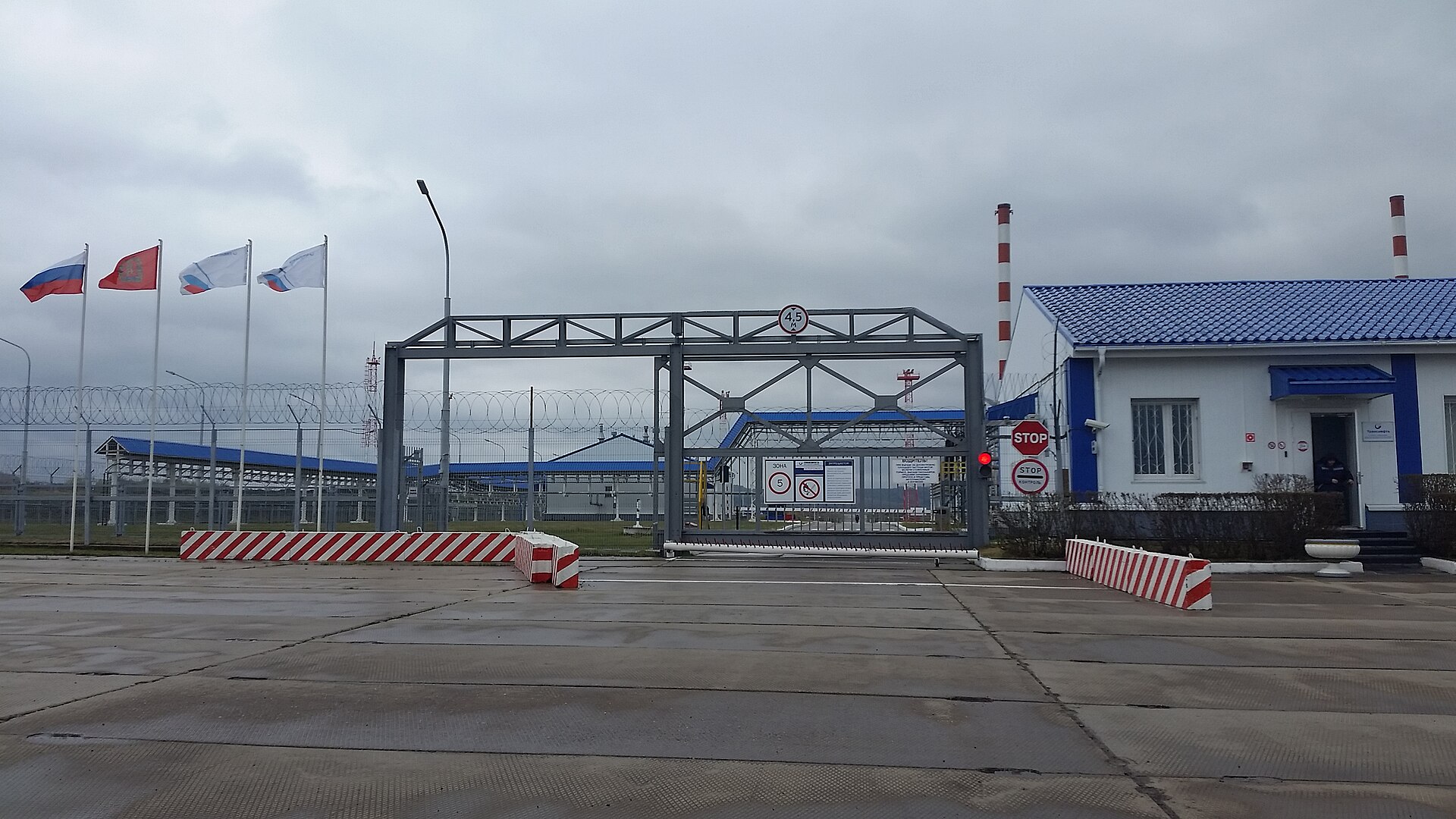
The war accelerated this trend dramatically. With the Strait of Hormuz effectively closed, the approximately 20 percent of global seaborne oil that normally transits the waterway has been either halted or rerouted. For China and India — the world’s first and third-largest oil importers — Russian crude offers the path of least resistance: it travels overland via pipeline (the Eastern Siberia-Pacific Ocean pipeline to China) or by sea through Arctic and Atlantic routes that bypass the conflict zone entirely.
| Destination | Share of Russian Crude Exports | Key Pipeline/Route |
|---|---|---|
| China | 48% | ESPO pipeline + Pacific seaborne |
| India | 38% | Atlantic/Suez seaborne |
| Turkey | 6% | Black Sea/Mediterranean |
| European Union | 6% | Pipeline + Baltic seaborne |
| Other | 2% | Various |
The implication for Saudi Arabia is profound. Before the war, the Kingdom competed directly with Russia for Asian market share. Saudi Aramco’s official selling prices for Asian buyers were calibrated against the Urals benchmark. Now, with Saudi crude trapped behind the Hormuz blockade and rerouted through the Red Sea via the East-West pipeline, Russia has captured a share of the Asian market that will be extraordinarily difficult to reclaim. Every barrel of Russian crude that Chinese and Indian refineries integrate into their processing chains represents infrastructure and contractual inertia that favours Moscow in the post-war order.
The irony extends to Iran itself, which continues to sell oil through the very strait it shut down, using a shadow fleet that operates under Chinese insurance and flagging. Russia’s shadow fleet — estimated at over 600 vessels — operates parallel routes, creating an alternative oil distribution system that exists entirely outside Western regulatory frameworks.
The Wartime Energy Alignment Matrix
The relationship between Russia and Saudi Arabia in the current conflict can be mapped across five strategic dimensions: production coordination, price management, market share competition, infrastructure dependency, and post-war positioning. Across each dimension, the alignment is neither uniformly positive nor uniformly negative — it is a matrix of converging and diverging interests that explains why the partnership persists despite the war.
| Dimension | Russia’s Interest | Saudi Arabia’s Interest | Alignment |
|---|---|---|---|
| Production Coordination | Maintain OPEC+ quotas to prevent post-war price crash | Maintain OPEC+ quotas to protect revenue and market leverage | Strongly Aligned |
| Price Management | Oil at $70–80 Urals ($100+ Brent) maximizes revenue | Oil at $80–90 Brent ideal; above $100 risks demand destruction | Moderately Aligned |
| Asian Market Share | Expand share in China and India during Gulf disruption | Defend existing Asian market share against Russian encroachment | Divergent |
| Infrastructure | ESPO and Arctic routes bypass conflict zone | East-West pipeline and Red Sea ports as Hormuz alternative | Neutral (different infrastructure, no conflict) |
| Post-War Positioning | Establish new buyer relationships and pricing benchmarks | Reclaim lost market share and restore Hormuz traffic | Divergent |
The matrix reveals why the partnership functions despite deep contradictions. On the two most immediately consequential dimensions — production coordination and price management — Russian and Saudi interests are either strongly or moderately aligned. Both countries need OPEC+ to prevent a post-war price collapse when Gulf supply eventually returns to the market. Both benefit from prices above $70 per barrel. These shared interests create a floor beneath the relationship that geopolitical tensions cannot easily erode.
The divergence on Asian market share is real but deferred. Saudi Arabia cannot contest Russian gains in China and India while its own exports are physically constrained by the Hormuz blockade. This is a problem for after the war, not during it. And on post-war positioning, the competition will be intense but manageable — precisely because OPEC+ provides a framework for negotiating the return of Gulf supply without triggering a price war.
The matrix explains a counterintuitive reality: the worse the war gets for Saudi Arabia in the short term, the more valuable the OPEC+ partnership becomes in the long term. Every additional month of conflict deepens Saudi Arabia’s dependence on the post-war coordination mechanism that only OPEC+ can provide.
Can Saudi Arabia Punish Russia Without Punishing Itself?
The conventional wisdom — prevalent in Washington think tanks and European foreign ministries — is that Saudi Arabia should use its leverage within OPEC+ to pressure Russia over its support for Iran. The logic is superficially appealing: threaten to flood the market with Saudi crude, drive down prices, and impose a cost on Moscow that exceeds the benefits of its Iran partnership.
The evidence suggests this approach would be catastrophic for Riyadh. Consider the arithmetic. Saudi Arabia’s spare production capacity is estimated at between 2 and 3.1 million barrels per day, depending on the source — the IEA uses the higher figure, while industry analysts typically estimate closer to 2 million. Even at the upper bound, this spare capacity is dwarfed by the approximately 8 million barrels per day that have been removed from the global market by the Hormuz closure, according to reporting on the supply plunge.
Flooding the market with Saudi crude would require Riyadh to simultaneously abandon the OPEC+ production framework, unilaterally increase output, and accept a price collapse that would devastate its own revenues at the worst possible moment. The Saudi riyal’s dollar peg is already under strain, with the Kingdom’s fiscal breakeven oil price estimated at $80-85 per barrel. Crashing prices below $60 to punish Russia would trigger exactly the currency and fiscal crisis that Saudi financial planners have spent two decades trying to avoid.
There is a deeper structural reason why punishment is impossible. Russia’s oil windfall — the $150 million per day that critics rightly identify as funding Moscow’s war machine — is also keeping the global oil market from a total supply crisis. If Russian crude were removed from the market alongside Gulf crude, the shortfall would exceed 15 million barrels per day. At that level of disruption, oil could reach $200 per barrel or higher, triggering a global recession that would destroy demand for the very commodity on which Saudi Arabia’s economy depends.
The country arming Saudi Arabia’s enemy is also the only country keeping global oil markets from a supply crisis that would destroy demand for the commodity Saudi Arabia sells. That is the definition of a dependency neither side chose but neither can escape.
Analysis based on CREA and IEA data, March 2026
Russia’s windfall, in other words, is a necessary evil from Riyadh’s perspective. The alternative — a world without Russian supply during a Gulf crisis — is worse for Saudi Arabia than the current arrangement, in which Moscow profits while Riyadh maintains the market structure it will need to recover its position after the war.
Why the IEA’s 400 Million Barrels Will Not Be Enough
On March 11, the International Energy Agency announced the largest coordinated emergency oil release in its history: 400 million barrels drawn from the strategic reserves of its member countries. The United States committed to releasing 172 million barrels from the Strategic Petroleum Reserve, with the remainder distributed among European and Asian allies. The release dwarfed the previous record of 182 million barrels released after Russia’s invasion of Ukraine in 2022.
The mathematics of the release reveal its limitations. The U.S. contribution of 172 million barrels will take approximately 120 days to deliver at planned discharge rates, according to the Department of Energy. At the current supply shortfall of 8 million barrels per day, the entire IEA release of 400 million barrels represents roughly 50 days of replacement supply. If the Hormuz blockade persists beyond that window — and Iran has shown no indication of reopening the strait — the reserves will be exhausted while the crisis continues.
IEA member countries currently hold more than 1.2 billion barrels of public emergency oil stocks, with an additional 600 million barrels held under government obligation by industry, according to the IEA’s own data. These reserves were designed for temporary disruptions — a hurricane shutting down Gulf of Mexico refineries, a pipeline rupture, a brief geopolitical shock. They were not designed for an open-ended military conflict that removes a fifth of global seaborne oil supply indefinitely.
| Reserve Category | Volume (Million Barrels) | Days of Coverage at 8M bpd Shortfall |
|---|---|---|
| IEA emergency release (authorized) | 400 | 50 |
| Remaining IEA public stocks | ~800 | 100 |
| Industry obligatory stocks | ~600 | 75 |
| Total available | ~1,800 | 225 |
| U.S. SPR (post-release) | ~220 | N/A (U.S. consumption only) |
The market’s verdict was swift: oil prices stayed above $100 despite the announcement, according to CNN and NBC. Al Jazeera and Fortune both published analyses on March 13 questioning whether the release would be sufficient, with Fortune’s headline capturing the consensus: “The IEA is releasing a record 400 million barrels of emergency oil. It may not be enough.”
This is where Russia’s role becomes structurally indispensable. Russian crude flowing to China and India represents the only large-scale non-Gulf supply that can partially offset the Hormuz disruption without drawing down finite reserves. Every barrel of Russian oil that reaches Asian refineries is a barrel that does not have to come from the IEA’s dwindling stockpiles. Saudi Arabia’s silence on the sanctions lift is not acquiescence — it is an acknowledgment that Russian supply is buying time for the reserves that the Kingdom itself may eventually need.
How the Iran War Is Reshaping Global Oil Trade Routes
The geography of global oil trade is undergoing its most dramatic realignment since the construction of the Suez Canal. Three simultaneous shifts — the closure of Hormuz, the activation of alternative Saudi export routes, and the expansion of Russian non-Gulf supply — are creating a new map of global energy flows that will persist long after the war ends.
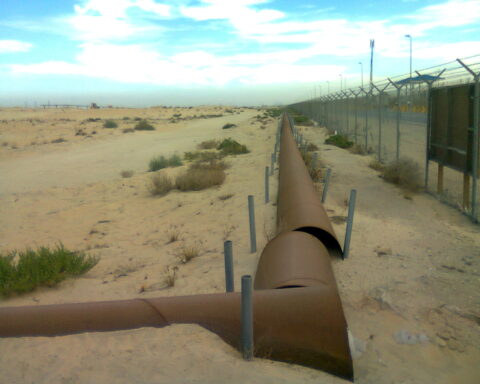
Saudi Arabia’s response to the Hormuz blockade has centred on the East-West pipeline, a 1,200-kilometre artery connecting the Kingdom’s Eastern Province oil fields to the Red Sea port of Yanbu. Originally built in the 1980s during the Iran-Iraq tanker war, the pipeline had been operating below capacity for decades. Aramco has now repurposed it as the primary export route, diverting millions of barrels per day away from the Persian Gulf terminals at Ras Tanura and Dhahran. This shift has been documented in reporting on Africa’s emerging role in the oil supply chain and Aramco’s emergency rerouting plans.
Russia’s routes run through entirely different geography. The Eastern Siberia-Pacific Ocean (ESPO) pipeline delivers crude directly to China via Skovorodino and the port of Kozmino, bypassing the Middle East conflict zone entirely. Russian Arctic routes — through the Northern Sea Route — are becoming increasingly viable as climate change extends the navigation season and ice-class tankers become more available. Baltic and Black Sea routes serve European and Turkish buyers.
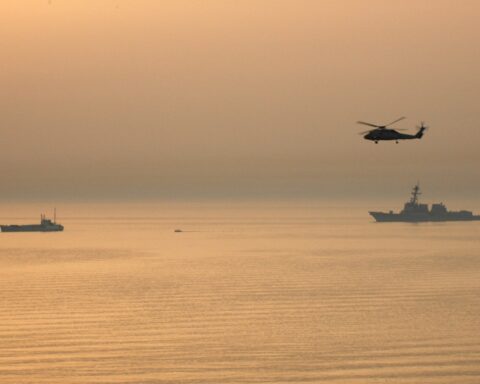
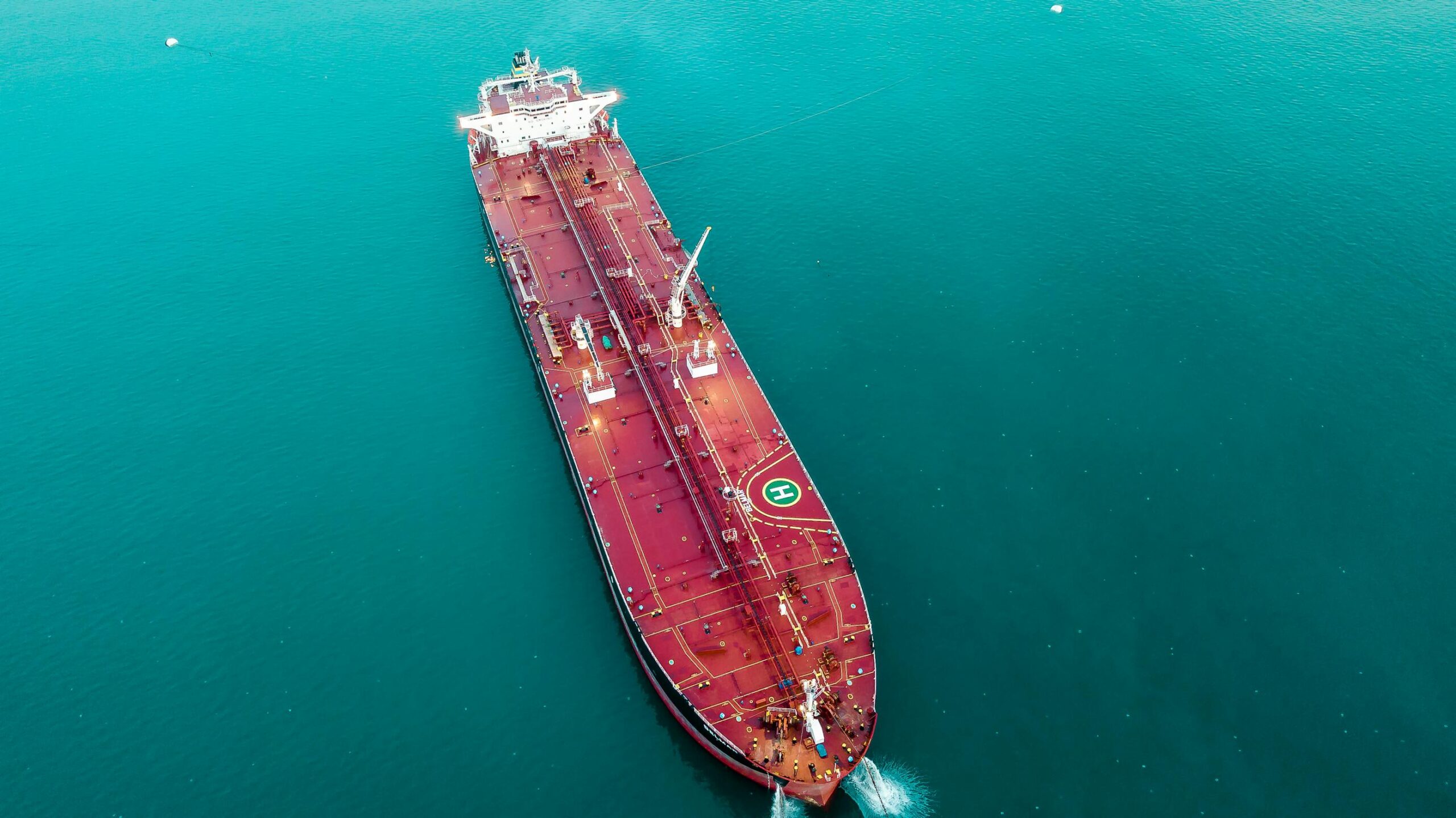
The net effect is a bifurcation of the global oil market. Gulf producers — Saudi Arabia, the UAE, Kuwait, and Iraq — are increasingly dependent on Red Sea and Mediterranean routes that add cost and transit time. Russian and Central Asian producers enjoy geographic insulation from the conflict. The 3,000 ships and 20,000 sailors stranded in the Persian Gulf are a physical manifestation of this bifurcation.
For the post-war oil order, this means that the centrality of the Strait of Hormuz — long considered the most important chokepoint in global energy — may be permanently diminished. If Saudi Arabia proves that it can sustain export volumes through Red Sea alternatives, and if Russia consolidates its pipeline-centric supply relationships with China and India, the strategic calculus that has governed Gulf security for half a century will need to be fundamentally revised.
What Does the Post-War Oil Order Look Like?
The war will end. The Strait of Hormuz will eventually reopen. Saudi crude will flow east again through the waterway that has been its primary export route for seven decades. But the market that awaits on the other side of this conflict will be structurally different from the one that existed on February 27, 2026.
Three shifts will define the post-war oil order. The first is the permanent diversification of Asian supply chains away from exclusive Gulf dependency. Chinese and Indian refineries that have integrated Russian crude into their processing systems will not voluntarily revert to pre-war sourcing patterns. The price differentials, the route security, and the contractual relationships forged during the crisis will create lasting competitive pressure on Saudi market share in Asia.
The supply disruption has also exposed a deeper structural vulnerability for oil-dependent economies: the war is accelerating the global energy transition away from fossil fuels at a pace that no climate summit or carbon tax ever achieved. For Riyadh, the post-war challenge is not merely recapturing lost market share — it is contending with a world that may never need as much oil as it once did.
The second shift is the elevation of OPEC+ from a price management cartel to a supply coordination necessity. Before the war, OPEC+ was frequently described as fragile — an alliance of convenience that could shatter under the pressure of competing national interests. The war has demonstrated the opposite: it is precisely under maximum pressure that the coordination mechanism becomes most valuable. When Gulf supply eventually returns to the market, the only alternative to a catastrophic price crash is a managed, phased reintroduction coordinated through OPEC+. Russia’s role in that coordination is not optional.
The third shift is geopolitical. The war has demonstrated that Saudi Arabia’s economic security depends on maintaining functional relationships with countries whose strategic interests may diverge sharply from Riyadh’s own. This is not a new dynamic — Saudi Arabia has managed a complex relationship with the United States for eight decades, including periods of profound disagreement over Israel, human rights, and energy policy. The Russia relationship adds another vector of managed contradiction to Saudi Arabia’s diplomatic portfolio.
The Baker Institute at Rice University published analysis noting that the “OPEC+ phenomenon of Saudi-Russian cooperation” has implications for U.S.-Saudi relations that extend beyond oil markets. If Riyadh refuses to pressure Moscow over Iran, Washington may reconsider the financial architecture that connects Saudi Arabia to the American banking system. The strategic restraint that has defined Saudi Arabia’s wartime posture may not survive a post-war reckoning with American policymakers who view Russian revenue as a direct subsidy for Iranian aggression.
Three Oil Crises and What They Teach About This One
The current crisis is not without precedent, though no single historical parallel captures its full complexity. Three previous oil crises illuminate different facets of the Russia-Saudi dynamic.
The 1973 Arab oil embargo demonstrated the power of coordinated supply restriction. Saudi Arabia and other OPEC members weaponised oil exports to punish Western support for Israel during the Yom Kippur War. The embargo succeeded in quadrupling prices but also triggered a strategic response — the creation of the IEA and the build-up of strategic petroleum reserves — that permanently limited OPEC’s ability to use supply as a weapon. The lesson for 2026: supply disruptions create demand-side adaptations that outlast the crisis.
The 1986 price crash offers a different warning. Saudi Arabia flooded the market with cheap crude to punish non-OPEC producers, including the Soviet Union, for refusing to coordinate output. The strategy worked — Soviet oil revenues collapsed, contributing to the economic pressures that accelerated the USSR’s decline. But the cost was enormous for Saudi Arabia itself: revenues fell by two-thirds, the Kingdom ran budget deficits for the next 14 years, and the economic damage delayed a generation of development. The lesson for 2026: punishing Russia through a price war is a strategy that Saudi Arabia has tried before, and the self-inflicted damage was severe.
The 2020 Saudi-Russian price war is the most recent and most relevant precedent. When Russia refused to cut production at the onset of the COVID-19 pandemic, MBS responded by announcing a massive production increase and offering deep discounts to Asian buyers. Oil prices briefly fell below zero. Within weeks, both sides recognised the mutual damage and negotiated the largest OPEC+ production cut in history. The lesson for 2026: confrontation between Moscow and Riyadh is possible, but it tends to be short-lived because the costs are immediately and symmetrically destructive.
Each of these crises ended with a return to coordination. The 1973 embargo ended with quiet diplomacy and an eventual normalisation of supply. The 1986 crash ended with Saudi Arabia eventually restraining production. The 2020 price war ended within weeks. The pattern suggests that the current crisis will also resolve through negotiation rather than confrontation — and that the OPEC+ framework, however strained, will be the vehicle for that resolution.
Frequently Asked Questions
How much additional revenue is Russia earning from the Iran war?
Russia earned approximately $6.9 billion in additional fossil fuel revenue in the first two weeks of the conflict, according to the Centre for Research on Energy and Clean Air. Daily additional oil revenue is estimated at $150 million, driven by Urals crude rising from approximately $52 to $70-80 per barrel. Bloomberg projects total additional revenue of $3.3 to $4.9 billion by the end of March 2026.
Why did Trump lift Russian oil sanctions during the Iran war?
The Trump administration temporarily lifted sanctions on approximately 128 million barrels of Russian crude oil stranded on tankers, effective until April 11. Treasury Secretary Scott Bessent said the move was to “promote stability in global energy markets” after the Strait of Hormuz closure removed approximately 8 million barrels per day from global supply. The decision drew sharp criticism from European allies and Ukrainian President Zelenskyy.
Can Saudi Arabia break its OPEC+ alliance with Russia?
Breaking the OPEC+ alliance would be economically devastating for Saudi Arabia. The Kingdom’s spare production capacity of 2-3.1 million barrels per day cannot compensate for the 8 million barrel daily shortfall created by the Hormuz closure. Abandoning OPEC+ would also remove the only coordination mechanism available to manage the post-war return of Gulf supply, risking a price crash that would threaten the riyal’s dollar peg and Saudi fiscal stability.
How long will the IEA’s strategic petroleum reserves last?
At the current supply shortfall of 8 million barrels per day, the IEA’s authorized 400-million-barrel release covers approximately 50 days. Total available reserves across IEA members, including industry obligatory stocks, amount to approximately 1.8 billion barrels, providing theoretical coverage of about 225 days. However, these reserves were designed for temporary disruptions, not open-ended conflicts, and full depletion would leave importing nations vulnerable to any subsequent supply shock.
Will Russia or Saudi Arabia dominate Asian oil markets after the war?
Both countries will compete intensely for Asian market share in the post-war period. Russia has gained significant ground during the conflict, with Chinese imports of Urals crude doubling in January 2026 and India absorbing 38 percent of Russian crude exports. However, Saudi Arabia retains structural advantages including proximity to Asian markets via Hormuz (once reopened), established refinery processing relationships, and the Arab Light crude grade that Asian refiners prefer. OPEC+ will likely be the mechanism through which market share disputes are managed.
Is Russia providing military support to Iran during the war?
Western intelligence reports published in early March 2026 indicate that Russia has provided Iran with satellite intelligence, drone targeting data, and tactical guidance used in attacks on Saudi Arabia and other Gulf states. The U.S. Energy Information Administration estimates the war-driven price spike will add $15 to $25 billion to Russia’s 2026 oil revenue. Saudi Arabia has not publicly confronted Russia over these reports, maintaining the OPEC+ partnership as a higher priority than addressing Moscow’s dual allegiances.