
WASHINGTON — The United States approved more than $16.5 billion in emergency arms sales to the United Arab Emirates, Kuwait, and Jordan on Wednesday, bypassing the standard congressional review process as Iranian missiles and drones continued to strike energy infrastructure and military installations across the Persian Gulf. Secretary of State Marco Rubio invoked a rarely used emergency provision under the Arms Export Control Act, authorizing the immediate transfer of advanced air defense radars, counter-drone systems, and fighter jet munitions to three of Washington’s closest Middle Eastern allies.
The package represents the largest single emergency arms notification in recent American history, delivered on the twentieth day of the Iran war and hours after Iranian strikes damaged Qatar’s Ras Laffan liquefied natural gas facility, the world’s largest LNG export terminal. The Pentagon said the sales would create “layered air defenses capable of detecting and intercepting threats at different ranges,” addressing the persistent barrage of ballistic missiles, cruise missiles, and one-way attack drones that have struck Gulf Arab states since the conflict began on February 28.
Table of Contents
- What Does the $16.5 Billion Arms Package Include?
- Why Did Rubio Bypass Congress?
- Kuwait’s $8 Billion Radar Shield
- The UAE Gets Washington’s Most Advanced Counter-Drone Arsenal
- Jordan’s Quiet F-16 Resupply
- Where Is Saudi Arabia in the Deal?
- The Iranian Threat Driving the Sales
- Can the US Afford to Arm the Gulf and Fight at the Same Time?
- Frequently Asked Questions
What Does the $16.5 Billion Arms Package Include?
The emergency arms notification, announced by the Defense Security Cooperation Agency on March 19, breaks down into three country-specific packages covering air defense radars, counter-unmanned aerial system technology, air-to-air missiles, and precision-guided munitions. The principal contractors include RTX Corporation (formerly Raytheon), Northrop Grumman, and Lockheed Martin, according to the Pentagon’s press release.
The UAE received the largest share in dollar terms at approximately $8.464 billion across four separate notifications. Kuwait’s package totaled $8 billion for a single advanced radar system. Jordan received $70.5 million in aircraft maintenance and munitions support. All three sales were approved simultaneously under a single emergency determination by the Secretary of State.
| Recipient | System | Value | Contractor |
|---|---|---|---|
| UAE | THAAD Long-Range Discrimination Radar | $4.5 billion | RTX / Northrop Grumman |
| UAE | 10 FS-LIDS counter-drone systems + 240 Coyote interceptors | $2.1 billion | RTX Corporation |
| UAE | 400 AIM-120C AMRAAM air-to-air missiles | $1.22 billion | RTX Corporation |
| UAE | F-16 munitions (GBU-39/B SDBs, JDAMs, guidance sections) | $644 million | Lockheed Martin / RTX |
| Kuwait | LTAMDS radars + electronic equipment | $8 billion | RTX Corporation |
| Jordan | F-16, C-130, F-5 maintenance, logistics, munitions | $70.5 million | Various |
Defense analysts noted that the package focuses almost exclusively on defensive systems — radars, interceptors, and counter-drone technology — rather than offensive strike platforms. The emphasis reflects the specific tactical challenge Gulf states face: detecting and neutralizing the waves of Iranian ballistic missiles, cruise missiles, and attack drones that have overwhelmed existing Patriot and THAAD battery coverage across the region. Yet the emphasis on defensive hardware underscores the strategic dilemma facing the GCC: whether continued reliance on interception alone can protect Gulf infrastructure from an adversary launching one hundred drones per day.
Why Did Rubio Bypass Congress?
The Arms Export Control Act requires the executive branch to notify Congress of major arms sales and allow a 30-day review period before finalizing transfers. Under Section 36(b) of the Act, lawmakers can introduce joint resolutions to block sales they oppose — a mechanism that has been invoked in recent years to challenge Saudi and UAE weapons deals over human rights concerns in Yemen.
The Middle East briefing 3,000+ readers start their day with.
One email. Every weekday morning. Free.
Secretary Rubio determined that the ongoing Iranian missile campaign constituted an emergency justifying immediate action. The emergency provision, codified in Section 36(b)(1), allows the Secretary of State to waive the congressional notification period when an “emergency exists which requires the proposed sale in the national security interest of the United States.” The provision has been used sparingly in past decades, most notably during the 1991 Gulf War and after the September 11 attacks.
The waiver drew immediate criticism from congressional Democrats. Senator Chris Murphy of Connecticut, a longtime opponent of unchecked arms transfers to Gulf states, said the administration was “using the emergency it helped create as an excuse to bypass the people’s representatives.” Republican leaders on the Senate Foreign Relations Committee declined to comment on the bypass, though several privately expressed support, according to Reuters.
Defense Secretary Pete Hegseth framed the sales in blunt terms. “Obviously, it takes money to kill bad guys,” Hegseth told reporters at the Pentagon on Wednesday, responding to questions about the combined cost of the arms package and the separate $200 billion supplemental funding request the administration submitted to Congress the same day.
Kuwait’s $8 Billion Radar Shield
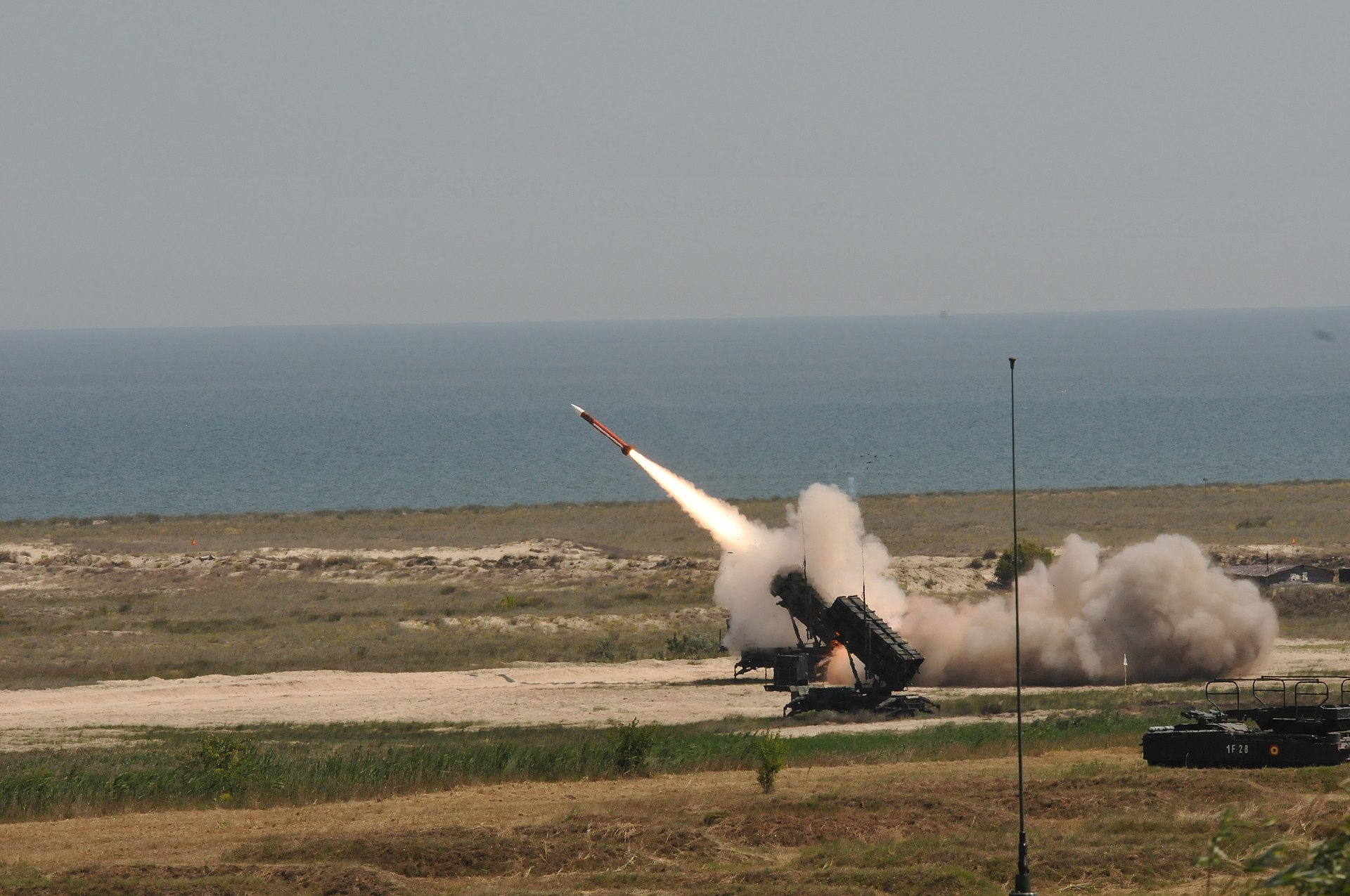
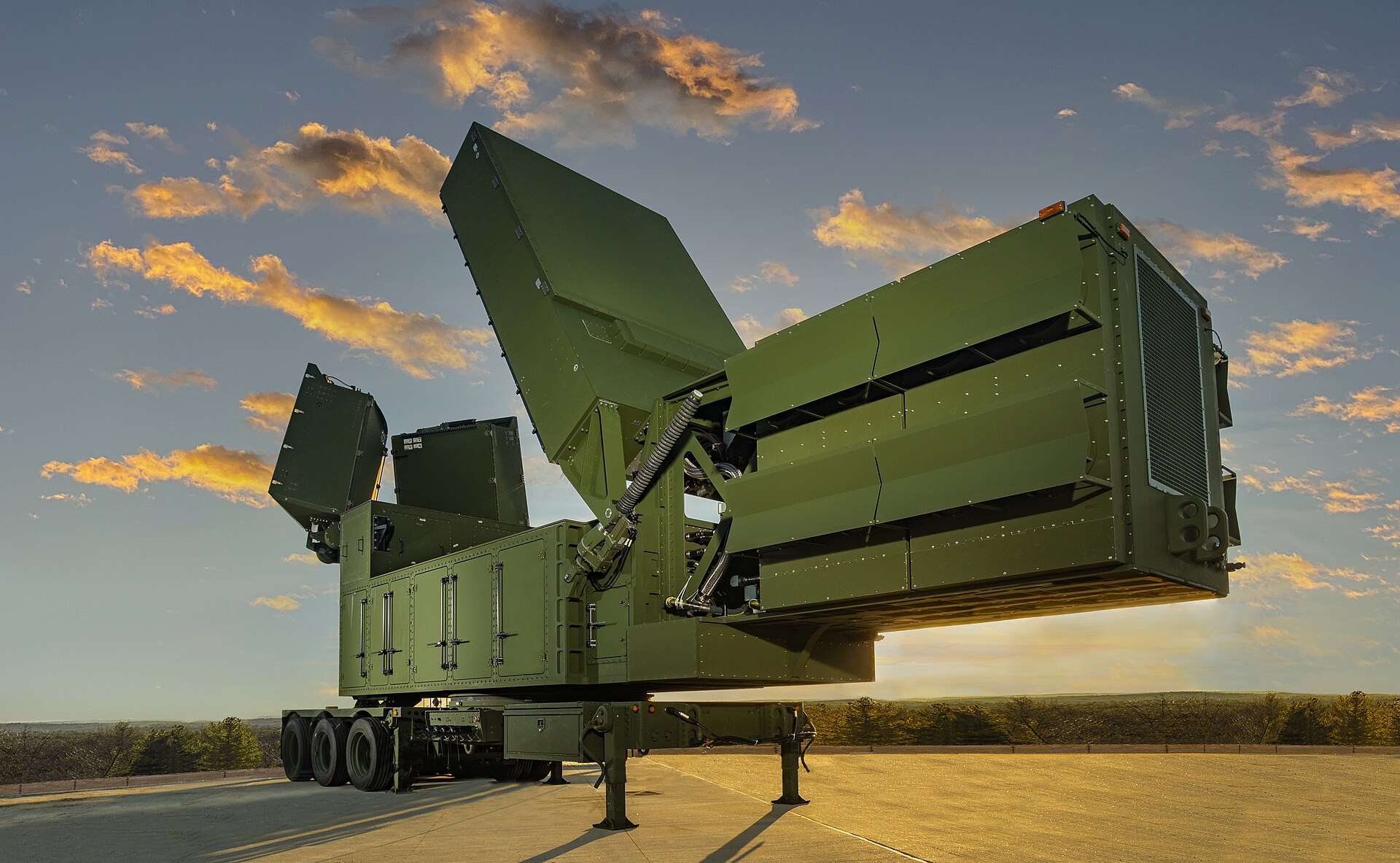
The single largest line item in the emergency package is Kuwait’s $8 billion acquisition of LTAMDS — the Lower Tier Air and Missile Defense Sensor — a next-generation radar system manufactured by RTX Corporation at its Andover, Massachusetts facility. LTAMDS is designed to replace the AN/MPQ-65 radar currently used by Patriot missile batteries, providing 360-degree threat detection capability against ballistic missiles, cruise missiles, drones, and hypersonic weapons simultaneously.
Kuwait’s existing Patriot batteries have been active since the war began on February 28, intercepting Iranian ballistic missiles and drones targeting the country’s oil infrastructure. A drone attack on March 18 struck Kuwait’s Mina Al-Ahmadi refinery, sparking a fire, followed hours later by a second drone that set ablaze the Mina Abdullah refinery nearby. Kuwait’s defense ministry acknowledged that several Iranian projectiles had evaded detection by existing radar arrays, a shortcoming LTAMDS is specifically engineered to address.
The radar’s gallium nitride-based active electronically scanned array (AESA) technology provides a significant upgrade over current systems. Where the AN/MPQ-65 covers a 120-degree forward arc, LTAMDS scans a full 360 degrees, eliminating the blind spots that Iranian cruise missiles have exploited when approaching Gulf targets from unexpected azimuths. The U.S. Army accepted delivery of the first production LTAMDS unit in 2024, and the Kuwait sale represents the system’s first foreign military sale.
Kuwait’s strategic position at the head of the Persian Gulf makes it a natural target for Iranian retaliation. The country hosts approximately 13,000 American troops at Camp Arifjan and Ali Al Salem Air Base, installations that have come under intermittent Iranian drone and missile fire since March 3. Kuwait closed its airspace for commercial aviation on March 10 and has not reopened it.
The UAE Gets Washington’s Most Advanced Counter-Drone Arsenal
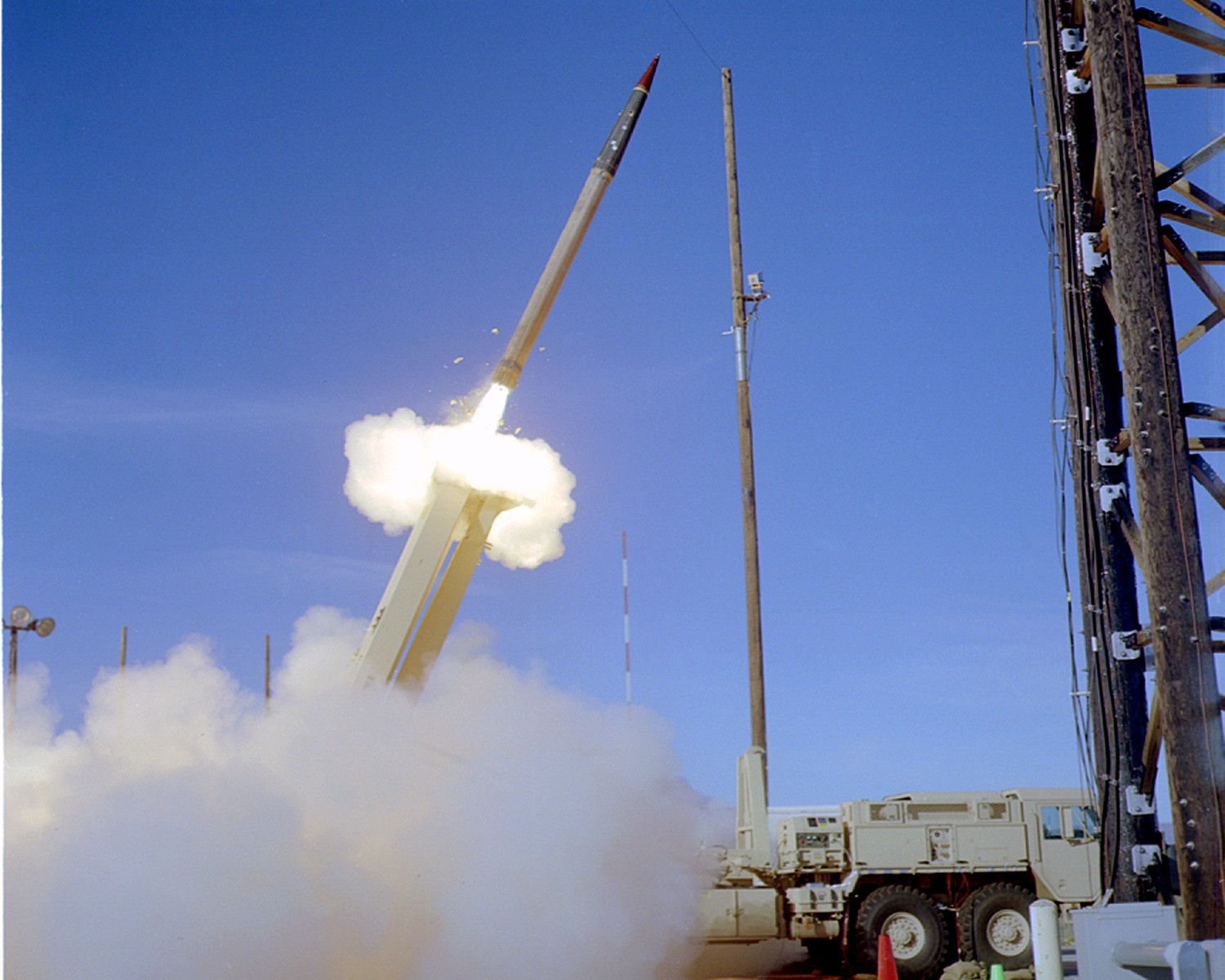
The UAE’s $8.464 billion package addresses the two-tier threat that has defined Iran’s campaign against Gulf states: ballistic missiles at one end and small, cheap attack drones at the other. The four separate notifications approved for Abu Dhabi cover systems ranging from the strategic — a $4.5 billion long-range discrimination radar for integration with the UAE’s existing THAAD batteries — to the tactical — 240 Coyote backpack-carried drone interceptors that individual soldiers can deploy against low-flying threats.
The FS-LIDS (Fixed Site-Low, Slow, Small Unmanned Aircraft System Integrated Defeat System) package, valued at $2.1 billion, represents the Pentagon’s most mature counter-drone architecture. Each of the 10 FS-LIDS installations combines radar, electro-optical sensors, electronic warfare jamming equipment, and kinetic interceptors into an integrated system capable of detecting, tracking, and destroying small drones at ranges beyond what man-portable air defense systems can achieve.
Iran’s campaign against the UAE has been relentless. The UAE’s defense ministry reported on March 19 alone that its air defenses engaged 13 ballistic missiles and 27 drones incoming from Iran. Abu Dhabi ordered the closure of gas facilities across the country following the strikes, and energy infrastructure across the Gulf has remained on heightened alert since the first Iranian strikes on March 1.
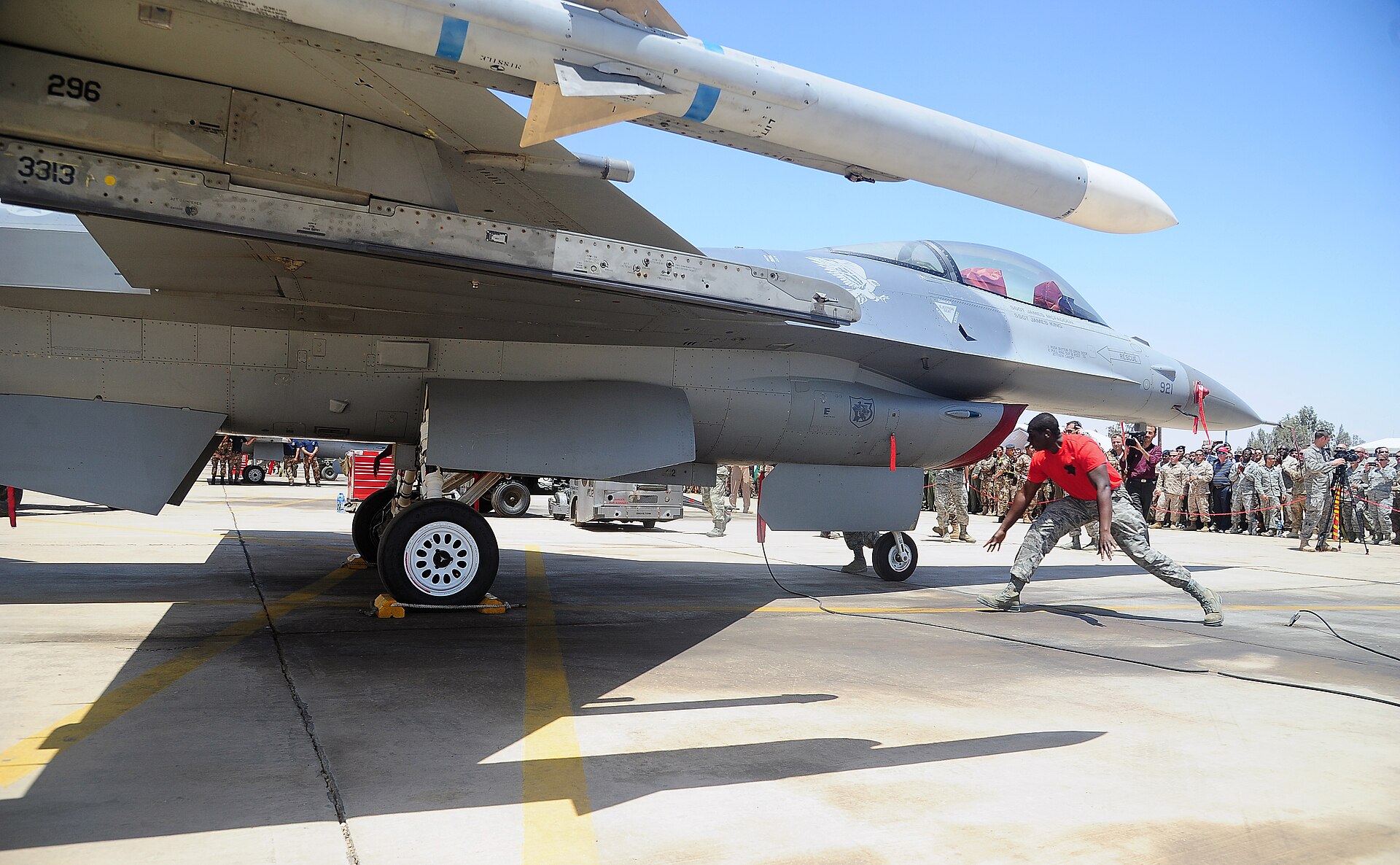
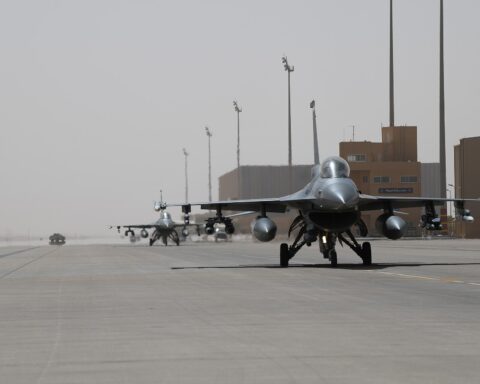
The $1.22 billion air-to-air missile component delivers 400 AIM-120C AMRAAM missiles to the UAE Air Force, which operates F-16E/F Block 60 Desert Falcons and has been conducting defensive combat air patrols since the conflict began. The AMRAAMs replace stocks depleted by sustained operations over three weeks of war. An additional $644 million in F-16 munitions — including GBU-39/B Small Diameter Bombs and Joint Direct Attack Munitions — suggests the UAE may be preparing its fighter fleet for a broader role than purely air defense.
Jordan’s Quiet F-16 Resupply
Jordan’s $70.5 million allocation is the smallest component of the package but carries outsized strategic significance. The Hashemite Kingdom, which shares a 181-kilometer border with Iraq and has faced sporadic missile debris from Iranian strikes on Iraqi territory, operates a fleet of 58 F-16 Fighting Falcons that form the backbone of its air force.
The package covers maintenance, logistics, and munitions support for Jordan’s F-16s, C-130 transport aircraft, and aging F-5 fighters. While the dollar figure is modest compared to the UAE and Kuwait allocations, it addresses a critical bottleneck: Jordan’s air force has been flying extended defensive sorties since the war began, depleting spare parts and munitions inventories faster than peacetime supply chains can replenish them.
Jordan occupies a pivotal geographic position in the conflict. Iranian missiles targeting Israel transit Jordanian airspace, and the Royal Jordanian Air Force has participated alongside Israel, the United States, and Saudi Arabia in intercepting Iranian projectiles — a role it played during the April 2024 Iranian missile and drone attack on Israel. The resupply package ensures Jordan can sustain this mission without grounding aircraft for lack of parts.
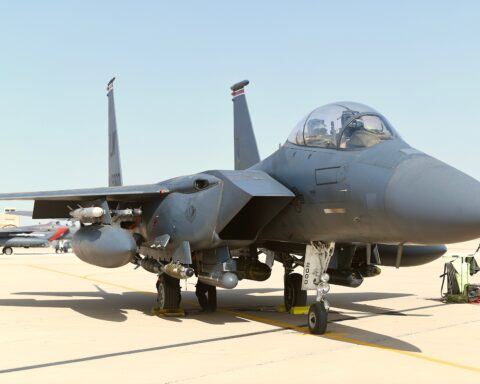
Amman has also quietly allowed the United States to stage military assets at Muwaffaq Salti Air Base, from which American F-15E Strike Eagles and MQ-9 Reaper drones have conducted operations into Iraqi and Syrian airspace. The $70.5 million package keeps Jordan’s own defense capabilities viable while American forces operating from Jordanian soil consume shared logistical resources.
Where Is Saudi Arabia in the Deal?
The most conspicuous absence from the $16.5 billion package is Saudi Arabia, the largest military spender in the Gulf and the country that has absorbed the heaviest sustained Iranian missile and drone bombardment since the war began. Riyadh has intercepted dozens of ballistic missiles, including four aimed at the capital on March 19, and its SAMREF refinery in Yanbu was struck by a drone the same day the emergency sales were announced.
Administration officials, speaking on condition of anonymity, told Bloomberg that Saudi Arabia’s arms pipeline operates on a separate track. The Kingdom secured a $3.5 billion sale of 1,000 AIM-120C-8 AMRAAM missiles in May 2025 and has ongoing Foreign Military Sales cases worth tens of billions of dollars that predate the current conflict. A senior defense official said Riyadh’s existing orders “are being expedited through existing channels” and did not require a new emergency determination. Iran’s attempted strike on Diego Garcia, which revealed Tehran’s missiles can reach 4,000 kilometres, may accelerate Saudi requests for the SM-3 naval interceptor system that engaged the incoming warhead over the Indian Ocean.
Congressional politics also factor into the calculation. Arms sales to Saudi Arabia face persistent opposition from both Democratic and Republican lawmakers concerned about the Kingdom’s human rights record and the legacy of the Yemen war. The emergency waiver provision has never been tested against determined bipartisan congressional opposition, and the administration may have judged that including Saudi Arabia in the package would have invited legal challenges and political backlash that could delay weapons deliveries to all three recipients.
Saudi Arabia’s shift to a war footing, announced by Foreign Minister Faisal bin Farhan on March 19, suggests Riyadh expects its own resupply package — whether through an accelerated version of existing sales or a separate emergency determination — in the coming days. Crown Prince Mohammed bin Salman has been in regular contact with President Trump throughout the conflict, according to White House officials, and has urged Washington to “keep hitting the Iranians hard.”
The Iranian Threat Driving the Sales
The emergency arms package arrives against the backdrop of the most sustained aerial bombardment the Persian Gulf has experienced since the 1991 Gulf War. Since the United States and Israel launched joint strikes against Iran on February 28, Tehran has retaliated with a campaign targeting military installations, energy infrastructure, and civilian areas across at least eight countries.
Iran’s Islamic Revolutionary Guard Corps Aerospace Force has fired hundreds of ballistic missiles — including Shahab-3, Emad, and Khorramshahr variants — at targets across the Gulf. Cruise missiles, many based on the Quds and Hoveyzeh designs, have struck from azimuths that existing radar arrays were not configured to detect. One-way attack drones, costing as little as $20,000 each according to Pentagon estimates, have been launched at a rate exceeding 100 per day at peak intensity.
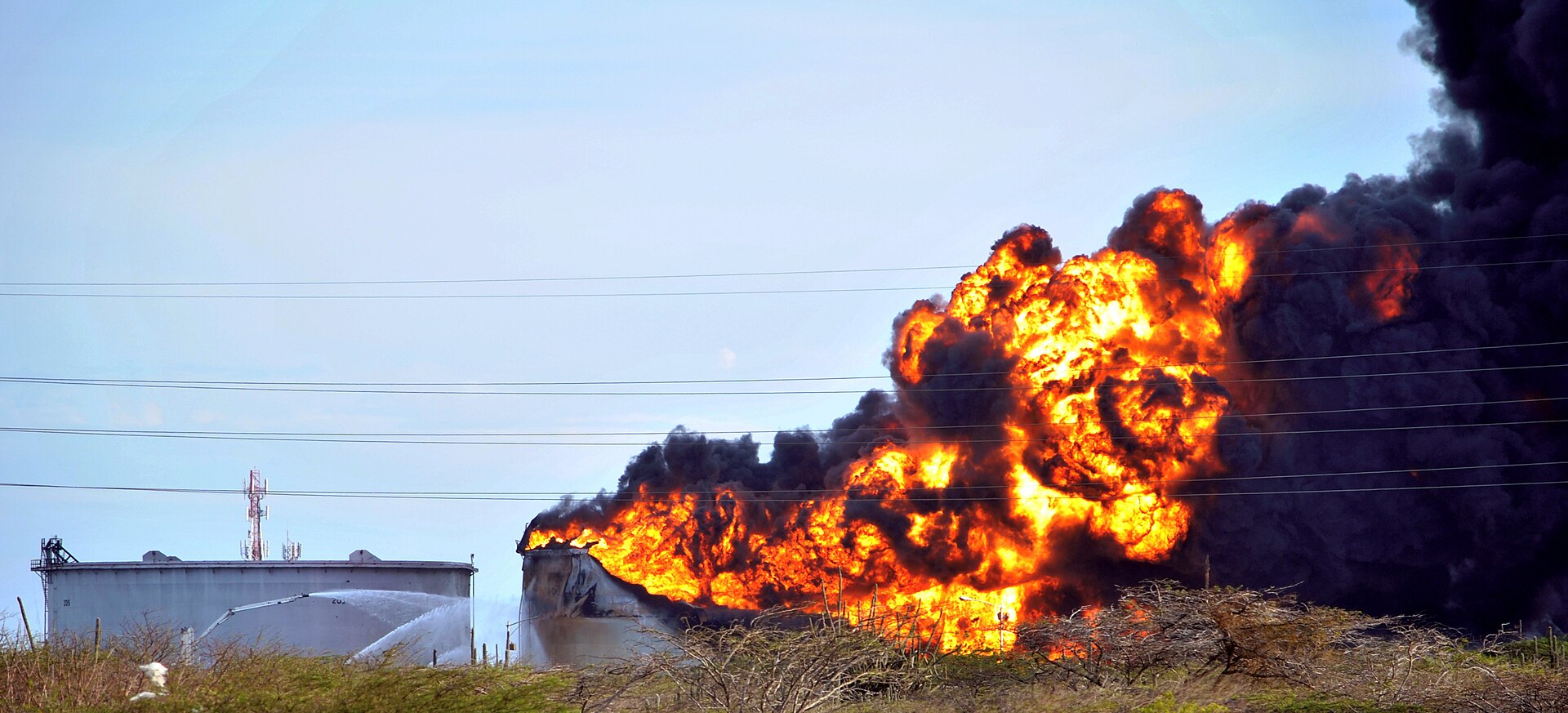
The damage has been substantial. Qatar’s Ras Laffan LNG facility sustained “extensive damage” on March 18, with Bloomberg reporting that the strike knocked out approximately 17 percent of Qatar’s LNG export capacity — roughly 12.8 million tons per year — with repairs expected to take three to five years. Kuwait lost two refineries to drone fires on the same day. The UAE has closed gas facilities and diverted commercial aviation from multiple airports. Saudi Arabia’s Jubail industrial complex, the Kingdom’s largest petrochemical hub, was targeted on March 18 in retaliation for Israeli strikes on Iran’s South Pars gas field.
The economic impact extends far beyond the Gulf. Brent crude reached $115 per barrel on March 20, up from approximately $71 before the conflict began. American gasoline prices have jumped from $3.10 to $3.88 per gallon in three weeks, according to AAA data. The Strait of Hormuz, through which roughly one-fifth of global oil and gas shipments transit, has been effectively closed since Iranian naval forces began intercepting commercial vessels in the first week of March.
Can the US Afford to Arm the Gulf and Fight at the Same Time?
The $16.5 billion arms package was announced on the same day the Pentagon submitted a $200 billion supplemental funding request to Congress — the largest war-related spending request since the early years of the Iraq War. Combined, the two requests signal an administration grappling with a conflict that is consuming American munitions stockpiles faster than the defense industrial base can replenish them.
The challenge is particularly acute for interceptor missiles. Each Patriot PAC-3 missile costs approximately $4 million; each THAAD interceptor costs roughly $11 million. Iran has forced Gulf air defense batteries to expend these missiles against threats that cost a fraction of the interceptor price — a dynamic that analysts at the Center for Strategic and International Studies have described as “the most asymmetric cost exchange in modern warfare.” Gulf Patriot and THAAD batteries have fired hundreds of interceptors since February 28, depleting stocks that were already constrained by the pace of the conflict.
RTX Corporation, the primary manufacturer of both Patriot and THAAD systems, operates production lines in Tucson, Arizona and Andover, Massachusetts. Before the war, RTX was producing approximately 500 Patriot PAC-3 missiles per year, a rate the company has pledged to increase but which cannot match wartime consumption. The LTAMDS radar production line was delivering units at a rate of approximately one per quarter, raising questions about when Kuwait will actually receive the systems it has now purchased.
The delivery timeline is the arms package’s most significant unknown. Emergency sales notifications bypass congressional review but do not bypass manufacturing constraints. Radar systems, missile defense batteries, and precision-guided munitions require months to years to produce, test, and deliver. The FS-LIDS counter-drone systems approved for the UAE have only been produced in limited numbers for the U.S. Army, and scaling production for a foreign customer will require additional workforce and supply chain capacity.
In the interim, the Pentagon has begun transferring systems from American military stockpiles — a practice known as drawdown authority — to fill the most urgent gaps. The United States has already repositioned Patriot batteries from bases in Germany and Japan to Saudi Arabia and the UAE, a move that has drawn concern from European and Pacific allies who view their own security environments as increasingly precarious.
The urgency of the arms package was underscored on March 20 when President Trump signaled that the United States was considering winding down its military operations against Iran, even as 8,000 Marines deployed toward the Gulf. The 6.5 billion in defensive systems may prove even more critical if Gulf states are left to defend themselves without the sustained American air campaign that has anchored the coalition effort since February 28.
Frequently Asked Questions
What is the LTAMDS radar system?
The Lower Tier Air and Missile Defense Sensor is a next-generation radar manufactured by RTX Corporation that provides 360-degree threat detection. It replaces the AN/MPQ-65 radar used in Patriot batteries, using gallium nitride-based active electronically scanned array technology to track ballistic missiles, cruise missiles, drones, and hypersonic weapons simultaneously. Kuwait’s $8 billion purchase represents the first foreign military sale of the system.
Why was Saudi Arabia excluded from the emergency arms package?
Administration officials said Saudi Arabia’s weapons pipeline operates through separate existing Foreign Military Sales channels that predate the conflict. Saudi Arabia secured a $3.5 billion AMRAAM missile deal in May 2025, and officials said those deliveries are being expedited. Congressional opposition to Saudi arms sales, rooted in concerns over the Yemen war and human rights, may also have influenced the decision to exclude the Kingdom from a package requiring an emergency bypass of legislative review.
How does the emergency waiver work?
Under Section 36(b)(1) of the Arms Export Control Act, the Secretary of State can waive the mandatory 30-day congressional review period for major arms sales when an emergency threatens U.S. national security. The provision has been used sparingly, most notably during the 1991 Gulf War. Secretary Rubio’s invocation on March 19, 2026 represents the largest dollar-value emergency arms notification in the law’s history.
When will the weapons be delivered?
Emergency sales notifications bypass congressional review but not manufacturing timelines. Advanced systems such as LTAMDS radars and FS-LIDS counter-drone installations require months to years to produce. The Pentagon has begun transferring some systems from American military stockpiles through drawdown authority to fill urgent gaps, but full delivery of all contracted systems will extend well beyond the current phase of the conflict.
What are the FS-LIDS and Coyote counter-drone systems?
The Fixed Site-Low, Slow, Small Unmanned Aircraft System Integrated Defeat System (FS-LIDS) combines radar, electro-optical sensors, electronic warfare jammers, and kinetic interceptors into a single installation designed to detect and destroy small drones. The Coyote is a tube-launched expendable drone interceptor that can be carried in a backpack and deployed by individual soldiers. The UAE received 10 FS-LIDS installations and 240 Coyote launchers valued at $2.1 billion.