WASHINGTON — The National Security Council convened in the White House Situation Room on May 19 to review strike options against Iran — twenty-four hours after Mohammed bin Salman, Mohammed bin Zayed, and Qatar’s Emir Tamim talked Donald Trump out of executing a scheduled attack, and on the same morning that Iran’s President Masoud Pezeshkian posted “dialogue is not surrender” on X. The 72 hours that the Gulf veto purchased are real; the conditions that would make them productive — Iranian nuclear flexibility, and Gulf willingness to absorb another round of strikes — are both absent.
Iran’s revised 14-point proposal, submitted through intermediaries on May 18, demands a permanent end to hostilities within 30 days, the lifting of the US naval blockade, release of frozen assets, war reparations, and a new Hormuz governance mechanism — but excludes the nuclear file entirely, which is the single item the United States has declared non-negotiable. A senior US official told Axios that the revision contained “only token improvements” and that if substantive nuclear talks did not materialise, “we will have a conversation through bombs, which will be a shame.” The NSC session was scheduled before the proposal arrived, and the proposal did not change the agenda.
Table of Contents
What Does Iran’s 14-Point Proposal Actually Say?
Iran’s revised 14-point proposal excludes the nuclear file entirely — enrichment suspension, stockpile surrender, IAEA inspections — making it structurally non-responsive to Washington’s stated precondition for any deal. What Tehran wants resolved first, and what the United States has defined as the prerequisite for resolving anything, are the same set of issues placed on opposite sides of the sequencing.
The exclusion is not an oversight or a tactical deferral designed to build momentum on lesser issues first; it is the proposal’s defining structural feature, and Iranian officials have been explicit about it. Foreign Ministry spokesman Esmaeil Baghaei stated on May 18 that “at this stage, we do not have nuclear negotiations” and that nuclear issues would be “postponed” to unspecified later stages (Al Jazeera). The proposal separates what Iran wants resolved immediately — the blockade, the military pressure, the frozen assets worth billions — from what the United States has defined as the prerequisite for resolving anything at all, a sequencing that Washington’s national security establishment reads not as good-faith phasing but as a structured attempt to pocket concessions while deferring the only demand that matters.
The revision did include, according to Axios, “more words on Iran’s commitment not to pursue a nuclear weapon” — a formulation that amounts to a reiteration of the 2003 fatwa, a non-binding religious ruling that the Islamic Republic has invoked and ignored in roughly equal measure for more than two decades, without any operational verification mechanism attached to it. Iran separately floated transferring its existing highly-enriched uranium stockpile to Russia — not to the United States, not to the IAEA. It is a channel Washington has no reason to trust and no mechanism to verify, particularly since IAEA inspector access to Iranian nuclear facilities was terminated on February 28 (Axios; RT, May 18).
The Hormuz governance mechanism buried in the proposal’s final points is revealing in its own right — it calls for a new multilateral framework to manage Strait of Hormuz transit, which, in the context of the IRGC’s existing toll-collection infrastructure and its April 5 declaration of “full authority to manage the Strait,” amounts to a request for international legitimisation of the chokepoint control that the US naval blockade was imposed to break. The proposal does not merely defer the nuclear file; it seeks to lock in Iran’s wartime territorial gains on every other axis first.
The Middle East briefing 3,000+ readers start their day with.
One email. Every weekday morning. Free.
The gap between the two sides’ negotiating positions was already vast before the proposal arrived. The United States demanded a 20-year enrichment moratorium in April (Axios, April 13); Iran countered with an offer described as “single-digit” — up to five years at most. Then Tehran submitted a 14-point proposal that removed the subject from the negotiating table entirely, which is what it looks like when the distance between two positions is not narrowing but when one side has decided the distance is the point. Iran’s May 19 statement confirming it will not negotiate nuclear at this stage confirms the bifurcation is now explicit policy: the 72-hour window Iran used to institutionalize Hormuz control while ruling out nuclear talks is the structure Tehran intends to make permanent.
The Authorization Ceiling Is Now Visible
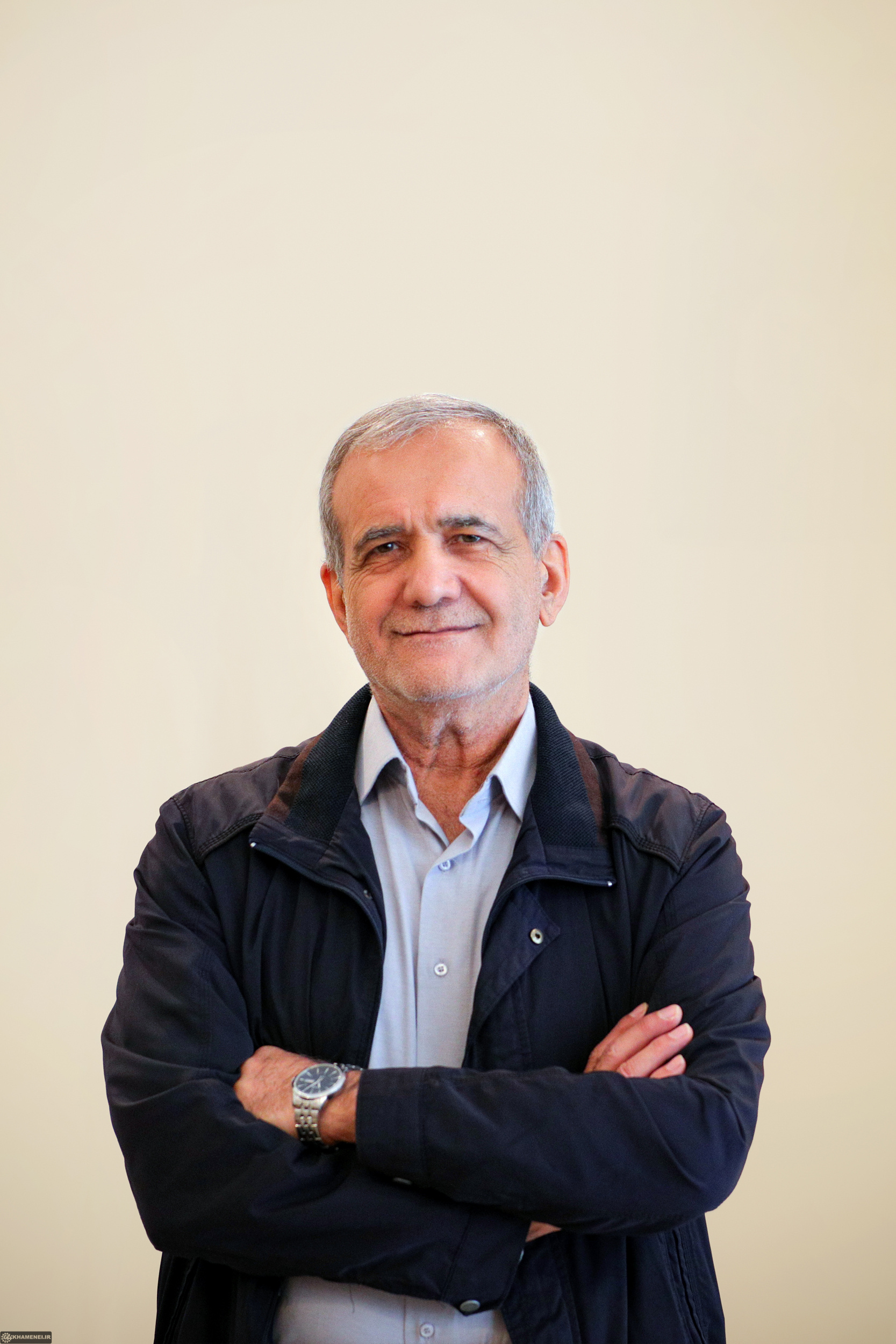
Pezeshkian’s X post on the morning of May 19 — “dialogue does not mean surrender” and “we will not back down from our demands in the face of Washington, and the dialogue must be rational” (Jerusalem Post; PressTV, May 18-19) — reads as defiance from outside Iran and as an admission of constitutional impotence from within it. The president who posted about dialogue that morning is constitutionally unable to deliver the substance that would make dialogue productive, and his own public record has spent the past six weeks documenting exactly why.
On April 17, Pezeshkian confronted the Supreme Leader’s intelligence chief and named IRGC commanders Ahmad Vahidi and Ali Abdollahi as having “acted unilaterally and driven escalation through attacks on regional countries,” stating that their policies “had destroyed any remaining chance of a ceasefire” (Iran International, April 7). He named them publicly — Vahidi, the IRGC commander-in-chief who carries an INTERPOL red notice for the 1994 AMIA bombing in Buenos Aires, and Abdollahi, the Khatam al-Anbiya Construction Headquarters commander who controls the military-industrial complex that profits directly from the sanctions regime — and then discovered that naming them was the outer boundary of his presidential authority.
Article 110 of the Iranian constitution assigns the Supreme Leader, not the president, supreme command of the Armed Forces, the power to declare war and peace, and the sole authority to appoint, dismiss, or accept the resignation of the IRGC commander-in-chief. Pezeshkian cannot restructure IRGC command, cannot discipline Vahidi or Abdollahi, and cannot negotiate away enrichment capacity that the IRGC considers a strategic asset under its own operational control. The Foundation for Defense of Democracies published a list in April titled “Five Men Running Iran” (FDD, April 6); Pezeshkian was not among them, while both Vahidi and SNSC secretary Mohammad Bagher Zolghadr — the IRGC-installed guardian of the Supreme National Security Council — were.
The Supreme Leader’s authority now flows through his son Mojtaba Khamenei, who communicates with the outside world exclusively through handwritten couriers (Open The Magazine, March 2026). No confirmed video or audio messages have emerged. Public statements are released through social media accounts or read aloud by state television presenters — a communication channel that permits neither real-time negotiation nor the kind of conditional authorisation that a nuclear deal would require. The IRGC command loop runs through what is functionally a dead-letter box: instructions go in, decisions come out, and the president who posted about rational dialogue that morning sits entirely outside it. Washington’s intelligence community, which briefed the Saturday preliminary session on exactly this command structure, is operating on the assumption that what Pezeshkian says on X bears no fixed relationship to what the IRGC will do in the Strait of Hormuz.
What Is the NSC Actually Deciding?
The NSC session on May 19 is not choosing between war and diplomacy. It is assessing whether the conditions for a military strike deteriorate if Washington waits — whether the 72-hour Gulf veto, the Hajj pilgrimage window, and Iran’s continuing reconstitution of its missile infrastructure combine to make a strike in two weeks more expensive and less effective than a strike this week.
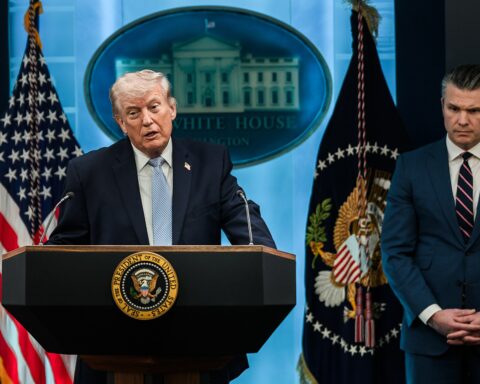
Trump’s Truth Social post on May 18 set the frame with unusual specificity, naming his Secretary of Defense, the Chairman of the Joint Chiefs, and “The United States Military” before stating that “we will NOT be doing the scheduled attack of Iran tomorrow, but have further instructed them to be prepared to launch a full, large-scale assault of Iran, on a moment’s notice, in the event that an acceptable Deal is not reached.” The word “scheduled” confirmed publicly what the Gulf veto had prevented privately — this was not a contingency but an operational plan with a date attached to it — and “on a moment’s notice” converted the postponement from a stand-down into a loaded weapon with its safety disengaged.
“We need some real, sturdy and granular conversation regarding the nuclear program. If that’s not gonna happen, we will have a conversation through bombs, which will be a shame.”— Senior US official to Axios, May 18, 2026
The question before the NSC is concrete and sequential, not philosophical. Every day that passes without enrichment concessions makes the case for striking stronger in Washington and the strike itself harder to execute: Iran has used the ceasefire period to restore its Hormuz missile infrastructure, its enrichment programme runs unverified since the IAEA expulsion in February, the Gulf veto mechanism weakens with each deployment, and IRGC command nodes continue to disperse and harden against the strike packages they know are being planned. The senior US official’s framing of the military option as a “conversation” — not a last resort, not a catastrophe, but a form of communication — captures a mood inside the West Wing that the 14-point proposal has done nothing to dispel.
The NSC’s Saturday preliminary session — attended by Vice President JD Vance, Secretary of State Marco Rubio, CIA Director John Ratcliffe, and Middle East envoy Steve Witkoff (Fox News, May 17) — had already reviewed the intelligence assessment that Iran’s proposal contained no substantive nuclear commitments. The full NSC session on Tuesday includes the Joint Chiefs and the Secretary of Defense, and sources briefed on the agenda told Axios that the discussion has shifted from whether to strike to the sequencing and targeting conditions under which a strike would proceed. Trump told Axios on May 17 that “the clock is ticking” and that if Iran fails to show flexibility, “they are going to get hit much harder.”
A Pakistani diplomat involved in the mediation effort told Al Jazeera on May 18 that “we don’t have much time” and that the sides “keep changing their goalposts” — an observation that describes, precisely, what happens when one side cannot constitutionally deliver what the other has defined as the minimum acceptable outcome, and when the war cabinet convening in the West Wing already knows it. The next constraint on Washington’s calendar is not diplomatic but religious, it arrives in seven days, and it applies to one side only.
How Does the Hajj Window Constrain a US Strike?
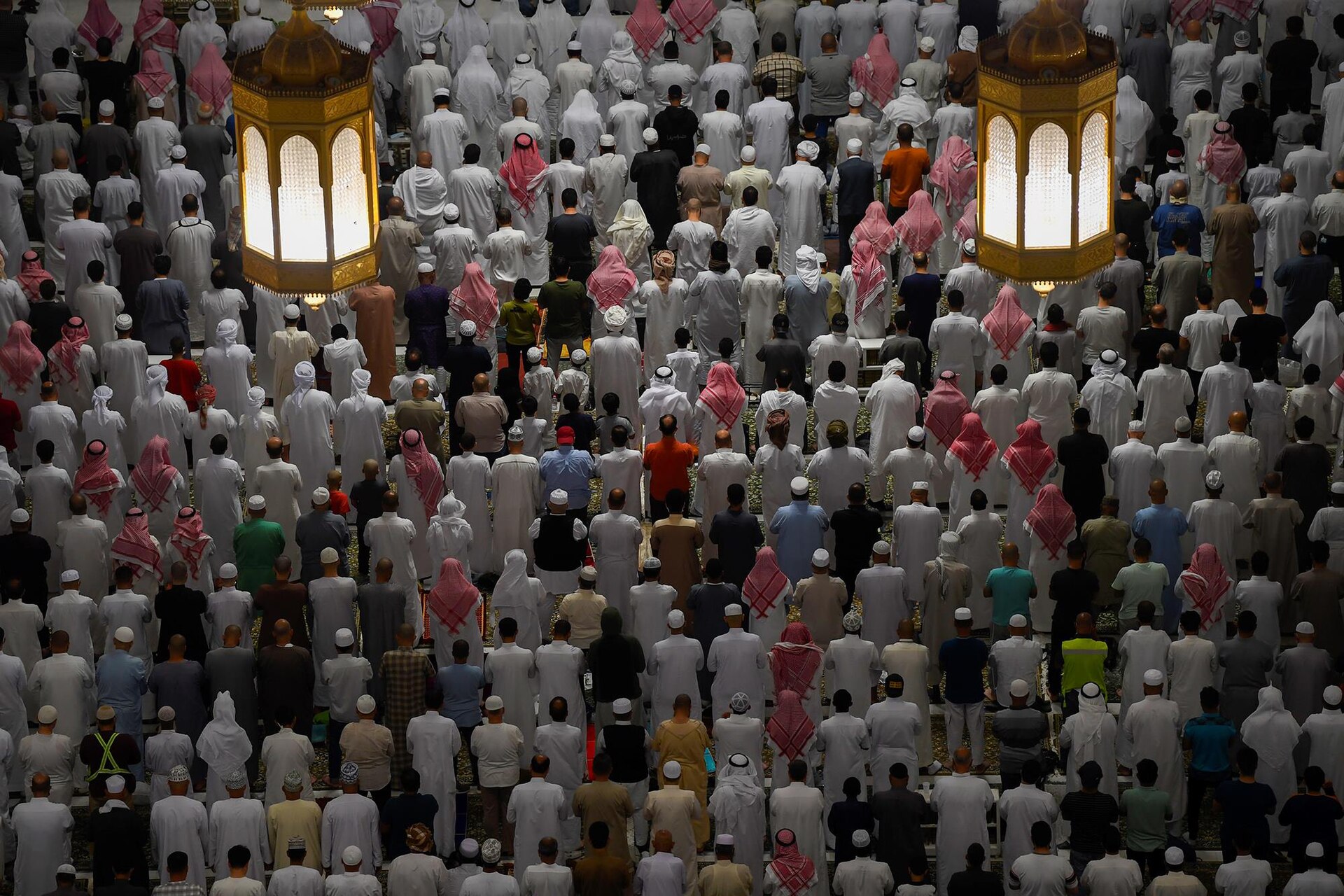
The Day of Arafat falls on May 26 — seven days from the NSC session — with more than 860,000 foreign pilgrims already on Saudi soil (820,000 by air, 35,000 by land, 4,000 by sea, according to Al Jazeera on May 18), and Eid al-Adha the following day. A US military operation during the Hajj would force Saudi Arabia to either shelter those pilgrims under a severely depleted air-defence umbrella or publicly break with Washington at the moment the Custodian of the Two Holy Mosques title carries its heaviest obligation.
Saudi Arabia’s PAC-3 MSE interceptor inventory stands at approximately 400 rounds, drawn down from a pre-war stockpile of roughly 2,800 — an 86% reduction with no new deliveries expected before mid-2027. The five-layer defence architecture covering the holy sites (THAAD at the outer ring, PAC-3 MSE, Korean KM-SAM Block II, 30kW fibre-optic lasers for counter-drone work, and Oerlikon Skyguard 35mm guns at the terminal layer) remains intact as a system, but the interceptor arithmetic is unforgiving when set against an adversary that fired 2,819 systems at Gulf targets in the war’s first six weeks. The Hajj airlift is already closing, meaning those 860,000-plus pilgrims have limited exit options if the security environment deteriorates.
The asymmetry that makes this a one-sided constraint is total and structural. Iran has zero pilgrims on Saudi soil — Iranian citizens have been barred from the Hajj since the 1987 incident in Makkah that killed 402 pilgrims, triggered a three-year Iranian boycott, and produced an 87% quota cut. The Custodian of the Two Holy Mosques title, adopted by King Fahd in October 1986, constrains Saudi Arabia’s willingness to host or enable military operations during the pilgrimage period, but it imposes no equivalent constraint on Tehran, which has no citizens present and bears no domestic political cost from escalation during a Hajj in which it has no stake whatsoever.
Two overlapping but non-identical windows are running simultaneously, and the distinction between them is what the NSC is calculating against. The 72-hour window that the Gulf veto bought expires around May 21, the point at which Washington’s patience with the “moment’s notice” posture likely reaches its limit. The seven-day Hajj window runs until Eid al-Adha on May 27. Between May 21 and May 27, the veto has expired but the Hajj constraint still holds, creating a narrow band in which the religious calendar — not Gulf diplomacy — is the binding constraint on American action. After May 27, neither window applies, and the clock that MBS purchased passes back into Washington’s hands.
Can the Gulf Veto Survive a Second Round?
The Gulf veto works because Washington needs regional basing — and Saudi Arabia, the UAE, and Qatar can deny it. It has now been exercised twice: during Project Freedom (May 4-7) and on May 18. Each use costs credibility, and credibility in a veto is a diminishing asset.
Saudi Arabia exercised this lever during Project Freedom between May 4 and May 7, denying the United States access to Prince Sultan Air Base and Saudi airspace for a planned operation; Trump called MBS, and MBS did not relent (Jewish Insider; NBC News). The mechanism worked again on May 18 when all three Gulf leaders persuaded Trump to postpone the scheduled strike. But the co-belligerent trap that gives it force also sets a limit on how many times it can be pulled before Washington decides to stop asking permission.
Saudi Arabia is fighting a two-front narrative battle, and the tension between the two fronts became visible in a single week’s public output. Prince Turki al-Faisal — the former intelligence chief and long-serving diplomat who functions as the royal family’s unofficial foreign-policy voice — told Arab News around May 12 that “had the Israeli plan to ignite war between us and Iran succeeded, the region would have been plunged into ruin and destruction,” adding that “thousands of our sons and daughters would have been lost in a battle in which we had no stake” and crediting MBS with “wisdom and foresight.” That is the message directed at Riyadh, at the Gulf capitals, and at the broader Arab public: the Kingdom chose strategic restraint over someone else’s war, and the Crown Prince had the nerve to enforce it.
“Beat your chest at external enemies to mask domestic weakness, but only enemies you know will not come after you, like Israel. Thugs like Islamic Iran? Be nice to them.”— Hussain Abdul-Hussain, Foundation for Defense of Democracies, May 12, 2026
The counter-narrative arrived the same day and targeted a different audience entirely. FDD analyst Hussain Abdul-Hussain published “Saudi Arabia’s strange war: Appease Iran, rebuff Israel” (May 12), an argument aimed at the Washington policy establishment that controls arms sales, security guarantees, and the Section 123 nuclear cooperation agreement Saudi Arabia is pursuing — and cited the Kingdom’s record $34 billion first-quarter budget deficit as evidence that what Riyadh presents as strategic patience is fiscal paralysis in diplomatic clothing. The Turki and FDD arguments cannot both be true in the way their authors intend — one frames the veto as wisdom, the other as weakness — but the fact that both circulated in the same news cycle shows the pressure bearing down on Saudi Arabia from two directions at once. What the 123 Agreement actually does and does not prohibit on enrichment — and why it undermines Washington’s zero-enrichment demand — is examined in Washington’s Nuclear Gold Standard Stopped at the Saudi Border.
Washington accepted the Project Freedom base denial without public recrimination because it still needed Saudi cooperation on Hormuz and the broader containment posture surrounding Iran. But quiet acceptance carries its own signal for the next round: when the need for a strike becomes urgent enough, the planning will route around the Gulf states rather than through them, and the veto will have been spent without producing the diplomatic outcome it was supposed to create time for.
The Basing Problem Washington Has Not Solved
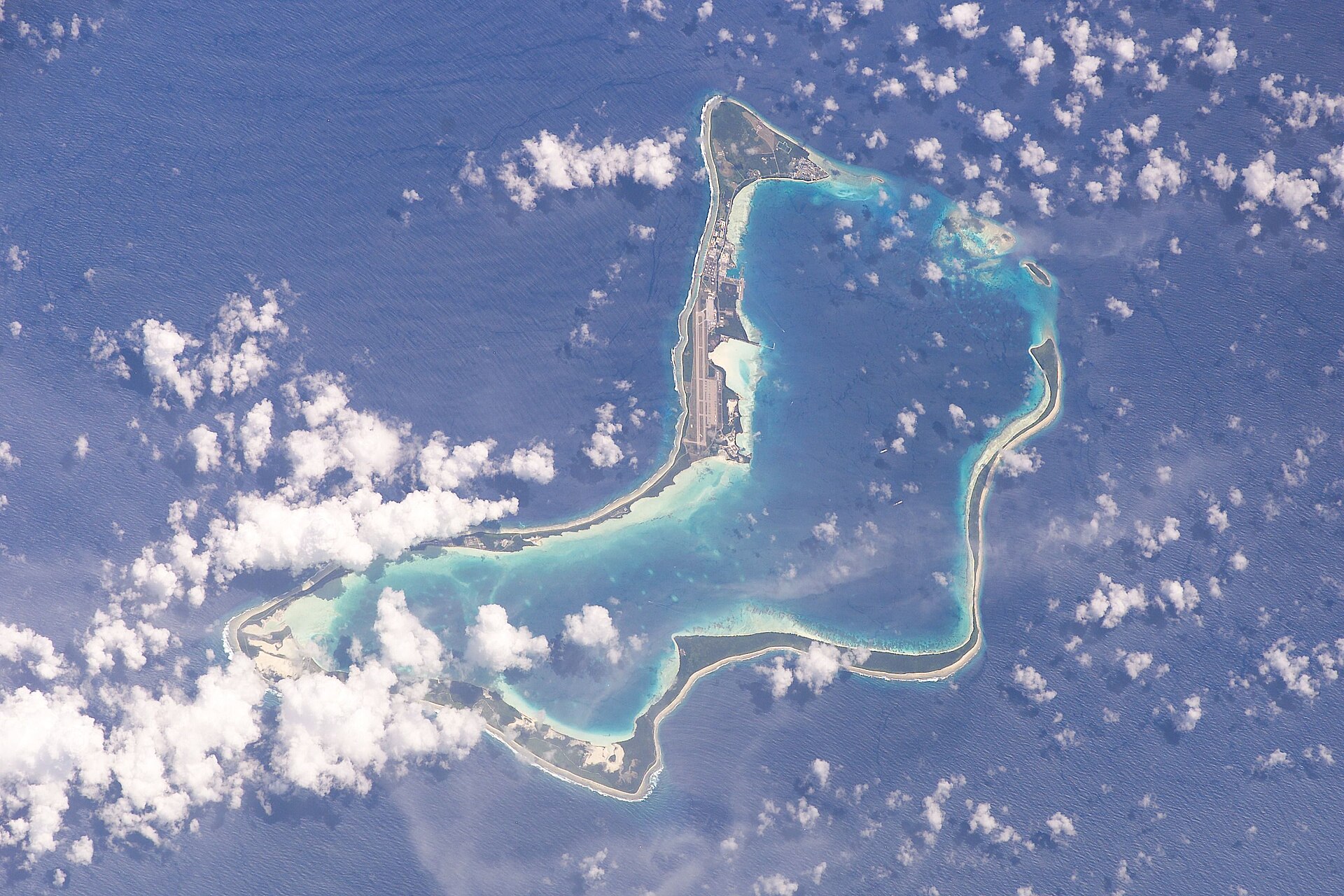
When Washington plans around Saudi basing, the default fallback is Diego Garcia — the British Indian Ocean Territory atoll that hosts B-2 bombers, naval pre-positioning ships, and satellite ground stations, and that served as a primary staging area for operations in both Gulf wars and in Afghanistan. The problem, which the NSC session on May 19 has in its briefing materials, is that Iran launched Khorramshahr-4 ballistic missiles at Diego Garcia on March 20-21 (Bloomberg, March 21) and that the Pentagon designated the base a formal combat zone on April 3 (Stars and Stripes) — an acknowledgement that the supposedly uncontested alternative to Gulf basing sits inside Iran’s demonstrated missile envelope.
Neither Khorramshahr-4 struck its intended target, but the launches established range and intent, and the combat-zone designation acknowledged both in operational terms that matter for force-protection planning. Carrier strike groups operating in the Arabian Sea remain available, but carrier-based operations without land-based tanker support and fighter cover from Gulf airfields generate fewer sorties, at higher cost, with smaller precision-strike packages against the hardened and dispersed nuclear facilities — Fordow in particular, built inside a mountain near Qom — that constitute the NSC’s primary target set. The operational planning for the campaign the NSC reviewed on Tuesday assumed Gulf access; without it, the same objectives require a fundamentally different force architecture.
The Gulf’s other major American installations offer no clean alternative either. Al Udeid Air Base in Qatar hosts CENTCOM’s forward headquarters and the Combined Air Operations Center, but Qatar was one of the three states that vetoed the May 18 strike, and Doha’s simultaneous role as a mediator with Tehran makes operational use of Al Udeid politically toxic for the Tamim government. Naval Support Activity Bahrain, home to the Fifth Fleet and 79 acres of naval infrastructure, had its SATCOM terminals destroyed on February 28 and operates under continuing threat from Iranian missile systems positioned across the Gulf.
This is the operational truth beneath the political manoeuvring. MBS, MBZ, and Tamim can deny basing, and Washington can absorb the denial. But the strike that routes through Diego Garcia and carrier decks — against an adversary that has ranged Diego Garcia with ballistic missiles and has used the ceasefire to restore 91% of its Hormuz missile infrastructure — is a materially smaller, slower, and more expensive operation than the one cancelled on the evening of May 18. The 72-hour window the Gulf veto bought is not the same as the seven days before the Day of Arafat. After May 27 both close — not because diplomacy succeeded, but because the constraints that made diplomacy the path of least resistance will have dissolved. The Situation Room is left with the question it convened on Tuesday morning to answer: not whether to strike, but when, under what conditions, and with whose runways.
Frequently Asked Questions
How close is Iran to a nuclear weapon?
Iran possesses 440.9 kg of uranium enriched to 60% as of the last verified IAEA report (June 2025), enough fissile material for multiple devices. Using its operational IR-6 centrifuge cascade, breakout time from 60% to weapons-grade 90% is approximately 25 days per device. IAEA inspector access was severed in February 2026 — enrichment has run unverified for three months, meaning the actual timeline may already be shorter.
What is the realistic compromise on enrichment duration?
Three sources briefed on the Islamabad and Doha negotiation rounds told Axios that the realistic landing zone for an enrichment moratorium, if talks survived long enough to reach one, sat between 12 and 15 years — well below the US demand of 20 years but above Iran’s counter-offer of five. This gap became academic on May 18 when Iran submitted a proposal that removed the nuclear file from the framework entirely.
What would a US strike on Iran target?
The primary target set includes Iran’s nuclear facilities: the Fordow enrichment plant built inside a mountain near Qom (requiring GBU-57 Massive Ordnance Penetrator bombs deliverable only by B-2 bombers), the Natanz centrifuge halls, the Isfahan uranium conversion facility, and the Arak heavy-water reactor, along with IRGC command-and-control nodes and missile production sites. B-2 operations require staging from Whiteman Air Force Base in Missouri or from Diego Garcia.
What role is Pakistan playing in the current mediation?
Pakistan has served as Iran’s protecting power in Washington since 1992 and remains the primary interlocutor between Tehran and the United States. Army chief General Asim Munir visited IRGC commander Abdollahi’s Khatam al-Anbiya headquarters on April 16, effectively negotiating with the same officer President Pezeshkian had publicly accused of sabotaging the ceasefire. Pakistan’s own $5 billion Saudi loan, maturing in June 2026, constrains its claim to neutrality between the two sides it is attempting to mediate.