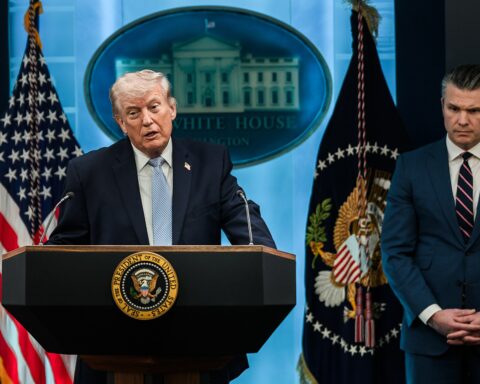
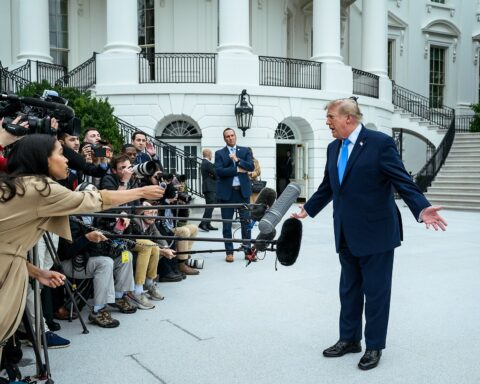
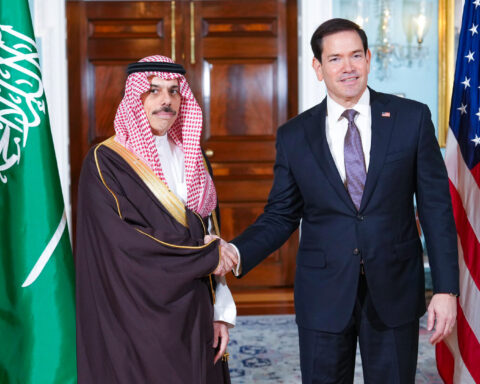
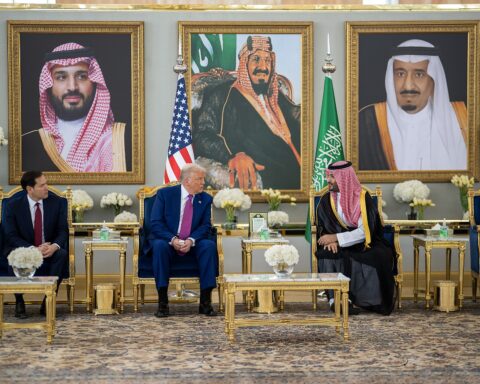
WASHINGTON — Fifty-two days before Mohammed bin Salman spent the largest single unit of Saudi political capital since the founding of the US-Saudi relationship — phoning Donald Trump on May 18, 2026 to stop a planned “very major attack” on Iran — Trump stood on a stage built with Saudi money, before 1,500 delegates assembled by Saudi Arabia’s sovereign wealth fund, and told them: “He didn’t think he would be kissing my ass.” The Gulf veto that followed on May 18, in which MBS, UAE President Mohamed bin Zayed, and Qatar’s Emir Tamim jointly persuaded Trump to stand down, did not erase that public record. It confirmed the terms on which the relationship operates. MBS paid a trillion dollars, denied the United States its own airbases, stopped a war — and the lasting transcript of the partnership, the one that circulates in Tehran and Riyadh alike, is that the Crown Prince of Saudi Arabia performs deference at the pleasure of a man who said so on his own stage.
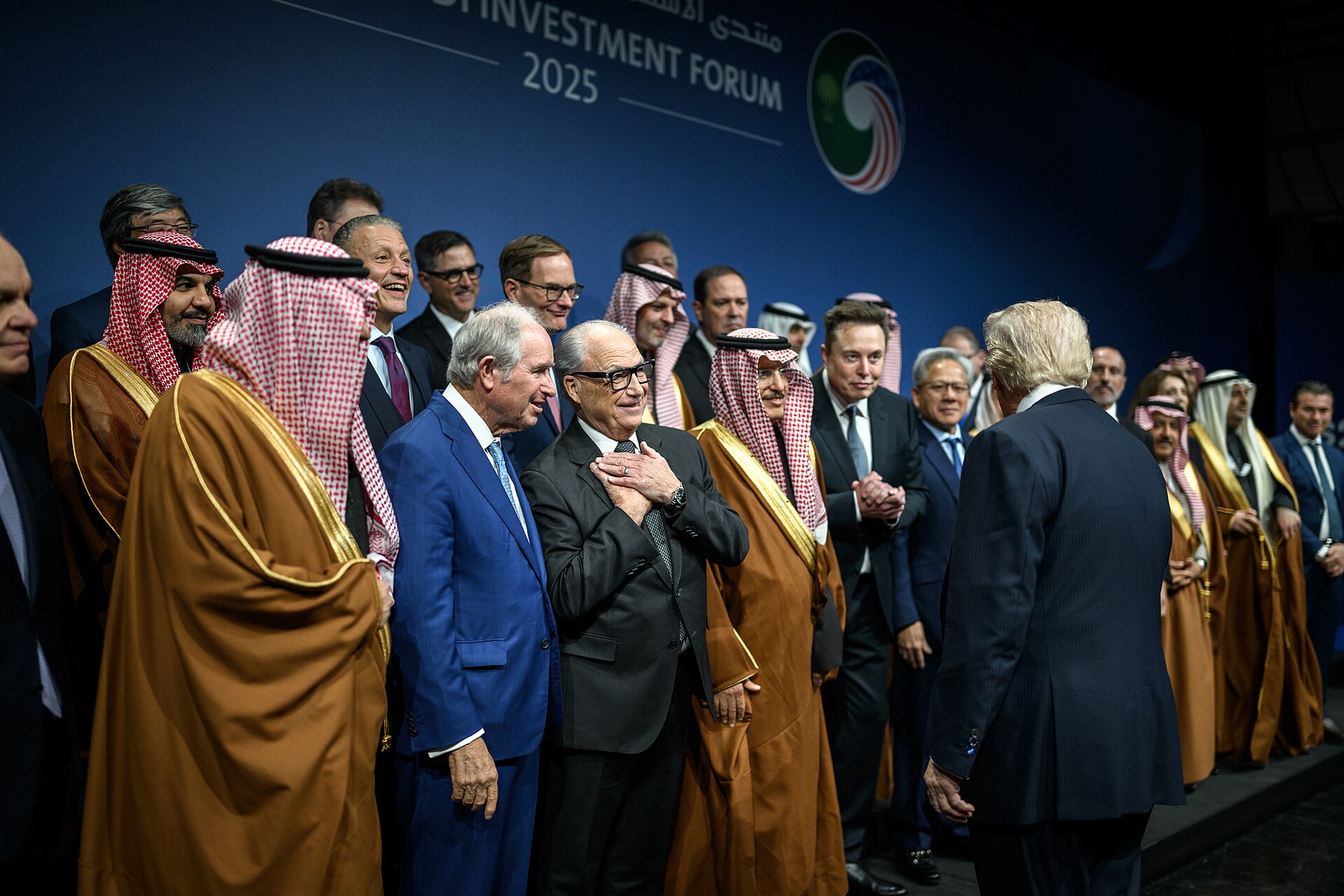
Table of Contents
The Remarks: March 27, Faena Hotel, Miami Beach
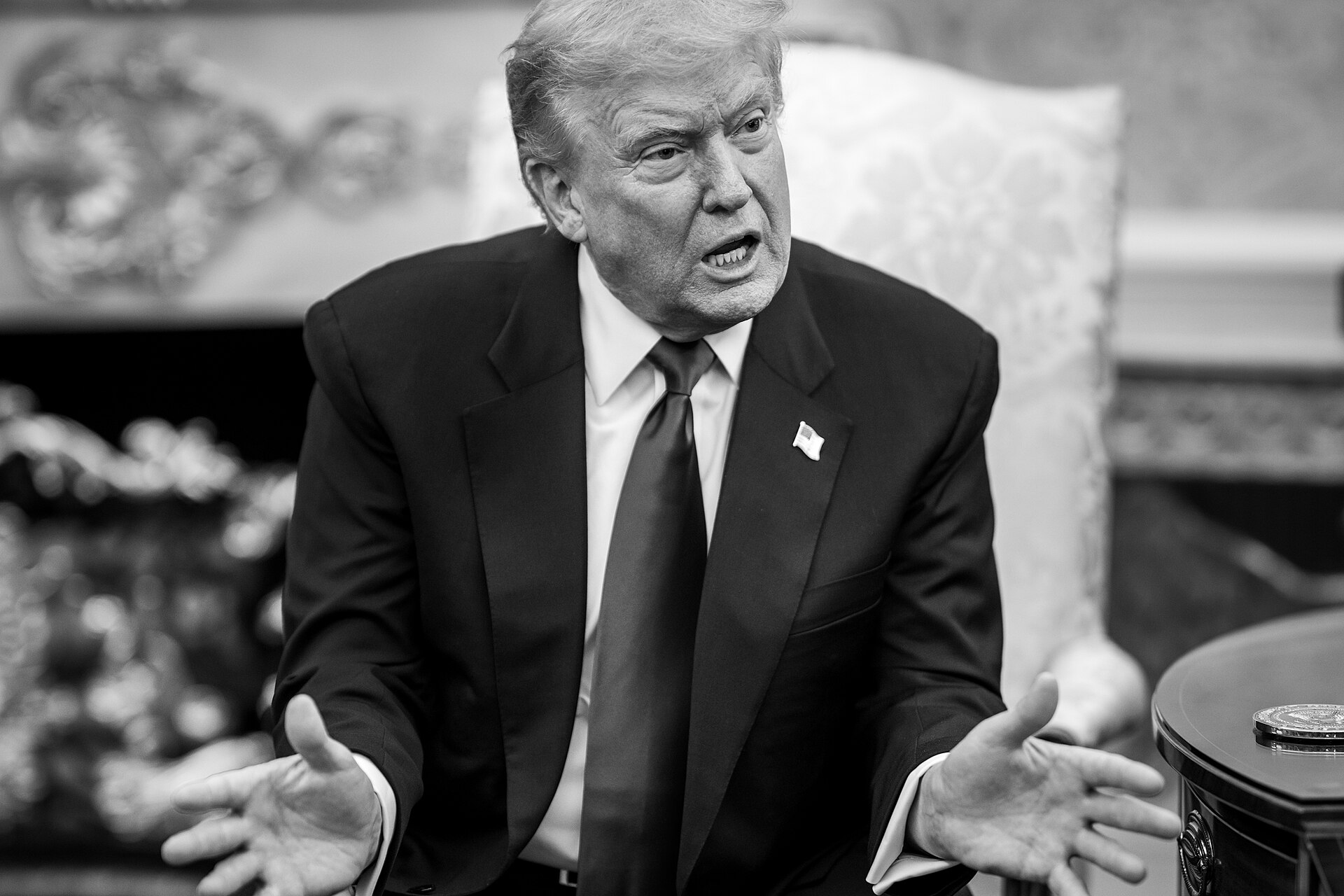
The FII Priority summit is Saudi Arabia’s flagship investment conference, organized by the Public Investment Fund and staged annually to project the Kingdom as a modern financial power. The March 2026 edition was held at the Faena Hotel in Miami Beach. Trump delivered the closing keynote.
His exact words, captured by C-SPAN and transcribed by Roll Call’s Factba.se: “He didn’t think he would be kissing my ass. He really didn’t. He thought it’d be just another American president that was a loser where the country was going downhill. But now he has to be nice to me. You tell him he’d better be nice to me.” Trump then called MBS “a very smart” person and “a very regular kind of a guy.”
Days earlier, at the same event cluster, Trump had called MBS “a warrior.” Both remarks were delivered at a conference funded by the man being described.
The White House edited the remarks from its official livestream before clips spread on social media. Neither the Saudi Royal Court nor the Ministry of Foreign Affairs issued any public statement. Saudi state media — Al Arabiya, Al Ekhbariya, the Saudi Press Agency — covered the FII summit without referencing Trump’s comments about MBS. The protocol for managing provocations from essential security partners is silence, and the Kingdom followed it precisely.
Steve Bannon, Trump’s former White House strategist, amplified the framing the following day on his War Room broadcast. He called for Gulf royals to send their children to fight: “Throw in a couple of Qatar princes. Throw the Saudi princes in there, too. Get them out of London, get them out of the casinos and whorehouses in London.” He demanded Arab allies commit their own forces to the Iran front lines. The remarks aired to an audience that treats Bannon as a proxy for Trump’s base — the constituency MBS needs for his $1 trillion investment commitment to function.
The Middle East briefing 3,000+ readers start their day with.
One email. Every weekday morning. Free.
Why Can’t MBS Respond?
The structural answer has three components, each reinforcing the others. The first is military. Since February 28, 2026, Iran has struck Saudi territory with ballistic missiles, cruise missiles, and drones. Saudi air defenses have absorbed the attacks but are degrading — PAC-3 interceptor stocks are estimated at roughly 400 rounds, or 14 percent of pre-war levels. Saudi Arabia cannot publicly antagonize the only country capable of resupplying those interceptors while the threat persists.
The second is financial. MBS pledged $600 billion in US investments during Trump’s May 2025 visit to Riyadh, then raised the commitment to nearly $1 trillion during his November 2025 White House visit. This includes a $142 billion defense and security package — the largest in US-Saudi history — covering 48 F-35 fighters, 300 M1 Abrams tanks, integrated air and missile defense, and “major non-NATO ally” designation. Every component requires Washington’s continued cooperation. A public rebuttal of Trump’s characterization risks the delivery schedule of systems Saudi Arabia needs to survive the current war.
The third is existential. There is no alternative security umbrella. L’Orient Today, the only outlet to frame the core question directly — “In the face of Trump’s humiliation, can MBS respond?” — concluded that MBS has no public rebuttal option given maximum military vulnerability, the $1 trillion investment commitment, and the absence of any substitute patron. China sells weapons but has never extended a security guarantee to a Gulf state. Russia’s military is consumed in Ukraine. The European defense industrial base cannot replace American air defense architecture at the scale Saudi Arabia requires.
MBS has built his domestic legitimacy on the Vision 2030 narrative of Saudi Arabia as a sovereign, modern, co-equal state. “Kissing my ass” — delivered publicly, on Saudi-funded infrastructure, to Saudi-assembled investors — negates that framing. The Crown Prince’s only available response was the one he used: act as though the remarks were never made, and demonstrate value through action rather than words. The May 18 veto was that action.
The May 18 Veto and Its Price
On May 18, Trump disclosed that he had called off “a very major attack” on Iran scheduled for the following day. He said leaders of Saudi Arabia, Qatar, and the UAE had asked him “to hold off on our planned Military attack of the Islamic Republic of Iran, which was scheduled for tomorrow, in that serious negotiations are now taking place.” Trump added: “If we can do that without bombing the hell out of them, I’d be very happy.”
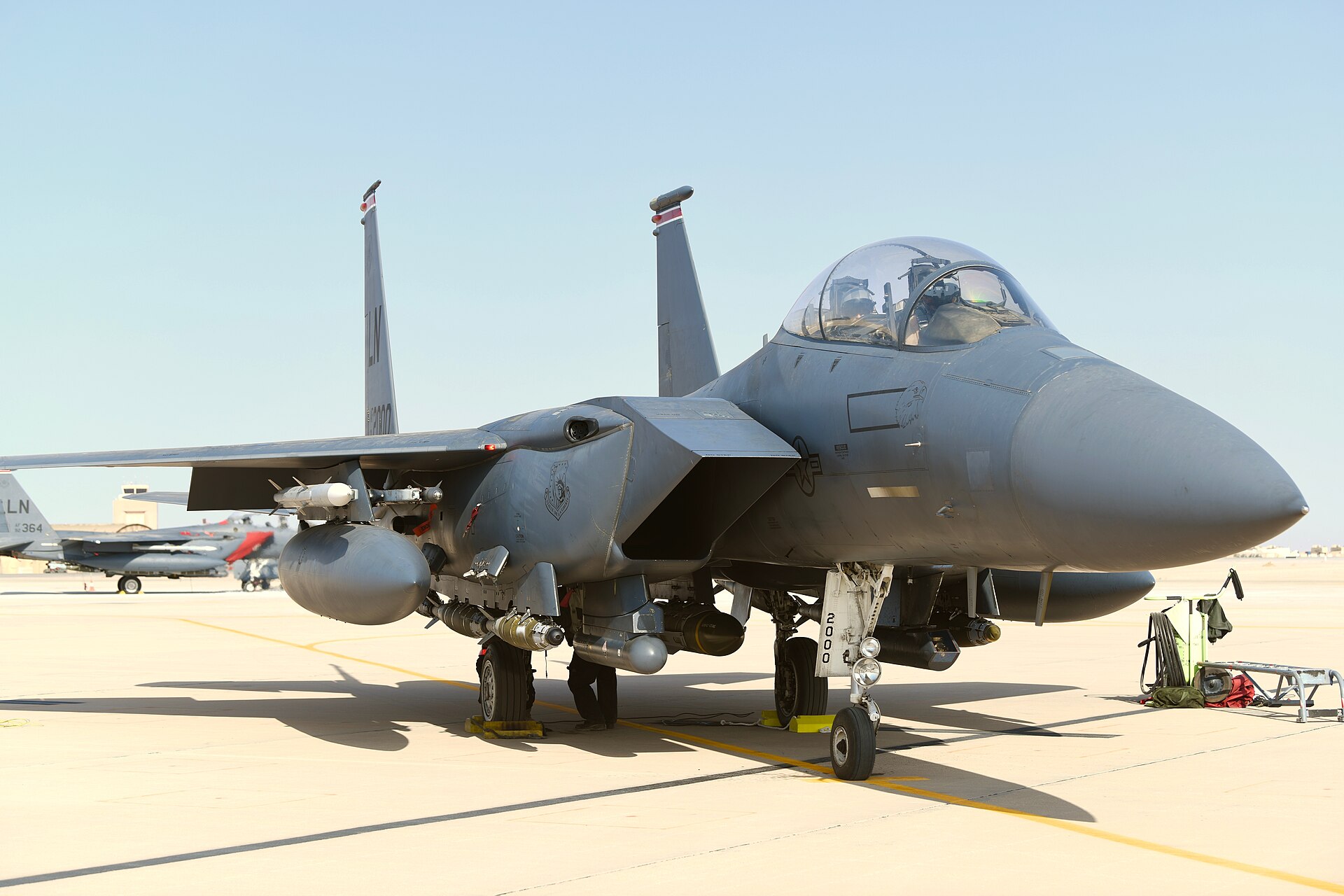
The veto did not emerge from a phone call alone. It was built on a foundation of material denial. In the first two weeks of May, Saudi Arabia informed the United States it would not allow American aircraft to fly from Prince Sultan Airbase — the primary US staging base southeast of Riyadh — or transit Saudi airspace to support Project Freedom, the planned naval escort operation for the Strait of Hormuz. NBC News reported that a direct call between Trump and MBS failed to resolve the access dispute. The US military maintains fighter aircraft, refueling tankers, and air defense batteries at Prince Sultan. Without Saudi basing, the logistical backbone of the planned operation was severed.
Pakistan’s Prime Minister Shehbaz Sharif named MBS specifically — publicly, on the record — as the partner who “prodded the US president to suspend the military mission” in the Strait of Hormuz. It was the only public attribution of the veto mechanism by a named head of government. Saudi Arabia itself said nothing.
A CIA classified assessment, reported by Capital and Empire and GV Wire, found that Gulf allies are split: Saudi Arabia, Qatar, and Kuwait favor negotiations; the UAE and Bahrain favor continued military pressure; Oman opposes the US blockade. The veto reflected the negotiation bloc’s position, with MBS as its executor — a role that required him to spend political capital with a president who had publicly described their relationship in terms of Saudi submission.
What Did the Gulf Veto Actually Buy?
Hours. Trump’s own words defined the scope. He instructed Secretary of Defense Pete Hegseth and Joint Chiefs Chairman General Daniel Caine “to be prepared to go forward with a full, large scale assault of Iran, on a moment’s notice, in the event that an acceptable Deal is not reached.” On Truth Social the same day: “For Iran, the Clock is Ticking, and they better get moving, FAST, or there won’t be anything left of them.”
The veto bought a pause, not a commitment. Trump framed it as a two-to-three-day window because Gulf allies “feel they are close to a deal.” The NSC reconvened the weekend of May 17-18 — Vice President JD Vance, Secretary of State Marco Rubio, CIA Director John Ratcliffe, and special envoy Steve Witkoff all attended a Saturday session at Trump’s Virginia golf club. CNN reported the team was expected to meet again early the week of May 19. The strike architecture remained intact. The veto was a temporary hold, revocable by a single Truth Social post.
This is the asymmetry the March 27 remarks illuminated in advance. MBS deployed the most consequential Saudi intervention in American military planning since the Kingdom’s refusal to support the 2003 Iraq invasion from Saudi soil — and the public framework for that intervention, established seven weeks earlier at the Faena Hotel, is that the intervening party “has to be nice” to the president. The veto was structurally impressive. Its political foundation is structurally fragile.
The Trillion-Dollar Silence
The financial architecture of the US-Saudi relationship compounds the asymmetry. MBS’s November 2025 Washington visit produced commitments across five categories: air force and space, air and missile defense, maritime security, land forces modernization, and information and communications systems. The $142 billion defense package alone represents the largest single arms arrangement in the bilateral relationship’s 81-year history.
| Commitment | Value | Date | Status Post-War |
|---|---|---|---|
| Saudi investment pledge (initial) | $600 billion | May 2025 (Riyadh) | Materialization uncertain — reconstruction/defense bills rising |
| Saudi investment pledge (revised) | ~$1 trillion | November 2025 (Washington) | New Lines Institute: “less likely to materialize” |
| Defense/security package | $142 billion | November 2025 | Delivery depends on US cooperation |
| F-35 fighters | Up to 48 aircraft | November 2025 | Capability limited vs. Israeli F-35I fleet |
| Major non-NATO ally designation | — | November 2025 | Coexists with “kissing my ass” framing |
| Saudi daily output (March 2026) | 7.25M bpd | IEA, March 2026 | Down from 10.4M bpd pre-war (−30%) |
The New Lines Institute assessed that the Iran war has damaged Saudi Arabia’s economy and US investment prospects, making Saudi pledges “less likely to materialize amid new reconstruction and defense bills.” The Georgetown Journal of International Affairs described the relationship as “more transactional than ever.” Bloomberg reported in March that war “damages Gulf nation ambitions and Trump deals.”
MBS delivered the largest investment pledge in bilateral history. Within four months, Trump publicly reduced him to a supplicant on his own stage. Within seven months, MBS was spending political capital to stop a war he did not start, on terms set by the man who mocked him, with no guarantee the pause would last beyond Tuesday.
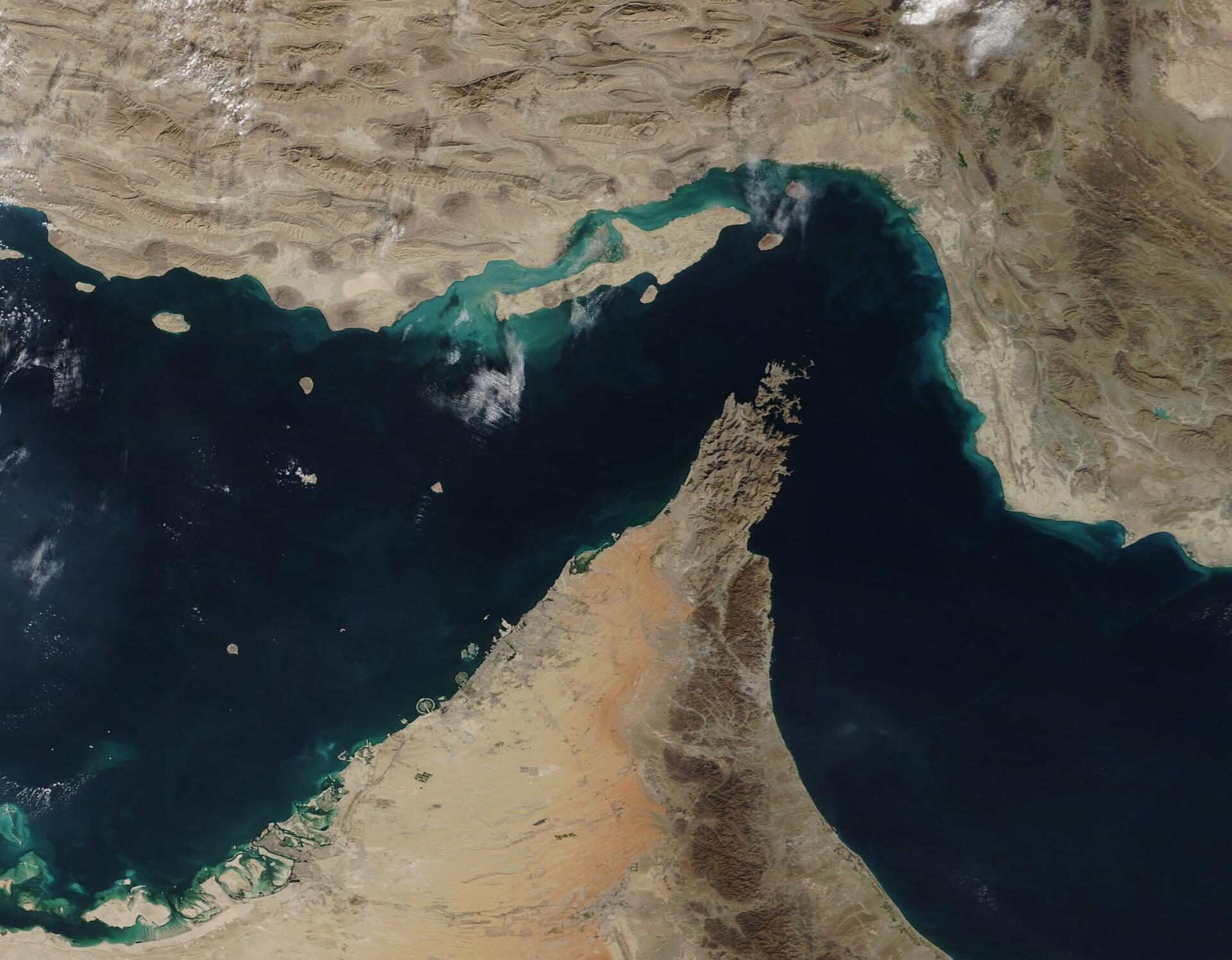
Saudi Arabia has spent its annual deficit in ninety days. The Kingdom’s fiscal break-even oil price sits at $108-111 per barrel, according to Bloomberg’s PIF-inclusive estimate. The war has compressed Saudi export capacity through Hormuz, forced reliance on the East-West Pipeline bypass to Yanbu at a ceiling of 4-5.9 million barrels per day, and reduced Asia-bound exports by 38.6 percent. The silence is not cheap. It costs billions per month in lost revenue, deferred investment returns, and defense expenditures that the $142 billion package was supposed to offset — not compound.
How Does Iran Read This Dynamic?
Iran’s IRGC-aligned media tracked every fissure between the United States and its Gulf partners throughout the war. Fars News characterized Trump’s ceasefire pauses as “proof of US retreat.” Iran International reported that hardliners within the regime are pushing escalation specifically because they read Gulf-US friction as evidence of American irresolution — a pattern that the March 27 remarks reinforced with publicly audible evidence.
Parliament Speaker Mohammad Bagher Ghalibaf, a former IRGC Aerospace Force commander, has adopted what NBC News described as “an increasingly Trumpian approach to wartime communication, posting memes and snark to counter the U.S. president.” Trump’s crude public treatment of MBS provides propaganda material without Iran needing to generate its own. When the American president tells 1,500 Saudi-assembled investors that the Saudi Crown Prince is “kissing my ass,” the IRGC information apparatus does not need to fabricate a narrative of Gulf subordination — it only needs to quote.
The Stimson Center documented that Iran is “applying different postwar approaches to the Persian Gulf Arab states,” using Saudi Arabia’s documented dependence as a tool to drive a wedge between Riyadh and Washington. The March 27 remarks are a wedge that Iran did not have to manufacture. Trita Parsi of the Quincy Institute framed the choice directly: “This is the choice the GCC will face after this war. If it moves toward deeper dependence on the US to balance Iran, they will become” what he characterized as spineless vassals comparable to NATO allies Trump has similarly belittled.
Parsi separately assessed on Democracy Now! that “the GCC, the fact is, doesn’t exist any longer. The degree of division there now is beyond what we have seen in the past, effectively making them a non-entity.” The IRGC’s operational posture reflects this reading. Brigadier General Abdollahi’s May 13 statement — “hands on trigger” — was unchanged by the Gulf veto. The veto did not alter Iran’s military disposition. It altered a timeline. Iran’s hardliners distinguish between the two.
“The arrangement represents asymmetric dependence — where one party bears the risk while another claims the credit — which is not an alliance.” — Atlantic Council MENASource, Eric Alter, April 20, 2026
From the USS Quincy to the Faena Hotel
The US-Saudi relationship was formalized on February 14, 1945, when Franklin D. Roosevelt met King Abdulaziz Ibn Saud aboard the USS Quincy in the Suez Canal. The compact was straightforward: American security guarantees in exchange for access to Saudi oil. The relationship survived the 1973 oil embargo, the 1979 Grand Mosque seizure, 9/11, and the Khashoggi murder. It survived because both sides maintained the diplomatic fiction that the arrangement was between equals — or at least that the senior partner would not say otherwise in public.
Trump’s March 27 remarks represented an unprecedented breach of that convention. No American president has publicly described a Saudi leader in terms of personal submission while standing on Saudi-funded infrastructure, before a Saudi-assembled audience. The Quincy compact rested on discretion. Roosevelt and Abdulaziz exchanged gifts and compliments aboard a warship in a closed canal. Eighty-one years later, at the Faena Hotel, the terms were stated plainly and recorded on C-SPAN.
The Nixon Doctrine offers a closer parallel. Nixon’s 1972 decision to arm the Shah of Iran as America’s regional proxy produced an autocrat who could not publicly resist US demands without losing the security umbrella he depended on. The Shah fell in 1979 in part because Iranians revolted against visible dependence on Washington. The structural echo is precise: MBS faces the same legitimacy trap, with the difference that “kissing my ass” is publicly audible to Saudi society in a way the Shah’s private arms deals were not. Responsible Statecraft and the Texas National Security Review have both noted the parallel.
The Carnegie Endowment for International Peace concluded in April 2026: “The war Trump launched to reinforce American primacy in the Middle East has instead exposed the fragility of the security umbrella Washington has sold to Gulf partners for four decades.” The Atlantic Council’s Eric Alter was more specific: Gulf states “absorbed Iranian retaliation for hosting a US-Gulf security architecture they were never permitted to name,” and “had almost no say in the decisions that put them in the line of fire.” Alter’s conclusion: “What they will no longer accept is wanting it more than Washington does.”
What Happens at the Next Strike Window?
The Gulf veto of May 18 was a transaction, not a precedent. Trump accepted it because, on that specific day, he judged the diplomatic option more valuable than the military one. He said so: “If we can do that without bombing the hell out of them, I’d be very happy.” The conditional does the work. If he is not happy — if talks collapse, if Iran does not open Hormuz, if the HEU question remains unresolved — the “full, large scale assault” is back on the table at “a moment’s notice.”
MBS cannot make the same phone call twice with the same effect. He now owns the clock. If the pause he requested produces a deal, he is vindicated. If it produces nothing and Trump strikes anyway, MBS spent his capital for a 48-hour delay. The March 27 remarks define the asymmetry of that bet: the man who accepted the phone call has already told the world, on the record, what he thinks the caller’s position is.
Saudi Arabia’s material power — base denial, airspace revocation — remains intact. Project Freedom collapsed because Saudi Arabia grounded it. That is a structural fact. But material power and political standing are not the same. The Kingdom can deny physical access. It cannot control how Trump characterizes the denial, or whether he frames Saudi Arabia’s next intervention as a sovereign act or as the latest chapter in a relationship he has already described in terms of supplication.
Pakistan has deployed 8,000 troops and Chinese missiles to Saudi Arabia. The Kingdom is building redundancy into its defense posture. But the core dependency — American air defense resupply, American intelligence sharing, American diplomatic cover at the UN Security Council — has no near-term substitute. The F-35s in the $142 billion package have not been delivered. The PAC-3 interceptors have not been restocked. The “major non-NATO ally” designation has not been tested against an actual commitment to defend Saudi territory against the next Iranian salvo.
The veto worked on May 18. Whether it works on May 25, or June 1, or whenever the next NSC meeting produces a strike recommendation, depends on the same variable it depended on in March: whether Trump, at that moment, considers it more useful to accept MBS’s request or to remind the world what he said at the Faena Hotel.
| Date | Event | Trump’s Characterization of MBS |
|---|---|---|
| May 2025 | Riyadh visit, $600B pledge | “A great friend” |
| November 2025 | Washington visit, $1T pledge, $142B defense deal | “Because he’s my friend” |
| March 25–26, 2026 | FII Priority Miami (early sessions) | “A warrior” |
| March 27, 2026 | FII Priority Miami (closing keynote) | “Kissing my ass” / “a very regular kind of a guy” |
| May 7, 2026 | Project Freedom base denial | (No public comment on MBS) |
| May 18, 2026 | Gulf veto — MBS calls, Trump stands down | “Serious negotiations” / strike on “moment’s notice” |
Frequently Asked Questions
Did the White House issue a correction or apology for Trump’s March 27 remarks?
No. The White House edited the remarks from its official livestream before clips circulated, but issued no correction, clarification, or apology. The editing itself — silent removal rather than public retraction — confirmed that the administration recognized the remarks as damaging but treated the damage as a media management problem, not a diplomatic one. C-SPAN’s unedited footage and Roll Call’s Factba.se transcript preserved the full text.
Has any Saudi official, on or off the record, addressed Trump’s “kissing my ass” comment?
No Saudi official has addressed the remarks publicly. Saudi state media covered the FII summit without referencing Trump’s comments. The Kingdom’s protocol for managing provocations from essential security partners — established during previous episodes including the Khashoggi crisis and Trump’s first-term demand that Saudi Arabia pay for US military protection — is institutional silence. Off-the-record, Gulf diplomats have told European counterparts that the remarks complicated internal messaging around the FII summit’s investment outcomes, but no named Saudi source has gone on record.
Could Saudi Arabia realistically pivot away from the US security relationship?
Not within the timeline of the current war. China’s December 2025 defense cooperation agreement with Saudi Arabia covers training and procurement but explicitly excludes extended deterrence or mutual defense obligations. Russia’s defense export capacity is consumed by Ukraine. The European defense industrial base cannot produce PAC-3 interceptors, THAAD batteries, or F-35 aircraft. The Atlantic Council noted that Gulf sovereign wealth funds are accelerating investments in European defense industries — a long-term diversification signal, not a near-term alternative. Saudi Arabia’s defense dependency on Washington will persist for at least a decade regardless of how Trump characterizes the relationship publicly.
Why did Pakistan’s prime minister publicly name MBS as the driver of the veto when Saudi Arabia itself stayed silent?
Pakistan occupies a unique structural position as both Iran’s protecting power in the United States (since 1992) and Saudi Arabia’s treaty ally under the September 2025 Strategic and Military Defense Agreement. Shehbaz Sharif’s public attribution served Pakistani interests: it demonstrated Islamabad’s centrality to the diplomacy and credited a patron (Saudi Arabia) whose $5 billion loan to Pakistan matures in June 2026. For MBS, having a third party credit him preserved the fiction of Saudi discretion while ensuring the veto’s authorship was on the record — attribution without ownership.
What specific military capability does Saudi Arabia lose if the US relationship deteriorates?
The most immediate vulnerability is interceptor resupply. Saudi Arabia’s PAC-3 missile defense stocks are estimated at approximately 400 rounds — 14 percent of pre-war inventory — after absorbing months of Iranian missile and drone attacks. The United States is the sole manufacturer of the PAC-3 MSE interceptor (Lockheed Martin, Camden, Arkansas). Saudi Arabia’s KM-SAM systems, co-produced with South Korea, provide medium-range coverage but cannot substitute for PAC-3 against ballistic missile threats. The $142 billion defense package also includes THAAD integration and the F-35, neither of which has an alternative supplier. Deterioration of the US relationship does not mean losing future capability — it means losing the ability to sustain current defenses during an active conflict.