
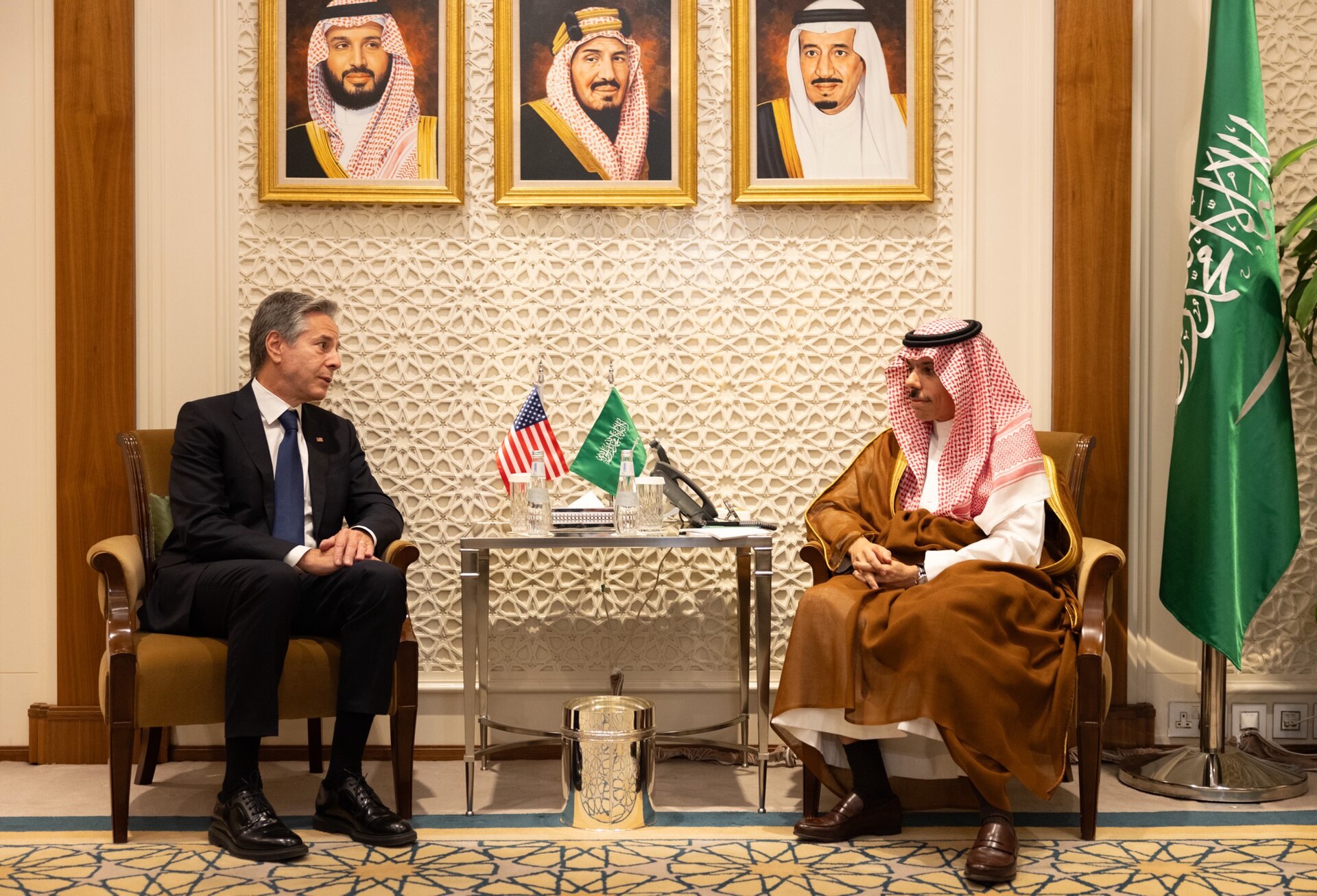
RIYADH — Saudi Arabia expelled five Iranian diplomats on March 21, 2026, declaring the Islamic Republic’s military attaché and four embassy staff persona non grata and ordering them to leave the Kingdom within twenty-four hours. The move severed the last functioning diplomatic channel between the two nations after twenty-two days of war, 575 intercepted Iranian drones, and the steady collapse of every back-channel, intermediary, and ceasefire mechanism that once connected Riyadh to Tehran. The expulsion was not a sudden break but the final act in a diplomatic demolition that began the moment Iranian missiles crossed the Saudi border on February 28.
Prince Faisal bin Farhan, the Saudi Foreign Minister, described the decision as a response to “continued Iranian aggressions against the Kingdom and the Gulf states,” according to a statement released by the Ministry of Foreign Affairs. The language was deliberate — not a severance of relations, but a degradation of Iran’s diplomatic presence to a level that makes meaningful communication functionally impossible. What remains is an embassy with no military intelligence liaison, no senior intermediary, and no mandate to negotiate. The question is no longer whether diplomacy between Riyadh and Tehran has failed. It is whether the infrastructure for diplomacy still exists at all.
Table of Contents
- What Did Saudi Arabia’s Diplomat Expulsion Mean for the War?
- Why Did Riyadh Wait Twenty-Two Days to Expel Iranian Diplomats?
- The Diplomatic Connectivity Index
- From Beijing to Broken Glass — The Arc of Saudi-Iranian Diplomacy
- How Does the Gulf’s Diplomatic Collapse Compare to Other Wartime Ruptures?
- Qatar Moved First, But Riyadh’s Expulsion Matters More
- What Happens When Two Countries at War Have Zero Communication?
- The Military Escalation That Preceded the Diplomatic One
- Can MBS Rebuild What He Burned?
- The Contrarian Case — Cutting Diplomatic Lines Was the Rational Choice
- Frequently Asked Questions
What Did Saudi Arabia’s Diplomat Expulsion Mean for the War?
Saudi Arabia’s declaration of five Iranian diplomats as persona non grata on March 21 eliminated the last formal mechanism for direct bilateral communication between two nations engaged in active hostilities. The expulsion targeted the military attaché, his assistant, and three additional embassy staff, according to a statement from the Saudi Ministry of Foreign Affairs. Under Article 9 of the 1961 Vienna Convention on Diplomatic Relations, a receiving state may expel diplomatic personnel “at any time and without having to explain its decision” — but Riyadh chose to explain, citing “blatant Iranian aggressions” and “continued attacks targeting the Kingdom and its interests.”
The practical consequences are severe. Military attachés serve as the primary communication channel for de-confliction during hostilities — the officials most likely to facilitate ceasefire arrangements, prisoner exchanges, and the kind of back-channel conversations that prevent accidental escalation into total war. Without a military attaché in Riyadh, Iran has no sanctioned intermediary for military-to-military communication with the Saudi armed forces. The remaining Iranian diplomatic staff — if any choose to stay — hold no mandate to discuss operational or security matters.
The timing reinforced the signal. Saudi Arabia waited until it had already opened King Fahd Air Base in Taif to American forces, according to Middle East Eye and multiple Western officials, and until its air defenses had intercepted more than 575 Iranian drones and 42 ballistic missiles. The expulsion arrived not at the start of the conflict but at the point where Riyadh concluded that the diplomatic infrastructure was serving no function that justified its continuation.
Why Did Riyadh Wait Twenty-Two Days to Expel Iranian Diplomats?
The gap between the first Iranian strikes on Saudi territory on February 28 and the diplomatic expulsion on March 21 was not hesitation — it was calibration. Saudi Arabia’s foreign policy apparatus under Crown Prince Mohammed bin Salman has operated on a doctrine of measured escalation since the 2019 Aramco drone attacks, and the twenty-two-day delay followed a recognizable pattern of allowing Iran to exhaust its own justifications before closing the door.
The Middle East briefing 3,000+ readers start their day with.
One email. Every weekday morning. Free.
Three strategic factors governed the timing. First, Saudi Arabia needed to establish an unassailable public record of Iranian aggression. By March 21, Iran had launched approximately 100 drones in a single day against the Kingdom, according to Bloomberg, targeted the Yanbu SAMREF refinery with a ballistic missile, and struck civilian areas across the Eastern Province. Each attack strengthened Riyadh’s legal and diplomatic case for the expulsion.
Second, the Kingdom waited until it had secured alternative communication channels. The United States, which has served as an intermediary between Gulf states and Iran through Oman’s back channel, remained an available conduit. Pakistan’s Prime Minister Shehbaz Sharif visited Jeddah on March 12, and Islamabad maintains diplomatic relations with both Riyadh and Tehran. Qatar’s own expulsion of Iranian attachés on March 19, following the Ras Laffan missile strike, signaled that the mediator landscape had shifted and Saudi Arabia was no longer alone in closing channels.
Third, the expulsion coincided with Saudi Arabia’s most consequential military decision of the war — granting the United States access to King Fahd Air Base in Taif. The base, located in western Saudi Arabia far from Iranian drone range, became operational for American forces on March 20, according to Iran International. By coupling the base opening with the diplomatic expulsion, Riyadh sent a compound signal: the era of strategic ambiguity was over, and Saudi Arabia had chosen its alignment. Within hours of the diplomatic break, Trump leveraged the Saudi decision to issue a 48-hour ultimatum threatening to obliterate Iranian power plants if the Strait of Hormuz was not reopened. The diplomatic break was only the most visible marker of a deeper transformation: a full-scale reordering of Saudi Arabia’s wartime alliance system that revealed which partnerships proved durable under fire and which had been hollow all along.
The Diplomatic Connectivity Index
Measuring the diplomatic infrastructure between two adversarial states requires more than counting embassies. The strength of a bilateral diplomatic relationship — particularly one under existential strain — depends on a matrix of formal and informal channels, each serving different functions during different phases of a conflict.
A Diplomatic Connectivity Index applied to the Saudi-Iranian relationship reveals the systematic degradation of every layer of communication infrastructure since the war began.
| Channel | Function | Status (March 2023) | Status (Feb 28, 2026) | Status (March 21, 2026) |
|---|---|---|---|---|
| Embassy (full staff) | Formal representation, consular services | Restored (Beijing deal) | Open, reduced staff | Gutted — military attaché expelled |
| Military attaché | De-confliction, military signaling | Active | Present but frozen | Expelled — persona non grata |
| Oman back channel | Secret negotiations, ceasefire talks | Active | Active | Stalled — Oman under pressure |
| China mediation | Trilateral framework, guarantor role | Peak influence | Inactive | Dead — Beijing sidelined |
| UN Security Council | Multilateral pressure, resolutions | Unused | Activated | Gridlocked — Russia/China veto |
| OPEC coordination | Oil market management | Active | Suspended | Collapsed — production chaos |
| Trade/economic links | Commercial interdependence | Growing | Frozen | Severed |
| Intelligence liaison | Counter-terrorism, threat sharing | Minimal | Zero | Zero |
| Religious cooperation | Hajj arrangements, pilgrim safety | Restored | Suspended | Suspended |
| Civil aviation | Commercial flights, overflight rights | Restored | Cancelled | Cancelled |
The index reveals a pattern that distinguishes the 2026 rupture from the 2016 break. In 2016, Saudi Arabia severed relations in a single dramatic act after the embassy storming — a top-down diplomatic guillotine. In 2026, the destruction was bottom-up. Trade links froze first. Civil aviation stopped. Intelligence sharing — never robust — ceased entirely. OPEC coordination collapsed as Iranian drones targeted the very oil facilities the cartel was meant to manage. The embassy became a hollow shell before the attaché was formally expelled.
By March 21, 2026, Saudi Arabia’s Diplomatic Connectivity Index with Iran had dropped to its lowest level since the 1987 Mecca massacre, when over 400 pilgrims died in clashes between Iranian demonstrators and Saudi security forces, and the two nations came closer to direct war than at any point during the Iran-Iraq conflict.
From Beijing to Broken Glass — The Arc of Saudi-Iranian Diplomacy
The diplomatic infrastructure that Saudi Arabia dismantled in March 2026 was barely three years old. The Beijing Agreement of March 10, 2023 — signed by Saudi national security advisor Musaed bin Mohammed Al-Aiban and Iran’s Supreme National Security Council secretary Ali Shamkhani, with Chinese diplomat Wang Yi presiding — had been the single most consequential diplomatic event in the Gulf since the establishment of the GCC in 1981. It reversed seven years of diplomatic severance and appeared to fundamentally alter the region’s strategic geometry.
The agreement committed both nations to reopen embassies within two months, implement the dormant 2001 Security Cooperation Agreement, and revive the 1998 General Agreement on economic, trade, and cultural cooperation. Iran reopened its embassy in Riyadh on June 6, 2023. Saudi Arabia resumed diplomatic operations in Tehran in August 2023. By September, both nations had exchanged new ambassadors — Iran’s Alireza Enayati and Saudi Arabia’s Abdullah Alanazi — in a synchronized ceremony designed to signal symmetry and permanence.
The International Crisis Group described the deal as having “surprised even seasoned Middle East observers.” The Atlantic Council’s assessment one year later concluded that détente had “reduced regional tensions measurably,” citing a decline in Houthi attacks on Saudi territory, the reopening of the Hajj corridor for Iranian pilgrims, and the beginning of commercial flight restoration. Foreign Affairs published analysis describing “a new order in the Middle East” driven by Chinese mediation.
Twenty-two days of war erased all of it. The timeline of destruction:
| Date | Event | Diplomatic Impact |
|---|---|---|
| Feb 28, 2026 | Iran launches first strikes on Saudi territory | Embassy staff recalled to secure rooms; attaché channels frozen |
| Mar 1, 2026 | US-Israel launch Operation Epic Fury against Iran | All commercial flights between Saudi Arabia and Iran suspended |
| Mar 6, 2026 | MBS calls with Kuwait crown prince, UK PM | Saudi Arabia begins building alternative diplomatic coalition |
| Mar 8, 2026 | US orders departure of diplomats from Saudi Arabia | International diplomatic infrastructure in Riyadh contracts |
| Mar 9, 2026 | Iran rules out immediate ceasefire | Oman back channel stalls; CNBC reports escalation |
| Mar 12, 2026 | Pakistan PM visits MBS in Jeddah | Islamabad emerges as potential alternative channel |
| Mar 13, 2026 | Iran launches 50 drones at Saudi Arabia in single wave | Saudi patience with Iranian embassy presence visibly fraying |
| Mar 17, 2026 | Bloomberg reports Iran escalating attacks on Saudi oil | OPEC coordination channel fully dead |
| Mar 19, 2026 | Qatar expels Iranian attachés after Ras Laffan strike | Gulf-wide diplomatic expulsion cascade begins |
| Mar 20, 2026 | Saudi Arabia opens King Fahd Air Base to US forces | Military alignment decision makes diplomatic ambiguity untenable |
| Mar 21, 2026 | Saudi Arabia expels 5 Iranian diplomats | Last formal bilateral channel effectively severed |
The Beijing Agreement’s guarantor — China — has been notably absent throughout. Beijing issued statements calling for “restraint” but has taken no concrete action to salvage the framework it brokered. Wang Yi, who presided over the original signing ceremony, has not convened a trilateral meeting since the war began. China’s Gulf peace deal is dead, and Beijing appears more interested in positioning itself for post-war reconstruction contracts than in reviving the diplomatic architecture it built.
How Does the Gulf’s Diplomatic Collapse Compare to Other Wartime Ruptures?
The Saudi-Iranian diplomatic collapse of 2026 is historically unusual — not because warring nations sever ties, but because the infrastructure being destroyed was so recently and laboriously constructed. Most wartime diplomatic ruptures follow decades of frozen relations or gradual deterioration. The Saudi-Iranian case inverted this pattern, moving from restoration to destruction in under three years.
Four historical parallels illuminate the significance.
| Case | Year | Duration of Prior Relations | Trigger | Time to Full Severance | Years to Restoration |
|---|---|---|---|---|---|
| US-Iran (Embassy crisis) | 1980 | 37 years | Embassy hostage seizure | 2 months | 46+ (ongoing) |
| India-Pakistan (Bangladesh war) | 1971 | 24 years | War over East Pakistan | 2 weeks | 5 |
| Saudi Arabia-Iran (Embassy attack) | 2016 | 17 years (post-1999 restoration) | Embassy storming in Tehran | 1 day | 7 |
| Saudi Arabia-Iran (Current) | 2026 | 2.5 years (post-Beijing deal) | Iranian military strikes on Saudi territory | 22 days (graduated) | Unknown |
The US-Iran case is the most sobering comparison. Washington and Tehran severed diplomatic ties on April 7, 1980, after 444 days of the embassy hostage crisis. Forty-six years later, neither nation maintains an embassy in the other’s capital. Swiss intermediaries handle consular affairs. The absence of direct diplomatic channels has calcified policy positions on both sides, made every bilateral interaction a high-stakes event requiring third-party mediation, and contributed directly to miscalculations including the 1988 downing of Iran Air Flight 655.
The India-Pakistan 1971 rupture offers a more optimistic comparison. Despite a devastating war over Bangladesh that killed an estimated 300,000 to 3 million people, diplomatic relations were restored within five years under the Simla Agreement. The key difference: both nations maintained back-channel communication throughout the conflict through international intermediaries and shared institutional frameworks.
The 2016 Saudi-Iranian break was swift — a single day from the embassy storming to the full severance — but the restoration took seven years and required a global power (China) to broker. The 2026 break is slower and more systematic, but the conditions for restoration are far worse. The 2016 rupture occurred without a single Saudi or Iranian soldier dying. The 2026 break follows 575 drone interceptions, dozens of missile strikes on Saudi oil infrastructure, and Iranian attacks that have killed civilians across the Gulf.
Qatar Moved First, But Riyadh’s Expulsion Matters More
Qatar’s decision to expel Iranian military attachés on March 19, following the devastating missile strikes on the Ras Laffan LNG facility, set the diplomatic precedent that Saudi Arabia followed forty-eight hours later. But the two expulsions carry fundamentally different weight in the regional diplomatic architecture.
Qatar has historically served as the Gulf’s diplomatic bridge to Iran. Doha shares the massive South Pars/North Dome gas field with Tehran — the world’s largest natural gas deposit, straddling the maritime border between the two countries. This shared resource gave Qatar a structural incentive to maintain relations with Iran regardless of GCC solidarity, and Doha repeatedly leveraged its Iranian channel to position itself as an indispensable mediator in regional crises. Qatar’s 2017 blockade by Saudi Arabia, the UAE, Bahrain, and Egypt was partly driven by Riyadh’s frustration with Doha’s Iran engagement.
When Qatar expelled Iranian attachés after the Ras Laffan strike — which caused fires and heavy damage to one of the world’s largest LNG export facilities, according to Haaretz and the Jerusalem Post — it signaled that even the Gulf’s most Iran-engaged state had reached its limit. The Qatari expulsion destroyed Iran’s best remaining back channel to the broader Gulf. Tehran had miscalculated, assuming that Qatar’s economic dependency on shared gas resources would immunize the diplomatic relationship from the consequences of military action.
Saudi Arabia’s expulsion two days later completed the Gulf-wide diplomatic isolation of Iran. With both Doha and Riyadh closing channels, Tehran’s remaining diplomatic presence in the GCC is limited to embassies in Kuwait, Oman, and the UAE — all of which are operating at reduced capacity and under intense domestic political pressure to follow the Saudi-Qatari precedent.
With Gulf channels closed, Tehran has turned to non-Western diplomacy, formally asking India and BRICS to mediate the conflict in a March 21 call between Pezeshkian and Modi.
Oman, which has historically maintained the Gulf’s most independent foreign policy and served as the primary conduit for secret Iran negotiations, faces the most difficult position. Muscat facilitated the back-channel talks that led to the 2015 Iran nuclear deal (JCPOA), and Omani intermediaries have reportedly been involved in ceasefire discussions since the current war began. If Oman follows the Saudi-Qatari pattern and expels Iranian diplomats, the last functioning diplomatic bridge between Iran and the Gulf Arab states will collapse entirely.
What Happens When Two Countries at War Have Zero Communication?
The absence of diplomatic channels between belligerents creates specific, measurable dangers that have been documented across every major conflict of the modern era. The Saudi-Iranian case is entering territory where the risks of unintended escalation increase exponentially.
Five categories of risk escalate when warring nations lose all direct communication:
Accidental escalation becomes the primary threat. Without military attaché channels, neither side can rapidly communicate intent during ambiguous military events. When Saudi air defenses intercepted a ballistic missile over Yanbu on March 19 — briefly halting crude loadings at the Kingdom’s last functioning major oil export terminal, according to Bloomberg — the operation required split-second decisions about proportional response. With a military attaché channel, such events can be de-conflicted in hours. Without one, they feed escalation spirals.
Prisoner and hostage arrangements collapse. During the Iran-Iraq War (1980-1988), the International Committee of the Red Cross facilitated prisoner exchanges only because both nations maintained minimal diplomatic contact through Swiss intermediaries. The current war has already produced prisoners — Iranian drone operators captured in the Gulf, according to unconfirmed CENTCOM reports — and the absence of any bilateral mechanism for discussing their status increases the risk of the prisoner issue becoming a secondary crisis.
Humanitarian corridors cannot be negotiated. Iranian citizens remain in Saudi Arabia — workers, students, pilgrims who were present when the war began. Their status, evacuation, and consular protection now depends entirely on third-party intermediaries. The Saudi Ministry of Foreign Affairs has not publicly addressed the legal status of Iranian nationals remaining in the Kingdom since the expulsion.
Ceasefire mechanics become impossibly complex. Every ceasefire in modern warfare has required some form of direct military-to-military communication between the combatants. The Korean armistice required the Kaesong and Panmunjom talks. The Iran-Iraq ceasefire required UN-mediated direct negotiations. Even the most hostile adversaries — the United States and North Vietnam — maintained back-channel communication through Paris throughout the conflict. The Saudi-Iranian war now lacks even this minimal infrastructure. The twelve mediators currently working toward a ceasefire must each navigate separate communication paths to both Riyadh and Tehran, adding weeks of delay to proposals that would take hours to exchange through a direct channel.
Miscalculation risk rises to its highest level in the conflict. Intelligence assessments from both sides — filtered through intermediaries who may misinterpret nuance, exaggerate urgency, or inject their own agendas — become less reliable as the number of intermediary layers increases. A CSIS analysis of Cold War communications failures found that the probability of dangerous misinterpretation doubles with each additional intermediary in a conflict communication chain. The current Saudi-Iranian communication architecture requires a minimum of three intermediaries for any message to travel between defense ministries.
Post-war reconstruction is pre-emptively sabotaged. The diplomatic rupture is not just a wartime measure — it creates institutional damage that will persist long after hostilities cease. Rebuilding embassies, training new diplomatic staff, establishing trust protocols, and negotiating the terms of diplomatic restoration typically takes years. The 2016 Saudi-Iranian break required seven years and Chinese mediation to reverse. The 2026 break, occurring during active hostilities with significant casualties and infrastructure damage, will be harder to repair by orders of magnitude.
The Military Escalation That Preceded the Diplomatic One
The diplomatic expulsion did not occur in isolation. It was the final step in a sequence of Saudi military and strategic decisions that had already transformed the Kingdom from a passive target of Iranian aggression into an active participant in the conflict’s military architecture.
The escalation ladder, mapped chronologically, reveals how each military decision narrowed the space for diplomatic engagement until the expulsion became inevitable:
On February 28, Iran launched its first coordinated strikes on Saudi territory. Saudi air defenses responded with Patriot and THAAD interceptors, but Riyadh’s official position remained one of defensive restraint — absorbing attacks without retaliating offensively against Iran. This posture preserved the theoretical possibility of diplomatic resolution.
That theoretical possibility died in the war’s third week. A comprehensive analysis of how week three killed Saudi Arabia’s neutrality traces the five simultaneous crises that forced Riyadh from defensive restraint to active military facilitation in the space of seven days.
By March 6, the scale of Iranian attacks had forced Saudi Arabia to accept foreign military assistance. The UK dispatched additional fighter jets, helicopters, and a destroyer to support Saudi air defense, according to an official UK government statement. The accidental alliance defending Saudi Arabia began to take shape, drawing in European and Asian military assets.
On March 12, Rubio bypassed Congress to rush $16 billion in arms to the Gulf, according to multiple reports. The arms package included additional Patriot interceptors, ammunition, and advanced radar systems — equipment that signaled a long war rather than a quick ceasefire.
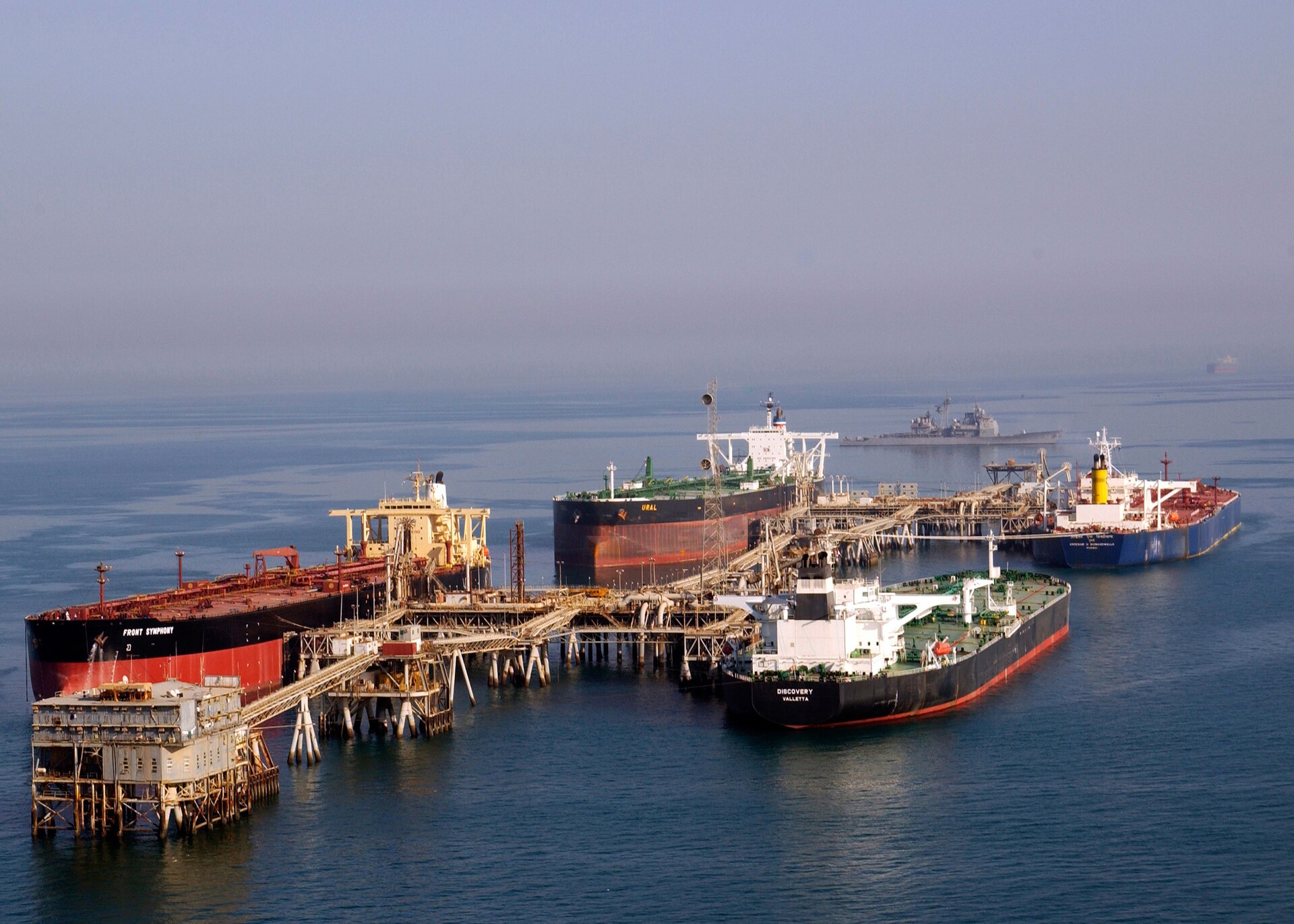
By March 17, Bloomberg reported that Iran had escalated attacks specifically targeting Saudi oil infrastructure, launching nearly 100 drones in a single day — far above the previous daily average of fewer than 25. Saudi Arabia’s crude supply had declined by an estimated 2.4 million barrels per day to 8 million barrels per day, according to energy analysts. This escalation — targeting the Kingdom’s economic lifeline rather than purely military assets — crossed a threshold that made continued diplomatic engagement untenable.
The military climax came on March 20, when Saudi Arabia opened King Fahd Air Base in Taif to American forces for operations against Iran. The base was selected, according to Iran International, because it lies farther from Iranian drone threats than Prince Sultan Air Base, which had come under repeated attack. The decision to provide basing rights for offensive operations — not merely defensive interceptors — marked Saudi Arabia’s formal transition from attacked party to co-belligerent.
The diplomatic expulsion the following day was the political confirmation of a military reality that had already been established. Saudi Arabia could not simultaneously host American warplanes bombing Iran and maintain Iranian military intelligence officers in its capital.
Can MBS Rebuild What He Burned?
Crown Prince Mohammed bin Salman has demonstrated a consistent pattern throughout his leadership: the willingness to destroy existing arrangements in pursuit of what he considers superior alternatives, followed by the patient reconstruction of relationships on terms more favorable to Riyadh. The Qatar blockade of 2017, which MBS orchestrated and maintained for three and a half years, ended with the Al-Ula Declaration of January 2021 — a reconciliation that restored relations but on terms that cemented Saudi Arabia’s primacy within the GCC.
The Iran file is different. MBS’s ability to rebuild the Saudi-Iranian relationship after the war depends on variables that were not present in previous Saudi diplomatic disruptions.
The leadership question in Tehran will determine the trajectory. Mojtaba Khamenei was elected on March 8, 2026, to succeed his father as Supreme Leader, according to multiple reports. The younger Khamenei has no independent relationship with MBS and no history of back-channel engagement with Saudi officials. The Beijing Agreement was negotiated with Ali Shamkhani and ratified by the elder Khamenei — both of whom represented a political generation that had experienced the consequences of the 2016 rupture and seen value in reconciliation. The new Supreme Leader may view reconciliation with Saudi Arabia as his father’s project, not his own.
The economic damage creates its own barrier to reconstruction. The war has destroyed billions of dollars in Saudi oil infrastructure, disrupted the Kingdom’s most important export route through the Strait of Hormuz, and forced the cancellation of major Vision 2030 projects including components of the restructured NEOM. Public opinion in Saudi Arabia, shaped by weeks of air raid sirens and drone interceptions, will not easily accept a return to détente with the nation that targeted Riyadh’s diplomatic quarter, Jubail industrial city, and the Yanbu oil terminal.
The Chinese factor complicates reconstruction. Beijing brokered the 2023 deal partly to demonstrate that China could deliver diplomatic outcomes in the Middle East that Washington could not. The deal’s destruction by war — a war launched by America and Israel — has humiliated China’s diplomatic apparatus and reduced Beijing’s incentive to invest political capital in a second attempt. Any future Saudi-Iranian reconciliation will likely require a different guarantor, and the only candidate with sufficient leverage — the United States — has its own reasons for preferring Saudi-Iranian hostility to Saudi-Iranian friendship.
History suggests that reconstruction is possible but slow. The Soviet Union and the Federal Republic of Germany restored diplomatic relations in 1955, ten years after the end of World War II. Egypt and Israel, despite the 1979 Camp David Accords, took decades to develop functional bilateral relations beyond the formal treaty framework. The US-Iran case — forty-six years and counting without diplomatic relations — represents the worst-case scenario.
MBS has time. He is forty years old and will likely lead Saudi Arabia for decades. But the diplomatic infrastructure he destroyed in March 2026 took three years to build and seven years of estrangement before that to create the political conditions for its construction. The next iteration, if it comes, will be built on rubble.
The Contrarian Case — Cutting Diplomatic Lines Was the Rational Choice
The conventional analysis of the diplomatic expulsion frames it as an escalation — a closing of doors that will make peace harder. This reading misunderstands what the diplomatic channel was actually doing.
The Iranian military attaché in Riyadh was not facilitating peace. Since February 28, Iran had launched 575 drones and 42 ballistic missiles at Saudi territory while its diplomats sat in the Diplomatic Quarter of a city under their own country’s air attack. The embassy’s continued functioning created a dangerous fiction: that some diplomatic relationship existed between Riyadh and Tehran that could be leveraged for de-escalation. That fiction was useful to Iran, which could point to its embassy presence as evidence of good faith while its military continued to escalate. It was useful to international mediators, who could claim that “channels remain open” without specifying what those channels were accomplishing. It was not useful to Saudi Arabia.
By expelling the military attaché, Riyadh eliminated the fiction and forced every stakeholder to confront the reality: there is no bilateral diplomatic mechanism capable of ending this war. The war will end through military exhaustion, third-party intervention, or regime change in Tehran — not through Saudi-Iranian diplomatic engagement. Maintaining the embassy at full capacity was not keeping the door to peace open. It was providing diplomatic cover for Iran’s continued attacks.
The strategic logic extends further. Saudi Arabia’s restraint trap — the inability to win by refusing to fight — was reinforced by the diplomatic posture. As long as Riyadh maintained full diplomatic relations with Tehran, the international community treated Saudi Arabia as a party that should absorb attacks rather than respond, precisely because “diplomatic channels exist.” The expulsion reframes Saudi Arabia from a nation absorbing punishment while keeping channels open to a nation that has exhausted every diplomatic option and is now justified in escalating its own response.
The precedent supports this interpretation. When Qatar expelled Iranian attachés after the Ras Laffan strike, the international response was not criticism of Doha for closing channels but sympathy for a nation whose critical infrastructure had been attacked by diplomats’ home country. Saudi Arabia calculated — correctly — that the same dynamic would apply, amplified by the greater scale of Iranian attacks on Saudi territory.
The historical record supports this reading. During the 1973 Yom Kippur War, Egypt’s military attaché in Washington continued to operate while Egyptian forces crossed the Suez Canal — providing Cairo with valuable intelligence cover while contributing nothing to de-escalation. The attaché was expelled only after the ceasefire was already in place. Iran’s military attaché in Riyadh was serving a similar function: providing Tehran with a legitimized observation post in the capital of a nation under its attack.
The economic argument reinforces the strategic one. Oil prices reached $113.71 per barrel on March 19, according to Fortune, with Saudi crude supply falling by an estimated 2.4 million barrels per day. Every day that Saudi Arabia maintained the diplomatic fiction cost the Kingdom roughly $285 million in lost oil revenue while Iran suffered no comparable penalty for keeping its embassy open. The asymmetry was unsustainable.
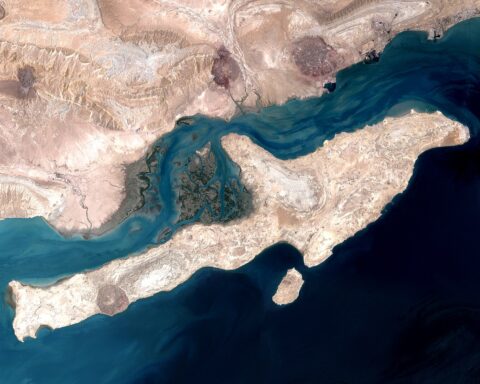
The contrarian conclusion: the Saudi-Iranian diplomatic channel was not a pathway to peace. It was a prop in a performance that benefited Iran more than Saudi Arabia. Removing it was not escalation. It was clarity. The same day Riyadh expelled Iranian diplomats, Tehran threatened to deliver crushing strikes on Ras al-Khaimah over the disputed Abu Musa and Tunb islands, underscoring how rapidly the conflict was consuming every remaining diplomatic space in the Gulf.
Frequently Asked Questions
Why did Saudi Arabia declare Iranian diplomats persona non grata on March 21, 2026?
Saudi Arabia expelled five Iranian diplomats — the military attaché, his assistant, and three embassy staff — citing “blatant Iranian aggressions” against the Kingdom and Gulf states. The expulsion followed twenty-two days of Iranian drone and missile attacks on Saudi territory, including strikes on oil infrastructure at Yanbu, the Eastern Province, and Riyadh’s diplomatic quarter. The timing coincided with Saudi Arabia’s decision to open King Fahd Air Base to American forces.
What is the legal basis for declaring a diplomat persona non grata?
Article 9 of the 1961 Vienna Convention on Diplomatic Relations grants any receiving state the right to declare diplomatic personnel persona non grata “at any time and without having to explain its decision.” The expelled individual must leave the country within the specified timeframe or lose diplomatic immunity. Saudi Arabia gave the Iranian diplomats twenty-four hours to depart the Kingdom.
How does the 2026 expulsion differ from the 2016 Saudi-Iranian diplomatic break?
The 2016 break was a sudden, total severance triggered by the storming of the Saudi embassy in Tehran after Saudi Arabia executed Shia cleric Nimr al-Nimr. The 2026 expulsion was a gradual degradation occurring during active military hostilities, targeting specific military-intelligence personnel rather than severing all diplomatic ties at once. The 2016 break required seven years and Chinese mediation to reverse. The 2026 break, occurring during a war with significant casualties and infrastructure damage, may take longer to repair.
Did Qatar also expel Iranian diplomats?
Qatar expelled Iranian military attachés on March 19, 2026, two days before Saudi Arabia’s action, following devastating Iranian missile strikes on the Ras Laffan LNG facility that caused fires and heavy damage. Qatar’s decision was significant because Doha had historically maintained the Gulf’s closest diplomatic relationship with Tehran, sharing the massive South Pars/North Dome gas field across their maritime border. Three days later, Lebanon declared Iran’s ambassador persona non grata and ordered his departure within five days, extending the cascade of expulsions to a country that had long served as Iran’s primary foothold in the Levant.
The pattern of severing diplomatic ties has since accelerated further. The Wall Street Journal reported on 24 March that Saudi Arabia and the UAE are taking steps toward becoming active participants in the war, with MBS reportedly close to ordering Saudi forces into direct offensive operations against Iran.
A comprehensive analysis of Iran’s cascading diplomatic collapse across the Gulf reveals that Tehran now maintains fully functional diplomatic connectivity with only two countries in the region — Oman and Pakistan — creating a structural barrier to the ceasefire negotiations that all parties claim to want.
What happened to the 2023 Beijing Agreement between Saudi Arabia and Iran?
The Beijing Agreement, brokered by China on March 10, 2023, restored Saudi-Iranian diplomatic relations after seven years of severance. It led to the reopening of embassies in both capitals by September 2023. The agreement was effectively destroyed by the outbreak of war on February 28, 2026, and China — the agreement’s guarantor — has been unable or unwilling to intervene to salvage the framework.
What are the risks of two warring nations having no diplomatic communication?
The absence of diplomatic channels between belligerents increases five categories of risk: accidental escalation from ambiguous military events, collapse of prisoner exchange mechanisms, inability to negotiate humanitarian corridors for trapped civilians, exponentially more complex ceasefire negotiations requiring multiple third-party intermediaries, and pre-emptive sabotage of post-war relationship reconstruction. Every major modern conflict that lacked direct belligerent communication has lasted longer and produced more civilian casualties than those where minimal channels were maintained. The diplomatic vacuum has since pushed mediation to third-party capitals, with Pakistan positioning Islamabad as the venue for potential US-Iran talks this week.