
RIYADH — Iran’s top military spokesperson warned on Friday that “parks, recreational areas and tourist destinations” worldwide would no longer be safe for the country’s enemies, escalating threats beyond military and energy infrastructure for the first time since the war began on February 28. The statement, delivered by General Abolfazl Shekarchi as the conflict entered its fourth week, came hours after a separate Revolutionary Guard spokesman confirmed that Iran continues to manufacture missiles despite weeks of sustained Israeli and American bombardment of its production facilities.
The twin declarations landed as Saudi Arabia’s tourism sector — the centrepiece of Crown Prince Mohammed bin Salman’s $800 billion Vision 2030 diversification strategy — was already reeling from 23,000 cancelled flights, more than 80,000 cancelled hotel bookings across the Gulf, and the loss of two Formula 1 Grand Prix events. With Gulf tourism haemorrhaging an estimated $600 million in daily visitor spending according to the World Travel and Tourism Council, Iran’s explicit threat to expand targeting to civilian leisure sites raises a new and deeply uncomfortable question for Riyadh: whether the Kingdom’s bet on becoming a global tourism destination can survive a war it did not start.
Table of Contents
- What Did Iran’s Military Actually Threaten?
- Iran Says It Is Still Building Missiles
- The War’s Toll on Gulf Tourism
- How Exposed Is Saudi Arabia’s Tourism Strategy?
- Iran’s Record of Striking Beyond Its Borders
- Saudi Arabia’s Defensive Response
- What Happens to Gulf Tourism If the War Continues?
- Frequently Asked Questions
What Did Iran’s Military Actually Threaten?
General Abolfazl Shekarchi, the Armed Forces’ chief spokesperson, issued the warning through Iranian state media on Friday, March 21. His statement was direct and unambiguous: “From now on, based on the information we have about you, even parks, recreational areas and tourist destinations anywhere in the world will no longer be safe for you,” according to a translation published by the Associated Press.
The threat marked a significant escalation in Iran’s rhetoric. Since the war began on February 28, Iranian strikes have concentrated on military installations, energy infrastructure, and government buildings across the Gulf. Shekarchi’s statement expanded the scope of potential targets to include civilian leisure sites — a category that encompasses everything from beach resorts and theme parks to shopping malls and sports stadiums.
The warning was not issued in isolation. Supreme Leader Ayatollah Mojtaba Khamenei, who replaced his father after the opening strikes of Operation Epic Fury killed Ali Khamenei on February 28, released a written statement read on Iranian state television the same day. Khamenei said the American and Israeli attacks were based on a “false assumption” that killing leaders would cause the government to collapse, and praised what he called the steadfastness of the Iranian people, Reuters reported.
Iran’s Foreign Minister Abbas Araghchi reinforced the defiant posture. “We have intelligence on Israeli plans to strike infrastructure. Once again: zero restraint if our infrastructure is attacked,” Araghchi wrote on social media, according to the Washington Times. He added: “The Iranian people are men and women of principles. Iranians do not sneak attack adversaries while engaged in dialogue. Only when attacked do we powerfully respond.”
The Middle East briefing 3,000+ readers start their day with.
One email. Every weekday morning. Free.
The statements came on a day when Saudi Arabia’s Ministry of Defense intercepted and destroyed six drones in the Eastern Province, bringing the total number of drone interceptions to 92 since Friday and 575 since the war began. The relentless pace of Iranian attacks on military and energy targets made Shekarchi’s expansion of targeting to civilian tourism sites all the more concerning for regional governments and the global travel industry alike.
Iran Says It Is Still Building Missiles
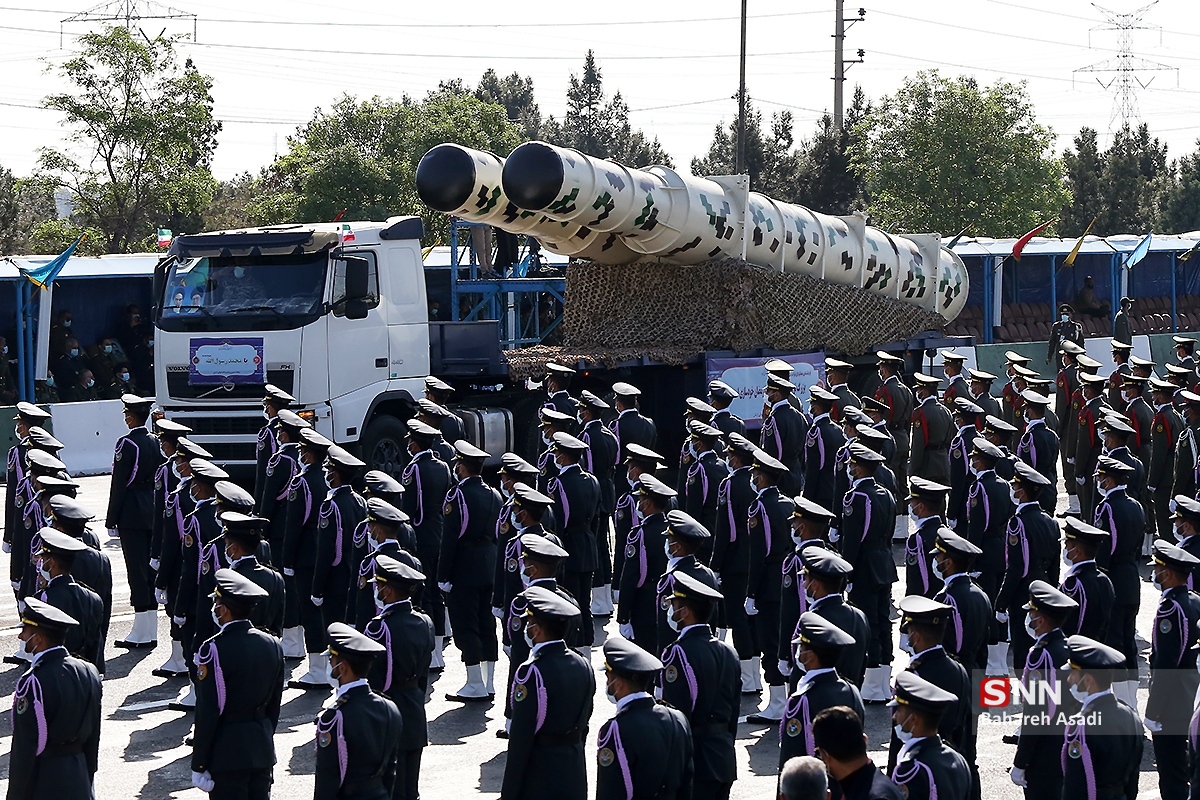
Hours before Shekarchi’s tourism threat, General Ali Mohammad Naeini, a spokesperson for Iran’s Islamic Revolutionary Guard Corps, told the state-run Kayhan newspaper that Iran continues to manufacture missiles. The claim directly contradicted Israeli assertions that sustained air strikes had destroyed Iran’s missile production capabilities, PBS reported.
Israel’s military had earlier in the week said its strikes had degraded Iran’s ballistic missile infrastructure by more than 70 percent, according to the Times of Israel. CENTCOM separately confirmed on Friday the destruction of an underground missile facility in what it described as a major blow to Iran’s ballistic missile programme.
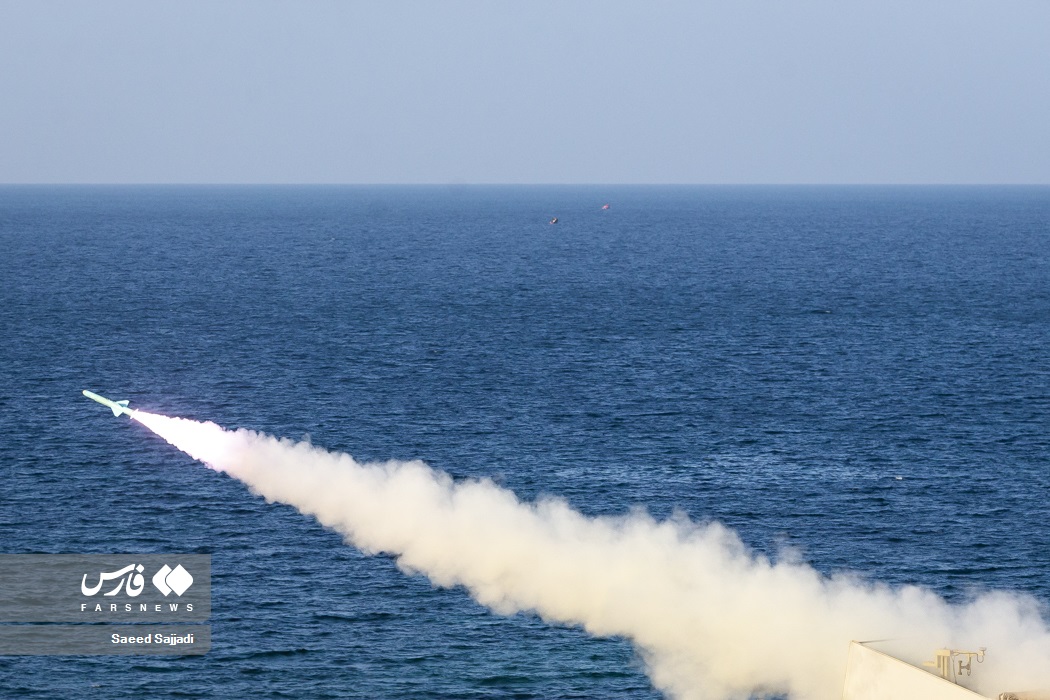
Naeini’s assertion that production continues carries significant implications for Saudi Arabia and its Gulf allies. Iran has launched at least 575 drones at Saudi territory since February 28, alongside ballistic missiles aimed at Prince Sultan Air Base, the Ras Tanura refinery complex, and most recently the Yanbu port facility on the Red Sea coast. If Iran’s missile factories remain operational despite three weeks of bombardment, the air defense burden on the Kingdom and its coalition partners will not diminish.
Naeini was reportedly killed in an Israeli airstrike later on Friday, according to multiple regional media outlets, though Iran had not officially confirmed his death at the time of reporting. If confirmed, his killing would follow a pattern of targeted assassinations of senior Iranian military and political figures that has defined the conflict since its opening hours.
The death toll from the war has climbed steeply. According to data compiled by Hengaw, a Kurdish human rights organisation, at least 5,300 people had been killed in Iran during the first 18 days of fighting, including 511 civilians. The Iranian Red Crescent Society reported more than 18,000 civilians injured and 204 children killed. In Lebanon, the toll has surpassed 1,000, while 15 people have been killed in Israel and 13 American service members have died.
The War’s Toll on Gulf Tourism
Iran’s threat to target tourism sites arrives at a moment when the Gulf’s travel industry is already in acute crisis. The numbers tell a devastating story of an industry that took decades to build and weeks to unravel.
According to Fortune, some 23,000 flights were cancelled at seven major Gulf airports — including Dubai, Doha, and Abu Dhabi — in the first week of hostilities alone. By March 8, that figure had swelled to 37,000 cancellations. Dubai International Airport, the world’s busiest by international passenger volume, was closed or severely restricted for four consecutive days, stranding tens of thousands of travellers, Al Jazeera reported.
Hotel cancellations mirrored the aviation collapse. More than 80,000 hotel reservations were cancelled in Dubai during the first week of the war, according to Fortune. Luxury resorts across the Gulf have reported booking declines of up to 40 percent. The World Travel and Tourism Council estimated the region was losing approximately $600 million per day in international visitor spending — a figure that, if sustained over the war’s current three-week duration, implies cumulative losses exceeding $12 billion.
| Metric | Figure | Source |
|---|---|---|
| Flights cancelled (first 10 days) | 37,000+ | Fortune / CNBC |
| Hotel bookings cancelled (Dubai, week 1) | 80,000+ | Fortune |
| Daily visitor spending lost | $600 million | WTTC |
| Luxury resort booking decline | Up to 40% | Travel and Tour World |
| Pre-war Middle East tourism revenue forecast (2026) | $207 billion | WTTC |
| F1 races cancelled (Bahrain, Saudi Arabia) | 2 | ESPN / Sky Sports |
Major European carriers have suspended Gulf routes entirely. Lufthansa and Air France-KLM halted flights to Dubai, Abu Dhabi, Tel Aviv, and Beirut until the end of March, with Tehran routes cancelled through April, according to Anadolu Agency. The aviation disruption has cascading effects: Qatar Airways, Emirates, Etihad, and Flydubai face what Travel and Tour World described as “unprecedented turmoil,” with Qatar’s tourism sector alone estimated to have lost $56 billion in projected revenue.
Formula 1 confirmed the cancellation of the Bahrain and Saudi Arabian Grands Prix, originally scheduled for April 10-12 and April 17-19 respectively, reducing the 2026 season to 22 races, ESPN and Sky Sports reported. The cancellations represent not merely lost revenue for the host countries but a symbolic blow to the Gulf’s carefully constructed image as a global events destination.
How Exposed Is Saudi Arabia’s Tourism Strategy?
Saudi Arabia’s tourism ambitions are among the most capital-intensive in the world, and Iran’s new threats put them squarely in the crosshairs. Under Vision 2030, the Kingdom has committed up to $800 billion in tourism-related investments spanning aviation connectivity, destination development, digital platforms, and human capital, according to the Saudi Tourism Authority.
The scale of what is at stake is staggering. Saudi Arabia welcomed 122 million visitors in 2025, a 5 percent increase from the 116 million who visited in 2024, Arab News reported. The government targets 150 million visitors by 2030 — 80 million domestic and 70 million international. Total tourism spending reached an estimated 300 billion Saudi riyals ($81 billion) in 2025, and the sector is expected to create 1.6 million additional jobs.
The Kingdom’s flagship tourism projects are now operating in an environment their planners never anticipated. NEOM, the $500 billion futuristic city on the Red Sea coast, has already been restructured amid the war’s economic pressures, with key construction contracts cancelled and tunneling works for The Line suspended. The Red Sea Project, which had planned 81 luxury resorts by 2030, has scaled back its ambitions. AMAALA, the ultra-luxury wellness destination, remains on track to welcome its first guests in 2026 — but under what conditions is now an open question.
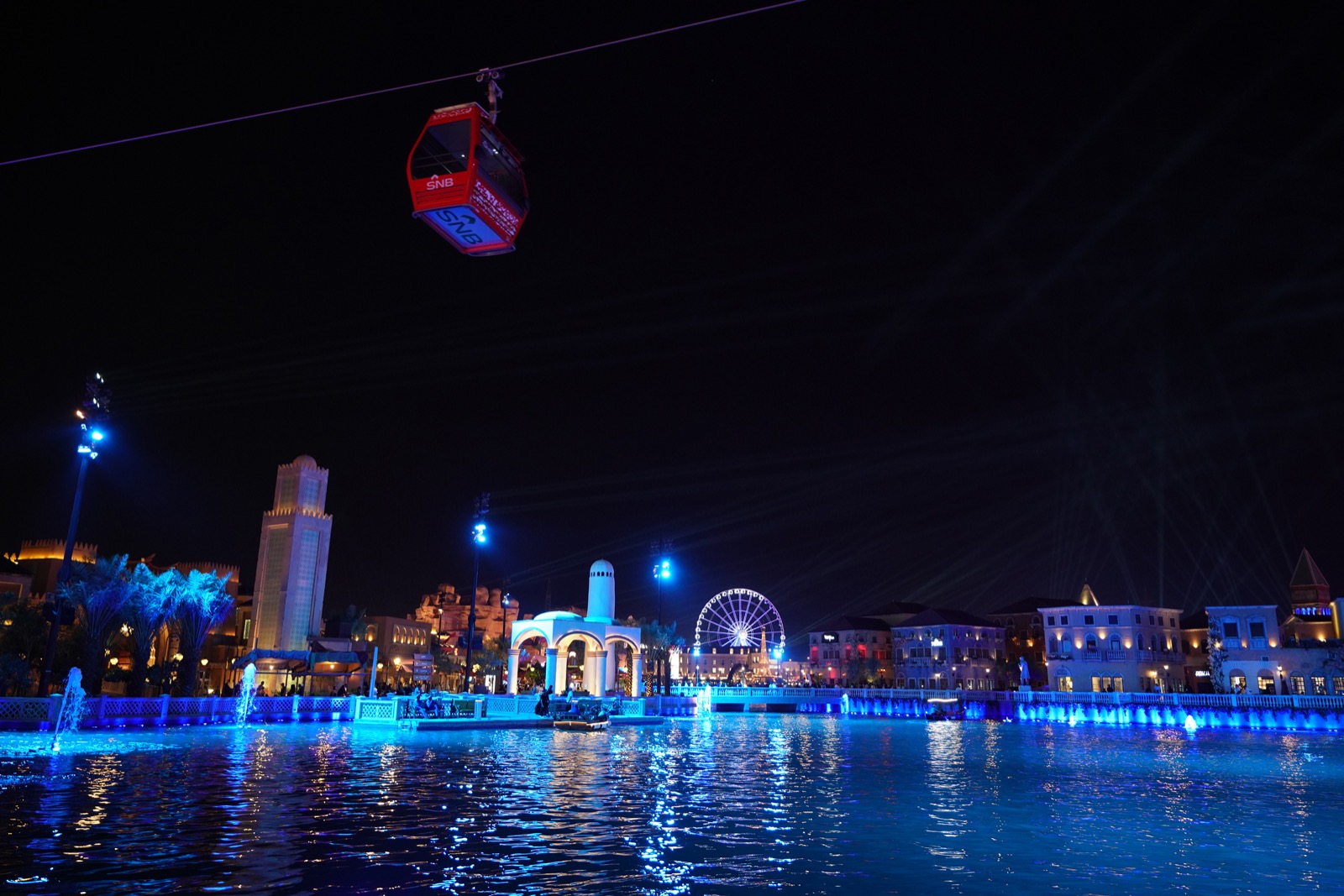
The Jeddah Grand Prix, cancelled by Formula 1, was one of several marquee sporting events that Saudi Arabia had secured as part of its events-led tourism strategy. The Kingdom also hosts boxing world championships, wrestling events at KAFD stadium, and the annual Riyadh Season entertainment festival. Each of these represents precisely the kind of “park, recreational area, and tourist destination” that Shekarchi explicitly threatened. The Kingdom has invested more than $150 billion in entertainment infrastructure since 2016, from the $40 billion Qiddiya megaproject to the WrestleMania franchise — assets that are now potential targets.
Iran has already demonstrated its willingness to strike civilian infrastructure in the Gulf. Eleven people were killed in strikes on Gulf hotels, airports, and residential buildings as recently as March 18. Dubai Airport was shut down by a drone strike that ignited fuel tanks on March 16. The Yanbu refinery, which processes crude for Red Sea export, was hit as Iranians celebrated Eid al-Fitr.
Iran’s Record of Striking Beyond Its Borders
Shekarchi’s threat to target tourism sites “anywhere in the world” carries particular weight given the IRGC’s documented history of conducting operations far beyond Iran’s borders. Western intelligence agencies have tracked a consistent pattern of Iranian-linked plots across four continents over the past two decades.
Britain’s domestic intelligence service MI5 has disrupted at least 20 Iranian-linked plots in the United Kingdom since 2022 alone, according to the International Centre for Counter-Terrorism. In Australia, the Australian Security Intelligence Organisation confirmed that the IRGC organised at least two attacks on Australian soil in 2024: an arson attack on a kosher restaurant in Sydney in October and a firebombing of the Adass Israel Synagogue in Melbourne in December.
The IRGC’s Quds Force, the organisation’s external operations arm, has plotted attacks against American, Israeli, Saudi, and Emirati targets globally, according to the U.S. Office of the Director of National Intelligence. A foiled 2018 bomb plot targeting an Iranian opposition rally outside Paris prompted European security services to reassess the IRGC’s operational reach. The IRGC is designated as a terrorist organisation by Australia, Bahrain, Canada, Paraguay, Saudi Arabia, Sweden, and the United States.
Security analysts noted that Iran has historically used criminal proxy networks to create distance between Tehran and overseas operations. The ICCT documented that after 2018, “Iranian operational leaders, specifically IRGC and MOIS, have increasingly leveraged criminal networks as proxies to carry out attacks abroad.” This infrastructure — combining diplomatic posts, intelligence operatives, and criminal intermediaries — remains largely intact despite the war.
The combination of an explicit public threat to target tourism sites, a proven capability to strike overseas, and an intelligence infrastructure that has survived three weeks of bombardment creates a security calculus that tourism planners across the Gulf have not previously had to confront. Riyadh’s decision to expel five Iranian diplomatic personnel this week removes one potential vector for intelligence-gathering on Saudi territory, but the broader threat landscape extends well beyond diplomatic channels.
The tourism threat compounds the strategic pressure that ended Saudi Arabia’s neutrality during the war’s third week. Vision 2030’s vulnerability to Iranian targeting was one of five converging crises that forced MBS to abandon the careful middle ground Riyadh had maintained since February 28.
Saudi Arabia’s Defensive Response
Saudi Arabia’s military has been operating at maximum tempo since the war began. The Ministry of Defense reported intercepting 575 drones since February 28, with 92 destroyed in the past 48 hours alone. The Eastern Province, home to the Kingdom’s major oil fields and refineries, has borne the heaviest burden, with Saudi air defense batteries firing around the clock to protect critical energy infrastructure.
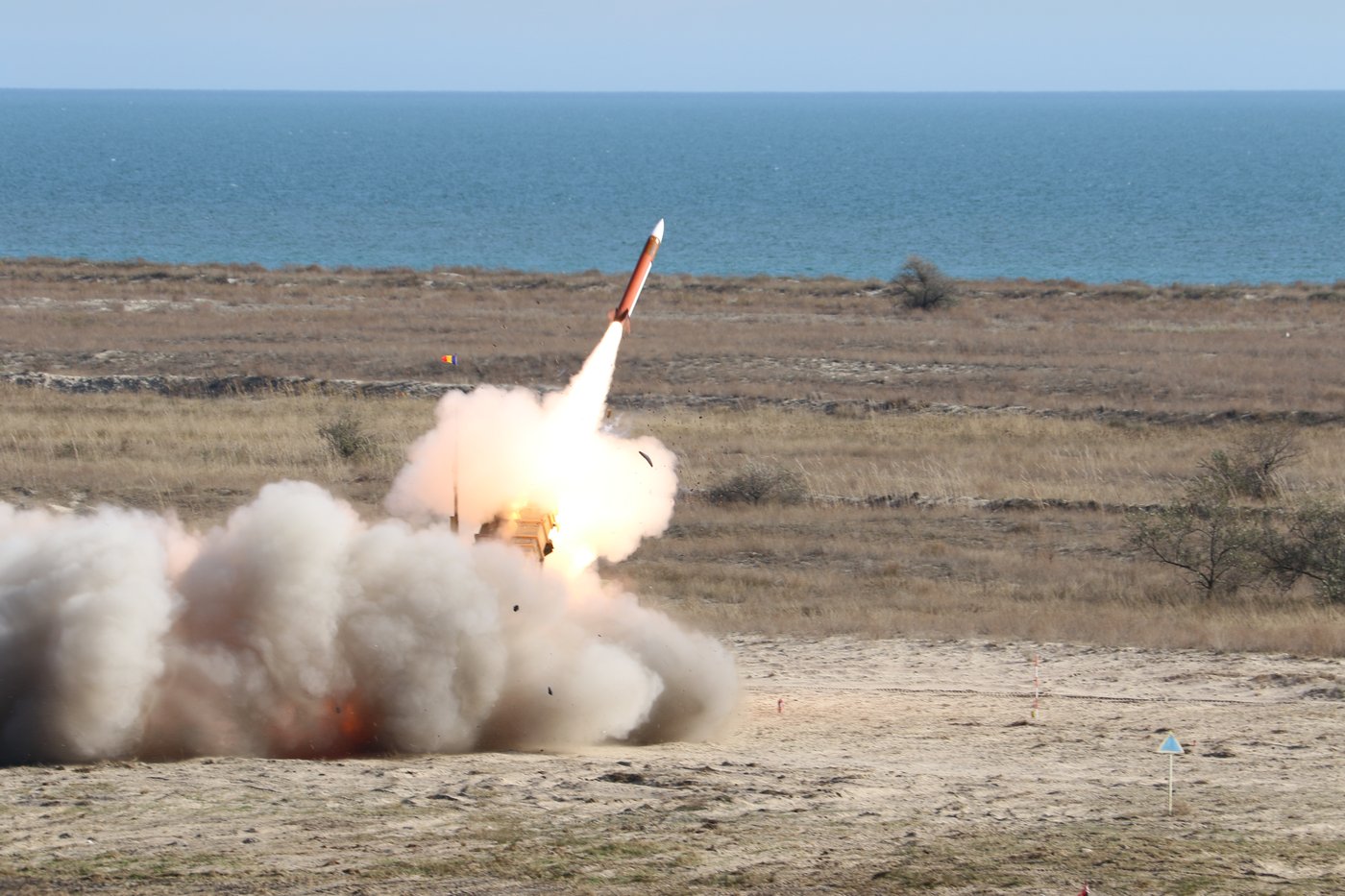
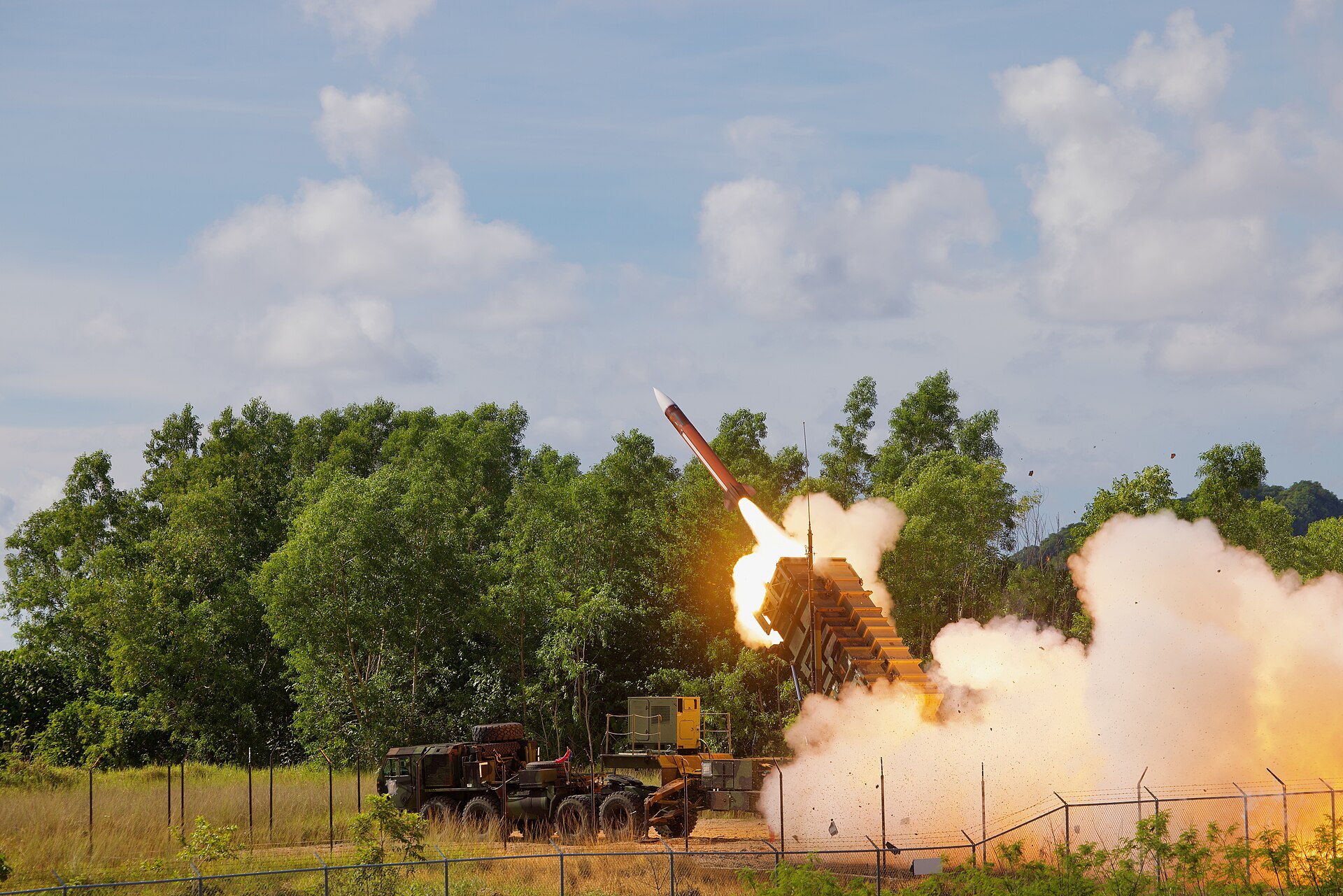
The air defense challenge has drawn international support. A Greek Patriot battery has been deployed to Saudi Arabia and has successfully intercepted Iranian missiles. Pakistan has deployed air defense systems and troops under a bilateral security pact. The United States is sending 2,500 additional Marines and three amphibious assault ships to the region, bringing total American forces in the Middle East above 50,000.
President Donald Trump complicated the strategic picture on Friday by posting on Truth Social that his administration was “getting very close to meeting our objectives” and considering “winding down our great Military efforts in the Middle East.” The statement, which contradicted the simultaneous deployment of additional forces, prompted immediate concern among Gulf allies about American staying power, NPR reported.
Defending tourism infrastructure presents a fundamentally different challenge from protecting military bases and oil installations. A Patriot battery can shield a refinery. But the dispersed, open-access nature of tourist destinations — beach resorts stretching along hundreds of kilometres of Red Sea coastline, open-air entertainment venues in Riyadh and Jeddah, stadiums and theme parks — makes comprehensive air defense coverage impossible at current force levels.
Goldman Sachs warned this week that the Gulf faces its worst recession in a generation, with tourism revenue collapse compounding the energy infrastructure damage. The bank’s analysts noted that unlike oil production, which can restart relatively quickly after repairs, tourist confidence takes years to rebuild once lost.
What Happens to Gulf Tourism If the War Continues?
The immediate outlook for Gulf tourism depends on two factors that remain deeply uncertain: the duration of the war and whether Iran follows through on its threat to target civilian leisure sites.
If the conflict ends within weeks — as Trump’s “winding down” rhetoric suggested was possible — the Gulf’s tourism industry would face a recovery period measured in months rather than years. Airlines would resume routes, hotel bookings would gradually return, and major events would be rescheduled. The Red Sea resorts and NEOM projects, though delayed, would continue construction.
If the war drags into a second month or beyond, the damage becomes structural. Insurance premiums for Gulf properties would spike. International hotel chains would defer expansion plans. Airlines would reroute permanently around Gulf airspace. The 150-million-visitor target for 2030 would become effectively unachievable.
The worst-case scenario — an actual Iranian attack on a Gulf tourism site — would be catastrophic for the industry regardless of the war’s duration. The 2015 Sousse beach attack in Tunisia, which killed 38 tourists, caused a collapse in that country’s tourism revenue that took nearly a decade to recover from. An equivalent attack on a Saudi resort or entertainment venue would set back the Kingdom’s tourism ambitions by years and fundamentally alter the risk calculus for international visitors.
| Indicator | Pre-War Status | Current Threat |
|---|---|---|
| Annual visitors (2025) | 122 million | 2026 target at risk |
| Tourism spending (2025) | $81 billion | Declining daily |
| Vision 2030 tourism investment | $800 billion | Projects scaled back |
| 2030 visitor target | 150 million | Potentially unachievable |
| Tourism jobs target | 1.6 million new | Hiring frozen |
| Red Sea resorts (planned) | 81 by 2030 | Scaled back |
| F1 Grand Prix (2026) | Scheduled April 17-19 | Cancelled |
Saudi Arabia’s response to Shekarchi’s threat has so far been measured. The Kingdom has not publicly commented on the tourism-specific warning, focusing instead on its military posture and broader diplomatic efforts to isolate Tehran. But behind the official silence, tourism officials, hotel operators, and event planners across the Gulf are confronting a reality that no crisis management playbook anticipated: a state actor explicitly threatening the civilian leisure infrastructure that an entire economic diversification strategy was built upon.
Frequently Asked Questions
What exactly did Iran threaten regarding tourist sites?
General Abolfazl Shekarchi, Iran’s Armed Forces chief spokesperson, warned on March 21 that “parks, recreational areas and tourist destinations anywhere in the world will no longer be safe” for Iran’s enemies. The statement was broadcast through Iranian state media and marked the first time since the war began on February 28 that Iranian military officials explicitly threatened civilian leisure infrastructure.
Is Iran still producing missiles despite the bombing campaign?
Yes, according to General Ali Mohammad Naeini, an IRGC spokesperson, who told state-run newspaper Kayhan on March 21 that Iran continues to manufacture missiles. This contradicted Israeli claims of having destroyed more than 70 percent of Iran’s missile production capacity. Naeini was reportedly killed in an airstrike later the same day, though Iran had not confirmed his death at the time of reporting.
How much has the war cost Gulf tourism so far?
The World Travel and Tourism Council estimates the region is losing approximately $600 million per day in international visitor spending. Over the war’s first three weeks, more than 37,000 flights have been cancelled — with 293 disrupted across Saudi airports in a single day on March 22 — 80,000 hotel bookings in Dubai alone were reversed, and both the Bahrain and Saudi Arabian Formula 1 Grands Prix were cancelled. Cumulative losses likely exceed $12 billion.
Does Iran have the capability to attack tourist sites outside the Middle East?
Iran’s IRGC Quds Force has a documented record of conducting operations across four continents. MI5 has disrupted at least 20 Iranian-linked plots in the UK since 2022. Australia confirmed two IRGC-organised attacks on its soil in 2024. The IRGC is designated a terrorist organisation by seven countries including the United States, Canada, and Saudi Arabia.
What is the outlook for Saudi Arabia’s 2030 tourism targets?
Saudi Arabia targeted 150 million visitors by 2030 and had committed $800 billion in tourism investment. The war has already caused the scaling back of Red Sea resort plans and NEOM construction delays. If the conflict extends beyond several weeks, analysts at Goldman Sachs and the WTTC have warned that the recovery timeline for Gulf tourism could stretch years beyond 2030.