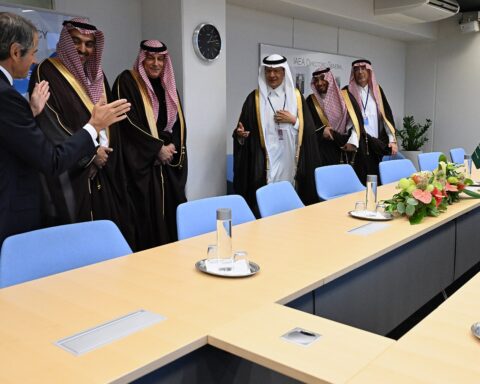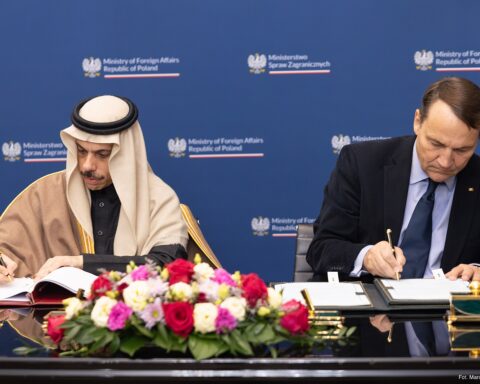

RIYADH — Four foreign ministers gathered in the Saudi capital on March 19, 2026, and the alliance they sketched on hotel stationery could redraw the security architecture of the Middle East for a generation. Turkey, Saudi Arabia, Egypt, and Pakistan — representing a combined military force of more than 1.9 million active troops, a nuclear arsenal, NATO’s second-largest army, and the Arab world’s biggest defence budget — sat across from one another as Iranian drones struck the Gulf for the twenty-second consecutive day. What they discussed was not how to win the current war. It was how to make sure they never need Washington to fight the next one.
Turkish Foreign Minister Hakan Fidan described the meeting in characteristically understated terms. “We are exploring how, as countries with a certain degree of influence in the region, we can combine our strengths to solve problems,” he told reporters afterward, according to Middle East Eye. The diplomatic phrasing masked an ambition that, if realised, would constitute the most significant realignment of Middle Eastern security since the formation of NATO’s southern flank in the 1950s. The four nations are building a security platform that is neither NATO nor its rival — a third path designed for a world where American guarantees carry an expiration date.
Table of Contents
- What Happened at the Riyadh Meeting on March 19?
- The Saudi-Pakistan Defence Pact That Started It All
- Why Does Turkey Want a Security Pact With Saudi Arabia and Pakistan?
- Egypt’s Arrival at the Table Changes Everything
- The Defence Industrial Engine Behind the Pact
- What Does Each Country Bring to the Alliance?
- Can Pakistan’s Nuclear Umbrella Extend to the Gulf?
- Why This Pact Is Not an Islamic NATO
- The Pact Is Not About This War
- How Will Washington Respond?
- What Could Kill the Deal Before It Is Signed?
- Frequently Asked Questions
What Happened at the Riyadh Meeting on March 19?
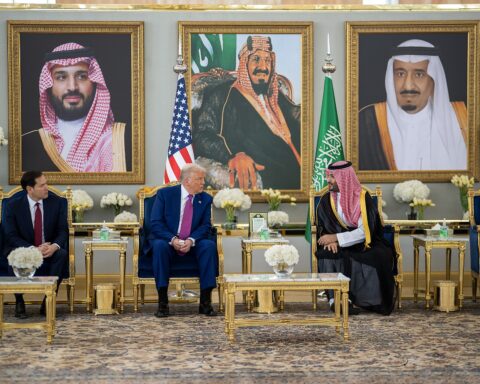
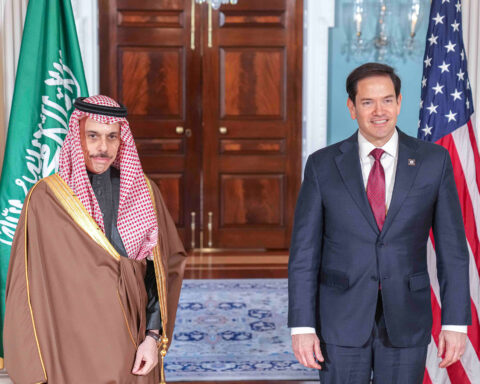
On the sidelines of an Organisation of Islamic Cooperation summit, the foreign ministers of Turkey, Saudi Arabia, Egypt, and Pakistan held what officials described as the first formal quadrilateral discussion on combined security cooperation. Turkish Foreign Minister Hakan Fidan, Saudi Foreign Minister Prince Faisal bin Farhan Al Saud, Egyptian Foreign Minister Badr Abdelatty, and Pakistani Foreign Minister Mohammad Ishaq Dar discussed Iranian escalation against Gulf states and, according to a senior Turkish diplomatic source cited by Middle East Eye, “the possibility of advancing a four-party security agreement.”
The meeting occurred against a backdrop of extraordinary violence. By March 19, Iran had launched nearly 100 drones at Saudi Arabia in a single day — the largest single-day strike on the Kingdom since the war began, according to Bloomberg. Saudi forces intercepted at least 47 drones in the eastern region, including a concentrated barrage of 38 within three hours. A drone had struck the Saudi Aramco-ExxonMobil SAMREF refinery in Yanbu, and three ballistic missiles had been intercepted near Prince Sultan Air Base.
The timing was not coincidental. Each of the four nations at the table had been drawn into the Iran crisis by different pathways but arrived at the same conclusion: the existing security architecture was insufficient. Turkey had taken three Iranian missiles on its territory and watched its Incirlik Air Base come under threat. Pakistan had activated its Strategic Mutual Defence Agreement with Saudi Arabia. Egypt’s President Abdel Fattah El-Sisi was on a rapid diplomatic tour of Gulf capitals, declaring Gulf security “an extension of Egypt’s own national security,” as reported by Egyptian Streets. Prince Faisal bin Farhan had just expelled Iran’s military attaché and four embassy staff, giving them 24 hours to leave the Kingdom.
The Saudi-Pakistan Defence Pact That Started It All
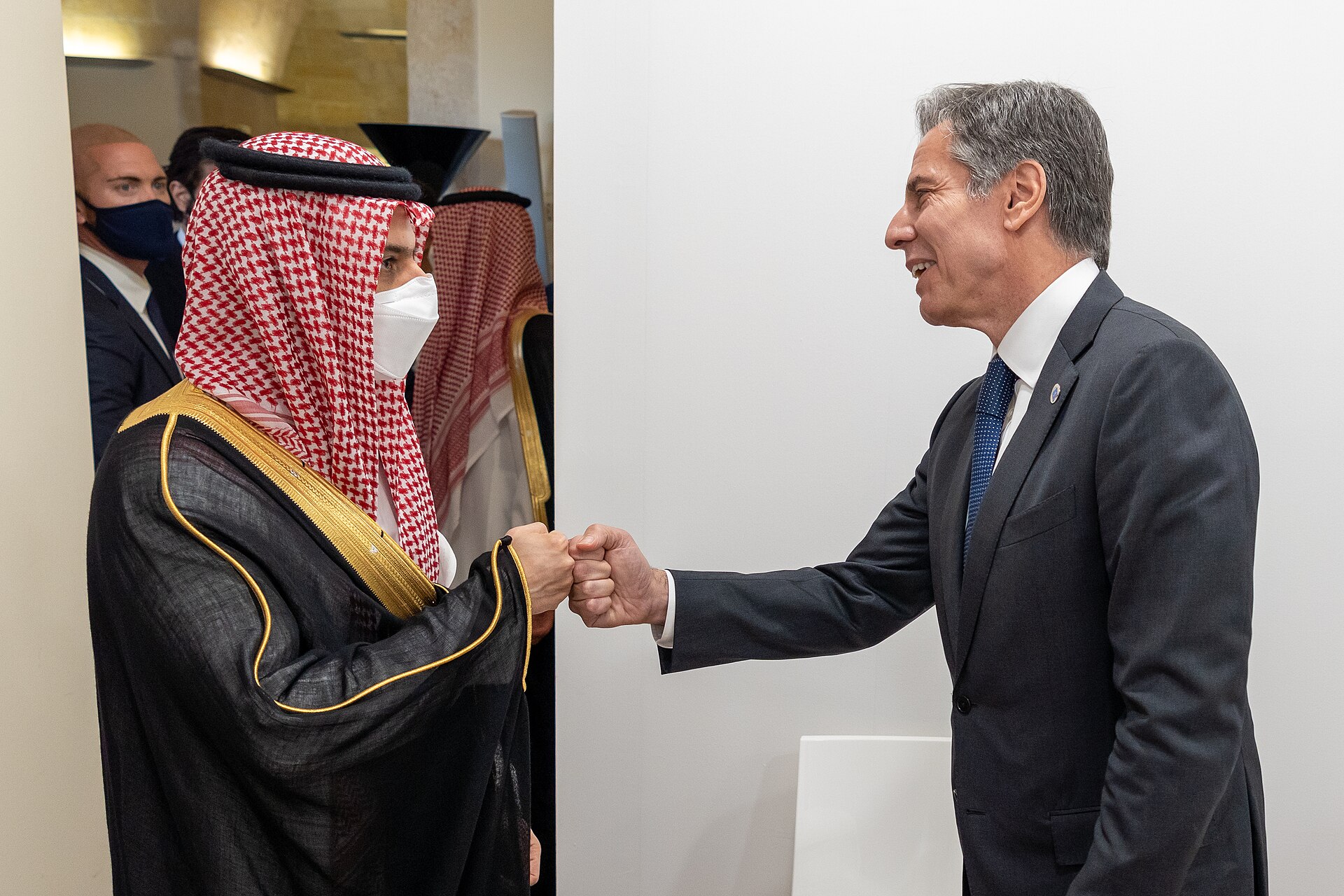
The quadrilateral discussion did not emerge from thin air. Its foundation is the Strategic Mutual Defence Agreement (SMDA), signed on September 17, 2025, at Al Yamamah Palace in Riyadh by Crown Prince Mohammed bin Salman and Pakistani Prime Minister Shehbaz Sharif. The SMDA commits both countries to treating any act of aggression against one as an act against both — a collective security clause modelled, in principle, on NATO’s Article 5.
The Middle East briefing 3,000+ readers start their day with.
One email. Every weekday morning. Free.
The pact represented the formalisation of a relationship that has operated informally for decades. Pakistan has stationed military advisers and trainers in Saudi Arabia since the 1960s. Saudi Arabia funded Pakistan’s nuclear programme during its critical development phase in the 1970s and 1980s — a fact neither government has officially confirmed but which has been documented extensively by researchers at the Carnegie Endowment for International Peace and the International Institute for Strategic Studies. In March 2026, the SMDA was tested for the first time when Pakistan deployed military personnel to Saudi Arabia as Iranian strikes intensified.
Pakistan’s defence export ambitions have not been without complications. A Saudi-brokered $1.5 billion arms deal to supply JF-17 fighter jets and drones to Sudan stalled in March 2026 after Islamist factions within the Sudanese army declared support for Iran, demonstrating the risks of linking defence exports to Riyadh’s expanding but increasingly demanding alliance network.
The SMDA, however, is a bilateral agreement. It provides Saudi Arabia with strategic depth through Pakistan’s 1.7-million-strong military and its nuclear deterrent, and it provides Pakistan with financial support and diplomatic weight from the world’s fifth-largest defence spender. What it does not provide is the conventional military capacity, geographic coverage, or defence-industrial base that a broader coalition could offer. Ankara recognised this gap before Riyadh did.
Why Does Turkey Want a Security Pact With Saudi Arabia and Pakistan?
Turkey’s interest in the pact reflects what Chatham House analysts have described as Ankara’s “opportunistic hedging strategy.” In a January 2026 analysis, the London-based think tank argued that Turkey’s pursuit of a defence agreement with Saudi Arabia and Pakistan represents a continuation of a uniquely Turkish policy of seeking alternatives to existing alliances — not to replace NATO, but to create leverage within it.
“Just as Turkey has reached out to BRICS and the Shanghai Cooperation Organization, hedging affords not only alternatives to alliances like NATO, but crucially leverage within them,” the Chatham House analysis concluded. Turkey has been a NATO member since 1952, but its relationship with the alliance has deteriorated over the past decade. Washington’s refusal to sell F-35 fighter jets to Ankara after Turkey purchased Russia’s S-400 air defence system in 2019 accelerated Turkish efforts to diversify its security partnerships.
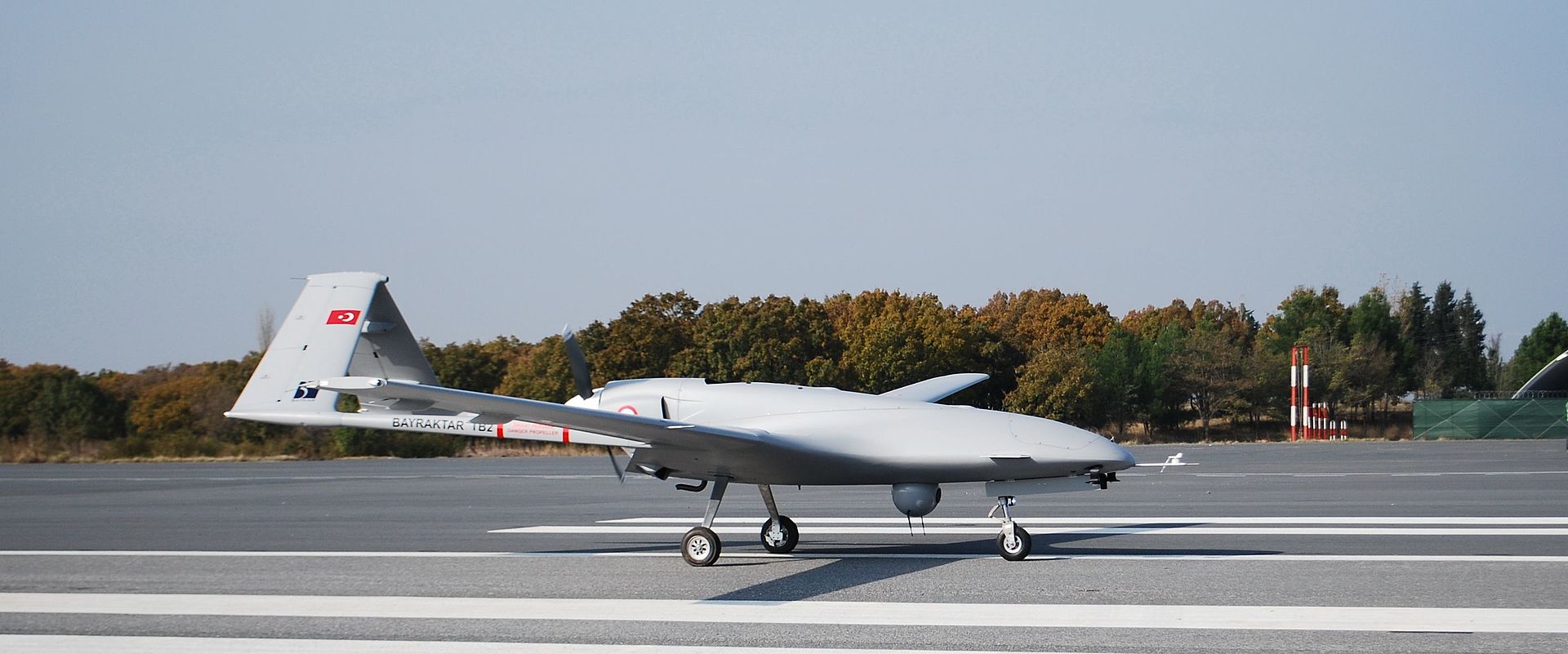
The economic incentive is equally significant. Bilateral trade between Turkey and Saudi Arabia reached $8 billion in 2025, according to Turkey’s trade ministry. Turkish contractors have completed more than 400 projects in the Kingdom valued at $30 billion. The defence relationship has deepened rapidly: in the summer of 2023, Turkey and Saudi Arabia signed what Baykar CEO Haluk Bayraktar called “the biggest defence and aviation export contract in the history of the Turkish Republic” — a deal for Bayraktar drones, the specific model and quantity of which remain classified.
Turkey’s military credentials are formidable. With approximately 480,000 active personnel and 380,000 in reserve, the Turkish Armed Forces constitute NATO’s second-largest standing army after the United States. Turkey is ranked ninth globally for military power by Global Firepower’s 2026 index, ahead of every Middle Eastern nation except Iran. Its air force operates nearly 250 combat aircraft, and its indigenous defence industry — anchored by companies such as Turkish Aerospace Industries, Baykar, ASELSAN, and Roketsan — has become one of the world’s most dynamic, exporting to more than 170 countries.
Egypt’s Arrival at the Table Changes Everything
Egypt’s presence at the March 19 meeting was the element that transformed a trilateral negotiation into something potentially far more consequential. For months, Cairo had resisted entanglement in the Iran crisis. As recently as March 17, this publication noted that the multinational coalition forming around Saudi Arabia was largely accidental — a collection of bilateral arrangements rather than a structured alliance. Egypt, with the largest army in the Arab world, had conspicuously stayed on the sidelines.
The shift came rapidly. President El-Sisi embarked on a tour of Gulf capitals in the third week of March, visiting Bahrain and Saudi Arabia in quick succession. His messaging was unambiguous: Gulf security is Egyptian security. The statement echoed a long-standing Egyptian strategic doctrine — articulated most clearly in Cairo’s participation in the Peninsula Shield Force exercises — but the diplomatic context in March 2026 gave it new operational meaning.
Egypt brings 440,000 active military personnel to the table, making it the largest Arab armed force by a significant margin. Its arsenal has been modernised aggressively since 2013, when Cairo signed deals for French Rafale jets, two Mistral-class helicopter carriers (originally built for Russia), Italian FREMM frigates, and Russian T-90 main battle tanks. Egypt possesses 4,394 main battle tanks, more than 6,000 armoured fighting vehicles, and over 2,300 artillery pieces, according to Global Firepower data for 2026. It operates the largest navy in Africa, capable of projecting force across both the Mediterranean and the Red Sea.
The geographic logic is compelling. Turkey controls the Bosphorus and the eastern Mediterranean. Egypt controls the Suez Canal and the northern Red Sea. Pakistan provides strategic depth east of the Arabian Peninsula. Saudi Arabia sits at the centre, with the financial resources to fund joint operations and the strategic motivation to bind all three partners together. The four nations effectively encircle the Middle East’s primary conflict zones.
The Defence Industrial Engine Behind the Pact
What distinguishes this emerging alliance from previous Middle Eastern security frameworks is its defence-industrial foundation. The four nations are not simply pooling existing military assets; they are building joint production capabilities that could, over time, reduce their collective dependence on Western arms suppliers.
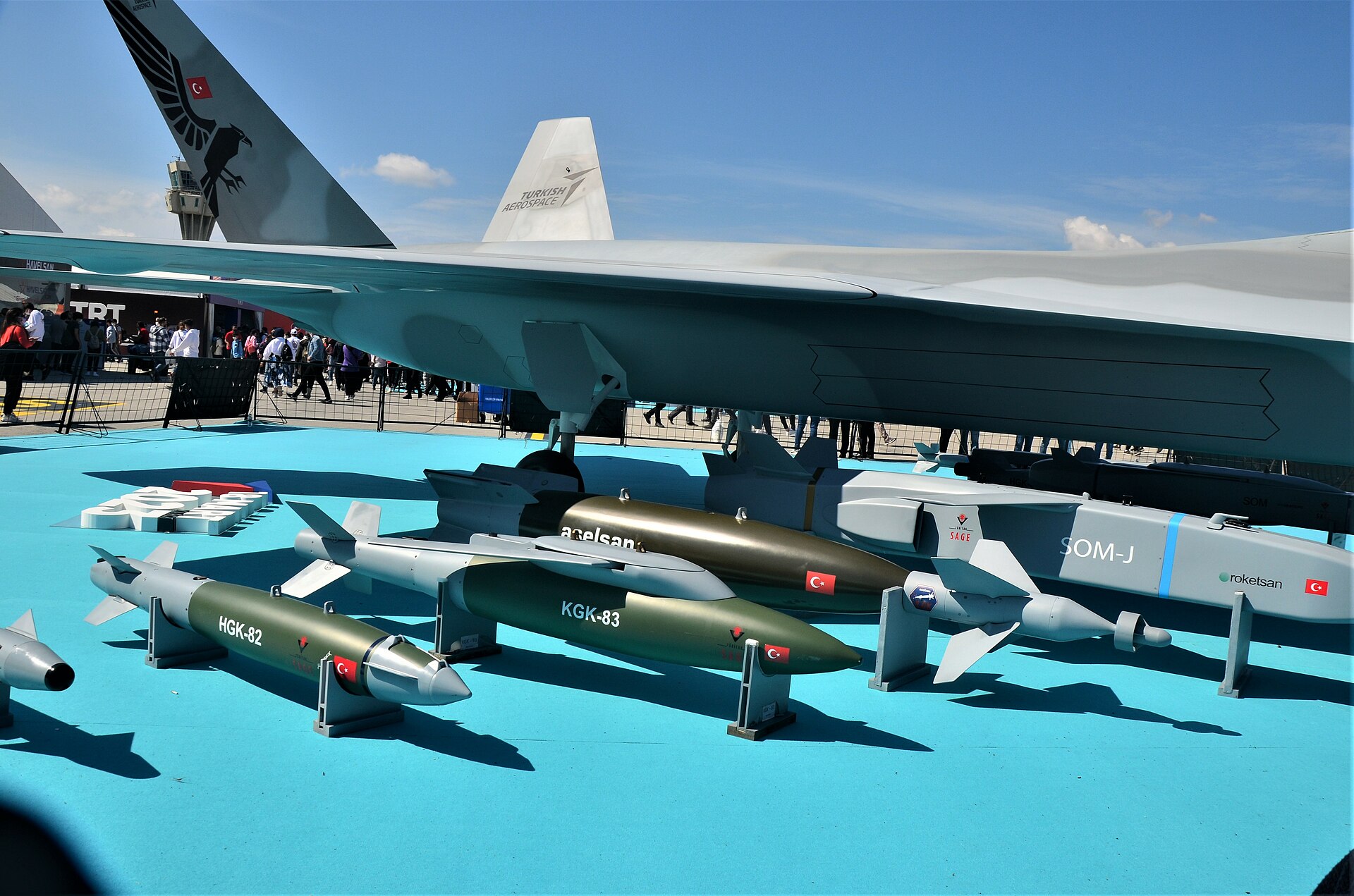
The centrepiece is the KAAN fifth-generation fighter programme. Over ten days in February 2026, Turkey and Saudi Arabia signed a series of defence-industrial agreements covering the KAAN stealth fighter, a utility helicopter programme, and unmanned naval platforms. President Erdogan visited Riyadh on February 3, meeting Crown Prince Mohammed bin Salman, and described the agreements as “major,” signalling that joint KAAN investment could proceed “at any moment,” according to Anadolu Agency.
Turkish Aerospace Industries (TAI) General Manager Mehmet Demiroğlu confirmed at the World Defense Show 2026 that negotiations had reached an advanced stage. Breaking Defense reported that TAI was in the “final stages” of talks on Saudi participation in the KAAN programme, with quantities under discussion ranging from 20 to 100 aircraft. The deal would represent a transfer of significant aerospace technology to Saudi Arabia, aligning with Vision 2030’s objective of localising 50 per cent of defence spending.
| Programme | Turkish Lead | Saudi Partner | Value (Est.) | Status |
|---|---|---|---|---|
| KAAN 5th-gen fighter | TAI | GAMI / SAMI | $10-15B+ | Final-stage talks |
| Gökbey utility helicopter | TAI | Saudi local partner (TBD) | $2-4B | MOU signed |
| Unmanned naval platforms | Multiple | SAMI Naval | $1-2B | Framework agreed |
| Bayraktar drone systems | Baykar | RSAF | Classified | Delivered / ongoing |
| MILGEM-class corvettes | STM | Navantia Saudi | $1.5B+ | Under discussion |
Turkey and Pakistan already have an established defence-industrial relationship. The Turkish STM shipyard built four MILGEM-class corvettes for the Pakistan Navy — the Ada and Istanbul-class variants — which gave Pakistan its most modern surface combatants. Fighter pilot training exchanges between the two air forces date back to the 1990s. Pakistan’s JF-17 Thunder and Turkey’s KAAN could eventually share subsystems, particularly in electronic warfare and avionics, creating interoperability that would extend to Saudi Arabia through the KAAN deal.
Saudi Arabia’s own defence-industrial ambitions, managed through the General Authority for Military Industries (GAMI) and the Saudi Arabian Military Industries (SAMI), provide the financial anchor. With a defence budget of $78 billion in 2025 — the fifth largest in the world — the Kingdom has the purchasing power to sustain joint development programmes that individual nations could not fund alone. The Iran war has, if anything, accelerated the urgency: the cost asymmetry of defending against Iranian drones with Western interceptors has made indigenous production not merely desirable but strategically necessary.
What Does Each Country Bring to the Alliance?
An alliance is only as strong as the complementary capabilities its members contribute. The Turkey-Saudi-Egypt-Pakistan grouping is notable for the degree to which its members’ strengths offset one another’s weaknesses. No two nations in the group duplicate the same primary capability, and each fills a gap the others cannot.
| Capability | Turkey | Saudi Arabia | Egypt | Pakistan |
|---|---|---|---|---|
| Active military personnel | 480,000 | 257,000 | 440,000 | 654,000 |
| Reserve forces | 380,000 | 25,000 | 480,000 | 550,000 |
| Defence budget (2025) | $22B | $78B | $5.5B | $10.2B |
| Combat aircraft | ~250 | ~340 | ~220 | ~150 |
| Main battle tanks | 2,400 | 1,062 | 4,394 | 2,680 |
| Naval combatants | ~150 | ~55 | ~220 | ~121 |
| Nuclear deterrent | No (NATO umbrella) | No | No | Yes (~170 warheads) |
| Indigenous defence industry | Advanced (drones, fighters, ships) | Emerging (SAMI, GAMI) | Limited | Moderate (missiles, JF-17) |
| Strategic geography | Bosphorus, E. Mediterranean | Red Sea, Persian Gulf | Suez Canal, N. Africa | Indian Ocean, Central Asia |
| Global power ranking (GFP 2026) | 9th | 22nd | 19th | 7th |
Turkey provides the most capable indigenous defence industry among the four, with advanced drone technology, shipbuilding, electronic warfare systems, and the KAAN fighter programme. Its combat experience — in Syria, Libya, northern Iraq, and through its role in the Nagorno-Karabakh conflict — exceeds that of any partner. Turkey’s NATO membership provides institutional knowledge of Western military standards, training protocols, and interoperability frameworks that could be transferred to the alliance without triggering Article 5 obligations.
Saudi Arabia provides financial power unmatched in the Muslim world. Its $78 billion defence budget dwarfs the combined military spending of the other three partners. More importantly, Defence Minister Prince Khalid bin Salman has the political authority to commit Saudi Arabia to long-term joint programmes without the legislative hurdles that constrain defence procurement in parliamentary systems. The Kingdom also provides the geographic centre of gravity — its territory is the primary target of Iranian aggression and therefore the primary beneficiary of collective defence.
Egypt brings mass. Its army is the largest in the Arab world and among the fifteen largest globally. Its navy, operating two Mistral-class helicopter carriers and modern European frigates, can project force across the Red Sea — a capability that has become critical since Houthi attacks disrupted international shipping. Egypt’s control of the Suez Canal gives it veto power over a chokepoint that handles approximately 12 per cent of global trade and 30 per cent of global container traffic.
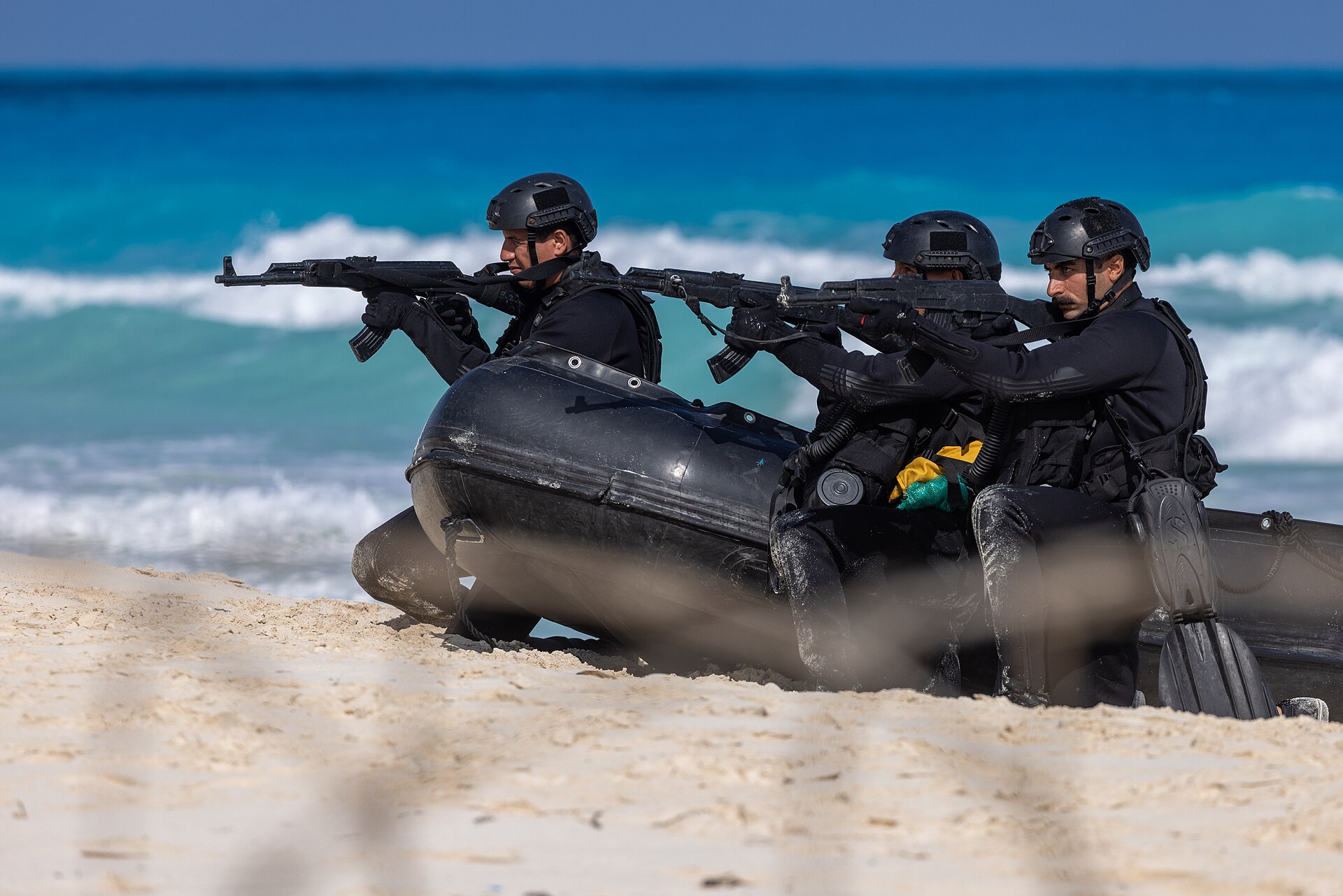
Pakistan brings the nuclear dimension. Its estimated 170 nuclear warheads, deliverable by short- and medium-range ballistic missiles, constitute the only nuclear deterrent in the Muslim world. Pakistan’s 654,000 active military personnel and 550,000 reservists make its army the sixth-largest on Earth. Its ballistic missile programme — including the Shaheen-III with a range exceeding 2,750 kilometres — can reach any point in the Middle East.
Can Pakistan’s Nuclear Umbrella Extend to the Gulf?
The most sensitive dimension of the emerging pact is the question of nuclear deterrence. Saudi Arabia has long been suspected of seeking a nuclear guarantee — either through its own programme or through an arrangement with Pakistan. The SMDA does not explicitly mention nuclear weapons, but the logic of collective security is difficult to separate from the ultimate deterrent.
Chatham House’s analysis directly addressed this question and concluded that Pakistan’s nuclear umbrella has significant geographical limitations. “Pakistani missiles do not comprehensively reach Turkey’s potential adversaries,” the analysis noted. “Their range covers Iran, and stretches as far as Rostov-on-Don inside Russia, but no further.” For Saudi Arabia, however, the calculation is different. Pakistan’s Shaheen-II missile, with a range of 1,500 kilometres, and the Shaheen-III, at 2,750 kilometres, can reach any target in Iran — which is precisely the threat that concerns Riyadh.
The Bulletin of the Atomic Scientists estimated in its September 2025 assessment that Pakistan possessed approximately 170 nuclear warheads, with the stockpile potentially growing to 200 by the late 2020s. Pakistan has focused on developing tactical or battlefield nuclear weapons to offset India’s conventional military superiority — a strategy that could, in theory, be adapted to deter Iranian aggression against Saudi Arabia.
The practical obstacles are immense. Extending a nuclear umbrella requires not merely political will but also forward-deployed delivery systems, integrated command-and-control infrastructure, and the willingness to risk nuclear retaliation against one’s own territory on behalf of an ally. No nuclear power has extended such a guarantee to a non-NATO Middle Eastern state. The precedent that comes closest — the American nuclear umbrella over Japan and South Korea — required decades of alliance-building, joint exercises, and integrated planning that the Saudi-Pakistani relationship has not yet achieved.
The Iran war has, however, changed the strategic calculus. Saudi Arabia’s neutrality was shattered in the third week of the conflict, and the Kingdom now faces the prospect of a sustained conventional threat from an adversary that, before Israeli and American strikes destroyed its known nuclear facilities, was pursuing its own bomb. The question of whether Pakistan’s deterrent implicitly covers Saudi Arabia may matter less than whether Tehran believes it does.
Why This Pact Is Not an Islamic NATO
Western media have frequently labelled the emerging framework an “Islamic NATO” — a term that both overstates and mischaracterises the arrangement. The Jerusalem Post, MEMRI, and several Indian defence publications have used the phrase extensively. The participants themselves have been careful to reject it.
NATO is a treaty-bound collective defence organisation with an integrated military command structure, standardised equipment, joint exercises, nuclear sharing agreements, and a specific adversary it was designed to counter. The Turkey-Saudi-Egypt-Pakistan framework, as currently described by its participants, is none of these things. Turkish sources told Middle East Eye that the agreement “would not mirror the guarantees and commitments of NATO” but would instead serve as “a security platform to enable greater cooperation in the defence industry.”
The distinction matters for several reasons. Turkey remains a NATO member and has no intention of leaving the alliance. A formal collective defence treaty with Saudi Arabia and Pakistan would create potential conflicts with Article 5 obligations — particularly if Turkish territory were attacked in a scenario where NATO and the quadrilateral pact pointed to different responses. Ankara’s preferred model appears to be a defence cooperation framework that stops short of mutual defence commitments while enabling arms co-production, intelligence sharing, joint training, and coordinated diplomatic positions.
| Feature | NATO | Quadrilateral Framework (Proposed) |
|---|---|---|
| Mutual defence clause | Yes (Article 5) | Bilateral only (SMDA covers Saudi-Pakistan) |
| Integrated military command | Yes (SACEUR, SHAPE) | No |
| Joint exercises | Regular, large-scale | Bilateral only (planned multilateral) |
| Nuclear sharing | Yes (B61 bombs in 5 countries) | No formal arrangement |
| Defence-industrial cooperation | Limited standardisation | Core focus (KAAN, drones, ships) |
| Named adversary | Originally Soviet Union | None formally; Iran implicitly |
| Membership criteria | Democratic governance (in theory) | None specified |
| Dispute resolution | North Atlantic Council | Not yet established |
Pakistan’s Defence Production Minister confirmed to Reuters in January 2026 that “the Pakistan-Saudi Arabia-Turkey trilateral agreement is already in pipeline” and that the draft had been under review for ten months. The addition of Egypt to the discussions in March represents an expansion of scope, but the underlying architecture remains a defence cooperation platform rather than a collective defence treaty.
The Pact Is Not About This War
The conventional reading of the Riyadh meeting is that four Muslim-majority nations are banding together to confront Iran. This interpretation is wrong — or, at minimum, incomplete. The pact is not designed to fight the current war. It is designed to shape the security order that emerges after it.
The distinction is critical. By the time the four foreign ministers sat down in Riyadh on March 19, the Iran war was already in its twenty-second day. Iran had launched hundreds of drones and dozens of ballistic missiles at Gulf targets. Saudi Arabia had expelled Iranian diplomats and opened King Fahd Air Base to American forces. The military situation was being managed — imperfectly, at enormous cost — by the existing bilateral relationships between each Gulf state and the United States. A quadrilateral security platform could not be designed, negotiated, ratified, and operationalised in time to influence the outcome of a war that might end within weeks.
Consider the timing. The SMDA was signed in September 2025, five months before the first American and Israeli strikes on Iran. Turkey’s initial approach to Saudi Arabia and Pakistan on defence cooperation dates back to early 2025, according to Chatham House, when the Iran war was not yet on the horizon. The Baykar drone deal was signed in 2023. The KAAN discussions began at the 2024 World Defense Show in Riyadh. The defence-industrial architecture predates the military crisis by years.
What the Iran war has done is accelerate a process that was already underway and provide it with political urgency. The war exposed three structural weaknesses that the quadrilateral framework is designed to address. First, Saudi Arabia’s military was built for a war it did not want — optimised for expeditionary operations in Yemen and counterterrorism rather than homeland defence against a state adversary. Second, American military support requires American bases on Saudi soil, which carries domestic political costs MBS would prefer to minimise over the long term. Third, Western arms suppliers impose conditions — human rights assessments, congressional approvals, end-user agreements — that can delay deliveries by years or block them entirely.
The underlying problem is that the Gulf spent $100 billion preparing for the wrong war — investing in missile shields optimised for limited ballistic strikes rather than the sustained drone campaigns that Iran actually launched, leaving the region dependent on alliances it had not yet built.
The Eurasian Times warned in a March 2026 op-ed that Riyadh risked “trading sovereignty for reassurance” by entering a defence pact with Ankara and Islamabad — an echo of the criticism levelled at every Gulf state that has hosted American bases since 1990. But the calculus is different when the security provider is a Muslim-majority state with no history of occupying Arab territory and no congressional subcommittee demanding human rights conditionality. The quadrilateral framework addresses all three problems simultaneously. Turkey and Pakistan provide conventional military depth that reduces Saudi Arabia’s dependence on American forces for territorial defence. Joint defence production through GAMI, SAMI, and Turkish defence firms reduces dependence on Western supply chains. And the political alignment of four Muslim-majority states creates diplomatic cover for defence cooperation that would face scrutiny if conducted bilaterally with any Western partner.
The conventional wisdom holds that four nations with divergent interests cannot build a coherent security framework. The evidence from Riyadh suggests the opposite: it is precisely their divergent interests that make the framework viable, because no single partner needs to bear the full cost of collective defence.
Editorial analysis, March 2026
How Will Washington Respond?
The American response to the emerging quadrilateral framework will be defined by a fundamental tension: the United States wants Saudi Arabia to contribute more to its own defence, but it does not want Saudi Arabia to build an independent security architecture that diminishes American leverage.
The KAAN fighter programme is already generating friction. Turkey’s talks with Saudi Arabia on the KAAN sparked US pushback, according to Turkish Minute, which reported in February 2026 that Washington expressed concern about the transfer of advanced aerospace technology to the Kingdom. The KAAN programme uses some Western-origin subsystems, and American officials have signalled that joint production with Saudi Arabia could trigger export control restrictions.
The Trump administration’s approach to the quadrilateral framework is likely to be pragmatic rather than principled. The administration has pushed Gulf states to increase defence spending and reduce their dependence on American troops — objectives that the quadrilateral framework ostensibly serves. The $16 billion emergency arms package that Secretary Rubio bypassed Congress to deliver to the Gulf in March 2026 was premised on the logic that better-armed allies require fewer American boots on the ground.
The risk for Washington is that a self-sufficient Saudi-Turkish-Egyptian-Pakistani security bloc would diminish the leverage that American arms sales currently provide. The United States has used defence relationships with each of these four nations as instruments of influence for decades. Turkey’s exclusion from the F-35 programme was intended as punishment for purchasing Russian air defence systems. Saudi arms sales have been conditioned on human rights standards. Egyptian military aid has been linked to democratic governance. Pakistan’s military relationship has fluctuated with cooperation on counterterrorism.
A quadrilateral framework that enables these four nations to arm one another reduces the effectiveness of these pressure points. The Atlantic Council noted in a March 2026 analysis that Saudi interest in the KAAN was partly motivated by frustration with the pace and conditions of American fighter jet sales — the Kingdom’s request for F-35s has never been approved. If Riyadh can obtain a fifth-generation fighter from Ankara without congressional scrutiny, the political economy of American defence exports to the Middle East changes fundamentally.
What Could Kill the Deal Before It Is Signed?
The quadrilateral framework faces at least four structural obstacles that could prevent it from materialising as a coherent security arrangement.
The first is the Turkey-Egypt relationship. Ankara and Cairo were adversaries for nearly a decade following the 2013 military coup that removed President Mohamed Morsi, whom Turkey’s ruling AKP party had supported. Relations were formally normalised in 2023 when President Erdogan visited Cairo for the first time in twelve years, but the reconciliation remains fragile. Egyptian intelligence services continue to monitor Muslim Brotherhood-linked organisations that maintain ties to Turkish patronage networks. Trust between the two security establishments is limited.
The second obstacle is operational interoperability. The four militaries operate equipment from at least eight different origin countries — American, Russian, French, Chinese, British, German, Turkish, and domestically produced systems. Their command structures, communications protocols, logistics chains, and training doctrines are fundamentally different. Building interoperability between NATO-standard Turkish forces, American-equipped Saudi forces, Russian- and French-equipped Egyptian forces, and Chinese- and domestically equipped Pakistani forces would require years of joint exercises and billions in communications infrastructure.
The third is Pakistan’s domestic instability. Pakistan’s military has long operated as an autonomous institution within a politically unstable state. Prime ministers have been removed from office by the military multiple times. The country’s economy is fragile, dependent on IMF bailouts, and its security services remain focused on the existential rivalry with India. Diverting military resources to Gulf defence commitments risks domestic political backlash, particularly if Pakistani soldiers are killed defending Saudi infrastructure rather than Pakistani borders.
The fourth is the absence of a shared threat perception. Turkey views Iran as a trade partner and a rival but not an existential enemy. Egypt has historically maintained correct relations with Tehran and has no territorial dispute with Iran. Pakistan has a long border with Iran and has experienced cross-border tensions but also cooperates with Tehran on counterterrorism in Balochistan. Only Saudi Arabia perceives Iran as an immediate existential threat. The asymmetry in threat perception creates asymmetric commitment — a problem that has plagued every Middle Eastern security framework since the Baghdad Pact of 1955.
| Factor | Assessment | Risk Level |
|---|---|---|
| Shared threat perception | Partial — Iran is the common concern but perceived differently by each member | High |
| Defence-industrial complementarity | Strong — Turkey produces, Saudi buys, Pakistan co-develops, Egypt provides scale | Low |
| Geographic coverage | Comprehensive — from the Mediterranean to the Indian Ocean | Low |
| Financial sustainability | Saudi funding provides anchor, but $78B budget may tighten under wartime strain | Medium |
| Political alignment | Fragile — Turkey-Egypt tensions, Pakistan domestic instability, Turkish NATO obligations | High |
| Interoperability | Minimal — 8+ equipment origins, different doctrines, no joint command history | High |
| Historical precedent for success | Poor — every previous Middle Eastern multilateral security pact has collapsed | High |
The Nikkei Asia analysis of March 2026 noted that Turkey is seeking the defence platform as a way to position itself as an indispensable broker between the Western alliance system and the emerging multipolar order. Turkey’s strategy is not to leave NATO but to make itself too connected, too embedded, and too valuable to be excluded from any future security architecture — whether Western, Eastern, or non-aligned. The quadrilateral framework is a hedge against a world in which American security guarantees become transactional rather than institutional.
The historical record, however, is not encouraging.
The Baghdad Pact (1955), which sought to contain the Soviet Union through a Turkey-Iraq-Iran-Pakistan-UK alliance, collapsed within four years when Iraq withdrew after the 1958 revolution. Its successor, CENTO, lingered until 1979 before dissolving after the Iranian Revolution. The Arab League’s Joint Defence and Economic Cooperation Treaty of 1950 has never been invoked successfully. The Peninsula Shield Force, the GCC’s joint military command, proved inadequate during the Iran war. Every multilateral framework in the Middle East has ultimately been defeated by the same forces now confronting the quadrilateral proposal: divergent national interests, external interference, and the absence of a binding institutional culture.
The quadrilateral talks were swiftly followed by action. Egyptian President Sisi launched a 48-hour tour of four Gulf capitals, meeting MBS in Jeddah and declaring Gulf security an extension of Egypt’s own national security — the strongest signal yet that Cairo intends to participate in the emerging security architecture rather than observe from the sidelines.
Frequently Asked Questions
What is the Turkey-Saudi Arabia-Egypt-Pakistan security pact?
It is a proposed quadrilateral defence cooperation framework discussed by the foreign ministers of Turkey, Saudi Arabia, Egypt, and Pakistan on March 19, 2026, in Riyadh. The framework would enable joint defence-industrial production, intelligence sharing, military training coordination, and potentially mutual security commitments. It builds on the existing Saudi-Pakistan Strategic Mutual Defence Agreement signed in September 2025, but expands the scope to include Turkey’s defence industry and Egypt’s conventional military mass.
Is Turkey joining the Saudi-Pakistan defence pact?
Turkey is not joining the bilateral Strategic Mutual Defence Agreement (SMDA) between Saudi Arabia and Pakistan, according to reports confirmed in early 2026. Instead, Ankara is pursuing a separate, broader defence cooperation platform that would include both SMDA signatories plus Egypt. Turkish officials have described this as a “security platform” rather than a mutual defence treaty, emphasising defence-industrial cooperation over collective security guarantees modelled on NATO’s Article 5.
Why is Egypt involved in the security discussions?
Egypt’s involvement reflects its strategic interest in Gulf security, which President El-Sisi has described as an extension of Egyptian national security. Egypt controls the Suez Canal, fields the largest Arab military with 440,000 active personnel, and has been modernising its armed forces with French, Russian, and Italian equipment since 2013. The Iran war’s impact on Red Sea shipping and Gulf stability has made Egyptian engagement more urgent, prompting El-Sisi’s rapid diplomatic tour of Gulf capitals in March 2026.
What weapons are Turkey selling to Saudi Arabia?
Turkey is in advanced negotiations to sell Saudi Arabia participation in the KAAN fifth-generation stealth fighter programme, with quantities ranging from 20 to 100 aircraft. Turkey has already sold Bayraktar armed drones to Saudi Arabia in what Baykar described as the largest defence export deal in Turkish history. Additional agreements cover the Gökbey utility helicopter programme, unmanned naval platforms, and MILGEM-class corvettes. Bilateral defence-industrial trade is valued at tens of billions of dollars.
Does Pakistan’s nuclear umbrella cover Saudi Arabia?
There is no formal nuclear guarantee extending from Pakistan to Saudi Arabia. The SMDA does not explicitly reference nuclear weapons. However, Pakistan’s estimated 170 nuclear warheads, deliverable by Shaheen-II and Shaheen-III ballistic missiles with ranges of 1,500 and 2,750 kilometres respectively, can reach any target in Iran. Chatham House analysis notes that while Pakistan’s nuclear umbrella has geographic limitations regarding Turkey’s potential adversaries, it comprehensively covers the Iranian threat to Saudi Arabia. The implicit deterrence effect — whether or not it is formalised — is considered strategically significant.
How does this affect the United States?
The quadrilateral framework potentially diminishes American leverage over Middle Eastern defence relationships. The US has historically used arms sales as an instrument of influence over all four nations. A framework enabling Turkey, Pakistan, and potentially Egypt to supply Saudi Arabia with advanced weapons — including fifth-generation fighters — without American congressional approval reduces Washington’s ability to impose conditions on Gulf defence. The Trump administration faces a tension between welcoming allied self-sufficiency and resisting the erosion of American primacy in Gulf security architecture.