
ISLAMABAD — The arithmetic of peace in the Iran war does not work. The United States has published a 15-point plan demanding Iran surrender its nuclear program, disband its proxy networks, and guarantee freedom of navigation through the Strait of Hormuz. Iran has responded with five conditions that include legally binding guarantees the war will never recur, full reparations for damages, and sovereign control over the very waterway Washington insists must remain open. Oil markets crashed 6.1 percent on March 25 betting that these two positions could somehow converge into a ceasefire. They cannot. A point-by-point analysis using the Ceasefire Feasibility Matrix — scoring each demand on political feasibility, military achievability, timeline, and likelihood — reveals that the gap between Washington and Tehran has not narrowed since the plan was published. It has widened. Twenty-six days into a war that has killed at least 1,750 people by Iran’s own conservative count, displaced 330,000 across the Middle East, and cost American taxpayers $11.3 billion in its first six days alone, the 15-point plan did not bring peace closer. It exposed how far apart the two sides remain.
Table of Contents
- What Is the US 15-Point Peace Plan for Iran?
- What Are Iran’s Five Conditions for Ending the War?
- The Ceasefire Feasibility Matrix
- Why Did Oil Markets Crash on a Plan That Cannot Succeed?
- How Did Pakistan Become the War’s Most Unlikely Peacemaker?
- The Hormuz Paradox — Both Sides Claim the Same Water
- What the Nuclear Demands Reveal About Washington’s Real Objectives
- Iran’s Reparations Demand Is Politically Impossible
- The Proxy Problem Neither Side Can Solve at the Table
- Where Does Saudi Arabia Stand in These Negotiations?
- Can Any Framework Bridge a Gap This Wide?
- Frequently Asked Questions
What Is the US 15-Point Peace Plan for Iran?
The US 15-point peace plan, delivered to Tehran via Pakistani intermediaries in the final week of March 2026, represents the most comprehensive set of demands Washington has placed on a wartime adversary since the terms imposed on Iraq in 1991. The plan was drafted under the direction of Secretary of State Marco Rubio and Vice President JD Vance, both named as lead negotiators, and transmitted through Pakistan’s Army Chief Field Marshal Asim Munir to Iranian officials.
At its core, the plan demands a one-month ceasefire during which a permanent agreement would be negotiated. That ceasefire is conditional on Iran immediately halting uranium enrichment on all Iranian territory — not reducing it, not capping it, but stopping it entirely. Tehran would be required to hand over approximately 450 kilograms of uranium enriched to 60 percent purity to the International Atomic Energy Agency, material that represents years of centrifuge operations and constitutes the single most sensitive element of Iran’s nuclear stockpile.
The plan goes further. Three nuclear facilities — Natanz, Isfahan, and the deeply buried Fordow enrichment plant — would be decommissioned under international supervision. Iran’s ballistic missile production would be suspended, with the broader missile program subjected to undefined limitations. The proxy networks that Tehran has built over four decades — Hezbollah in Lebanon, the Houthi movement in Yemen, and various Iraqi militia formations — would be abandoned entirely.
On the maritime front, the plan demands that Iran keep the Strait of Hormuz permanently open to all international shipping, effectively requiring Tehran to renounce any future ability to restrict passage through the waterway that carries roughly 20 percent of global oil supply. In exchange, Washington offers the lifting of all sanctions and civilian nuclear assistance at Iran’s Bushehr power plant, along with strengthened IAEA monitoring protocols.
The Middle East briefing 3,000+ readers start their day with.
One email. Every weekday morning. Free.
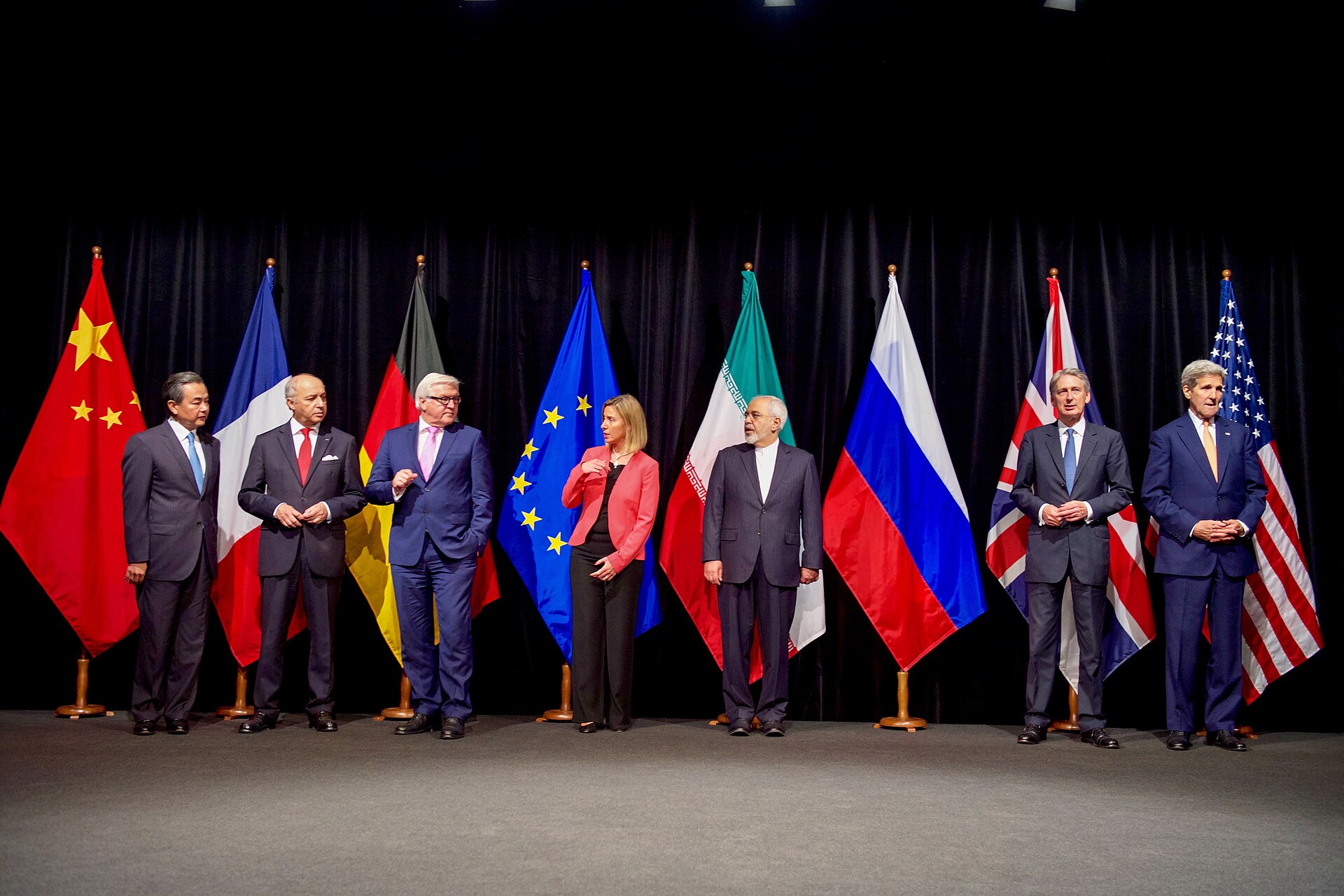
Iran’s Foreign Ministry called the plan “extremely maximalist and unreasonable” within hours of its delivery. That description, while diplomatically predictable, is also analytically accurate. The plan asks Iran to surrender every significant strategic asset it possesses — nuclear, missile, proxy, and maritime — in exchange for sanctions relief that a future US administration could reimpose with a single executive order. The 2015 Joint Comprehensive Plan of Action, which asked far less, was abandoned by the Trump administration in 2018 with exactly that mechanism.
The 15 points read less like a negotiating position and more like terms of unconditional surrender. Whether that reflects Washington’s genuine expectations or a deliberate opening bid designed to be negotiated downward depends entirely on how one interprets the political dynamics inside the Trump administration. The evidence, as the ongoing coverage of the Iran war has documented, suggests the former.
What Are Iran’s Five Conditions for Ending the War?
Tehran’s response was not a counter-proposal in the traditional diplomatic sense. It was a set of preconditions — five requirements that Iran insists must be met before any substantive negotiations can begin. The distinction matters. A counter-proposal implies willingness to negotiate within a shared framework. Preconditions suggest the framework itself is rejected.
The first condition demands a complete halt to what Tehran describes as “aggression and assassinations.” This encompasses not only the ongoing US-Israeli aerial bombardment that began on February 28 but also the targeted killing operations that have eliminated senior Iranian military and scientific personnel over the past two decades. Iran is asking the United States to commit to ending a category of covert operations that Washington has never officially acknowledged conducting.
The second condition requires legally binding guarantees that the war will not recur. The phrasing is deliberate. Iran is not seeking a presidential commitment or an executive agreement. It wants a treaty-level obligation, the kind that would require ratification by two-thirds of the US Senate — a body that has not ratified a significant arms control treaty since New START in 2010 and has shown no appetite for binding commitments to adversaries.
Third, Iran demands payment of war damages and reparations. After 26 days of sustained bombardment that has struck military installations, infrastructure, and — according to the Hengaw human rights organization — killed at least 5,300 people including 511 civilians, Tehran is asking Washington to accept financial liability for the destruction. No American president has ever agreed to pay war reparations to an adversary. The political and legal barriers are not merely high; they do not exist in any functional sense within the American system.
The fourth condition insists on ending the war across all fronts, including those involving what Iran calls “resistance groups.” This means Tehran will not accept a ceasefire that excludes Hezbollah, the Houthis, or Iraqi militia allies. Any peace must be comprehensive, covering every theater in which Iranian-aligned forces are engaged. The military and diplomatic complexity of coordinating ceasefires across Lebanon, Yemen, Iraq, and Syria simultaneously — each involving distinct armed groups with their own political objectives — is staggering.
The fifth condition is the most directly confrontational. Iran asserts sovereignty over the Strait of Hormuz — the same waterway the US plan demands remain permanently open under international navigation rules. These two positions are not merely divergent. They are mutually exclusive. One side demands permanent openness. The other demands sovereign control. There is no middle ground that satisfies both.
The 15-point plan asks Iran to surrender every strategic asset it possesses. Iran’s five conditions ask America to accept legal liability for a war it started. Neither side is negotiating. Both sides are declaring.
Editorial analysis based on published demands from both governments
The Ceasefire Feasibility Matrix
To move beyond rhetoric and assess each demand on its actual prospects, the Ceasefire Feasibility Matrix scores every point from both sides on four dimensions. Political Feasibility measures whether the domestic political systems of the relevant country could accept the demand, scored 1 (impossible) to 5 (easy). Military Achievability measures whether the demand can be physically implemented, on the same scale. Timeline estimates how long compliance would take. Likelihood assigns a probability rating of high, medium, low, or zero.
The following table presents the US 15-point plan through this framework.
| US Demand | Political Feasibility (1-5) | Military Achievability (1-5) | Timeline | Likelihood |
|---|---|---|---|---|
| One-month ceasefire during negotiations | 3 | 4 | Immediate | Medium |
| Complete halt to uranium enrichment | 1 | 3 | Months | Zero |
| Hand over 450kg of 60% enriched uranium to IAEA | 1 | 4 | Months | Zero |
| Decommission Natanz, Isfahan, Fordow | 1 | 2 | Years | Zero |
| Suspend ballistic missile production | 1 | 3 | Months | Low |
| Limit broader missile program | 2 | 3 | Months | Low |
| Abandon Hezbollah, Houthis, Iraqi militias | 1 | 1 | Years | Zero |
| Permanently open Strait of Hormuz | 1 | 2 | Immediate | Zero |
| Accept stronger IAEA monitoring | 2 | 4 | Months | Low |
The results are stark. Of the nine core demands in the US plan, four score “zero” on likelihood — meaning they have no realistic prospect of Iranian acceptance under any foreseeable government in Tehran. Three score “low.” Only the initial one-month ceasefire reaches “medium,” and even that is contingent on Iran accepting the remaining demands as the framework for subsequent negotiations, which Tehran has already rejected.
Now apply the same matrix to Iran’s five conditions, scoring them against the probability of American acceptance.
| Iranian Condition | Political Feasibility (1-5) | Military Achievability (1-5) | Timeline | Likelihood |
|---|---|---|---|---|
| Complete halt to aggression and assassinations | 2 | 4 | Immediate | Low |
| Legally binding guarantee war will not recur | 1 | 5 | Years | Zero |
| Payment of war reparations | 1 | 5 | Years | Zero |
| End war on all fronts including resistance groups | 2 | 2 | Months | Low |
| Iranian sovereignty over Strait of Hormuz | 1 | 1 | Immediate | Zero |
Iran’s conditions fare no better. Three of five score “zero” on likelihood. The remaining two score “low.” The Ceasefire Feasibility Matrix, when applied to both sides simultaneously, produces a combined total of seven demands and conditions rated at zero probability. This is not a negotiation with difficult trade-offs. It is two sets of non-negotiable positions presented in the format of diplomacy.
The matrix reveals something else. The timeline column shows that even if political will existed on both sides, compliance would take months for the simpler items and years for the structural demands — decommissioning nuclear facilities, disbanding proxy networks, ratifying treaties. The one-month ceasefire proposed by Washington is physically insufficient for Iran to comply with most of what is being asked, even in theory.
Why Did Oil Markets Crash on a Plan That Cannot Succeed?
On March 25, Brent crude fell 6.1 percent to $98.03 per barrel. West Texas Intermediate dropped 5.5 percent to approximately $87.50. The sell-off erased weeks of accumulated war premium in a single trading session. Airlines surged in response — Norwegian Air Shuttle climbed 7.9 percent, Delta Air Lines rose 4 percent, and American Airlines gained 5.2 percent. The market had decided, with real money, that peace was at hand.
The market was wrong. But understanding why it was wrong requires understanding what oil traders actually price when they evaluate geopolitical risk. Commodity markets do not assess the likelihood of a final peace deal. They assess the likelihood of a reduction in the worst-case scenario. The mere existence of a 15-point plan — a document, with numbered points, transmitted through a mediator — was sufficient to move the probability distribution away from total escalation.
Traders were not betting on a ceasefire. They were betting against the Strait of Hormuz remaining closed indefinitely. The distinction is critical. If the existence of negotiations, however implausible, reduces the probability of permanent closure from, say, 30 percent to 15 percent, the expected value of oil shifts downward by several dollars per barrel. That is a rational trade. It is also a temporary one.
The 6.1 percent drop in Brent represents approximately $6.37 in nominal terms. Before the crash, the war premium — the difference between the pre-war price and the current price attributable to the conflict — was estimated at $15 to $20 per barrel by most energy analysts. The sell-off removed roughly one-third of that premium. Two-thirds remain, suggesting even the most optimistic traders recognize the conflict is far from resolved.
What the market did not price on March 25 is what the Ceasefire Feasibility Matrix makes explicit. The gap between the two sides is structural, not tactical. It cannot be closed by skilled negotiators or creative drafting. The US demand for permanent Hormuz access and Iran’s demand for Hormuz sovereignty are logically irreconcilable. The US demand to abandon proxy networks asks Tehran to dismantle its primary strategic deterrent. Iran’s demand for reparations asks Washington to accept legal and moral liability for a war the administration describes as self-defense.
When these realities filter into commodity trading desks — likely within days, as the Islamabad talks either fail to materialize or produce no joint statement — the war premium will reassert itself. Brent at $98 is a price that assumes progress. The Ceasefire Feasibility Matrix suggests regress.
How Did Pakistan Become the War’s Most Unlikely Peacemaker?
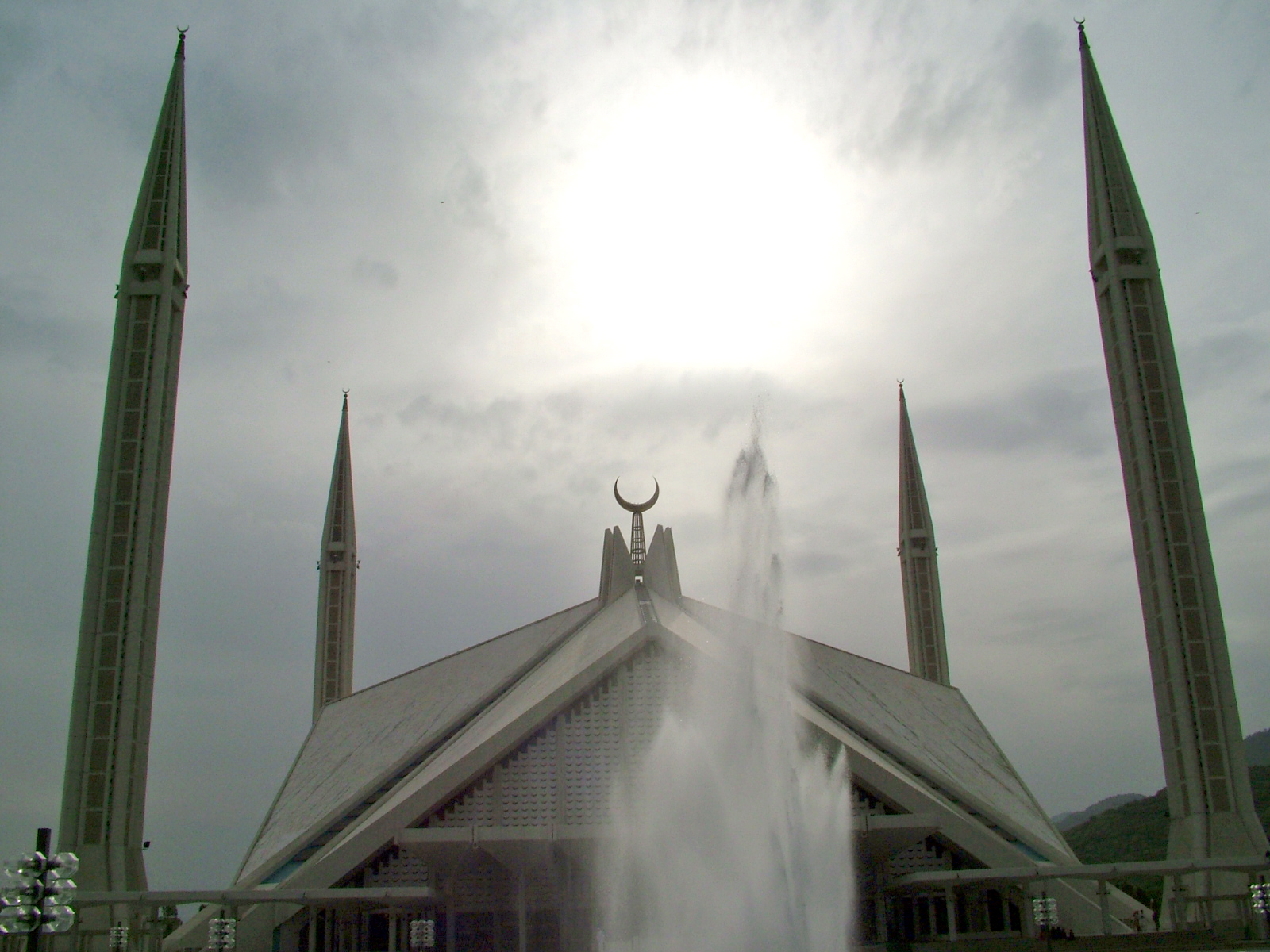
Pakistan’s emergence as the primary mediator between the United States and Iran is one of the more improbable developments of this conflict. Islamabad has no history of successful great-power mediation. Pakistan’s diplomatic bandwidth has been consumed for decades by the Kashmir dispute, the Afghan Taliban, and its own internal political instability. Yet Prime Minister Shehbaz Sharif is now hosting what may become the first face-to-face talks between American and Iranian representatives, potentially as early as March 28-29.
The logic of Pakistan’s role becomes clearer when the alternatives are eliminated. Turkey, which mediated the 2010 nuclear fuel swap deal and has historically positioned itself as a bridge between Western and Islamic powers, is a NATO member actively supporting the alliance’s force posture in the Eastern Mediterranean. Qatar, which facilitated the Taliban negotiations, is hosting US Central Command’s forward headquarters at Al Udeid Air Base. Oman, which back-channeled the original JCPOA contacts, lacks the geopolitical weight for a conflict of this scale. The European Union, consumed by its own internal divisions over the war, has no credible mediator acceptable to both sides.
Pakistan, by contrast, maintains simultaneous relationships that no other country can replicate. Islamabad has a land border with Iran and deep economic ties including a gas pipeline agreement. It also maintains what Prime Minister Sharif has publicly described as standing “firmly with Saudi Arabia” — a position that aligns Pakistan with the broader US-Gulf coalition without making it a belligerent. Army Chief Field Marshal Asim Munir, whose role in facilitating the contacts has been central, commands the world’s sixth-largest military and maintains institutional relationships with both the Pentagon and Iran’s security establishment.
The US 15-point plan was delivered to Tehran via Pakistani intermediaries, confirming Islamabad’s operational role. Vice President Vance and Secretary of State Rubio have been named as Washington’s negotiating team, while Pakistan provides the venue, the communication channel, and the security architecture for any potential meetings.
Whether Pakistan can translate access into influence is the open question. Mediators succeed when they can offer incentives or apply pressure to move parties toward agreement. Pakistan can apply neither to Washington nor to Tehran in meaningful quantities. What it can provide is a physical space where officials from two countries with no diplomatic relations can sit in proximity. In the history of conflict resolution, that is sometimes enough. In this case, given the Ceasefire Feasibility Matrix scores, it almost certainly is not.
Whether Pakistan’s mediation produces results or not, Islamabad’s role in this war has already redefined the country’s geopolitical standing. A full accounting of Pakistan’s transformation into the war’s sole diplomatic intermediary reveals how a country with no history of great-power mediation became the only capital where Washington and Tehran are willing to sit in the same room.
The Hormuz Paradox — Both Sides Claim the Same Water
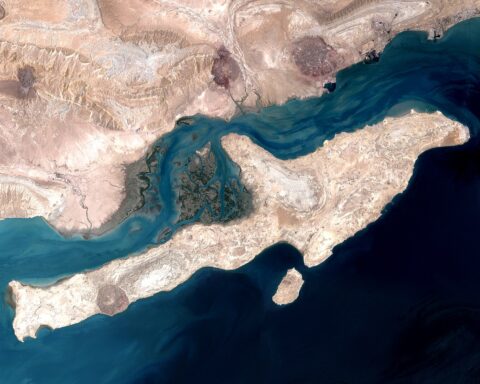
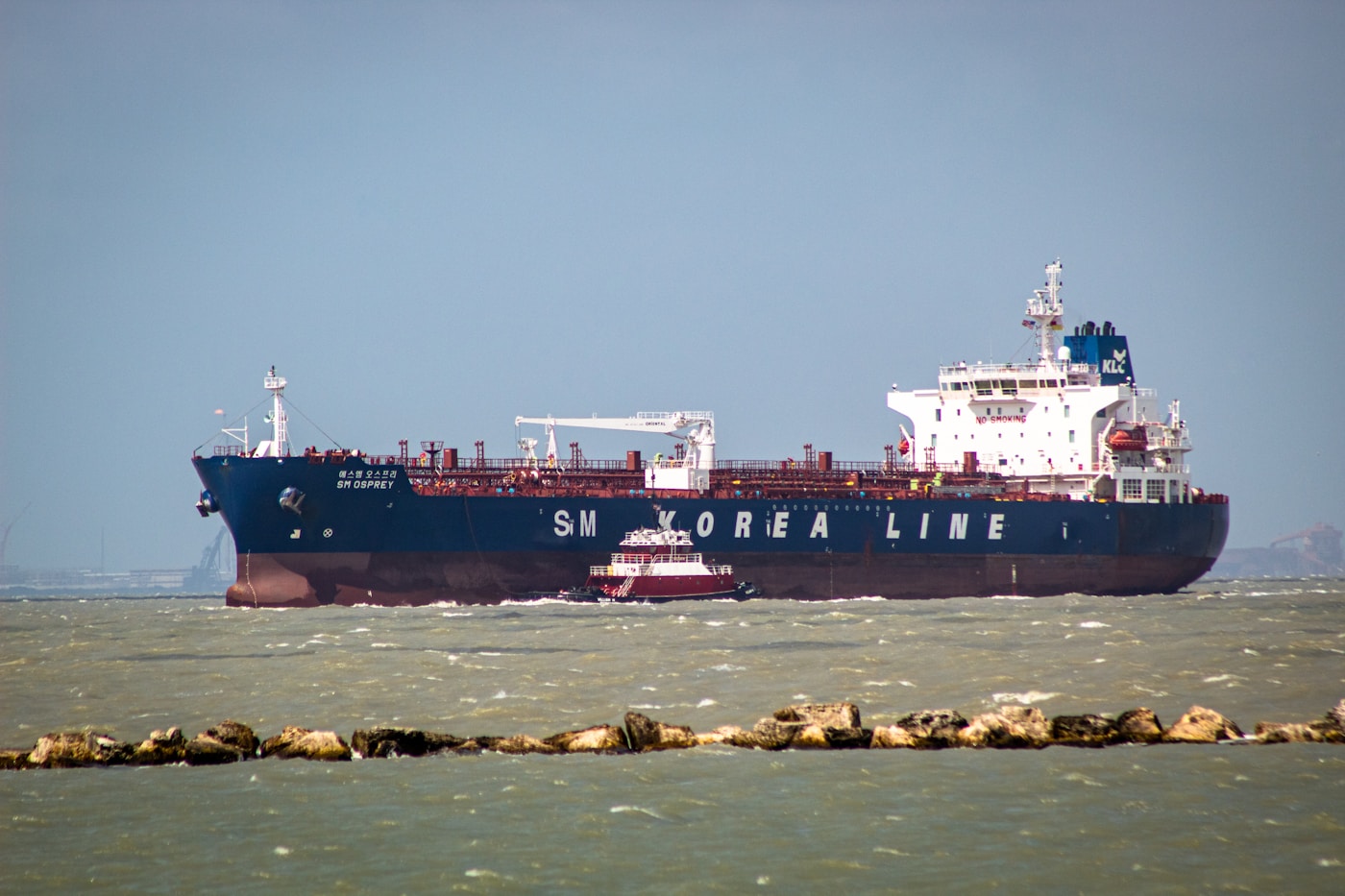
The Strait of Hormuz is 33 kilometers wide at its narrowest point. Through that gap passes roughly 20 million barrels of oil per day — approximately 20 percent of global petroleum consumption. Since the war began on February 28, the strait has been effectively closed to commercial traffic. Some 2,000 vessels and 20,000 seafarers remain stranded, unable to transit safely through waters that have become an active naval combat zone.
Point seven of the US 15-point plan demands that Iran keep the strait “permanently open to all shipping.” The word “permanently” is doing extraordinary diplomatic work in that sentence. It does not merely ask Iran to reopen the waterway as a ceasefire condition. It asks Tehran to surrender, in perpetuity, the ability to restrict passage — effectively asking Iran to sign away its most significant conventional military deterrent outside its missile arsenal.
Iran’s fifth condition asserts sovereignty over the strait. Under international law, Iran already possesses sovereignty over the waters within its territorial limits, which extend into the strait’s shipping lanes. The 1982 United Nations Convention on the Law of the Sea recognizes a right of “transit passage” through international straits, but Iran has never ratified UNCLOS and does not accept its applicability. Tehran’s position is that the Strait of Hormuz lies within its sovereign domain and that any foreign naval presence requires Iranian consent.
These two positions create what might be called the Hormuz Paradox. The United States demands a guarantee of permanent openness. Iran demands recognition of sovereign control. Any agreement that satisfies one necessarily violates the other. A compromise — such as shared monitoring or international oversight — would require Iran to accept limits on its sovereignty and the United States to accept that Iran has sovereignty to limit. Neither side has shown willingness to concede the premise of the other’s argument.
The Hormuz Paradox is not a negotiating position that either side adopted for tactical advantage. It reflects fundamentally incompatible legal and strategic doctrines about the nature of maritime sovereignty. The United States has maintained since the Tanker War of the 1980s that the strait is an international waterway governed by freedom of navigation principles. Iran has maintained since the Islamic Revolution that the strait is Iranian territory subject to Iranian law. Forty-seven years of disagreement on this point have not produced convergence. Twenty-six days of war have pushed the positions further apart.
For oil markets, the Hormuz Paradox is the single most important variable. Every other element of the ceasefire negotiations — nuclear dismantlement, proxy networks, reparations — affects regional stability over months and years. The status of Hormuz affects global energy supply tomorrow. The 6.1 percent drop in Brent on March 25 assumed the strait would reopen. The Ceasefire Feasibility Matrix rates the likelihood of either side accepting the other’s Hormuz position at zero. Those two assessments cannot both be correct.
What the Nuclear Demands Reveal About Washington’s Real Objectives
The nuclear demands in the 15-point plan are the most technically detailed and the most politically revealing. Washington is not asking Iran to return to JCPOA-level compliance — the 2015 deal that limited enrichment to 3.67 percent and capped stockpiles. The plan demands zero enrichment on Iranian territory, surrender of 450 kilograms of 60-percent-enriched uranium, and the physical decommissioning of three facilities that represent billions of dollars and decades of engineering.
Natanz, Iran’s primary enrichment facility, is a sprawling complex of above-ground and underground halls housing thousands of centrifuges. Isfahan’s uranium conversion facility transforms yellowcake into uranium hexafluoride feed gas. Fordow, buried deep inside a mountain near the city of Qom, was constructed specifically to survive aerial bombardment — a design feature whose relevance has been dramatically validated over the past 26 days.
The demand to decommission all three signals that Washington’s objective extends beyond arms control. The JCPOA was built on the principle that Iran could maintain a limited enrichment capability under strict monitoring. The 15-point plan abandons that principle entirely. It seeks the complete elimination of Iran’s nuclear fuel cycle — a position that aligns not with traditional non-proliferation diplomacy but with the Israeli security doctrine that any Iranian nuclear capability constitutes an existential threat.
This reading is reinforced by the war’s origins. The conflict began on February 28, 2026 with coordinated US-Israeli strikes targeting precisely these facilities. The 15-point plan is, in effect, asking Iran to formalize through diplomacy what the bombing campaign is attempting to achieve through force. From Tehran’s perspective, accepting the nuclear terms would mean agreeing to the destruction of its nuclear program while receiving nothing it could not lose in a subsequent administration.
The precedent of the JCPOA collapse in 2018 — when President Trump withdrew the United States from the deal and reimposed sanctions despite Iranian compliance verified by the IAEA — has fundamentally shaped Tehran’s calculus. Any agreement signed by this administration can be unsigned by the next. Sanctions relief that can be reimposed by executive order is not a permanent concession from Washington; it is a temporary forbearance. Iran would be surrendering irreversible physical assets — enriched uranium, centrifuges, facilities — in exchange for reversible political commitments.
The Ceasefire Feasibility Matrix rates the nuclear demands at zero likelihood for precisely this reason. Iran’s nuclear program is not merely a weapons-option hedge. It is the country’s most significant source of scientific prestige, technological achievement, and strategic insurance. No Iranian government — reformist, conservative, or revolutionary — could survive agreeing to its complete elimination in exchange for promises that have already been broken once.
Iran’s Reparations Demand Is Politically Impossible
Of Iran’s five conditions, the demand for war reparations is the one most likely to be dismissed as performative by Western analysts. It should not be. The demand reflects a deeply held conviction within the Iranian political establishment — and a significant portion of the Iranian public — that the country has been subjected to unprovoked aggression and is owed compensation.
The numbers support a substantial claim. Iran’s Health Ministry reports at least 1,750 killed, while the Hengaw human rights organization documents 5,300 dead including 511 verified civilians. Infrastructure damage across 26 days of sustained bombardment — targeting military installations, air bases, command centers, and, according to Tehran, civilian infrastructure — runs into tens of billions of dollars. The displacement of 330,000 people across the region creates ongoing humanitarian costs that will persist for years regardless of when the war ends.
But political impossibility is not the same as moral illegitimacy. Within the American political system, paying war reparations to Iran is functionally inconceivable. Congress would need to appropriate the funds. No member of either party would vote for such an appropriation. The Trump administration, which initiated the strikes, would be admitting legal liability for what it has characterized as a preemptive defensive operation. American public opinion, while increasingly skeptical of the war — Pew Research finds 59 percent say it was the wrong decision and 61 percent disapprove of Trump’s handling — does not translate skepticism into willingness to compensate Iran.
The AP-NORC poll finding that 59 percent of Americans consider the military action excessive and the Quinnipiac result showing 54 percent oppose the operation and 74 percent oppose ground troops represent a public that wants less war, not more generosity toward the adversary. Reparations would be framed domestically as paying the enemy, and no amount of international legal argument would alter that framing.
Iran knows this. The reparations demand serves a domestic political function — signaling to the Iranian public that their government will not capitulate under bombardment — and a negotiating function — establishing a maximalist position from which concessions can later be extracted. But even as a negotiating tactic, the demand poisons the diplomatic atmosphere. It forces Washington to publicly reject something Tehran publicly demands, making both sides less flexible on the items where actual compromise might theoretically be possible.
The Ceasefire Feasibility Matrix rates reparations at zero likelihood and a political feasibility score of 1 — the lowest possible — on the American side. This assessment would hold regardless of which party controlled Congress or which president occupied the White House. Paying reparations to a wartime adversary has no precedent in American history since the Treaty of Wangxia with China in 1844, and even that comparison is structurally inapt.
The Proxy Problem Neither Side Can Solve at the Table
The US plan demands that Iran “abandon” its proxy network — Hezbollah in Lebanon, the Houthi movement in Yemen, and Iraqi militia formations including Kata’ib Hezbollah and Harakat Hezbollah al-Nujaba. Iran’s fourth condition demands that any ceasefire end the war “across all fronts including all resistance groups.” Both sides are addressing the same reality from opposing directions, and both are making promises they cannot keep.
Iran cannot abandon its proxies because they are not proxies in the way Washington describes them. The term implies a principal-agent relationship where Tehran gives orders and the groups execute them. The reality is more complex. Hezbollah is a Lebanese political party with parliamentary representation, a social services network, and a military wing that predates many of its members’ lifetimes. The Houthis control a government in Sanaa with millions of citizens. Iraqi militias are formally integrated into Iraq’s Popular Mobilization Forces, a state-sanctioned military structure.
Iran maintains significant influence over these groups through funding, weapons supply, training, and ideological alignment. But influence is not control. Tehran cannot issue an order dissolving Hezbollah any more than Washington can issue an order dissolving NATO. These organizations have their own leaderships, constituencies, and strategic objectives that do not always align with Tehran’s preferences. The Houthis have repeatedly acted against Iranian advice. Hezbollah’s intervention in the Syrian civil war was driven as much by its own security calculus as by Iranian direction.
The US demand to “abandon” these networks asks Iran to do something it structurally cannot do — sever relationships with autonomous organizations that have their own reasons for existing. Even if Tehran cut all funding and weapons transfers tomorrow, Hezbollah would still command an estimated 30,000 fighters and the Houthis would still control northern Yemen. The groups would not cease to exist. They would cease to be influenced by Iran, which from a US security perspective might actually be worse, producing armed organizations with no external restraint on their behavior.
Iran’s parallel demand — that the ceasefire cover all fronts simultaneously — is equally unworkable. A comprehensive ceasefire would require separate negotiations with each group, each of which has different demands, different military situations, and different political objectives. The Houthis are fighting a Saudi-led coalition in Yemen. Hezbollah is engaged with Israel across the Lebanese border. Iraqi militias are confronting US forces at multiple bases. Coordinating simultaneous ceasefires across all these theaters, with all these actors, within the timeframe of a one-month negotiating ceasefire, is logistically impossible.
The United States asks Iran to disband organizations it does not fully control. Iran asks the United States to end wars it did not start in theaters where it is not the primary combatant. Both demands reveal the same truth — the proxy network has become bigger than any single patron.
Ceasefire Feasibility Matrix assessment of proxy-related demands
The proxy problem exposes the fundamental limitation of bilateral negotiations in a multilateral conflict. Even if the United States and Iran reached a bilateral ceasefire tomorrow, the fighting in Lebanon, Yemen, and Iraq could continue with its own momentum. The Riyadh emergency summit attempted to address this multilateral dimension but produced declarations rather than mechanisms. The proxy problem cannot be solved at a table in Islamabad because the relevant parties are not at that table.
Where Does Saudi Arabia Stand in These Negotiations?
Saudi Arabia’s position in the ceasefire negotiations is defined by a paradox of its own. Crown Prince Mohammed bin Salman is, according to the New York Times, privately urging President Trump to “keep hitting Iran hard.” The Kingdom has opened King Fahd Air Base to US operations, providing critical basing access for the air campaign. Riyadh is a belligerent in all but name — and increasingly in name as well, with documented steps toward direct military involvement.
Yet Saudi Arabia is not at the peace table. It has no representative in the Islamabad channel. Its interests are being represented, if at all, indirectly through Pakistan — a relationship with its own complicated history — and through whatever influence Riyadh exercises on the Trump administration’s negotiating posture. For a country whose territory has come under direct Iranian attack — with 35 or more drones intercepted over the Eastern Province and a ballistic missile strike on Yanbu port that suspended oil loading operations — the absence from negotiations is striking.
The challenge is compounded by the systematic collapse of Iran’s diplomatic network across the Gulf, which has left Tehran without functioning military channels in every capital except Muscat — stripping the negotiation process of the very infrastructure it needs to succeed.
The paradox runs deeper when examined through the lens of oil economics. The war premium on crude has been enormously profitable for Saudi Arabia. Brent above $100 for most of the conflict translates into billions of additional revenue for a kingdom running fiscal deficits and funding the massive infrastructure projects of Vision 2030. A rapid peace that restored Iranian oil exports and reopened the Strait of Hormuz could send prices crashing below $80 — a level that would force painful budget adjustments in Riyadh.
At the same time, continued war brings direct physical risk. The Yanbu attack demonstrated that Iran can reach Saudi Arabia’s western coast, far from the Persian Gulf. The Eastern Province, where the vast majority of Saudi oil infrastructure is concentrated, has been under persistent drone and missile threat. The House of Saud faces the uncomfortable calculation that every week of war brings both higher oil revenues and higher probability of catastrophic infrastructure damage.
This creates a strategic preference for a specific outcome — a conflict that continues at a level sufficient to maintain oil prices but insufficient to threaten Saudi infrastructure. That is an extraordinarily difficult position to calibrate, and it explains why Riyadh’s public statements have been carefully ambiguous. The Kingdom calls for peace in general terms while providing material support for continued operations. It demands protection from Iranian retaliation while benefiting from the market conditions that retaliation risk creates.
Pakistan’s Prime Minister Sharif’s statement that he stands “firmly with Saudi Arabia” introduces another layer of complexity to the mediation. If Islamabad is aligned with Riyadh, and Riyadh is aligned with Washington, then the mediator is not neutral. Iran is aware of this dynamic. Tehran’s willingness to engage through the Pakistani channel despite this alignment suggests either desperation for any diplomatic off-ramp or confidence that Pakistan’s security establishment maintains independent channels to Tehran that operate separately from the political leadership’s Saudi orientation.
The Ceasefire Feasibility Matrix does not include Saudi Arabia as a party to the formal negotiations, but Saudi interests permeate every demand on both sides. The proxy network that Washington wants dismantled includes the Houthis, whose primary adversary is the Saudi-led coalition in Yemen. The Hormuz waterway whose status is contested carries Saudi oil exports. The war premium whose persistence or collapse will be determined by ceasefire prospects funds Saudi fiscal commitments. Riyadh is the ghost at the negotiating table — absent from the room but present in every calculation.
Yet the 15-point framework and Iran’s five conditions both ignore a third set of demands entirely. Riyadh has been assembling its own list of preconditions for any ceasefire — from a binding US defense treaty to F-35 deliveries to Iranian reparations — requirements that add a sixteenth through twentieth point to an arithmetic that already does not add up.
Can Any Framework Bridge a Gap This Wide?
The Ceasefire Feasibility Matrix produces a bleak aggregate assessment. Of fourteen scored demands and conditions across both sides, seven — exactly half — rate at zero likelihood. Three rate at low. Three rate at medium or above, and even those are conditional on broader agreements that the zero-rated items make impossible. The mathematical expectation of a comprehensive deal emerging from these positions is, by any honest analytical standard, negligible.
This does not mean the war continues indefinitely. Wars end for many reasons other than negotiated settlements. They end through exhaustion, through unilateral cessation of hostilities, through third-party intervention, through one side achieving its military objectives. The US-Iran war could end if Washington decides the bombing campaign has achieved sufficient degradation of Iranian nuclear and missile capabilities and declares a unilateral halt — “mission accomplished” without requiring Iranian agreement. It could end if Iran’s conventional military capacity degrades to the point where continued resistance is physically impossible, though 26 days of sustained bombardment have not approached that threshold.
What the Ceasefire Feasibility Matrix argues against is the specific scenario that oil markets priced on March 25 — a negotiated ceasefire emerging from the 15-point plan through Pakistani mediation within weeks. The structural incompatibilities identified in the matrix are not tactical positions that skilled diplomats can bridge with creative language. They are fundamental conflicts of interest, legal doctrine, and strategic necessity that have defined the US-Iran relationship for nearly half a century.
A more realistic pathway involves incremental de-escalation without formal agreement. Both sides reduce the intensity of operations without announcing a ceasefire. The Strait of Hormuz reopens partially under informal understandings. Prisoner exchanges proceed through back channels. The shooting tapers off. Neither side signs anything. Neither side surrenders anything. The underlying disputes persist unresolved, as they have since 1979, but the active killing stops.
This pathway does not produce the oil price collapse that airlines and consumers hope for. It does not produce the strategic victory that the Trump administration has defined as its objective. It does not produce the reparations or security guarantees that Tehran demands. It produces a messy, incomplete, unsatisfying cessation of hostilities that satisfies no one and resolves nothing. In the history of Middle Eastern conflicts, this is not the exception. It is the norm.
American public opinion may ultimately force this outcome regardless of what happens in Islamabad. The Pew finding that 59 percent of Americans consider the war the wrong decision, combined with the Quinnipiac result showing 74 percent oppose ground troops, creates a domestic political environment that constrains escalation even if it does not compel withdrawal. An administration facing 61 percent disapproval on its handling of the conflict has limited political capital to intensify operations, particularly as the $11.3 billion cost in the first six days alone scales toward figures that invite congressional scrutiny.
The Ceasefire Feasibility Matrix, as a diagnostic tool, was designed to test whether the published positions of both sides contain sufficient overlap for negotiation. The answer is no. That does not mean peace is impossible. It means peace, if it comes, will not come from this plan, this channel, or this framework. It will come from a change in the underlying conditions that produced the war — a change that neither the 15 points nor the five conditions contemplate.
That change may already be underway on the battlefield. Netanyahu has ordered a final 48-hour blitz on Iran’s arms factories, aiming to destroy as much of the country’s military-industrial capacity as possible before any ceasefire freezes the map.
The arithmetic remained unresolved as of March 26, when Trump pushed the energy strike deadline to April 6, granting Iran ten more days to respond to the 15-point framework through Pakistani intermediaries. As the April 6 deadline approaches, the chasm between these positions shows no sign of narrowing.
Frequently Asked Questions
What is the US 15-point peace plan for Iran?
The US 15-point peace plan demands a one-month ceasefire, complete halt to Iranian uranium enrichment, surrender of 450 kilograms of enriched uranium to the IAEA, decommissioning of three nuclear facilities at Natanz, Isfahan, and Fordow, suspension of ballistic missile production, abandonment of proxy networks including Hezbollah and the Houthis, and permanent opening of the Strait of Hormuz. In return, Washington offers sanctions relief and civilian nuclear assistance at Bushehr.
What are Iran’s five conditions to end the war?
Iran has set five preconditions for negotiations. These are a complete halt to military aggression and targeted assassinations, legally binding guarantees that the war will not recur, payment of war reparations for damages and civilian deaths, ending the conflict across all fronts including allied resistance groups in Lebanon, Yemen, and Iraq, and recognition of Iranian sovereignty over the Strait of Hormuz. Tehran has described the US plan as “extremely maximalist and unreasonable.”
Is Pakistan mediating between the US and Iran?
Pakistan has emerged as the primary mediator in the conflict. Prime Minister Shehbaz Sharif has offered to host talks in Islamabad, and Army Chief Field Marshal Asim Munir has been facilitating contacts between Washington and Tehran. The US 15-point plan was delivered to Iran through Pakistani intermediaries. Face-to-face talks between US negotiators Vice President Vance and Secretary of State Rubio and Iranian representatives could take place as early as March 28-29 in the Pakistani capital.
Why did oil prices fall on March 25 2026?
Brent crude fell 6.1 percent to $98.03 per barrel and WTI dropped 5.5 percent to approximately $87.50 on March 25 after the publication of the US 15-point peace plan raised hopes of a ceasefire. Markets wiped out a significant portion of the war premium, and airline stocks rallied sharply, with Norwegian Air Shuttle gaining 7.9 percent. However, point-by-point analysis of both sides’ demands through the Ceasefire Feasibility Matrix suggests the sell-off was premature, as structural incompatibilities between the positions make a negotiated settlement unlikely in the near term.
Will there be a ceasefire in the Iran war?
A formal negotiated ceasefire based on the current positions of both sides is unlikely. The Ceasefire Feasibility Matrix scores seven of fourteen demands and conditions from both sides at zero probability of acceptance. The most probable outcome is an informal, incremental de-escalation without a signed agreement — reduced military operations, partial reopening of the Strait of Hormuz, and back-channel arrangements — rather than the comprehensive settlement that oil markets priced on March 25. American public opinion, with 59 percent opposing the war and 74 percent against ground troops, may ultimately constrain escalation without producing formal peace.