
RIYADH — The two most powerful Arab states have spent the last two years building rival alliances, poaching each other’s corporate tenants, and funding opposing armies in Yemen and Sudan. Then Iran started firing missiles at both of them. The Iran war has forced Saudi Arabia and the United Arab Emirates into the same foxhole, but the rivalry that brought them to the brink of their own conflict in December 2025 has not disappeared. It has merely gone underground, waiting for the last Iranian drone to fall before it resurfaces with greater force than ever.
The Saudi-UAE competition is the most consequential intra-Arab rivalry since Egypt and Saudi Arabia fought for supremacy in the 1960s. It spans oil production, sovereign wealth, corporate investment, defense procurement, proxy warfare, AI infrastructure, and the contest to define the post-war Gulf order. A review of think-tank assessments from the Institute for National Security Studies, the Atlantic Council, the European Council on Foreign Relations, and Foreign Affairs reveals a structural fracture that Iranian missiles cannot heal. The question is not whether the rivalry will intensify after the war ends. The question is whether it will destroy the Gulf Cooperation Council before a ceasefire is signed.
Table of Contents
- From Mentor to Rival
- What Drove Saudi Arabia and the UAE Apart?
- Yemen Turned the Alliance Into a Proxy War
- Sudan and the Horn of Africa
- Can the Gulf Cooperation Council Survive Its Two Largest Members Fighting?
- The $1.8 Trillion Economic Battle
- Is OPEC Surviving the Saudi-UAE Oil War?
- Who Spends More on Defense and Why It Matters
- AI, Sovereign Wealth, and the Race for the Future
- Did the Iran War Fix the Rivalry or Freeze It?
- The Gulf Divergence Matrix
- What Does the Post-War Gulf Look Like?
- Frequently Asked Questions
From Mentor to Rival
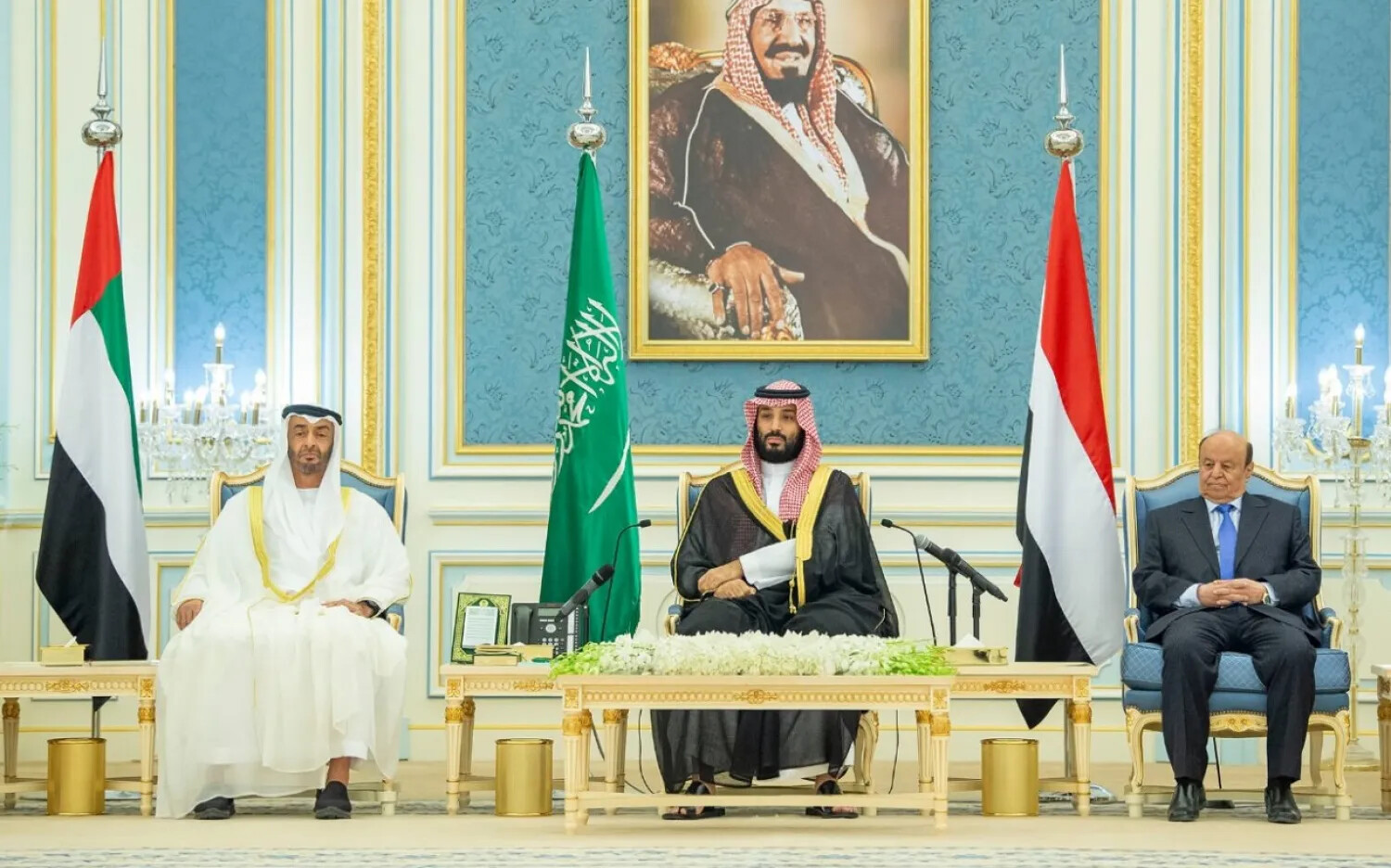
The relationship between Mohammed bin Salman and Mohammed bin Zayed once defined Gulf unity. In 2015, the older Emirati president was widely regarded as a mentor to the young Saudi prince, guiding his consolidation of power and co-leading a military intervention in Yemen. By 2017, when the two men orchestrated a blockade of Qatar, their partnership appeared unbreakable. Western diplomats privately called them the “MBS-MBZ axis,” a power couple whose alignment stabilized the Arabian Peninsula.
That alignment began to crack almost immediately. The UAE signed the Abraham Accords with Israel in 2020 without Saudi participation, establishing a security relationship that Riyadh viewed as a deliberate attempt to build an alternative regional framework. By 2023, the Wall Street Journal reported that Mohammed bin Salman had told journalists in an off-the-record briefing that the UAE had “stabbed us in the back” and warned that what happened to Qatar during the 2017 blockade would be “nothing compared to what awaited the UAE.” Both governments denied the report. Neither government’s subsequent actions contradicted it.
Yoel Guzansky, a senior researcher at the Institute for National Security Studies in Tel Aviv, described the shift as “structural rather than episodic.” In a February 2026 analysis titled “From Quiet Competition to Open Rivalry,” Guzansky assessed that the UAE remained “some twenty years ahead of Saudi Arabia in economic development” across medicine, space, tourism, aviation, and nuclear energy, creating an asymmetry that fuels Saudi resentment and Emirati complacency in roughly equal measure.
What Drove Saudi Arabia and the UAE Apart?
Three structural forces drove the rupture, and none of them are reversible by a shared enemy.
The Middle East briefing 3,000+ readers start their day with.
One email. Every weekday morning. Free.
The first is economic competition. Saudi Arabia’s Vision 2030 was always going to collide with Dubai’s business model. When Riyadh mandated in January 2024 that any multinational seeking Saudi government contracts must establish a regional headquarters in the Kingdom, over 550 companies relocated, according to the Saudi Gazette, including PepsiCo, Google, Microsoft, Apple, Goldman Sachs, and Citigroup. Conservative estimates from the Atlantic Council suggest the programme could redirect up to $5 billion in annual corporate investment away from the UAE by 2026. David Des Roches, a Gulf defense expert at the Near East South Asia Center, described the headquarters mandate as a “zero-sum game where Saudi Arabia’s gain is Dubai’s loss.”
The second force is divergent threat perception. H.A. Hellyer, a senior associate fellow at the Royal United Services Institute, characterized Saudi Arabia’s strategic posture as “de-escalatory developmentalism,” treating state collapse as the primary regional danger and favouring border insulation over military adventurism. The UAE, by contrast, practices what Hellyer termed “pre-emptive activism,” viewing regional order as inherently brittle and requiring constant intervention. More states favour the Saudi approach, including Oman, Kuwait, Jordan, and Egypt. The smaller interventionist camp comprises the UAE and Israel.
The third force is personal. Between 2015 and 2018, MBZ mentored a younger prince who needed Emirati intelligence networks and military experience. Since 2019, MBS has emerged as a confident, independent actor with grander ambitions and a population nearly four times larger. The European Times reported in January 2026 that the rivalry is “fuelled by constant comparison, by a widening gap in international recognition, and by a form of strategic jealousy rooted in the fact that the United Arab Emirates has succeeded without noise or spectacle in occupying spaces of influence that Saudi Arabia has long regarded as part of its natural sphere.”
Yemen Turned the Alliance Into a Proxy War
The Yemen conflict, which began as a joint Saudi-UAE operation against Houthi rebels in 2015, became the first arena where the rivalry turned violent. Saudi Arabia supported the internationally recognized government of President Hadi and its successor, the Presidential Leadership Council, aligned with the Muslim Brotherhood-affiliated Islah party. The UAE backed the Southern Transitional Council, a separatist movement seeking to restore an independent south Yemen and control the strategic Bab al-Mandab Strait.
In December 2025, the competition exploded. The UAE-backed STC launched an offensive across southern and eastern Yemen, seizing the oil-rich Hadhramaut and al-Mahra governorates that border Saudi Arabia. Riyadh responded with airstrikes. On December 30, Saudi aircraft bombed a UAE weapons shipment at the port of Mukalla. On January 2, 2026, further Saudi strikes killed twenty STC-aligned separatist fighters, according to the Arab Reform Initiative. Riyadh issued an ultimatum demanding complete Emirati withdrawal.
By January 9, Saudi-aligned forces had rolled back the separatist gains. The STC faction led by Aidarous al-Zubaidi was disbanded, and the UAE announced a full withdrawal from Yemen. The episode lasted barely three weeks, but it shattered any pretence that the Saudi-UAE relationship was merely competitive. Two nominal allies had conducted military operations against each other’s proxies in the most volatile corner of the Arabian Peninsula.
Kristian Ulrichsen, a fellow at Rice University’s Baker Institute, warned that “the UAE may be approaching a tipping point in its ability to balance its regional relationships with key partners such as Saudi Arabia and Egypt with its support for armed non-state actors.”
Sudan and the Horn of Africa
The pattern repeats across the Red Sea. In Sudan, where the world’s worst humanitarian crisis has displaced over ten million people, Saudi Arabia backs General Abdel Fattah al-Burhan’s Sudanese Armed Forces while the UAE funds and arms Mohamed Hamdan Dagalo’s Rapid Support Forces. The RSF controls Sudan’s informal gold trade and, crucially, maintains a relationship with Israel that neither Riyadh nor Cairo welcomes.
Giorgio Cafiero, CEO of Gulf State Analytics, argued that “the UAE is trying to fragment certain regional states, an approach that risks exposing the kingdom to instability.” The fragmentation strategy extends beyond Sudan. In the Horn of Africa, the UAE developed Berbera port in the breakaway territory of Somaliland. When Israel recognised Somaliland’s independence to secure military access, Saudi Arabia viewed the move as UAE-Israeli coordination against Riyadh’s interests, according to Cinzia Bianco, a visiting fellow at the European Council on Foreign Relations. Bianco assessed that Saudi Arabia now perceives the UAE-Israel alignment as “attempted encirclement.”
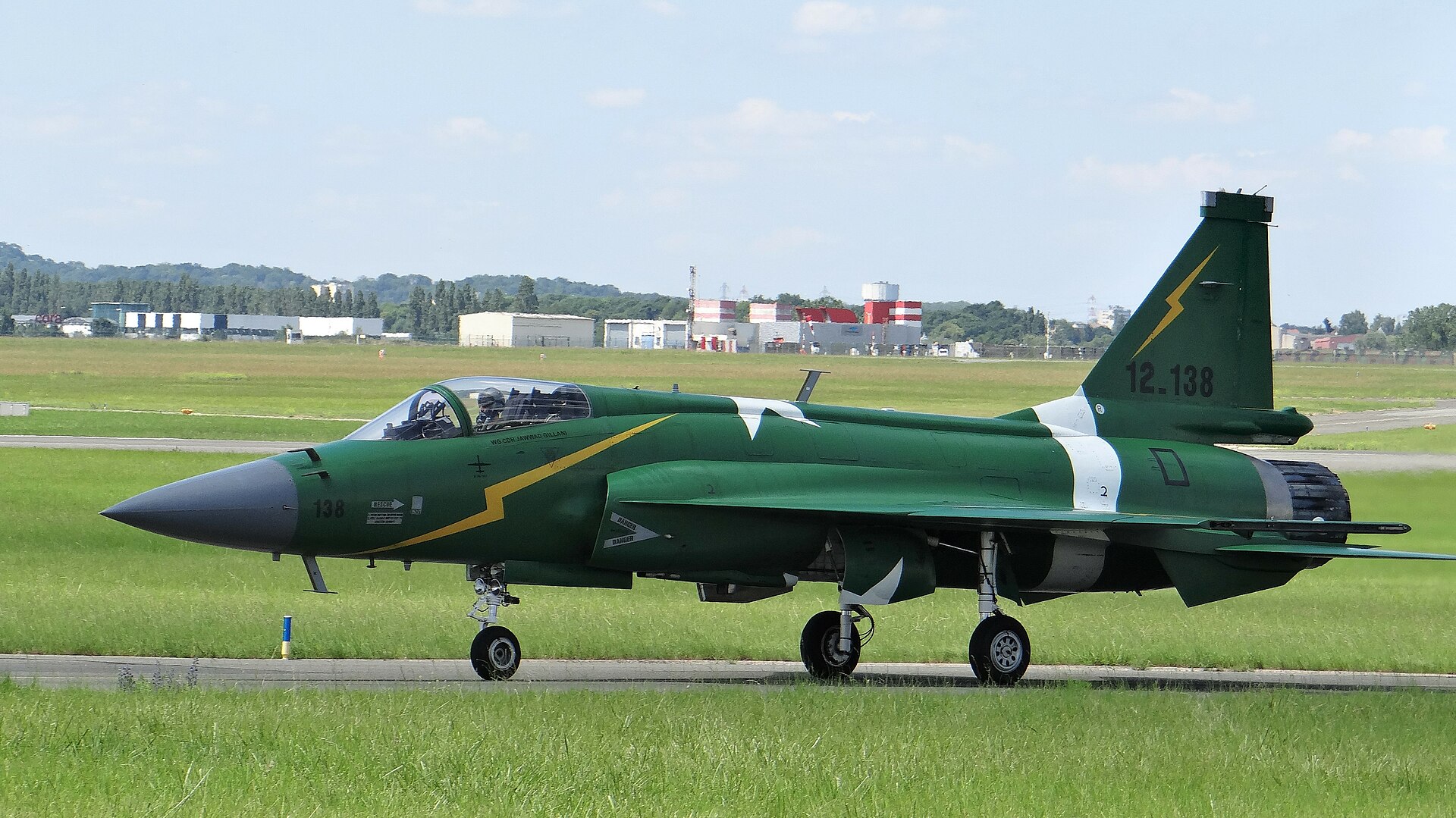
Saudi Arabia responded by building its own counter-network. Riyadh negotiated a $4 billion Pakistan-Sudan fighter jet deal for the SAF, initiated a trilateral military framework with Turkey and Pakistan, and deepened ties with Egypt and Somalia to contain Emirati influence around the Red Sea. Jonathan Panikoff, director of the Atlantic Council’s Scowcroft Middle East Security Initiative and a former deputy national intelligence officer, warned in Foreign Affairs in February 2026 that the rivalry’s proxy dimensions “will shape the region for the next decade, including how they approach security engagements with Western powers, how they court private-sector investments, and how they choose to engage in several ongoing and brewing regional conflicts.”
That deal, however, has since stalled. On March 25, diplomatic sources confirmed that Saudi Arabia suspended the $1.5 billion arms package over the Sudanese army’s ties to Islamist factions that declared support for Iran, exposing the fragility of Riyadh’s counter-network strategy.
Can the Gulf Cooperation Council Survive Its Two Largest Members Fighting?
The GCC was founded in 1981 to present a unified front against external threats, first Iraq and then Iran. For forty-five years, it has served as the institutional framework for Gulf coordination on trade, defence, currency, and diplomacy. The Saudi-UAE rivalry is testing whether that framework can withstand a structural fracture between its two most powerful members.
The 2017-2021 Qatar blockade provided an early stress test. Saudi Arabia, the UAE, Bahrain, and Egypt imposed a diplomatic and economic embargo on Qatar over its ties with the Muslim Brotherhood and Iran. The blockade failed to achieve its objectives and was resolved in January 2021 at the Al-Ula summit, but it exposed the GCC’s inability to prevent its own members from conducting economic warfare against each other. The Saudi-UAE rivalry is a more dangerous version of the same dynamic, because it involves the two states that together account for seventy-five percent of GCC economic output.
The Carnegie Endowment for International Peace assessed in February 2026 that the GCC “lacks unifying frameworks” and that each member state increasingly “goes its own way” even on shared objectives. Kuwait, Oman, and Bahrain find themselves navigating between Saudi and Emirati gravitational pulls, forced to calibrate their positions on Yemen, Sudan, OPEC, Israel, and now the Iran war relative to the preferences of both Riyadh and Abu Dhabi.
The Iran war has temporarily restored a veneer of unity. The GCC’s 50th Extraordinary Ministerial Meeting on March 1 produced a joint statement condemning Iranian aggression. All six member states have expelled Iranian diplomatic staff. But even within the wartime consensus, the fractures are visible. The UAE wants prolonged military operations to permanently degrade Iranian capabilities. Saudi Arabia, while committed to its own defence, has shown greater interest in a negotiated resolution. Qatar, despite expelling Iranian attachés, has maintained back-channel communication with Tehran. Oman, historically Iran’s interlocutor in the Gulf, has attempted to position itself as a mediator.
The GCC’s institutional weakness is not a bug. It is a feature of Saudi design. Riyadh has historically preferred a loose consultative framework that preserves its natural dominance rather than a binding alliance that would require concessions to smaller members. The UAE’s growing power threatens that arrangement. If Abu Dhabi can build a parallel security architecture with Israel, the United States, and selected African states, the GCC’s relevance diminishes, and with it Saudi Arabia’s institutional leverage over its neighbours.
The $1.8 Trillion Economic Battle
Saudi Arabia’s GDP reached $1.27 trillion in 2025, according to the International Monetary Fund. The UAE’s stood at $552 billion. Combined, they account for nearly three-quarters of the GCC’s economic output. Yet the aggregate numbers obscure a more textured competition in which the UAE frequently punches above its weight.
The UAE’s GDP per capita of $50,274 exceeds Saudi Arabia’s $35,122. The UAE’s fiscal position is stronger: Abu Dhabi ran a surplus of $26.7 billion in 2024, equivalent to 4.83 percent of GDP, while Saudi Arabia recorded a deficit of $35.2 billion, or 2.84 percent of GDP. The UAE’s economy is projected to grow 5.6 percent in 2026 compared with Saudi Arabia’s 4.3 percent, according to the Institute of Chartered Accountants in England and Wales.
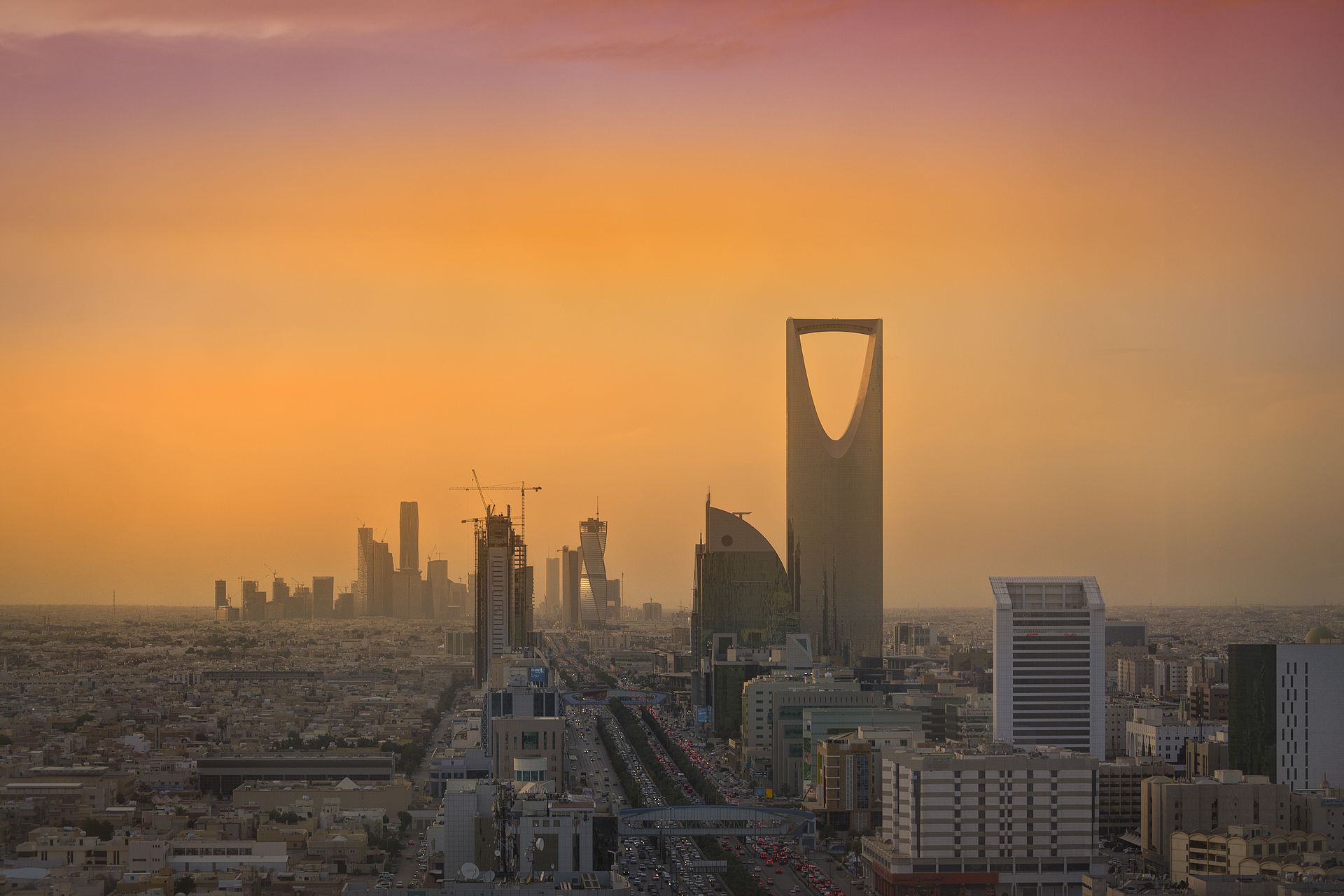
Saudi Arabia is closing the gap through sheer scale. Non-oil revenues reached $137.29 billion in 2025, a 113 percent increase from the 2016 baseline. Foreign direct investment hit $31.7 billion in 2024, a 24 percent increase over the prior year. The headquarters programme surpassed its 2030 target of 500 relocations six years early, with nearly 600 multinationals now operating from Riyadh. Dubai attracted 19.59 million international visitors in 2025. Saudi Arabia hosted 30 million, and aims for 150 million by 2030.
The competition extends into events diplomacy. Saudi Arabia is hosting the 2034 FIFA World Cup across five cities with fifteen stadiums, the 2030 World Expo in Riyadh, the 2027 AFC Asian Cup, and the 2034 Asian Games. The UAE hosted Expo 2020 Dubai. In aviation, Saudi Arabia is launching Riyadh Air to compete directly with Emirates and Qatar Airways. The kingdom is building an entirely new airline from scratch to break what it perceives as Emirati dominance of Gulf aviation.
| Metric | Saudi Arabia | UAE | Advantage |
|---|---|---|---|
| GDP (nominal) | $1.27 trillion | $552 billion | Saudi Arabia |
| GDP per capita | $35,122 | $50,274 | UAE |
| GDP growth (2026 forecast) | 4.3% | 5.6% | UAE |
| Fiscal balance (% GDP, 2024) | -2.84% | +4.83% | UAE |
| FDI inflows (2024) | $31.7 billion | $30.7 billion | Saudi Arabia |
| International visitors (2025) | 30 million | 19.6 million | Saudi Arabia |
| Regional HQ relocations | ~600 | N/A (losing share) | Saudi Arabia |
| Non-oil share of GDP | ~76% | ~78% | UAE (marginally) |
Is OPEC Surviving the Saudi-UAE Oil War?
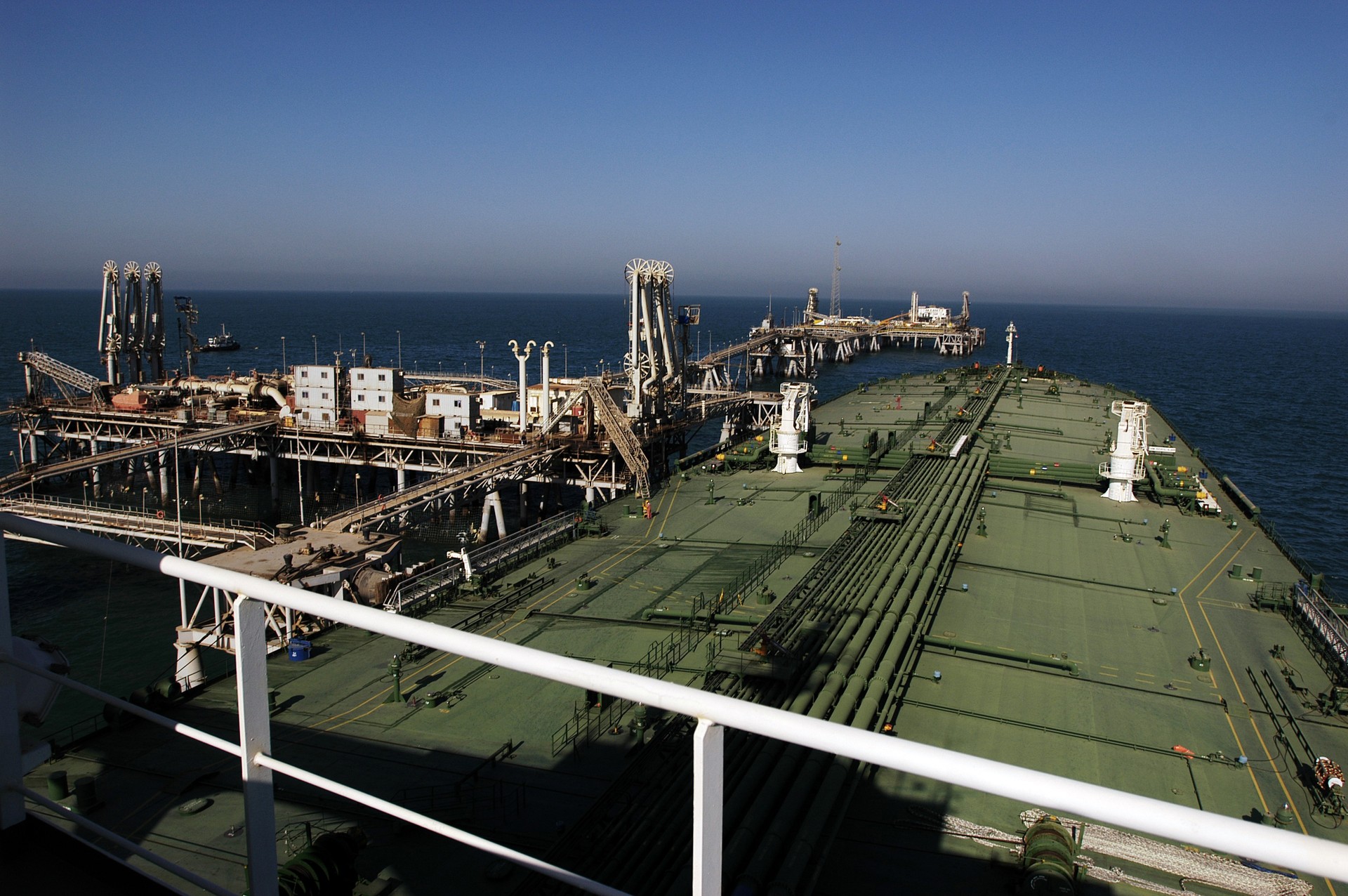
The OPEC production dispute is the rivalry’s most dangerous economic dimension. Saudi Arabia, as the cartel’s dominant swing producer, wants supply discipline to support prices. The UAE has invested billions through ADNOC to expand production capacity to five million barrels per day by 2027 but is constrained by an OPEC baseline allocation of just 3.219 million barrels per day. Abu Dhabi regards the quota as an artificial ceiling that punishes investment and rewards restraint.
In February 2024, shipment tracking data showed the UAE exceeding its production ceiling, prompting what the Middle East Institute described as a dispute that “edged perilously close to a fresh explosion.” By June 2025, The Economist posed the question directly: could the UAE break OPEC? The concern was not hypothetical. OPEC lacks a formal mechanism for sanctioning countries that chronically overproduce, and the UAE’s $22 billion capital expenditure programme at ADNOC makes adherence to artificially low quotas increasingly untenable.
The Iran war temporarily paused the production argument. Both nations froze output increases for the first quarter of 2026 as crude prices spiked past $114 on the Strait of Hormuz disruption. But the structural tension persists. Saudi production in February 2026 stood at 10.1 million barrels per day. The UAE produced 3.14 million. When the war ends, the quota dispute will return with added urgency, because both nations will need maximum revenue to fund reconstruction and replenish reserves depleted by months of conflict.
Who Spends More on Defense and Why It Matters
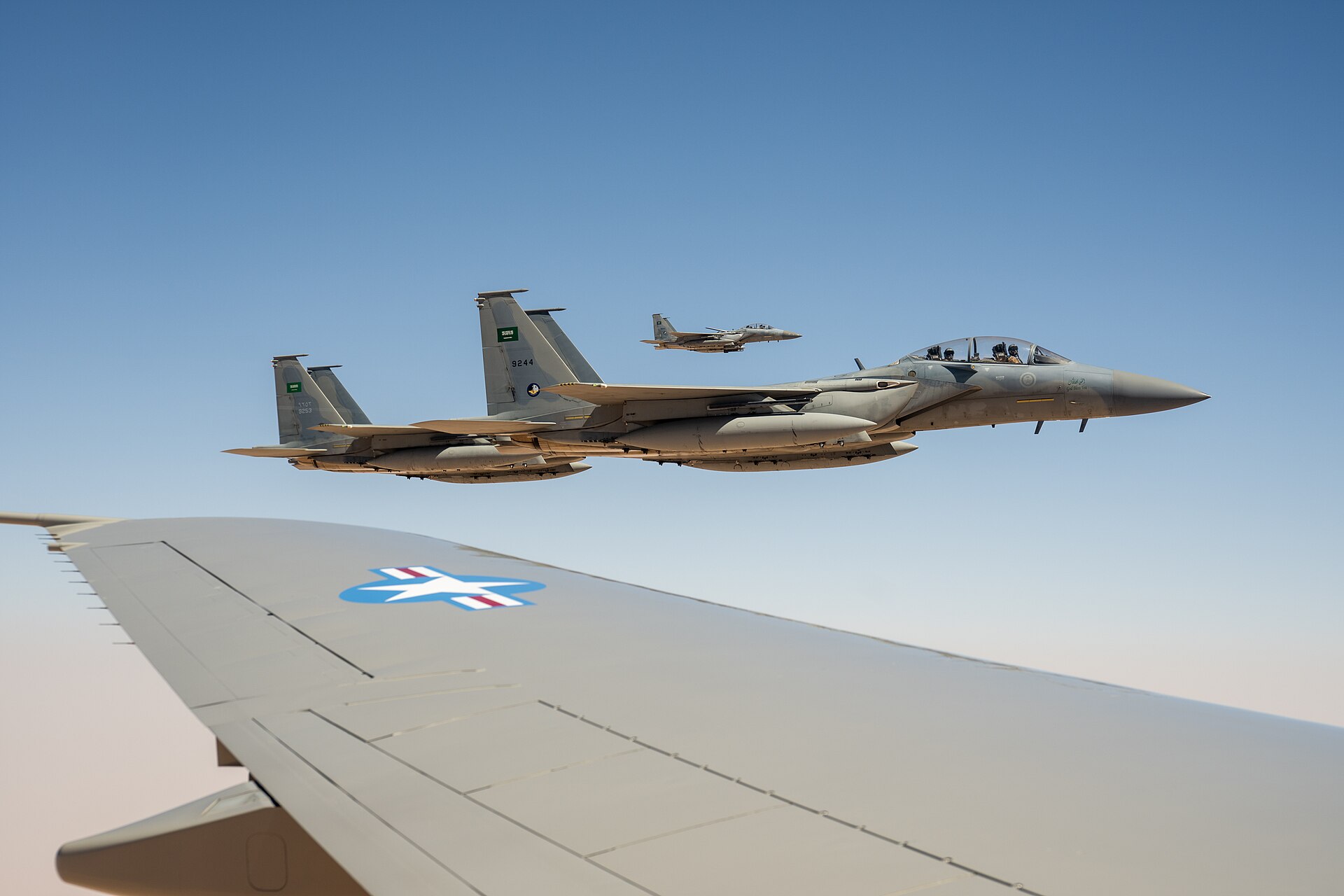
Saudi Arabia allocated $78 billion for defense in 2025, making it the world’s sixth-largest military spender and the largest in the Middle East. The UAE spent $22.8 billion. The disparity is more than financial. Saudi Arabia fields 282,000 active military personnel to the UAE’s 63,000, operates 384 combat aircraft to the UAE’s 135, and deploys 840 main battle tanks to the UAE’s 354, according to Global Firepower data.
Yet the rivalry plays out in procurement, not just budgets. Both nations compete for the same Western weapons platforms, and both use arms purchases as diplomatic currency. The UAE acquired the F-35 Lightning II through the Abraham Accords, a deal that remains a source of Saudi frustration given the Kingdom’s repeated inability to secure the same aircraft. Saudi Arabia responded by deepening its relationship with BAE Systems and the Eurofighter Typhoon programme while developing domestic production through SAMI and GAMI.
The tension surfaced publicly in February 2026 when approximately thirty Emirati defence entities listed as exhibitors at the Saudi World Defense Show failed to appear. EDGE Group, the UAE’s largest defence conglomerate, had booked a major exhibition plot that was ultimately repurposed as a coffee shop. Ryan Bohl, a senior MENA analyst at the RANE Network, told Breaking Defense that the boycott represented companies “trying to signal to Saudi Arabia their displeasure and some of the economic consequences” of the escalating rift.
The Iran war has exposed the practical limits of this competition. Both air forces are flying simultaneous defensive missions against Iranian drones and missiles. Saudi Arabia’s $80 billion military and the UAE’s $22.8 billion force are burning through interceptor stocks at rates neither budgeted for. The shared threat has forced tactical coordination, including intelligence sharing and joint early-warning protocols. Whether this battlefield cooperation translates into strategic reconciliation remains the war’s most important unanswered question.
| Capability | Saudi Arabia | UAE | Ratio |
|---|---|---|---|
| Defense budget | $78 billion | $22.8 billion | 3.4:1 |
| Active personnel | 282,000 | 63,000 | 4.5:1 |
| Combat aircraft | 384 | 135 | 2.8:1 |
| Main battle tanks | 840 | 354 | 2.4:1 |
| Naval vessels | 29 | 79 | 0.4:1 |
| F-35 access | No | Yes | N/A |
AI, Sovereign Wealth, and the Race for the Future
The sovereign wealth competition may ultimately matter more than the military one. Saudi Arabia’s Public Investment Fund surpassed $1.15 trillion in assets under management in 2025, overtaking Abu Dhabi’s ADIA at $1.11 trillion. The PIF was crowned the world’s most active sovereign wealth fund in 2025, deploying $36.2 billion across global investments, according to Asharq Al-Awsat. Its target is $2 trillion by 2030, with some analysts suggesting a trajectory toward $3 trillion.
Abu Dhabi counters with depth rather than scale. Mubadala Investment Company manages $326 billion with annualised returns of 10.1 percent over five years. Combined with ADIA and the Abu Dhabi Investment Council, Emirati sovereign wealth exceeds $1.7 trillion across three funds, each with distinct mandates and risk profiles.
The most visible battlefront is artificial intelligence. Both nations announced $100 billion AI investment commitments in 2024. Saudi Arabia signed a $10 billion partnership between PIF and Google Cloud, a $14 billion Oracle cloud and AI infrastructure deal, and a $5 billion AWS “AI Zone” with Humain. At the LEAP 2025 conference in Riyadh, Reuters reported $14.9 billion in new AI investments announced in a single week. Saudi Arabia’s planned data centre capacity of 2,200 megawatts dwarfs the UAE’s 500 megawatts by a factor of 4.4.
The UAE, which appointed the world’s first Minister of State for Artificial Intelligence in 2017 and established the Mohamed bin Zayed University of Artificial Intelligence, counters with institutional maturity and a talent ecosystem that Saudi Arabia is still building. The rivalry is producing a paradox: two neighbouring states spending a combined $200 billion on AI infrastructure that will largely duplicate each other’s capabilities, in a region where a single coordinated investment would deliver greater returns at lower cost.
The competition extends into how each country deploys its sovereign wealth. The PIF has pivoted from megaproject spectacle toward strategic infrastructure. In early 2026, as the Iran war accelerated, the PIF cut funding for NEOM’s most ambitious components and redirected capital toward grain reserves, AI data centres, and logistics infrastructure along the Red Sea. Mubadala, by contrast, has maintained its global technology portfolio, with significant stakes in Silicon Valley and Southeast Asian tech platforms. The PIF chases national transformation. Mubadala chases returns. Both approaches carry risks, and neither fund’s leadership appears inclined to learn from the other.
PIF’s pivot deepened in late March 2026 when Governor Yasir Al-Rumayyan used the FII PRIORITY Miami summit to unveil a new five-year strategy cutting capital spending 15 percent and prioritising AI exports through HUMAIN’s first American customer deal with Turing.
Riyadh Air’s planned launch represents perhaps the most provocative move in the economic competition. Saudi Arabia is building a full-service international carrier to compete directly with Emirates, the airline that made Dubai a global transit hub. The decision to create a rival airline rather than expand existing carrier Saudia signals that Riyadh views Dubai’s aviation monopoly as a strategic vulnerability rather than a shared Gulf asset. Emirates carried 51.7 million passengers in 2024. Riyadh Air aims to serve 330 destinations by 2030. The airline war has not yet begun, but its terms are already set.
Did the Iran War Fix the Rivalry or Freeze It?
When Iranian missiles struck Riyadh, Dhahran, Abu Dhabi, Dubai, Kuwait City, and Manama on February 28, 2026, the Saudi-UAE rivalry became momentarily irrelevant. The GCC convened its 50th Extraordinary Ministerial Meeting within hours. Both nations expelled Iranian diplomatic staff. Both took steps toward joining the US-led military campaign. Saudi Arabia agreed to US access to King Fahd Air Base. The UAE, whose pre-war strategy had centred on diplomatic engagement with Tehran, saw that investment destroyed in a single night of missile fire.
Bader al-Saif, an assistant professor at Kuwait University and associate fellow at Chatham House, told Middle East Eye in March 2026 that “within the GCC, there’s a high sense of ‘we’re in it together, we can’t afford further conflict.’” The shared threat produced genuine tactical cooperation: joint intelligence sharing, coordinated air defence, and aligned diplomatic messaging at the United Nations.
But the war also revealed a critical divergence in strategic appetite. The Atlantic Council’s analysis of post-war Gulf dynamics noted that “it is most strongly felt in the UAE that Iran’s military capabilities should be further degraded,” while Saudi Arabia remained more cautious about the duration and scope of military operations. The UAE told American officials it was “geared up for a long war” of up to nine months. Saudi Arabia, bearing a larger share of the civilian damage and possessing a more complex relationship with regional stability, favoured a faster path to negotiation.
Multiple analysts, including those at the Carnegie Endowment for International Peace, have concluded that the Iran war temporarily suppresses but does not resolve the underlying competition. The structural drivers, including economic diversification, proxy conflicts in Yemen and Sudan, OPEC disputes, and personal tensions between leaders, remain intact beneath the surface of wartime solidarity. When the missiles stop, the rivalry will resume with the added complication that both sides will want credit for winning the peace.
The Gulf Divergence Matrix
Mapping the rivalry across seven dimensions reveals a pattern: Saudi Arabia leads on scale and resources, while the UAE leads on agility, returns, and institutional development. Neither advantage is decisive, which ensures the competition will persist.
| Dimension | Saudi Arabia | UAE | Trajectory |
|---|---|---|---|
| Economic model | Scale-driven transformation (Vision 2030) | Agile diversification (mature ecosystem) | Converging but not aligned |
| Security doctrine | De-escalatory developmentalism | Pre-emptive activism | Diverging |
| Proxy strategy | State preservation (Yemen, Sudan) | Fragmentation via non-state actors | Sharply diverging |
| Israel policy | Conditional normalisation (requires Palestinian statehood) | Full normalisation (Abraham Accords) | Diverging |
| OPEC stance | Supply discipline (defend price) | Capacity liberation (expand market share) | Collision course |
| Iran war posture | Defensive, cautious escalation | Aggressive, wants prolonged degradation | Diverging on war aims |
| Post-war ambition | Lead GCC reconstruction order | Lead security architecture with Israel/US | Competing visions |
The matrix reveals that Saudi Arabia and the UAE agree on one objective: both want to be the Gulf’s preeminent power. They disagree on nearly every means of achieving it. H.A. Hellyer’s framework at RUSI captures the core tension: Saudi Arabia wants stability as the precondition for development. The UAE wants influence as the precondition for security. These are not complementary goals. They are competing theories of regional order, and the Iran war has not reconciled them.
Their quarreling will shape the region for the next decade, including how they approach security engagements with Western powers, how they court private-sector investments, and how they choose to engage in several ongoing and brewing regional conflicts.
Jonathan Panikoff, Atlantic Council / Foreign Affairs, February 2026
What Does the Post-War Gulf Look Like?
The Gulf that emerges from the Iran war will be structurally different from the one that entered it, but not in the way most commentators expect. The conventional assumption is that shared Iranian aggression will cement GCC unity. The evidence points in the opposite direction. The war has exposed and, in some cases, widened the fault lines between Saudi Arabia and the UAE across at least four dimensions.
The first is reconstruction leadership. Both nations will compete to lead the post-war regional order. Saudi Arabia, with its larger economy, population, and geographic centrality, will claim the natural right to coordinate GCC security and reconstruction. The UAE, with its deeper institutional relationships with the United States and Israel, will argue that its activism during the war earned it a seat at the head of the table. Neither will defer.
The second is the security architecture debate. The war has revived calls for a Gulf collective defence pact, a decades-old aspiration that has never materialised because Saudi Arabia and the UAE cannot agree on its structure. Riyadh wants a Saudi-led framework. Abu Dhabi wants a multilateral arrangement that includes Israel. These are irreconcilable positions as long as Saudi Arabia conditions normalisation on Palestinian statehood.
The third is the energy market reconfiguration. The Strait of Hormuz disruption has accelerated investment in bypass infrastructure, pipeline alternatives, and strategic petroleum reserves. Saudi Arabia’s Yanbu terminal on the Red Sea gained importance as the Gulf’s only functioning export outlet during the blockade. The UAE’s Fujairah terminal was hit by Iranian strikes. The war has permanently altered both nations’ energy infrastructure calculus, and their competing interests within OPEC will sharpen as they race to rebuild export capacity.
The fourth is the AI and technology dimension. Both nations have bet their post-oil futures on artificial intelligence, data centres, and digital infrastructure. A combined $200 billion in committed AI investment is being deployed in parallel rather than in partnership. The result is redundancy at scale: two competing sovereign clouds, two competing AI research universities, two competing talent acquisition strategies, all separated by a ninety-minute flight.
The British Institute of Security and Intelligence assessed in January 2026 that the medium-term trajectory points toward “structured rivalry across multiple theatres” evolving into a “cold war with rival security alliances and competing economic corridors.” The Carnegie Endowment noted that the GCC lacks unifying frameworks and that each member state increasingly “goes its own way” even on shared objectives.
The most consequential question for Western and Asian capitals is how to manage a rivalry that cannot be mediated and should not be inflamed. Panikoff warned in Foreign Affairs that “if Washington or European capitals show a preference for one side, they will lose influence and investment opportunities with the other. Worse still, they could undermine regional stability at the moment it is most needed.”
The bilateral trade relationship itself illustrates the paradox. Saudi-UAE trade reached $31.58 billion in 2024, a twenty-five percent increase since 2019 according to Arab News. The two economies are deeply interdependent even as their governments compete. Saudi exports to the UAE totalled $18.75 billion, while Emirati exports to the Kingdom reached $12.83 billion. Thousands of Emirati businesses operate in Saudi Arabia and vice versa. Supply chains, banking networks, and family ties cross the border daily. The rivalry operates not between disconnected states but between deeply integrated economies that are simultaneously trying to poach each other’s competitive advantages.
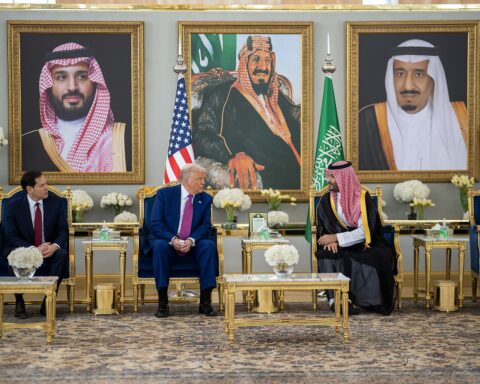
For the United States, the rivalry presents a delicate balancing act. Washington sells weapons to both countries, stations forces in both countries, and depends on both for energy security and counterterrorism intelligence. The Trump administration’s response to the December 2025 Yemen escalation was revealing: Secretary of State Marco Rubio praised both nations’ “diplomatic leadership” and urged “restrained and continued diplomacy,” refusing to assign blame or take sides. Panikoff warned that this neutrality, while pragmatic, may not survive a post-war environment in which both nations demand preferential treatment as a reward for wartime cooperation.
The Saudi-UAE rivalry is not a crisis to be resolved. It is a condition to be managed. Two ambitious states, led by two ambitious men, competing across every domain of national power in a region that just survived its worst military crisis in a generation. The Iran war did not end the rivalry. It raised the stakes.
Frequently Asked Questions
What caused the Saudi Arabia-UAE rivalry?
The rivalry stems from three structural forces: economic competition as Saudi Arabia’s Vision 2030 directly challenges Dubai’s business model, divergent security doctrines where Saudi Arabia favours stability and the UAE favours intervention, and personal tensions between Crown Prince Mohammed bin Salman and President Mohammed bin Zayed that deteriorated after the UAE signed the Abraham Accords with Israel in 2020 without Saudi participation.
Are Saudi Arabia and the UAE fighting each other in Yemen?
In December 2025, the competition turned violent when UAE-backed Southern Transitional Council forces seized territories bordering Saudi Arabia. Riyadh responded with airstrikes against STC positions and an Emirati weapons shipment at Mukalla port. By January 2026, Saudi-aligned forces rolled back the separatist gains and the UAE announced a full withdrawal from Yemen.
How does the Iran war affect the Saudi-UAE rivalry?
The Iran war has forced temporary tactical cooperation, including joint air defence, intelligence sharing, and coordinated diplomacy at the United Nations. However, analysts at the Atlantic Council, Carnegie, and RUSI assess that the war suppresses rather than resolves the underlying competition, which will resume with greater intensity once hostilities end, compounded by disputes over who leads the post-war order.
Who has the larger military, Saudi Arabia or the UAE?
Saudi Arabia significantly outspends the UAE on defence, allocating $78 billion compared with $22.8 billion. Saudi Arabia fields 282,000 active personnel, 384 combat aircraft, and 840 main battle tanks. The UAE has 63,000 personnel, 135 combat aircraft, and 354 tanks, but leads in naval vessel count with 79 compared to Saudi Arabia’s 29 and possesses F-35 stealth fighters that Saudi Arabia does not.
Will the Saudi-UAE rivalry break OPEC?
The UAE has invested heavily in expanding oil production capacity to five million barrels per day by 2027, but its OPEC quota limits output to 3.219 million barrels per day. In June 2025, The Economist asked directly whether the UAE could break OPEC. The cartel lacks enforcement mechanisms for quota violations, and the post-war revenue imperative will intensify the production dispute between Riyadh and Abu Dhabi.
How do Saudi Arabia and the UAE compete economically?
The competition spans corporate headquarters, with over 550 multinationals relocating to Riyadh under a mandatory programme; tourism, where Saudi Arabia hosted 30 million visitors to Dubai’s 19.6 million in 2025; sovereign wealth, with Saudi Arabia’s PIF at $1.15 trillion versus Abu Dhabi’s ADIA at $1.11 trillion; and artificial intelligence, with both nations committing $100 billion each to AI infrastructure development.