
TEHRAN — Iran’s war against the United States and its Gulf allies was supposed to demonstrate the Islamic Republic’s strategic depth. Instead, it has exposed the hollowness at its core. Twenty-seven days into the 2026 conflict, Iran’s military continues to launch drones and ballistic missiles at Saudi Arabia, the UAE, and Kuwait — but the regime behind those missiles is disintegrating. The rial has lost more than 96 percent of its value since 2020. Inflation exceeded 62 percent in February. More than 3.2 million Iranians have been internally displaced. Power blackouts lasting five hours a day have become routine across industrial zones. And the protests that erupted in December 2025 — killing thousands before the first American bomb fell — revealed a population that had already turned against its government. The question confronting Riyadh, Abu Dhabi, and Washington is no longer whether Iran can win this war. It is whether the Iranian state can survive it, and what replaces it if it cannot.
Table of Contents
- How Bad Is Iran’s Economic Crisis in 2026?
- What Killed the Iranian Rial?
- The Protests That Preceded the Bombs
- Can Iran’s Power Grid Survive the War?
- Where Have 3.2 Million Displaced Iranians Gone?
- The Regime Resilience Matrix
- Iran’s Proxy Networks Are Fragmenting Without Orders
- Did Iran’s Hormuz Blockade Bankrupt Iran Faster Than Its Enemies?
- Why Saudi Arabia Should Fear Iran’s Collapse More Than Its Missiles
- What Does Riyadh Do When Tehran Falls?
- The Gulf’s Post-Iran Security Architecture
- Frequently Asked Questions
How Bad Is Iran’s Economic Crisis in 2026?
Iran’s economy in March 2026 is experiencing its deepest contraction in modern history, with the war accelerating a decline that was already underway before the first missile crossed the Persian Gulf. The World Bank projects Iran’s GDP will shrink by 2.8 percent in 2026, following a 1.7 percent contraction in 2025 — marking the first consecutive years of negative growth since the Iran-Iraq War of the 1980s.
The numbers paint a picture of systemic failure across every measurable economic indicator. Annual inflation reached 44.6 percent in the twelve months ending late January 2026, according to Iran’s own Statistical Centre. But that headline figure conceals the reality on the ground: point-to-point inflation in Bahman (the Iranian calendar month spanning January 21 to February 19) hit 62.2 percent, according to data compiled by Iran International. Food inflation — the measure that matters most to the 22 to 50 percent of Iranians living below the poverty line — has exceeded 100 percent.
The IMF expects Iran’s actual oil exports to average just 1.1 million barrels per day in 2026, well below the government’s budget assumptions. The reimposition of UN snapback sanctions in October 2025 curtailed what remained of Iran’s formal export channels, while the country’s own Hormuz blockade — intended to pressure the Gulf states and their Western allies — has paradoxically stranded Iranian crude alongside everyone else’s.
| Indicator | Pre-War (Feb 2026) | Current (Mar 2026) | Change |
|---|---|---|---|
| GDP growth forecast | -1.7% | -2.8% | Worsened |
| Annual inflation | 44.6% | 62.2% (point-to-point) | +17.6pp |
| Food inflation | ~80% | 100%+ | Accelerating |
| Oil exports (mb/d) | 1.4 | ~0.3 (estimated) | -79% |
| Rial per USD (open market) | 1,420,000 | 1,570,000 | -10.6% |
| Poverty rate | 22-50% | Rising | Unknown |
| Internally displaced | 0 | 3,200,000 | — |
The cumulative weight of these figures represents something more than a recession. Economists at Iran International have described it as “the slow death of an economy that was already on life support.” The World Bank has warned that output is unlikely to recover until sanctions relief or new trade channels emerge — neither of which appears plausible while the war continues.
What Killed the Iranian Rial?
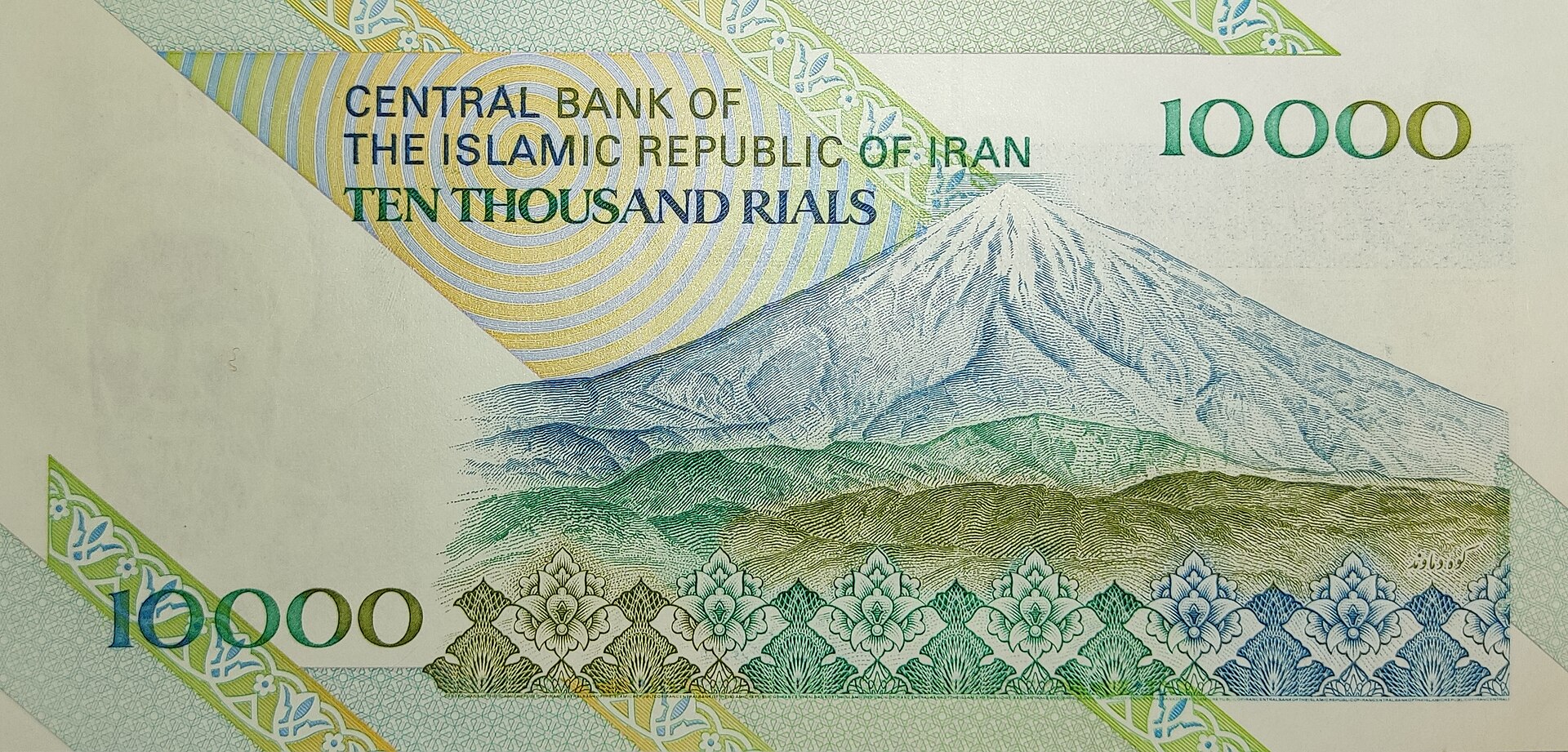
The Iranian rial’s collapse is the single most visible symptom of the Islamic Republic’s economic disintegration, and its trajectory tells the story of a currency that has been dying in stages for over a decade. In 2020, one US dollar bought approximately 42,000 rials at the official rate. When Mohammad Reza Farzin took office as Governor of the Central Bank in December 2022, the open-market rate stood at 430,000 rials to the dollar. By December 2025 — before a single bomb fell on Iran — the rial had crashed to a record low of 1.42 million to the dollar, triggering Farzin’s resignation on December 29.
The Middle East briefing 3,000+ readers start their day with.
One email. Every weekday morning. Free.
Three forces converged to destroy the rial. The first was the reimposition of UN snapback sanctions in October 2025, which reactivated restrictions that had been suspended under the 2015 nuclear agreement. These sanctions cut off Iran’s remaining formal access to international financial markets, throttled what was left of its legitimate trade, and triggered a rush into hard currency among Iranian businesses and households.
The second was the collapse of oil revenue. Iran’s crude exports — already squeezed by American maximum pressure sanctions — fell further as the snapback mechanism gave legal cover to countries that had been quietly buying Iranian oil through intermediaries. China, which had been importing approximately 1.5 million barrels per day of Iranian crude through opaque trading networks, reduced purchases significantly under the combined weight of snapback sanctions and its own desire to maintain stable relations with Washington.
The third, and most devastating, was the war itself. When the US and Israel launched Operation Epic Fury on February 28, 2026, the rial’s remaining floor collapsed. The open-market rate breached 1.5 million in late January 2026 and extended losses through February, touching 1.66 million in early March before stabilizing around 1.57 million by late March. That stabilization is misleading — it reflects not renewed confidence, but the effective cessation of formal currency markets in a country where most transactions now occur through informal hawala networks or in kind.
The rial’s death has real consequences for ordinary Iranians. A family earning the median Iranian salary of approximately 150 million rials per month — roughly $95 at current exchange rates — finds that a kilogram of beef costs 3.5 million rials, a kilogram of rice costs 800,000 rials, and a month’s electricity bill, for those who receive power at all, has tripled since the war began. The middle class that existed under the reformist government of Hassan Rouhani has been functionally destroyed.
The Protests That Preceded the Bombs
Western media has framed the 2026 Iran war as beginning on February 28, when American and Israeli warplanes struck nuclear facilities, military bases, and IRGC command centres across Iran. But inside Iran, the crisis began two months earlier. The protests that erupted on December 28, 2025, represented the most widespread challenge to the Islamic Republic since the 1979 revolution — and they were driven not by external aggression but by the accumulated weight of economic failure.
The immediate trigger was the rial’s crash below 1.4 million to the dollar, which erased the remaining purchasing power of millions of Iranian workers and pensioners overnight. Protests began in the western provinces of Lorestan, Ilam, and Kermanshah — regions home to Kurdish and Luri ethnic minorities that had borne disproportionate economic hardship — and spread within 72 hours to more than 200 cities across all 31 of Iran’s provinces, according to tracking by Amnesty International.
What followed was the deadliest crackdown in the Islamic Republic’s history. On January 8 and 9, 2026, security forces carried out mass killings of protesters that Amnesty International described as a “systematic campaign of unlawful killings.” The casualty figures remain contested and deeply political. NPR, citing activist networks, reported at least 6,126 killed. Iran International, reviewing leaked Ministry of Health documents, put the figure at more than 36,500 dead in the two-day crackdown alone — a number that, if confirmed, would make it the deadliest state massacre of civilians in the 21st century.
Iranian authorities cut all internet access to the country on January 8 — a blackout that lasted eleven days and concealed the full scale of the violence. When partial connectivity was restored, the evidence that filtered out through satellite phones and smuggled footage showed scenes that Human Rights Watch described as a “human rights situation spiraling deeper into crisis.”
The significance of the December-January protests for the current war cannot be overstated. They demonstrated that the Iranian regime faced an existential domestic threat before external powers intervened. The war, paradoxically, gave the IRGC a justification for the continued security lockdown that had been imposed to suppress the protests. But it also added fuel to the economic fire that caused them, creating a feedback loop that Mojtaba Khamenei — who inherited a diplomatically isolated regime following his father’s death — has no obvious means of breaking.
Can Iran’s Power Grid Survive the War?
Iran’s electricity infrastructure was failing before the war began, and twenty-seven days of strikes have transformed a chronic problem into an acute crisis. Since February 2025 — a full year before the current conflict — Iranian households had been enduring daily blackouts lasting three to four hours. The underlying cause was decades of underinvestment in generation capacity, which energy experts estimate lags demand by approximately 14,000 megawatts.
The war has made everything worse. Israeli strikes in 2024 and 2025 destroyed two natural gas pipelines that supplied roughly 68 percent of the country’s energy, triggering electricity outages across five provinces. During the current conflict, US and Israeli forces have targeted oil storage sites, refineries, and power stations — though President Trump’s decision to delay strikes on Iran’s main power grid has prevented the total collapse that many analysts predicted.
The most significant escalation came on March 18, when US and Israeli forces struck Iran’s South Pars gas field — the world’s largest natural gas reservoir, shared with Qatar. That strike marked the first direct attack on gas infrastructure since the war began and carries the potential for lasting damage to Iran’s long-term production capacity. South Pars supplies not only domestic electricity generation but also the feedstock for Iran’s petrochemical industry, one of the few export sectors that had continued to function under sanctions.
Industrial zones across Iran now experience unscheduled blackouts of up to five hours daily, according to reporting by Iran International. Factories that survived sanctions are shutting down because they cannot maintain production schedules without reliable power. Hospitals in Tehran have reported operating on emergency generators for extended periods, with fuel deliveries becoming increasingly unreliable as the transportation network degrades.
The power crisis compounds every other dimension of Iran’s economic collapse. Without electricity, banks cannot process transactions. Without functioning refineries, fuel shortages create cascading failures in food distribution. Without internet — which requires powered telecommunications infrastructure — the government cannot even communicate with its own population. Greenpeace has warned that sustained strikes on Iran’s power grid could trigger a humanitarian and nuclear disaster, given the proximity of electricity infrastructure to the Bushehr nuclear power plant.
Where Have 3.2 Million Displaced Iranians Gone?
The UNHCR estimates that between 600,000 and one million Iranian households — representing up to 3.2 million people — have been temporarily displaced inside Iran since the war began. The displacement is concentrated among residents of Tehran, which has absorbed the majority of US and Israeli strikes, with populations flowing northward toward smaller urban centres and rural areas in the Alborz and Gilan provinces.
The displacement crisis has a specifically destabilizing quality because Iran’s internal infrastructure cannot support it. Roads between Tehran and northern cities were not designed for mass evacuation. The Iranian Red Crescent Society, which has historically managed disaster response within the country, has been overwhelmed by the scale of the movement. Fortune reported that more than three million displaced Iranians are “setting up a potential migration crisis” that could extend beyond Iran’s borders into Turkey, Iraq, and Pakistan.
Al Jazeera’s reporting in late March estimated total displacement across the wider conflict zone at four million people — three million within Iran and an additional one million in Lebanon, where Israeli operations against Hezbollah have opened a second displacement front. The convergence of these crises places enormous strain on humanitarian agencies that are already stretched thin from years of responding to the Syrian, Ukrainian, and Sudanese displacement emergencies.
For Saudi Arabia and the Gulf states, Iran’s internal displacement presents a strategic variable that has received insufficient attention. Displaced populations create ungoverned spaces. Ungoverned spaces, in a country that hosts the IRGC’s most sensitive weapons production facilities, create proliferation risks. And a refugee flow that reaches Turkey or Iraq could destabilize the northern perimeter of the Gulf security environment at the very moment when the southern perimeter is under direct Iranian attack. A strategic audit of the first twenty-eight days of the Iran war reveals how profoundly the conflict has already reshaped the regional alliance system.
The Regime Resilience Matrix
Measuring the stability of the Islamic Republic requires an analytical approach that goes beyond economic data alone. Six dimensions determine whether a regime under pressure survives or fractures: economic capacity, military coherence, institutional legitimacy, social control, external support, and energy independence. Scoring each dimension on a scale of one to ten — where ten represents full capacity and one represents functional collapse — produces a composite picture that neither Tehran’s propaganda nor Western triumphalism accurately captures.
| Dimension | Pre-War Score (Feb 2026) | Current Score (Mar 2026) | Key Driver of Change |
|---|---|---|---|
| Economic Capacity | 3 | 1 | Oil exports collapsed, rial in freefall, sanctions maximised |
| Military Coherence | 7 | 4 | Senior IRGC commanders killed, proxy communications severed |
| Institutional Legitimacy | 3 | 2 | December protests showed mass rejection; war briefly rallied support but economic pain is eroding it |
| Social Control | 6 | 5 | Internet blackout maintained, but displacement has scattered population beyond security perimeter |
| External Support | 4 | 3 | Russia provides intelligence but no military intervention; China has distanced itself from the conflict |
| Energy Independence | 5 | 2 | South Pars struck, refineries damaged, power deficit now acute |
The composite score has dropped from 28 out of 60 before the war to 17 out of 60 in late March — a 39 percent decline in regime resilience in less than a month. For comparison, the Soviet Union’s composite score on a similar framework was estimated at approximately 20 out of 60 in early 1991, six months before the August coup that precipitated its dissolution.
The most critical dimension is economic capacity, which has effectively reached its floor. A regime that cannot pay its security forces cannot maintain social control. A regime that cannot power its factories cannot sustain military production. A regime that cannot feed its population cannot claim legitimacy. Iran scored a one in economic capacity not because the economy has literally ceased to function — informal markets and barter networks persist — but because the formal economic structures that fund state operations have been functionally destroyed.
Military coherence, the regime’s traditional strength, has deteriorated sharply. The IRGC retains the ability to launch missiles and drones — Iran’s arsenal remains substantial even after weeks of strikes, as analysts from the Critical Threats Project have documented extensively. But the killing of senior commanders, including the IRGC intelligence chief on March 18, has disrupted the command-and-control networks that translate strategic direction into coordinated military action.
The IRGC has responded to this command disruption by leaning into its mosaic defense doctrine. Under Mojtaba Khamenei, the Guards have consolidated wartime authority across 31 semi-autonomous provincial commands, each with pre-delegated strike authority — a structure that absorbs leadership attrition by design but that also weakens the central coordination needed to negotiate an end to the war.
External support — the wild card in any regime survival calculation — has not materialised in the form Tehran expected. Russia has provided intelligence to Iran, a fact that the EU confirmed in late March, but Moscow has not intervened militarily, transferred advanced weapons systems, or provided the economic lifeline that Iran needs to sustain itself. China, which had been Iran’s most important oil customer and a potential diplomatic patron, has carefully distanced itself from the conflict — prioritizing its relationship with Washington and the Gulf states over its partnership with Tehran.
Iran’s Proxy Networks Are Fragmenting Without Orders
The Foundation for Defence of Democracies estimated Iran’s annual financial support to its proxy network at approximately $700 million to Hezbollah alone, with an additional $100 to $200 million flowing to the Houthis in Yemen and smaller sums to Iraqi Shia militias, Palestinian Islamic Jihad, and Hamas. That pipeline has been severed at multiple points.
Israeli strikes on Iranian telecommunications infrastructure in the opening hours of Operation Epic Fury cut the encrypted channels connecting Tehran to Beirut, Baghdad, and Sanaa. The destruction of Iranian banking infrastructure and the physical isolation of IRGC financial operatives have disrupted the money flows that sustained proxy operations. And the killing of senior IRGC commanders — the individuals who maintained personal relationships with proxy leaders and translated Iranian strategic objectives into operational directives — has eliminated the human connective tissue that held the network together.
The result is a phenomenon that analysts at the Stimson Center have described as “network fragmentation” — a state in which constituent groups make autonomous decisions for the first time in their operational histories. Hezbollah entered the 2026 war already diminished, with the 2024-2025 Israeli campaign having killed Secretary-General Hassan Nasrallah and the majority of the group’s senior military leadership. The fall of the Assad regime in December 2024 eliminated Hezbollah’s strategic depth in Syria and severed the 1,574-kilometre land corridor through which Iran had transferred weapons for decades.
Iraqi Shia militias have continued attacking US bases and Gulf targets — prompting an ultimatum from six Arab capitals to Baghdad — but their strikes appear increasingly uncoordinated with Iranian strategic objectives. The Houthis, who had been conducting sophisticated attacks on Red Sea shipping for over a year before the war, have continued operations that serve their own political agenda in Yemen but bear little relation to Tehran’s war aims.
For Saudi Arabia, the fragmentation of Iran’s proxy network is a double-edged development. On one hand, an uncoordinated proxy force is less capable of executing the kind of sustained, multi-front campaign that Iran’s war planners envisioned. On the other, autonomous militias operating without central direction are unpredictable. They may escalate beyond what Tehran would have sanctioned, target critical infrastructure that Iran’s own strategists considered off-limits, or pursue local vendettas that draw the Gulf states into conflicts that Iran itself would have avoided.
Did Iran’s Hormuz Blockade Bankrupt Iran Faster Than Its Enemies?
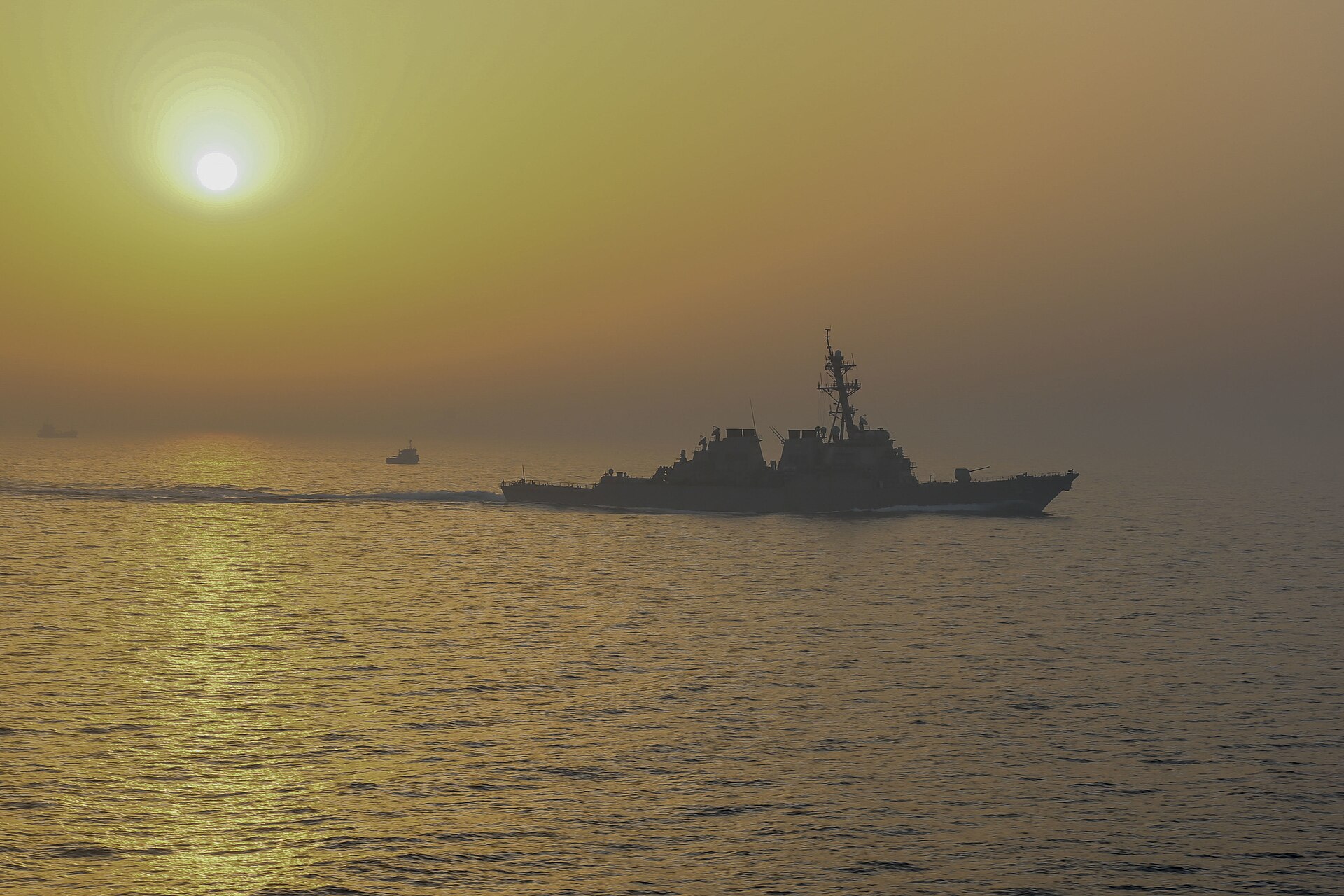
Iran’s decision to close the Strait of Hormuz on March 4, 2026 — declared by the IRGC Navy as retaliation for US and Israeli strikes — was intended to be Tehran’s ultimate leverage. The strait carries approximately 20 percent of the world’s oil supply, and its closure sent Brent crude surging past $120 per barrel within days. The gambit was designed to inflict economic pain on the Gulf states, drive a wedge between Washington and its Gulf allies, and force the international community to pressure the United States into a ceasefire.
Twenty-three days later, the blockade has achieved none of these objectives. Instead, it has accelerated Iran’s own economic collapse in ways that Tehran’s war planners appear not to have anticipated.
The most immediate consequence is that the blockade has stranded Iran’s own crude exports. Before the war, Iran was exporting approximately 1.4 million barrels per day, much of it through clandestine channels to Chinese buyers. With the strait closed and tanker traffic suspended, those exports have dropped to near zero. Saudi Arabia, by contrast, has rerouted its exports through the Red Sea port of Yanbu — a pipeline that bypasses Hormuz entirely — and the oil price has begun to fall as markets adjust to the disruption.
The blockade has also destroyed Iran’s leverage in ceasefire negotiations. Tehran’s demand that the strait remain under Iranian control as a condition for ending the war has been rejected by every relevant actor — the United States, the Gulf states, the European Union, and even China, which depends on Hormuz for a significant portion of its energy imports. A Bahrain-led effort to secure UN authorization for a force to reopen the strait gained broad international support, further isolating Tehran diplomatically.
The maritime insurance industry has independently reinforced the blockade’s failure as an Iranian strategy. By refusing to cover vessels transiting the strait — a decision driven by commercial risk assessment rather than Iranian naval power — insurers have effectively internationalised the enforcement of the closure while stripping Iran of any ability to selectively grant access. Iran cannot use Hormuz as a bargaining chip if the shipping industry treats the strait as uninsurable regardless of what Tehran promises.
Why Saudi Arabia Should Fear Iran’s Collapse More Than Its Missiles
The conventional wisdom in Riyadh, Washington, and most Western capitals holds that Iran’s weakening is unambiguously positive for Saudi Arabia and the Gulf states. A weaker Iran means fewer missiles, fewer drones, a diminished proxy network, and reduced capacity to threaten Gulf oil infrastructure. This assessment is not wrong, but it is dangerously incomplete.
A collapsing Iran presents Saudi Arabia with at least four strategic threats that a functioning adversary does not.
The first is refugee flows. Iran’s population of 88 million people shares borders with Iraq, Turkey, Pakistan, Afghanistan, and the Gulf states across narrow waterways. A regime collapse that triggers mass displacement — comparable in scale to the Syrian refugee crisis of 2015 but involving a population five times larger — would overwhelm the capacity of neighbouring states, destabilise Turkey (Saudi Arabia’s most important non-Western diplomatic partner after Pakistan), and potentially create a Mediterranean migration crisis that would consume European political bandwidth at the expense of Gulf security commitments.
The second is loose weapons and nuclear material. Iran’s nuclear programme has been substantially destroyed by US and Israeli strikes — the centrifuges at Natanz and Fordow, the heavy water reactor at Arak, and the research facilities at Isfahan have all been hit. But the fissile material, the scientific expertise, and the industrial base that produced these capabilities have not disappeared. A regime that loses control of its territory cannot guarantee the security of nuclear material, and the proliferation risks of a collapsing nuclear-threshold state are without precedent in the post-Cold War era.
The third is autonomous proxy militias. As documented above, Iran’s proxy networks are already fragmenting. A full regime collapse would accelerate this process, creating armed groups across Iraq, Lebanon, Syria, and Yemen that retain their weapons, their operational experience, and their ideological commitment — but no longer answer to any central authority. The Iranian proxy network under IRGC direction was a strategic threat. The same network without IRGC direction is a chaotic one, and chaos is harder to deter than strategy.
The fourth, and perhaps most consequential, is the power vacuum itself. Iran is the largest country in the Middle East by population and the second largest by territory. Its collapse would create a strategic vacuum that Russia, Turkey, and potentially China would compete to fill. A Turkish expansion into northwestern Iran — where ethnic Azerbaijanis constitute a significant minority — or a Russian move to secure Iranian military assets would fundamentally reshape the regional balance of power in ways that could prove more threatening to Saudi interests than the Islamic Republic ever was.
“The greatest danger from a nuclear-armed state is not what it does with its weapons but what happens to those weapons when the state ceases to function.”RAND Corporation, War in Iran Q&A, March 2026
What Does Riyadh Do When Tehran Falls?
Saudi Arabia’s strategic planning for a post-Islamic Republic Iran appears, from public evidence, to be inadequate. Crown Prince Mohammed bin Salman has calibrated Saudi Arabia’s war posture around a specific assumption: that the Islamic Republic survives in weakened form, accepts ceasefire terms that neutralize its nuclear programme and constrain its missile capabilities, and enters a period of diminished regional influence during which Saudi Arabia can consolidate its position as the Gulf’s dominant power.
The Regime Resilience Matrix suggests this assumption may be wrong. A composite score of 17 out of 60 — and falling — indicates a regime that is closer to fracture than to negotiated submission. If the war continues into April without a ceasefire, and if Trump follows through on his threat to destroy Iran’s power grid, the economic, social, and institutional foundations that sustain the Islamic Republic may pass a point of no return.
Riyadh’s options in a collapse scenario are limited and unattractive. Humanitarian intervention — providing aid to displaced Iranians, stabilizing border regions, supporting transitional governance — would require capabilities and institutional experience that Saudi Arabia does not possess. The Kingdom’s experience in Yemen, where a seven-year military intervention failed to achieve its political objectives, provides a cautionary precedent.
Military intervention to secure weapons or nuclear material would require coordination with the United States, Israel, and potentially Russia — a coalition that does not currently exist and would be extraordinarily difficult to assemble under crisis conditions. Saudi Arabia’s military, for all its hardware, remains dependent on foreign technical support for complex expeditionary operations.
The most likely Saudi response to an Iranian collapse would be defensive: hardening borders, accelerating missile defence deployments, deepening intelligence cooperation with allies, and attempting to influence the composition of whatever successor regime or regional authority emerges. But defensive responses are inherently reactive, and the pace of collapse — if it occurs — may outrun Riyadh’s ability to adapt.
| Option | Feasibility | Risk | Precedent |
|---|---|---|---|
| Humanitarian intervention | Low — lacks institutional capacity | Mission creep, domestic backlash | Yemen (cautionary) |
| Military stabilisation force | Very low — requires coalition | Quagmire, casualties, global opposition | Iraq 2003 (cautionary) |
| Border hardening + deterrence | High — existing capability | Insufficient against chaos | Saudi-Yemen border |
| Diplomatic influence on successor | Medium — depends on who emerges | Backing wrong faction | Saudi role in post-Assad Syria |
| Multinational containment coalition | Medium — US and GCC alignment | Russian/Turkish competition | No direct precedent |
The Gulf’s Post-Iran Security Architecture
Whether or not the Islamic Republic collapses, the 2026 war has permanently altered the security environment in which Saudi Arabia and the Gulf states operate. The pre-war assumption — that US military power could be called upon to defend the Gulf from external threats while Gulf states focused on economic development — has been tested and found wanting. The Saudi royal family’s Vision 2030 was built on a foundation of regional stability that no longer exists.
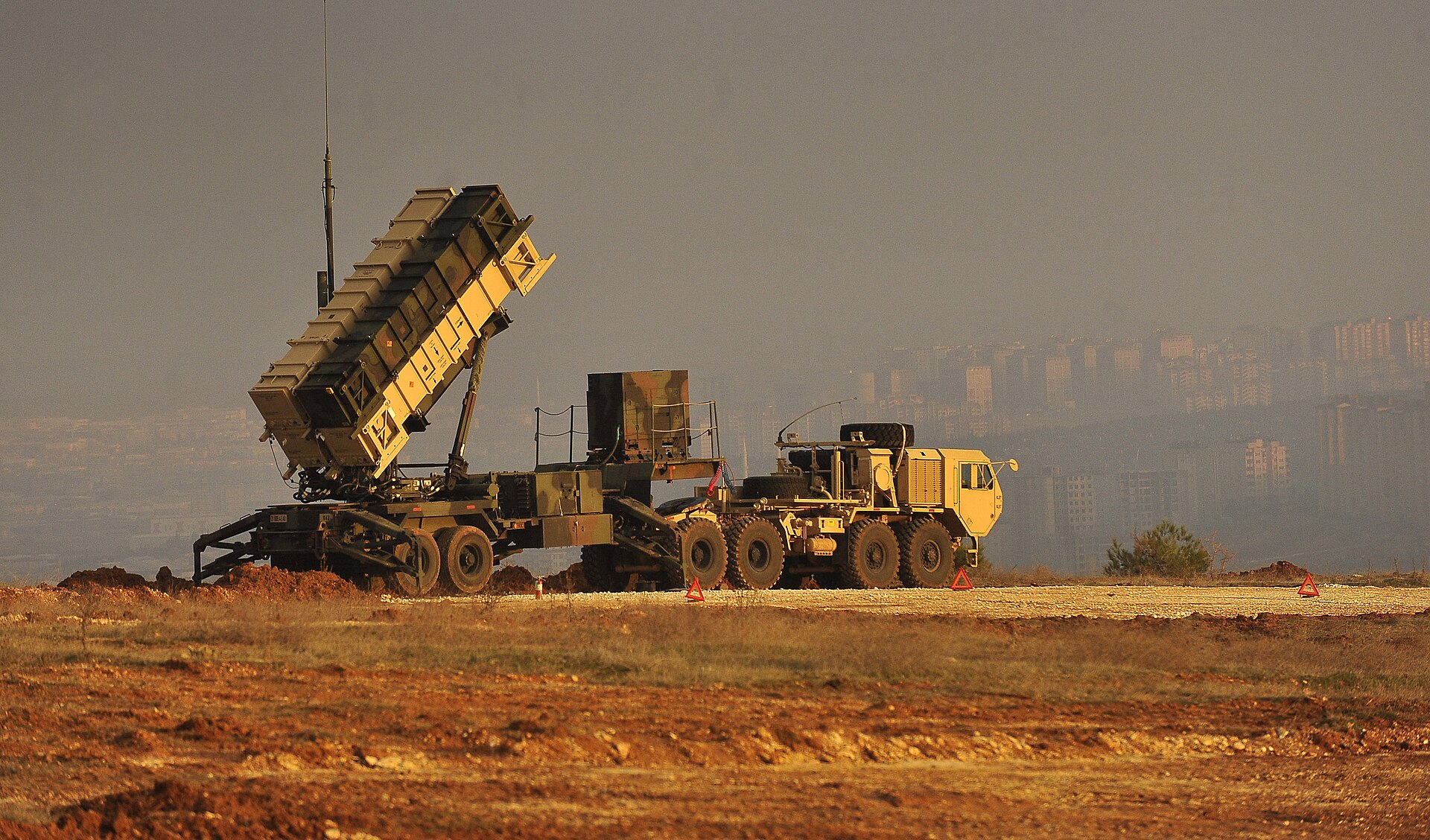
Three elements of a post-war Gulf security architecture are already taking shape. The first is a multilateral air and missile defence network that integrates Gulf state, American, European, and potentially Ukrainian capabilities. Zelenskyy’s visit to Saudi Arabia on March 26 — during which he pitched Ukrainian drone warfare expertise to six Gulf states — represents the latest addition to a defence partnership that has expanded far beyond its pre-war bilateral structure. The cost dynamics of drone warfare, in which $20,000 Iranian Shahed drones force the expenditure of $4 million to $12 million Patriot interceptors, demand asymmetric solutions that Ukraine’s battlefield experience is uniquely positioned to provide.
Yet even the most sophisticated missile defence network cannot protect every critical target simultaneously. Saudi Arabia’s desalination infrastructure remains the Gulf’s most exposed vulnerability, with 56 coastal plants producing 90 percent of the region’s freshwater sitting within range of Iranian weapons.
The second is a naval coalition to guarantee freedom of navigation through the Strait of Hormuz. Britain has already committed to leading a mine-clearing operation, and Bahrain has sought UN authorization for a multinational force. The permanent establishment of such a coalition would represent a fundamental change in Gulf maritime security — replacing the pre-war assumption that the strait was too important to close with the post-war reality that it must be actively defended.
The third is a Gulf indigenous defence industrial base. The World Defence Show in Riyadh in February 2026 concluded with $8.8 billion in contracts across 60 deals, reflecting Saudi Arabia’s accelerating effort to localise more than 50 percent of military spending by 2030. The war has validated this strategy while exposing its limitations — Saudi Arabia’s military, as Bloomberg has reported, remains critically dependent on foreign personnel for maintenance, logistics, and technical operations.
None of these elements addresses the fundamental question raised by Iran’s potential collapse: who provides order in a region where the largest state may cease to function? The Gulf Cooperation Council was designed to coordinate policy among small, wealthy monarchies facing a common threat. It was not designed to manage the disintegration of a country of 88 million people across a 1.6-million-square-kilometre territory. That task, if it arrives, will require capacities that the Gulf states have not built and alliances that do not yet exist.
Iran’s trajectory toward collapse raises a question that few policymakers have begun to answer: who rebuilds the wreckage, and on whose terms? The competition to lead Iran’s postwar reconstruction may prove more consequential than the military campaign itself.
Frequently Asked Questions
How much has the Iranian rial lost in value since 2020?
The Iranian rial has lost more than 96 percent of its value against the US dollar since 2020, falling from approximately 42,000 rials per dollar at the official rate to more than 1.57 million rials per dollar on the open market in March 2026. The collapse accelerated through three phases: US maximum pressure sanctions, UN snapback sanctions in October 2025, and the outbreak of war in February 2026. The Central Bank governor resigned in December 2025 after the rial breached 1.42 million, and the currency has continued to deteriorate as the war destroys Iran’s remaining export capacity.
How many Iranians have been displaced by the 2026 war?
The UNHCR estimates that up to 3.2 million Iranians have been temporarily displaced within the country since the war began on February 28, 2026. The displacement is concentrated among Tehran residents fleeing northward toward smaller urban and rural areas in the Alborz and Gilan provinces. An additional one million people have been displaced in Lebanon due to the related conflict between Israel and Hezbollah. The total displacement across the conflict zone is estimated at approximately four million people, according to Al Jazeera reporting from late March 2026.
What are Iran’s conditions for a ceasefire in 2026?
Iran has demanded several conditions for a ceasefire, including the closure of all US military bases in the Persian Gulf, an end to Israeli strikes on Hezbollah in Lebanon, the lifting of all economic sanctions, and reparations for damage inflicted on Iranian territory. Tehran has also asserted that the Strait of Hormuz must remain under Iranian sovereignty, a position rejected by the United States, the Gulf states, and the broader international community. The Gulf states and Israel have coordinated their own position, insisting that any ceasefire must include dismantlement of Iran’s nuclear programme, restrictions on its missile capability, and a commitment to halt proxy warfare against regional states.
Could Iran’s regime collapse during the 2026 war?
Regime collapse is not the consensus forecast, but the indicators are deteriorating rapidly. The Regime Resilience Matrix — measuring economic capacity, military coherence, institutional legitimacy, social control, external support, and energy independence — shows Iran’s composite score falling from 28 out of 60 before the war to 17 out of 60 in late March 2026, a 39 percent decline in less than one month. Key risk factors include the rial’s collapse, 62 percent inflation, 3.2 million internally displaced, fragmented proxy networks, and the absence of significant external support from Russia or China. The December 2025 protests, which spread to all 31 provinces before the war began, demonstrated that the regime faced existential domestic opposition independent of external military pressure.
What would Iran’s collapse mean for Saudi Arabia?
A collapsing Iran presents Saudi Arabia with strategic threats that a functioning adversary does not: potential mass refugee flows from a population of 88 million, the risk of loose nuclear material from destroyed but not fully secured facilities, fragmented proxy militias operating without central direction, and a power vacuum that Turkey, Russia, or China could exploit. Saudi Arabia’s strategic planning appears oriented toward a weakened but surviving Islamic Republic rather than a full collapse scenario, and the Kingdom’s institutional capacity for managing the consequences of state failure — as demonstrated by the Yemen experience — remains limited. The most likely Saudi response would be defensive: border hardening, accelerated missile defence, and diplomatic engagement with whatever successor authority emerges.
How has the Iran war affected global oil prices?
The war initially sent Brent crude surging past $120 per barrel after Iran blockaded the Strait of Hormuz on March 4, 2026. Prices subsequently declined as Saudi Arabia rerouted exports through Yanbu, global strategic reserves were released, and ceasefire speculation intensified. By late March, Brent had fallen below $100 for the first time since the war began before rebounding to approximately $106. The OECD warned that the war has erased a full year of projected global economic growth, with the energy price shock contributing to accelerating inflation in developing countries that depend on Gulf oil imports.