
RIYADH — Iran launched forty-seven drones at Saudi Arabia on March 23. The next day, it launched fewer than half that number. By March 25, the daily count had fallen to single digits. The Kingdom had not fired a single missile at Iran. It had not sent a single aircraft across the border. Yet Tehran, which continued to strike Israel and American forces without hesitation, appeared to be pulling back from the one adversary that had done nothing but absorb punishment for four weeks. The pattern emerging over the final days of March 2026 suggests something analysts failed to predict at the start of the war: Saudi deterrence is working, and it is working precisely because Riyadh kept its powder dry.
The shift represents the most significant strategic development of the war’s fourth week. While the world tracked Israeli nuclear strikes and American casualties at Prince Sultan Air Base, a quieter recalibration was underway in Tehran. Iranian commanders, according to two sources who spoke to Israeli media on March 22, made a deliberate decision to limit strikes on Saudi territory over concerns that continued attacks would trigger a direct Saudi military response — a response Iran’s already degraded forces could not survive.
Table of Contents
- The Data That Tells the Story
- Why Did Iran Recalculate Its Saudi Strategy?
- The Deterrence Escalation Ladder
- How Did Saudi Diplomacy Become a Military Weapon?
- The King Fahd Decision That Changed the War
- What Does Saudi Arabia’s Air Defense Performance Reveal?
- The Offensive Capability Iran Cannot Ignore
- Who Stands Behind Saudi Arabia Now?
- The Contrarian Case — Is Iran Setting a Trap?
- The Saudi Deterrence Effectiveness Matrix
- What Would Break Saudi Deterrence?
- The Strategic Implications of Deterrence Without War
- Frequently Asked Questions
The Data That Tells the Story
Numbers do not lie, even when governments do. The pattern of Iranian strikes on Saudi Arabia over the final ten days of March 2026 reveals a dramatic tactical shift that no official statement from Tehran has acknowledged.
Iran opened its retaliatory campaign against Saudi Arabia on March 1 as part of a massive regional barrage — 1,206 strikes across the Gulf in a single day, including 867 drones and 339 missiles directed at targets across Saudi Arabia, the UAE, Bahrain, Qatar, and Kuwait, according to the Center for Strategic and International Studies. Saudi Arabia absorbed a significant share of that opening salvo. The attacks continued at a punishing tempo through mid-March, targeting oil refineries, military installations, residential areas, and — in one case — desalination plants that supply drinking water to millions.
By the third week of the war, the daily rhythm had settled into a grim routine. Iran launched seven drones at Saudi Arabia on March 22. On March 23, the figure spiked to forty-seven — the highest single-day total in nearly two weeks. Then something changed. On March 24, the count dropped sharply. By March 25, Iran directed just six drones at Saudi targets, according to data compiled by the Foundation for Defense of Democracies’ Long War Journal. The reduction was not the result of depleted stockpiles — Iran continued to fire at Israel, American installations, and other Gulf states at a sustained pace.
| Date | Drones Launched | Missiles Launched | Key Targets | Intercept Rate |
|---|---|---|---|---|
| March 20 | 12 | 2 | Yanbu refinery, Eastern Province | ~85% |
| March 21 | 8 | 1 | Riyadh outskirts | ~90% |
| March 22 | 7 | 3 | Riyadh, Eastern Province | ~87% |
| March 23 | 47 | 0 | Eastern Province swarm | ~85% |
| March 24 | 19 | 0 | Eastern Province | ~95% |
| March 25 | 6 | 0 | Scattered | 100% |
| March 26 | 4 | 1 | Eastern Province | ~90% |
| March 27 | 3 | 0 | Minor probes | 100% |
The trajectory is unmistakable. Iran went from launching a forty-seven-drone swarm to firing single-digit probes within seventy-two hours. The March 23 spike — likely a final test of Saudi defences — appears to have been the last major effort. Everything since has been calibrated to avoid crossing whatever line Saudi Arabia drew in private.
The Middle East briefing 3,000+ readers start their day with.
One email. Every weekday morning. Free.
Why Did Iran Recalculate Its Saudi Strategy?
Tehran made a cold strategic calculation that has gone largely unnoticed amid the spectacle of nuclear strikes and Hormuz blockades. Iran determined that the cost of provoking a direct Saudi military response exceeded the benefit of any damage its drones could inflict on Saudi infrastructure. Three factors drove the recalculation.
First, Iran’s military capacity was degrading rapidly. By Day 16 of the war, the Israeli Defense Forces reported that seventy percent of Iran’s ballistic missile launchers had been disabled. The CSIS assessment published during the third week documented more than 9,000 targets struck across Iran, with the United States alone claiming 7,800 targets destroyed across 6,500 combat flights. More than 140 Iranian naval vessels had been damaged or sunk. Iran’s ability to sustain a multi-front campaign was contracting by the day.
Second, Saudi Arabia had been systematically escalating its posture in ways that communicated unmistakable intent. On March 19, Foreign Minister Prince Faisal bin Farhan warned that the Kingdom’s patience “is not unlimited” and that Saudi Arabia “reserves the right to take military action if deemed necessary.” When pressed on timing, he responded with deliberate ambiguity: “It could be a day, two days, or a week — I will not say.” That statement was designed for an audience in Tehran, not Riyadh.
Third, Saudi Arabia expelled Iran’s military attaché, the assistant attaché, and three embassy staff on March 21, giving them twenty-four hours to leave the country. The expulsion severed the last direct military communication channel between Riyadh and Tehran — a move that historically precedes conflict, not restraint. Iran understood the signal.
The Deterrence Escalation Ladder
Saudi Arabia’s path from passive target to active deterrent did not happen in a single dramatic moment. It unfolded across twenty-eight days in a sequence of carefully calibrated steps, each designed to raise the perceived cost of continued Iranian aggression without committing Riyadh to direct combat. Mapping these steps reveals a textbook exercise in coercive diplomacy — one that defense analysts will study for decades.
| Phase | Date | Action | Signal to Tehran | Escalation Level |
|---|---|---|---|---|
| Absorption | Feb 28 – Mar 6 | Absorb strikes, activate air defenses, no public threats | Saudi Arabia will not retaliate immediately | Passive defense |
| Condemnation | Mar 7 – Mar 12 | Formal diplomatic protests, GCC emergency meetings, UN statements | International coalition forming | Diplomatic pressure |
| Mobilization | Mar 13 – Mar 18 | Military readiness raised, foreign defense partnerships activated, Ukrainian advisers arrive | Military preparations underway | Active readiness |
| Ultimatum | Mar 19 | Faisal bin Farhan: “Patience is not unlimited” | Military action is on the table | Coercive diplomacy |
| Severance | Mar 21 | Iranian military attaché expelled, 24-hour deadline | Last diplomatic channel cut | Pre-conflict posture |
| Access | Mar 23–24 | King Fahd Air Base opened to US forces | Offensive platforms now in position | Force projection |
| Collective Defense | Mar 24–27 | Six Arab nations invoke Article 51, coalition solidifies | Attack on one is attack on all | Alliance deterrence |
Each step was reversible until it was not. The expulsion of diplomats and the opening of King Fahd Air Base were irreversible signals — actions that cannot be undone with a phone call. Tehran read them correctly. The question Iran faced was not whether Saudi Arabia could strike back, but whether the political decision to strike had already been made. Ambiguity, in this case, was the weapon.
How Did Saudi Diplomacy Become a Military Weapon?
The conventional narrative of the Iran war cast Saudi Arabia as a victim — a nation absorbing punishment while the United States and Israel conducted offensive operations. That narrative was always incomplete. Riyadh was waging a parallel campaign, one fought in foreign ministries and summit halls rather than on battlefields, and it proved at least as consequential as any airstrike.
The diplomatic offensive began in the war’s first week with a GCC emergency ministerial session. It accelerated through March as Saudi Arabia assembled an increasingly formidable coalition. By March 24, six Arab nations had formally invoked Article 51 of the United Nations Charter, the self-defense clause that provides legal cover for military action. That collective declaration transformed Iran’s drone campaign from a bilateral grievance into an assault on a unified bloc.
The Kingdom’s foreign minister also issued a warning that received less attention than it deserved. Prince Faisal bin Farhan stated that while the war would eventually end, restoring relations with Iran would take far longer because trust had been “completely shattered.” The phrase was calibrated. It told Tehran that even a ceasefire would not erase the consequences of its actions — that Saudi Arabia’s strategic posture toward Iran had fundamentally and permanently changed.
Pakistan’s involvement reinforced the message. Prime Minister Shehbaz Sharif visited Saudi Arabia on March 12 and publicly declared that Pakistan “stands firmly” with the Kingdom. Islamabad’s military cooperation with Riyadh has deep institutional roots — Pakistan provided military advisers to the Saudi armed forces for decades and reportedly maintains contingency plans for the deployment of ground forces to the Gulf. Iran, which shares a restive border with Pakistan’s Balochistan province, cannot afford to provoke an adversary on its eastern flank while fighting on every other front.
The King Fahd Decision That Changed the War
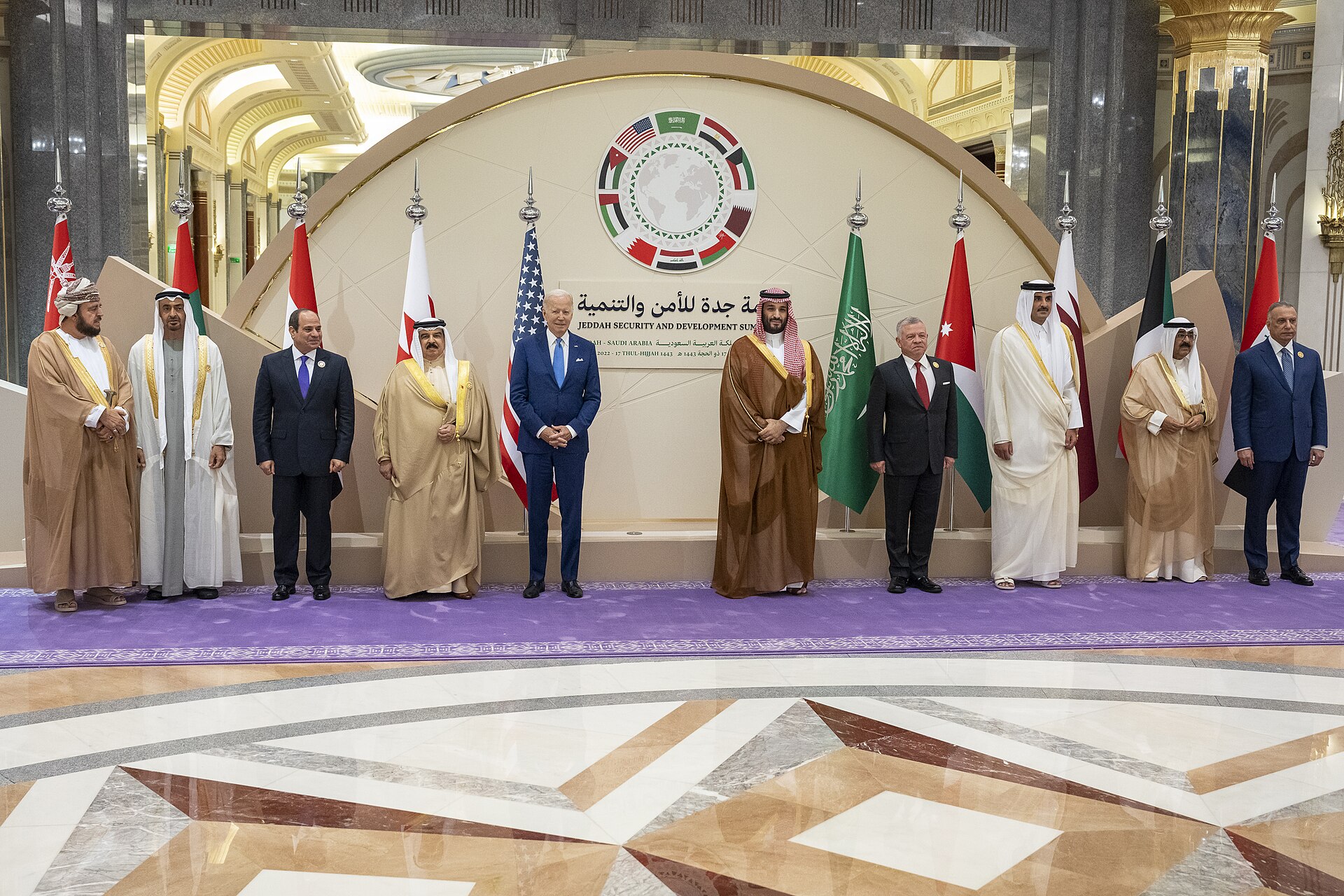
Saudi Arabia had previously barred the use of its military facilities for strikes against Iran. That policy reflected a decades-long effort to maintain strategic ambiguity — keeping options open while avoiding direct confrontation with Tehran. When Crown Prince Mohammed bin Salman authorized American access to King Fahd Air Base in Taif around March 23, he abandoned that ambiguity in a single decision.
The base, located on the western side of the Arabian Peninsula far from Iranian drone range, provides a secure platform for American offensive operations. It sits roughly 900 kilometres from Iran’s nearest border — too far for the Shahed-series drones that had been pummeling facilities in the Eastern Province. The geographic advantage was deliberate. Saudi Arabia offered the United States a facility that could project power toward Iran while being effectively immune to the retaliatory strikes that had damaged equipment at Prince Sultan Air Base.
Defense analysts described the move as an “apparent reversal” — but it was nothing of the sort. Riyadh had been gradually tightening its cooperation with Washington throughout the war. The King Fahd decision was the culmination of a three-week escalation, not a sudden pivot. The Wall Street Journal, which first reported the development, noted that Saudi Arabia and the UAE were both “taking some steps toward joining the Iran war.” The phrase “some steps” understated what was happening. Opening a sovereign military base to a foreign power’s combat operations is not a half-measure.
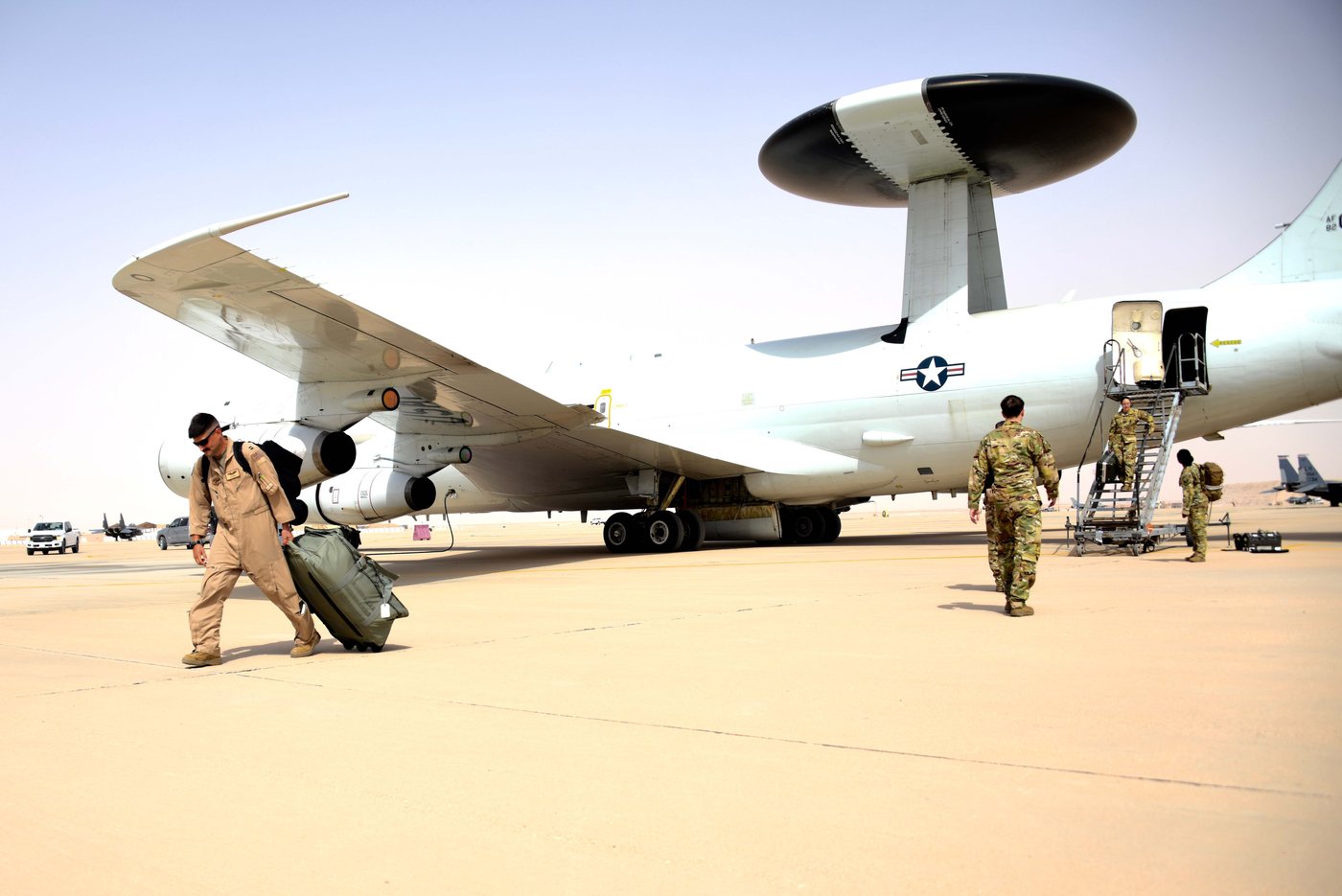
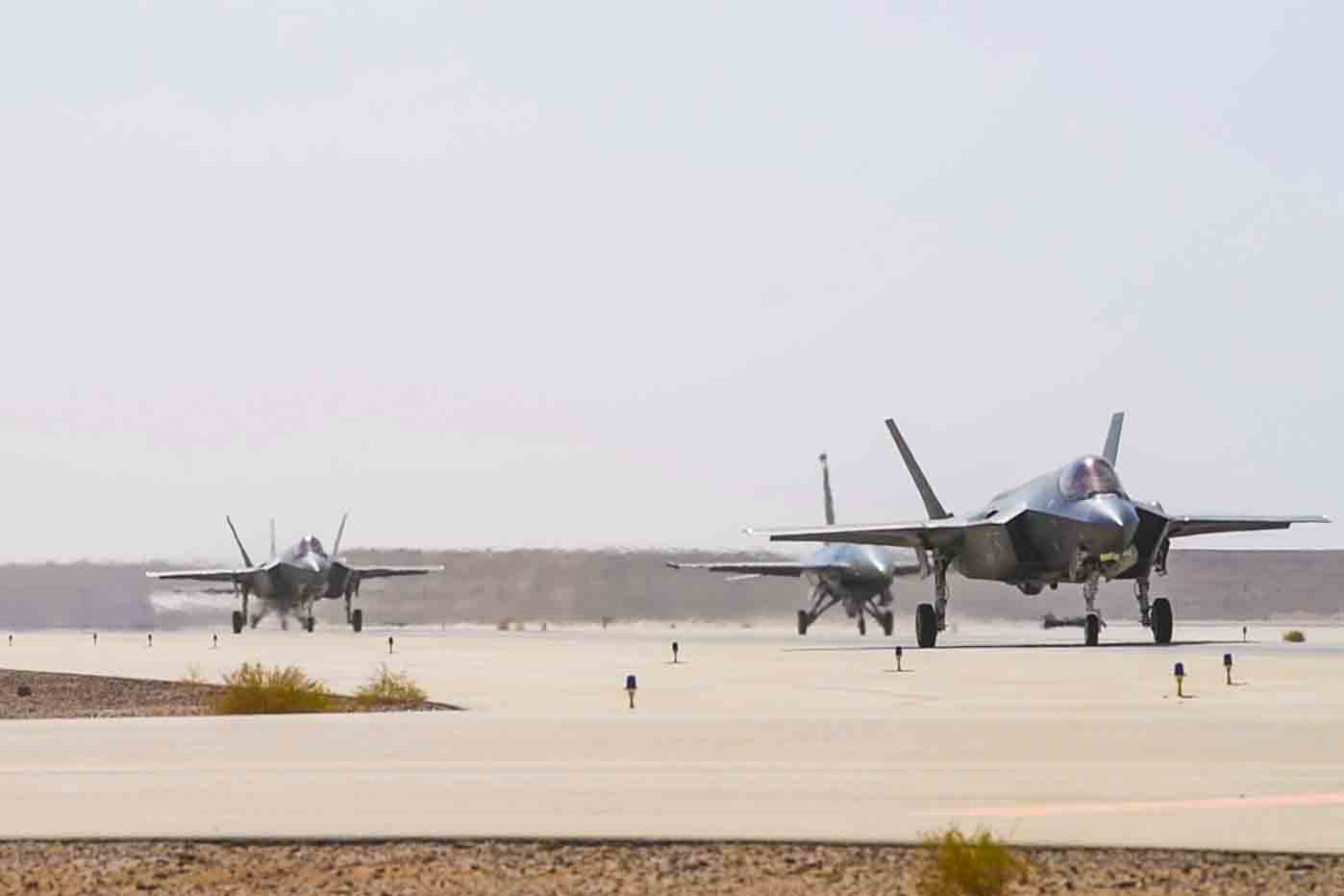
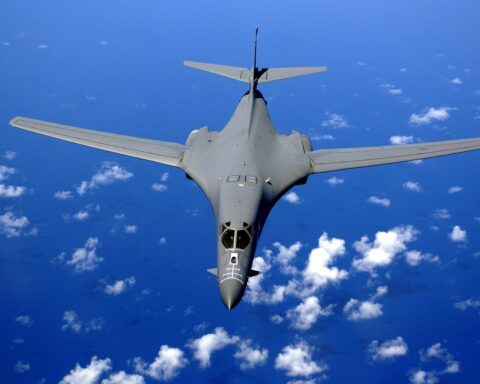
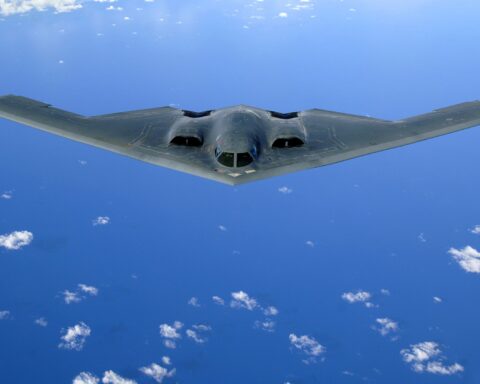
For Iran, the implications were existential. King Fahd Air Base sits within striking distance of Iran’s remaining military infrastructure. American F-15E Strike Eagles and B-1 Lancer bombers operating from Taif could reach Iranian targets without needing aerial refuelling over contested Gulf airspace. The base expanded America’s operational capacity at precisely the moment Iran’s defensive capabilities were collapsing. And it tied Saudi Arabia’s security interests to American combat operations in a way that made any attack on Saudi territory an attack on a de facto American ally.
What Does Saudi Arabia’s Air Defense Performance Reveal?
Before the war, skeptics questioned whether Saudi Arabia’s $80 billion military investment could withstand a sustained state-on-state aerial campaign. The 2019 Abqaiq-Khurais attack, in which drones temporarily knocked out half of Saudi oil production, remained the dominant reference point. Four weeks into the 2026 war, that reference point is obsolete.
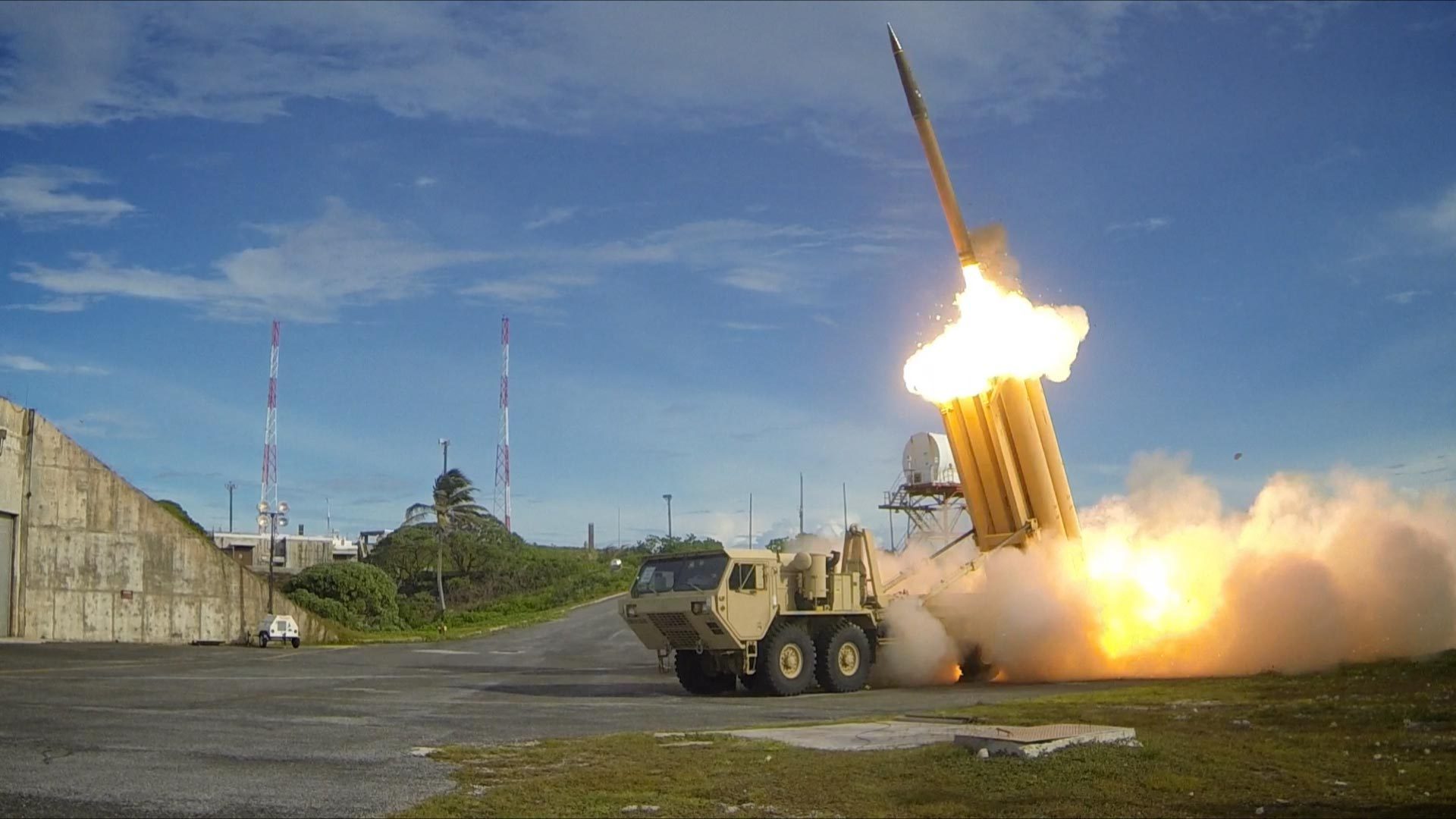
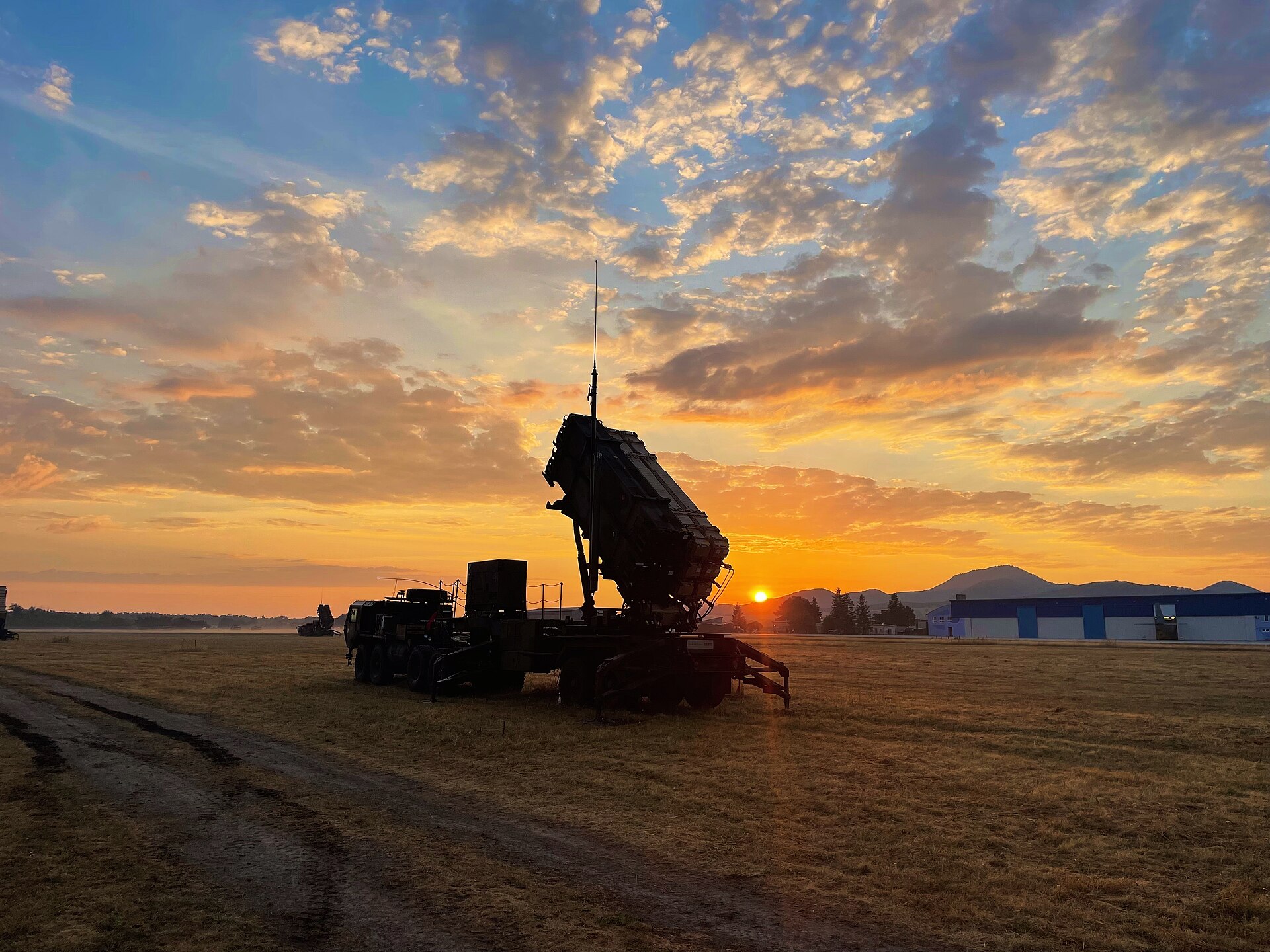
The Saudi Ministry of Defence reports intercepting the vast majority of the estimated 500-plus missiles and drones Iran has fired at Saudi territory. The International Institute for Strategic Studies in London estimates the ballistic missile interception rate at between 85 and 90 percent. For drones, the rate sits at approximately 85 percent, with cheaper systems — including short-range air defence guns and electronic warfare — handling the bulk of drone interceptions while Patriot and THAAD batteries focused on higher-value ballistic threats.
The architecture is formidable. Saudi Arabia operates 108 MIM-104 Patriot launchers organised into six battalions — more than any nation except the United States. Two Terminal High Altitude Area Defence batteries provide the upper-tier shield against medium-range ballistic missiles. Below that, a network of surveillance radars and electronic warfare systems provides early warning and counter-drone capability.
The March 23 swarm of forty-seven drones tested this architecture to its limits. Saudi forces destroyed all but a handful, with the Saudi Ministry of Defence claiming nineteen interceptions in the Eastern Province alone on March 24 — the day Iranian strikes began their decline. The message was clear: mass drone attacks were no longer achieving the attrition Iran intended. Each swarm revealed more about Saudi defensive patterns while depleting Iranian stockpiles that could not be replenished under the weight of American airstrikes on drone production facilities.
“Saudi Arabia’s armed forces have achieved what no analyst confidently predicted before February 28, 2026: they have defended the Kingdom against a sustained state-on-state aerial campaign.”
IISS Assessment, March 2026
The air defense success rate matters for deterrence in ways that transcend the immediate military calculus. Iran’s drone campaign was designed to impose costs — political, economic, and psychological — that would keep Saudi Arabia in a defensive posture. When the air defense shield held, those costs diminished. The political pressure on Crown Prince Mohammed bin Salman to absorb rather than retaliate diminished with it. A leader whose cities are burning faces different choices than one whose defenses are holding. The shield gave Riyadh the luxury of escalation without desperation.
The Offensive Capability Iran Cannot Ignore
Deterrence requires more than the will to act. It requires the demonstrated capacity to inflict unacceptable damage. Saudi Arabia possesses that capacity, and the war has made it impossible for Iran to pretend otherwise.
The Royal Saudi Air Force fields approximately 213 F-15 variants, including the advanced F-15SA — a multi-role strike fighter with conformal fuel tanks, an advanced radar suite, and the capacity to deliver precision-guided munitions at ranges exceeding 1,000 kilometres. Saudi Arabia also operates 72 Eurofighter Typhoons, giving it the largest combat air fleet in the Gulf Cooperation Council. These aircraft have been maintained at high readiness throughout the war, yet none has crossed into Iranian airspace.
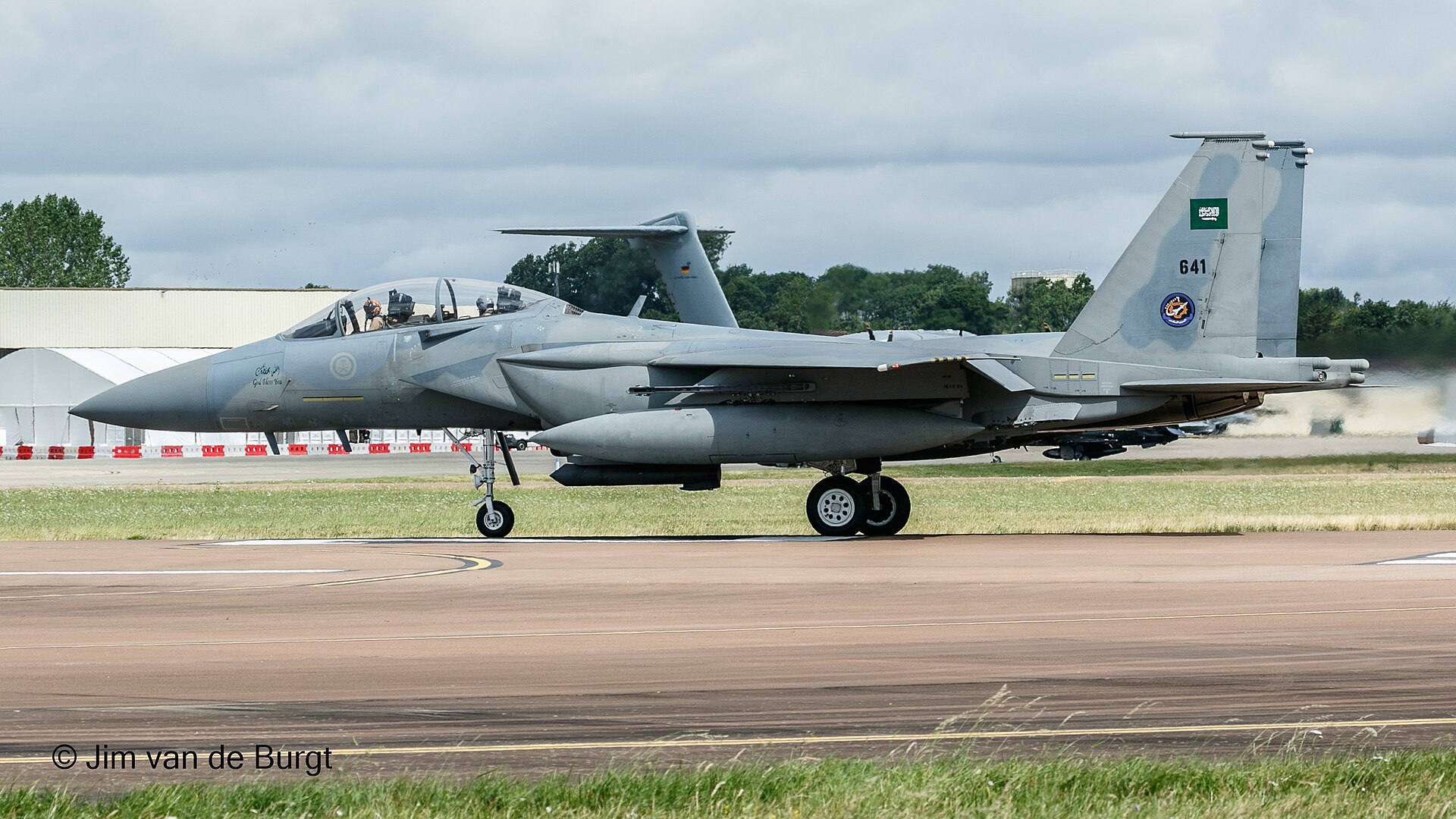
The restraint is the weapon. Every day that Saudi Arabia’s air force remains on the ground is a day Iran must account for the possibility that it will not. The Royal Saudi Navy’s Eastern Fleet, which includes four Al-Riyadh class frigates and multiple Badr-class corvettes, patrols waters that could interdict Iranian shipping in the Gulf. Saudi Arabia’s arsenal of American-supplied munitions — including SLAM-ER standoff missiles and JDAM precision bombs — gives it the capacity to strike Iranian military targets without exposing pilots to Iran’s remaining air defenses.
Iran’s air force, by contrast, is a shadow force. Its most capable fighters are aging F-14 Tomcats, relics of the Shah’s era that have been cannibalised for parts under decades of sanctions. The Iranian air force cannot contest Saudi airspace. It cannot protect Iranian territory from a sustained Saudi air campaign. If Riyadh decided to strike, Iran would face the same one-sided aerial punishment it has been receiving from the United States and Israel — but from a closer, more efficient platform.
The naval dimension compounds the imbalance. Saudi Arabia’s Eastern Fleet operates four Al-Riyadh class frigates, each equipped with Aster 15 surface-to-air missiles, and multiple Al-Badr class corvettes carrying Harpoon anti-ship missiles. The Royal Saudi Naval Forces have been training alongside the United States Fifth Fleet for decades. In a direct confrontation, Iran’s conventional navy — already reduced by more than 140 vessels according to the Pentagon — would face combined Saudi and American naval power across the entire western Gulf. Iran’s IRGC fast-attack boats, the backbone of its asymmetric maritime strategy, cannot survive in waters dominated by frigate-mounted radars and Apache gunships operating from Saudi coastal bases.
The munitions inventory tells the final piece of the story. Saudi Arabia holds stocks of AGM-84 SLAM-ER standoff land-attack missiles, GBU-39 small-diameter bombs, and JDAM precision-guided kits supplied under decades of American arms deals worth more than $100 billion since the 1990s. A single Saudi F-15SA can deliver sixteen GBU-39 bombs in a single sortie, each capable of striking a separate aim point within a radius of 110 kilometres. Against Iranian military infrastructure already pulverised by four weeks of American bombardment, Saudi air power would not need to break through sophisticated defenses — it would need only to deliver the final blows to targets already degraded beyond recovery.
The arrival of more than 200 Ukrainian anti-drone specialists in the Gulf added another dimension. Ukraine’s battlefield expertise against Russian drones is directly applicable to Iran’s Shahed campaign. The Ukrainian advisers reportedly spent their first week identifying gaps in Gulf air defense networks — gaps that have since been addressed. The partnership signalled to Tehran that Saudi Arabia was not merely absorbing Iran’s drone war but actively learning to defeat it.
Who Stands Behind Saudi Arabia Now?
Saudi deterrence in 2026 is not a solo performance. The coalition that has formed around the Kingdom over four weeks represents the most significant collective defence arrangement in Gulf history. Its breadth would have been unimaginable before February 28.
| Nation | Contribution | Date Announced | Deterrence Value |
|---|---|---|---|
| United States | Paratroopers, PSAB/King Fahd access, naval task force, air defense resupply | Ongoing since Feb 28 | Primary combat partner |
| United Kingdom | Patriot battery, mine-clearing coalition lead, defense equipment | March 10–24 | P5 legitimacy |
| France | Defense cooperation deepened, Khalid bin Salman meeting | March 25 | European anchor |
| Greece | Patriot battery — intercepted Iranian ballistic missiles | March 19 | NATO interoperability |
| Pakistan | Diplomatic solidarity, military cooperation, potential ground forces | March 12–25 | Eastern flank pressure on Iran |
| Ukraine | 200+ anti-drone specialists, defense cooperation agreement | March 18–27 | Counter-drone expertise |
| Bahrain | Active military participant, self-defense invocation | March 18 | GCC solidarity |
The coalition’s deterrence value extends beyond its aggregate military capability, though the GCC’s own collective defense architecture remains structurally hollow beneath the surface of coalition solidarity. Each new participant raises the political cost Iran would pay for provoking a Saudi response. An attack that triggers Saudi retaliation now triggers a response from NATO-member Greece, nuclear-armed Pakistan, and a European coalition led by France and Britain. The asymmetry is crushing. Iran faces a widening circle of adversaries while its own alliance network — Hezbollah degraded, Iraqi militias under American bombardment, Houthis constrained — contracts by the day.
The Contrarian Case — Is Iran Setting a Trap?
The consensus forming in Riyadh and Washington — that Saudi deterrence has forced an Iranian retreat — deserves scrutiny. An alternative reading of the data leads to a darker conclusion: Iran may be conserving its remaining missile stocks for a single catastrophic strike designed to overwhelm Saudi defences and force the Kingdom into a war it has spent four weeks avoiding.
The pattern of declining attacks could reflect not fear of Saudi retaliation but a deliberate tactical choice. Iran’s drone production facilities have been hammered by American and Israeli strikes. The CSIS assessment noted that production capacity for Shahed-series drones has been severely degraded. Firing forty-seven drones at Saudi Arabia on March 23 only to see the vast majority intercepted may have convinced Iranian commanders that continued attrition attacks were wasting a finite resource.
The precedent supports caution. Iran’s opening salvo on March 1 — 1,206 strikes in a single day — demonstrated a capacity for mass attacks that exceeded pre-war estimates. If Iran has been conserving its remaining ballistic missiles while expending cheaper drones on probing attacks, the Kingdom could face a sudden, concentrated barrage aimed at the targets Saudi Arabia has identified as its most critical vulnerabilities: desalination plants, power generation facilities, and the Aramco processing infrastructure at Abqaiq and Ras Tanura.
There are also questions about Iran’s proxy networks. Iraqi militias remain active despite American airstrikes. The Houthis control Yemen’s northern border with Saudi Arabia. If Iran coordinated a simultaneous multi-front attack — ballistic missiles from the northeast, drones from Iraqi territory, and Houthi strikes from the south — Saudi Arabia’s layered defense network would face its most severe test.
The reduction in attacks, viewed through this lens, may not be retreat. It may be preparation.
The Saudi Deterrence Effectiveness Matrix
Assessing whether Saudi deterrence is genuinely working requires a structured framework that goes beyond counting drone launches. Five dimensions determine whether a deterrence posture is succeeding or merely delaying an inevitable escalation. Each can be scored against the evidence available at the war’s four-week mark.
| Dimension | Indicator | Evidence | Score (1-10) | Assessment |
|---|---|---|---|---|
| Capability Credibility | Does the adversary believe you can execute your threat? | 213 F-15 variants, 108 Patriot launchers, 2 THAAD batteries, 72 Typhoons, advanced munitions | 9 | Iran cannot contest Saudi air power |
| Will Credibility | Does the adversary believe you will execute your threat? | Faisal bin Farhan ultimatum, diplomat expulsion, King Fahd base access, Article 51 invocation | 7 | Strong signals but no precedent for Saudi offensive action |
| Communication Clarity | Does the adversary know what triggers retaliation? | Red lines on desalination/power, public warnings, private diplomatic messaging | 8 | Clear thresholds communicated through multiple channels |
| Alliance Strength | Does the deterrent include coalition multipliers? | US, UK, France, Greece, Pakistan, Ukraine, six Arab nations under Article 51 | 9 | Broadest Gulf defense coalition in history |
| Escalation Dominance | If deterrence fails, can you win the resulting conflict? | Saudi air superiority likely, but ground campaign uncertain; Iran retains proxy networks | 6 | Saudi Arabia can punish Iran from the air but cannot occupy territory |
The aggregate score of 39 out of 50 places Saudi deterrence in the “effective but fragile” category. The weakest dimension — escalation dominance — reveals the central vulnerability. Saudi Arabia can deter Iran from continuing drone attacks. It can probably deter Iran from striking desalination and power infrastructure. What it cannot deter is an Iranian decision to escalate the war to a level where Saudi defensive advantages become irrelevant — a ground-level proxy insurgency, a coordinated multi-front assault, or a direct attack on Saudi civilians designed to provoke an emotional rather than strategic response.
Deterrence works until it doesn’t. The matrix suggests that Saudi Arabia’s deterrence is holding today. Whether it holds next week depends on factors that no framework can predict — the decisions of individual commanders in Tehran, the reliability of Iran’s remaining missile stocks, and the willingness of proxy forces to follow orders from a regime whose capital is being systematically dismantled from the air.
The question of who actually makes those decisions has become central to understanding the war. Under Mojtaba Khamenei, the IRGC has consolidated wartime command authority through a 31-province mosaic defense structure that operates with or without central political direction.
What Would Break Saudi Deterrence?
Three scenarios could shatter the deterrence equilibrium that has held since late March. Each would force Crown Prince Mohammed bin Salman to confront the decision he has spent four weeks avoiding — whether to take Saudi Arabia from belligerent target to active combatant. A separate analysis maps the three specific trigger conditions that would force MBS to cross the line from non-belligerent to co-belligerent.
The first scenario is a mass-casualty attack on Saudi civilians. Iran’s strikes have killed foreign workers and damaged infrastructure, but they have not yet produced the kind of televised civilian carnage that transforms public opinion. A missile striking a populated residential area in Riyadh — particularly during a public gathering — would create political pressure that no amount of strategic calculation could resist. The Al-Kharj drone strike that killed two foreign workers demonstrated that Iranian weapons can reach residential areas. A larger-scale version aimed at a densely populated target would cross every red line simultaneously.
The second is the destruction of critical infrastructure that sustains civilian life. Saudi Arabia has identified desalination plants and power generation facilities as its most sensitive assets. The Kingdom imports 80 percent of its food. Its drinking water supply depends almost entirely on desalination. An Iranian strike that knocked out multiple desalination plants could create a humanitarian crisis within days — one that would make military restraint politically untenable. Prince Faisal bin Farhan’s public warnings about these specific assets suggest Riyadh has communicated this threshold to Tehran through back channels.
The third — and most dangerous — is an Iranian decision to accept the consequences of Saudi entry and attack anyway. Deterrence assumes a rational adversary. If the Iranian leadership calculates that the regime is facing existential defeat regardless of Saudi Arabia’s actions, it may choose to inflict maximum damage on every front simultaneously as a final act of strategic defiance. A regime with nothing to lose cannot be deterred by threats of further punishment. The question is whether Iran’s leadership has reached that point, and the intelligence community’s ability to answer that question in real time is limited.
The Strategic Implications of Deterrence Without War
If Saudi deterrence holds — if Riyadh manages to navigate the remainder of the conflict without firing a single offensive shot — the implications extend far beyond the current war. Saudi Arabia will have demonstrated that a wealthy, well-armed state can shape the outcome of a major regional conflict through coercive diplomacy, alliance management, and military readiness alone.
The model has historical precedents, but none at this scale. Turkey’s military buildup along the Syrian border in 2016 influenced the battle for Aleppo without Turkish forces engaging in direct combat for months. Israel’s nuclear ambiguity has deterred adversaries for decades without a weapon ever being used. Saudi Arabia is attempting something similar — maintaining a threat so credible that its execution becomes unnecessary.
The economic dimension makes this approach uniquely Saudi. The Kingdom’s Public Investment Fund controls assets worth over $900 billion. Aramco remains the world’s most valuable energy company. Saudi Arabia’s reconstruction capital — the money that will be needed to rebuild Iran’s shattered infrastructure when the war ends — gives Riyadh influence that no missile can provide. Iran’s post-war recovery may depend on Saudi Arabia’s willingness to invest. That is a form of deterrence that operates on a timeline measured in decades, not days.
For the broader trajectory of the Iran war, the Saudi model suggests a path toward termination that does not require military victory. If Saudi Arabia can maintain its coalition, keep its air defenses operational, and sustain economic pressure on Iran through the Hormuz crisis, it may achieve its core strategic objective — security from Iranian aggression — without the costs and unpredictability of direct combat.
The comparison to other deterrence models is instructive. NATO’s Article 5 collective defense clause deterred Soviet aggression for four decades without a single shot fired in anger. Israel’s nuclear ambiguity has kept existential threats at bay since the 1960s. Saudi Arabia is attempting to construct a regional equivalent — a deterrence architecture built not on nuclear weapons but on economic power, alliance depth, and conventional military superiority. The difference is that Saudi Arabia is building this architecture under fire, in real time, while absorbing the very attacks it seeks to deter.
That outcome would vindicate a strategic doctrine that MBS appears to have adopted from the war’s first day: the threat of Saudi power is more valuable than its use. Whether that doctrine survives the war’s final chapter depends on decisions being made in Tehran this week — decisions that the men in Riyadh cannot control, no matter how many F-15s sit fuelled on the tarmac at King Fahd Air Base.
The stakes extend beyond the current conflict. Gulf governments have already moved past deterrence to demand the permanent degradation of Iran’s missile and drone arsenal as a precondition for any deal. If Riyadh succeeds, it will have proven that the Gulf states can defend their interests without dependency on American ground forces — a proposition that Washington has been pushing for two decades. If Saudi deterrence fails, and the Kingdom is drawn into direct combat, the precedent collapses. Every future aggressor will conclude that threatening Saudi Arabia carries limited risk, because even $80 billion in military spending and the most sophisticated air defense network outside the United States could not translate readiness into restraint. The next four weeks will determine which lesson the Middle East learns.
Frequently Asked Questions
Has Iran stopped attacking Saudi Arabia entirely?
Iran has not stopped attacks completely but has reduced them dramatically. From a peak of forty-seven drones on March 23, daily strikes fell to single digits by March 25. The reduction coincided with reports that Iranian commanders decided to limit strikes on Saudi Arabia to avoid triggering a direct Saudi military response. Iran continues to strike Israel and American military installations at a higher tempo.
What is Saudi Arabia’s air defense intercept rate against Iranian drones?
The International Institute for Strategic Studies estimates Saudi Arabia’s ballistic missile interception rate at 85 to 90 percent, with drone interception running at approximately 85 percent. Saudi Arabia operates 108 Patriot launchers and two THAAD batteries, supported by electronic warfare systems and short-range air defense guns that handle the majority of drone threats.
Why did Saudi Arabia open King Fahd Air Base to American forces?
The base in Taif sits on the western side of the Arabian Peninsula, roughly 900 kilometres from Iran — beyond the range of Iranian drones that had damaged Prince Sultan Air Base in the Eastern Province. Opening the base gave the United States a secure platform for offensive operations against Iran while signalling Saudi Arabia’s deepening military commitment. The move reversed Riyadh’s earlier policy of barring its facilities from use in strikes against Iran.
Could Iran be conserving missiles for a larger attack on Saudi Arabia?
This is one of three scenarios that could break the current deterrence equilibrium. Iran’s drone production facilities have been severely degraded by American and Israeli strikes, which may explain the shift to smaller probing attacks. However, Iran is believed to retain ballistic missiles capable of overwhelming Saudi defenses in a concentrated barrage. Intelligence analysts cannot rule out the possibility that the reduction in strikes reflects preparation rather than retreat.
What would force Saudi Arabia to enter the war as an active combatant?
Three scenarios could trigger Saudi military action: a mass-casualty attack on Saudi civilians, the destruction of critical infrastructure such as desalination plants or power generation facilities, or an Iranian decision to escalate regardless of consequences. Foreign Minister Faisal bin Farhan has publicly warned that Saudi patience “is not unlimited” and that the timing of any response could be “a day, two days, or a week.”
How many countries are now part of the Saudi-led defense coalition?
At least seven nations have made direct military or advisory contributions to Saudi Arabia’s defense: the United States, United Kingdom, France, Greece, Pakistan, Ukraine, and Bahrain. Six Arab nations have formally invoked Article 51 of the United Nations Charter, claiming the right to collective self-defense against Iranian aggression. The coalition represents the broadest collective defense arrangement in Gulf history.