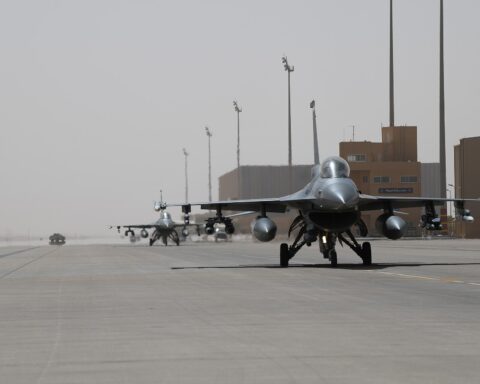
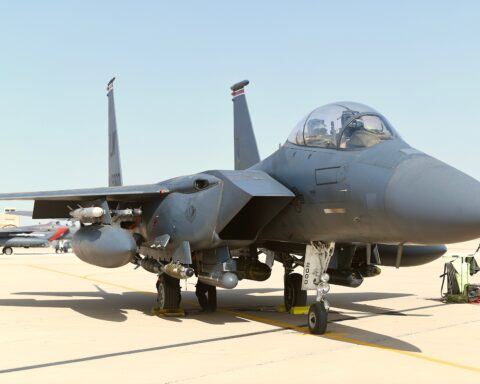
RIYADH — Saudi Arabia’s air defense shield is degrading under sustained Iranian fire, and the 85–90 percent aggregate intercept rate cited by coalition officials conceals a worsening trend that, if unchecked, will leave critical nodes functionally undefended within weeks. On March 30 — Day 30 of the war — six Iranian ballistic missiles targeted Riyadh and only two were intercepted, a 33 percent success rate that stands in stark contrast to the reassuring averages. The question confronting Saudi military planners is no longer whether the shield works, but how long it can keep working.
The Kingdom’s 108 Patriot launchers and two THAAD batteries have absorbed roughly 600 Iranian missiles and drones over thirty days, intercepting between 75 and 90 ballistic missiles at what the International Institute for Strategic Studies estimates is an 85–90 percent rate. That number sounds formidable. It is also misleading. It averages dense, well-protected Eastern Province engagements with thinner Riyadh coverage, smoothing over daily volatility that tells a far more troubling story. The shield has a technical expiration date, not just a political one — and the expiration is approaching faster than the production lines that feed it.
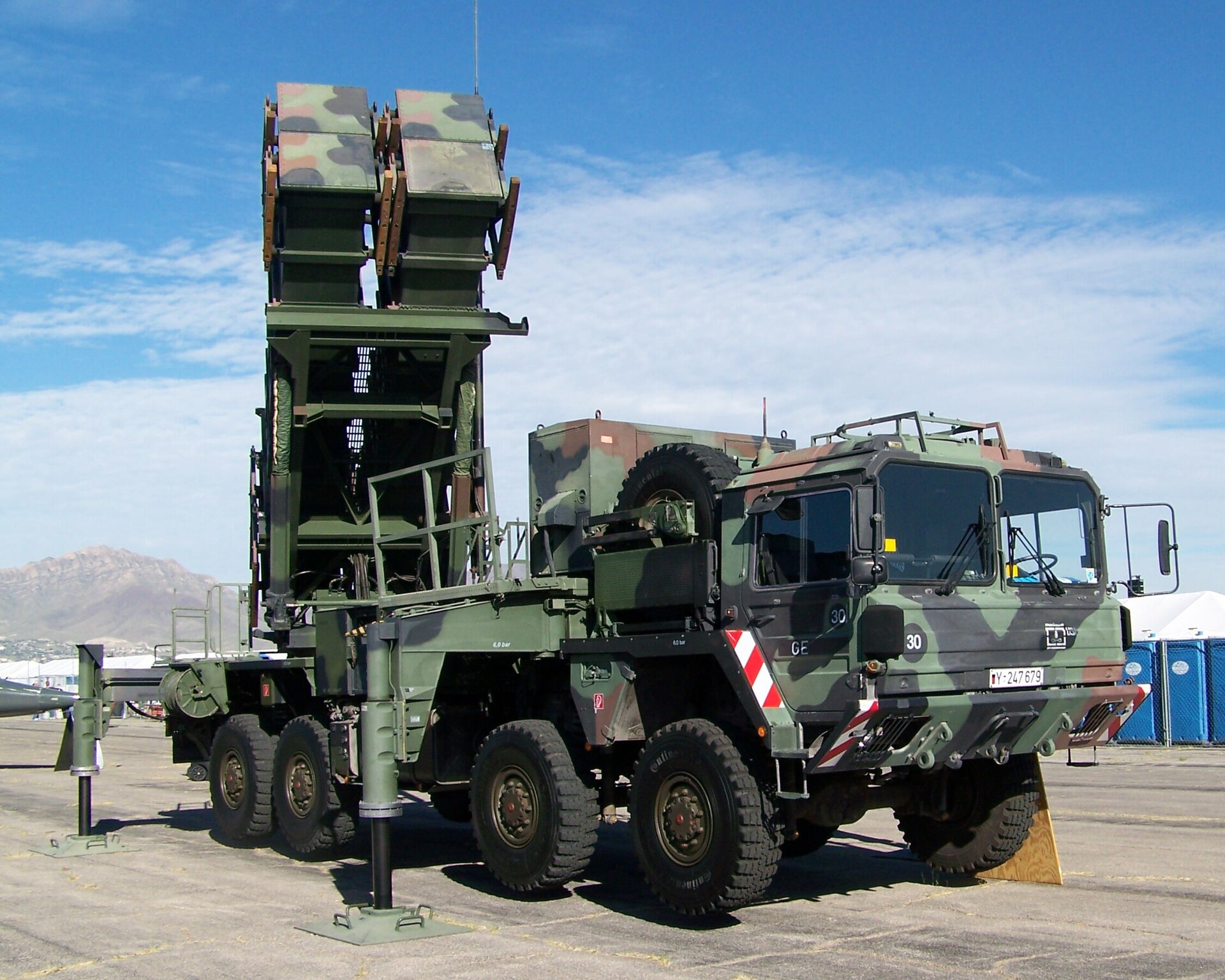
Table of Contents
- The Aggregate Lie: Why 85 Percent Masks a Downward Curve
- Where Does Saudi Air Defense Actually Work?
- The March 30 Riyadh Engagement: A Warning Shot in Real Time
- How Fast Is Saudi Arabia Burning Through Interceptors?
- Is Iran Learning to Saturate the Shield?
- THAAD Under Fire: Sensor Attrition and the Radar Gap
- The Houthi Variable: A Second Axis From Yemen
- Can Production Catch Up to Consumption?
- What Breaks First: The Shield or the Will?
The Aggregate Lie: Why 85 Percent Masks a Downward Curve
Aggregate statistics are a poor tool for measuring the health of an air defense network under sustained fire. An 85–90 percent intercept rate over thirty days includes the high-volume, high-success engagements of the war’s opening days — when Iranian salvos consisted heavily of older liquid-fuel Shahab and Zolfaghar variants that follow predictable ballistic arcs — alongside the far more challenging engagements of the war’s third and fourth weeks, when Iran shifted to solid-fuel missiles with maneuverable reentry vehicles.
The CSIS assessment of the air campaign, published March 25, noted that Gulf states reported intercept rates of 80 to 90 percent, which “if true aligns with the best rates that Ukraine has achieved.” The qualification “if true” is instructive. Ukraine’s own aggregate numbers concealed significant regional variation, with Kyiv enjoying near-total coverage and eastern frontline cities far less.
The same pattern is emerging in Saudi Arabia. The aggregate folds together Eastern Province engagements — where Patriot batteries are concentrated in overlapping coverage arcs to protect oil infrastructure worth billions in daily revenue — with Riyadh engagements, where battery density is lower, radar coverage thinner, and incoming missiles must be detected and tracked across a wider approach corridor from Iran’s western launch sites.
A 10 percent leakage rate across 600 projectiles means roughly 60 warheads have reached Saudi soil. That figure includes missile debris from intercepts that still caused ground-level damage — including fragments that struck civilian homes in the Eastern Province on March 30, according to the Saudi Ministry of Defense. Two days later, on April 2, debris from PAC-3 intercepts damaged nine homes across two separate incidents in Al-Kharj — examined in detail in our follow-on analysis of how the civilian impact of successful intercepts is forcing a harder public reckoning with the shield’s collateral costs. For a country that spent over $80 billion on air defense systems, each leak is a data point measuring the gap between procurement ambition and operational reality. The same day, an Iranian drone struck a Kuwait desalination plant, killing one worker and underscoring that leakage against civilian water infrastructure carries consequences no interception statistic can offset.
The Middle East briefing 3,000+ readers start their day with.
One email. Every weekday morning. Free.
Where Does Saudi Air Defense Actually Work?
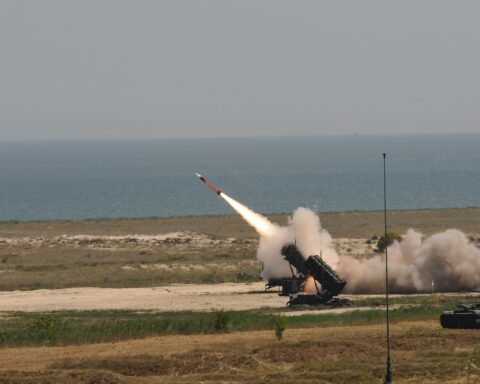
Saudi Arabia’s air defense architecture was not designed for the threat it now faces. The Kingdom’s six Patriot battalions with 108 MIM-104 launchers and two THAAD batteries, according to Army Recognition, were positioned primarily to protect three categories of high-value targets: oil infrastructure in the Eastern Province, military airfields, and the capital.
The Eastern Province commands the densest concentration of interceptor batteries anywhere in the Arabian Peninsula. Aramco’s Ras Tanura terminal, Abqaiq processing facility, and the Dhahran/Dammam military-industrial corridor each fall within overlapping Patriot engagement zones. When Iran fires at Eastern Province targets, incoming missiles encounter multiple battery tracking radars, giving Saudi operators the best possible engagement geometry — multiple shots from multiple angles.
Riyadh presents a different problem. The capital sits approximately 1,100 kilometers from Iran’s western border, meaning incoming ballistic missiles travel a longer trajectory that theoretically offers more warning time. But the city’s defensive perimeter is thinner. Fewer batteries cover a metropolitan area of roughly 1,900 square kilometers. When Iran fires six missiles at Riyadh simultaneously, as it did on March 30, the available interceptor batteries face a salvo-to-launcher ratio that favors the attacker.
The geography of interception also determines the geography of civilian risk. A prior analysis of the Saudi air defense shield noted that Saudi Arabia spent 72 percent of its air defense budget on systems designed to counter ballistic missiles and aircraft, while drones — which constituted 35 to 40 percent of actual threats in March 2026 — received just 2.4 percent of investment. This mismatch compounds in areas where Patriot batteries are stretched thinnest.
The March 30 Riyadh Engagement: A Warning Shot in Real Time
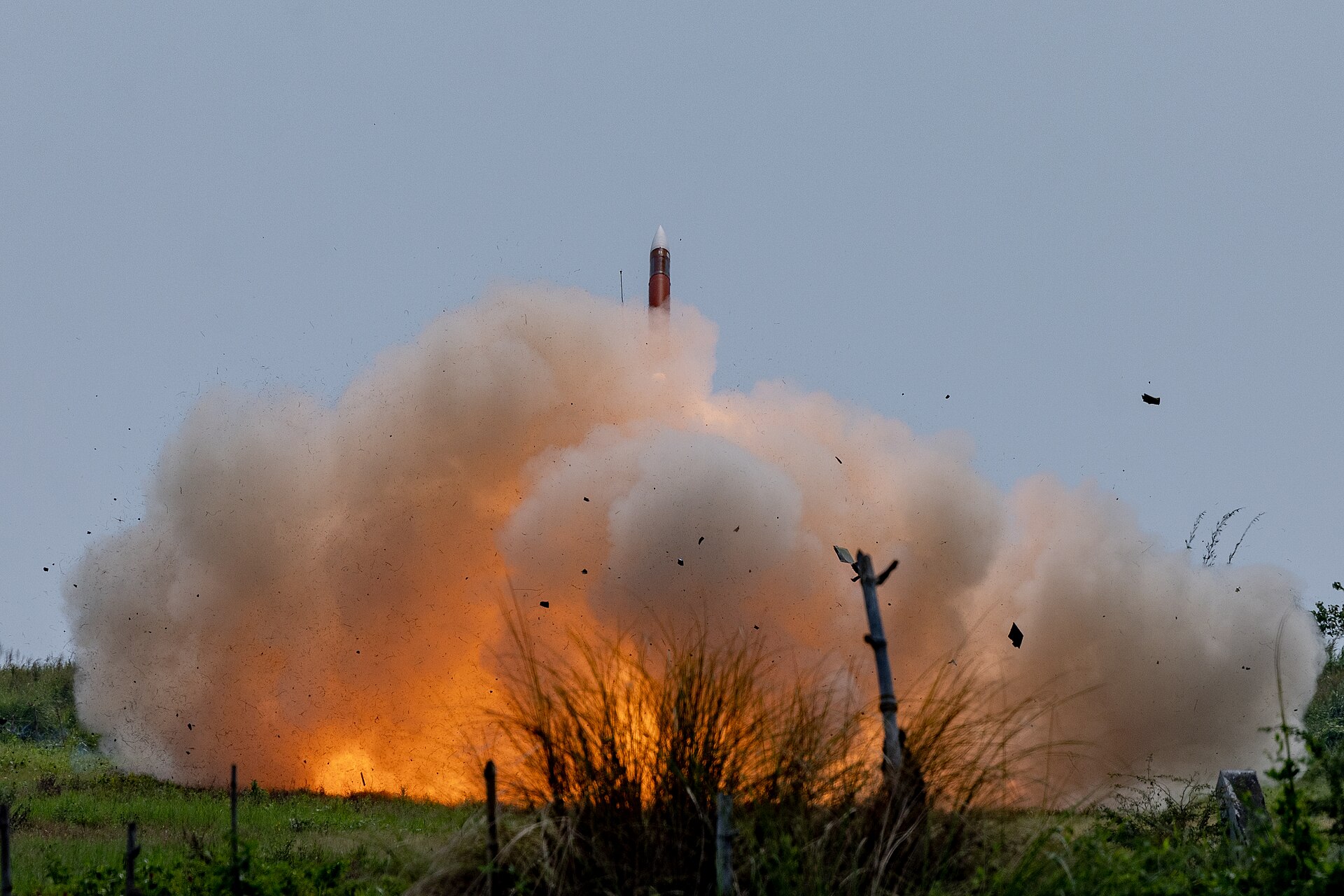
The March 30 attack on Riyadh encapsulates the shield’s emerging fragility. Iran fired six ballistic missiles at the capital; Saudi defenses intercepted two, according to Anadolu Agency citing the Saudi Ministry of Defense. The remaining four missiles either struck uninhabited areas or fell in the Gulf waters — but the 33 percent intercept rate against Riyadh on this single day tells a story the aggregate cannot.
This engagement occurred simultaneously with an Eastern Province attack in which five missiles and ten drones were intercepted successfully. The contrast is the point. When batteries are dense and radars overlapping, the system performs as advertised. When coverage is thinner and Iran concentrates fire, the math turns against the defender.
The simultaneous dual-axis attack — Eastern Province and Riyadh struck in the same window — forces Saudi operators to divide attention and interceptor allocation between two distant theaters. Each Patriot battery carries 16 launchers with four missiles each, providing 64 ready rounds per battery. Against a coordinated six-missile salvo, a single battery must commit 12 interceptors (firing the standard two-per-target doctrine) to engage all incoming threats. If any interceptor fails to track or the target maneuvers, the salvo overwhelms the battery before reloading is possible.
The Riyadh engagement also raises the question of which Iranian missile types were fired. Iran’s newer solid-fuel systems — particularly the Kheibar Shekan, with its maneuverable reentry vehicle designed specifically to evade Patriot tracking radars, according to Iran Watch — present a qualitatively different challenge than the older Shahab variants that Iranian forces expended in the war’s opening salvos.
How Fast Is Saudi Arabia Burning Through Interceptors?
The interceptor supply chain is the shield’s true structural vulnerability, and the mathematics are unforgiving. Saudi Arabia fired an estimated 300 to 450 PAC-3 MSE rounds in the conflict’s first sixteen days, according to analysis by the Foreign Policy Research Institute, with a daily expenditure rate of 20 to 40 interceptors against Iranian ballistic missile and drone salvos.
Each PAC-3 MSE interceptor costs approximately $4 million. Standard doctrine requires firing two interceptors per incoming ballistic missile to achieve the system’s rated kill probability. Against drones, operators sometimes fire a single round, but the cost asymmetry remains devastating: a $20,000 to $50,000 Shahed-136 drone forces the expenditure of a $4 million interceptor, a ratio that structurally favors the attacker. The full scope of Iran’s defense exhaustion strategy reveals that Tehran is not trying to beat the shield — it is trying to empty it.
At the rate of $100 million per week in Patriot interceptors alone — a figure consistent across multiple independent estimates — Saudi Arabia has spent roughly $400 million on Patriot rounds in thirty days. Add THAAD expenditures at $12.7 million per interceptor (FY2025 Pentagon budget data) and the cumulative cost approaches $600 million in interceptors consumed.
| Interceptor Type | Unit Cost | Est. Rounds Fired (30 Days) | Est. Total Cost | 2026 Annual Production |
|---|---|---|---|---|
| PAC-3 MSE | ~$4 million | 500–700 | $2–2.8 billion | ~650 (Lockheed Martin) |
| THAAD | ~$12.7 million | 30–50 | $380–635 million | ~12 (FY2026 procurement) |
The table exposes the core crisis. Saudi Arabia and deployed U.S. forces have likely consumed the equivalent of an entire year’s PAC-3 MSE production in a single month. THAAD expenditures, meanwhile, exceed the annual procurement by a factor of three to four. The RUSI analysis published March 26 found that the United States could be approximately one month away from exhausting available THAAD stocks if current expenditure rates continue — placing the depletion horizon in late April at the latest.
Is Iran Learning to Saturate the Shield?
Iran’s missile campaign has evolved measurably over thirty days, and the evolution suggests a deliberate strategy of adaptation rather than simple attrition. The IRGC Aerospace Force opened the war with high-volume salvos of older liquid-fuel variants — a choice that analysts at the Foreign Policy Research Institute interpreted as a deliberate expenditure of aging inventory to overwhelm defenses through sheer volume, while preserving newer systems for later phases.
By Day 10, according to a senior IRGC commander cited by AFP, Iran shifted to firing only missiles with warheads of 1,000 kilograms or more. This transition from saturation to penetration reflects a learning curve: having mapped Saudi radar coverage and battery response times through the opening salvos, Iran began concentrating heavier payloads against specific nodes.
The simultaneous multi-axis attacks that emerged in the war’s third week represent the most dangerous adaptation. By striking the Eastern Province and Riyadh in the same engagement window, Iran forces Saudi operators to allocate interceptors across a 1,100-kilometer front. The attacker chooses where to concentrate; the defender must be strong everywhere.
Iran’s parliament speaker Mohammad Bagher Ghalibaf signaled confidence in the missile campaign’s sustainability on March 29: “Our firing continues. Our missiles are in place,” he told the Tasnim news agency. “We clearly see the effects of fear and terror in the enemy’s army.” The statement is propaganda, but it carries a factual core: Iran entered the war with an estimated 3,000 ballistic missiles in its arsenal, according to multiple Western intelligence assessments. Even after thirty days of sustained fire, Iran has expended only a fraction of that stockpile.
The introduction of cluster munitions on Iranian warheads further complicates the intercept calculus. According to Al Jazeera, over half of Iranian missiles fired in the war have carried cluster warheads. Even a successful intercept may scatter submunitions over a wide area, meaning that the 85 percent intercept rate overstates the degree of protection ground-level targets actually receive.
THAAD Under Fire: Sensor Attrition and the Radar Gap
The most consequential damage to Saudi Arabia’s air defense network may not be measured in interceptors consumed but in radars destroyed. CNN reported that smoke was seen rising from a radar site near Prince Sultan Air Base on March 1 — the war’s opening day — where a tent used to shelter a radar system for a nearby THAAD battery was badly charred and debris scattered around it.
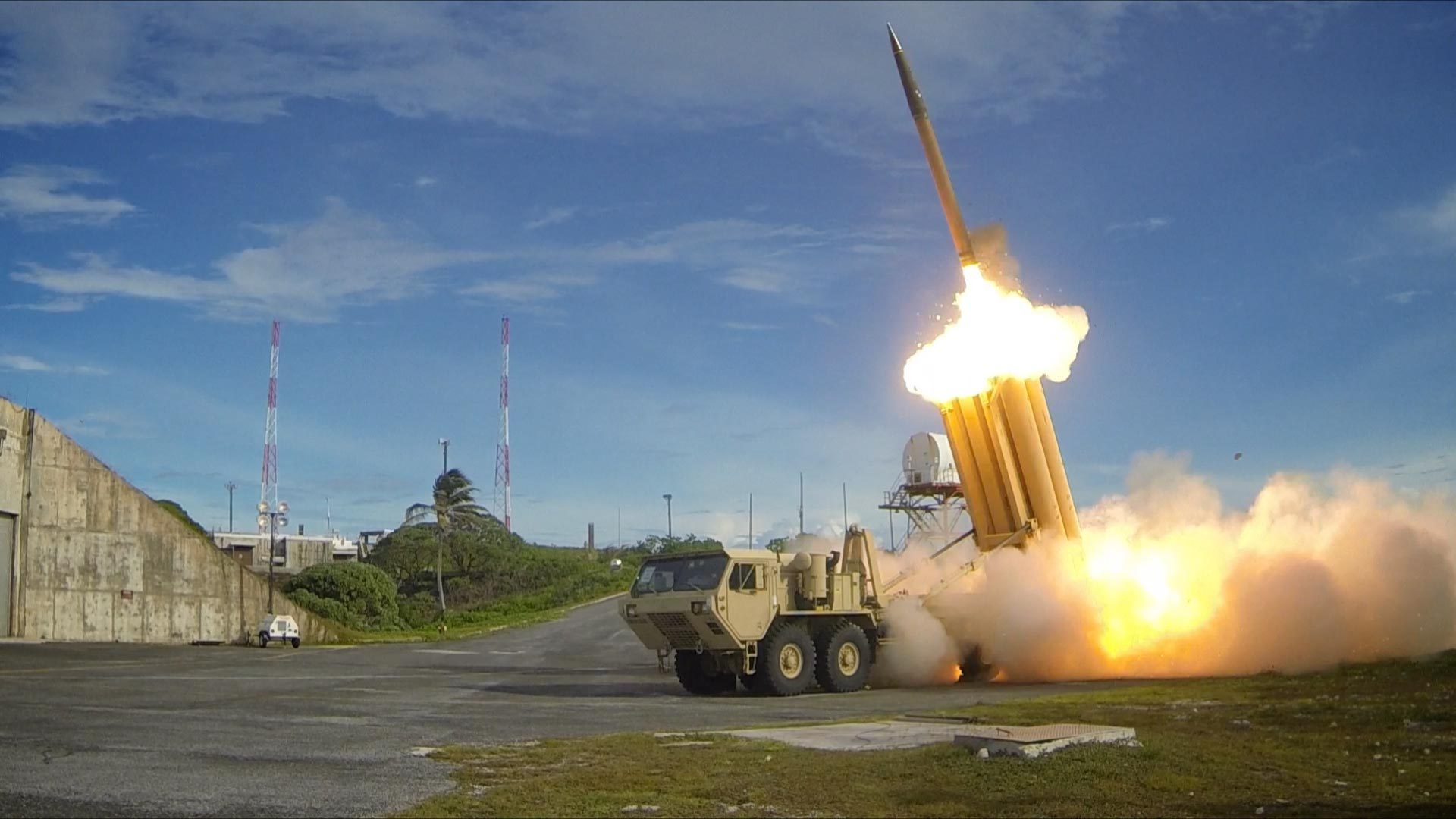
The THAAD system’s AN/TPY-2 radar is among the most capable missile defense sensors in the world, able to detect and track ballistic missiles at ranges exceeding 1,000 kilometers. It is also irreplaceable on any relevant timeline. The United States possesses a limited number of these radars — each one anchors a THAAD battery’s ability to engage high-altitude, long-range threats. Losing even one degrades the entire integrated air and missile defense picture across the Arabian Peninsula.
The THAAD radar vulnerability has been identified as a potential fatal flaw. Iran appears to have targeted these sensors deliberately. The March 27 strike on Prince Sultan Air Base — which wounded 15 U.S. service members according to NPR, damaged multiple KC-135 refueling aircraft and confirmed the destruction of an E-3 Sentry AWACS according to The Aviationist — was aimed at the base that hosts Saudi Arabia’s primary THAAD deployment.
Without functioning THAAD radars, the upper tier of Saudi Arabia’s layered defense collapses. Patriot batteries can still engage ballistic missiles, but at lower altitudes and shorter ranges, reducing the time available for multiple engagement attempts. The layered architecture that gives the system its theoretical 85–90 percent rate depends on THAAD taking the first shot at altitude, with Patriot serving as the second layer. Remove the upper tier and the aggregate rate drops — precisely the kind of degradation that would not appear in a 30-day average but would show in daily engagement data.
The Houthi Variable: A Second Axis From Yemen
The entry of Yemen’s Houthi forces into the war on March 28 introduces a geometric problem that Saudi air defense planners have confronted before — but never simultaneously with a state-level Iranian campaign from the north. The Houthis fired missiles toward Israel on March 28, according to CNBC, marking their formal entry into the conflict. Whether they expand targeting to Saudi Arabia remains the most consequential unanswered question for the Kingdom’s defense planners.
Saudi Arabia fought a years-long campaign against Houthi missiles and drones between 2015 and 2022. The experience is directly relevant: Houthi attacks on Saudi oil infrastructure in September 2019 knocked out half of Aramco’s production capacity despite the presence of Patriot batteries. The attack demonstrated that even well-defended fixed targets can be struck when the attacker achieves tactical surprise from an unexpected azimuth.
A two-axis threat — Iranian ballistic missiles from the north and northeast, Houthi drones and cruise missiles from the south and southwest — would force a redistribution of Patriot batteries that are already stretched thin. Saudi Arabia’s inability to integrate GCC defense assets into a unified command structure means that each additional threat vector must be covered by Saudi or U.S. batteries alone, without seamless coalition support.
The Soufan Center warned on March 19 that Houthi entry would represent a qualitative escalation, threatening both Saudi oil export infrastructure at Yanbu on the Red Sea coast and the East-West pipeline that now carries 7 million barrels per day — the Kingdom’s primary revenue lifeline while the Strait of Hormuz remains closed.
Can Production Catch Up to Consumption?
Lockheed Martin delivered 620 PAC-3 MSE interceptors in 2025, an increase of more than 20 percent over 2024, which itself represented a 60 percent increase over 2023’s output of 380 units. In January 2026, the Pentagon signed a framework agreement to triple annual production from roughly 650 to 2,000 units by 2030 — a seven-year ramp that Lockheed Martin CEO Jim Taiclet described as a 320 percent increase.
The timeline is the problem. The 2,000-per-year target assumes peacetime industrial expansion: new production lines at Lockheed Martin’s Munitions Acceleration Center in Camden, Arkansas; expanded solid-rocket-motor supply from Aerojet Rocketdyne; and a steady flow of guidance components from sub-tier suppliers. Wartime demand has compressed the timeline from comfortable to urgent, but physical factory capacity cannot be compressed at the same rate. Our reporting on why only 400 PAC-3 rounds remain in GCC stocks maps the specific sub-tier supplier bottlenecks and single-source production lines that make the Camden ceiling a structural constraint, not a temporary one.
THAAD production faces an even starker gap. The FY2026 procurement budget provides for just 12 new THAAD interceptors — against an estimated 30 to 50 already consumed in the Gulf theater. The January 2026 framework agreement aims to quadruple THAAD production from 96 to 400 interceptors per year, according to Breaking Defense, but Lockheed Martin has acknowledged that the ramp will take seven years. New missiles procured now will not arrive in volume until 2027 or 2028 at the earliest.
The United States has been drawing from its own strategic stocks to supply deployed forces and Saudi batteries, a fact that introduces a second constraint: the Taiwan contingency. China is watching American interceptor stockpiles drain in real time, according to Asia Times, and every THAAD round consumed in the Gulf is one fewer available for a potential Indo-Pacific scenario. Pentagon planners face a two-theater allocation problem with a one-theater production base.
“Industrial endurance, rather than battlefield performance, is now shaping strategic decision-making in the ongoing war.” — Royal United Services Institute, March 2026
The RUSI depletion timeline noted above — roughly one month at current expenditure rates — coincides almost exactly with the war’s second month. If that estimate holds, April becomes the month when Saudi Arabia’s upper-tier defense effectively expires, unless operational adjustments dramatically reduce the consumption rate.
What Breaks First: The Shield or the Will?
The air defense degradation data suggests three possible trajectories for the war’s second month, each shaped by industrial constraints rather than political calculations alone.
The first is managed decline. Saudi and U.S. forces adopt a triage doctrine, concentrating remaining interceptors on the highest-value targets — oil infrastructure, military airfields, and key population centers — while accepting higher leakage rates on secondary targets. This is the pattern Ukraine adopted after its own interceptor constraints became binding in 2023, and it is likely already underway in some form. The Riyadh intercept rate may reflect not system failure but system prioritization: batteries allocated elsewhere.
The second is production surge. The January 2026 framework agreements accelerate faster than planned, with Lockheed Martin pulling forward capacity that was scheduled for 2028 and 2029. This would require emergency procurement authorities, waived environmental reviews, and expedited sub-component deliveries — the kind of wartime industrial mobilization the United States has not executed since the early stages of the Iraq war. Even under the most optimistic surge scenario, meaningful additional volume would not arrive before June.
The third is technology substitution. Ukraine’s recent defense deal with Saudi Arabia points toward one alternative: electronic warfare and lower-cost counter-drone systems that reduce the burden on Patriot batteries by handling the drone threat with cheaper effectors. The U.S. deployment of 10,000 AI-enabled Merops interceptor drones represents another attempt to shift the cost curve. Neither solution addresses the ballistic missile threat directly, but both could free interceptor inventory for use against the missiles that matter most.
The political sustainability of the multinational coalition defending Saudi Arabia intersects with technical sustainability at a precise point: the moment when allied governments must decide whether to deplete their own strategic reserves to keep the Saudi shield functional. The RUSI finding that allied interceptor stocks face depletion within weeks means that decision point is approaching, not receding.
For Saudi Arabia, the thirty-day assessment reveals an air defense system that has performed better than most pre-war predictions but worse than the aggregate statistics suggest. The shield works — in the Eastern Province, against older missile types, when batteries are dense and radars intact. It is fraying — over Riyadh, against newer missiles, when sensors are damaged and stocks are thinning. The one-month war balance sheet must account for both realities.
The 85 percent number will continue to appear in coalition briefings because it is accurate in the narrow actuarial sense. But Saudi defense officials know — and Iran’s IRGC Aerospace Force increasingly appears to know — that the number that matters is not the average. It is the trend at specific nodes, on specific days, against specific missile types. By that measure, the shield is not holding. It is eroding. New analysis shows how Iran is now bleeding the shield dry across three fronts simultaneously — targeting Saudi Arabia, the UAE, and Kuwait in parallel to prevent any GCC state from holding interceptor reserves for its neighbours.

Frequently Asked Questions
How many Patriot batteries does Saudi Arabia have protecting Riyadh specifically?
Saudi Arabia does not publicly disclose the exact number of Patriot batteries allocated to Riyadh, but the capital’s defensive perimeter is covered by a subset of the Kingdom’s six Patriot battalions. Western defense analysts estimate that two to three batteries cover the Riyadh metropolitan area, supplemented by short-range air defense systems, compared to four or more batteries protecting the Eastern Province oil corridor. The disparity explains why the capital’s intercept rate has lagged behind the national aggregate during simultaneous multi-axis attacks.
What is the difference between a Patriot PAC-3 MSE and a THAAD interceptor?
The PAC-3 MSE is a hit-to-kill interceptor designed to engage ballistic missiles, cruise missiles, and aircraft at lower altitudes and shorter ranges, typically within 35 kilometers and up to 25 kilometers altitude. THAAD interceptors operate at much higher altitudes — up to 150 kilometers — and are designed to destroy warheads during the terminal phase of their descent from space. The two systems form complementary layers: THAAD takes the first shot at high altitude, and Patriot provides a backup engagement at lower altitude if THAAD misses.
Has Iran run out of ballistic missiles?
Iran has not exhausted its ballistic missile arsenal despite thirty days of sustained fire. Western intelligence agencies estimated Iran’s pre-war inventory at approximately 3,000 ballistic missiles. The Jerusalem Post reported that Iran’s missile fire rate has declined by 92 percent from its opening-day peak, but analysts attribute this to a deliberate shift from volume-based saturation to precision-targeted strikes with heavier warheads rather than stockpile depletion. Iranian officials have signaled continued confidence in stockpile depth, and the IRGC has demonstrated the ability to sustain periodic large salvos throughout the conflict’s fourth week.
Could Saudi Arabia buy interceptors from countries other than the United States?
Saudi Arabia’s air defense architecture is built entirely around American-made systems that use proprietary fire-control software, radar frequencies, and data links. Patriot and THAAD interceptors cannot be replaced with non-American equivalents without replacing the entire fire-control ecosystem. France’s SAMP/T and Israel’s David’s Sling are theoretically compatible alternatives for some threat categories, but neither country has offered to sell to Riyadh, and integration would take years. The dependence on a single supplier is itself a strategic vulnerability that this war has exposed with unusual clarity.
Why does Saudi Arabia fire two interceptors at each incoming missile?
The “shoot-shoot” doctrine — firing two interceptors per incoming threat — is standard practice across all Patriot-operating nations and reflects the statistical reality that no single interceptor achieves a 100 percent kill probability. If a single PAC-3 MSE has a 90 percent probability of kill, firing two raises the combined probability to 99 percent. The doctrine doubles the interceptor expenditure rate but dramatically reduces the chance of a warhead reaching its target. Some operators have shifted to a “shoot-look-shoot” doctrine in this conflict to conserve rounds, accepting slightly lower kill probability in exchange for extending inventory life.