
KUWAIT — A Kuwaiti PAC-3 battery intercepted an Iranian Fateh-110 short-range ballistic missile over Ali Al Salem Air Base on Friday, but debris from the destroyed projectile struck the flight line, injuring five Americans and destroying at least one MQ-9 Reaper drone worth $30 million, Bloomberg reported.
The casualties — a mix of active-duty service members and civilian contractors, all with injuries described as minor — are the third confirmed group of US personnel wounded at Ali Al Salem since the ceasefire began, following a drone strike on April 6 that wounded 15 Americans. A second MQ-9 Reaper sustained serious damage. The intercept was successful. The debris fell on what the battery was protecting.
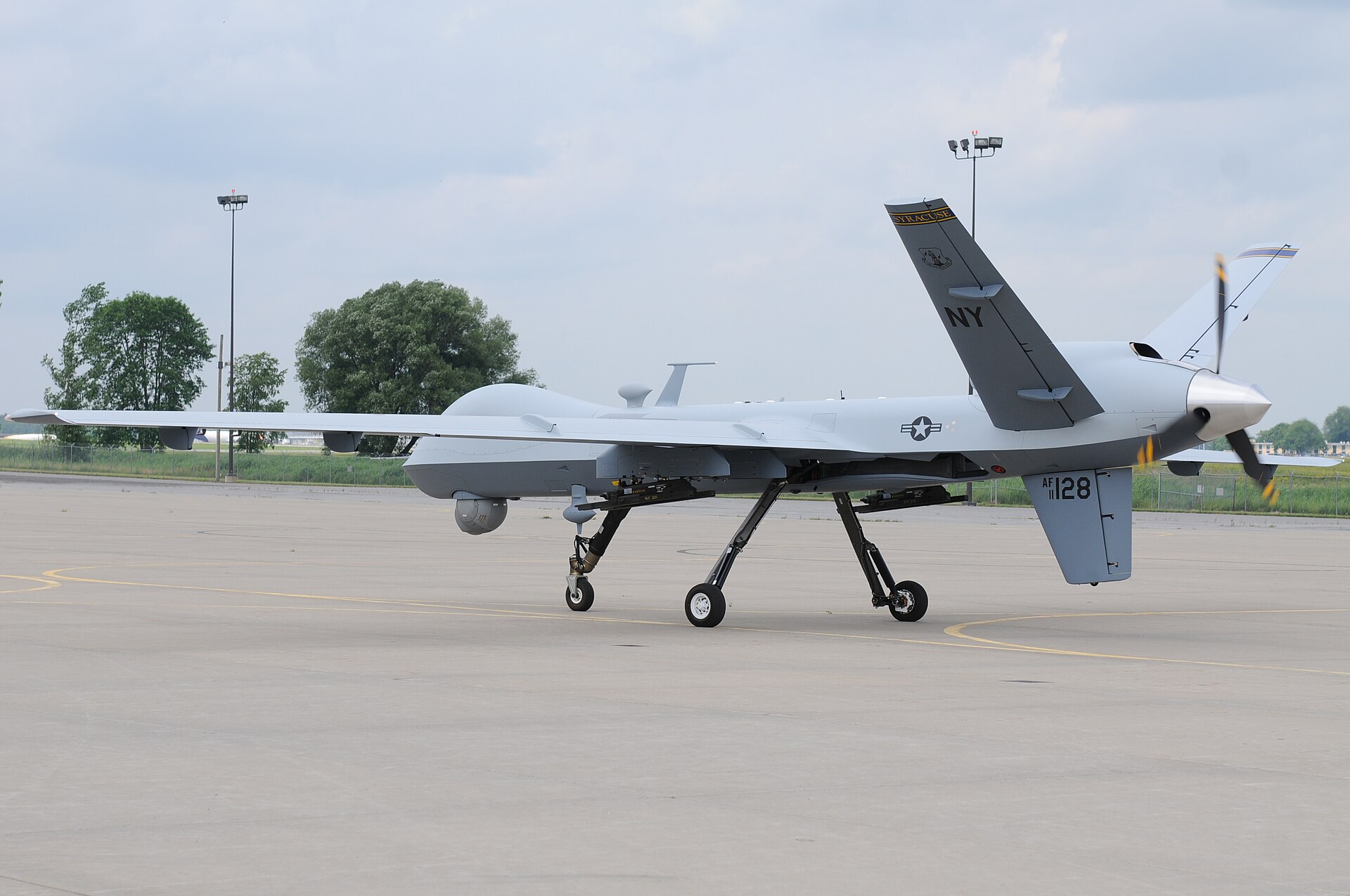
Table of Contents
What Hit Ali Al Salem
The Fateh-110 is a single-stage solid-fueled short-range ballistic missile with a range of 200 to 300 kilometers and a warhead weighing 450 to 650 kilograms, depending on variant. It reaches terminal velocity between Mach 3.5 and Mach 4 — fast enough that the PAC-3 interceptor must meet it head-on along its inbound trajectory, at combined closing speeds above Mach 10. Iran has used Fateh-family variants throughout the 91-day conflict, firing 1,372 ballistic missiles at GCC states since February 28, according to the International Institute for Strategic Studies.
The IRGC confirmed the strike through Tasnim News Agency, stating it targeted Ali Al Salem in retaliation for a US strike “using aerial projectiles against a location near Bandar Abbas airport” the previous morning — a reference to CENTCOM’s May 27 strike on an IRGC drone-control station. The IRGC characterized the missile as “a warning to the US” and said “any future acts of aggression would be met with a stronger response.”
PressTV, Iranian state media, ran the incident as “Five Americans injured in Iranian missile strike on Kuwait base” — framing the outcome as a successful attack with no mention of the intercept. CENTCOM’s prior characterization of Iranian post-ceasefire strikes, issued May 28 after an earlier barrage, called them “egregious ceasefire violations.” CENTCOM did not respond to requests for comment on Friday’s strike early Saturday, Bloomberg reported.
Ali Al Salem, located approximately 37 kilometers from the Iraqi border in Jahra Governorate, hosts the 386th Air Expeditionary Wing — the US Air Force’s principal airlift hub and combat-power gateway for the Central Command area of operations. Approximately 13,500 US military personnel are stationed across Kuwait’s three major installations: Camp Arifjan, Ali Al Salem, and Camp Buehring.
The Middle East briefing 3,000+ readers start their day with.
One email. Every weekday morning. Free.
What Falls After a Successful Intercept?
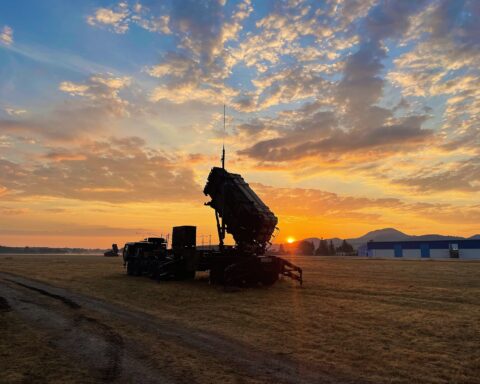
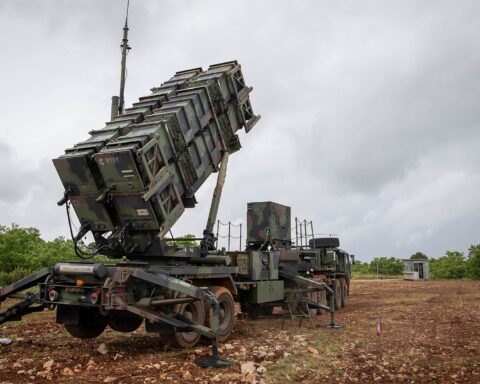
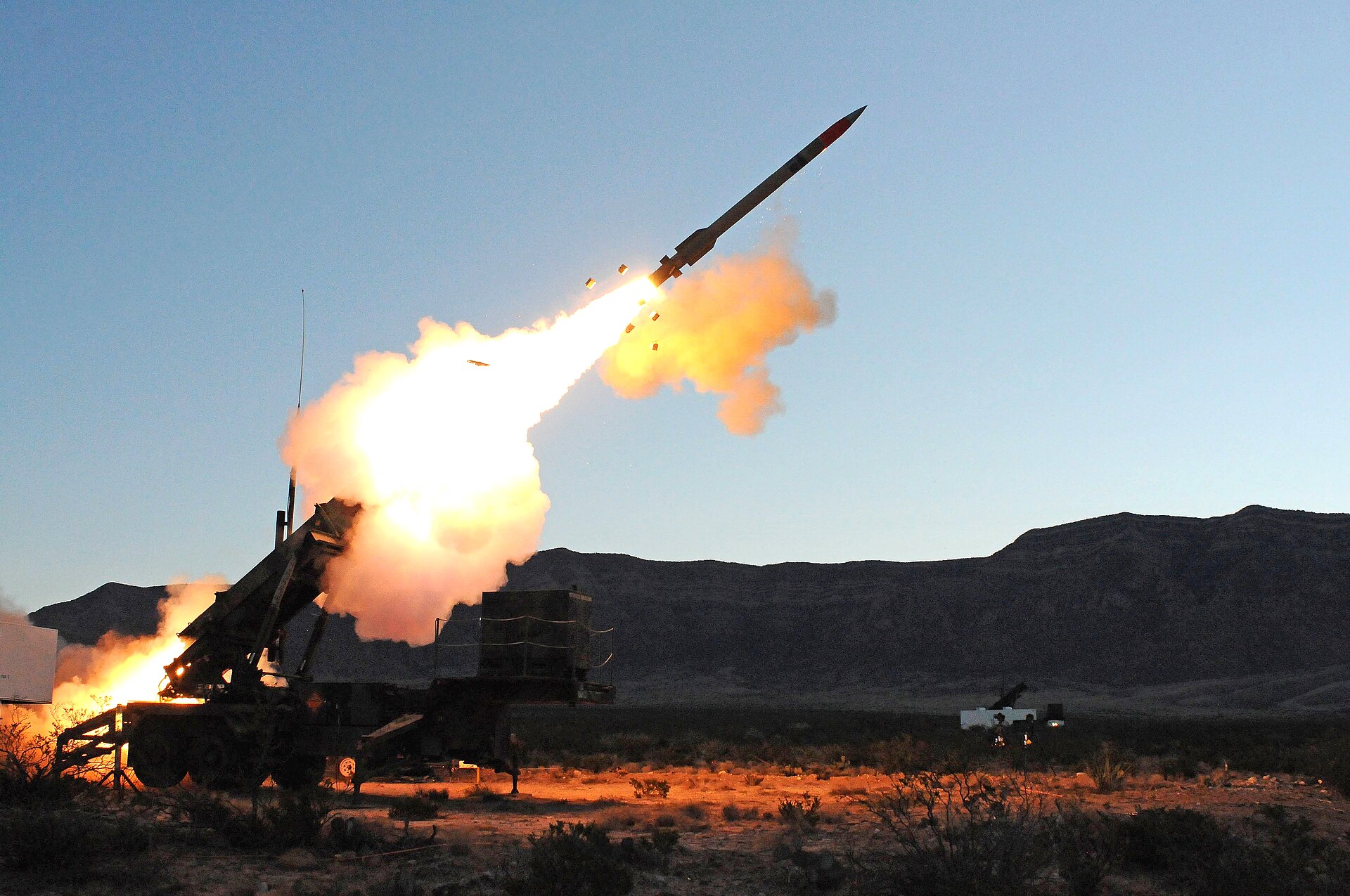
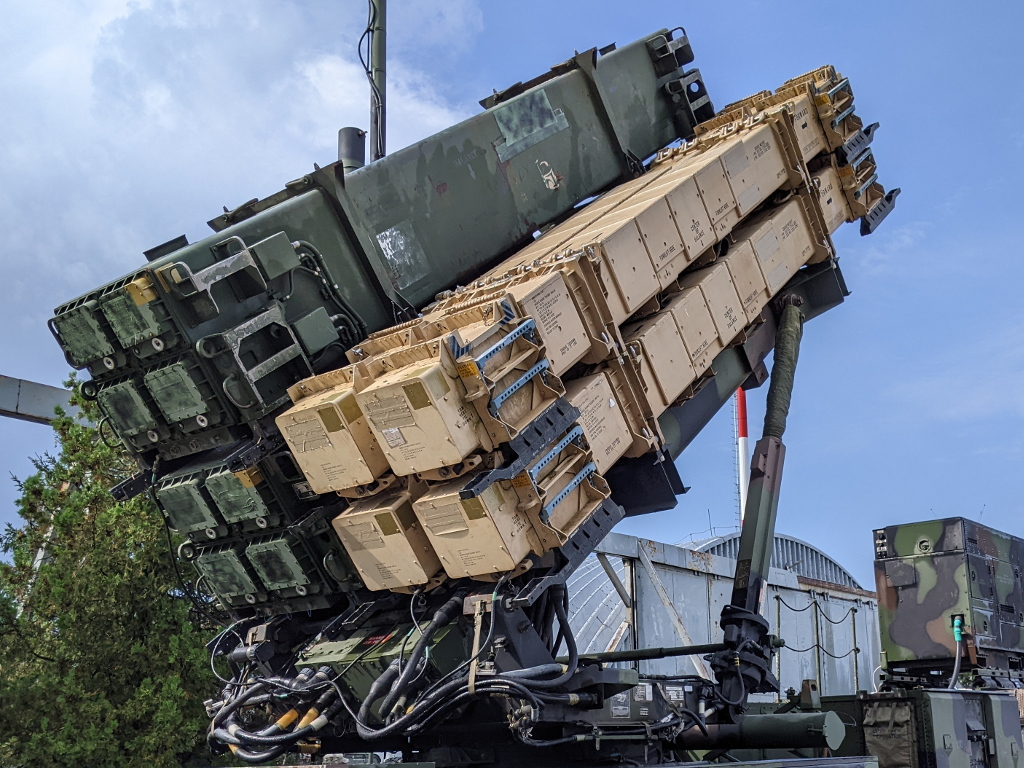
The PAC-3 Missile Segment Enhanced is a hit-to-kill weapon. It does not detonate near its target. It flies into the incoming missile at roughly 3.2 kilometers per second. The collision disintegrates the threat — warhead, propellant, casing — into several tons of falling debris that descends under gravity across the engagement zone above the defended area.
“The LFT&E program has demonstrated that the PAC-3 missile intercept may not kill all warhead submunitions, and that there will probably be some ground effects following an intercept.”
Pentagon Director of Operational Test and Evaluation (DOT&E), annual report on PAC-3 Live Fire Test and Evaluation
The DOT&E developed a Post Engagement Ground Effects Model specifically to quantify debris damage from successful intercepts. A PAC-3 battery defends approximately 50 to 100 square kilometers. The engagement occurs above or near the defended asset — by design, because the interceptor must meet the threat along its inbound trajectory. The debris footprint extends across the area beneath the intercept point.
The interceptor itself contributes to the debris field. Despite its hit-to-kill designation, the PAC-3 MSE carries an explosive charge called a “lethality enhancer” that ejects titanium fragments — called cycloids — outward to increase the effective kill area. The Army tested the MSE’s titanium cycloids against Composition B explosive at Aberdeen Proving Ground, Maryland, from July 2015 through June 2016, according to The War Zone. Earlier PAC-3 variants used tungsten; the production baseline used steel. Each adds mass to what falls.
At Ali Al Salem on Friday, the geometry was straightforward. The Fateh-110 was inbound on a trajectory that terminated at the base. The PAC-3 intercepted it above the flight line. Below the intercept point: parked MQ-9 Reapers and the personnel servicing them.
The Debris Record
Friday’s incident at Ali Al Salem is the latest in a pattern of debris-inflicted casualties and equipment damage across the Gulf since February 28 — each following a technically successful intercept.
On April 2, Saudi air defenses intercepted one ballistic missile and ten drones over Al-Kharj, 27 kilometers from Prince Sultan Air Base — the primary US forward operating base in Saudi Arabia. Debris from the successful intercepts fell on nine residential homes in two separate incidents. Saudi Civil Defense confirmed “limited material damage” and two residents with minor injuries. It was the first Saudi state media acknowledgment that intercept debris constitutes an independent damage vector.
Five days later, Saudi defenses intercepted all 11 IRGC ballistic missiles targeting the Eastern Province over Jubail. Falling debris ignited a fire at SABIC’s petrochemical complex — a facility spanning 1,016 square kilometers that produces roughly 60 million tonnes of petrochemicals annually and accounts for 7 percent of Saudi GDP. The IRGC had publicly named Jubail among its “direct and legitimate targets” on March 18, twenty days before the missiles arrived.
The geography of debris extends across the Gulf. In Abu Dhabi, fragments from an intercepted missile killed a Pakistani civilian near Zayed International Airport on February 28 — the war’s opening day. In Dubai’s Al Barsha district, debris from an intercepted drone killed a Pakistani driver. Qatar reported 16 injured and 114 separate shrapnel incidents after intercepting 66 missiles. In Bahrain, three people were injured when debris struck a university building in Muharraq on March 8.
The problem predates 2026. During the Houthi missile campaign, a successful intercept over Riyadh on March 25, 2018, killed an Egyptian taxi driver and wounded two colleagues — the first Houthi-related fatality in the Saudi capital. Video from the same engagement showed a Patriot missile malfunctioning after launch, reversing course, and detonating in a Riyadh neighborhood. Saudi officials later acknowledged two of the seven Patriots fired in that salvo suffered catastrophic failures.
The earliest operational record belongs to the 1991 Gulf War. A September 1992 GAO report concluded only 9 percent of Patriot launches against Iraqi Scuds resulted in a confirmed kill. MIT physicist Ted Postol conducted frame-by-frame analysis and demonstrated the Patriot had not intercepted a single Scud warhead. At least 45 percent of the 158 Patriots launched targeted debris or false returns — contributing additional falling wreckage over Riyadh and Dhahran without eliminating the threat.
What Does This Mean for Saudi Arabia’s Remaining PAC-3s?
Saudi Arabia entered the war with approximately 2,800 PAC-3 MSE interceptors. It has roughly 400 remaining — an 86 percent depletion rate. Between 80 and 150 of those are physically positioned in the Hajj corridor, where 1.7 million pilgrims gathered this week. At full-intensity attack rates, that stock covers 1.3 to 2.4 days. Mark Cancian and Seong Hyeon Park of CSIS characterized the drawdown in April as “a depletion rate with no comparable precedent in the system’s operational history.”
No new rounds will enter the Saudi inventory before mid-2027. The Camden, Arkansas facility — the only PAC-3 MSE final assembly line on earth — produces 620 rounds per year at current capacity, with plans to reach 2,000 rounds annually by 2030. Saudi Arabia’s $9 billion order for 730 interceptors, notified to Congress through DSCA on February 2, carries an 18-month delivery floor from contract execution. Qatar received an emergency waiver for $4.01 billion in PAC-3 MSE rounds under Section 36(b) on May 2, signed by Secretary of State Marco Rubio. Saudi Arabia — which has fired more interceptors than any other state in the system’s history — received no comparable waiver from the $8.6 billion May tranche.
Ali Al Salem reframes the arithmetic. Each of those 80 to 150 remaining interceptors, if fired successfully, generates a debris field over the area it defends. At Al-Kharj the area beneath the engagement zone contained residential housing. At Jubail it contained a petrochemical complex. At Ali Al Salem it contained $60 million in parked drones. The Hajj corridor’s PAC-3 batteries defend Mecca and Medina.
Twenty-Five Reapers and Counting
The MQ-9 confirmed destroyed at Ali Al Salem brings total fully destroyed Reapers in the conflict to 25 — 24 during Operation Epic Fury, according to Congressional Research Service report IN12692, plus Friday’s confirmed loss. A second Reaper sustained serious damage but has not been assessed as a total loss. Some assessments place the pre-Friday destroyed total closer to 30.
The US Air Force’s operational MQ-9 fleet stood at 135 aircraft as of May 13 — 54 below the 189-aircraft operational minimum — Lt. Gen. David Tabor told the Senate Armed Services Committee. Tabor urged Congress to “buy back as many as we possibly can.” Air Force Chief of Staff Gen. Kenneth Wilsbach called the MQ-9 the “Most Valuable Player” of the Iran war “despite losses.”
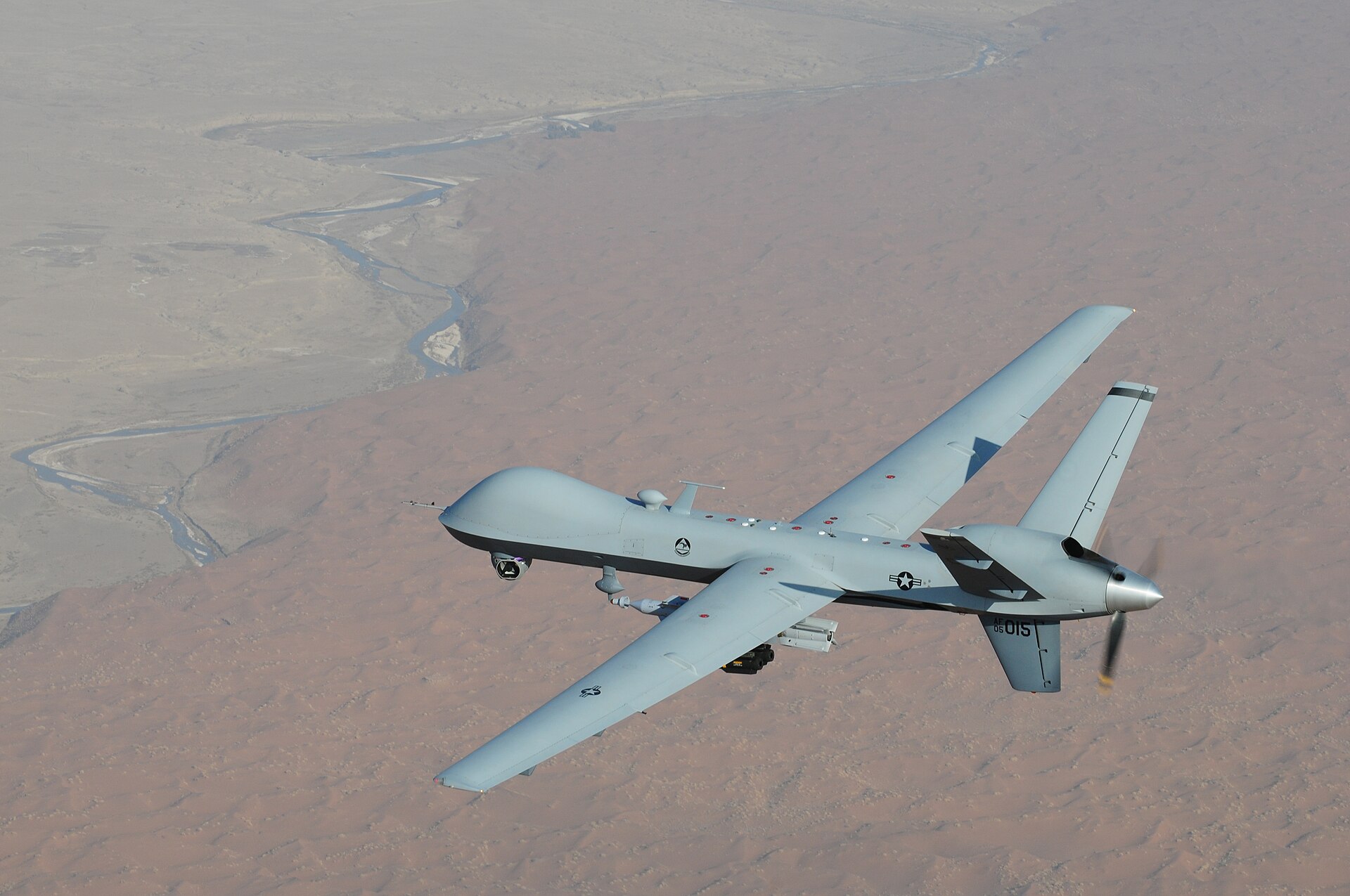
Each MQ-9 costs up to $50 million fully equipped, Maj. Gen. Christopher Niemi told the Senate on May 12. The 24 airframes destroyed before Friday represented $720 million to $1.2 billion at base price. Total US military damage from Iranian strikes across the theater has reached $40 to $50 billion — exceeding the $25 billion figure the Pentagon gave Congress, CNN reported in April.
Ali Al Salem has absorbed three confirmed Iranian strikes since February 28. On March 15, an attack destroyed one MQ-9 and damaged two Italian Eurofighter Typhoons. On April 6, a drone strike wounded 15 Americans. Friday’s debris incident added at least two more Reaper casualties and five more personnel injuries to the base’s toll.
Day 91, No Signature
The Ali Al Salem strike landed less than 24 hours after Trump left a roughly two-hour Situation Room meeting on Friday afternoon without signing the Iran MOU. Vice President Vance told CBS the negotiators were “going back and forth on a couple of language points” but that “we’re not there yet.” The White House maintained the diplomacy track was active.
Trump made no public statement about the May 30 casualties. Fortune and Bloomberg noted that “the lack of public comment after the Situation Room talks on Friday, despite President Donald Trump earlier suggesting an agreement was near, was the latest conflicting signal from Washington.”
At the Shangri-La Dialogue in Singapore, Defense Secretary Pete Hegseth said the US was “more than capable” of restarting strikes and that “the blockade is very much still in place.” He described US stockpiles as “more than suited” for resumed operations and said the Pentagon was “super-charging our defence industrial base so that we’re building 2X, 3X, 4X the munitions.” Hours earlier, Trump had posted on Truth Social that ships “caught in the Strait due to our amazing and unprecedented Naval Blockade” could start the process of “heading home.”
Mohsen Rezaei, senior adviser to Iran’s Supreme Leader and former IRGC commander-in-chief, accused Trump of “betraying diplomacy for the third time.” Iran “will break the blockade either through negotiation or, if not, through direct action,” Rezaei told PressTV. Senators Cruz, Wicker, Graham, Cotton, and former Secretary of State Pompeo have publicly opposed the MOU. The IRGC-affiliated Fars News Agency denied the agreement was finalized, reporting a competing Iranian draft “under Iran’s management” distinct from the Axios-reported US text calling for “unrestricted” shipping. The pattern of GCC base strikes continued on June 3, when the IRGC fired on US Fifth Fleet headquarters in Bahrain for the third time, with Bahrain’s PAC-3 batteries at 87 percent
The same June 3 barrage extended beyond the Fifth Fleet and military airfields: IRGC drones struck Kuwait International Airport’s Terminal 1, a civilian passenger hall that had been operating for just forty-eight hours. Unlike the debris incidents at Ali Al Salem, the Terminal 1 strike was a direct hit on civilian infrastructure the IRGC did not claim — the first such strike on an active passenger terminal in ninety-six days of conflict.
Background
Ali Al Salem Air Base has been targeted repeatedly since the war’s opening hours on February 28. It was the last Kuwaiti airbase not occupied during the 1990 Iraqi invasion. Kuwait’s air defense forces have intercepted 97 ballistic missiles and 283 drones since the ceasefire began, according to IISS, on top of 265 intercepts during the full-war phase — a combined tally of 362 successful engagements in 91 days.
Two days before Friday’s strike, Kuwait intercepted 9 missiles — 7 ballistic, 2 cruise — and 26 drones in a single 24-hour period. The Mina al-Ahmadi refinery, with 346,000 barrels per day of capacity, was struck for the third time in two weeks. Six power transmission lines were knocked out. Ten Kuwaiti soldiers were injured.
“The unit was unprepared to provide any defense for itself.”
Injured US servicemember, 103rd Sustainment Command, describing Port Shuaiba (CBS News)
The deadliest attack on US forces in Kuwait came on March 1, when an Iranian drone struck a tactical operations center at Port Shuaiba, killing six Army Reserve soldiers from the 103rd Sustainment Command based in Des Moines, Iowa. Survivors disputed Pentagon characterizations of the site as “fortified.” One injured servicemember told CBS News the unit had “none” in terms of drone defense capability. Congressman Pat Ryan, an Iraq War veteran, led 13 House Democrats in demanding Defense Secretary Hegseth investigate “force protection failures.” At a House Armed Services Committee hearing on April 29, Hegseth asked Ryan if he was “going to play gotcha.”
Kuwait invoked Article 51 self-defense at the UN Security Council on May 15, becoming the first individual GCC state to file a formal self-defense notice during the conflict. Resolution 2817 passed 13-0 with 135 co-sponsors. It produced no GCC Joint Defense Agreement activation and no Saudi MOFA statement.
Friday marked Day 91 of the conflict. Saudi Arabia expended 2,400 PAC-3 interceptors against 894 aerial threats across 38 days of full-intensity combat, according to CSIS — a ratio of 2.7 interceptors per threat. Kuwait has not disclosed its own expenditure rate against its 362 confirmed intercepts.
Frequently Asked Questions
How accurate is the Fateh-110?
Iran claims fourth-generation Fateh-110 variants achieve a circular error probable under 5 meters using electro-optical and infrared terminal guidance. Western analysts, including the CSIS Missile Threat Project, assess the guidance as GPS-aided inertial and list the fourth-generation CEP at approximately 10 meters. The Fateh-e Mobin variant extends range to 300-500 kilometers with improved guidance. Anti-ship derivatives include the Hormuz-1, which carries an anti-radiation seeker, and the Khalij Fars, which uses an electro-optical and infrared seeker capable of tracking moving vessels.
Has any country deployed a defense against intercept debris?
No operational system exists specifically to protect against falling debris from terminal-phase ballistic missile intercepts. Israel’s Iron Dome intercepts rockets at lower altitudes, generating smaller debris fields, but has still produced ground casualties. Palestinian police reported 198 debris incidents across the West Bank by March 21, 2026, killing five people and injuring nine, according to Middle East Eye. Four of the five deaths occurred in Hebron. The Iron Dome system pre-designates some areas as “open zones” where no interception is triggered — allowing the rocket to impact rather than generating a debris field over a populated area. No equivalent triage exists for the PAC-3’s theater-defense mission.
What happened to Italy’s forces at Ali Al Salem?
Italy maintained a contingent at Ali Al Salem that was reduced from approximately 300 to 100 personnel during the conflict, according to Italian defense officials. Italian troops have been “entrenched in the base and remain under the cover of bunkers,” the same officials said. Italy lost an MQ-9 Reaper on the ground at the base during the March 15 strike, alongside two damaged Eurofighter Typhoons. The Italian armed forces have not disclosed whether any of their personnel were among Friday’s casualties. Italy is the only NATO ally with ground forces at Ali Al Salem.
How many Americans have been killed or wounded in Kuwait during the conflict?
At least seven US servicemembers have been killed in Kuwait since February 28: six at Port Shuaiba on March 1 and at least one additional fatality. MEAWW reported updated Operation Epic Fury theater-wide totals of 14 Americans killed and 409 injured as of May 30 — up from the Pentagon’s April 8 disclosure of 13 killed and 381 wounded. Friday’s five injuries at Ali Al Salem, if not already included in the MEAWW tally, would raise the wounded total to 414. The discrepancy between MEAWW and Pentagon figures has not been addressed by the Department of Defense.
What is the legal basis for the US naval blockade of Iran?
The US has not formally declared a blockade under international law, which would trigger obligations under the 1909 Declaration of London and potentially the UN Charter. The administration characterizes the operation as “freedom of navigation enforcement” and “interdiction of sanctioned vessels.” Iran has formally protested to the UN Security Council under UNCLOS Article 88, arguing the restriction constitutes an unlawful interference with the high seas. No binding Security Council resolution has addressed the question, with Russia and China blocking Western-backed resolutions while the US vetoed Iranian-backed language.