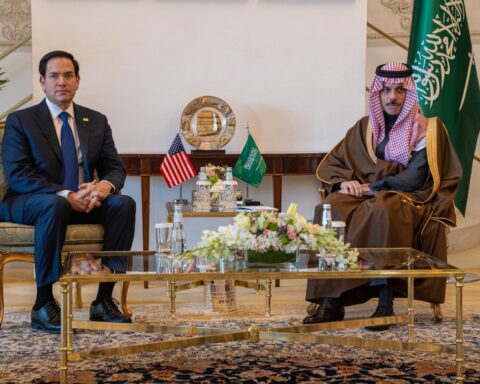
KUWAIT CITY — Kuwait signed a $1.02 billion NASAMS contract with Raytheon on May 26, a deal that will clear the US Foreign Military Sales pipeline without a whisper of congressional objection because Kuwait has a SOFA, a Defense Cooperation Agreement, 13,500 American troops at Camp Arifjan, and a Major Non-NATO Ally designation earned by offering the United States a set of base keys in 1991. Saudi Arabia has burned through 95 to 97 percent of its pre-war PAC-3 interceptors, has no emergency resupply waiver, and has spent $142 billion on American weapons that did not purchase what Kuwait got for the price of a basing agreement.
Every Gulf state that received emergency US arms during the 2026 Iran war — Qatar, Kuwait, the UAE, Israel — has a formal basing agreement with the United States, a Status of Forces Agreement governing its troops, or both. Saudi Arabia, which hosts 2,700 American personnel at Prince Sultan Air Base under an arrangement with no SOFA in force, is the only major Gulf defense partner absent from every emergency tranche Washington has released since March. The pattern is not coincidental, and $142 billion in historical purchases has not overridden it.
Table of Contents
- What Did Kuwait Just Buy?
- The Emergency Waiver Kuwait Did Not Need
- Why Was Saudi Arabia Excluded from Every Emergency Arms Package?
- The SOFA Arithmetic
- What Does NASAMS Defend Against That PAC-3 Does Not?
- The Production Line Saudi Arabia Cannot Jump
- How Many Interceptors Does Saudi Arabia Have Left?
- The $142 Billion Receipt
What Did Kuwait Just Buy?
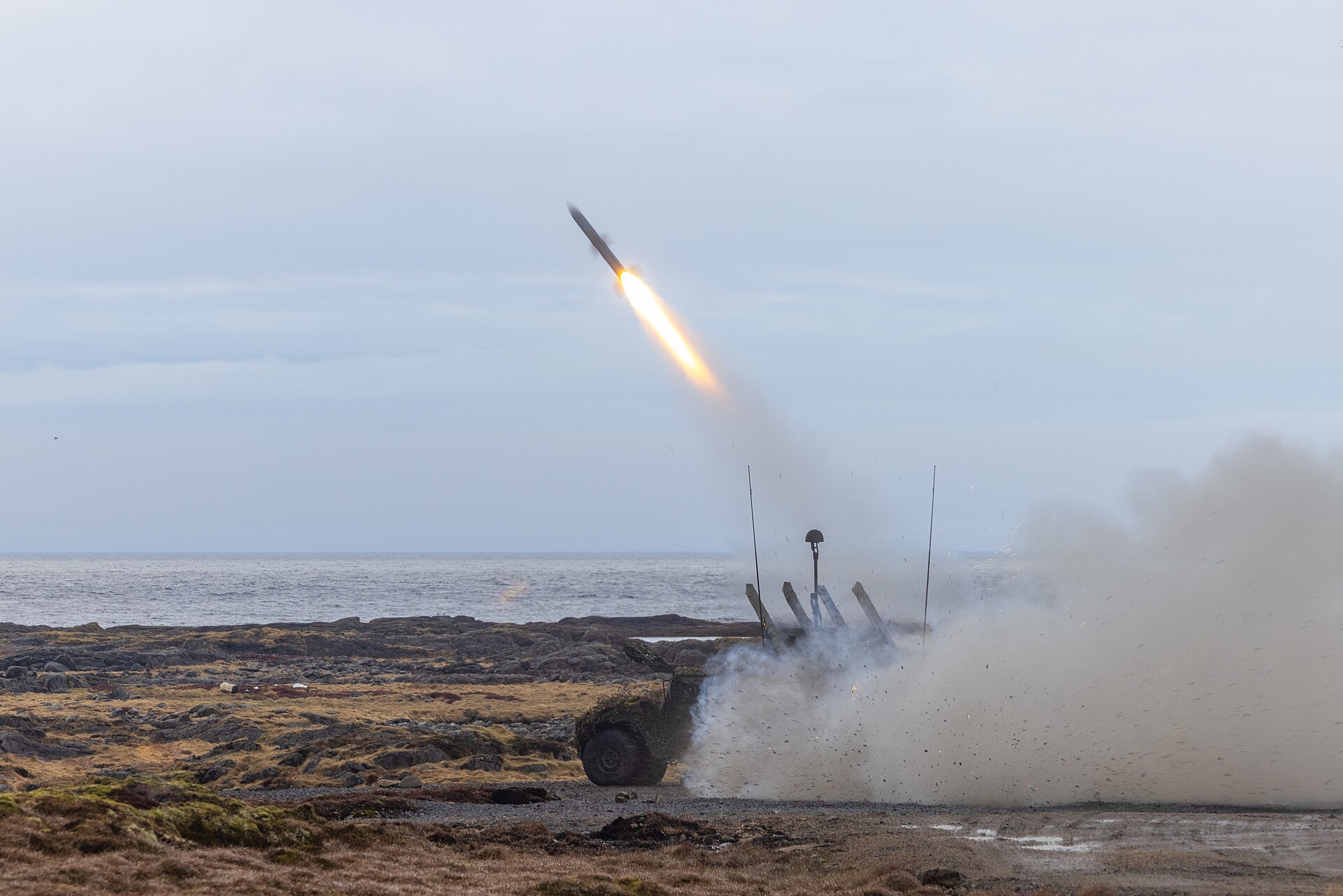
Kuwait’s $1.02 billion contract — awarded through the US Army Contracting Command on May 26 as a firm-fixed-price deal with a five-year production timeline extending to May 2031 — covers NASAMS fire units, the National Advanced Surface-to-Air Missile System co-developed by Raytheon and Kongsberg. NASAMS is a medium-range system optimized for cruise missiles and drones, the two threat categories that have defined Kuwait’s wartime experience since March 1, when six US Army Reserve soldiers were killed by a drone strike at Port Shuaiba — the first American combat deaths of the Iran war.
The system fires AMRAAM interceptors costing roughly $300,000 each, a fraction of the $4 to $7 million per round that PAC-3 MSE demands, and in Ukraine it demonstrated a roughly 94 percent interception rate against Russian cruise missiles — the cost-effectiveness benchmark that drove Kuwait’s procurement decision. Kuwait’s choice is not a capability compromise but a precise match to the threat IISS documented when it tallied Kuwait’s 265 total wartime intercepts, of which 97 came after the April 7 ceasefire, overwhelmingly against cruise missiles and one-way attack drones rather than ballistic missiles.
This is not Kuwait’s only air defense layer, and the NASAMS buy does not replace its existing ballistic missile defenses. Kuwait separately fields PAC-3 for ballistic intercept and received $8 billion in LTAMDS radars through the March 2026 emergency package that Washington fast-tracked alongside deliveries to the UAE and Jordan. The NASAMS purchase adds a dedicated cruise-and-drone tier beneath that ballistic umbrella — the tier where Kuwait was spending its most expensive interceptors against its cheapest threats, what IISS described as an “unfavorable cost-exchange position” that had Gulf defenders burning $4 million PAC-3 rounds to stop one-way attack drones costing a fraction of that sum.
The Emergency Waiver Kuwait Did Not Need
The NASAMS contract moved through standard FMS channels because Kuwait’s primary threat — cruise missiles and drones — did not require the emergency authority Washington reserved for ballistic missile defense restocking. Secretary Marco Rubio invoked Section 36(b) emergency powers on May 2 for an $8.6 billion package covering Israel, Qatar, Kuwait, and the UAE, explicitly waiving the standard 30-day congressional review period. Qatar’s share alone — $4.01 billion for 200 PAC-2 GEM-T and 300 PAC-3 MSE interceptors — addressed the ballistic threat to Al Udeid Air Base, home to roughly 10,000 US troops and CENTCOM’s forward headquarters, protected by a Defense Cooperation Agreement signed in 1992 and renewed in 2013.
The Middle East briefing 3,000+ readers start their day with.
One email. Every weekday morning. Free.
Kuwait’s inclusion in the May emergency package covered LTAMDS radars, not interceptors — a distinction that matters because it means Kuwait is buying its interceptors through normal procurement while receiving its sensor upgrades through emergency channels, a sequencing that reflects both the lower urgency of cruise-missile defense relative to ballistic restocking and the political frictionlessness of arming a state where 13,500 Americans already operate under full legal protection. The March 2026 emergency tranche tells the same story at even larger scale: roughly $16.5 billion to the UAE, Jordan, and Kuwait — three states with formal basing agreements — while Saudi Arabia, which had just absorbed Iranian ballistic strikes against PSAB and watched its AWACS 81-0005 burn on the tarmac, received nothing through emergency channels.
Saudi Arabia’s January 2026 PAC-3 notification — 730 rounds at roughly $9 billion — was processed through standard FMS, not emergency designation. That distinction is not procedural trivia: it means the 30-day congressional review applied in full, the production queue placed Saudi Arabia behind existing commitments, and delivery will not begin before mid-2027 at the earliest, roughly 18 months after the notification date. MBS ordered the missiles he needs most through the slowest channel available, because Washington did not offer him a faster one.
Why Was Saudi Arabia Excluded from Every Emergency Arms Package?
No US official has publicly stated that Saudi Arabia’s exclusion from emergency arms deliveries is linked to the absence of a Status of Forces Agreement, and Washington is unlikely to say it aloud. The pattern, however, is difficult to read any other way. The March $16.5 billion emergency package covered the UAE, Jordan, and Kuwait — all SOFA states with formal basing agreements. The May $8.6 billion package covered Israel, Qatar, Kuwait, and the UAE — again, all SOFA states. Saudi Arabia, which has a longer procurement relationship with the United States than any of them and is burning through interceptors faster than any other combatant in the conflict, was absent from both.
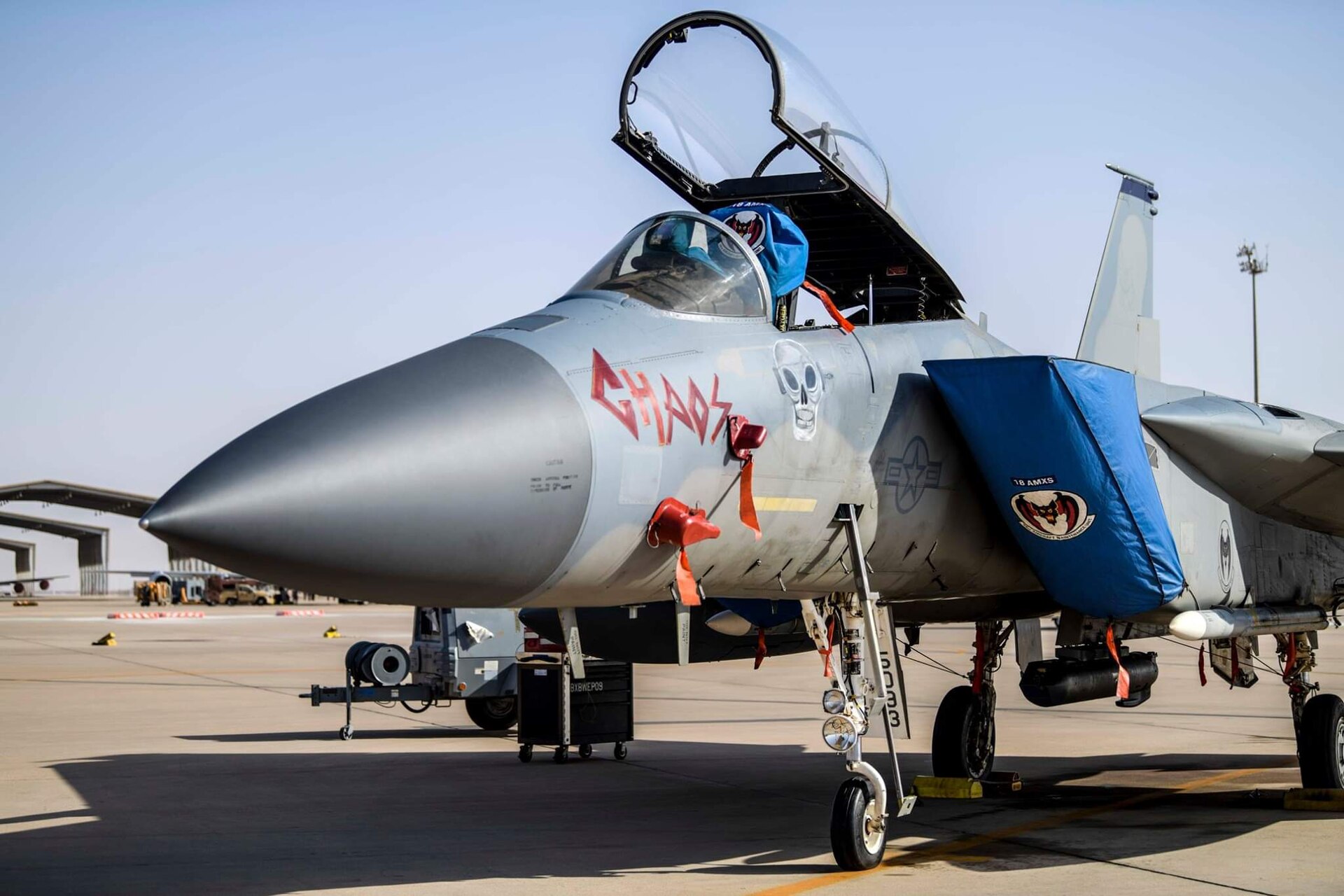
The structural logic is straightforward even if Washington will not articulate it publicly. Emergency arms deliveries require legal frameworks governing the US personnel who install, maintain, and operate the systems — jurisdiction over troops, liability protections, tax exemptions, and logistics agreements like Kuwait’s 2013 Acquisition and Cross-Servicing Agreement that allow pre-positioned equipment to move without ad hoc negotiation every time a crate crosses a fence line. PSAB, where 2,700 US troops have operated since 2019, functions under an arrangement that both Riyadh and Washington deliberately left informal, a political choice by MBS that preserved Saudi sovereignty at the cost of the institutional infrastructure that makes emergency resupply legally and logistically seamless.
The AGSI put it plainly in July 2025, months before the war began: Saudi Arabia “has alienated most of its security guarantors and weapons suppliers in the West” even as its security was “more endangered now than at the start of Saudi Arabia’s intervention in 2015.” That assessment preceded the Iranian strikes on PSAB, the destruction of AWACS 81-0005, the 38 days of combat that consumed roughly 2,400 interceptors, and the two emergency packages from which Saudi Arabia was absent. The alienation AGSI described was not diplomatic — it was structural, embedded in the absence of the agreements that would have made emergency resupply automatic rather than discretionary.
The SOFA Arithmetic
Kuwait’s defense relationship with the United States rests on a stack of legal instruments that Saudi Arabia has spent three decades declining to replicate. The 1991 Defense Cooperation Agreement, born from the liberation, established US access to Kuwaiti facilities and pre-positioning rights for substantial stockpiles of US equipment. The SOFA exempts American personnel from Kuwaiti jurisdiction, and the 2004 Major Non-NATO Ally designation — granted to Kuwait, not Saudi Arabia — provides priority access to surplus defense equipment, cooperative research and development, and expedited FMS processing. The 2013 ACSA governs logistics, supply, and maintenance support without requiring case-by-case authorization each time a spare part needs to cross a base perimeter.
Saudi Arabia has none of these instruments, and the history of PSAB explains why the absence is deliberate rather than accidental. PSAB hosted US forces from 1991 to 2003, when operations migrated to Al Udeid in Qatar — a relocation partly driven by Riyadh’s unwillingness to formalize basing terms that would have made the American presence legally visible. The US returned to PSAB in 2019 after Iran struck the Abqaiq processing facility, an attack that disrupted half of Saudi oil production and produced no American military response, establishing what remains the operative ceiling of the US security commitment to Saudi Arabia absent a formal treaty or basing agreement. When Pete Hegseth told the Shangri-La Dialogue in May 2026 that the “era of subsidizing wealthy nations is over” and described Washington’s posture as “partners, not protectorates,” he was giving a name to a doctrine that Saudi Arabia’s basing arrangement had already encoded in practice.
The 2,700 US troops at PSAB operate in a legal gray zone that both governments have found politically convenient and operationally corrosive. Riyadh avoids the domestic political cost of a visible American military presence with full jurisdictional immunity; Washington avoids the congressional scrutiny that accompanies a formal SOFA requiring Senate advice and consent. The cost of that mutual convenience became visible the moment Rubio signed the emergency waivers: PSAB’s legal ambiguity gave Washington no institutional obligation to prioritize Saudi restocking, and it did not.
What Does NASAMS Defend Against That PAC-3 Does Not?
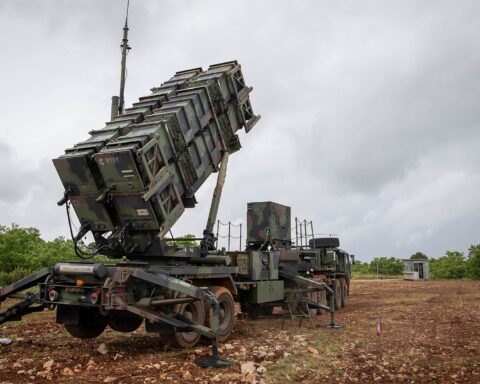
The Kuwait NASAMS deal and Saudi Arabia’s PAC-3 gap encode a US threat assessment that reads as a single document once you stop treating them as separate procurement stories. NASAMS is a medium-range system with an engagement envelope of 25 to 60 kilometers, optimized for cruise missiles and unmanned aerial vehicles — the threats that have dominated Kuwait’s wartime experience, where the bulk of incoming fire has been Iranian cruise missiles and one-way attack drones launched from Iraqi militia positions and Iranian forward bases. PAC-3 MSE, with an engagement range exceeding 160 kilometers and a hit-to-kill kinetic warhead designed for ballistic intercept, addresses a fundamentally different threat: the medium-range ballistic missiles that Iran has fired at Saudi infrastructure, PSAB, and Aramco facilities since the war began in March.
Kuwait’s geography — small, flat, concentrated around Kuwait City and the southern oil terminals at Mina al-Ahmadi — means that cruise missiles and drones arriving at relatively low altitude and subsonic speed constitute the primary incoming threat profile. Saudi Arabia’s geography — a vast kingdom with dispersed critical infrastructure, deep-desert military bases, and oil processing facilities hundreds of kilometers inland — means that Iranian ballistic missiles following high-altitude trajectories at Mach 10 or higher are the concern that keeps MBS awake. NASAMS cannot intercept ballistic missiles, and PAC-3 was never designed to be cost-effective against $35,000 drones — each country needs the system optimized for its threat environment, and only one of them is receiving what it needs on an emergency timeline.
Only Saudi Arabia and the UAE operate THAAD in the Gulf, the upper-tier system designed for exoatmospheric and high-endoatmospheric ballistic intercept above the PAC-3 engagement ceiling. Kuwait has no THAAD and its threat profile has never required one, because the ballistic missiles targeting Kuwait have fallen within PAC-3’s engagement envelope. The layered defense architecture MBS actually needs — THAAD for the upper tier, PAC-3 MSE for the terminal tier, and a NASAMS-class system for the cruise-and-drone tier — requires all three layers to be stocked, and the one burning fastest is the middle tier that Camden cannot replenish until 2027.
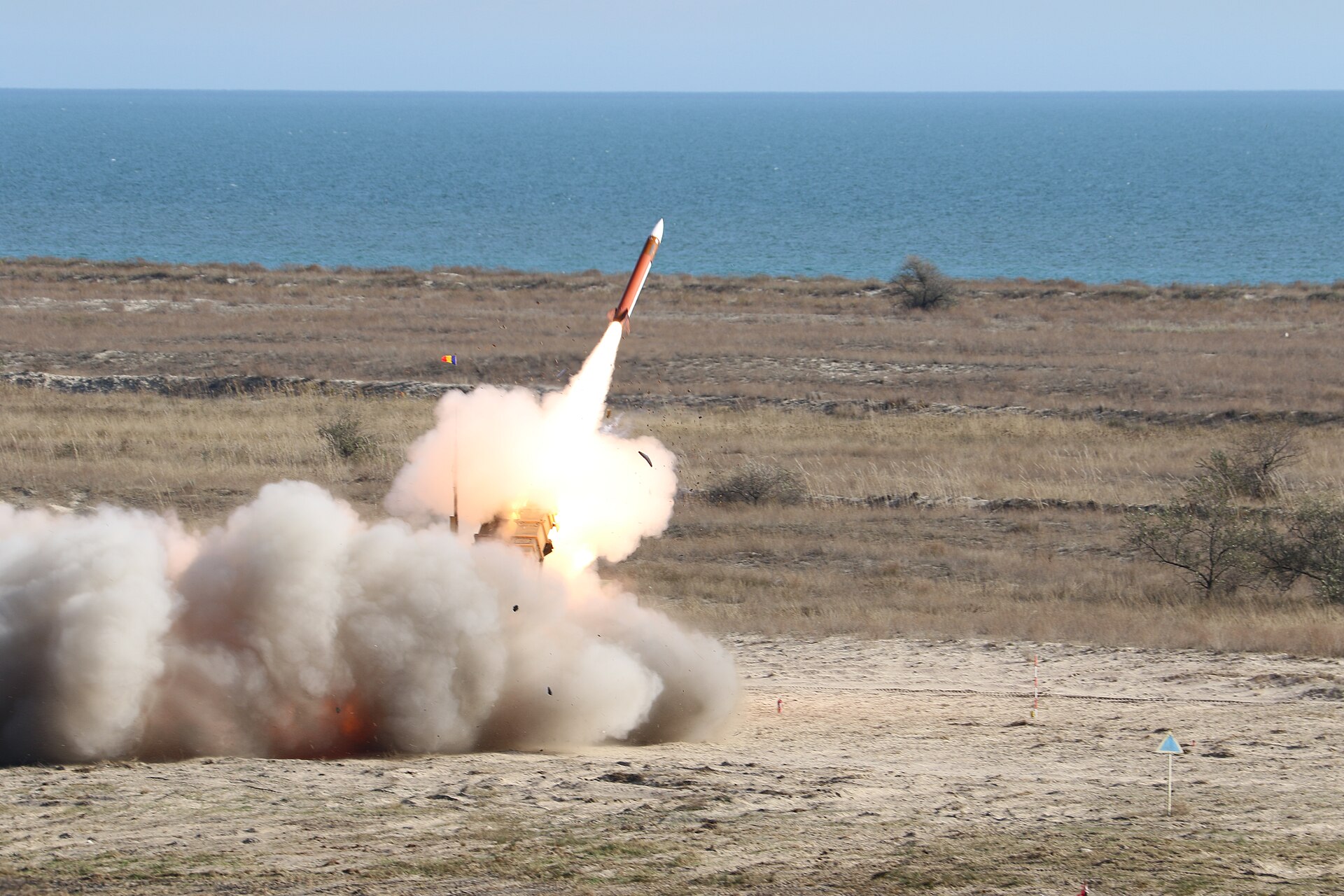
Kuwait, by layering NASAMS beneath its existing PAC-3 batteries, is building the doctrinal solution to the cost-exchange trap IISS identified — reserving expensive PAC-3 rounds for ballistic threats and burning $300,000 AMRAAM rounds against cruise missiles and drones. Saudi Arabia, with no NASAMS-class layer and a PAC-3 stockpile estimated at approximately 80 to 150 rounds, faces the inverse problem: MBS must use his most expensive remaining interceptors against everything including the cheapest threats, accelerating the depletion that has already reduced Saudi inventory to approximately 3 to 5 percent of its pre-war total.
Two days after Kuwait signed the NASAMS contract, IRGC drones hit the Terminal 1 passenger hall at Kuwait International Airport — the building the NASAMS system will eventually help protect, struck forty-eight hours after commercial flights resumed. The civilian terminal strike illustrates the operational gap the NASAMS contract is designed to close: a layered defence that does not yet exist, protecting an airport that was open for two days before the IRGC exploited it. Kuwait closed that gap further on June 6 with the second purchase — Anduril’s $1.98 billion counter-drone package approved the same day IRGC missiles struck Ali al-Salem — completing a three-tier architecture that Saudi Arabia, despite its $142 billion arms commitment, cannot replicate without the SOFA that made both emergency approvals legally possible.
The Production Line Saudi Arabia Cannot Jump
Even if Washington granted MBS an emergency waiver tomorrow, the missiles would not arrive for years. Lockheed Martin’s Camden, South Carolina plant — the sole PAC-3 MSE production facility on earth — manufactured 620 interceptors in 2025, a number that does not begin to cover the global demand the Iran war has generated. The April 2026 contract worth $4.76 billion aims to triple annual output to 2,000 rounds by 2030, but Lockheed Martin described the expansion as requiring “new facilities, new tooling, new supplier contracts, and in many cases, entirely new manufacturing lines” across 15 US locations — language that confirms the bottleneck is physical infrastructure, not money.
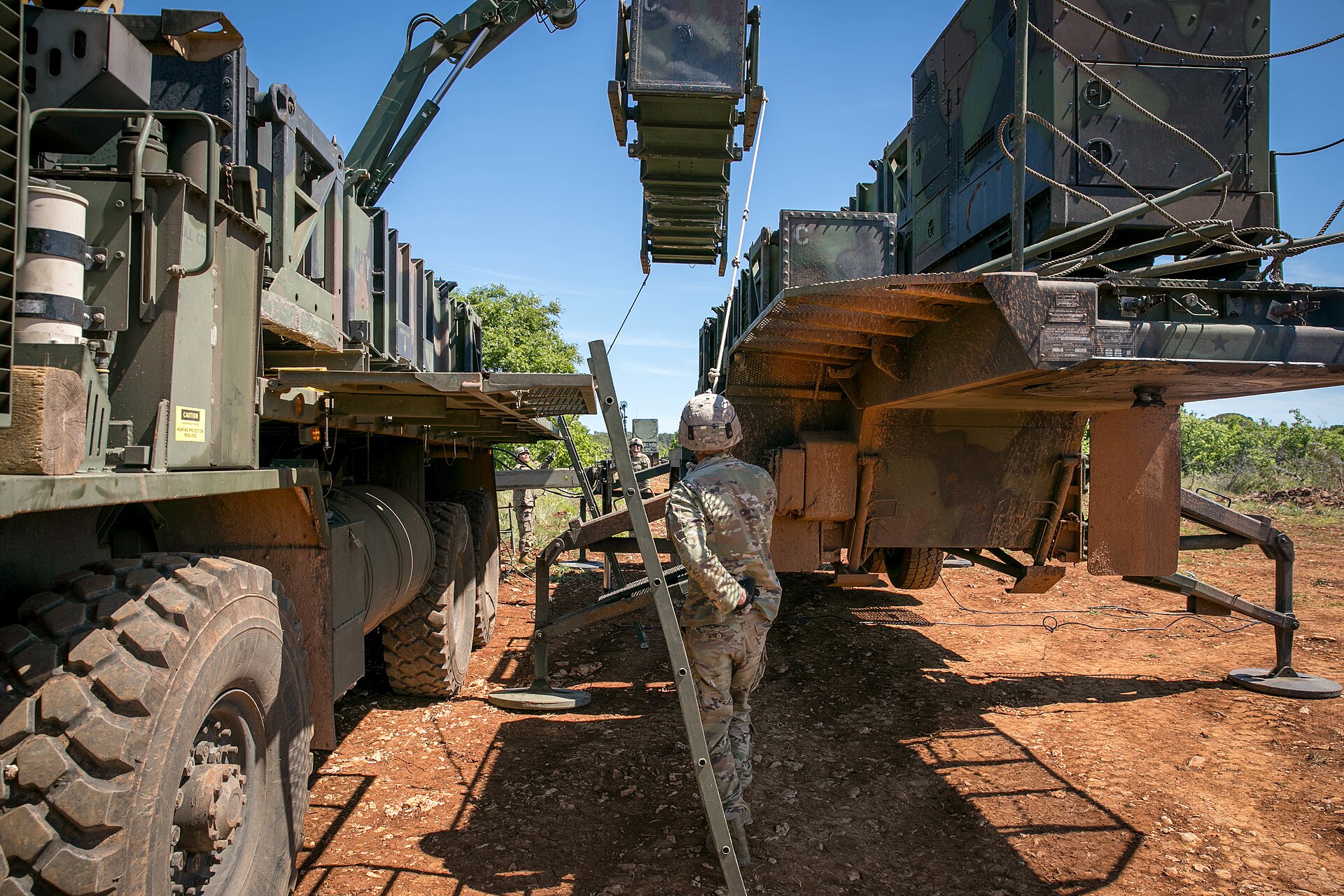
The global FMS backlog exceeds 3,000 rounds across all customers, and emergency designation does not create interceptors — it moves one customer to the front of a queue that everyone else is also trying to jump. Qatar’s 300 PAC-3 MSE rounds, ordered under Section 36(b) emergency authority, will compete with Saudi Arabia’s 730 rounds, ordered under standard FMS, for the same production slots at Camden. Saudi Arabia, lacking emergency designation, sits behind every customer that has one — behind Qatar, behind Israel, behind any future emergency order Washington may authorize as the war continues or escalates.
The practical consequence is that Saudi Arabia’s interceptor deficit is not a problem money can solve on any timeline that matters for this war. MBS committed roughly $9 billion to the January 2026 order — more than double Qatar’s entire emergency package — but without emergency designation, those dollars entered a queue that stretches to 2030 before the Camden expansion reaches full capacity. The 3,000-round FMS backlog, even under the expanded production target, represents at least 18 months of dedicated output, and dedicated output is precisely what no single customer will receive because every NATO ally and Gulf state that watched this war unfold is simultaneously placing orders for the same interceptors from the same factory in the same small city in South Carolina.
Camden’s 620-round annual capacity, divided among the US military’s own requirements and existing FMS commitments, means Saudi Arabia’s 730-round order cannot be filled in a single production year even if Riyadh were the only foreign customer in the queue — which it is not. The tripling of capacity to 2,000 rounds by 2030 sounds like relief until you count the claimants: the US Army’s own Patriot batteries, Poland’s $15 billion Wisla program, Germany’s expanded air defense initiative, Romania, Sweden, South Korea, and every Gulf state that learned in real time what interceptor depletion costs. MBS is not competing with Iran for missiles — he is competing with NATO for production slots while Aramco’s dividend payments already exceed its free cash flow.
How Many Interceptors Does Saudi Arabia Have Left?
Approximately 80 to 150 PAC-3 MSE rounds remain in Saudi inventory — approximately 3 to 5 percent of the pre-war stockpile of roughly 2,800 rounds, according to CSIS analysis cross-referenced with DSCA notification data. Saudi forces fired 894 interceptors specifically against the ballistic missile and drone threats tracked over the 38-day period from March 3 to April 7, while total wartime expenditure across all intercept types reached roughly 2,400 rounds — a combined consumption rate that exceeded the entire annual output of the Camden production line within the first six weeks of fighting. At the wartime expenditure rate, the remaining inventory would sustain approximately 1.3 to 2.4 days of full-intensity combat — a number that transforms any Iranian escalation from a military question into an arithmetic one.
No emergency waiver changes that number before mid-2027, and no production expansion changes it before 2028 at the earliest. The January 2026 standard FMS notification for 730 rounds represents barely a single year of Camden output dedicated entirely to Saudi Arabia, an allocation that will not happen because the production line serves dozens of customers simultaneously. Saudi Arabia’s interceptor gap is not a temporary shortage that resolves with patience — it is a structural deficit that will persist for at least 18 months under the most optimistic delivery assumptions and substantially longer under realistic ones. The FY2027 Pentagon budget makes the timeline explicit: a single US Army request claims more than five years of Camden’s total output, placing Saudi Arabia’s 2,400-round requirement behind a queue it cannot jump.
IISS warned in its May 2026 assessment of “growing concerns over financial and operational sustainability of current defense models” across the Gulf — language that describes Saudi Arabia’s predicament with uncomfortable precision. The financial dimension is inseparable from the operational one: replacing the roughly 2,400 consumed interceptors at $4 to $7 million each represents $9.6 to $16.8 billion in restocking costs, a figure that arrives as Aramco’s quarterly dividend already exceeds its quarterly free cash flow and Brent crude has dropped roughly 20 percent from its May peak. The interceptors Saudi Arabia burned in 38 days of combat will cost more to replace than the annual defense budgets of most Gulf states.
| Recipient | Package | Value | Authority | SOFA / DCA | US Troops | Delivery |
|---|---|---|---|---|---|---|
| Qatar | PAC-3 MSE / PAC-2 GEM-T | $4.01B | Section 36(b) emergency | Yes (1992 DCA) | ~10,000 | Expedited |
| Kuwait | LTAMDS + NASAMS | $8B + $1.02B | Emergency + standard FMS | Yes (1991 DCA, SOFA, MNNA) | 13,500 | 2026–2031 |
| UAE | Multi-system | Part of $16.5B | Emergency | Yes (DCA) | ~3,500 | Expedited |
| Israel | Multi-system | Part of $8.6B | Section 36(b) emergency | Yes (multiple agreements) | Multiple bases | Immediate |
| Jordan | Multi-system | Part of $16.5B | Emergency | Yes (DCA) | ~3,000 | Expedited |
| Saudi Arabia | PAC-3 MSE (730 rounds) | ~$9B | Standard FMS | No SOFA | 2,700 | Mid-2027 earliest |
The column that determines everything else is the fifth one — SOFA status. Every state with a SOFA or DCA received emergency authorization; the state without one did not. Rubio did not need to explain the exclusion because the legal architecture explained it for him: you cannot fast-track weapons to a base where your troops have no formal legal status, because the entire logistics chain of installation, maintenance, training, and pre-positioning depends on the agreements that status provides. The table makes the same argument the two emergency packages made — it just arranges it in rows.
The $142 Billion Receipt
The $142 billion Saudi Arabia has spent on American weapons since the modern procurement relationship began is the largest cumulative arms-customer total in FMS history, a number that MBS and his predecessors accumulated on the assumption that purchasing volume would substitute for the political commitment of a basing agreement. Kuwait, which has spent a fraction of that amount, got emergency radars in March, emergency inclusion in May, and a billion-dollar interceptor contract processing without friction in late May — because Kuwait paid a price in 1991 that Saudi Arabia has never been willing to pay, one denominated not in dollars but in legal permission for American troops to operate on Kuwaiti soil under full SOFA protections.
Every road to the Iran deal runs through a man Saudi Arabia cannot reach, and every road to emergency US arms runs through an agreement Saudi Arabia has not signed. The AGSI warned that Gulf domestic defense industrialization “cannot replace the broader ecosystem of software, diagnostics, and logistics controlled by the United States” — a verdict that makes the SOFA question existential rather than ceremonial for a kingdom that, by SIPRI estimates, sources the overwhelming majority of its weapons from the country whose basing terms it refuses to accept. MBS needs those interceptors more than Trump needs MBS, and the oil price propping up Saudi Arabia’s entire fiscal position is falling while the interceptor stockpile drops faster.
Hegseth said partners, not protectorates — and Kuwait heard him, because Kuwait has the paperwork. The 2,700 Americans at Prince Sultan Air Base have neither a SOFA to protect them nor the emergency interceptors to protect the kingdom they are standing in, and the $142 billion in receipts MBS holds will not stop the next ballistic missile that Camden has not yet built.
Frequently Asked Questions
What is NASAMS and which countries operate it?
NASAMS — the National Advanced Surface-to-Air Missile System — was co-developed by Raytheon and Kongsberg Defence and Aerospace beginning in the 1990s for the Royal Norwegian Air Force. The system integrates AIM-120 AMRAAM missiles with multiple radar types including the Sentinel AN/MPQ-64 and the AN/TPS-80 G/ATOR, giving operators flexibility in sensor pairing that most competing systems do not offer. Current operators include Norway, the United States (where NASAMS protects the airspace around the White House and Capitol Building), Lithuania, Indonesia, Australia, Oman, the Netherlands, Spain, Hungary, and Latvia. Ukraine has received at least eight NASAMS batteries since 2022 and used them to establish the 94 percent interception rate against Russian cruise missiles that influenced Kuwait’s procurement decision, making Kuwait the newest NASAMS customer and the second Gulf operator after Oman.
Has Saudi Arabia ever signed a Status of Forces Agreement with the United States?
No formal SOFA has ever existed between the United States and Saudi Arabia despite more than three decades of intermittent US military presence on Saudi soil. During Desert Shield and Desert Storm in 1990–91, US forces operated under ad hoc “technical agreements” negotiated at the theater level by General Schwarzkopf’s staff, not under a Senate-ratified treaty instrument. The 1991–2003 presence at PSAB — which at its peak housed 5,000 US Air Force personnel and F-15E Strike Eagles — similarly lacked a formal SOFA, and that legal ambiguity was one of the factors that facilitated the relocation to Al Udeid, Qatar, in 2003. When the US returned to PSAB in 2019 following the Abqaiq attack, both governments explicitly chose not to negotiate a SOFA; Saudi Arabia’s Basic Law Article 70 requires the King’s signature on international treaties and agreements, meaning a SOFA would require royal approval and likely Shura Council deliberation — a domestic political exposure that MBS was unwilling to accept and that King Salman, now 90, would have to personally authorize.
Could Saudi Arabia acquire PAC-3 interceptors from a source other than the United States?
PAC-3 MSE is manufactured exclusively by Lockheed Martin at its Camden, South Carolina facility with no licensed co-production arrangement anywhere in the world, making the United States the sole global source for the interceptor Saudi Arabia needs most. The nearest non-US alternatives for high-altitude ballistic missile intercept are South Korea’s L-SAM, entering operational service in 2028, and the KM-SAM Cheongung, but both would require Saudi Arabia to replace its entire Patriot fire-control architecture — a multi-year, multi-billion-dollar integration effort that does not solve the immediate depletion crisis. Israel’s Arrow-3 is theoretically capable of exoatmospheric ballistic intercept but politically impossible for Saudi Arabia to acquire absent normalization. France’s SAMP/T Mamba, co-developed with Italy, covers a different threat band and lacks the hit-to-kill kinetic warhead that PAC-3 MSE uses against medium-range ballistic missiles. Saudi Arabian Military Industries has domestic production ambitions, but PAC-3’s supply chain — from the Ka-band seeker to the solid-fuel motor — runs through US-controlled technology with no exportable substitute at any price or on any timeline that addresses the current depletion.
Is Kuwait at greater risk of Iranian attack because of its US basing agreement?
Yes, and Iran has acted on that logic with precision and without apology. The IRGC has consistently framed attacks on Kuwaiti territory — Ali Al Salem Air Base, Camp Arifjan, Mina al-Ahmadi refinery — as targeting “US airbases” and “American military assets,” a rhetorical strategy designed to strip Kuwait’s sovereignty from the narrative and present the strikes as part of a bilateral US–Iran conflict rather than an assault on a sovereign Gulf state. In May 2026, Kuwait apprehended an IRGC unit attempting to infiltrate Bubiyan Island “with the aim of carrying out hostile acts against the State of Kuwait,” and six US Army Reserve soldiers were killed at Port Shuaiba on March 1 in the first American combat deaths of the war. Kuwait accepted this risk calculus in 1991 and has never revisited it, because the alternative — a SOFA-less arrangement like Saudi Arabia maintains at PSAB — did not prevent Iran from striking PSAB multiple times anyway, destroying an AWACS aircraft and damaging ten KC-135 tankers across two attacks. The absence of a formal basing agreement did not provide the targeting ambiguity Riyadh once assumed it would; it only eliminated the institutional framework that would have made emergency resupply automatic when the strikes arrived. Bahrain’s position mirrors Saudi Arabia’s: on June 3, the IRGC struck US Fifth Fleet headquarters in Manama for the third time, and Bahrain — which hosts American forces under a defense cooperation agreement but holds no Section 36(b) emergency resupply waiver — absorbed the attack with PAC-3 batteries at 87 percent depletion. The pattern has now repeated twice: the May 3 $8.6 billion emergency authorization was the second consecutive tranche to exclude Saudi Arabia, confirming that the SOFA absence has become a structural barrier to emergency resupply, not merely a diplomatic oversight. The full regional picture at Day 100 is starker: how four GCC countries ran out of interceptors simultaneously reveals a synchronized vulnerability no individual state can resolve on its own.