
RIYADH — Donald Trump told aides on Sunday he is willing to end the war against Iran without reopening the Strait of Hormuz, according to the Wall Street Journal. Hours later, Iran’s parliament approved a plan to impose permanent tolls on Hormuz transit and ban American and Israeli vessels. Between those two events, the assumption that has underwritten Saudi Arabia’s entire oil export model since 1945 — that Hormuz would always be open — stopped being an assumption and became a negotiating chip that neither side with a seat at the table has any reason to cash in.
Saudi Arabia is currently pushing approximately 4.6 million barrels per day through Yanbu, the Red Sea port at the western end of the East-West Pipeline. Before the war, the Kingdom exported roughly 7.5 million bpd, with six million of that flowing through Persian Gulf terminals via Hormuz. The gap between what Yanbu can handle and what Saudi Arabia needs to export is not a temporary inconvenience. It is a permanent structural deficit of nearly 2.9 million bpd, costing an estimated $328 million a day in lost revenue at current prices. Neither Trump nor Iran’s Supreme National Security Council is treating it as their problem.
Table of Contents
- Why Trump Decided Hormuz Is Someone Else’s Problem
- What Does Iran Gain From Keeping Hormuz Closed?
- The Yanbu Ceiling Nobody Planned For
- Can Saudi Arabia Survive a Double Chokepoint?
- The Budget War Between Yanbu and Expo 2030
- Who Is Negotiating for Saudi Arabia’s Strait?
- What Does Permanent Hormuz Closure Do to Saudi Economic Geography?
- FAQ
Why Trump Decided Hormuz Is Someone Else’s Problem
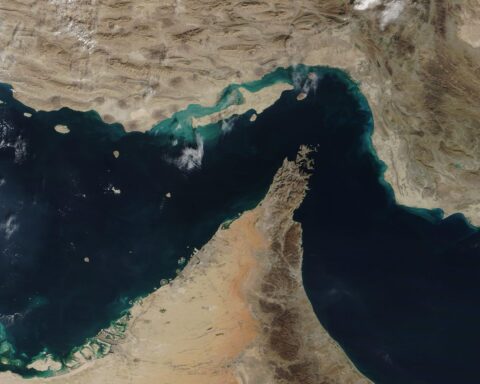
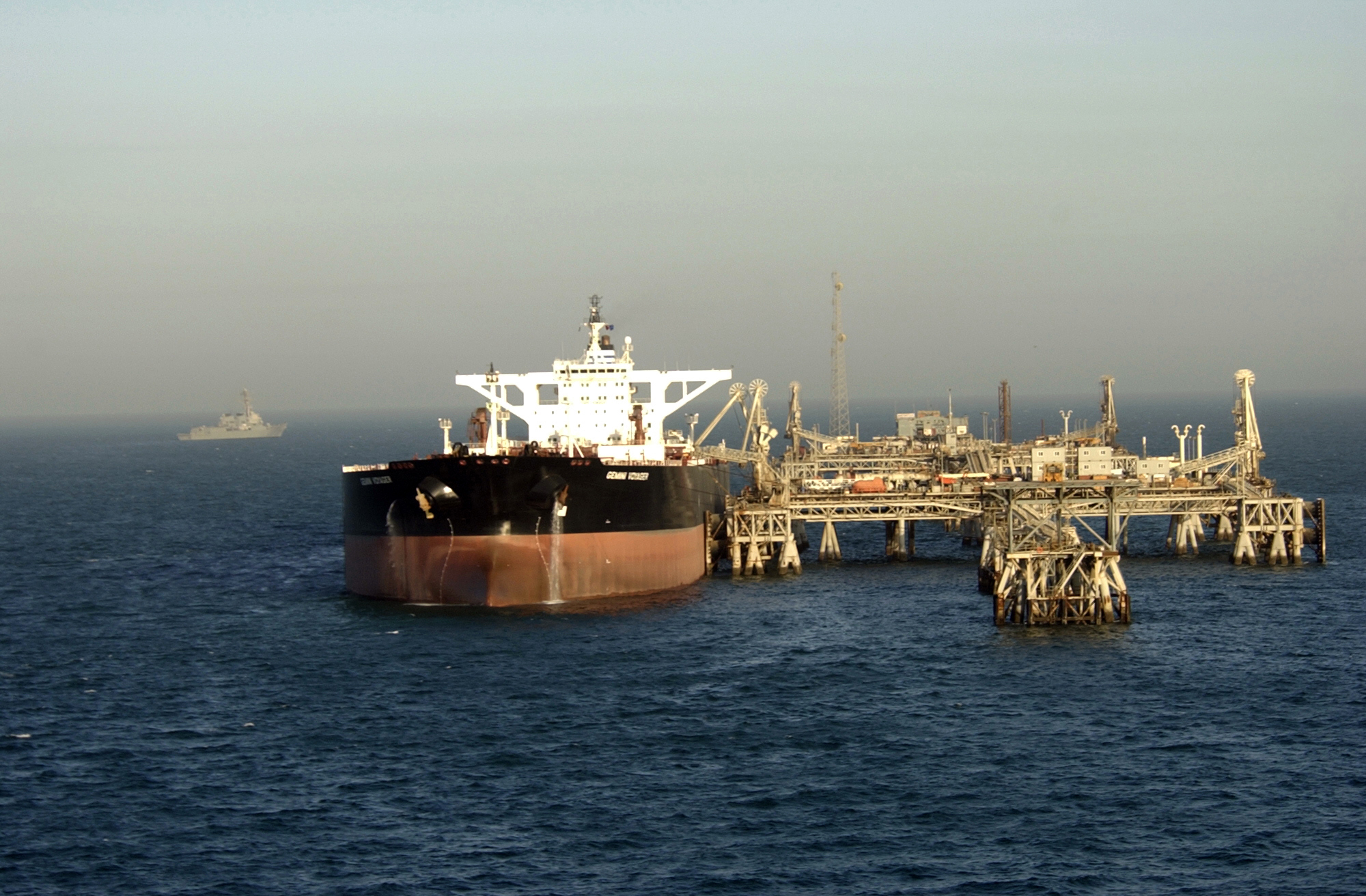
Trump wanted a four-to-six-week war. Reopening Hormuz — clearing mines, neutralizing Iran’s coastal anti-ship missile batteries, establishing escort corridors through a strait barely 21 nautical miles wide at its narrowest — would extend the campaign far beyond that timeline. So he told aides he would defer it, according to WSJ reporting confirmed by multiple outlets on March 30. White House Press Secretary Karoline Leavitt made it official the same day, stating that ensuring safe passage for oil tankers through Hormuz is not one of Trump’s “core objectives” for ending the military operation.
Then Trump contradicted his own team. In a social media post hours later, he warned he was prepared to “completely obliterate” Iran’s power plants, oil wells, and Kharg Island if a deal was not reached that included the Strait of Hormuz “immediately open for business.” The whiplash was pure Trump — threatening total escalation and signalling willingness to walk away in the same news cycle. But the operational logic behind the deferral was more coherent than the public messaging. Treasury Secretary Scott Bessent, appearing on Fox News, tried to square the circle.
“Over time, the US is going to retake control of the straits, and there will be freedom of navigation — whether it is through US escorts or a multinational escort.”
Scott Bessent, US Treasury Secretary, Fox News, March 30 2026
The HOS Daily BriefThe Middle East briefing 3,000+ readers start their day with.
One email. Every weekday morning. Free.
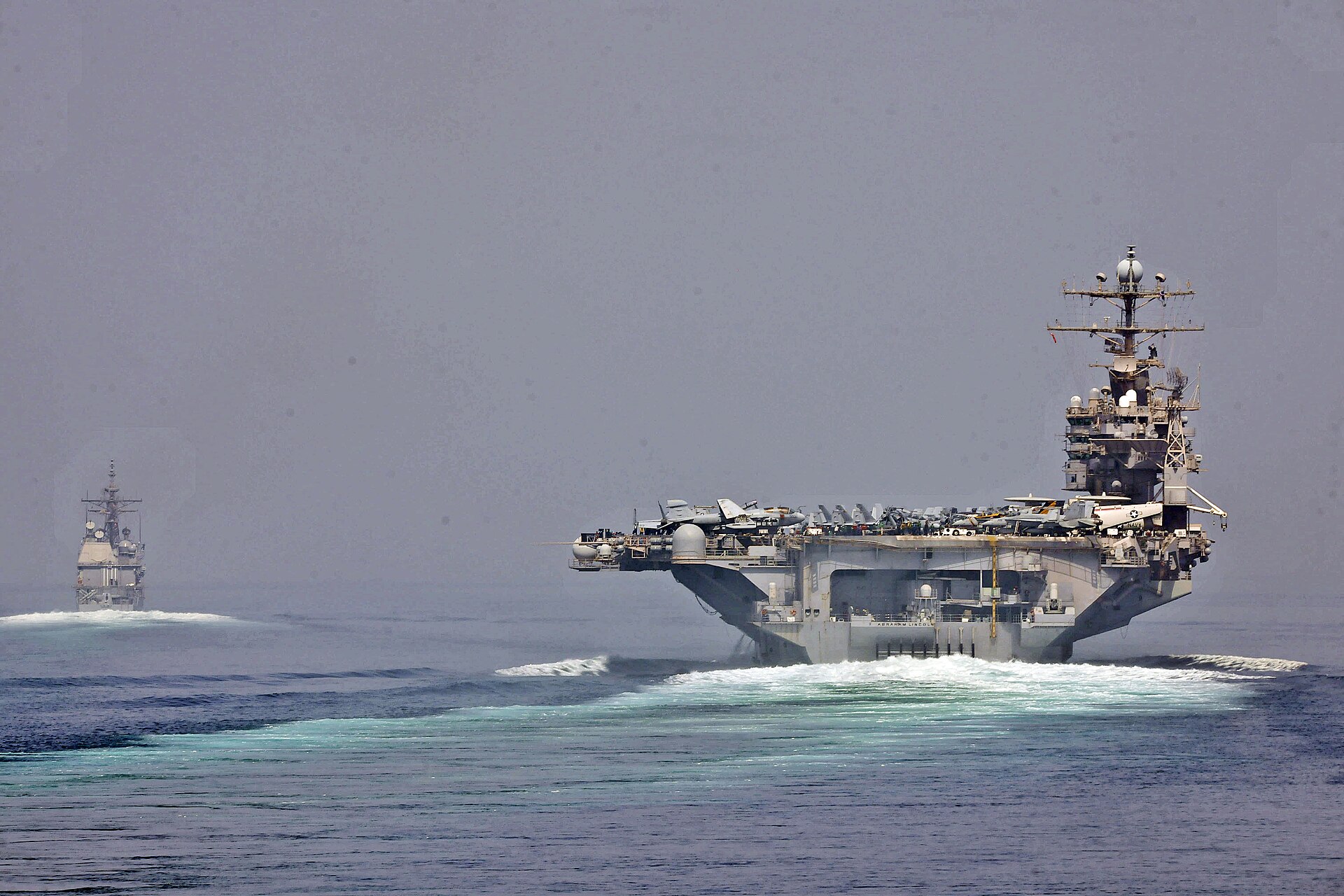
That qualifier — “over time” — did more diplomatic work than Bessent probably intended. It conceded that Hormuz reopening will not be part of an immediate ceasefire. For Riyadh, “over time” means weeks or months of continued revenue hemorrhage, with no guarantee that the multinational escort Bessent described will ever materialise. The US Navy can barely keep two carrier strike groups in theatre. A permanent Hormuz patrol force would require allies who are themselves dependent on the strait’s closure ending — a circular dependency that benefits the party holding the chokepoint.
The internal logic of Trump’s position is consistent even when his public messaging is not. His four-to-six-week timeline was always about the campaign he wanted to run — degrade Iran’s navy, wreck its missile stocks, claim the win. Clearing mines from a 60-kilometre strait, suppressing shore-based anti-ship batteries on both the Iranian and Omani sides, and then maintaining convoy escorts indefinitely is a different war, a slower war, and one with no televised victory to show for it. Trump wants to leave Iran with an outcome he can announce from the Oval Office. Whether Saudi tankers can transit Hormuz after that announcement is, from his perspective, a logistics problem — not a political one.
What Does Iran Gain From Keeping Hormuz Closed?
Iran is not keeping Hormuz closed out of spite. It is building a permanent revenue infrastructure around the closure. On March 31, Iran’s Parliament Security Committee approved what it called a “new management plan” for Hormuz, including tolls, security arrangements, and mandatory ship safety protocols. At least two vessels have already paid transit fees in yuan, using a Chinese intermediary. At $2 million per tanker, this toll system could generate $600 to $800 million per month — equivalent to 15-20 percent of Iran’s monthly oil export revenue in 2024, according to Fortune.
The toll plan is not a bluff or a bargaining position. It is an operating business. Iranian lawmaker Mohammadreza Rezaei Kouchi told reporters: “We provide its security, and it is natural that ships and oil tankers should pay such fees.” Iran has added formal recognition of its sovereignty over Hormuz to its list of ceasefire demands, a condition that did not exist before the war began. Tehran is treating the strait not as a temporary hostage but as a permanent asset — one that generates cash, divides the international coalition against it, and creates a two-tier maritime order where China, Russia, and India get selective passage while Western-aligned shipping stays locked out.
The selective access model is the sharpest part of Iran’s strategy. By letting some traffic through — reportedly operating at roughly 30 percent capacity for approved vessels — Tehran incentivizes individual side deals that prevent a unified international response. China gets its oil, India gets discounted crude, and Russia gets a partner in sanctions evasion.
The countries losing the most — Saudi Arabia, the UAE, Kuwait, and Iraq, collectively hemorrhaging $1.1 billion per day according to SolAbility — are the ones with the least power over the terms of reopening. Iran has turned the blockade into a sorting mechanism, separating the countries it wants to do business with from the ones it wants to punish.
Tasnim News Agency, aligned with the IRGC, published an article on March 23 titled “Iran Asserts Sovereignty over Hormuz Strait,” insisting the waterway would not return to pre-war open transit. The framing was deliberate: sovereignty, not blockade. Iran is not asking for Hormuz to stay closed — it is asking for the world to accept that Hormuz was always Iran’s to open or close, and that future passage requires Tehran’s permission and Tehran’s price. A ceasefire that includes this recognition would give Iran a permanent toll booth over 20 percent of the world’s oil supply, paid for by the very countries whose oil it chokes.
The Yanbu Ceiling Nobody Planned For
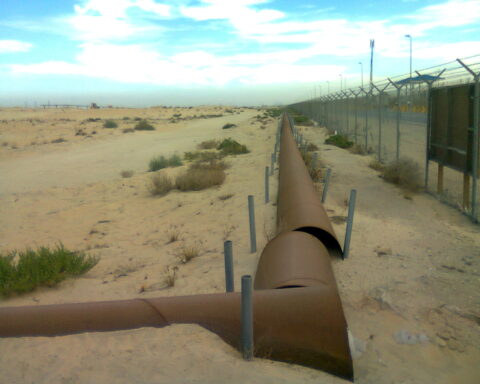
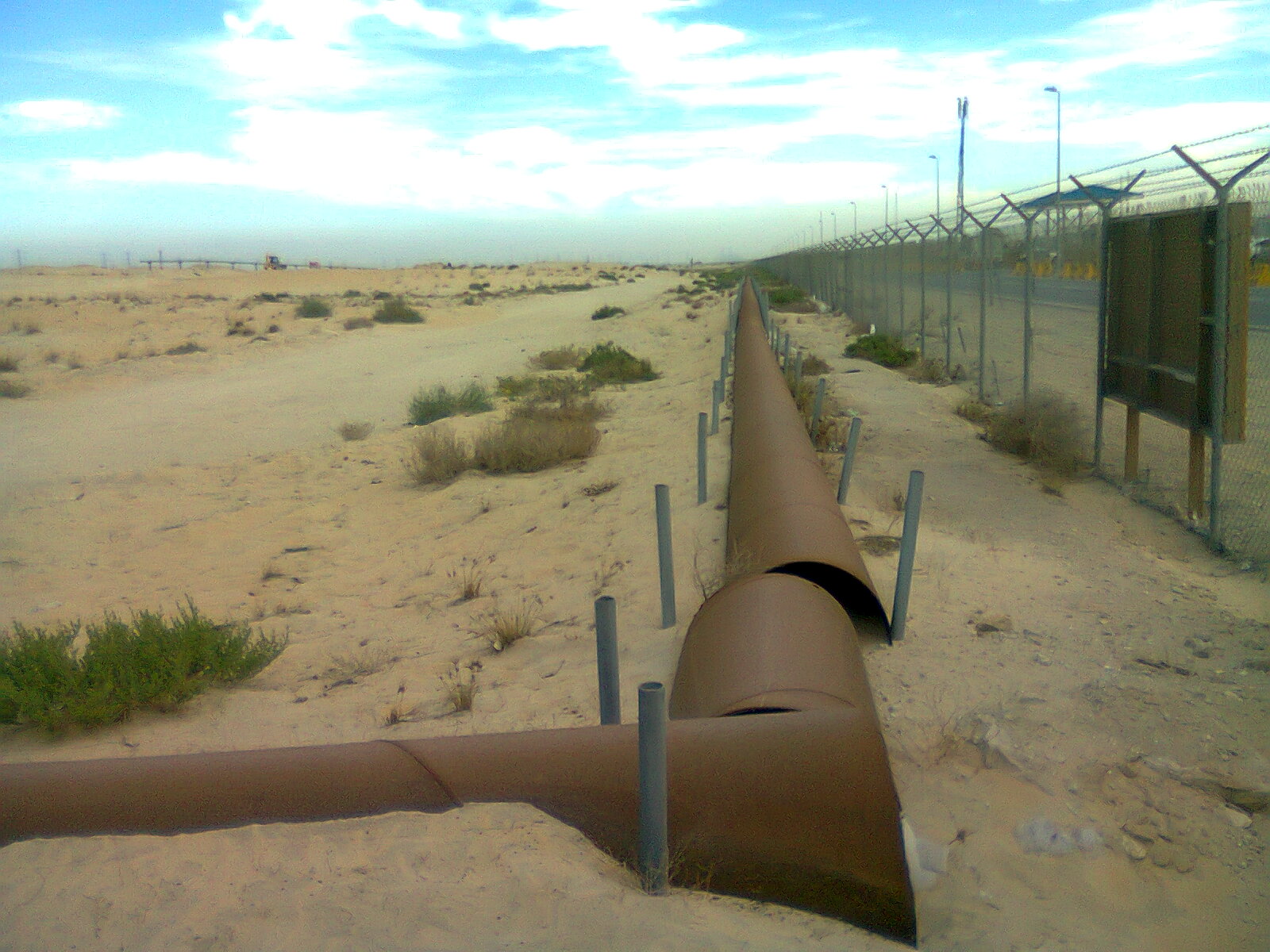
The East-West Pipeline reached its full 7 million bpd capacity on March 28, including natural gas liquids lines that Aramco converted to crude service after the 2019 Houthi drone strikes on the Abqaiq processing facility. The pipeline works. The problem is at the other end.
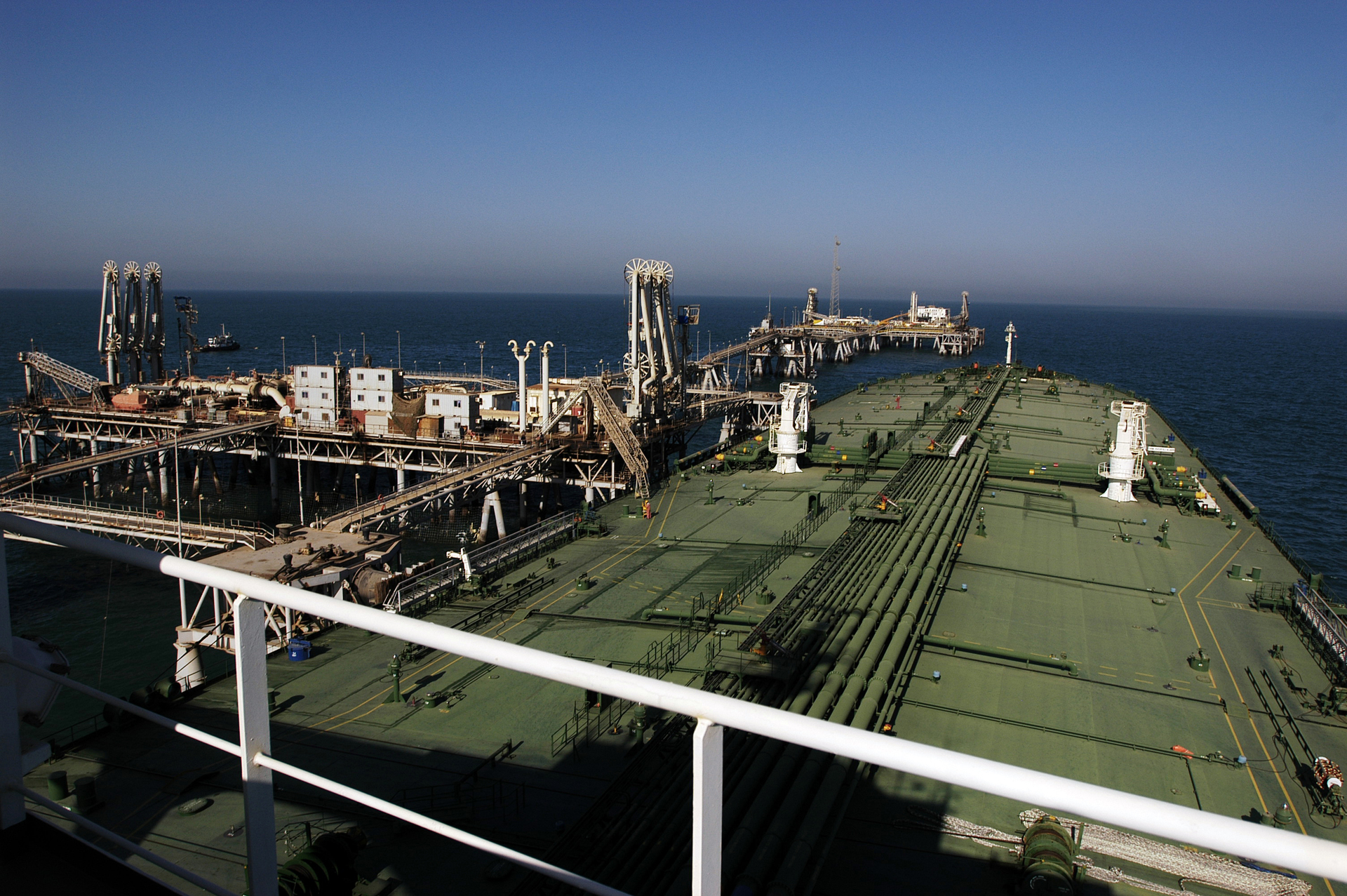
Yanbu’s port loading capacity caps at approximately 4.5 million bpd for crude exports, constrained by insufficient berths, limited storage tank capacity, and tanker scheduling bottlenecks. Roughly 2.5 million barrels per day arrive at Yanbu and cannot be loaded onto ships.
The scale of what Yanbu has accomplished in four weeks is genuinely extraordinary. Exports surged from 760,000 bpd in the January-February average to nearly 4.6 million bpd by late March — a six-fold increase, according to Arab News. No port in history has ramped crude exports this fast.
But the surge hit a ceiling, and the ceiling is physical. You cannot add deepwater berths in weeks. You cannot build 10-million-barrel storage tank farms in months. The Engineering News-Record put it bluntly: “Hormuz bypass infrastructure was sized for a short disruption. This is not that.”
| Metric | Pre-War | Current (Yanbu Only) | Gap |
|---|---|---|---|
| Total exports | ~7.5M bpd | ~4.6M bpd | ~2.9M bpd |
| Pipeline to Yanbu | ~700K bpd (avg.) | 7M bpd (maxed) | — |
| Port loading ceiling | Not tested | ~4.5M bpd | ~2.5M bpd unloadable |
| Daily revenue loss (at $113 Brent) | — | — | ~$328M/day |
| Monthly revenue loss | — | — | ~$10B/month |
The gap between pipeline capacity and port capacity is the number that should define the next phase of Saudi economic planning. Seven million barrels per day can reach Yanbu. Fewer than five million can leave. And Saudi domestic consumption — roughly 2 million bpd for power generation and desalination, according to Aramco’s own filings — cannot be reallocated. The Kingdom drinks its oil just to keep the lights and water on.
Can Saudi Arabia Survive a Double Chokepoint?
The Yanbu reroute assumed the Red Sea would stay open. That assumption is now in play. On March 30, Houthi deputy Information Minister Mohammed Mansour told CNN that closing the Bab al-Mandab Strait “is a viable option, and the consequences will be borne by the American and Israeli aggressors.” The Houthis possess weapons with a 200-kilometer range covering the southern approaches to the Red Sea, enough to threaten any tanker transiting between the Gulf of Aden and the Suez Canal.
A simultaneous closure of Hormuz and Bab al-Mandab would block approximately 30 percent of global container shipping and threaten roughly 22 percent of global oil supply, according to the Sunday Guardian Live. The Dallas Federal Reserve estimated $3.5 trillion — 3.15 percent of global GDP — at risk under a prolonged Hormuz closure alone.
Add the Bab al-Mandab and the Red Sea becomes a trap rather than an escape route. Every barrel Aramco pushes through the East-West Pipeline to avoid the Persian Gulf would exit into a second contested waterway.
War risk insurance is already pricing this scenario. Premiums have surged to approximately 5 percent of vessel value — insuring a $100 million tanker costs roughly $5 million per voyage, up from $200,000 before the crisis, a 25-fold increase according to Insurance Journal. Even if the Bab al-Mandab stays nominally open, the insurance costs alone add $3 to $5 per barrel to every cargo departing Yanbu.
Ships rerouting around the Cape of Good Hope add 10 to 14 days per voyage and approximately $1 million in additional fuel costs per trip. The economics of Yanbu exports are already degraded before a single Houthi missile is fired.
George Voloshin, an independent energy analyst quoted by Al Jazeera, flagged the vulnerability that compounds both chokepoints: “Pipelines and pumping stations are static, high-value targets.” He was referring to the 2019 Houthi drone strikes on the East-West Pipeline’s pumping stations, which temporarily shut the entire system. The pipeline that now carries 7 million bpd crosses 1,200 kilometres of open desert. If the Houthis could hit it in 2019 from Yemen, they can hit it in 2026 with better drones, longer range, and a war to motivate them.
The Budget War Between Yanbu and Expo 2030
Expanding Yanbu to handle permanent export volumes would cost tens of billions of dollars and take three to five years. Saudi Arabia does not have the luxury of either spare cash or spare time. The Public Investment Fund is already cutting capital spending by approximately 15 percent as part of a revised strategy, according to AGBI. Construction contract awards fell from $71 billion to below $30 billion — a 58 percent decline. PIF’s share of those awards dropped from 38 percent to 14 percent.
Every dollar spent on Yanbu port expansion competes directly with the showcase projects that define Mohammed bin Salman’s domestic legitimacy. Expo 2030 in Riyadh. The 2034 World Cup. What remains of NEOM after its own series of cuts.
These are not vanity projects in the traditional sense — they are the visible evidence that Vision 2030 is still alive, that the social contract MBS offered young Saudis has not been abandoned for wartime austerity. Yanbu berth construction does not generate Instagram content or international prestige. It generates export capacity that should already exist.
The revenue mathematics are punishing. At $113 per barrel Brent, the 2.9 million bpd Saudi Arabia cannot currently export represents roughly $10 billion per month in foregone revenue. Over a year, that is $120 billion — more than the entire PIF construction budget at its 2024 peak.
The cost of expanding Yanbu is a fraction of the revenue being lost by not expanding it. But capital allocation in Saudi Arabia has never been purely rational. It is political, and the politics favour projects that MBS has personally championed over port infrastructure that most Saudis will never see.
Who Is Negotiating for Saudi Arabia’s Strait?
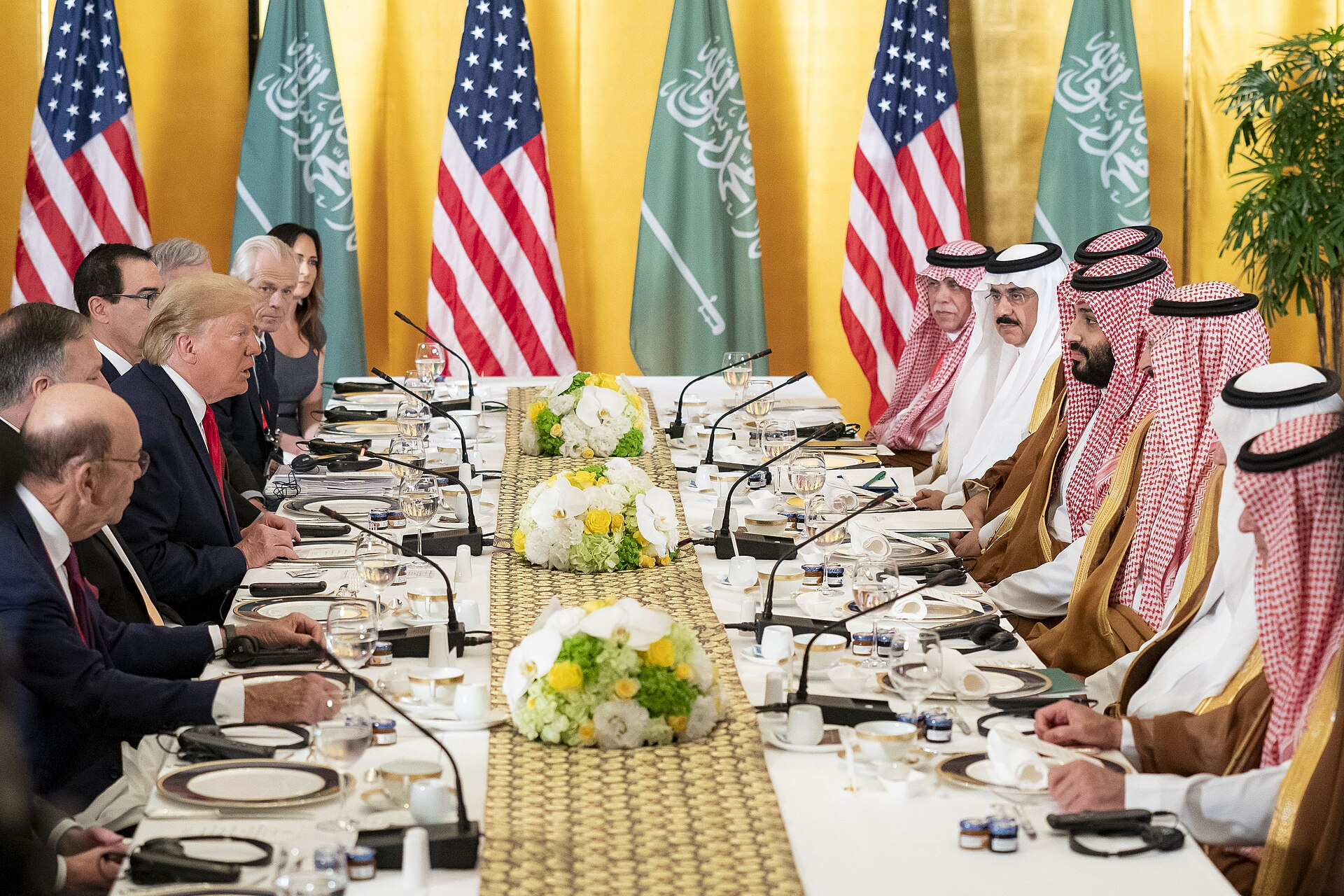
The ceasefire talks shaping up between Washington and Tehran have two parties, and Saudi Arabia is not one of them. A four-nation group — Pakistan, Egypt, Saudi Arabia, and Turkey — met in Islamabad on March 28-29 to align regional positions, but the meeting did not include American or Iranian officials and was not a negotiation. Pakistan is acting as the primary diplomatic channel between Washington and Tehran. Saudi Arabia is in the waiting room.
Trump’s priorities for ending the war are clear: degrade Iran’s navy, destroy its missile stocks, and declare victory within his timeline. Reopening Hormuz serves none of those goals directly. Iran’s priorities are equally clear: survive the bombing campaign, keep its nuclear programme intact, and extract recognition of its Hormuz sovereignty as the price of any deal. Saudi Arabia’s priority — restoring the 6 million bpd of exports that flowed through Ras Tanura and other Gulf terminals — does not feature on either side’s list of non-negotiable demands.
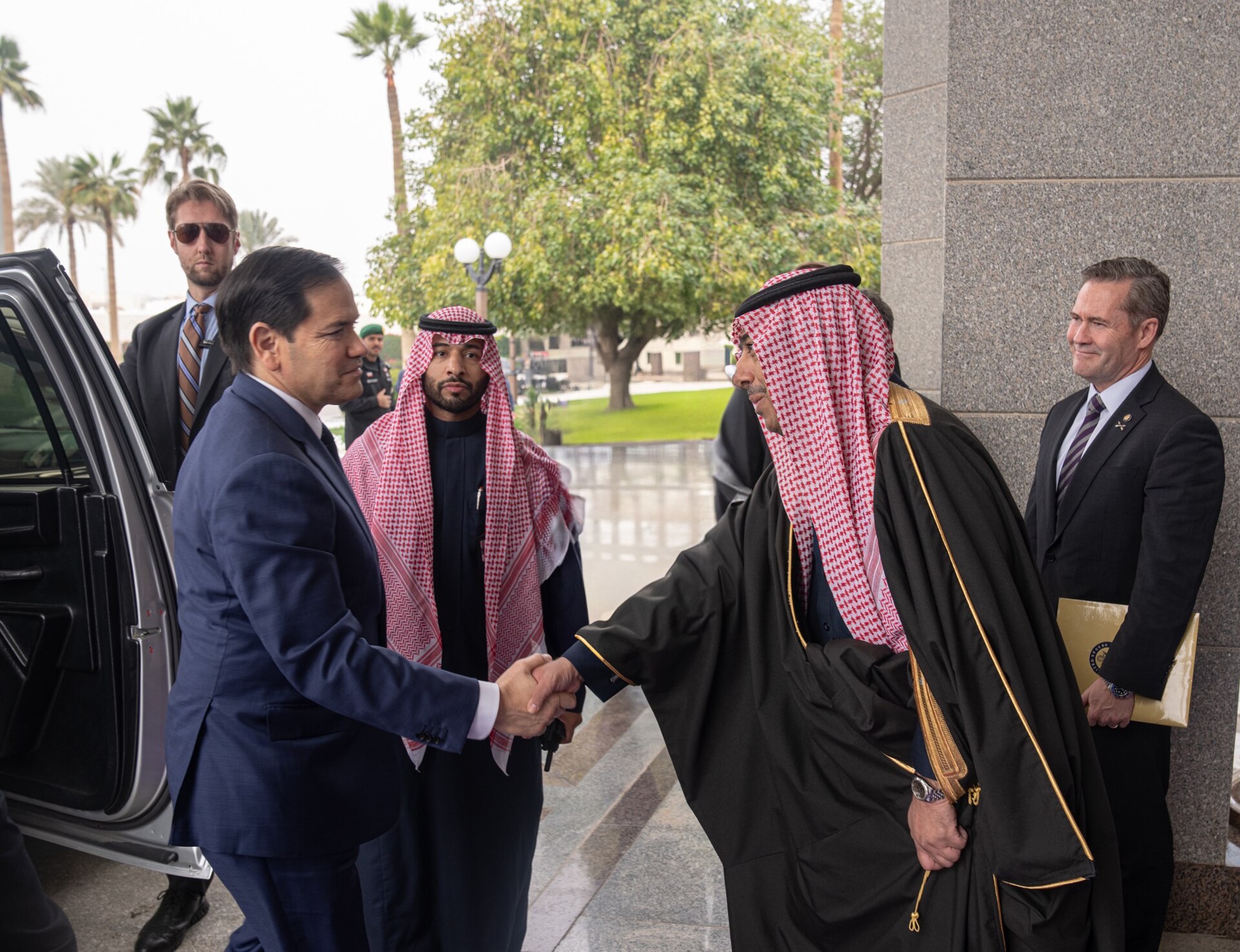
Secretary of State Marco Rubio acknowledged one edge of this problem on March 28, warning that Iran’s tolling system was “illegal, unacceptable, dangerous to the world.” GCC Secretary-General Jasem Mohamed al-Budaiwi echoed the objection. But warnings without enforcement power are diplomatic decoration.
The US is not going to extend its military campaign by months to clear Hormuz for Saudi tankers. Iran is not going to voluntarily dismantle its most lucrative new revenue stream. The country that needs the strait open the most is the country with the least say over whether it opens.
This is the structural trap. Trump can make a deal with Iran that satisfies his domestic audience — missiles destroyed, Navy humbled, Americans home — without ever addressing the question that determines Saudi Arabia’s fiscal survival. And Iran can accept that deal, keep Hormuz under its effective control, and collect tolls from everyone except the countries it chose to punish. The deal both sides can live with is the deal Saudi Arabia cannot.
What Does Permanent Hormuz Closure Do to Saudi Economic Geography?
If Hormuz does not reopen — or reopens only under an Iranian toll regime that makes transit commercially unviable for Saudi-flagged cargoes — the Kingdom’s economic geography inverts. Since the 1940s, Saudi oil has flowed east, through the Persian Gulf, to Asia. The Eastern Province, home to Ghawar and the Abqaiq processing complex, was the centre of gravity. Ras Tanura was the world’s largest oil export terminal. The entire logistics chain — pipelines, processing, ports, tanker contracts — pointed toward Hormuz.
Permanent closure pushes everything west. Yanbu becomes the primary export hub. The Red Sea coast becomes the Kingdom’s economic front door. But Yanbu was never designed for this role, and the infrastructure gap is not just about port berths.
Refining capacity, NGL fractionation, petrochemical facilities — the downstream industrial complex that generates higher-margin revenue than raw crude exports — sits almost entirely in the Eastern Province. Jubail Industrial City, home to SABIC and dozens of petrochemical plants, ships through the Gulf. Moving that output west would require duplicating industrial infrastructure on a scale that makes NEOM look modest.
The UAE has a structural advantage that Saudi Arabia does not. Abu Dhabi’s Fujairah terminal exits to the Gulf of Oman, bypassing both Hormuz and the Bab al-Mandab. The ADCOP pipeline carries 1.5 million bpd from Habshan to Fujairah without touching either chokepoint.
Saudi Arabia has no equivalent. Its only bypass is the East-West Pipeline to Yanbu, which exits into the Red Sea — a waterway the Houthis have spent two years demonstrating they can threaten.
| Country | Bypass Route | Pipeline Capacity | Port/Export Capacity | Chokepoint Exposure |
|---|---|---|---|---|
| Saudi Arabia | East-West Pipeline to Yanbu | 7M bpd | ~4.5M bpd | Bab al-Mandab (Red Sea) |
| UAE | ADCOP to Fujairah | 1.5M bpd | 1.5M bpd | None (Gulf of Oman) |
| Iraq | Kirkuk-Ceyhan to Turkey | 1.6M bpd (nameplate) | ~200K bpd (actual) | Kurdish region instability |
| Total bypass | — | ~10.1M bpd | ~6.2M bpd | — |
| Normal Hormuz flow | — | — | ~20M bpd | — |
Total regional bypass capacity — Saudi, UAE, and Iraqi pipelines combined — can move roughly 6.2 million bpd to market. Normal Hormuz flow was 20 million bpd. The arithmetic is a 69 percent shortfall. No amount of pipeline conversion or port expansion closes that gap in any timeline that matters for the current crisis, and the longer the closure lasts, the more Iran’s toll regime becomes the de facto new normal for whatever traffic does resume.
The downstream consequences extend beyond crude. Saudi Arabia’s petrochemical exports — plastics, fertilizers, specialty chemicals — generated roughly $30 billion in revenue in 2024, nearly all shipped through Gulf ports. Jubail’s petrochemical complex cannot reroute product to Yanbu without building parallel fractionation and storage facilities on the Red Sea coast, a capital programme that would dwarf the port expansion alone. The scale of the problem became concrete when Sadara Chemical shut down its entire $20 billion Jubail complex indefinitely, eliminating three million tonnes of annual petrochemical capacity in a single announcement. A kingdom that spent decades building the world’s most integrated hydrocarbon value chain on one coast now needs a second one on the opposite side of the Arabian Peninsula, and the clock started four weeks ago.
The oil-for-security bargain that defined the US-Saudi relationship assumed American power guaranteed freedom of navigation through Hormuz. That guarantee is now conditional on a timeline Trump has decided is too long and a military operation Bessent admits will happen “over time.” For Saudi Arabia, “over time” is not a strategy. It is the gap between MBS’s current position and anything resembling a plan — a gap measured in billions of dollars per month, with the meter running and nobody at the negotiating table planning to turn it off.
FAQ
How long would it take to expand Yanbu port to match the East-West Pipeline’s full capacity?
Industry estimates from Engineering News-Record and Aramco’s own construction benchmarks suggest that adding sufficient deepwater berths, storage tanks, and loading infrastructure to handle 7 million bpd at Yanbu would take three to five years under normal conditions. Wartime construction — with supply chain disruptions, elevated material costs, and competing demands for skilled labour across Vision 2030 projects — could push that to six or seven years. Saudi Arabia has never attempted a port expansion of this scale, and the closest comparator, China’s Ningbo-Zhoushan buildout, took eight years from planning to full operation.
Could Saudi Arabia build a new pipeline to a port outside the Red Sea chokepoint?
The only Saudi coastline not exposed to either Hormuz or the Bab al-Mandab is the Gulf of Aqaba in the far northwest, near NEOM. A pipeline from Abqaiq to Aqaba would span roughly 1,500 kilometres of desert and mountain terrain — longer than the existing East-West Pipeline — and require transit permits through Jordanian or Egyptian waters. Aqaba’s port infrastructure is built for phosphate and container cargo, not crude oil loading. No feasibility study for this route has been publicly disclosed, and construction would take a minimum of four years even at emergency pace.
What happens to Asian oil buyers if Hormuz stays permanently closed?
Japan and South Korea, which imported approximately 3.8 million bpd through Hormuz before the war, have already activated emergency petroleum reserves totalling roughly 300 days of supply. China and India have partially offset the disruption through Iranian selective-access deals, paying transit fees in yuan. If the closure becomes permanent, Asian buyers would shift procurement to West African producers (Nigeria, Angola), US shale exporters, and Guyana — all of which involve longer shipping routes and higher landed costs. Goldman Sachs estimated in a March 25 note that a permanent Hormuz closure would add $18-25 per barrel to Asian crude benchmarks, restructuring global trade flows for a generation.
Is Iran’s Hormuz toll system legal under international law?
The UN Convention on the Law of the Sea (UNCLOS) guarantees transit passage through international straits, including Hormuz, without coastal state interference or fees. Iran signed UNCLOS in 1982 but never ratified it, and has long argued that its interpretation of sovereignty permits “security management” of the strait. No international court has ruled on Iran’s current toll claims, and enforcement of UNCLOS transit rights depends, in the end, on naval power — which currently favours Iran in the immediate strait area. The legal question is largely academic when the party violating the convention controls both shores of the waterway.
How does Aramco’s $40 premium on non-Hormuz crude affect Saudi competitiveness?
Aramco’s Yanbu-loaded cargoes currently command an unprecedented $35-40 per barrel premium over Gulf-loaded equivalents, reflecting the scarcity value of crude that does not transit a contested chokepoint. This premium partly compensates for lost volume — Saudi Arabia earns more per barrel even as it ships fewer barrels — but the math does not net out. The premium on 4.6 million bpd does not replace the revenue from 7.5 million bpd at standard pricing. And if the premium persists, it makes Saudi crude less competitive against US shale and West African grades for price-sensitive Asian refiners, potentially eroding market share that took decades to build. On April 2, those pressures crystallized: the full structure of Saudi Arabia’s four-vector hedge and the three scenarios that could collapse it became visible as a 41-nation coalition formed around the strait while Riyadh remained conspicuously absent.