DOHA — A Qatari negotiating team arrived in Tehran on Friday to help close the remaining gaps in the Hormuz memorandum of understanding being brokered between the United States and Iran. The team landed, according to the Irish Times and the Times of Israel, “in coordination with the United States” — language that positions Doha as a Washington-sanctioned channel, not a freelance intermediary.
The same day, Qatar’s name appeared on a five-nation GCC letter filed with the International Maritime Organization warning merchant vessels not to engage with Iran’s Persian Gulf Straits Authority or follow its routing directives. Bahrain, Kuwait, Saudi Arabia, and the UAE co-signed. Oman, which Bloomberg reported on May 21 is negotiating a permanent toll system with Tehran, did not.
Qatar is now simultaneously a co-protestor against Iran’s Hormuz jurisdiction and an active participant in closing the framework that will determine what replaces it. The question is not whether Doha can sustain both positions — it already is. The question is what happens to Saudi Arabia’s multilateral strategy when the solidarity underpinning its primary Hormuz instrument is being dissolved from the inside by a fellow signatory sitting across the table from Tehran.
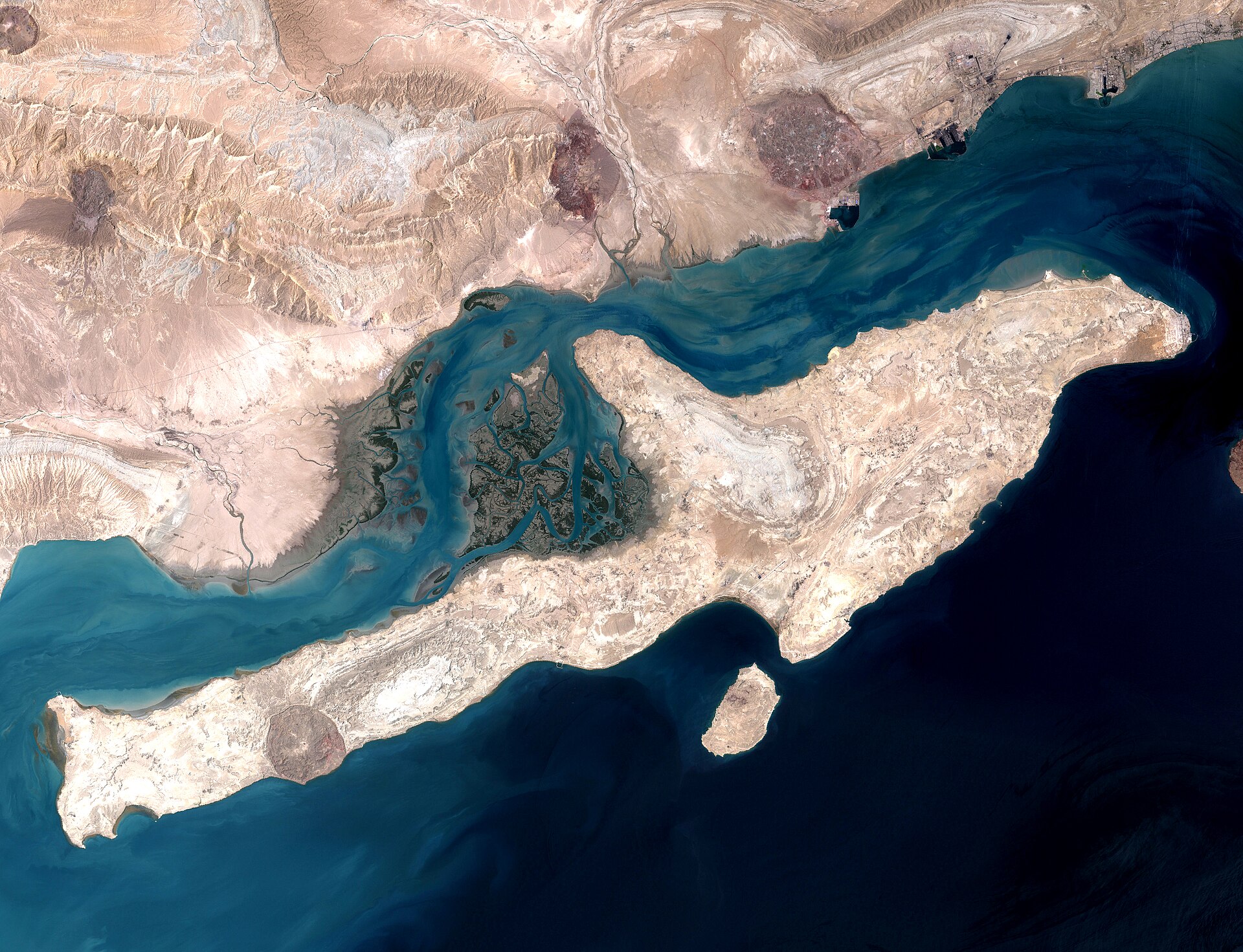
Table of Contents
- The May 22 Sequence
- What Did the Five-Nation GCC Letter Actually Demand?
- Qatar’s Tehran Mandate and the MOU Framework
- Twenty-Four Days from ‘Political Punching Bag’ to Tehran
- Can Saudi Arabia Object Without Destroying the GCC Front?
- Why Does Qatar’s Hormuz Stake Differ from Saudi Arabia’s?
- The Mediator Precedent
- What Does Pakistan’s Simultaneous Tehran Deployment Mean for Qatar’s Role?
- Rubio at Helsingborg
- The Silence from Riyadh
- Frequently Asked Questions
The May 22 Sequence
The chronology is precise. On the morning of May 22, a five-nation GCC letter — co-signed by Bahrain, Kuwait, Qatar, Saudi Arabia, and the UAE — was filed with the International Maritime Organization’s Legal Committee at LEG 113. The letter warned commercial shipping not to engage with Iran’s Persian Gulf Straits Authority, the 12-article domestic law framework Iran published a formal jurisdiction map for on the same day, extending from Kuh-e Mubarak to Fujairah and from Qeshm to Umm al-Quwain.
Within hours, multiple outlets — the Irish Times, the Jerusalem Post, and the Times of Israel — reported that a Qatari negotiating team had arrived in Tehran “in coordination with the United States” to help finalise the MOU framework that US Secretary of State Marco Rubio described at Helsingborg as showing “slight progress.”
No reporting has established which act came first on May 22 — whether the IMO letter was filed before or after the Qatari team departed for Tehran. No source has characterised the two acts as formally coordinated. The dominant journalistic framing treats them as compartmentalised: Qatar signed the protest letter in its capacity as a GCC member state, and separately executed a US-coordinated mediation mission.
The Middle East briefing 3,000+ readers start their day with.
One email. Every weekday morning. Free.
This compartmentalisation is doing heavy structural work. It allows Qatar to remain inside the GCC protest consensus while operating inside the negotiating room where the terms of Hormuz governance are being settled. It allows the United States to maintain that the GCC front is intact while one of its members facilitates Washington’s preferred outcome.
Five signatures appear on the IMO letter. One of those signatories spent the same day in Tehran, working to close the deal whose terms the letter implicitly rejects.
What Did the Five-Nation GCC Letter Actually Demand?
The GCC-IMO letter, as reported by Euronews on May 22, establishes legal non-recognition of the PGSA’s authority. It warns merchant vessels that the PGSA’s routing directives carry no international legal standing, that compliance with PGSA instructions does not constitute compliance with IMO-sanctioned navigation standards, and that GCC member states do not recognise Iran’s unilateral extension of jurisdictional control over the strait.
The letter was filed with the IMO Legal Committee at its 113th session. IMO legal committees issue interpretive guidance and can recommend that member states adopt conventions. They cannot enforce compliance. A previous attempt to address Hormuz through the UN Security Council — which Saudi Arabia co-sponsored — was vetoed by Russia and China on April 7, with an 11-2-2 vote that stripped Chapter VII enforcement authority across six revisions.
The IMO letter is the instrument Saudi Arabia has left after the Security Council route failed. Its value depends entirely on the cohesion of the signatories. If all five GCC signatories maintain a uniform posture of non-engagement with the PGSA framework, the letter creates a normative baseline that complicates Iran’s effort to convert its toll architecture into accepted maritime practice. If one signatory is simultaneously helping broker the deal that will determine whether the toll architecture survives, the letter contains the terms of a consensus one of its authors is helping to supersede. The IMO Legal Committee has no mechanism to verify whether signatory conduct matches signatory commitments.
Oman’s absence from the letter is well-documented. Bloomberg reported on May 21 that Iran and Oman are actively negotiating a permanent toll system, building on the 1974 Iran-Oman maritime boundary treaty that grants Oman jurisdiction over the inbound shipping lane. Oman’s non-participation was expected and public.
Qatar’s case is structurally different. Doha signed. Then Doha flew to Tehran. The letter’s five-nation front now contains two distinct postures: four signatories whose conduct matches the letter’s content, and one whose conduct runs in the opposite direction.
Qatar’s Tehran Mandate and the MOU Framework
Qatar’s own description of its role is careful. Official Qatari statements, relayed by the Athens Times and YourNews on May 22, frame the Tehran mission as a “supportive role” to Pakistani mediators — language that deliberately underplays the act of deploying an independent negotiating team to Iran’s capital.
The distinction between “supportive” and “independent” matters because of what the team is supporting. The MOU framework, as leaked by Al-Arabiya on May 22 and reported in detail previously, outlines an 8-point draft that includes a ceasefire, freedom of navigation guarantees, and a 7-day window for outstanding issues. It would open 30 days of nuclear talks, during which the US demand that Iran surrender its highly enriched uranium stockpile would be deferred rather than resolved.
The framework’s treatment of the PGSA — the toll architecture the GCC-IMO letter rejects — is ambiguous in available reporting. The Axios 14-point MOU, which predates the Al-Arabiya leak, included a 12-to-15-year enrichment moratorium, a 3.67 percent cap, and HEU removal. The Al-Arabiya version contains no nuclear specifics. The gap between these positions is what the Qatari team has arrived to help close. Iran’s Supreme Leader has directed that 60 percent enriched HEU must remain in Iran.
Qatar’s economic interest in the outcome is direct and measurable. The MOU’s freedom-of-navigation provisions would, if implemented, reopen the Strait of Hormuz to commercial traffic — the single outcome most consequential for Qatar’s LNG export model. The nuclear provisions, by contrast, affect Qatar only indirectly. Doha has no nuclear programme, no enrichment ambitions, and no history of nuclear diplomacy beyond hosting multilateral forums.
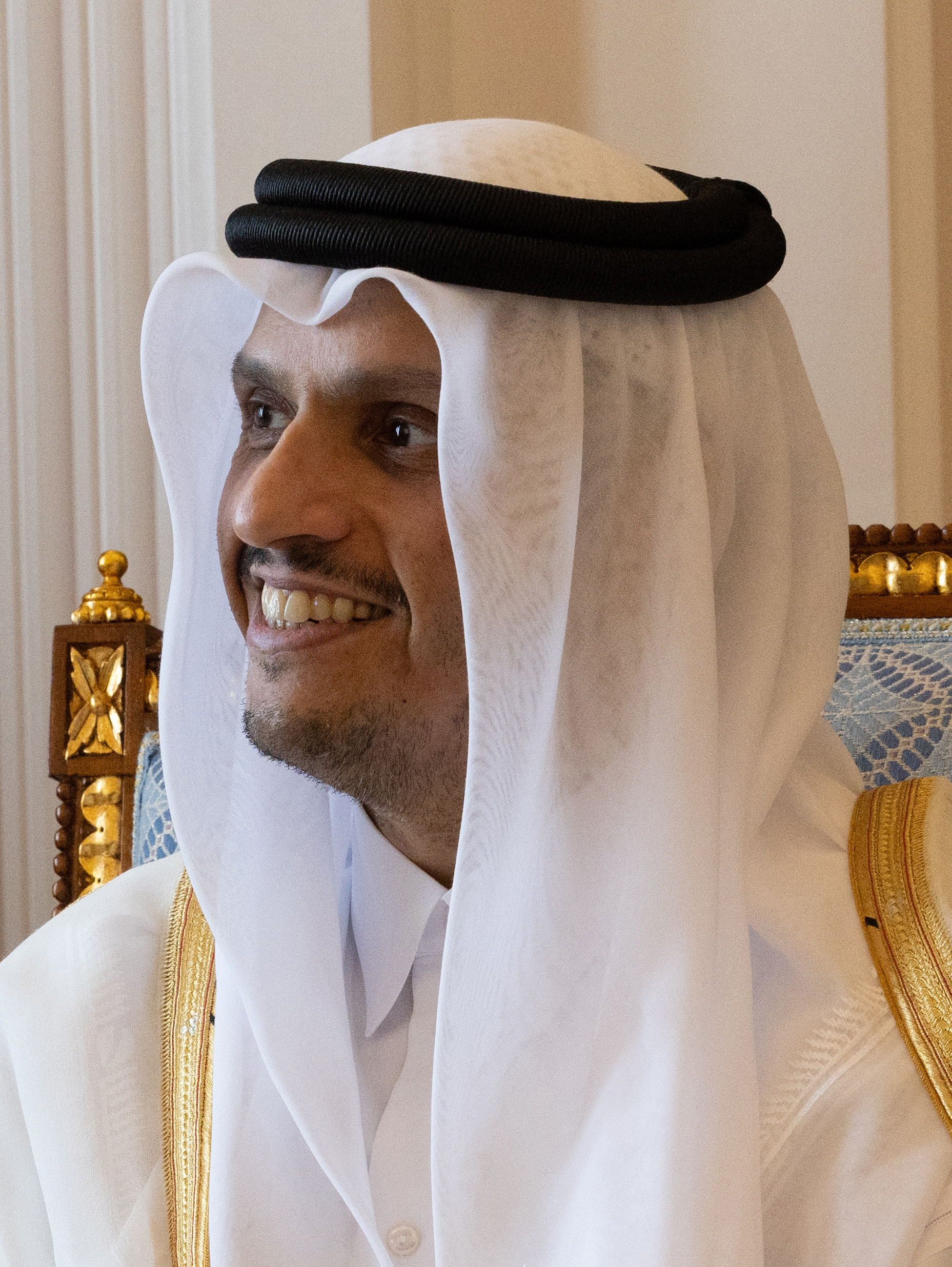
The Qatari team is arriving in a room where Iran has already separated Hormuz from the nuclear file. Qatar’s structural incentives align with that sequencing: Hormuz reopening is existential for Doha, nuclear resolution is not. Al Jazeera reported on April 27 that Tehran was offering a Hormuz deal that explicitly postpones nuclear talks — the same sequencing the MOU framework follows. Iran has treated the PGSA as a separate institutional question, decoupled from nuclear negotiations.
Twenty-Four Days from ‘Political Punching Bag’ to Tehran
On April 28, Qatar’s MOFA Spokesperson Majed bin Mohammed Al-Ansari issued a statement that ranks among the sharpest public rebukes Qatar has directed at Iran during the conflict. Preventing ships from passing through Hormuz, Al-Ansari said, was “unacceptable under any circumstances.” Using the strait as leverage in any military or political conflict was “completely rejected.” And Qatar, he added, “will not be used as a ‘political punching bag.’”
Twelve days later, on May 10, Qatar’s Prime Minister Mohammed bin Abdulrahman Al-Thani called Iranian Foreign Minister Araghchi directly. “Freedom of navigation is a fundamental principle that is not open to compromise,” the PM said, “and closing the Strait of Hormuz or using it as a pressure tool would only deepen the crisis and expose the vital interests of regional countries to danger.”
These are not the statements of a government surprised by its own mediation role. The April 28 statement came with explicit language about “full coordination with partners in Pakistan regarding ongoing mediation efforts” — meaning Qatar was already positioning itself adjacent to the mediation track while publicly establishing a record of opposition to Iran’s conduct at Hormuz.
Twenty-four days separate the “political punching bag” statement from the deployment of a Qatari negotiating team to Tehran. The trajectory tracks a state that planned its entry from the beginning: condemn, align publicly with the GCC, coordinate with Washington, then enter the room with credentials no other Gulf state can offer — a direct channel to Tehran maintained through the 2017 blockade, the Hamas hosting arrangement, and an unbroken diplomatic presence that survived Iranian missile strikes on Qatari territory.
The May 22 deployment marks the point where that distance collapsed into participation. The Christian Science Monitor reported on May 18 that Qatar had “deliberately kept its distance from direct mediation” until then, leaving primary roles to Oman and Pakistan.
Can Saudi Arabia Object Without Destroying the GCC Front?
The structural problem for Riyadh is precise. The GCC-IMO letter is Saudi Arabia’s highest-profile multilateral instrument on Hormuz since the UNSC veto on April 7. After the veto, Riyadh co-sponsored a second draft that attracted 137 co-sponsors — a record — but could not overcome the Russian and Chinese double veto. The IMO letter is what remained.
For the letter to carry weight beyond its filing, Saudi Arabia needs two things: uniform GCC signatory conduct, and the absence of any signatory from the negotiating room where Hormuz governance is being decided. Qatar’s Tehran deployment eliminates the second condition. Qatar’s simultaneous signature on the letter preserves the appearance of the first.
If Saudi Arabia publicly objects to Qatar’s mediation role, it fractures the five-nation front the IMO letter is built on. A public Saudi-Qatari dispute over Iran policy would replicate the dynamics of the 2017 blockade — which ended only with the January 5, 2021 Al-Ula Agreement — at a moment when Gulf cohesion is Riyadh’s primary diplomatic asset. The Carnegie Endowment assessed in April 2026 that “the GCC is unlikely to unify on Iran,” identifying fracture lines running three ways: Bahrain seeking maximum confrontation, the UAE deepening Israel ties and hedging independently, and Kuwait and Oman favouring de-escalation.
The Italian Institute for International Political Studies (ISPI) mapped a four-posture taxonomy: UAE and Bahrain as confrontational, Saudi Arabia and Kuwait as oscillating, Qatar and Oman as pursuing a “reassembly approach vis-à-vis the Iran threat.” Qatar’s Tehran deployment is consistent with the ISPI taxonomy.
If Riyadh stays silent, the precedent is established: a GCC member can co-sign a collective instrument of non-recognition and simultaneously participate in the negotiations that may render that instrument moot. The quadrilateral hedging structure this war has produced — where GCC members pursue independent bilateral tracks while maintaining the appearance of collective action — has acquired another case study.
Carnegie noted in February 2026 that GCC members have “increasingly allowed mutual institutions to fall by the wayside.” No GCC charter mechanism exists for binding foreign policy dispute resolution. The IMO letter was not a binding commitment. It was an expression of political will — and on May 22, one of its five authors was in Tehran helping shape the outcome it was written to oppose.
Why Does Qatar’s Hormuz Stake Differ from Saudi Arabia’s?
The asymmetry is geographic. Saudi Arabia exports crude via two routes: eastward through the Persian Gulf via Ras Tanura and Ju’aymah, and westward through the Red Sea via Yanbu, connected by the East-West Pipeline with a capacity of roughly 5 million barrels per day. When Hormuz closed, Saudi Aramco redirected exports to Yanbu. The ceiling is constrained — Aramco’s maximum sustainable capacity of 12 million barrels per day cannot be fully exported through a single Red Sea terminal — but Saudi Arabia has a bypass.
Qatar does not. Qatar’s LNG exports — the economic foundation of the state — transit exclusively through Hormuz. There is no pipeline alternative. The Dolphin pipeline carries Qatari natural gas to the UAE and Oman, but it handles approximately 2 billion cubic feet per day for regional consumption, not the liquefied export volumes that constitute Qatar’s primary revenue stream.
Iran struck Qatar’s Ras Laffan LNG facility during the conflict, destroying approximately 17 percent of Qatar’s LNG export capacity. Before the war, roughly 20 percent of global LNG trade passed through Hormuz. For Qatar, every day the strait remains under PGSA control is a day its remaining export capacity operates under an Iranian permitting regime that the GCC-IMO letter its own government co-signed describes as illegitimate.
Signing the IMO letter maintains Qatar’s standing within the GCC consensus. Sending negotiators to Tehran addresses the existential vulnerability the letter alone cannot resolve. The letter does not reopen Hormuz. It does not remove the PGSA. It does not secure passage for Qatari LNG tankers. The clearance of Al Kharaitiyat on May 10 — while her sister ship Rasheeda has been anchored at 25.47°N/52.18°E for seven weeks under the same flag, operator, and cargo type — illustrates what Iran’s two-tier LNG clearance regime at Hormuz actually means: passage is not a right restored by protest letters, but a permission granted selectively based on the political relationship Iran chooses to reward.
Saudi Arabia’s Hormuz exposure is real but not existential in the same way. Riyadh’s primary injury from Qatar’s dual posture is institutional: the multilateral instruments Saudi Arabia constructs keep being undermined by the independent conduct of the states that sign them.
The Mediator Precedent
Qatar’s entry into Iran mediation follows a template Doha has refined over two decades. The foundational precedent is the Hamas political bureau, which Qatar sheltered from 2012 onward — an arrangement Doha has consistently described as made “at the request of the United States.” The hosting generated persistent criticism from Israel, Saudi Arabia, and the UAE, but it gave Qatar something no other Gulf state possessed: a direct, institutionalised channel to a designated terrorist organisation that the United States needed contact with but could not maintain itself.
The Iran mediation follows the same structural logic. Qatar maintains diplomatic relations with Tehran that no other GCC signatory on the IMO letter can match. Doha restored full relations with Iran during the summer of 2017, amid the Saudi-led blockade — a move that was itself a response to the blockade’s central demand that Qatar reduce its Iran ties. The Al-Ula Agreement of January 5, 2021 ended the blockade without resolving this underlying disagreement. Qatar kept its Iran channel. Saudi Arabia’s core demand went unmet.
Qatar’s Constitution enshrines mediation as a pillar of foreign policy. This is not informal tradition. It is codified state doctrine, invoked by Qatari officials to frame every mediation role — Afghanistan, Chad, Lebanon, Darfur, and now Iran — as an exercise of constitutional mandate rather than freelance diplomacy.
The combination — US coordination, constitutional mandate, unbroken Iran channel, and the physical presence of Al-Udeid Air Base (the largest US military installation in the Middle East) on Qatari soil — gives Doha a mediator profile built on the same architecture as the Hamas hosting arrangement: US-sanctioned, constitutionally grounded, and maintained through direct opposition from Gulf neighbours. Al-Udeid remained operational throughout the 2017 blockade without interruption.
What Does Pakistan’s Simultaneous Tehran Deployment Mean for Qatar’s Role?
Pakistan’s National Security Adviser Naqvi met Iranian Foreign Minister Araghchi for the second time in two days on May 22 — the same day the Qatari team arrived. The parallel deployments are not coincidental. Rubio confirmed at Helsingborg that Pakistan remains the “main interlocutor” for Washington, with Qatar described as a supplementary channel.
The distinction between main and supplementary is less stable than it appears. Pakistan’s mediating position is structurally compromised by the Strategic Military Defence Agreement signed with Saudi Arabia on September 17, 2025, which creates a treaty obligation to defend Saudi territory. Pakistan’s dual role as mediator and Saudi military partner has been documented in detail. Iran is aware of the SMDA. Tehran’s willingness to accept Pakistan as an interlocutor while knowing Islamabad is treaty-bound to Riyadh reflects a judgment that the SMDA has not, in practice, constrained Pakistani mediation.
Qatar carries no equivalent treaty encumbrance. Doha has no mutual defence pact with Saudi Arabia. It has no SMDA-equivalent with any party to the Hormuz dispute. Its GCC membership creates expectations of solidarity — the kind expressed in the IMO letter — but no binding legal obligation to subordinate its foreign policy to Riyadh’s preferences. The Al-Ula Agreement that ended the blockade explicitly left this gap unresolved.
The practical effect of Pakistan and Qatar deploying simultaneously is channel redundancy. If Naqvi’s sessions with Araghchi stall — his second Tehran visit in two days suggests they have not — the Qatari team offers an alternative pathway to the same framework. If both channels produce movement, the MOU closes faster. In either case, the two channels dilute the centrality of any single mediator, which serves US interests by providing multiple pathways to a deal and Iranian interests by creating multiple interlocutors competing to deliver acceptable terms.
Saudi Arabia is not deploying a channel. It is not in the room. Its representatives are not in Tehran, Islamabad, or Doha working the Hormuz file. Its position is expressed through the IMO letter and through UNSC co-sponsorship — multilateral instruments that operate at one remove from the bilateral negotiations where the actual terms are being set.
Rubio at Helsingborg
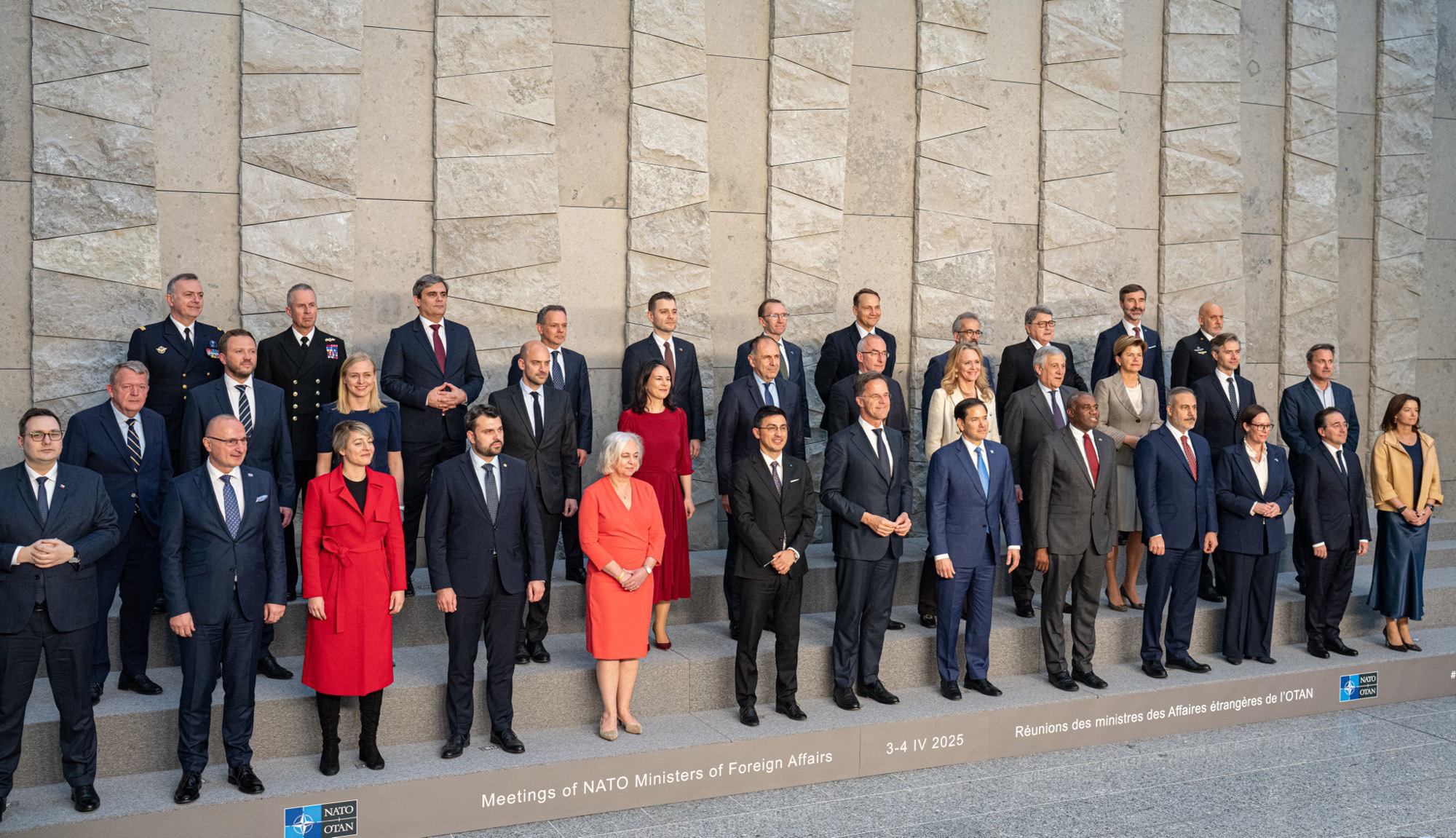
Rubio’s language at the NATO meeting in Helsingborg on May 22 contained a contradiction the Qatari deployment makes legible. “No one is in favor of a tolling system,” Rubio said. “It can’t happen. It would be unacceptable and it would make a diplomatic deal unfeasible.” In the same appearance, he described talks as showing “slight progress” and “some good signs.”
If the toll system cannot happen and a deal is showing progress, the deal being negotiated either excludes the toll system or defers it. The MOU framework Qatar is helping close — the 8-point draft Al-Arabiya published, the structure Axios characterised as a “letter of intent” — addresses ceasefire and freedom of navigation. It defers the nuclear file for 30 days of talks. What it does with the PGSA toll architecture is not specified in available reporting.
Qatar’s presence in the negotiating room gains significance against this ambiguity. If the MOU framework addresses Hormuz reopening without explicitly dismantling the PGSA, the five-nation GCC letter’s demand for non-recognition of the PGSA may coexist with a US-brokered framework that accommodates the toll architecture in some form. Qatar would have helped broker that accommodation while its signature sits on the document rejecting it.
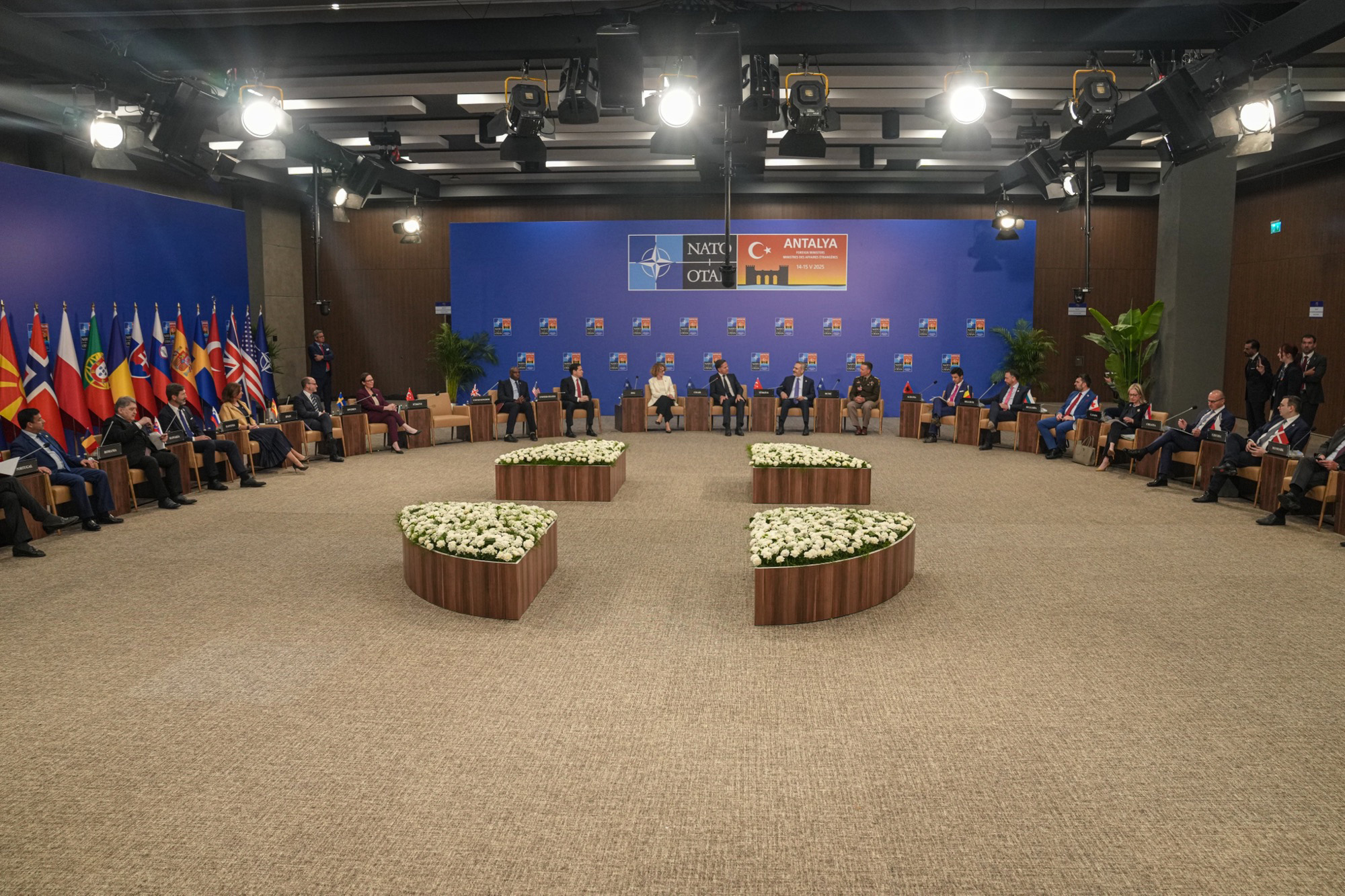
Rubio’s “not there yet” remark at the same event — made in reference to the overall deal — suggests the framework is incomplete. Qatar’s team is in Tehran to help complete it. Pakistan’s Naqvi is in Tehran for the same purpose. The urgency reflects what Aramco CEO Amin Nasser identified on May 11 as a mid-June normalization cliff: if Hormuz does not reopen within weeks, the tanker fleet displacement and Asian refinery restocking cycles push the timeline for market normalization to 2027.
UAE Senior Diplomatic Adviser Anwar Gargash, also speaking on May 22, warned that Iran “might be over-negotiating” — a signal that at least one GCC member believes Tehran is extracting too much from the framework. The Qatari team arrived in Tehran the same day Gargash made that warning.
The Silence from Riyadh
As of May 22, Saudi Arabia has issued no public statement acknowledging Qatar’s Tehran deployment. No Saudi MOFA release addresses the mediation. No background briefing has surfaced in Saudi-aligned media. The silence is total. UAE presidential adviser Anwar Gargash named this pattern directly — calling the GCC’s collective Iran response “the weakest historically” and repeating the verdict at the Atlantic Council’s Europe Gulf Forum without retraction. Gargash’s institutional critique and what it signals about the post-war Gulf order is examined in full here.
This silence has its own context. On May 20, Foreign Minister Prince Faisal bin Farhan publicly endorsed Trump’s decision to cancel the Iran strike — a statement that required Riyadh to align with a US posture that left Hormuz unresolved. Two days later, a fellow GCC member is in Tehran helping close the framework that the US posture produced, and Riyadh has said nothing.
The pattern is consistent across this conflict. When Pakistan assumed the mediating role, Saudi Arabia did not publicly endorse or challenge it, despite the SMDA creating a treaty obligation that runs directly counter to neutral mediation. When Oman declined to sign the IMO letter, Riyadh issued no rebuke. When the Al-Arabiya “final draft” leak on May 22 published terms that diverge from the Axios MOU framework, the Saudi government let the editorial act speak without official comment.
There is a structural explanation for the silence. Saudi Arabia’s remaining influence on Hormuz runs through its partnership with the United States and its co-sponsorship of multilateral instruments — the IMO letter, the UNSC draft. Both channels operate through consensus rather than unilateral authority. Challenging a fellow GCC signatory’s independent conduct risks the consensus these instruments depend on. The implicit calculation is that a five-name letter with one defecting signatory carries more weight than a four-name letter issued after a public break.
That calculation may be accurate on its own terms. But the GCC front on Hormuz is now a managed surface rather than an operational reality. Qatar’s May 22 demonstrated that a single state can sit inside the protest and inside the negotiation at the same time, openly, with US endorsement. The five-nation letter filed at the IMO on Friday morning contains the signatures of states pursuing at least three distinct Hormuz strategies: protest without negotiation (Saudi Arabia, Bahrain), protest while negotiating (Qatar), and negotiation without protest (Oman, which did not sign at all). The letter reads as consensus. The conduct of its signatories reads as something else.
Frequently Asked Questions
Has Qatar mediated between Iran and any other party before the current conflict?
Yes. Qatar hosted Iranian-Taliban talks in 2021-22 alongside the Doha Agreement process. Qatar also facilitated a 2023 prisoner exchange between the United States and Iran, brokering the release of five American citizens detained in Tehran in exchange for access to approximately $6 billion in frozen Iranian oil revenue held in South Korean banks, transferred to Qatari financial institutions under US Treasury monitoring conditions. That prisoner deal was the last direct US-Iran transaction completed before the current conflict began. Qatar’s Taliban and Iran mediation portfolios both operated under the same structural template: Washington needed a channel it could not maintain directly, and Doha provided one while hosting the US military’s largest regional facility.
What is the legal status of the GCC-IMO letter under international maritime law?
IMO Legal Committee opinions and member-state submissions are advisory. They carry weight in establishing customary international law over time, but they do not override UNCLOS provisions on transit passage — specifically Article 38, which provides for the right of transit passage through straits used for international navigation. These provisions are self-executing and do not require IMO endorsement. The letter’s value is political rather than legal: it registers formal GCC non-recognition of the PGSA. For the PGSA to be formally challenged under international law, a state would need to initiate proceedings before the International Tribunal for the Law of the Sea (ITLOS) or an Annex VII arbitral tribunal under UNCLOS Part XV. No GCC state has initiated such proceedings as of May 22.
Does Qatar have any bilateral defence agreement with Saudi Arabia?
No. Qatar is a GCC member but has no bilateral mutual defence pact with Saudi Arabia comparable to the Pakistan-Saudi SMDA. Qatar signed a defence cooperation agreement with the United States in 2003, renewed and expanded in 2019, which governs the Al-Udeid basing arrangement. Separately, Qatar signed a bilateral defence agreement with Turkey in 2014, under which Turkey maintains a military base on Qatari territory — established in 2017. During the Saudi-led blockade, Turkish forces deployed to Qatar within 48 hours of the blockade’s announcement, a move widely interpreted as a deterrent signal against potential Saudi military intervention. The Turkish base remains operational.
Why was Oman absent from the GCC-IMO letter?
Oman is separately negotiating a permanent toll system with Iran at Hormuz, according to Bloomberg reporting on May 21. The 1974 Iran-Oman maritime boundary treaty gives Oman jurisdiction over the inbound (northbound) shipping lane through the strait — a legal arrangement Iran’s PGSA framework builds on rather than displaces. Iranian Ambassador to Oman Amin-Nejad stated on May 22 that “Iran and Oman must mobilize all their resources” — language consistent with a bilateral governance arrangement operating entirely outside the GCC framework. Oman’s absence from the letter was expected and public; Qatar’s simultaneous presence on the letter and in Tehran is the structurally unusual case.
How many distinct versions of the US-Iran MOU framework are now in circulation?
Three. The first is the Axios 14-point MOU framework, reported in early May, which included a 12-to-15-year enrichment moratorium, a 3.67 percent enrichment cap, and provisions for HEU removal. The second is the May 6 revision Axios characterised as a “letter of intent” rather than a final agreement, associated with Pakistani mediator Munir’s shuttle diplomacy. The third is the Al-Arabiya 8-point “final draft,” published on May 22 after a retraction and republication cycle within 24 hours (May 21-22), which includes ceasefire and freedom-of-navigation provisions but no nuclear specifics. The gap between these three documents — particularly the presence of nuclear provisions in the Axios versions and their absence from the Al-Arabiya version — is itself a subject of active negotiation. The Qatari and Pakistani teams in Tehran on May 22 are working within this three-document field.
The three-document field the Qatari and Pakistani teams were navigating in Tehran on May 22 became the diplomatic context for the fifth round of US-Iran talks in Rome the following day — which ended without a signed framework, as the GCC remained excluded from the substantive nuclear track. The Rome round: five venues, 106 days, no deal. That financial dimension deepened Qatar’s conflict of interest further still: when Ghalibaf flew to Doha on May 25 with a $12 billion frozen-assets demand, Qatar was simultaneously holding the role of sympathetic creditor, LNG hostage, and diplomatic intermediary — a convergence that left Doha with no exit that did not cost it something.