
NEW YORK — Saudi Arabia has recruited 137 countries to demand that Iran reopen the Strait of Hormuz. It needs two more — Russia and China — and both have already said no. The second UNSC draft resolution on Hormuz, co-led by the United States and Bahrain with Saudi Arabia as a principal co-sponsor, is heading toward a vote that Riyadh cannot cast, in a chamber where two permanent members are telegraphing the same objections that produced vetoes on April 7. The co-sponsorship tally is the highest in modern Security Council history, and it is legally irrelevant: one veto from one permanent member kills any resolution, regardless of how many countries signed on.
What Riyadh has built is not a coalition — it is an audience. Saudi Arabia has no bilateral channel to Iran on the strait, no permanent Security Council seat, no military option it is willing to use, and no stated fallback if Moscow and Beijing veto again. The kingdom is co-sponsoring a resolution whose enforcement language has been gutted to avoid exactly the veto it is still likely to receive — staking its strait-reopening strategy on a multilateral mechanism that has already failed once and been diluted in the second attempt. The 137 countries lining up behind Saudi Arabia cannot open the Strait of Hormuz. Two countries can close the vote, and both intend to.
Table of Contents
- What Does the Second UNSC Hormuz Draft Actually Say?
- From “All Necessary Means” to “Consider Future Sanctions”
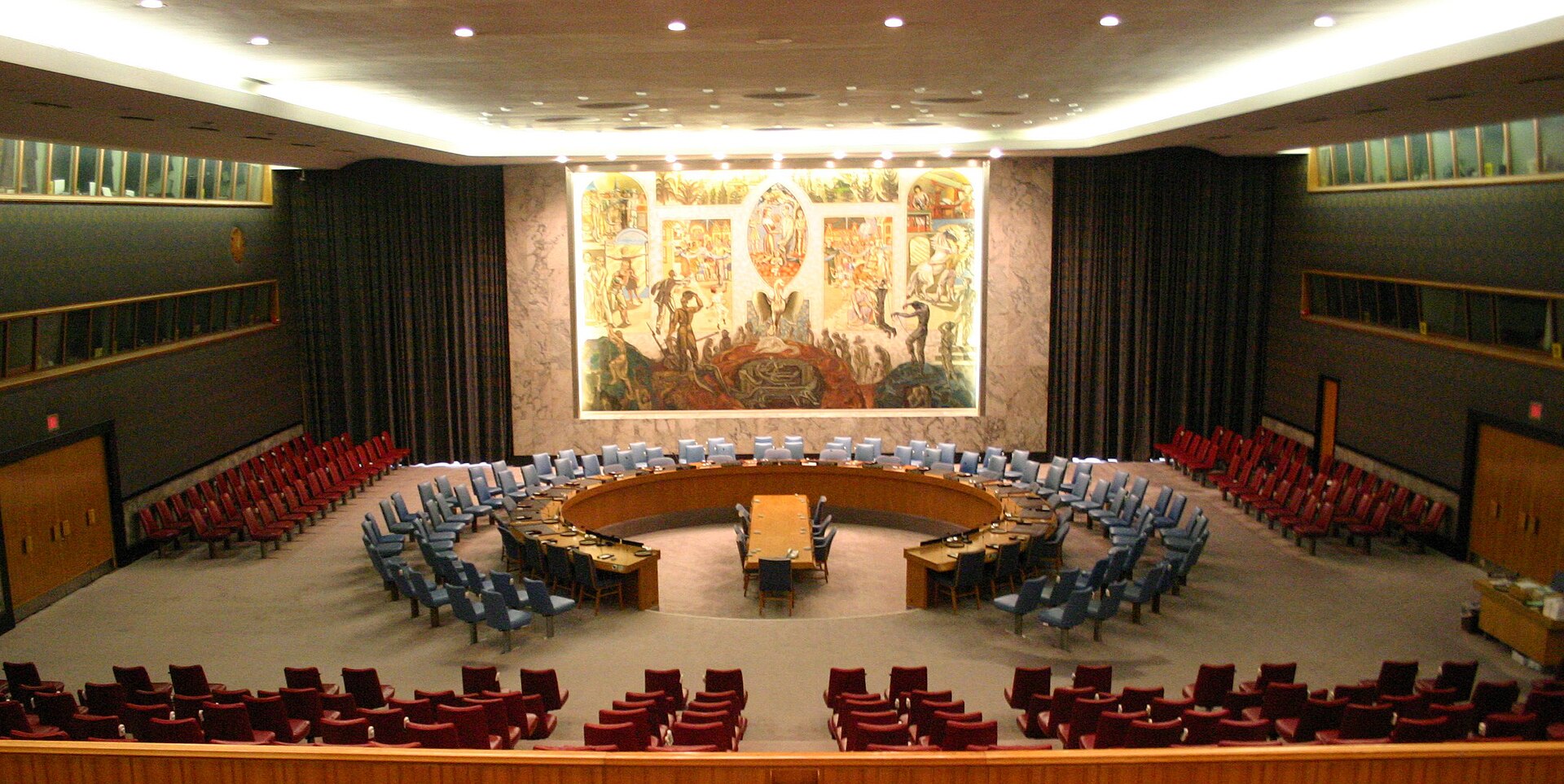
- Can 137 Co-Sponsors Override Two Vetoes?
- Russia and China Have Not Changed Their Minds
- Where Is Oman?
- Saudi Arabia Blocked the Military Option, Then Co-Sponsored the Diplomatic One
- What Does Iran See When It Reads This Draft?
- Does Riyadh Have a Plan B?
- Frequently Asked Questions
What Does the Second UNSC Hormuz Draft Actually Say?
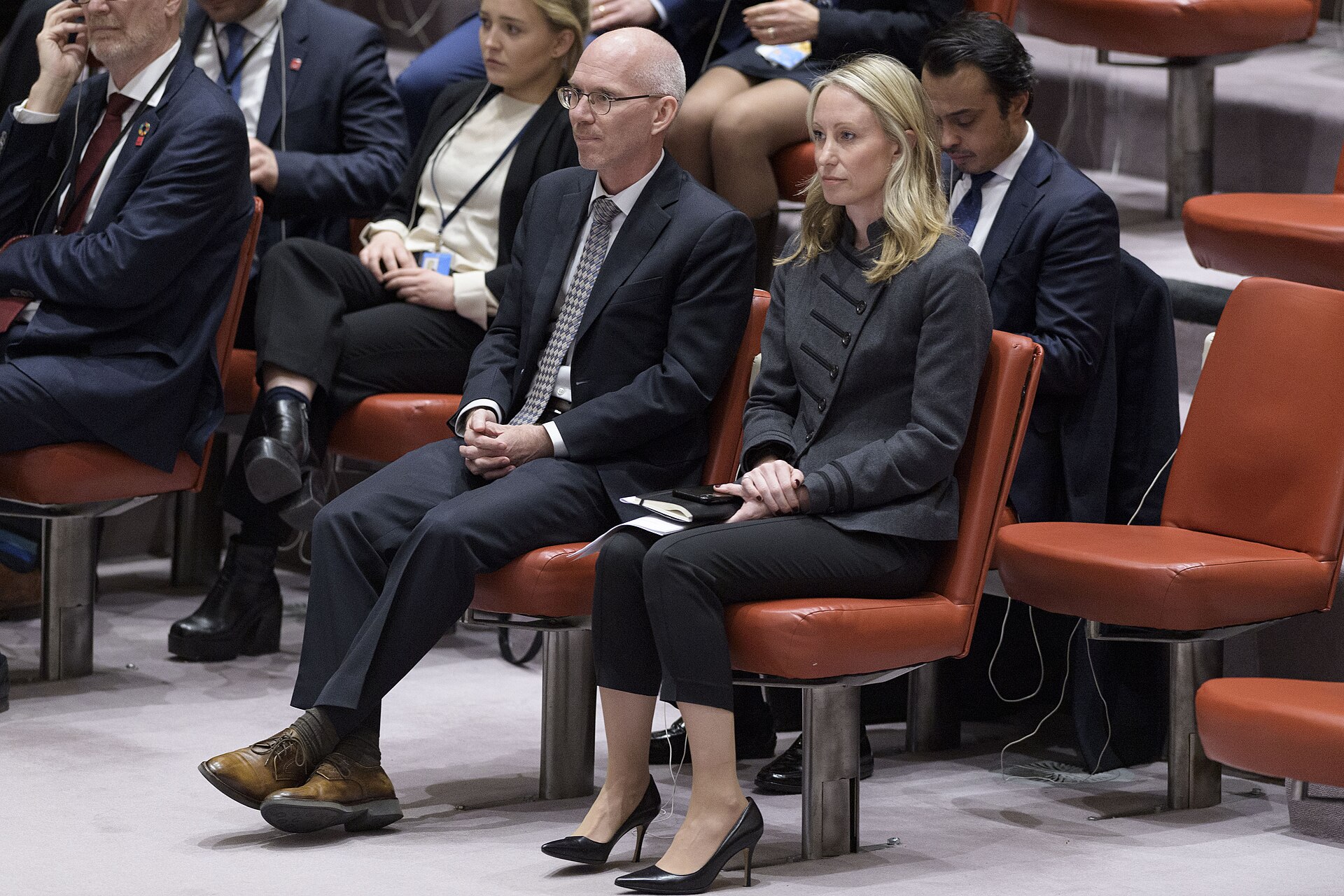
The second draft retains a Chapter VII framing but strips the enforcement mechanism from the first. Gone is the authorization for member states to use “all necessary means” to secure passage; in its place, language allowing the Council to “consider future sanctions” if Iran continues mining and attacking vessels. The draft determines that Iran’s actions threaten international peace and security but authorizes nothing beyond future deliberation.
The practical distance between a Chapter VII determination and a Chapter VII enforcement authorization is the difference between a diagnosis and a prescription. The Security Council has identified the problem; it has not authorized a remedy. US amendments circulated in early May specifically removed the clause providing a legal basis for “coercive measures” against Tehran, substituting the softer sanctions-consideration language. The American negotiators diluted their own draft before Russia and China could reject it — a preemptive concession to parties who have given no indication they intend to concede anything in return.
Saudi Arabia, the UAE, Kuwait, and Qatar are listed as principal co-sponsors alongside the US and Bahrain. The total co-sponsor count — 137 countries as of mid-May — edges past the record set by the first Hormuz enforcement draft, which was vetoed on April 7. Each successive text has added signatories while subtracting authority. The resolution has gotten wider and weaker at the same time.
From “All Necessary Means” to “Consider Future Sanctions”
The first Hormuz enforcement draft, proposed by Bahrain on March 21, went through six revisions before reaching a vote on April 7. Each revision stripped authority. The original text invoked Chapter VII with explicit “all necessary means” language — the same phrase that authorized the use of force in the 1990 Gulf War and the 2011 Libya intervention. By the sixth draft, that authorization was gone, replaced by a determination of threat with no mandate to act. The Arab Weekly and Radio Free Europe both documented this progression in real time: a resolution that began as a potential authorization for force ended as a statement of concern with a Chapter VII label stapled to the front.
The Middle East briefing 3,000+ readers start their day with.
One email. Every weekday morning. Free.
| Resolution / Draft | Date | Key Language | Outcome |
|---|---|---|---|
| UNSCR 2817 | March 11, 2026 | Condemnation only, no Chapter VII | Passed 15-0 (Russia/China abstain) |
| First enforcement draft (v1) | March 21, 2026 | Chapter VII, “all necessary means” | Revised through 6 iterations |
| First enforcement draft (v6) | April 7, 2026 | Chapter VII threat determination only | Vetoed 11-2-2 (Russia, China) |
| Second draft | May 2026 | Chapter VII framing, “consider future sanctions” | Pending vote |
The dilution did not work. Russia and China vetoed the sixth draft anyway, 11-2-2, with Colombia and Pakistan abstaining. The objection was not about the strength of the enforcement language — it was about the framing. Russian Ambassador Vassily Nebenzia told the Council the resolution presented Iranian actions as “the sole source of regional tensions” while US and Israeli attacks “were not mentioned at all.” Chinese Ambassador Fu Cong said the text “failed to capture the root causes and the full picture of the conflict in a comprehensive and balanced manner.” Both ambassadors rejected the resolution’s premise, not its teeth.
Adopting such a draft “when the US was threatening the survival of a civilisation would have sent the wrong message.” — Chinese Ambassador Fu Cong, UN Security Council, April 7, 2026
The second draft has moved further in the direction Russia and China demanded — away from enforcement — without addressing their actual objection, which was never about enforcement in the first place. Bahrain’s foreign minister said after the April 7 vote that “the Council failed to shoulder its responsibility in relation to an illegal conduct that requires decisive action with no delay.” Two months later, the Council’s proposed response is even less decisive. The sponsors have offered Moscow and Beijing a milder version of something they rejected on principle, not on intensity. If Russia vetoed a resolution for naming Iran without naming America, a softer resolution that still names Iran without naming America will meet the same end.
Can 137 Co-Sponsors Override Two Vetoes?
No. Under the UN Charter, any one of the five permanent Security Council members can veto a substantive resolution regardless of how many countries co-sponsor it. The 137 nations backing the second Hormuz draft represent diplomatic breadth, not legal weight. A single Russian or Chinese veto nullifies every one of the 137 signatures, because co-sponsorship is a measure of political alignment, not a voting mechanism.
The number itself has become a central talking point, and it is a genuinely record-setting figure: UNSCR 2817 had 135 co-sponsors, the first enforcement draft had 136, and now the second draft has 137. Each iteration adds countries while subtracting operational authority — a rising curve of symbolic support matched by a declining curve of practical consequence. Iran’s government has dismissed the 137 figure directly, calling the co-sponsorship campaign “misleading and deceptive” and describing it as a PR operation designed to obscure what Tehran calls “the real aggressors.”
The only procedural accountability mechanism available is a 2022 UN General Assembly resolution requiring any P5 member that uses its veto to explain its reasoning before the full Assembly. Russia and China invoked this after April 7: Nebenzia explained his veto, Fu Cong explained his, the General Assembly listened to both, and the resolution stayed dead.
The mechanism creates transparency, not override authority — and transparency is not the asset Saudi Arabia is missing. The world already knows Hormuz is effectively closed and that transit volumes have collapsed to a fraction of their pre-war level. The bottleneck is not awareness — it is authority, and 137 signatures do not create it.
Russia and China Have Not Changed Their Minds
The National reported on May 12 that Russia and China had expressed “serious concerns” about the second draft resolution. The phrasing is diplomatic boilerplate, but it is the same boilerplate both countries used before the April 7 veto — and anyone who watches Security Council dynamics recognizes it as pre-veto signaling, not an invitation to negotiate. Nothing in the second draft addresses the structural objection Moscow and Beijing made explicit the first time: any resolution that treats Iran’s Hormuz actions in isolation, without acknowledging US and Israeli military operations as contributing factors, will face a veto.
Russia’s position, articulated by Nebenzia on the Council floor, is that the resolution’s entire framing is one-sided. China’s position, stated by Fu Cong, is that the draft ignores “root causes.” These are not objections that can be resolved by weakening enforcement clauses — they are objections to what the resolution says, not what it authorizes. The second draft says the same things as the first, with softer consequences attached. The sponsors have given Russia and China less to object to procedurally while leaving intact everything they objected to substantively.
For Saudi Arabia specifically, this means co-sponsoring a resolution whose failure is not a risk to be managed but an outcome to be anticipated. The April 7 vote produced 11 yes votes, 2 vetoes, and 2 abstentions from Colombia and Pakistan. The second draft may convert the abstainers — both could move from abstention to yes — but converting abstainers does not matter when the vetoes are locked. Riyadh will watch from outside the chamber, without a vote of its own, as a resolution bearing its name is killed by the same two countries, for the same stated reasons, a second consecutive time.
Where Is Oman?
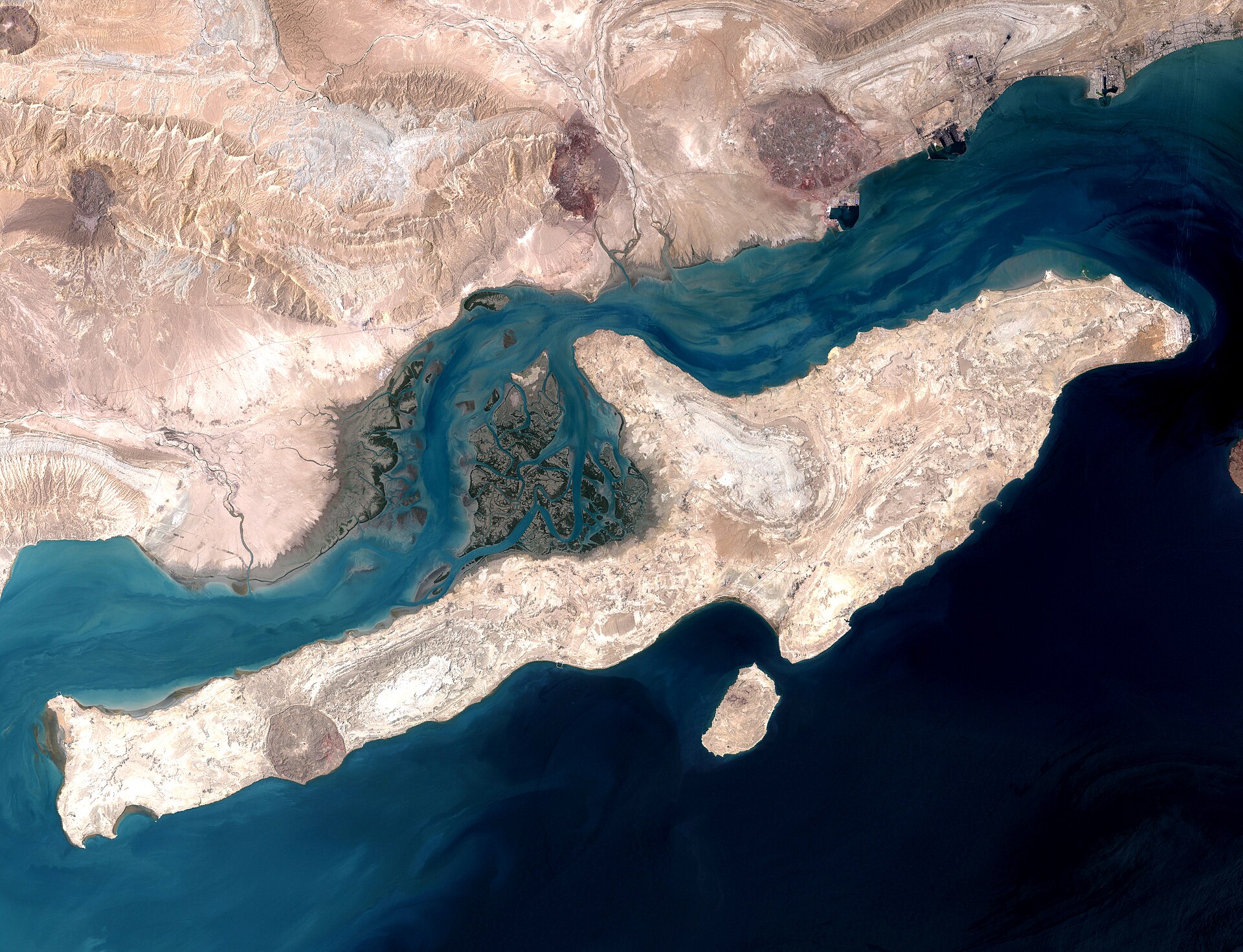
Oman, a GCC member whose economy depends on Hormuz trade, is conspicuously absent from the co-sponsor list. It is simultaneously co-drafting a bilateral governance mechanism with Iran — the Muscat process — that treats Tehran as a legitimate Hormuz authority. Under a 1974 maritime boundary treaty, Oman holds jurisdiction over the inbound shipping lane, making it the only state besides Iran with a territorial claim on the strait’s navigable channels. Oman’s non-participation took on additional significance on May 22 when Iran published a formal jurisdiction map claiming UAE sovereign waters and five GCC states filed an IMO protest — a letter Oman again refused to sign, while Bloomberg reported Muscat is actively negotiating a permanent toll structure with Tehran.
Saudi Arabia is on the co-sponsor list, along with the UAE, Kuwait, and Qatar — Oman is not. The reason is not ambiguity about Muscat’s position but precision about it: the Muscat process establishes Iran and Oman as co-drafters of a Hormuz transit governance framework that operates on an entirely different premise than the UNSC resolution. The resolution demands that Iran relinquish control of the strait; the Muscat process formalizes Iran’s role in governing it. Oman cannot co-sponsor both, and it chose the bilateral track over the multilateral one.
This creates a visible fracture within the GCC itself. Qatar, which has maintained warmer ties to Iran than any other Gulf state, signed on as a principal co-sponsor. Oman, which has historically served as the Gulf’s back-channel to Tehran, opted out of the resolution and into a direct negotiation that validates the Iranian authority the resolution seeks to dismantle. The GCC’s two members with the closest Iranian relationships chose opposite paths — and the one that actually borders Hormuz chose Iran’s path over Saudi Arabia’s. That fracture deepened further on May 22: Qatar co-signed the GCC’s IMO protest against Iran’s jurisdiction map and sent a negotiating team to Tehran on the same day — demonstrating that even among the five co-signing states, the solidarity the letter projects does not reflect a unified strategic position.
Oman’s absence matters because Oman holds the one asset Saudi Arabia lacks: a bilateral channel to Iran on the strait. Chatham House’s May 2026 analysis found no documented bilateral Saudi-Iran diplomatic engagement on Hormuz outside the Oman track. Mohammed bin Salman‘s government has no direct line to Tehran on the issue most directly threatening Saudi export revenue. The kingdom is relying on a multilateral resolution while the country that actually borders the shipping lane negotiates a bilateral deal with the adversary the resolution targets.
Saudi Arabia Blocked the Military Option, Then Co-Sponsored the Diplomatic One
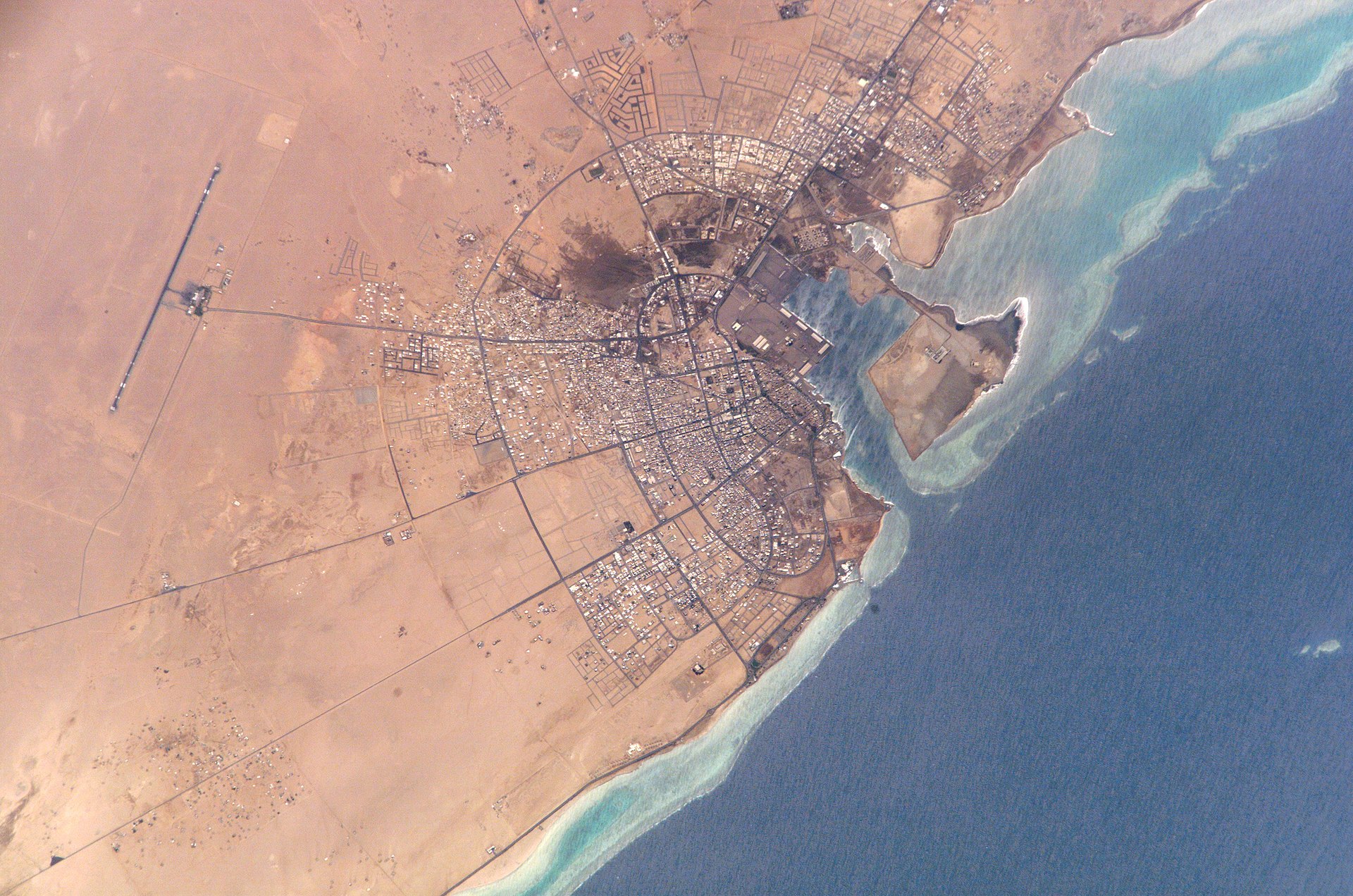
Before Saudi Arabia lent its name to a UNSC resolution demanding Iran reopen Hormuz, it blocked the US military operation designed to reopen it by force. Riyadh denied the United States access to Prince Sultan Air Base and Saudi airspace for Project Freedom — the Pentagon’s plan to clear Iranian mines and restore transit through the strait. NBC News and the Times of Israel reported the PSAB block, and Trump subsequently identified MBS publicly as the leader who stopped the strike, eliminating any ambiguity about who made that call and ensuring the IRGC knew exactly who to credit. A second Trump-MBS call restored PSAB access four days later — but what Saudi Arabia extracted from the PSAB block has not been disclosed by either government.
The sequence reveals the structural constraints on Saudi Arabia’s Hormuz position. Riyadh rejected the kinetic option — the one tool that could physically reopen the strait regardless of Iranian consent or UN votes. Then it endorsed the diplomatic option — a tool that requires Russian and Chinese consent and carries no enforcement mechanism even if it passes. Saudi Foreign Minister Faisal bin Farhan publicly praised Trump’s decision to “give diplomacy a chance” on May 20, calling for Hormuz to return “to its state prior to February 28th, 2026.” He specified the destination but not the vehicle for getting there if the Security Council refuses to drive.
Saudi Arabia “highly appreciated” Trump’s decision to allow diplomacy, calling for Hormuz to return “to its state prior to February 28th, 2026.” No fallback position was stated. — Saudi FM Faisal bin Farhan, Asharq Al-Awsat, May 20, 2026
Saudi Arabia has voluntarily narrowed its options to a single channel — the UNSC — after closing the military channel itself. The kingdom cannot credibly threaten force, because it publicly prevented force from being used. It cannot negotiate bilaterally, because it has no bilateral channel. It cannot vote on its own resolution, because it does not sit on the Security Council. The co-sponsorship is the only available move for a country that blocked every other one, and the diplomatic term for a country with one option and no fallback is not “leading” — it is exposed.
What Does Iran See When It Reads This Draft?
Iran sees a resolution it can survive regardless of outcome. If it passes, it carries no enforcement mechanism that would compel Tehran to act. If it fails, the veto validates Iran’s framing that the Council is divided and the resolution is a Western project. Either way, the IRGC’s physical control of the strait continues undisturbed — the same 45 post-April-8 transits crawling through at 3.6 percent of the pre-war baseline.
Ambassador Amir Saeid Iravani told the Security Council the draft was “deeply flawed, and one-sided,” arguing that Washington’s actions “have served only to escalate tensions and deepen instability in the region.” Iran’s deputy foreign minister was blunter, calling it “a blatant effort to distort facts and shield the real aggressors” and declaring that any text not “explicitly referencing aggression, siege, threats of force, and Iran’s legitimate right to defend its security and vital national interests will be flawed, biased, political, and doomed to failure from the outset.” The language is strident, but the confidence behind it is structural — Iran is not worried about this resolution because it has already built the alternative.
While the Security Council debates whether to consider future sanctions, the IRGC has already constructed the governance framework the resolution seeks to prevent. The Persian Gulf Security Authority, formally established on May 18, administers a toll regime at Hormuz charging up to $2 million per VLCC transit, with exemptions for Russia, China, India, Iraq, and Pakistan, and payment accepted in yuan and cryptocurrency. Iran is not waiting for the UNSC to adjudicate the strait’s status. It is operating as though the question was settled weeks ago, collecting fees from the same countries whose Security Council votes it needs.
The most consequential Iranian move may be the quietest. Foreign ministry spokesperson Baghaei stated on May 21 that Tehran is explicitly decoupling Hormuz from the nuclear negotiation track, treating the strait as a permanent strategic asset rather than a bargaining chip. This directly undermines the theory of the case behind the UNSC push — that sufficient multilateral pressure can compel Iran to reopen the strait as part of a broader deal. If Tehran does not regard Hormuz as negotiable, a resolution demanding its reopening is not applying pressure; it is making a request that has already been declined.
Pakistan, which carried the US-Iran peace letter and abstained on the April 7 vote alongside Colombia, illustrates how far Iran’s parallel architecture has already penetrated. Islamabad is simultaneously mediating between Washington and Tehran while its vessels transit Hormuz under an IRGC toll exemption — a dual role that no UNSC resolution can undo because it rests on economic incentives, not legal frameworks. The draft proposes to dismantle an institution that member states are already transacting with.
Does Riyadh Have a Plan B?
There is no publicly stated Saudi fallback if the second resolution is vetoed. Chatham House describes Riyadh’s approach as an “indirect strategy” — reorienting toward the Red Sea rather than engaging Iran directly on the strait. But the Red Sea pivot is a decade-long infrastructure project, not a response to a waterway effectively closed since February 2026 and costing the kingdom billions per quarter in deficit spending.
The fiscal numbers make the timeline problem concrete. Saudi Arabia posted a $33.5 billion deficit in Q1 2026 — 194 percent of the full-year target, blown through in three months. PIF cash reserves have fallen to $15 billion, the lowest level since 2020, and construction awards have been slashed from $71 billion to $30 billion. Goldman Sachs estimates the actual 2026 deficit will reach $80-90 billion.
Abu Dhabi, meanwhile, is building an entirely separate export infrastructure through the Habshan-Fujairah pipeline, with a second West-East pipeline set to double Fujairah’s Hormuz-bypassing capacity by 2027. Saudi Arabia’s Yanbu terminal on the Red Sea has a 5 million barrel-per-day export ceiling — less than half of Aramco’s 12 million barrel-per-day maximum sustainable capacity. The reorientation is real, and it is nowhere close to sufficient.
Al Jazeera reported that the Trump administration “does not expect the UN resolution to end the conflict, but hopes it will bolster the US argument that Iran must not impede traffic through the Strait of Hormuz and increase international pressure on Tehran.” If that is the resolution’s actual purpose — messaging rather than operations — then Saudi Arabia is co-sponsoring a rhetorical exercise, not a reopening strategy. The 137 co-sponsors become a petition, not a plan, and a petition does not unmine a shipping lane or override an IRGC toll booth that is already processing yuan payments. The deployment of US forces on Saudi bases adds another layer to this trap: Washington has made the departure of its own troops contingent on an Iranian nuclear concession, leaving Riyadh hosting an enforcement garrison whose exit Tehran controls.
The deeper question is whether Riyadh’s co-sponsorship serves a different function than the one it advertises. The argument that Saudi Arabia needed Russia to veto the first Hormuz resolution — that the veto provided diplomatic cover for inaction, allowing Riyadh to publicly demand something while privately benefiting from its non-delivery — finds even sharper expression in the second draft. If Saudi Arabia genuinely wanted this resolution to pass, it would need to address Russia and China’s stated objection, which means incorporating language acknowledging US and Israeli military operations. That Riyadh has not pushed for this adjustment, and is instead co-sponsoring a draft that repeats the framing that triggered the first veto, suggests the outcome may be the point.
The same logic extends to Al-Arabiya’s May 22 behavior: Saudi state media’s publication of the leaked US-Iran deal draft before either principal confirmed it served a parallel function to UNSC co-sponsorship — placing Riyadh visibly inside a process it cannot control, through a channel that costs nothing if the outcome fails and claims proximity credit if it succeeds.
A second veto costs Saudi Arabia nothing. It provides permanent evidence that the kingdom exhausted every available multilateral avenue, that the Security Council failed, and that the blame lies with Moscow and Beijing rather than with Riyadh. The problem is that “every available avenue” amounts to one avenue — and Saudi Arabia is the country that closed the others.
Frequently Asked Questions
Has Saudi Arabia ever held a UN Security Council seat?
Yes. Saudi Arabia served a two-year term as a non-permanent UNSC member in 2014-2015, having been elected in October 2013. Riyadh initially rejected the seat in an unprecedented diplomatic protest over the Council’s handling of Syria, then reversed course and accepted it weeks later. The kingdom has not held a seat since, and the next available rotation for the Asia-Pacific group would not place Saudi Arabia on the Council before 2028 at the earliest — meaning Riyadh will have no vote on any Hormuz-related resolution during the current conflict.
What is the legal difference between a UNSC Chapter VII determination and a Chapter VII authorization?
A Chapter VII determination that a situation constitutes a “threat to international peace and security” — which the second draft retains — is a threshold finding that unlocks the Security Council’s enforcement powers under Articles 41 and 42 of the UN Charter. But the determination alone does not authorize action. Authorization requires a separate operative paragraph directing specific measures: sanctions under Article 41, or force under Article 42. The second Hormuz draft’s “consider future sanctions” language is neither — it is a statement of potential future intent, carrying no binding authority and creating no legal basis for member states to act.
Could the General Assembly bypass a Security Council veto on Hormuz?
Under the “Uniting for Peace” procedure (UNGA Resolution 377A, adopted in 1950), the General Assembly can convene an emergency special session if the Security Council is deadlocked by a veto on a matter of international peace and security. The Assembly can then recommend — but not mandate — collective action, including the use of force. This procedure was invoked during the 1956 Suez Crisis and has been used repeatedly on Palestine. However, General Assembly resolutions are non-binding under the UN Charter, so any Hormuz recommendation would carry moral authority but not legal force and would not authorize the naval mine-clearing operations that physically reopening the strait requires.
What is the PGSA and how does it relate to the UNSC draft?
The Persian Gulf Security Authority is an IRGC-administered body formally established on May 18, 2026, that functions as a toll and permitting authority for vessels transiting Hormuz. It charges up to $2 million per VLCC, accepts payment in yuan and cryptocurrency, and exempts ships flagged to Russia, China, India, Iraq, and Pakistan. The PGSA is the institution the UNSC draft aims to dismantle — but the five-country exemption list means the states with the most power at the Security Council (Russia and China as P5 veto holders, India as a swing vote) are the same states benefiting economically from the regime the resolution seeks to end.
How many times have Russia and China co-vetoed UNSC resolutions since 2011?
Russia has cast over 30 vetoes since 2011, predominantly on Syria, Ukraine, and broader Middle East matters, with China co-vetoing on most Syria-related drafts. The pattern is structurally stable: Moscow and Beijing block resolutions they characterize as providing legal cover for Western intervention or as framing conflicts without acknowledging Western culpability. The April 7 Hormuz veto fits this template precisely — the same objection framework applied to a different geographic theater. The second Hormuz draft offers no accommodation that would break the pattern, because the pattern is about framing rather than enforcement strength.
Saudi Arabia’s exclusion from the UNSC vote extends beyond the Security Council chamber: on May 23, Pakistan’s field marshal was negotiating in Tehran under a defence pact that obligates Islamabad to fight for Riyadh, while Witkoff ran a parallel nuclear track in Rome — and Saudi Arabia had no representative in either room. How the kingdom’s diplomatic absence hardened from a UNSC procedural failure into a two-city structural reality.
Senator Cotton’s formal demand to Treasury Secretary Bessent, sent May 22, represents the first Congressional push to sanction Oman over the toll regime — a legislative escalation that treats Saudi Arabia’s only remaining Hormuz back-channel as a sanctionable entity. The diplomatic silence that characterises Saudi Arabia’s UNSC posture has a fiscal dimension that five rounds of negotiations have not surfaced: Bloomberg’s “unexpected wins” framing documents the revenue gains Riyadh has accumulated during the closure — and which each public demand for resolution would structurally eliminate.