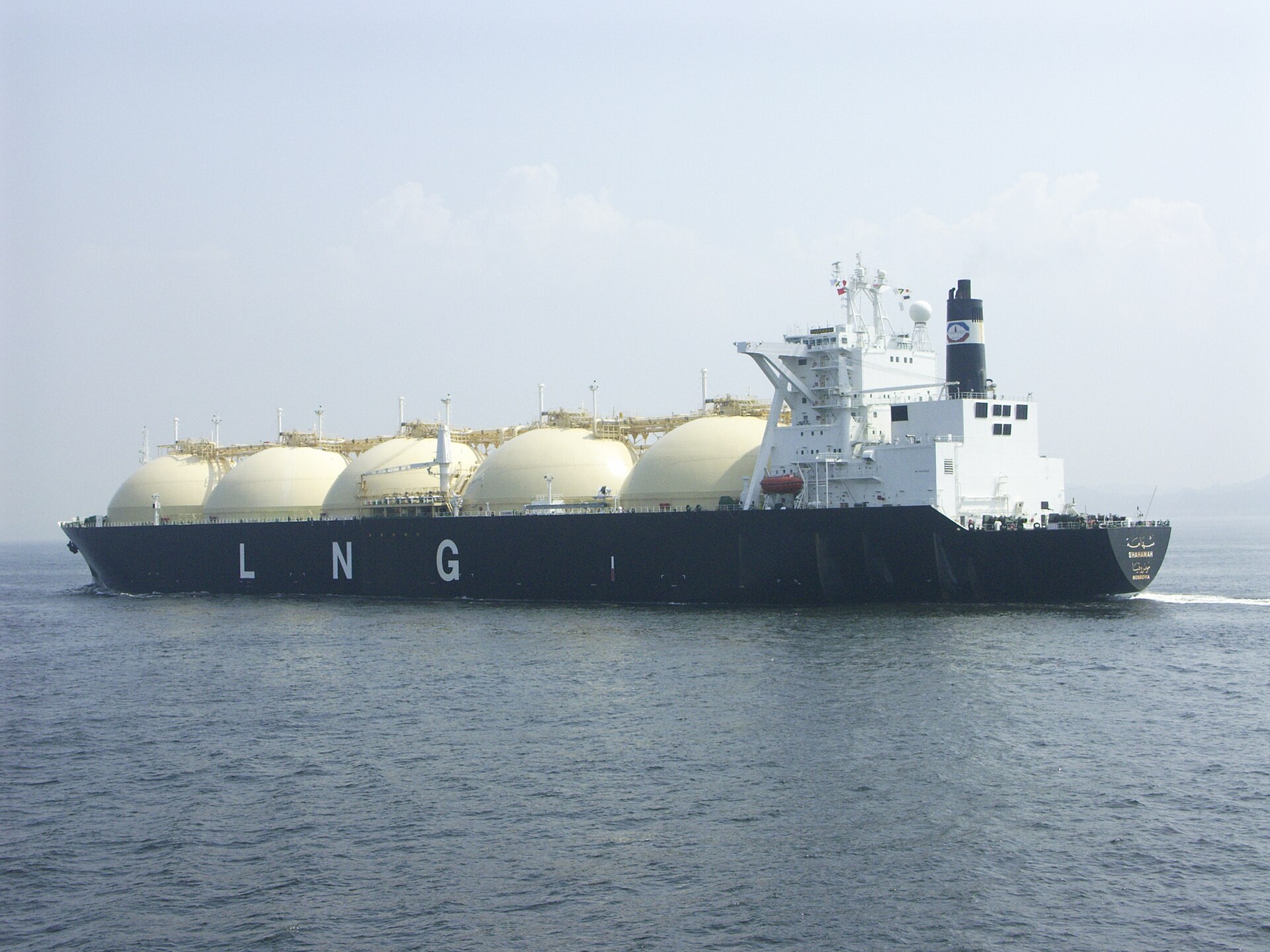

DOHA — Two laden Qatar LNG tankers, the Al Daayen and the Rasheeda, are pushing toward the Hormuz exit right now — the first cargo-carrying LNG carriers to attempt the strait since Iran’s war with the Gulf states began on February 28, and a move that tells you more about Tehran’s war aims than any ceasefire proposal on the table.
Iran is reopening the gas lane while keeping the crude lane shut, and the asymmetry is the strategy: reward a neutral gas exporter that shares your largest reservoir, maintain the chokehold on Saudi and Emirati crude, collect IRGC transit fees in Chinese yuan, and let commodity markets transmit the pressure directly to Riyadh on the eve of Donald Trump’s April 7 deadline. The two Q-Flex class vessels, each carrying roughly 210,000 cubic meters of liquefied natural gas loaded at Ras Laffan, are sailing the unusual Musandam coastal route toward Oman rather than the standard Larak-Qeshm corridor controlled by the IRGC. If they clear the strait, they will be the first laden energy cargoes Qatar has exported in thirty-seven days.
Table of Contents
- What Are the Al Daayen and Rasheeda, and Why Do They Matter?
- The Gas Lane Opens, the Crude Lane Stays Shut
- Who Actually Brokered the Qatar LNG Transit?
- The North Field Constraint Iran Cannot Ignore
- What Does Qatar LNG Transit Mean for Saudi Pipeline-Export Pricing?
- The WTI-Brent Inversion and What Qatari Gas Does to It
- Al Udeid and the Qatar Paradox
- How Iran Is Using Hormuz to Shape the Trump Deadline
- IRGC Transit Economics in Yuan
- Frequently Asked Questions
What Are the Al Daayen and Rasheeda, and Why Do They Matter?
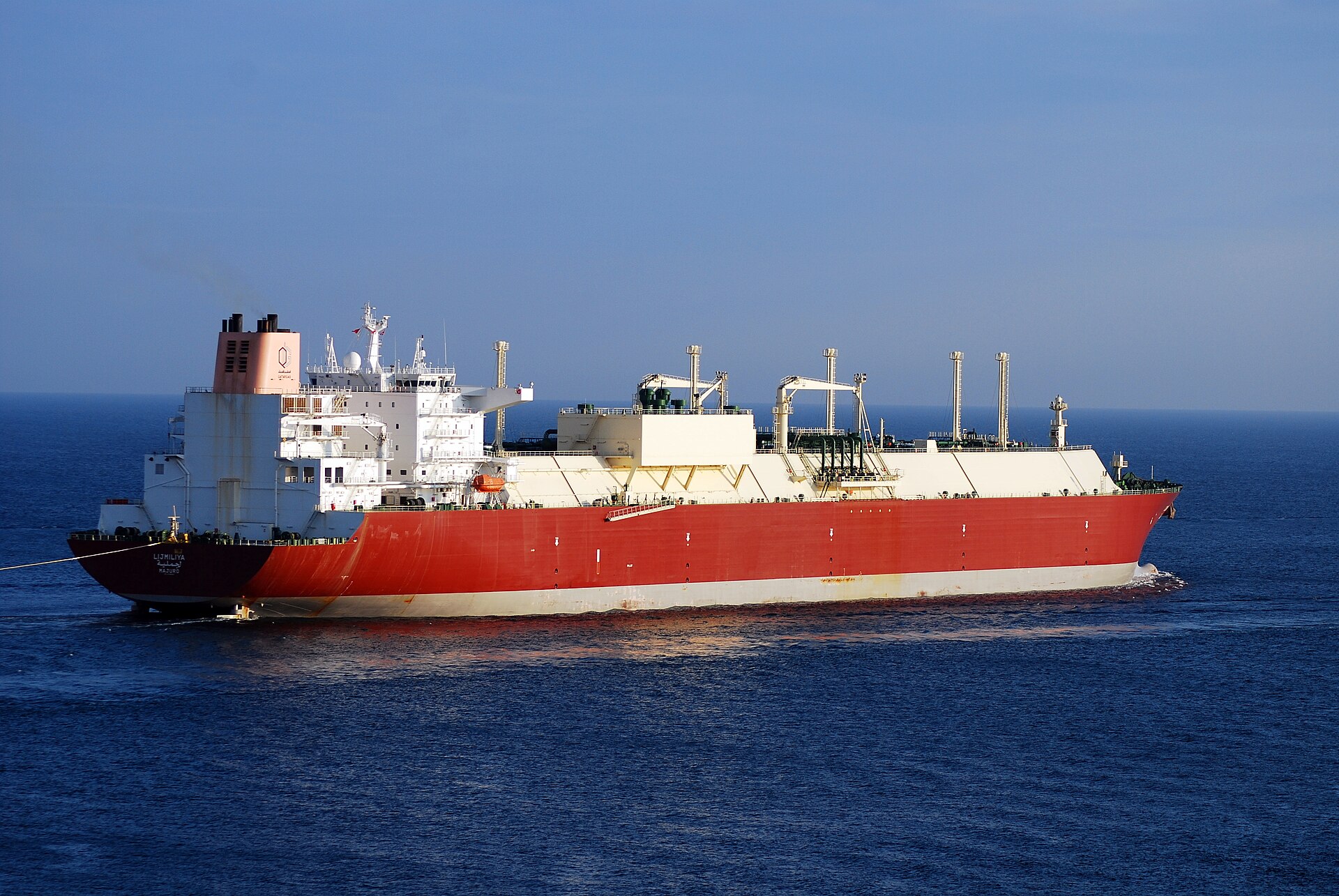
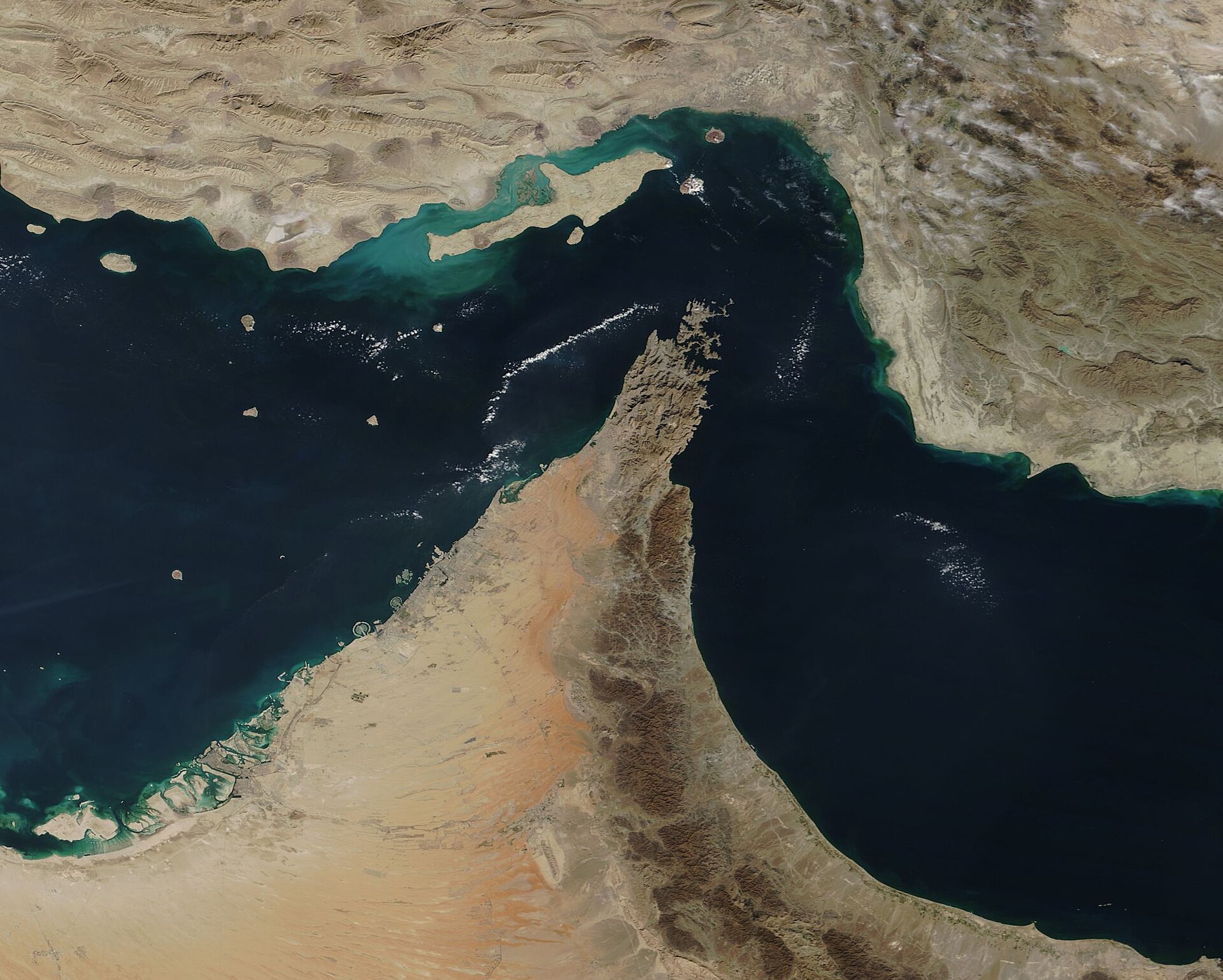
They are the first laden LNG carriers to attempt Hormuz since February 28: two Q-Flex vessels operated by Nakilat, carrying a combined cargo worth roughly $140-160 million at current Asian spot prices, that have been stranded inside the Gulf since Iran shut the strait — and their passage would break a five-week LNG export halt that has sent Asian spot prices up more than 140 percent and triggered force majeure declarations across three continents.
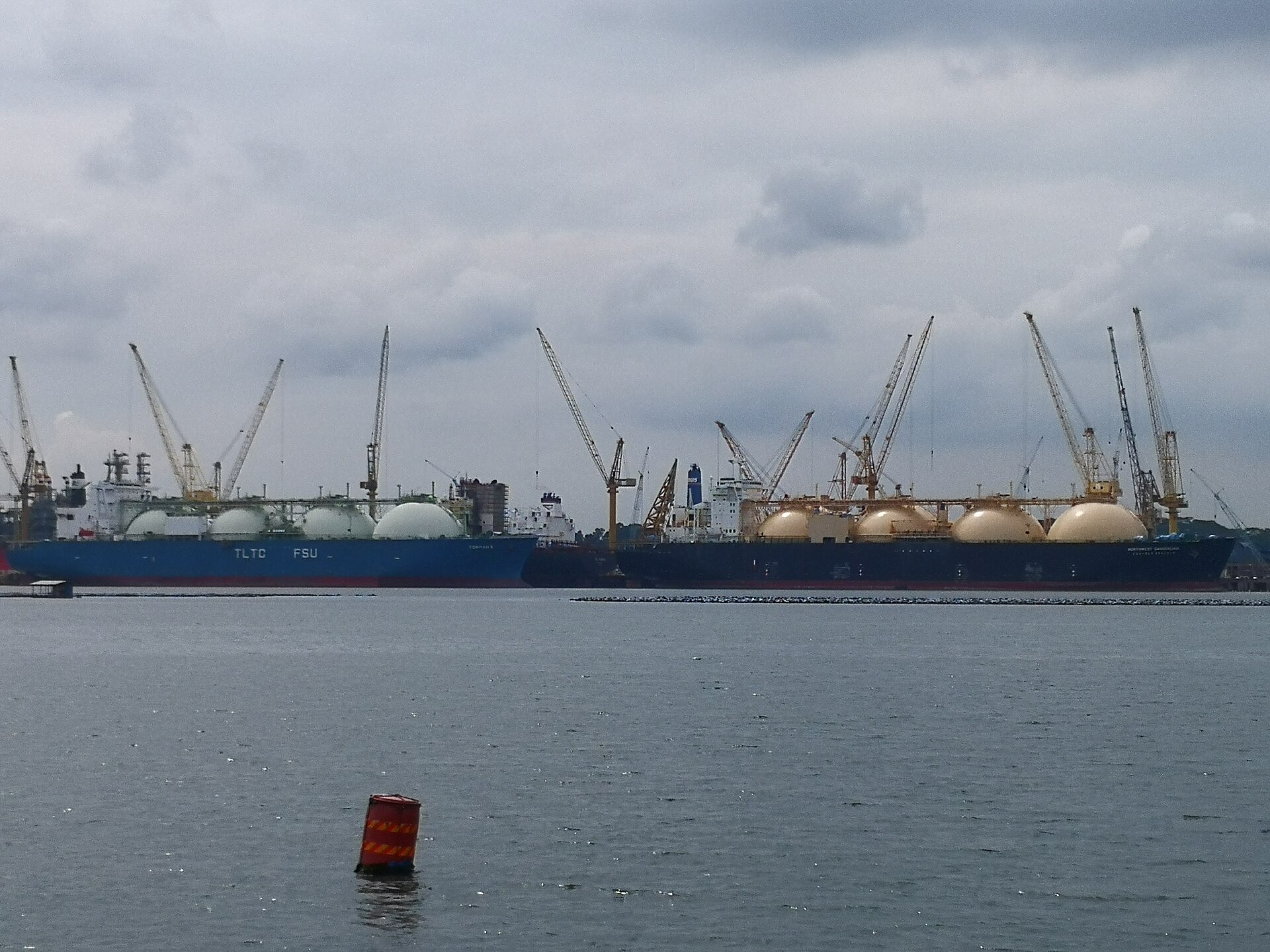
The Al Daayen (IMO 9325702) and Rasheeda are both Q-Flex class LNG carriers operated by Nakilat, the shipping arm of QatarEnergy and one of the largest LNG fleet operators on Earth. Each vessel carries approximately 210,000 to 216,000 cubic meters of LNG. The Al Daayen sails under a Bahamas flag, not Qatar’s — a detail that matters because Iran’s IRGC clearance process, documented in prior coverage of the franchised blockade, screens vessels by flag state, operator, cargo manifest, and destination before issuing transit codes.
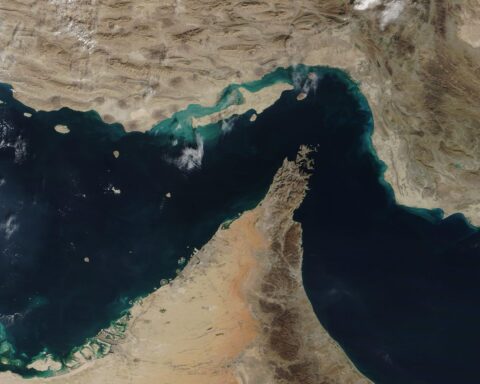
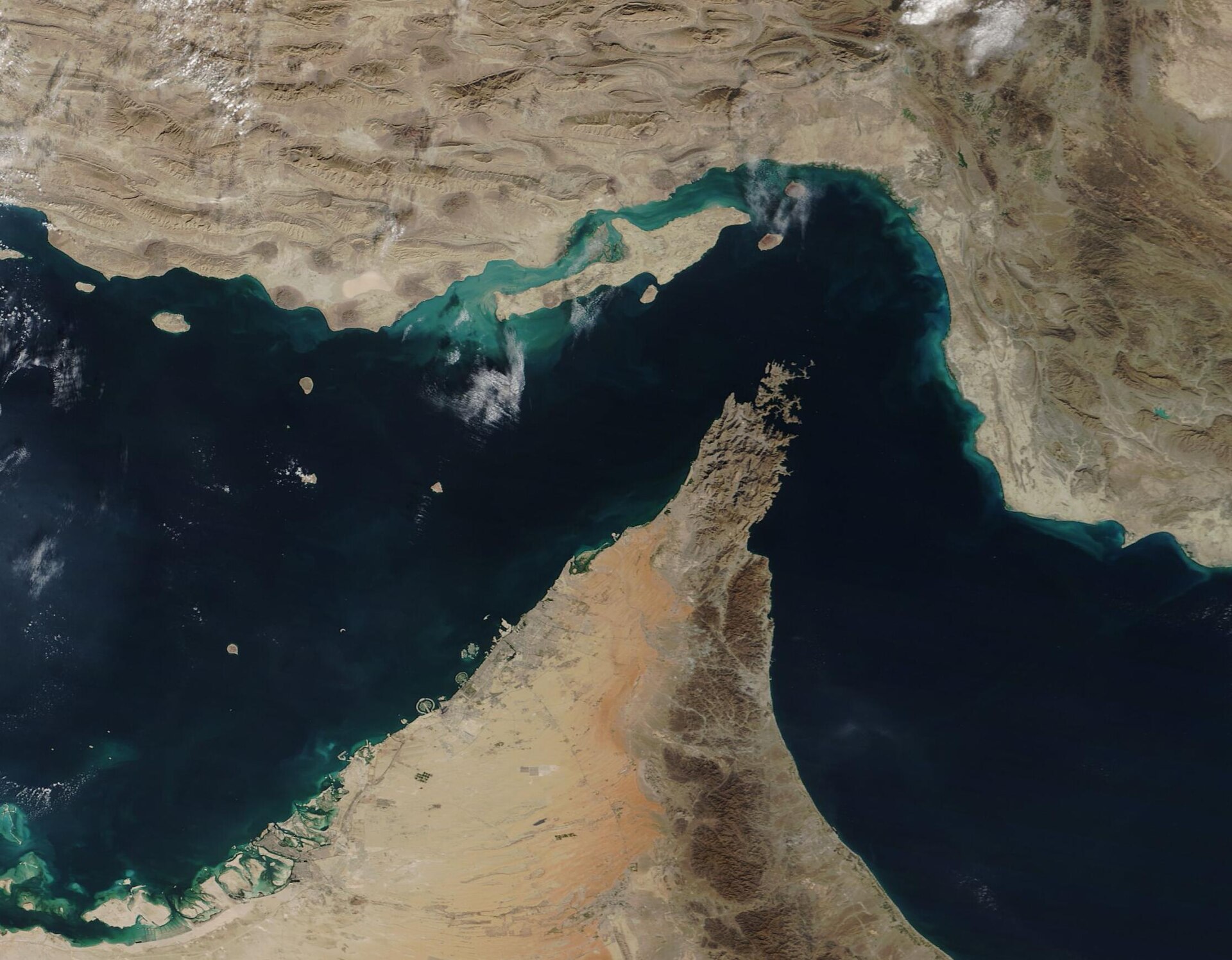
Both vessels loaded at Ras Laffan in late February, just before the war shut down the strait and Iranian missiles damaged the LNG complex itself. They have been effectively stranded inside the Gulf since then. Bloomberg shipping data, published April 6, confirms they are now moving eastward toward the Hormuz opening near Oman — not through the standard deep-water channel between Iran’s Larak and Qeshm islands, but along the northern coastline of Oman’s Musandam governorate, an unusual commercial path that keeps them as far from Iranian naval positions as geography allows.
More than fifty Qatari LNG tankers are currently idling across Asian ports with nowhere to load and nothing to deliver, according to Bloomberg’s fleet tracker. QatarEnergy declared force majeure on long-term supply contracts with customers in Italy, Belgium, South Korea, and China in late March. The only LNG carrier to enter the strait since the war began was the Sohar LNG, an Omani-flagged vessel that transited unladen around April 2-3 heading toward Oman’s Qalhat terminal — it carried no cargo out.
The Middle East briefing 3,000+ readers start their day with.
One email. Every weekday morning. Free.
The Gas Lane Opens, the Crude Lane Stays Shut
The decision to let two Qatari LNG tankers through while maintaining the crude blockade is not an accident of military logistics or a gap in the IRGC’s patrol coverage. It is a deliberate, calibrated choice, and it reveals how Iran has refined the Hormuz weapon from a blunt threat into something far more useful: a sorting mechanism that rewards friends, punishes rivals, and generates revenue simultaneously. Senior IRGC adviser Ebrahim Jabari declared in early March that the strait was “closed” and that anyone attempting passage would be “set ablaze.” Within weeks, Tehran had pivoted to a selective-access model. Foreign Minister Abbas Araghchi reframed the blockade as a military prerogative — “This is up to our military to decide” — and confirmed that “a group of vessels from different countries had been allowed to pass.”
The approved-transit list now includes China, India, Russia, Pakistan, Iraq, Malaysia, Thailand, the Philippines, Turkey, and France, according to Al Jazeera and Gulf Insider reporting. The pattern is clear enough: buyers of Iranian crude, major non-Western economies, and nations that have avoided direct military participation against Tehran. The Iraq precedent is particularly telling — an Iraqi Suezmax crude tanker transited the IRGC-controlled corridor on April 5, the first confirmed oil cargo exit via the Iranian route, as House of Saud reported on the Hormuz franchise model. But Iraq is an oil exporter whose crude does not compete with Iranian barrels on Asian markets. Saudi crude does.
Windward Maritime Intelligence, the institutional shipping analytics firm, described the current regime as “a managed corridor rather than an open waterway” where “movement continues, but only under defined and non-transparent conditions.” That language is precise. Iran has not reopened Hormuz. It has created a two-track system: gas can move if the exporter is Qatar, a country that shares Iran’s largest resource asset and maintained diplomatic warmth through the 2017-2021 Saudi-led blockade, during which Tehran shipped 1,100 tonnes of fruit and vegetables daily to Doha. Crude stays locked unless it belongs to Iraq or travels under the flags of nations on Tehran’s approved list. Saudi Arabia is on neither track.
Who Actually Brokered the Qatar LNG Transit?
Beijing brokered it. Reuters reported, via Al Jazeera, that China was specifically “in talks with Iran to allow crude oil and Qatari LNG carriers safe passage” — language indicating that Beijing acted as intermediary rather than mere interested party. This is consistent with the broader pattern in which China has positioned itself as the essential broker for any commercial traffic through the IRGC-controlled corridor, with at least two vessels confirmed to have paid transit fees in Chinese yuan rather than dollars.
The Chinese role is structurally important for three reasons. First, China is Qatar’s largest single LNG customer, accounting for roughly 20 percent of Qatari exports before the war, and QatarEnergy signed a 27-year supply agreement with China’s Sinopec in 2022 — the longest LNG contract in the industry’s history. Beijing has a direct commercial interest in restoring Qatari supply. Second, China’s intermediation gives Iran a diplomatic buffer: Tehran can frame the transit as a favor to Beijing rather than a concession to a Gulf Arab state that hosts ten thousand American troops. Third, the yuan payment channel for IRGC transit fees means these transactions bypass the US dollar system entirely, creating a sanctions-proof revenue stream that Washington cannot interdict through SWIFT or OFAC enforcement.
The Oman channel matters too. Iranian Deputy Foreign Minister Kazem Gharibabadi met Omani counterparts on April 4-5 and declared afterward that “only Iran and Oman will decide the future of the Strait of Hormuz.” The Al Daayen and Rasheeda are sailing the Musandam coastal route — Omani territorial waters — rather than the Iranian-side channel. That routing suggests Oman negotiated a parallel access path, distinct from the IRGC’s Larak Island toll-booth process, that allows Qatar-bound traffic to exit without submitting to the full IRGC vetting regime. If so, Muscat has carved out a gas-transit corridor that operates under different rules from the crude corridor — and Saudi Arabia, whose exports are entirely crude, has no access to either.
The North Field Constraint Iran Cannot Ignore
Iran struck Ras Laffan in March, knocking out two of Qatar’s fourteen LNG trains and one of its two gas-to-liquids facilities — roughly 12.8 million tonnes per annum of export capacity, or about 17 percent of Qatar’s pre-war total of 77 MTPA. The damage will take three to five years to repair, according to industry estimates cited by CNBC and Al Jazeera. Rachel Ziemba of the Center for a New American Security warned that “it could easily take months for nameplate capacity to return, and there will also be an impact on the timeline of the new projects at North Field East and South.” Neshes Global Energy Intelligence described the combined effect of the Ras Laffan strike and the Hormuz closure as “the largest combined energy supply shock in modern history.”
But Iran stopped at 17 percent. It did not flatten all fourteen trains, and the reason is geological, not humanitarian. Qatar’s North Field and Iran’s South Pars are the same reservoir — a 9,700-square-kilometer gas deposit straddling the maritime border, the largest single natural gas accumulation on the planet. If Iran had destroyed Qatar’s entire extraction and processing infrastructure, the resulting pressure changes in the shared reservoir could have damaged South Pars production on the Iranian side. Tehran’s energy ministry and the IRGC may not agree on much, but both understand that permanently crippling the North Field would be an own goal measured in decades of lost Iranian gas revenue.
This shared-reservoir constraint explains why Iran is now reopening the gas lane rather than keeping it shut indefinitely. Allowing Qatar to resume partial LNG exports — from the twelve undamaged trains, if Ras Laffan can restart operations — preserves the reservoir’s extraction balance and signals to Doha that cooperation with Tehran produces tangible commercial rewards. It is the carrot paired with the March missile strike’s stick. Tom Marzec-Manser of Wood Mackenzie warned that the current disruption “risks prices staying high for longer,” while Babak Hafezi of American University noted that smaller economies “will be hurt the most, as LNG price increases will lead to demand destruction.” If Iran can position itself as the gatekeeper who ended that pain for Asian LNG buyers, it accumulates diplomatic capital it will spend at the ceasefire table.
What Does Qatar LNG Transit Mean for Saudi Pipeline-Export Pricing?
Saudi Arabia’s East-West Pipeline is running at its maximum 7 million barrels per day, covering roughly 80-85 percent of pre-war export capacity and bypassing Hormuz entirely. Riyadh has been charging premium prices to buyers who have no alternative supplier capable of delivering crude outside the strait. That pricing power now has a direct competitor.
If Qatari LNG begins flowing again — even partially, from the twelve undamaged Ras Laffan trains — Asian buyers who have been scrambling for energy supply suddenly have a gas option that does not require Saudi cooperation, Saudi pipeline capacity, or Saudi pricing terms. South Korea, Japan, China, and India are all dual-fuel economies where power generators can switch between LNG and fuel oil depending on price. Every cubic meter of Qatari LNG that reaches Asian terminals reduces the marginal barrel of Saudi crude those buyers need to purchase at Yanbu premium pricing.
The structural problem for Riyadh is that the East-West Pipeline carries crude and petroleum products only — no LNG. Saudi Arabia has no LNG export infrastructure and no way to compete with Qatar in the gas market. As CNBC noted in its pipeline analysis, “if the East-West pipeline is converted to carry all of Aramco’s crude oil exports to Yanbu, then it can’t also carry natural gas or products.” The pipeline is already at capacity. If Iran continues to block Saudi crude through Hormuz while allowing Qatari gas through, Riyadh faces a market in which its competitors can supply energy to Asia while Saudi Arabia cannot increase its own deliveries beyond the 7 million bpd ceiling. The oil weapon Riyadh cannot fire at Iran becomes even harder to wield when Qatar is selling gas around it.
| Exporter | Commodity | Pre-War Hormuz Volume | Current Transit Status | Alternative Route |
|---|---|---|---|---|
| Qatar | LNG | ~77-80 MTPA (9.3 Bcf/d) | Two laden tankers attempting exit | None (no pipeline bypass) |
| Saudi Arabia | Crude oil | ~5-6 million bpd via Hormuz | Blocked | East-West Pipeline: 7M bpd total (incl. domestic) |
| Iraq | Crude oil | ~3.5 million bpd | One Suezmax transited April 5 | Turkey-Ceyhan pipeline (limited) |
| UAE | Crude oil | ~2.5 million bpd | Blocked | Fujairah pipeline (1.5M bpd capacity) |
| Iran | Crude oil | ~1.5 million bpd | Iran controls the corridor | N/A — Iran is the gatekeeper |
The WTI-Brent Inversion and What Qatari Gas Does to It
WTI is trading above Brent — an anomaly that has not occurred sustainably in modern trading history. As of April 6, West Texas Intermediate sits at $111.81 per barrel against Brent at $109.03, a $2.78 inversion that reflects the market’s assessment that US energy supply is more valuable than international supply because it does not need to transit a war zone. Under normal conditions, Brent trades at a premium to WTI because it represents waterborne crude accessible to global buyers; WTI is a landlocked Cushing, Oklahoma benchmark. The inversion tells you the market believes Hormuz is functionally closed for enough volume to make Atlantic-basin barrels the world’s marginal supply.
Qatari LNG re-entering the market would apply direct downward pressure on that inversion, though through the gas channel rather than crude. Asian LNG spot prices — the JKM benchmark — peaked above $24 per MMBtu in early March and have since settled in the high-$18 range. European TTF gas was at $16.90 per MMBtu by mid-March. If Qatari cargoes start arriving in South Korea, Japan, and China, the Asian spot premium compresses, which reduces the incentive for US LNG exporters to divert cargoes from European contracts to Asian buyers. That diversion has been one of the drivers of the WTI premium — American gas leaving the Atlantic basin has tightened domestic supply and pulled WTI higher.
The feedback loop runs as follows: Qatari LNG in Asia means less demand for US LNG diversions to Asia, which means more US gas available for European and domestic consumption, which eases the tightness in American energy markets that has pushed WTI above Brent. A sustained resumption of even 50 percent of Qatar’s pre-war LNG exports — roughly 38-40 MTPA from the twelve surviving trains — would materially reduce the Atlantic-basin premium. For Saudi Arabia, this is a second-order problem: if the WTI-Brent inversion narrows because Qatari gas is displacing demand for American LNG, the premium Riyadh charges for Yanbu crude also comes under pressure, because buyers will argue that the supply crisis justifying those premiums is easing. Iran, by opening one lane and closing the other, can simultaneously relieve gas markets and maintain crude market stress — a precision instrument that a full blockade could never achieve.
Al Udeid and the Qatar Paradox
Qatar is simultaneously hosting the air war against Iran and receiving commercial favors from Tehran, and both sides appear content with the arrangement. Al Udeid Air Base, located twenty miles southwest of Doha, houses approximately 10,000 US service members and serves as the Combined Air Operations Center coordinating the entire US air campaign. On February 28, two Iranian Su-24 bombers targeted Al Udeid and were shot down by Qatari air defenses seconds before reaching the base. On March 3, an Iranian missile struck the facility. Qatar is, by any conventional definition, a combatant hosting infrastructure.
Yet Iran is now letting Qatari LNG tankers through Hormuz while blocking Saudi crude. The paradox is less contradictory than it appears when you examine Qatar’s diplomatic positioning since the war began. Doha has avoided direct military strikes against Iranian territory — its engagement has been purely defensive, intercepting incoming missiles and aircraft. Qatar reportedly reached a separate deal with Tehran involving the return of Iranian money deposited in Qatari banks, according to the Dupree Report. And the Chinese intermediation enabling the LNG transit gives both Doha and Tehran plausible distance: Qatar did not ask Iran for passage, and Iran did not grant Qatar a concession. Beijing brokered it, and both governments can point to China rather than each other.
For Iran, the logic is cold and transactional. Destroying Qatar’s ability to export LNG does not advance any Iranian war aim — it damages a shared gas reservoir, eliminates a potential diplomatic channel, and pushes Doha further into the American camp. Allowing Qatar to export, by contrast, creates a visible demonstration that cooperation with Tehran produces results, generates IRGC transit fee revenue, and introduces a wedge between Qatar and Saudi Arabia at a moment when Gulf Cooperation Council unity is already under strain. The 45-day ceasefire framework currently on the table involves Pakistan, Egypt, and Turkey as mediators — not Qatar. But Doha’s ability to export gas while Riyadh cannot export additional crude gives Qatar influence at any future negotiating table that money alone cannot buy.
How Iran Is Using Hormuz to Shape the Trump Deadline
President Trump’s deadline for Iran expires at 8 PM Eastern on April 7 — shifted from the original 9 PM by roughly an hour, per Fortune’s reporting on the timeline. The Al Daayen and Rasheeda are approaching Hormuz within twenty-four hours of that deadline, and the timing is not coincidental. Iran is demonstrating, in real time and in view of every ship-tracking terminal on the planet, that it controls who exports energy from the Gulf and under what terms. The message to Washington is that the strait is not closed in a way that American military force can reopen — it is managed in a way that only Iranian political decisions can change.
Iran has the capability to sustain this situation for years.
— Senior Iranian security official, PressTV, April 3, 2026
That boast gains credibility when the IRGC can point to laden Qatari tankers transiting under Iranian-approved conditions. A full blockade is brittle — it invites maximum military response and unites the international community against Tehran. A selective blockade that permits friendly traffic, generates revenue, and punishes specific adversaries is sustainable precisely because it creates winners as well as losers. China, India, Iraq, and now Qatar have commercial reasons to prefer the managed-corridor status quo over a US-led military operation to forcibly reopen the strait, because any such operation would shut down all traffic for the duration of hostilities.
The three failure modes of the ceasefire framework — the IRGC’s authorization ceiling, Trump’s domestic political calendar, and Israeli red lines on Iranian nuclear capacity — all become harder to resolve when Iran can demonstrate functioning commercial diplomacy through Hormuz. US special envoy Steve Witkoff and Iranian negotiator Abbas Araghchi have exchanged direct text messages, but the 45-day ceasefire proposal has what diplomats describe as “slim” chances. Supreme Leader Khamenei has been publicly absent for twenty-nine days, his last known position being that America must be “brought to their knees,” while IRGC-linked officials have actively blocked ceasefire terms. Letting two LNG tankers through the strait does not change those dynamics, but it does change the optics: Iran looks like the party managing commerce while the United States prepares to escalate.
IRGC Transit Economics in Yuan
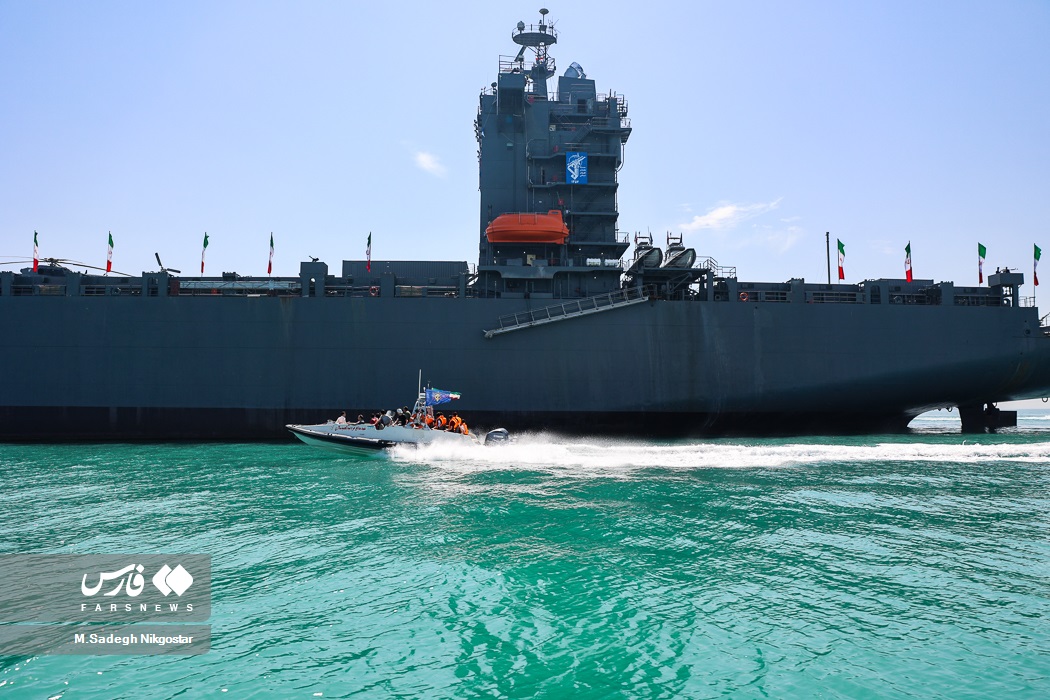
The IRGC’s toll-booth operation at Larak Island is not just a military checkpoint — it is a revenue center. An Iranian lawmaker confirmed publicly that some vessels are charged $2 million per transit, and at least two ships have paid in Chinese yuan. The Al Jazeera investigation published March 26 detailed the process: ship operators submit vessel IMO numbers, full documentation, cargo manifests, crew rosters, and final destination to IRGC-connected intermediaries. The IRGC naval command vets the submission, issues a clearance code with routing instructions, and then escorts the vessel through the controlled corridor with IRGC boats. When ships enter the passage, “IRGC commanders yell out over VHF radio, asking for the vessel’s clearance code.”
At $2 million per vessel and with traffic volumes that could reach several dozen transits per week if the approved-nation list continues to expand, the IRGC is generating hard-currency revenue that flows entirely outside the Western financial system. Yuan payments bypass SWIFT, bypass OFAC secondary sanctions, and land in accounts that the US Treasury cannot freeze. For an Iranian military budget that the government pegs at $12.4 billion annually — funded overwhelmingly by oil revenue — even $50-100 million per month in transit fees represents meaningful supplemental income, particularly when conventional oil export revenue is disrupted by the very conflict the IRGC is prosecuting. The fee structure also creates a perverse incentive: every vessel that pays $2 million to transit Hormuz is a stakeholder in the continuation of the managed-corridor system, because the alternative — a fully open strait — would eliminate the fee entirely.
The yuan denomination matters beyond sanctions evasion. It deepens Iran’s commercial integration with China at a moment when Beijing is the only major power with both the diplomatic standing in Tehran and the commercial motivation to broker Hormuz access. Every yuan-denominated transit fee is a data point in the long-term de-dollarization of Gulf energy trade that Saudi Arabia has spent decades trying to prevent. Riyadh still prices all Aramco crude in dollars. If the IRGC establishes yuan as the standard currency for Hormuz passage, the next negotiation — whether over ceasefire terms, postwar reconstruction, or a new Gulf security framework — will feature a Chinese financial infrastructure already embedded in the strait’s daily operations.
Frequently Asked Questions
Are the Al Daayen and Rasheeda the first ships to transit Hormuz since the war began?
They are not the first ships — several dozen vessels from approved nations have transited in both directions since early March. The Omani-flagged Sohar LNG entered the strait unladen around April 2-3, heading toward Oman’s Qalhat terminal. An Iraqi Suezmax crude tanker exited via the IRGC corridor on April 5. What makes the Al Daayen and Rasheeda distinctive is that they would be the first laden LNG carriers — ships carrying actual cargo — to exit the strait since February 28, breaking a thirty-seven-day complete halt in Qatari LNG exports that has disrupted supply contracts across Europe and Asia.
Can Qatar resume full LNG exports even if Hormuz reopens?
Not immediately, and possibly not for years. Iran’s March strikes on Ras Laffan destroyed two of fourteen LNG trains and one of two gas-to-liquids facilities, removing approximately 12.8 MTPA of capacity — about 17 percent of Qatar’s pre-war 77 MTPA total. The remaining twelve trains could theoretically produce roughly 64 MTPA if fully operational, but the facility has been shut down since March. Restarting LNG trains after a prolonged shutdown requires weeks of safety checks, recommissioning, and gradual ramp-up. QatarEnergy’s North Field East and North Field South expansion projects, which were supposed to raise capacity to 126 MTPA by 2027, will also face delays according to Ziemba’s CNAS assessment.
Why is Iran letting Qatar export while blocking Saudi Arabia?
Three factors converge, and a fourth gives Iran long-term optionality. First, Qatar and Iran share the North Field/South Pars gas reservoir — permanently shutting down Qatari extraction risks pressure imbalances that would damage Iran’s own South Pars production. Second, Qatar maintained relations with Iran during the 2017-2021 Saudi-led blockade and has avoided offensive military action in the current conflict. Third, Qatar’s exports are LNG, which does not compete with Iranian crude on world markets; Saudi exports are crude oil, which directly competes with Iranian barrels for Asian customers. Fourth, preserving the Qatar relationship keeps Doha available as a back-channel mediator — a role Qatar has historically played in Tehran-Washington exchanges that bypassed Gulf Arab capitals entirely.
What happens to global LNG prices if these tankers get through?
A successful transit would signal that the Hormuz gas lane is conditionally open, likely producing an immediate drop of $1-3 per MMBtu in the JKM Asian spot benchmark, which peaked above $24 in early March and currently sits in the high-$18 range. The longer-term price impact depends on whether Iran permits sustained Qatari exports or treats this as a one-off demonstration. Even regular exports from Qatar’s remaining twelve trains would only deliver roughly 83 percent of pre-war volume, and the force majeure declarations on long-term contracts in Italy, Belgium, South Korea, and China would need to be formally lifted before buyers could resume scheduled deliveries. European TTF prices face less direct impact because 83 percent of Hormuz LNG flows in 2024 shipped to Asian markets.
Could Iran reverse course and block these tankers?
Technically, at any moment. The IRGC’s clearance-code system operates on a per-voyage basis with no published rules, schedules, or guarantees. An anonymous senior Iranian security official told PressTV on April 3 that “Iran has the capability to sustain this situation for years,” and the IRGC retains fast-attack boats, coastal missile batteries, and mine-laying capacity throughout the strait. The Al Daayen and Rasheeda are sailing the Musandam coastal route rather than the IRGC-controlled Larak corridor, suggesting Oman may have negotiated a parallel access path, but Omani territorial waters alone do not provide a deep-water exit from the Gulf without passing within range of Iranian naval positions. The vessels’ transit remains conditional until they reach open water in the Gulf of Oman. Al Daayen subsequently confirmed its passage, becoming the first laden Qatari LNG carrier to complete a Hormuz transit since the war began — brokered by China and settled in yuan via Kunlun Bank at a reported $2 million IRGC transit fee. The asymmetric Hormuz access regime — LNG exempt, crude blocked — carries direct implications for Aramco’s pricing power: Riyadh set the May Arab Light OSP to Asia at a record +$19.50/bbl, yet left $20.50 on the table relative to Bloomberg’s $40 expectation, calibrating the discount to preserve Asian buyer loyalty during the blockade. Full Aramco OSP analysis here. The human cost of Iran’s gas-lane/crude-lane asymmetry falls most heavily on the 20,000 seafarers trapped aboard 3,200 vessels west of Hormuz, caught in a legal void that no existing maritime treaty was designed to govern: 3,200 Ships and 20,000 Seafarers Trapped in Gulf Waters: The Legal Void Iran Engineered at Hormuz. The ceasefire has not dissolved Iran’s asymmetric lane structure: the first post-ceasefire throughput data from Hormuz recorded only 15–20 transits on April 7, compared to 138 per day before the war.