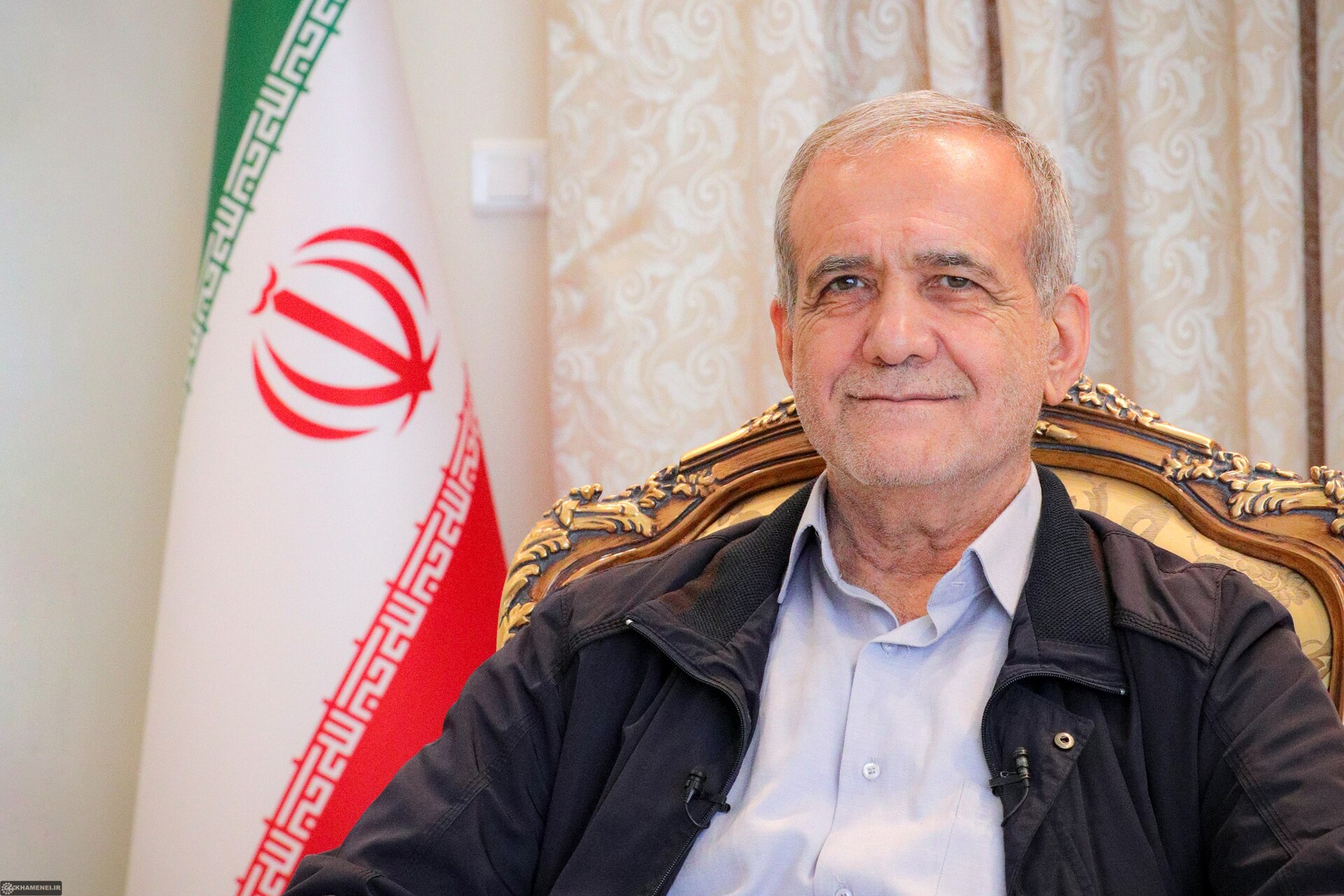
TEHRAN — Iran’s president stood in front of the man who runs the Supreme Leader’s intelligence directorate and told him, on record, that IRGC commanders Ahmad Vahidi and Ali Abdollahi were “acting unilaterally and driving escalation through attacks on regional countries” — and that their policies “had destroyed any remaining chance of a ceasefire.” According to Iran International, the April 4 confrontation between Masoud Pezeshkian and former intelligence chief Hossein Taeb was described by two sources as “unusually difficult and highly charged.” It was not a power grab. Under Article 110 of Iran’s constitution, the president has no authority over the IRGC. It was an admission — from a sitting head of state — that the men who can authorise a ceasefire have no interest in honouring one, and that the man whose signature the world expects on any deal cannot compel them to do so.
That admission arrived 72 hours before the Supreme National Security Council accepted a two-week ceasefire whose text names the “prudence of the Supreme Leader” as its anchor — not the president who publicly begged for one. Within hours of the announcement, UAE, Saudi Arabia, Kuwait, Bahrain, and Qatar all activated air defences against incoming Iranian missiles and drones. The question is not whether this ceasefire will hold for two weeks. The question is what any agreement with Iran is worth when its own president says the military answers to no one willing to negotiate.
Table of Contents
- What Pezeshkian Actually Said — and Who He Said It To
- Why Can’t Iran’s President Control the IRGC?
- The Five Men Running Iran — and the One Who Isn’t
- What Does the SNSC Ceasefire Statement Actually Commit Iran To?
- The Hours After: Missiles During a Ceasefire
- The Rouhani Precedent — and Why This Is Worse
- What Does Pezeshkian’s Admission Mean for Saudi Arabia?
- Phase 2 and the INTERPOL Problem
- Who Signs for Iran?
- Frequently Asked Questions
What Pezeshkian Actually Said — and Who He Said It To
The timeline matters because it shows a pattern, not an outburst. On March 7, Pezeshkian released a video calling for a ceasefire; the IRGC ignored it. On March 24, IRGC Commander-in-Chief Ahmad Vahidi compelled Pezeshkian to appoint Mohammad Bagher Zolghadr as Secretary of the Supreme National Security Council — a position that controls the coordination of Iran’s military, intelligence, and foreign policy — despite the president’s open dissatisfaction. On March 28, Vahidi blocked Pezeshkian’s nominee for intelligence minister, rejecting all proposed candidates and insisting wartime roles be managed by the Guards directly. On March 29, Pezeshkian confronted Vahidi over continued military escalation and demanded that “executive and operational control” over conflict decisions return to the civilian government; Vahidi refused.
Then came April 4. Pezeshkian chose Hossein Taeb — not a presidential aide, not a reformist ally, but the former head of the IRGC’s Intelligence Organization who was removed from that post in 2022 and replaced by a Vahidi loyalist. By taking his complaint to a man embedded in the Guards’ own network, Pezeshkian was making a calculated plea to the one constituency that might relay it upward: the IRGC’s internal opposition, if it exists. He told Taeb that Vahidi and Ali Abdollahi, the commander of Khatam al-Anbiya Central Headquarters — the IRGC’s construction and engineering arm that doubles as its logistics command — were steering Iran toward “a huge catastrophe.” He warned, as he had warned on March 28, that “full economic collapse was inevitable under current conditions.”
Iranian state media has not acknowledged the confrontation. PressTV’s post-ceasefire coverage is dominated by triumphalist framing — “Forty days that shook the Empire” — and FM Abbas Araghchi’s insistence that all Iranian military action was defensive. The Pezeshkian-Taeb exchange was reported exclusively by Iran International, an opposition exile outlet, and subsequently picked up by Ynet, IBTimes, and i24 News. No Iranian government confirmation or denial has been issued, which, given Tehran’s reflexive denial of embarrassing leaks, reads as the silence of a president who cannot retract what he said without appearing weaker than he already is.
Why Can’t Iran’s President Control the IRGC?
Because the constitution was written to prevent exactly that. Article 110 of the Islamic Republic’s founding document assigns the Supreme Leader — not the president — “supreme command of the Armed Forces,” the power to declare war and peace, and the sole authority to appoint, dismiss, or accept the resignation of the IRGC’s commander-in-chief. Article 176 requires that all decisions of the Supreme National Security Council receive the Supreme Leader’s approval before they carry legal force. The president chairs the SNSC, but his signature alone binds nothing.
The Middle East briefing 3,000+ readers start their day with.
One email. Every weekday morning. Free.
This is not a bug exploited by the IRGC. It is the system functioning as designed. When Pezeshkian accused Vahidi and Abdollahi of “acting unilaterally,” he was not alleging a constitutional violation — he was describing a constitutional arrangement in which IRGC commanders answer to a Supreme Leader, not to him. Under normal circumstances, the Supreme Leader serves as the arbiter between elected and military institutions, the referee whose word settles disputes of the kind Pezeshkian raised on April 4. As the Council on Foreign Relations has documented, the Supreme Leader’s office is the only institution with binding authority over IRGC operations.
But the referee is missing. Mojtaba Khamenei, who assumed the Supreme Leader’s responsibilities after his father’s death, has not appeared in public for more than 35 days. A Times of London intelligence memo reported him potentially unconscious in Qom. The SNSC ceasefire statement attributed its authority to “the prudence of the Supreme Leader,” but this formulation raises more questions than it answers. If Mojtaba Khamenei approved the ceasefire, he did so without the public appearance or recorded statement that Iranian constitutional practice has historically required for war-and-peace decisions. If he did not approve it, the SNSC statement invoked his authority without his consent — which means the ceasefire text is unsigned by the only person whose signature matters.
The Five Men Running Iran — and the One Who Isn’t
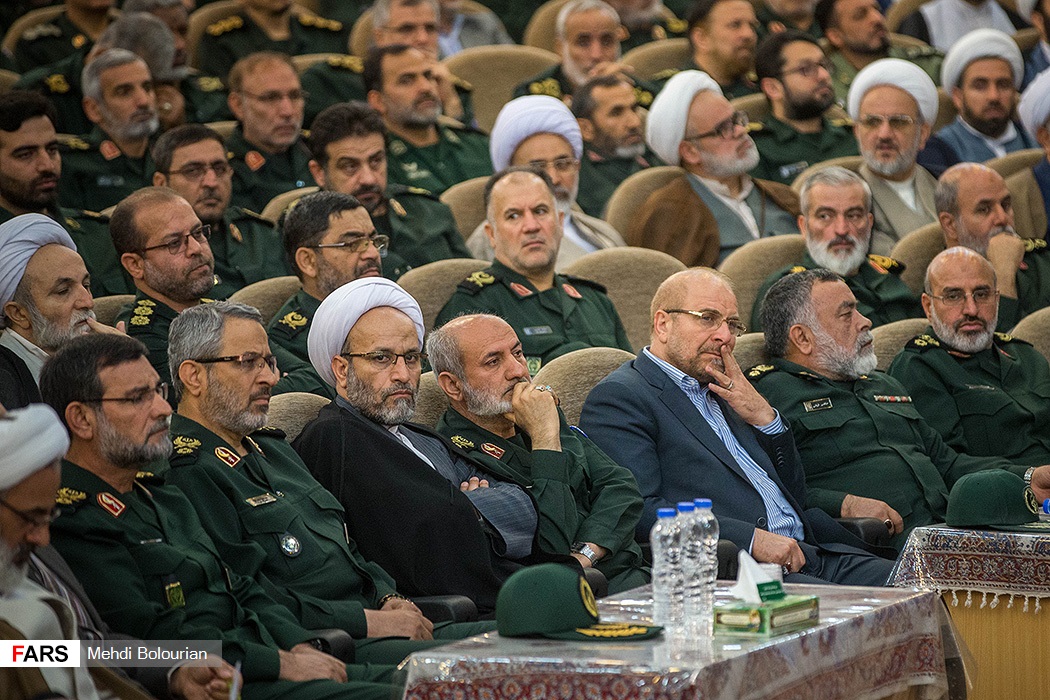
The Foundation for Defense of Democracies published its assessment on April 6 under a title that reads like a verdict: “5 Men Now Running Iran.” The five are Ahmad Vahidi (IRGC Commander-in-Chief), Mohammad Bagher Zolghadr (SNSC Secretary), Mohsen Rezaei (military adviser to the Supreme Leader), Mohammad Bagher Ghalibaf (Parliament Speaker and lead negotiator at Islamabad), and Mojtaba Khamenei — whose inclusion is qualified by his extended absence. Pezeshkian does not appear on the list. The elected president of the Islamic Republic is, by the analysis of Washington’s most hawkish Iran-focused think tank, not among the people running Iran during a war.
The composition of this quintet matters for anyone trying to negotiate with Tehran. Vahidi carries an active INTERPOL Red Notice issued in November 2007 at Argentina’s request for his alleged role in the 1994 AMIA bombing in Buenos Aires that killed 85 people — he was commanding the Quds Force at the time. Zolghadr, who now controls the SNSC’s agenda, is under both US and EU sanctions and built the extraterritorial proxy network that evolved into the modern Quds Force. Rezaei also carries an INTERPOL notice for AMIA. Ghalibaf commanded the IRGC’s Aerospace Force from 1997 to 2000. This is not a government with a military wing; it is a military establishment with a civilian ornament. The public record of the pre-talk constraints on Iran’s delegation — IRGC commanders declaring the missile program a “red line” before Araghchi landed in Pakistan — confirms that the Islamabad delegation’s mandate was pre-emptively bounded by the same men Pezeshkian could not compel.
Kaitlyn Hashem of the Stimson Center has argued that Israel’s assassination campaign against IRGC leadership during the war ironically elevated these figures — “old-timers” pulled from semi-retirement who are “more hardline, anti-U.S., and anti-Israel than those they replaced” and “less nimble in negotiating an end to the war.” These men are not dealmakers who were sidelined by hardliners — they are the hardliners themselves, seated at the table by a campaign of targeted killings that removed the generation between them and power.
What Does the SNSC Ceasefire Statement Actually Commit Iran To?
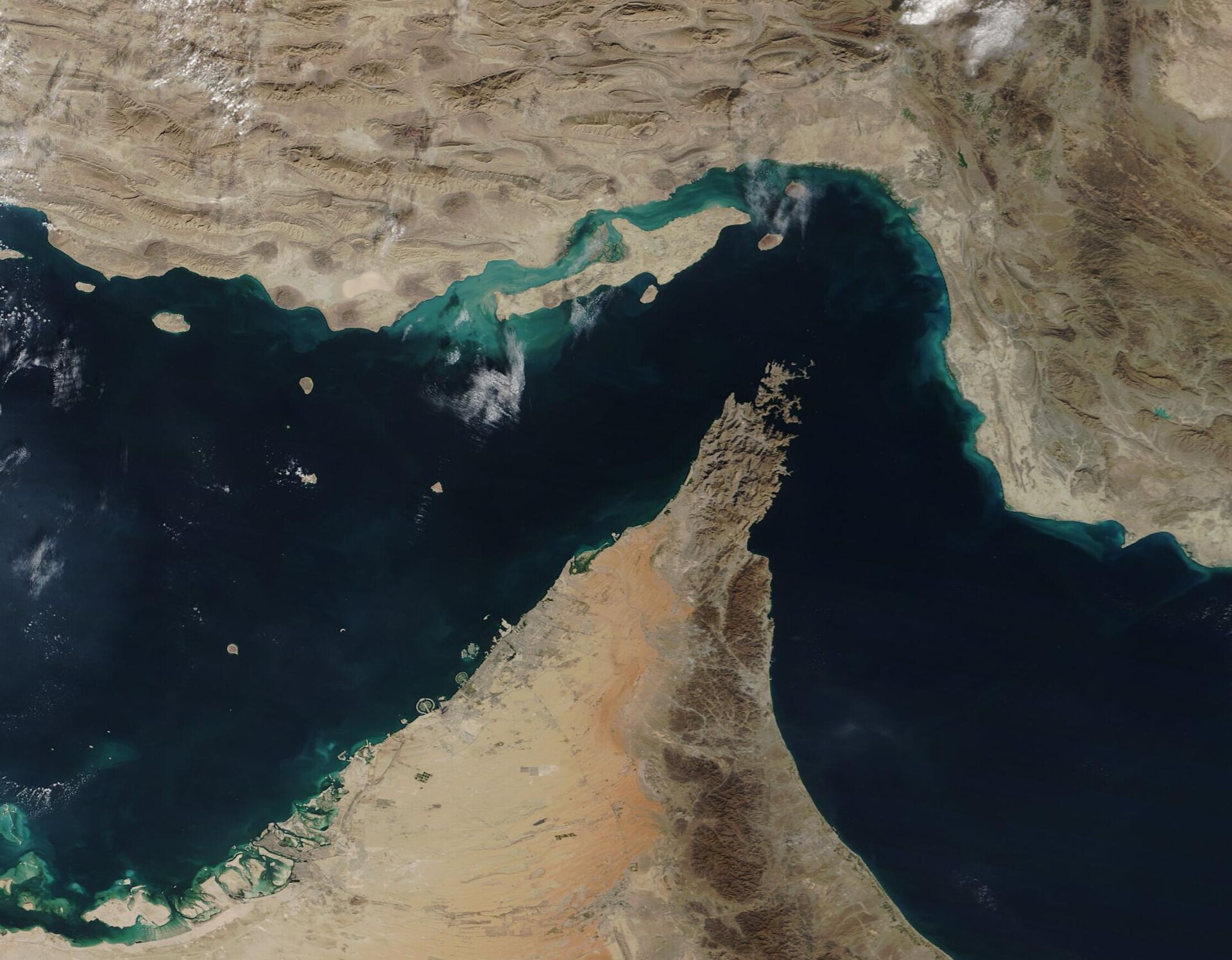
The full text of the SNSC statement, published via WANA on April 7-8, commits Iran to a two-week ceasefire anchored in the Supreme Leader’s authority. It does not mention Pezeshkian as a decision-making authority. Its operative clause on the Strait of Hormuz — the waterway through which roughly 20% of the world’s oil transits — states that “safe passage through the Strait of Hormuz will be possible via coordination with Iran’s Armed Forces.” That language does not reopen the strait. It conditions passage on IRGC approval, ship by ship, creating a toll regime rather than restoring freedom of navigation.
The statement’s closing line eliminates any ambiguity about Iran’s posture: “Our hands are on the trigger, and the moment the slightest error is committed by the enemy, it will be responded to with full power.” A senior IRGC official echoed this framing to Military.com within hours: “The armed forces hands will remain on the trigger until complete assurance of securing the country’s interests is achieved.” The SNSC statement also characterises the Islamabad negotiations as “a continuation of the battlefield rather than a departure from military posture” — language that treats diplomacy as a theatre of war, not a path out of one.
Read together, these provisions produce a ceasefire whose text promises continued IRGC control of Hormuz, reserves the right to resume full-scale military operations at any moment the IRGC deems an “error” has occurred, and frames the negotiation itself as warfare by other means. What they describe is a conditional pause whose conditions are set, interpreted, and enforced by the same commanders Pezeshkian accused — three days earlier — of driving Iran toward catastrophe.
“There is no one on the Iranian side with both the will to strike a deal and the power to authorise it.”
— Gustavo de Aristegui, Atalayar, former Spanish diplomat
The Hours After: Missiles During a Ceasefire
The ceasefire’s first test came within hours of its announcement, and it failed. On April 8, the UAE’s Defence Ministry confirmed its air defences were “actively engaging” incoming ballistic missiles, cruise missiles, and unmanned aerial vehicles from Iran. Saudi Arabia, Kuwait, Bahrain, and Qatar all activated air defences or issued public alerts. The White House offered the explanation that “it will take time for orders to reach lower ranks” — a framing that treated the IRGC as a disorganised militia rather than the force that simultaneously coordinated missile strikes across five sovereign nations.
Robert Pinfold, writing for Al Jazeera, noted that the ceasefire “remains very uncertain in scope and implementation” and drew a parallel to Gaza: “Everyone is claiming victory, and there are still continued violations of the ceasefire.” The comparison is instructive but understates the problem. In Gaza, violations involved a single armed group with a disputed chain of command. In the Gulf, an IRGC that controls an estimated 30-40% of Iran’s GDP and generates roughly $2 million per Hormuz transit in fees was simultaneously firing missiles at five countries whose combined air defence systems represent the most expensive military infrastructure in the Middle East.
The post-ceasefire attacks validate Pezeshkian’s accusation from a direction he could not have intended. If the president is right that IRGC commanders are acting unilaterally, then those commanders demonstrated on April 8 that they can sustain multi-country offensive operations during a ceasefire their own government formally accepted. If Pezeshkian is wrong and the attacks were authorised, then Iran’s government approved strikes hours after publicly committing to a truce. Either interpretation destroys the ceasefire’s foundational premise — that Iran has a single decision-making authority capable of binding the forces that fire the missiles.
The Rouhani Precedent — and Why This Is Worse
Hassan Rouhani said it first, and more elegantly. In 2014, during the negotiations that produced the Joint Comprehensive Plan of Action, Iran’s then-president warned: “The saboteurs have left the think tanks and are now in the operations room.” Rouhani’s allies later estimated that hardliner sabotage of the JCPOA — through provocative missile tests, obstruction of revival talks, and deliberate non-compliance — cost Iran approximately $1 trillion in lost economic activity, according to a Carnegie Endowment assessment.
Rouhani, however, operated under fundamentally different conditions: Ali Khamenei, whatever his hostility to the JCPOA, was a functioning Supreme Leader who could — when he chose — order the IRGC to comply with the deal’s terms. The constitutional architecture worked, if imperfectly, because the referee was present. Rouhani’s complaints about sabotage were complaints about a Supreme Leader who tolerated IRGC obstruction while officially endorsing diplomacy — a political battle within a functioning system, with a superior officer available to appeal to, however ambivalent that officer might be.
Pezeshkian has no such recourse. The Supreme Leader has been absent for more than five weeks. The SNSC is controlled by Zolghadr, an IRGC veteran Vahidi installed over Pezeshkian’s objections. The IRGC commander has already demonstrated he can block presidential appointments, reject presidential orders, and continue military operations during a presidential ceasefire call — all without triggering a constitutional crisis, because the constitution does not require the IRGC to obey the president.
Rouhani’s saboteurs were in the operations room but answerable to a Supreme Leader. Pezeshkian’s saboteurs are in the operations room, answerable to themselves, and the only authority that could override them is either unconscious in Qom or refusing to intervene. For the enforceability of any deal, the distinction between those two scenarios does not matter.
What Does Pezeshkian’s Admission Mean for Saudi Arabia?
Riyadh’s position has deteriorated along two tracks simultaneously, and Pezeshkian’s accusation crystallises both. The first is military: Saudi Arabia’s PAC-3 MSE interceptor stockpile has been depleted by approximately 86%, down to roughly 400 rounds from a pre-war inventory of around 2,800, after intercepting 799 drones and 95 ballistic missiles between March 3 and April 7. The Camden, Arkansas production line manufactures 620 missiles per year — a rate that cannot replenish what Saudi Arabia has spent in five weeks. The kingdom’s air defence shield is approaching exhaustion, and the ceasefire whose terms are controlled by the IRGC is the only thing between current stockpile levels and zero.
The second track is diplomatic. Saudi Arabia has been excluded from the April 10 Islamabad bilateral, which is structured as a US-Iran negotiation mediated solely by Pakistan, with Vice President JD Vance meeting Parliament Speaker Ghalibaf. Saudi FM Prince Faisal bin Farhan held a co-guarantor seat during the March 29-30 multilateral talks but was not invited to the bilateral format. Riyadh absorbed IRGC strikes on the Ras Tanura oil terminal, the East-West Pipeline, SABIC facilities in Jubail, and Prince Sultan Air Base — and its reward is exclusion from the room where the war’s terms are being set.
Sanam Vakil, director of Chatham House’s Middle East Programme, identified the structural problem in an NPR interview on April 8: “Gulf states are seeking assurances that they will not remain exposed to repeated pressure on their infrastructure and shipping routes.” She added: “If the talks in Islamabad focus too narrowly on American and Iranian priorities, they may succeed in stabilising the immediate crisis while leaving the broader regional order fragile and exposed to revived escalation.” The word “fragile” understates what Pezeshkian’s admission reveals. If the Iranian president cannot control his own military, then any security guarantee Iran offers at Islamabad is a promise made by someone who cannot deliver it — and Saudi Arabia is being asked to accept that promise as a substitute for the interceptor stockpile it has already spent.
Phase 2 and the INTERPOL Problem
The ceasefire framework reported by Axios and The National envisions a Phase 1 (the current two-week truce) followed by a Phase 2 negotiation covering the Strait of Hormuz, Iran’s nuclear programme, and the permanent terms of regional security. Iran’s own 10-point proposal for Phase 2 includes three conditions that are structurally incompatible with Saudi security: Point 7, which places Hormuz under permanent IRGC “coordination”; Point 8, which demands the withdrawal of US forces from all regional bases, including Prince Sultan Air Base where 2,000-3,000 American troops are stationed; and Point 10, which requires UN Security Council codification of the entire agreement, subjecting it to Russian and Chinese veto power in perpetuity.
But the procedural problem is more immediate than the substantive one. Who authorises Phase 2 compliance on the Iranian side? Pezeshkian cannot — he said as much in front of a witness. Mojtaba Khamenei has not spoken publicly in five weeks, and the SNSC is controlled by a sanctioned IRGC veteran. The IRGC Commander-in-Chief who must operationally implement any Hormuz agreement carries an active INTERPOL Red Notice for mass murder.
Vahidi cannot travel to any of the 196 INTERPOL member countries without risking arrest. He cannot attend a signing ceremony in Islamabad, New York, Geneva, or any other diplomatic venue. The man whose operational authority is required to reopen the Strait of Hormuz is an internationally wanted fugitive.
The obstacle is structural, not procedural. Any Phase 2 agreement requires implementation by an IRGC chain of command whose top officer is wanted by Argentina on AMIA charges, whose SNSC interlocutor is under US and EU sanctions, and whose nominal civilian superior has publicly stated he has no control over them. The enforcement mechanism is a president who has admitted he cannot enforce, supervised by a Supreme Leader who may be unconscious, operationally commanded by a man who cannot leave Iran without being arrested.
| Date | Event | Pezeshkian’s Authority Eroded |
|---|---|---|
| March 7 | Pezeshkian releases video ceasefire order | IRGC ignores it; no military compliance |
| March 24 | Vahidi forces Zolghadr as SNSC Secretary | President’s dissatisfaction overridden |
| March 28 | Vahidi blocks intelligence minister nominee | Presidential appointment authority nullified |
| March 29 | Pezeshkian demands “executive control” from Vahidi | Vahidi refuses; no mechanism to compel |
| April 4 | Pezeshkian-Taeb confrontation | President reduced to lobbying via IRGC internal channels |
| April 7-8 | SNSC ceasefire issued | Statement anchored in Supreme Leader, not president |
| April 8 | Post-ceasefire strikes hit five Gulf nations | IRGC operates independently of ceasefire text |
Who Signs for Iran?
Gustavo de Aristegui, the former Spanish diplomat writing in Atalayar, characterised the IRGC as functioning “less as a professional military force but as an armed criminal organisation with a political agenda” and concluded that “there is no one on the Iranian side with both the will to strike a deal and the power to authorise it.” De Aristegui gives the chances of a genuine ceasefire holding through late April or mid-May at 42%. Those are not the odds that justify standing down a security architecture — and yet that is precisely what is being asked of Saudi Arabia, which has spent 86% of its PAC-3 stockpile defending against strikes from the very force the ceasefire is supposed to restrain.
The Islamabad talks, if they produce a Phase 2 framework, will generate a document. That document will contain Iranian commitments on Hormuz, on the cessation of strikes against Gulf infrastructure, perhaps on nuclear enrichment levels. It will be signed, most likely, by Ghalibaf — a former IRGC Aerospace Force commander who has spent his career operating at the intersection of Guards politics and civilian institutions. His signature will carry the weight of a parliament speaker in a system where the parliament does not control the military — not the weight of Vahidi, who commands the forces, nor of Mojtaba Khamenei, who constitutionally commands Vahidi. At most, a Ghalibaf signature carries the weight of a political commitment made by a faction within a government whose military wing has already demonstrated — on April 8, in five countries simultaneously — that political commitments do not constrain its operational decisions.
Pezeshkian’s accusation against Vahidi and Abdollahi was not a reformist grandstanding exercise. The president’s March 28 warning that the economy would collapse “within three to four weeks” has a deadline approaching. Iran’s GDP contraction under sanctions, war costs, and the loss of oil revenue from the Kharg Island strikes is accelerating at a pace that makes Pezeshkian’s timeline plausible, not alarmist. He is a man watching his country approach a cliff and shouting at the drivers who will not turn the wheel — a president in a republic where the presidency is, for the purposes of war and peace, a ceremonial office whose occupant cannot fire, order, overrule, or restrain the armed forces that report to someone else.
“The saboteurs have left the think tanks and are now in the operations room.”
— Hassan Rouhani, 2014, on hardliner obstruction of the JCPOA
Rouhani said that twelve years ago about a different set of commanders in a different war. What Pezeshkian said on April 4 was worse: the saboteurs are not just in the operations room — they built it, they staff it, and the one person who could order them out has not been seen in public since early March. For Saudi Arabia, for the UAE, for every Gulf state now rationing interceptor missiles while a ceasefire text promises restraint from an IRGC that commands Iran alone, the question is elementary. When the president of a country tells you he cannot control his own military, you should believe him. The harder question is what you do with a ceasefire signed by people who have already told you — through constitutional design, through operational behaviour, through the mouth of their own president — that they cannot guarantee what they have promised.
Frequently Asked Questions
Has Pezeshkian’s accusation against the IRGC been confirmed by Iranian state media?
No. The April 4 confrontation between Pezeshkian and Hossein Taeb was reported exclusively by Iran International, a London-based opposition outlet, citing two unnamed sources who described the exchange as “unusually difficult and highly charged.” Ynet News, IBTimes, and i24 News subsequently carried the story. Iranian state media, including PressTV, has made no reference to the accusation. Tehran has issued neither a confirmation nor a denial — a departure from its usual pattern of rapid rebuttal when embarrassing leaks surface in exile media. The Iranian government’s silence is itself analytically relevant: a denial would require acknowledging the rift, while confirmation would expose the president’s powerlessness to a domestic audience already under severe economic stress.
Could the Iranian parliament remove Vahidi from his position as IRGC Commander-in-Chief?
No. Under Article 110, the appointment and dismissal of the IRGC commander is the exclusive prerogative of the Supreme Leader. The Majlis (parliament) has no constitutional mechanism to remove, censure, or override IRGC leadership. Even impeachment of the president — which the Majlis can initiate — does not extend to military commanders appointed by the Supreme Leader’s office. Speaker Ghalibaf, who leads Iran’s delegation at Islamabad, is himself a former IRGC Aerospace Force commander and has shown no inclination to challenge Vahidi’s authority. The institutional design ensures that the only check on the IRGC is a functioning Supreme Leader, which Iran currently does not have in any publicly verifiable sense.
What legal mechanism exists to enforce a Phase 2 agreement if the IRGC violates it?
None that is specific to Iran’s internal command structure. International agreements bind states, not factions within states, and Iran’s legal system provides no mechanism for a civilian president to compel IRGC compliance with a treaty the Guards oppose. The JCPOA included a “snapback” mechanism at the UN Security Council, but that instrument was designed for nuclear non-compliance and was triggered by the US in 2020 under disputed legal authority. Iran’s 10-point Phase 2 proposal includes a demand for UNSC codification (Point 10), which would subject any enforcement action to Russian and Chinese veto — the same veto that blocked a Chapter VII Hormuz resolution in early April. The practical enforcement mechanism for any Phase 2 deal is the same as Phase 1: the willingness of IRGC commanders to comply — which, by Pezeshkian’s own account, does not exist.
How does the IRGC’s economic stake in the Hormuz blockade affect ceasefire compliance?
The IRGC has established a de facto toll system charging approximately $2 million per ship for Hormuz transit, brokered through Chinese financial intermediaries and processed via Kunlun Bank and USDT on the Tron blockchain. At pre-war throughput levels of roughly 138 ships per day, this regime would generate an estimated $276 million daily — revenue that flows directly to IRGC-controlled entities, not to the Iranian treasury. The Guards control an estimated 30-40% of Iran’s GDP through a network of commercial enterprises, construction companies, and import monopolies. Reopening the strait under international freedom-of-navigation rules would eliminate a revenue stream that has become, during five weeks of war, one of the IRGC’s most lucrative operations. The financial incentive to maintain the blockade — or to maintain “coordination” authority that preserves the fee structure — runs directly counter to any Phase 2 commitment to restore unconditional transit.
What happened to previous Iranian ceasefire commitments during this conflict?
Pezeshkian’s March 7 video ceasefire call was the first: the IRGC continued operations without pause. The 45-day ceasefire framework reported by Axios on April 6 — structured as Phase 1 (ceasefire) and Phase 2 (permanent deal) — was rejected by Iran’s foreign ministry within 24 hours, with Araghchi insisting on Iranian preconditions including Hormuz sovereignty recognition before any truce. The April 7-8 SNSC ceasefire acceptance, which is the currently operative agreement, was followed within hours by Iranian missile and drone strikes against five Gulf states. The East-West Pipeline pumping station was struck on April 8 after the ceasefire was nominally in effect, following an IRGC declaration on April 7 that “all restraint has been removed.” Three ceasefire moments, three failures of compliance — a pattern that Pezeshkian’s accusation explains but cannot alter.