
RIYADH — Bloomberg reported on May 25 that Crown Prince Mohammed bin Salman has scored “unexpected wins” from the Iran war — elevated crude prices, Red Sea corridor emergence, and non-oil GDP resilience that has defied wartime predictions. The assessment is accurate but structurally incomplete: each identified gain requires conditions Saudi Arabia has publicly demanded be reversed, including the continuation of hostilities and the Strait of Hormuz remaining closed to commercial traffic.
Aramco posted $32.5 billion in Q1 2026 reported net income — its strongest quarter since late 2023 — while the Saudi government simultaneously recorded a $33.5 billion budget deficit, the largest quarterly shortfall in nearly eight years and 194 percent of its full-year target. The windfall and the deficit coexist because elevated prices cannot compensate for the volume constraint: Yanbu’s crude export ceiling of 5 million barrels per day against pre-war flows of 6.7 million through Hormuz.
Contents
- What Did Bloomberg Actually Report?
- The Brent Paradox
- Is the Red Sea Corridor a Win or a Dependency?
- Why Can Saudi Arabia Not Name Its Gains?
- The Megaproject Retreat Gets Its Cover Story
- What Does Iran’s Compensation Demand Signal?
- The 1980s Precedent
- How Long Can the Windfall Hold?
- Frequently Asked Questions
What Did Bloomberg Actually Report?
Bloomberg’s May 25 piece advanced three core claims: that Brent crude surging from $72.48 on February 28 to a wartime range of $103–$110 has “bolstered revenue”; that Saudi Arabia’s Red Sea coast has “emerged as a vital corridor” bypassing the shuttered Strait of Hormuz; and that non-oil GDP growth has proved more resilient than early wartime forecasts predicted. On the surface, the data supports all three.
Aramco’s Q1 2026 results were unambiguously strong. Revenue climbed 11.4 percent year-on-year to $115.49 billion. Adjusted net income reached $33.6 billion, a 26 percent increase. The base dividend was declared at $21.9 billion, up 3.5 percent — the highest quarterly payout since Q3 2023. The East-West pipeline hit its maximum 7 million barrel-per-day technical capacity, a logistical achievement that allowed crude to reach Yanbu despite the complete closure of the eastern export route through Hormuz (CNBC, The National, SPA — May 10, 2026).
Non-oil activities grew 2.8 percent year-on-year in Q1, according to GASTAT preliminary estimates. Bloomberg cited this figure as evidence of diversification momentum. What it did not cite was the seasonally adjusted quarter-on-quarter figure: 0.2 percent. The year-on-year number shows resilience relative to the pre-war baseline; the quarter-on-quarter number shows growth that is, in practical terms, stalled (Saudi Gazette, Zawya — May 2026).
The deeper omission is the relationship between the corporate windfall and the sovereign deficit. The $33.5 billion Q1 shortfall — which Saudi Arabia ran while Aramco was posting record-adjacent earnings — exists because Aramco dividends flow to the state on a timeline that lags expenditure acceleration, and because the spending the kingdom needs to sustain (defence, logistics rerouting, Vision 2030 commitments already contracted) accelerated faster than the revenue gain. PIF raised $7 billion in wartime bond markets at spreads implying sovereign guarantee in part because the Aramco pipeline was not delivering cash fast enough. Bloomberg treated the kingdom as a single balance sheet. It is at least two.
The Middle East briefing 3,000+ readers start their day with.
One email. Every weekday morning. Free.
The Brent Paradox
Brent rose from $72.48 per barrel on February 28 to a war peak of $112.57 on March 27, a 55 percent surge in under four weeks. The current trading range of $103–$110 includes a $3–$5 risk premium tied to Supreme Leader Khamenei’s May 25 directive that highly enriched uranium remain on Iranian soil — a premium that would compress within days of a signed deal. The price is elevated. Whether it is elevated enough to sustain Saudi Arabia’s full spending programme is a separate question.
| Source | Fiscal Breakeven ($/bbl) | Scope |
|---|---|---|
| IMF | $86.60 | Central government only |
| Goldman Sachs / JPMorgan | $98–$102 | Full programme incl. Vision 2030 |
| Bloomberg Economics | $94–$111 | Consolidated incl. full PIF capex |
At $105 Brent, Saudi Arabia clears the IMF’s narrow central-government metric by a comfortable margin. It sits at or below the Goldman Sachs and JPMorgan full-programme thresholds. And it falls within a range where Bloomberg Economics considers the consolidated position — the one that includes the spending the kingdom is actually committed to — to be anywhere from barely positive to deeply negative, depending on PIF capital deployment timing.
Goldman Sachs economist Farouk Soussa stated that Saudi Arabia’s pre-war annualized fiscal deficit of 6 percent of GDP would improve by “only one percentage point” at current elevated prices. The reason is the volume ceiling, not the price. At 5 million barrels per day through Yanbu and $102 per barrel, annualized Saudi crude revenue approximates $186 billion. At pre-war volumes of 6.7 million barrels per day at the same price: roughly $249 billion. The gap — approximately $63 billion per year — is the revenue that higher prices cannot recover because the pipeline, not the market, sets the binding constraint. Two million of the East-West pipeline’s 7 million barrel-per-day capacity is consumed by domestic refineries, leaving 5 million for export (Bloomberg, CNBC — March 2026).
Vitol CEO Russell Hardy described the war’s cumulative supply impact as “one billion barrels lost” globally as of April 21. Saudi Arabia contributed to, and partially benefited from, that loss — but the benefit arrived as margin improvement on reduced volume. The IEA characterised the Hormuz closure as “the greatest global energy security challenge in history.” The kingdom is inside that challenge, not above it.
Is the Red Sea Corridor a Win or a Dependency?
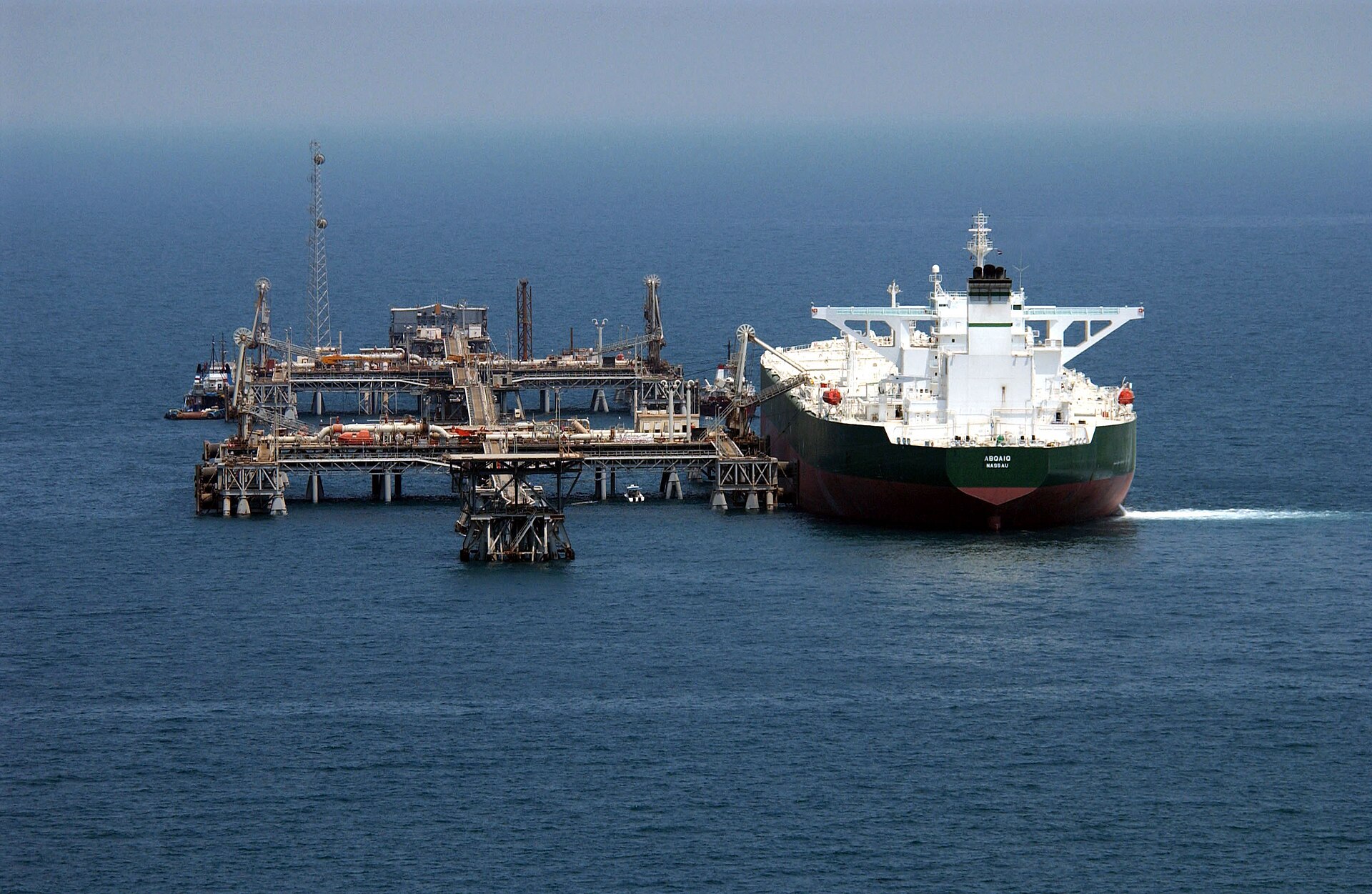
The Red Sea corridor is the most visible of Bloomberg’s identified gains. Saudi crude exports through Yanbu reached approximately 5 million barrels per day, with an additional 700,000 to 900,000 barrels per day of refined products. Private capital followed: APM Terminals acquired a 37.5 percent stake in Jeddah Islamic Port’s South Container Terminal; DP World committed SR900 million to a new Jeddah logistics park; Maersk and Hapag-Lloyd each added Red Sea shipping services at roughly 17,000 TEU capacity. Over SR2.2 billion ($586.6 million) in private-sector investment flowed into Saudi port infrastructure since the war began (Arab News, Bloomberg, The Loadstar — 2026).
PIF is exploring a merger of Bahri, Saudi Global Ports, and Saudi Railways into a national logistics champion, with a potential IPO to global investors. Bloomberg reported the discussions predated the war but “accelerated after Hormuz closed.” The acceleration is real. So is the question it raises.
At 5 million barrels per day, Yanbu handles roughly one-third of the 15 million barrels that flowed daily through Hormuz before the war. Saudi Arabia has built a partial workaround whose continued relevance requires the Strait to remain closed or contested — the condition Riyadh has publicly demanded be resolved. The corridor is an alternative only while the primary route is unavailable. If Hormuz reopens cleanly, Yanbu reverts to a secondary terminal. If Hormuz reopens under Iran’s PGSA toll regime — $2 million per VLCC, with Russia, China, India, Iraq, and Pakistan exempt — then the corridor becomes a permanent infrastructure requirement rather than a wartime adaptation, maintained at peacetime prices against wartime cost bases.
The competitive dimension compounds the dependency risk. Abu Dhabi is constructing its own bypass architecture through ADCOP’s 1.8 million barrel-per-day Habshan-Fujairah pipeline and a second West-East Pipeline that will double Fujairah capacity by 2027. The UAE’s OPEC exit on May 1 freed 1.35 million barrels per day from quota constraints. Saudi Arabia’s Red Sea corridor competes with a rival system that faces fewer volume ceilings and no quota discipline — operated by a neighbouring state whose fiscal breakeven sits thirty dollars per barrel below Riyadh’s.
Chatham House’s MENA programme warned in May 2026 that “the closure of the Strait of Hormuz poses a long-term threat to Saudi Arabia’s trade flows and economic transformation plans,” and that Houthi attacks on Red Sea shipping demonstrate maritime insecurity “will become a central constraint on Saudi Arabia’s westward reorientation, not a secondary concern.” Bloomberg noted that the Houthis have so far chosen “restraint over solidarity with Tehran, keeping Saudi Arabia’s southern border quiet.” That restraint is not a Saudi achievement. It is an Iranian concession — revocable, conditional, and untested against a Saudi Arabia visibly collecting wartime dividends.
Why Can Saudi Arabia Not Name Its Gains?
The diplomatic trap is precise. Since February 28, Saudi Arabia has committed to three public positions: endorsement of the US-Iran ceasefire framework, support for Hormuz reopening, and opposition to military escalation. Foreign Minister Prince Faisal bin Farhan publicly endorsed President Trump’s firmness on Iran’s highly enriched uranium five days after Trump had already dropped the demand during a May 14 Hannity interview. Saudi Arabia co-sponsored a UN Security Council resolution on Hormuz freedom of navigation that it knew Russia and China would veto, then absorbed the veto without protest. In both cases, Riyadh committed to positions that were already diplomatically exhausted — alignment without exposure.
Any public acknowledgment that the war has been financially beneficial collapses this architecture from the inside. If the elevated crude price is good for Saudi Arabia, then the Hormuz closure that sustains it is also good, and calling for reopening becomes performance. If the Red Sea corridor is a strategic achievement, then the conditions that created it — active conflict, naval blockade, trade diversion — are preconditions Saudi Arabia needs to maintain, not threats it is working to resolve. The kingdom cannot celebrate a windfall derived from circumstances it has formally demanded be reversed.
Michael Ratney, former US Ambassador to Saudi Arabia and now CSIS Senior Adviser, identified a pattern of “private hawkishness and public restraint,” noting that MBS allegedly made “multiple private calls to Trump” advocating military action while publicly emphasising diplomacy. The gap between private preference and public posture is established in Ratney’s assessment. Bloomberg’s “unexpected wins” framing narrows that gap by making the private benefits publicly legible. Trump can afford patience on the Iran deal — Saudi Arabia, bleeding against its fiscal targets, cannot sustain either the war or its public opposition to it indefinitely.
The silence from the Saudi Ministry of Foreign Affairs is itself informative. MOFA has issued no formal statement responding to Bloomberg’s characterisation. It has not disputed the “wins.” It has not celebrated them. It has not reframed them. The kingdom’s official posture toward its own good fortune is the absence of posture — a diplomatic blank where acknowledgment would create liability and denial would lack credibility. That silence compounds structurally: Iran’s use of Hajj and Eid as a diplomatic buffer froze Saudi Arabia’s institutional response capacity for eight days, leaving Tehran’s two-track narrative uncontested through June 1.
The Megaproject Retreat Gets Its Cover Story
Bloomberg published a second piece on May 25, the same day as the “unexpected wins” report: “Saudi Arabia Dials Back Mega-Projects, Focusing on Smaller Wins.” Finance Minister Mohammed al-Jadaan confirmed the kingdom would defer or cancel projects “without blinking” if they no longer make economic sense. A leaked 2023 NEOM board presentation, previously reported by Bloomberg, projected total programme costs of $8.8 trillion through 2080.
The megaproject retreat was strategically necessary before the war began. PIF construction awards had already dropped from $71 billion to $30 billion. The Phase 2 strategy shift — 80 percent domestic allocation, 15 percent capital expenditure reduction — predated February 28 by months. The war did not cause the retreat. It provided cover for it. Wartime austerity reads as disciplined resource management. Peacetime austerity, applied to projects the Crown Prince personally championed before heads of state and global media, reads as an admission the original ambitions were unaffordable at any oil price the market was likely to deliver (Gulf International Forum, Bloomberg — 2026). The scale of the retreat was confirmed on May 27 when NEOM terminated the EUR 1.4 billion Connector High-Speed Rail between Oxagon and The Line — the second major Webuild cancellation in sixty days — pushing total known terminations past $8.45 billion.
The two Bloomberg articles, published on the same day, are complementary without being contradictory — but only if the war continues long enough for the institutional pivot to complete. If Hormuz reopens before the megaproject retreat is locked into PIF’s governance and budget frameworks, the cover story evaporates. Riyadh would face the pre-war fiscal pressure to explain the cancellations without the wartime alibi. PIF’s cash position of $15 billion — 1.6 percent of assets under management — and its reliance on NDMC private placements for 90 percent of non-bond financing suggest the fiscal space to sustain both the megaproject ambitions and the wartime expenditure acceleration never existed simultaneously.
What Does Iran’s Compensation Demand Signal?
Tehran does not regard Saudi Arabia as a neutral bystander enriched by accident. Iran’s UN Ambassador Amir-Saeid Iravani formally demanded compensation from five states — Bahrain, Saudi Arabia, Qatar, UAE, and Jordan — for what Tehran characterised as “participation in the U.S. and Israeli war against Iran” and violation of their obligations toward the Islamic Republic. IRGC-linked Tasnim reported the demand as a treaty violation predicated specifically on basing access.
The likelihood of compensation being paid is zero. The framing is what matters. Iran’s position classifies Saudi Arabia as a co-belligerent — a party to the conflict through infrastructure provision, airspace access, and base hosting at Prince Sultan Air Base. The mine-clearance clause in the proposed ceasefire framework treats Saudi territorial waters as a theatre of operations without granting Riyadh a role in the negotiations that produced it. Saudi Arabia is simultaneously classified as co-belligerent by Iran and excluded as a negotiating party by the United States. Carnegie’s assessment that the “GCC has no seat at the table” applies to both the nuclear track (from which Saudi Arabia has been excluded through all five rounds of talks) and the Hormuz governance mechanism currently being drafted between Iran and Oman in Muscat.
The New Lines Institute assessed in April 2026 that despite “deep U.S. ties,” Saudi Arabia and the United States “never established a formal treaty with codified mutual defense articles.” The kingdom absorbs the reputational costs and physical risks of hosting US military operations — costs now quantified by Iran as grounds for compensation — without the legal protections a defence treaty would provide. Bloomberg’s “unexpected wins” accrue to a state that has no formal guarantee the conflict generating those wins will not eventually be directed, in part, against the infrastructure located on its own territory.
The 1980s Precedent
Saudi Arabia’s relationship to Gulf conflicts tends to produce a consistent sequence: short-term containment gain, followed by deferred costs arriving at multiples of the original benefit, typically one geopolitical cycle later. During the Iran-Iraq War of 1980–88, Saudi Arabia and Kuwait collectively provided $40 to $50 billion to fund Iraq’s campaign against revolutionary Iran. Saudi Arabia alone lent Baghdad $26 billion. The strategy succeeded on its own terms: Iranian expansionism was checked, the Gulf monarchies survived the revolutionary decade intact, and oil markets stabilised after the initial disruption. At the war’s end, Iraq owed Gulf creditors $37 billion. Baghdad demanded debt cancellation. Kuwait refused. Iraq invaded Kuwait in August 1990.
The cost of reversing Saddam Hussein’s annexation — Operation Desert Shield, Desert Storm, and the reconstruction and force posture adjustments that followed — ran to approximately $55 to $60 billion for Saudi Arabia, not including the permanent stationing of US forces at Prince Sultan Air Base that continued for over a decade. The containment gain of the 1980s arrived as a catastrophic deferred liability in the 1990s. The ratio was roughly two-to-one: every dollar of short-term benefit during the Iran-Iraq War cost approximately two dollars in response to the crisis it directly precipitated.
The 2026 configuration is not identical, but the structural logic is recognisable. Saudi Arabia is accumulating wartime gains — elevated Brent, corridor infrastructure, megaproject cover, port investment — under conditions it did not create and does not control. The gains are real. So were the gains of the 1980s. The question the precedent poses is not whether the current windfall exists but what form the deferred cost takes. If Iran’s PGSA toll regime survives any ceasefire framework, the Hormuz chokepoint transforms from a contested waterway into a permissioned one — and the Red Sea infrastructure built during the windfall period becomes a permanent cost centre rather than a wartime expedient. If the nuclear deal being negotiated without Saudi participation locks in parameters Riyadh considers inadequate, the kingdom inherits a security architecture it did not design. The 1980s pattern suggests that the cost of a Gulf “win” is rarely apparent while the win is being collected.
How Long Can the Windfall Hold?
The windfall’s duration depends on three variables Riyadh does not control: the length of the war, the terms of any settlement, and the behaviour of actors — Iran, the United States, the Houthis — whose calculations do not incorporate Saudi economic preferences. The Brent risk premium is the most fragile component. A signed deal, even a framework agreement short of full resolution, would compress the $3–$5 Khamenei HEU premium within days. The Washington Times reported the moratorium under discussion at “at least 12 years, possibly 15,” but Iran’s chief negotiator Abbas Araghchi has insisted that “zero enrichment equals no deal.” The gap between these positions is also the gap between the current price and a substantially lower one. Five rounds of talks across Islamabad, Muscat, and Rome have produced “some but not conclusive progress,” per the US readout of the May 23 session.
The Red Sea corridor’s permanence depends on Houthi restraint — restraint that Bloomberg itself acknowledged as a deliberate Iranian choice, not a Saudi-secured outcome. Twenty-seven tankers were queued at Iran’s Kharg Island as of May 21, a 93 percent increase from the prior week, confirming that Hormuz remains functionally closed. When it reopens, and under what terms, determines whether Yanbu remains strategically central or reverts to its pre-war secondary role.
Goldman Sachs projects a full-year 2026 Saudi fiscal deficit of $80 to $90 billion. At that scale, even Aramco’s wartime earnings cannot close the gap without sustained high prices, restored export volume, or both. The logic of the trap runs further than most coverage has acknowledged: at $91 Brent and a $108–111 breakeven, Saudi Arabia cannot afford the peace it is publicly demanding — because a signed MOU would collapse prices to $65–80 before Hormuz volumes recover. The Aramco CEO indicated the market would “normalize only in 2027” if Hormuz does not open within weeks of his mid-May remarks — a threshold that has now passed without resolution. Saudi Arabia occupies a position familiar from the kingdom’s history of Gulf conflicts: collecting wartime revenue against peacetime spending commitments, with no control over when the war ends, no seat at the talks determining the settlement, and no diplomatic space to acknowledge that the current arrangement — for as long as it lasts — is preferable to several of the alternatives. Bloomberg called these unexpected wins. From Riyadh, they look like a reprieve whose expiry date is held in Tehran and Washington.
Frequently Asked Questions
How does the Iran war affect Saudi Arabia’s OPEC+ quota obligations?
Saudi Arabia’s OPEC+ June production quota stands at 10.291 million barrels per day against actual output of approximately 7.76 million — a gap of 2.5 million barrels per day that cannot be delivered while Hormuz remains closed. The June 7 Joint Ministerial Monitoring Committee meeting is the next hard catalyst for addressing this institutional mismatch. Saudi Arabia is technically compliant because the constraint is logistical rather than voluntary, but the precedent of force-majeure-level underproduction within OPEC+ has no modern equivalent and creates uncertainty about how deferred production rights will be treated when the Strait reopens.
What is the PGSA and why does it matter for Saudi exports?
Iran’s Persian Gulf Security Administration, established by domestic statute on May 18, 2026, operates a toll regime charging approximately $2 million per VLCC transit through the Strait of Hormuz. Russia, China, India, Iraq, and Pakistan are exempt — a list that mirrors the UN Security Council veto structure. Iran International estimated realistic annual PGSA toll revenue at $1–$2 billion, far below J.P. Morgan’s initial projection of $70–$90 billion. The regime’s significance is juridical: it asserts Iranian sovereignty over an international waterway, and if it survives any ceasefire deal, it permanently transforms Hormuz from a shared passage into a permissioned chokepoint that Saudi Arabia must either pay to use or bypass indefinitely.
Has Saudi Arabia taken direct military action during the Iran war?
Arab Center DC reported unconfirmed Saudi airstrikes on Iranian territory in late March 2026, though Riyadh has neither confirmed nor denied them. In early May, Saudi Arabia blocked US military operations from Prince Sultan Air Base for four days, grounding 43 aircraft including 13 KC-135 tankers and 6 E-3G AWACS before restoring access under undisclosed terms on May 7–8. The block coincided with the period of Iran’s PGSA statute moving through its legislative process — the committee had cleared it on April 21 and the full chamber vote was pending. A $142 billion US-Saudi arms deal was signed on May 13, five days after base access was restored, though both the Major Non-NATO Ally designation and F-35 purchase agreements predated the block.
How is PIF adapting its investment strategy during the war?
PIF has accelerated its Phase 2 shift from construction-heavy megaprojects toward asset-lighter sectors. The fund’s $23 billion AI subsidiary HUMAIN signed dual advisory mandates with McKinsey and Accenture on May 20, targeting a 6.6 GW data-centre portfolio over the coming decade. PIF is also exploring the Bahri–Saudi Global Ports–Saudi Railways logistics merger referenced above, with talks that predated the war but accelerated after Hormuz closed. The $5.3 billion write-down on LIV Golf, with PIF chairman Yasir Al-Rumayyan exiting the LIV chairmanship (while retaining his Aramco and PIF roles), signals a broader retreat from high-profile international assets toward domestic infrastructure and technology positions less exposed to wartime supply-chain disruption.
The bilateral lane remains the one channel that is open to Riyadh — not for oil strategy or war architecture, but for Hajj logistics, holiday greetings, and courier services to other parties’ negotiations. On Eid al-Adha, MBS used it. See: the only diplomatic lane not blocked for Riyadh.