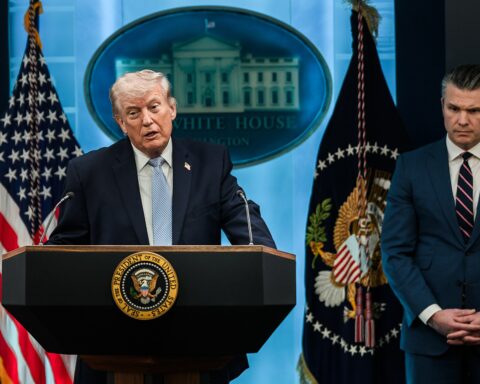
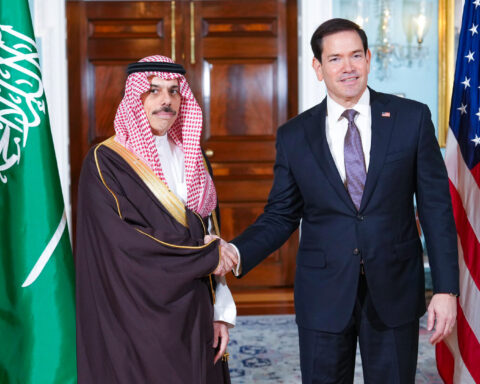
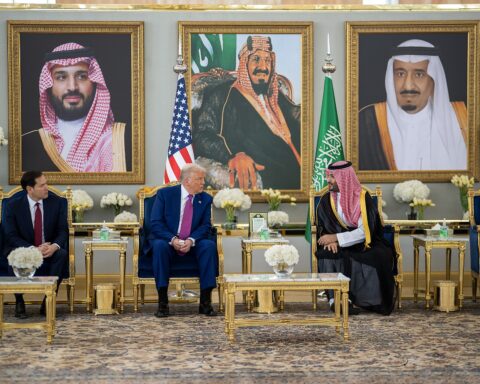
WASHINGTON — Donald Trump told the leaders of eight countries on Saturday that signing the Abraham Accords is “mandatory” for any nation wanting to participate in the emerging Iran deal. The most important leader on the line — Saudi Crown Prince Mohammed bin Salman — said nothing.
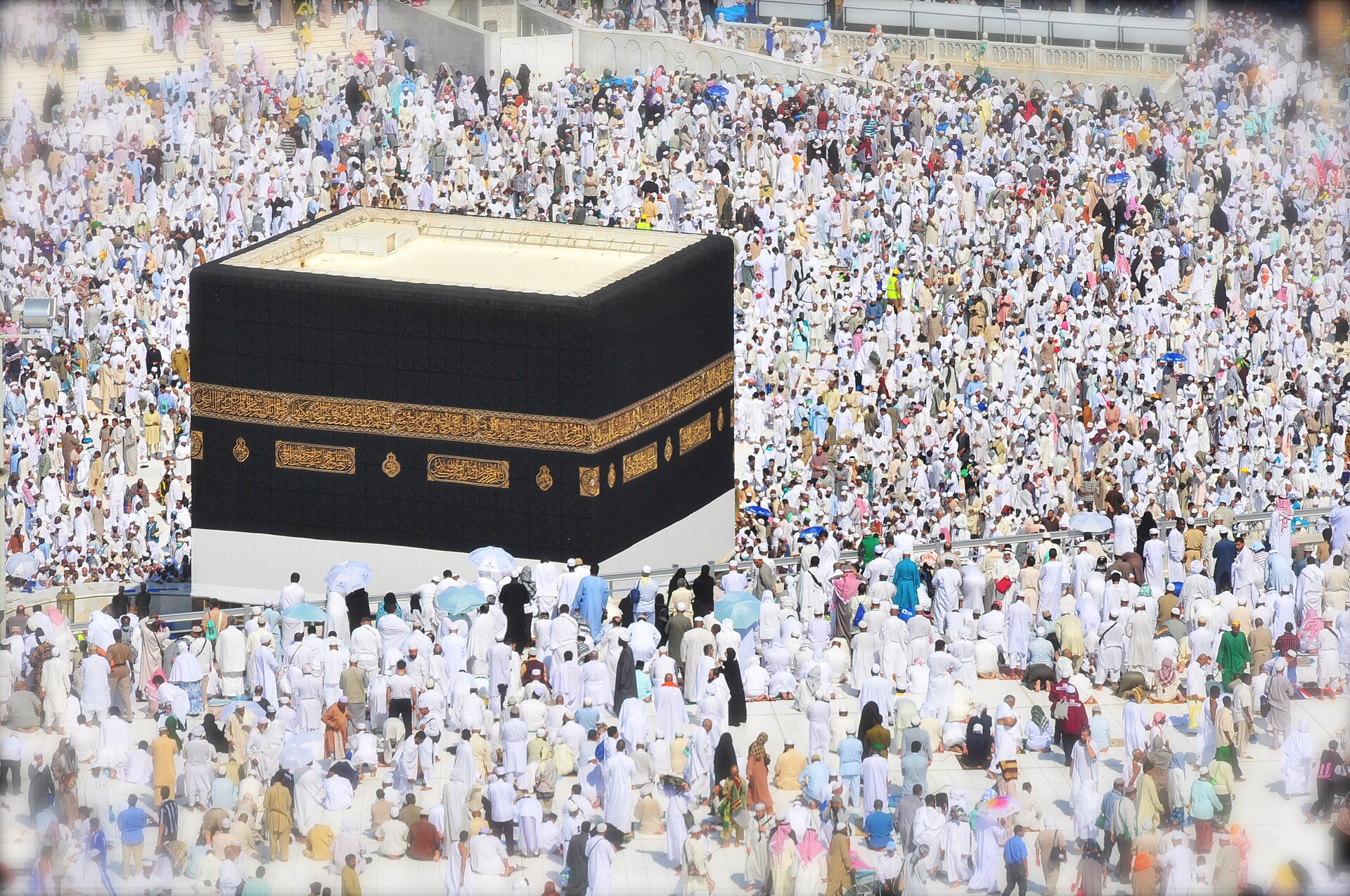
The silence was not a choice. Trump’s demand landed on May 24, the day before 1.5 million pilgrims began moving toward the Plain of Arafat for the holiest rites in Islam. The Day of Arafah falls on May 26 and Eid al-Adha on May 27, placing Saudi Arabia — as Custodian of the Two Holy Mosques — inside a 96-hour window during which any public political escalation would be domestically and religiously untenable. When Eid holiday closures are added to the Hajj security posture, Iran’s calendar capture extended that Saudi diplomatic blackout to eight consecutive days — through June 1.
Contents
- What Trump Said on the Call
- The Three Countries That Went Silent
- Why Did Trump Issue This Demand During Hajj?
- Saudi Arabia’s Palestinian Precondition
- Can Pakistan and Qatar Be Mediators and Signatories?
- The Abraham Accords Expansion Record
- What Comes After Eid?
- Background: The Abraham Accords and Saudi Arabia
- Frequently Asked Questions
What Trump Said on the Call
Trump called leaders from Saudi Arabia, the UAE, Qatar, Pakistan, Turkey, Egypt, Jordan, and Bahrain on Saturday to discuss the US-Iran ceasefire framework, according to Axios. He then pivoted to a demand none of the participants had been briefed on.
“After all the work done by the United States to try and pull this very complex puzzle together, it should be mandatory that all of these Countries, at a minimum, simultaneously, sign onto the Abraham Accords,” Trump said, according to the Times of Israel, which published his full remarks. It was the first time a sitting US president had publicly conditioned participation in an Iran deal on recognition of Israel.
He specified six target countries: Saudi Arabia, Qatar, Pakistan, Turkey, Egypt, and Jordan. The UAE and Bahrain, he noted, had already signed. He then went further — countries that refuse “should not be part of this Deal in that it shows bad intention,” and expansion “should start with the immediate signing by Saudi Arabia and Qatar,” according to the Times of Israel.
A US official told Axios what happened next: “There was silence on the line, and Trump joked and asked if they are still there.” Trump also told the leaders that envoys Jared Kushner and Steve Witkoff would follow up on the Abraham Accords question in the coming weeks.
The Middle East briefing 3,000+ readers start their day with.
One email. Every weekday morning. Free.
Three days later, Trump repeated the condition in his Cabinet meeting — making Saudi Arabia the price of a deal it was never invited to negotiate.
The Three Countries That Went Silent
The silence split the call in two. UAE President Mohammed bin Zayed, who signed the original Abraham Accords in 2020 and has taken a harder line on Iran than any other Gulf leader, voiced support. A US official told Axios that leaders collectively said: “We are with you on this deal. And if it doesn’t work we will be with you too.”
That collective framing obscures what happened on the line. The countries that already recognise Israel affirmed the direction. The countries that do not — Saudi Arabia, Qatar, and Pakistan — went quiet.
Those three share more than the absence of Israeli relations. All are active participants in the diplomatic architecture around the Iran war. Pakistan hosts the indirect US-Iran talks in Islamabad and has deployed troops and Chinese air defence systems to Saudi Arabia’s Eastern Province while relaying American ceasefire proposals to Tehran. Qatar arrived in Tehran on May 22 “in coordination with United States,” according to Axios, the same day it co-signed a five-nation IMO protest against Iran’s Hormuz toll regime. Saudi Arabia has endorsed the Iran deal publicly — Foreign Minister Bin Farhan praised Trump’s approach on May 20 — while being excluded from every substantive round of negotiations.
Trump’s demand places all three in an identical bind. To participate in the Iran deal — which each has a direct security interest in — they must first normalise with Israel, which each has domestic political reasons to avoid.
Why Did Trump Issue This Demand During Hajj?
There are two readings of the timing. The first is incidental — Trump made the call when the deal framework was ready, and the religious calendar was not a factor. The second is that the timing was the point.
The Hajj calendar is not a background detail for Saudi Arabia. The Day of Arafah is the spiritual climax of the pilgrimage, and Eid al-Adha is the largest religious celebration in Islam. The rites those pilgrims are performing are the precise foundation of the Kingdom’s governing legitimacy — the reason the Custodian of the Two Holy Mosques title exists at all.
Any public response to Trump’s demand during this window would force Saudi Arabia to choose between its custodial role and its diplomatic posture. Rejecting the demand publicly would inject a Saudi-American confrontation into a week the Kingdom has spent months ensuring remains calm. Accepting it would mean announcing normalisation with Israel during the holiest days of the Islamic year, in front of pilgrims from countries where 87 percent of the public opposes recognition of Israel, according to the 2025 Arab Opinion Index.
Saudi Arabia did neither, at least not publicly. A Saudi source told CNN after the call that the Kingdom will not normalise without “an irreversible path toward the establishment of a Palestinian state.” The statement was anonymous, delivered to a Western outlet, and carefully avoided rejecting Trump’s framework outright — a diplomatic minimum that restated existing policy through a channel that maintained deniability while the Hajj clock ran down.
This pattern of structurally constrained silence during Hajj has defined Saudi behaviour throughout the Iran crisis. The Kingdom cannot make war, cannot make diplomatic departures, and cannot publicly confront its most important security partner while hosting the pilgrimage. That constraint is not secret — it is published years in advance in the Islamic calendar.
Saudi Arabia’s Palestinian Precondition
The precondition has been consistent since October 7, 2023, but its language has shifted in small ways that may matter. The shift is visible in the gap between what MBS said in November and what a Saudi source said after Saturday’s call.
When Mohammed bin Salman met Trump at the White House in November 2025, he said Riyadh wants to join the Abraham Accords but requires “a credible, irreversible and time-bound path toward a Palestinian state,” according to Axios. That formulation set three separate conditions — credible, irreversible, and time-bound — each of which Netanyahu’s government has refused to meet.
Since that meeting, MBS has “cooled down” on the Abraham Accords question, according to the Jerusalem Post. The cooling is not a mystery: Israeli Prime Minister Benjamin Netanyahu has “vehemently refused” to entertain Palestinian statehood, according to Axios. The condition and the refusal are both public, and neither has moved. That deadlock has not stopped Washington’s think tanks from assigning blame: on Arafah Day, the asymmetry charge being deployed against Riyadh came from the Foundation for Defense of Democracies, which published a piece calling Saudi Arabia’s Palestinian statehood prerequisite “voodoo diplomacy.”
What MBS told Evans privately suggests a different framing: according to evangelical leader Mike Evans, the crown prince said he could recognize Israel “today” and identified King Salman, not Gaza-era public opinion, as the sole obstacle — why King Salman may be the final obstacle to Abraham Accords, and whether MBS wants it that way.
The Saudi source’s CNN statement after Saturday’s call repeated the demand with one alteration: “an irreversible path toward the establishment of a Palestinian state.” The word “time-bound” — present in MBS’s November formulation — was absent. Whether that omission represents diplomatic flexibility or journalistic paraphrase is unclear, but the core position held: no statehood pathway, no normalisation.
The domestic arithmetic reinforces the position. The 2025 Arab Opinion Index found 87 percent of Arab citizens oppose recognition of Israel. Within Saudi Arabia specifically, opposition to normalisation rose 30 percentage points after October 7 — from 38 percent to 68 percent — according to IEMed. Trump’s demand is not merely a diplomatic ask. It is a request that MBS override a domestic opinion shift that moved faster and further than any other issue in Saudi polling.
Can Pakistan and Qatar Be Mediators and Signatories?
Trump’s demand creates a structural contradiction for the two countries currently serving as intermediaries in the Iran diplomacy. The role of mediator and the role of Abraham Accords signatory cannot coexist.
Pakistan is the host of the Islamabad talks — the only channel through which the US and Iran have communicated on the ceasefire framework. Islamabad is bound to Saudi Arabia by the September 2025 Saudi Mutual Defence Agreement, has deployed 13,000 troops to Saudi Arabia’s Eastern Province, and flew JF-17 fighters to Dhahran in April. By January 2026, Pakistan, Saudi Arabia, and Turkey had drafted a trilateral defence agreement creating a regional security architecture not dependent on Israel, according to INSS.
Trump is telling Pakistan that joining the Abraham Accords — normalising with the country that trilateral architecture was designed to bypass — is a condition of participation in the Iran deal Pakistan is mediating. If Islamabad signs, its credibility as an intermediary with Tehran evaporates. If it refuses, it faces exclusion from the deal’s outcome.
Qatar faces the same bind from a different direction. Doha arrived in Tehran on May 22 as a mediator, operating without Pakistan’s military deployments but with its own record of channel diplomacy stretching back to Hamas prisoner exchanges. Its standing with Iran depends on being perceived as a conduit, not a party aligned with Israel. PressTV headlined Saturday’s call as “Trump demands Arab states normalize with Israel in exchange for Iran ceasefire” — the framing Tehran’s media will apply to any normalising state.
Iran has a direct interest in preventing its mediators from signing. Trump floated the possibility that Iran “would like to join” the Accords, a remark NPR and Reuters reported and Iranian state media treated as provocation. The contradiction has a simple shape: Pakistan and Qatar can be Iran’s diplomatic intermediaries, or they can be Abraham Accords signatories, but the two roles cancel each other.
The Abraham Accords Expansion Record
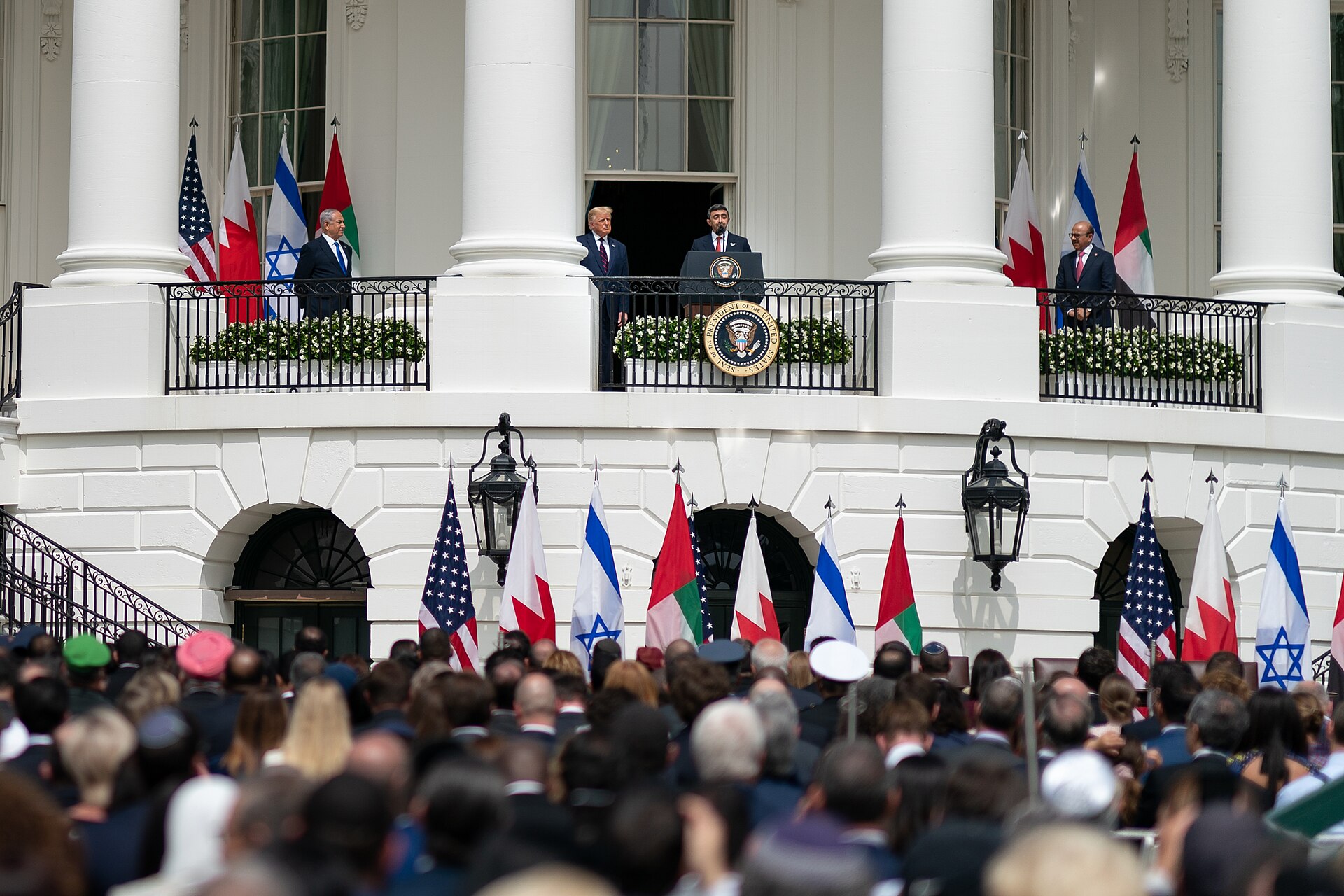
The original Abraham Accords were signed on September 15, 2020, with the UAE and Bahrain normalising with Israel at a White House ceremony. Morocco and Sudan followed in late 2020, though Sudan’s accords remain unratified more than five years later. Since then, one country has joined: Kazakhstan, on November 6, 2025 — though it had maintained diplomatic relations with Israel since the 1990s.
In five and a half years, the Accords have gained a single new signatory, and one that already recognised Israel. Trump is now proposing to add six countries simultaneously, three of which have no diplomatic relations with Israel and one of which — Turkey — recalled its ambassador from Tel Aviv in 2018 and has not returned one.
Senator Lindsey Graham called the proposal “beyond transformative for the region and world” and “a brilliant move by President Trump,” according to the Jerusalem Post. The gap between ambition and precedent is arithmetical: four countries in 2020, zero from 2021 to 2024, one in 2025. Adding six at once would require each target government to reverse domestic opposition, override institutional constraints, and do so under explicit threat of exclusion from an Iran deal that touches their core security interests.
What Comes After Eid?
The 96-hour buffer ends after Eid al-Adha on May 27. When it lifts, Saudi Arabia will face a demand it has so far answered only through an anonymous CNN source.
The follow-up mechanism is already named. Trump told the leaders that Jared Kushner and Steve Witkoff will pursue the Abraham Accords question “in the coming weeks,” according to Axios. Kushner negotiated the original 2020 Accords; Witkoff has been leading the Iran ceasefire track. They will arrive in a region where every government on Saturday’s call heard the same message: sign, or be excluded.
The Kingdom’s response after Eid will be shaped by the same structural constraints that have defined its position throughout the Iran crisis. Saudi Arabia is not a party to the Iran deal. It was excluded from all five rounds of US-Iran talks and from the nuclear track. It is absorbing the fiscal cost of the war — a $33.5 billion first-quarter deficit that reached 194 percent of the full-year target — while holding no seat at the negotiating table.
The previous time Trump raised the Abraham Accords with Saudi Arabia — during his May 2025 Riyadh visit — he “drew silence from the audience,” according to CNN. At that time, his language was permissive: Saudi Arabia would join “when it is ready.” The word on Saturday’s call was different, and the shift tells the story of a year’s lost patience. The word was “mandatory.”
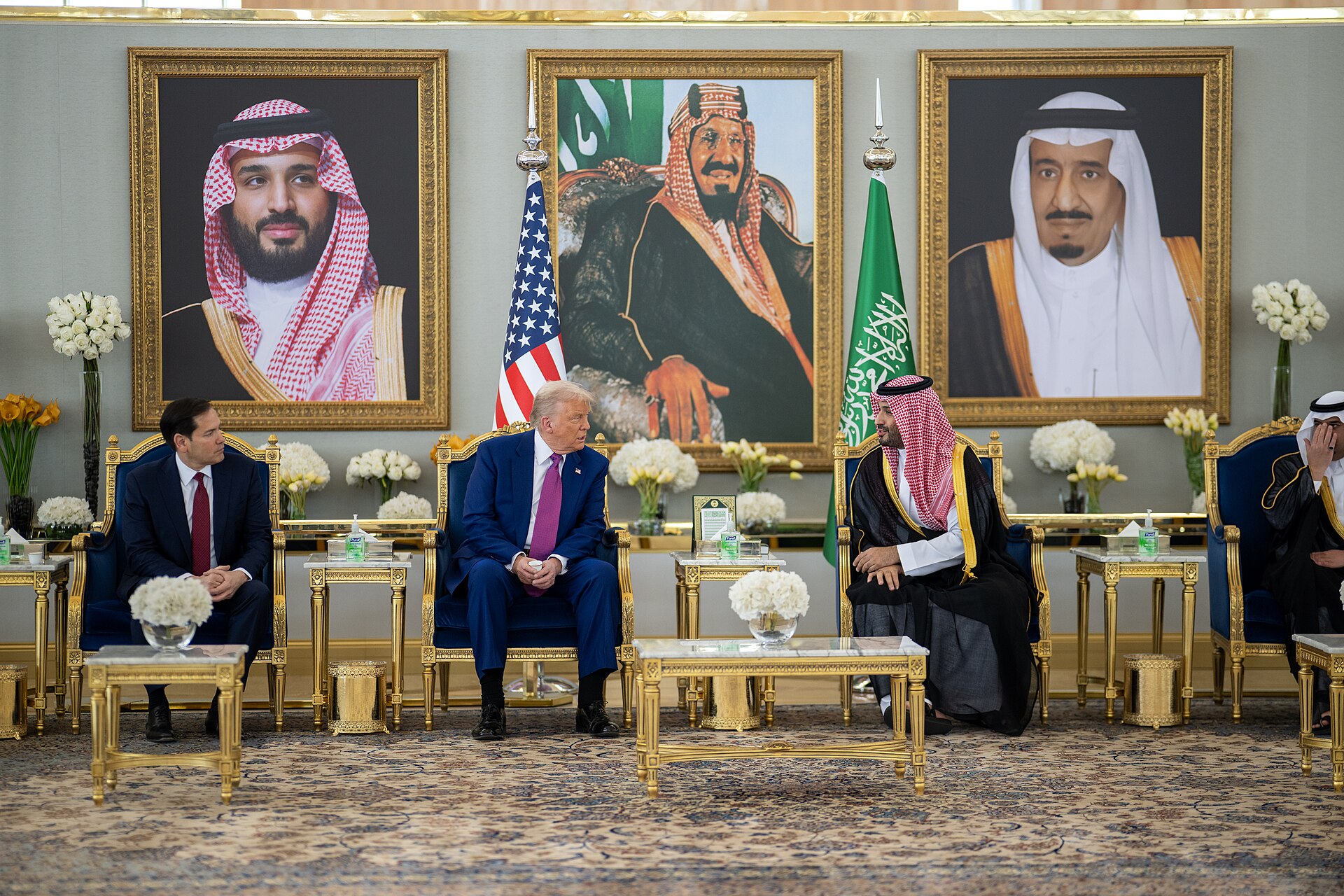
Background: The Abraham Accords and Saudi Arabia
The Abraham Accords emerged from a specific diplomatic window. In 2020, the UAE calculated that normalising with Israel would secure American F-35 sales and cement Abu Dhabi’s position as Washington’s preferred Gulf partner. Bahrain followed within weeks, Morocco traded normalisation for US recognition of its sovereignty over Western Sahara, and Sudan exchanged it for removal from the State Sponsors of Terrorism list. Each signatory received a bilateral incentive; none signed on principle alone.
Saudi Arabia was always the prize. The Kingdom’s recognition of Israel would be the most consequential diplomatic shift in the Middle East since the 1979 Egypt-Israel peace treaty. By September 2023, MBS was publicly signalling proximity — telling Fox News “every day we get closer” and calling the potential deal “the biggest historical deal since the end of the Cold War.”
October 7 ended that trajectory. The Hamas attack and Israel’s subsequent military operation in Gaza made normalisation politically impossible for any Saudi leader relying on domestic Islamic legitimacy. The precondition — Palestinian statehood — became the mechanism through which Riyadh could maintain the appearance of willingness while ensuring the outcome remained out of reach, given Netanyahu’s categorical refusal.
Trump’s Saturday demand changed that dynamic. By making normalisation a condition of the Iran deal, he forced Saudi Arabia to either accept a bargain it cannot sell domestically or forfeit participation in the agreement that determines whether the Strait of Hormuz reopens and the war costing the Kingdom hundreds of millions of dollars per day reaches a conclusion.
Frequently Asked Questions
Has any Arab country with a large Palestinian solidarity movement joined the Abraham Accords?
No. The four original Arab-world signatories — UAE, Bahrain, Morocco, and Sudan — have relatively small or politically marginalised Palestinian diaspora populations. Jordan and Egypt, which have existing peace treaties with Israel predating the Accords, both have large Palestinian populations and have declined to sign the newer framework. Saudi Arabia, with an estimated 240,000 to 400,000 Palestinian residents (official figures are not published), would be the first signatory where Palestinian solidarity carries domestic political weight at scale.
What would Saudi Arabia gain from signing?
The original US offer, outlined during the 2023 negotiations, included a formal US-Saudi mutual defence treaty, access to civilian nuclear technology under a Section 123 agreement, and advanced weapons sales including the F-35. The $142 billion arms deal signed in May 2025 delivered much of the military hardware without requiring normalisation, reducing the Kingdom’s incentive. The remaining items — the defence treaty and nuclear cooperation — require Congressional approval, where opposition from both parties has blocked Saudi nuclear ambitions regardless of the Abraham Accords.
What is the legal status of the Abraham Accords?
The Accords are executive agreements, not treaties ratified by the US Senate. A future US president could withdraw American support without Congressional approval, as Trump did with the JCPOA in 2018. For signatory governments, the Accords function as bilateral normalisation agreements with Israel. Sudan signed but never ratified, and Morocco’s normalisation included US recognition of Western Sahara sovereignty — a concession that remains contested at the United Nations. The Accords’ durability rests on the bilateral relationships, not on an American institutional guarantee.
Could Saudi Arabia sign the Accords without meeting its own precondition?
Technically, yes — there is no binding instrument preventing MBS from reversing the position. But the political cost would be severe. Bin Farhan has stated publicly that “without finding a pathway to peace for the Palestinian people, any normalization will have limited benefits.” The 87 percent Arab opposition figure from the 2025 Arab Opinion Index includes Saudi citizens polled across the Kingdom. Abandoning the precondition during a war in which Saudi Arabia is already absorbing economic damage would expose MBS to criticism from religious establishment figures and a social-media environment the government monitors but cannot fully control.
Did Trump previously try to expand the Accords to include Saudi Arabia?
At least twice. During the September 2023 push, MBS publicly signalled proximity, but October 7 intervened. During Trump’s May 2025 Riyadh visit, he raised the Accords with Saudi leaders and “drew silence from the audience,” according to CNN — his language then was permissive, saying Saudi Arabia would normalise “when it is ready.” By January 2026, Saudi Arabia, Pakistan, and Turkey had drafted a trilateral defence pact that deliberately excluded Israel from the regional security architecture. Saturday’s call marked the sharpest escalation in his approach: from invitation to condition, from “when ready” to “mandatory.”
Pakistan’s Defence Minister Khawaja Asif subsequently delivered the most direct public rejection of any leader on the call — a structural asymmetry that benefits Riyadh without requiring Saudi Arabia to speak. See: Khawaja Asif Said What Saudi Arabia Cannot.