
Table of Contents
ISLAMABAD — Iran claimed on April 11, 2026 — the first day of the first direct US-Iran proximity talks since 1979 — that Washington had agreed to unfreeze $6 billion in Iranian assets held in Qatar. A senior unnamed Iranian source told Reuters the agreement was a sign of American “seriousness.” Within hours, a senior US official told CBS News: “The United States has not agreed to release any frozen Iranian assets to date.” A White House official was blunter, calling the reports “Not True” — capitalised, as distributed to reporters.
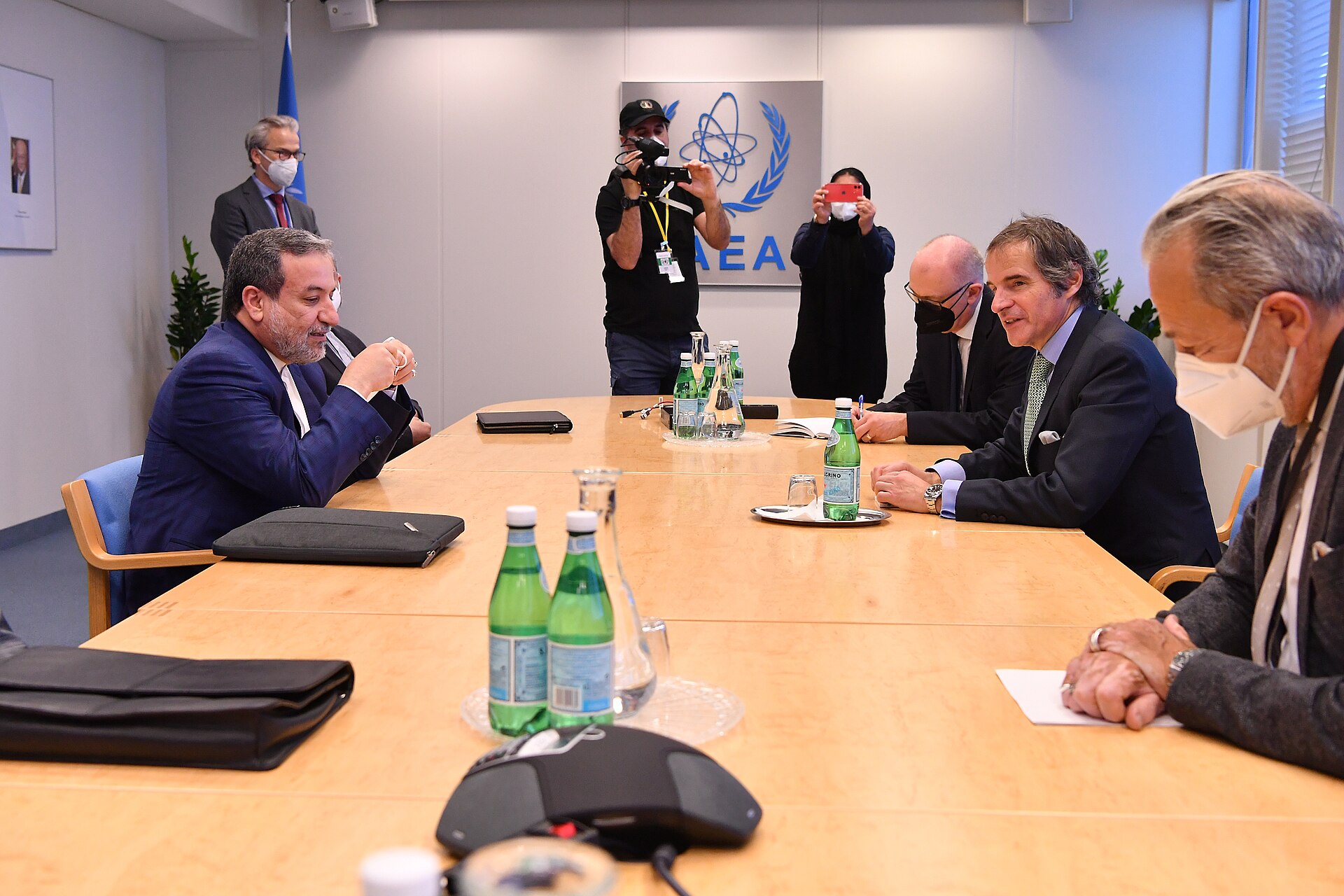
The contradiction landed in the middle of a negotiation that both sides have spent weeks describing as existential. Iran’s 71-member delegation — led by Parliament Speaker Mohammad Bagher Ghalibaf, Foreign Minister Abbas Araghchi, SNSC Secretary Ali Akbar Ahmadian, and Central Bank Governor Abdolnaser Hemmati — arrived in Islamabad with a ceasefire that Pakistan brokered but cannot enforce set to expire on April 22. The $6 billion claim was not a negotiating position leaked prematurely. It was a broadcast aimed at Tehran, not Washington.
The Claim and the Denial
The sequence matters. A first Iranian source told Reuters that the US had agreed to release frozen Iranian assets held in Qatar and other foreign banks. A second source specified the figure: $6 billion. Qatar’s Foreign Ministry then confirmed to CBS News that it still holds $6 billion in Iranian assets but that any release requires US Treasury Department approval — a statement that simultaneously validated the amount and identified the bottleneck Iran had not mentioned.
PressTV, Iran’s English-language state broadcaster, framed the alleged release as Washington being “forced to accept” elements of Iran’s 10-point plan. The network acknowledged that “no official or fully verified confirmation has yet been released” but ran the story as a concession extracted. The framing was consistent with PressTV’s war-era pattern of presenting unconfirmed claims as structural wins, then allowing the denial to serve as secondary confirmation: if the US says it isn’t true, that proves the topic is live.
The US denial was unambiguous. The senior official’s statement to CBS News — “has not agreed to release any frozen Iranian assets to date” — used language calibrated to close the interpretive gap. The phrasing “to date” left open the possibility of future negotiation on the topic while ruling out the specific Iranian claim. But the Iranian domestic news cycle had already absorbed the original version. By the time the denial circulated, Tehran’s evening broadcasts had moved on.
Where Did the $6 Billion Come From?
The $6 billion is not a new figure. It originated as Iranian oil revenues frozen in South Korean banks when the Trump administration reimposed sanctions in 2018. Under the Biden-era September 2023 prisoner swap deal — which secured the release of five American detainees — the funds were transferred to restricted accounts in Qatar, designated exclusively for humanitarian purchases: food, medicine, medical devices. Iran could not convert the funds to cash or redirect them to military use. A State Department official said in December 2023: “Not a penny of this money has been spent and these funds will not go anywhere anytime soon.”
The Middle East briefing 3,000+ readers start their day with.
One email. Every weekday morning. Free.
Then came October 7, 2023. On October 13, the Biden administration and Qatar agreed to block Iran’s access entirely. The $6 billion has sat untouched in Qatari accounts since — a sum large enough to carry political symbolism but small enough, relative to Iran’s $100 billion in globally frozen assets, to function as a test case rather than a rescue package. Iran holds roughly $20 billion frozen in China, $6 billion in Iraq, $1.6 billion in Luxembourg, $1.5 billion in Japan, and $2 billion in the United States, according to Euronews reporting from April 9, 2026.
The deliberate echo of the 2023 arrangement is the point. By claiming the same $6 billion that Biden released and then refroze, Iran’s delegation invoked the one recent precedent in which Washington actually moved money. The 2015 JCPOA unfroze over $100 billion. The 2013-2014 interim deal (JPOA) released approximately $4.2 billion in tranches. Each precedent involved months of verification. The suggestion that $6 billion had been agreed on day one of proximity talks — before the principals had even sat in the same room — was implausible on its face to anyone familiar with the mechanics. It was not designed for that audience.
Who Is Iran Actually Talking To?
Ghalibaf arrived in Islamabad on April 11 and told reporters: “We have goodwill, but we do not trust.” The previous day, he had posted on X a more revealing statement: “Two of the measures mutually agreed upon between the parties have yet to be implemented: a ceasefire in Lebanon and the release of Iran’s blocked assets prior to the commencement of negotiations. These two matters must be fulfilled before negotiations begin.” The post established asset release not as a topic for discussion but as a precondition already agreed — a claim the US has not confirmed.
The domestic context for this framing is severe. Hossein Shariatmadari, the hardline IRGC-aligned editor of Kayhan, accused Ghalibaf of abandoning “war until victory” by travelling to Islamabad at all, according to the Soufan Center’s April 10 analysis. The IRGC authorization ceiling — the structural problem that no Iranian civilian official can commit the Revolutionary Guards to terms they did not author — means Ghalibaf needs to demonstrate that he extracted something concrete before the talks even began. An unfreezing announcement, even a fabricated one, serves that purpose. It gives Ghalibaf a deliverable to show the domestic audience that resists any negotiation short of American surrender.
Trump, for his part, told NBC News ahead of the talks: “They’re much more reasonable. They’re agreeing to all the things that they have to agree to.” The statement was vague enough to be claimed by either side and specific enough to be useless. Iran’s state media treated it as confirmation. The White House presumably intended it as pressure. The two interpretations coexisted without collision — which is the nature of proximity talks where the parties do not meet face to face.
Why Did Iran Bring Its Central Bank Governor to a Security Negotiation?
The composition of Iran’s delegation tells a parallel story. Ghalibaf leads — a former IRGC Aerospace Force commander (1997-2000) whose military credentials give him standing with hardliners. Araghchi handles the diplomatic channel. Ahmadian, as SNSC Secretary, carries the institutional authority that Pezeshkian cannot exercise directly over the security apparatus. But the presence of Central Bank Governor Abdolnaser Hemmati signals that asset release is not a secondary talking point. It is a structural demand.
You do not bring your central bank governor to a ceasefire negotiation unless you intend to discuss money — or unless you need Tehran to believe you are discussing money. Hemmati’s presence converts the $6 billion claim from a media operation into an institutional signal: the official responsible for managing Iran’s foreign reserves is in the room where the money is supposedly being discussed. For the Iranian public, his presence is the evidence. For Washington, it is a negotiating pressure point — a signal that Iran’s economic desperation is real enough to put the central banker on a plane to Islamabad.
US Treasury Secretary Scott Bessent described the broader strategy in blunt terms to Euronews on April 9: “We created a dollar shortage in the country…the Iranian currency went into free fall, inflation exploded.” The rial has collapsed from approximately 42,000 per dollar to over 1.4 million. Year-on-year inflation reached 68.1% in February 2026 — the highest since the Second World War. Hemmati is not in Islamabad because things are going well.
The Hormuz Linkage
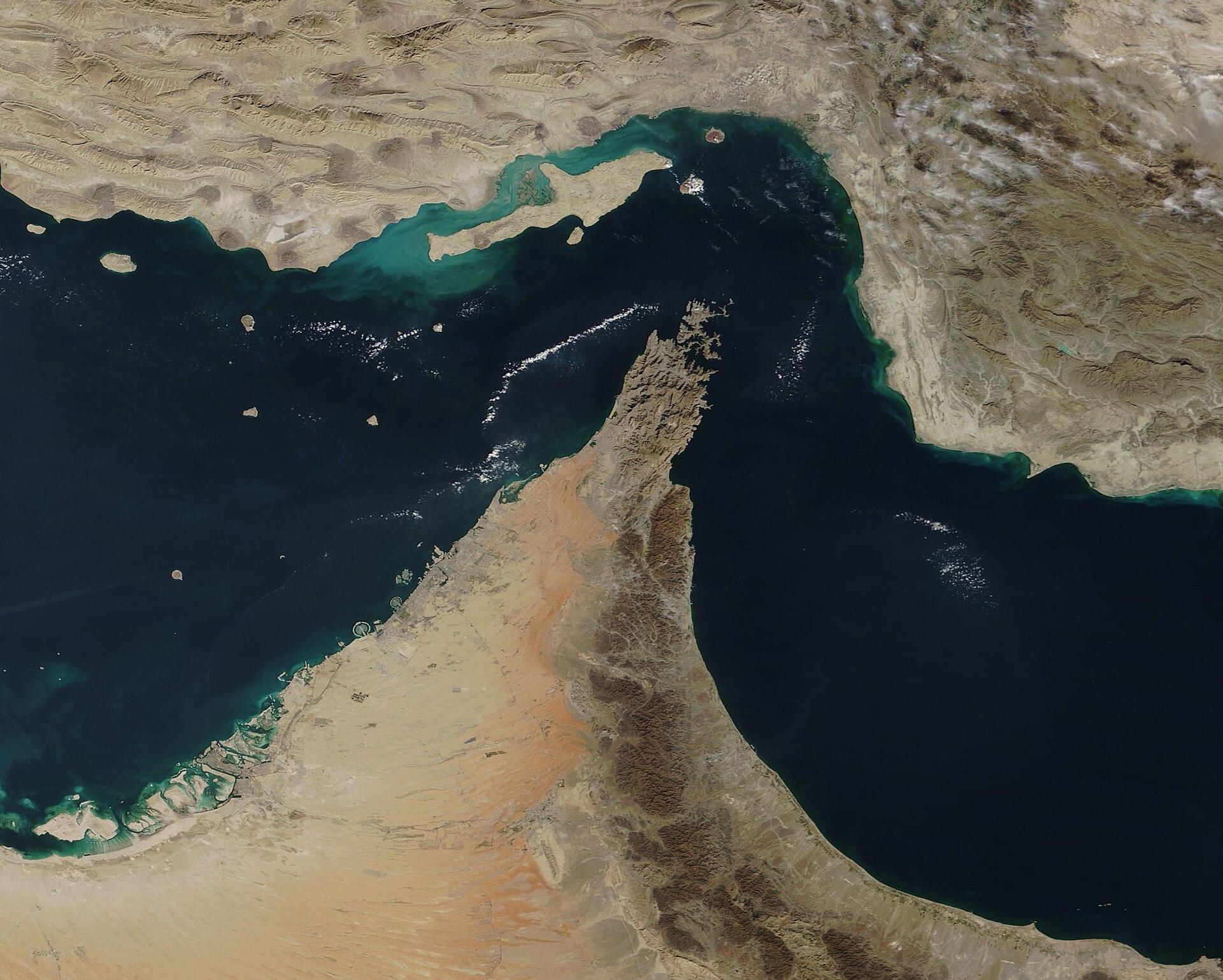
An Iranian source explicitly connected the asset claim to the Strait of Hormuz, telling Reuters that the release of funds was “organically linked to guaranteeing safe and unconditional passage through the Strait of Hormuz.” The linkage is not subtle. Iran is pricing Hormuz reopening — where zero tankers currently clear the strait freely — as a transaction, not a concession. The $6 billion is framed as the opening installment.
This mirrors the broader Iranian negotiating architecture visible in the 10-point plan, where Point 7 demands Hormuz “coordination with the Armed Forces of Iran” as a treaty requirement — language that converts international waterway transit into an Iranian licensing function. The $6 billion claim operationalises that demand by establishing a price before the principle is agreed. If the US has already “agreed” to pay, the argument shifts from whether Iran can charge for Hormuz passage to how much passage costs. The denial pushes the argument back, but the framing has entered the information environment.
The exclusion of Saudi Arabia from the Islamabad bilateral makes this linkage more dangerous. Riyadh — whose exports depend on Hormuz reopening and whose East-West Pipeline bypass covers only a fraction of pre-war capacity — has no seat at the table where the price of its own maritime access is being set. The Iranian source’s use of “organically linked” is diplomatic language for a hostage negotiation conducted at the level of international shipping.
Pezeshkian’s Domestic Arithmetic
President Masoud Pezeshkian warned the IRGC directly in early April that Iran’s economy could face “total collapse within three to four weeks” without a ceasefire. The warning, reported across Iranian and Western media, was remarkable for its specificity — not “severe hardship” or “economic pressure” but “total collapse” with a timeline attached. Pezeshkian was not speaking to Washington. He was speaking to the IRGC commanders whose continued prosecution of the war is consuming what remains of Iran’s economic reserves.
The $6 billion claim serves Pezeshkian’s survival calculus in two directions simultaneously. For the hardliners, it demonstrates that negotiations are already producing results — the Americans are releasing money, which means continued engagement is rational rather than capitulatory. For the Iranian public, it offers the first tangible economic signal in a war that has produced the inflation and currency collapse Bessent described. Neither audience is likely to encounter the US denial with the same prominence as the original claim. Iranian state media’s editorial choices ensure that.
The information-warfare logic is self-reinforcing. If the US denies the asset release, Iran can frame the denial as evidence of American duplicity — they agreed behind closed doors and reneged publicly. If the US ignores the claim, it stands as unchallenged fact in Iranian domestic coverage. If the US eventually does release some portion of frozen assets as part of a broader deal, Iran will claim retroactive vindication. Trita Parsi of the Quincy Institute for Responsible Statecraft offered a broader assessment to Time magazine: “I don’t think there will be an agreement. I think the end result will be a non-agreed new status quo after this, in which the US actually will pull itself out of the war, but Israel will continue.” If Parsi is correct, the $6 billion claim is not a down payment on a deal. It is a domestic narrative hedge against the deal’s failure.
What Happens on April 22?
The ceasefire expires on approximately April 22. No extension mechanism has been identified, according to the Soufan Center. The Islamabad proximity talks — where Vance and Ghalibaf held the first direct US-Iran exchange since 1979 — are operating under that deadline with 11 days remaining. The $6 billion claim dropped on day one. If the talks extend to day five or day eight without a framework, the pressure to fabricate additional “concessions” will intensify on the Iranian side precisely as the deadline makes those fabrications more consequential.
The two messages Iran sent to Islamabad — one through diplomatic channels, one through state media — reflect a delegation that is negotiating on two fronts with two different versions of reality. The diplomatic front requires flexibility. The domestic front requires the appearance of victory. The $6 billion serves the second front exclusively. It costs Iran nothing to claim, costs the US credibility to deny (because every rebuttal keeps the claim in circulation), and buys Pezeshkian time against the hardliners who believe he should not be in Islamabad at all.
Ghalibaf’s formulation — “We have goodwill, but we do not trust” — may be the most honest statement to emerge from April 11. It applies in every direction: Iran does not trust the US, the US does not trust Iran’s claims, the IRGC does not trust Ghalibaf’s mandate, and Pezeshkian does not trust his own timeline. The $6 billion sits at the centre of those intersecting failures of trust — real money, in a real account, that no one has agreed to release, and that Iran has already told its public is on the way.
Background: The Frozen-Asset Cycle
Each cycle of US-Iran asset diplomacy has followed the same pattern: release as incentive, refreeze as punishment, re-release as proof of concept for the next negotiation. The JPOA released $4.2 billion in tranches; the JCPOA unfroze over $100 billion; the 2023 prisoner swap moved $6 billion to Qatar; the October 2023 refreeze created the current status quo. Iran’s April 11 claim attempts to accelerate the cycle by skipping the negotiation phase entirely — declaring the release before any agreement exists to authorise it.
FAQ
Has any portion of Iran’s frozen assets actually been released under the Trump administration?
No. The $6 billion transferred to Qatar in September 2023 under the Biden administration’s prisoner swap has remained frozen since October 13, 2023. The Trump administration has not authorised any release of Iranian frozen assets. Qatar confirmed on April 11, 2026 that it still holds the $6 billion and that any release requires US Treasury Department approval — approval that has not been granted.
How does Iran’s $6 billion claim compare to its total frozen assets worldwide?
Iran’s globally frozen assets exceed $100 billion across multiple jurisdictions, according to Euronews. The $6 billion in Qatar represents roughly 6% of the total. China holds approximately $20 billion in frozen Iranian funds, Iraq holds $6 billion, Luxembourg $1.6 billion, Japan $1.5 billion, and the United States $2 billion. The Qatar-held funds are politically distinctive not because of their size but because they were the most recently moved — and most recently refrozen — making them a test case for whether any unfreezing is possible under current conditions.
What is the IRGC’s position on the Islamabad negotiations?
The IRGC has not endorsed the talks. IRGC-aligned commentator Hossein Shariatmadari publicly accused Ghalibaf of abandoning “war until victory” by attending. Defense Minister Vahidi — whose authorization is required for any binding security commitment — was not part of the Islamabad delegation, raising questions about whether any agreement reached can bind the military apparatus. The authorization ceiling problem means that civilian negotiators may commit to terms the Revolutionary Guards will not implement.
Could the $6 billion actually be released as part of a broader deal?
Technically, yes — the funds sit in Qatari accounts and could be released with US Treasury approval. But the precedent is discouraging. The 2023 release required months of negotiation, a direct prisoner exchange, and elaborate humanitarian-use restrictions. The current talks have not yet produced even a framework for extending the ceasefire past April 22, let alone a sanctions-relief mechanism. Any asset release would also require congressional notification under US law, adding a domestic political obstacle that the Trump administration — which campaigned on maximum pressure against Iran — would need to navigate.
What is the Sadara debt cliff and how does it connect to frozen-asset negotiations?
Sadara Chemical Company — a $20 billion Saudi Aramco-Dow joint venture in Jubail — faces a $3.7 billion debt grace period expiring on June 15, 2026. The connection to frozen-asset talks is indirect but structural: continued Hormuz disruption threatens Saudi petrochemical exports, which threatens Sadara’s ability to service its debt, which threatens the broader Gulf industrial economy. Every day the strait remains functionally closed increases the economic pressure on all parties — including Saudi Arabia, which has no seat at the Islamabad table where the price of reopening is being negotiated.