MATCH FOUND
DHAHRAN — Brent crude has fallen roughly 10 percent from its pre-ceasefire peak of $120 per barrel to trade near $96 on April 10, a decline that would make sense if the Strait of Hormuz were open — except that, by every available measure of physical tanker traffic, it is not. In the first 48 hours after the ceasefire announcement, nine vessels transited the strait according to MarineTraffic and Kpler data compiled by NBC News, none of them oil or gas tankers, against a pre-war baseline of 100 to 120 commercial transits per day tracked by S&P Global Commodity Insights.
Table of Contents
The Paper-Physical Divide
The gap between what futures traders believe and what physical oil markets are experiencing has reached a magnitude without modern precedent. Dated Brent — the physical spot benchmark that reflects actual barrels changing hands — settled at $131.78 per barrel on April 9 according to CNBC, having peaked at $144.42 before the ceasefire was announced. Front-month Brent futures, the contract most traders and headlines reference, closed near $96 on April 10. The resulting spread of $33 to $36 per barrel dwarfs the dislocation produced by Russia’s invasion of Ukraine in 2022 and signals that physical scarcity is acute even as paper markets have decided the war is effectively over.
Goldman Sachs has called the Hormuz shutdown “the largest supply shock in the history of the global crude market,” a characterisation that the bank’s own scenario modelling supports: one more month of closure keeps Brent above $100 throughout 2026, with a longer disruption pushing prices to $120 in the third quarter and $115 in the fourth, according to an April 9 research note cited by OilPrice.com. JPMorgan’s stress scenario, reported by TheStreet, warns that Brent could “overshoot toward $150 per barrel” if the strait remains shut into mid-May. Neither forecast is consistent with a market that has priced crude at $96.
The pattern has a precise historical analogue. When the 2015 nuclear deal was announced, oil prices fell before a single additional Iranian barrel reached the market, and Iran subsequently needed a full year to restore production from 1.4 million to 2.5 million barrels per day. Markets chronically price in geopolitical resolution before physical reality catches up — but the 2015 precedent involved a signed, verified agreement with an implementation timeline, not a ceasefire whose terms remain disputed by the party that controls the chokepoint.
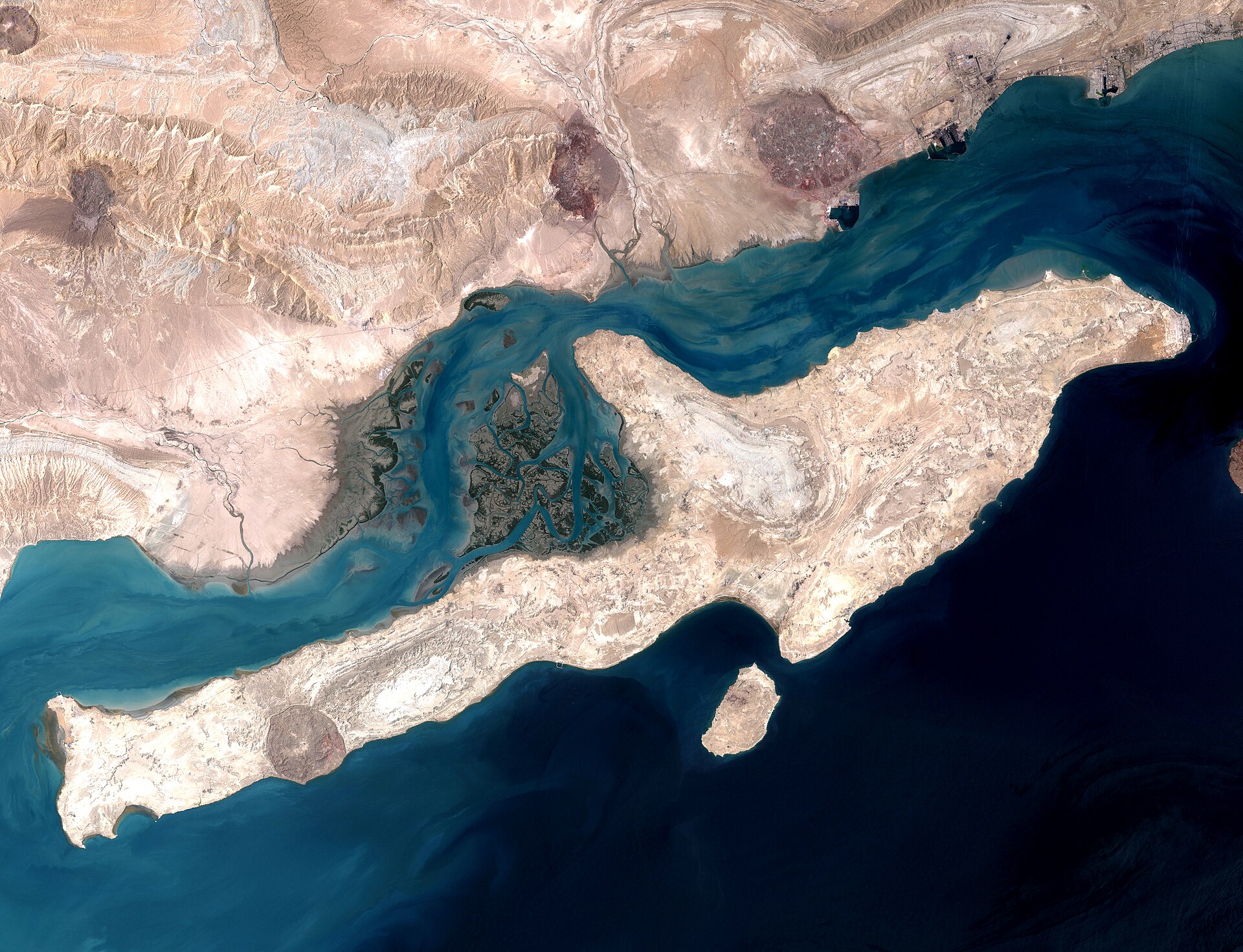
The Strait of Hormuz is not open. Access is being restricted, conditioned and controlled.
The HOS Daily BriefThe Middle East briefing 3,000+ readers start their day with.
One email. Every weekday morning. Free.
Sultan Ahmed Al Jaber, ADNOC CEO, CNBC, April 9
Who Is Actually Transiting the Strait?
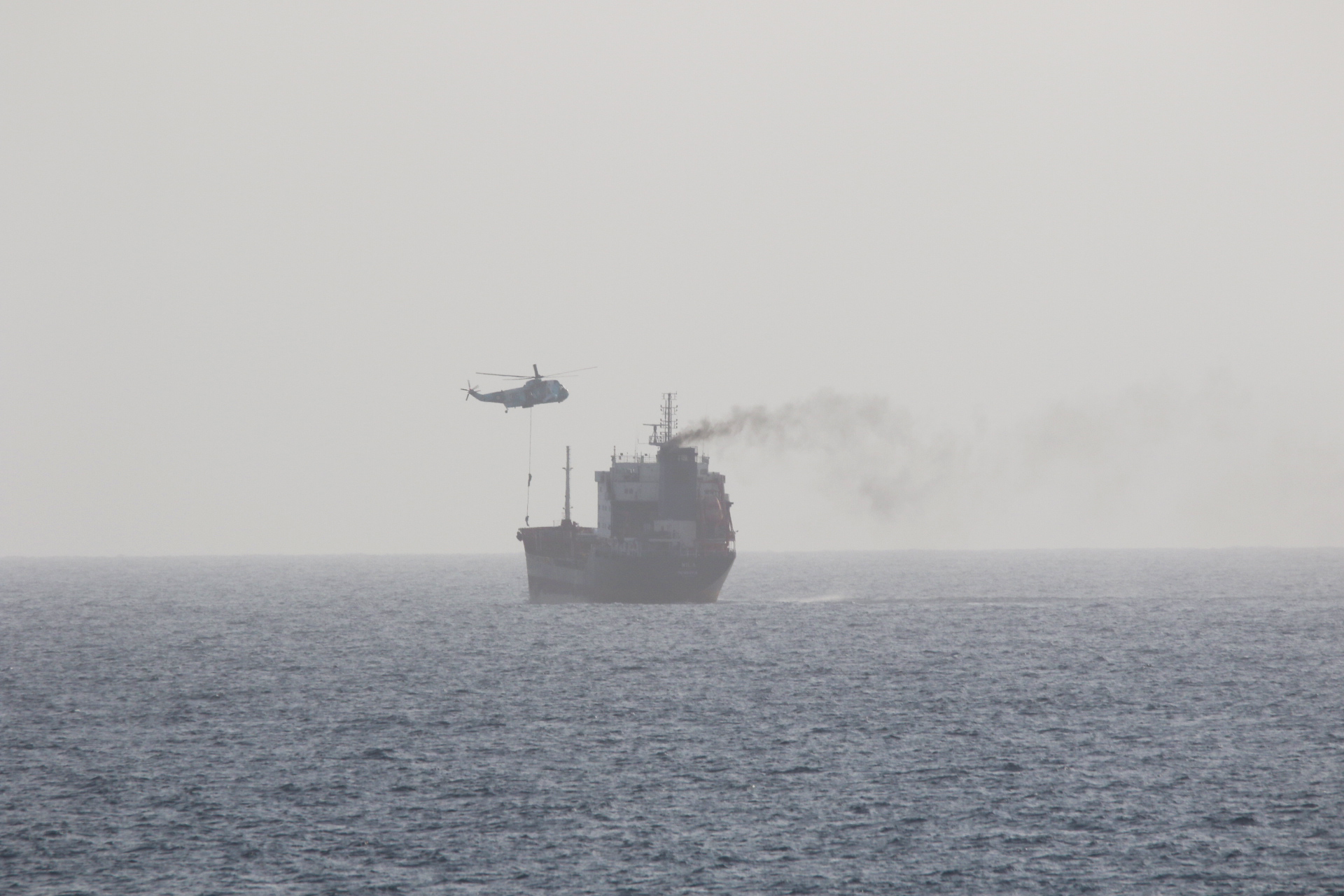
The physical evidence is stark. On ceasefire day one, five bulk carriers — vessels carrying grain, ore, and other dry goods — crossed the strait, but zero oil or gas tankers made the passage, according to MarineTraffic data compiled by Kpler and reported by NBC News. By April 9 to 10, Gulf Today and Insurance Journal reported that only one non-Iranian oil tanker had crossed since the ceasefire was announced, a figure so far below the pre-war throughput of roughly 20 million barrels per day that the term “reopening” applied to the strait is functionally meaningless.
The bottleneck is not a lack of willing ships. Insurance Journal reported on April 10 that more than 230 oil-laden tankers are waiting to transit, approximately 300 ships are queued for passage in total, more than 400 tankers are stationed outside the Gulf, and 20,000 seafarers — a figure documented by the International Maritime Organization — remain stranded. Jakob Larsen, chief safety officer at the shipping industry body BIMCO, told NBC News that the industry is “interested in leaving as soon as it is safe to do so” but is awaiting “technical details from the U.S. and from Iran on how to transit safely.”
Kevin Hassett, the White House’s National Economic Council director, told CNBC on April 9 that getting even one oil tanker through would provide a “huge chunk of what’s missing” and that Iran had agreed to “start letting many more ships through” — a claim that the physical traffic data does not yet support.
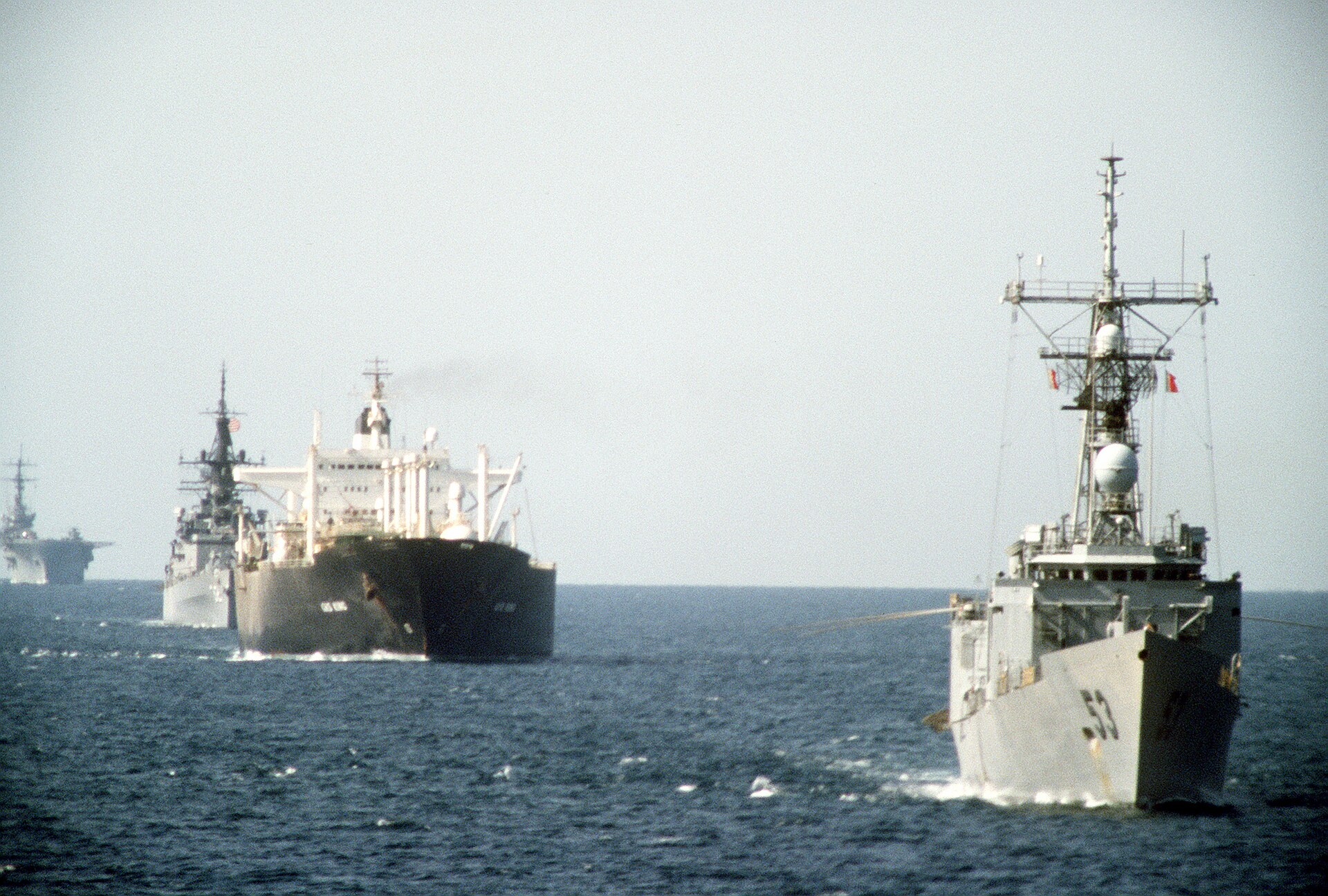
President Trump appeared to acknowledge the gap between promise and performance on April 9, posting on social media that Iran was doing a “very poor job” of allowing oil through and adding: “That is not the agreement we have!” By April 10, he told NBC News he remained “very optimistic” about a peace deal, asserting that Iran had “been conquered” and had “no military,” while warning that without a deal “it’s going to be very painful.” ING Commodities analysts offered a more grounded assessment to NBC News the same day: “Prices rebounded as fighting in the Middle East continued, and the ceasefire outlook deteriorated.”
Aramco’s OSP Trap
Saudi Aramco set its May Official Selling Price for Arab Light crude to Asia at a premium of $19.50 per barrel above the Oman/Dubai average, a figure established when Brent was trading near $109 and which represented the largest wartime premium in the company’s history — exceeding the previous record of $9.35 set during the Russia-Ukraine price spike of May 2022. The problem is that Brent has since fallen to roughly $96, which means the effective cost of a barrel of Aramco contract crude to an Asian refiner now sits approximately $15 above the prevailing spot price, a spread that creates an almost irresistible incentive to defect from term contracts.
The mechanics of buyer flight are well understood within the OSP system. When the premium-to-spot spread exceeds roughly $3 to $5 per barrel, Asian refiners — particularly in India, South Korea, and Japan — begin lifting only the minimum contractual volumes and filling the remainder of their crude slates with spot purchases from West Africa, the Americas, or the North Sea. At a $15 spread, the incentive is not marginal but existential for refining margins: a 200,000-barrel-per-day refiner lifting Aramco contract crude instead of spot alternatives would forfeit approximately $3 million per day, or $90 million per month, in unnecessary procurement costs. No procurement department can justify that differential to a board for longer than one or two lifting cycles.
Aramco can adjust the June OSP downward, and almost certainly will, but the May barrels are already priced and the invoices are contractually locked. The structural damage is that every month of dislocation erodes the reliability premium that has historically allowed Aramco to price above spot — because the premium was understood to be payment for supply security, and the war has demonstrated that Saudi supply is neither secure from Iranian missile attack nor insulated from pipeline strikes on the East-West bypass. Muyu Xu, a Kpler analyst, told NBC News that “it’s just a lot of uncertainty” on payment procedures and compliance risks — a statement directed at Hormuz transit, but equally applicable to the question of whether Aramco’s contract architecture can survive a $15 spread for a second consecutive month.
Can Saudi Arabia Afford Both Sides of This Squeeze?
Saudi Arabia’s fiscal position is being compressed from two directions simultaneously — a dynamic that distinguishes this crisis from every oil shock since the kingdom became a major exporter. The price side is familiar: the IMF pegs Saudi Arabia’s central-government fiscal breakeven at $86.60 per barrel, Bloomberg Economics calculates a broader breakeven of $94 per barrel when Public Investment Fund commitments are included, and Bloomberg’s full-capex estimate — incorporating the PIF’s $71 billion construction pipeline, now revised down to $30 billion — places the figure at $108 to $111 per barrel. Brent at $96 sits within this range, meaning the kingdom is either marginally solvent or marginally insolvent depending on which version of the spending plan one believes.
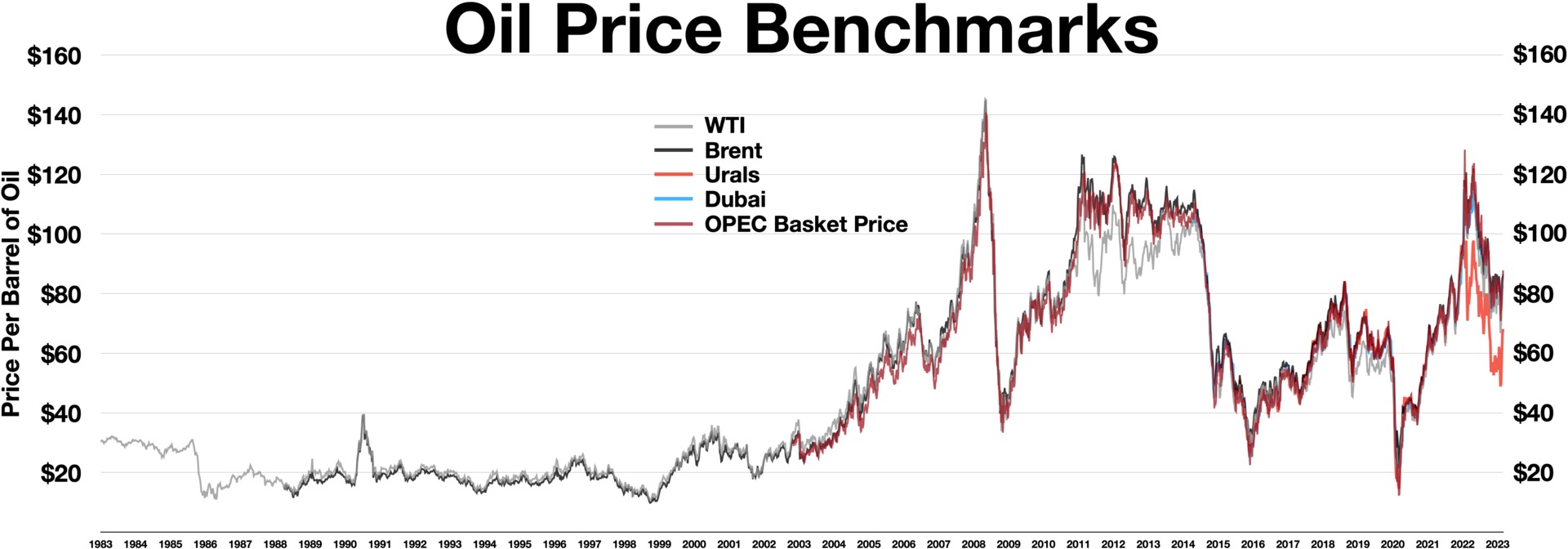
The volume side is the variable that the 2015-16 fiscal shock did not include. Saudi Arabia entered 2026 exporting roughly 7.3 million barrels per day, but the closure of Hormuz eliminated the eastern export corridor through Ras Tanura and Ju’aymah, leaving the 7-million-barrel-per-day East-West Pipeline to Yanbu as the primary bypass — a pipeline that was itself struck by the IRGC on April 8, one day after the ceasefire, at a pumping station that reduced effective throughput to an estimated 3 to 4 million barrels per day according to BOE Report. Even at full pipeline capacity, the net exportable volume through Yanbu is approximately 5 million barrels per day after accounting for domestic refinery feedstock requirements, which represents a 30 to 45 percent reduction from pre-war export capacity.
Goldman Sachs projected in December 2025 that Saudi Arabia would run a fiscal deficit of 6.6 percent of GDP in 2026 — nearly double the Ministry of Finance’s official target of 3.3 percent — equivalent to roughly $72 to $75 billion against the official $44 billion deficit estimate, according to AGBI. That projection assumed Hormuz would remain open. The kingdom entered 2026 with $438.5 billion in foreign exchange reserves and approved $57.87 billion in debt issuance for the year, a borrowing programme sized for a world in which Brent trades at $75 to $85 with full export volumes. The world Saudi Arabia actually inhabits — one where Brent is at $96 but export volumes are down 30 to 45 percent and the PAC-3 interceptor stockpile is 86 percent depleted — was not in the fiscal plan.
The 2015-16 precedent is instructive but incomplete. When Brent fell to $30 per barrel in early 2016, Saudi Arabia ran a deficit exceeding 16 percent of GDP — more than $118 billion — and responded by cutting spending 14 percent, raising domestic fuel prices by 67 to 133 percent, and borrowing $26 billion in a single year. The current crisis is structurally worse because it compresses both price and volume simultaneously: a $96 barrel that cannot be exported generates zero revenue, not $96 of revenue, and every barrel that does reach Yanbu arrives at a discount to dated Brent because the physical scarcity premium accrues to whoever holds barrels outside the Gulf, not to the producer trapped inside it.
Iran’s Toll Architecture
The reason Hormuz remains physically closed despite the ceasefire is that Iran has constructed a legal and operational framework for controlling transit that exists independently of any diplomatic agreement. Iran’s Parliament codified the “Strait of Hormuz Management Plan” into law on March 30 to 31, establishing a toll of $1 per barrel — approximately $2 million per loaded VLCC — payable in cryptocurrency or yuan via Kunlun Bank, deliberately outside the SWIFT system, as reported by the Financial Times, CoinDesk, and IranWire. The law includes a five-tier nationality ranking under which “friendlier” nations pay less and vessels linked to the United States or Israel are denied transit entirely.
The toll system is not merely legislative theatre. Iran earned approximately $139 million per day in oil revenue during March 2026 despite the war, a figure that demonstrates the economic functionality of the framework and eliminates any Iranian urgency to restore free passage. The IRGC retains operational control of the strait independent of diplomatic channels — a point underscored by the Supreme National Security Council’s full text, which declared that “negotiations are continuation of battlefield” — and Iran demands prior permission, email submission of cargo manifests, and the crypto toll payment before granting transit approval. John Stawpert of the International Chamber of Shipping told NBC News that “the charging of fees or tolls would be an extreme outlier and would set a dangerous precedent,” while Trump himself proposed a “joint venture” arrangement for the strait on April 8, a concept that would formalise rather than eliminate Iran’s toll claim.
The compliance trap for shipowners is multi-layered. Paying a toll to Iran in cryptocurrency may violate US sanctions, meaning that any vessel owner who pays to transit could find itself locked out of the dollar-denominated insurance, financing, and port systems that underpin global shipping. Not paying means not transiting — and not transiting means the 230 laden tankers and the seafarers aboard them remain exactly where they are regardless of what futures traders in London and Chicago decide Brent should cost.
What Happens If the Market Is Right?
There is a scenario in which the 10 percent decline in Brent proves prescient rather than premature — one in which Trump’s April 10 statement that he is “very optimistic” about a deal translates into an actual agreement, Iran dismantles or suspends the toll system, the IRGC permits unrestricted transit, mines are cleared from the shipping lanes, and the 230 waiting tankers begin flowing through at something approaching the pre-war rate of 100 to 120 transits per day. Even in this optimistic case, the physical logistics of clearing a 40-day backlog through a strait that was processing 20 million barrels per day before the war would take weeks, not days, and the insurance, classification, and flag-state approvals required before tanker owners risk a Hormuz transit would add additional delay.
The more probable near-term outcome is a graduated and contested reopening in which some vessels transit under Iranian conditions while others refuse, creating a two-tier market in which Hormuz-compliant barrels carry a discount (because they were produced under Iranian toll and compliance conditions) and non-Hormuz barrels carry a premium (because they arrived via pipeline, Yanbu, or non-Gulf sources). Goldman’s one-month-closure scenario — Brent above $100 for the remainder of 2026 — assumes this kind of partial reopening rather than a clean return to pre-war conditions, and even that scenario leaves Aramco’s May OSP roughly $5 to $10 above where it needs to be to retain Asian buyers. The $580 million in oil futures contracts traded 15 minutes before Trump’s March 23 “productive conversations” social media post, a volume that the Financial Times and Fortune reported is under congressional investigation, suggests that at least some market participants are trading on political signals rather than physical fundamentals — a pattern that rewards speed over accuracy and punishes anyone, including Saudi Arabia, whose revenue depends on actual barrels reaching actual buyers.
Sultan Ahmed Al Jaber, the ADNOC chief executive, told CNBC on April 9 that what is happening in the strait is “not freedom of navigation” but “coercion.” The distinction matters because freedom of navigation can be restored by removing an obstacle, while coercion requires changing the behaviour of the actor doing the coercing — and Iran, which controls the chokepoint, has codified its coercion into law, funded it through operational revenue, and placed it under the command of an IRGC leadership structure that has explicitly rejected the premise that diplomatic negotiations constrain military operations. The market has priced in a resolution. The strait has not delivered one.
Frequently Asked Questions
Why is the physical oil price so much higher than the futures price?
Futures contracts reflect expectations about where prices will be at expiry — typically one to three months out — while dated Brent reflects the cost of a physical barrel available now. The $33 to $36 spread exists because physical barrels are scarce (Hormuz is closed, pipelines are damaged, and tankers cannot transit), but futures traders expect the situation to improve before contracts settle. This kind of backwardation is normal during supply shocks, but the current magnitude is historically unprecedented and suggests either that the physical market is far tighter than traders realise or that futures are mispricing the timeline for Hormuz reopening.
Can Saudi Arabia cut the May OSP retroactively?
No. Aramco’s OSP is set once per month and applies to all liftings during that month under existing term contracts. The May OSP of +$19.50 is locked, and retroactive adjustment would undermine the entire contract framework. Aramco can and likely will reduce the June OSP substantially — possibly by $8 to $12 — but May buyers either lift at the stated premium, lift minimum contractual volumes and buy spot for the remainder, or invoke force majeure clauses, which several Asian refiners are reportedly evaluating given the pipeline strikes and transit uncertainty.
What does US gasoline pricing tell us about how long this can last politically?
US gasoline averaged $4.17 per gallon by early April according to NBC News and GasBuddy, more than 30 percent above the level at war onset. Gasoline prices are the single most visible economic indicator to American voters, and the $580 million pre-announcement futures trades now under congressional investigation add a domestic political dimension that creates pressure on the White House to demonstrate progress regardless of physical conditions in the strait. Historical approval-rating data from 2008 and 2022 suggests that sustained $4-plus gasoline erodes presidential approval materially within 60 to 90 days.
How long would it take to fully reopen Hormuz even with Iranian cooperation?
The mine-clearance requirement alone — covering approximately 200 square miles of shipping lanes — would take an estimated 51 days based on the 1991 Kuwait benchmark, according to analysis of IRGC mine-chart declarations. The US Navy’s dedicated mine countermeasures capability in the region has been reduced since September 2025, when four Avenger-class MCM ships were retired from Bahrain, leaving three Littoral Combat Ships in Asia as the nearest available assets. Even without mines, the insurance, flag-state, and classification society approvals required before tanker owners will risk transit would add one to three weeks of administrative delay. On April 11, two US Navy destroyers completed a round-trip transit of the strait, the first American warship passage since the war began — a signal of intent, but not a reopening: destroyers drawing 31 feet can move at speed through mined lanes; laden VLCCs drawing 72 feet cannot.
Is there a precedent for markets pricing in a deal this far ahead of physical delivery?
The closest parallel is the 2015 Iran nuclear deal, when Brent fell approximately 10 percent in the week following the July 14 announcement despite the fact that sanctions relief did not take effect until January 2016 and Iran needed until late 2016 to restore production to 2.5 million barrels per day from 1.4 million. The difference is that the 2015 deal was a signed, 159-page document with an IAEA verification mechanism and a phased implementation timeline, whereas the current “deal” consists of a Trump social media post, a disputed ceasefire, and a strait that has processed one non-Iranian oil tanker in four days.
The deepening divergence between physical and paper oil entered uncharted territory by April 10, when dated Brent settled $35 above ICE front-month futures — the widest exchange-of-futures-for-physical spread in 39 years of Platts assessments, and the clearest quantification yet of how much the market distrusts the ceasefire timeline. The OSP-to-physical divergence has a parallel in the allocation channel: Saudi Arabia’s bilateral crude allocation architecture for Asian buyers reveals how Riyadh has replaced the May OSP’s market function with direct government-to-government barrel commitments.