
Saudi Arabia and the Philippines share a bond that few other country pairs can match. Nearly 900,000 Filipinos live and work in the Kingdom, making it the single largest destination for Overseas Filipino Workers worldwide. That deep connection means Filipino tourists arriving for leisure will find something rare: a country where kababayan are everywhere, where Jollibee branches dot the malls, and where entire supermarket aisles stock Lucky Me and Silver Swan. Whether you are visiting family, exploring the Kingdom’s ancient heritage, or simply curious about a destination most Pinoys know only through balikbayan stories, this complete Saudi Arabia travel guide covers every practical detail a Filipino traveller needs in 2026.
Best Time to Visit: October to March (cooler weather, Riyadh Season runs Nov-Mar)
Getting There: Direct flights from Manila to Riyadh (Saudia, Cebu Pacific, PAL) and Manila to Jeddah (Saudia) — approximately 10-11 hours
Visa Required: Yes — tourist visa via VFS TasHeel or e-visa if you hold a used US/UK/Schengen visa
Budget: PHP 2,400-5,900/day budget; PHP 5,900-11,750/day mid-range (SAR 155-750)
Must-See: AlUla / Hegra UNESCO site, Riyadh Boulevard, Edge of the World
Avoid: Travelling without confirming flight status — regional disruptions have affected routes in early 2026
Visa Requirements for Filipino Passport Holders
The Philippines is not on Saudi Arabia’s 66-country e-visa eligible list, so the process takes slightly more effort than it does for Western passport holders. But it is straightforward, and there are multiple paths depending on your travel history. Full details on all visa types are in our Saudi Arabia visa guide.
Option 1: VFS TasHeel Visa (Standard Route)
Most Filipino tourists will apply through VFS TasHeel centres in the Philippines. There are offices in Makati City, Cebu, and Davao. Processing takes 3-5 working days, and you should apply at least two weeks before your trip.
| Visa Duration | Fee (PHP) | Stay Per Entry |
|---|---|---|
| 6 months, multiple entry | ~PHP 2,000 + service charge | Up to 30 days |
| 1 year, multiple entry | ~PHP 3,000 + service charge | Up to 30 days |
| 2 years, multiple entry | ~PHP 5,000 + service charge | Up to 30 days |
Documents required: passport valid for 6+ months, passport-size photos, completed application form, return flight booking, hotel reservation, bank statement showing sufficient funds, employment certificate or business registration, and travel insurance.
Option 2: Saudi e-Visa (If You Hold a Used US/UK/Schengen Visa)
Here is the shortcut many Filipino travellers miss: if your passport contains a valid, previously stamped US, UK, or Schengen visa, you can apply for the Saudi e-visa online at visa.visitsaudi.com. The visa must have been used — an unstamped visa will be rejected. This route gives you a 1-year, multiple-entry e-visa with up to 90 days total stay, processed in 2-5 business days. Payment works with BDO, BPI, and Metrobank cards.
Option 3: Saudia Stopover Visa (Free, Up to 96 Hours)
If you are transiting through Saudi Arabia on Saudia or flynas, you can get a free electronic stopover visa for up to 96 hours (4 days). It includes health insurance, and Saudia passengers receive a complimentary one-night hotel stay. Apply during the booking process on the airline’s website. This is an excellent way to sample Riyadh or Jeddah without a full visa commitment.
Tip for Muslim travellers: The stopover visa also permits Umrah and visits to the Prophet’s Mosque in Medina. Non-Muslims cannot enter Mecca under any visa type — this is strictly enforced.
Philippine Exit Requirements
Before leaving Manila, you must complete two steps that are easy to forget:
- eTravel registration — mandatory for all departing passengers. Register at etravel.gov.ph within 72 hours of departure (free). Download the QR code; it will be scanned at the airport.
- Travel tax — PHP 1,620 (economy) or PHP 2,700 (first class). OFWs are exempt. Children aged 2-12 pay a reduced rate of PHP 810 (economy). A bill to abolish the travel tax passed the House in March 2026 but is not yet law.
- Best booking window: 85 days before departure for the lowest fares
- Cheapest month to book: September (average PHP 10,855 round-trip)
- Cebu Pacific piso sales: Watch for promo fares — base fares as low as PHP 1 have been offered on the Riyadh route
- Cheapest month to fly to Jeddah: March (average ~USD 468 / PHP 27,000 round-trip)
- SAPTCO buses: Air-conditioned coaches connect major cities. Riyadh to Jeddah from SAR 180 (~PHP 2,825 / ~USD 48).
- Haramain High-Speed Railway: Connects Mecca, Medina, Jeddah, and King Abdullah Economic City at 300 km/h. Essential for Hajj/Umrah travellers.
- Domestic flights: Saudia, flynas, and flyadeal operate frequent routes. Riyadh to Jeddah from SAR 200 one-way.
- Riyadh Season — the annual mega-festival running roughly November to March. The 2025-2026 edition featured Philippine Culture Days (December 5-8, 2025) with 70+ exhibitors, Filipino food stalls, musical performances, and traditional costume experiences at the Al-Suwaidi Park zone. Check the Riyadh Season calendar for upcoming events.
- Boulevard Riyadh City — the flagship entertainment zone with restaurants, rides, a cable car, and themed world areas.
- Edge of the World (Jebel Fihrayn) — a dramatic 1,131-metre cliff face in the Tuwaiq escarpment, about 90 minutes northwest of Riyadh. A popular day trip that requires a 4×4 for the last stretch.
- Diriyah (At-Turaif District) — a UNESCO World Heritage Site showcasing traditional Najdi mud-brick architecture. The Bab Samhan hotel opened in January 2025 as the first of 40 planned hotels.
- National Museum of Saudi Arabia — excellent galleries tracing the Arabian Peninsula’s history from prehistoric times to the modern Kingdom.
- Riyadh Metro — ride the new system just for the experience. Line 1 runs through the city’s spine.
- Al Balad (Historic Jeddah) — a UNESCO World Heritage Site with coral-stone merchant houses, narrow alleyways, and the atmospheric old souks. Perfect for photography.
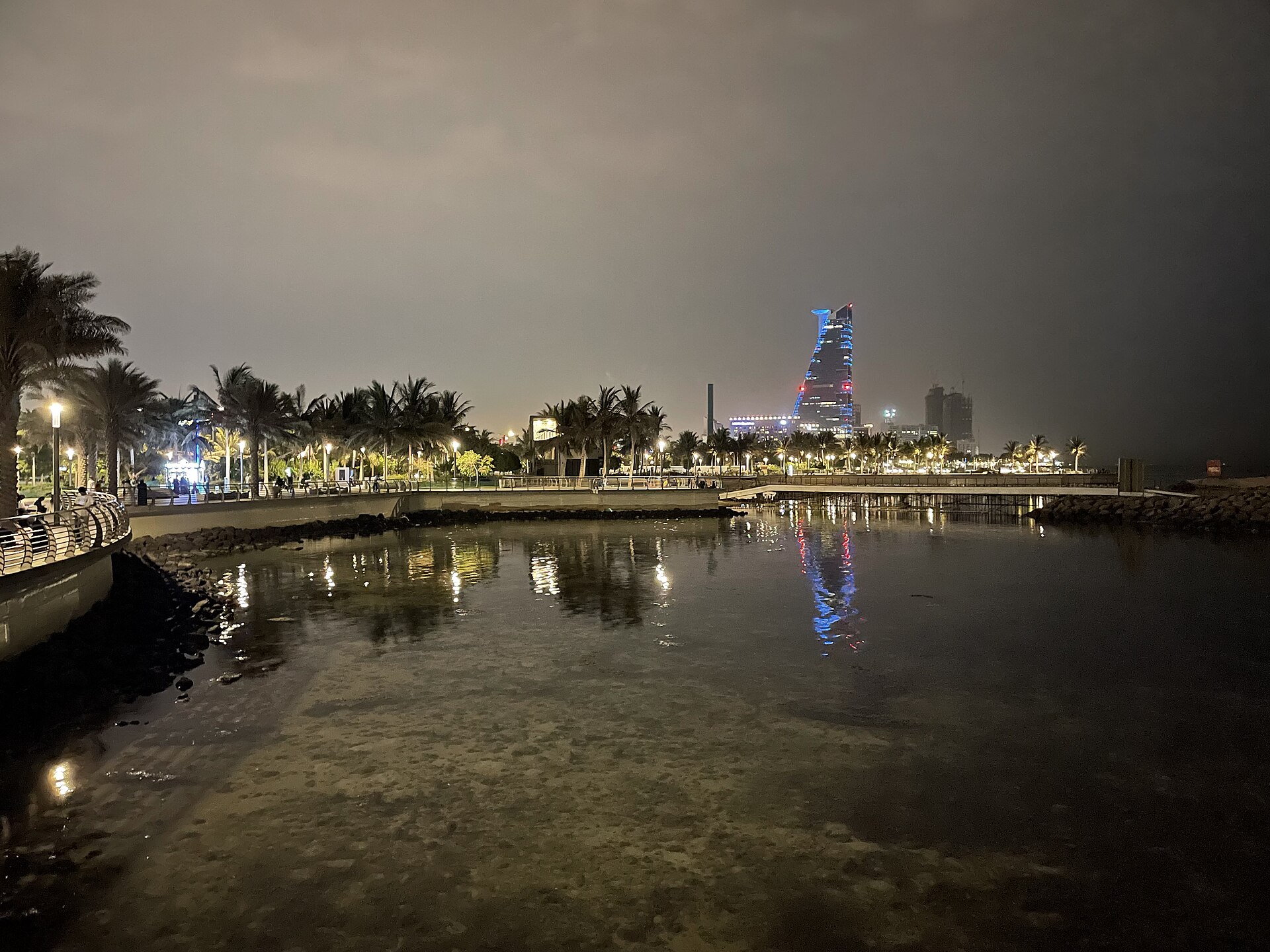
- Jeddah Corniche — a 30-km waterfront promenade with sculptures, parks, and seafood restaurants. An evening stroll here is a must.
- Jeddah Corniche Circuit — home of the Saudi Arabian Grand Prix. If your trip coincides with the race, it is an unforgettable experience.
- King Fahd Fountain — the world’s tallest fountain, shooting water 312 metres into the air. Best viewed from the Corniche at sunset.
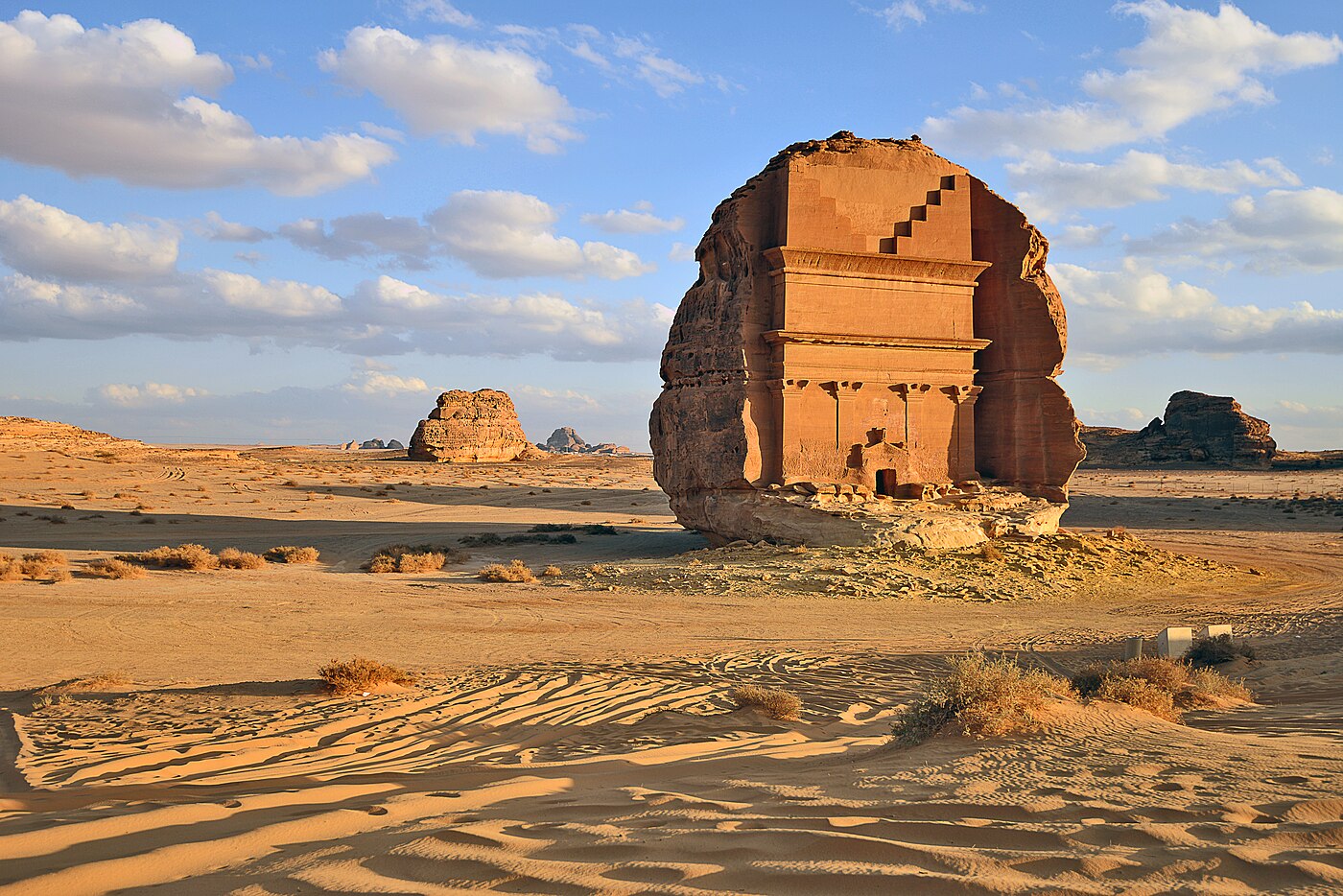
- Qasr al-Farid — the “Lonely Castle,” a single unfinished tomb standing alone in the desert. It is the most photographed site in Saudi Arabia.
- Elephant Rock (Jabal AlFil) — a natural rock formation shaped like an elephant, spectacular at sunset.
- AlUla Old Town — a labyrinth of 900+ stone and mud-brick homes dating to the 12th century.
- Dadan — the ancient capital of the Dadanite and Lihyanite kingdoms, with carved tombs and inscriptions.
- Half Moon Bay — a crescent-shaped beach south of Al Khobar, popular for weekend camping and water sports.
- Al Khobar Corniche — a waterfront promenade with views across the Gulf toward Bahrain.
- Ithra (King Abdulaziz Center for World Culture) — a stunning Pritzker Prize-winning building in Dhahran with galleries, a cinema, and a children’s museum.
- Islas Resto & Grill — known for boodle combo meals; around SAR 40/person
- Cusina — Filipino-Japanese-Chinese fusion; around SAR 75/person
- Bahay Kainan — Filipino and Asian dishes; around SAR 50/person
- Fiestahan Asian & Pinoy Cuisine — Al Jazeera Shopping Center, Sulaymaniyah; boodle fights and salo-salo
- Uncle Majid Restaurant — Boulevard Riyadh City; hugely popular with the Filipino community
- Jollibee — multiple branches including Sulaymaniyah
- Barrio Fiesta — the well-known Filipino restaurant chain
- Boracay Restaurant — Filipino cuisine in a relaxed setting
- Inihaw Kamayan — grilled specialities
- Lapaz Batchoy — affordable, consistent Filipino food
- Jollibee Al-Balad
- Kabayan Supermarket — the largest Filipino supermarket chain in Saudi Arabia, with branches in Jeddah (King Abdul Aziz Street, Al Balad), Riyadh, Dammam, Al Jubail, and Al Taif. Stocks a full range of Filipino food, cosmetics, and household essentials.
- Kapamilya Supermarket — Jeddah, Al Faysaleyyah District near Dr. Erfan & Bagedo General Hospital.
- Pinoy Supermarket — Riyadh, Al Amal, Ibn Al Anbari Street.
- Carrefour — the major supermarket chain has a dedicated “Philippines” section on their Saudi website and in select stores.
- Women: Cover shoulders and knees. Loose trousers or long skirts, tops with sleeves. Abayas are not required for foreign women. Head covering is not required in most public spaces but is mandatory in mosques.
- Men: Avoid sleeveless shirts and very short shorts in public. Trousers or jeans with a T-shirt are fine everywhere.
- Swimwear: Perfectly fine at hotel pools, private beaches, and resort facilities. Cover up in public areas.
- Greetings: “As-salamu alaykum” (peace be upon you) is the standard greeting. Shake hands with the right hand. Men greet men, women greet women — wait for the opposite gender to initiate a handshake.
- Right hand: Use your right hand for eating and greeting. The left hand is considered unclean in Arab culture.
- PDA: No public displays of affection, even between married couples.
- Photography: Always ask permission before photographing people, especially women. Never photograph government buildings, military installations, or security personnel.
- Hajj 2026: The Hajj season falls in late May to early June 2026 (Dhul Hijjah 1447). Filipino pilgrims must register through NCMF (National Commission on Muslim Filipinos) accredited travel agencies. Our Hajj 2026 guide covers the full process.
- Umrah: Available year-round for Muslims. Apply for an Umrah visa through licensed travel agencies in the Philippines.
- Non-Muslims: Cannot enter Mecca under any circumstances. Medina is partially accessible to non-Muslims, but the Prophet’s Mosque itself is restricted to Muslims.
- Hostels: Riyadh and Jeddah now have proper hostels with dormitory rooms. Check Hostelworld for current listings.
- Budget hotel chains: Ibis, Premier Inn, and local chains offer clean, reliable rooms in this range.
- Furnished apartments: Available through Booking.com and Airbnb, these are excellent value for families visiting for a week or more.
- International chains: Novotel, Courtyard by Marriott, Holiday Inn — all have multiple Saudi locations.
- Saudi boutique hotels: Increasingly available in Jeddah’s Al Balad and in AlUla.
- Riyadh: The Ritz-Carlton, Four Seasons, Mandarin Oriental.
- Jeddah: Park Hyatt, Rosewood, Shangri-La.
- AlUla: Banyan Tree AlUla, Habitas AlUla, Our Habitas Sharaan (opening 2026).
- Travel insurance: Mandatory for tourist visa holders. It is included in the visa fee for e-visa applicants. For details, see our travel insurance guide.
- Healthcare: Saudi Arabia has excellent hospitals. For tourists, private hospitals are the primary option — costs can be high without insurance. Our hospitals guide lists the best facilities by city.
- Heat: Summer temperatures routinely exceed 45 C (113 F). If visiting between May and September, carry water constantly, wear sun protection, and limit outdoor activity to early morning and evening. Read our summer escape guide for cooler alternatives.
- Emergency numbers: Police: 999. Ambulance: 997. Fire: 998.
- Day 1: Arrive, settle in with family. Evening: Boulevard Riyadh City or Kingdom Centre Sky Bridge.
- Day 2: National Museum in the morning. Diriyah (At-Turaif) in the afternoon. Filipino dinner at Islas Resto & Grill.
- Day 3: Edge of the World day trip (leave early, return by mid-afternoon). Kabayan Supermarket for pasalubong.
- Days 1-2: Riyadh — Boulevard, Diriyah, Edge of the World, National Museum.
- Day 3: Fly to AlUla. Hegra and Elephant Rock.
- Day 4: AlUla Old Town, Dadan. Evening desert experience.
- Day 5: Fly to Jeddah. Al Balad walking tour, Corniche sunset.
- Day 6: Jeddah — King Fahd Fountain, Red Sea waterfront, shopping at Balad souks.
- Day 7: Jeddah — relax at a resort beach or day trip along the Red Sea coast. Depart.
- Days 1-2: Dammam / Al Khobar — settle in with family, Al Khobar Corniche, Ithra museum.
- Day 3: Half Moon Bay beach day. Filipino community dinner.
- Day 4: Day trip to Al Ahsa Oasis (UNESCO site) — date palm groves, springs, traditional souks.
- Day 5: Shopping at Dhahran Mall, departure.
- Passport valid for 6+ months from arrival date
- Saudi tourist visa secured (VFS TasHeel or e-visa)
- eTravel registration completed (etravel.gov.ph) — QR code downloaded
- Travel tax paid (PHP 1,620 economy; OFWs exempt)
- Travel insurance confirmed (included with e-visa; arrange separately for TasHeel visa)
- Flight status confirmed with airline (check for regional disruptions)
- Uber and Careem apps downloaded
- Darb app installed (Riyadh Metro tickets)
- SAR cash or forex card ready (Al Rajhi Bank ATMs widely available)
- Modest clothing packed — shoulders and knees covered
- Adapter for Saudi power outlets (Type G, same as UK — 230V) — see our power plugs guide
- Pasalubong for relatives packed and customs-compliant
- Saudi Arabia Travel Guide 2026 — The complete guide to visiting the Kingdom
- Saudi Arabia Visa Guide — Every visa type explained, including Filipino-specific requirements
- Riyadh Travel Guide — Full guide to the capital where most OFWs are based
- Jeddah Travel Guide — The Red Sea gateway and historic port city
- AlUla Travel Guide — Hegra, Elephant Rock and the desert heritage experience
- Dammam and Al Khobar Guide — The Eastern Province and its Filipino community
- Saudi Arabia for Americans — Visa, safety and tips for US passport holders
- Saudi Arabia for British Travellers — Visa, currency and practical tips
- Hajj 2026 Guide — Complete pilgrimage guide for Muslim travellers
- First Time in Saudi Arabia — Everything you need to know before your first visit
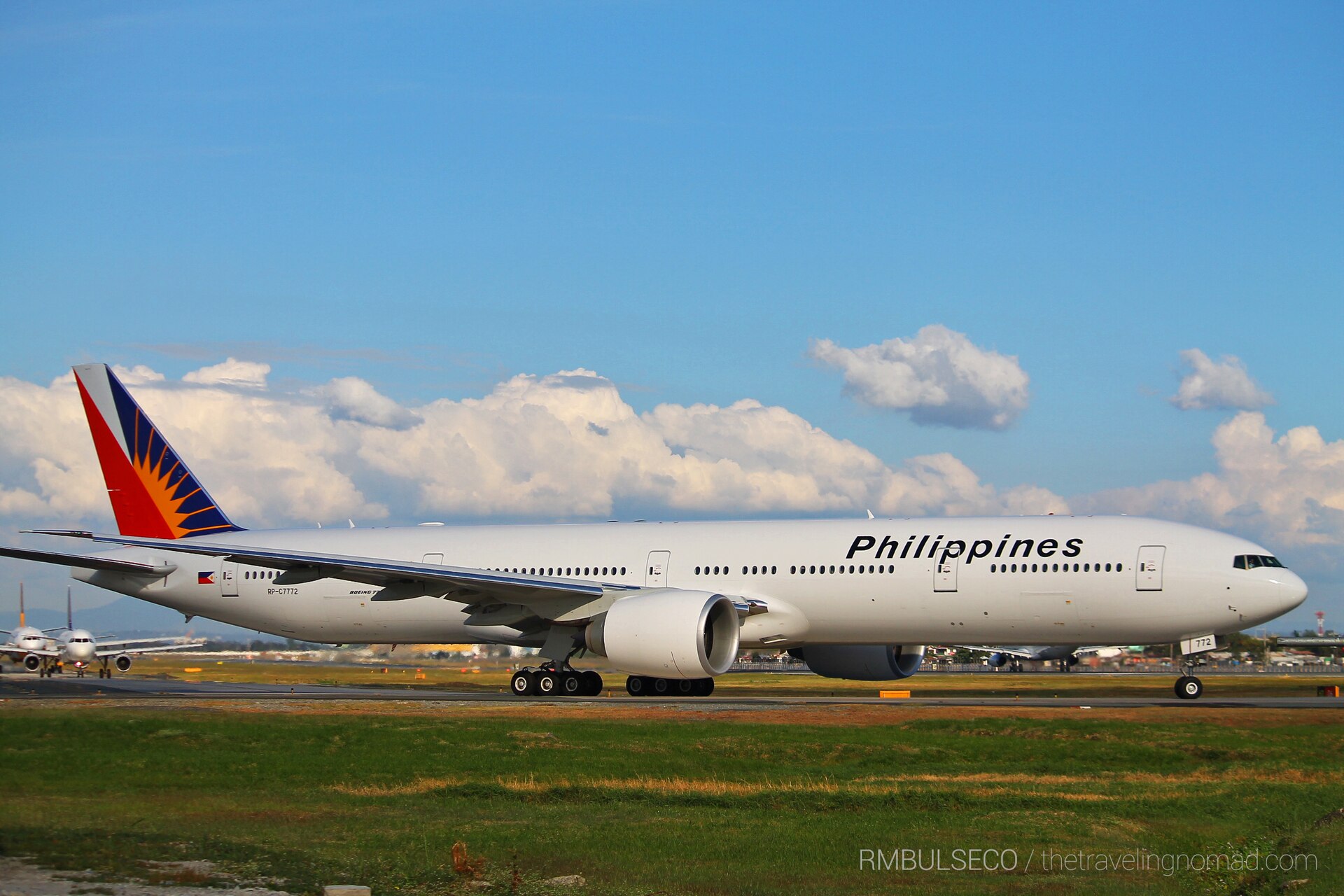
Getting There: Flights from the Philippines
Direct flights connect Manila to both Riyadh and Jeddah, with three airlines now competing on the Manila-Riyadh route. Flight time is roughly 10 hours 35 minutes to Riyadh and 11 hours 30 minutes to Jeddah. For more on domestic flights within Saudi Arabia once you arrive, see our separate guide.
Manila to Riyadh (MNL-RUH)
| Airline | Frequency | Approximate Round-Trip | Notes |
|---|---|---|---|
| Saudia | 5x weekly (Mon, Wed, Fri, Sat, Sun) | PHP 25,000-35,000 | Full-service; Boeing 787 Dreamliner |
| Cebu Pacific | 4x weekly (Mon, Wed, Fri, Sun) | From PHP 16,700 | Launched March 2026; A330-900neo; NAIA T3 to KKIA T5 |
| Philippine Airlines | 2x weekly (Mon, Sun) | From PHP 24,000 | Resumed April 10, 2026 with Bangkok tech stop |
Manila to Jeddah (MNL-JED)
Saudia operates daily direct flights on the Boeing 787, covering the 5,370-mile route in approximately 11 hours 30 minutes. Cebu Pacific has signalled a Jeddah route within 12 months but has not yet launched it.
April 2026 travel advisory: Regional airspace closures due to the Iran conflict have disrupted Middle East routes since late February 2026. Philippine Airlines resumed Manila-Riyadh on April 10 with a Bangkok refuelling stop. Cebu Pacific suspended Dubai flights until at least April 30; check their Riyadh route status before booking. The DFA has Saudi Arabia at Alert Level 2 (Restriction Phase). Always confirm flight status directly with your airline before travelling.
Booking Tips for Pinoy Travellers
Money Matters: Currency, Budget and Remittance
Exchange Rate and Where to Change
The Saudi Riyal (SAR) trades at roughly 1 SAR = PHP 15.70-16.00 in 2026. Change money at airport counters on arrival, or withdraw from ATMs using your BDO, BPI, or Metrobank debit card. Al Rajhi Bank branches and exchange centres are ubiquitous across Saudi cities and generally offer better rates than airport kiosks. For detailed currency advice, see our Saudi Riyal currency guide.
Daily Budget Breakdown
| Style | Daily Budget (SAR) | Daily Budget (PHP) | Includes |
|---|---|---|---|
| Budget | SAR 155-375 | PHP 2,400-5,900 | Hostel/budget hotel, local eateries, public transport |
| Mid-range | SAR 375-750 | PHP 5,900-11,750 | 3-4 star hotel, mixed dining, Uber/Careem |
| Comfort | SAR 750+ | PHP 11,750+ | 4-5 star hotel, restaurant dining, car rental |
A meal at a local restaurant costs around SAR 25 (PHP 390). A shawarma from a street-side shop is SAR 5-10 (PHP 80-160). Budget hotels start from SAR 110/night (PHP 1,725). Filipino restaurants in Riyadh typically charge SAR 40-75 per person.
Sending Money Home
If you are visiting family who are OFWs, you will encounter the same remittance infrastructure they use daily. The dominant service is Tahweel Al Rajhi, the remittance arm of Al Rajhi Bank, which partners with BDO Remit and Land Bank of the Philippines for direct transfers. Their “Cash Online” service delivers funds within 2 hours. Western Union, Remitly, and Wise are also widely used. OFBank (Overseas Filipino Bank) is government-backed and designed specifically for OFW transactions.
Getting Around Saudi Arabia
Saudi Arabia is vast — Riyadh to Jeddah is 950 km — so you will likely combine several transport modes. Our full car rental guide and SAPTCO bus guide cover the details, but here is what matters most for Filipino visitors.
Ride-Hailing Apps
Uber and Careem operate in all major Saudi cities and are the easiest way to get around. Both accept international credit cards. A 5 km ride costs SAR 10-30; an airport-to-city-centre trip in Riyadh runs SAR 50-80. Download both apps before you arrive — Careem sometimes has better rates. See our essential apps guide for the full list of apps you will need.
Riyadh Metro
The Riyadh Metro opened in late 2024 with 6 lines, 85+ stations, and 176 km of track. Line 3 (Orange Line) connects King Khalid International Airport to central Riyadh in approximately 23 minutes for just SAR 4. Download the Darb app to buy tickets. The metro is clean, modern, and air-conditioned — an attraction in itself.
Inter-City Travel
SIM Cards and Connectivity
Buy a tourist SIM at the airport on arrival. Three providers compete, all with kiosks at Riyadh and Jeddah airports. For a full comparison, see our SIM card guide and eSIM guide.
| Provider | Plan | Data | Price (SAR) | Price (PHP) | Duration |
|---|---|---|---|---|---|
| Zain | Visitor 40 | 7 GB + 60 min calls | SAR 40 | ~PHP 630 | 14 days |
| Mobily | Visitors 90 | 55 GB + 300 min calls | SAR 103.50 | ~PHP 1,625 | 30 days |
| STC | Tourist | 70 GB + 6 hrs calls | SAR 150 | ~PHP 2,355 | 30 days |
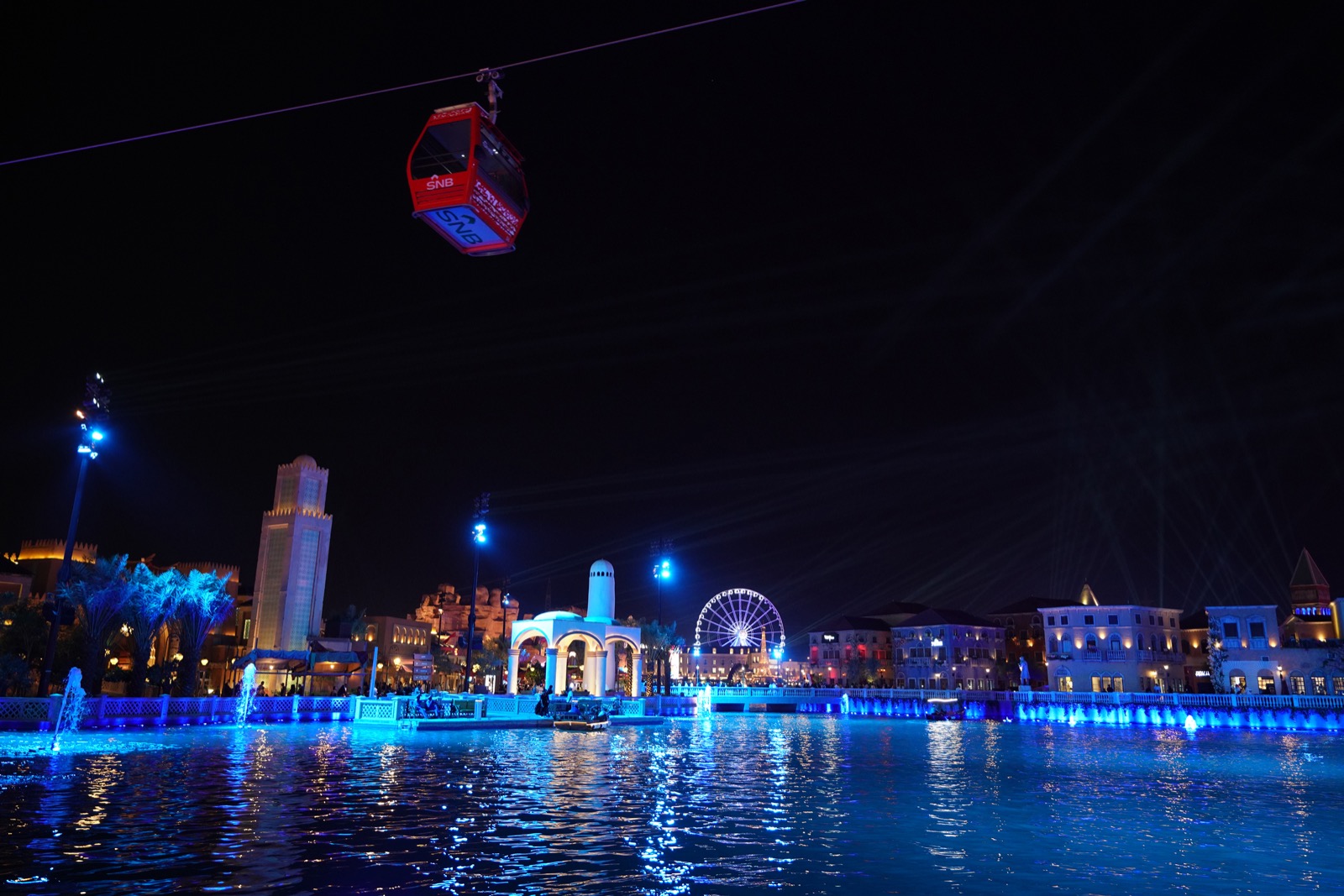
Where to Go: Top Destinations for Filipino Visitors
Saudi Arabia’s tourism landscape has transformed since opening to leisure visitors in 2019. These are the destinations that matter most, whether you have three days or three weeks. For city-specific detail, follow the links to our dedicated guides.
Riyadh
The capital is where the largest Filipino community lives, and it is also the Kingdom’s entertainment capital. Our full Riyadh guide covers everything, but highlights for Pinoy visitors include:
Jeddah
Jeddah is the Kingdom’s most cosmopolitan city, sitting on the Red Sea coast with a more relaxed atmosphere than Riyadh.
AlUla and Hegra
AlUla is Saudi Arabia’s flagship heritage destination, and visiting it feels like stepping into a landscape that predates everything you know. The centrepiece is Hegra (Madain Saleh), the Kingdom’s first UNESCO World Heritage Site, with over 100 monumental Nabataean tombs carved into sandstone — similar to Petra in Jordan but without the crowds.
How to get to AlUla: Fly from Riyadh (1 hour 40 minutes) or Jeddah (1 hour 15 minutes) to AlUla airport. Saudia and flynas operate regular routes. Book accommodation well in advance during the AlUla winter season (October-March).
Dammam, Al Khobar and the Eastern Province
The Eastern Province has a large, established Filipino community concentrated in Dammam, Al Khobar, Dhahran, and Jubail. If you are visiting family working in the oil and gas sector, this is likely where you will land.
Abha and the Asir Highlands
For Filipino travellers who want to escape the desert heat, Abha and the Asir region offer green mountains, cool temperatures (15-25 C in summer), and dramatic scenery that feels nothing like the Saudi Arabia of popular imagination.
Tabuk and the Northwest
Tabuk in the northwest offers dramatic landscapes and is the gateway to NEOM, the ambitious megaproject being built on the Red Sea coast.
The Filipino Community in Saudi Arabia
With approximately 725,000-900,000 Filipinos in the Kingdom, you will never feel far from home. This is not just a large diaspora — it is a deeply rooted community with its own infrastructure.
Filipino Restaurants
All food served in Saudi Arabia is halal by law, so every Filipino restaurant in the Kingdom is automatically halal — no need to seek out separate halal certification.
In Riyadh:
In Jeddah:
In Al Khobar / Dammam: Jollibee has branches in both Al Khobar and Al Jubail. The Filipino community in the Eastern Province is active and well-connected through Facebook groups like “Filipino Community – Dammam and Al Khobar.”
Filipino Supermarkets
Craving Lucky Me pancit canton, Silver Swan soy sauce, or Oishi chips? You will not have to search far:
Filipino Cultural Events
Saudi Arabia has increasingly celebrated Filipino culture as part of its entertainment calendar. The 2025-2026 Riyadh Season featured Philippine Culture Days (December 5-8, 2025) at Al-Suwaidi Park, with 70+ exhibitors, traditional clothing bazaars, Filipino food stalls, folkloric costume photo booths, and live musical performances blending traditional and modern Filipino arts. Watch for similar events in future seasons.
Cultural Tips for Filipino Travellers
Filipinos generally adapt well to Saudi culture — many of the values overlap. Hospitality, respect for elders, and close family bonds are prized in both cultures. Still, there are important differences to keep in mind. For photography rules specifically, see our photography guide.
Dress Code
Saudi Arabia has relaxed its dress code significantly since 2019, but modesty remains the baseline:
For a full breakdown, see our Saudi Arabia dress code guide.
Alcohol
Alcohol is completely illegal in Saudi Arabia. There are no exceptions — no hotel bars, no restaurant wine lists, no duty-free allowance. Penalties for importing, possessing, or smuggling alcohol include fines up to SAR 100,000, up to 2 years in prison, and deportation. If you are used to a San Miguel with dinner, switch to Saudi champagne (sparkling apple juice) for the duration of your trip.
Prayer Times
Saudi Arabia observes five daily prayers, and some shops and restaurants close briefly during prayer times (typically 20-30 minutes). Malls and major restaurants in Riyadh and Jeddah increasingly stay open, but smaller shops may pull down shutters. Plan accordingly, especially for Friday prayers (the midday prayer is longer and more widely observed).
Ramadan
If you visit during Ramadan (approximately February-March in 2026-2027, shifting roughly 10 days earlier each year), be aware that eating, drinking, and smoking in public during daylight hours is prohibited for everyone, including non-Muslim tourists. Hotels serve non-Muslim guests behind screens or via room service. After sunset, iftar meals are a beautiful cultural experience worth joining — many restaurants offer special iftar buffets, and the atmosphere is festive.
General Etiquette
For OFW Families: Visiting Relatives in Saudi Arabia
A significant number of Filipino tourists visiting Saudi Arabia are doing so to visit family members working in the Kingdom. If that is you, here are some specific considerations:
Family Visit Visa vs Tourist Visa
OFWs in Saudi Arabia can sponsor a family visit visa for their relatives through their employer. This is separate from the tourist visa and is processed through the Saudi Ministry of Foreign Affairs. It typically requires sponsorship from the employer (kafeel). However, with the tourist visa now available, many families find it simpler to apply independently through VFS TasHeel or the e-visa route.
What to Bring from Home
Your OFW relatives will almost certainly request pasalubong. Popular items to pack include: dried fish (daing), instant noodles (Lucky Me, Payless), sachets of coffee (Kopiko, Nescafe 3-in-1), chicharon, polvoron, and Filipino snacks not easily available in Saudi Arabia. Check Saudi customs rules before packing — some food items may require inspection.
OWWA and POLO
If you are an OFW returning to your post (not a tourist), you will need a valid OWWA membership (renewable online via the OWWA Mobile App) and an OEC (Overseas Employment Certificate). Apply through the POEA Online Services Portal and complete biometric verification at POLO Riyadh. Start the process 30-45 days before departure. OFWs are exempt from the Philippine travel tax.
Hajj and Umrah for Filipino Muslims
For Filipino Muslim travellers, Saudi Arabia’s significance extends far beyond tourism. The Philippines has a Muslim population of approximately 6-7 million, and performing Hajj or Umrah is a lifelong aspiration for many.
Where to Stay
Saudi Arabia’s hotel scene has expanded dramatically. For Filipino visitors on a budget, these options work well:
Budget (SAR 110-250/night / PHP 1,725-3,925)
Mid-Range (SAR 250-600/night / PHP 3,925-9,420)
Comfort and Luxury (SAR 600+/night / PHP 9,420+)
Health, Safety and Insurance
Saudi Arabia is generally very safe for tourists, with low street crime rates in all major cities. Filipino visitors should be aware of the following: