
JEDDAH — On April 15, Prime Minister Shehbaz Sharif arrived in Jeddah to collect $3 billion in fresh Saudi financing and an extension on the $5 billion deposit that keeps the Pakistani rupee from collapsing. At the same hour, 2,500 kilometers away, Pakistan’s Chief of Defence Forces Field Marshal Asim Munir was in Tehran, sitting across from Iranian Foreign Minister Abbas Araghchi and delivering what Al Jazeera described as “a new message from the US.”
Mohammed bin Salman paid for both meetings. The civilian track in Jeddah handled the money and the photograph. The military track in Tehran handled the war and the negotiation. Between them sits a fact Riyadh cannot publicly acknowledge — the officer commanding Saudi Arabia’s 13,000 newly-deployed Pakistani auxiliaries at King Abdulaziz Air Base is the same man currently reassuring the Islamic Republic about American enrichment demands. Saudi Arabia is financing both sides of a conversation from which it has been excluded, and the constitutional architecture that makes this possible was signed into law in Islamabad five months ago.
Table of Contents
- Two Capitals, One Army, Zero Saudi Seats
- What Did MBS Buy on April 16?
- How Did Pakistan’s Constitution Make This Possible?
- The Mediator’s Other Client, Since 1992
- What Is Araghchi Actually Saying to Munir?
- Why Can’t the Saudis Complain Publicly?
- The Four-Day Window That Ends This
- What Happens When the Dual Role Collapses?
- FAQ
Two Capitals, One Army, Zero Saudi Seats
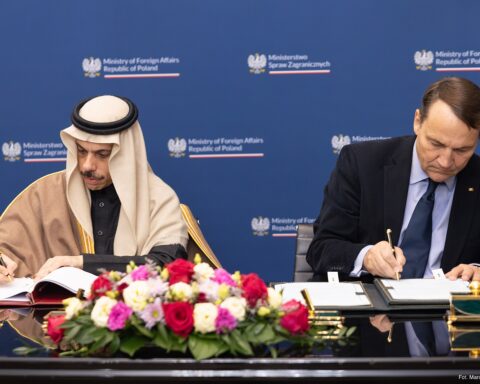
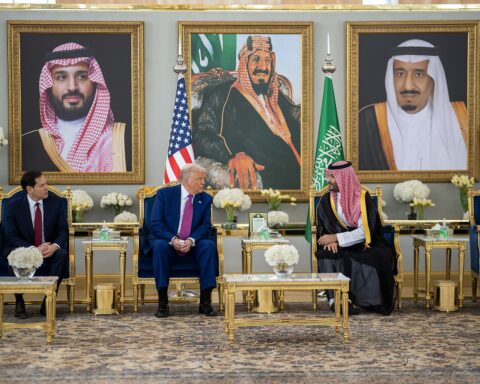
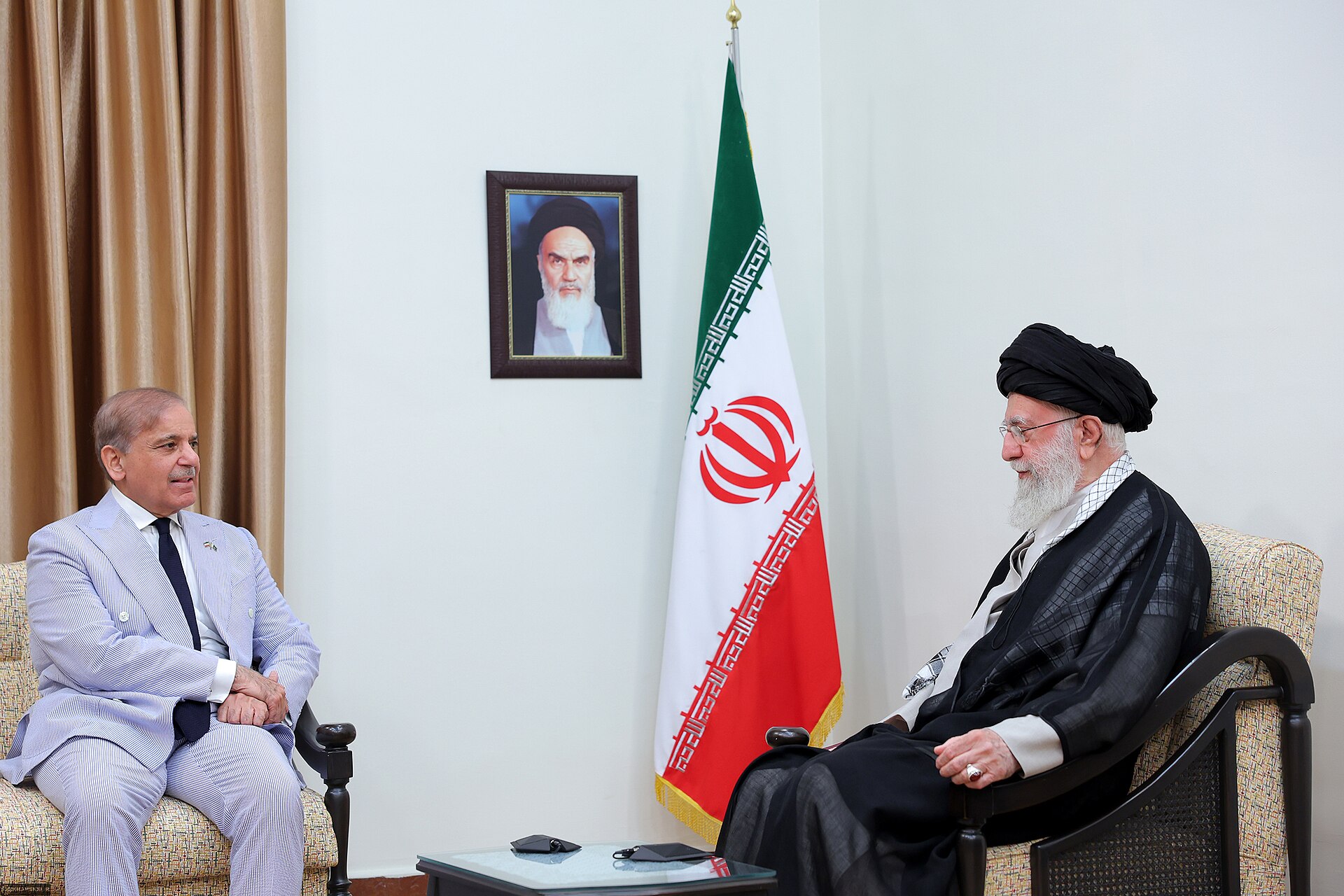
Sharif landed at King Abdulaziz International on the evening of April 15, first stop on a three-nation tour that will also take him to Doha and Ankara. His bilateral with the Crown Prince was scheduled for the following morning, framed by the Saudi Press Agency as a discussion of “regional diplomacy and advancing US-Iran negotiations.” Foreign Minister Ishaq Dar — Sharif’s civilian appointee, and a long-standing PML-N loyalist — sat at his side through the meeting. The entire choreography was built to look like a normal head-of-government visit.
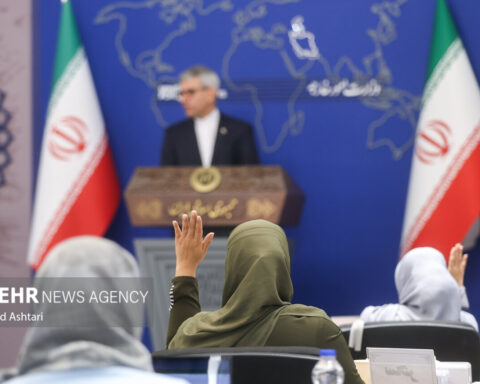
The same day, a second Pakistani delegation walked into Mehrabad Airport in Tehran. Field Marshal Asim Munir, concurrent holder of the offices of Chief of Army Staff and the newly-created Chief of Defence Forces, was accompanied by Interior Minister Mohsin Naqvi — a man who has functioned as Munir’s operational partner for the past eighteen months and whose portfolio sits outside the elected civilian cabinet’s effective control. Araghchi received the delegation personally. The Iranian foreign ministry spokesman, Esmail Baghaei, briefed reporters within hours that Munir had come “following the talks that took place in Islamabad.”
The split was not accidental and it was not a scheduling error. Pakistan’s delegation to Saudi Arabia and Pakistan’s delegation to Iran had been divided, deliberately, along the exact fault line that the 27th Constitutional Amendment inscribed into the country’s basic law five months earlier. Dar with Sharif in Jeddah, because the civilian track handles the sovereign guarantee on a $5 billion deposit. Naqvi with Munir in Tehran, because the military track handles the ceasefire that nobody elected has the authority to bind.
Saudi Arabia was not present at either table. The only operational Riyadh-Tehran channel in the past two weeks has been a single phone call between Saudi Foreign Minister Prince Faisal bin Farhan and Araghchi on April 13, according to Al Arabiya’s own reporting. That call was defensive — an effort to take the temperature of post-Islamabad developments after the first round of US-Iran talks produced no public deliverables. The crown prince is paying for the mediation, deploying the auxiliaries, and absorbing the strikes. He is not in the room where his contractor is negotiating with his adversary.
The Middle East briefing 3,000+ readers start their day with.
One email. Every weekday morning. Free.
| April 15–16, 2026 | Jeddah Track | Tehran Track |
|---|---|---|
| Head of Delegation | PM Shehbaz Sharif | Field Marshal Asim Munir (CDF) |
| Accompanying Principal | FM Ishaq Dar | Interior Minister Mohsin Naqvi |
| Counterpart | Crown Prince Mohammed bin Salman | FM Abbas Araghchi |
| Stated Agenda | “Regional diplomacy, US-Iran negotiations” | “New message from the United States” |
| Deliverable | $3B fresh support + $5B deposit extension | Framework for second Islamabad round |
| Constitutional Basis | Article 90 (civilian executive) | 27th Amendment (CDF primacy) |
What Did MBS Buy on April 16?
Pakistan’s Finance Ministry published the confirmation late on April 16. Saudi Arabia is transferring $3 billion in fresh financial support to bolster Pakistani foreign exchange reserves, and separately agreed to extend — not merely roll over annually — its existing $5 billion deposit at the State Bank of Pakistan. The tenor change is not cosmetic. An extension without the annual rollover removes Riyadh’s quarterly grip on Islamabad’s monetary policy for the duration of the new term.
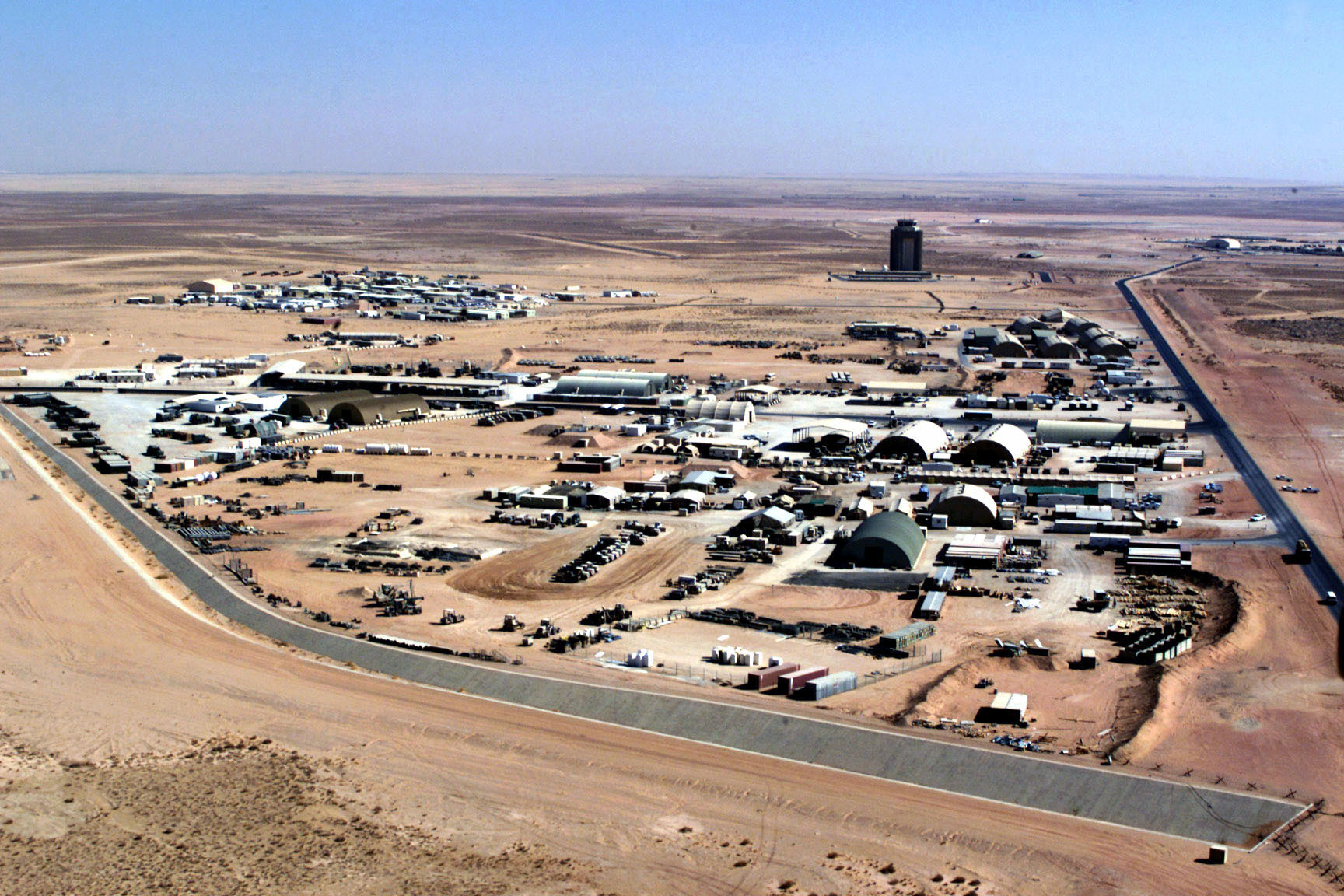
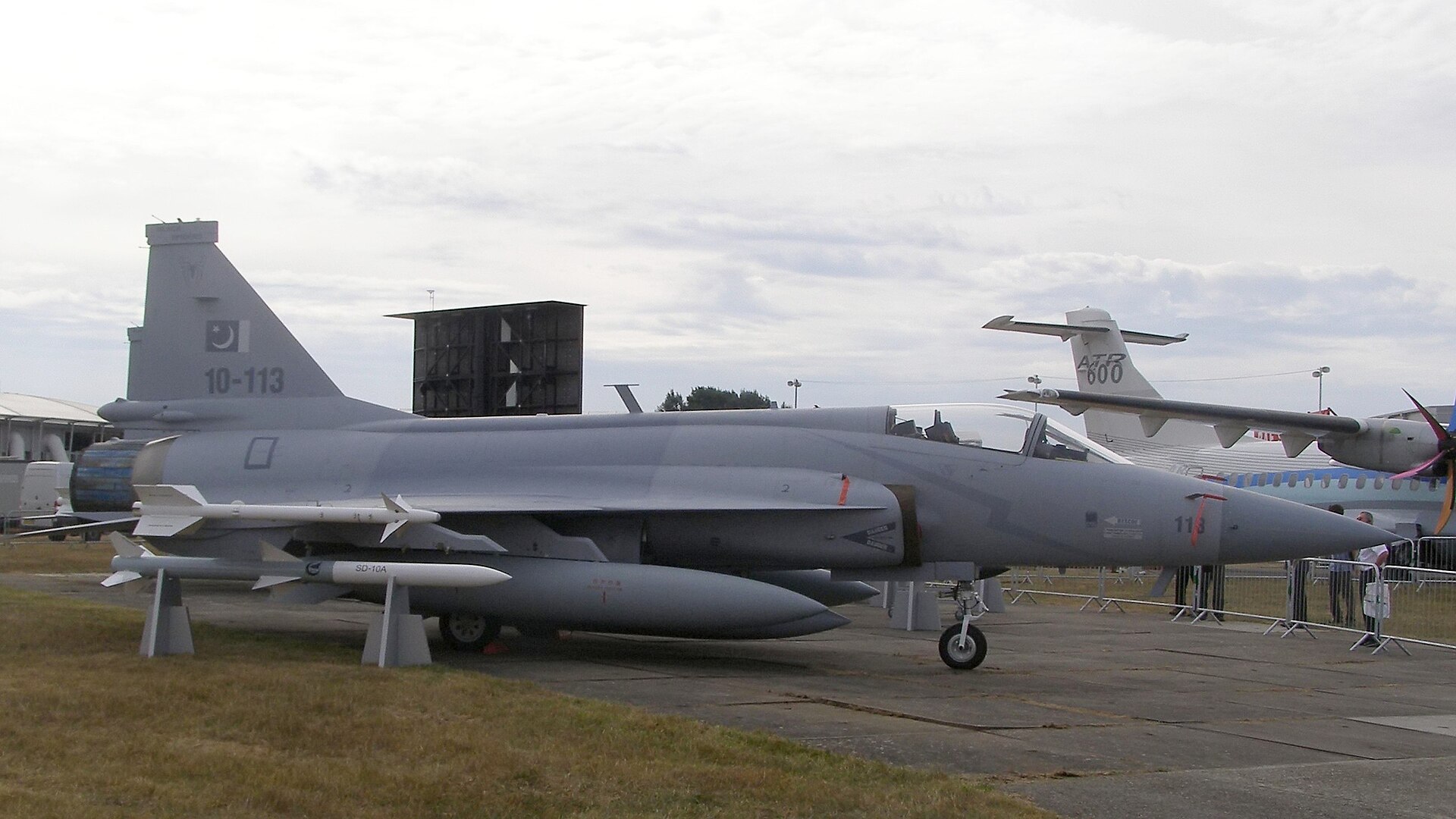
That was the price of April 16. The price of April 11 was operational. Thirteen thousand Pakistani troops and between ten and eighteen fighter jets landed at King Abdulaziz Air Base in the Eastern Province under the activation language of the Saudi-Pakistan Mutual Defence Agreement signed in Riyadh on September 17, 2025. The deployment is the first foreign combat-capable force on Saudi soil under treaty obligation since the Peninsula Shield intervention in Bahrain in 2011, when approximately 1,200 Saudi SANG troops crossed the King Fahd Causeway. The 2026 deployment is more than ten times that number, on Saudi rather than Bahraini territory, under a bilateral rather than multilateral framework.
Azeema Cheema of Islamabad-based Verso Consulting put the political arithmetic most cleanly. “The invocation of the SMDA is the price of the significant restraint shown by the Saudis” in the conflict, she told Al Jazeera. Pakistan, she added, will “first seek a path through mediation” with Iran — an acknowledgment that the country accepting Saudi protection money is also contractually obligated to spare the adversary wherever possible. The contradiction is not a bug. It is the product MBS purchased.
Umer Karim at the King Faisal Center for Research and Islamic Studies in Riyadh was more direct about how this ends. “Pakistan is walking a tightrope with regards to both mediation responsibilities and Saudi defence commitments,” he said. “This ploy may work till US-Iran talks continue” — but “may collapse” if hostilities restart. In other words, the architecture MBS is financing only holds as long as Munir’s Tehran track produces results. If it fails, the 13,000 troops at Eastern Province become a hostage garrison on a base that Iran has already demonstrated it can range.
How Did Pakistan’s Constitution Make This Possible?
The legal mechanism that allows Sharif to be in Jeddah while Munir is in Tehran did not exist a year ago. It was passed by Pakistan’s National Assembly on November 13, 2025, signed by President Asif Ali Zardari the same day, and is known as the 27th Constitutional Amendment. It created the office of Chief of Defence Forces, held concurrently by the serving Chief of Army Staff, and it vested in that office constitutional primacy over the air force, the navy, the Inter-Services Intelligence Directorate, and the Strategic Plans Division that custodies Pakistan’s nuclear stockpile.
The amendment did something else that matters more for the Saudi-Iran question. It migrated core foreign and security policy competencies away from the elected prime minister and toward the CDF. South Asian Voices, reviewing the text in January 2026, described the amendment as legislation that “codifies the place of the military at the apex of government.” Chatham House analysts reached the same conclusion independently — the civilian premier now operates under a superior constitutional authority for any question that touches on strategic posture, nuclear command, foreign basing, or mediation with a belligerent power.
There is a further asymmetry in the removal thresholds. Removing a sitting prime minister requires a simple majority of the National Assembly, a mechanism that has dispatched four Pakistani premiers in the past fifteen years. Removing the Chief of Defence Forces requires a two-thirds supermajority of both houses of parliament, a bar that has not been cleared against a military principal in Pakistan’s constitutional history. The practical effect is that Sharif can be voted out in an afternoon. Munir cannot be touched without the cooperation of virtually every elected faction in the country, which will not be forthcoming.
This is the architecture that produced the split delegation. When a foreign partner wishes to speak to Pakistan about financial assistance, housing permissions for Pakistani workers, or bilateral trade, it speaks to Sharif and Dar — this is the Jeddah track, and it remains constitutionally civilian. When a foreign partner wishes to speak to Pakistan about ceasefire mediation, nuclear posture, foreign deployment, or back-channel US correspondence, it speaks to Munir and Naqvi — this is the Tehran track, and it is now constitutionally military. The two tracks are not coordinated. They are compartmentalized.
| Policy Authority | Pre-27th Amendment | Post-27th Amendment (Nov 13, 2025) |
|---|---|---|
| Foreign sovereign borrowing | PM + Finance Ministry | PM + Finance Ministry (unchanged) |
| Foreign combat deployment | PM with cabinet consultation | CDF (with nominal PM sign-off) |
| Nuclear command authority (SPD) | National Command Authority (hybrid) | CDF operational custody |
| Third-party mediation mandates | Foreign Ministry | CDF when counterpart is a belligerent |
| Removal threshold | Simple majority (PM) | Two-thirds supermajority (CDF) |
The Mediator’s Other Client, Since 1992
The detail that makes the dual-role problem structural rather than circumstantial has been true for thirty-four years. Pakistan has served as the Islamic Republic of Iran’s protecting power in the United States continuously since 1992. All consular, diplomatic, and low-level political contact between Tehran and Washington is conducted through the Iranian Interests Section of the Pakistani Embassy on R Street NW in Washington, D.C., staffed by Iranian nationals who report to the Ministry of Foreign Affairs in Tehran but hold Pakistani diplomatic accreditation.
This arrangement survived the Abraham Accords. It survived the Qassem Soleimani killing. It survived the 2019 tanker attacks, the 2020 Natanz explosion, the assassination of Mohsen Fakhrizadeh, and the 2024 Iran-Israel direct exchange. It has now survived forty-four days of open war between Iran and a coalition that includes a country whose armed forces are quartered on Saudi soil under Pakistani command. Munir’s Tehran visit on April 15 did not inaugurate a Pakistan-Iran channel. It walked through the front door of a channel that has been operational since George H.W. Bush was in the White House.
Sina Azodi of George Washington University framed the implication plainly for Al Jazeera. “I don’t believe Pakistan will jeopardise its relationship with Iran,” he said — an observation that functions as both a prediction and a warning to Riyadh. The protecting-power role is an institutional commitment backed by the Ministry of Foreign Affairs in Islamabad, two generations of Pakistani diplomats, and a physical embassy building on American soil. It is not a card Munir can trade away for a Saudi loan extension, even if he were inclined to try.
Kaitlyn Hashem at the Stimson Center’s South Asia Program published the corresponding diagnosis in an April 9 brief. Pakistan’s mediation initiative, she wrote, “is undermined by its own political limitations vis-à-vis both Iran and the United States.” The limitations are not only about capacity. They are about embedded institutional loyalty — Pakistan cannot position itself as a neutral party to a conflict in which it operates one belligerent’s primary diplomatic infrastructure inside the other belligerent’s capital.
What Is Araghchi Actually Saying to Munir?
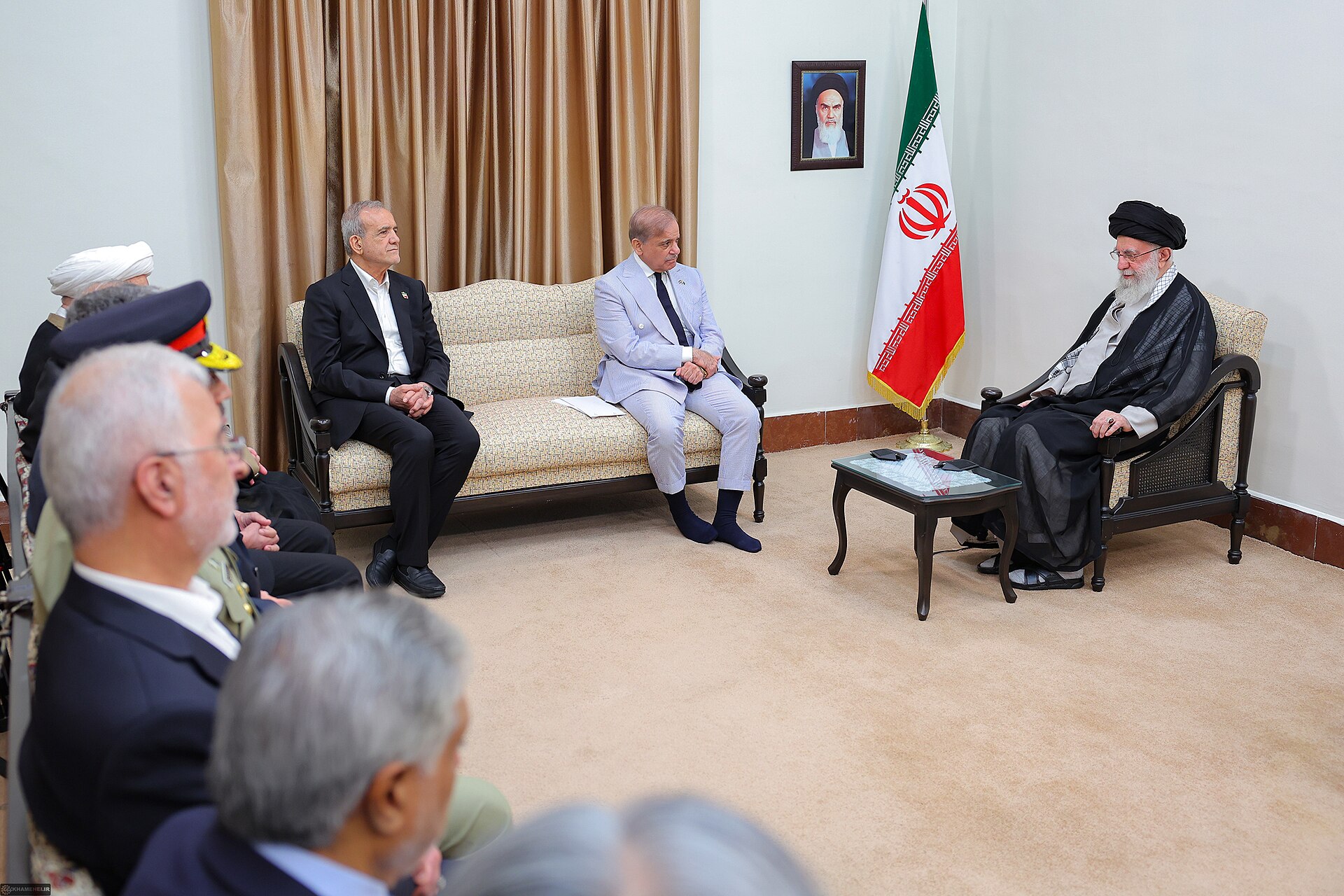
The Iranian diplomatic response to the Tehran visit is worth reading in the original. Araghchi told state media he was “very pleased to receive” Munir and thanked Pakistan for “gracious hosting” of dialogue, phrases that any diplomat on the Tehran rotation could recite in his sleep. Baghaei, the foreign ministry spokesman, was slightly more specific at the daily briefing — he said “following the talks that took place in Islamabad, and also the discussions that the Pakistani side has had with the United States, our views have been conveyed and heard.”
The construction is entirely passive. Views have been conveyed. Views have been heard. Nothing has been decided, nothing has been conceded, nothing has been committed. Iran is using Munir as a post office, not as a negotiating partner. The distinction matters because a post office does not have the authority to accept on behalf of the sender, and Araghchi has been careful not to grant Munir any such authority either explicitly or by implication.
The more important Iranian intervention of April 15 was not Araghchi’s. It came from Mohsen Rezaei, the former IRGC commander who was recently installed as military adviser to Mojtaba Khamenei — the Supreme Leader’s son, who is functioning as the regime’s operational center while his father remains absent from public view. Rezaei told PBS NewsHour, on the same day Munir was in Tehran, that he personally rejected any ceasefire extension.
I do not agree to extend the ceasefire. Unlike the Americans who are afraid of continuous war, we are fully prepared and familiar with a long war.Mohsen Rezaei, military adviser to Mojtaba Khamenei, April 15, 2026
Rezaei does not hold a formal command position. He does not need one. His proximity to Mojtaba Khamenei and his IRGC networks place him above Araghchi in the operational hierarchy that matters when the question is whether Iran will keep shooting after April 22. The statement was broadcast in Persian on state television, in English to an American audience via PBS, and re-distributed by Iranian joint military command channels that simultaneously threatened to “halt trade in the region” if the United States did not lift its naval blockade. These are the voices that bind. Araghchi’s “very pleased to receive” does not.
Iran’s counter-offer on enrichment tells the same story. Washington has demanded a 20-year moratorium. Tehran has countered with five, according to PBS NewsHour’s April 15 reporting on the Islamabad communications. The gap is not a negotiating spread that could be split. It is the distance between what the White House requires in order to claim victory and what the Iranian hardliner faction, speaking through Rezaei and the IRGC joint command, will tolerate. Munir’s courier function cannot close it, and Araghchi’s ceremonial warmth is designed to obscure that fact while the clock runs toward the ceasefire deadline.
Why Can’t the Saudis Complain Publicly?
The observation that should organize Saudi response — that the country’s mediator is simultaneously quartering 13,000 Pakistani troops on Saudi soil and delivering American diplomatic cables to Tehran — cannot be made out loud from Riyadh. Public complaint would require MBS to acknowledge three facts, each of which damages his position more than the underlying problem does.
First, he would have to concede that he purchased the mediation of a country that structurally cannot be neutral, and that the Saudi intelligence services that vetted the arrangement either knew this and proceeded anyway or did not know it and failed in their due diligence. Both answers are domestically costly. The Belfer Center’s assessment of the SMDA — that it is “primarily a political signal of solidarity and strategic cooperation, rather than an unconditional war guarantee” — is already circulating in Riyadh’s policy community. An explicit admission that the treaty’s mediator leg is broken would force a reexamination of its defence leg, and the defence leg is what the Eastern Province deployment is staked on.
Second, public complaint would open the question of why Saudi Arabia has exactly one operational channel to Tehran — the April 13 Faisal-Araghchi phone call — when it has spent decades positioning itself as the natural regional interlocutor with the Islamic Republic. The answer is that the Islamabad framework, to which Saudi Arabia was not invited, has absorbed all functional US-Iran diplomacy, and Riyadh’s exclusion is the structural fact of the ceasefire architecture. Naming that fact loudly would confirm it and embarrass the Custodian simultaneously.
Third, there is the domestic audience. The Saudi public has absorbed 894 intercepted drones and missiles, a PAC-3 stockpile depleted past 85 percent, and the deployment of foreign auxiliaries on Saudi soil for the first time in the country’s history as a sovereign actor. Public acknowledgment that the foreign auxiliary’s commander is simultaneously negotiating with the adversary without Saudi participation would convert an already difficult military posture into a political crisis. The Saudi state has chosen silence, and silence is the price Riyadh pays for keeping the SMDA’s defence leg nominally intact while its mediation leg cannibalizes it.
An anonymous former three-star Pakistani general, quoted in Al Jazeera’s April 14 analysis, described the condition under which Pakistan’s dual role could survive. Pakistan, the officer said, can hold both tracks “only if deployment remains strictly defensive, time-bound, and transparently limited. The moment the theatre shifts to offensive operations, or the perception of offensive coordination emerges, the dual role collapses.” The Saudi calculation is that as long as the Pakistani troops at King Abdulaziz do not engage in offensive action and as long as no video emerges of a Pakistani pilot over Iranian territory, Riyadh’s reading of the arrangement as purely defensive remains tenable.
This is the condition Iran is actively testing with Rezaei’s ceasefire rejection and the joint military command’s blockade threats. If Tehran resumes kinetic action after April 22 and Pakistani F-16s scramble from Eastern Province to intercept incoming Iranian missiles, the Pakistani dual role collapses by the former general’s own criterion. The perception of offensive coordination will emerge the instant a Pakistani air-to-air engagement is recorded, regardless of its strictly defensive character in international law.
The Four-Day Window That Ends This
The calendar constrains everything. Hajj arrivals open on April 18, with Pakistan International Airlines, Saudia, and Indonesia’s Garuda scheduling their first pilgrim flights for that day. The ceasefire that was negotiated in Islamabad in early April expires on April 22. Indonesia alone has 221,000 pilgrims confirmed for the 2026 Hajj, with first departures scheduled from Jakarta and Surabaya on April 22 itself — the day the ceasefire lapses.
There is no legal mechanism in the Islamabad framework to extend the ceasefire automatically, and there is no Iranian principal with the authority to agree to an extension beyond April 22 given the Article 176 structure of Iran’s Supreme National Security Council. The council requires the ratification of the Supreme Leader for any override of IRGC Navy operational authority over the Strait of Hormuz, and Ayatollah Khamenei has been absent from ratifying functions for forty-four consecutive days. Araghchi can sign. Munir can courier. Neither act binds the IRGC Navy in the first missile launch after the ceasefire clock reaches zero.
Meanwhile, the Saudi air defence posture is degraded. The PAC-3 MSE stockpile — approximately 2,800 rounds at the start of the war — now sits at an estimated 400 after six weeks of active interception against 799 drones and 95 ballistic missiles. Lockheed Martin’s Camden, Arkansas facility produces 620 PAC-3 MSE rounds per year, and the current order queue reserves production through early 2027 for customers under prior contracts. Poland refused a transfer request on March 31. The $16.5 billion emergency arms package that cleared Congress in late March routed to the UAE, Kuwait, and Jordan — not Saudi Arabia.
The second round of US-Iran talks is expected in Islamabad “by end of next week” according to Geo TV’s April 15 sourcing, which places the meeting between April 19 and April 20. That date is deliberate. It is the last possible window in which an agreement could be reached before Hajj pilgrims are in Saudi airspace and before the ceasefire expires. If those talks fail, the collapse of Pakistan’s dual role begins at precisely the moment Saudi Arabia has the least capacity to absorb it — the air-defence stockpile is at minimum, the holy cities are filling with foreign nationals, and the treaty mediator is exposed as an Iranian protecting power.
| Date (2026) | Event | Structural Consequence |
|---|---|---|
| April 15 | Munir-Araghchi meeting, Tehran | Dual-track activated in public |
| April 16 | Sharif-MBS bilateral, Jeddah; $3B announced | Saudi financing locked in before outcome known |
| April 18 | Hajj arrivals open | Kinetic threshold rises sharply |
| April 19–20 | Second Islamabad round (expected) | Last window for pre-expiry agreement |
| April 22 | Ceasefire expires; Indonesian Hajj departures begin | Extension has no legal mechanism |
| May 25–26 | Hajj peak | Saudi air defence commitment maximal |
What Happens When the Dual Role Collapses?
The three scenarios have been mapped, and none of them favour Riyadh. In the first, the Islamabad second round produces a framework that both sides can ratify before April 22. Munir’s dual role holds, the Pakistani troops at Eastern Province remain strictly defensive, and Saudi Arabia absorbs the political cost of exclusion as the price of the ceasefire. The Belfer Center’s scepticism about SMDA enforceability is never publicly tested, and the 27th Amendment architecture continues to function as Munir’s private operating system with quiet Saudi financing.
In the second scenario, the April 19-20 round fails, the ceasefire lapses at midnight on April 22, and Iran resumes kinetic action against Saudi infrastructure within the four-day overlap while Hajj pilgrims are in-country. This forces the Pakistani squadrons at King Abdulaziz Air Base into active interception operations. The moment that happens — the moment the first Pakistani F-16 fires an AIM-120 at an Iranian drone over Saudi territory — Munir’s dual role collapses by the former three-star general’s own defined threshold. Iran cannot continue to treat Pakistan as a mediator while Pakistani pilots are shooting down Iranian munitions, and Pakistan’s protecting-power function in Washington enters immediate jeopardy.
In the third scenario, which Umer Karim gestured toward in his King Faisal Center analysis, hostilities restart but Pakistani forces do not engage. The fighter squadrons at Eastern Province hold on the ground, the interception burden falls entirely on Saudi PAC-3 batteries running below 400 rounds, and the SMDA’s defence leg is shown to be, in Belfer’s language, “primarily a political signal.” This is the worst outcome for Riyadh. It converts the $5 billion deposit extension and the $3 billion fresh transfer into a retroactive subsidy for Iranian diplomatic flexibility — MBS will have paid for a mediator who walked away when the shooting resumed.
The signal from Tehran on April 15, read carefully, suggests scenario two or scenario three. Rezaei’s ceasefire rejection was not calibrated for an internal audience. It was broadcast to PBS, an American outlet with diplomatic penetration in Washington, specifically to signal that the Supreme Leader’s son’s military adviser does not consider himself bound by whatever Araghchi is prepared to concede to Munir. The joint military command’s blockade threats, delivered the same day, are the operational corroboration of Rezaei’s political position. Iran is preparing the diplomatic ground for the ceasefire to lapse and for the kinetic tempo to resume on its own schedule.
Sharif’s three-nation tour continues this week to Doha and then to Ankara. Both stops are cover. Qatar hosted previous US-Iran tracks and retains residual diplomatic infrastructure. Turkey’s relationship with Tehran gives Ankara a distinct mediation claim that does not compete with Pakistan’s. Neither stop changes the fundamental architecture. The Saudi-Pakistan financial and military relationship remains a Sharif-MBS product; the Iran-Pakistan ceasefire relationship remains a Munir-Araghchi product; and the constitutional amendment that makes this partition possible remains a fact of Pakistani basic law until it is amended by a two-thirds parliamentary majority that no sitting government has yet assembled.
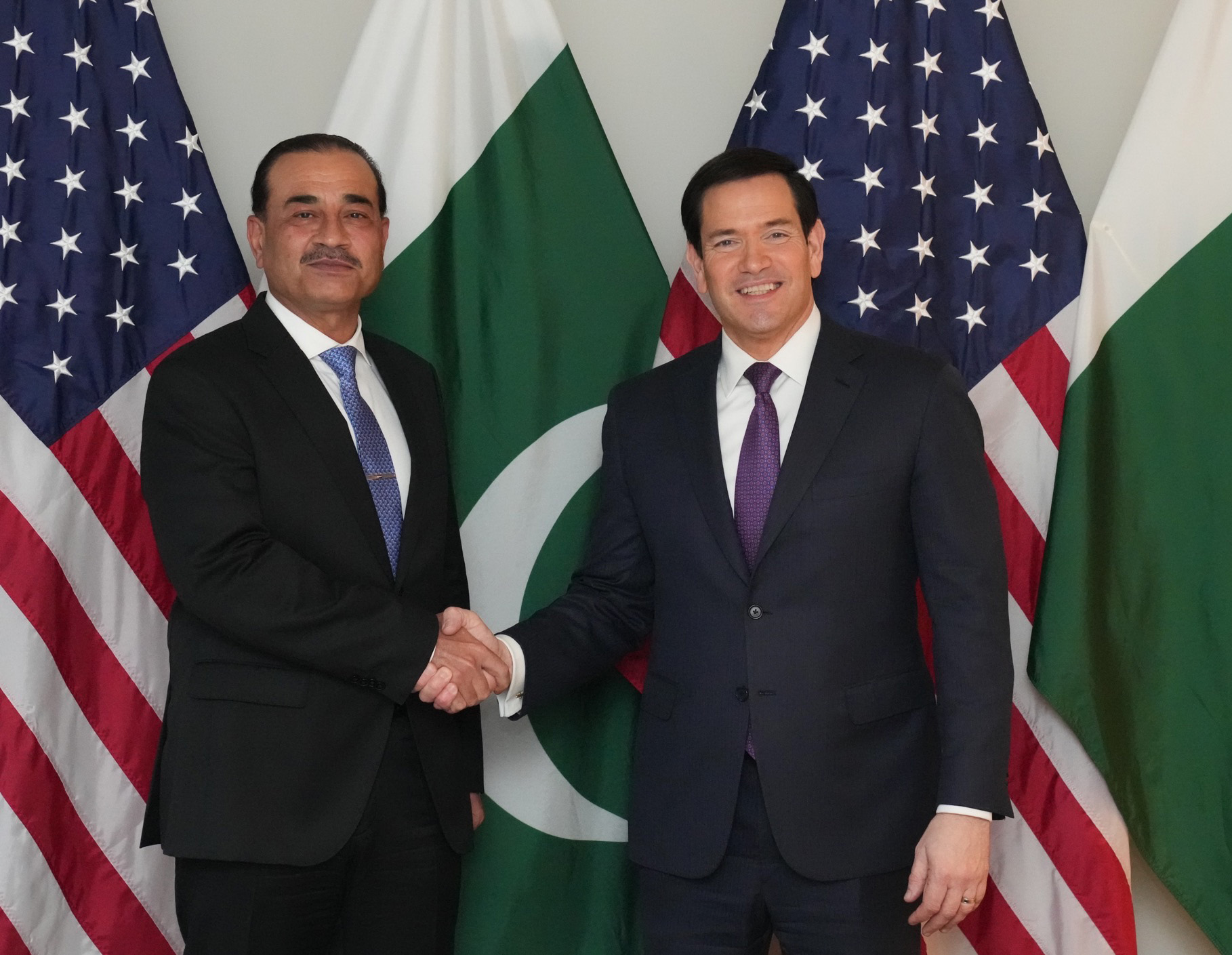
MBS sat in the Al-Salam Palace on April 16 and signed the $3 billion tranche with a Pakistani prime minister whose constitution no longer grants him authority over the variable that will determine whether Saudi Arabia is at war again next Wednesday. In the same hour, the officer who does hold that authority was in Tehran telling Abbas Araghchi that he had brought a new message from Washington. The Custodian is financing both sides of a conversation in which he has no seat.
Frequently Asked Questions
Does the SMDA specifically obligate Pakistan to provide nuclear cover to Saudi Arabia?
The published text of the September 17, 2025 Saudi-Pakistan Mutual Defence Agreement contains no explicit reference to nuclear weapons, warhead sharing, or extended deterrence. The activation language uses the phrase “aggression against either party shall be considered aggression against both,” which mirrors the NATO Article 5 construction without the corresponding Article 3 architecture. The Belfer Center’s review described any nuclear-umbrella reading as “speculative at best.” Pakistan’s 27th Amendment did, however, place operational custody of the Strategic Plans Division under the CDF, meaning that whatever posture signal Munir transmits to Saudi Arabia on this question is now his to send without Sharif’s concurrence.
When does the $5 billion Saudi deposit at the State Bank of Pakistan mature?
The original $5 billion Saudi deposit was rolled annually beginning in 2022 and was scheduled to mature in June 2026. The April 15-16 announcement converted the annual rollover into a multi-year extension, which analysts at Bloomberg interpret as a tenor extension through approximately 2028 or 2029, though the Pakistani Finance Ministry has not published the exact term. This removes the June 2026 maturity cliff that had been projected as a potential point of Saudi pressure during the current ceasefire period. In exchange, Pakistan accepts structural financial dependence through the end of the decade.
Has Pakistan attempted a two-track mediation role before?
The closest historical precedent is the Iran-Iraq war of 1980-1988, during which Pakistan formally maintained neutrality while providing logistical support to Saudi Arabia and serving as an Organisation of Islamic Cooperation mediator. That effort collapsed in 1986 when Iranian FM Velayati publicly rejected Pakistani mediation after the Islamabad OIC summit failed to produce a ceasefire framework. The current dual role is structurally more complex because the Pakistani military is now physically deployed to Saudi Arabia, whereas the 1980s support was logistical and financial only. The 1986 collapse took four years; the 2026 structure is operating on a four-day window.
Is there any mechanism by which MBS could invoke a direct Saudi seat at the Islamabad talks?
There is no procedural mechanism in the Islamabad framework that would admit Saudi Arabia as a formal party. The framework was structured as a US-Iran bilateral with Pakistan as host, and all three principals — Washington, Tehran, and Islamabad — have institutional reasons to exclude Riyadh. Saudi participation would require either a Paris-2015-style broadened format, which the US has explicitly declined, or a separate Saudi-Iran track under Omani or Qatari sponsorship, which remains limited to the single Faisal-Araghchi phone call on April 13. By April 17, that phone call had become part of a deliberate three-call sequence that each served a distinct strategic function — an analysis of how Iran structured the calls as a co-optation campaign Saudi Arabia cannot escape is available here. The practical Saudi options are to continue paying for the Pakistani proxy and hope its dual role does not collapse before Hajj, or to attempt a separate Gulf-mediated track that would be read in Tehran as an admission that the Islamabad framework has failed.
Related Coverage
The satellite revelation adds another dimension to MBS’s strategic trap: a Chinese commercial satellite, TEE-01B, imaged Prince Sultan Air Base under IRGC tasking before the KC-135 strikes — an intelligence relationship Saudi Arabia is structurally unable to protest publicly, adding Beijing to the list of powers whose interests constrain Saudi Arabia’s freedom of action.
For background on how Pakistan’s dual role was structurally established in the first round of ceasefire talks, see our coverage of Iran’s Chosen Mediator Is Saudi Arabia’s Contracted Military Auxiliary. Our detailed analysis of Munir’s Tehran arrival, and what he carried in his delegation brief, is available in Asim Munir’s Tehran Gamble. The underlying $5 billion financial arrangement between Saudi Arabia and Pakistan, and the wider context of the Sharif-MBS relationship, is unpacked in Shehbaz Sharif’s Riyadh Visit: Saudi Arabia Bought Pakistan’s Mediation for $5 Billion. For the authorization-ceiling logic that makes Pakistani mediation structurally limited, see Pakistan as Ceasefire’s Sole Enforcement Mechanism. And for the Saudi air-defence posture that makes the four-day window so structurally dangerous, see our earlier piece on the PAC-3 stockpile at 400 rounds. The April 16 Jeddah bilateral — where Sharif collected $3 billion while Munir was simultaneously in Tehran — is examined in MBS Has No Seat at the Table He Is Paying For.