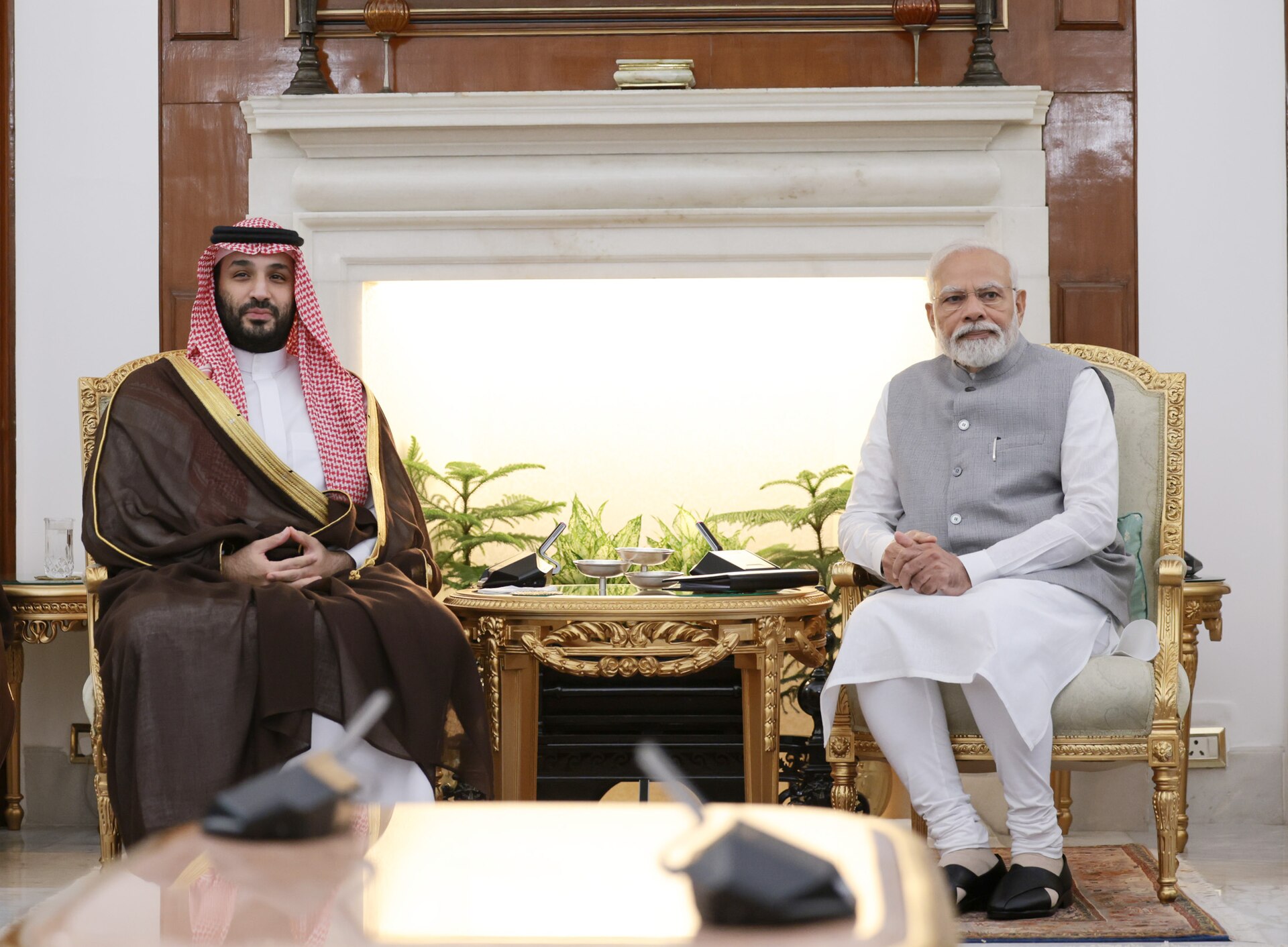
JEDDAH — For two hours on April 16, Crown Prince Mohammed bin Salman sat across from Prime Minister Shehbaz Sharif in Jeddah and was briefed on a war Saudi Arabia is paying for and cannot end. At the same hour, 1,100 miles east, Pakistan Army Chief Field Marshal Asim Munir was being met at Tehran’s Mehrabad airport by Iranian Foreign Minister Abbas Araghchi. The two-track choreography — prime minister to the Crown Prince, army chief to the Islamic Republic — is the clearest structural diagram yet of Saudi Arabia’s diplomatic position in the 45th day of the Iran war.
Saudi Arabia has made Pakistan its sole relay into Tehran at the moment Pakistan is being asked to be Iran’s trusted interlocutor, Riyadh’s contracted military auxiliary under the Strategic Mutual Defence Agreement, and the ceasefire’s enforcement mechanism. Every message Riyadh wants delivered to Tehran now moves through a chain — Araghchi to Munir to Sharif to MBS — that loses coercive weight at each link. The Kingdom is formally excluded from the Islamabad Accord text, unrepresented in the US-Iran bilateral track, and dependent on a Pakistani relay whose credibility with Tehran rests on Islamabad not being seen as a Saudi instrument. The structural gap closed marginally on April 16, when MBS made direct contact with Trump and pressed for a Lebanon ceasefire as the condition for Hormuz reopening — bypassing the relay chain for one exchange, but unable to sustain it.
Table of Contents
- The Two-Hour Briefing in Jeddah
- Was Saudi Arabia Excluded by Design or by Choice?
- Why Is Iran Calling Faisal Three Times in Five Days?
- The Pakistan Relay and Its Authorization Ceiling
- The Financial Architecture of a Rented Diplomacy
- Bab al-Mandab Is the Red Line, Not Hormuz
- The April 18 Hajj Cordon Forces the Kingdom’s Hand
- Does “All Stakeholders” Mean What Lavrov and Faisal Want It to Mean?
- The Paris Accords Problem
- Deniability Ledger: What Exclusion Buys and What It Costs
- Frequently Asked Questions
The Two-Hour Briefing in Jeddah
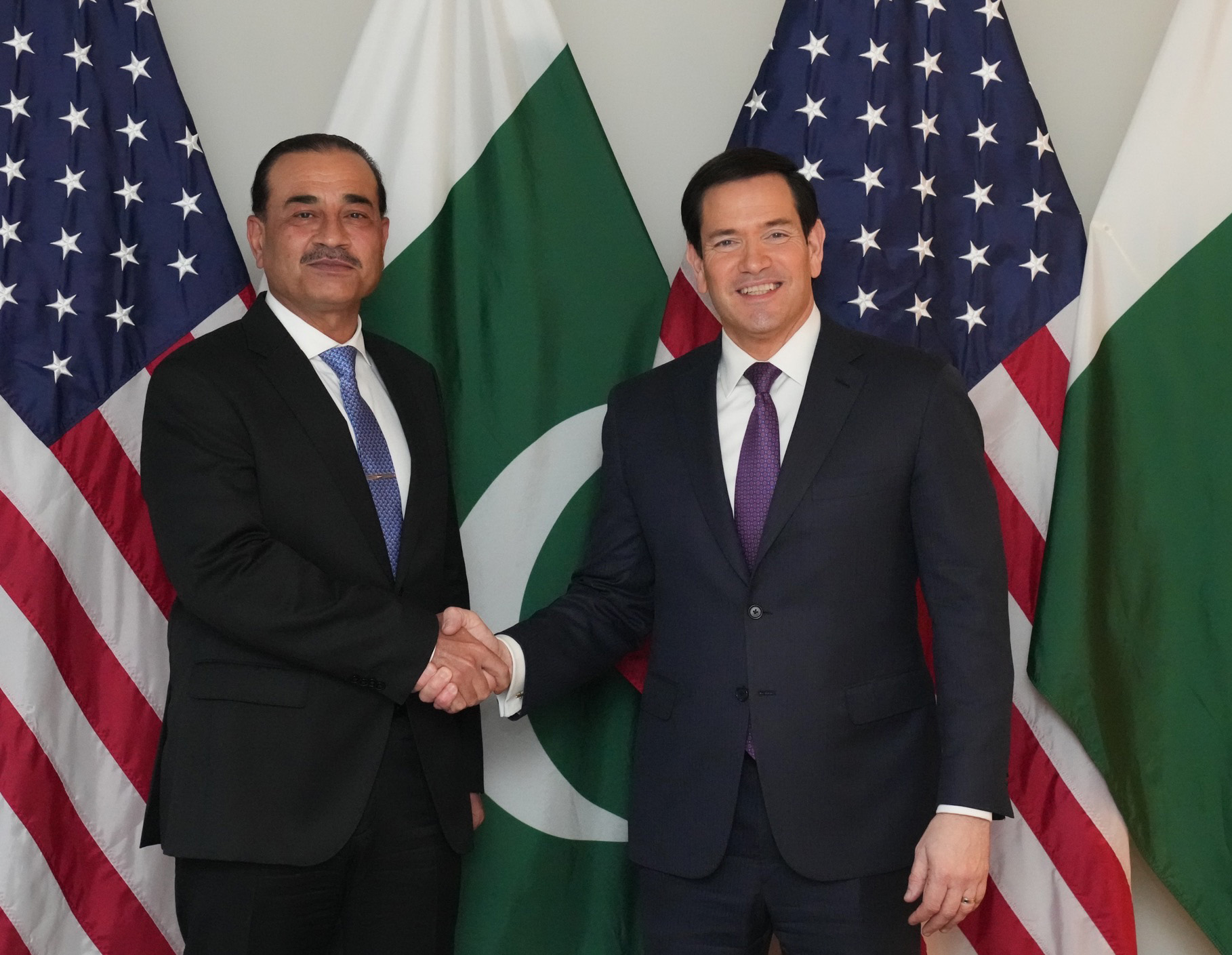
Sharif’s Jeddah visit was the first stop on a four-day tour through Saudi Arabia, Qatar, and Turkey, billed by Islamabad as an effort to build momentum for a second round of talks between Iran and the United States. Arab News and Pakistan Today reported the meeting ran roughly two hours and covered US-Iran mediation, Pakistan’s relay role, and the financial package announced the previous day in Washington. No joint statement was issued.
The timing was not coincidence. Munir’s Tehran visit was announced hours before Sharif landed in Jeddah. Al Jazeera reported that Araghchi personally met the Field Marshal at the airport — a protocol gesture reserved for visits Tehran wants to elevate publicly. PBS and Al Jazeera both cited Pakistani sources saying Munir carried “a new message from the US.”
A message routed through a Pakistani army chief to an Iranian foreign minister, while the Pakistani prime minister briefed the Saudi crown prince, describes an information architecture in which Saudi Arabia is a recipient, not a participant.
Was Saudi Arabia Excluded by Design or by Choice?
The Islamabad Accord framework, negotiated across three rounds over 21 hours on April 11 and 12, produced no memorandum of understanding and listed Saudi Arabia nowhere among its direct parties. The United Nations Secretary-General’s statement afterward thanked Saudi Arabia as a “mediator,” not a party — a diplomatic distinction that matters in treaty law and matters more in practice.
The Middle East briefing 3,000+ readers start their day with.
One email. Every weekday morning. Free.
Saudi Arabia hosted the Rubio-Lavrov talks on Ukraine in Riyadh in February 2026, a format from which Kyiv was excluded. Two months later the Kingdom occupies the position Ukraine held then: the entity most affected by the outcome, without a seat at the table where the outcome is written. Crisis Group’s April Hormuz briefing noted: “Saudi Arabia leads neither the US-Iran track nor the mediator track for the waterway its economy depends on most.”
There are two readings of how this happened. The first is that Washington and Tehran both wanted a bilateral format and Islamabad was chosen because Pakistan alone held credentials with both sides. The second is that Riyadh accepted exclusion because sitting at the table would have required Saudi Arabia to publicly articulate demands — on Eastern Province strikes, on King Fahd Causeway targeting, on the Iran war toll that has run through Aramco facilities since March 2. Public articulation would convert private grievances into treaty terms that Tehran would then refuse.
Absence preserves deniability. It also preserves the ability to reject whatever emerges without having signed it. Whether that constitutes power or paralysis depends on what emerges.
Saudi Arabia leads neither the US-Iran track nor the mediator track for the waterway its economy depends on most.Crisis Group, Hormuz Q&A, April 2026
Why Is Iran Calling Faisal Three Times in Five Days?
Between April 9 and April 14, Iranian Foreign Minister Abbas Araghchi called Saudi Foreign Minister Prince Faisal bin Farhan three times. Al Arabiya English reported each call; each was Iran-initiated or Iran-framed. The April 9 call was Tehran’s first direct outreach to Riyadh since the war began on March 2. The April 13 call came one day after the Islamabad rounds ended without an MoU. The April 14 call came the day before the WSJ report that MBS was lobbying Trump to lift the Hormuz blockade.
In the April 13 call, Araghchi told Faisal: “Unfortunately, we witnessed the continuation of the American side’s excessive demands in the negotiations and this obstructed any result.” The sentence was not a readout. It was a pitch. Tehran was using the bilateral Faisal channel to shape Riyadh’s perception of Washington’s intransigence and to position Saudi Arabia as a pressure point on the United States rather than on Iran.
The asymmetry matters. Iran is briefing Saudi Arabia on how negotiations are going. Saudi Arabia is not briefing Iran on anything. The bilateral channel the Kingdom believes it controls is, at least in its current use, a one-way broadcast from Tehran into the Royal Court.
Tehran has an interest in this arrangement. A Saudi seat at the Islamabad table would have required the framework to address strikes on the Eastern Province, the IRGC counter-target list that includes the King Fahd Causeway, and Saudi demands on de-escalation sequencing that Iran has no interest in conceding. A Saudi non-seat allows Iran to keep the framework narrow — US bilateral only — and to use the Faisal channel to extract Saudi pressure on Washington for terms Tehran could not extract directly.
The Pakistan Relay and Its Authorization Ceiling
The relay chain moves Saudi messages to Tehran through four links: Araghchi receives them from Munir, Munir receives them from Sharif, Sharif receives them from MBS. Each link introduces translation loss. More consequential, each link depends on the next link’s political survival and willingness to carry a message undistorted.
Rabia Akhtar of the Belfer Center, writing from Islamabad School of Government, has described Pakistan’s role as “mediator” under the binding of the Strategic Mutual Defence Agreement — a structural contradiction in which Islamabad’s credibility with Tehran rests on its not being seen as a Saudi instrument, while its defence posture is exactly that. Al Jazeera on April 14 cited analysts making the contradiction explicit: “Pakistan cannot simultaneously be Iran’s trusted interlocutor and Saudi Arabia’s co-belligerent.”
The relay also runs into Iran’s authorization ceiling. IRGC Defence Minister Ahmad Vahidi has clashed publicly with Araghchi over the composition of the Islamabad delegation. Even if Araghchi agrees to terms carried by Munir, Vahidi retains authority through the Supreme National Security Council, and above Vahidi sits Supreme Leader Khamenei — who has been publicly absent 44 days — to refuse implementation. A message that reaches the Iranian foreign ministry is not a message that reaches the Iranian state.
| Link | Role | Authorization exposure |
|---|---|---|
| MBS → Sharif | Saudi interest articulated to Pakistani PM | Sharif politically dependent on Munir; PM office does not command defence policy |
| Sharif → Munir | PM relays to Army Chief | Munir operates under 27th Constitutional Amendment expanding military primacy |
| Munir → Araghchi | Pakistani military to Iranian FM | Pakistan bound by SMDA to Saudi defence; message may be discounted by Tehran |
| Araghchi → SNSC | Foreign Minister to Supreme National Security Council | Vahidi refuses; Khamenei absent 44+ days; Mojtaba Khamenei audio-only |
The Financial Architecture of a Rented Diplomacy
On April 15, one day before the Jeddah meeting, Pakistan’s Finance Ministry announced a Saudi package: $3 billion in fresh deposits and a $5 billion facility extended from its annual rollover cycle to a fixed term through 2028. ProPakistani and The National carried the terms. The announcement was made in Washington at the World Bank-IMF Spring Meetings, not in Riyadh, not in Islamabad.
The $5 billion facility has been on annual rollover for years. Converting it to a three-year fixed-term instrument — and announcing that conversion at the IMF rather than in the two capitals involved — was a deliberate signal to international financial markets that Pakistan’s sovereign backstop now runs through the ceasefire period and past the October 2026 IMF Extended Fund Facility review. The structural message was that Saudi Arabia is underwriting Pakistan’s fiscal survival through the period in which Pakistan is expected to deliver an Iran ceasefire.
It is also a conversion of perpetual rollover risk into a dependency Riyadh can price. Annual rollovers allow both parties to renegotiate. A three-year fixed term removes that flexibility for Islamabad and gives Riyadh a defined instrument to withdraw, threaten to withdraw, or publicly cite. The package is diplomatic collateral.
The timing was also a signal to Tehran. Announcing on April 15 and meeting on April 16 collapsed any ambiguity about whether Sharif was travelling to Jeddah as an independent head of government or as the recipient of a freshly confirmed $8 billion sovereign backstop. The Kingdom did not publicly condition the package on Iran policy. It did not need to.
Bab al-Mandab Is the Red Line, Not Hormuz
The Wall Street Journal reported on April 14, citing four Arab officials, that MBS had been pressing Trump privately to lift the Hormuz naval blockade that CENTCOM imposed on April 13. The Saudi Embassy in Washington issued a categorical denial: “At no point in all our communication with the Trump Administration did we lobby the President to adopt a different policy.”
The denial is narrowly phrased. It rules out lobbying on a “different policy” — which is not the same as ruling out private expressions of concern about a specific operational measure. The WSJ framing and the embassy denial can both be true if Riyadh’s message to Washington was about consequences rather than policy change.
The consequence Riyadh fears is Bab al-Mandab. East-West Pipeline throughput to Yanbu is at capacity — Amin Nasser’s April ceiling of 5.9 million barrels per day, with 5.2 million loaded on April 12. Pre-war Saudi Hormuz throughput ran 7 to 7.5 million bpd. The structural export gap of 1.1 to 1.6 million bpd is already destructive at current Brent levels. If the Houthis activate against the Red Sea corridor — a response to prolonged US naval pressure on Iran that Sanaa has telegraphed — Yanbu loses its export exit and the gap becomes absolute.
Hormuz is the public crisis. Bab al-Mandab is the private one. The April 14 Araghchi-Faisal call ran 48 hours before the Jeddah meeting; it was followed by the April 15 Lavrov-Faisal call that introduced the phrase “all stakeholders.” The sequence suggests Riyadh is assembling a diplomatic argument for widening the framework before the Houthi decision is made in Sanaa.
The April 18 Hajj Cordon Forces the Kingdom’s Hand
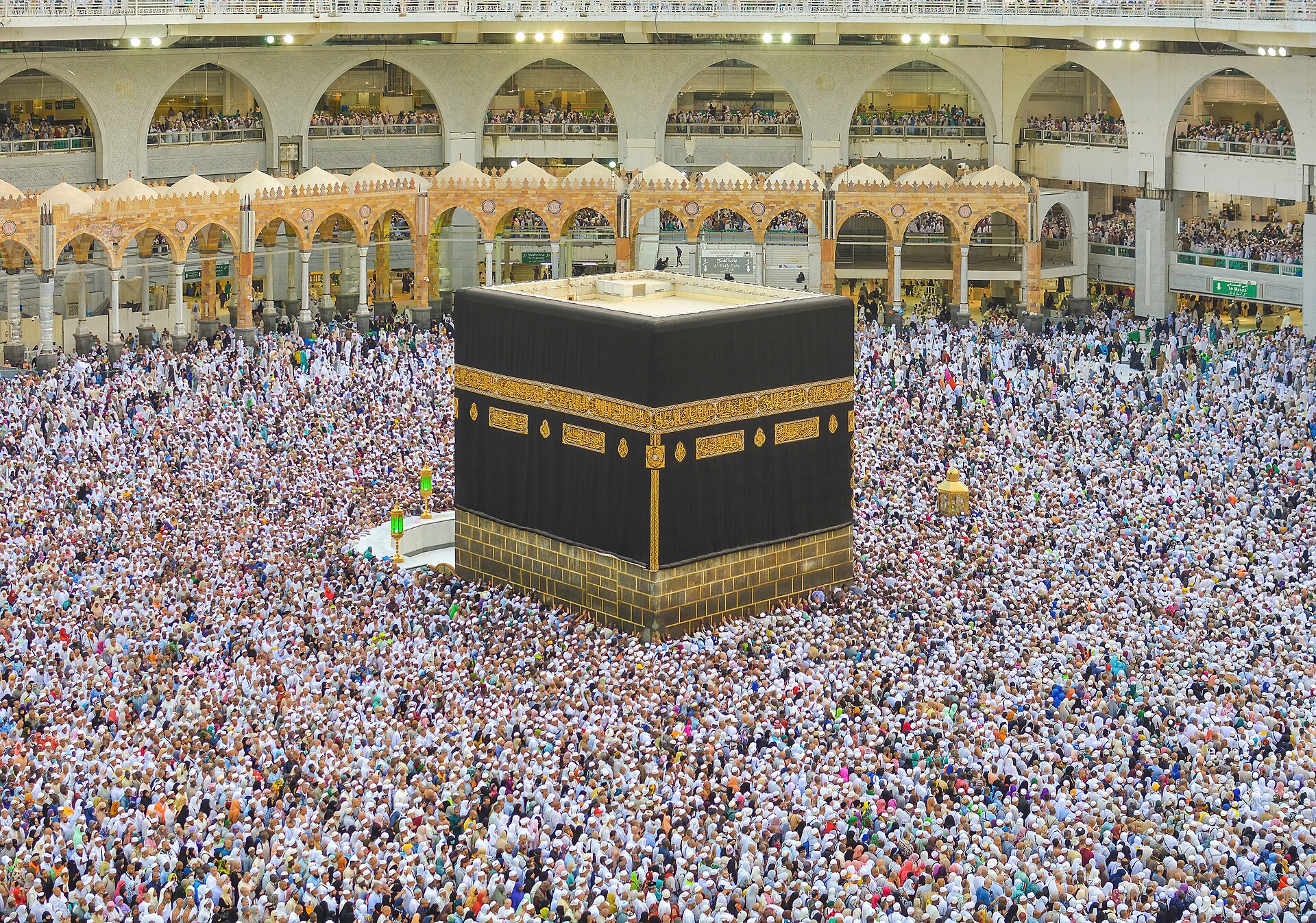
April 18 is the final date for Umrah visa holders to depart the Kingdom before the Hajj 2026 arrival cordon seals. The ceasefire framework, such as it is, expires April 22. The four-day gap between Hajj arrivals commencing and the nominal ceasefire expiring is the operational window in which Saudi Arabia either secures an extension or tells 1.8 million pilgrims that their safety rests on an agreement that has formally lapsed.
The Associated Press reported on April 15 that the United States and Iran had reached an “in principle” agreement to extend the ceasefire. White House Press Secretary Karoline Leavitt on April 16 addressed the report directly: “That is not true, at this moment.” Axios reported the same afternoon that there was optimism about “a potential major breakthrough on the nuclear front.” The three reports are not compatible with each other.
The contradiction is the point. Riyadh must act on one of three hypotheses — AP’s, Leavitt’s, or Axios’s — before April 18, and the Kingdom is not a party to any of the conversations generating the ambiguity. Pakistan’s relay is the only source of authoritative clarification, and Munir was in Tehran on April 16, not Islamabad or Riyadh.
Does “All Stakeholders” Mean What Lavrov and Faisal Want It to Mean?
The April 15 Faisal-Lavrov call produced the readout phrase that matters: “inclusive dialogue involving all stakeholders…arrangements that guarantee long-term stability and security in the region based on a balance of interests among all regional states.” Xinhua and Asharq Al-Awsat both carried it in the Russian and Arabic readouts on April 16.
“All stakeholders” is not neutral treaty language. It is Moscow-Riyadh code for the position that the current US-Iran bilateral format inadequately represents Gulf state interests and that any final architecture must include a broader table. The phrase repeats the formulation that Moscow used during the 2015 JCPOA period, when Russia argued for regional inclusion and the United States refused.
Russia’s interest here is not Saudi interest. Moscow benefits from prolonged conflict uncertainty: elevated oil prices, a United States tied down in the Gulf, and a Saudi Arabia dependent on Russian UNSC cover. On April 7, Russia and China vetoed the Bahrain-drafted Hormuz resolution after it was stripped from Chapter VII to non-binding. Saudi Arabia’s public demand for regional inclusion aligns on surface with Russian framing but on underlying interest diverges: Riyadh wants a finished ceasefire with Saudi terms; Moscow wants an unfinished ceasefire indefinitely.
The convergence is tactical. The Kingdom is using the only diplomatic vocabulary currently available — Russian language, Pakistani relay — to shape a framework it is not inside. The risk is that the vocabulary comes with commitments Riyadh has not explicitly made.
Gulf monarchies such as Saudi Arabia and the UAE so far have demonstrated little capacity to either restrain Trump or deter Iran.Carnegie Endowment, Emissary, April 2026
The Paris Accords Problem
The Paris Peace Accords of 1973 were signed by the United States and North Vietnam as the principal parties. South Vietnam was nominally present and secured no real veto over the terms. Saigon’s survival was outsourced to continued American political will, which Congress withdrew in 1974 when it cut off funding. The ceasefire held until the American commitment that underwrote it did not.
The structural analogy to Saudi Arabia’s April 2026 position is exact enough to be uncomfortable. The Islamabad framework is a US-Iran bilateral. The Kingdom’s survival interests — Aramco facility security, Eastern Province airspace, Bab al-Mandab, Hajj operations — are outsourced to American coercive will and Pakistani diplomatic access. Both can change independent of Saudi preferences. American will tracks Trump’s domestic calendar and the 2026 midterm arithmetic. Pakistani access tracks Munir’s political survival and the credibility tightrope between Tehran and Riyadh.
The difference from 1973 is that Saudi Arabia has financial instruments — the $8 billion Pakistan package, the Aramco dividend, the sovereign wealth fund — that Saigon did not have. The similarity is that financial instruments do not translate directly into treaty terms. Riyadh can fund the relay. It cannot compel the message.
Deniability Ledger: What Exclusion Buys and What It Costs
The argument for Saudi acceptance of the exclusion turns on deniability. Riyadh did not sign the Islamabad framework, so Riyadh cannot be blamed when it fails. The Kingdom retains the ability to reject whatever emerges without having committed to it. The Faisal channel with Araghchi continues operating below the treaty surface, giving MBS an independent read on Iranian intentions. The Pakistan package underwrites the relay without appearing as Saudi pressure on Iran.
The argument against turns on veto power. A ceasefire that fails Saudi core interests — one that codifies Iran’s Hormuz toll architecture, or that leaves the King Fahd Causeway on a residual IRGC target list, or that locks in US blockade lift without Iranian enforcement concessions — leaves Riyadh with no formal mechanism to refuse implementation. The Kingdom would face a fait accompli and would need to manufacture objections through the Pakistani relay and the Russian channel, both of which have their own interests in whatever emerges.
| Saudi interest | Islamabad Accord status | Riyadh’s recourse if violated |
|---|---|---|
| Aramco facility security | Not addressed in leaked framework | Faisal-Araghchi channel; no treaty clause |
| Eastern Province airspace | Covered only by general cessation language | SMDA Pakistani auxiliary; not ceasefire mechanism |
| Hormuz toll architecture | Deferred to Phase 2 | UNSC via Bahrain draft (vetoed April 7) |
| Bab al-Mandab / Houthi containment | Out of scope | US CENTCOM posture only |
| Hajj April 18 security assurance | Not specified | Bilateral Iran-Saudi; no Iranian signature |
The ledger resolves in favour of exclusion only if the Kingdom believes the framework will fail and wants to survive its failure without fingerprints. It resolves against exclusion if the Kingdom believes the framework will hold and wants its terms to reflect Saudi requirements. MBS’s behavior — the Pakistan package, the Russian channel, the WSJ-reported private lobbying of Trump — suggests the Kingdom is preparing for both contingencies simultaneously.
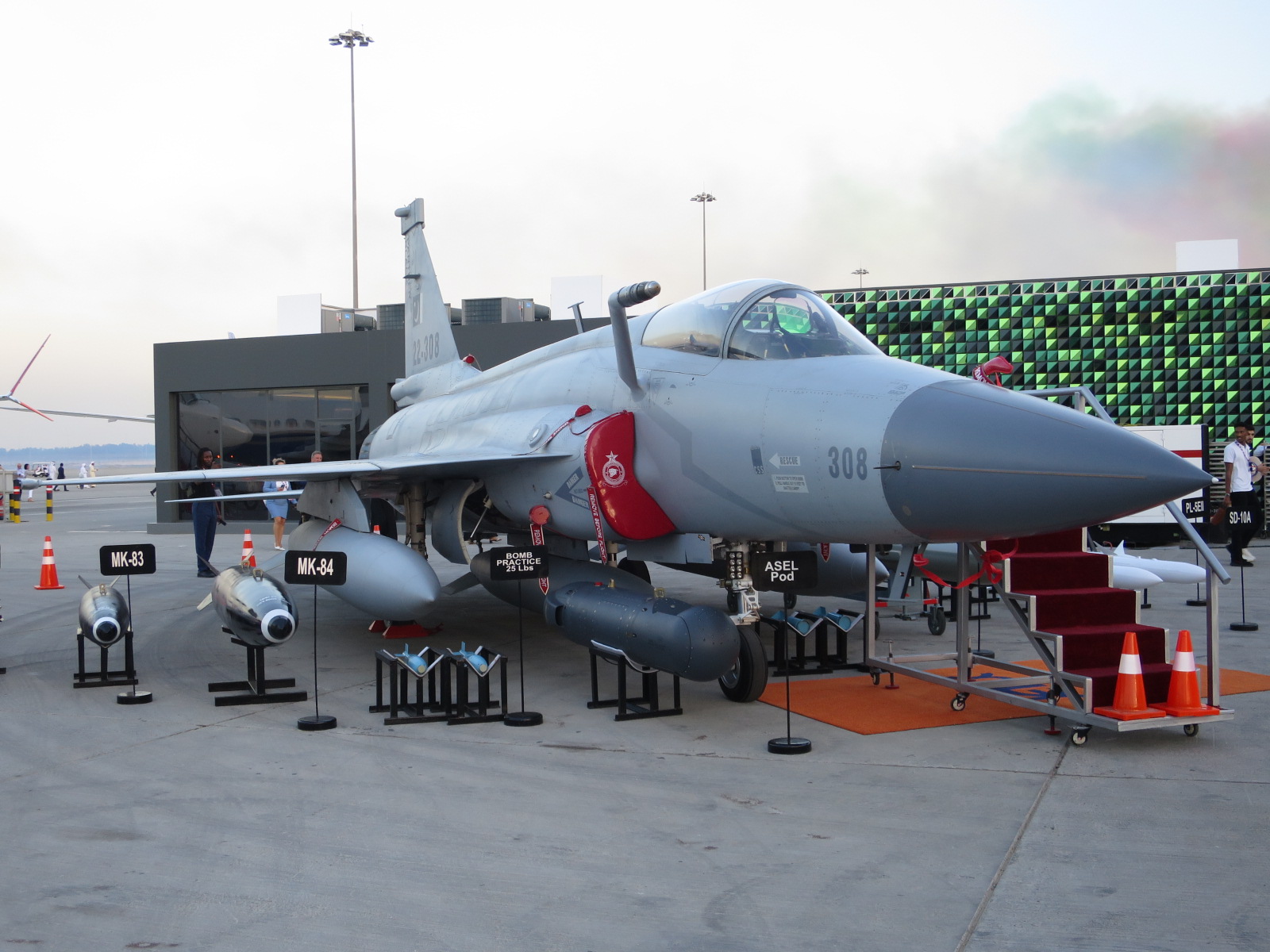
On April 11, 13,000 Pakistani troops were reported deployed to the Eastern Province under SMDA provisions. Pakistani Air Force F-7PG and JF-17 fighters arrived at King Abdulaziz Air Base the same day. As of April 16, the Pakistani Army Chief who commands those forces was in Tehran carrying a US message. The Saudi defence posture and the Saudi diplomatic relay are, in this week, the same person.
Frequently Asked Questions
What is the Strategic Mutual Defence Agreement and why does it matter here?
The SMDA was signed between Saudi Arabia and Pakistan on September 17, 2025, and has never been tabled in Pakistan’s parliament. Its core clause states that “any aggression against either country shall be considered an aggression against both.” Leaked documents reported by Drop Site News on April 14 trace the arrangement to a confidential December 14, 1982 agreement between the two states. India Today on April 15 characterised the leak as the “secret Saudi-Pakistan war pact exposed as Islamabad’s neutral role unravels.” The SMDA is why Pakistan’s mediation is structurally compromised: the same treaty that commits Islamabad to Saudi defence also undercuts Islamabad’s claim to neutrality in any mediation involving a Saudi counterparty.
Does Pakistan’s role as Iran’s protecting power in the United States affect this relay?
Yes. Since 1992, Pakistan has handled Iranian consular affairs in the United States, a standing arrangement that makes Islamabad structurally indispensable to Tehran independent of any current SMDA considerations. It is also why Tehran accepts Pakistani mediation despite the SMDA contradiction: the relationship predates the Saudi treaty by 33 years and operates through institutional channels Iran has no substitute for. The relay works, in part, because it rests on this older foundation.
Why did Russia and China veto the Bahrain-drafted Hormuz resolution on April 7?
The Bahrain draft went through six revisions across 15 days of negotiation, each iteration stripping enforcement language. By the time it reached the Security Council floor it had been reduced from a Chapter VII binding resolution to a non-binding statement — and was still vetoed. Moscow and Beijing have an interest in preventing any UN architecture that would constrain Iran’s Hormuz posture, because prolonged uncertainty over the strait benefits both powers’ energy and strategic positions. The veto left Saudi Arabia without a UN mechanism and is part of why the Kingdom is now operating through bilateral channels rather than multilateral forums.
What is the “authorization ceiling” problem on the Iranian side?
Iran’s foreign ministry can accept terms that the Islamic Revolutionary Guard Corps and the Supreme National Security Council will not implement. Defence Minister Ahmad Vahidi has publicly clashed with Araghchi over negotiating team composition. Supreme Leader Khamenei has been absent from public appearances for more than 44 days. Mojtaba Khamenei has been heard in audio but not seen in video. Any agreement that reaches Araghchi must still pass through the SNSC and Khamenei’s office to bind the Iranian state. The ceiling is why the Munir-Araghchi meeting, however friendly, may not produce implementable terms.
What should Saudi Arabia watch for between now and April 22?
Three signals. First, whether Araghchi calls Faisal a fourth time — and whether the call is Iran-initiated or Saudi-initiated, because the direction indicates which party feels it needs the other. The first three calls — April 9, April 13, and April 17 — each served a distinct function in Iran’s co-optation architecture, as this analysis of Iran’s FM call sequence shows. Second, whether Russia tables a new UN text using the “all stakeholders” Lavrov-Faisal language, which would formalise Saudi inclusion as a Russian demand rather than a Saudi one. Third, whether the Pakistani Air Force contingent at King Abdulaziz Air Base receives a redeployment order before April 18, which would indicate Munir’s Tehran visit produced a conditional security assurance covering the Hajj cordon period.
The two hours Sharif spent in Jeddah on April 16 were not a negotiation. They were a briefing delivered by an intermediary to a client who is funding the intermediary’s fiscal survival for the next three years. While the briefing was under way in the Red Sea port, the intermediary’s army chief was in the Iranian capital carrying a message written in Washington. Saudi Arabia was present in every room through proxies and absent from every room in its own name. The April 16 ceasefire formalized that pattern: Saudi Arabia’s Lebanon demand was engineered into the agreement through British and French proxies rather than direct inclusion. That quiet win carries a structural liability examined in a companion editorial.
The structural roots of Saudi Arabia’s exclusion extend back to 2015: the JCPOA Gulf exclusion pattern and the $20 billion Iran deal documents how the kingdom’s position has degraded across eight dimensions since the last nuclear bargain was written without it.
For internal reference see coverage of the Islamabad Accord structural gap, the Faisal-Araghchi channel sequence, the SMDA leak and India Today framing, the PAC-3 stockpile depletion and authorization ceiling, the East-West Pipeline Yanbu ceiling, and the April 18 Hajj cordon editorial.
That absence became a formal architectural fact on April 16 when Trump announced a personal visit to Islamabad to sign the Iran deal — the seat MBS could not buy despite $8 billion in active deposits to the mediator. The Islamabad exclusion editorial examines what that means for Saudi Arabia’s postwar position. Adding to Saudi Arabia’s structural exposure, the War Powers Resolution clock expires May 1 with no AUMF in either chamber, leaving the entire US military campaign on a constitutional countdown that Gulf states cannot influence. How the May 1 war powers deadline reshapes the Gulf calculus.