Iran Says Its Arsenal Is Full Again. Saudi Arabia Has 400 Interceptors Left.
RIYADH — The ceasefire that began on April 8 was negotiated under a specific set of military conditions: Iran’s missile and drone stockpile had been halved by more than 13,000 American strikes, and Saudi Arabia’s PAC-3 interceptor inventory had fallen from roughly 2,800 rounds to approximately 400 — an 86 percent reduction across 44 days of sustained combat, as Saudi batteries fired an estimated 2,400 rounds to intercept 894 aerial threats. Both sides were degraded. The pause made sense because the cost of continuing exceeded the cost of stopping.
Eight days later, Iran’s Defense Ministry claims the arithmetic has changed. On April 14, spokesperson Reza Talaeinik declared that Iranian armed forces now possess “sufficient missiles, drones, weapons, ammunition and other military equipment to continue offensive and defensive operations in the future.” If even a fraction of that claim is true, the two attrition curves have crossed: Iran approaches the April 22 ceasefire expiry with a reconstituted arsenal while Saudi Arabia approaches it with the same 400 rounds it had on April 8 — because no interceptor has been manufactured, shipped, or transferred in the interim.
Table of Contents
- What Iran Actually Said — and What It Implies
- What Does U.S. Intelligence Say About Iran’s Remaining Arsenal?
- The Production Math: Shaheds, Bulldozers, and Buried Silos
- Why Can’t Saudi Arabia Replenish Its PAC-3 Stockpile Before April 22?
- The Three-Way Triage: Eastern Province, Yanbu, and Mecca
- A Ceasefire Priced at the Wrong Risk Level
- The 2006 Precedent Nobody Wants to Mention
- Who Has Interceptors to Spare? Nobody.
- What Happens on April 22?
- Frequently Asked Questions
What Iran Actually Said — and What It Implies
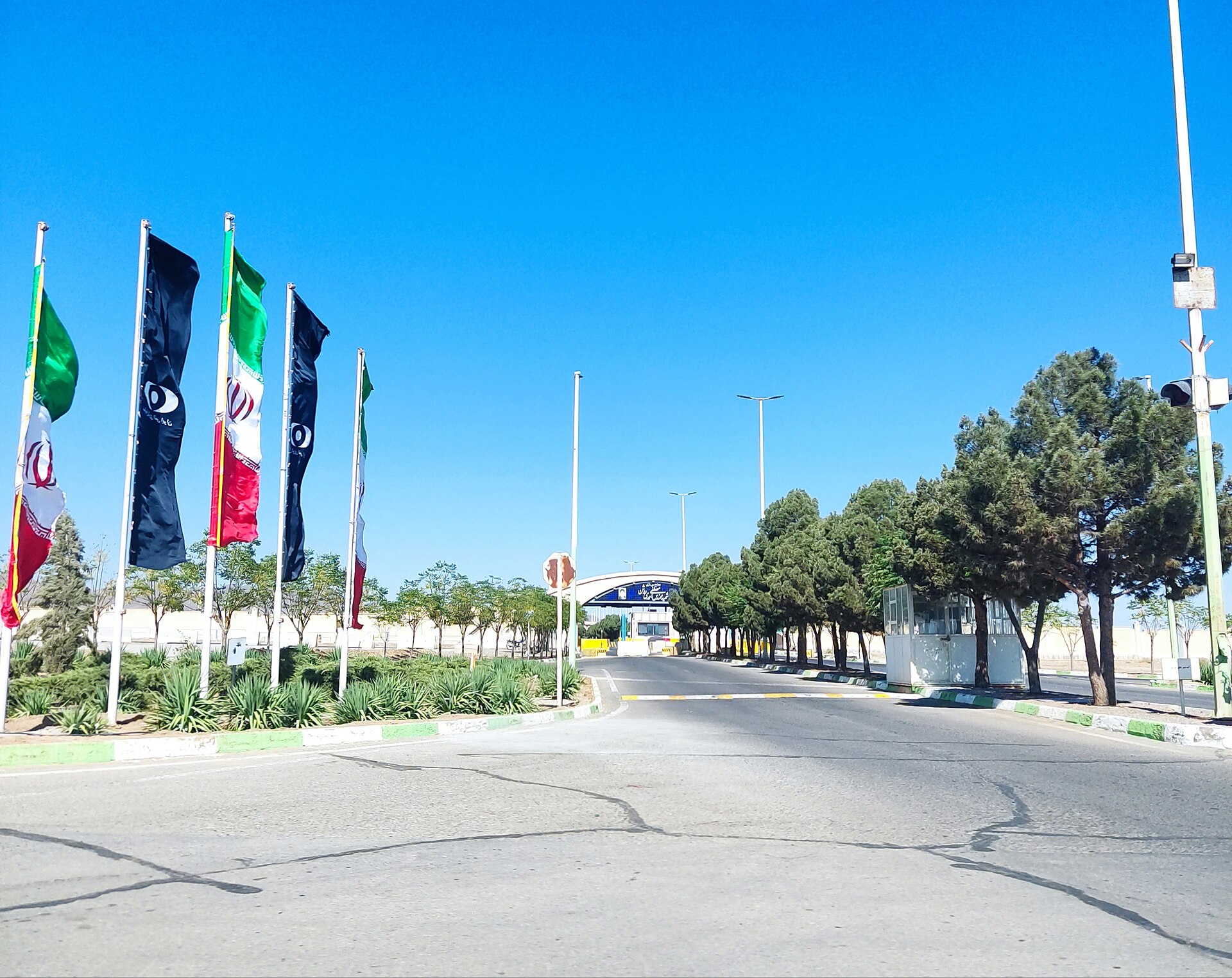
Talaeinik’s April 14 statement was carried by TASS and Xinhua within minutes of each other, suggesting a coordinated release timed for international distribution rather than a domestic audience. The phrasing was deliberate. He did not say Iran had rebuilt what it lost. He said Iran possessed “sufficient” capability for “offensive and defensive operations in the future” — language that frames the claim around operational readiness rather than numerical parity with pre-war stockpiles.
The IRGC reinforced the message through a separate channel. Spokesperson Mohebbi, also on April 14, told Xinhua: “We have not yet used our capabilities, and if the war continues, we will unveil capabilities that the enemy has no idea about.” This is a distinct rhetorical register from Talaeinik’s bureaucratic inventory statement. Where the Defense Ministry spoke of quantities, the IRGC spoke of categories — implying weapons systems that have not yet been employed in the conflict.
The two claims serve different audiences. Talaeinik’s sufficiency framing addresses the strategic question that the Wall Street Journal raised on April 11, when U.S. intelligence officials told the paper that Iran’s missile stockpile had “fallen by about half” but that over 1,000 medium-range ballistic missiles were assessed to survive from a pre-war inventory of approximately 2,500. Iran’s Defense Ministry is not disputing the American estimate so much as reframing it: half an arsenal of 2,500 is still 1,250 missiles, and if you can produce more during a two-week pause, the number on April 22 may be materially higher than the number on April 8.
The Middle East briefing 3,000+ readers start their day with.
One email. Every weekday morning. Free.
Mohebbi’s statement serves a deterrence function aimed at the operational planners in Tampa and Riyadh who must decide, within eight days, whether to let the ceasefire lapse or extend it. The message is simple: you struck 13,000 targets and degraded us by half. We absorbed that. Now consider what we held in reserve.
PressTV amplified the Wall Street Journal’s own intelligence reporting on April 11, using American sourcing to undercut the Pentagon’s narrative. This is not unusual — Tehran has consistently weaponized Western intelligence leaks as propaganda — but the specific choice to amplify the “arsenal largely intact” framing from the WSJ suggests Iran’s information operation is calibrated to the April 22 decision window.
What Does U.S. Intelligence Say About Iran’s Remaining Arsenal?
The American assessment exists in two layers, and they contradict each other. The public layer is triumphalist — factories razed, production destroyed. The classified layer, reported by the Wall Street Journal on April 11, assessed that Iran still retains over 1,000 medium-range ballistic missiles from a pre-war inventory of roughly 2,500, with roughly half its missile launchers intact.
On April 8, Defense Secretary Pete Hegseth told reporters: “Their factories have been razed to the ground, set back in historic fashion…They can no longer build missiles, build rockets, build launchers or build UAVs.” Gen. Dan Caine, Chairman of the Joint Chiefs of Staff, was equally categorical: “Every factory that produced Shahed one-way attack drones was struck. Every factory that produces the guidance systems…was struck.”
The Soufan Center’s April 6 IntelBrief, drawing on U.S. intelligence community sources, put the overall degradation at approximately 50 percent across both missiles and drones — after more than 13,000 individual strikes. The assessment found that “thousands of Shahed-type one-way attack drones” survived alongside the missile stockpile.
The Soufan Center quantified Iran’s remaining daily launch capacity: 15 to 30 ballistic missiles and 50 to 100 Shahed-type drones per day from surviving assets. At the lower bound of that estimate, Iran could fire 120 ballistic missiles and 400 drones in the first eight days after ceasefire expiry. At the upper bound, 240 missiles and 800 drones.
Kelly Grieco of the Stimson Center identified the gap in the Pentagon’s logic on April 8, the same day Hegseth declared Iran’s production capacity destroyed: “The Shahed drone is intentionally simple — that’s a design feature, not a limitation…striking every known factory is not the same as destroying the capability.” The Shahed-136’s MD-550 motor is fully indigenized. Its components are domestically assembled. The production architecture was deliberately decentralized before the war began, dispersed across locations specifically to survive the kind of industrial targeting campaign the United States conducted.
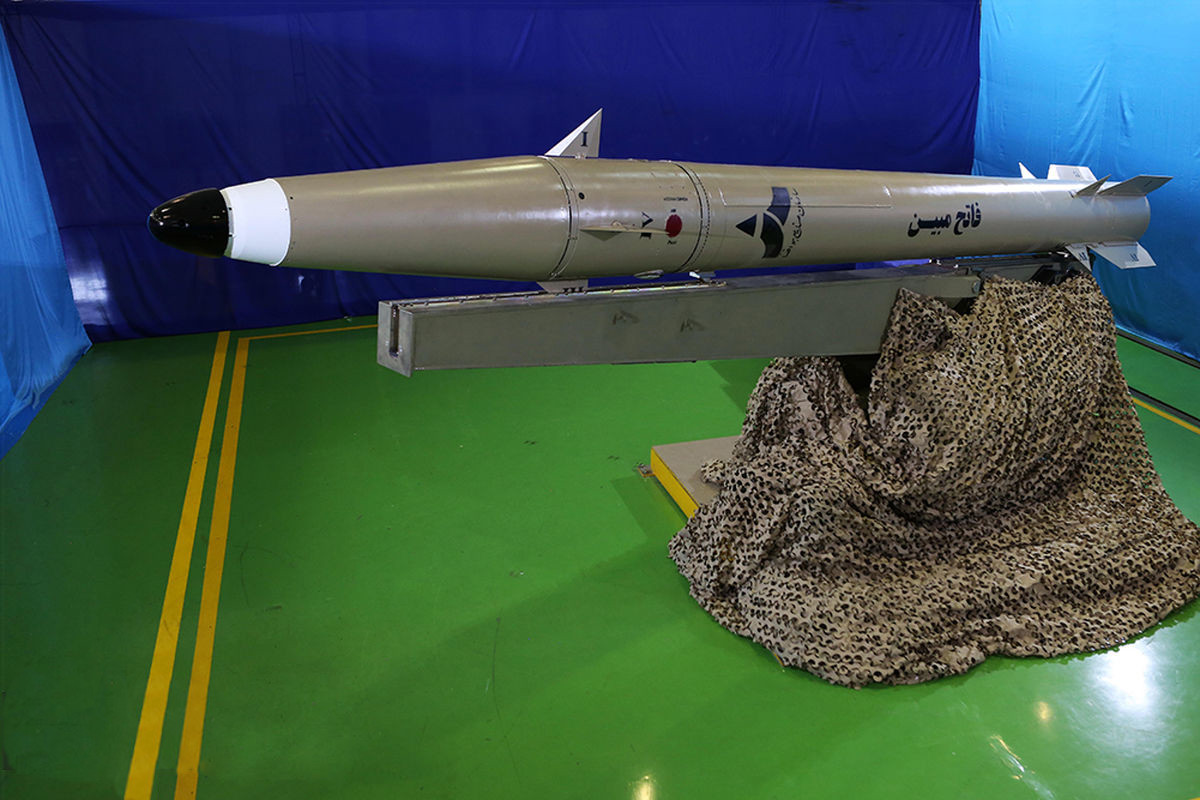
The contradiction between the public and classified assessments is not a communications failure. It is a policy choice. The Pentagon needed the “factories razed” narrative to justify the ceasefire as a victory rather than a stalemate. The intelligence community needed the “arsenal largely intact” assessment to justify continued vigilance and, potentially, the coercive blockade that began on April 13. Both narratives serve their institutional sponsors. Neither serves the country that sits between the two arsenals.
The Production Math: Shaheds, Bulldozers, and Buried Silos
Iran’s pre-war Shahed-136 production rate was estimated at 200 to 500 units per month across multiple facilities. Even if 90 percent of known factory floor space was destroyed — accepting Hegseth’s claim at face value — the question is how much production capacity existed outside known facilities. The Shahed-136 is not an F-35. It is a delta-wing airframe with a simple guidance package, a warhead, and a small turbofan engine. It can be assembled in a warehouse. It can be assembled in a basement. The precondition for production is not a factory. It is components, tooling, and technical knowledge. Iran has all three.
The ballistic missile question is different. Solid-fuel missiles like the Fateh-110 and Dezful require sodium perchlorate as an oxidizer for their propellant. In February 2025 — a full year before the conflict began — a vessel carrying 1,000 tons of sodium perchlorate arrived at Bandar Abbas. That single shipment represents enough oxidizer for hundreds of medium-range solid-fuel missiles. Iran was pre-positioning propellant stockpiles before any strike was launched.
The underground infrastructure dimension has been underestimated. Times of Israel reported in April 2026 that Iranian crews were deploying bulldozer teams to excavate buried bunkers and silos within hours of strikes, restoring damaged sites faster than U.S. strike planners anticipated. The reconstruction is being engineered deeper underground specifically to defeat the GBU-57 Massive Ordnance Penetrators used in earlier waves. This is not repair. It is hardening under fire — a doctrinal response that American planners encountered in North Korea and never solved.
Then there is China. Beijing continues shipping precision machine tools and guidance components to Iran during the conflict. The CNPC/Sinopec structural relationship with Tehran — including 8 million tons per annum of contracted LNG offtake and 5 percent equity in Qatar’s North Field East — gives China a commercial incentive to preserve Iran’s operational capacity that no sanctions regime has interrupted. The supply chain runs through entities that are not sanctioned, through ports that are not blockaded, and through financial channels — Kunlun Bank principal among them — that operate outside SWIFT.
The net production picture during the ceasefire window is unknowable from open sources. But the inputs are visible: surviving stockpiles assessed at 50 percent of pre-war levels, pre-positioned propellant, rapid bunker recovery, dispersed drone assembly capacity, and an uninterrupted Chinese component pipeline. Whether Iran has achieved “full replenishment” as Talaeinik claims is almost beside the point. The relevant question is whether Iran has more on April 22 than it had on April 8. The answer is almost certainly yes.
Why Can’t Saudi Arabia Replenish Its PAC-3 Stockpile Before April 22?
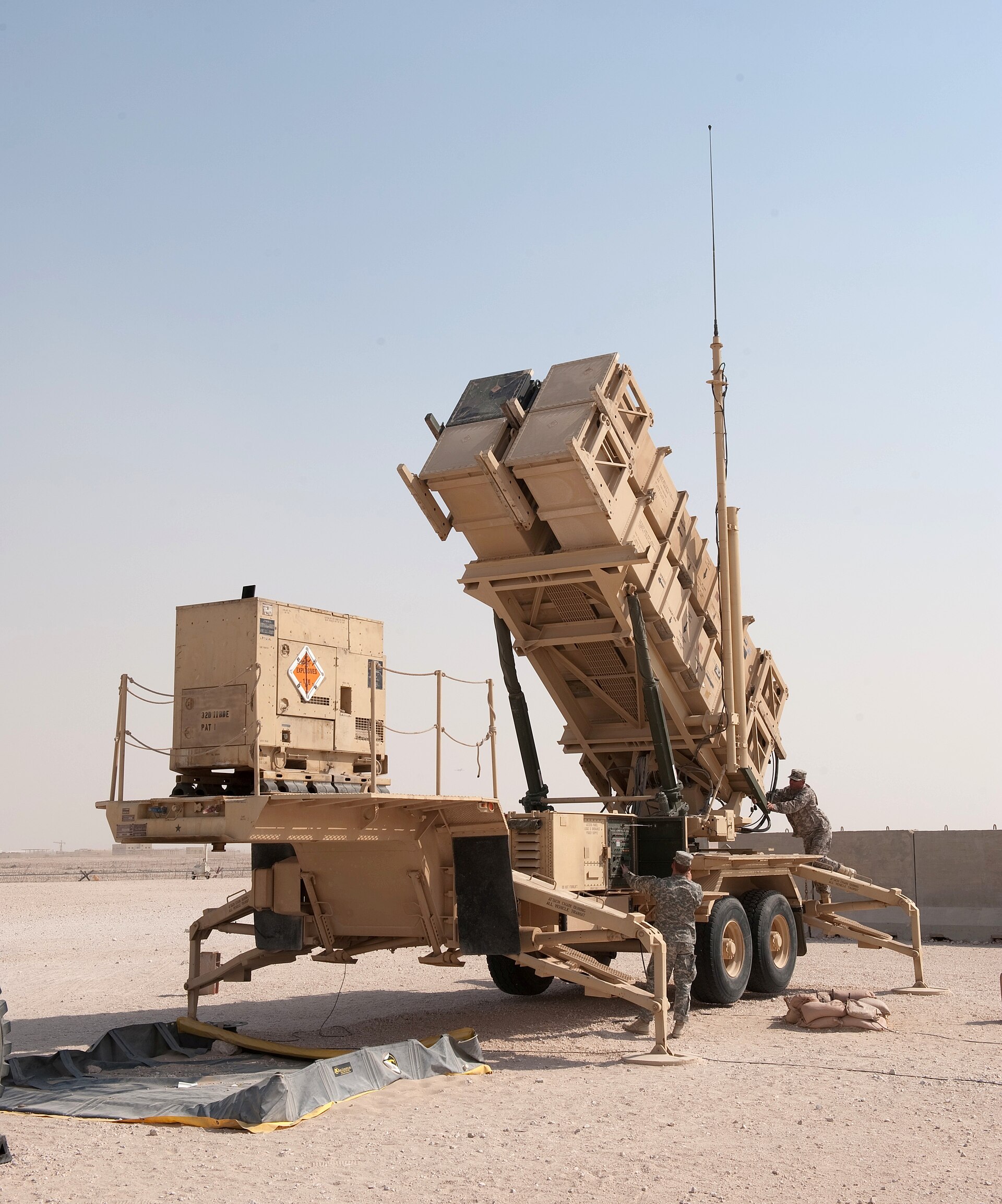
Because the interceptors do not exist. Lockheed Martin’s Camden, Arkansas facility produces approximately 620 PAC-3 MSE interceptors per year — total global output for all customers. The binding constraint is not Camden’s final assembly line but the Boeing-manufactured seeker head, produced at a single facility in Huntsville, Alabama, currently undergoing a $200 million expansion that will not be operational before 2030.
On April 9, the U.S. Army awarded Lockheed Martin a $4.76 billion PAC-3 MSE contract with deliveries running through June 30, 2030. That date — four years from now — is the clearest government admission that production cannot be accelerated to meet current demand. The contract is not an emergency measure. It is a scheduled procurement that reflects the industrial reality: you cannot surge what you cannot build.
Saudi Arabia’s own pipeline is equally constrained. The January 2026 DSCA-approved sale of 730 PAC-3 MSE interceptors exceeds 14 months of total Camden output at current production rates. The delivery timeline is 18 to 36 months minimum. At the earliest, the first tranche might arrive in mid-2027. The full order will not be complete before 2029.
The Pentagon’s stated ambition to triple annual production to 2,000 rounds per year depends on the Boeing seeker expansion. That expansion is funded. It is under construction. It will not produce a single additional seeker before 2030. Between now and then, every PAC-3 MSE round delivered to Riyadh is a round not delivered to the U.S. Army, the Japanese Self-Defense Forces, or NATO’s eastern flank. The queue is zero-sum.
Poland refused to transfer Patriot batteries to Saudi Arabia on March 31. No other allied nation has offered interceptors from its own stockpile. The Kingdom has intercepted 894 aerial threats since March 3 — 799 drones and 95 ballistic missiles — drawing down approximately 2,400 rounds from a stockpile that began the war at 2,800, a finite inventory no supply chain on earth can replenish in eight days.
The Three-Way Triage: Eastern Province, Yanbu, and Mecca
Four hundred rounds sounds like a meaningful number until you map it against Saudi Arabia’s threat geography.
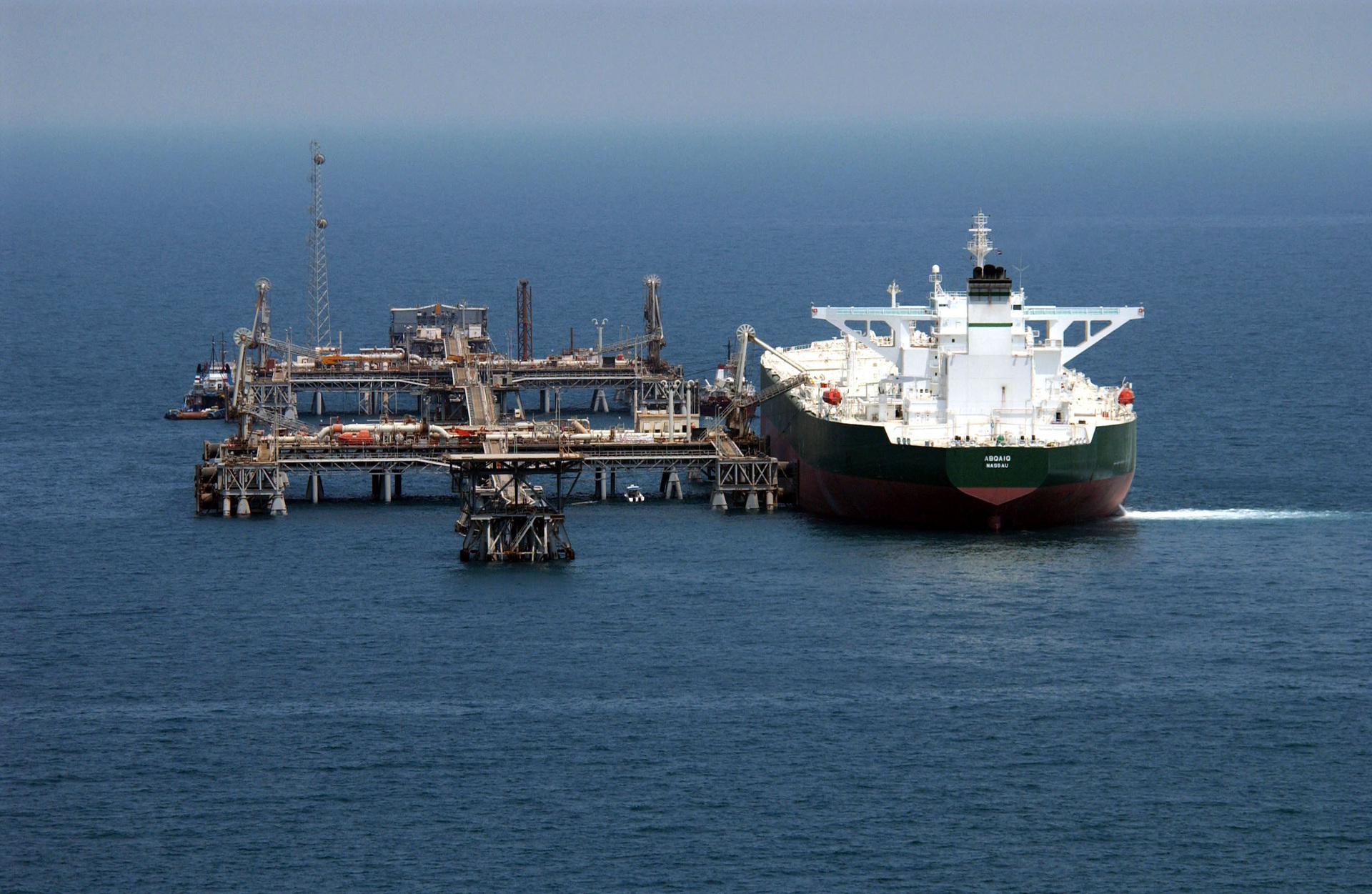
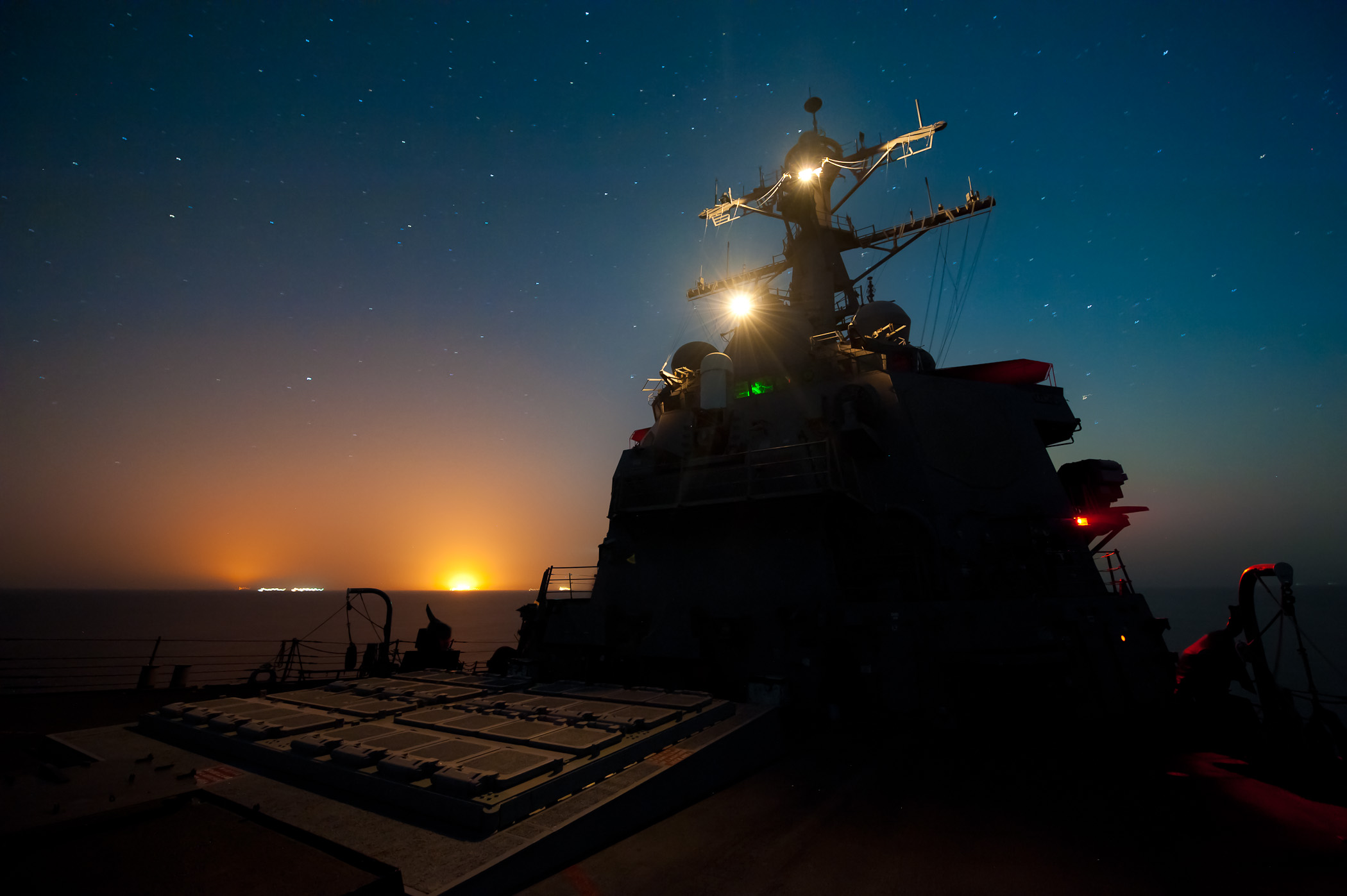
The Eastern Province — Ras Tanura, Jubail, Dhahran, the Abqaiq processing facility — absorbs an estimated 70 percent of Iran’s air threat pressure, according to CSIS analysis. This is where Iran’s ballistic missiles can reach with the shortest flight times, where Aramco’s export infrastructure is concentrated, and where the IRGC has already demonstrated it can strike. Ras Tanura was hit on March 2. Jubail’s SABIC complex caught fire from interceptor debris on April 7 despite all 11 incoming ballistic missiles being intercepted. The triage problem is not whether the PAC-3 system works — it does — but whether 400 rounds can cover a threat envelope that consumed approximately 2,400 rounds across 44 days of combat.
Yanbu, on the Red Sea coast, is Saudi Arabia’s bypass valve. The East-West Pipeline delivers crude to Yanbu’s export terminals, and since Hormuz throughput collapsed from 138 ships per day to 15-20, Yanbu has become the primary outlet for Saudi oil exports. But Yanbu’s effective capacity is 5.9 million barrels per day against a pre-war Hormuz throughput requirement of 7 to 7.5 million — a structural gap of 1.1 to 1.6 million barrels per day that cannot be closed by pipeline alone. Defending Yanbu requires its own PAC-3 allocation. Greece’s ELDYSA Patriot mission, renewed through November 2026 at Saudi Arabia’s formal request, fired its first combat engagement on March 19 at Yanbu — Greek specialists launching PAC-3 interceptors at Iranian ballistic missiles over a Saudi port. That mission continues, but the interceptors it fires come from the same finite pool.
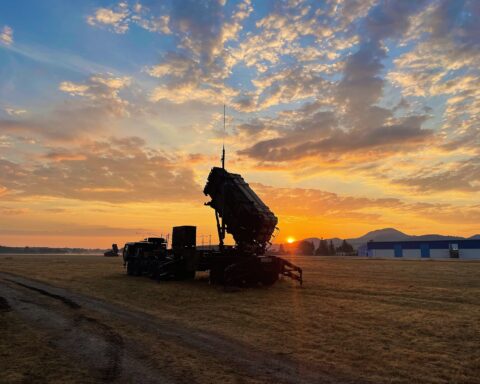
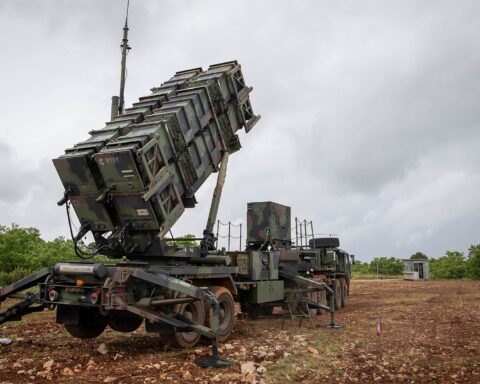
And then there is Mecca. On April 12 and 13, Saudi Arabia released official images of PAC-3 Patriot batteries repositioned around Mecca and Medina. The Hajj pilgrim arrival window opens on April 18, four days before the ceasefire expires. Indonesia alone is sending 221,000 pilgrims, with the first departures scheduled for April 22 — the day the ceasefire ends. Pakistan’s 119,000 pilgrims begin arriving on April 18. The two holiest sites in Islam will be filled with millions of civilians from dozens of countries at the precise moment the ceasefire’s protection lapses.
No Patriot battery commander has ever been asked to solve a three-body problem of this kind: critical energy infrastructure in the east, the sole remaining export corridor in the west, and the religious sites that define the Kingdom’s legitimacy in the center. If Iran launches a saturation attack of 30 ballistic missiles and 100 drones — the upper bound of its assessed daily capacity — 400 interceptors provide roughly two days of full-spectrum defense. After that, the commander must choose.
The 1987 Hajj precedent is instructive for a different reason. That year, 402 people died in clashes between Iranian pilgrims and Saudi security forces. The result was an 87 percent cut to Iran’s Hajj quota and a three-year boycott. Iran’s pilgrims have been barred from the Hajj this year, which means Tehran has zero religious stake in Mecca’s safety — and the Kingdom knows it.
A Ceasefire Priced at the Wrong Risk Level
The Islamabad ceasefire was agreed when both sides were hurting. Daniel Byman of CSIS and Georgetown University has described the arrangement as a “two-week agreement only, not a final settlement,” anticipating “recurring clashes — cyberattacks, proxy violence, limited strikes, and periodic escalation” rather than stable peace. The nuclear question, he noted, “remains unresolved.”
But Byman’s analysis, published in CSIS’s “The Fragile U.S.-Iran Ceasefire: Issues to Watch,” assumes a roughly stable military balance across the ceasefire window. That assumption may no longer hold. The ceasefire was priced — in the insurance-market sense — at a specific risk level: both sides depleted, both sides with incentive to pause, both sides facing costs that exceeded benefits. The premium was set for symmetric exhaustion.
What Talaeinik’s April 14 claim introduces is asymmetric recovery. Even if Iran has not achieved full replenishment — even if the claim is 40 percent bluster — the trajectory matters more than the absolute number. Iran is on an upward curve. Saudi Arabia’s interceptor stockpile is flat. Camden’s production line does not care about ceasefire deadlines. The Boeing seeker facility in Huntsville does not accelerate because Hajj starts on April 18.
VP JD Vance, after the Islamabad talks collapsed on April 13, told reporters: “We have not reached an agreement — and I think that’s bad news for Iran much more than it’s bad news for the United States.” The statement was aimed at domestic audiences and at Tehran. It was not aimed at Riyadh, where the calculus is different. The United States can sustain a blockade indefinitely. Saudi Arabia cannot sustain a PAC-3 deficit indefinitely. The country that absorbs the missiles is not the country that manufactures the interceptors, and the manufacturing country has just signed a contract confirming deliveries through 2030.
The blockade that began April 13 addresses Iran’s maritime exports but does not address its reconstitution capacity. You can prevent tankers from leaving Bandar Abbas. You cannot prevent bulldozers from excavating a buried silo in Kermanshah. The blockade and the replenishment problem operate in different domains, and solving one does not solve the other.
The 2006 Precedent Nobody Wants to Mention
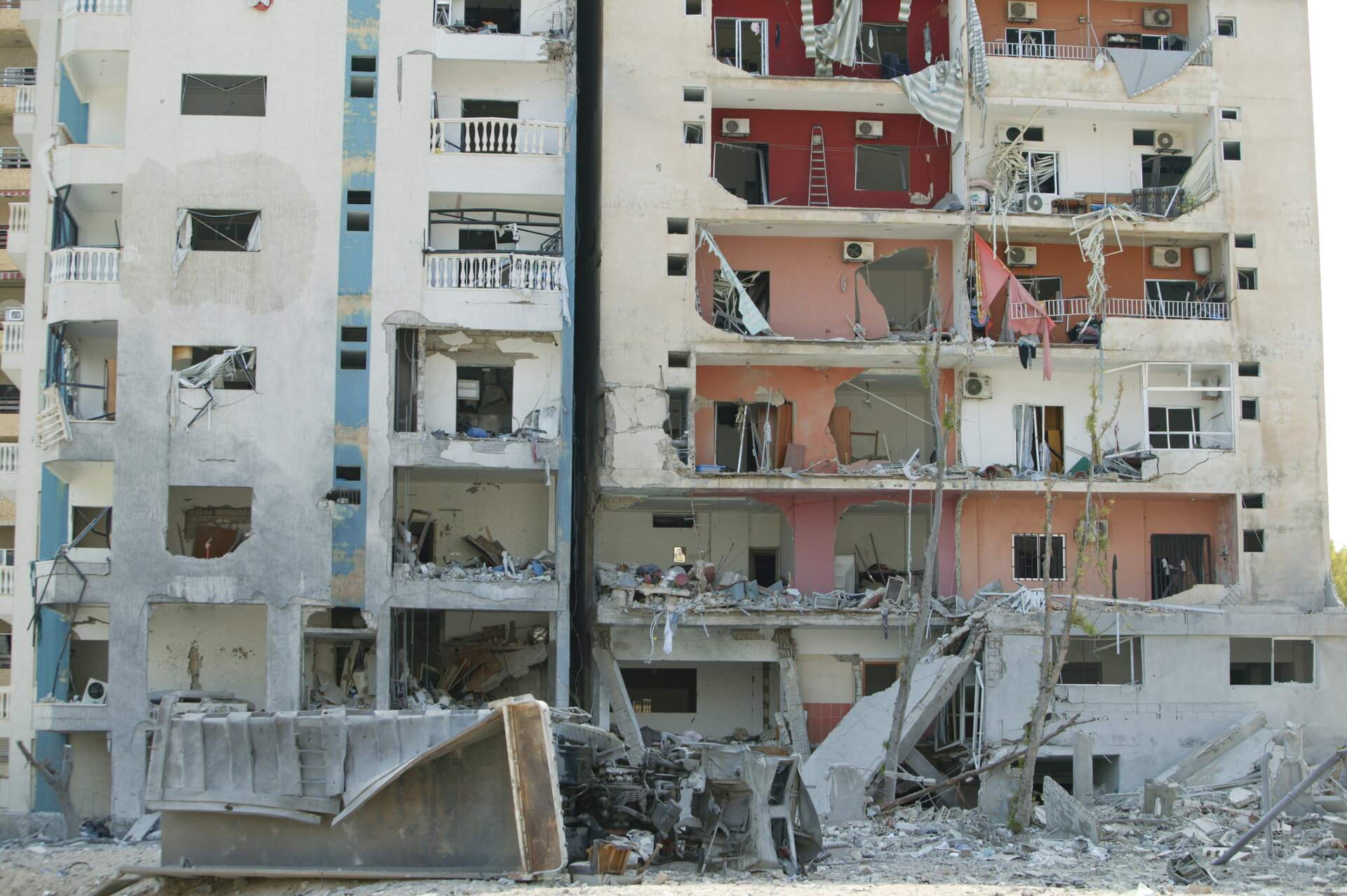
In the summer of 2006, Hezbollah fired approximately 4,000 rockets into Israel over 34 days. UNSC Resolution 1701, which ended the war, called for Hezbollah’s disarmament south of the Litani River. The disarmament never happened. Within months, Iran had begun resupplying Hezbollah through Syria. By 2023, Hezbollah’s rocket and missile inventory was estimated at over 150,000 — roughly 37 times the arsenal it possessed when the ceasefire was signed.
The parallel is not exact, but the mechanism is identical. A ceasefire halts kinetic operations. The party with indigenous or externally supplied production capacity uses the pause to reconstitute. The party dependent on foreign-manufactured interceptors with multi-year delivery timelines does not. When the ceasefire expires or collapses, the attacker is stronger and the defender is not.
Resolution 1701’s enforcement failure was not a surprise. The United Nations Interim Force in Lebanon (UNIFIL) had neither the mandate nor the capability to prevent Iranian resupply through Syrian territory. The Islamabad ceasefire has even less enforcement architecture — a two-week arrangement with no final settlement, no verification mechanism, and no disarmament provision. It does not address Iran’s production capacity because it was not designed to. It was designed to stop the shooting while diplomats talked. The shooting stopped. The production did not.
Iran’s 1,000-ton sodium perchlorate shipment to Bandar Abbas in February 2025 suggests that Tehran anticipated this dynamic a year before the first strike was launched. Pre-positioning propellant is not something you do if you expect diplomacy to succeed. It is something you do if you expect to need to rebuild quickly after absorbing damage. The ceasefire, from Iran’s perspective, may have always been a production window.
Who Has Interceptors to Spare? Nobody.
Poland’s refusal on March 31 to transfer Patriot batteries was not an act of hostility toward Riyadh. It was an act of self-preservation. Warsaw faces a Russian threat on its eastern border and has spent years acquiring its own Patriot systems. Transferring interceptors to Saudi Arabia would leave Polish airspace exposed at a time when NATO’s eastern flank cannot afford gaps.
Japan maintains its own stockpile against North Korean ballistic missile threats; Germany and the Netherlands are committed to NATO’s eastern flank. None has surplus interceptors. The PAC-3 MSE is not a commodity that can be redirected with a phone call. It is a strategic asset that every operating nation has sized to its own threat assessment.
Camden’s 620 annual rounds are already allocated across these competing demands. There is no strategic reserve. There is no emergency cache. The $4.76 billion contract awarded on April 9 will produce interceptors on an industrial schedule that was set before the war began and has not been altered by it.
Greece’s ELDYSA mission at Yanbu represents the only allied interceptor contribution currently in theater. Greek Patriot specialists operating Saudi-owned PAC-3 systems, renewed through November 2026, provide expertise and trained crews — but the interceptors they fire come from the same 400 rounds remaining in the Saudi stockpile. ELDYSA provides expertise, not ammunition.
What Happens on April 22?
Three scenarios present themselves, and none of them resolves the interceptor deficit. In the first, the ceasefire is extended — the outcome every party publicly prefers and privately doubts. Extension requires agreement between parties that could not agree on a final settlement in Islamabad. The IRGC’s Mohebbi statement on April 14 — “capabilities the enemy has no idea about” — is not the language of a military that intends to extend a pause. Iran’s Supreme National Security Council accepted the ceasefire, but Foreign Minister Araghchi contradicted Trump’s “COMPLETE IMMEDIATE” characterization by insisting on “coordination with armed forces,” signaling that the IRGC’s consent was partial at best. Extending a ceasefire that the IRGC never fully endorsed requires the IRGC to agree again — and this time, they would be agreeing from a position of greater strength.
Second, the ceasefire lapses and hostilities resume at a level consistent with the pre-ceasefire tempo. Iran launches 15 to 30 ballistic missiles and 50 to 100 drones daily. Saudi Arabia’s 400 PAC-3 rounds last approximately two weeks at a conservatively estimated consumption rate of 20 to 30 rounds per day — assuming perfect triage, no saturation attacks, and no rounds expended on false targets or decoys. Under saturation conditions, the stockpile could be exhausted in days.
Third, the ceasefire lapses and Iran escalates beyond pre-ceasefire levels, employing the “capabilities the enemy has no idea about” that Mohebbi referenced. This scenario is speculative by definition, but it is the scenario that the IRGC’s own messaging is designed to make adversary planners consider. If Iran introduces new weapons categories — longer-range systems, maneuvering reentry vehicles, or maritime strike assets — the PAC-3 deficit becomes a PAC-3 mismatch.
In all three scenarios, the Hajj timeline operates as a constraint on Saudi decision-making. Millions of pilgrims will be inside the Kingdom from April 18 onward. Evacuating them is not feasible. Bahrain’s airspace has been closed since February 28. Regional air corridors are disrupted. The pilgrims who arrive for Hajj will remain for Hajj regardless of what happens on April 22, and the PAC-3 batteries around Mecca will consume interceptors that might otherwise defend Ras Tanura or Yanbu.
The gap between Iran’s reconstitution curve and Saudi Arabia’s replenishment timeline is not a problem that can be solved before April 22. It is not a problem that can be solved before 2027. Camden’s production line, Boeing’s seeker facility, DSCA’s delivery schedule, and the zero-sum competition for allied interceptor stocks all point to the same conclusion: the military balance that made the ceasefire possible has shifted, and no one with the power to extend the ceasefire has publicly acknowledged that the price has changed.
Frequently Asked Questions
Can Saudi Arabia use non-Patriot air defense systems to close the interceptor gap?
Saudi Arabia operates several layered systems, including the MIM-104 HAWK, Oerlikon Skyshield, and the Chinese-built LY-80. However, none of these systems can engage medium-range ballistic missiles in their terminal phase — the specific threat that PAC-3 MSE was designed to counter. Short-range air defense (SHORAD) systems can address drone threats and some cruise missiles, freeing PAC-3 rounds for ballistic intercepts, but the Kingdom’s SHORAD inventory was also depleted during 44 days of combat. The Israeli Iron Dome, sometimes suggested as an alternative, is not interoperable with Saudi systems and has never been offered for export to the Gulf.
Has Iran ever made similar replenishment claims that proved false?
Iran routinely overstates military capabilities for deterrence purposes — the “Qaher-313 stealth fighter” unveiled in 2013 was widely assessed as a non-functional mockup. However, Iran’s claims about missile inventory have generally been more conservative than its claims about advanced platforms. The April 14 statement is also partially corroborated by U.S. intelligence: the Wall Street Journal’s April 11 report confirms over 1,000 medium-range ballistic missiles survived, and the Soufan Center assessed thousands of Shahed-type drones remained in inventory as of April 6. The specific claim of “full replenishment” may be exaggerated, but the underlying stockpile that makes partial replenishment credible is independently confirmed.
Could the United States transfer interceptors directly from its own PAC-3 stockpile?
Legally, yes — under the Arms Export Control Act, the President can authorize emergency drawdown transfers. Practically, the U.S. Army’s own PAC-3 inventory is sized for a potential conflict with China in the Western Pacific and with Russia in Europe. Transferring interceptors to Saudi Arabia would create gaps in U.S. force posture that the Joint Chiefs have publicly resisted. The $4.76 billion contract awarded April 9 is designed to increase total inventory over time, not to solve the immediate shortfall. No emergency drawdown authorization has been reported.
What role does Iran’s declared “permanent mechanism” for Hormuz play in the replenishment question?
Iran’s assertion of a permanent administrative mechanism over the Strait of Hormuz functions as both a revenue source and a reconstitution enabler. The $2 million per-vessel transit fees, processed through Kunlun Bank outside the SWIFT system, generate income that can be directed toward procurement. More directly, the Hormuz mechanism allows Iran to control which vessels enter Iranian territorial waters — including vessels carrying dual-use cargo such as precision machine tools and industrial components from China. The CENTCOM blockade effective April 13 targets Iranian port traffic, but does not cover all Hormuz-transiting vessels, creating a potential gap in interdiction coverage for reconstitution-relevant imports.
What is the earliest date Saudi Arabia could receive additional PAC-3 interceptors?
The DSCA-approved sale of 730 PAC-3 MSE interceptors carries a minimum delivery timeline of 18 to 36 months from the January 2026 notification date — placing the earliest possible first tranche delivery in mid-2027. However, this assumes Saudi Arabia receives priority in Camden’s production queue, which is not guaranteed given competing U.S. Army, Japanese, and European orders. The Boeing seeker expansion will not produce additional seekers before 2030. Realistically, Saudi Arabia’s interceptor inventory will remain at or near current levels through at least the first half of 2027, barring an unprecedented emergency drawdown from U.S. stocks. The downstream consequence of that 2027 horizon — specifically what 400 remaining interceptors mean for 1.2 million Hajj pilgrims and the Custodian title that makes cancellation impossible — is analyzed in The Custodian’s Trap: Wartime Hajj 2026.