
RIYADH — The IRGC told the world on April 9 that it had “absolutely not launched any projectiles towards any country” since the ceasefire took effect. The same IRGC, on the same day, catalogued the drone strikes that hit Kuwait’s National Guard base as the “95th wave of Operation True Promise 4” — a war operation, numbered sequentially, with no mention of any ceasefire at all. Both statements are official. Both are on the record. And together, they constitute the most dangerous structural feature of any Round 2 deal that Pakistan, Turkey, or anyone else attempts to broker in the days before Hajj.
This is not a communications failure. It is not propaganda in the conventional sense — words deployed to shape perception. It is architecture: a denial framework designed on Day 1 of the war, stress-tested across 40 days of conflict, and now embedded so deeply in the IRGC’s institutional posture that it functions as a kill switch for any ceasefire agreement that relies on Iranian compliance. Saudi Arabia understands this. It cannot say so publicly without detonating the fragile arrangement protecting 2.6 million Hajj pilgrims arriving from April 18. That silence is the framework’s most elegant product.
Table of Contents
The Day 1 Framework
The IRGC did not invent its denial posture for the ceasefire. It deployed it on March 2, 2026 — the first day of the war — when IRGC-affiliated Tasnim News attributed the Aramco strike to Israel, citing a “knowledgeable military source” who called it “an example of a false flag operation.” MEMRI documented Iranian state media simultaneously claiming Israel attacked Aramco facilities while Iran’s own commanders were publicly threatening Gulf energy infrastructure. The contradiction was not accidental — it was the opening move.
Every major strike since has followed the same pattern. The April 4 drone attack on the US embassy compound in Riyadh drew an IRGC Public Relations Office statement that it was “certainly” carried out by Israel, citing “the strategy of the Zionist enemy.” The East-West Pipeline pumping station was struck after the ceasefire nominally took effect on April 8 — Saudi Arabia confirmed the damage, the IRGC confirmed nothing. By the time Kuwait’s National Guard base suffered “significant material damage” on April 9, the denial framework had been rehearsed so many times that the IRGC could issue a blanket statement covering all post-ceasefire strikes in a single paragraph.
The key phrase in that April 9 denial: if any attacks occurred, “they are undoubtedly the work of the Zionist enemy (Israel) or the United States,” described as entities “notorious for staging provocations and false-flag operations to destabilize the region and undermine the ceasefire.” This language does two things at once: it denies Iranian responsibility for specific strikes, and it pre-attributes all future strikes — any strike, anywhere, at any time — to adversaries, making the denial self-renewing without requiring additional statements.
The Middle East briefing 3,000+ readers start their day with.
One email. Every weekday morning. Free.
The 95th Wave Contradiction
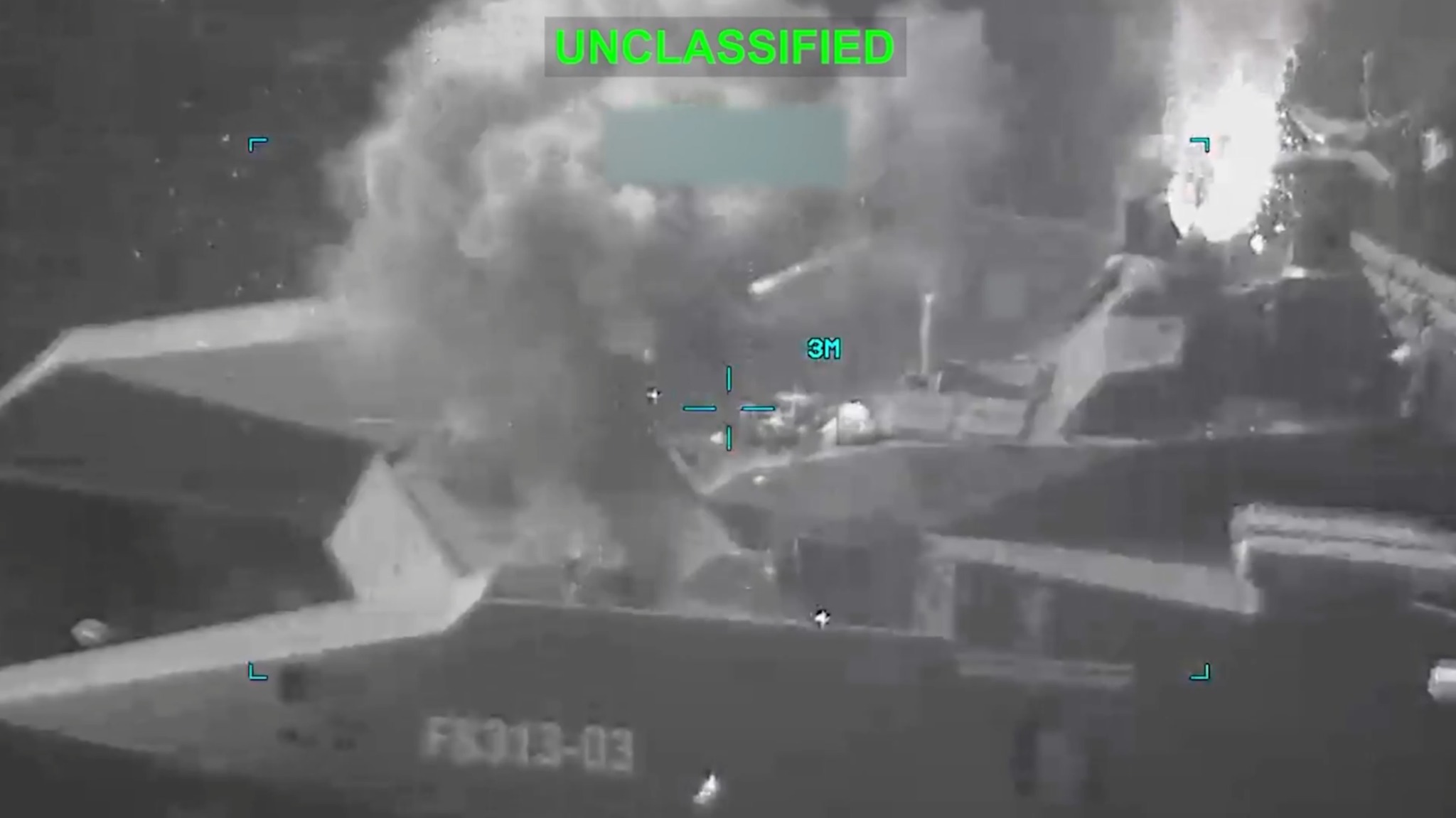
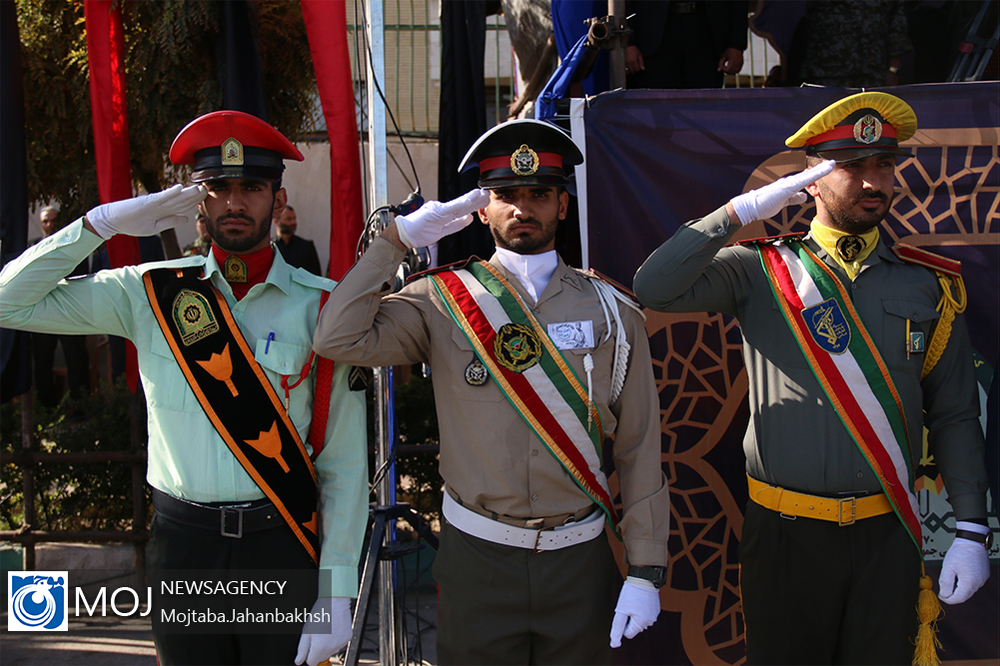
The sharpest evidence that the denial is architecture rather than argument sits in the IRGC’s own operational catalogue. The Kuwait National Guard strikes of April 9 — the ones the IRGC formally denied conducting — were simultaneously logged as the “95th wave of Operation True Promise 4.” That designation is sequential — it follows the 94th wave — and makes no reference to any ceasefire, any pause, any change in operational tempo. The war continues in the IRGC’s internal ledger even as the IRGC’s public affairs office insists the war has paused.
This is not a bureaucratic error. Operation True Promise is the IRGC’s umbrella designation for the entire Gulf campaign. Each “wave” is numbered, catalogued, and announced through IRGC-affiliated channels. The numbering system exists precisely to demonstrate operational continuity and institutional capability. To number a post-ceasefire strike as wave 95 is to declare — in the IRGC’s own operational language — that the ceasefire does not exist as a military reality. It exists only as a diplomatic artifact that the political wing of the Iranian government has endorsed.
US Defense Secretary Pete Hegseth offered the most generous possible interpretation: “poor command and control in Iran, with some commanders out of reach due to communications issues.” A senior White House official elaborated that “it may take time for orders to reach lower level units of the IRGC.” Both framings treat the post-ceasefire strikes as implementation lag — a temporary problem that will resolve as orders propagate downward. The 95th wave designation demolishes that interpretation. You do not catalogue an attack as a numbered war operation if you intended to stop and the message simply arrived late.
What Does the IRGC Denial Actually Do?
The denial framework serves three distinct functions simultaneously, and understanding each one explains why it is so resilient to diplomatic pressure. The first function is domestic legitimacy. Inside Iran, the IRGC’s narrative that Israel and the United States are staging false-flag attacks on Gulf states accomplishes something no admission of restraint could: it maintains the image of an undefeated force that chose to pause rather than one that was compelled to stop. IRGC-affiliated Fars News has denied that any negotiations with Trump occurred at all, contradicting the official government position. The domestic audience receives a narrative in which Iran remains on the offensive and any ceasefire is a Western fiction.
The second function is legal deniability within whatever ceasefire framework emerges. If Iran “absolutely” did not launch projectiles, then Iran cannot be in violation. If Kuwait was struck by drones that Al Arabiya sources say originated from Iraq, then the geographic separation between launch site and Iranian territory creates a jurisdictional gap that no monitoring mechanism currently proposed can bridge. Pakistan, the mediator, has no CENTCOM-level intelligence sharing and was never designed to trace a drone launched from Iraqi territory back through Kataib Hezbollah’s command networks to an IRGC Quds Force handler.
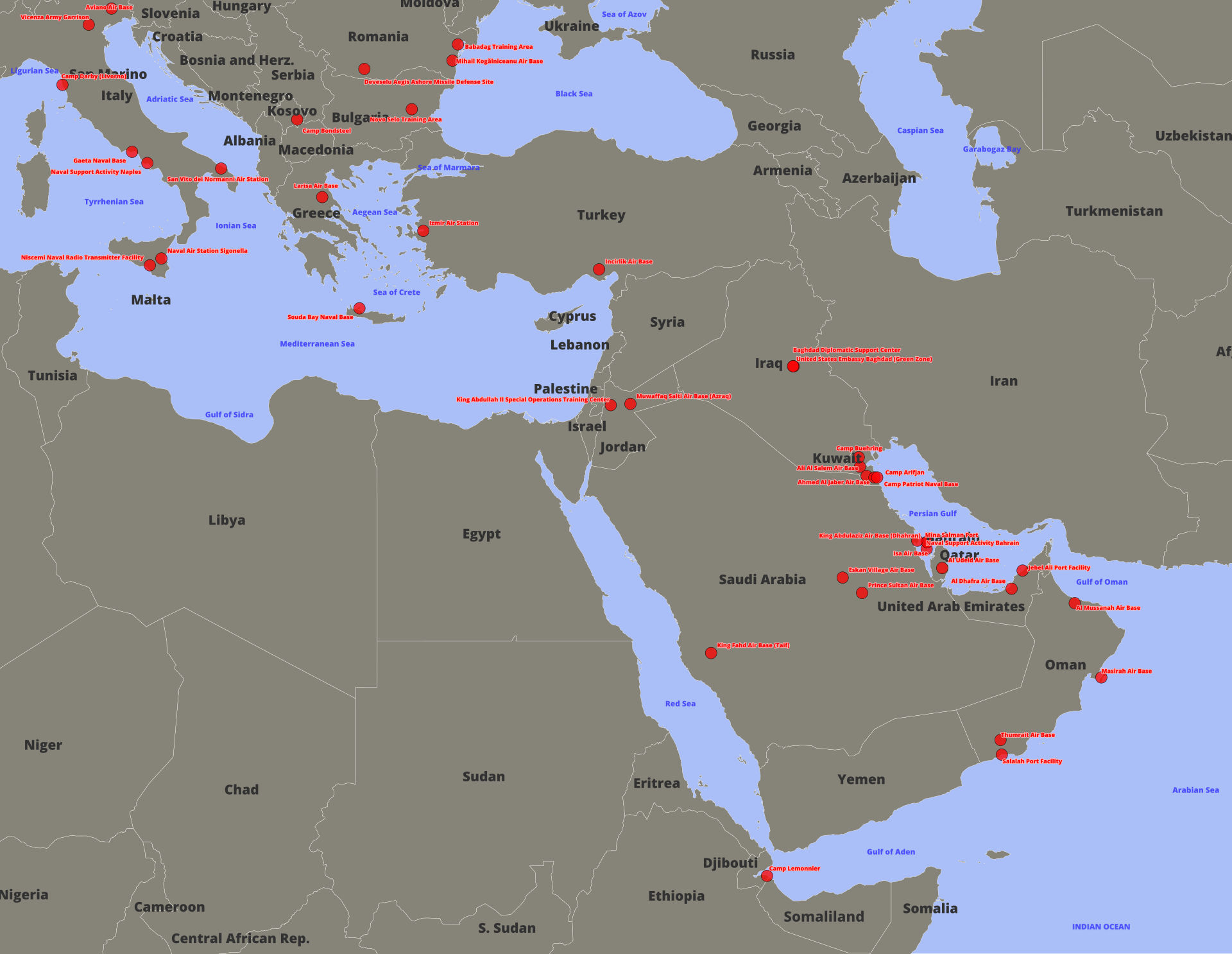
The third function is operational continuation cover. The 31 semi-autonomous IRGC regional corps identified by Isaac Seitz at 19FortyFive operate with degraded command chains — a structure that was decentralized by design and has become more so after the killings of IRGC 2nd intelligence chief Khademi on April 6 and IRGC Navy commander Tangsiri on March 30 — neither of whom has a named successor. The denial framework gives these headless units political permission to continue operating: if Tehran says no attacks are happening, then whatever a regional commander does either didn’t happen or wasn’t Iran. The framework converts institutional fragmentation from a weakness into a feature.
Why Can’t Araghchi Close the Gap?
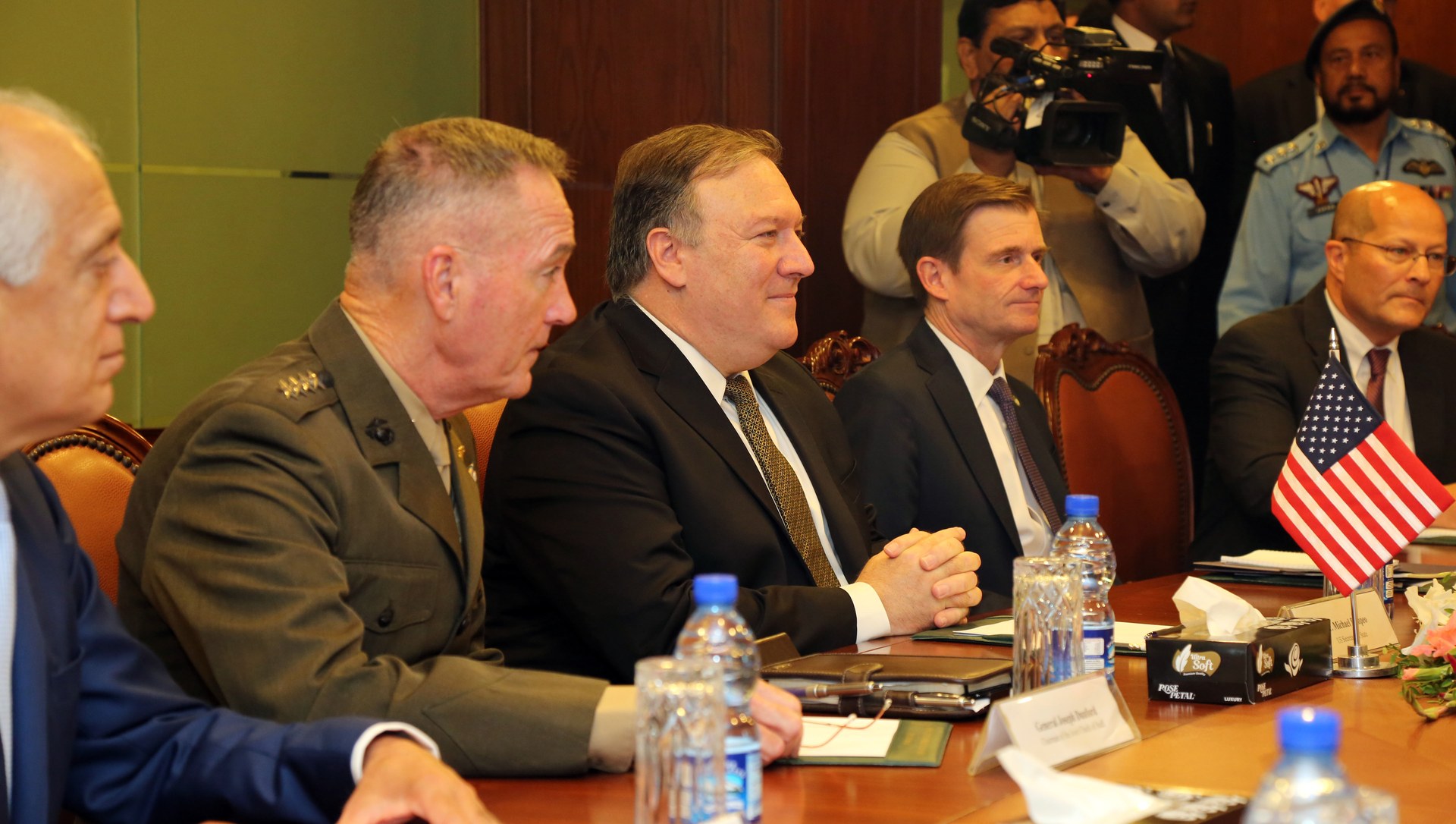
Abbas Araghchi, Iran’s foreign minister, told Al Jazeera on April 12 that “we were inches away from an MoU” at the Islamabad talks. He may have been telling the truth. The problem is structural: Araghchi can negotiate, Araghchi can sign, and Araghchi can appear on camera expressing sincere commitment to a ceasefire framework. He cannot make 31 semi-autonomous IRGC corps obey it, and he cannot reach Kataib Hezbollah commanders in Iraq who have their own operational authority and, increasingly, their own financial incentives.
President Pezeshkian has been more direct than any Iranian leader in a generation, publicly accusing senior IRGC commanders of “unilateral actions that have nearly wrecked the ceasefire prospects.” That accusation is itself an admission: the president of Iran is telling the world that he does not control his own military’s actions during a ceasefire his own government endorsed. Under Article 110 of Iran’s constitution, the president has zero authority over the IRGC. That authority belongs to the Supreme Leader — and Khamenei has been absent from public view for 44 days, with his son Mojtaba reportedly leading from hiding via audio-only communications.
The authorization ceiling that has defined this war from its opening weeks is now the ceiling of any peace process. Araghchi negotiated at Islamabad for 21 hours before the talks collapsed. During those 21 hours, IRGC-aligned forces struck targets in Kuwait. The negotiator and the military operate on parallel tracks with no functional intersection point — and the denial framework is the mechanism that allows both tracks to run simultaneously without formal contradiction.
The Iraqi Variable
Al Arabiya’s sources placed the Kuwait drone strikes’ origin in Iraq, pointing to Iraqi PMF factions and Kataib Hezbollah specifically. This geographic fact is load-bearing for the entire denial architecture. Kataib Hezbollah is a US-designated Foreign Terrorist Organization created and controlled by Iran’s IRGC Quds Force — the FDD Long War Journal and Washington Institute have documented that relationship extensively. But “created and controlled” is a peacetime description. In wartime, with the Quds Force’s secure encrypted communications to proxy leaders destroyed by Israeli strikes on Iranian telecommunications infrastructure, control is aspirational rather than operational.
The financial pipeline tells the same story from a different angle. The Quds Force’s pre-war $700 million annual pipeline to Hezbollah alone — a figure drawn from US Treasury designations and FDD reporting — has been disrupted by the destruction of Iranian banking infrastructure. Iraqi PMF groups may now be acting partly to substitute lost revenue streams — creating autonomous attack incentives that are disconnected from any directive Tehran could issue even if it wanted to. A drone launched from Anbar Province by a Kataib Hezbollah cell operating on its own financial logic, targeting a Kuwaiti military base, catalogued retroactively by Tehran as wave 95 of a war Iran says it paused — this is not a command-and-control problem. It is the command-and-control problem repackaged as a feature.
The Houthis demonstrated the inverse possibility. Despite being Iran’s most capable proxy force, the Houthis declined to escalate during the 2026 war, prioritizing their own peace process with Saudi Arabia over Iranian strategic direction. That independent decision — a proxy choosing not to fight when Tehran wanted escalation — proves that proxy autonomy runs in both directions: some stop when ordered to advance, others advance when ordered to stop. The denial framework accommodates both outcomes equally well.
Saudi Arabia’s Double-Bind
Saudi Foreign Minister Prince Faisal bin Farhan has been uncharacteristically blunt. “What little trust there was before has completely been shattered,” he told Asharq Al-Awsat in April. He added that Iran’s justifications are “weak excuses repeated for years” and that “escalation will be met with escalation.” Saudi Arabia has “reserved the right to take military actions if deemed necessary.” These are the words of a government that understands the denial framework perfectly and cannot figure out how to break it without breaking something worse.
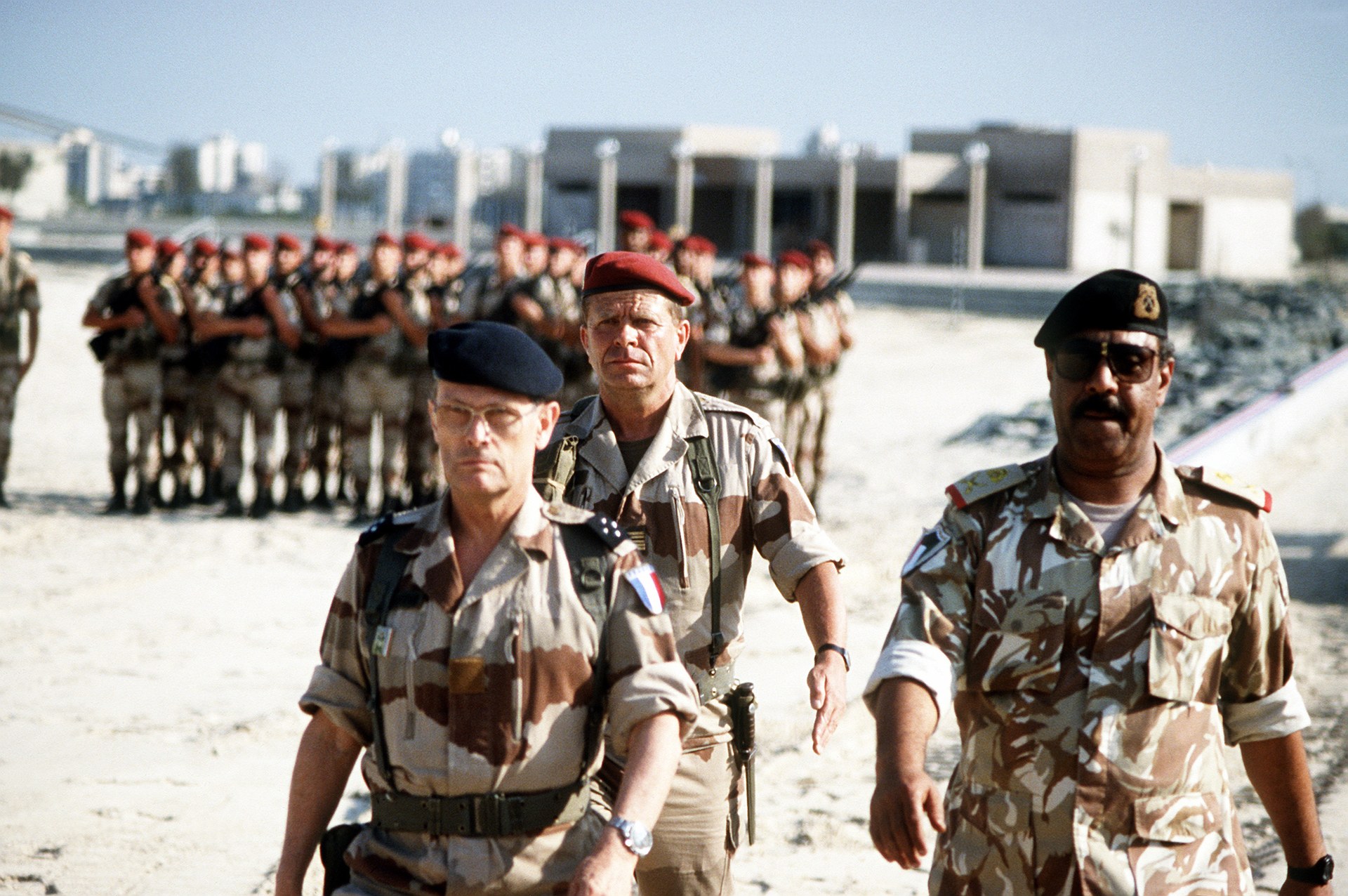
The something worse is Hajj. April 18 — two days from now — is the date the Hajj arrival cordon seals. Pilgrims from 180 countries, led by Indonesia’s 221,000-strong contingent and Pakistan’s 119,000, begin arriving on that date. The ceasefire expires April 22 — four days after arrivals begin. Saudi Arabia’s entire legitimacy claim as Custodian of the Two Holy Mosques rests on its ability to protect those pilgrims, a duty reinforced by the memory of the 1987 disaster that killed 402 people and triggered a three-year Iranian boycott with an 87% quota cut.
To demand IRGC accountability for post-ceasefire strikes — to say publicly what Faisal has been saying in diplomatic shorthand — would require Saudi Arabia to declare the ceasefire functionally dead. A dead ceasefire two days before Hajj arrivals begin would force a decision no Saudi leader wants to make: continue receiving pilgrims under active threat, or delay arrivals and face the theological and political consequences of admitting that the Kingdom cannot guarantee safe passage. The denial framework forces this choice by making Saudi silence the price of Hajj security. Every day Riyadh does not challenge the IRGC’s “Zionist enemy” attribution is a day the framework becomes more entrenched, more normalized, more load-bearing for the next agreement.
Lebanon 2006: The Template Iran Is Following
UNSC Resolution 1701, passed unanimously in August 2006 after the Lebanon war, was supposed to disarm Hezbollah south of the Litani River. It deployed 15,000 UNIFIL troops. It established monitoring mechanisms. It had the full backing of the Security Council. It had none of the things that mattered: enforcement authority, independent verification capability, or any mechanism to compel compliance from an armed non-state actor that had no intention of complying. Hezbollah’s arsenal grew from approximately 15,000 rockets at the time of 1701’s passage to more than 150,000 missiles and rockets by 2025 — a tenfold increase smuggled through Syria in direct, continuous, documented violation of a unanimously adopted UN Security Council resolution.
The Islamabad framework is weaker than 1701 in every structural dimension. Resolution 1701 at least had a monitoring force, even if UNIFIL’s mandate was observation without enforcement. Pakistan’s role at Islamabad was mediator and venue — it has no monitoring mandate, no deployed force, no intelligence-sharing architecture that would allow it to verify whether a drone launched from Basra was directed by an IRGC handler or an autonomous PMF cell. The Antalya Quad framework proposed by Turkey, Egypt, Pakistan, and Iraq for ceasefire extension has the same structural gap. More signatories do not solve an attribution problem — they distribute the inability to attribute across more capitals.
Stephen Stedman’s 1997 taxonomy of spoiler problems in peace processes identified two categories: total spoilers who seek to undermine any agreement, and limited spoilers who seek to renegotiate terms. The IRGC’s decentralized structure means the institution contains both simultaneously. Araghchi and Pezeshkian function as limited spoilers — they want a deal, but on terms that preserve Hormuz sovereignty and enrichment rights. The 31 autonomous regional IRGC commanders, the headless IRGC Navy, the Kataib Hezbollah cells in Iraq — these function as total spoilers whose operational behavior is unaffected by whatever Araghchi signs in whatever capital hosts Round 2. The 1701 parallel is precise: the negotiating partner and the armed actor are different entities wearing the same flag.
“What little trust there was before has completely been shattered.”
— Prince Faisal bin Farhan, Saudi Foreign Minister, Asharq Al-Awsat, April 2026
Can Any Round 2 Deal Solve the Attribution Problem?
The US blockade imposed April 13 was partly an attempt to create coercive pressure that a diplomatic framework alone could not generate. By targeting Iranian ports and toll-collecting vessels rather than all Hormuz transit, CENTCOM established a coercive mechanism that operates independently of Iranian compliance. But blockades are binary instruments — they pressure Tehran’s political leadership, which is already the most cooperative element of the Iranian system. They do not reach the IRGC regional commander in Khuzestan or the Kataib Hezbollah cell leader in Diyala Province who launched the Kuwait drones.
A Round 2 framework that actually closed the attribution gap would require, at minimum, three things no current participant is willing to provide. First: independent, real-time ISR (intelligence, surveillance, reconnaissance) sharing between a monitoring body and the signatories — meaning the US would need to share CENTCOM-grade tracking data with Pakistan, which has no Five Eyes access and whose intelligence services maintain operational relationships with several of the actors being monitored. Second: an enforcement mechanism with kinetic authority — the ability to respond to violations with consequences, not statements. UNIFIL’s 15,000 troops proved that monitoring without enforcement is decoration. Third: a signatory who actually controls the armed actors — which neither Araghchi nor Pezeshkian does. Khamenei — if he is alive and capable — is the only figure who historically held that authority, and he has been absent from public view for 44 days without a credible successor to that function.
The ceasefire extension fiasco — agreed in principle, then denied on CNN — demonstrated exactly how the denial framework interacts with diplomatic process. A deal can be struck with Iran’s political face. It can be announced. It can generate a news cycle of cautious optimism. And it can be functionally voided within hours by an actor who was never in the room, never agreed to the terms, and whose organizational structure was designed — before the war, before the ceasefire, before any of this — to operate without centralized authorization. Trump’s April 16 nuclear deal announcement follows the same structural logic: the IRGC denial framework that killed the ceasefire extension is the same constitutional void that prevents any Iranian official from delivering a uranium surrender.
The Framework That Outlasts the War
The deepest danger of the IRGC denial architecture is not what it does during this ceasefire. It is what it establishes for every agreement that follows. Each day the “Zionist enemy” attribution goes unchallenged — by Saudi Arabia, by the United States, by the Antalya Quad, by any body with the authority to demand verification — it accumulates precedent. It becomes the baseline assumption of Iranian military diplomacy: we sign agreements through our foreign ministry, we conduct operations through our Revolutionary Guard, and the two institutions operate in formally separate realities that no external party has the tools or the political will to reconcile.
Hezbollah understood this after 2006. The resolution said disarm. The monitoring force watched. The Security Council issued periodic reports noting non-compliance. Seventeen years passed and the arsenal grew tenfold — as the earlier table records. The framework that was supposed to prevent the next war became the environment in which that war’s arsenal was assembled, piece by piece, shipment by shipment, in plain sight of an international force explicitly mandated to prevent exactly that outcome.
Eric Lob, cited by the Carnegie Endowment, noted that Tehran has “very little trust that Donald Trump will abide by his commitments,” citing failed negotiations ending in strikes in June 2025 and February 2026. That distrust is genuine — but structurally beside the point. Even an Iranian government that trusted its negotiating partners completely would face the same authorization ceiling. Trust does not flow downward through a decentralized command structure whose key nodes have been killed and whose encrypted communications have been destroyed. Pezeshkian can trust Trump; he cannot make the 14th IRGC regional corps trust Trump, or care.
| Framework | Monitoring Body | Enforcement Authority | Armed Actor Compliance | Outcome |
|---|---|---|---|---|
| UNSC 1701 (Lebanon 2006) | UNIFIL — 15,000 troops | None (observation mandate) | Zero — arsenal grew 10x in 17 years | Framework survived; disarmament never occurred |
| Islamabad Accord (April 2026) | Pakistan — no deployed force | None proposed | IRGC catalogued post-ceasefire strike as war operation | Ceasefire nominally active; violations denied |
| Antalya Quad Extension | Turkey/Egypt/Pakistan/Iraq | None proposed | No mechanism to reach IRGC regional units or Iraqi PMF | Under negotiation — same structural gap |
FAQ
Has Israel actually conducted false-flag operations against Gulf states during this war?
No public evidence supports the IRGC’s false-flag attribution. Israel has conducted post-ceasefire military operations in Lebanon that Carnegie’s Marwan Muasher called “the most severe since the Iran conflict began on February 28” — but these are acknowledged Israeli operations against Hezbollah positions, not covert strikes on Gulf infrastructure. The IRGC’s attribution relies on assertion rather than evidence, and the “95th wave” catalogue contradiction directly undermines its own claim. However, Israeli operations in Lebanon during the ceasefire have created genuine epistemic noise that makes clean attribution harder for neutral observers, which serves the denial framework’s purposes regardless of intent.
Could a UN monitoring mission solve the attribution problem?
UNIFIL’s 17-year record in Lebanon answers this definitively — a monitoring force without enforcement authority becomes a witness to violations rather than a deterrent. The Gulf theatre compounds Lebanon’s structural problems: strikes originate from multiple countries (Iran, Iraq, potentially Yemen), travel over international waters, and are conducted by a mix of state forces and designated proxy organizations with varying degrees of operational autonomy. The geographic scope alone would require ISR coverage that only the United States currently possesses in the region — and sharing that intelligence with a UN body would compromise CENTCOM’s operational sources and methods.
What would it take for Saudi Arabia to publicly challenge the denial framework?
Riyadh would need two conditions that currently do not exist simultaneously: Hajj security guaranteed through an alternative mechanism (such as a US or coalition air defense umbrella with explicit coverage of the Haram), and a diplomatic off-ramp that allows the ceasefire to be declared violated without triggering full-scale resumption of hostilities. The April 18 Hajj cordon and April 22 ceasefire expiry create a four-day window in which neither condition can be met. After Hajj — the peak falls around May 25-26 — Saudi Arabia’s calculus shifts, but by then the denial framework will have accumulated nearly two months of unchallenged precedent.
Why did JD Vance describe the Lebanon confusion as a “legitimate misunderstanding”?
Vance told Al Jazeera on April 8 that “I think the Iranians thought that the ceasefire included Lebanon, and it just didn’t.” This framing — treating a fundamental scope disagreement as miscommunication — served American interests by keeping the ceasefire technically alive. But it also validated the IRGC’s operating principle: that ambiguity in ceasefire terms is a resource to be exploited, not a problem to be resolved. If the Vice President of the United States publicly characterizes a major ceasefire violation as a misunderstanding, the cost of future “misunderstandings” drops to near zero.
What happens to the denial framework if Khamenei’s death is confirmed?
Confirmation would remove the theoretical possibility of top-down IRGC compliance. Khamenei was the only constitutional authority capable of ordering the IRGC to stand down under Article 110. Mojtaba Khamenei’s audio-only communications from hiding carry no constitutional weight and no institutional loyalty from IRGC commanders who were personally appointed by his father. Paradoxically, confirmation might simplify the diplomatic picture by eliminating the fiction that a unified Iranian command authority exists to negotiate with — but it would also eliminate the fiction that any agreement could theoretically be enforced, which is the fiction on which every ceasefire framework currently depends.
That fiction acquired a new dimension on April 4, when Iran’s President Pezeshkian accused IRGC Commander-in-Chief Vahidi and Khatam al-Anbiya commander Abdollahi directly of “acting unilaterally” and destroying ceasefire prospects — the first time a sitting Iranian president named specific IRGC commanders as the source of civilian-military breakdown. What Pezeshkian’s confession means for the denial framework, Saudi Arabia’s ceasefire investment, and Pakistan’s enforcement role is examined here.
The denial framework produced a new operational expression on April 17 at the Antalya Diplomacy Forum, where Deputy FM Khatibzadeh rejected any temporary ceasefire as a category — the same day his own minister declared Hormuz open. The contradiction between Araghchi’s Hormuz declaration and Khatibzadeh’s simultaneous rejection, and how it maps onto the denial framework’s kill-switch architecture, is analyzed in Iran’s FM Declared Hormuz Open. His Deputy Said No.