
Jeddah is the Kingdom’s food capital. For four centuries the city worked as the arrival port for Hajj pilgrims crossing the Red Sea, and every boat that docked left something behind in the kitchen — Egyptian fava beans, Yemeni pancakes, Indian spice blends, Turkish pastries, East African grains. The result is Hijazi cuisine, a distinctive layered food culture that exists nowhere else on the Arabian Peninsula, and the best place to eat it is standing up, paper in hand, on a street in Al Balad or at a beat-up roadside cart on King Abdulaziz Road. This guide covers the dishes worth hunting down, the streets where locals actually eat, a breakfast-to-midnight order of operations, and what you should pay for any of it. For the bigger picture on visiting the city, it sits inside our wider Saudi Arabia travel guide — start there if this is your first trip.
Best Time to Visit: October to April, when evening temperatures drop into the 20s°C and outdoor stalls stay open past midnight. Avoid June–September when daytime highs routinely top 40°C.
Getting There: Fly into King Abdulaziz International Airport (JED). Al Balad is a 25-minute taxi ride south. See our Jeddah airport transfer guide.
Visa Required: Yes — tourist e-visa (most nationalities eligible online).
Budget: $10–25 per person per day covers a heavy street-food schedule. A mutabbaq is 5–8 SAR; a full ful-tameez-tea breakfast rarely exceeds 20 SAR.
Must-Try: Mutabbaq, ful medames with hot tameez, sayadiyah (fish kabsa).
Avoid: Daytime eating during Ramadan — most street kitchens only open after Maghrib sunset prayer.
Why Jeddah Street Food Is Different From the Rest of Saudi Arabia
Most foreign visitors arrive expecting one flat “Saudi cuisine” and leave realising there are at least four. Central Najdi food (Riyadh and inland) is meat-and-rice heavy, built around kabsa, mandi, and jareesh. Eastern Province cooking leans into seafood and Bahraini-influenced rice. Asiri highland food features gat leaf tea and mountain grains. Hijazi food — the cuisine of Jeddah, Mecca and Medina — is the outlier. It is a port-city cuisine, shaped by pilgrim traffic, slave-trade era African migration, Ottoman governance, and centuries of Red Sea trade with Yemen, Sudan, Egypt and the Indian subcontinent.
This matters for how you eat. Jeddah street food is breakfast-dominant (ful, tameez, masoub, shakshuka) in a way Najdi food is not, it is much more pastry-heavy (mutabbaq, sambousek, fatayer), it is spicier than the rest of the Kingdom, and it incorporates ingredients — barley sobia, Yemeni lahoh, East African masoub — that you will struggle to find even 500km away in Riyadh. If you want the Najdi side of the comparison, our Riyadh street food guide lays it out; and our 7-day Saudi food tour itinerary strings both cities together.
The Dishes You Have To Try
Mutabbaq — The Signature
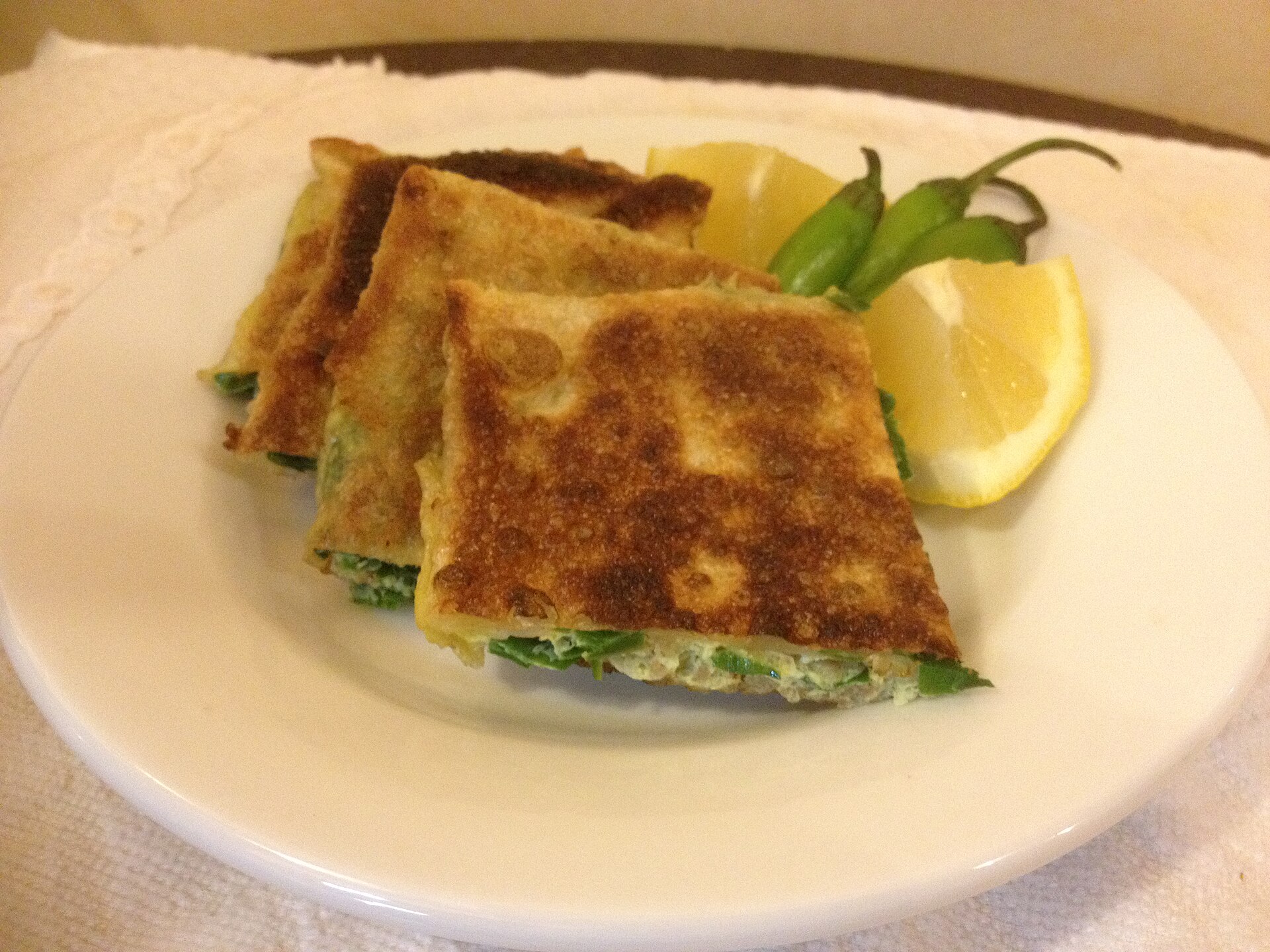
If you eat one thing on the street in Jeddah, it is mutabbaq (sometimes spelled murtabak or mutabak — the word literally means “folded”). A thin sheet of dough is stretched paper-thin on a hot iron, filled with a mixture of minced beef or lamb, beaten egg, chopped green onion, cumin and black pepper, then folded into a square envelope and crisped in ghee or oil on a flat griddle. It is served sliced into four, often with a wedge of lemon and a small green chilli on the side. Price: 5–8 SAR (around $1.30–2.10) per mutabbaq. You will eat two.
Jeddah’s mutabbaq is descended from the Yemeni-Indian version carried up the pilgrim route, but it has evolved its own personality: thinner dough, more egg, less cheese than the Southeast Asian cousin you might have had in Singapore or KL. Specialists work only mutabbaq — a good sign. The national chain Abu Zaid (multiple Jeddah branches, including a very busy one in Al Balad) is the universally agreed benchmark for mutabbaq done right, with visible dough-stretching theatre at the counter. Stalls in Al Balad’s evening souq turn out fresh pieces after Isha prayer (around 8.30pm) and sell out by midnight.
Ful Medames and Tameez — The Jeddah Breakfast
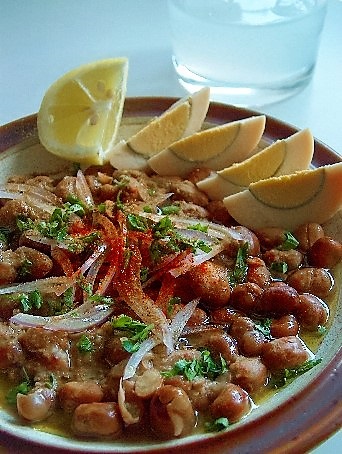
Ful medames is the Hijazi breakfast. Slow-stewed fava beans are served bubbling in a clay bowl, dressed at the table with olive oil, lemon, cumin, chopped tomato, onion and parsley, and mopped up with torn pieces of tameez — a large, bubbled Afghan-style flatbread baked in a tandoor-like clay oven. The dish is an “everyman’s staple,” eaten by every socio-economic class in Saudi Arabia. The essentials are garlic, cumin, and good olive oil or ghee. Expert versions add duggus, a chilli-tomato-parsley sauce that transforms the plate.
There is a theatrical high-end: ful mubakhar, smoked fava beans, created by pressing a small well of ghee into the centre of the ful, dropping a piece of lit charcoal into it, and sealing the dish for ten minutes. The smoke bakes into the beans. Ask for it by name; not every vendor does it and it costs 5–8 SAR more.
Sayadiyah — Jeddah’s Fish Kabsa
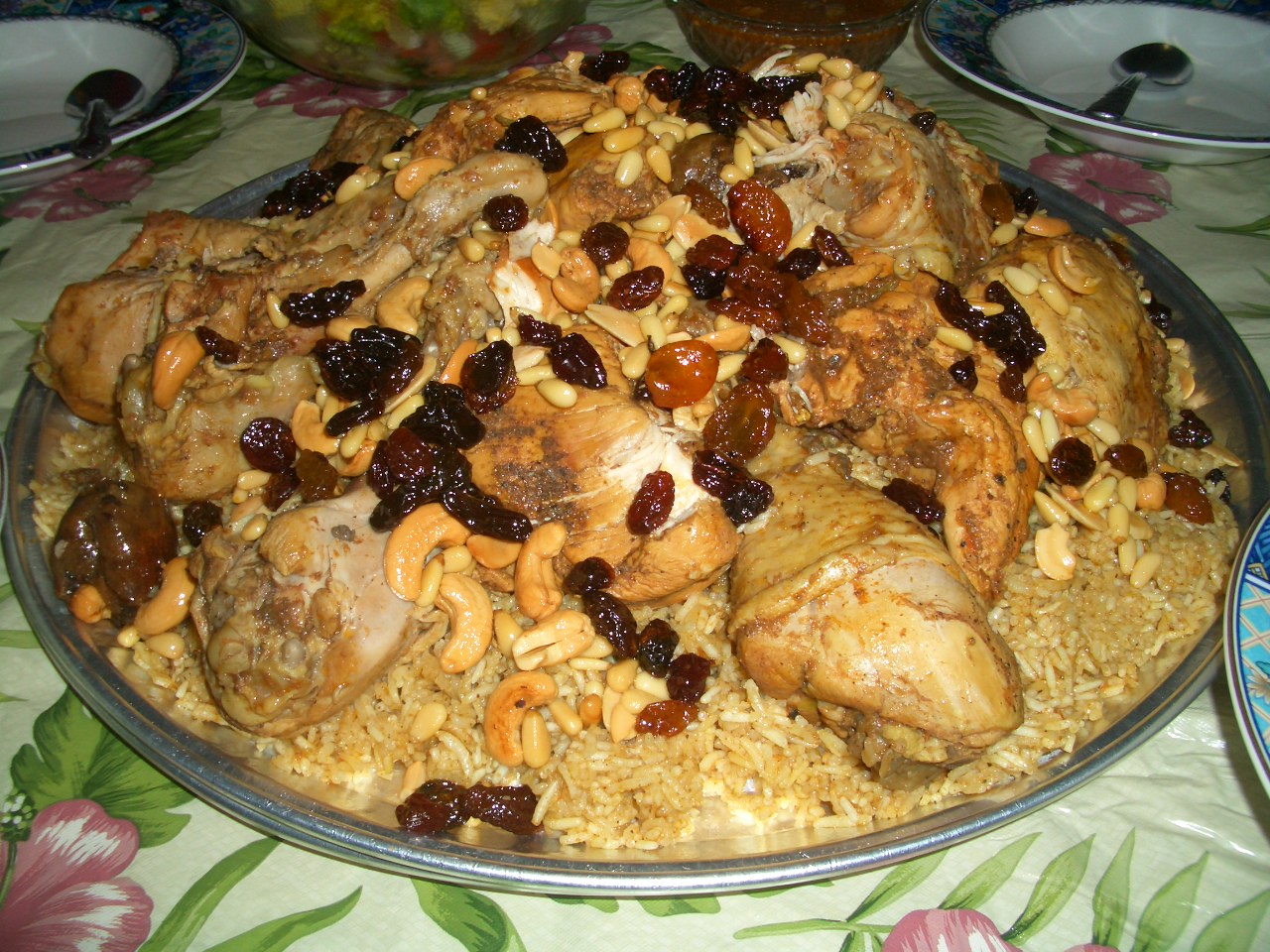
Kabsa — spiced basmati cooked with meat and a complex spice bag of cloves, cardamom, dried lime, cinnamon and bay — is Saudi Arabia’s national dish. Inland versions use chicken, lamb or goat. Jeddah’s coastal version swaps in fish or shrimp and is called sayadiyah (literally “the fisherman’s dish”). Deeply caramelised onions cooked down to near-jam, a long rest under the lid to steam the fish on the rice, and a sharp lemon-tomato daqqus sauce on the side. It is the dish Jeddah cooks make for guests and the one Hajj pilgrims ask for decades later. You will not find real sayadiyah at a street cart, but it is standard at sit-down Hijazi canteens across Al Balad — expect to pay 35–65 SAR for a single-person plate.
Sambousek — The Pocket-Sized Snack
Sambousek (also sambosa) are deep-fried triangular pastries, smaller and crispier than the Indian samosa, stuffed with spiced minced beef, cheese, or spinach and onion. During Ramadan they dominate the iftar table and stalls sell them 20 at a time. Outside Ramadan, Al Balad stalls turn them out to order from late afternoon, fried in small batches so the pastry stays crisp. Price: 1–2 SAR each. They are the ideal fill-the-gap snack between a mutabbaq lunch and a kabsa dinner.
Baleela, Fuul Sudani and the Jeddah Cart Rotation
Evening pushcart stalls on the Corniche and around Al Balad rotate through a set of cheap, pilgrim-era classics: baleela (warm spiced chickpeas in broth, served in a paper cone with lemon and cumin), fuul Sudani (roasted peanuts in the shell), lupini beans (termis, salted), and roasted sweet potato from oil-drum braziers. A cone of baleela is 5 SAR and is the city’s unofficial evening snack.
Masoub and Lahoh — The African and Yemeni Imports
Two dishes on the Jeddah breakfast menu come from outside the peninsula. Masoub is a mashed banana and bread pudding-type dish from Yemen and the Horn of Africa, served warm with honey, cream and sometimes dates on top. It is dense, sweet, and intended as either breakfast or late-night sugar stop. Lahoh is a spongy fermented pancake with a honeycomb surface, originally from the Somali and Yemeni coasts, brought to the Kingdom by the large African diaspora and served with honey, ghee or a fenugreek-based yoghurt dip. Both are on nearly every Hijazi breakfast menu and at Corniche stalls after dark.
Sobia — The Ramadan Drink
Sobia is a pale, slightly fizzy, sweet cold drink made by fermenting barley (or sometimes rice) with sugar, cardamom and rosewater over 24–48 hours. It is the Hijazi Ramadan drink, and families queue at named sobia makers — the Hanbazaza family in Jeddah is the city’s benchmark — to carry away litre jugs before iftar. It is served ice-cold, almost slushy, and is genuinely delicious in 40°C heat. During Ramadan every stall serves it. Outside Ramadan it is much harder to find, though juice carts on the Corniche usually have a version year-round.
Where to Eat — The Four Neighbourhoods
Al Balad (Historic District)
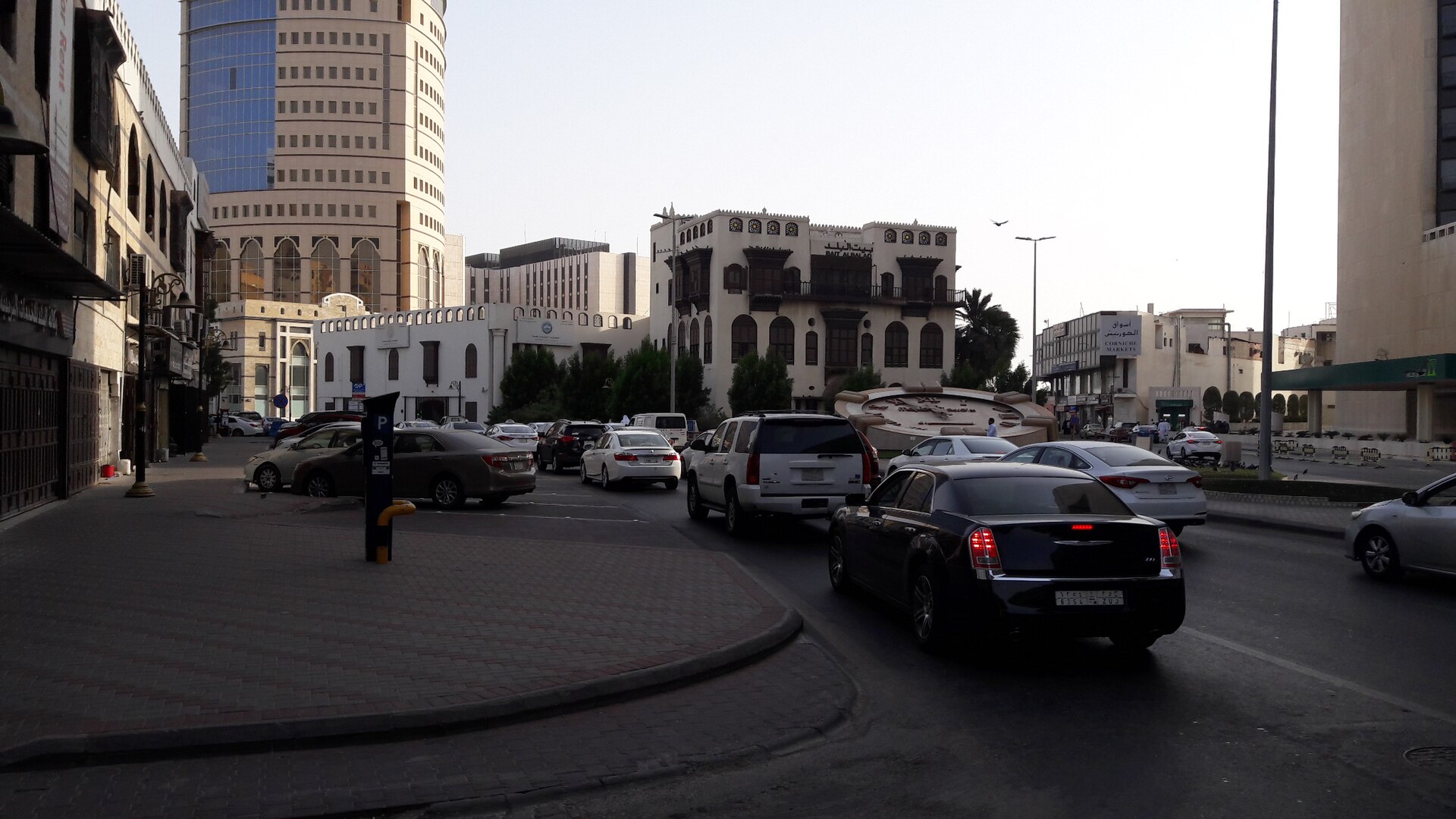
Al Balad is the seventh-century old town and a UNESCO World Heritage Site since 2014. It is also, without argument, the best street-food district in Saudi Arabia. The combination of coral-stone rowshan-balconied merchant houses, narrow alleys that block the afternoon sun, and centuries of continuous trading-post cooking make it the place you want to base your food day. Core zones:
- Souq Al Alawi — the main bazaar artery. Stalls serve tameez-with-foul, sambousek, kunafa, and Arabic coffee laced with cardamom. Walk it from Bab Makkah gate westward towards the seafront.
- Souq Qabil — sweet specialists. Sticky medjool dates, sesame-dusted semolina pastries, basbousa, rosewater tea. Good finish to an evening food crawl.
- Bab Makkah area — concentration of pilgrimage-era Hijazi canteens. Al Basali (4.6 Tripadvisor, near Bab Makkah) does grilled hammour and sayadiyah for around 100–150 SAR per person.
- The evening souq — comes alive after Isha prayer (~8.30pm). Mutabbaq pans fire up, sambousek oil hits temperature, and the whole district fills with smoke and frying smells.
- “Mutabbaq lahm wahid” — one beef mutabbaq.
- “Ful maa tameez” — ful beans with tameez bread.
- “Mubakhar min fadlak” — smoked (ful), please.
- “Bidoon sukkar” — no sugar (important for tea — the default is heavy).
- “Haar” — spicy. “Mu haar” — not spicy.
- “Sayadiyah bi samak” — sayadiyah with fish.
- “Al hisaab law samaht” — the bill, please.
- Choose stalls with long queues of locals. High turnover = fresh food.
- Mutabbaq, sambousek, tameez — all cooked at high heat to order. Eat freely.
- Ful is simmered for hours and held hot. Fine at busy stalls, riskier at quiet ones near end-of-service.
- Seafood at the Central Fish Market is as fresh as it gets in the Kingdom, provided you arrive before noon.
- Skip: pre-cut fruit from unrefrigerated carts, and any shellfish at a stall that does not obviously ice its catch.
- Tap water is not recommended for drinking. Bottled water is 1–2 SAR everywhere.
- November–March — peak season. Evening temperatures 20–25°C, Corniche fully open, Red Sea Film Festival in December.
- Ramadan (falls in late January to March through the late 2020s) — the single most intense food period of the year. Night-only, but the night is extraordinary. Book hotels well ahead.
- April — shoulder. Warm days (low 30s), warm-enough nights, lighter crowds after the pilgrim pre-Hajj surge.
- June–August — avoid unless you are combining with a Red Sea dive trip. Our Saudi summer escape guide suggests mountain alternatives like Taif or Abha.
- Saudi Arabia Travel Guide 2026 — The complete guide to visiting the Kingdom.
- Best Restaurants in Jeddah — From street food to fine dining, the full Jeddah restaurant scene.
- Jeddah F1 Weekend Guide — Hotels, tickets and where to eat during the Saudi Grand Prix.
- Best Hotels in Jeddah by Neighbourhood — Al Balad heritage stays to Corniche luxury.
- Riyadh Street Food Guide — The Najdi counterpart to Jeddah’s Hijazi scene.
- Saudi Arabia 7-Day Food Tour Itinerary — Eating across the Kingdom, coast to desert.
- Saudi Arabia Visa Guide — Every visa type explained.
Al Balad is where the Red Sea Film Festival is staged every December, which temporarily raises both crowds and prices. Go the week before or after for calmer streets.
The Corniche
The Jeddah Corniche is a 30km stretch of Red Sea waterfront running from the north Obhur creek down to Jeddah port. It is a promenade first, restaurant district second, and street-food paradise third. The section between the King Fahd Fountain and the Al Rahmah (Floating) Mosque is the densest for food carts: baleela, fuul Sudani, grilled corn, fresh sugar-cane juice, sobia and lahoh all available from pushcarts within a 1km walk. Families arrive after sunset, kids on bikes, picnic mats down; the vibe is closer to a long seaside carnival than a restaurant strip. This area also overlaps with the Jeddah Corniche Circuit — if you are in town for the Saudi Grand Prix, the Corniche carts feed the pre-race crowds.
The Central Fish Market (Souq Al Samak)
Jeddah’s Central Fish Market is a working wholesale market with over 100 stalls selling the night’s catch from the Red Sea: hammour, snapper, kingfish, barracuda, sardines, lobster and shrimp often at genuinely cheap prices. The market is open every day 6am–10pm. The trick visitors miss: adjacent restaurants will cook what you just bought — you pick a fish off the ice, pay the market vendor, carry it 30 metres to a grill-kitchen and they will char it over charcoal with a rice-and-salad set for a small cooking fee. This is the single cheapest way to eat serious Red Sea seafood in Jeddah and the least touristed piece of the city’s food scene.
Tahlia and Rawdah (Modern Jeddah)
If Al Balad is the heritage core, Tahlia (Prince Mohammed bin Abdulaziz Road) and Rawdah are modern Jeddah’s restaurant rows — sit-down Hijazi restaurants, Yemeni mandi houses, Egyptian koshari bars, Turkish bakeries, Indian biryani specialists. Not street food in the cart sense, but essential for a second-day rotation once you have worked Al Balad. Our best restaurants in Jeddah guide covers the sit-down scene in detail.
A One-Day Jeddah Food Itinerary
If you have a single day in the city, this is the sequence that works. Budget $25–40 per person all-in.
8.00am — Ful-tameez breakfast in Al Balad. Order ful mubakhar (smoked) if the stall does it, plus a small plate of shakshuka eggs and a glass of cardamom tea.
11.00am — Coffee and Arabic sweets at Souq Qabil. Try basbousa (semolina cake) and kunafa.
1.30pm — Mutabbaq at Abu Zaid or an Al Balad stall. Two pieces per person with lemon and chilli.
4.00pm — Central Fish Market walk. Buy one hammour or kingfish and pay an adjacent kitchen 20–30 SAR to grill it.
7.30pm — Corniche carts: baleela in a paper cone, fresh sugar-cane juice, roasted sweet potato.
9.30pm — Sayadiyah or mandi dinner at a sit-down Al Balad canteen. Share a single large plate for the table.
11.30pm — Masoub or lahoh with honey, ideally on the Corniche watching the Red Sea.
Prices, Payment and Practical Rules
| Item | Typical Price (SAR) | USD (approx) |
|---|---|---|
| Mutabbaq (beef or cheese) | 5–8 | $1.30–2.10 |
| Ful medames bowl | 8–15 | $2.10–4.00 |
| Tameez flatbread | 1–2 | $0.25–0.55 |
| Sambousek (each) | 1–2 | $0.25–0.55 |
| Baleela (paper cone) | 5 | $1.30 |
| Sayadiyah (single plate) | 35–65 | $9–17 |
| Kabsa with lamb | 40–80 | $11–21 |
| Grilled hammour (at fish market) | 60–100 | $16–27 |
| Sobia (glass) | 5–10 | $1.30–2.70 |
| Arabic tea / Saudi coffee | 3–5 | $0.80–1.30 |
Payment: Cash (SAR notes) is still king at stalls, though most fixed restaurants including Abu Zaid take Mada cards and Apple Pay. Keep 50–100 SAR in small notes for the street.
Alcohol: None. Saudi Arabia is dry. Street food is paired with mint-lemon, cardamom tea, sobia, or Vimto (the odd Saudi national soft-drink obsession).
Ramadan: Eating in public during daylight in Ramadan is forbidden for everyone — Muslim and non-Muslim. Street food kitchens only fire up from sunset (Maghrib) onwards, and then they are open until 2–3am. If you are planning a food-focused trip, Ramadan is either the best or worst time depending on tolerance: the night food culture is incredible but the day is a dry, closed city. Check dates against our travelling during Eid and Ramadan guide before booking.
Tip: Friday midday (between the end of Friday prayer around 12.30pm and roughly 2.30pm) is the single busiest family-dining window in Jeddah. Al Balad and the Corniche are packed. If you want quieter streets and shorter waits, eat breakfast on Friday and save Al Balad for the evening.
Women, Families and Social Rules
Since the 2019 reforms the old restrictions around public dining have been almost entirely lifted: mixed-gender restaurants are the default, separate “family sections” are optional rather than required, and solo women eat at street stalls and cafés without fuss. Head coverings are no longer required for female visitors in any dining context, though modest dress (shoulders and knees covered) is still expected. Our solo female travel guide goes into more detail on current norms.
Street stalls are universally family-friendly. Kids get free baleela samples from vendors who like to see children eating; carry a pack of wet wipes and enjoy the chaos.
Dietary Restrictions
Vegetarian and Vegan
Jeddah is a surprisingly easy city for meat-free eating. Ful medames is vegetarian by default (vegan if you skip the ghee). Sambousek is often available in cheese or spinach versions. Baleela, fuul Sudani, lupini beans, grilled corn, and roasted sweet potato are all plant-based and make up a solid chunk of the Corniche cart rotation. For a full vegan rundown, see our Saudi Arabia vegan travel guide.
Halal and Pork
All food served in Saudi Arabia is halal by default. Pork is illegal nationwide and is not on any menu, so the halal question simply does not arise. Gelatine-based sweets (some Turkish delight, some kunafa toppings) are always fish or plant-based.
Gluten
Harder. Most Hijazi street food is wheat-centric (mutabbaq, tameez, sambousek, fatayer). Rice dishes — kabsa, sayadiyah, mandi — are the reliable gluten-free default.
How to Order Like a Local
A short cheat sheet. English is widely understood in Jeddah but these phrases visibly shift what you get:
Food Safety and What to Avoid
Jeddah’s street-food hygiene is broadly good — high-turnover stalls in Al Balad cook to order on hot griddles, which eliminates most risk. A few practical rules:
Getting There and Around
Jeddah is reached via King Abdulaziz International Airport (JED), Saudi Arabia’s second-largest airport and the main pilgrim gateway. Direct flights connect from London, Paris, Istanbul, Dubai, Cairo, Karachi, Delhi, Manila, and most European and Asian capitals. Our Jeddah airport guide covers terminals, transit and arrivals; the airport-to-city transfer page breaks down taxi, Uber and Haramain High Speed Rail options to downtown.
Cruise visitors disembark at Jeddah Islamic Port, now running regular MSC and Costa itineraries — the port is a 15-minute drive from Al Balad. See our Jeddah cruise port guide for shore-excursion planning including food tours.
In the city, taxis and Uber/Careem are cheap (15–40 SAR for most Al Balad-to-Corniche runs). Al Balad is walkable once you are inside it; do not try to drive into the historic core — the alleys are too narrow and parking is a nightmare.
All visitors need an e-visa — applications take ~24 hours online and most passports are eligible. The visa also covers Umrah if you are combining pilgrimage with a Jeddah food stop.
Best Time of Year for Jeddah Food Travel
The food is year-round; the weather is not. Jeddah summer (June–September) brings 40°C+ days and high humidity off the Red Sea — outdoor stalls survive, but eating on a plastic stool at 38°C is its own challenge. Best windows:
One Final Rule
Locals eat late. A “lunch” stall in Al Balad opens at 1pm and closes at 4pm; the real food day starts at 8pm and runs until 2am. Align yourself to that clock for the first 24 hours you are in Jeddah and the city will suddenly make sense.