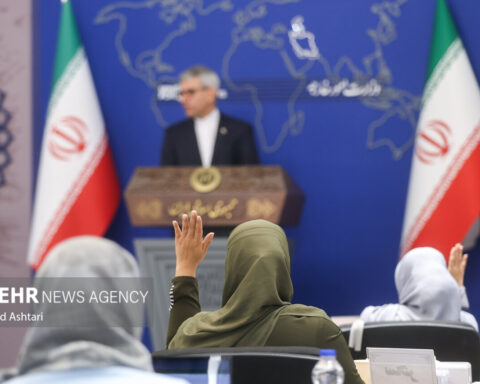
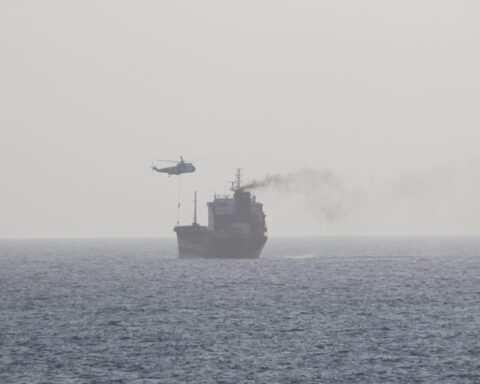
RIYADH — The United States Navy has claimed the right to board, search, and seize vessels linked to Iran “regardless of location” — three words that transform a port blockade into a global maritime interdiction doctrine with no defined outer boundary. Saudi Arabia’s entire non-Hormuz export lifeline, the corridor that kept 5 million barrels a day moving through Yanbu while the Strait choked shut, now runs through waters where American warships say they can stop any ship they suspect of carrying Iranian crude.
That is not a hypothetical. It is the operational posture described by General Dan Caine, Chairman of the Joint Chiefs of Staff, at a Pentagon briefing on April 16. “The joint force will actively pursue any Iranian-flagged vessel or any vessel attempting to provide material support to Iran,” Caine told reporters, adding that this “includes dark fleet vessels carrying Iranian oil.” The enforcement perimeter is not the Persian Gulf. It is not the Arabian Sea. It is, by CENTCOM’s own language, everywhere — including the Pacific, where Admiral Samuel Paparo’s Indo-Pacific Command is already interdicting ships that left Iranian ports before the blockade began.
When Mohammed bin Salman pushed back on the blockade within 24 hours of its announcement — a move the Wall Street Journal called “the most significant diplomatic statement from a US ally since the conflict began” — he was not defending Tehran. He was defending the assumption that a Bahri-chartered VLCC carrying Saudi crude through the Red Sea would not be stopped by an American destroyer acting on a suspicion generated by spoofed AIS data. That assumption is now unstable, and the legal architecture that should protect it does not exist.
Table of Contents
- “Regardless of Location”: What CENTCOM Actually Said
- The Yanbu Lifeline and Why It Is Exposed
- What Legal Authority Supports a Global Seizure Doctrine?
- How Does the Navy Tell Saudi Crude from Iranian Crude?
- The AIS Spoofing Problem
- Can Iran and the Houthis Close Bab al-Mandeb in Response?
- The Prize Court That Doesn’t Exist
- Why MBS Objected Before Anyone Else
- The Cuba Precedent CENTCOM Didn’t Follow
- What Happens When a Bahri Tanker Gets Boarded
- Frequently Asked Questions
“Regardless of Location”: What CENTCOM Actually Said
Operation Epic Fury, the formal blockade of Iranian ports, took effect on April 13 under CENTCOM authority. The initial framing was narrow — a port blockade, consistent with the San Remo Manual on International Law Applicable to Armed Conflicts at Sea, targeting vessels entering or departing Iranian territorial waters. Within 72 hours, the language expanded beyond recognition. A US Naval Forces Central Command advisory, reported by Stars and Stripes on April 16, stated that Iranian-flagged ships, OFAC-sanctioned vessels, and ships “suspected of carrying contraband” are subject to “visit, board, search, and seizure” regardless of their position on the world’s oceans.
The contraband categories are sweeping: weapons, nuclear materials, crude and refined oil products, iron, steel, aluminum, combat aircraft, and military electronics. Crude oil is on that list. Every tanker carrying Iranian crude — or suspected of carrying Iranian crude — is now a lawful target for boarding under this doctrine, whether it is transiting the Strait of Hormuz, rounding the Cape of Good Hope, or approaching a refinery in Shandong Province. General Caine confirmed the operational intent without ambiguity: “Any ship that would cross the blockade would result in our sailors executing pre-planned tactics designed to bring the force to that ship.”
As of April 16, the Navy had turned back 13 to 14 ships without boarding a single one. Zero vessels seized. Zero cargoes confiscated. The doctrine’s power, for now, is its assertion — the claim that the US Navy could board a ship anywhere, and the implicit threat that it will. Defense Secretary Pete Hegseth framed the stakes in binary terms: “If Iran chooses poorly, then they will have a blockade and bombs dropping on infrastructure, power and energy.”
The Middle East briefing 3,000+ readers start their day with.
One email. Every weekday morning. Free.
The Yanbu Lifeline and Why It Is Exposed
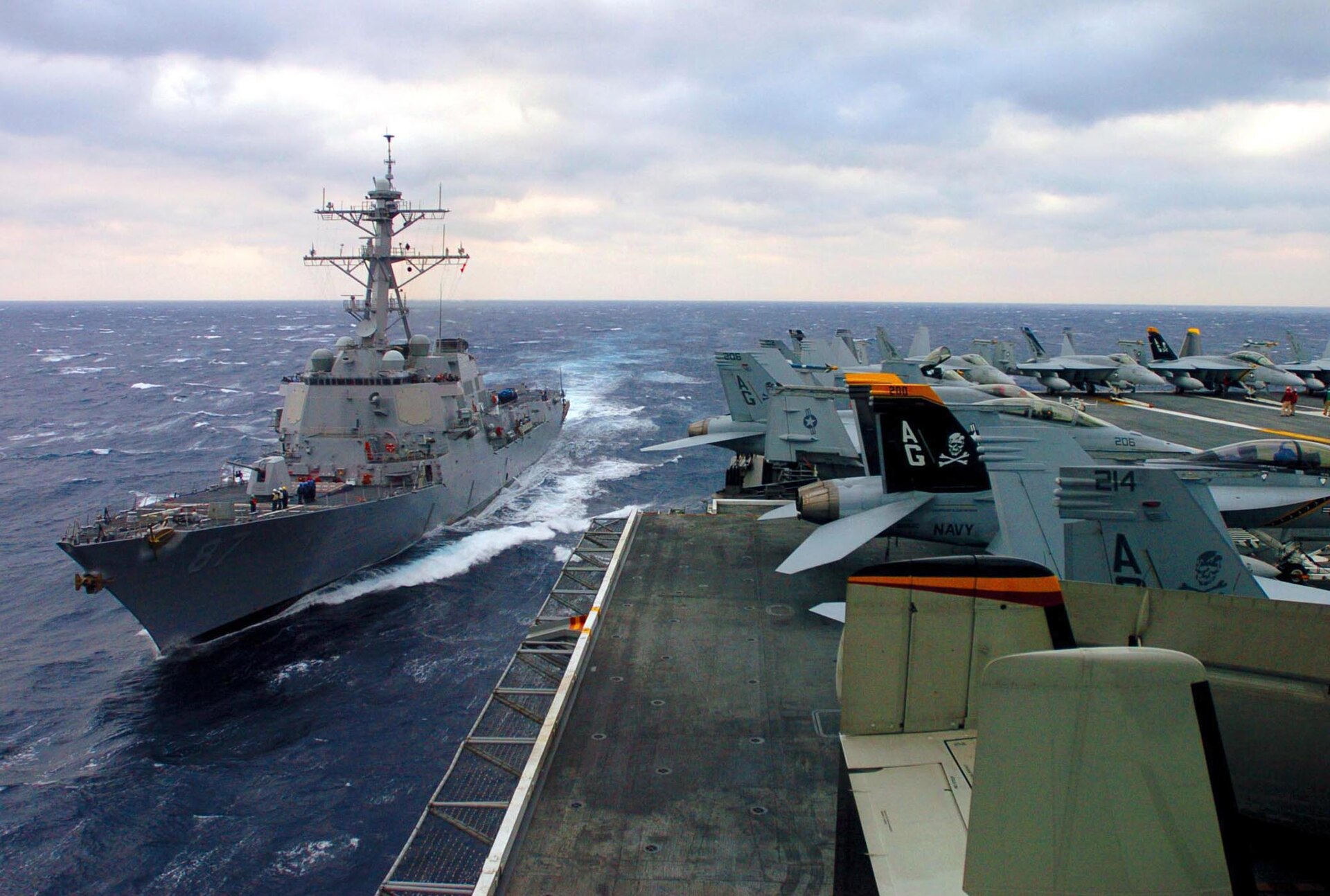
Saudi Arabia’s response to the Hormuz crisis was to route as much oil as physically possible through the East-West Pipeline bypass to Yanbu on the Red Sea coast. The numbers tell the story of a kingdom that bet its export revenue on a single corridor. Yanbu loaded approximately 5 million barrels per day of crude plus 700,000 to 900,000 barrels per day of refined products in early April — a 285% surge from roughly 1.3 million barrels per day in January, according to Koneko Research data cited by the Wall Street Journal. In the week ending March 22, VLCCs loading from Yanbu accounted for 31% of all global VLCC loadings, up from 5% in 2025, per Lloyd’s List figures reported by gCaptain.
The East-West Pipeline was operating at approximately 5.2 million barrels per day on April 12, according to Argus Media — close to its 5.9 million barrel per day ceiling. That pipeline, and the Yanbu terminal at its end, now represent the structural majority of Saudi Arabia’s export capacity. Every barrel that transits Yanbu moves south through the Red Sea, past Bab al-Mandeb — through which 4.1 billion barrels transited in 2024, representing 5% of global supply per Al Jazeera — and north through the Suez Canal to reach European and Mediterranean buyers. Every barrel of that volume now passes through waters where CENTCOM claims the authority to stop and search vessels carrying crude oil on the contraband list.
The exposure is not theoretical. Saudi Asia-bound exports already fell from 7.108 million barrels per day in February to 4.355 million barrels per day in March — a 38.6% decline. On a single Thursday in March, 33 VLCCs sat at Yanbu, per Lloyd’s List. VLCC spot rates hit $438,913 per day, roughly ten times January 2026 levels. Bahri, the Saudi national shipping company, chartered at least six VLCCs at rates exceeding $450,000 per day. The kingdom is spending more per barrel to move oil through a corridor that an American admiral can now, by stated policy, interdict.
What Legal Authority Supports a Global Seizure Doctrine?
The legal foundation for CENTCOM’s “regardless of location” posture rests on three pillars, and each one has a structural crack. The first is Article 51 of the UN Charter — the inherent right of self-defense. The US submitted an Article 51 letter to the Security Council, but as Brian Finucane, a former State Department attorney writing in Just Security, observed, the letter “fails to specify what supposed armed attack by Iran on Israel provided the predicate” for military action. Article 51 requires an armed attack. The US has not declared war on Iran. Congress has not authorized the use of military force. The self-defense claim floats without the anchor of a specified attack.
The second pillar is OFAC sanctions designations, repurposed as a “contraband” predicate under the law of naval warfare. CENTCOM’s contraband list maps directly onto existing sanctions categories, creating a legal bridge between Treasury Department financial designations and Navy boarding authority. The problem is jurisdictional: OFAC sanctions bind US persons and entities transacting in US dollars. They do not, by themselves, grant the US Navy authority to board a Liberian-flagged tanker in the Indian Ocean. That authority requires belligerent rights — and belligerent rights require a recognized armed conflict, which the US has carefully avoided declaring.
The third pillar is the San Remo Manual, the 1994 codification of customary international law governing naval warfare. San Remo does permit the capture of neutral vessels providing direct support to an enemy belligerent. But it imposes conditions: formal declaration, notification to neutral states, effective enforcement, impartial application, and — above all — prize court adjudication of seized vessels. James Kraska, who holds the Stockton Chair of International Maritime Law at the Naval War College, offered a candid characterization to Navy Times on April 14: the blockade is “simply a wartime extension of what we’ve been doing for a decade. It’s economic warfare.” Steven Horrell of the Center for European Policy Analysis drew a sharper line, distinguishing a port blockade that “complies with international law” from an open-ocean seizure doctrine that “would contradict 250 years of American policy.”
How Does the Navy Tell Saudi Crude from Iranian Crude?
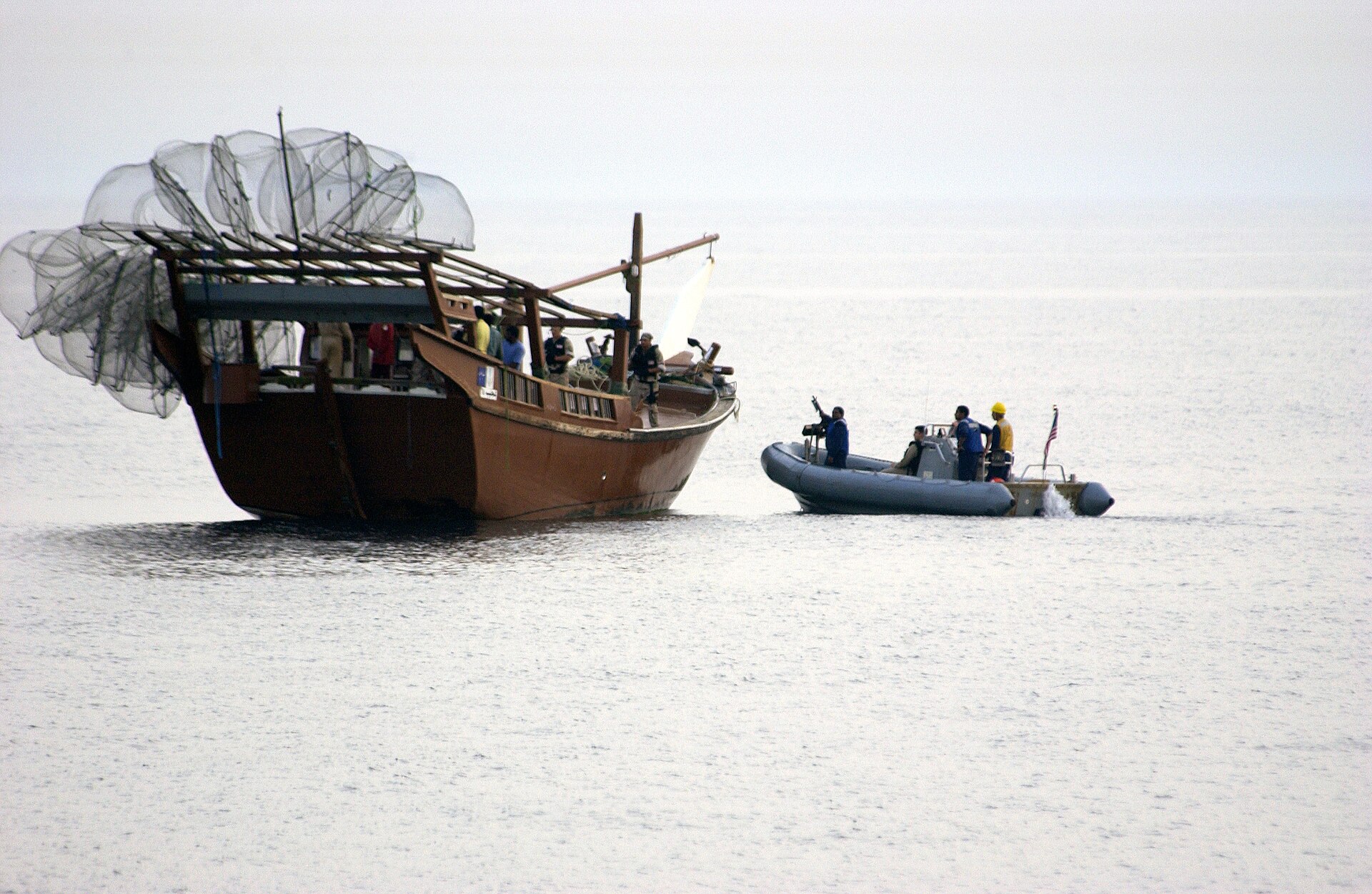
When a US Navy boarding team approaches a VLCC in the Red Sea, the practical question is immediate: whose oil is in the tanks? The “regardless of location” doctrine assumes that identification is possible — that the Navy can distinguish a tanker carrying sanctioned Iranian crude from a tanker carrying Saudi crude loaded at Yanbu three days earlier. In the current operating environment, that assumption collides with a reality the Navy’s own intelligence community has documented.
Iran’s dark fleet — the network of aging tankers operating under flags of convenience with falsified documentation and manipulated tracking systems — accounted for more than 80% of Hormuz transits in March 2026, up from approximately 15% in February, according to CBC News. These vessels routinely conduct ship-to-ship transfers at sea, blending Iranian crude into cargoes that arrive at destination ports with paperwork indicating non-Iranian origin. At least two US-sanctioned Iran-linked vessels were observed transiting Hormuz on April 16 via a new UAE routing pattern, Bloomberg reported. The dark fleet does not announce itself. It conceals itself inside the legitimate commercial fleet.
Clayton Seigle of CSIS described the identification challenge in concrete terms to ABC News: “A ship will show it’s loading in Saudi Arabia, but it’s actually loading in Iran.” That single sentence contains the entire risk to Saudi Arabia’s Red Sea corridor. If a sanctioned tanker can spoof its AIS to display a Yanbu loading position while actually loading at Bandar Abbas, then the inverse is also operationally possible: a legitimate Saudi-chartered tanker, carrying Saudi crude, displaying accurate AIS data, could be flagged for boarding because its transponder signature, route, or chartering history triggers a suspicion algorithm trained on dark fleet behavior patterns.
The AIS Spoofing Problem
The Saudi exposure is specific and measurable. Bahri operates one of the largest tanker fleets in the world. Its vessels transit the Red Sea on published schedules, carrying Saudi crude from Yanbu to buyers in Europe, the Mediterranean, and East Asia. Those vessels operate with legitimate AIS transponders, accurate documentation, and Saudi-flagged or Saudi-chartered status. They also operate in the same waters as dark fleet tankers that have been documented spoofing AIS positions to show Saudi loading ports. A Navy boarding team operating under “suspected of carrying contraband” authority must make a determination — in real time, at sea, with no prize court standing behind the decision — about whether a vessel’s documentation is genuine.
The 732 cargo vessels currently stranded in the Gulf, including 230 loaded oil tankers according to KCCU and the Associated Press, represent the congestion that makes identification harder, not easier. The more vessels crowd into the same corridors, the more AIS signals overlap, the more ship-to-ship transfer opportunities exist, and the more room there is for misidentification. Elizabeth Mendenhall of the University of Rhode Island’s Marine Affairs program put the epistemological gap bluntly to Fortune: “The U.S. and Iran are living in two different worlds when it comes to the international laws governing the strait.” They are also living in two different information environments, and the Navy is asserting seizure authority across both.
Can Iran and the Houthis Close Bab al-Mandeb in Response?
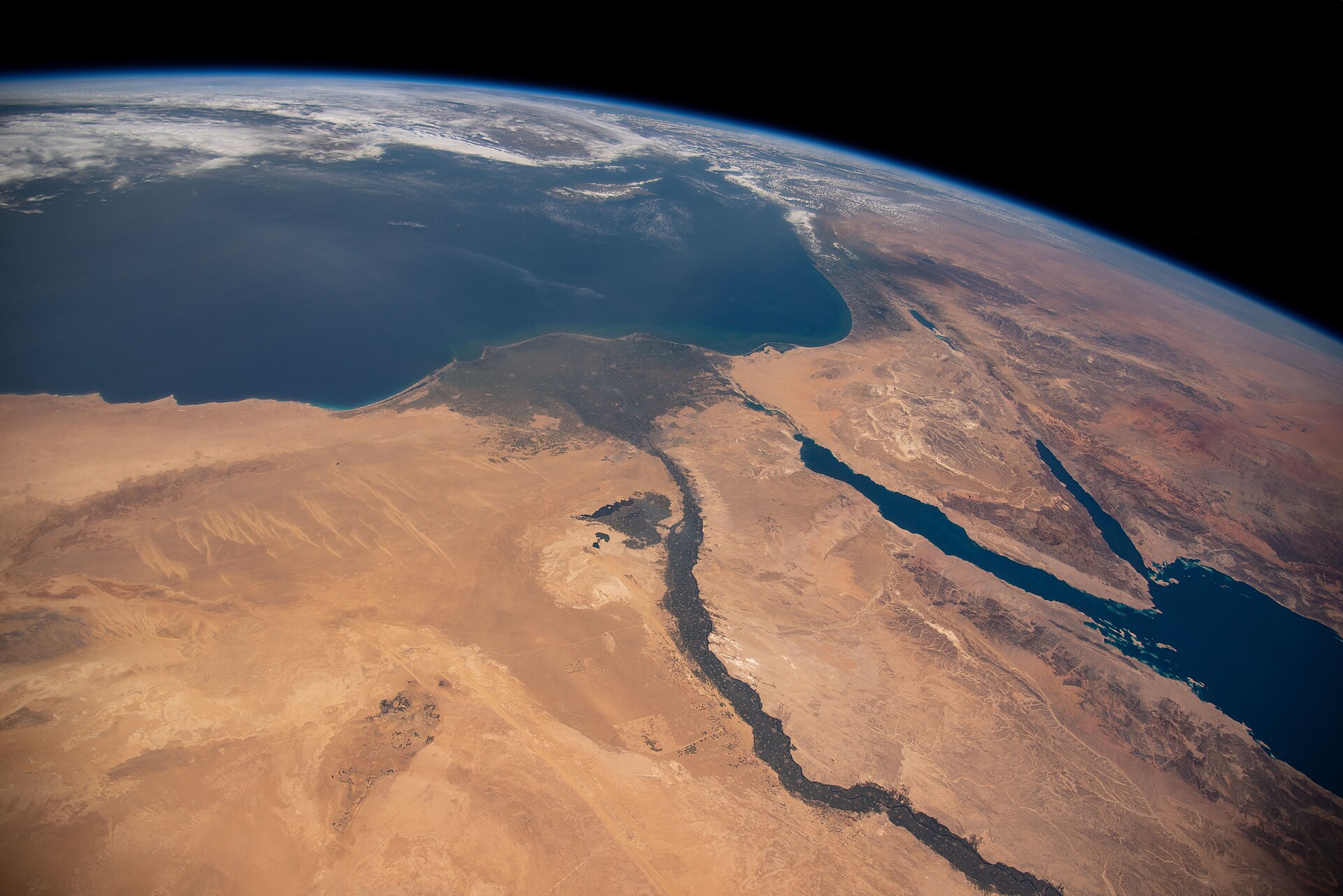
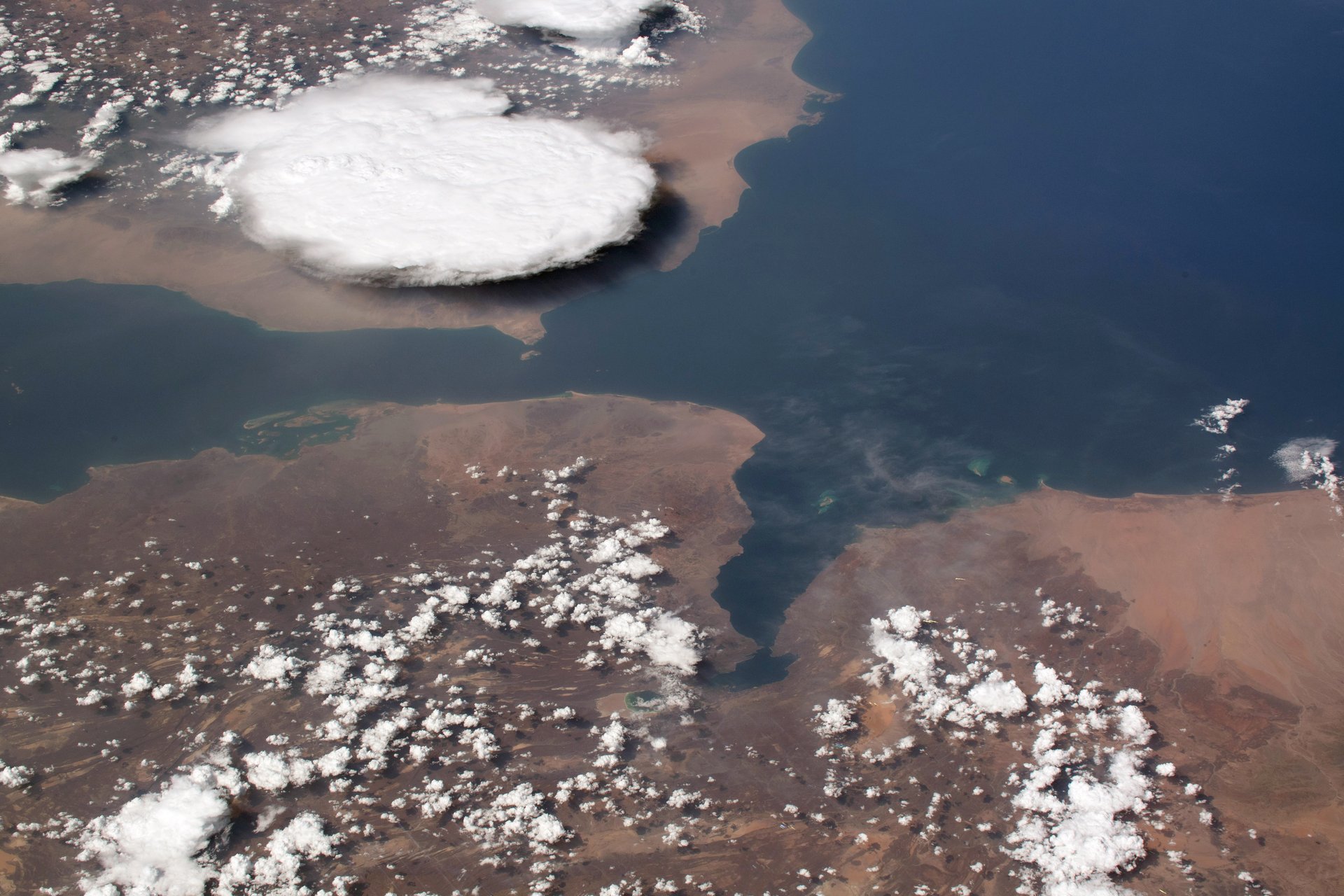
Iran’s response to the blockade has been to threaten exactly the corridor Saudi Arabia depends on. IRGC Major General Ali Abdollahi stated on April 15 that Iran’s forces “will not allow any exports or imports to continue in the area of the Persian Gulf, the Sea of Oman and the Red Sea” if the blockade threatens Iranian commercial vessels. That is not a Hormuz threat. It is a three-sea doctrine — the Persian Gulf, the Sea of Oman, and the Red Sea — and it places Bab al-Mandeb, the 20-mile-wide chokepoint at the southern end of the Red Sea, inside Iran’s declared response perimeter. Abdollahi’s three-sea doctrine leaves Saudi Arabia with no export contingency that does not pass through waters claimed by either the United States or Iran.
Ali Akbar Velayati, the Iranian presidential adviser who functions as Khamenei’s foreign policy voice, extended the threat explicitly: “The unified command of the Resistance front views Bab al-Mandeb as it does Hormuz.” Mohammed Mansour, the Houthi Deputy Information Minister, confirmed the operational alignment to Al Jazeera and Time, stating that closing Bab al-Mandeb is “among our options” and forecasting oil at $200 per barrel in that scenario. He confirmed a “common action plan” with Iran. The Houthi Higher Operations Coordination Center offered a characteristic dual signal — “There is no cause for concern” regarding Yanbu trade, followed by the assurance that Houthi forces are “fully militarily ready with all options” — per Lloyd’s List.
Elisabeth Kendall of Girton College, Cambridge, warned of a “nightmare scenario” if both straits face simultaneous restrictions. The arithmetic is unambiguous: if both Hormuz and Bab al-Mandeb close simultaneously, 25% of global oil and gas supply is blocked, according to Al Jazeera. Mona Yacoubian of CSIS reminded Navy Times that “the Houthis are the ones who pioneered this idea of using asymmetric capabilities to disrupt maritime traffic.” Iran has already demonstrated the capacity to strike Yanbu directly — a drone hit the SAMREF refinery on March 19, and a missile aimed at Yanbu port was intercepted, per the Maritime Executive. The Red Sea corridor is not safe from Iran. It is merely less obstructed than Hormuz.
CENTCOM’s “regardless of location” doctrine adds an American obstruction to an Iranian one.
The Prize Court That Doesn’t Exist
Historical prize law — the body of customary international law governing the capture of vessels at sea during armed conflict — required a judicial process. A belligerent navy could seize a vessel suspected of carrying contraband to an enemy. But the seizure was provisional. The captured vessel and its cargo were brought before a prize court, which adjudicated the lawfulness of the capture, the character of the cargo, and the rights of the flag state and cargo owners. This was not a formality. Prize courts operated during both World Wars, and their judgments created the precedents that the San Remo Manual later codified.
The United States has not operated a prize court since World War II. There is no standing prize court. There is no procedural mechanism by which Bahri, or any other shipping company, could challenge the seizure of a vessel in a US judicial forum designed for that purpose. Nicholas Heras of the Middle East Policy Council told the Irish Times that the administration seeks to “isolate Iran even further through a military campaign designed not for war but for emptying Iran’s coffers.” But military campaigns designed to empty coffers by seizing vessels at sea have historically required courts to validate the seizures. CENTCOM’s doctrine asserts the power of capture without the institutional infrastructure of adjudication.
The gap matters because mistakes in identification — the wrong ship boarded, the wrong cargo seized — have no procedural remedy under the current framework. A Bahri VLCC stopped in the Red Sea on suspicion of carrying Iranian crude would be detained by military authority, without a judicial forum to review the determination, in waters where the US has not declared war and where no UNSC resolution authorizes enforcement action. The flag state — Saudi Arabia, in this scenario — would have no legal mechanism to compel the release of its vessel beyond diplomatic protest. The entire weight of the doctrine rests on executive assertion and military discretion, without the judicial counterweight that the law of naval warfare has required for three centuries.
Why MBS Objected Before Anyone Else
Saudi Arabia’s blockade objection was the fastest allied response to an American military action since the invasion of Iraq. The Wall Street Journal reported on April 14 that Saudi Arabia was pressing Trump to lift the blockade — not to moderate it, not to narrow it, but to lift it. That was one day after Epic Fury began. The kingdom did not wait to see how enforcement would develop. It recognized immediately that the “regardless of location” language threatened its own export corridor.
The reasoning is structural, not sentimental. Saudi Arabia has spent six weeks rerouting its entire export infrastructure to Yanbu, at enormous cost. Bahri has chartered VLCCs at rates exceeding $450,000 per day. The East-West Pipeline is absorbing nearly every barrel that used to move through Hormuz. The kingdom’s fiscal position depends on those barrels reaching buyers. Any disruption to the Red Sea corridor — whether from an Iranian strike on Yanbu, a Houthi closure of Bab al-Mandeb, or an American boarding of a tanker that turns out to be carrying Saudi crude — threatens the revenue stream that funds the war effort, the PIF’s restructured investment program, and the social contract that underpins MBS’s domestic authority.
The crown prince’s position is further complicated by the fact that Saudi Arabia has no seat at the table where the blockade’s parameters are being decided. MBS excluded from talks in Islamabad, the kingdom finds itself absorbing the economic consequences of American military decisions made without its input. The US blockade as coercive diplomacy framework assumes that the pressure falls on Iran. The “regardless of location” extension ensures that the pressure also falls on every state whose commercial fleet operates in the same waters as Iran’s dark fleet — and no state’s fleet is more exposed than Saudi Arabia’s.
Any ship that would cross the blockade would result in our sailors executing pre-planned tactics designed to bring the force to that ship.
Gen. Dan Caine, Chairman of the Joint Chiefs, April 16, 2026
The Cuba Precedent CENTCOM Didn’t Follow
In October 1962, President Kennedy faced a comparable decision: how to impose a maritime restriction on an adversary without triggering a legal cascade that would constitute an act of war. Kennedy’s lawyers chose the word “quarantine” precisely because “blockade” carried belligerent connotations under international law. The administration then obtained authorization from the Organization of American States under Chapter VIII of the UN Charter — regional security arrangements — rather than relying solely on Article 51 self-defense. The quarantine was geographically bounded, limited to offensive weapons, and backed by a regional organization whose member states had voted to authorize it.
Operation Epic Fury followed none of these steps. There is no regional authorization. The Gulf Cooperation Council has not voted to endorse the blockade; Saudi Arabia, its most powerful member, actively opposes it. There is no UNSC resolution — Russia and China vetoed even a non-binding Hormuz resolution that had been stripped of Chapter VII enforcement authority across six drafts. The legal basis is executive assertion of Article 51, amplified by OFAC sanctions designations and the San Remo Manual’s customary law provisions. And the geographic scope is not bounded. Kennedy’s quarantine had a line on a map. CENTCOM’s doctrine has “regardless of location.”
The 1909 Declaration of London — never ratified but reflecting the international consensus that the United States itself championed at the Second Hague Conference — stated that a blockade “must not extend beyond the ports and coasts belonging to or occupied by the enemy.” CENTCOM’s language explicitly exceeds this principle. The Declaration of London also required that blockades be applied impartially to the vessels of all nations. The current doctrine targets specific vessel categories — Iranian-flagged, OFAC-sanctioned, “suspected” — in a way that creates differential enforcement across flag states. The US is simultaneously asserting the rights of a blockading belligerent and denying the obligations that historically accompanied those rights.
What Happens When a Bahri Tanker Gets Boarded
The current phase of enforcement — 13 to 14 ships turned back, zero boarded — is sustainable only as long as targeted vessels comply voluntarily. The doctrine’s credibility depends on the implicit threat of physical enforcement, but every day that passes without a boarding tests whether the threat is operational or declaratory. Iran’s response is already probing the boundary. The dark fleet is adapting, rerouting through new UAE corridors, and testing whether “regardless of location” means regardless of enforcement capacity.
The scenario that should concern Riyadh is not an American destroyer stopping an Iranian tanker. It is an American destroyer stopping a tanker that appears Iranian — based on AIS data that may be spoofed, chartering history that may be layered through shell companies, or a route pattern that matches dark fleet behavior — and discovering Saudi crude in the tanks. Or, worse, boarding a Bahri-chartered vessel operating legitimately in the Red Sea because its transponder data triggered a flag in a system designed to detect Iranian sanctions evasion. Iran’s permanent mechanism for Hormuz already created a framework for controlling strait transit; CENTCOM’s “regardless of location” creates a parallel framework with no geographic limits and no judicial review.
The strategic consequence is that Saudi Arabia now faces two maritime powers claiming the right to control its export corridors — Iran from the east and the United States from everywhere. The kingdom’s position is uniquely vulnerable because its hedge against the Hormuz closure, the Yanbu-Red Sea route, runs through the same international waters where CENTCOM claims interdiction authority and where Iran and the Houthis have declared operational readiness. The exclusion of MBS from the negotiating table means the parameters of enforcement are being set without Saudi input, even as Saudi Arabia bears the heaviest commercial cost.
Saudi Arabia spent billions building a pipeline bypass to escape one chokepoint. It has arrived at a position where the bypass corridor is claimed by both its adversary and its ally.
On April 16, 732 cargo vessels sat stranded in the Gulf. Two hundred and thirty of them were loaded oil tankers. VLCC rates held above $438,913 per day. Somewhere in the Red Sea, a Bahri tanker carried Saudi crude south toward Bab al-Mandeb, its AIS transponder broadcasting an accurate position to a US Navy that had claimed the right to board any vessel it suspected of carrying Iranian oil — and to an IRGC that had promised to shut the corridor down if the blockade continued. The tanker’s flag was Saudi. Its cargo was Saudi. Its destination was a refinery that needed the oil. Whether it would arrive without being stopped depended on the judgment of a boarding team operating under a doctrine that has no geographic limit, no prize court, and no precedent in American maritime law.
Frequently Asked Questions
Has the US Navy actually boarded any vessels under the “regardless of location” doctrine?
As of April 16, no. General Caine confirmed that 13 to 14 ships had been turned back, but zero had been physically boarded. The doctrine’s enforcement power currently operates through deterrence — the threat of boarding — rather than demonstrated seizure. Indo-Pacific Command under Admiral Paparo is separately interdicting vessels that departed Iran before the April 13 blockade start date, extending enforcement retroactively across theater boundaries.
Could a US ally invoke freedom of navigation against the “regardless of location” doctrine?
In principle, any flag state whose vessel is stopped on the high seas outside a recognized conflict zone could invoke UNCLOS Articles 87 and 90, which guarantee freedom of navigation and the right of ships to sail under the flag of any state. However, the US, Iran, and Israel are all non-ratifiers of UNCLOS, creating a jurisdictional paradox: the US cannot be brought before the International Tribunal for the Law of the Sea by a state whose vessel it seizes, because it has not consented to the tribunal’s jurisdiction. Diplomatic protest, not legal adjudication, is the available remedy.
What happens to a seized vessel’s cargo under current US law?
Without a functioning prize court, seized vessels would likely be handled under federal admiralty jurisdiction — specifically 28 USC § 1333 — but no modern case law addresses the seizure of a neutral vessel’s cargo under belligerent rights outside a declared war. The International Emergency Economic Powers Act (IEEPA) grants forfeiture authority over sanctioned property, but applying IEEPA to a vessel seized on the high seas by military force rather than through civil process would test untested legal boundaries. The cargo would remain in legal limbo for months, possibly years.
Is Saudi Arabia’s Bahri fleet technically at risk of sanctions itself?
Bahri is not OFAC-sanctioned and operates as a legitimate state-owned commercial fleet. However, the “suspected of carrying contraband” language in the CENTCOM advisory creates risk through association rather than designation. If a Bahri-chartered vessel previously carried Iranian crude under a prior charter arrangement — common in the tanker market — its vessel history could trigger enhanced scrutiny. The Treasury Department’s “50 Percent Rule” applies to entity ownership, not cargo history, but military boarding decisions at sea do not operate under Treasury’s administrative procedures.
Has any country formally challenged the legality of CENTCOM’s “regardless of location” language?
China’s Foreign Ministry spokesperson called the blockade “a dangerous and irresponsible move,” and China’s UN envoy Fu Cong argued that adopting a resolution while the US was “threatening the survival of a civilization” would send the wrong message. Russia joined China in vetoing the UNSC Hormuz resolution. Iran’s Tehran Times editorialized that the blockade was “forged in the ashes of strategic failure.” No state has filed a formal legal challenge before an international tribunal, in part because the relevant forums — the ICJ and ITLOS — require consent-based jurisdiction that the US has not granted for military operations. As that question remains unresolved, the War Powers Resolution’s 60-day clock expires May 1, forcing Congress to either authorize the campaign or trigger withdrawal procedures. The May 1 war powers deadline and the six Senate votes that failed to settle it.