
JEDDAH — At 5 PM Eastern Standard Time on April 16, Donald Trump announced a ten-day ceasefire between Israel and Lebanon, the first such framework since the Beirut corridor collapsed on what Lebanese media already calls Black Wednesday. Saudi Arabia’s fingerprints are not on the document, but its diplomatic freight moved through every layer of the architecture that produced it.
For the past nine days, Riyadh has conducted a proxy campaign of rare discipline — hosting Keir Starmer in Jeddah on April 8, watching UK Foreign Secretary Yvette Cooper deliver its demands verbatim from the Mansion House lectern on April 10, then letting nineteen foreign ministers sign a Lebanon-inclusion statement on April 14 without ever putting Prince Faisal bin Farhan’s name on the text. The strategy delivered the outcome. It also handed the House of Saud a structural liability it cannot now disown, because the ceasefire Netanyahu has just signed preserves his right to strike Lebanon “at any time” using language identical to the clause that justified the April 8 massacre of 357 Lebanese civilians hours after the last American-brokered truce went live. If this truce breaks the way that one did, every leader in the region will remember whose proxies pushed Lebanon into the frame. A subsequent analysis examines how that structural liability has already materialised: Iran tied Hormuz access directly to the Lebanon ceasefire on April 17, meaning Saudi Arabia’s export corridor now depends on Israeli restraint in southern Lebanon — a variable Riyadh engineered into the framework but cannot control.
Table of Contents
- How did Saudi Arabia engineer Lebanon’s inclusion without signing anything?
- What does the April 16 ceasefire text actually contain?
- Why does the April 8 precedent matter to this agreement?
- How has Hezbollah responded, and why does “free concession” matter?
- What is the FRS warning about Iranian reprisals?
- What does the ceasefire announcement do to Brent and the May OSP?
- Saudi fiscal arithmetic at $94.89 Brent
- The structural bet MBS has just placed
- Frequently Asked Questions
How did Saudi Arabia engineer Lebanon’s inclusion without signing anything?
Saudi Arabia ran a three-layer proxy architecture between April 8 and April 14, using the United Kingdom and France as primary amplifiers and the nineteen-nation European-Commonwealth bloc as the delivery mechanism. The demand for Lebanon’s inclusion in any regional de-escalation framework was voiced exclusively by third parties while Riyadh remained absent from every signatory list and every podium.
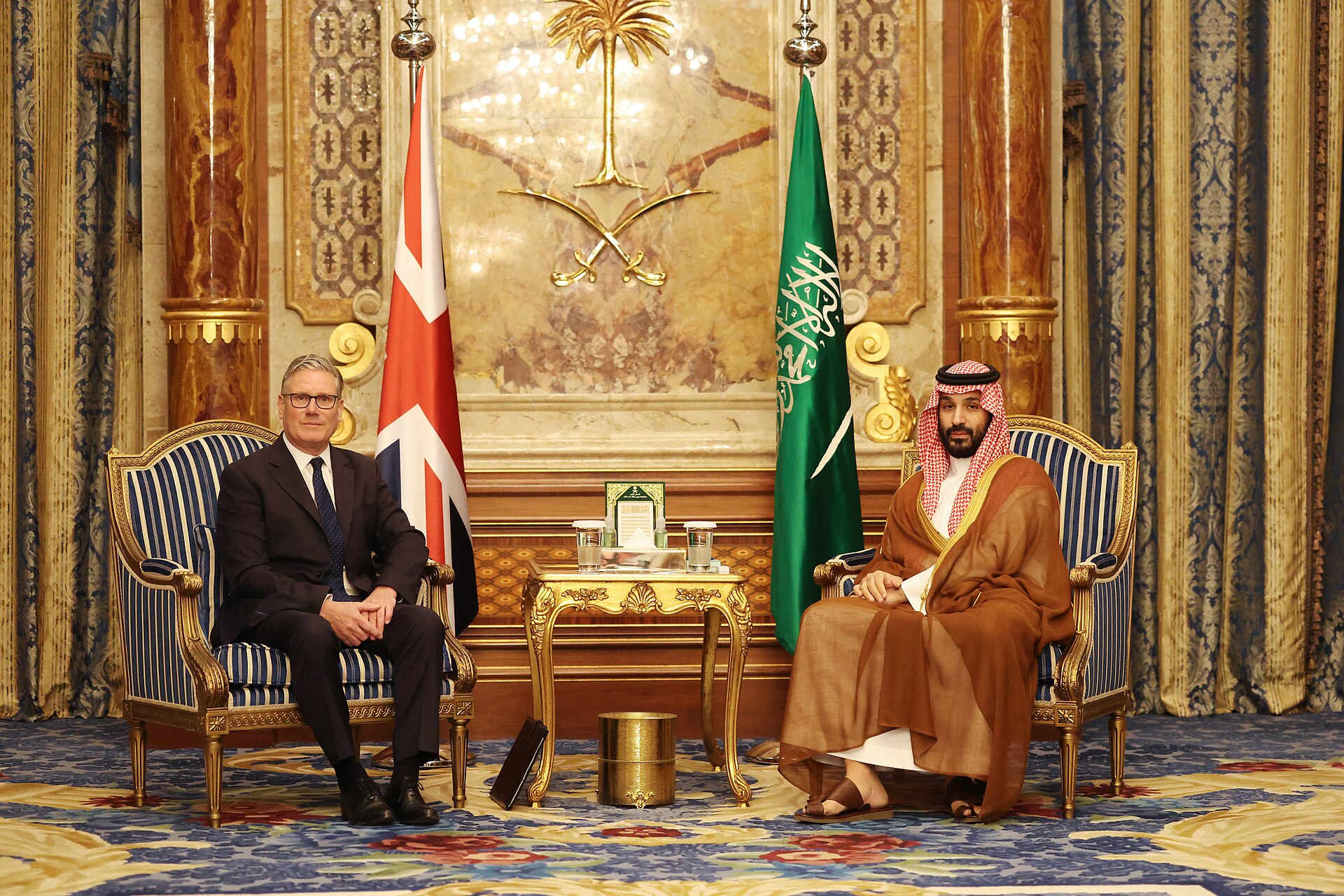
The sequence began on April 8, when MBS received Starmer at Al-Salam Palace in Jeddah for a bilateral that ran long into the evening. Within hours, the UK Prime Minister was on record describing Israeli airstrikes on Lebanon as “wrong” — a word Saudi officials had been circulating privately for weeks but had never uttered in a joint communiqué. The bilateral ended without a Saudi readout that mentioned Lebanon at all, which is exactly how the Starmer proxy channel was designed to function.
Cooper escalated the sequence on April 10 from the Mansion House, where British foreign secretaries have delivered set-piece addresses since Palmerston. “The escalation of airstrikes in Lebanon by Israel yesterday was deeply damaging,” Cooper told the City of London audience, before pivoting to a formulation that Saudi diplomats had been pushing through back channels for weeks: “Freedom of navigation means navigation must be free.” The speech tracked Saudi talking points with near-verbatim precision on three separate dossiers — Lebanon inclusion, Hormuz reopening, and the rejection of Iranian transit tolls. Riyadh was not in the room. The freight was unmistakable.
The joint statements followed. On April 8, fifteen-plus Western capitals including Paris, Berlin, Rome, and Canberra signed a text pressing for Lebanon’s inclusion in ceasefire talks; Saudi Arabia did not sign. On April 14, a second statement went out under the names of nineteen foreign ministers — Australia, Belgium, Croatia, Cyprus, Denmark, Finland, France, Greece, Iceland, Ireland, Luxembourg, Malta, Netherlands, Norway, Portugal, Slovenia, Spain, Sweden, and the United Kingdom. The language demanded Lebanon’s “inclusion in regional de-escalation efforts.” Faisal bin Farhan’s signature was again absent, and again the Saudi position had been delivered by others.
The Middle East briefing 3,000+ readers start their day with.
One email. Every weekday morning. Free.
“The escalation of airstrikes in Lebanon by Israel yesterday was deeply damaging. Freedom of navigation means navigation must be free.”Yvette Cooper, UK Foreign Secretary, Mansion House address, April 10, 2026
What does the April 16 ceasefire text actually contain?
The ten-day framework announced by Trump at 5 PM Eastern contains three operative clauses that tilt the balance of risk heavily toward Israel, despite the Lebanese Prime Minister’s public framing of the deal as the vindication of “a central Lebanese demand we have pursued since the first day of the war.” Nawaf Salam’s statement, delivered within ninety minutes of Trump’s Truth Social post, glossed concessions that Hezbollah spotted immediately and denounced by nightfall in Beirut.
The first clause, and the one that will haunt every Saudi diplomat who touched this file, preserves Israel’s “right to take all necessary measures in self-defense, at any time, against planned, imminent, or ongoing attacks.” The phrasing is lifted almost unchanged from the US-Iran ceasefire text that collapsed within hours of implementation on April 8, when Israeli aircraft struck Beirut’s southern suburbs and killed 357 people in a single afternoon using precisely this “at any time” latitude as legal cover. Netanyahu signed this language once already, used it, and has now signed it again.
The second clause addresses Israeli forces on Lebanese soil. Netanyahu told NBC News that IDF units will remain inside “an expanded security zone” in southern Lebanon — a direct rejection of Lebanon’s core demand for full withdrawal. Salam had entered the Washington talks with withdrawal as a stated red line; he left having dropped it. That is the concession Hezbollah’s Naim Qassem identified when he called the Washington talks “futile” and labeled the agreement a “free concession” to Israel and the United States.
The third clause links any extension beyond the initial ten days to “Lebanon effectively demonstrates its ability to assert its sovereignty” — State Department code for Hezbollah disarmament, which Netanyahu confirmed in parallel remarks carried by Israel Hayom as a prerequisite to any permanent agreement. Lebanon now has 240 hours to dismantle the political-military structure of its largest confessional bloc or face the resumption of a war that has already killed 2,055 people and wounded 6,588 since March 2, according to the Lebanese Health Ministry.
| Provision | Text or source | Lebanese concession |
|---|---|---|
| Israeli strike rights | “Right to take all necessary measures in self-defense, at any time, against planned, imminent, or ongoing attacks” | Sovereignty of airspace surrendered during the truce window |
| IDF ground presence | “Expanded security zone” in southern Lebanon (Netanyahu, NBC News) | Full IDF withdrawal dropped as precondition |
| Extension conditionality | “Lebanon effectively demonstrates its ability to assert its sovereignty” (Axios text) | Hezbollah disarmament demanded within 10-day window |
| Duration | 10 days, effective 21:00 GMT April 16 (expires April 26) | Expiry falls inside Hajj arrival window; Hajj cordon seals April 18 |
| Prisoner release | Not included in announced text | Hezbollah precondition rejected |
| Reconstruction commitment | Not included in announced text | Lebanese government precondition rejected |
Why does the April 8 precedent matter to this agreement?
The April 8 precedent matters because the architectural clause that broke the US-Iran ceasefire within hours is the same clause Netanyahu has just signed again for Lebanon. On April 8, Israeli aircraft exploited the “at any time” self-defense latitude to launch a wave of strikes on Beirut’s southern suburbs between 14:00 and 18:00 local time, killing hundreds of Lebanese civilians in a single afternoon. The truce was technically never voided; it was simply used as cover for a strike package that had been pre-planned for weeks.
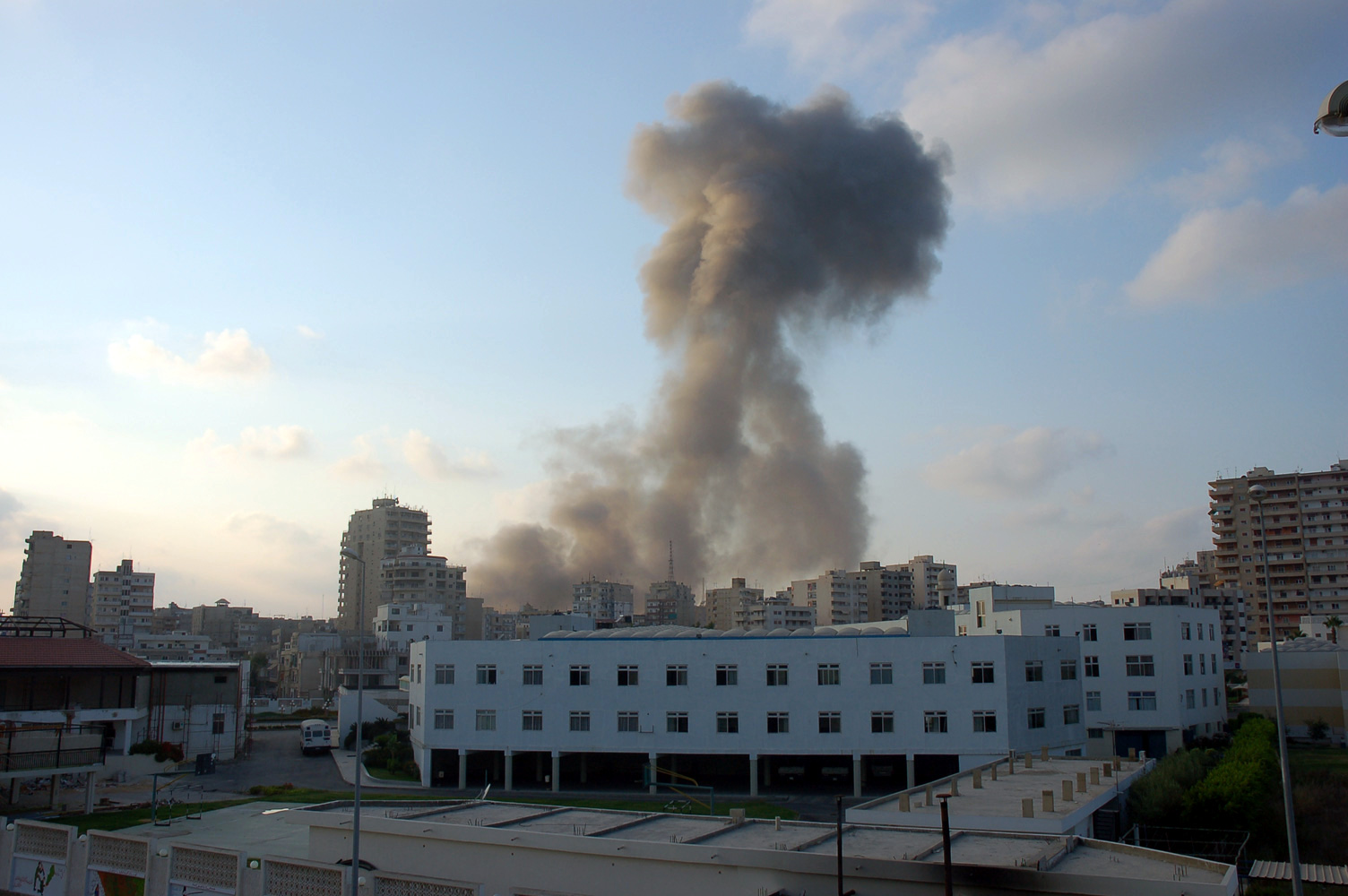
Lebanon’s Health Ministry published the casualty figure forty-eight hours later: 357 dead in a single afternoon, more than the cumulative toll of any previous day of the conflict. CGTN and Al Jazeera logged Beirut’s civilian defence response in real time as ambulances were themselves struck on Airport Road. The message from the IDF press office was that every casualty fell within the “imminent attack” category codified in the ceasefire text. The same text has now been ported, almost without amendment, into the Lebanon-specific agreement announced today.
Netanyahu also inherits a domestic incentive structure that makes replication likely rather than exceptional. His coalition survives on the support of Bezalel Smotrich and Itamar Ben-Gvir, both of whom have publicly opposed any ceasefire architecture that allows Hezbollah reconstitution; the “at any time” clause exists specifically because it lets Netanyahu retain strike authority as a coalition-management tool. Israeli opinion polling published by Maariv on April 14 showed 61 percent of respondents opposed any permanent Lebanon ceasefire that does not include full Hezbollah disarmament — a threshold the Lebanese government cannot meet in ten days or ten months.
Trump framed today’s announcement on Truth Social as “PEACE between their Countries,” but the text he ratified contains the same self-destruct mechanism as the last one. The operational question for Riyadh is not whether the truce holds for ten days. It is whether, if and when it breaks, the diplomatic trail leads back to Saudi advocacy through Starmer, Cooper, and the April 14 nineteen.
That trail exists in cable traffic across at least seven foreign ministries. Israeli intelligence has visibility on most of it.
How has Hezbollah responded, and why does “free concession” matter?
Hezbollah’s response split into two registers within six hours of Trump’s announcement, and both registers carry structural consequences for the Saudi position. Ibrahim al-Moussawi, the parliamentary bloc spokesman, told Al Jazeera that the party would respect the ceasefire “only if Israeli attacks on its fighters were fully stopped” — a conditional acceptance, but one calibrated to leave operational latitude for retaliatory action if any cadre is killed during the ten-day window. Naim Qassem, the Secretary-General, went considerably further.
Qassem called the Washington negotiations “futile” and labeled the entire framework a “free concession” to Israel and the United States, a phrase Times of Israel reported as having been prepared for delivery before Trump’s announcement went live. The “free concession” formulation is technical Hezbollah vocabulary denoting an agreement in which the party judges that its principal allies — which include the Lebanese state, Iran, and by historical extension any Arab actor involved in the brokerage — have surrendered core demands without extracting reciprocal value. The phrase has appeared in Hezbollah communiqués on only a handful of occasions since 2006, and each instance preceded a renewed confrontation within six months.
The Washington talks were “futile”; the agreement is a “free concession” to Israel and the US.Hezbollah Secretary-General Naim Qassem, April 16, 2026, reported by Times of Israel
The Lebanese government’s response operates in a different register entirely. Salam’s statement describing the deal as “a central Lebanese demand we have pursued since the first day of the war” papered over the three concessions Hezbollah had already identified — dropped withdrawal precondition, missing prisoner release language, absent reconstruction commitment — in a way that Beirut’s political establishment will find difficult to sustain once the ten-day window closes and the IDF is still dug into positions inside Lebanese territory. Salam has bought ten days of truce by writing cheques on Hezbollah’s political capital, and Hezbollah has already told him in public that the cheques will bounce.
Iran’s Parliament Speaker Mohammad Bagher Ghalibaf had framed Lebanon inclusion in the preceding week as a firm condition, declaring that “halting Lebanon fighting” was “just as important” as the US-Iran ceasefire architecture being negotiated in Islamabad. Today’s announcement technically delivers that demand — but delivers it in a form Hezbollah has already publicly rejected, which means Iran’s parliamentary faction gets the headline without the operational substance. PressTV’s overnight coverage attributed any Lebanon truce to “Hezbollah and the Axis of Resistance’s persistent struggle” rather than to Trump, to Salam, or to any Western intermediary, which preserves domestic Iranian political cover for a resumption of fighting if the ten days collapse.
What is the FRS warning about Iranian reprisals?
The Fondation pour la Recherche Stratégique published a note on April 15 titled “Towards an Israeli-Saudi Standoff?” that should have been the single most-read document in Riyadh’s policy community yesterday morning, because it maps out in explicit terms the reprisal vector Saudi Arabia has just exposed itself to. The FRS analysts argue that Israeli information-warfare operators are actively working to paint Saudi Arabia as aligned with the Israeli-American axis in order to strip Riyadh of the strategic ambiguity MBS has cultivated since February.
The key passage identifies the objective with unusual directness. Israel, FRS assesses, “seeks to limit Riyadh’s influence in the regional order, to bring it into a position more aligned with its interests or within its ‘sphere of influence’.” The mechanism is to inject into global media discourse a simplified narrative in which Saudi Arabia is a silent partner in Israeli strikes — a narrative FRS notes is “already widely relayed in global media.” The consequence FRS flags matters to every Saudi official with a signature in a cable.
“Promoting this simplified narrative aims to force Riyadh into choosing sides, increases its vulnerability to Iranian reprisals, while dealing a potentially fatal blow to its diplomatic relations with Tehran.”Fondation pour la Recherche Stratégique, “Towards an Israeli-Saudi Standoff?”, April 15, 2026
Two phrases in the FRS formulation deserve attention. “Increases its vulnerability to Iranian reprisals” is an operational, not a rhetorical, warning — the IRGC’s April 7 counter-target list, published in Fars News and covered extensively in Saudi’s Red Sea blockade analysis, included eight Gulf and Jordanian bridges and multiple Aramco installations. King Fahd Causeway was on that list and was closed by the Saudi Interior Ministry for six hours on April 7 when Iran fired seven ballistic missiles at the Eastern Province. “Potentially fatal blow to its diplomatic relations with Tehran” refers to the back-channel Gharibabadi-Araghchi line that Saudi Arabia has maintained through Oman since the Islamabad talks stalled in mid-month.
The Saudi bet, as the FRS note implicitly acknowledges, is that the proxy architecture through Starmer, Cooper, and the April 14 nineteen is plausibly deniable to Tehran — that Iranian intelligence will read it as Western middle-power assertiveness rather than Saudi direction. This bet depends on two things Riyadh does not control. First, it depends on Israeli intelligence agencies choosing not to surface the Saudi coordination pattern in leaked cable traffic; given FRS’s April 15 warning about an active Israeli information operation to do exactly the opposite, this is a weak reed.
Second, it depends on the ceasefire holding. If it collapses, the retroactive attribution becomes devastating.
The 2025 Washington Institute survey of Saudi respondents found 99 percent opposition to normal relations with Israel — a figure that maps cleanly onto MBS’s November 2024 Shura Council speech describing Israeli conduct in Gaza as “genocide against the Palestinians.” INSS concedes normalization is “off the table” for the duration of the current crisis. If the Lebanon ceasefire fails within its ten-day window and Iranian media attribute the architecture to Saudi advocacy, MBS will face a domestic legitimacy problem that his November 2024 rhetoric has already primed the Saudi public to treat as betrayal.
What does the ceasefire announcement do to Brent and the May OSP?
Brent closed April 16 at $94.89 per barrel, with the ceasefire announcement landing inside the Asian session close and driving an immediate $1.40 compression in the front-month contract within forty minutes. ActionForex analysts modeling the residual war premium estimate that the Lebanon announcement has now compressed the Israel-Iran-Lebanon risk stack from approximately $14 per barrel at early-April peak to between $4 and $6 per barrel at the close of trading today. That compression is arriving at the single worst possible moment for Saudi fiscal arithmetic.
Saudi Aramco’s May Official Selling Price for Arab Light into Asia was set at plus $19.50 per barrel over the Oman/Dubai benchmark when Brent was trading near $109 in early April, a record premium and one that reflected both the Hormuz transit disruption and the East-West Pipeline constraint at the Yanbu terminal. Brent is now $14.11 below the level at which that premium was priced. The effective OSP-spot gap for May cargoes loading at Ras Tanura is approximately $15 per barrel above where arbitrage-disciplined Asian refiners would pay for equivalent non-Saudi alternatives, and it is this gap that Saudi Arabia has to fix before May 5.
The consequences are already visible in the export data. Bloomberg’s tanker tracking showed Saudi crude exports to Asia falling 38.6 percent between February and March — a one-month collapse without recent precedent — as Asian buyers diverted to Russian ESPO, Iraqi Basrah Heavy, and UAE Murban grades trading at discounts to the Arab Light premium. If the Lebanon ceasefire holds through its ten-day window and compresses Brent further toward the $88-$92 range some desks are now modeling, the May OSP will represent the largest OSP-spot inversion Aramco has ever carried into a repricing cycle.
The June OSP decision comes around May 5. Saudi Aramco’s pricing committee has two paths, and both carry damage. Defending the +$19.50 premium into June signals fiscal discipline to bondholders but accelerates Asian buyer defection, compounding the 38.6 percent March collapse. Slashing the premium by $8-$12 per barrel to approach spot parity signals panic and confirms to markets that the war premium is gone, inviting a further Brent leg lower as speculators price in the signal. There is no third option that preserves both volume and price.
Saudi fiscal arithmetic at $94.89 Brent
Bloomberg’s PIF-inclusive break-even calculation puts Saudi Arabia’s fiscal break-even oil price at $108-$111 per barrel for 2026. Brent at $94.89 sits approximately $14-$16 below the lower bound of that range, which places Riyadh firmly inside what Goldman Sachs has been calling deficit territory since February. Goldman’s working deficit estimate of $80-$90 billion for 2026 already exceeds the Saudi official Ministry of Finance figure of $44 billion by roughly double, and the gap widens with every dollar Brent loses.
The PIF allocation problem is where the fiscal math becomes operationally painful. Aramco’s special dividend, the primary funding mechanism for PIF’s $40-billion-a-year Vision 2030 commitment, was sized when Aramco management forecast full-year Brent above $90 and Arab Light OSP premiums above $6. The current configuration — Brent at $94.89, May OSP at +$19.50 into a market unwilling to pay it, March export volumes collapsed by 38.6 percent — points to an Aramco dividend cut of between 20 and 35 percent for fiscal year 2026 on the trajectory currently modeled by Citi and HSBC oil-sector desks.
A 25 percent Aramco dividend cut translates into approximately $18-$22 billion of PIF inflows foregone in a single year. That figure maps onto the entire construction-and-commissioning budget for NEOM’s Trojena ski resort, the entire 2026 Line capital commitment now that NEOM leadership has confirmed the 170-kilometre original Line vision is being scaled back, and roughly half the AI-partnership commitments PIF made to NVIDIA, AMD, Amazon Web Services, and the Humain joint venture during the Trump Riyadh summit cycle. The money that closes the fiscal gap is money that does not fund Vision 2030 deliverables.
This is why the Lebanon ceasefire matters in the Finance Ministry on King Abdulaziz Road in Riyadh as much as it matters in the Royal Court. Every day the ten-day truce holds, the Brent war premium compresses further, the OSP-spot inversion widens, and the Aramco dividend math gets worse. Saudi Arabia has structurally incentivized a ceasefire outcome that, delivered in this form and at this moment, damages its fiscal architecture at precisely the rate at which it vindicates its diplomatic architecture. There are few examples in recent sovereign risk management of a country engineering a policy win that costs it this much by winning it.
The structural bet MBS has just placed
Strip the announcement to its load-bearing components and the Saudi position reduces to a single calculation. MBS has bet that the ten-day ceasefire will either hold through its initial window or, if it breaks, will break in a way that cannot be retroactively attributed to Saudi proxy advocacy. Prince Faisal bin Farhan arrived at the Antalya Diplomacy Forum quad meeting on April 17 as the primary test of that bet’s first leg — representing Saudi Arabia in a multilateral framework explicitly designed to construct the extension architecture that the Lebanon truce requires to survive, and whose immediate failure is documented in Iran’s rejection of the extension framework at the same venue. The first leg of the bet is contradicted by the April 8 precedent and by every structural incentive acting on Netanyahu’s coalition. The second is contradicted by the FRS analysis published yesterday, which describes an active Israeli information operation designed to do precisely the attribution work Riyadh needs not to happen.
The fallback position is that even if attribution occurs, Iran’s back-channel diplomacy through Oman will insulate Saudi Arabia from direct reprisal — that the Gharibabadi-Araghchi line established in mid-April will hold under pressure. This assumption rests on Iranian institutional coherence at a moment when Tehran is operating under a nuclear deal architecture that Saudi Arabia paid for and that will be used against it, with Khamenei in his forty-sixth day of public absence, the IRGC Aerospace Force operating on delegated strike authority, and at least three parallel Iranian negotiating tracks operating without formal coordination. Institutional coherence is not what Iran is exporting this month.
What MBS has bought with the proxy architecture is a twenty-four to seventy-two hour news cycle in which the Lebanon ceasefire can be framed as a Western middle-power achievement — a result the Foreign Ministry on An-Nasiriyah Street will be briefing favorably to Reuters, Bloomberg, and the Financial Times over the coming days. What he has sold to secure that news cycle is the strategic ambiguity that constituted Saudi Arabia’s single most valuable diplomatic asset through the first forty-five days of the crisis. The seat at the table MBS is paying for increasingly looks like a seat whose price is paid in advance and in kind.
Trump’s announcement stands at 21:00 GMT on April 16. The ceasefire clock began ticking the moment the Truth Social post went live. In ten days, either the framework will be extended under conditions that require Hezbollah disarmament — which Hezbollah has already told the world will not happen — or Netanyahu will exercise the “at any time” clause that FRS has described as a targeting framework, and 357 may turn out to have been a floor rather than a ceiling.
The Saudi bet runs for 240 hours. There is no version of the outcome in which Riyadh emerges with its strategic ambiguity intact. The wager collapsed on its first day: a French UNIFIL soldier was killed by small-arms fire in southern Lebanon within hours of the ceasefire taking effect, with France publicly blaming Hezbollah and the entire architecture Saudi Arabia built now under immediate stress.
ACLED’s April assessment characterized Saudi Arabia as occupying a “middle position” in the GCC — between the hawkish Abu Dhabi-Manama-Kuwait City axis and the dialogue-first Doha-Muscat axis. That middle position has been the load-bearing structure of Saudi regional policy since the March 2 escalation. It is the position MBS has just traded away in exchange for a ten-day headline on a ceasefire that Hezbollah has already labeled a free concession, that Netanyahu has already signaled he reserves the right to shatter, and that the extension tensions surfacing in back-channel communications suggest will collapse well before its nominal expiry. Whether the bet pays out is now, structurally, not a question Riyadh controls.
Frequently Asked Questions
Was Saudi Arabia actually present at the Washington talks that produced the ceasefire? No Saudi official was publicly named in either the April 14 Washington preparatory talks or the April 16 announcement. The US delegation was led by Secretary of State Marco Rubio; the Lebanese delegation was headed by Prime Minister Nawaf Salam; Israel was represented by Strategic Affairs Minister Ron Dermer. Saudi absence was structurally engineered — Riyadh had communicated through its London embassy on April 11 that it would not send a named representative to any Washington ceasefire track, a position relayed to US officials via the UK Foreign Office.
What happens to the April 22 US-Iran ceasefire extension if Lebanon collapses first? The US-Iran framework has a separate procedural mechanism from the Lebanon ceasefire, but the two are linked by Hezbollah’s operational status. If the Lebanon truce breaks and Hezbollah resumes full rocket and drone operations against northern Israel, Iranian Parliament Speaker Ghalibaf’s stated precondition — that Lebanon fighting must stop for the broader framework to hold — becomes void. Islamabad track mediators have privately flagged April 20 as the effective decision point for the US-Iran extension, which falls inside the Lebanon ceasefire window.
How does the Hajj timeline interact with the Lebanon ceasefire expiry? The Hajj arrival window opens April 18 with the first Pakistani and Indonesian charter flights into Jeddah, and the Umrah cordon seals on the same date. The Lebanon ceasefire nominally expires April 26 — eight days into the Hajj arrival window, when Saudi Arabia will be hosting roughly 1.8 million pilgrims with hardened airspace restrictions already in force. Any Iranian reprisal triggered by a Lebanon ceasefire collapse would occur against a Saudi security posture configured for mass-gathering protection rather than conventional air defense.
What is the relationship between the “free concession” and Hezbollah’s pre-war negotiating position? Hezbollah’s November 2024 negotiating position, drafted under Hassan Nasrallah before his killing, required four elements for any Lebanon ceasefire: full IDF withdrawal to the Blue Line, prisoner release in exchange for remains of captured Israeli soldiers, international reconstruction funding, and a written Israeli commitment to end overflight operations. Today’s agreement contains none of these four elements. Qassem’s use of “free concession” is technical Hezbollah shorthand for an agreement that surrenders all four positions simultaneously without extraction of reciprocal value.
What is the UK’s actual stake in the Saudi proxy relationship? UK defense export contracts with Saudi Arabia are valued at £16.6 billion through 2030 against a Department for Business and Trade target of £30 billion. The PIF signed a £6.8 billion Memorandum of Understanding with UK Export Finance during MBS’s 2018 London visit, much of which remains undrawn capacity. A Royal Artillery Sky Sabre air defense battery was deployed to Saudi Arabia in late March 2026, the first permanent UK ground-based air defense presence in the Kingdom since the 1991 Gulf War. These commitments give London both the incentive and the political cover to voice Saudi-aligned positions on Lebanon without requiring a Saudi signature.