
ISLAMABAD — The Vice President of the United States arrived in Islamabad on April 20 with no Iranian counterpart booked to meet him, and the simplest reading is the correct one: Iran did not refuse to negotiate, Iran proved it cannot. The rejection was published by IRNA without attribution to a named official. Foreign Minister Abbas Araghchi did not personally deliver it; he was on a parallel call to Pakistan’s FM Dar urging continued dialogue. First Vice President Mohammad Reza Aref called the American approach “childish” in a separate forum. The IRGC, on its own clock, fired into the engine room of a vessel its own ministry had cleared.
What the Round 2 collapse documents is no longer an analytical inference about Iran’s authorization ceiling. It is now an observable fact, recorded across three separate registers in 48 hours: a distress audio from a tanker bridge, a state news agency byline that names no one, and a White House press secretary contradicting her own president inside one news cycle. The ceasefire formally expires on April 22. Neither side has been observing it for a week.
Table of Contents
- Vance arrives in Islamabad with no counterpart
- How is the authorization ceiling now documented fact
- The Sanmar Herald distress call and what it proves
- Why did Araghchi not personally reject Round 2
- What does the Vance confusion reveal about US improvisation
- The Touska seizure and the six-hour standoff
- What does April 22 actually remove
- The 51-flag Hormuz mission as the only forward motion
- What Saudi Arabia and the Gulf should expect
- Frequently asked questions
Vance arrives in Islamabad with no counterpart
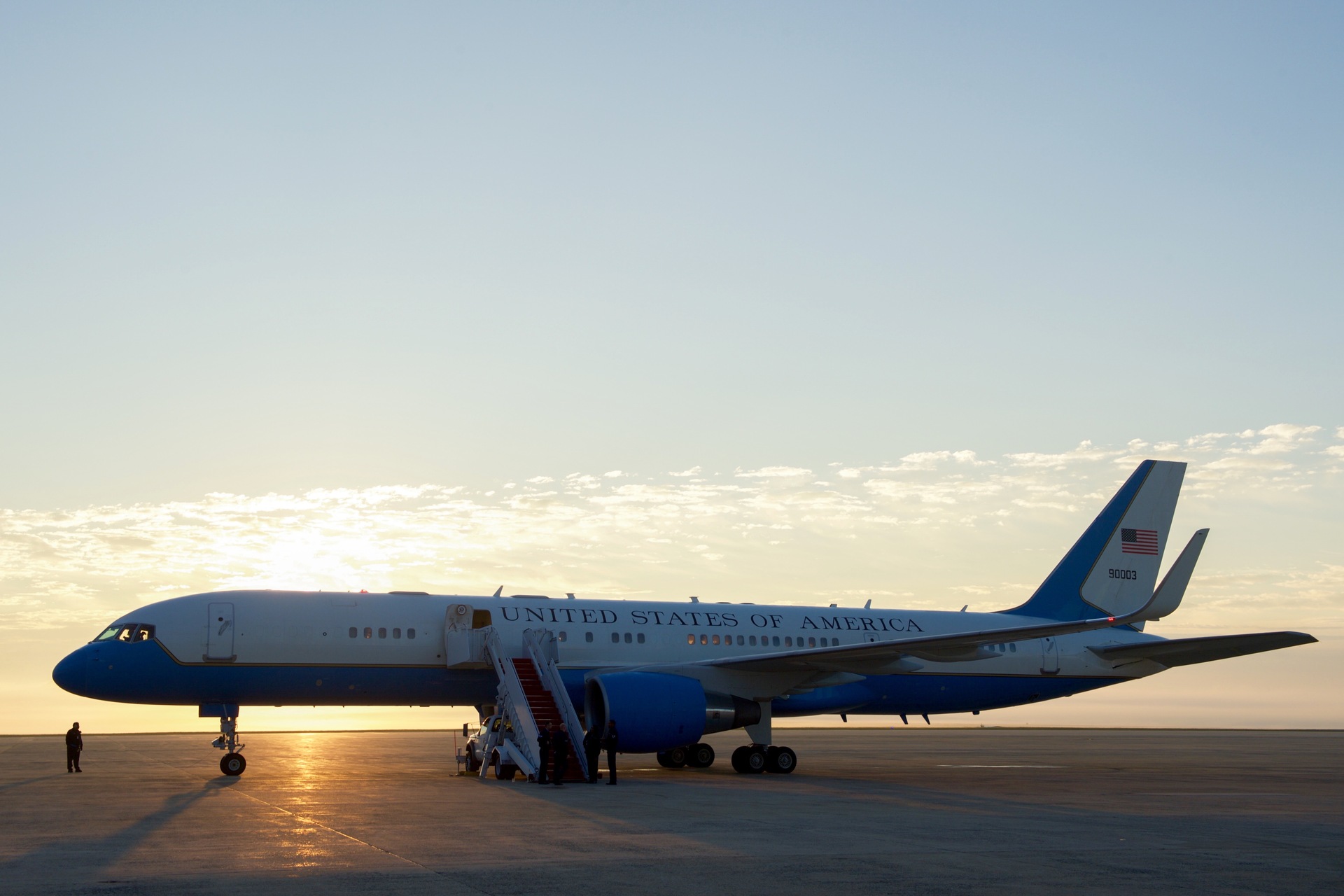
The optics in Islamabad on April 20 had no modern precedent. A sitting US Vice President — flanked by Steve Witkoff and Jared Kushner — landed for a Round 2 negotiation with no Iranian principal scheduled to meet him. Round 1, on April 11–12, had already been described as the most direct US-Iran contact since the Obama-Rouhani phone call in 2013, a “major taboo-breaking moment” in PBS NewsHour’s framing. Returning the same delegation a week later with no confirmed counterpart, while the ceasefire clock runs out, is something for which there is no template in modern American diplomacy.
Iran’s response was issued by IRNA, the official state news agency, on April 19 and confirmed by Xinhua on April 20. No political principal was named in the text. The agency cited “US excessive demands and unreasonable, unrealistic requests, repeated changes in positions, continued contradictory statements… the continuation of the so-called naval blockade, which is considered a violation of the ceasefire understanding, along with threatening rhetoric.” The conclusion was clinical: “Under these conditions, no clear prospect for productive talks is envisaged.”
Foreign Ministry spokesman Esmaeil Baghaei, briefing reporters in Tehran, supplied three preconditions: lifting of the naval blockade imposed April 13, restitution for the Touska seizure on April 19, and an end to bombing threats. “The US is not learning its lessons from experience,” he told Al Jazeera. The blockade, in his characterisation, was “not only a violation of Pakistani-mediated ceasefire but also both unlawful and criminal.” What both statements lacked was a serving political principal — a president, a foreign minister, a Supreme National Security Council secretary — willing to put a name and a signature on a refusal of an American Vice President.
How is the authorization ceiling now documented fact
The authorization ceiling is the framework, set out under Article 110 of Iran’s constitution, that gives the President zero command authority over the IRGC, places ratification of any major security or treaty decision in the hands of the Supreme Leader, and routes operational consent through the Supreme National Security Council. In normal circumstances the ceiling is invisible; in crisis it becomes the operating constraint on every Iranian political move.
The Middle East briefing 3,000+ readers start their day with.
One email. Every weekday morning. Free.
The Institute for the Study of War, cited by PJ Media on April 19, concluded that the Araghchi-Ghalibaf delegation in Round 1 “did not have full authority to finalize a deal” and lacked “formal executive authority to shape decision-making.” ISW is not a sympathetic reader of Tehran politics. After 48 hours in mid-April the inference has collapsed into description: what ISW observed analytically is now recorded in operational evidence across three separate registers.
The three observable proofs sit in three separate evidentiary registers. The first is a maritime distress recording, captured from a bridge under fire. The second is the byline analysis of a state news agency dispatch — what is missing from it. The third is a transcript comparison between a presidential Truth Social post and a White House press briefing held the same news cycle. They are independent. They reinforce each other. None of them require interpretation.
The Sanmar Herald distress call and what it proves
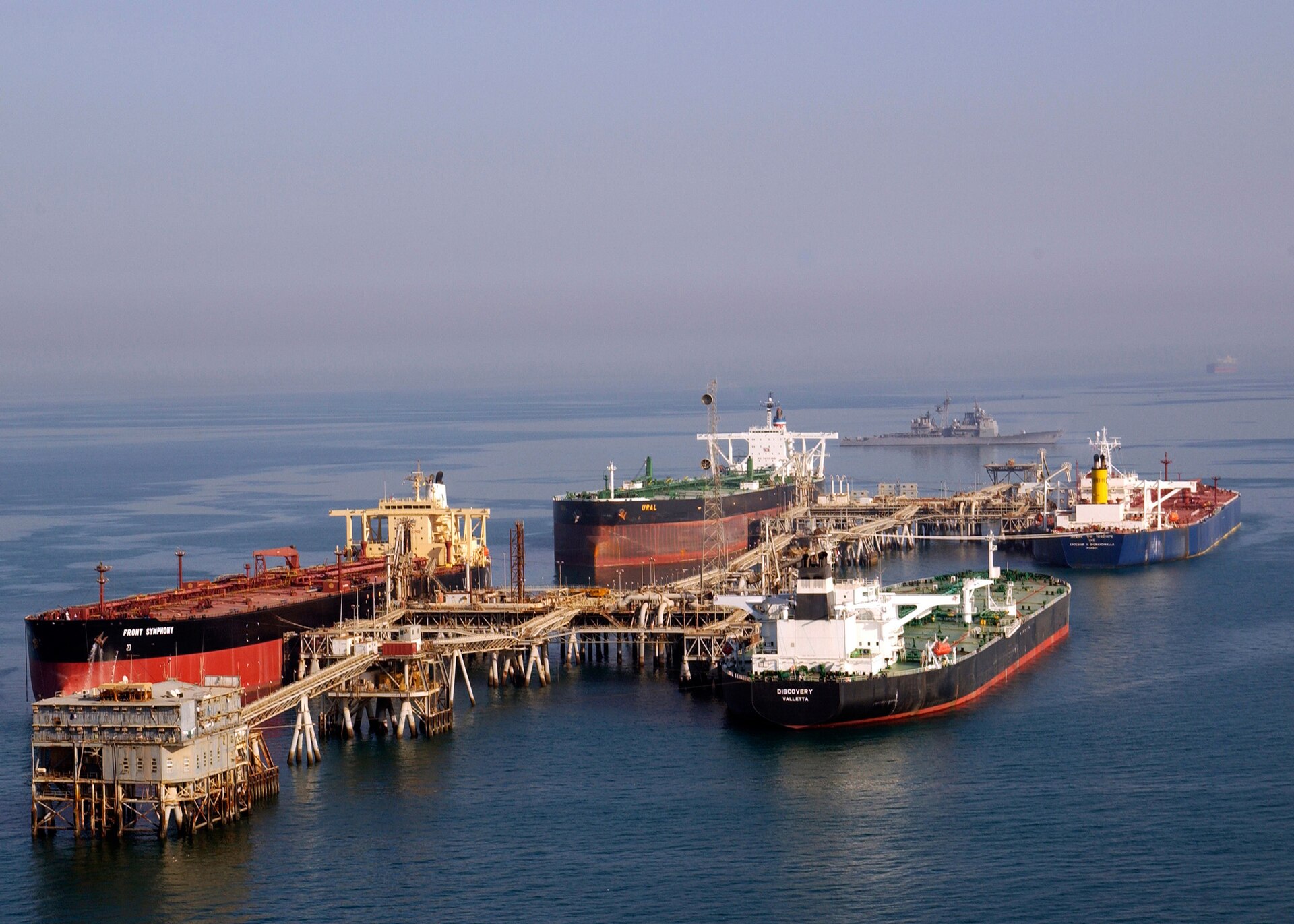
The Sanmar Herald, carrying two million barrels of Iraqi crude through the Strait of Hormuz on April 18, possessed Iranian government clearance. According to NBC News and IBTimes India reporting, the Indian-flagged tanker had been administratively cleared to transit. IRGC gunboats fired on it anyway. The distress audio, played back by Iran International, captured a single line that summarises the entire fortnight: “You gave me clearance, now you’re firing.” The bridge officer was speaking to two Iranian states at once, because there are two Iranian states.
The Jag Arnav, also Indian-flagged, took fire on the same day. India’s Ministry of External Affairs summoned Iran’s ambassador. On the same April 18, the Indian tanker Desh Garima transited the Strait without incident, as reported by the Tribune of India. Three vessels, three different IRGC outcomes, one nominal clearance regime. The IRGC Navy’s “full authority” declaration from earlier in April is no longer rhetoric. It is operational practice, applied unevenly, by an organisation that does not synchronise with the foreign ministry that issues its clearances.
For the bridge crews of the world’s tanker fleet this is the operational reality: an Iranian clearance certificate is a piece of paper that may or may not survive contact with an IRGC gunboat commander on a given watch. For the United States, it is a much sharper signal. Tehran’s civilian organs cannot guarantee the safety of vessels they have themselves cleared. They will not be able to guarantee a Hormuz arrangement they negotiate.
| Vessel | Date | Clearance status | IRGC action | Outcome |
|---|---|---|---|---|
| Sanmar Herald | April 18 | Cleared | Fired upon | Distress call recorded |
| Jag Arnav | April 18 | Cleared | Fired upon | India summoned Iran ambassador |
| Desh Garima | April 18 | Cleared | None | Transited normally |
| Touska | April 19 | Iranian-flagged | USS Spruance fired into engine room after 6-hour warning | Boarded, seized |
| CMA CGM (unnamed) | April 20 | French commercial | Warning shots | Trump deferred response to Macron |
Why did Araghchi not personally reject Round 2
Foreign Minister Abbas Araghchi, the man who described Round 1 as “just inches away from ‘Islamabad MoU’” in his post-Round 1 remarks reported by WION and Ground News, did not deliver the Round 2 rejection. He was, on April 20, in a parallel diplomatic track with Pakistani Prime Minister Shehbaz Sharif’s 45-minute call to President Pezeshkian, a call the Express Tribune reported as “pushing for continued dialogue.” Araghchi’s own most recent published characterisation of the impasse blamed “maximalism, shifting goalposts, and blockade” on the American side — the language of a man complaining about a counterpart, not the language of a man refusing one.
The rejection came through institutional organs precisely because no political principal could deliver it. IRNA published it without a byline. Baghaei, the spokesman, supplied conditions but no closure. The First Vice President, Aref, called the US approach “childish” in remarks to BusinessToday India and called Trump’s Truth Social posts “nonsense” in PressTV. Aref is not in the foreign affairs chain. He is not a security principal. His function in the dispatch was to provide tone, not authority.
The question for any close reader of Tehran’s politics is straightforward. If Iran were rejecting a Vice President of the United States as a sovereign decision — a confident state saying no — the rejection would be delivered by Khamenei’s office, by the SNSC secretary, or at minimum by Araghchi as the senior diplomat in the chain. Khamenei has not appeared in first-person audio or video since February 28, an absence of 51 days documented by Kyiv Post and Baltimore Chronicle reporting. The SNSC secretariat operates under a triumvirate — Vahidi, Zolghadr, Reza’i — that Pezeshkian himself publicly accused of wrecking Round 1, and could do nothing about. Araghchi was on a phone line begging Islamabad to keep the channel open.
But when just inches away from ‘Islamabad MoU’, we encountered maximalism, shifting goalposts, and blockade.
Abbas Araghchi, Iranian Foreign Minister, post-Round 1, WION/Ground News, April 12-13
The grammar of the rejection does the work. IRNA wrote in the passive voice of the institution. Baghaei spoke from a podium. Aref spoke from outside the chain. Araghchi did not speak at all on the question of refusing Round 2. The Iranian state, in its highest-tempo crisis in a generation, could not produce a single named political principal to refuse a sitting American Vice President. That is not a negotiating posture. That is an authorization vacuum.
What does the Vance confusion reveal about US improvisation
On April 19, in the same news cycle, two separate American statements about the Vice President’s travel to Islamabad reached the international wire. President Trump told reporters Vance would not be going, citing security concerns. White House Press Secretary Karoline Leavitt confirmed that he would, joining Witkoff and Kushner. The Times of Israel and Townhall both flagged the contradiction. BusinessToday India led with Leavitt’s confirmation.
Two readings are available. The first is the cynical Washington reading: Trump and his press shop are not coordinating, the Vice President’s travel was a last-minute decision, the principals are improvising in real time. The second is the structural reading: the United States has been forced to improvise because there is no Iranian system on the other end capable of giving a coherent answer to confirm or deny the meeting. When the counterpart cannot tell you whether negotiations are on, the question of whether to send the VP becomes a coin flip until the wheels are up.
Both readings can be true. They are not in tension. The American side is improvising because the Iranian side cannot transmit a single signal. Vance himself, after Round 1, told the Council on Foreign Relations that the US side “made very clear what our red lines are… and they have not chosen to accept our terms.” His phrasing — “they have not chosen” — assumes a counterpart capable of choosing. Round 2 is the empirical disproof.
The Touska seizure and the six-hour standoff
The Touska, an Iranian-flagged vessel, became the first ship physically seized by force since the US naval blockade began on April 13. CNN, CNBC, and the Jerusalem Post reported the operational sequence on April 19. The USS Spruance issued warnings for six hours. When the Touska did not comply, the Spruance fired into the engine room to disable propulsion. Marines boarded and the vessel was taken into US custody. Prior to Touska, 25 commercial vessels had been directed to turn around since the blockade began, all of them complying.
Iran’s joint military command issued the language of war: “the armed forces of the Islamic Republic of Iran will soon respond and retaliate against this armed piracy.” The statement, reported by Al Jazeera, did not name an authorising principal either — a pattern. President Trump, posting on Truth Social on April 19, declared: “Iran decided to fire bullets yesterday in the Strait of Hormuz — A Total Violation of our Ceasefire Agreement!” He followed with a second post: “We’re offering a very fair and reasonable DEAL, and I hope they take it because, if they don’t, the United States is going to knock out every single Power Plant, and every single Bridge, in Iran.”
The US is not learning its lessons from experience. The naval blockade is not only a violation of Pakistani-mediated ceasefire but also both unlawful and criminal.
Esmaeil Baghaei, Iranian Foreign Ministry spokesman, Al Jazeera, April 20
The Trump “Power Plant Day and Bridge Day” threat, first issued earlier in the month, has now been re-attached to a specific operational trigger. The blockade that Iran’s spokesman characterises as a ceasefire violation was itself a US response to the IRGC’s mid-April reversal of Araghchi’s “completely open” declaration on Hormuz. Both sides can credibly accuse the other of being the first violator. Both are correct on the facts of their narrower window.
| Date | Event | Side | Operational meaning |
|---|---|---|---|
| April 11-12 | Round 1 Islamabad, 21 hours | Bilateral | No agreement, no joint statement |
| April 13 | US naval blockade begins | US | 25 vessels turned around without force |
| April 17 | Macron-Starmer 51-country Hormuz summit | European-led | “Strictly defensive” mission announced |
| April 18 | IRGC fires on cleared vessels | Iran | Authorization ceiling visible |
| April 19 | USS Spruance seizes Touska | US | First force-based seizure |
| April 19-20 | IRNA publishes Round 2 rejection | Iran | No named principal |
| April 20 | Vance lands in Islamabad | US | No counterpart booked |
| April 22 | Ceasefire formal expiry | Bilateral | Symbolic only; both sides already in violation |
What does April 22 actually remove
The ceasefire that expires on April 22 has been violated by both parties for at least nine days. The US blockade began on April 13. The IRGC’s effective re-closure of Hormuz, in operational practice, became visible from the Sanmar Herald incident onward. April 22 removes a symbolic constraint that neither side has been observing. It does not remove a binding instrument; the Islamabad MoU was never signed.
The Pakistani proposal for a 45-day extension, floated through mid-April and reported by Iran International on April 14 and CGTN on April 16, was rejected by both Tehran and Washington. There is no formal extension clause in any document. Pakistan has rebranded its diplomatic channel as the “Islamabad process,” but the process has no instrument, no agreement to extend, and after April 20 no counterpart willing to be in the room. Islamabad’s structural role as the only enforcement mechanism for the ceasefire was always thin; on April 22 it becomes formally vacant.
Council on Foreign Relations analysts and most European observers expect a “volatile period of pressure, signaling, and last-minute attempts” rather than immediate full-scale war, on the reasoning that Iran prefers to avoid resuming large-scale fighting while regrouping. That reasoning depends on Iran having a unified strategic mind. The empirical evidence of the IRGC’s Hormuz behaviour in the second half of April suggests it does not. The risk of unauthorised escalation — a gunboat commander making a tactical decision that becomes a strategic event — rises sharply once the symbolic ceasefire date passes.
The 51-flag Hormuz mission as the only forward motion
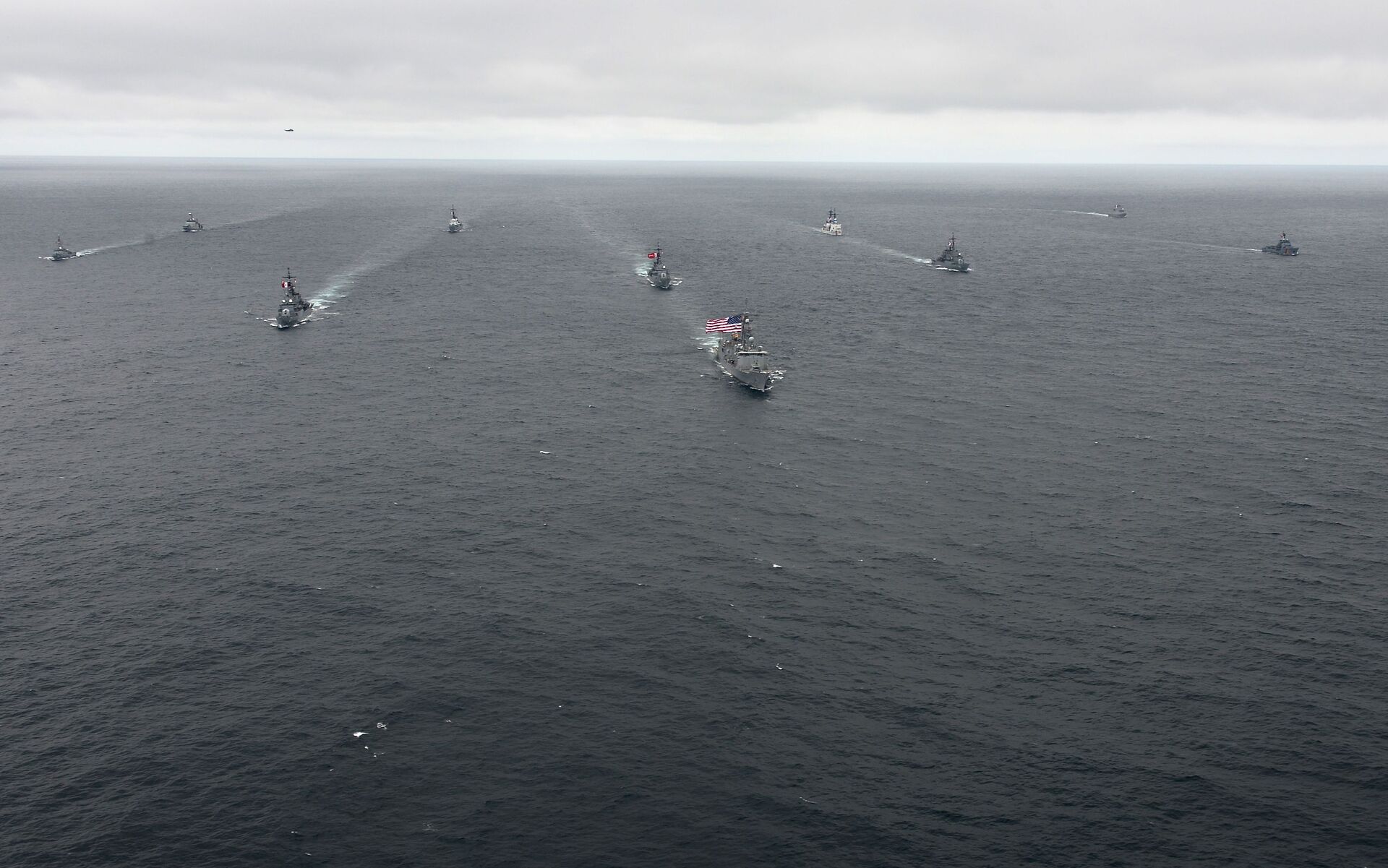
The only diplomatic process showing forward motion in the second half of April is the one Tehran and Washington are not running. On April 17, French President Emmanuel Macron and British Prime Minister Keir Starmer co-chaired a Hormuz summit attended by 51 countries. The joint statement, published on GOV.UK and reported by France 24, announced a “strictly defensive multinational mission” pending a “sustainable ceasefire agreement.” The conditional clause is the most important phrase in the document: the mission is calibrated to a ceasefire that has now collapsed.
The 51-flag posture sits alongside the regional architecture — the Saudi-led Gulf coordination, the Egyptian and Turkish mediation tracks, the Pakistani channel that brought Round 1 into being — that has been doing the actual diplomatic work while Washington and Tehran trade ultimatums. Turkish FM Fidan and Pakistan’s Munir are already operating past the April 22 deadline, with Ankara and Islamabad running a joint back-channel aimed at ceasefire extension regardless of what either principal announces publicly. CMA CGM, a French shipping line, took warning shots in Hormuz on April 20. President Trump told reporters it was “up to Macron” whether to involve the French navy, a comment reported by The Week India. The off-loading of the response to Paris is, in its way, a recognition that the multinational mission now matters more than the bilateral collapse.
For Riyadh the multinational mission is a hedge with strategic depth. The Kingdom has been the principal target of Iranian retaliatory architecture — documented in the King Fahd Causeway closure, the SAMREF Yanbu strikes, the East-West pipeline pumping station strike of April 8 — and a 51-country naval presence is the only thing standing between the bilateral collapse and a unilateral US-Iran shooting war that would inevitably draw in Saudi territory.
What Saudi Arabia and the Gulf should expect
The five-day window between April 18 (the Hajj cordon seal) and April 22 (the formal ceasefire expiry) was always going to be the most coercive moment in the cycle, with the Hajj arrival raising the kinetic threshold for any Saudi-territory escalation. The Hajj 2026 convergence remains the single largest operational constraint on what either Iran or the United States can do without triggering a civilisational rupture across the Muslim world. Indonesia’s first pilgrim flights depart on April 22 itself.
For Riyadh, the practical posture should anticipate three pressures. Saudi Aramco’s March production of 7.25 million bpd, against an OPEC+ April quota of 10.2 million, is structurally unsustainable beyond the second quarter; the East-West pipeline bypass covers 4–5.9 million bpd at Yanbu against a 7 million pre-war Hormuz dependence. Any Iranian retaliation for a Touska-style action will look for Saudi targets that compress that gap further. The PIF’s 14% pre-war PAC-3 inventory remaining will not be replenished in the negotiating window.
The diplomatic posture is harder to read. Saudi Foreign Minister Faisal bin Farhan was on the phone with Araghchi on April 13, the day the blockade began, in what amounts to behavioural evidence of a parallel Saudi-Iranian back-channel. The 51-country Hormuz mission gives Riyadh a multilateral umbrella under which to keep that back-channel running without exposure to Trump’s news cycle. The Trump Hormuz “joint venture” proposal from earlier in April never received Saudi endorsement, and after April 22 it is unlikely to acquire any.
The strategic question that the Round 2 collapse forces is not whether Iran will agree to a deal. It is whether anyone in Tehran has authority to agree to one. Khamenei’s 51-day absence is not a temporary inconvenience. It is the single load-bearing element of the entire Iranian negotiating architecture, and it has been load-bearing since February 28. Until it is resolved — whether by a public reappearance, a documented succession, or a formal deputisation that the IRGC will accept — Vance can fly to Islamabad as many times as the schedule permits, and there will be no one in the room to receive him.
The ceasefire’s dual-trigger authorization structure — why Iran’s April 20 drone strikes and the April 22 calendar date now function as parallel authorization pathways for the next US campaign — is analyzed in The Ceasefire Already Ended — Trump’s Deadline Is for Everyone Else.
Frequently asked questions
Why did Iran issue the Round 2 rejection through IRNA rather than a named official?
Every major Iranian foreign policy rejection during the JCPOA era carried a named principal: Foreign Minister Zarif rejected the “maximum pressure” campaign by name in 2018; SNSC Secretary Ali Shamkhani personally rejected the Trump administration’s 2020 back-channel approach. The precedent is consistent — Iran named a responsible official when it had one. The April 19-20 IRNA dispatch named no one, which is the departure from protocol, not the use of IRNA as a vehicle. With Khamenei in a 51-day unexplained absence, the SNSC secretariat controlled by principals Pezeshkian publicly accused of wrecking Round 1, and Araghchi himself still advocating continued dialogue, there was no principal in the chain willing and authorised to sign a refusal.
What is the legal status of the Touska seizure under maritime law?
The USS Spruance operated within the framework of the US naval blockade announced on April 13. The blockade is itself contested under international law, but the seizure procedure — six hours of warnings, escalation only after non-compliance, disabling fire targeted at the engine room rather than the hull or crew quarters — tracks the standard NATO interdiction protocol used in Operation Active Endeavour. Iran’s “armed piracy” characterisation is rhetorical rather than legally operative.
How many vessels are currently stranded as a result of the blockade and IRGC firings?
Kpler and Lloyd’s List tracking through mid-April placed more than 800 tankers idling across the Indian Ocean, the Arabian Sea, and the Persian Gulf, with fewer than 10 vessels per day successfully transiting Hormuz. The figure represents the cumulative effect of the US blockade since April 13 and the IRGC’s inconsistent enforcement of its own clearance regime, with Lloyd’s of London underwriters pricing Hormuz transit at war-risk premia not seen since the 1988 tanker war.
Could a third party formally extend the ceasefire after April 22?
Pakistan’s 45-day extension proposal, the only formal third-party initiative, was rejected by both Washington and Tehran by April 16. The original Islamabad MoU was never signed, and there is no document with a clause to extend. China and Russia floated joint extension language at the UN Security Council but neither delegation introduced a draft resolution. The Macron-Starmer 51-country mission of April 17 explicitly conditions itself on a “sustainable ceasefire agreement” that does not exist.
What is the realistic kinetic risk between April 22 and the Hajj Day of Arafah on May 26?
The Hajj arrival window from April 18 raises the political cost of any Saudi-territory escalation, which structurally favours displacement of Iranian retaliation toward Iraqi infrastructure, the East-West pipeline corridor, and offshore Hormuz incidents that do not directly target the holy cities. The five-week window to the Day of Arafah is the highest-risk negotiating window in the post-2003 history of the Gulf, with the additional complication that an unauthorised IRGC tactical decision — the Sanmar Herald pattern, scaled up — could become a strategic event without any principal having ordered it.