
WASHINGTON — The ceasefire between the United States and Iran ended on April 20, when Iranian drones struck at American naval vessels in the Gulf of Oman. Everything that follows — the April 22 expiry date, the diplomatic language about extensions, the Pentagon’s careful phrasing — is administrative cleanup of a conflict that has already resumed. President Trump’s public declaration that he would “start dropping bombs again” after the ceasefire lapses is not a warning about the future. It is a retroactive authorization framework being constructed in plain sight, designed to let Iran’s drone strike serve as the trigger rather than a date on a calendar.
The distinction matters because it determines who bears legal and diplomatic responsibility for what comes next. By maintaining the fiction that April 22 remains the operative deadline — “Wednesday evening Washington time,” as Trump told Bloomberg on April 20 — Washington preserves 48 hours of optionality. Iran’s kinetic act on April 20 and the calendar expiry on April 22 now function as parallel authorization pathways. The administration can invoke either one, depending on which audience it needs to persuade.
Table of Contents
- The Touska Seizure and the Sequence That Followed
- Why Did the Ceasefire Effectively End Before April 22?
- The Dual-Trigger Architecture
- Who Benefits from Maintaining the April 22 Fiction?
- Khatam al-Anbiya and the Authorization That Actually Matters
- What Does “Dropping Bombs Again” Actually Mean Operationally?
- Saudi Arabia’s Impossible Request
- The Hajj Convergence
- Does Either Side Have Coercive Power Left?
- Frequently Asked Questions
The Touska Seizure and the Sequence That Followed
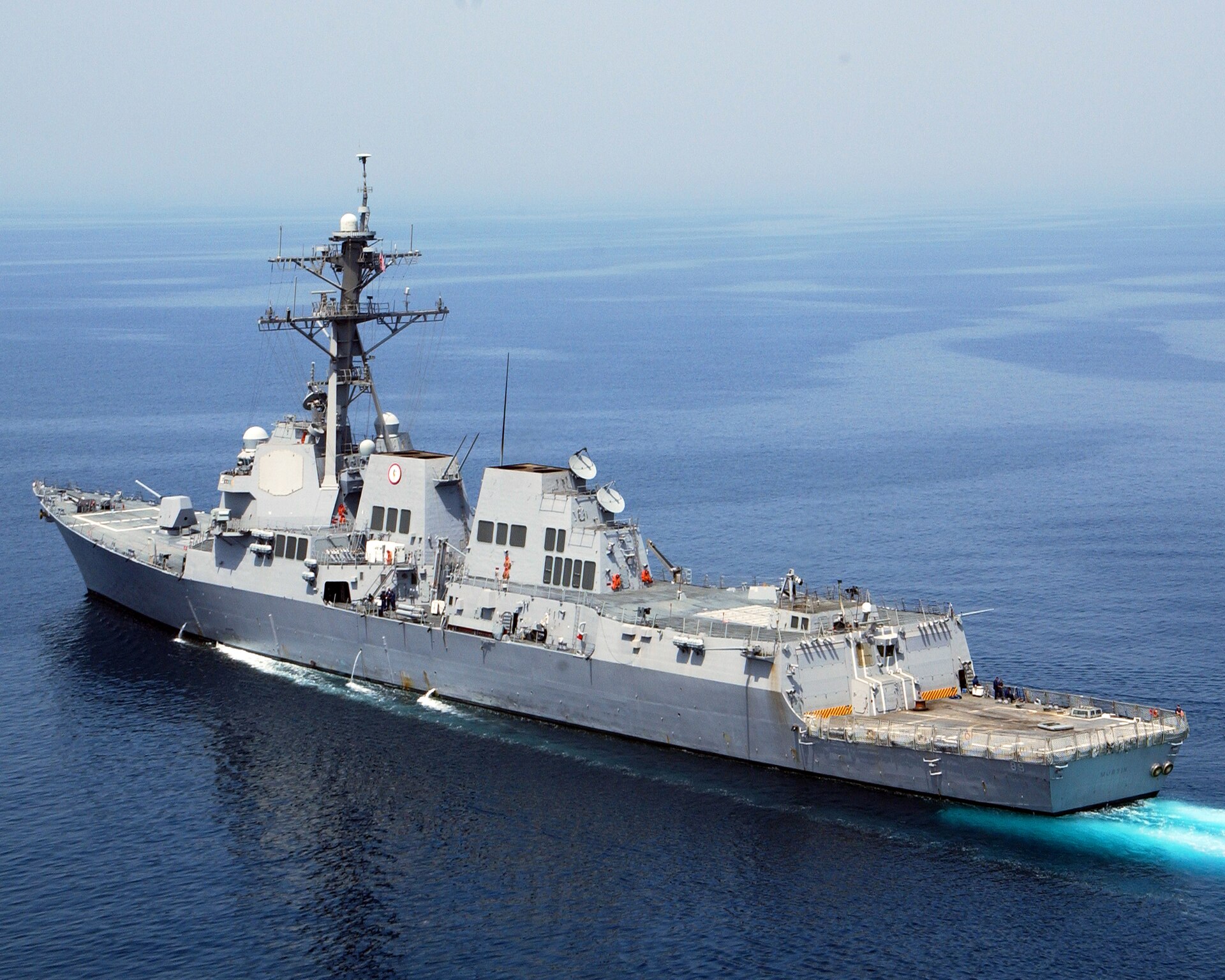
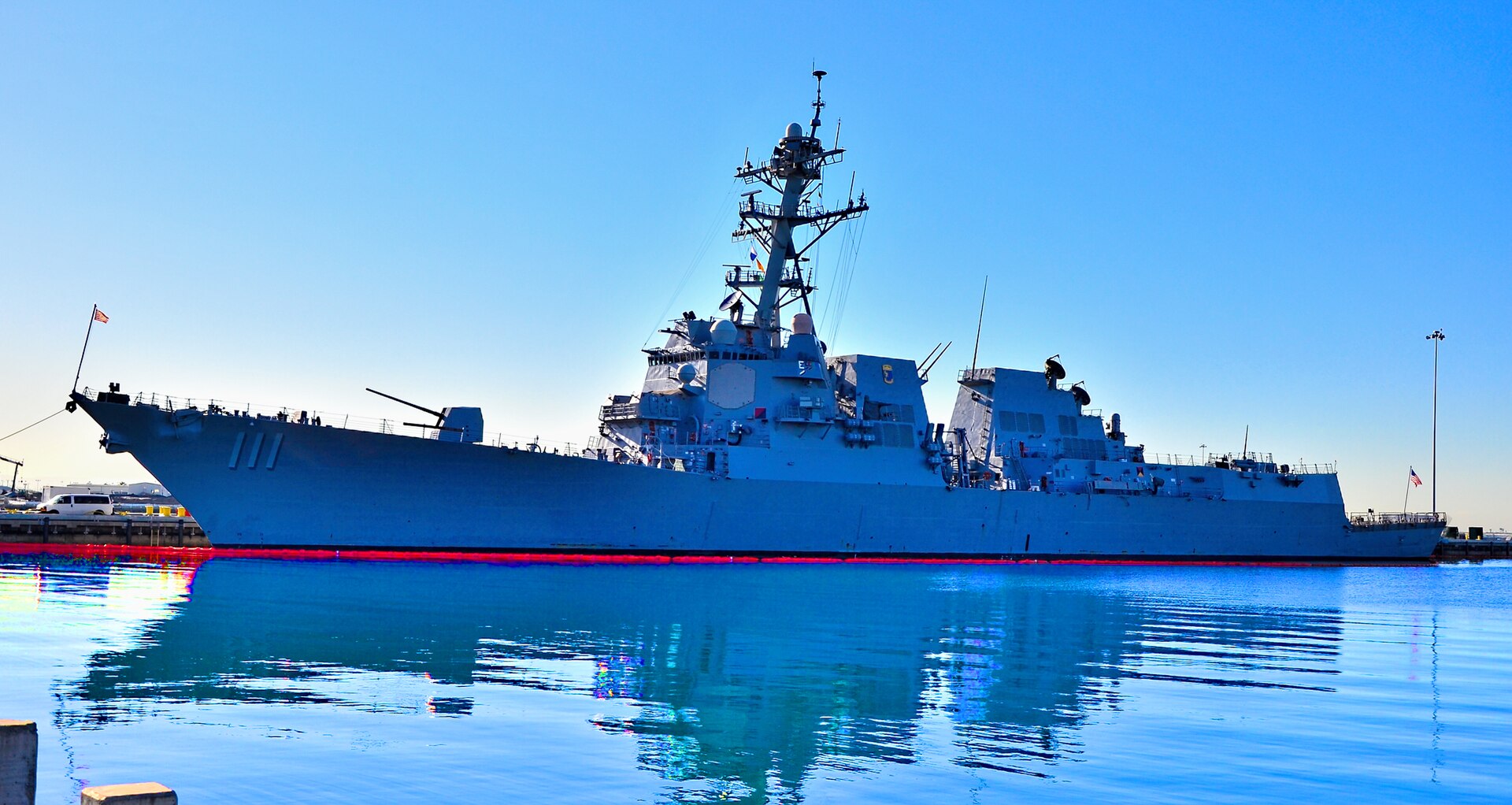
On April 19, the USS Spruance (DDG-111) intercepted the M/V Touska in the north Arabian Sea, traveling at 17 knots toward Bandar Abbas. The Touska had departed Gaolan port in Zhuhai, China — a known sodium perchlorate loading facility — around March 29, transited Port Klang, Malaysia, on approximately April 12, and was three weeks into its voyage when the US Navy issued warnings. Sodium perchlorate is a precursor for solid rocket fuel. Five Chinese-flagged ships had previously delivered suspected loads of the same compound to Iran during the conflict.
After a six-hour warning window, Spruance fired several 5-inch MK 45 rounds into Touska’s engine room, disabling propulsion. Marines from the 31st Marine Expeditionary Unit rappelled from helicopters and took custody of the vessel. CENTCOM released full footage. Twenty-five vessels had been turned back under the naval blockade before Touska. None had been boarded. None had been fired upon. The escalation from turning ships around to putting rounds into an engine room is not incremental — it is categorical.
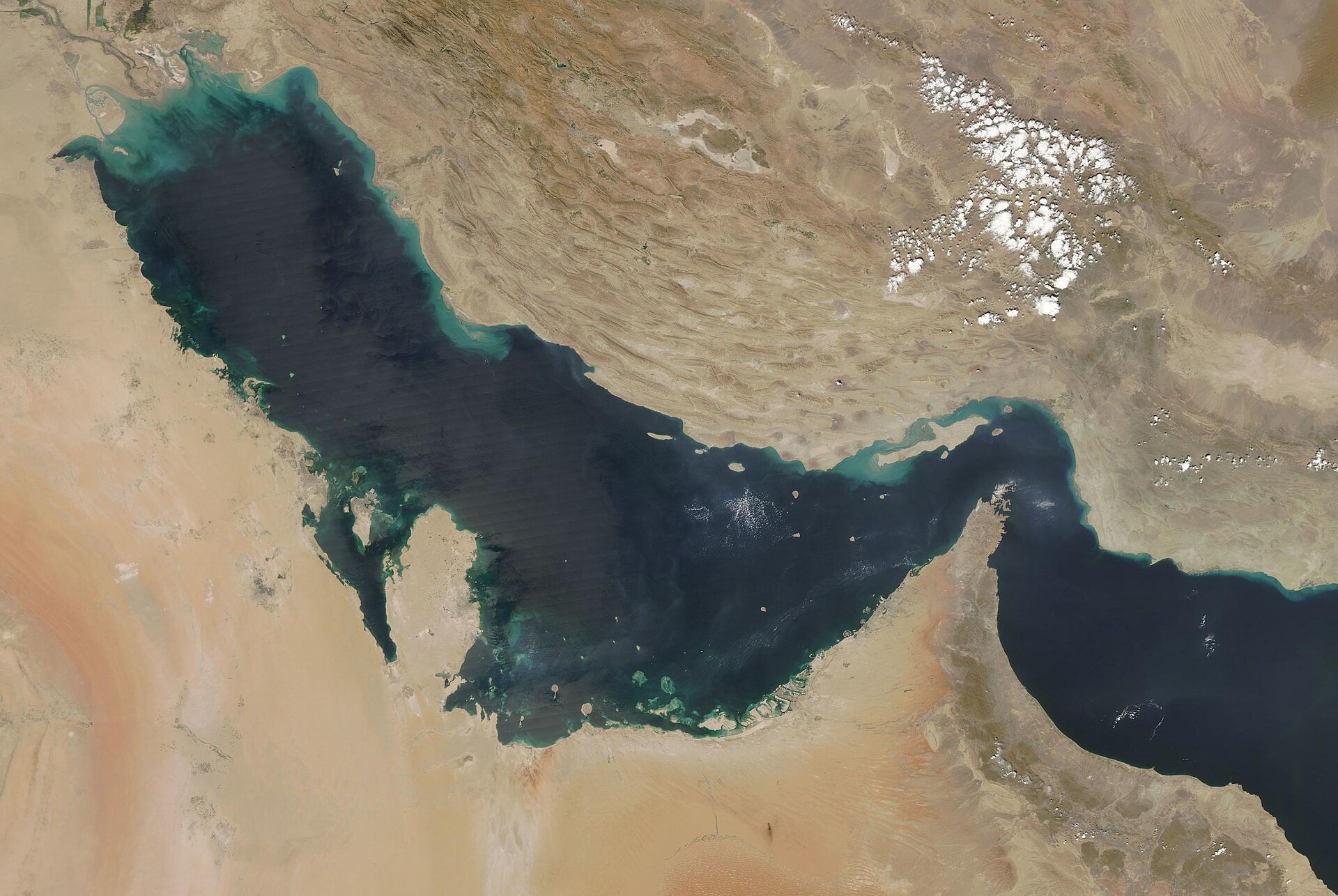
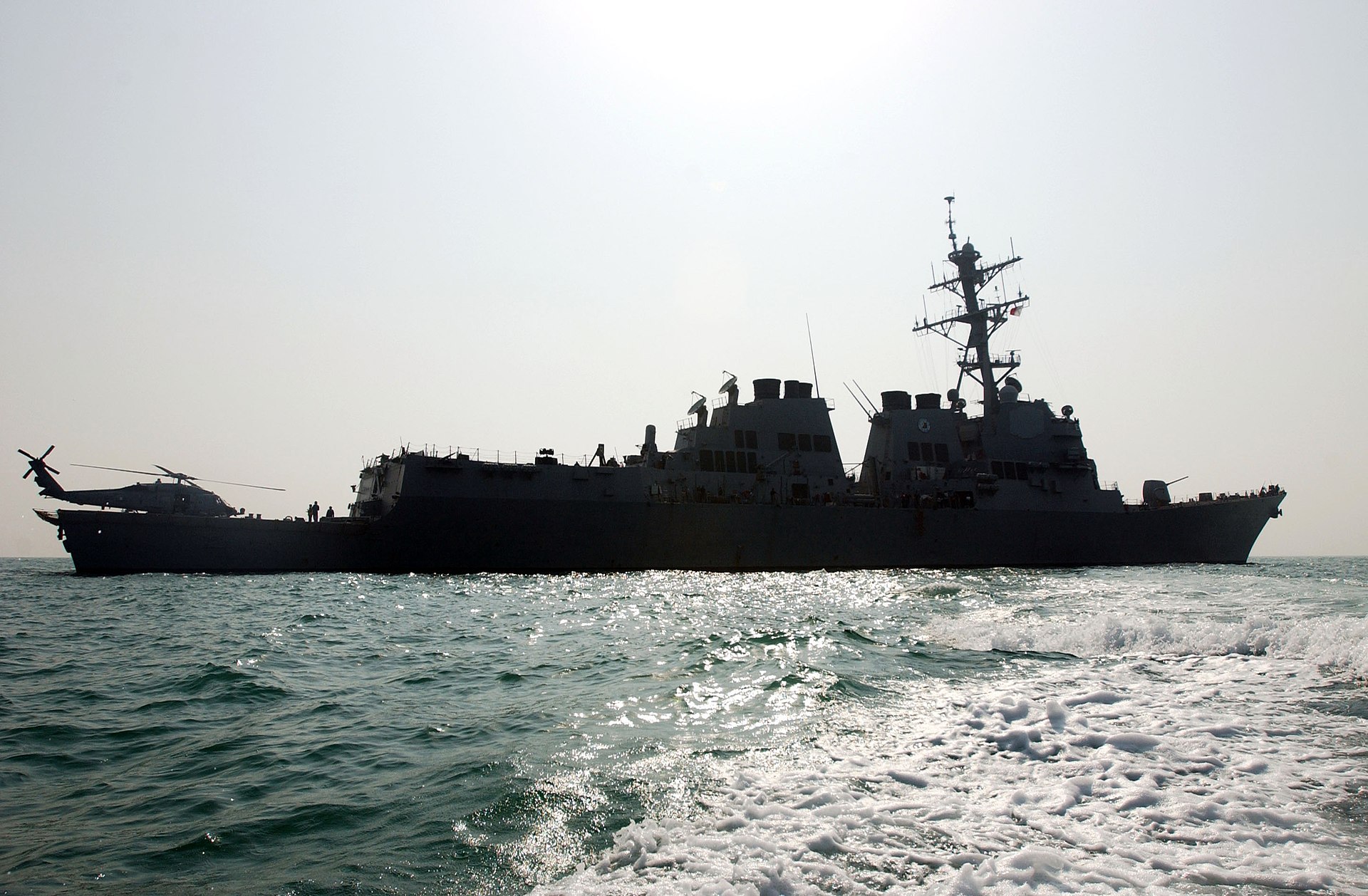
Iran’s response came within 24 hours. Khatam al-Anbiya Central Headquarters — the IRGC’s unified command under General Gholamali Abdollahi — issued a statement that Iran “will soon respond to and retaliate against this armed piracy and retaliation by the US army.” PressTV called the seizure “maritime piracy” and a “clear violation of the ceasefire.” Then, on April 20, Iranian drones struck at several US military vessels in the Gulf of Oman. Tasnim, the IRGC-aligned news agency, reported the strikes but provided no details about scale or damage — intentionally vague, preserving escalation ambiguity while confirming the act.
No CENTCOM acknowledgment of damage followed. The silence is itself a data point. Washington has no interest in confirming Iranian strikes hit anything, because confirmation would increase domestic pressure for immediate retaliation. The 48-hour gap to April 22 is worth more than a damage report.
The Middle East briefing 3,000+ readers start their day with.
One email. Every weekday morning. Free.
Why Did the Ceasefire Effectively End Before April 22?
The ceasefire that began on April 8 was always a framework without enforcement architecture. It contained no extension mechanism, no verification protocol, and no agreed definition of what constituted a violation. The absence of rollover provisions was not an oversight — it reflected the fact that neither side trusted the other enough to build in automatic continuation.
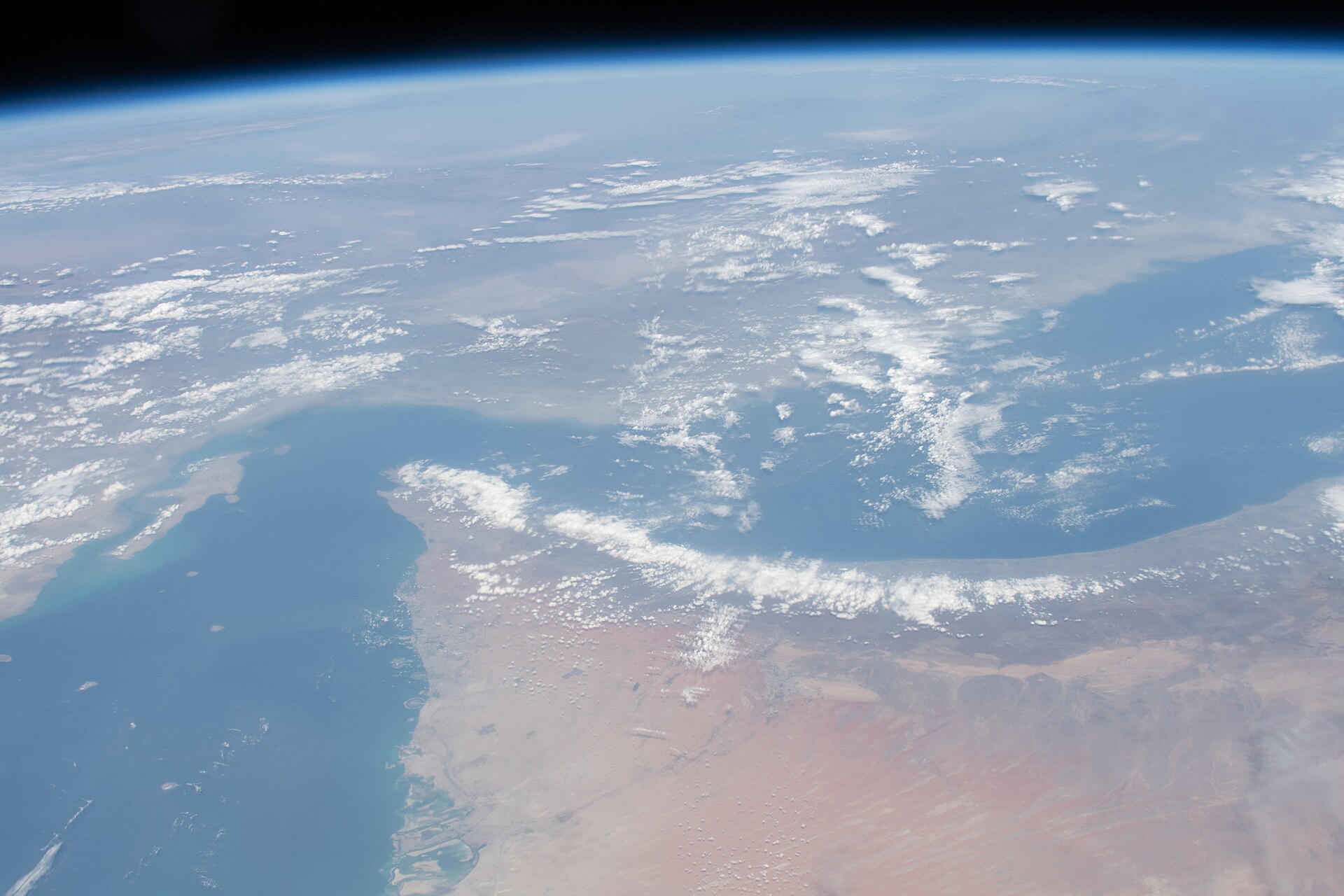
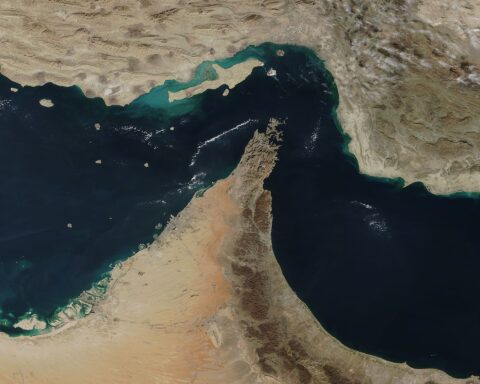
The sequence that killed it ran as follows. On April 13, the US imposed a naval blockade — Operation Epic Fury — targeting Iranian ports and toll-collecting vessels. Iran argued the blockade itself was a ceasefire breach, since the agreement’s implicit terms assumed a return to pre-war maritime conditions. On April 18, the IRGC formally re-closed the Strait of Hormuz, declaring: “In violation of the ceasefire agreement, the American enemy did not lift the naval blockade on Iranian vessels and ports. Therefore, starting this evening, the Strait of Hormuz will be closed until this blockade is lifted. Approaching the Strait of Hormuz will be considered cooperation with the enemy, and any offending vessel will be targeted.” On April 19, the Touska was seized. On April 20, Iranian drones flew at US warships.
Each side frames the other’s act as the breach. Washington points to the IRGC’s Hormuz closure and the drone strikes. Tehran points to the blockade and the Touska boarding. The factual sequence is less ambiguous than the diplomatic language suggests: by April 20, both sides had committed kinetic acts against the other’s military or commercial assets. The ceasefire was a corpse before the calendar could confirm it.
The Dual-Trigger Architecture
Trump’s public statements between April 18 and April 20 constructed something specific — a parallel authorization structure with two independent triggers for resumed US military operations.
The first trigger is calendrical. Aboard Air Force One on approximately April 18, Trump told News Nation: “Maybe I won’t extend it. But the blockade is gonna remain. But maybe I won’t extend it. So you have a blockade, and unfortunately, we’ll have to start dropping bombs again.” This links resumed bombing to the ceasefire’s expiry date. It is prospective — contingent on a future moment.
The second trigger is behavioral. On April 20, reacting to the Iranian drone launches, Trump accused Iran of having “decided to fire bullets yesterday in the Strait of Hormuz — a total violation of our ceasefire!” and threatened to “knock out every single power plant and every single bridge in Iran.” He added: “No more Mr. Nice Guy!” This links resumed bombing to an Iranian act that has already occurred. It is retrospective — contingent on a past event.
The Bloomberg phone interview on April 20 merged both frameworks into a single statement. Trump called an extension “highly unlikely,” confirmed the deadline as “Wednesday evening Washington time,” and simultaneously characterized the drone strikes as a “serious violation.” He also said: “I’m not going to be rushed into making a bad deal. We’ve got all the time in the world.” The last sentence is the tell. A president with all the time in the world does not need a deadline — unless the deadline serves a purpose other than its stated one.
The dual-trigger structure gives the White House maximum flexibility. If the administration wants to act before April 22, it can cite the drone strikes as the authorization basis. If it wants to wait, the calendar provides the justification. If it wants to negotiate quietly for another 72 hours while projecting resolve, it can invoke one trigger rhetorically while declining to operationalize the other. Historical precedent for this kind of parallel authorization is thin in American war-making — the closest analogue is the Gulf of Tonkin resolution, which similarly relied on an ambiguous incident to authorize action that had already been decided upon.
Who Benefits from Maintaining the April 22 Fiction?
The answer is: almost everyone except Iran’s civilian government, which has already been cut out of the decision-making loop.
Washington benefits because the 48-hour gap between April 20 (when the ceasefire functionally ended) and April 22 (when it formally expires) provides a diplomatic buffer. The Pentagon can position assets. The State Department can make final back-channel contacts. The White House can poll allied governments. CNN’s April 20 polling showed Trump’s approval at 37 percent — a number that concentrates political minds. A president at 37 percent who initiates a new bombing campaign needs the narrative frame of responding to provocation, not choosing escalation. Maintaining the April 22 fiction ensures the Iranian drone strike, not a presidential decision, appears to be the proximate cause.
The IRGC benefits for a different reason. The Touska seizure collapsed the Islamabad framework, and Iran’s Foreign Ministry announced on April 20 that the government has “no plans regarding a new round of talks,” citing “excessive US demands, unrealistic expectations, constant shifts in stance, repeated contradictions, and the ongoing naval blockade.” Every hour that the ceasefire fiction holds is an hour in which the IRGC’s Hormuz closure and drone strikes can be framed as defensive — responses to US “piracy” rather than initiating acts. If the ceasefire is declared dead before April 22, Iran loses that framing.
Pakistan and the mediating states benefit because the fiction preserves their diplomatic relevance. If the ceasefire died on April 20, Islamabad’s role as an enforcement mechanism — already strained to breaking — becomes formally moot. If it dies on April 22, the mediators can at least claim the framework held to its stated term.
Saudi Arabia’s position is the most complex. The Wall Street Journal reported on April 20 that Riyadh formally asked Washington to lift the Hormuz blockade, warning of possible Houthi Red Sea retaliation and energy escalation. The Kingdom needs the ceasefire fiction to survive long enough for diplomatic alternatives to develop. Every hour of maintained fiction is an hour in which Saudi production — already crashed from 10.4 million barrels per day in February to 7.25 million bpd in March, per the IEA — does not face a new threat matrix.
Khatam al-Anbiya and the Authorization That Actually Matters
The drone strikes on April 20 were not a rogue unit’s improvisation. The retaliation authorization came from Khatam al-Anbiya Central Headquarters — Abdollahi’s command, the same headquarters that Pakistan’s General Munir visited on April 16 as part of the ceasefire enforcement architecture. The Institute for the Study of War reported that “the IRGC appears to be controlling Iranian decision-making instead of Iranian political officials,” and that “the IRGC’s decision to interfere with international shipping and act in contradiction to Araghchi’s statement reflects broader divisions within the Iranian regime.”
The sequence — named warning from Khatam al-Anbiya, followed by execution — is sequential and deliberate, not accidental. This is the authorization ceiling problem that has defined the entire war’s diplomatic track. President Pezeshkian publicly accused SNSC Secretary Vahidi and Abdollahi on April 4 of wrecking the ceasefire from inside the Iranian delegation. Under Article 110 of the Iranian constitution, the president has zero authority over the IRGC. Khamenei has been absent for over 50 days. Mojtaba Khamenei has communicated only via audio.
Parliament Speaker Ghalibaf, who negotiated face-to-face with Vice President Vance in Islamabad, told CNN Politics on April 20 that “progress has been made” diplomatically but “significant gaps remain” on the strait and nuclear issues. Ghalibaf is a former IRGC Aerospace Force commander (1997-2000). His use of the word “progress” while Khatam al-Anbiya issues retaliation orders and drones fly at American destroyers captures the Iranian system’s dysfunction in a single sentence.
Steven A. Cook, Senior Fellow at the Council on Foreign Relations, framed the structural problem: “There has been no regime change in Iran, the current leadership is not any less radical than their predecessors, the Iranians still have the ability to menace their neighbors, and Iran has leverage over the Strait of Hormuz when it did not before the war began. I don’t see how negotiations will change this reality.” The observation is precise. The pre-ceasefire US strikes hit Natanz with GBU-57 A/B bunker busters on March 21, struck Fordow and Isfahan’s underground nuclear facilities, and destroyed IRGC bases and the National Security Council compound on Pasteur Street in Tehran. The Defense Intelligence Agency’s preliminary assessment: those strikes set back Iran’s nuclear weapons production “by only a matter of months.” The strategic rationale for “bombing again” is therefore weaker than pre-ceasefire rhetoric implied — a fact the administration has not publicly addressed.
What Does “Dropping Bombs Again” Actually Mean Operationally?
Trump’s April 20 threat to “knock out every single power plant and every single bridge in Iran” represents an escalation beyond the pre-ceasefire target set. The March strikes focused on nuclear infrastructure and IRGC military installations. Power plants and bridges are civilian infrastructure. The shift from military to dual-use targeting is not rhetorical — it reflects the DIA assessment’s implicit conclusion that the military target set has been largely exhausted for strategic effect.
If the pre-ceasefire campaign set Iran back “only a matter of months” on nuclear production, and the same target categories are struck again, the strategic return diminishes further. Hitting power plants and bridges would cause mass civilian disruption but would not address the nuclear timeline that ostensibly justifies the campaign. This is the gap between Trump’s language — “blasting Iran into oblivion,” as he said on April 1 — and the operational reality that American military planners face. The IRGC’s decision-making capacity is dispersed. Its nuclear program, per the DIA, is resistant to air-delivered setback. The targets that would generate dramatic footage are not the targets that would generate strategic outcomes.
The DIA’s assessment also frames the post-ceasefire choice in a way the administration has not answered publicly. If a full first-campaign targeting set — Natanz, Fordow, Isfahan, the NSC compound on Pasteur Street — produced only months of delay, then a second campaign operating against a degraded but reconstituted target set would likely produce less. US intelligence estimates reviewed in late 2025 assessed that Iran’s IR-6 centrifuge cascades, dispersed after Fordow was struck, could resume 60-percent enrichment production within 90 to 120 days of a ceasefire. A second campaign beginning April 22 would face a target set already adapted to the first.
UN Ambassador Mike Waltz said on April 20 that Iran “does not have the cards” and will eventually surrender nuclear ambitions “the easy way, rather than the hard way.” Energy Secretary Chris Wright expressed confidence that “chatter and noise” in Iran signals the regime is fracturing. Representative Ro Khanna offered the counter-assessment: the US has “lost leverage over the Strait of Hormuz” while “China has more influence in Iran.” The three statements, issued on the same day by officials operating within the same government and legislative system, do not describe the same war.
Saudi Arabia’s Impossible Request
The Wall Street Journal’s April 20 report that Saudi Arabia formally asked the US to lift the Hormuz blockade is the most consequential diplomatic signal of the weekend. Riyadh is the closest US partner in the Gulf, the host of American military assets critical to the campaign, and the country whose production collapse demonstrates the blockade’s cost to allies more clearly than any Iranian suffering demonstrates its cost to adversaries.
Saudi production fell to 7.25 million bpd in March from 10.4 million bpd in February, per IEA data — a loss of 3.15 million barrels per day in a single month, the largest monthly production drop since the 2019 Abqaiq-Khurais strikes. The East-West Pipeline bypass to Yanbu has a loading ceiling of 4 to 5.9 million bpd against the pipeline’s 7 million bpd nameplate capacity. Khurais, producing 300,000 bpd before the war, remains offline with no announced restoration timeline. The OPEC+ April quota stands at 10.2 million bpd — roughly 3 million barrels above Saudi Arabia’s actual output. Goldman Sachs estimated a 6.6 percent GDP war-adjusted deficit against the official 3.3 percent projection.
Riyadh’s request to lift the blockade puts Washington in a position where its closest Gulf partner is publicly arguing that American coercive measures are harming allied interests more than enemy ones. The Saudi warning about Houthi Red Sea retaliation adds a second front to the calculation — the Bab el-Mandeb vulnerability that the East-West Pipeline bypass was supposed to insulate against but cannot fully cover.
The fiscal arithmetic is unambiguous. Saudi Arabia’s break-even oil price sits between $108 and $111 per barrel on a PIF-inclusive basis. Brent traded around $90 on April 20. The Kingdom is burning through sovereign reserves to cover a gap that widens with every week the blockade continues. The request to lift the blockade is therefore not a diplomatic preference — it is a balance-sheet emergency dressed in diplomatic language.
The Hajj Convergence
The Hajj cordon sealed on April 18. Between 1.2 and 1.5 million pilgrims are in transit or in-country. Indonesia’s first Hajj departures — 221,000 pilgrims — begin on April 22, the same date the ceasefire expires. The Overseas Security Advisory Council issued a security alert advising US citizens to reconsider Hajj participation.
The convergence is not coincidental — it is structural. The ceasefire’s April 22 expiry date was set without reference to the Islamic calendar, but the Hajj’s logistical timeline was fixed years in advance. The result is that the moment the ceasefire lapses, hundreds of thousands of pilgrims from dozens of Muslim-majority countries will be in transit to Saudi Arabia — a country that hosts US military installations, has been struck by Iranian missiles, and whose airspace has been a combat zone since late February.
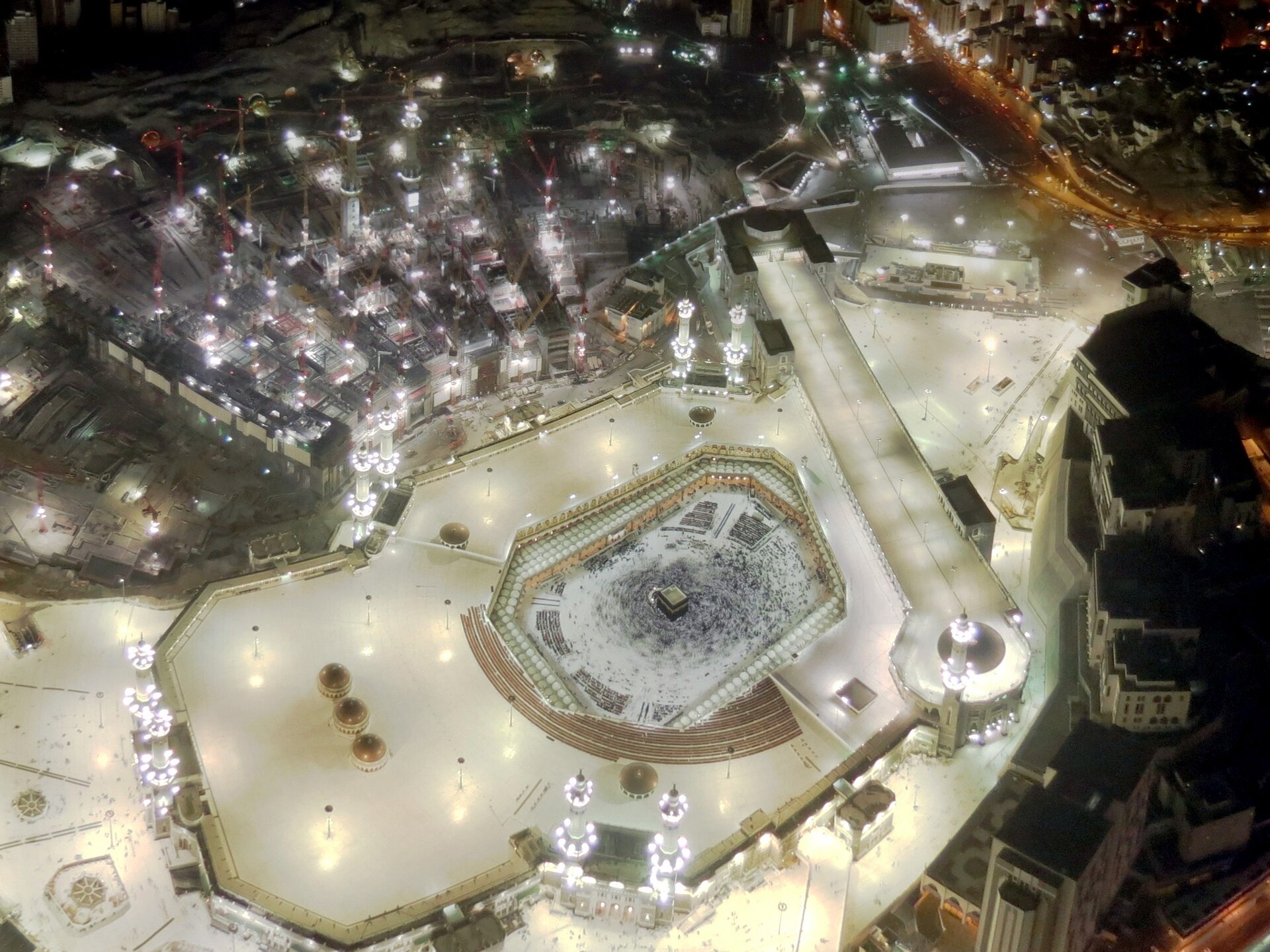
For the Trump administration, the Hajj convergence raises the kinetic threshold. Striking Iran on April 22 or 23 while Indonesian, Pakistani, Egyptian, and Turkish pilgrims are arriving in Jeddah and Makkah creates an image problem that no amount of messaging can manage. For Iran, the same convergence provides a different kind of shield — the IRGC can calculate that American restraint during the Hajj window is more likely than not, and act accordingly. The Day of Arafah falls on May 26, 34 days after the ceasefire’s nominal expiry. The full Hajj season extends the period of elevated political sensitivity well beyond the current crisis window.
Does Either Side Have Coercive Power Left?
Both sides have destroyed most of the other’s coercive tools while creating new forms of their own, and neither side’s remaining tools map onto the diplomatic framework that a deal would require.
The US has a naval blockade that has turned back 25 vessels, seized one, and driven Iranian oil exports toward zero — but that blockade is now opposed by Saudi Arabia, its closest regional partner, and has not broken IRGC decision-making authority. Iran has drones flying at American warships and a Hormuz closure declaration — but has collected zero dollars in toll revenue over 36 days, failed to prevent the Touska seizure, and rejected a second round of Islamabad talks that might have produced partial relief.
The DIA’s months-long-setback assessment is the single most important data point in this calculation. A second campaign targeting power plants and bridges, operating against a target set already adapted to the first, will produce civilian devastation without strategic finality. The war becomes a punishment operation, not a coercive one. Punishment works when the target can capitulate. The authorization ceiling means the people being punished — Iranian civilians and Pezeshkian’s government — are not the people who would need to capitulate: Vahidi, Abdollahi, and the absent Khamenei.
Representative Khanna’s observation that China has “more influence in Iran” than the US has coercive reach over Hormuz identifies the war’s structural asymmetry. The Touska departed from Zhuhai, a Chinese port, carrying suspected solid rocket fuel precursors. Five previous Chinese ships delivered similar cargoes during the war. The blockade interdicts Iranian-flagged vessels but does not — and politically cannot — interdict Chinese supply chains at their origin. That gap is not a negotiating problem. It is a war-design problem that no ceasefire deadline can resolve.
Frequently Asked Questions
What was the M/V Touska carrying and why does it matter?
The Touska departed Gaolan port in Zhuhai, China, a known sodium perchlorate loading facility. Sodium perchlorate is a key oxidizer in solid rocket fuel — the propellant used in the ballistic missiles Iran has fired throughout the conflict. While the cargo has not been officially confirmed by CENTCOM, the Washington Post reported the suspected payload based on the vessel’s origin port and routing pattern. Five Chinese-flagged ships had previously delivered suspected sodium perchlorate to Iran during the war, making the Touska part of an established supply chain rather than an isolated interdiction. The legal and strategic significance: seizing a ship on the high seas carrying dual-use precursors, before those precursors reach Iranian territory, extends the blockade’s legal theory well beyond the standard definition of contraband. It asserts a right of pre-emptive interdiction that no existing UN Security Council resolution explicitly authorizes for this conflict.
Has the IRGC’s Hormuz closure actually stopped commercial shipping?
The IRGC declared Hormuz closed on April 18-19, but the practical effect has been layered on top of an already-degraded shipping environment. Major container lines including Hapag-Lloyd and Maersk had already been avoiding the strait. VLCC rates reached $423,000 per day at the peak of the crisis. Over 150 tankers were anchored rather than attempting transit. The IRGC’s toll scheme — announced weeks earlier — collected zero revenue in 36 days despite issuing 60 permits and 8 payment requests. The closure declaration formalized a de facto condition rather than creating a new one, but it gave the IRGC legal cover, under its own framework, to fire on any vessel that attempted passage — a shift from deterrence-by-ambiguity to deterrence-by-explicit-threat.
Could the ceasefire be extended despite Trump’s statements?
Extension is structurally blocked at three levels simultaneously. First, the original framework contained no extension mechanism — both sides deliberately omitted rollover provisions. Second, the IRGC’s Khatam al-Anbiya command authorized the April 20 drone strikes, demonstrating that even if Araghchi’s diplomatic team wanted to extend, the IRGC does not need their consent to resume hostilities. Third, Iran’s Foreign Ministry stated on April 20 that the government has “no plans regarding a new round of talks.” For an extension to occur, all three layers would need to reverse simultaneously: Khatam al-Anbiya would need to stand down, the Foreign Ministry would need to walk back its public statement, and both sides would need to agree on ad hoc extension terms that neither side’s legal team has drafted.
Why did Saudi Arabia ask the US to lift its own blockade?
Riyadh’s formal request, reported by the Wall Street Journal on April 20, reflects the blockade’s disproportionate impact on Gulf allies versus Iran. Saudi Arabia’s fiscal break-even price sits between $108 and $111 per barrel on a PIF-inclusive basis, while Brent traded around $90 — a structural shortfall that widens with every week of disrupted exports. The Kingdom’s remaining export corridor runs through Yanbu, whose loading ceiling cannot absorb full pre-war volumes. The warning about Houthi Red Sea retaliation suggests Saudi intelligence assesses that the blockade’s continuation increases the probability of a second-front escalation that would threaten Yanbu itself — removing Saudi Arabia’s last viable export route.
What are the historical precedents for ceasefires that are dead before their expiry date?
The Korean War ceasefire negotiations (1951-1953) saw continuous combat while talks proceeded at Panmunjom — North Korea accumulated 221 counted violations through 2011. NATO estimated over 500 violations of the Bosnian no-fly zone in its first six months (November 1992 to July 1995) while the ceasefire framework remained diplomatically active. The post-1991 Gulf War ceasefire between Iraq and the UN was violated repeatedly throughout the 1990s, functioning as a management tool rather than an end state. In each case, the ceasefire’s formal status served the interests of parties who needed time, legitimacy, or both — regardless of conditions on the ground.