
JEDDAH — Indonesia launched its 2026 Hajj airlift on Tuesday morning, sending 391 pilgrims from Soekarno-Hatta International Airport’s dedicated Terminal 2F aboard the first of 548 flights that will carry 221,000 citizens into Saudi airspace — a logistical operation that began on the exact date the original Iran-US ceasefire expired, with no functioning replacement and fewer than 400 PAC-3 interceptors standing between the holy sites and an Iranian military establishment that declared the ongoing US naval blockade “an act of war” the same day.
The coincidence of calendar is not a coincidence of consequence. Saudi Arabia now holds operational custody of the largest single-nation pilgrim population on earth at a moment when its air defence reserves have fallen to 14 per cent of pre-war levels, the adviser to Iran’s parliamentary speaker has publicly called for military retaliation against the blockade, and the diplomatic architecture that was supposed to prevent exactly this scenario — Pakistan’s Islamabad Accord — has produced an indefinite ceasefire extension that satisfies nobody and constrains nobody. Every Boeing 777 touching down at King Abdulaziz International Airport tightens a strategic vice that Crown Prince Mohammed bin Salman cannot loosen without abandoning the title his father’s predecessor invented to defeat an earlier Iranian challenge to Saudi legitimacy.
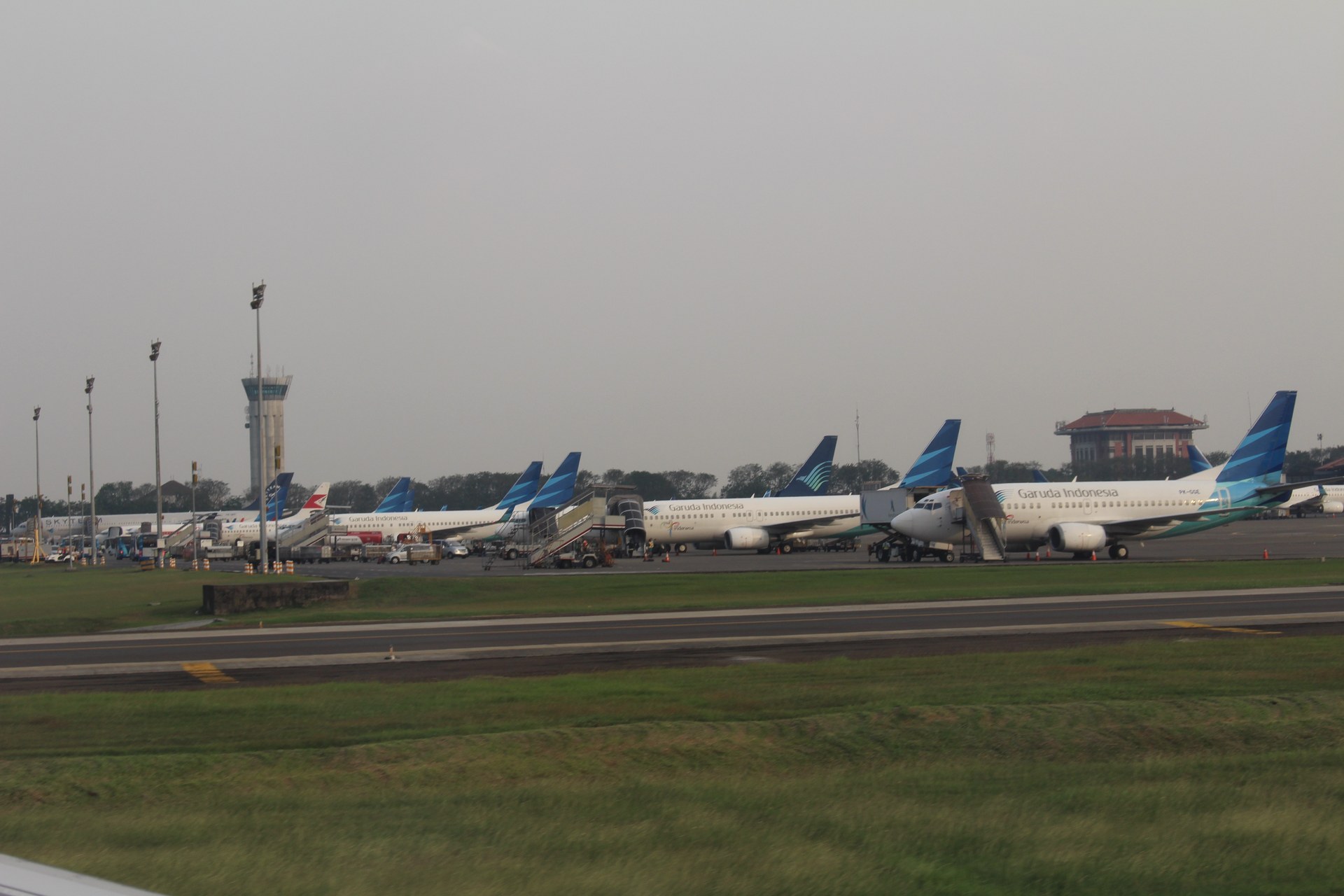
Table of Contents
- The Custodian Trap: Why MBS Cannot Ground a Single Flight
- Numbers on the Ground: Four Countries, 1,200 Flights, Five Weeks
- Can 400 Interceptors Protect 1.8 Million Pilgrims on an Open Plain?
- Iran’s Empty Quota: The 1987 Logic Inverted
- What Does a Ceasefire Mean When Both Sides Call It Violated?
- Jakarta’s Three Scenarios and the Risk Navigator
- What Happens in 34 Days on the Plain of Arafat?
The Custodian Trap: Why MBS Cannot Ground a Single Flight
King Fahd adopted the title “Custodian of the Two Holy Mosques” on October 27, 1986, replacing “His Majesty” in a move calibrated to answer two simultaneous threats: Ayatollah Khomeini’s claim that the Islamic Revolution had rendered the Saudi monarchy an illegitimate steward of Islam’s holiest sites, and the lingering trauma of Juhayman al-Otaybi’s 1979 Grand Mosque seizure, which had exposed the royal family’s inability to protect the Kaaba itself. Every Saudi king since has carried the title, and every Saudi king since has understood that the title is not honorific but contractual — it obligates the bearer to receive, shelter, and safeguard every Muslim who answers the call to pilgrimage, regardless of the geopolitical conditions prevailing at the time of their arrival.
That obligation is now operationally binding in a way it has never been before. No prior Hajj in the Saudi era — the kingdom has administered the pilgrimage since the Hashemite surrender in 1924 — has taken place while the host state was an active belligerent in a sustained missile exchange with a regional power. The Iran-US war, which began on March 3 and has seen 894 Saudi air defence intercepts through April 7, has transformed the Custodian commitment from a political identity into a military mission with a fixed deadline. Prince Saud bin Mishaal bin Abdulaziz, chairing the permanent Hajj and Umrah committee, told officials the kingdom had reviewed “scenarios already implemented and others planned to ensure full readiness.” Saudi Arabia’s ambassador to Indonesia, Faisal bin Abdullah Al-Amudi, stated flatly that “the situation in Saudi Arabia is still under control and all preparations are going as planned.”
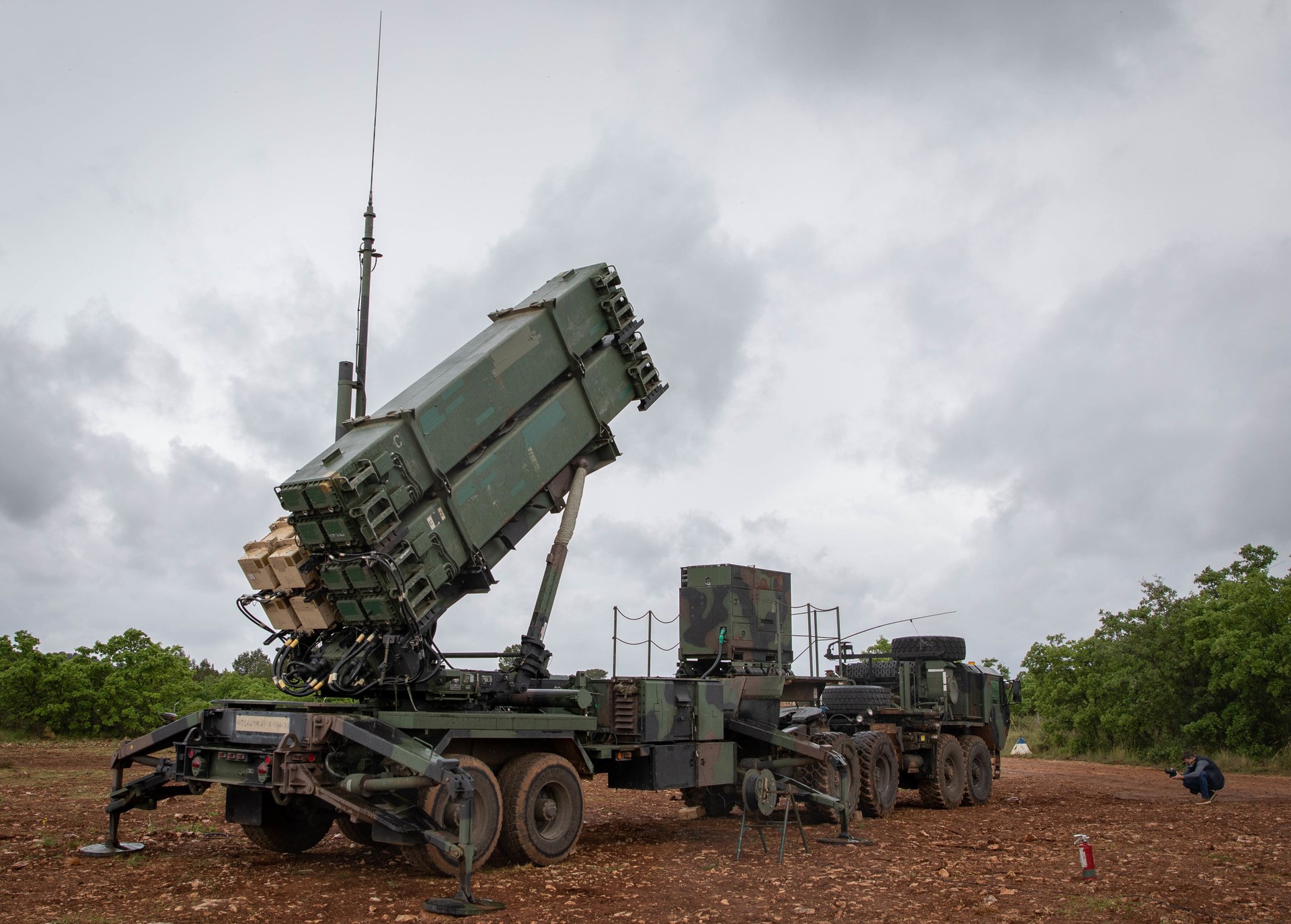
The language is reassuring by design. MBS directed “all national resources and capabilities be fully deployed” for the 2026 season, and the Saudi Ministry of Defence released photographs of Patriot missile batteries ringing the holy sites with the caption: “Air defence forces — an eye that never sleeps, its mission is the safety of Muslim pilgrims.” The imagery projects strength, but the arithmetic beneath it tells a different story — and that arithmetic is what makes the Custodian title a trap rather than a shield: to cancel, delay, or reroute the Hajj would be to concede that Saudi Arabia cannot fulfil the foundational obligation that separates the House of Saud from every other Gulf monarchy, an admission that would hand Iran a propaganda victory far larger than anything a missile strike could achieve.
Numbers on the Ground: Four Countries, 1,200 Flights, Five Weeks
Indonesia’s 221,000 pilgrims — 203,320 regular and 17,680 special quota — represent the largest national Hajj contingent on earth, and Garuda Indonesia alone is operating 276 flight groups using 15 wide-body aircraft to transport 102,502 of them from 16 embarkation points across an archipelago that spans three time zones. The full airlift will run continuously for approximately five weeks — meaning aircraft will still be arriving in Saudi Arabia well past the Day of Arafah on May 26, when the largest single-day congregation occurs.
The Middle East briefing 3,000+ readers start their day with.
One email. Every weekday morning. Free.
Indonesia is the anchor, but it is not alone. Pakistan’s airlift launched four days earlier on April 18, with 179,210 allocated pilgrims departing from Karachi, Lahore, Islamabad, Sialkot, and Multan aboard PIA, airblue, Air Sial, and Saudia across 468 flights. India began the same day, sending 175,025 pilgrims on direct charters operated by Air India, Air India Express, Akasa Air, Saudia, Flynas, and Flyadeal.
Malaysia Airlines launched its Amal subsidiary’s 110-flight programme for 15,620 pilgrims, with the inaugural MH8050 routing from Kuala Lumpur to Madinah. Across all sending nations, the total 2026 global Hajj quota stands at 1,371,520 pilgrims — and the combined airlift represents the largest annual civilian air movement into a single country on the planet.
| Country | Pilgrims | Flights | Airlift Start | Carriers |
|---|---|---|---|---|
| Indonesia | 221,000 | 548 | April 22 | Garuda Indonesia + others |
| Pakistan | 179,210 | 468 | April 18 | PIA, airblue, Air Sial, Saudia |
| India | 175,025 | Direct charters | April 18 | Air India, Akasa Air, Saudia, Flynas, Flyadeal |
| Malaysia | 15,620 | 110 | April 2026 | Amal by Malaysia Airlines |
| Iran (allocated) | 87,550 | 0 | — | Suspended |
The logistics are staggering, and so is the commitment they represent. Once 221,000 Indonesian citizens are inside the Saudi pilgrim cordon — housed, badged, tracked by the digital dashboard Al-Rabiah described — they become the responsibility of the Custodian in a way that transcends normal bilateral relations. Jakarta has signed its people over to a security guarantee that is backed, in the end, by the thinning inventory of a single weapons system.
Can 400 Interceptors Protect 1.8 Million Pilgrims on an Open Plain?
Saudi Arabia’s PAC-3 MSE interceptor stocks stand at approximately 400 rounds, down from a pre-war stockpile of roughly 2,800 — a stockpile consumed at an average of 63 rounds expended per day across 35 days of active hostilities against the 894 confirmed intercepts recorded between March 3 and the ceasefire on April 7. At that pre-ceasefire burn rate, the current inventory provides fewer than seven days of sustained combat before Saudi Arabia’s primary terminal ballistic missile defence system runs dry. The five-layer architecture around the holy sites — THAAD, PAC-3, the South Korean KM-SAM, laser systems, and Skyguard — offers depth, but the PAC-3 MSE is the workhorse for terminal intercepts against ballistic missiles, and no other layer can fully compensate for its absence.
The Pentagon awarded a $4.76 billion accelerated PAC-3 MSE production contract on April 9, three days after the ceasefire nominally took hold, but the production ramp from the current 620 rounds per year to the target of 2,000 rounds per year is not expected until 2030, and no resupply delivery to Saudi Arabia is scheduled before 2028. The gap between what exists and what is needed is not a procurement delay — it is a structural vulnerability that will persist for the entire duration of the Hajj season and well beyond. MBS knows this, the Saudi MOD knows this, and the Iranians — who have spent 50 days probing exactly which defence layers deplete fastest — know it too.
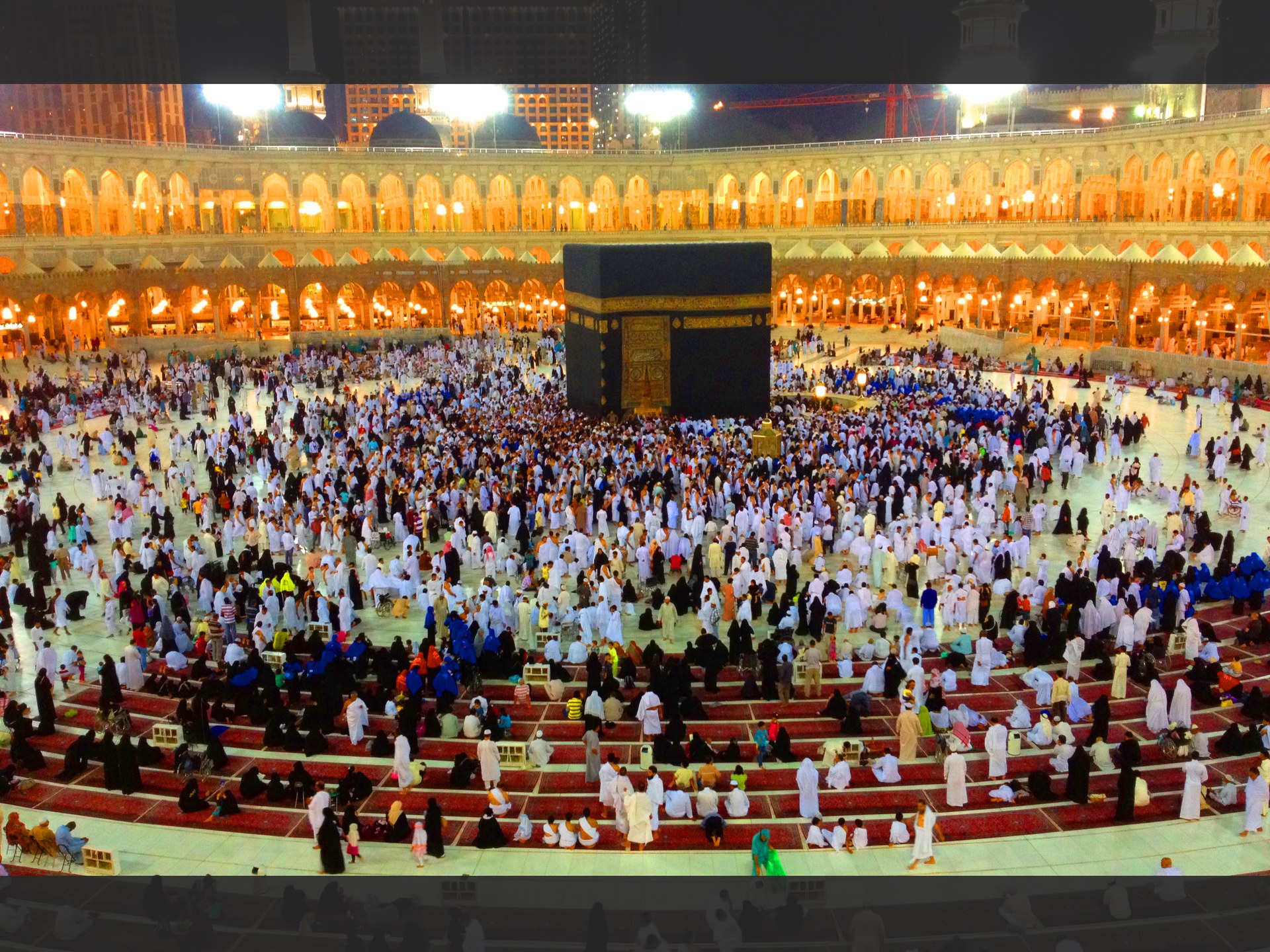
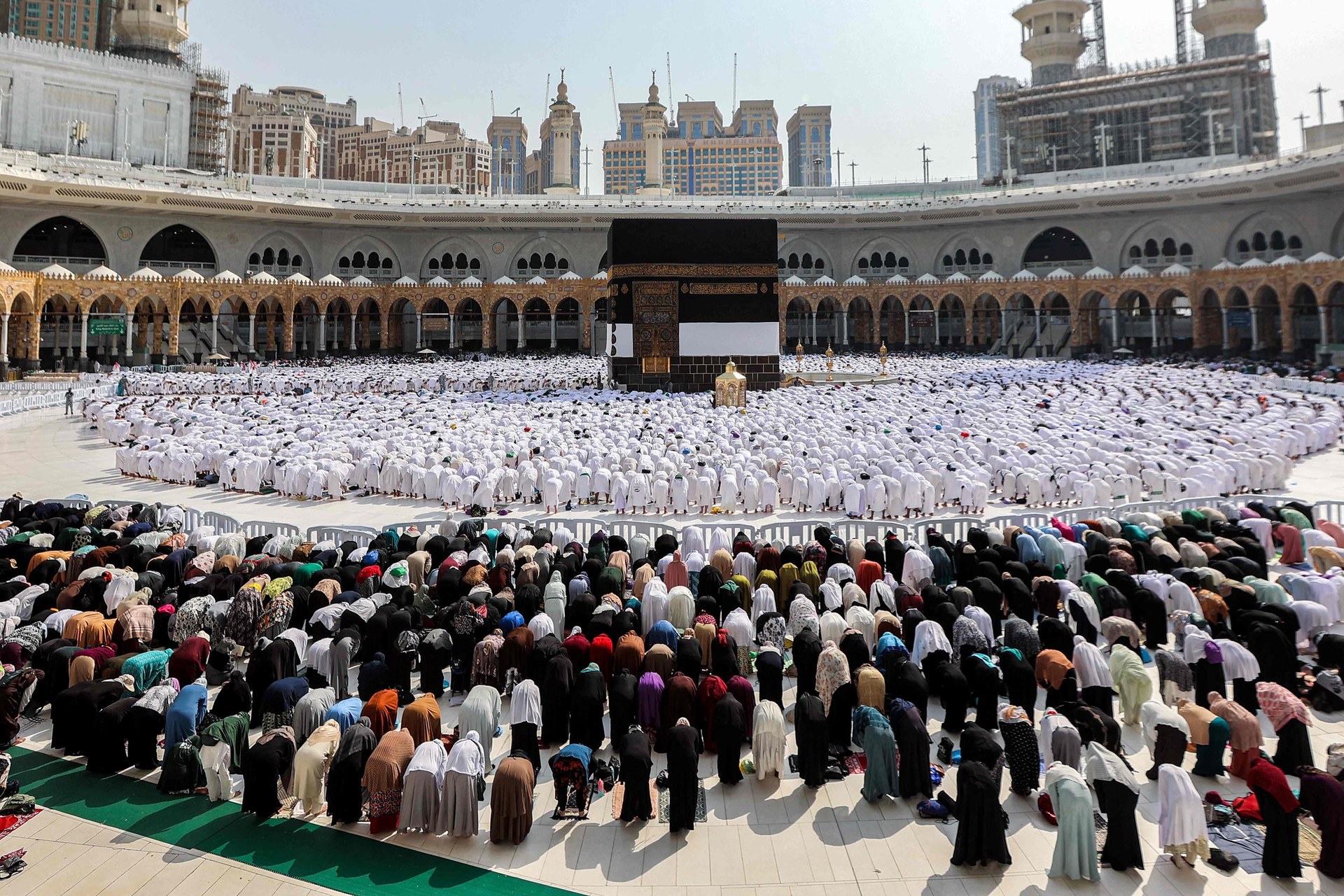
The Day of Arafah on May 26 concentrates the exposure to its maximum. Approximately 1.8 million pilgrims will gather on the plain of Jabal Arafat, an open expanse with no overhead cover, for the single most important ritual of the Hajj. The congregation is fixed in time, fixed in location, and announced years in advance. Ghalibaf’s adviser Mahdi Mohammadi stated on April 22 that “the continuation of the siege is no different from bombardment and must be met with a military response” — language that, whatever its intent, lands differently when the audience includes the security planners responsible for protecting the largest open-air gathering in the Islamic calendar with 14 per cent of their original ammunition.
Iran’s Empty Quota: The 1987 Logic Inverted
Iran holds the world’s sixth-largest Hajj quota for 2026 at 87,550 pilgrims, a number that exists on paper and nowhere else. Saudi visa processing for Iranian nationals has been suspended since the war began, direct flights between the two countries are cancelled, and no Iranian pilgrim is inside or en route to the Saudi cordon. The quota is a bureaucratic ghost, and its emptiness inverts the strategic logic that governed every previous Saudi-Iranian Hajj crisis in ways that systematically disadvantage Riyadh.
In July 1987, Iranian pilgrims staged a political demonstration inside the Grand Mosque precinct, Saudi riot police and National Guardsmen intervened, and 402 people died — 275 Iranian pilgrims, 85 Saudi security personnel, and 42 pilgrims from other countries. Iran boycotted the Hajj for three years, Saudi Arabia severed diplomatic relations in April 1988, and Tehran’s quota was slashed from 150,000 to 45,000. The episode was catastrophic, but it contained a paradox that worked in Saudi Arabia’s favour: because Iran had pilgrims inside the kingdom, Riyadh held a form of coercive power — the ability to reduce, restrict, or deny access — while Tehran bore the reputational cost of having provoked violence at Islam’s holiest site. The presence of Iranian pilgrims gave both sides something to lose and something to negotiate over.
In 2026, that coercive structure is gone. Iran has no pilgrims to protect, no pilgrims to lose, and no pilgrims whose behaviour Riyadh can regulate. A mass-casualty event at the Hajj — whether from an Iranian ballistic missile, a drone swarm, or even a catastrophic failure of the air defence system against a conventional salvo — would cost Iran nothing in terms of its own nationals and would cost Saudi Arabia everything in terms of the Custodian obligation — an asymmetry that is total. Tehran does not need to attack the Hajj to exploit it; the mere existence of 1.37 million foreign pilgrims inside a country that Iran’s parliamentary speaker’s adviser has said should face “military response” creates a hostage dynamic without a single hostage being taken, because every pilgrim’s government will demand answers from Riyadh, not from Tehran, if something goes wrong.
What Does a Ceasefire Mean When Both Sides Call It Violated?
The original ceasefire, brokered through Pakistan’s Islamabad Accord framework, expired on April 22 — the same day Indonesia’s first Hajj flight departed Soekarno-Hatta. President Trump announced an indefinite extension on April 21, citing a request from Pakistan’s Field Marshal Asim Munir and Prime Minister Shehbaz Sharif, and framing the pause as a consequence of Iran’s internal fractures: “Based on the fact that the Government of Iran is seriously fractured, not unexpectedly so and, upon the request of Field Marshal Asim Munir, and Prime Minister Shehbaz Sharif, of Pakistan, we have been asked to hold our Attack on the Country of Iran until such time as their leaders and representatives can come up with a unified proposal.” The language is revealing — it describes a unilateral American restraint, not a bilateral agreement, and it sets no timeline, no conditions, and no mechanism for verification.
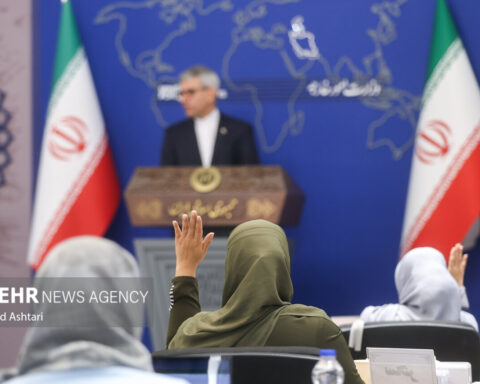
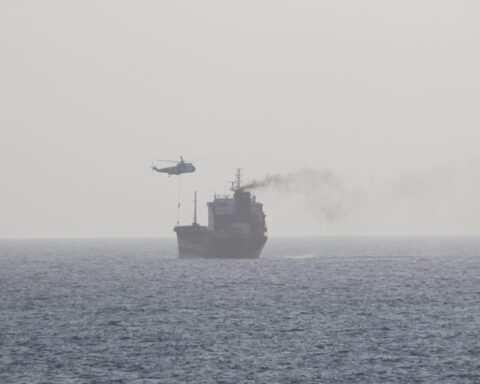
Iran’s response arrived within hours. Foreign Minister Abbas Araghchi posted on X that “blockading Iranian ports is an act of war and thus a violation of the ceasefire,” adding that “striking a commercial vessel and taking its crew hostage is an even greater violation.” Mohammadi, speaking for Ghalibaf’s parliamentary faction, went further: “Trump’s ceasefire extension is certainly a ploy to buy time for a surprise strike.” The US maintains the naval blockade imposed on April 13, applying to Iranian ports and toll-collecting vessels rather than all Hormuz transit, but Iran treats any blockade as a casus belli — and the IRGC’s operational posture has not changed since the ceasefire nominally began.
For Saudi Arabia, the practical meaning is that the Hajj airlift is proceeding into a country where the diplomatic framework meant to prevent resumed hostilities consists of a Truth Social post, a Pakistani request, and an Iranian declaration that the existing terms have already been violated. The US Overseas Security Advisory Council issued a security alert titled “Security Alert: Saudi Arabia, Reconsider Participating in Hajj 2026” — the most explicit acknowledgment from any arm of the US government that the pilgrimage carries what OSAC considers unacceptable risk for American nationals. No sending country has acted on that warning. The flights continue.
Blockading Iranian ports is an act of war and thus a violation of the ceasefire. Striking a commercial vessel and taking its crew hostage is an even greater violation.
— Abbas Araghchi, Iranian Foreign Minister, April 22, 2026
Jakarta’s Three Scenarios and the Risk Navigator
Indonesia’s Ministry of Hajj and Umrah prepared three contingency frameworks before the airlift began, and the fact that they were prepared at all — and publicly disclosed — tells you something about how Jakarta’s risk calculus differs from Riyadh’s public confidence. Scenario One assumes the airlift proceeds via rerouted southern and Indian Ocean corridors, accepting longer flight times and higher fuel costs. Scenario Two envisions Indonesia delaying departures while Saudi Arabia continues to permit the Hajj — a holding pattern requiring Jakarta to manage 221,000 citizens who have waited years for their quota places. Scenario Three is cancellation by Saudi Arabia itself, the outcome that would trigger the Custodian crisis.
Hajj Minister Gus Irfan described his ministry’s role as that of “a risk navigator to ensure every decision is based on security intelligence data,” a formulation that is diplomatic in tone and extraordinary in implication — no Indonesian Hajj minister has ever needed to position the ministry as an intelligence consumer rather than a logistics coordinator. The 16 embarkation points across the archipelago, from Aceh to Papua, mean that the airlift’s complexity is distributed and therefore difficult to pause cleanly; halting departures from Pondok Gede while Makassar flights continue creates inequities that become domestic political crises in a country where the Hajj waiting list runs to years and demand vastly exceeds supply.
The operational decision to proceed reflects a calculation that every sending government has made independently and arrived at the same answer: the domestic political cost of cancelling — for governments that include Muslim-majority democracies where Hajj access is an electoral issue — exceeds the security risk as currently assessed. That assessment could change overnight if the ceasefire collapses, but by that point tens of thousands of pilgrims will already be inside the Saudi cordon, and the question will shift from whether to send them to how to evacuate them from a country under active missile attack.
What Happens in 34 Days on the Plain of Arafat?
The Day of Arafah falls on May 26, 2026 — 34 days after the original ceasefire expired and 34 days into whatever the current arrangement should be called. By that date, the full complement of 1.37 million foreign pilgrims will be inside Saudi Arabia, with approximately 1.8 million people (including Saudi domestic pilgrims and service personnel) converging on the plain of Arafat for the standing ritual that is the theological core of the Hajj. The congregation is not dispersible, not reschedulable, and not concealable. It happens in a known location, at a known time, under open sky, and it has happened on the same lunar calendar date for fourteen centuries.
The interval between now and May 26 is the window in which every variable — the ceasefire’s durability, Iran’s internal power struggle between Pezeshkian’s civilian government and the IRGC’s operational command, the US blockade’s escalatory trajectory, and the PAC-3 resupply timeline — either resolves toward stability or compounds toward crisis. The Rubio push for European sanctions reimposition, which landed the same day the Makkah cordon sealed on April 18, added another pressure vector to an already overloaded diplomatic circuit; Iran’s snap-back sanctions were already reimposed in September 2025, meaning what Washington is now seeking from Brussels is enforcement escalation, not new legal architecture.
Saudi Arabia’s position is structurally unenviable. The kingdom cannot cancel the Hajj without surrendering the Custodian title’s meaning. It cannot guarantee the pilgrims’ safety with 400 interceptors against an adversary that fired enough ordnance to consume more than 2,200 rounds in 35 days. It cannot accelerate PAC-3 production beyond what Lockheed Martin’s factories can physically deliver, and it cannot control the diplomatic timeline, because the ceasefire’s survival depends on actors — the IRGC’s headless naval command, Ghalibaf’s parliamentary faction, Trump’s Truth Social feed — over whom Riyadh has no influence and limited insight. What it can do, and what it is doing, is receive the pilgrims, deploy the batteries, update the dashboard, and project the confidence that the Custodian title demands, while knowing that the arithmetic underneath that confidence does not add up to the protection that 1.37 million families in 50 countries believe they have been promised.
The first Garuda Indonesia A330 landed in Jeddah on Tuesday. The last will land sometime in late May, days before the plain of Arafat fills. Between those two arrivals, the title that Fahd created to outflank Khomeini will be tested as it has never been tested — not by an Iranian provocation inside the Hajj, as in 1987, but by the possibility of an Iranian attack from outside it, launched by a military establishment that has zero pilgrims at risk and a parliamentary adviser on record saying the blockade “must be met with a military response.” That is the trap, and as of Tuesday morning, it is closed.
Frequently Asked Questions
Has Saudi Arabia ever cancelled or postponed the Hajj?
Saudi Arabia has never cancelled the Hajj outright in the modern era, though the kingdom drastically reduced numbers during the COVID-19 pandemic — limiting the 2020 Hajj to approximately 1,000 domestic pilgrims and the 2021 Hajj to 58,745. Those reductions were framed as health measures with WHO backing, giving Riyadh diplomatic cover that a wartime cancellation would not provide. The closest historical precedent for conflict-related disruption is the 1987 crisis, but that involved violence inside the Hajj rather than a decision to prevent pilgrims from attending.
What happens to pilgrims already in Saudi Arabia if the ceasefire collapses?
No publicly disclosed evacuation plan exists for a resumed-hostilities scenario during Hajj season. The 548 Indonesian flights, 468 Pakistani flights, and hundreds of additional rotations that delivered pilgrims would need to reverse course — but Jeddah’s King Abdulaziz International Airport was designed for orderly seasonal throughput, not emergency mass evacuation under contested airspace. Indonesia’s Scenario Two addresses a pre-departure pause, not a mid-Hajj extraction, and the OSAC alert to American nationals did not include guidance for those already in-country.
Why does Iran still hold a Hajj quota if no Iranians are travelling?
Hajj quotas are allocated by the Organisation of Islamic Cooperation based on national Muslim population, and Iran’s 87,550 places reflect demographic weight rather than diplomatic status. Saudi Arabia has suspended visa processing and direct flights, making the quota meaningless for 2026, but neither Riyadh nor the OIC has formally revoked the allocation — doing so would constitute an escalation that Saudi Arabia has historically reserved for extreme circumstances, as when Iran’s quota was cut from 150,000 to 45,000 after 1987. The empty quota preserves the fiction that normalisation remains possible while acknowledging through its non-use that it has not occurred.
Could Iran target the Hajj directly?
A deliberate strike on the Hajj congregation would unify the entire Muslim world — including Iran’s own allies — against Tehran in a way no other military action could. The far greater risk is indirect: escalation that produces missile exchanges near populated areas, debris from intercepted warheads falling on pilgrim encampments, or a systems failure during a saturation attack aimed at military targets in the Hejaz. The IRGC does not need to target pilgrims to endanger them — the proximity of military infrastructure to the holy sites, combined with the volume of pilgrims in the open at Arafat, creates risk through geography rather than intent.
What role does Pakistan play in both the ceasefire and the Hajj?
Pakistan occupies a unique dual position as both the ceasefire’s primary enforcement mechanism — Field Marshal Munir personally relayed communications between Washington and Tehran, and Trump cited Munir’s request as the basis for extending the pause — and the source of the Hajj’s second-largest national contingent at 179,210 pilgrims. Islamabad’s September 2025 Saudi Military Defence Agreement makes Pakistan simultaneously Iran’s diplomatic interlocutor and Saudi Arabia’s treaty ally, meaning a ceasefire collapse would endanger Pakistani citizens inside the Saudi cordon while undermining Pakistan’s credibility as guarantor. The $5 billion Saudi loan maturing in June 2026 adds a financial dimension to an already fraught alignment. For the interceptor stockpile underpinning that safety promise — approximately 400 PAC-3 MSE rounds protecting 1.37 million pilgrims across four defense corridors — see The Custodian’s 400 Rounds: Saudi Arabia’s Air Defense Crisis Meets Hajj 2026.