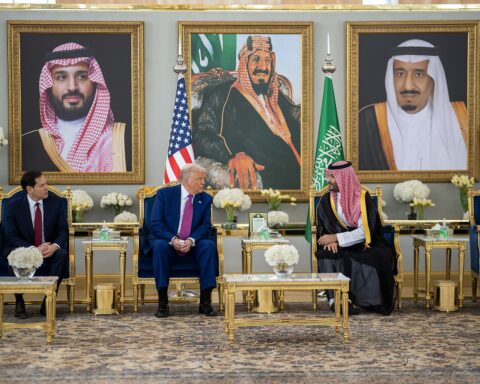
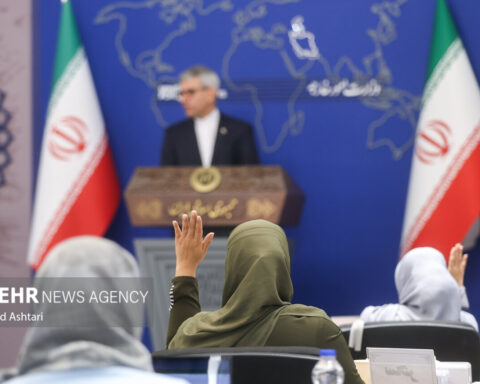
WASHINGTON — The United States and Iran were, by multiple accounts from officials on both sides, within reach of a preliminary nuclear agreement at Islamabad — a 21-hour negotiating marathon that produced a counter-offer gap of 15 years on enrichment moratorium, a framework for diluting 440.9 kilograms of 60%-enriched uranium, and what Abbas Araghchi called being “inches away” from a memorandum of understanding. Then Donald Trump posted more than 900 words on Truth Social in a single day claiming Iran had “agreed to everything,” including the surrender of enriched uranium — concessions that had not been made, that Iranian negotiators were then forced to deny on the record in Tasnim and Fars News, and that are now politically impossible to revisit without Araghchi and parliamentary speaker Mohammad Bagher Ghalibaf being accused of reversing a public denial under American pressure.
The cost of that sequence is not abstract. Saudi Arabia’s March production collapsed 30% to 7.25 million barrels per day, its fiscal break-even sits $19-22 above current crude prices, and Goldman Sachs projects a war-adjusted deficit of 6.6% of GDP — all while the kingdom has no seat at the negotiating table whose failure is bleeding its treasury dry. Day 54 of the war, and the mechanism that may have killed the best available deal was not the IRGC’s authorization ceiling or Vahidi’s obstructionism but a social media post from the man whose own officials privately told CNN was “detrimental to ongoing talks.”
Table of Contents
- The Islamabad Gap Was Smaller Than Reported
- How Did Trump’s Truth Social Posts Collapse the Talks?
- The Denial Trap: Why Iran Cannot Now Concede What It Publicly Rejected
- Two Failure Modes, One Conflation
- What Is the Saudi Fiscal Cost of a Broken Negotiating Process?
- The 123 Agreement Asymmetry Nobody in Washington Will Say Out Loud
- Does Saudi Arabia Have Any Lever Over US Communications Discipline?
- Ghalibaf Under Fire: The Domestic Punishment Mechanism
- Can the Deal Architecture Be Salvaged?
The Islamabad Gap Was Smaller Than Reported
The negotiating delta at Islamabad was, on paper, the kind of distance that experienced diplomats close in a second round — not the kind that produces a walkout. The United States proposed a 20-year moratorium on uranium enrichment, according to Axios reporting on April 13 sourced to officials briefed on the talks. Iran countered with five years, per Al Jazeera’s account the following day, and separately proposed diluting its 60%-enriched HEU stockpile in exchange for full sanctions relief — a framework that, whatever its verification challenges, represented the first time Tehran had put stockpile disposition on the table as a tradeable item rather than a sovereignty red line.
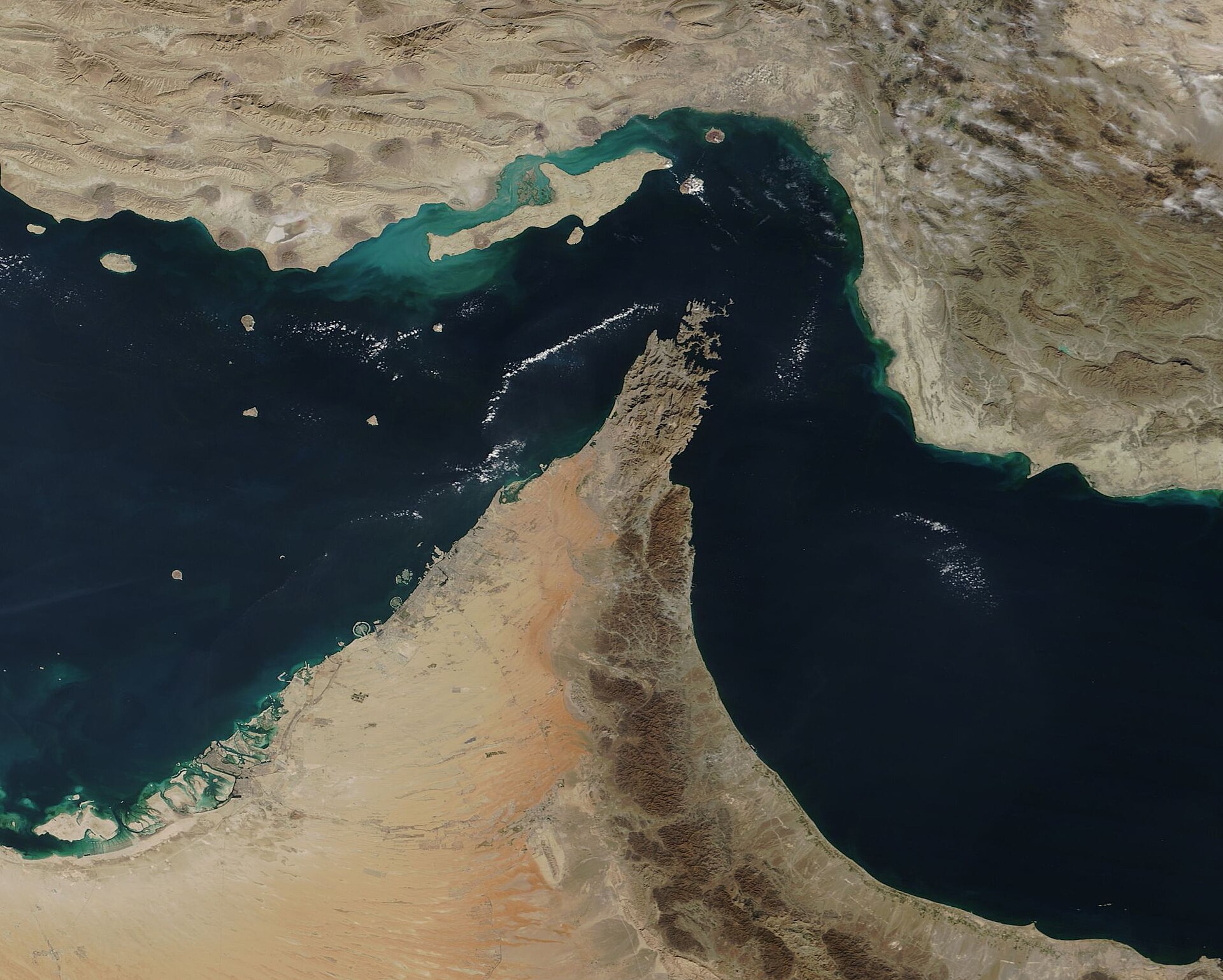
The gap, while real, sat within the range of what mediators from Pakistan, Egypt, and Turkey believed was bridgeable across a second session — a belief reflected in Araghchi’s post-collapse statement that the delegation had been “inches away from ‘Islamabad MoU'” before encountering “maximalism, shifting goalposts, and blockade.” Time’s reconstruction of the marathon identified the principal unresolved issues as enrichment duration, HEU stockpile disposition, and the status of the Strait of Hormuz — three items that were always destined for phased resolution rather than single-session agreement.
What made Islamabad different from every previous round was the presence of Ghalibaf himself, the parliamentary speaker and former IRGC Aerospace Force commander from 1997 to 2000, leading a 71-member delegation that represented the closest thing to cross-factional Iranian authority short of Khamenei’s direct involvement. The IRGC’s structural veto — the authorization ceiling that Pezeshkian himself publicly identified when he named Vahidi and Abdollahi as ceasefire wreckers — was, for the first time, partially addressed by having an IRGC-affiliated figure at the table with something approaching a mandate.
How Did Trump’s Truth Social Posts Collapse the Talks?
The sequence matters more than the substance, and the sequence was catastrophic. Trump told CBS News that Iran had “agreed to everything,” including the removal of enriched uranium — a claim that bore no relationship to the actual state of negotiations, where HEU disposition remained an unresolved agenda item with competing frameworks on the table. His Truth Social post was more specific and more damaging: “The U.S.A. will get all Nuclear ‘Dust,’ created by our great B2 Bombers – No money will exchange hands in any way, shape, or form,” a formulation that implied not just agreement but unconditional surrender of fissile material, the single most politically radioactive concession any Iranian government could make.
The Middle East briefing 3,000+ readers start their day with.
One email. Every weekday morning. Free.
He told Bloomberg separately that Iran had agreed to “suspend its nuclear programme indefinitely” — a third public claim, on a third platform, each escalating the specificity of concessions that had not been made and that Iranian negotiators had no domestic political space to confirm even if they wanted to. One person familiar with the Islamabad talks told CNN on April 20 that “the Iranians didn’t appreciate POTUS negotiating through social media and making it appear as if they had signed off on issues they hadn’t yet agreed to” — a diplomatic understatement that obscures the mechanical damage done to any future negotiating round.
Trump’s own officials understood the problem in real time. Multiple officials “blasted him anonymously” to CNN and the Wall Street Journal, according to reporting from both outlets on April 20-21, and privately acknowledged to CNN that his Truth Social posts were “detrimental to ongoing talks.” The gap between what the administration was trying to achieve at the negotiating table and what the president was claiming on social media was not a communications failure — it was, functionally, an act of sabotage against his own diplomatic process, whether or not it was intended as such.
The Denial Trap: Why Iran Cannot Now Concede What It Publicly Rejected
The mechanical damage is precise and irreversible in the short term. Iran’s Foreign Ministry spokesman Esmaeil Baqaei responded through Tasnim — the IRGC-affiliated wire service that functions as the regime’s official record — with a categorical denial: “Enriched uranium is as sacred to us as Iranian soil and will not be transferred anywhere under any circumstances.” He added that the transfer of enriched uranium “has never been raised as an option for us in negotiations,” a statement that contradicted the Al Jazeera reporting of Iran’s own dilution counter-offer and that was almost certainly designed for domestic consumption rather than diplomatic accuracy.
The domestic consumption is the point. Once that denial appeared in Tasnim and was amplified across Fars News and state media, it became the baseline against which any future Iranian concession on HEU disposition will be measured — not against the substance of the Islamabad counter-offer, but against a public categorical rejection that any movement toward HEU transfer will now be framed as capitulation, as proof that Araghchi and Ghalibaf lied to the Iranian public when they said no such agreement existed. The denial trap works because it converts a negotiating position into a national credibility claim, and no Iranian official can walk back a sovereignty statement published in Tasnim without facing the exact domestic punishment mechanism that hardliners have already activated.
Iran International’s analysis on April 20 identified the downstream effect with unusual clarity: the “apparent divisions over negotiations may have strengthened the most confrontational elements within Iran’s political landscape and facilitated the rise of new hardline actors.” That is the structural consequence of premature disclosure — it does not just kill the current round, it poisons the domestic political environment for any future round that attempts to revisit the same concessions.
Two Failure Modes, One Conflation
The analytical error that most Western reporting commits is treating the IRGC authorization ceiling and the Truth Social sabotage as a single failure, when they are structurally distinct problems that compound each other in ways that make resolution harder than either would alone. The authorization ceiling is real and well-documented: IRGC General Zolghadr sent a formal complaint that Araghchi had “surpassed his mandate” during Islamabad by showing flexibility on Iran’s support for the Axis of Resistance, and Pezeshkian’s extraordinary public accusation — naming Vahidi and Abdollahi as the officials who deviated from the delegation’s mandate — confirmed that the civilian government and the IRGC operate under different negotiating parameters that no single delegation can reconcile.
But the Truth Social mechanism is separate and additive in a way that has not been adequately recognized. Even if Araghchi had full authority to concede on HEU disposition — which he did not, given Article 110’s reservation of military matters to the Supreme Leader — Trump’s premature public declaration forced a categorical denial that now exists independently of the authorization ceiling problem. Fix the authorization ceiling entirely, give Araghchi or his successor a genuine mandate from Khamenei’s office (or from Mojtaba, who has been audio-only for 54 days), and the denial trap remains: the concession has been publicly rejected in terms that frame any revisitation as national humiliation.
The internal contradictions on the American side mirror Iran’s in miniature. Vance insisted on zero enrichment capacity — a maximalist position that even the Trump administration’s own framework did not require, given that the 20-year moratorium proposal implicitly accepted enrichment resumption in year 21. Witkoff and Kushner floated a softer architecture, and Iran, according to Daily Beast and Time reporting from April 11-15, concluded it preferred to negotiate with Vance rather than the softer interlocutors — a preference that made strategic sense if Tehran believed a harder deal with a credible counterpart was more durable than a softer deal with officials who might be overruled by a Truth Social post before the ink dried.
What Is the Saudi Fiscal Cost of a Broken Negotiating Process?
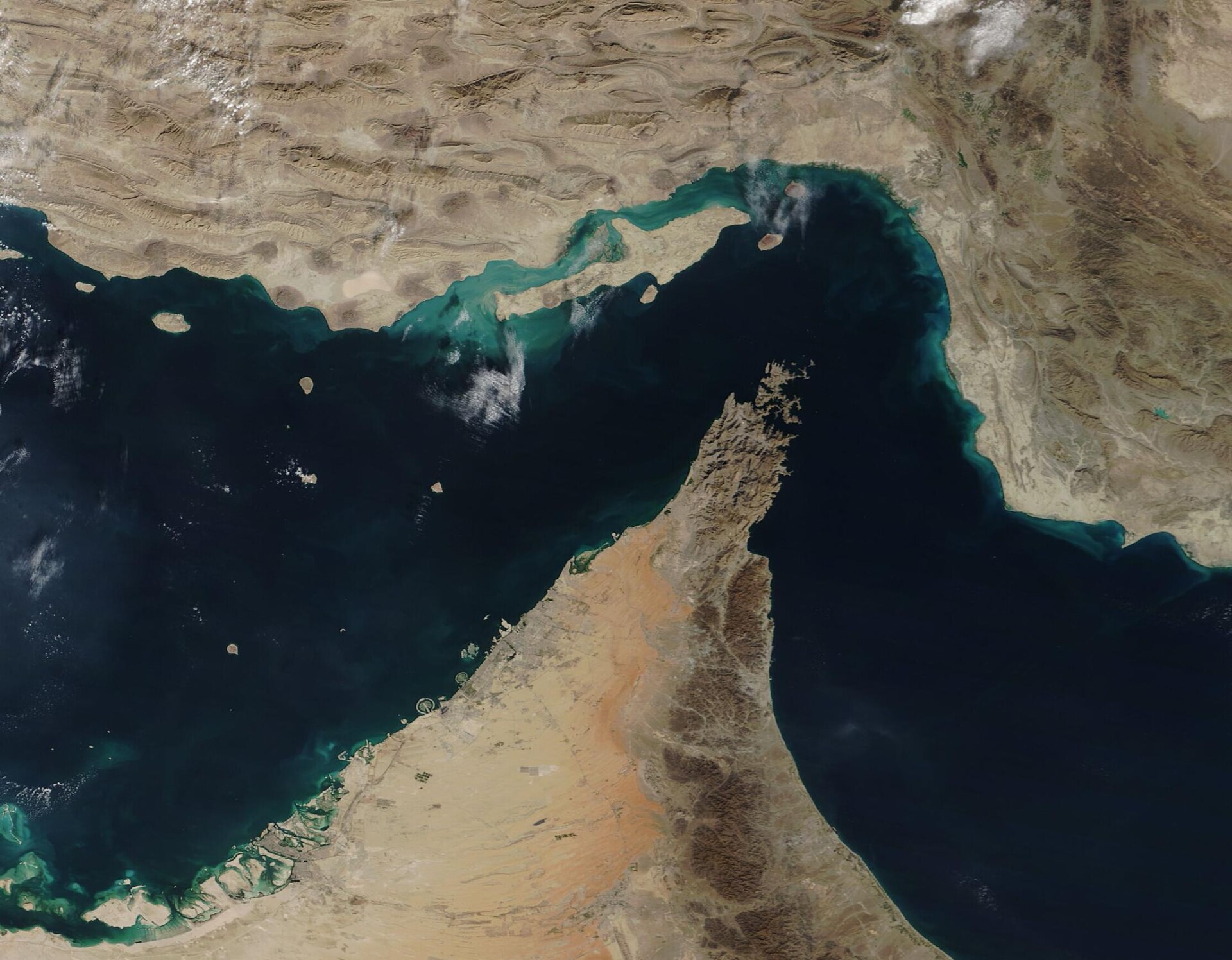
The kingdom is haemorrhaging money at a rate that makes every week of diplomatic failure a measurable economic event. Saudi March 2026 production fell to 7.25 million barrels per day, according to IEA data — down from 10.4 million in February, a 3.15-million-barrel-per-day collapse that represents a 30% shortfall against the OPEC+ quota of 10.2 million. The Yanbu bypass, which was supposed to provide strategic insurance against Hormuz disruption, has a loading ceiling of 4-5.9 million barrels per day against a pre-war Hormuz throughput of 7-7.5 million — a structural gap of at least 1.1 million barrels per day that no infrastructure fix can close in wartime.
Bloomberg Economics puts the PIF-inclusive fiscal break-even at $108-111 per barrel. WTI sat at $89.33 on April 22, a shortfall of $19-22 per barrel that, multiplied across reduced production volumes, translates to a revenue gap that Goldman Sachs projects will produce a war-adjusted deficit of 6.6% of GDP — double the official forecast of 3.3% and a number that, sustained through the second half of 2026, would force difficult choices between Vision 2030 capital commitments and sovereign reserve drawdowns.
Every week that the negotiating process remains broken costs the Saudi treasury approximately $1.5-2 billion in foregone revenue compared to pre-war output at pre-war prices — a rough calculation, but one that frames the diplomatic failure in terms Riyadh’s finance ministry understands viscerally. The IRGC’s Hormuz toll has collected exactly zero dollars in 36 days of operation, but the economic damage from near-zero tanker transit through the strait is real regardless of whether Iran captures any revenue from it, because the disruption itself — not the toll — is what constrains Saudi export capacity to the Yanbu bypass ceiling.
The 123 Agreement Asymmetry Nobody in Washington Will Say Out Loud
There is a structural contradiction at the heart of American nuclear diplomacy that the Truth Social episode has made harder to ignore, even if no one in the administration will acknowledge it publicly. The US-Saudi 123 civil nuclear agreement, as drafted, does not forbid Saudi enrichment and does not require Riyadh to adopt the Additional Protocol — the enhanced inspection regime that the United States demands Iran accept as a precondition for any sanctions relief. The Arms Control Association flagged this asymmetry in February 2026, noting that it fundamentally undermines the credibility of the US position on Iranian enrichment.
The contradiction is not academic. When Trump demands that Iran accept a 20-year moratorium on enrichment — or zero enrichment capacity, in Vance’s more aggressive formulation — while simultaneously negotiating a civil nuclear deal with Saudi Arabia that preserves the kingdom’s theoretical right to enrich, the message to Tehran is that American non-proliferation policy is not about non-proliferation at all but about which allies are permitted to maintain nuclear infrastructure and which adversaries are not. Iran’s negotiators understand this framing perfectly, and it provides rhetorical ammunition for exactly the kind of categorical rejection that Baqaei delivered through Tasnim — because the demand to surrender enriched uranium looks less like non-proliferation and more like selective disarmament when the regional rival is being offered a pathway to enrichment capacity under a different legal framework.
Saudi Arabia’s position in this asymmetry is characteristically indirect. The kingdom has not publicly linked the 123 negotiations to the Iran talks, and MBS operates through structural pressure rather than public demands — but the 123 deal represents a transactional pressure point that has not been deployed. If Riyadh were to condition progress on civil nuclear cooperation on American communications discipline in the Iran talks, it would create a direct financial incentive for the administration to manage Trump’s social media output — an incentive that currently does not exist, because the officials who privately blast him to CNN and the Journal have no institutional mechanism to prevent the next post.
Does Saudi Arabia Have Any Lever Over US Communications Discipline?
The kingdom’s position is real but narrow, and exercising it would require a degree of public confrontation with Washington that MBS has historically avoided in favour of indirect structural positioning. Saudi FM Prince Faisal called Araghchi on April 13 — the day of the US naval blockade announcement and the collapse of Islamabad — in what remains the only documented direct Saudi-Iran contact during the current crisis. That single phone call represents more direct diplomatic engagement with Tehran than the entire formal mediator track of Pakistan, Egypt, and Turkey produced in the same 24-hour window, and it suggests that Riyadh maintains a parallel channel that operates independently of the American negotiating framework.
But a parallel channel to Tehran does not solve the communications discipline problem in Washington. The structural issue is that Trump’s Truth Social posts are not errors — they are, from his perspective, successful negotiations, public declarations of victory that serve his domestic political narrative regardless of whether they correspond to diplomatic reality. His officials understand the damage, as the anonymous briefings to CNN and the Journal demonstrate, but they have no mechanism to prevent the next post because the president does not distinguish between negotiating position and public narrative — or, more precisely, he believes they are the same thing, and the evidence from his own career suggests he will not change that belief under any external pressure short of a direct transactional cost.
The 123 deal is that potential transactional cost. Saudi Arabia is the only party with enough economic weight and enough strategic importance to create consequences for American communications failures — not through public threats, but through the kind of calibrated delay and conditionality that MBS has employed in OPEC+ negotiations, arms procurement timelines, and sovereign wealth fund deployment. The question is whether Riyadh judges the risk of linking two separate bilateral tracks to be worth the benefit of a more disciplined American approach to Iran talks that the kingdom cannot attend but whose failure it is paying for at $19-22 per barrel below fiscal break-even.
Ghalibaf Under Fire: The Domestic Punishment Mechanism
The domestic cost of the Truth Social episode falls most heavily on Mohammad Bagher Ghalibaf, whose decision to lead the Islamabad delegation personally — an unusual step for a parliamentary speaker with IRGC credentials — was a political bet that proximity to a deal would strengthen his position in Iran’s fractured power structure. Instead, hardline MPs Ali Khezrian, Hamid Rasai, and Morteza Mahmoudi have accused him of “betrayal” and hinted at what Iran International described as a “coup” against his speakership, a domestic punishment that has nothing to do with whether a deal was close and everything to do with the perception — created entirely by Trump’s social media posts — that Ghalibaf had authorized concessions on enriched uranium.
The punishment mechanism is self-reinforcing. Ghalibaf cannot defend himself by revealing the actual state of negotiations — that Iran’s counter-offer involved dilution rather than transfer, and that the 15-year gap on enrichment was a normal negotiating delta — because doing so would confirm that Tehran was prepared to make concessions on items that Baqaei publicly declared had “never been raised as an option.” Any transparency about the real Islamabad framework destroys the categorical denial that the Foreign Ministry issued in response to Trump, and any defence of the denial locks Ghalibaf into a position where he cannot acknowledge the flexibility that made “inches away” a credible description of where the talks stood.
This is the mechanism by which a social media post becomes a structural barrier to diplomacy. The IRGC’s authorization ceiling is a permanent feature of Iranian decision-making — it predates the current crisis and will survive it. But the denial trap is new, created in a specific 48-hour window by a specific sequence of posts, and it has narrowed the already small space in which Iranian moderates could operate by making any future concession on HEU disposition look like a reversal of a public commitment rather than a negotiated outcome.
Can the Deal Architecture Be Salvaged?
Trump extended the ceasefire open-ended on April 21, citing Iran as “seriously fractured” — a characterisation that is accurate about Iran’s internal divisions but that misidentifies the source of the fracture. Iran is not fractured primarily because of American military pressure or economic sanctions, though both are real; it is fractured because the domestic political cost of negotiations has been artificially inflated by premature disclosure, making the moderate faction’s position untenable in ways that strengthen exactly the hardline actors — Vahidi, Zolghadr, the anonymous IRGC commanders who told Tasnim that Araghchi “surpassed his mandate” — whose empowerment makes a deal less likely.
The deal architecture is theoretically salvageable if three conditions are met, none of which is currently trending in the right direction. First, the United States would need to maintain communications discipline through a second round of talks — meaning no public claims of Iranian concessions until a framework is signed, a requirement that Trump’s indefinite ceasefire extension actually makes harder rather than easier, because open-ended timelines reduce the pressure on the president to subordinate his social media habits to diplomatic necessity. Second, Iran would need to find a formulation for HEU disposition that is substantively identical to what was on the table at Islamabad but linguistically distinct from the concessions that Baqaei denied — “monitored down-blending” rather than “transfer,” perhaps, though the distinction may be too fine for Tasnim’s editorial line. Third, Ghalibaf or a successor delegation leader would need enough domestic political capital to survive the hardline accusations of betrayal — capital that is currently depleting rather than accumulating, as each day without a deal strengthens the position of those who argued that attending Islamabad was itself the error.
Saudi Arabia’s worst diplomatic outcome — an indefinite ceasefire that freezes the current military and economic status quo without resolving the underlying nuclear and maritime disputes — is now the most likely trajectory. The kingdom’s March production numbers already reflect the damage, and every month that the Hormuz disruption persists at current levels, the gap between the official fiscal forecast and Goldman’s war-adjusted projection widens by roughly half a percentage point of GDP. Riyadh’s finance ministry can model what six more months of this looks like, and the number is ugly enough that even MBS’s preference for indirect structural positioning may eventually give way to something more direct — though the historical record suggests that “eventually” in Saudi diplomatic time is measured in quarters, not weeks, and the treasury may absorb considerable pain before the political calculus shifts.
The enrichment gap at Islamabad was 15 years — a number that, in any previous era of nuclear diplomacy, from the JCPOA to the Agreed Framework with North Korea, would have been considered a starting position for serious negotiation rather than an unbridgeable divide. What closed the space was not the gap itself but the sequence: a Truth Social post, a categorical denial, a domestic punishment mechanism, and a set of hardline actors whose power increases with every failed round. IRGC General Mousavi warned on April 21 that “one enemy misstep after truce, we strike where you say” — the language of a military establishment that has already concluded negotiations are theatre and is positioning for what comes after. The 900 words Trump posted on a single day may not have been the only reason the deal died, but they were the reason it cannot easily be resurrected, and the $19-22 per barrel gap between Saudi Arabia’s fiscal needs and current crude prices is the invoice for that particular act of diplomatic malpractice.
Frequently Asked Questions
What was the exact enrichment moratorium gap between the US and Iran at Islamabad?
The United States proposed a 20-year moratorium on uranium enrichment, while Iran countered with five years — a 15-year delta that mediators from Pakistan, Egypt, and Turkey considered bridgeable across a second round. Iran also offered to dilute its 60%-enriched stockpile for sanctions relief, the first time Tehran put HEU disposition on the table as a tradeable item rather than a precondition. The gap on Hormuz remained unaddressed, as both sides agreed to defer maritime issues to a second phase.
Which Trump officials opposed his Truth Social posts on Iran?
Multiple administration officials anonymously briefed CNN and the Wall Street Journal between April 20-21 that Trump’s posts were “detrimental to ongoing talks.” The anonymous briefings were notable for their specificity: officials described the posts as functionally undermining real-time negotiations, not merely as poor communications. Separately, Israeli analysts at the Institute for National Security Studies flagged that Iranian negotiators framed any short-term agreement using the Arabic term “hudna” — a temporary truce with no permanent settlement — which would have preserved Iran’s enrichment infrastructure even under the 20-year moratorium, since the moratorium itself would have constituted a hudna whose lapse triggers automatic restoration of full enrichment rights under international law.
How does the US-Saudi 123 nuclear agreement relate to the Iran enrichment talks?
The Additional Protocol — the enhanced IAEA inspection regime Washington demands Iran adopt as a precondition for sanctions relief — requires short-notice access to undeclared sites, environmental sampling at military facilities, and disclosure of all nuclear-related imports going back 20 years. The UAE’s 123 agreement, by contrast, contains a voluntary enrichment-and-reprocessing renunciation that has become known as the “Gold Standard.” The US-Saudi 123 as drafted omits both the Gold Standard and the Additional Protocol requirement, meaning Riyadh faces less intrusive inspections than any deal currently proposed for Iran — a structural asymmetry that the Arms Control Association flagged in February 2026 as undermining the credibility of the entire US non-proliferation posture in the Gulf.
What domestic consequences has Ghalibaf faced for leading the Islamabad delegation?
Hardline MPs Ali Khezrian, Hamid Rasai, and Morteza Mahmoudi accused Ghalibaf of “betrayal” and raised the prospect of a challenge to his speakership, according to Iran International reporting on April 20. Separately, IRGC General Zolghadr filed a formal complaint that Araghchi had “surpassed his mandate” by showing flexibility on Axis of Resistance support — a complaint that implicitly implicates Ghalibaf as delegation leader. The domestic backlash was amplified by Trump’s claims of Iranian concessions, which hardliners cited as evidence that the delegation had capitulated regardless of whether the claims were accurate.
Can Saudi Arabia influence the outcome of talks it is formally excluded from?
Saudi Arabia’s formal exclusion from the Iran talks reflects a deliberate American and Iranian consensus: Washington does not want Riyadh setting red lines on Israeli security architecture, and Tehran does not want the state financing the war against it to have observer status at its ceasefire. The precedent from the 1994 Oslo II and the 2015 JCPOA negotiations is that Gulf states were briefed but never seated — a pattern that suited Gulf monarchies when their security interests aligned with American aims but that becomes structurally untenable when those interests diverge, as they do now by $19-22 per barrel. The 123 negotiations represent the first formal US-Saudi bilateral track with enough dollar value — estimated at tens of billions in civilian nuclear contracts over 20 years — to function as a genuine conditionality mechanism, if Riyadh chooses to deploy it as one.