
Table of Contents
- The Custodian’s Arithmetic
- How Many PAC-3 Rounds Does Saudi Arabia Have Left?
- One Factory in Arkansas
- Can Allied Transfers Fill the Gap Before Hajj?
- The Layers That Are Not PAC-3
- Why Would Iran Strike During Hajj?
- The 95 Percent Readiness That Omits Everything
- The Pilgrim-Sending Nations Are Already Hedging
- What the Custodian Title Actually Requires
- FAQ
JEDDAH — Saudi Arabia will receive 1.37 million pilgrims for Hajj 2026 with approximately 400 PAC-3 MSE interceptors standing between them and an Iranian missile force that has already fired 894 aerial threats in 56 days — a stockpile drawdown of 86 percent that no amount of ministerial photography can obscure. The arithmetic is not ambiguous: roughly one interceptor for every 3,400 pilgrims, spread across four defense corridors stretching from the Eastern Province to the Hejaz, with the nearest confirmed resupply arriving no earlier than late 2027 and the ceasefire already expired since April 22.
What makes this a credibility crisis rather than merely a logistics problem is the title that Mohammed bin Salman inherited from his father, who inherited it from King Fahd, who adopted it on October 27, 1986 for reasons that remain operationally relevant: the Custodian of the Two Holy Mosques exists to guarantee that pilgrims can worship without being killed. That guarantee has never been tested by sustained ballistic missile bombardment during Hajj, because no such bombardment has previously existed. It exists now, and the interceptors that would enforce it have already been spent defending oil infrastructure in the Eastern Province — a priority ordering that tells you everything about where the crown’s actual survival calculus lies, even as the Ministry of Defense publishes launcher photographs captioned with promises about pilgrim safety.
The Custodian’s Arithmetic
The numbers require no editorial interpretation because they interpret themselves. Saudi Arabia entered its war with Iran on February 28, 2026, holding approximately 2,800 PAC-3 MSE interceptors — a stockpile assembled over a decade of Foreign Military Sales at $3.9 million per round, representing the largest Patriot inventory outside the United States. By April 7, after 35 days of sustained Iranian drone and ballistic missile strikes, that inventory had dropped to roughly 400 rounds, a consumption rate of approximately 25.5 intercepts per day that already exceeds the total Saudi air defense engagements across the entire Yemen campaign from 2015 to 2025.
The financial dimension is equally stark: $3.49 billion in interceptor expenditure in five weeks, against an adversary whose Shahed-136 drones cost between $20,000 and $50,000 each. That produces a cost-exchange ratio between 78-to-1 and 195-to-1 in Iran’s favour — the kind of asymmetry that military planners describe as “structurally unsustainable” and that accountants describe as “writing cheques against a closed account.” Iran retains an estimated 50 percent of its pre-war ballistic missile stocks, with daily production capacity of 15 to 30 ballistic missiles and 50 to 100 drones, meaning the 34-day window between the ceasefire’s April 22 expiry and the Day of Arafah on May 26 could generate 525 to 1,050 additional ballistic missiles alone — against 400 remaining PAC-3 rounds tasked to four separate defensive sectors.
The IISS assessed in March 2026 that Saudi and allied systems intercepted 85 to 90 percent of Iranian ballistic missiles and approximately 85 percent of drones across the GCC since the war began. Performance, in other words, has been solid; the problem is that performance and stockpile are different words for different things, and the latter is approaching a number that begins with a minus sign.
How Many PAC-3 Rounds Does Saudi Arabia Have Left?
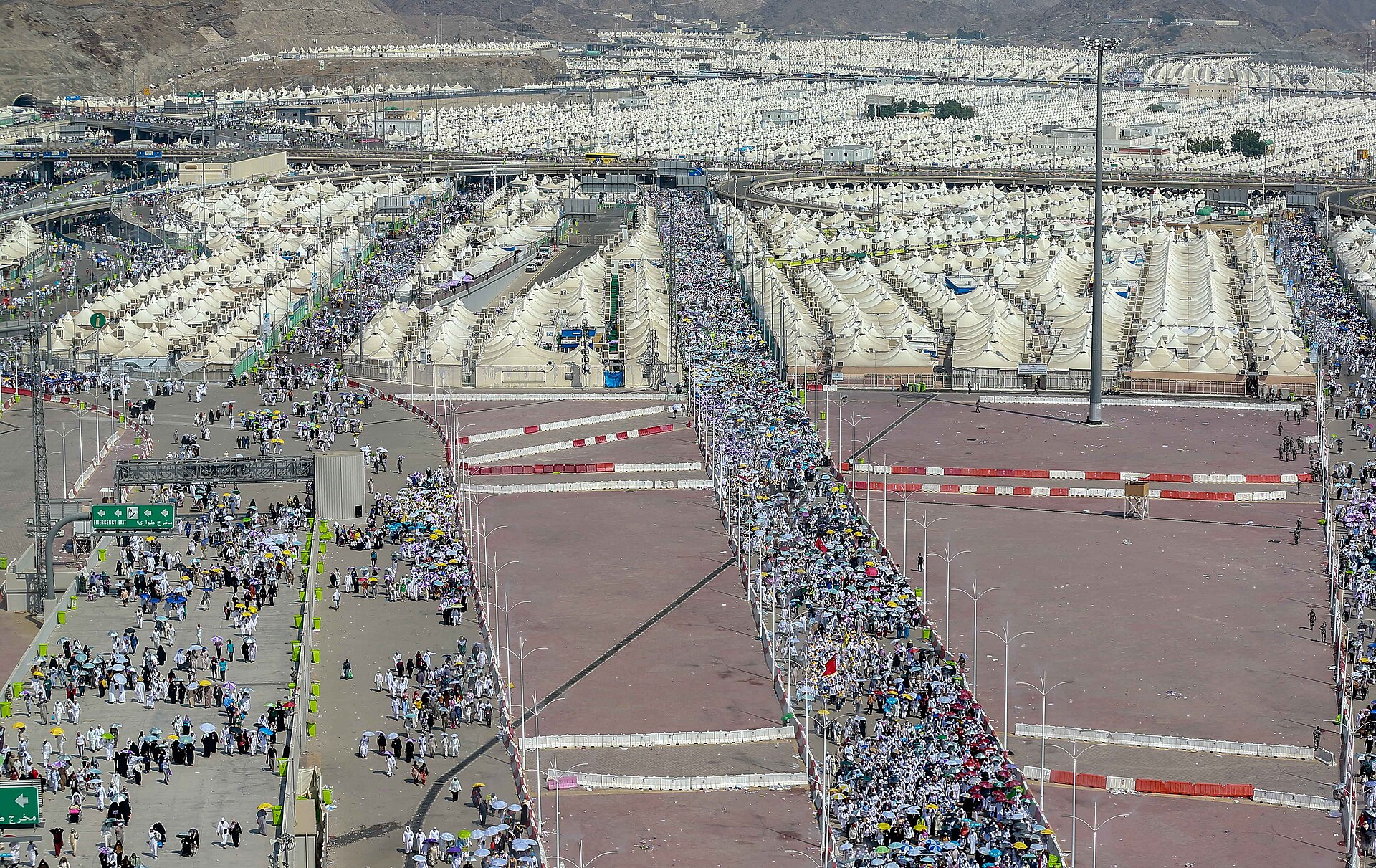
Saudi Arabia has approximately 400 PAC-3 MSE interceptors remaining from a pre-war stockpile of roughly 2,800 — an 86 percent drawdown confirmed by April 7, representing the fastest depletion of a national air defense inventory in modern warfare. Those 400 rounds must cover the Eastern Province (which absorbs roughly 70 percent of Iranian strike pressure directed at Aramco facilities and US basing infrastructure), the Yanbu corridor on the Red Sea coast, the capital Riyadh, and the Hejaz holy cities where Hajj will concentrate 1.37 million people in an area smaller than metropolitan Manchester.
The Middle East briefing 3,000+ readers start their day with.
One email. Every weekday morning. Free.
The peak depletion rate during the war’s first 16 days was approximately 25 rounds per day — 402 PAC-3 MSE missiles fired in just over two weeks, a tempo that would exhaust the current stockpile in sixteen days if resumed. Even at the lower average rate of 25.5 intercepts per day sustained across the first 35 days, the remaining inventory covers fewer than 16 days of continued engagement at historical intensity. The Day of Arafah falls on May 26, precisely 34 days after the ceasefire expired, and the Iranian missile force has not stopped producing during the pause.
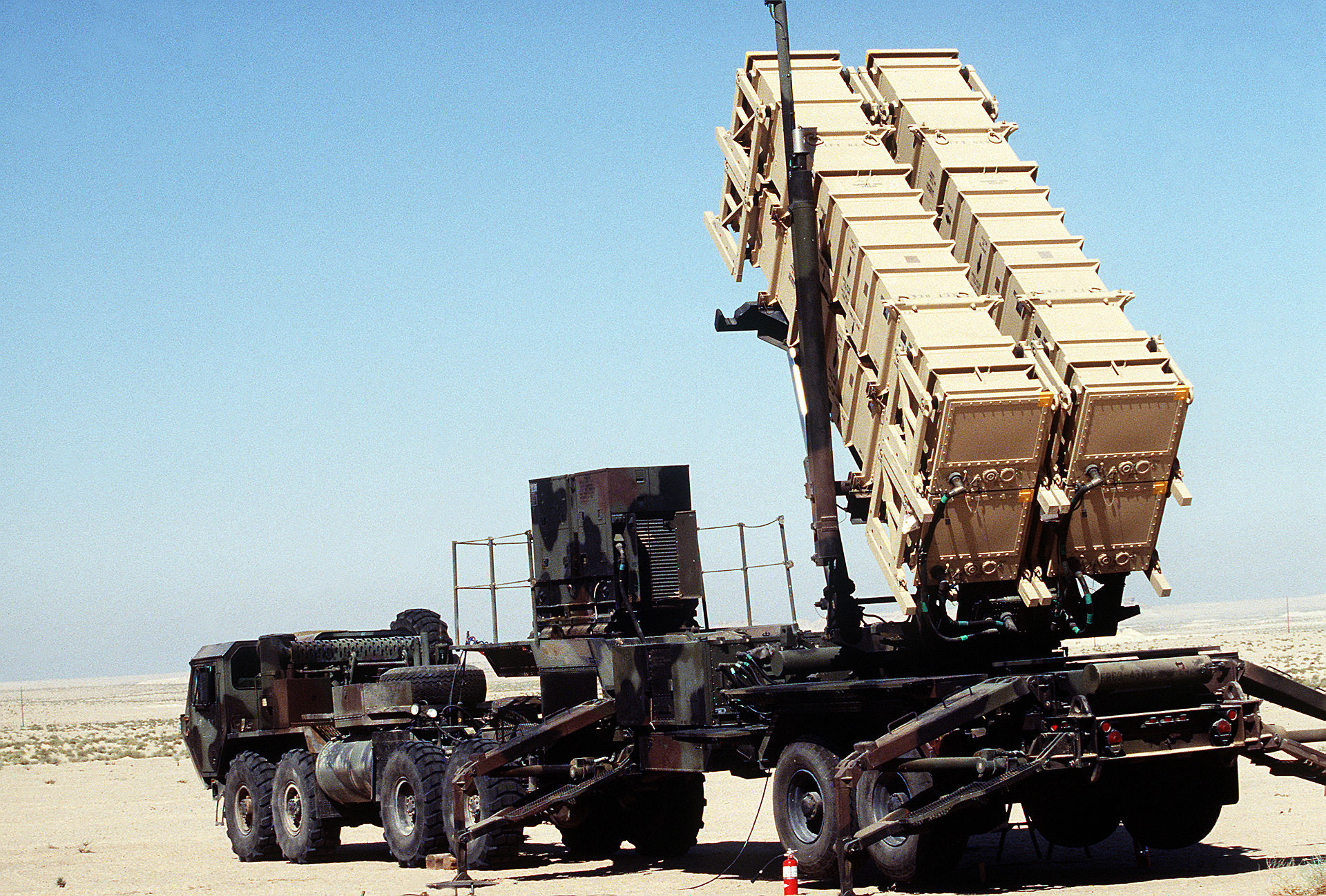
The Saudi Ministry of Defense has not published interceptor counts, coverage allocation maps, or any quantitative assessment of its capacity to defend the Hajj corridor. What it has published, on April 12 and 13, are photographs of launcher vehicles accompanied by a caption that reads: “Air defense forces — an eye that never sleeps, its mission is the safety of Muslim pilgrims.” The gap between that sentence and the inventory data it declines to disclose is the gap this editorial occupies.
One Factory in Arkansas
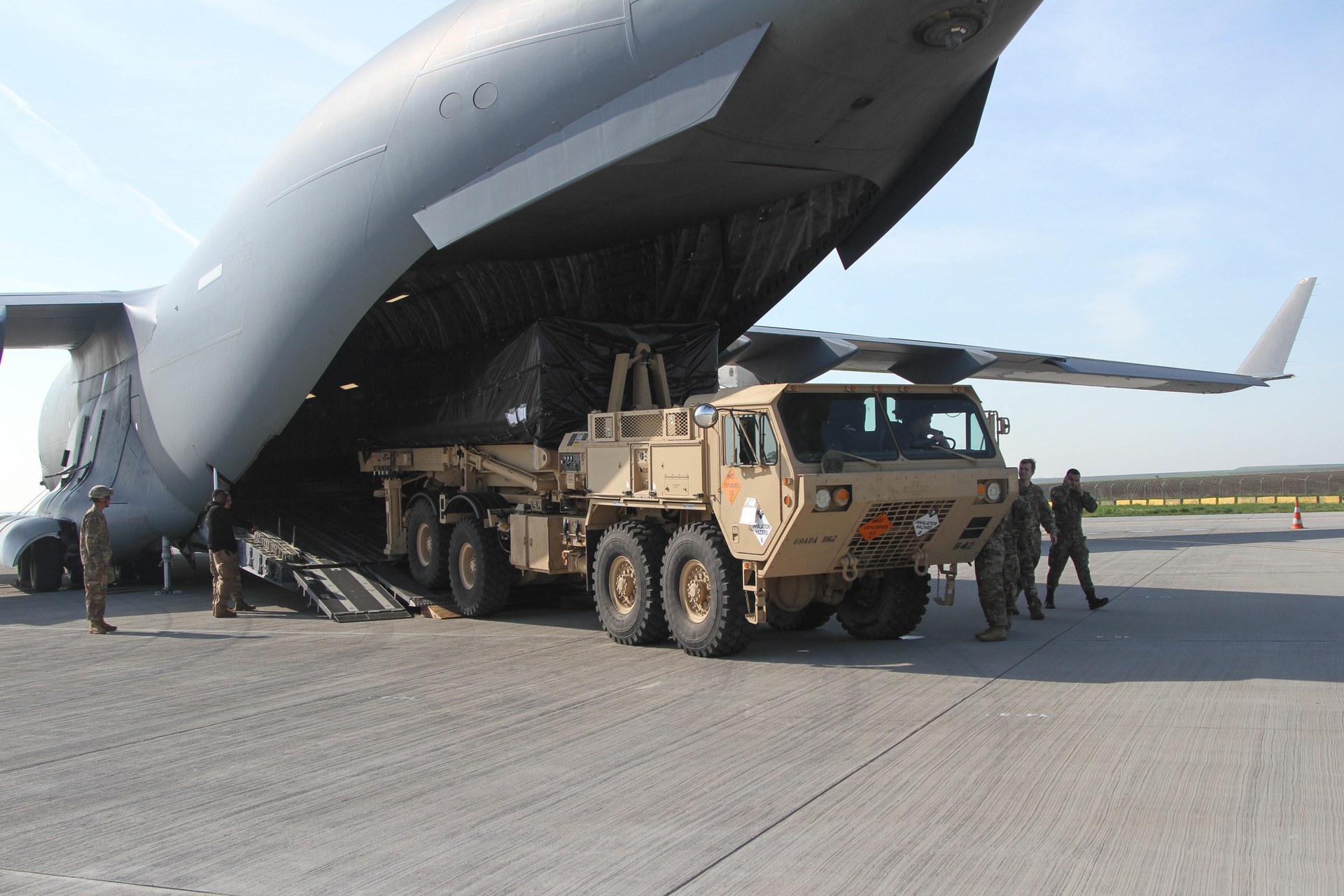
Every PAC-3 MSE interceptor on Earth comes from a single final assembly line in Camden, Arkansas, operated by Lockheed Martin’s Missiles and Fire Control division, which produced 620 rounds in all of 2025 for 17 partner nations including the US Army, Ukraine, Israel, and the entire NATO alliance. Saudi Arabia’s $9 billion Foreign Military Sales case, approved by the Defense Security Cooperation Agency on January 30, 2026, covers 730 rounds — more than 100 percent of one full year’s global output from the only facility that makes them.
No delivery is contractually committed before Hajj 2026, or before the end of 2026, or plausibly before late 2027. The rounds are new-build, not drawn from existing Department of Defense stocks. The FMS pipeline — congressional notification, contract negotiation, production scheduling, quality assurance, and transportation — runs 12 to 24 months under peacetime conditions, and wartime demand from Ukraine and Israel has already consumed the production slack that might have compressed that timeline. Tim Cahill, Lockheed Martin’s president of Missiles and Fire Control, described the April 10 contract as “answering the nation’s call with urgency,” but urgency in defence procurement means 2030, which is when the $4.761 billion accelerated production contract targets an annual output of 2,000 rounds — four years after Saudi stockpiles hit 400.
Kelly Grieco of the Stimson Center condensed the problem into nine words that defence ministers across the Gulf would prefer she had not said aloud: “You can’t replace those kinds of missiles overnight. It would take years.” She then added, with the precision of someone who has watched the Pentagon’s procurement cycle consume careers: “The Department of Defense is really good, but magic is still not one of its capabilities.” The Q1 2026 FMS data confirms the scale of the ask: 81 percent of all global US arms approvals, some $36.6 billion of $45 billion total, went to Middle East partners, with Saudi Arabia’s share including the 730 PAC-3 MSE rounds and a separate $3 billion F-15 sustainment package. The money is flowing; the missiles are not.
“You can’t replace those kinds of missiles overnight. It would take years.”Kelly Grieco, Senior Fellow, Stimson Center
Can Allied Transfers Fill the Gap Before Hajj?
They cannot, and the reasons are structural rather than political — though the politics are unfavourable as well. Poland formally refused a US request to transfer one Patriot battery to Saudi Arabia on March 31, 2026, with Defence Minister Wladyslaw Kosiniak-Kamysz declaring that Polish Patriot batteries “serve to secure the Polish skies and NATO’s eastern flank. Nothing is changing in this field.” Germany assembled only 35 PAC-3 rounds from the entire European coalition for Ukraine — a number that illustrates how thin allied interceptor inventories are even before a Gulf war enters the conversation. No NATO member has publicly offered interceptor transfers to Riyadh.
The Presidential Drawdown Authority under Section 506 of the Foreign Assistance Act, the emergency mechanism used to rush US military stocks to Ukraine beginning in December 2022, has not been invoked for Saudi Arabia. Its wartime ceiling of $200 million would cover approximately 50 PAC-3 MSE rounds at current unit costs — enough to sustain two days of engagement at the war’s average intercept rate, or roughly one day at the peak tempo observed in early March. Mark Cancian of CSIS framed the deeper constraint with characteristic directness: “The major risk is not that we’re going to run out for this war, but that inventories are inadequate for a possible conflict with China.” The US military’s own Pacific deterrence posture depends on the same interceptors that Saudi Arabia is burning through at a rate that would have seemed implausible in any pre-war planning scenario.
What remains, then, is not resupply but substitution — asking whether other systems, other forces, and other forms of deterrence can compensate for an interceptor gap that no single ally is willing or able to close. The answer depends on systems whose delivery dates fall after May 29, and on an adversary whose targeting restraint is a strategic choice rather than a capability limit.
The Layers That Are Not PAC-3
Saudi Arabia’s air defense architecture is not a single system, and the PAC-3 depletion does not mean the kingdom is defenceless — a distinction that matters operationally even as it fails to resolve the credibility problem politically. Four of the kingdom’s seven planned THAAD sites have reached operational capability since the first battery was activated in July 2025, and THAAD operates from a separate interceptor pool that has not been depleted by the Iranian campaign. Saudi operators, trained at Fort Bliss, own and operate these batteries independently of US forces, giving the system a sovereignty dimension that PAC-3 — with its deeper integration into US military logistics — does not share. THAAD intercepts ballistic missiles in their terminal descent phase at higher altitude than PAC-3, providing an upper-tier layer that remains intact even as the lower tier erodes.
Greece’s ELDYSA mission — 120 to 130 Hellenic Air Force specialists operating a single PAC-3 Patriot battery near Yanbu since September 2021, extended through November 2026 — executed the first confirmed NATO combat engagement of the war when it intercepted two Iranian ballistic missiles targeting the SAMREF refinery on March 19. The Greek battery is operationally real, combat-proven, and defending a specific industrial corridor rather than the holy cities, which means its contribution to Hajj security is indirect at best. Pakistan’s SMDA deployment of 13,000 troops and 18 fighter jets to King Abdulaziz Air Base on April 11 provides aerial intercept capability against drones and manned aircraft, along with the visible deterrence of a Muslim-majority ally deploying combat forces to defend the pilgrimage — but fighter jets do not intercept ballistic missiles, and the SMDA deployment is a complement to PAC-3, not a substitute for it. The April 24 Bahrain bilateral — where GCC military chiefs met bilaterally rather than as a unified command — underscored that collective air defense integration remains absent across the council fifty-four days after the mutual defense declaration.
South Korea’s Cheongung-II, the KM-SAM Block II system that achieved a 92.5 percent hit rate in its UAE combat debut in March 2026 by destroying 161 of 174 Iranian ballistic missiles, represents the most promising medium-term addition to the Saudi layered defence. The kingdom’s $3.2 billion contract for 10 batteries, signed in November 2023, remains in production with deliveries now reportedly targeted for late 2026 following the system’s combat validation — but “late 2026” is after Hajj, not before it, and no official contract amendment has confirmed even that accelerated timeline.
| System | Status | Stockpile | Hajj Coverage |
|---|---|---|---|
| PAC-3 MSE (Patriot) | Operational, depleted | ~400 rounds (14% of pre-war) | Split across 4 corridors; Hejaz allocation unknown |
| THAAD | 4 of 7 sites operational | Separate pool, not depleted | Upper-tier ballistic missile defense; Saudi-operated |
| Cheongung-II (KM-SAM) | In production, South Korea | Not delivered | Unavailable before late 2026 at earliest |
| ELDYSA (Greece PAC-3) | Combat-proven, Yanbu | Single battery | Yanbu industrial corridor only |
| Pakistan SMDA (18 jets) | Deployed April 11, Eastern Province | Air-to-air only | Drone/aircraft intercept; no ballistic missile capability |
The capacity gap PAC-3 depletion leaves below the THAAD ceiling is now being partially addressed by Ukrainian counter-drone technology: Ukrainian Sky Map and Merops interceptor drones are now supplementing depleted PAC-3 stocks at Prince Sultan Air Base, deployed after IRGC strikes exposed a C-UAS gap that US systems could not close on the acquisition timeline available. The April 24-25 Drone Agreement has formalized that contribution into a ten-year trilateral framework; our analysis of Ukraine’s role as a structural participant in Gulf air defense examines how Ukrainian counter-drone doctrine is now embedded across Saudi, UAE, and Qatari defense infrastructure.
Why Would Iran Strike During Hajj?
The conventional answer is that Iran would not, because deliberately attacking the holiest site in Islam during its holiest week would unite 1.8 billion Sunni Muslims against Tehran in a way that no amount of anti-Saudi propaganda could reverse. Iran has publicly maintained a targeting framework that excludes the holy cities, framing its strikes as directed against US military infrastructure and Saudi energy assets — a posture that preserves the threat without activating it, using restraint itself as the instrument of pressure. The conventional answer is probably correct, as far as intent goes. The problem with the conventional answer is that wars are decided by capability and accident as much as by intent, and the Iranian missile force has already demonstrated both the range and the volume to saturate Saudi air defences regardless of what any targeting doctrine nominally excludes.
Zero Iranian pilgrims will be present for Hajj 2026 — all Iranian consular services in Saudi Arabia collapsed after February 28, and the pre-war Iranian quota of approximately 87,500 pilgrims will go unfilled. This is not a footnote; it is a structural inversion of the deterrence logic that historically constrained Iranian behaviour during Hajj. In 1987, when an IRGC-organised political demonstration by Iranian pilgrims escalated into a confrontation that killed 402 people — 275 of them Iranian — Tehran paid a domestic price measured in its own citizens’ blood. That price does not exist in 2026. Iran retains full doctrinal latitude, drawing on Khomeini’s 1971 written instruction directing political action during pilgrimage, with zero domestic casualty exposure. As Martin Kramer of the Washington Institute has documented, the 1987 incident was the operational expression of a 16-year-old doctrine, not an improvisation — and that doctrine has never been formally rescinded.
Mohammad Bagher Ghalibaf, the Parliament Speaker and former IRGC Aerospace Force commander, declared in April — via state-aligned Tasnim — that “neither a bilateral ceasefire nor negotiations have any meaning,” language that places no constraint on the Hajj window from IRGC-aligned political leadership. Mohammad Hassan Rahimian, the Supreme Leader’s representative, told Tasnim on April 8 that the ceasefire agreement represented “the historical and unique greatness of Iran” — triumphalist framing from a regime mouthpiece that would make any concession during the Hajj period a domestic contradiction. The ceasefire expired on April 22 without extension. The pilgrims began arriving on April 18, four days before it lapsed.
The 95 Percent Readiness That Omits Everything
Prince Saud bin Mishaal bin Abdulaziz, the Deputy Emir of Makkah, announced in April that Hajj preparations had reached “95 percent readiness,” citing transport infrastructure, accommodation capacity, healthcare provision, and crowd management — the standard checklist that Saudi officials have refined across decades of pilgrimage logistics in which the primary threats were stampede, heat exhaustion, and communicable disease. The announcement contained no air defence metrics, no interceptor stockpile data, no threat assessment addressing the Iranian missile force, and no acknowledgment that 2026 is the first Hajj in history conducted under sustained ballistic missile bombardment of the host nation’s territory.
The Saudi Ambassador to Indonesia, Faisal bin Abdullah Al-Amudi, told Indonesian officials that “Saudi Arabia remains safe at this time” — a formulation whose qualifying clause does the work its speaker presumably hoped listeners would not notice. The US State Department noticed. OSAC issued a formal security alert titled “Reconsider Participating in Hajj 2026,” and the US Embassy in Riyadh escalated to a Level 3 “Reconsider Travel” advisory on April 7 — the strongest warning short of “Do Not Travel” — citing the ongoing security situation in language that does not use the phrase “95 percent readiness.”
Shalom Lipner of the Atlantic Council framed the broader dynamic as “a race of attrition between the two sides to see who can get over the finish line.” The finish line, for Saudi Arabia, is not a military objective; it is May 29, the last day of Hajj, after which the concentrated pilgrim population disperses and the Custodian’s immediate exposure to a mass-casualty event at the holiest site in Islam diminishes until next year. Every day between now and then is a day in which 400 interceptors must hold against an adversary that produces more missiles per day than Saudi Arabia can replace per month.
The Pilgrim-Sending Nations Are Already Hedging
Indonesia, which holds the world’s largest Hajj quota at 221,000 pilgrims, began its first charter flights on April 22 — the same day the ceasefire expired — after Minister of Hajj Mochamad Irfan Yusuf outlined three formal contingency scenarios in a parliamentary briefing that treated the possibility of cancellation as a planning input rather than an unthinkable outcome. Scenario 1 envisions proceeding with rerouted flights avoiding contested airspace. Scenario 2 delays Indonesian departures while Saudi Arabia continues admitting pilgrims from other nations. Scenario 3 is full suspension — the first time a major pilgrim-sending nation has formally documented a framework for withdrawing from Hajj on security grounds rather than on the epidemiological grounds that governed the COVID-19 cancellations of 2020 and 2021.
President Prabowo’s public formulation — “As long as no statement was released by Saudi Arabia that prevents pilgrims’ departure, Insha’Allah Indonesia will carry on with it” — places the cancellation decision on Riyadh rather than Jakarta, which is diplomatically elegant but operationally revealing: Indonesia is proceeding not because it has assessed the security situation as safe, but because Saudi Arabia has not formally declared it unsafe. The distinction matters because it transfers responsibility to the Custodian in a way that Riyadh cannot subsequently disclaim. Pakistan’s quota of 119,000 to 179,210 pilgrims and India’s 175,025 add to a total expected arrival of up to 1.8 million, all of whom will concentrate in an area within a single PAC-3 battery’s coverage radius — if that battery is not simultaneously tasked with defending Riyadh, Jubail, and the Eastern Province energy corridor 900 kilometres to the east.
Saudi religious tourism generates $12 billion annually, representing 20 percent of non-oil GDP and 7 percent of total GDP, with Vision 2030 targeting 30 million religious visitors per year. Cancelling Hajj would be an economic wound; worse, it would be an admission that the Custodian cannot fulfil the obligation that justifies the title. Proceeding with Hajj under depleted air defences is a bet that Iran’s targeting restraint will hold through the holiest week of the Islamic calendar — a bet that Saudi Arabia is making not because it has adequate interceptors, but because the alternative is a legitimacy crisis that no number of interceptors can resolve. The US government made that calculus explicit when OSAC issued the first-ever advisory against Hajj attendance in modern history — and Saudi Arabia responded with silence.
By April 24, confirmed Hajj 2026 arrivals had crossed 48,000 across 78 flights from Bangladesh, Pakistan, Indonesia, and Thailand — physical proof that the abstract planning scenarios have become operational reality, with Witkoff and Kushner preparing to fly to Islamabad on April 26 while the IRGC continued mine-laying in Hormuz.
| Nation | Quota | Status | Contingency |
|---|---|---|---|
| Indonesia | 221,000 | First departures April 22 | Three formal scenarios incl. full suspension |
| Pakistan | 119,000–179,210 | Arrivals from April 18 | SMDA deployment as parallel security guarantee |
| India | 175,025 | Proceeding | No public contingency framework |
| Total expected | Up to 1.8 million | Arrivals through May 21 | US Level 3 advisory; OSAC “Reconsider” alert |
What the Custodian Title Actually Requires
King Fahd did not adopt the Custodian title on October 27, 1986, because he was feeling pious. He adopted it because two events in 1979 had destroyed the theological foundations of Saudi legitimacy and he needed a new one: Khomeini’s revolution gave Iran a platform to contest Saudi leadership of the Islamic world, and Juhayman al-Otaybi’s seizure of the Grand Mosque — which required French GIGN commandos to resolve — demonstrated that the House of Saud could not even secure its own holiest site without infidel special forces. The Custodian title was a calculated answer to both crises, asserting that Saudi Arabia’s primary role is Islamic stewardship and that the competence to protect pilgrims is the source of the monarchy’s religious authority. Fahd replaced “His Majesty” with “Custodian of the Two Holy Mosques” because a title that claims guardianship is harder for Iranian propaganda to attack than one that claims royalty.
The title has survived every test that history has presented until now. The 1990 Hajj proceeded with 1.48 million pilgrims while 500,000 US troops deployed on Saudi soil during Desert Shield — the closest modern precedent to military operations concurrent with pilgrimage — but Iraq’s Scud missiles targeted Riyadh and Dhahran, not the Hejaz, and no sustained aerial bombardment threatened the holy cities. The 2015 Mina stampede killed at least 2,411 pilgrims in peacetime, a catastrophe that generated global criticism of Saudi crowd management but did not threaten the foundational claim that the kingdom could defend the pilgrimage from external military attack. That claim has never been tested because the test has never arrived — until a war in which 894 aerial threats struck Saudi territory in 56 days, depleting the interceptor stockpile to 14 percent of its pre-war level, with Hajj five weeks away.
Wes Rumbaugh of CSIS articulated the structural choice that the stockpile crisis forces: “The Department of Defense can either ante up and buy the necessary interceptors to support those deployments, or fold on its regional interests and bear the consequences.” MBS faces an analogous choice compressed into a theological frame — he can either demonstrate that 400 interceptors, four THAAD batteries, a Greek Patriot crew, 18 Pakistani jets, and the assumption of Iranian restraint are sufficient to protect 1.37 million pilgrims, or he can confront the possibility that the Custodian title means something different when the guardian’s shield is 86 percent spent. Defence Secretary Pete Hegseth described the April 10 Lockheed contract as designed for “longer, larger, more predictable contracts” — language that addresses structural underinvestment over a decade, not a stockpile emergency measured in weeks. The missiles that would make the Custodian’s guarantee credible will arrive in late 2027 at the earliest. The pilgrims are arriving now.
“The Department of Defense can either ante up and buy the necessary interceptors to support those deployments, or fold on its regional interests and bear the consequences.”Wes Rumbaugh, CSIS Fellow
FAQ
Has Saudi Arabia requested emergency US military interceptor stocks through Presidential Drawdown Authority?
No Presidential Drawdown Authority invocation has been reported or announced for Saudi Arabia as of late April 2026. The mechanism, used extensively for Ukraine beginning in December 2022, carries a $200 million wartime ceiling under Section 506 of the Foreign Assistance Act — sufficient for approximately 50 PAC-3 MSE rounds at $3.9 million each, which would cover roughly two days of engagement at the war’s average intercept rate. The structural inadequacy of the PDA ceiling for the scale of Saudi depletion may explain why neither Washington nor Riyadh has publicly pursued this route, though no official explanation has been offered for the omission.
What is the cost-exchange ratio between Iranian drones and Saudi interceptors?
Each PAC-3 MSE interceptor costs $3.9 million; an Iranian Shahed-136 drone costs between $20,000 and $50,000, producing a cost-exchange ratio between 78-to-1 and 195-to-1 in Iran’s favour. Iranian ballistic missiles are more expensive but still cheaper than the interceptors used to destroy them. Iran’s daily production capacity of 50 to 100 drones means Tehran can generate $1 million to $5 million worth of aerial threats per day that require $97.5 million to $250 million worth of interceptors to defeat — an attrition curve that Saudi Arabia cannot sustain at current stockpile levels regardless of its financial capacity to purchase replacements.
How does the 1990 Gulf War Hajj compare to 2026?
The 1990 Hajj during Operation Desert Shield saw 1.48 million pilgrims attend while 500,000 US troops were deployed on Saudi soil, but the two situations diverge on the variable that matters most: in 1990, Iraqi Scud missiles targeted Riyadh and Dhahran in the Eastern Province, not the Hejaz holy cities, and the total number of Scud launches against Saudi Arabia across the entire Gulf War was 46 — fewer than two average days of Iranian aerial attacks in the current conflict. The 1990 Hajj also predated Iran’s current missile production capacity by three decades and occurred while Tehran was neutral in the Iraq-Kuwait dispute rather than an active combatant targeting Saudi territory.
What happens to Saudi Arabia’s Custodian legitimacy if a missile reaches the Hejaz during Hajj?
The Custodian of the Two Holy Mosques is not merely a diplomatic honorific; it is the theological foundation of Saudi Arabia’s claim to lead the Islamic world, adopted in 1986 specifically to counter Iranian revolutionary challenges to that leadership. A missile strike on or near the holy cities during Hajj — even one intercepted at low altitude with visible debris — would produce a legitimacy crisis qualitatively different from the 2015 Mina stampede or any prior Hajj disaster, because it would demonstrate that an adversary state can project force into the space the Custodian exists to protect. Iran’s current posture of excluding the holy cities from its targeting framework is a strategic choice, not a capability limitation, and the distinction between restraint and inability would collapse in the event of a single miscalculated trajectory or guidance failure across a 34-day window of potential hostilities.
Could Saudi Arabia cancel Hajj 2026 on security grounds?
Technically, yes — Saudi Arabia cancelled Hajj to foreign pilgrims in 2020 and 2021 during the COVID-19 pandemic, establishing a modern precedent for suspension. However, a wartime cancellation would carry fundamentally different implications: it would constitute an admission that the kingdom cannot defend the pilgrimage from military attack, which directly contradicts the Custodian title’s core claim. The economic cost would be substantial — Saudi religious tourism generates $12 billion annually, representing 20 percent of non-oil GDP — but the legitimacy cost would be incalculable, handing Iran a strategic victory without Tehran having fired a single missile at the holy cities. This is why Riyadh is proceeding: not because the security assessment supports it, but because the alternative is worse than the risk. The quiet diplomatic operation through which Saudi Arabia co-engineered Lebanon’s 3-week ceasefire extension as additional Hajj insurance — and why even that cover carries a 12-day gap — is examined in Saudi Arabia’s Lebanon Ceasefire Is Hajj Insurance — Bought Through Durbar Diplomacy. The operational reality of that gap — 1.8 million pilgrims on the ground with a PAC-3 stockpile at 14% and no resupply before Day of Arafah — is laid out in The Hajj 2026 security architecture and what it cannot cover.