
WASHINGTON — President Trump told reporters from the Oval Office on April 24 that Iran “must” stop financing Hezbollah as a condition for any peace deal — “That is a must,” he said — and in doing so encoded into American negotiating terms a demand that Iran’s elected government cannot deliver, because the money does not flow through any institution Iran’s president controls. The more than $1 billion a year — the US Treasury documented that figure for 2025 alone — that reaches Hezbollah moves through the IRGC’s Quds Force, specifically through a logistics and smuggling unit called Unit 190 that answers to the IRGC command chain, which answers to Supreme Leader Khamenei under Article 110 of the Iranian constitution, which means it does not answer to President Pezeshkian at all. Trump is not asking Iran to make a diplomatic concession. He is asking the IRGC to amputate the primary external function of its most important operational branch — and the IRGC has spent 55 days demonstrating, through Khamenei’s silence and Vahidi’s dominance, that it has no intention of doing anything of the kind.
Table of Contents
- Where the Money Goes — and Who Controls It
- Why Can’t Pezeshkian Simply Agree to Cut Hezbollah Funding?
- The 15-Point Plan vs. the 10-Point Plan
- What Did the JCPOA Get Wrong on Hezbollah?
- After Nasrallah: The IRGC Became Hezbollah
- How Does Trump’s Hezbollah Condition Benefit Saudi Arabia?
- The Pyrrhic Logic
- The Hardware Pipeline That Runs on Deadlock
- Hezbollah’s Own Answer
- FAQ
Where the Money Goes — and Who Controls It
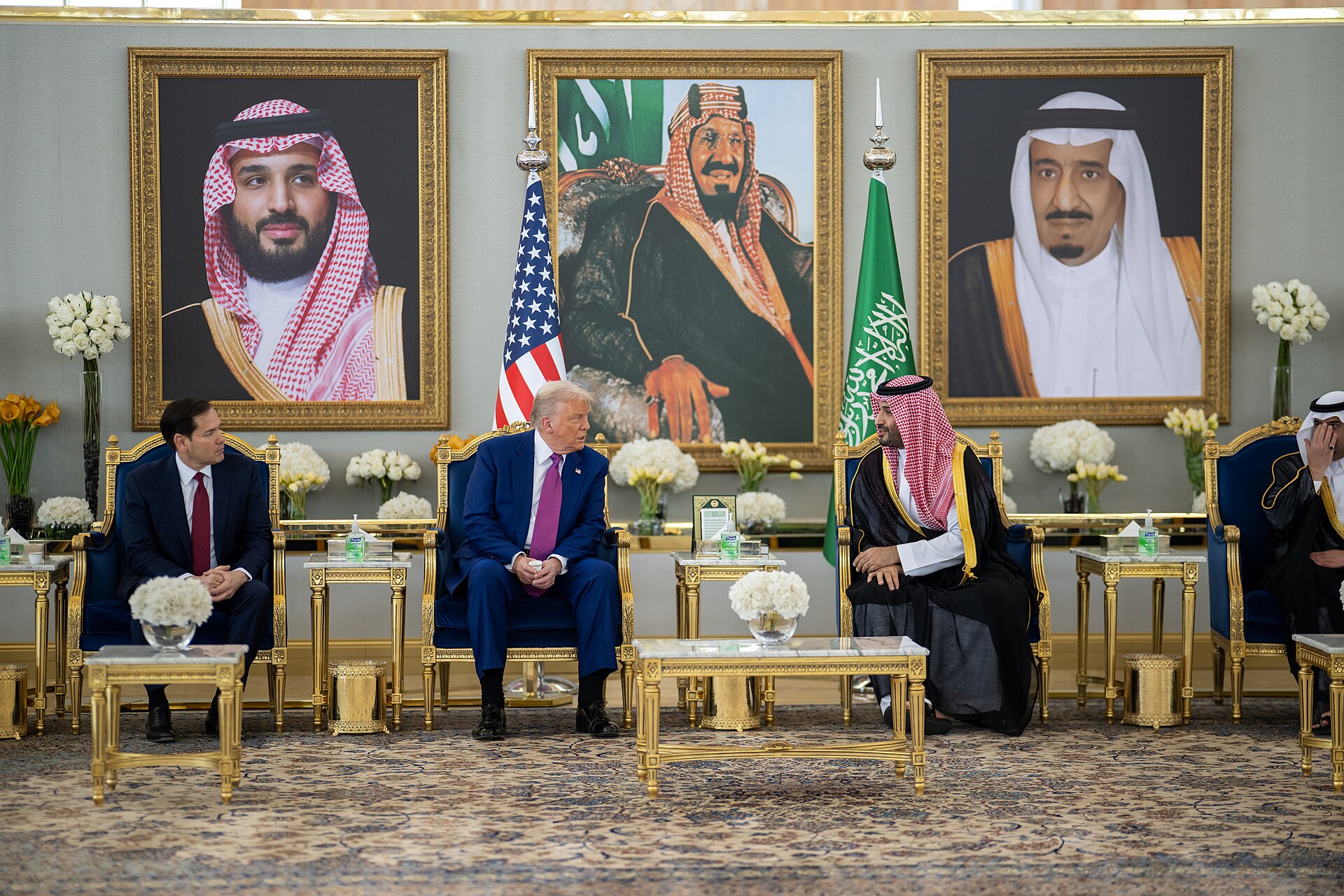
The US Treasury documented in November 2025 that Iran’s Quds Force transferred more than $1 billion to Hezbollah that year alone, largely through money exchange companies and hawala networks. The operational unit responsible — Unit 190, which specializes in weapons and funds smuggling — coordinates transfers through oil and LPG smuggling to China and Asia, working alongside Houthi logistics networks. This is not an appropriation that passes through Iran’s parliament or its central bank. It is an IRGC operational expenditure, managed by IRGC officers, through IRGC channels, under IRGC authority.
US officials have estimated Iran’s annual cash transfer to Hezbollah at roughly $700 million in baseline years, representing approximately 70 percent of Hezbollah’s total annual revenue of around $1 billion — a figure that climbed above that threshold in 2025 as the war escalated. In 2016, Hassan Nasrallah himself publicly acknowledged that all of Hezbollah’s funding comes directly from Iran — a statement of dependency so total that it should have settled any ambiguity about the institutional pipeline. When Trump demands that Iran sever this financing, he is not demanding that Tehran redirect a budget line. He is demanding that the Quds Force — which has spent four decades building this architecture — voluntarily shut down the machinery that justifies its existence as an expeditionary force.
Hanin Ghaddar of the Washington Institute framed the structural reality plainly: “The IRGC’s view [is that] the group’s sole role is to defend the Iranian regime — not Lebanon, and not itself.” The Quds Force does not fund Hezbollah as a favor. It funds Hezbollah because Hezbollah is the operational output of the Quds Force’s regional strategy — the product, not the client.
Why Can’t Pezeshkian Simply Agree to Cut Hezbollah Funding?
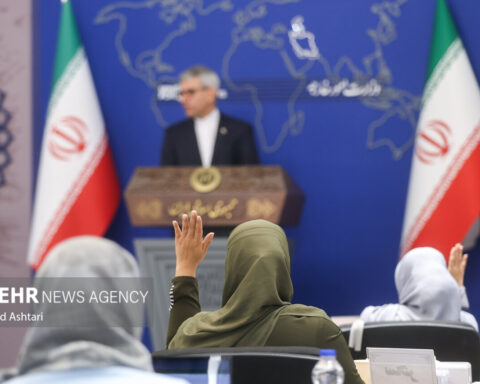
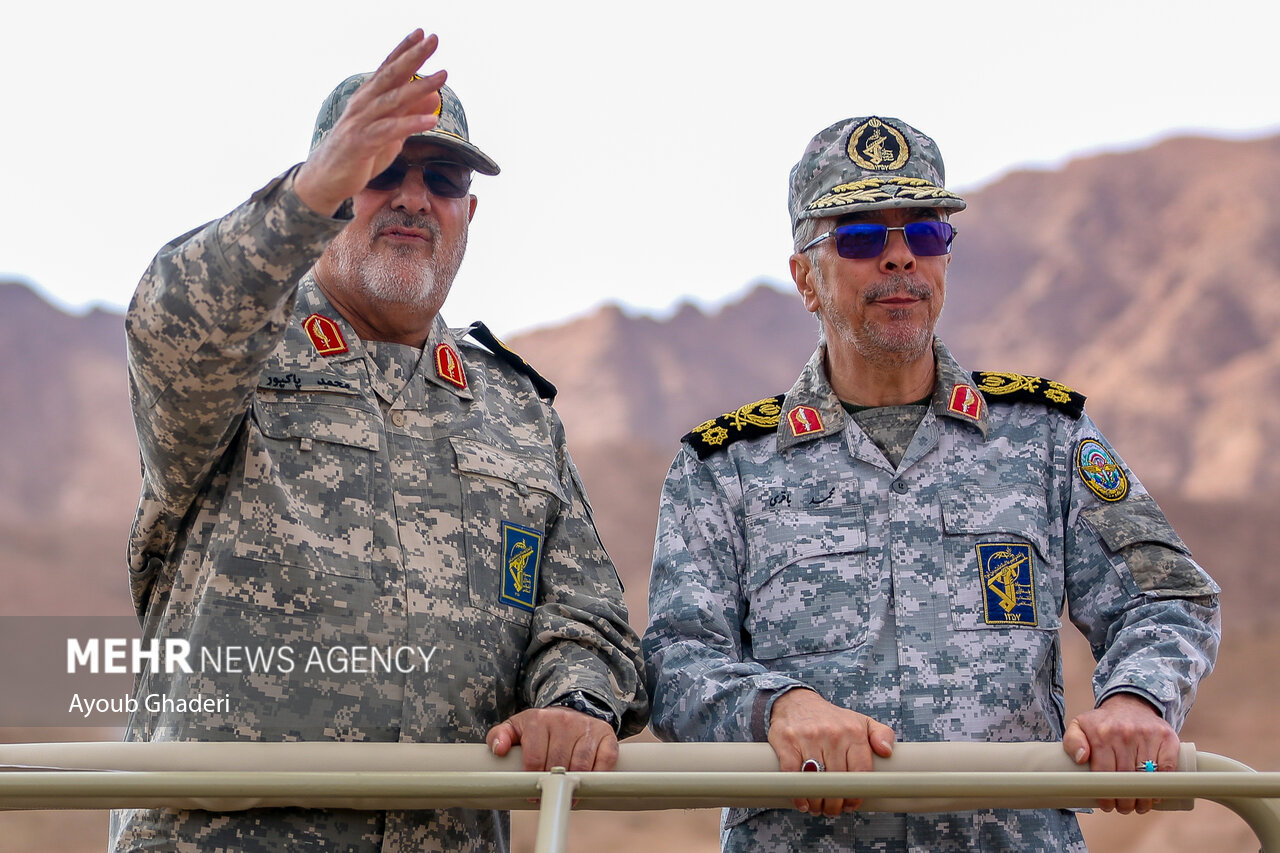
Because he has no authority over the institution that provides it. Under Article 110 of the Iranian constitution, the Supreme Leader — not the president — commands the armed forces, including the IRGC. President Pezeshkian has zero constitutional power to order the IRGC to do anything. He proved this himself on April 4, when he publicly accused IRGC Secretary Ahmad Vahidi and Khatam al-Anbiya commander Abdollahi of wrecking the Islamabad ceasefire talks by deviating from the negotiating delegation’s mandate. The accusation was extraordinary — an Iranian president naming the men who sabotaged his own diplomacy — and it changed nothing. Vahidi continued to operate as what the Institute for the Study of War has described as the man “practically controlling the country.”
This is what the authorization ceiling means in practice: Iran’s elected government can agree to whatever it likes at the negotiating table, and the IRGC can ignore the agreement the moment it is signed, because the IRGC does not take orders from the president. The only figure who can override the IRGC is Khamenei, and Khamenei has been absent from public view for 55 days as of April 24. Whether he is incapacitated, dead, or simply silent, the effect is identical — there is no one in the Iranian system with both the authority and the willingness to order the IRGC to sever its Hezbollah pipeline.
The Middle East briefing 3,000+ readers start their day with.
One email. Every weekday morning. Free.
Trump appeared to acknowledge this structural fracture on April 21, when he announced a ceasefire extension while explicitly citing Iran’s “seriously fractured” government. But acknowledging that Iran’s government is fractured and then demanding that the fractured government deliver a concession that only the fracturing institution can provide is not a negotiating strategy. It is a formula for permanent deadlock — which may, for some of the parties involved, be precisely the point.
The 15-Point Plan vs. the 10-Point Plan
The distance between American and Iranian positions on Hezbollah is not a gap that skilled diplomats can bridge with creative language. It is a structural opposition in which both sides have made the proxy network a core demand — the Americans demanding its dismantlement, the Iranians demanding its protection. Point 6 of the US 15-point peace plan, delivered via Pakistan on March 25, requires “cessation of support to militant groups in the region including Hezbollah, the Houthis and Hamas.” This was positioned as a framework-level condition, not a Phase 2 aspiration to be negotiated later.
Iran’s 10-point counterplan does not merely reject this demand. Its Point 1 explicitly requires “protection extended to its network of proxies, including Hezbollah and the Houthis.” Tehran is not offering to phase out the relationship in exchange for concessions. It is demanding that the United States formally guarantee the survival of the very network Washington wants eliminated. Iran’s separate 5-point plan — demanding cessation of US-Israeli attacks, security guarantees, war reparations, sanctions lifting, and international recognition of Iranian sovereignty over Hormuz — contained no counter-offer on proxy financing whatsoever, as if the subject did not exist.
Michael Jacobson of the Washington Institute, a former State Department counterterrorism official, laid out what a genuine proxy-severance agreement would require: Iran must “no longer provide money, valuables, or any other type of financial support” through formal banking or informal channels including hawalas and cryptocurrency, must expel proxy officials from Iranian territory, and must withdraw IRGC personnel from proxy areas of operation. Every element of that list requires the IRGC to act against its own institutional interests, ordered by a Supreme Leader who has not been seen in public since early March.
What Did the JCPOA Get Wrong on Hezbollah?
The 2015 nuclear deal excluded Hezbollah and proxy networks entirely from its scope — a deliberate architectural choice that Obama’s negotiators defended at the time as necessary to get any deal at all, and that Trump’s team has spent seven years attacking as a fatal concession. The Treasury Department imposed separate Hezbollah sanctions in late July 2015, immediately after the JCPOA was signed, signaling that Washington considered the proxy track structurally separate from the nuclear track. The problem, as the Washington Post noted on April 22, was that sanctions relief under the JCPOA freed up funds that helped finance Hezbollah — “a concern that mirrors critiques of Obama’s deal” now confronting Trump’s own negotiators.
Between 2016 and 2019, while the JCPOA was in effect and Iran’s nuclear program was constrained, Hezbollah’s precision missile inventory grew from an estimated 10,000 to 150,000 according to Israeli military intelligence assessments. The deal froze centrifuges while the Quds Force tripled the arsenal of the organization Trump now demands Iran defund. Trump is correct that the JCPOA’s omission of proxies was a structural failure. But his proposed solution — making proxy severance a precondition rather than a follow-on negotiation — creates a different structural failure: it makes the deal contingent on an outcome that no Iranian civilian official has the constitutional power to deliver.
Karim Sadjadpour of the Carnegie Endowment has documented the underlying dynamic across five Iranian presidential transitions since 1989: “Khamenei and the Revolutionary Guard — which he commands — have grown more powerful over the decades.” Each new president arrives with less authority over the IRGC than his predecessor. Pezeshkian is simply the latest and most powerless iteration of a pattern that predates Trump’s first term in office.
After Nasrallah: The IRGC Became Hezbollah
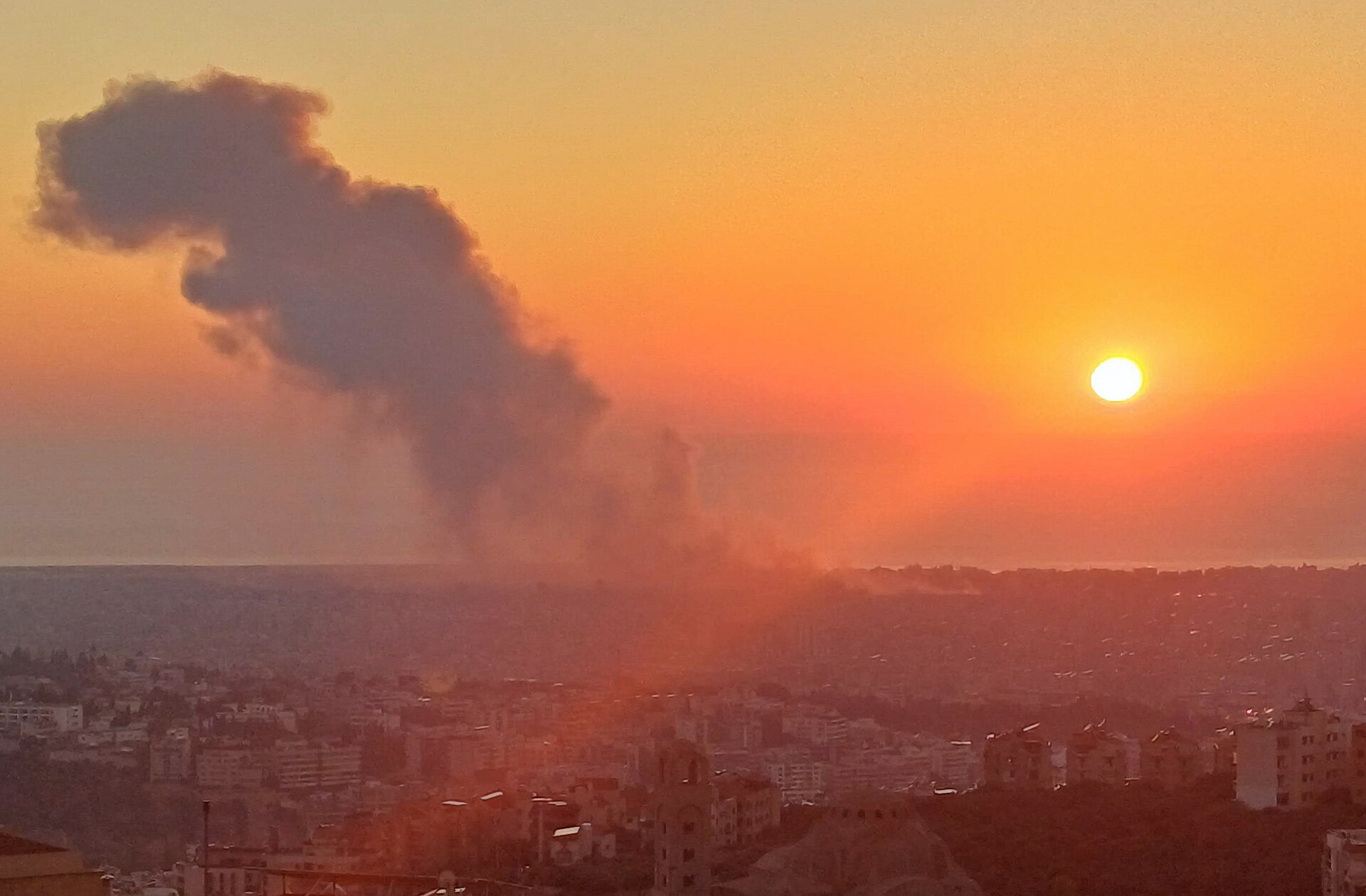
The killing of Hassan Nasrallah on September 28, 2024 — in a Beirut strike that also killed Quds Force deputy commander Abbas Nilforoushan, the designated IRGC commander for Lebanon — did not sever the IRGC-Hezbollah link. It collapsed the distance between them. Lebanese Prime Minister Nawaf Salam publicly accused the IRGC of directly commanding Hezbollah operations in 2026, stating the group was “managing the military operation in Lebanon.” Nicholas Blanford of the Atlantic Council confirmed the assessment: “I think the IRGC is calling the shots. They are working together” — adding that senior Hezbollah leadership may not even have been aware of operational decisions being made in their name.
The IRGC’s response to Nasrallah’s death was not to loosen its grip but to restructure Hezbollah’s command from a hierarchical organization into decentralized “mosaic” cells that mirror IRGC internal practices. This is the institutional behavior of an organization absorbing a subsidiary, not funding an ally. Demanding that the IRGC sever financing to Hezbollah is, in operational terms, like demanding that an army stop funding its own forward-deployed units — a category error dressed up as a negotiating position.
Randa Slim of the Stimson Center identified the paradox: “Rebuilding Iran’s proxy network is going to be quite challenging given the structural shifts that have eroded its foundations” — the loss of Syria as a land corridor, the decapitation of Hezbollah’s leadership, the degradation of Houthi infrastructure. But she added the critical qualifier: “An IRGC-controlled political order would elevate the proxies on the regime’s strategic priority ladder and channel resources toward rebuilding them.” The more the IRGC loses, the more it invests in what remains. Quds Force commander Esmail Ghaani made this explicit on April 16: “The victorious force on the decisive battlefield is the heroic Hezbollah…If a ceasefire is achieved, it is the result of the steadfast resistance of Lebanon and the support of the Islamic Republic of Iran.”
How Does Trump’s Hezbollah Condition Benefit Saudi Arabia?
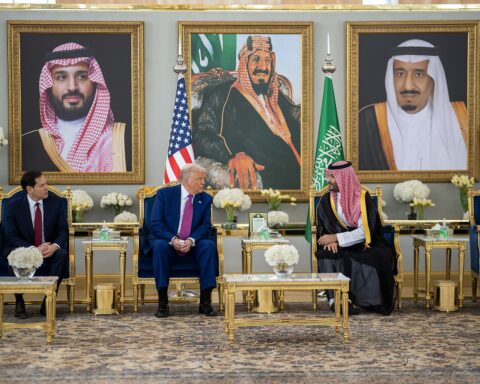
Saudi Arabia’s minimum conditions for any Iran deal have always included verifiable withdrawal of IRGC advisors from Iraq, Syria, Lebanon, and Yemen, plus militia disarmament under UN supervision — positioned as a precondition, not a follow-up provision. Former Saudi Ambassador Adel al-Jubeir captured the structural frustration when he noted: “When Washington decides to negotiate with Tehran, no amount of money…can guarantee a seat at the table.” Saudi Arabia was excluded from the 2015 JCPOA negotiations. It remains excluded from the Islamabad direct talks — a repetition of the same pattern eleven years later.
But Trump’s April 24 statement changes the Saudi calculus in a way that exclusion from the room does not. By making Hezbollah financing severance a public, explicit, presidential precondition for any deal, Trump has inserted Saudi Arabia’s core red line into US negotiating terms without Riyadh having to own it publicly. The kingdom gets the demand it has always wanted — IRGC proxy dismantlement as a precondition — attributed not to Saudi Arabia but to the United States. Max Becker-Hicks of the New Lines Institute described the dependency architecture: Saudi Arabia “can only look to the U.S. to provide vital military support and must now depend on the success of U.S. and Israeli operations to destroy Iran’s missile and UAV arsenals.”
A US exit or settlement that does not lock in sustained military presence leaves Saudi Arabia exposed, because Riyadh lacks a codified mutual defense treaty with Washington. The absence of a deal, paradoxically, may serve Saudi interests better than a deal that trades away the proxy condition for nuclear concessions — which is exactly what happened under the JCPOA, and which Saudi Arabia spent seven years describing as a betrayal.
The Pyrrhic Logic
The benefit is real but the cost is severe, because a condition that cannot be met is a condition that locks the conflict open. Iran has refused to return to Islamabad talks. FM Araghchi called the US naval blockade “an act of war” and said Iran would not negotiate “while under the shadow of threats.” Ali Shamkhani, before he was killed on February 28, told a Hezbollah-affiliated outlet that Iran would “definitely continue” to support the Axis of Resistance and would not give in to US demands to halt support — a position stated 26 days before the first strikes, and one that the IRGC has given no indication of revising since.
The two sides are not negotiating the terms of a compromise. They are restating maximalist positions from opposite ends of a structural divide that runs through the Iranian constitution itself. Even if Araghchi were to sign a document agreeing to cut Hezbollah funding — which he has shown no inclination to do — the IRGC would not be bound by it, because the IRGC does not report to Araghchi, does not report to Pezeshkian, and reports to a Supreme Leader who has not been seen in public for 55 days.
Trump extended the Lebanon-Israel ceasefire by three weeks on April 23 — one day before adding the Hezbollah financing condition. Extending a ceasefire while adding a condition that the other side cannot meet is a formula for indefinite limbo: the guns stay quiet in Lebanon, the blockade stays active on Iranian ports, the talks go nowhere, and the status quo hardens into something that starts to look permanent. The ceasefire buys time, but time for what? Not for negotiation — the Iranians have refused to return to Islamabad. Not for internal Iranian reform — the IRGC is consolidating, not retreating. Time, in this configuration, benefits the parties that profit from the absence of resolution.
The CNN framing on April 20 — that “a deal to end the Iran war seemed close” before Trump’s social media posts disrupted it — misreads the structural dynamics. The deal did not seem close. Araghchi and Vance were, by Araghchi’s own account, “inches away” from a memorandum of understanding before Vance walked out of Islamabad — but an MoU is not a deal, and the items that remained unresolved were precisely the items that the IRGC refuses to negotiate: Hezbollah, proxy networks, and Hormuz sovereignty. Trump’s public statements did not wreck a viable negotiation. They surfaced the demands that were always going to wreck it.
The Hardware Pipeline That Runs on Deadlock
US foreign military sales in the first quarter of 2026 totaled more than $45 billion globally. The Middle East captured 81 percent of that total — $36.6 billion — according to Defense Security Monitor. Saudi Arabia alone received approval for 730 Patriot PAC-3 MSE missiles valued at $9 billion on January 30. The broader US-Saudi arms package under the 2025 agreement is valued at $142 billion. These numbers do not exist in a vacuum. They exist because there is a war, because the war has exposed Saudi Arabia’s air defense gaps — PAC-3 interceptor stocks are estimated at roughly 14 percent of pre-war levels — and because a prolonged conflict without resolution keeps the procurement pipeline open and urgent.
Becker-Hicks identified the structural dependency: a US settlement with Iran that does not “provide sufficient guarantees of Gulf state security would also intensify Saudi Arabia’s diversification strategy.” In plainer terms, if the war ends with a deal that leaves the IRGC’s proxy network intact — which is what the JCPOA effectively did — Saudi Arabia loses both the US military umbrella and the justification for emergency procurement. If the war continues without a deal, Saudi Arabia retains both. The $9 billion PAC-3 approval was not a response to a specific threat assessment. It was a response to a strategic environment that a permanent negotiating deadlock sustains.
Eleven senior IRGC members have been killed since February 28, including commander-in-chief Pakpour and intelligence division head Khademi. Total IRGC casualties are estimated at up to 6,000. Every week the conflict continues without a deal, the IRGC degrades further — and Saudi Arabia does not have to fire a shot to benefit from that degradation. The question nobody in Riyadh will answer publicly is whether this outcome is a regrettable side effect of failed diplomacy or the preferred state of affairs.
| Issue | US Position (15-Point Plan) | Iran Position (10-Point Plan) |
|---|---|---|
| Hezbollah financing | Point 6: Full cessation of support to Hezbollah, Houthis, Hamas | Point 1: Protection extended to proxy network including Hezbollah, Houthis |
| IRGC personnel abroad | Withdrawal required | No mention of withdrawal |
| Nuclear program | Framework-level constraint | Counter: sanctions lifting, sovereignty recognition |
| Hormuz | Full reopening | Iranian sovereignty recognition over Strait |
| Who can deliver | Assumes unified Iranian government | IRGC controls proxy infrastructure; president has no Article 110 authority |
Hezbollah’s Own Answer
Even if the authorization ceiling somehow collapsed — if Khamenei reappeared, overruled Vahidi, and ordered the Quds Force to sever its Hezbollah pipeline — Hezbollah itself has already declared that it would not be bound by any agreement reached without its participation. Wafiq Safa, a senior member of Hezbollah’s political council, told the Associated Press on April 13: “As for the outcomes of this negotiation between Lebanon and the Israeli enemy, we are not interested in or concerned with them at all…We are not bound by what they agree to.”
Hezbollah’s leader Naim Qassem went further in a televised address the same day: “We reject negotiations with the usurping Israeli entity…We call for a historic and heroic stance by cancelling this negotiating meeting.” This is not a negotiating posture designed to extract better terms. It is a categorical rejection of the negotiating framework itself. The organization that Trump wants defunded has announced that it does not recognize the process through which it might be defunded, does not accept the legitimacy of the parties conducting the process, and will not consider itself bound by the outcome.
Lebanon’s government banned Hezbollah’s de facto bank, al-Qard al-Hassan, in 2025. Lina Khatib of the Belfer Center noted that Iran’s overall funding ability has “diminished significantly under the weight of international sanctions.” The proxy infrastructure is degraded — the Syria land corridor is gone, Nasrallah is dead, the Quds Force command has been decapitated repeatedly. But a degraded pipeline that the IRGC refuses to shut down and that Hezbollah refuses to acknowledge can be shut down is not a pipeline that a presidential statement from Washington can sever. It is a pipeline that persists precisely because every institution with a stake in it has declared, on the record, that it will not cooperate with the demand.
FAQ
Has any previous US-Iran negotiation successfully addressed Hezbollah financing?
No. The JCPOA deliberately excluded proxy networks from its scope, and every subsequent negotiating framework has failed to bridge the gap. The US Treasury imposed separate Hezbollah sanctions immediately after signing the JCPOA in July 2015, treating the nuclear and proxy tracks as structurally distinct — an acknowledgment that no administration believed the nuclear deal could deliver on proxies. Vice President Vance acknowledged the current impasse directly after the Islamabad talks collapsed on April 12: “The bad news is that we have not reached an agreement.” The gap predates this administration and has widened with every round of talks.
Could a new Supreme Leader change the IRGC’s position on Hezbollah?
Mojtaba Khamenei, widely reported as the likely successor, has communicated only via audio since his father’s public disappearance. The ISW has documented a shift “from a cleric-dominated system to a more IRGC-centric power structure” under Vahidi’s de facto leadership. Sadjadpour’s research across five presidential transitions shows the IRGC growing more powerful with each succession, not less. A leadership transition that installs a weaker Supreme Leader would likely accelerate IRGC autonomy over proxy financing rather than constrain it — Vahidi’s current dominance is the preview, not the anomaly.
What specific verification mechanisms would a Hezbollah financing cutoff require?
Michael Jacobson of the Washington Institute outlined the minimum requirements: prohibition on all financial support through formal banking and informal channels including hawalas and cryptocurrency, expulsion of proxy officials from Iranian territory, and withdrawal of all IRGC personnel from proxy areas of operation. The Quds Force’s Unit 190 operates through oil and LPG smuggling networks coordinated with Houthi logistics across multiple continents — a verification regime would need to monitor not just banking transactions but physical commodity flows across the Gulf, the Indian Ocean, and East Asian ports, a scope that no existing international inspection framework is designed to cover.
How does Trump’s Hormuz blockade interact with the Hezbollah financing demand?
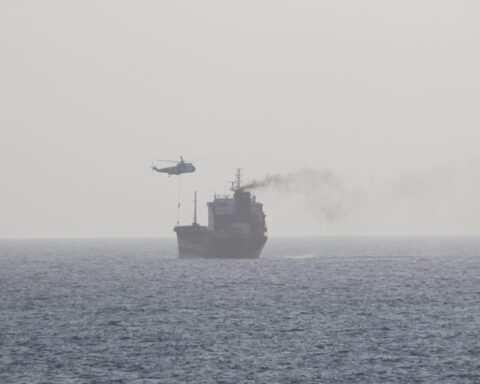
The naval blockade, effective since April 13, applies to Iranian ports and toll-collecting vessels. It reduces Iran’s oil export revenue — the same revenue that funds the Quds Force’s proxy operations — but it does so through coercion rather than agreement. Iran’s response has been to refuse further talks entirely: Araghchi called the blockade “an act of war.” The blockade degrades the IRGC’s funding capacity in practice while the Hezbollah condition demands the IRGC sever that funding voluntarily in principle. The two instruments work at cross-purposes: one pressures Iran to negotiate, the other gives Iran a reason not to.
What happens to Saudi Arabia if Trump drops the Hezbollah condition to get a deal?
Saudi Arabia has no mutual defense treaty with Washington — only transactional arrangements, of which the $142 billion arms package is the largest current instance. A nuclear-only deal that drops the proxy condition would replicate the JCPOA architecture that Riyadh spent seven years describing as a betrayal: sanctions relief for Iran, constrained centrifuges, and an intact Quds Force network operating in Yemen, Iraq, Syria, and Lebanon. Riyadh’s fallback is not passive. The kingdom has maintained simultaneous security dialogues with Beijing since MBS’s 2022 state visit produced a $50 billion China-Saudi investment framework, and a deal that fails to address proxy threats gives Riyadh both the justification and the domestic political cover to accelerate that hedge rather than resist it.