
TEHRAN — Brent crude pushed above $105 a barrel on Wednesday and Polymarket’s wagering on a US-Iran peace deal by April 30 collapsed to 8 percent on a single unsourced item from an Israeli broadcaster: that Iran’s Parliament Speaker Mohammad Bagher Ghalibaf, the man who sat across from Vice President JD Vance in Islamabad, had resigned from the negotiating team under IRGC pressure. Iran denied the report within hours — but the denial came from Foreign Minister Abbas Araghchi, a civilian with no authority over the Revolutionary Guards, and that is the part the market is reading.
The reaction function is what matters. A rumour on Keshet 12 moved WTI up four percent and sent the May-31 peace-deal contract from 52 percent down to 30.5 percent in twenty-four hours, according to CryptoBriefing aggregation of Polymarket’s $423,360 trading volume across Iran contracts. Investors are not pricing the denial. They are pricing the structure the denial cannot change.
Table of Contents
The Market Priced the Gap, Not the Rumour
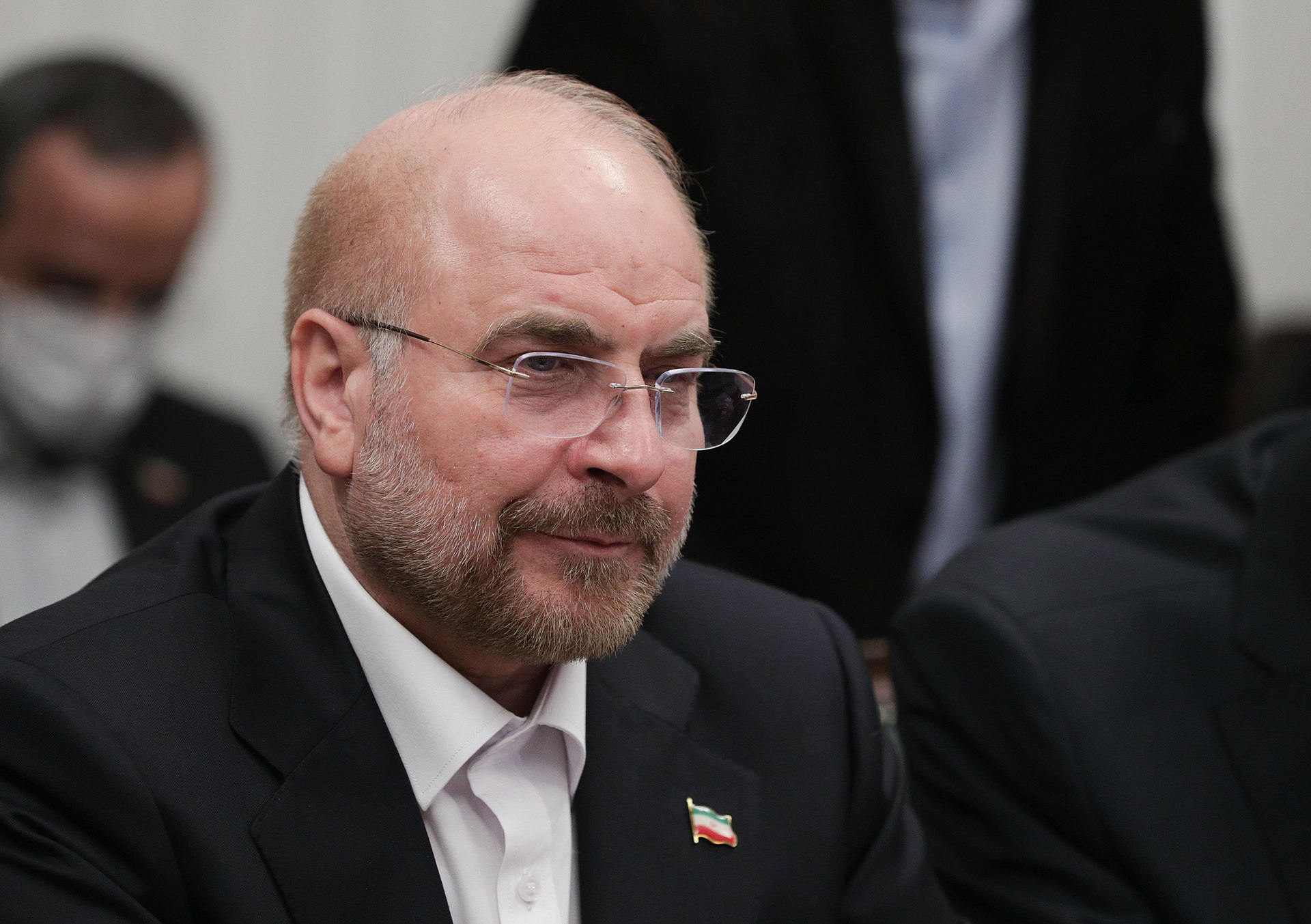
Brent closed Tuesday at $101.91 after the IRGC’s seizure of two container ships put a three-percent risk premium back into crude, CNBC reported. By Wednesday afternoon London time the front month was trading above $105, WTI was pushing toward $97, and the S&P 500 shed 0.7 percent intraday, per Bloomberg tracking. The catalyst was a single paragraph on Israel’s Keshet 12, flagged as unsourced by the Times of Israel, saying Ghalibaf had stepped away from the negotiating team.
Prediction markets moved harder than equities or crude. Polymarket’s “US x Iran permanent peace deal by April 30” contract sat at 8 to 8.5 percent YES through the day; the May 31 version dropped to 30.5 percent from 52 percent over the prior twenty-four hours; “Uranium surrender by April 30” held at 5.1 percent. Twenty-four-hour volume across the Iran book hit $423,360, per CryptoBriefing’s tracking — thin in absolute terms but the highest concentration of real-money Iran-deal betting since the Islamabad talks broke up.
The oddity is what the denial did not do. Araghchi posted within hours that “the failure of Israel’s terrorist killings is reflected in how Iran’s state institutions continue to act with unity, purpose, and discipline,” per InvestingLive’s translation. Ghalibaf himself wrote that in Iran “there are no radicals or moderates… with complete obedience to the Supreme Leader.” Brent did not give back the five-dollar spike. The May-31 Polymarket contract did not re-rate. Investors treated the denial as information, logged it, and held their shorts on diplomacy. Markets will fade a false headline in minutes when the underlying facts support a fade — they did not fade this one, which means the market’s prior on Iran’s negotiating track was already so weak that a rumour was enough to confirm it.
Why Does Ghalibaf’s Exit Move Brent Five Dollars?
Ghalibaf is the only figure at the Islamabad table who carries operational IRGC standing and is willing to cut a deal. He commanded the IRGC Aerospace Force from 1997 to 2000, was one of twenty-four IRGC commanders who warned reformist president Mohammad Khatami in 1999 against tolerating student protests, per United Against Nuclear Iran’s dossier, and expanded Iran’s surface-to-surface missile brigades during that period. He later ran Tehran as mayor for twelve years before taking the Parliament Speaker’s chair in 2020.
The Middle East briefing 3,000+ readers start their day with.
One email. Every weekday morning. Free.
That CV is the reason his seat at Islamabad was load-bearing. A career Foreign Ministry diplomat carries no weight with the Revolutionary Guards, and the Guards run Hormuz, the ports, the missile files and the enrichment architecture. A serving IRGC commander will not negotiate at all. Ghalibaf is the only figure in the political class whose past binds him to the uniform but whose present makes him a pragmatist who can read an oil price chart.
He led a seventy-one-member delegation into twenty-one hours of talks with Vance on April 11, per Al Mayadeen and the Islamabad talks file, and US officials briefed afterwards that he was Washington’s preferred interlocutor. The Institute for the Study of War assessed on April 21 that Ghalibaf “appears to be engaged in a serious intra-regime debate with IRGC Commander Major General Ahmad Vahidi and other senior regime officials opposed to negotiations with the United States,” and its April 23 update added that Vahidi had used the IRGC’s grip on Hormuz “to flex his own power over internal rivals, such as Parliament Speaker Mohammad Bagher Ghalibaf.”
Remove Ghalibaf from the room and the delegation that walks into the next round has either diplomats without authority or commanders without willingness. That is the gap Brent is pricing, and it is the same gap visible in the constitutional mechanics that allowed the IRGC to capture Iran without triggering Article 111.
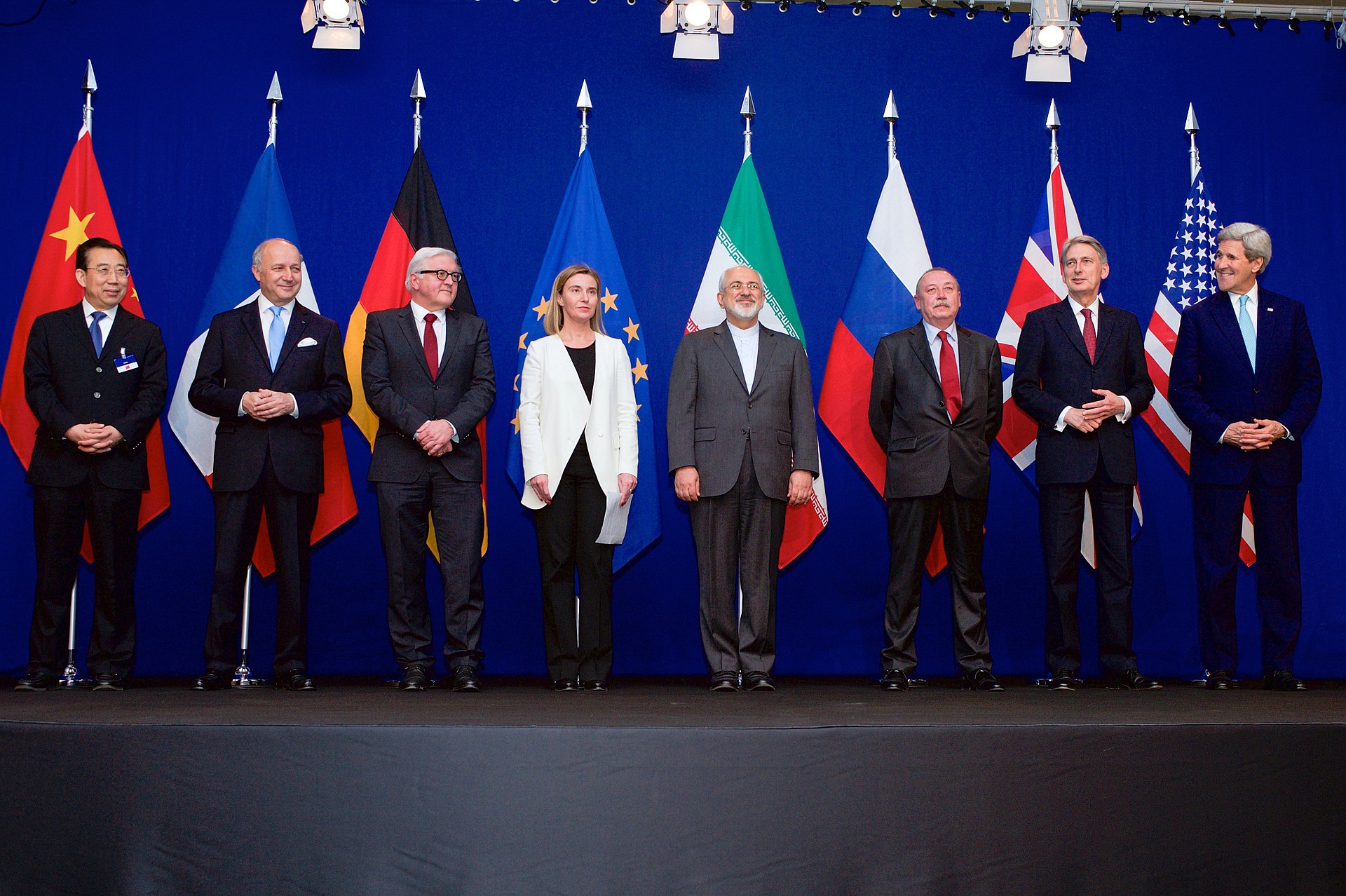
The Wrong Voices Issued the Denial
Araghchi’s denial posted and the market ignored it. Ghalibaf’s own denial invoked “complete obedience to the Supreme Leader” — a formulation that neither confirms nor rules out pressure from the uniformed tier. Iranian journalist Mohammad Ghaderi called the report “completely false” on X, and that was the ceiling of the rebuttal.
What did not happen is the point. No IRGC spokesman contradicted Keshet 12. Vahidi’s office stayed silent. The Supreme National Security Council, which under Article 176 of Iran’s constitution must ratify any decision binding military or security organs, issued nothing. Mojtaba Khamenei has been absent or audio-only for more than forty-four days, a pattern this site covered when mapping the constitutional capture of Iran’s wartime state.
The silence from the authorising tier is what the market is reading as confirmation of the structure, even while rejecting the specific resignation claim. If the IRGC wanted to reassure investors that Ghalibaf remained mandated to deal, a single sentence from Vahidi’s staff would have done it. None came.
Ghalibaf’s advisor Mahdi Mohammadi told LifeNewsAgency on April 21 that Trump’s ceasefire extension was “certainly a ploy to buy time for a surprise strike” and that “the continuation of the siege is no different from bombardment and must be met with a military response.” A deal-maker’s chief-of-staff does not write copy like that unless the deal-maker is being dragged toward the line or has already conceded the room to the hardliners.
Vahidi’s Wartime Doctrine Was Already on the Record
Ahmad Vahidi told Euronews on April 22 that “under wartime conditions, all critical positions must be chosen and managed directly by the Revolutionary Guards.” That sentence preceded the Ghalibaf resignation report by more than forty-eight hours. It reads now as a doctrine statement, not a throwaway line.
Vahidi had already tried to compose the Islamabad delegation himself. Iran International and the Jerusalem Post reported on April 10 that he demanded the inclusion of sanctioned former IRGC deputy Mohammad Reza Zolghadr, insisted the team “refuse to negotiate on Iran’s missile program,” and sought “to curb the authority of Foreign Minister Abbas Araghchi and Speaker of Parliament Mohammad Bagher Ghalibaf.” The first two demands were accommodated. The third is now visible in the market data.
Javad Heiran-Nia, an analyst quoted by Al Jazeera on April 22, put the architecture plainly: “The attack on tankers during the ceasefire demonstrates the IRGC’s dominance over the diplomatic team and its disregard for their positions.” When the Guards seized MSC Francesca and Epaminondas hours after the ceasefire was extended, they performed the same demonstration Vahidi put in writing — that Hormuz answers to Tehran’s uniformed tier and not to its diplomats. This site tracked the legal reasoning the White House used to rule those seizures outside the ceasefire, creating a two-tier architecture at sea that the Wednesday oil move simply extended onto the negotiating floor.
Ghalibaf’s own public line on April 22 defended talks as a way to “consolidate military gains and translate them into political outcomes.” Vahidi’s line said critical posts must be managed by the Guards. Between those two sentences sits the authorization ceiling, and it is the ceiling, not any specific resignation, that has been re-rated overnight.
What Does the Authorization Ceiling Actually Mean for a Deal?
Article 110 of Iran’s constitution grants the president no authority over the Revolutionary Guards, whose chain of command runs to the Supreme Leader through the General Staff of the Armed Forces. Article 176 requires Supreme Leader ratification of any Supreme National Security Council decision that binds military or security organs. Every element of what US negotiators want — enrichment ceilings, missile constraints, Hormuz de-escalation, port access — sits inside that military-security envelope.
That means Araghchi can initial a document in Islamabad or Muscat and it remains a civilian gesture unless Khamenei converts it into an order binding on the Guards. With the Supreme Leader absent or audio-only for more than six weeks, the conversion step is missing. This is the same dynamic that injured Indian tanker owners who held FM clearance only to be fired on by IRGC fast boats.
Ghalibaf was the patch. As Parliament Speaker with IRGC-Aerospace pedigree and a functioning relationship with the Vahidi camp, he could produce provisional authorizations that diplomats could not. ISW’s file on the Islamabad round captured the bind: Ghalibaf could approach the table but lacked the constitutional authority to bind the Guards, while Vahidi held that authority and refused to use it for negotiation. Ghalibaf could not sign the paper, but he was the only figure who could get the Guards to let a diplomat’s signature live long enough to matter.
Take him out of the room, whether by resignation, demotion or the public quarrel with Vahidi that ISW described on April 21, and what remains is a negotiating team that is structurally unable to deliver the counterpart the United States is asking for. Israel Defense Minister Israel Katz said on Wednesday that Israel is “awaiting a green light from the United States… to complete the elimination of the Khamenei dynasty and… return Iran to the Dark Age and the Stone Age,” per Times of Israel and Euronews. That quote does not move Brent by itself. It moves Brent in combination with the authorization gap, because it names the alternative to a deal the market has just re-priced as unlikely.
The Response Window Is Shorter Than the Ceasefire
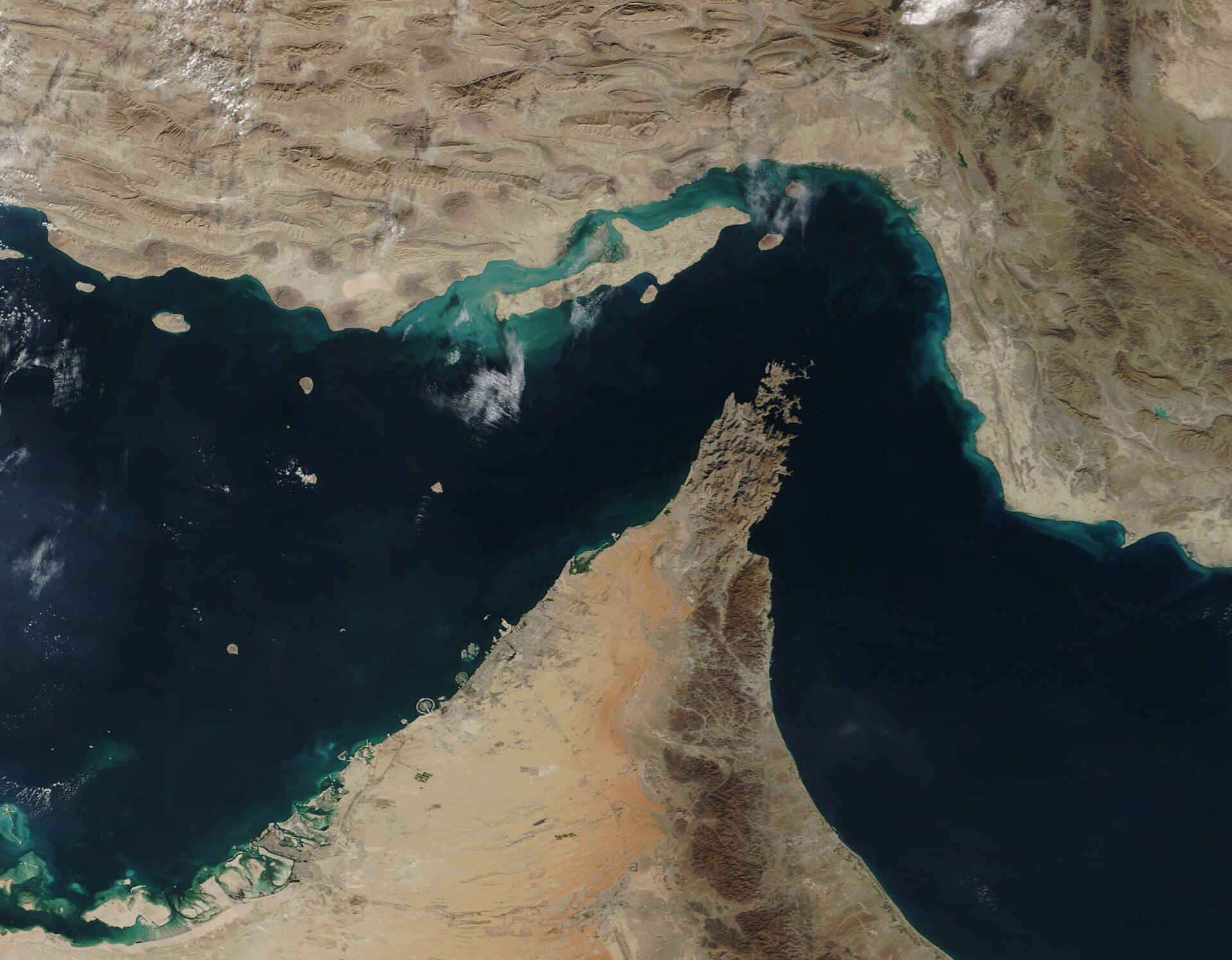
NBC News and administration sources put Iran’s deadline to submit a unified negotiating proposal between April 25 and April 27. The ceasefire itself runs longer, but the political window for a deal that prevents a second round of strikes is narrower, and each day erodes it. President Trump ordered the US Navy on Wednesday to “shoot and kill” any Iranian boat laying mines in the Strait of Hormuz, per Al Jazeera and CNBC, and this site covered how that shoot-on-sight posture leaves Saudi Arabia with no script for the hours after the first incident.
The Saudi fiscal map is the second-order reader of everything priced into Brent Wednesday. Goldman Sachs has Saudi Arabia’s PIF-inclusive break-even at $108-111 a barrel, with a war-adjusted deficit at 6.6 percent of GDP against the official 3.3 percent, a gap this site mapped in its coverage of Aramco’s Q1 paradox of a 57 percent profit surge alongside 30 percent production loss. Brent at $105 is still four to six dollars below break-even. A second escalation that pushes it past $120 again would help the balance sheet for a few weeks and then hurt the demand-side assumptions baked into Vision 2030 for a decade.
Former Pakistani ambassador Maleeha Lodhi told the Jerusalem Post on Wednesday that “the ceasefire has opened a space that Pakistan thinks is enough for the diplomatic path to resume.” Pakistan’s reading is generous. The Keshet 12 item, Iran’s denial via the wrong voices, the Vahidi doctrine from April 22 and the IRGC’s ship seizures on the day of the ceasefire extension describe a track that is structurally incapable of delivering what Washington needs by next week, whatever diplomats say at a podium.
The prediction markets are not describing a bet on peace. They are describing a bet that the next authority to speak for Iran on a document that binds the IRGC has not yet revealed himself — and that the oil market will find out who he is before the diplomats do.
The condition that would require that hidden authority to reveal himself publicly arrived on April 24: Trump’s demand that Iran sever Hezbollah financing routes through the IRGC Quds Force’s Unit 190, not any channel Pezeshkian controls. The structural problem the market priced into a rumour is now encoded as an explicit American negotiating term, as Trump’s Hezbollah Ultimatum Demands IRGC Self-Amputation Iran Cannot Deliver details.