JEDDAH — The most dangerous outcome for Saudi Arabia is not a failed negotiation over the Strait of Hormuz. It is a successful one. Every diplomatic signal from Riyadh — the calls with Tokyo and Beijing, the Yanbu expansion, the public support for “safe navigation” — treats reopening the strait as the objective. But the specific deal now taking shape between Washington and Tehran, driven by American desperation to close before strategic reserves run out, would lock IRGC administrative authority over the strait into an internationally recognized framework that outlasts the war and permanently subordinates Saudi export sovereignty to Iranian discretion.
This is not a hypothetical. Iran’s five-point counter-proposal demands “international recognition of Iranian sovereignty over the Strait of Hormuz” as a prerequisite — not a negotiating chip to be traded away, but a structural condition for any agreement. The IRGC inaugurated a new naval base on Qeshm Island on April 9, one day after the ceasefire, with facilities described by IRGC-affiliated media as designed for permanent administration. And on April 23, Iranian parliament speaker Hamidreza Haji Babaei confirmed that the first Hormuz transit toll revenues had been “deposited into the central bank account.” Iran is not waiting for a deal. It is building the post-deal architecture while Washington negotiates the terms of its recognition.
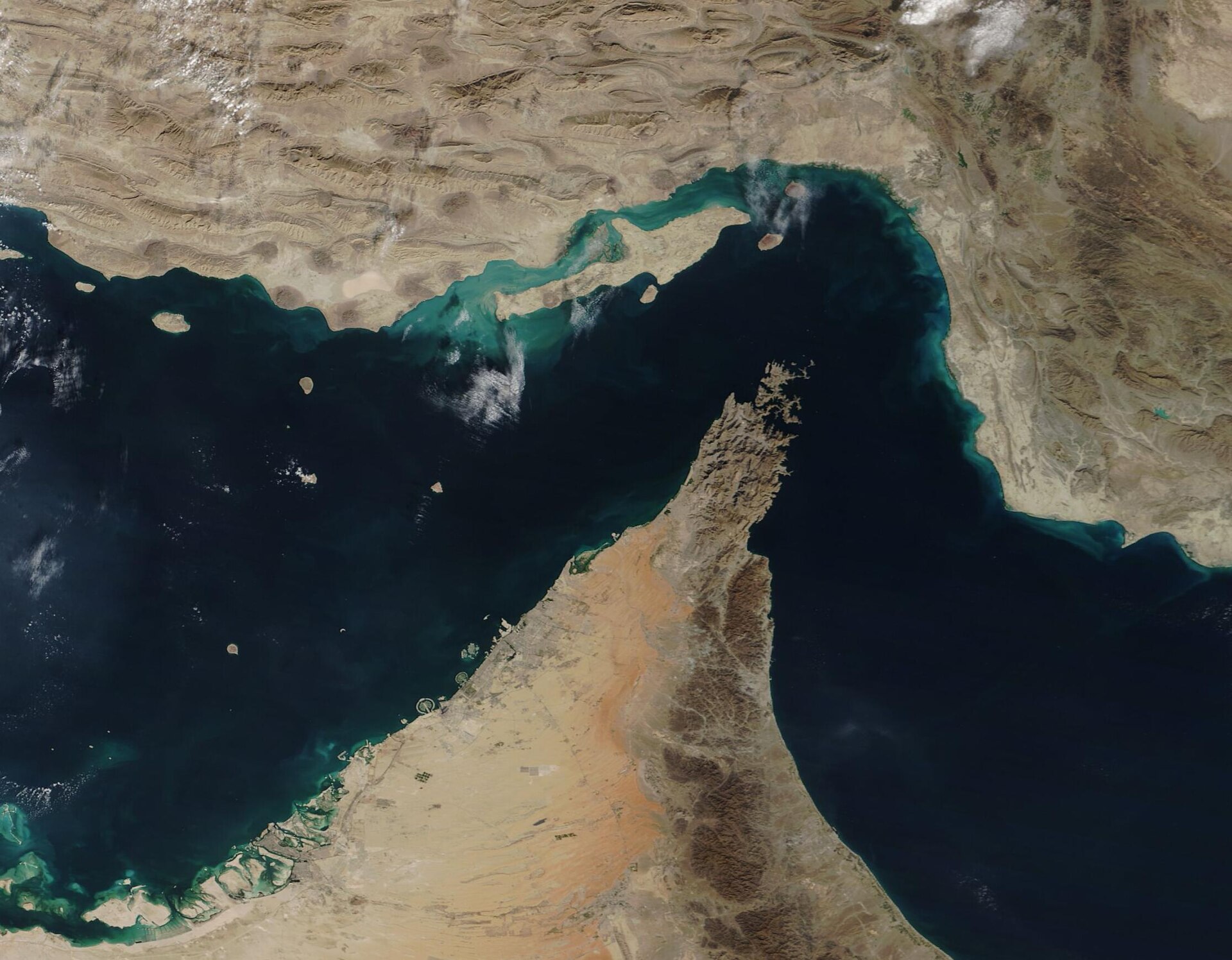
Table of Contents
- The IEA Declaration Iran Was Waiting For
- From Zero Revenue to Central Bank Deposits in 36 Days
- What Does the Deal Taking Shape Actually Contain?
- The Montreux Problem Without Montreux’s Accountability
- Why Is a Bilateral Deal Worse for Saudi Arabia Than Continued Closure?
- The Empty Chair at Every Table
- How Does a Hormuz Deal Trigger the Enrichment Cascade?
- The Yanbu Ceiling
- Beijing Wants Flow, Not Governance
- The Quincy Compact in Reverse
The IEA Declaration Iran Was Waiting For
On April 23, IEA Executive Director Fatih Birol told CNBC what Tehran already knew: “We are facing the biggest energy security threat in history.” Thirteen million barrels per day of supply lost — more than the 1973 and 1979 oil shocks combined. The IEA’s 400-million-barrel emergency release, the largest in the agency’s 50-year history, drew 172 million barrels from a US Strategic Petroleum Reserve that held 415 million before the drawdown. Birol’s own assessment of that release: “I don’t claim that this will be a solution, our stock release.” A reprieve, not a resolution. “The cure,” he said, “is opening up the Strait of Hormuz.”
That sentence — spoken as public guidance to 31 member governments — is the most valuable thing Iran has received since the war began. It establishes, from the West’s own institutional voice, that the status quo is unsustainable. It converts the IRGC’s unilateral declaration of “full authority” over the strait from an act of aggression into the obstacle that the entire Western energy architecture needs removed. And it tells Tehran exactly what it holds: the IEA has declared that no amount of reserve drawdowns can substitute for Iranian cooperation.
The framing matters. Birol did not say “the cure is enforcing UNCLOS transit passage rights.” He did not say “the cure is a multilateral maritime security operation.” He said the cure is opening Hormuz — language that is agnostic about who opens it, under what authority, and on what terms. For Riyadh, the distinction between “reopening Hormuz” and “reopening Hormuz under IRGC-administered terms” is existential. For Washington, running down reserves at 172 million barrels per emergency, it is increasingly academic.
From Zero Revenue to Central Bank Deposits in 36 Days
When this publication reported on April 18 that Iran had collected zero dollars from its Hormuz toll system — 60 permits issued, eight payment requests sent, nothing paid — the program appeared to be performative. Five days later, Haji Babaei announced deposits into the central bank account. Iran’s parliament had already passed the Strait of Hormuz Management Plan on March 30–31, codifying the toll into domestic law. The IRGC’s April 17 PressTV statement declared a “new order” in the strait.
The Middle East briefing 3,000+ readers start their day with.
One email. Every weekday morning. Free.
The sequence is precise. First, unilateral declaration. Then, domestic legislation. Then, physical infrastructure — the Qeshm Island naval base, six buildings, inaugurated April 9. Then, first revenue collection. Each step converts a wartime measure into an administrative institution. Secretary of State Marco Rubio responded that Washington “would not accept a post-war scenario in which Iran can make money off the strait.” But Rubio’s framing contains its own concession: he is debating Iran’s revenue, not Iran’s authority. The toll can be eliminated in a deal. The administrative infrastructure — the permits, the coordination requirements, the SNSC’s four conditions for transit — is what remains.
Guntram Wolff at Bruegel calculated the cost distribution if any toll architecture survives: “90 percent of the tax is paid by the Gulf exporters and only 10 percent by world consumers.” At Iran’s proposed $1 per barrel, that means $6–14 billion per year falling on Saudi Arabia, UAE, Kuwait, Iraq, and Qatar. Global consumers would see oil prices rise $0.05–$0.40 per barrel — a rounding error. Wolff’s conclusion: “No government will spend diplomatic capital fighting a toll that costs its consumers almost nothing.”
What Does the Deal Taking Shape Actually Contain?
Iran’s five-point counter-proposal, reported by Al Jazeera on April 8, demands international recognition of Iranian sovereignty over Hormuz transit — not territorial sovereignty, which UNCLOS already confirms, but administrative authority: the right to require permits, designate lanes, set conditions, and “coordinate” passage. The US position is restoration of UNCLOS transit passage. Saudi Arabia has not been asked.
Max Boot at the Council on Foreign Relations has proposed what he calls an “‘open for open’ formula under which both sides would agree to end their respective blockades” — the US lifts its naval blockade of Iranian ports, Iran reopens Hormuz, and the deal is brokered by Rubio as a standalone agreement decoupled from nuclear issues. Boot himself acknowledges the risk: “Trump seems to be assuming that Iran will not carry out this threat in response to the blockade. If that calculation is in error, the results would be catastrophic.”
The “open for open” formula has an elegant simplicity that obscures a structural asymmetry. The US blockade is a temporary wartime measure that ends when the war ends, with or without a deal. IRGC administrative authority over Hormuz, once recognized bilaterally, becomes a permanent feature of the strait’s governance architecture. Washington trades something it was going to give up anyway for something Tehran gets to keep indefinitely.
| Issue | US Position | Iran’s 5-Point Demand | Saudi Exposure |
|---|---|---|---|
| Transit authority | UNCLOS transit passage (status quo ante) | IRGC “coordination authority” recognized | Export sovereignty subordinated to IRGC permit system |
| Toll revenue | Rubio: “no post-war scenario” with Iranian revenue | $1/barrel codified in domestic law | $6–14B/yr cost to Gulf exporters (Wolff/Bruegel) |
| Naval presence | US blockade lifted | Qeshm base permanent; IRGC lane designation | Saudi tankers transit IRGC-designated routes |
| Enrichment | 20-year moratorium proposed | Monitored down-blending only | UAE 123 loophole activates; Saudi enrichment unconstrained |
| GCC participation | Not offered | Not requested | Saudi absent from architecture governing its exports |
The Montreux Problem Without Montreux’s Accountability
Iran’s model for Hormuz is the Turkish Straits. Under the 1936 Montreux Convention, Turkey collects “lighthouse and sanitary dues” on transits through the Bosphorus and Dardanelles and retains the right to restrict military vessel passage. Turkey’s authority derives from a multilaterally negotiated convention with defined signatories, amendment procedures, and international oversight. UNCLOS Article 35 preserves Montreux as a pre-existing regime.
What Iran is seeking is the Montreux architecture — coastal-state administrative authority, fee collection, lane designation, coordination requirements — without Montreux’s multilateral legitimation. A bilateral US-Iran agreement recognizing IRGC “coordination authority” would create a sui generis precedent: one party to UNCLOS agreeing to suspend its own transit passage rights in exchange for Iranian concessions on unrelated issues. No multilateral conference. No defined signatories beyond Washington and Tehran. No amendment procedure that includes the states whose economies depend on the strait.
UNCLOS Article 26 explicitly prohibits charging ships merely for passing through a strait used for international navigation. IMO Secretary-General Arsenio Dominguez has called the toll “illegal.” Legal scholars — Raul Pedrozo at the US Naval War College, David Nevitt at Emory — have identified at least three separate UNCLOS violations in Iran’s toll framework. But legal prohibitions matter only when someone enforces them. A bilateral US-Iran deal that trades Hormuz governance concessions for nuclear or military de-escalation would not formally amend UNCLOS — it would simply create facts that make it inapplicable in practice.
Why Is a Bilateral Deal Worse for Saudi Arabia Than Continued Closure?
The current closure violates UNCLOS, and Saudi Arabia can say so. Every day the strait stays shut, Iran’s legal position erodes. A bilateral US-Iran deal that formally recognizes IRGC administrative authority converts that illegal obstruction into an agreed governance architecture — destroying the UNCLOS argument Saudi Arabia would otherwise carry into the post-war period.
The current closure, for all its economic devastation, preserves a legal framework that Saudi Arabia can invoke. Every tanker turned back, every IRGC radio warning to a US destroyer, every toll demand issued without UNCLOS authority — these accumulate as evidence of illegal obstruction. Saudi Arabia’s long-term position is that when the war ends, the status quo ante restores: UNCLOS transit passage, no tolls, no permits, no IRGC coordination requirements.
A bilateral US-Iran deal destroys that position. If Washington — the principal guarantor of freedom of navigation worldwide — agrees to any framework that recognizes IRGC administrative authority over Hormuz transit, the UNCLOS argument becomes academic. Saudi Arabia cannot credibly invoke transit passage rights that its own security patron has agreed to modify. The Kingdom’s 5.43 million barrels per day of crude export capacity through the strait, which Jim Krane at Rice University’s Baker Institute identified as currently unexercisable, would not revert to Saudi sovereign control under IRGC-administered terms — subject to Iranian permits, Iranian lane designations, Iranian “coordination.”
Krane’s diagnosis extends further: Hormuz risks conversion into “an Iranian-controlled fee-for-use waterway.” The US security umbrella, he wrote, has transitioned “from protector of trade to instigator of war,” with Gulf bases now serving as “Iran’s key targets.”
The Empty Chair at Every Table
Andrew Leber and Sam Worby at the Carnegie Endowment identified the structural problem in April: the GCC “has no seat at the table” in negotiations that directly determine Saudi Arabia’s security environment. The Islamabad-format bilateral talks cover uranium enrichment, Hormuz transit authority, and proxy funding — the three issues that most directly affect Saudi Arabia — without Saudi participation.
The JCPOA pattern is instructive. When Oman facilitated the secret US-Iran channel in 2013, GCC states were, as NPR reported, “unaware of the talks and were understandably stunned when they learned of the US-Iran dialogue.” The 2015 agreement contained no limits on Iran’s ballistic missile program. No restrictions on IRGC proxy financing. No Hormuz governance provisions. The identical three gaps define the 2026 crisis. Saudi Arabia spent 2016–2025 arguing that the JCPOA’s omissions made the region less safe. It now faces the prospect of a second US-Iran bilateral agreement with the same structural gaps — this time with the added feature of formal Hormuz governance concessions.
MBS’s April 23 call with Japanese Prime Minister Takaichi is instructive. The Kantei readout describes MBS committing to “respond positively in order to ensure energy supply to markets including Japan” — supply through Yanbu, which he controls. He did not address Hormuz governance, because he has no standing to do so. Tokyo’s request was revealing in a different register: Japan asked for expanded crude via alternative routes, not for a governance fix. Leber and Worby’s conclusion applies: “A more unified GCC would be much harder for the United States, Israel, and Iran to ignore the next time they are deciding whether to throw the Gulf into chaos.”
There will not be a next time. The architecture being negotiated now — bilaterally, without Gulf participation — will define Hormuz governance for decades. Saudi Arabia was absent from the 30-nation Hormuz coalition, absent from the Islamabad bilateral format, and absent from the room when Trump proposed a Hormuz “joint venture” to an ABC News interviewer.
How Does a Hormuz Deal Trigger the Enrichment Cascade?
The UAE’s 123 Agreement with the US contains a clause permitting Emirati enrichment “if other regional states receive that right.” If any US-Iran deal concedes enrichment rights to Tehran, the UAE clause activates. Once the UAE has a legal basis to enrich, Saudi Arabia’s stated ambitions — “We will enrich it and we will sell it,” Energy Minister Prince Abdulaziz bin Salman — become politically uncontainable.
The US-Saudi 123 agreement does not expressly prohibit Saudi enrichment, meaning Riyadh faces no treaty barrier once the regional precedent is set. And on Iran’s current counter-proposal, the concession is modest: monitored down-blending from 60%, not a full moratorium — but enough to spring the UAE clause.
Iran holds 440.9 kilograms of uranium enriched to 60%, with IAEA access terminated since February 28, 2026. At 60%, the breakout timeline to weapons-grade material via IR-6 centrifuge cascades is approximately 25 days per device. The US proposed a 20-year enrichment moratorium. Iran countered with monitored down-blending — a formula that preserves Iran’s enrichment infrastructure while reducing stockpile levels. The gap between those positions is where the Hormuz trade comes in. Washington, desperate to reopen the strait, faces pressure to accept Iran’s enrichment terms in exchange for Hormuz concessions. The nuclear file and the maritime file, formally decoupled in Boot’s “open for open” proposal, are structurally inseparable in practice.
For Saudi Arabia, the enrichment cascade is a second-order consequence of a Hormuz deal — but it may prove more consequential than the first-order effect. IRGC administrative authority over the strait is an economic constraint. A regional nuclear proliferation cascade is a different category of problem. Both are driven by the same bilateral negotiation in which Riyadh has no voice.
The Yanbu Ceiling
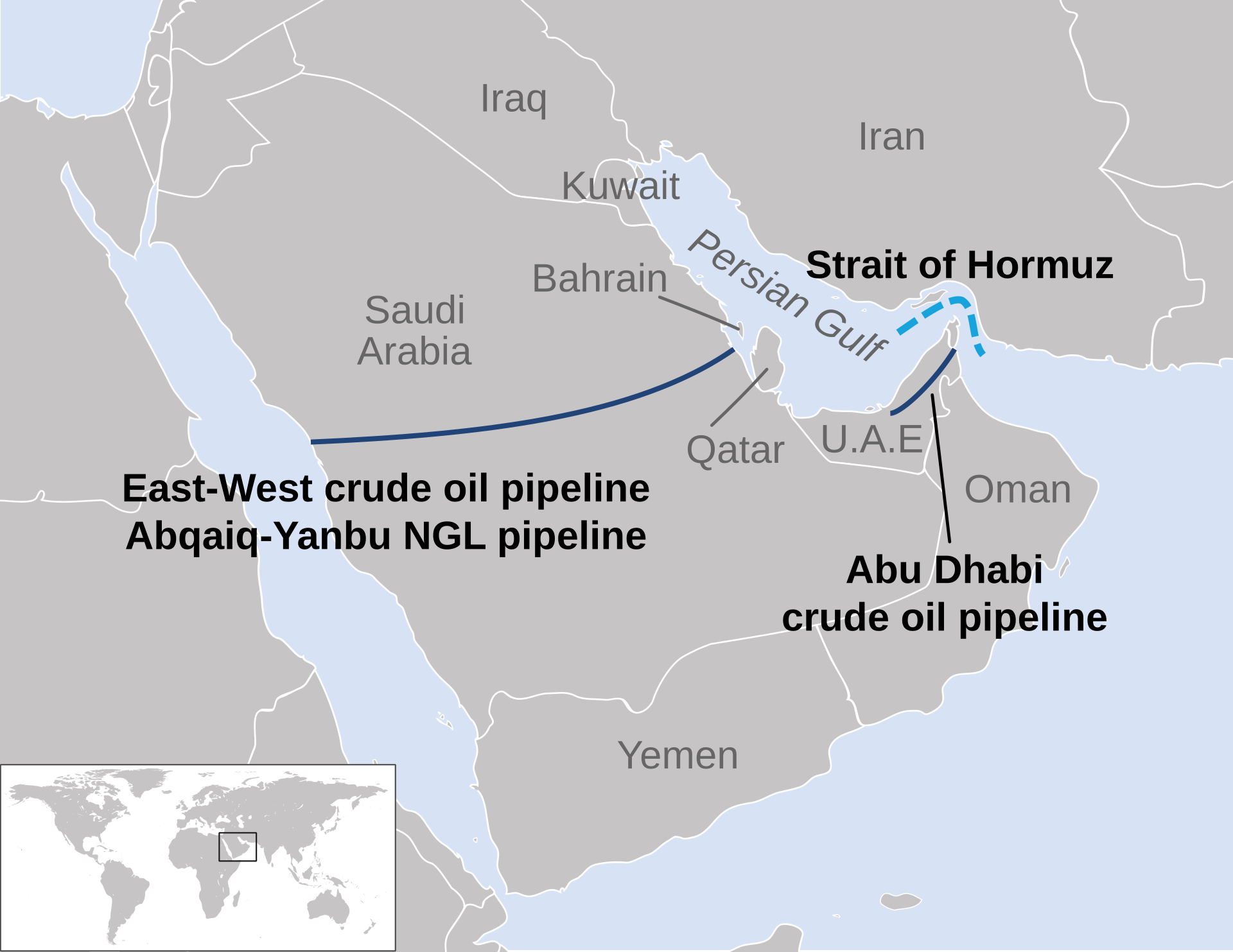
Saudi Arabia’s East-West Pipeline reached its maximum throughput capacity of 7 million barrels per day on March 11 — an engineering achievement that took less than two weeks from the onset of the crisis. But pipeline capacity and export loading capacity are different numbers. Yanbu’s port infrastructure can load 4 to 5.9 million barrels per day, a ceiling determined by berth availability, storage tank capacity, and tanker scheduling. Before the war, 20 million barrels per day transited Hormuz from all Gulf producers. Saudi Arabia’s bypass covers, at maximum, 29% of that flow.
March production tells the rest of the story. Saudi output fell to 7.25 million barrels per day from 10.4 million in February — a 30% drop. The IEA called it “the largest disruption on record.” Goldman Sachs estimated the war-adjusted fiscal deficit at 6.6% of GDP, against an official projection of 3.3%. Asian exports dropped 38.6% by Kpler’s tracking. The fiscal arithmetic operates at a different altitude than the diplomatic calendar: Brent at $90.38 sits below Saudi Arabia’s break-even of $108–111 per barrel when PIF commitments are included.
| Metric | Pre-War (Feb 2026) | Current (April 2026) | Gap |
|---|---|---|---|
| Total production | 10.4M bpd | 7.25M bpd | -3.15M bpd (30%) |
| Hormuz-dependent exports | 5.43M bpd | 0 | -5.43M bpd |
| East-West Pipeline capacity | 5M bpd (pre-expansion) | 7M bpd | +2M bpd |
| Yanbu loading capacity | ~3M bpd | 4–5.9M bpd | 1.1–3M bpd shortfall vs pipeline capacity |
| Fiscal break-even (Brent) | $108–111/bbl | $90.38/bbl (current) | -$18–21/bbl deficit |
The Yanbu ceiling defines Saudi Arabia’s negotiating position more than any diplomatic preference. Riyadh cannot sustain pre-war export volumes without Hormuz, and no diplomatic preference changes the loading capacity at a Red Sea port. The question is not whether to reopen the strait — the fiscal arithmetic at $90.38 Brent against a $108–111 break-even answers that. The question is what governance terms come with it.
Beijing Wants Flow, Not Governance
Xi Jinping called MBS on April 20, demanding Hormuz be “open for global trade” and emphasizing China’s dependence — 20% of global oil transit through the strait feeds Chinese refineries. But Beijing has already demonstrated what “open” means in practice. China intermediated Qatar’s LNG tanker transits by paying IRGC fees through Kunlun Bank, a yuan-denominated channel outside SWIFT. The Al Daayen crossed at 8.8 knots toward China. Beijing’s incentive is resumed flow. The governance architecture — who administers the strait, on what terms, under what legal framework — is not China’s problem.
Japan’s approach is even more revealing. PM Takaichi’s April 23 call with MBS requested expanded crude supply via Yanbu and alternative routes. Tokyo is working around the closure, not contesting the governance. Neither Beijing nor Tokyo has challenged IRGC administrative authority. Neither has invoked UNCLOS. Neither has proposed multilateral alternatives to a bilateral US-Iran framework. The consuming states want oil to flow. The terms are Riyadh’s problem.
This alignment of consumer-state interests with Iran’s preferred architecture is the dynamic that should concern Saudi strategists most. A deal that reopens Hormuz under any terms will be welcomed by Beijing, Tokyo, New Delhi, and Brussels. The distinction between UNCLOS-compliant reopening and IRGC-administered reopening — the distinction on which Saudi export sovereignty depends — registers as a technicality in capitals whose primary metric is price per barrel. Wolff’s distribution finding explains why: at $0.05–$0.40 per barrel, no Western government faces domestic pressure to hold out for better terms on behalf of Gulf exporters.
The Quincy Compact in Reverse
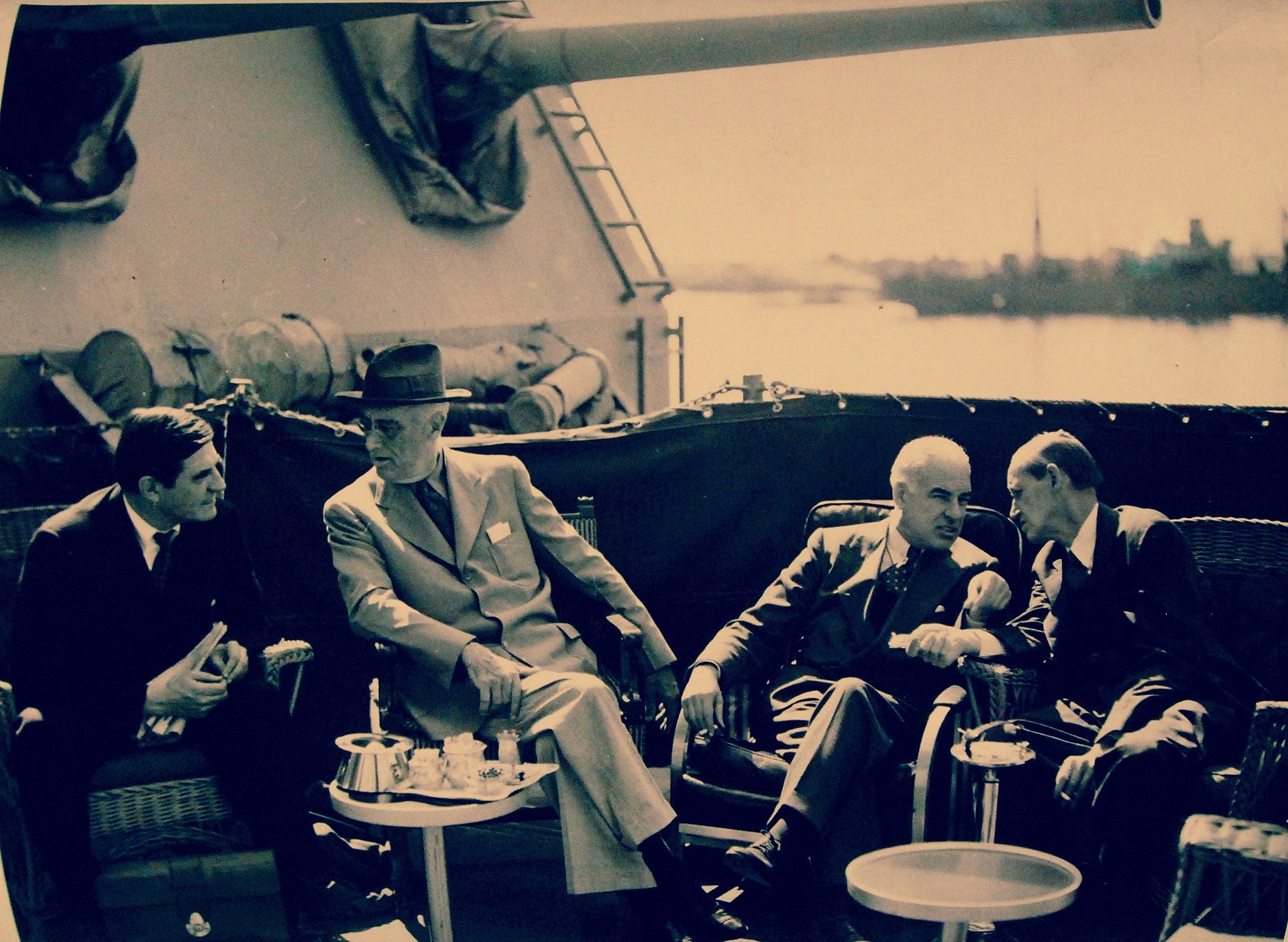
In February 1945, Franklin Roosevelt met King Abdulaziz aboard the USS Quincy in the Great Bitter Lake. The arrangement that emerged — never a formal treaty, always an understanding — committed American military power to guaranteeing Gulf oil export routes in exchange for stable supply and dollar-denominated pricing. That compact survived the 1973 embargo, the 1979 revolution, the Iran-Iraq War, both Gulf Wars, and the shale revolution. It did not survive the spring of 2026.
The inversion is structural, not rhetorical. Iran closed Hormuz in response to a US-initiated military campaign. US Gulf bases — the physical infrastructure of the Quincy compact — became Iran’s primary targets. The E-3G Sentry destroyed at Prince Sultan Air Base cost $500 million and was one of sixteen in the US inventory. Three KC-135 tankers were destroyed by satellite confirmation. Saudi Arabia’s decision to host US force projection assets, the core Saudi contribution to the eight-decade arrangement, converted the Kingdom from a protected ally into a target-rich environment.
A bilateral US-Iran deal that recognizes IRGC administrative authority over Hormuz completes the inversion in legal terms. The power that guaranteed Saudi export routes for 81 years would formally agree to subordinate those routes to Iranian conditions. Washington’s interest in such a deal is straightforward: the SPR is finite and drawing down faster than the crisis is resolving, the IEA has declared the situation unsustainable, and the blockade’s coercive window is closing. Tehran’s interest is equally clear: permanent administrative authority over the world’s most important chokepoint, codified in an agreement with the world’s dominant naval power. Saudi Arabia’s interest — restoring sovereign, unconditional export access — is the one interest that neither negotiating party has an incentive to prioritize.
The authorization ceiling problem within Iran’s own system — Pezeshkian’s inability to bind the IRGC, Khamenei’s extended absence, Vahidi’s veto power at the SNSC — adds a final dimension. Even a deal that Washington believes constrains IRGC authority may prove unenforceable against an IRGC that has demonstrated, repeatedly, its capacity to reverse civilian government commitments within hours. Saudi Arabia would be asked to route its economic lifeblood through an architecture administered by an organization that answers to no one its own president can control, under terms negotiated by a partner whose strategic reserves are running out.
MBS blocked Pakistan’s mediating role in a rare exercise of Saudi diplomatic veto power. The move was read as obstruction. It may have been something more calculated: the recognition that any deal reached through the current bilateral architecture, no matter how urgently needed, would lock in terms that Saudi Arabia cannot live with and cannot later renegotiate. Riyadh did not block the talks because it wants the closure to continue. Saudi fiscal arithmetic at $90.38 Brent makes that untenable. It blocked them because the alternative — a permanent IRGC administrative layer over every tanker that leaves Ras Tanura — is a structural condition, not a wartime disruption, and structural conditions do not come with sunset clauses.
Frequently Asked Questions
What happens to Saudi Arabia’s OPEC+ quota if Hormuz reopens under IRGC terms?
Saudi Arabia’s OPEC+ April quota stands at 10.2 million barrels per day — 3 million above its actual March output of 7.25 million bpd. If Hormuz reopens under IRGC coordination requirements, Riyadh could technically resume production toward quota levels, but actual export volumes would depend on IRGC permit issuance rates, designated lane capacity, and whatever “coordination” conditions the bilateral deal establishes. OPEC+ quota authority — historically Saudi Arabia’s primary instrument of market power — would be subordinated to an Iranian administrative layer that determines how much of that quota can physically reach buyers. No OPEC+ framework has ever operated with a non-member state controlling the export chokepoint of its largest producer.
Could Saudi Arabia challenge a US-Iran Hormuz deal at the International Tribunal for the Law of the Sea?
ITLOS has jurisdiction over UNCLOS disputes, and Saudi Arabia ratified UNCLOS in 1996. A bilateral US-Iran agreement recognizing IRGC coordination authority would not formally amend UNCLOS — it would render it inapplicable in practice. Saudi Arabia could bring a case arguing that Iran’s toll system and permit requirements violate Articles 26, 38, and 44, but ITLOS proceedings take 2–4 years and result in non-binding advisory opinions unless both parties consent to compulsory jurisdiction. Iran has not accepted ITLOS compulsory jurisdiction. The practical effect: Saudi Arabia would be litigating transit rights at The Hague while its tankers apply for IRGC permits at Bandar Abbas.
Has any country successfully reversed a bilateral strait governance agreement?
The closest precedent is the 1857 Copenhagen Convention, which abolished Denmark’s Sound Dues on Baltic Sea transit — but only after roughly 400 years of collection and a multilateral buyout in which maritime nations paid Denmark a lump sum of 63 million rigsdaler (approximately $35 million at the time). The abolition required coordinated action by all major maritime powers and direct compensation to the coastal state. No bilateral agreement on strait governance has been reversed by a third party that was not a signatory. The Montreux Convention, signed in 1936, remains in force 90 years later despite periodic Turkish dissatisfaction with its military vessel restrictions.
What is Saudi Arabia’s realistic alternative to Hormuz-dependent exports?
Beyond the East-West Pipeline to Yanbu (7 million bpd throughput, 4–5.9 million bpd loading), Saudi Aramco explored a trans-Arabian pipeline to Oman’s Indian Ocean coast in 2019 feasibility studies — estimated at $70–90 billion and 6–8 years construction. A shorter option, expanding the existing IPSA pipeline corridor through Iraq to Turkey’s Ceyhan terminal, faces security and sovereignty complications. LNG conversion of associated gas for Red Sea export is technically viable but would take 3–5 years to reach meaningful scale. None of these alternatives can be operational before any Hormuz deal would take effect, leaving Saudi Arabia negotiating from a position of infrastructure dependence.
Why can’t Saudi Arabia simply join the US-Iran negotiations?
The bilateral format is Iran’s structural demand, not an American preference. Tehran’s five-point proposal treats the negotiation as a US-Iran matter because bilateral framing concentrates Iranian bargaining power — Iran negotiates with the one party desperate enough to make Hormuz concessions. Admitting Saudi Arabia would introduce a participant whose minimum acceptable terms (no IRGC authority, no tolls, no permits, UNCLOS restoration) are incompatible with Iran’s maximum demands. Washington has not pressed for Saudi inclusion because a trilateral format would complicate a deal that the administration needs before SPR drawdowns become politically unsustainable. The structural incentive for both negotiating parties is to keep the GCC out.