
{“content”: “
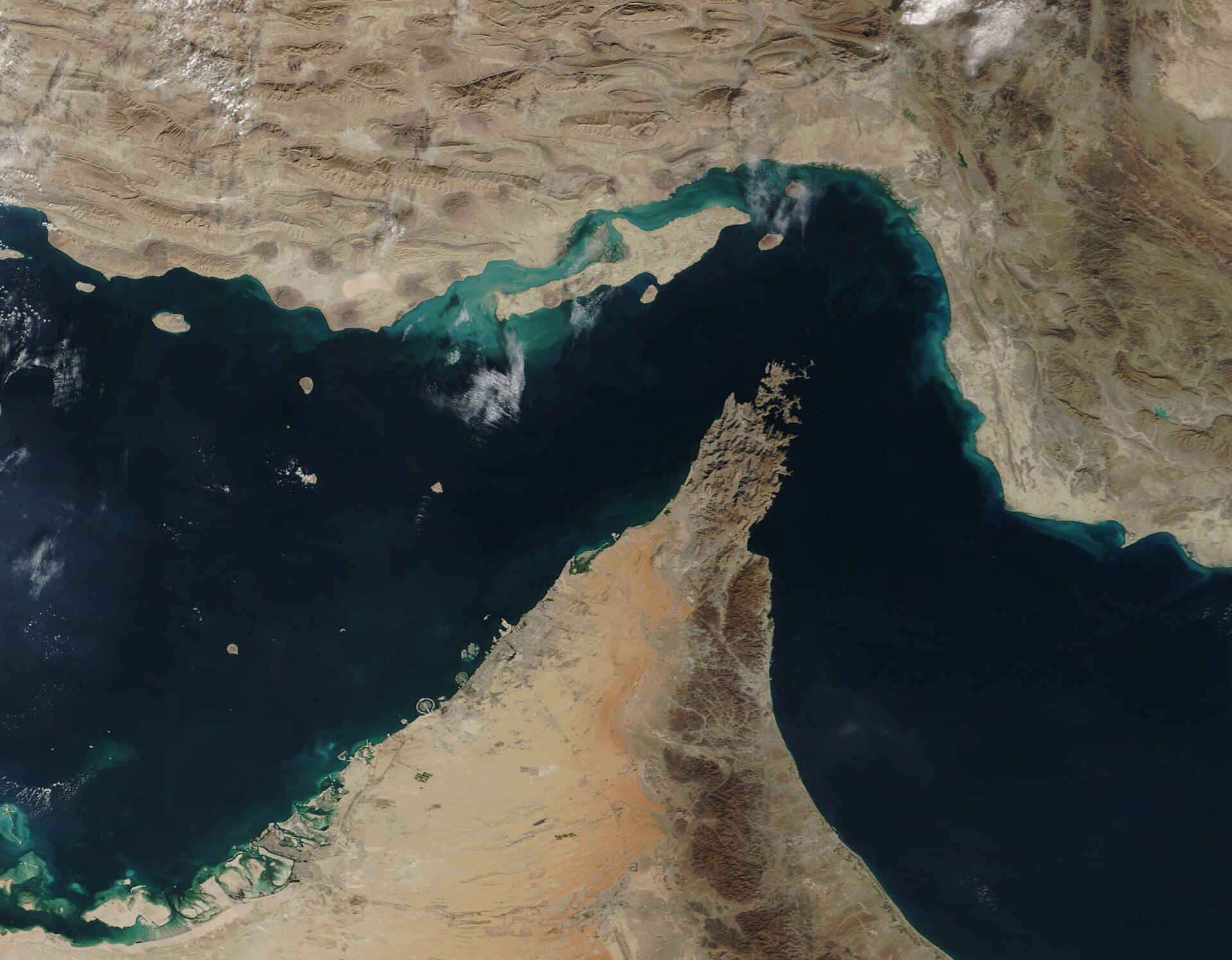
RIYADH u2014 Donald Trump told ABC News on April 23 that he is under no time pressure to end the Iran crisis, and with three words u2014 “don’t rush me” u2014 he converted Saudi Arabia’s war from a bounded shock into an open-ended fiscal emergency. The kingdom’s entire economic architecture, from its $58 billion borrowing plan to Aramco’s June crude pricing to the Public Investment Fund’s already-gutted construction pipeline, was built on the assumption that Hormuz would reopen within weeks, not months, and that assumption is now officially dead.
n
Brent crude sat at $103.67 on April 23 u2014 roughly $5 to $7 below Saudi Arabia’s PIF-inclusive fiscal breakeven u2014 while production has already crashed 30 percent from pre-war levels and the bypass infrastructure through Yanbu cannot close the volume gap. Goldman Sachs estimates the war-adjusted deficit at double the official projection. There is no published Saudi contingency for a conflict without a calendar.
n
n
The Middle East briefing 3,000+ readers start their day with.
One email. Every weekday morning. Free.
Table of Contents
n
- n
- The Deadline Dies Twice
- How Much Is the Open-Ended War Costing Saudi Arabia Per Day?
- The OSP Trap: Aramco’s June Pricing Dilemma
- Can Saudi Arabia Borrow Its Way Through an Indefinite Conflict?
- What Happens to Vision 2030 Without a War Timeline?
- If a Ceasefire Came Tomorrow, How Long Would Hormuz Take to Reopen?
- Why Can’t Iran Deliver the “Unified Proposal” Trump Demands?
- Beijing’s Five-Point Escape Hatch
- The Iraq Parallel Riyadh Cannot Afford to Study
- The Calendar That Isn’t
- n
n
n
n
n
n
n
n
n
n
n
n
n
n
The Deadline Dies Twice
n
Trump killed the Iran deadline once on April 21, when he directed the military to “extend the Ceasefire until such time as their proposal is submitted, and discussions are concluded, one way or the other.” No end date. No interim benchmarks. The sole condition was that Iran submit a “unified proposal” u2014 a requirement whose structural impossibility, given the IRGC-civilian split that has paralyzed Iranian decision-making since at least early April, appears to be the point rather than an oversight.
n
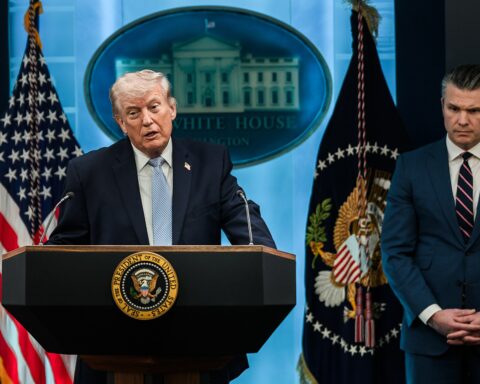
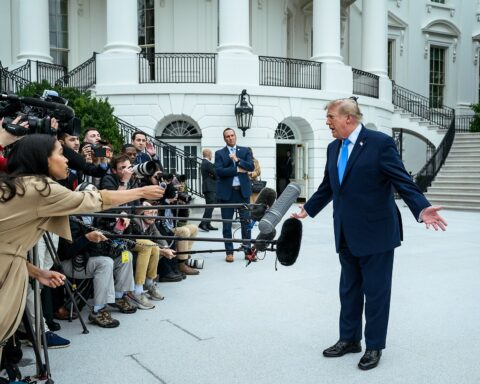
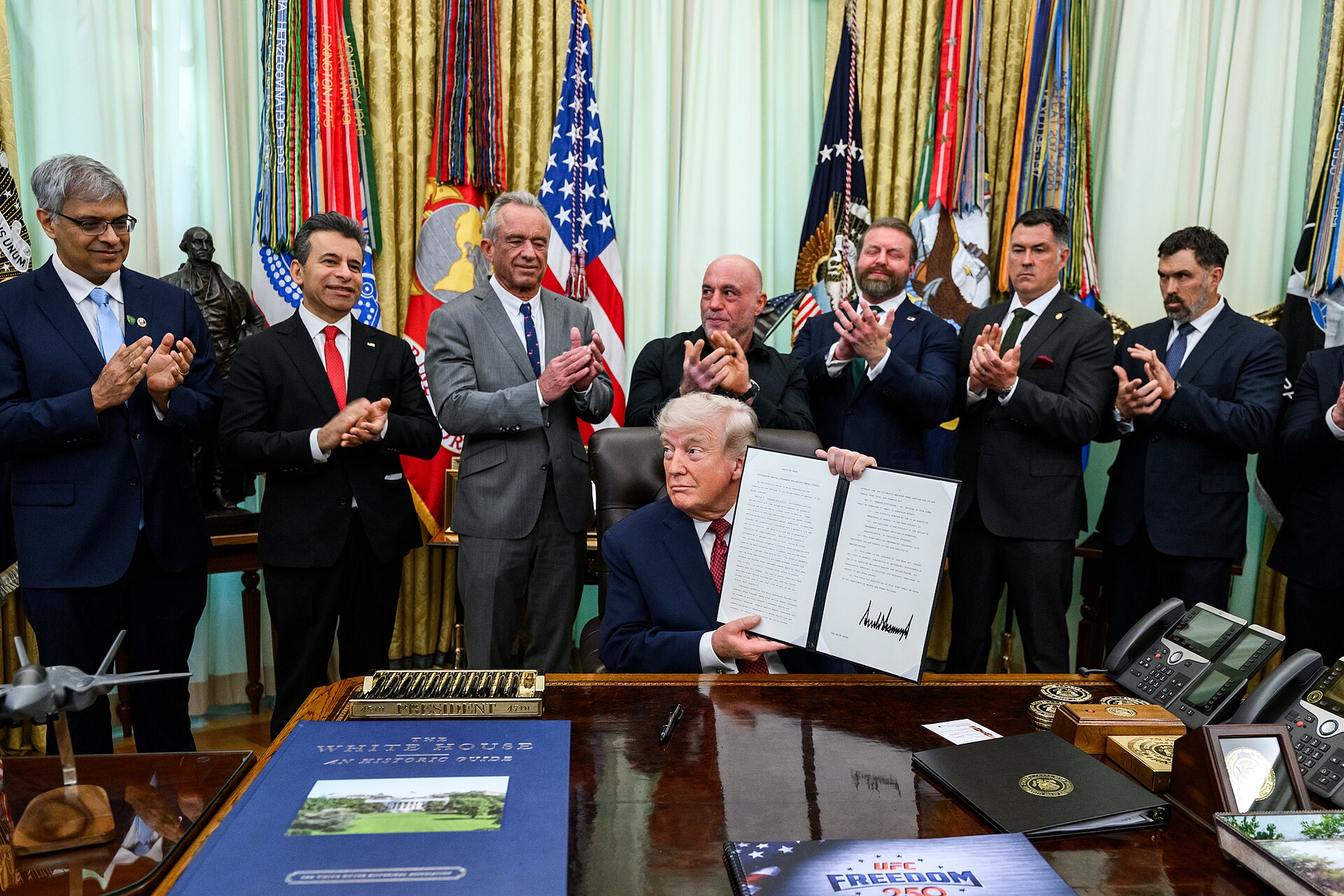
He killed it again on April 23. “Don’t rush me. I don’t want to rush myself,” he told ABC News from the Oval Office, adding that he was not under time pressure because Iran is “the one under time pressure because if they don’t get their oil moving, their whole oil infrastructure is going to explode.” The White House press secretary reinforced the message the same day, stating that “the timeline will be dictated by the commander in chief” u2014 a direct repudiation of the 3-to-5-day framework that unnamed administration officials had been briefing to reporters as recently as April 20.
n
The diplomatic implication is that Washington views extended Iranian economic pain as a feature of the current posture, not a bug. The Saudi implication is different and worse: Riyadh is absorbing economic pain on a parallel track, with no mechanism to separate its losses from Iran’s, and the man who controls the timeline has just announced he sees no reason to shorten it. The $93 million per day in lost Saudi oil revenue below pre-war baseline does not appear in Trump’s calculus, or if it does, it registers as tolerable collateral.
n
n
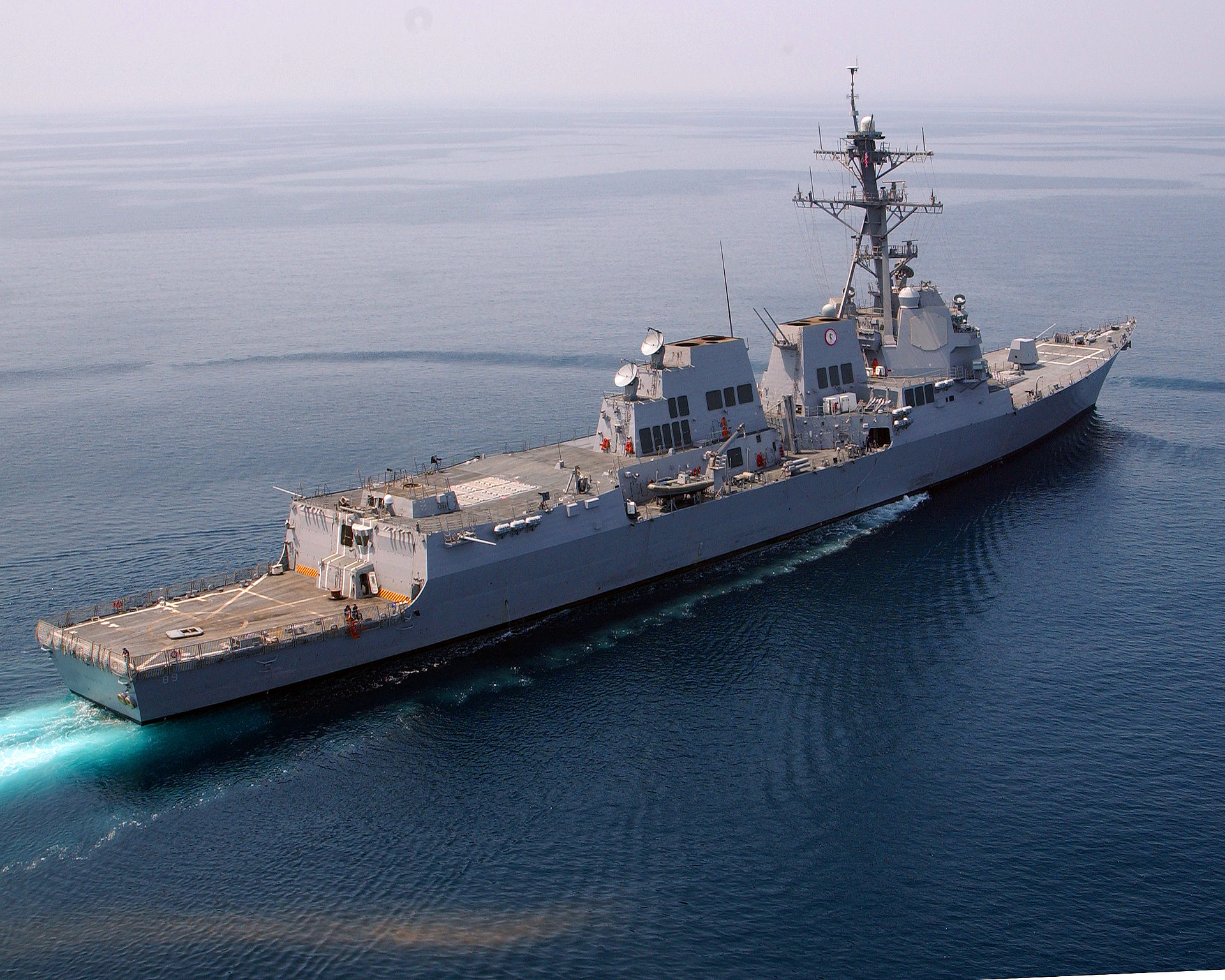
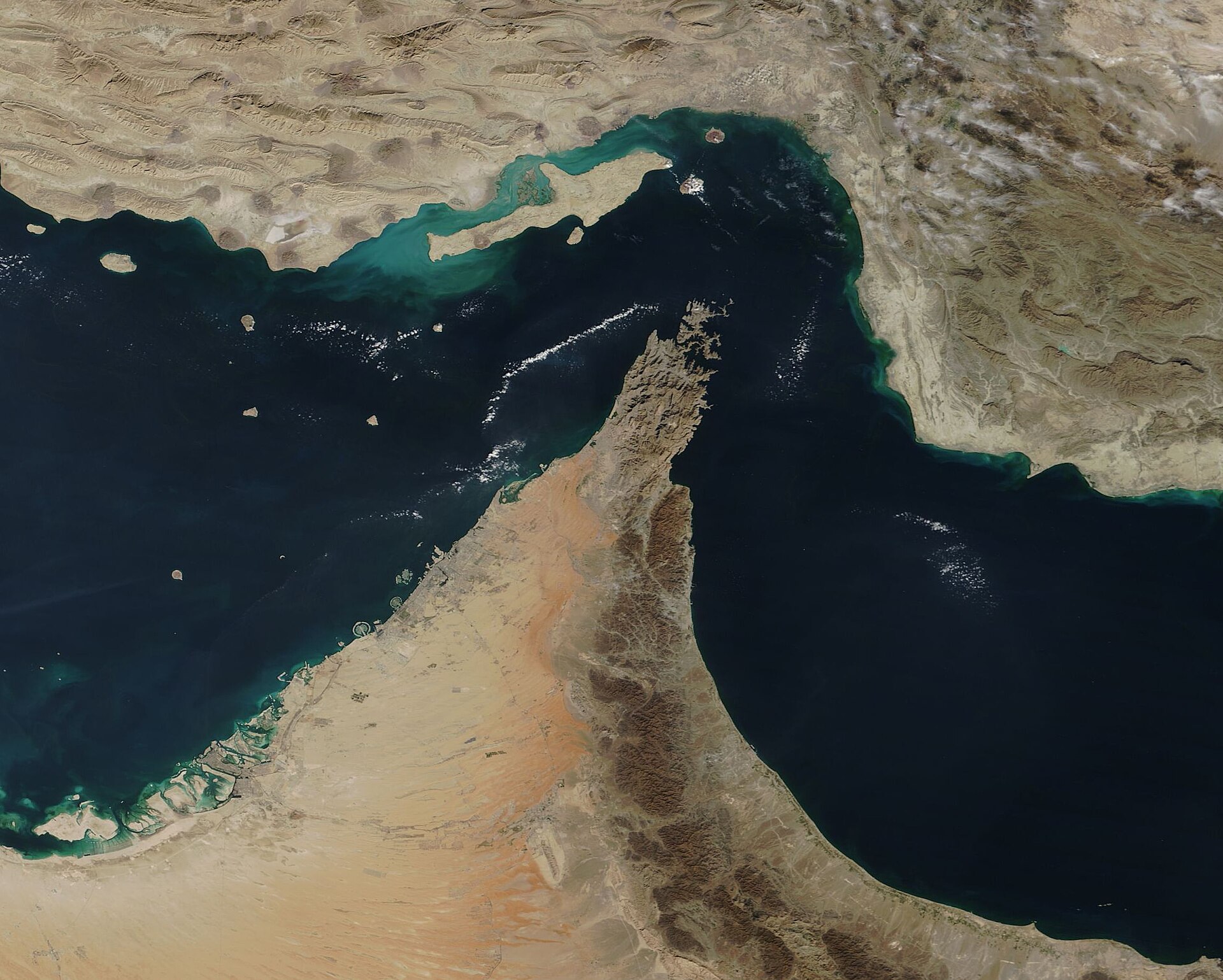
On the ground, the blockade has hardened rather than softened since the ceasefire extension. The IRGC seized two vessels and fired on a third after Trump’s April 21 announcement u2014 actions the White House ruled were not ceasefire violations, a classification that stunned Gulf diplomatic circles. The US blockade force now includes more than 10,000 soldiers, 17 warships, and over 100 aircraft, with 31 vessels turned back. Iran’s parliament speaker has rejected reopening Hormuz while the blockade persists, and Trump’s shoot-on-sight authorization for vessels violating the cordon has eliminated whatever grey zone remained for commercial shipping. Eight hundred vessels sit stranded across the Arabian Gulf and the Gulf of Oman, their demurrage bills compounding daily.
n
How Much Is the Open-Ended War Costing Saudi Arabia Per Day?
n
Saudi Arabia is losing between $60 million and $75 million per day in oil revenue relative to its fiscal requirements u2014 $1.8 billion to $2.25 billion per month in unplanned deficit accumulation. That is the optimistic version of the arithmetic, because it assumes export volumes hold steady at current levels rather than deteriorating further.
n
IEA data for March showed Saudi production at 7.25 million barrels per day, a 30 percent collapse from the 10.4 million bpd the kingdom was pumping in February before the war. The East-West Pipeline to Yanbu provides a bypass around Hormuz, but its effective loading capacity of 4 to 5.9 million bpd against a pre-war Hormuz throughput of 7 to 7.5 million bpd leaves a structural gap of 1.1 to 1.6 million bpd that no amount of logistical optimization can close while the strait remains shut.
n
| Metric | Pre-War (Feb 2026) | Current (Mar-Apr 2026) | Gap |
|---|---|---|---|
| Saudi production (bpd) | 10.4M | 7.25M | -3.15M (30%) |
| Brent crude ($/bbl) | ~$80 | $103.67 | +$23.67 |
| Fiscal breakeven ($/bbl) | $108-111 | $108-111 | -$4 to -$7 vs. spot |
| Daily revenue vs. breakeven | u2014 | -$60M to -$75M | $1.8-2.25B/month |
| Goldman deficit (% GDP) | 3.3% (official) | 6.6% (war-adjusted) | ~$29B unbudgeted |
| SAMA reserves | $475B (Feb) | Declining | Down from $746B (2014) |
n
n
Goldman Sachs has put the war-adjusted deficit at 6.6 percent of GDP, approximately $73 billion annualized, against the official budget projection of 3.3 percent or roughly $44 billion. The unbudgeted shortfall u2014 somewhere between $29 billion and $46 billion depending on assumptions about volume recovery and price trajectory u2014 sits outside every financing plan Riyadh has published. Goldman further estimates that SAMA reserves approach the $350 billion informal ratings floor within approximately 12 months if current conditions persist. That timeline assumed a bounded conflict; Trump has just removed the bound.
n
The OSP Trap: Aramco’s June Pricing Dilemma
n
Aramco must publish its June Official Selling Price by approximately May 5, and the decision arrives in a pricing environment that has no modern precedent. The May OSP was set at a premium of $19.50 per barrel above the Oman/Dubai benchmark, a war-era surge price that reflected acute scarcity expectations when Brent was trading well above $100 and the assumption u2014 shared by traders, refiners, and Aramco’s own pricing committee u2014 was that the conflict would resolve within weeks.
n
That assumption collapsed on April 21. The June OSP will be the first set under explicitly open-ended conflict conditions, and Aramco faces a pricing trap with no clean exit. Holding the premium near $19.50 risks accelerating customer defection u2014 Asian buyers, who account for the vast majority of Saudi crude exports, have already cut purchases by 38.6 percent according to Kpler tracking data, and every dollar of premium above market-clearing levels pushes marginal cargoes toward Russian Urals, West African grades, or drawdowns from China’s 1.2-billion-barrel strategic petroleum reserve. The Aramco Q1 earnings paradox u2014 higher per-barrel revenue masking catastrophic volume losses u2014 becomes more acute with each month the strait stays closed.
n
“Don’t rush me. I don’t want to rush myself… I’m not [under time pressure]. They’re the one under time pressure because if they don’t get their oil moving, their whole oil infrastructure is going to explode.”u2014 Donald Trump, ABC News, April 23, 2026
n
But cutting the premium aggressively u2014 say, to $10 or $12 above benchmark u2014 sends an equally dangerous signal. It tells the market that Aramco expects the volume crunch to persist, that the bypass through Yanbu is insufficient, and that Saudi Arabia is competing for market share from a position of weakness rather than managing temporary scarcity from a position of strength. A large OSP cut would also mechanically reduce per-barrel revenue at a moment when fiscal deficits are already running double the budgeted rate, compounding the volume losses with price concessions in a way that accelerates the SAMA reserve drawdown Goldman has flagged. JPMorgan’s warning that Brent could surge to $150 per barrel if Hormuz remains closed through mid-May sits in direct tension with Morgan Stanley’s assessment that geopolitical risk has established a structural price floor preventing any return to the $60 range u2014 a spread that captures how little the market knows about where this ends, which is exactly the information vacuum Trump created on April 23.
n
Can Saudi Arabia Borrow Its Way Through an Indefinite Conflict?
n
Saudi Arabia can sustain borrowing through a bounded crisis. It cannot sustain borrowing through one without a visible endpoint, because sovereign debt markets price duration risk and the ratings that underpin Saudi borrowing costs were assigned under assumptions that Hormuz disruption would be measured in weeks, not quarters. The kingdom’s 2026 borrowing plan calls for SAR 217 billion, approximately $58 billion u2014 already 56 percent above the 2025 program before any war-related revisions. Of that total, SAR 52 billion covers maturing principal, and SAR 165 billion was earmarked to finance the official deficit. The war gap, the $29 billion to $46 billion in unbudgeted shortfall that Goldman has identified, requires additional financing that does not appear in any published Saudi debt management document.
n
A borrower whose fiscal stress has a visible endpoint u2014 a ceasefire in three weeks, a strait reopening in two months u2014 faces fundamentally different spreads than one whose largest revenue line is impaired for an indeterminate period. Saudi Arabia’s credit profile remains investment-grade, but Moody’s, S&P, and Fitch will all need to revisit their baseline scenarios in light of Trump’s April 23 statements, and the direction of revision is not ambiguous.
n
The compounding problem is that Saudi Arabia’s cost of borrowing rises at the same moment its borrowing needs expand. Spread widening on Saudi sovereign bonds u2014 even modest widening, say 30 to 50 basis points u2014 across the full issuance program translates to hundreds of millions in additional interest expense per year, recurring costs that compound through the maturity profile of every bond issued during the conflict period. The kingdom borrowed heavily during the 2015-2017 oil price collapse and emerged with a debt-to-GDP ratio that rose from near zero to roughly 30 percent; another sustained borrowing cycle, this time with higher base rates and genuine geopolitical risk premium rather than commodity-cycle repricing, could push that ratio toward levels that constrain future fiscal flexibility in ways the 2015 episode did not.
n
What Happens to Vision 2030 Without a War Timeline?
n
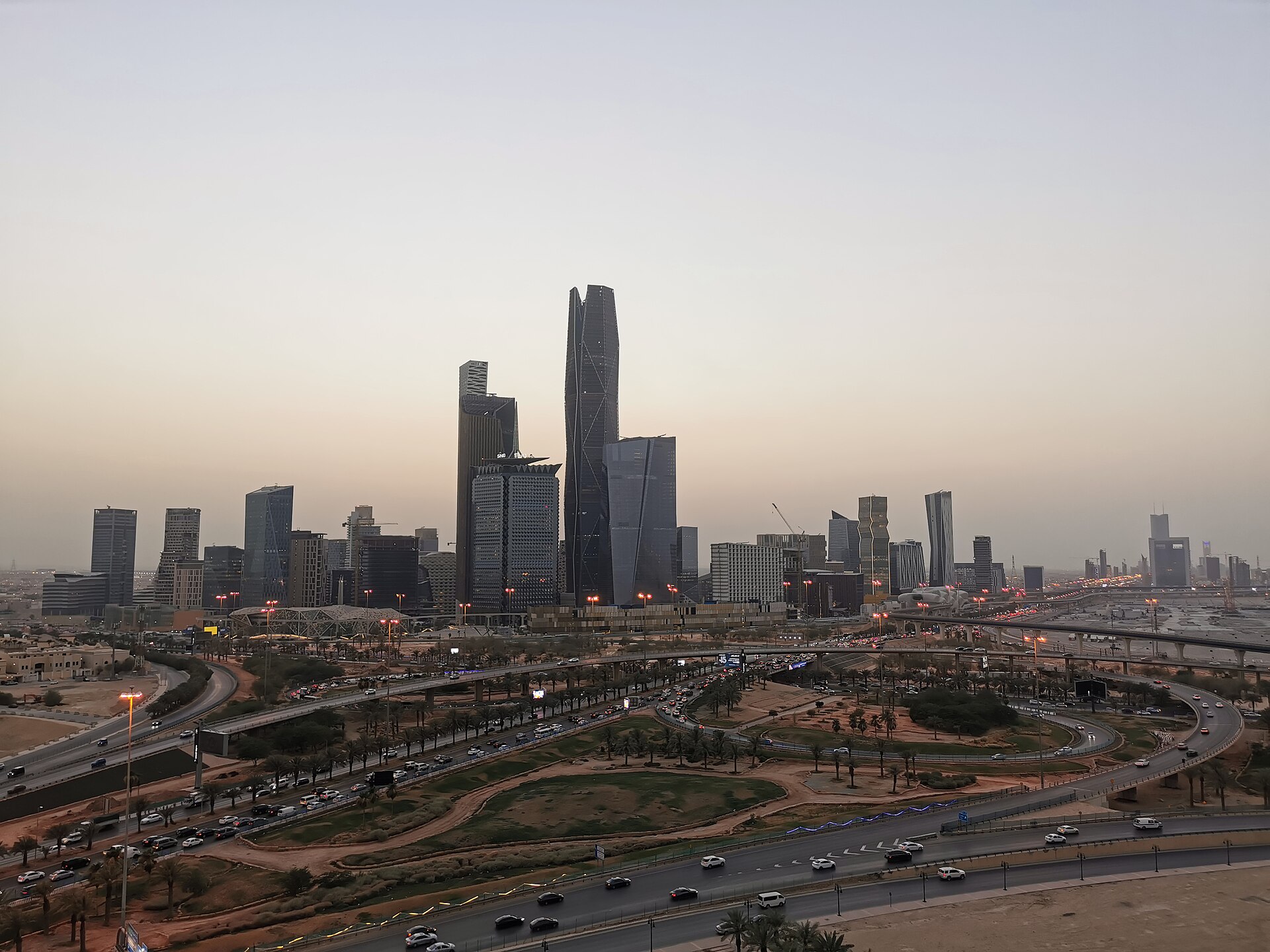
The Public Investment Fund had already cut domestic construction spending from approximately $71 billion to $30 billion u2014 a 58 percent reduction u2014 before the first Iranian missile struck Saudi territory. Governor Yasir al-Rumayyan had de-prioritized NEOM’s The Line, the kingdom’s most symbolically charged megaproject, and imposed a 20 percent spending cut across more than 100 PIF portfolio companies in December 2024. Those cuts reflected a pre-war acknowledgment that Vision 2030’s capital absorption rate had outstripped the kingdom’s fiscal capacity even at $80 Brent and full Hormuz throughput.
n
The war added volume losses and fiscal stress to an investment program already in contraction. An open-ended war adds something worse: planning paralysis. PIF’s domestic mandate u2014 building the non-oil economy that is supposed to replace hydrocarbon revenue over the next decade u2014 requires multi-year capital commitments to contractors, joint-venture partners, and anchor tenants whose own financing depends on Saudi economic stability. A megaproject developer can price a three-month construction delay; pricing an indefinite one is a different exercise, and the rational response for any private-sector partner is to defer commitment until the timeline clarifies, which is precisely what Trump has said he will not do.
n
n
The irony is structural. Vision 2030 exists because Saudi Arabia recognized that indefinite dependence on oil revenue is an existential risk. The war has simultaneously validated that diagnosis u2014 the kingdom’s entire fiscal position is hostage to a single chokepoint u2014 and made the cure harder to administer, because the capital required to build the non-oil economy is being consumed by the deficit the oil disruption has created. Every month without a timeline is a month in which PIF’s domestic portfolio absorbs less capital, breaks ground on fewer projects, and generates fewer of the non-oil jobs that are supposed to employ the 70 percent of the Saudi population under 35. The demographic clock, unlike Trump’s, has not stopped.
n
If a Ceasefire Came Tomorrow, How Long Would Hormuz Take to Reopen?
n
A ceasefire would start a six-month mine-clearance clock, not a recovery. The four Avenger-class mine countermeasure ships once stationed at Bahrain were decommissioned in September 2025, leaving the US Fifth Fleet without dedicated MCM capacity in theater. The 1991 Kuwait benchmark required 51 days with full assets available across a smaller, better-mapped area; the current IRGC campaign has covered a larger zone with no published documentation, and the assets to clear it do not exist in the region.
n
This means that a peace deal on Day 56 of the conflict does not restore Saudi export capacity on Day 57. It starts a six-month clock during which Hormuz remains commercially unusable, Yanbu continues to operate as the primary u2014 and insufficient u2014 export corridor, and the fiscal gap continues to compound. The cumulative global supply loss since the war began has already reached 500 million barrels, valued at approximately $50 billion according to Al Habtoor Research, and every additional month of strait closure adds roughly 150 million barrels to that deficit at current production rates. The EIA’s April Short-Term Energy Outlook assumed that “Middle East conflict does not extend beyond April 2026” u2014 an assumption that was already strained when published and is now explicitly contradicted by the commander in chief.
n
| Price Scenario | Source | Condition | Brent Forecast |
|---|---|---|---|
| Closure through mid-May | JPMorgan | Hormuz shut, no resolution | $150/bbl |
| Six-month constrained supply | Goldman Sachs | Partial reopening, slow MCM | $135/bbl (upper bound) |
| EIA base case Q2 | EIA STEO April | Conflict ends April (broken) | $115/bbl |
| Current spot | Market | u2014 | $103.67/bbl |
| Resolution scenario Q4 | Goldman Sachs | Full resolution by Q3 | $71/bbl |
| Structural floor | Morgan Stanley | Geopolitical risk premium persists | Above $60 indefinitely |
n
n
Gregory Daco, chief economist at EY-Parthenon, has assigned a 40 percent probability to a US recession within 12 months, citing the Middle East conflict as “proving longer lasting and more destructive to energy production capacity” than baseline models anticipated. That recession risk creates a secondary trap for Saudi Arabia: if the conflict drags on long enough to trigger a US-led global slowdown, oil demand destruction could push Brent below even Goldman’s $71 resolution scenario, collapsing Saudi revenue from both the price and volume sides simultaneously u2014 the nightmare combination that depleted SAMA reserves by $271 billion over the 2014-2020 period, except this time the starting position is $271 billion lower than it was then.
n
“The Middle East conflict is proving longer lasting and more destructive to energy production capacity.”u2014 Gregory Daco, Chief Economist, EY-Parthenon, April 23, 2026
n
Why Can’t Iran Deliver the “Unified Proposal” Trump Demands?
n
Trump’s sole stated condition for ending the open-ended posture is that Iran submit a “unified proposal,” a requirement that presupposes a degree of internal Iranian coherence that has not existed at any point during the conflict. President Pezeshkian publicly accused IRGC commanders Vahidi and Abdollahi on April 4 of wrecking the ceasefire process u2014 a confession of presidential impotence that confirmed what the diplomatic record had already demonstrated, namely that the civilian government can negotiate but cannot commit, while the IRGC can commit but will not negotiate.
n
The authorization ceiling is constitutional, not merely political. Article 110 of the Iranian constitution vests supreme command of the armed forces in the Supreme Leader, not the president, meaning Pezeshkian has zero legal authority over the IRGC’s Hormuz operations regardless of what he signs in Islamabad or anywhere else. Khamenei has been absent from public view for more than 50 days. His son Mojtaba has communicated by audio only. The Supreme National Security Council, which theoretically coordinates military and diplomatic policy, has been effectively captured by Vahidi, who holds an INTERPOL red notice for the 1994 AMIA bombing in Buenos Aires and whose strategic preference for continued Hormuz coercion is not subtle.
n
Ghalibaf’s advisor told NBC News that Trump’s ceasefire extension is “a ploy to buy time” for a surprise military strike, adding that the blockade is “no different from bombardment.” Pezeshkian offered a marginally softer line on April 22, saying he seeks “dialogue and agreement” but that “breach of commitments, blockade and threats” hinder negotiations. Iran’s parliament speaker has rejected reopening Hormuz while the US blockade persists, and the IRGC has operationalized that rejection by seizing vessels after the ceasefire extension u2014 actions the White House classified as non-violations, a legal interpretation that removes any Iranian incentive to restrain IRGC naval behavior.
n
The structural impossibility of a “unified proposal” from a government that cannot unify its own security establishment is either a negotiating error by the Trump administration or a deliberate mechanism for extending the status quo indefinitely. Neither interpretation is reassuring for Riyadh, which absorbs the fiscal cost of the impasse regardless of whether it reflects American miscalculation or American design.
n
Beijing’s Five-Point Escape Hatch
n
Xi Jinping called MBS on April 20 u2014 three days before Trump’s “don’t rush me” interview u2014 and stated that “the Strait of Hormuz should remain open to normal navigation, which is in the common interest of regional countries and the international community.” The call was not ceremonial. Wang Yi followed with a five-point plan: end hostilities, halt attacks on civilian infrastructure, reopen Hormuz, reaffirm the UN Charter, and pursue multilateral cooperation. The plan contains no enforcement mechanism, no timeline, and no commitment of Chinese resources, which is precisely what makes it useful u2014 it positions Beijing as the party calling for the things everyone claims to want while committing to none of the costs of achieving them.
n
For Saudi Arabia, the Chinese hedge is real but limited. China is the kingdom’s largest crude customer, and the yuan settlement infrastructure that emerged during the OFAC General License U period has given Riyadh a partial alternative to dollar-denominated oil trade. But China’s 1.2-billion-barrel strategic petroleum reserve provides Beijing with roughly 109 days of import cover, meaning China can afford to wait out a Hormuz closure far longer than Saudi Arabia can afford to endure one. Xi’s call to MBS was a statement of concern, not a commitment to action, and the gap between those two things is where Saudi fiscal exposure accumulates.
n
The five-point plan also implicitly challenges the US blockade, which Wang Yi’s second point u2014 halt attacks on civilian infrastructure u2014 could be read to encompass, depending on how broadly “civilian infrastructure” is interpreted in the context of a naval cordon that has turned back 31 commercial vessels and left 800 stranded. If Beijing eventually decides that the blockade threatens Chinese energy security more than Iranian instability does, the diplomatic calculus shifts in ways that further complicate Saudi Arabia’s position as the party that hosts US military infrastructure, depends on Chinese crude demand, and controls neither the blockade nor the strait.
n
The Iraq Parallel Riyadh Cannot Afford to Study
n
The last time the United States imposed an open-ended economic siege on a Gulf oil producer, it lasted 13 years. The Iraq embargo from 1990 to 2003 contracted Iraqi GDP by one-eighth in its initial phase, depreciated the dinar by 5,000 percent by 1995, and drove food prices up 4,500 percent. Saudi Arabia is not Iraq u2014 its reserves are deeper, its infrastructure is more diversified, its international relationships are broader u2014 but the structural parallel is not the severity of the damage; it is the absence of a timeline and the way that absence compounds every category of economic harm.
n
Iraq’s embargo persisted because the conditions for lifting it u2014 full compliance with weapons inspections, regime behavioral change u2014 were structurally difficult for the target government to meet, not because the United States actively chose indefinite duration. Trump’s “unified proposal” demand occupies a similar structural position: the condition for ending the open-ended posture requires internal Iranian political transformation that no external actor can compel and that Iran’s constitutional architecture actively prevents. The difference is that Iraq’s neighbors, including Saudi Arabia, were net beneficiaries of the embargo through increased production quotas and market-share capture, while in the current conflict Saudi Arabia is a co-victim of the supply disruption it neither initiated nor controls.
n
n
The compound effect of time without a deadline is what distinguishes chronic fiscal emergencies from acute ones. An acute shock u2014 a hurricane, a pipeline explosion, a three-week military confrontation u2014 depletes reserves at a known rate for a bounded period, and financial planning can bracket the total cost. A chronic emergency depletes reserves at a variable rate for an unknown period, which means that every planning assumption must incorporate a distribution of outcomes rather than a point estimate, and the tail risk u2014 the scenario where the conflict lasts 12 or 18 or 24 months u2014 must be provisioned against even if its probability is low. Goldman’s 12-month reserve-floor warning was calibrated to a conflict with an expected endpoint; remove the endpoint and the distribution widens in the direction that matters.
n
The Calendar That Isn’t
n
Aramco’s June OSP is due around May 5. The EIA’s broken April forecast assumed resolution by now. Goldman’s reserve-depletion timeline assumed a bounded war. Every model, every pricing decision, and every borrowing plan in Riyadh depends on a variable u2014 conflict duration u2014 that the one person who controls it has just declared he has no intention of defining. Saudi Arabia’s daily oil revenue sits $93 million below its pre-war baseline, the strait remains closed, and the president of the United States says he is in no rush.
n
Frequently Asked Questions
n
How long could Saudi Arabia sustain current reserve drawdown rates before facing a credit downgrade?
n
At the current pace of deficit accumulation u2014 roughly $6 billion per month above the budgeted shortfall u2014 SAMA reserves would approach the $350 billion level that rating agencies have informally treated as a floor within 12 to 15 months. However, a downgrade trigger is not purely mechanical; agencies weight trajectory and policy response alongside absolute reserve levels, meaning that visible austerity measures or a credible fiscal adjustment plan could delay a negative rating action even if reserves breach the nominal threshold. Conversely, the absence of any published contingency plan, which is the current state of affairs, could accelerate a negative outlook revision well before reserves reach $350 billion.
n
What alternatives does Saudi Arabia have if Hormuz remains closed beyond Q2 2026?
n
Beyond the East-West Pipeline to Yanbu u2014 already running near capacity u2014 Saudi Arabia has two further options, both carrying heavy cost. First, drawdowns from strategic storage, estimated at 90 to 120 days of cover at current reduced production, provide a temporary buffer but accelerate the reserve depletion clock. Second, bilateral government-to-government supply agreements that bypass spot-market pricing could preserve customer relationships but would require Aramco to effectively subsidize buyers during the fiscal emergency, compounding losses. There is no fourth option: the Red Sea’s Bab el-Mandeb exit is itself a vulnerability, meaning the bypass route carries its own chokepoint risk.
n
Could higher oil prices eventually offset Saudi Arabia’s volume losses?
n
JPMorgan’s $150-per-barrel scenario, if realized, would generate roughly $750 million per day at 5 million bpd in exports u2014 well above the fiscal breakeven on a per-barrel basis. But the price-volume interaction is nonlinear: sustained prices above $130 historically trigger demand destruction, strategic reserve releases by consuming nations, and accelerated substitution toward alternatives, all of which erode the volume base that generates revenue. The 2014 lesson u2014 when Saudi Arabia chose volume over price and triggered a two-year collapse u2014 demonstrated that market share lost during price spikes is not automatically recovered when prices normalize, particularly when competitors like Russia and the UAE have expanded capacity in the interim.
n
What is the risk that Trump’s open-ended posture leads to a wider regional conflict?
n
The historical baseline is sobering: the 1988 Operation Praying Mantis, the largest US naval engagement since World War II, was triggered by a single mine strike on the USS Samuel B. Roberts u2014 an incident that began not with a strategic decision but with a patrol in familiar waters. The current strait, with 800 stranded vessels, an active IRGC mining campaign, and a US shoot-on-sight cordon, has more points of accidental contact, not fewer. Iran’s constitutional structure means that even a Pezeshkian-signed ceasefire cannot bind IRGC naval commanders who operate under Khamenei’s authority u2014 authority that is currently being exercised, or not exercised, by a leadership absent from public view for more than 50 days.
n
How does the open-ended timeline affect other Gulf states beyond Saudi Arabia?
n
Bahrain, whose airspace has been closed since February 28 and whose sole international land link u2014 the King Fahd Causeway u2014 was temporarily shut on April 7, faces an economic isolation risk that exceeds Saudi Arabia’s in proportional terms, with no sovereign wealth fund remotely comparable to PIF or SAMA reserves. Kuwait’s petroleum infrastructure has already been struck. The UAE, which has diversified its export routes through the Fujairah terminal on the Gulf of Oman, is better positioned logistically but remains exposed to insurance-market repricing that has pushed war-risk premiums to levels not seen since the 1980s Tanker War. Qatar’s LNG exports, which must transit the strait, have been reduced to a trickle brokered through Chinese intermediation on a cargo-by-cargo basis.
nn
PIF’s response to this open-ended fiscal emergency has now been formalized: the fund’s 2026–2030 strategy commits 80 percent of deployable capital to domestic projects, with Al-Rumayyan explicitly ranking Oxagon above The Line as the wartime priority — PIF’s wartime domestic reallocation and what the Oxagon pivot means for Vision 2030.
“}